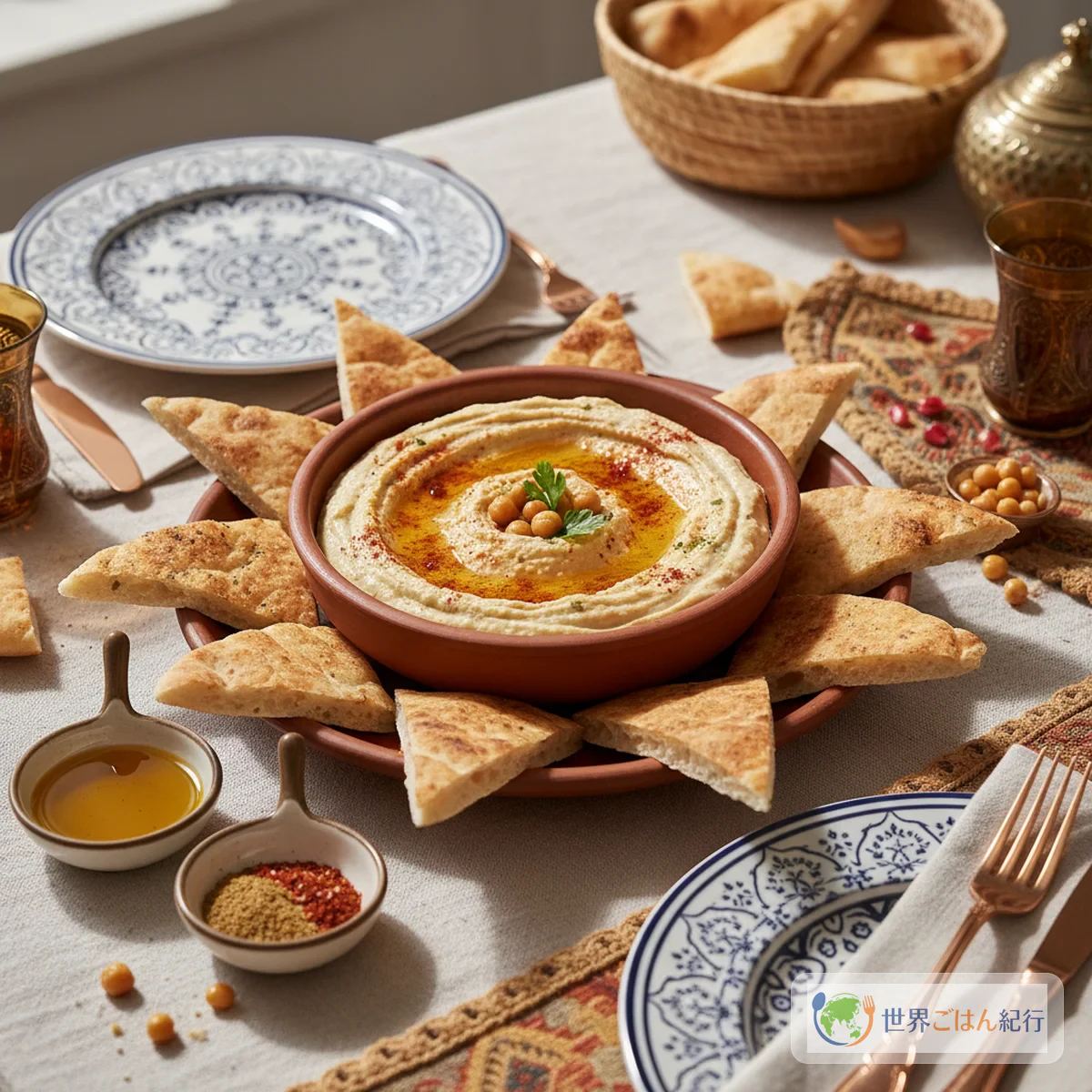
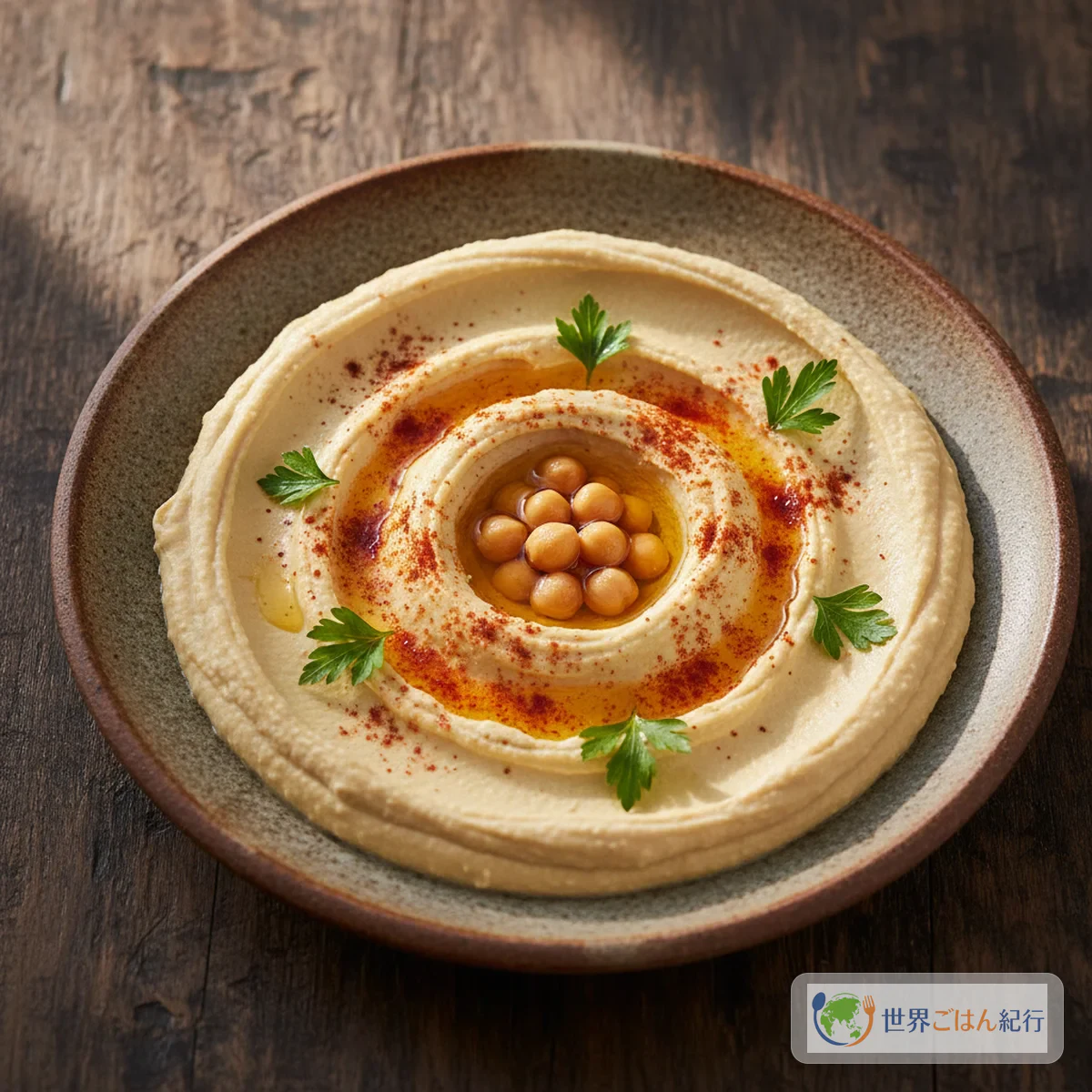
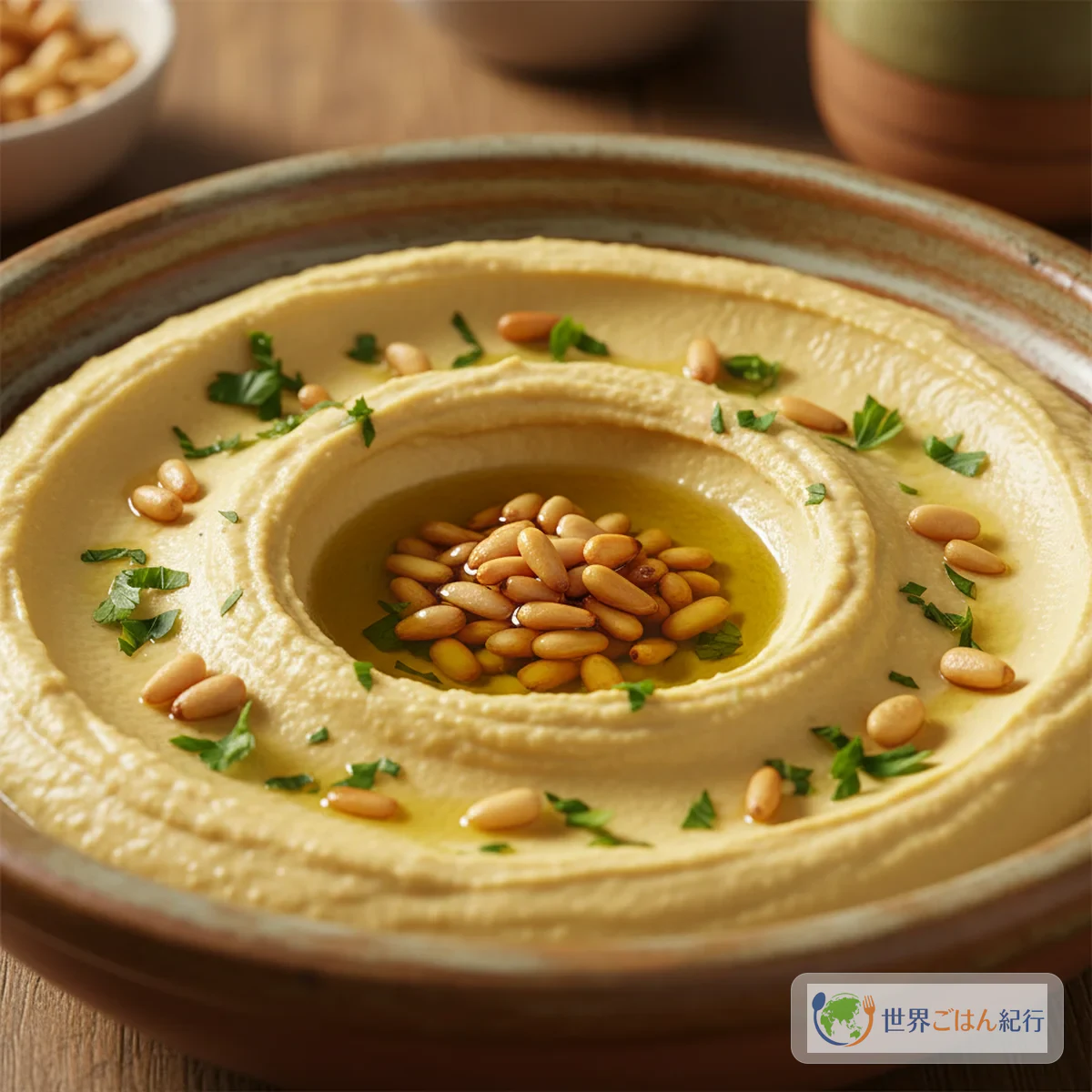
The smell of steaming chickpeas, the puff of pita fresh from the oven. On a Lebanese breakfast table, a plate of hummus arrives topped with whole warm chickpeas, olive oil, and cumin. You don't dab at it like a cold dip. You scoop it up with warm chickpeas and pita. Hummus bi tahini is tender-cooked chickpeas blended with tahini, garlic, lemon, and salt. Done right, it is pale beige and free of graininess, just thick enough that the mark of a spoon slowly closes back over.
Hummus in Lebanon and the Levant
The dish and its history
The name comes from the Arabic word for chickpea, and you'll see it written many ways: حمص, hummus, hommus. Today it is a cold Levantine meze built on mashed chickpeas and sesame. The chickpeas themselves go back much further: they have been grown in the Middle East for at least 7,500 years. A 13th-century Syrian cookbook and an early written record from Aleppo describe dishes that overlap with the modern plate. Even so, they record something other than today's Lebanese-style formula, and their dates show only when the dish was written down.
A 14th-century Egyptian cookbook describes himmas kassā, made with preserved lemon, parsley, mint, spices, and oil. It is a different dish from modern hummus bi tahini, a reminder that a chickpea dish in an old cookbook is a relative of hummus, not the same recipe.
Hummus has roots in the Levant and Egypt, and its proportions shifted as it spread across the Middle East, the Mediterranean, and North Africa. Lebanese hummus uses plenty of tahini. The acidity, garlic, cumin, temperature, and toppings vary from kitchen to kitchen, so the formula changes with the land and the kitchen.
The dish also has an industrial history. Hummus is regarded as an Arab dish, but in Israel it was industrialized in 1958, and the food industry went on to shape how it was eaten and presented. Today it moves freely between homes, eateries, and supermarket shelves.
How it is eaten
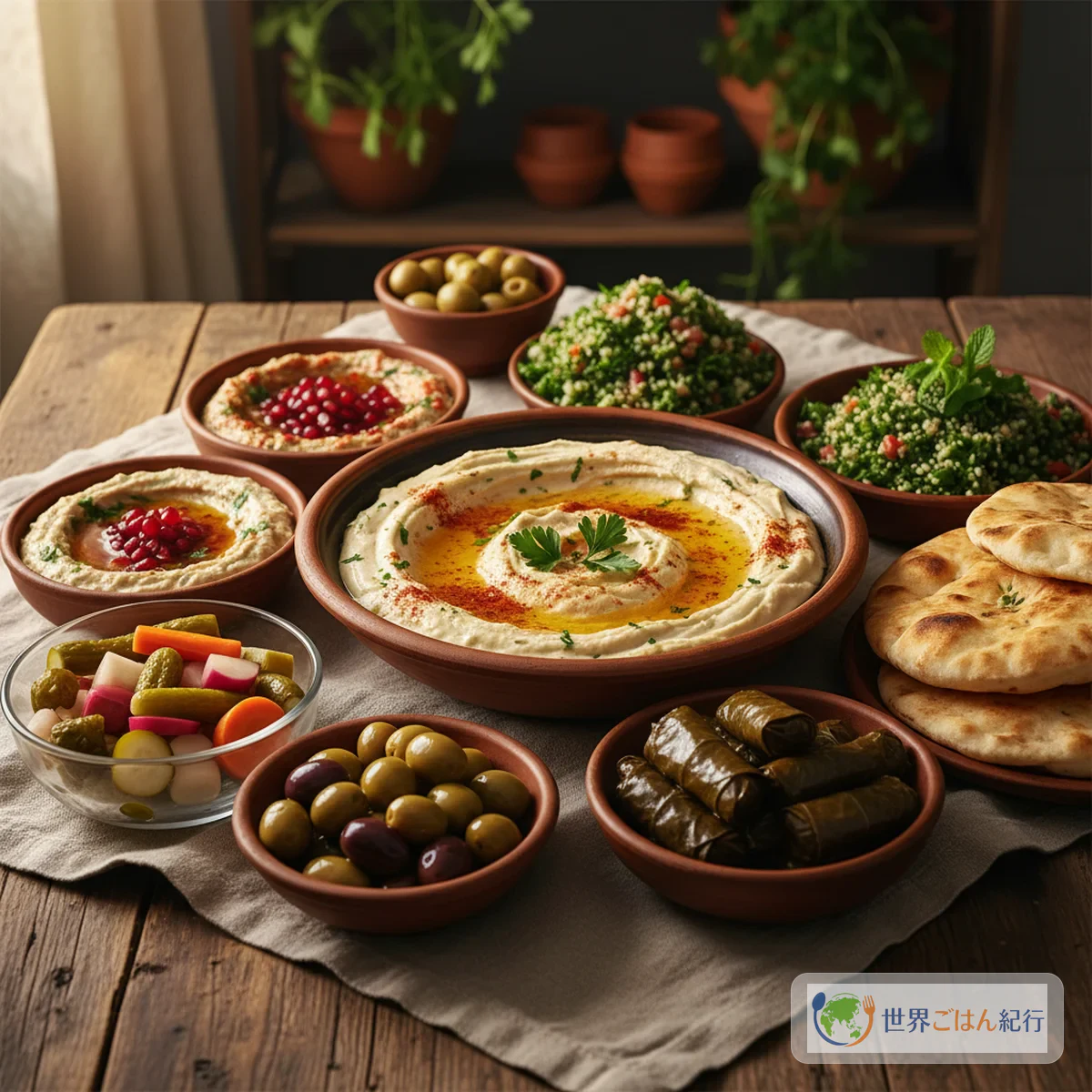
Put a few small dishes around the hummus and you already have a breakfast meze spread. The table below shows the main settings and what to keep in mind if you want to recreate them.
| Context | Features that appear on the plate | What to keep when recreating it |
|---|---|---|
| Lebanese breakfast | Warm chickpeas, cumin, olive oil, warm pita. Served with ful medames, mint, and raw onion | Keep the beans warm, and serve bread |
| Levantine meze | Hummus at the center, with bread, grilled vegetables, and meat dishes in small dishes | Pair it with dishes of different sourness and toastiness instead of serving a big bowl of hummus alone |
| Household and restaurant formulas | Amounts and texture of tahini, lemon, garlic, and cumin change | Decide on this plate's thickness and acidity first, rather than hunting for "the real ratio" |
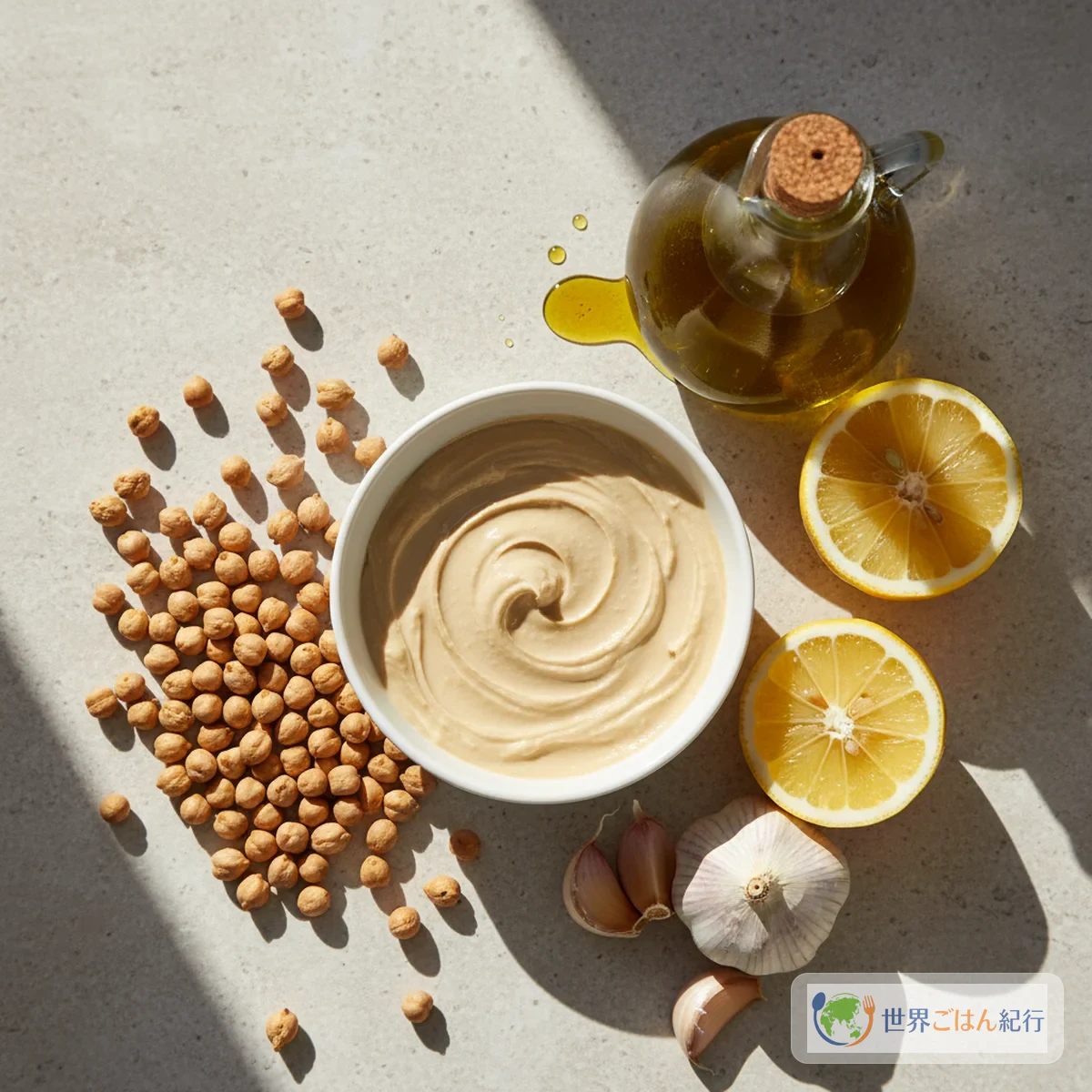
Ingredients (serves 6)
This recipe makes six servings of meze from 7 oz (200 g) dried chickpeas. Divide the water and baking soda between soaking and cooking. Set aside ½ cup (120 ml) of cooking liquid and 1.5 oz (40 g) of chickpeas for garnish. Canned chickpeas, 14 oz (400 g), can substitute, but wash them and reheat them in fresh water. The aroma and the way the skins break down will not be the same as with dried beans. Tahini is 100 percent sesame paste, and it is tahini as the foundation of the flavor. White sesame paste can also substitute, but sweetness, saltiness, and roasted aroma differ.
Sesame's richness and oil come straight through in the flavor, so choose tahini whose ingredients are mainly sesame. When buying, use the generic name "tahini" as your guide. If the oil has separated in the jar, stir from the bottom until smooth before measuring. If you use white sesame paste, start with the same 4 oz (120 g), then taste at the end and adjust the lemon juice and salt.
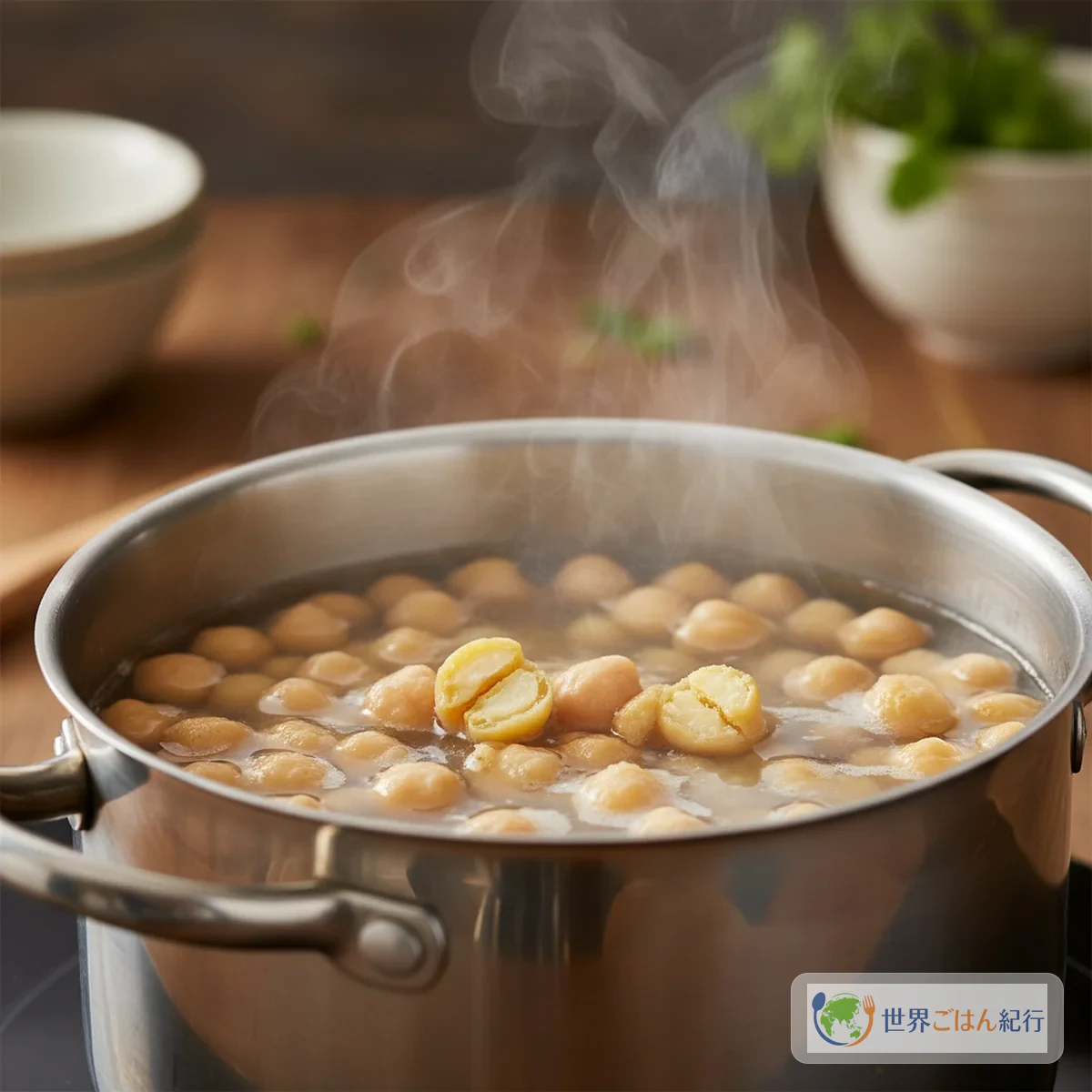
Older beans take longer to cook. Check at 45–60 minutes. If a core or bite remains, cook 10–15 minutes more at a time. Cook until they crush, skins and all, with no core left, so they blend smoothly when processed.
Both tahini and white sesame paste are made from sesame, so do not use them as substitutes if you need to avoid sesame. For store-bought products, check the ingredients and allergen labeling every time you buy. When eating out or buying in bulk, ask the shop. Also check labels for shared equipment and production lines. Do not judge safety by appearance alone.
Method
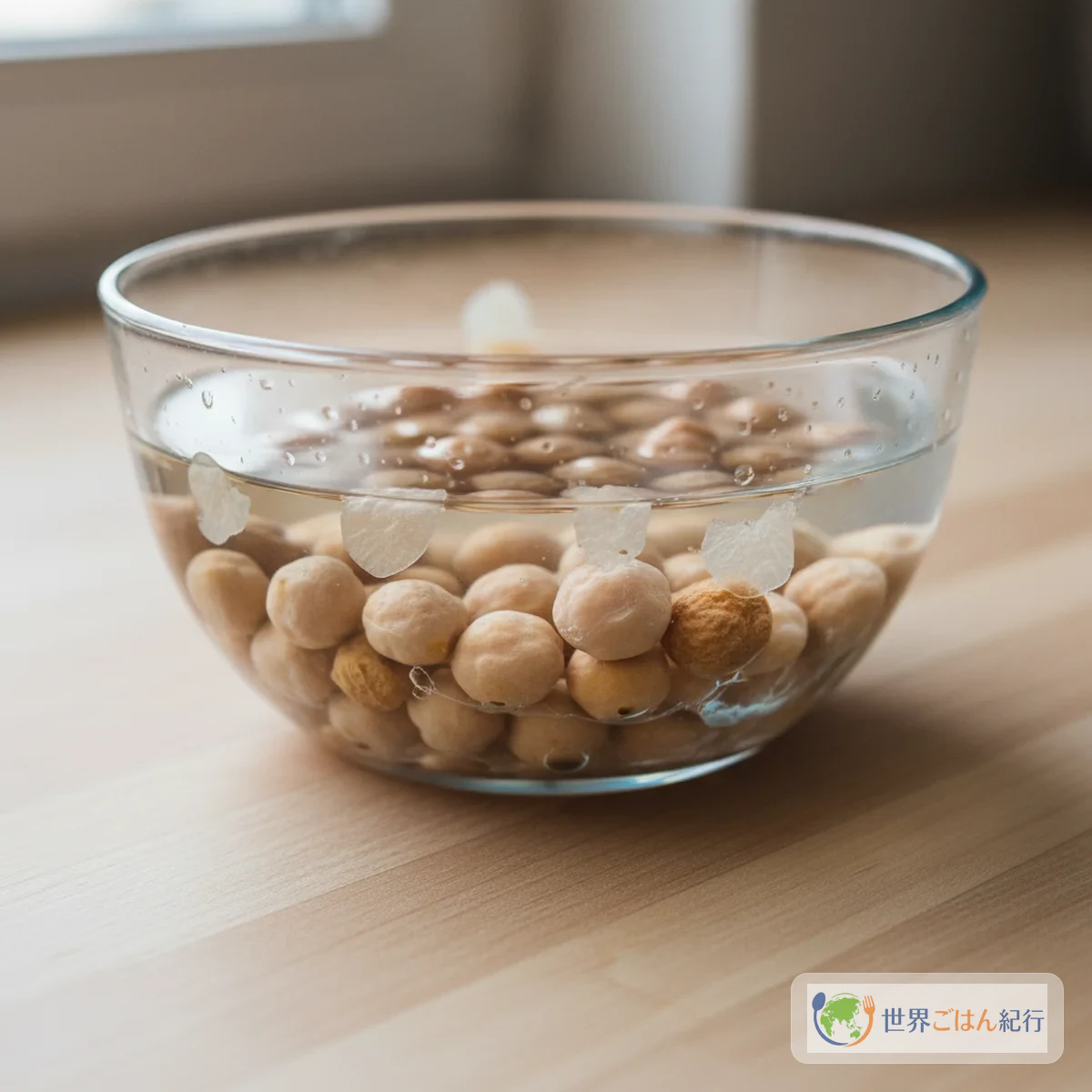
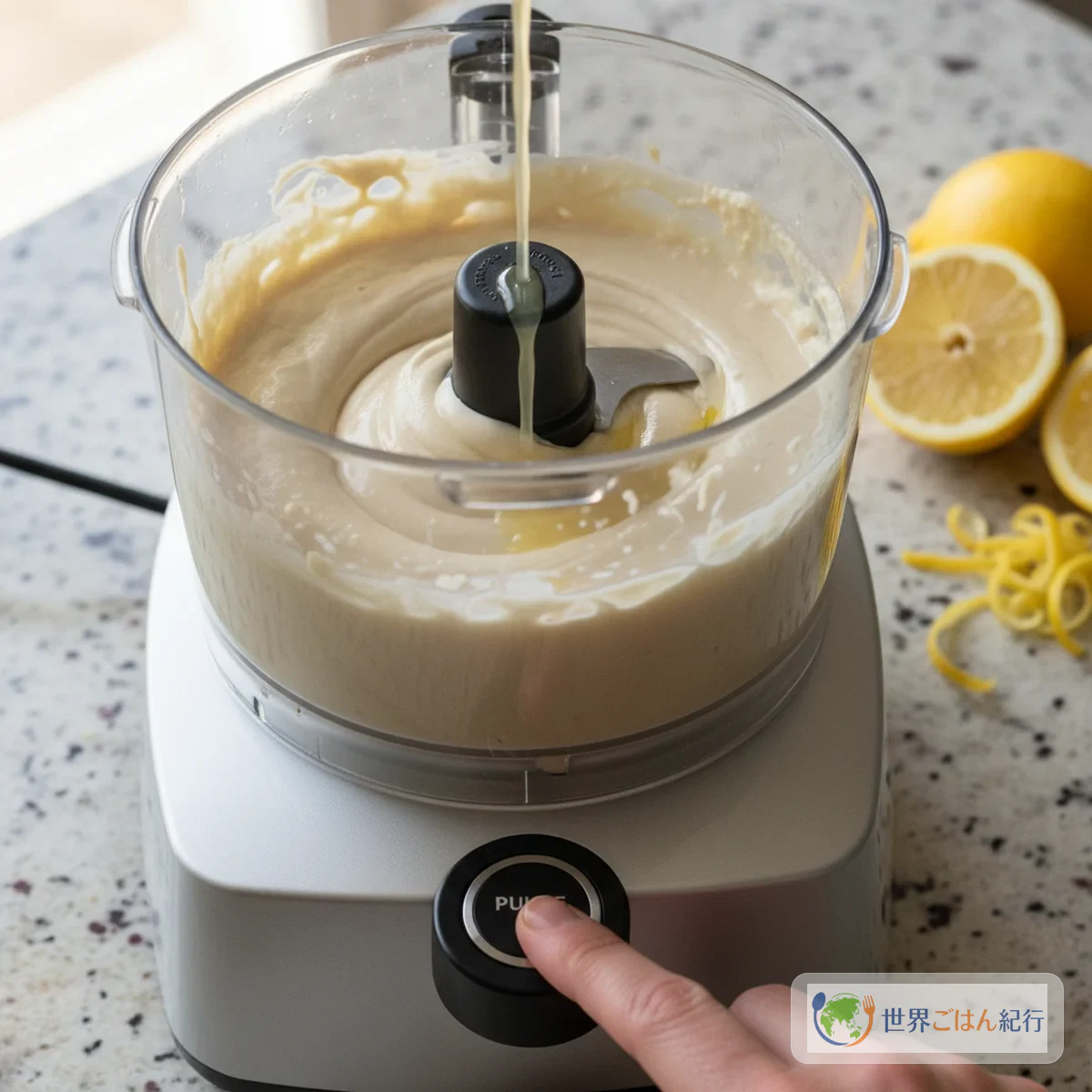
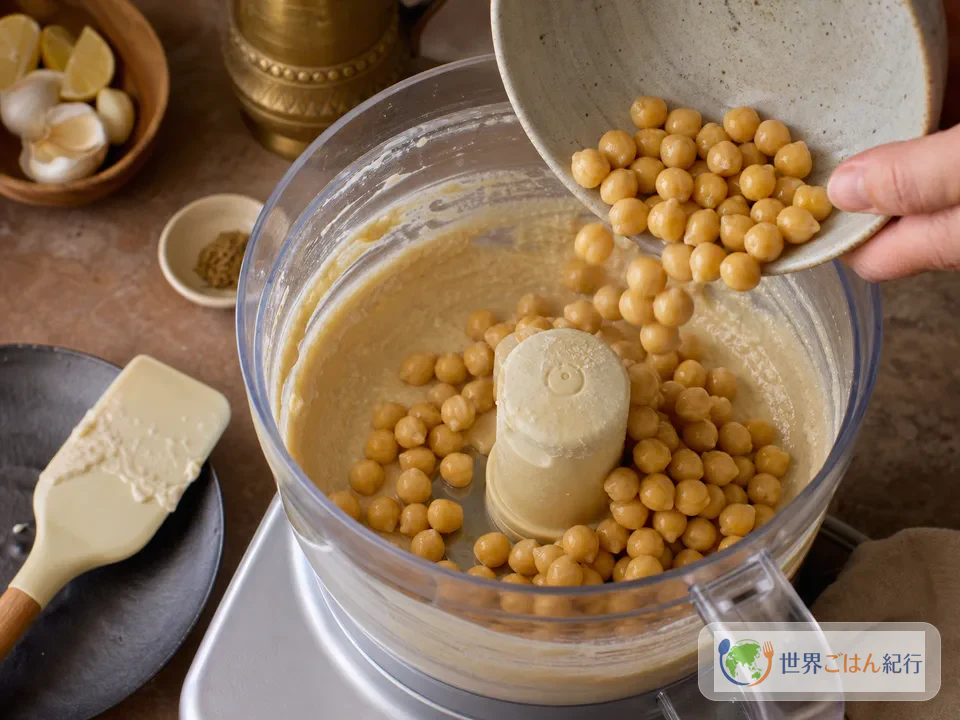
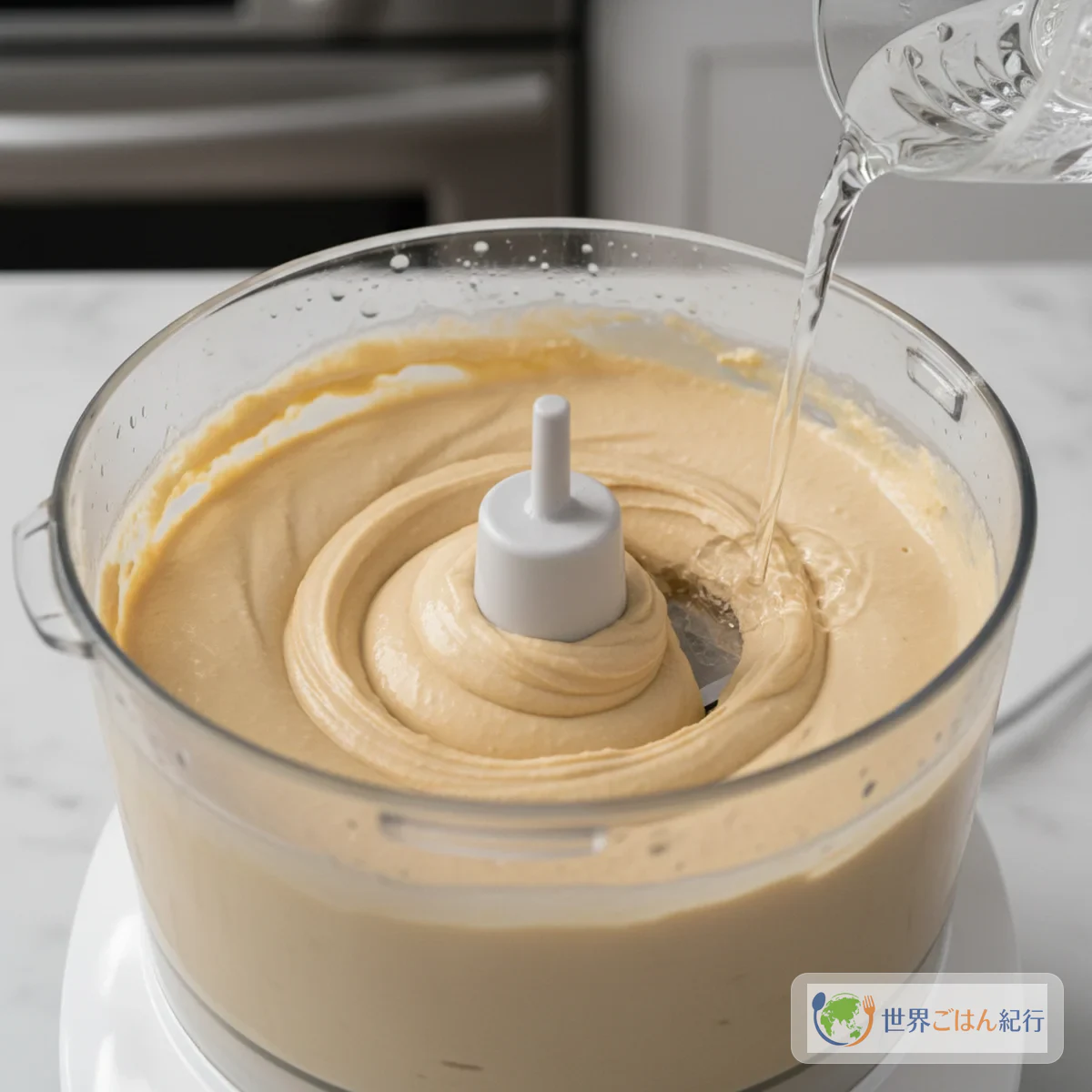
Soak the dried beans for 8–12 hours, cook them until they crush, skins and all, make a sauce of lemon, garlic, and tahini, then blend in the warm beans and plate. Aim for a pale beige with no graininess and a thickness where the mark of a spoon slowly closes back, taking a few seconds to return. If it goes wrong, check the firmness of the beans first, then how tight the sauce has become, then how much liquid you added. Add liquid 1 tbsp (15 ml) at a time.
Serving and Varying Hummus
At breakfast, serve the hummus with warm chickpeas, olive oil, cumin, and warm pita, alongside ful medames, mint, and raw onion. The pleasure is in tracing the grooves of the dish with warm pita, again and again. At a meze table, it goes with grilled meat, grilled vegetables, and sandwiches, and balancing the richness of the white beans with the neighboring dish keeps the meal from turning monotonous.
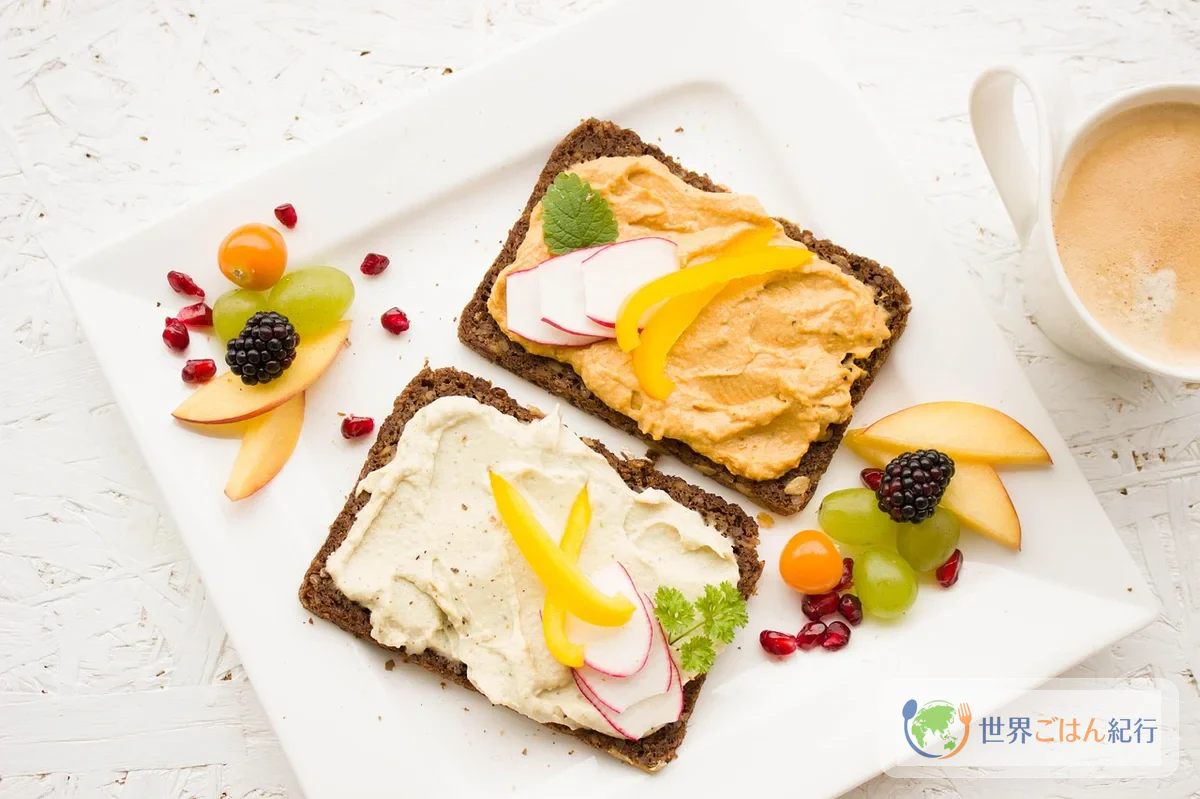
Choose side dishes that differ in flavor, color, and texture, rather than piling more flavor into the hummus itself. Balila, warm chickpeas with lemon and cumin, follows breakfast nicely. Tabbouleh brings parsley, mint, and acidity to cut the richness. Muhammara, the Levantine dip of red pepper and walnut, adds color and a different texture. Adding acidity and a red color to the white hummus changes the look of the whole meal.
- How to make balila: warm chickpeas for a Lebanese breakfast
- How to make tabbouleh: the Lebanese salad with parsley as the star
- How to make muhammara: Aleppo's red dip
Variations
Keep the smooth base of beans and tahini, and change the aroma, color, and texture with the finish and accompaniments.
- Warm chickpeas and cumin: The Lebanese breakfast style. Top with a few whole beans for texture
- Beets: Adds color and earthy sweetness
- Preserved lemon and herbs: Leans toward himmas kassā, the old Egyptian dish
- Garlic added just before eating: Good for the portion you refrigerate, so a strong garlic aroma doesn't settle into it
Many modern recipes finish with olive oil pooled in the center, warm beans, parsley, cumin, and paprika. Historical dishes also used pistachios and rosebuds, along with oil and herbs. Whatever the garnish, the plate is still a paste of chickpeas and tahini eaten with bread.
FAQ: Storage, Substitutes, and Recovering from Graininess
Can I make it with canned chickpeas?
Yes. Drain 14 oz (400 g) and rinse under running water, then reheat them in fresh water with a little baking soda until they crush under a finger. Leave out most of the canning liquid and adjust the thickness with a little of the reheating water instead. The aroma and the way the skins break down differ from dried beans, so the result won't be exactly the same.
If I have no tahini, can I substitute white sesame paste?
Use the same amount, 4 oz (120 g), of white sesame paste. Its sweetness, saltiness, and roasted aroma differ, so adjust with lemon juice and salt a little at a time at the end rather than trying to correct the flavor with water. If you have a sesame allergy, avoid white sesame paste as well.
What if I have no food processor?
Mash the beans while warm with a mortar, potato masher, or fork, then mix in the tahini sauce. Bits of skin will remain, so it will be coarser than a machine-blended paste, but it holds together well. If it dries out, add cooking liquid 1 tsp at a time, and finish mashing before the beans cool.
How do I recover if graininess remains?
If the centers of the beans are still hard, return them to the pot and cook in hot water 10–15 minutes more at a time. If the beans are tender enough, add cooking liquid 1 tbsp (15 ml) at a time and blend 1 minute each, scraping down the sides. If you held back the tahini sauce, add the acidity and oil gradually rather than all at once.
What if the garlic is too sharp?
Resting it 10 minutes in lemon juice and salt softens the sting. If you still find it sharp, strain out just the liquid and add it a little at a time, tasting as you go. For the portion you plan to store, add garlic separately just before eating. Extra raw garlic will not extend the shelf life.
How long does it keep?
Once it is off the heat, spread it flat in a clean, shallow airtight container and refrigerate it as soon as possible. General guidance for cooked foods and leftovers is 3–4 days in the refrigerator; for this homemade batch, sealed flat, use 3 days in the refrigerator as a guide. Appearance alone won't tell you it is safe: throw out any hummus left at room temperature for a long time, or with a dried surface, an off smell, mold, or unnatural separation, even within that window. If it has stiffened in the cold, loosen it with cooking liquid or water a little at a time just before eating.
Use a clean spoon for serving, and do not return the whole amount brought to the table to the storage container. People who avoid sesame should check the labeling of products containing tahini, white sesame paste, and sesame oil, and ask the shop or manufacturer about shared equipment and eating out. Do not judge either shelf life or allergic reaction by appearance alone.