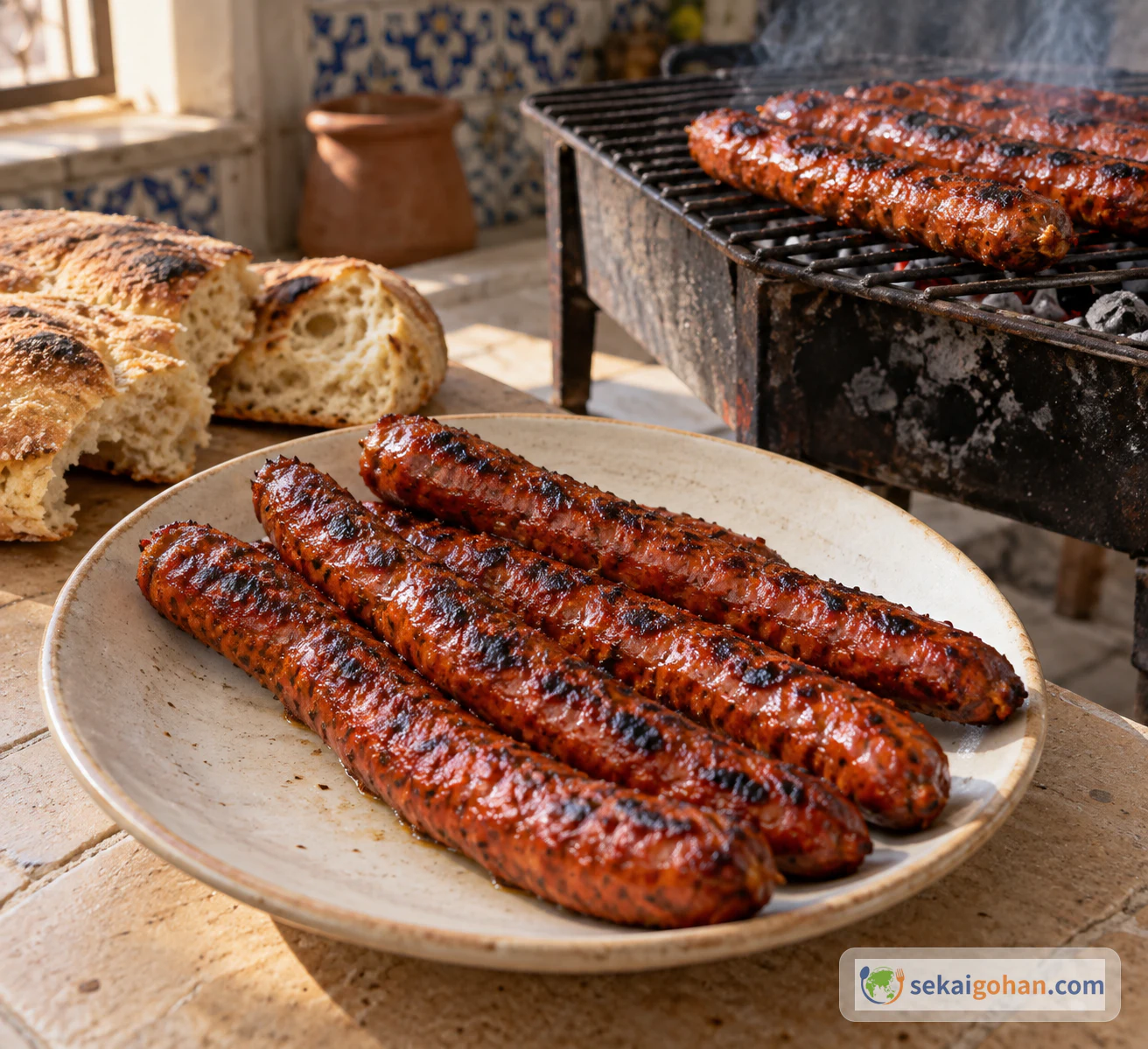
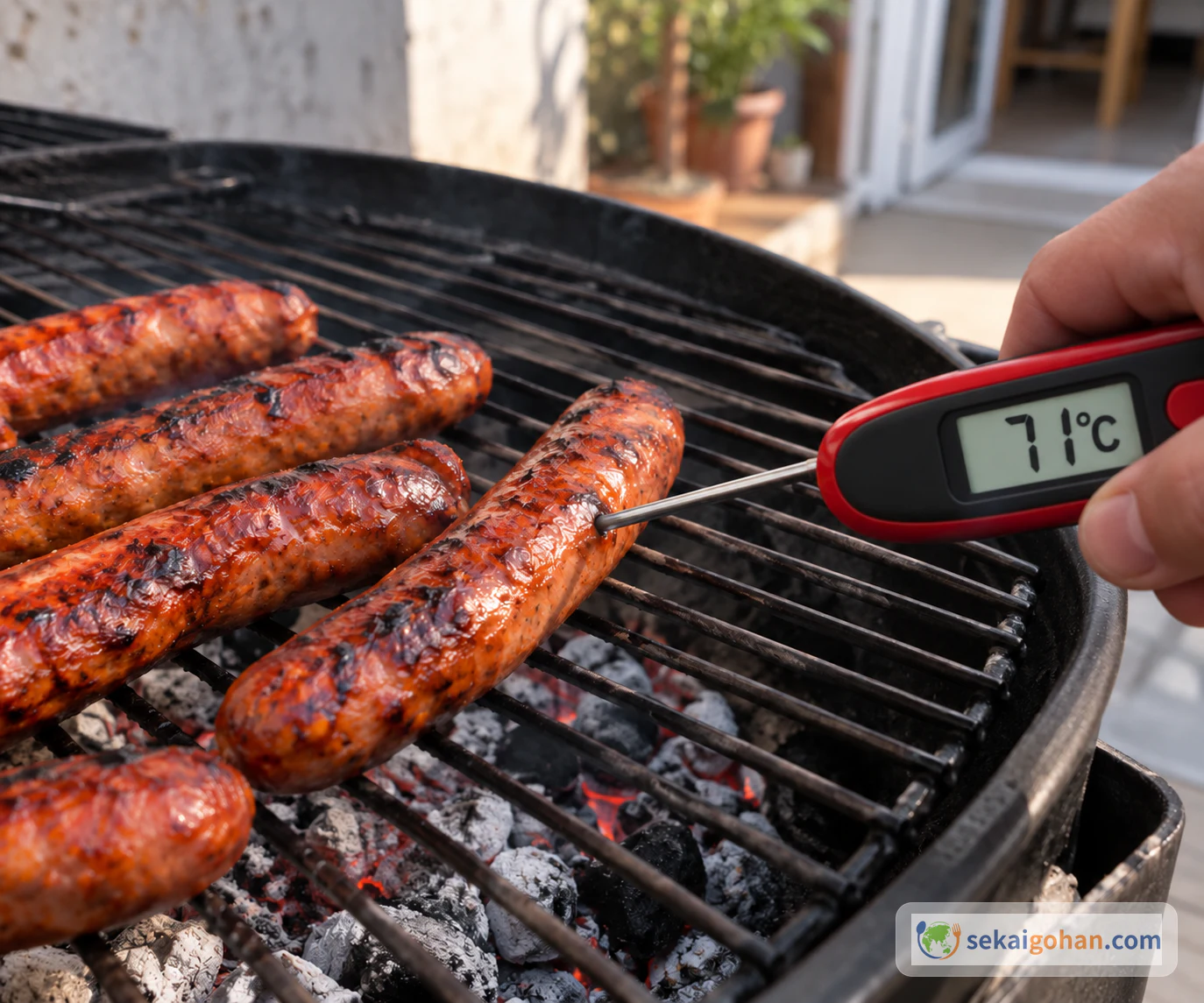
Over a charcoal grill, slim red links tighten and blister. Fat drips onto the coals, a puff of smoke rises, and the smell of cumin, fennel and chili spreads well beyond the grill. Merguez is a spiced lamb sausage from North Africa, juicy with added fat, earthy and a little sweet from toasted seeds, and red with paprika and harissa. For most home cooks, the hard part isn't the spices. It's finding lamb shoulder and casings, choosing a harissa whose heat you know, and having a grinder and stuffer on hand.
Merguez in North Africa and France
Merguez is a spicy sausage built mainly on lamb, found across North Africa. The spices go into the meat before grinding, and the mixture is stuffed into casings and cooked on a grill or in a pan. Versions made with beef or veal also exist. Merguez belongs to the whole region, not only Morocco, though this recipe uses spicy Moroccan harissa. For more dishes from the country, see the Morocco country page.
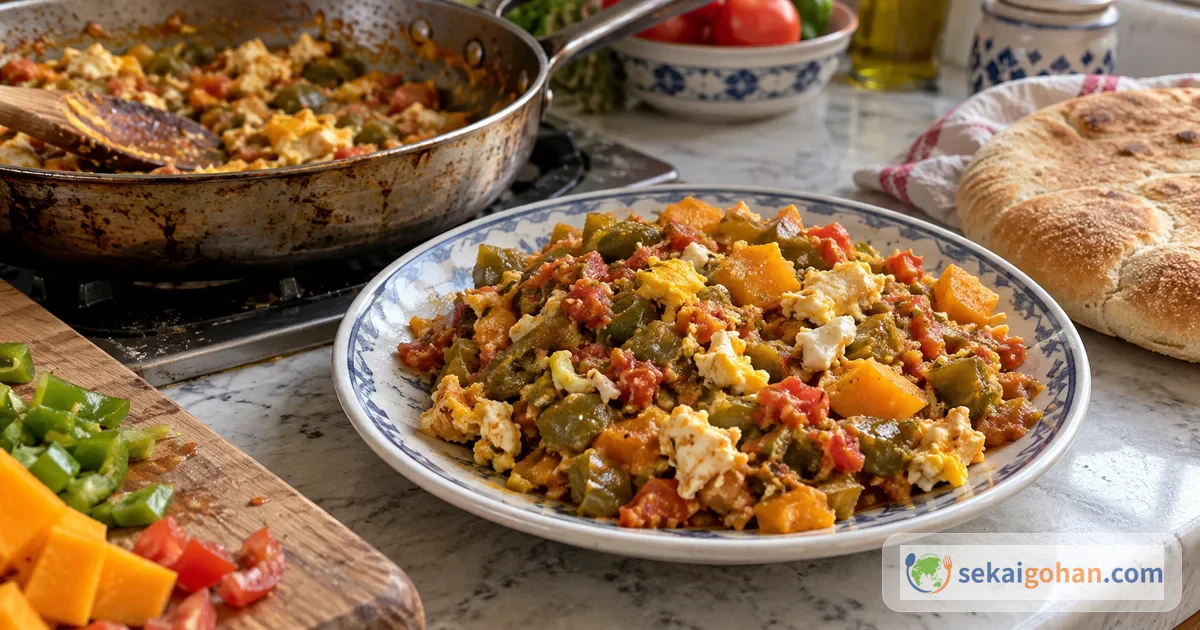
In North Africa the links are grilled and served with couscous or tagine. In France they're tucked into a baguette as a sandwich. Merguez also goes into other dishes, such as the Tunisian egg-and-tomato dish ojja, where the sausage is cooked in the pan rather than served as links on their own.
Harissa, a chili paste, does much of the work. It brings heat, chili flavor and color, and it often shows up next to the sausage on the plate as well. At the harissa festival in Nabeul, in northeastern Tunisia's Cap Bon region, harissa appears in home kitchens, restaurants and street stalls, served alongside merguez, and the spices and chilies vary from producer to producer.
Ingredients: The 4-Pound Batch
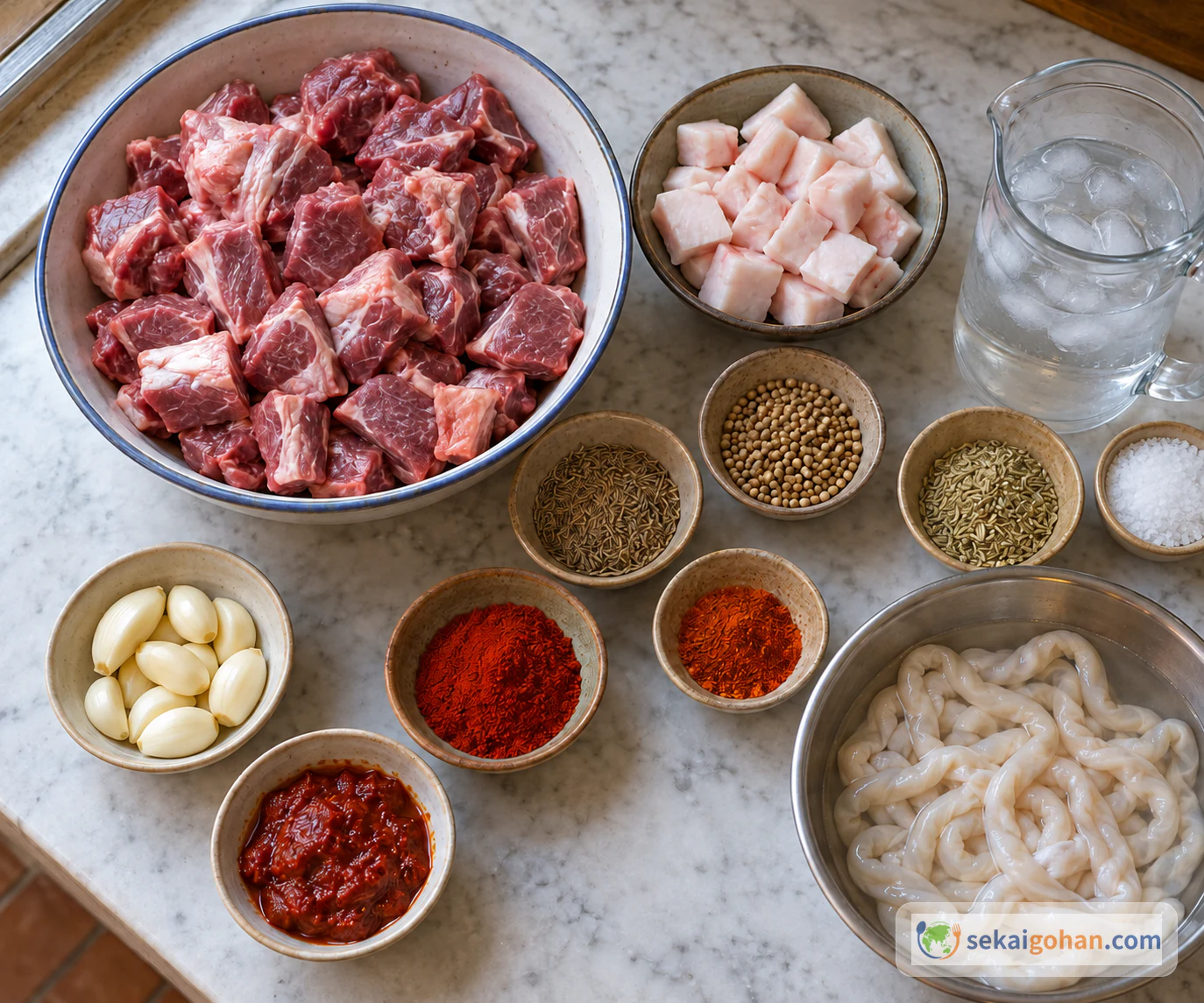
Choosing Lamb, Fat, Spices and Harissa for Merguez
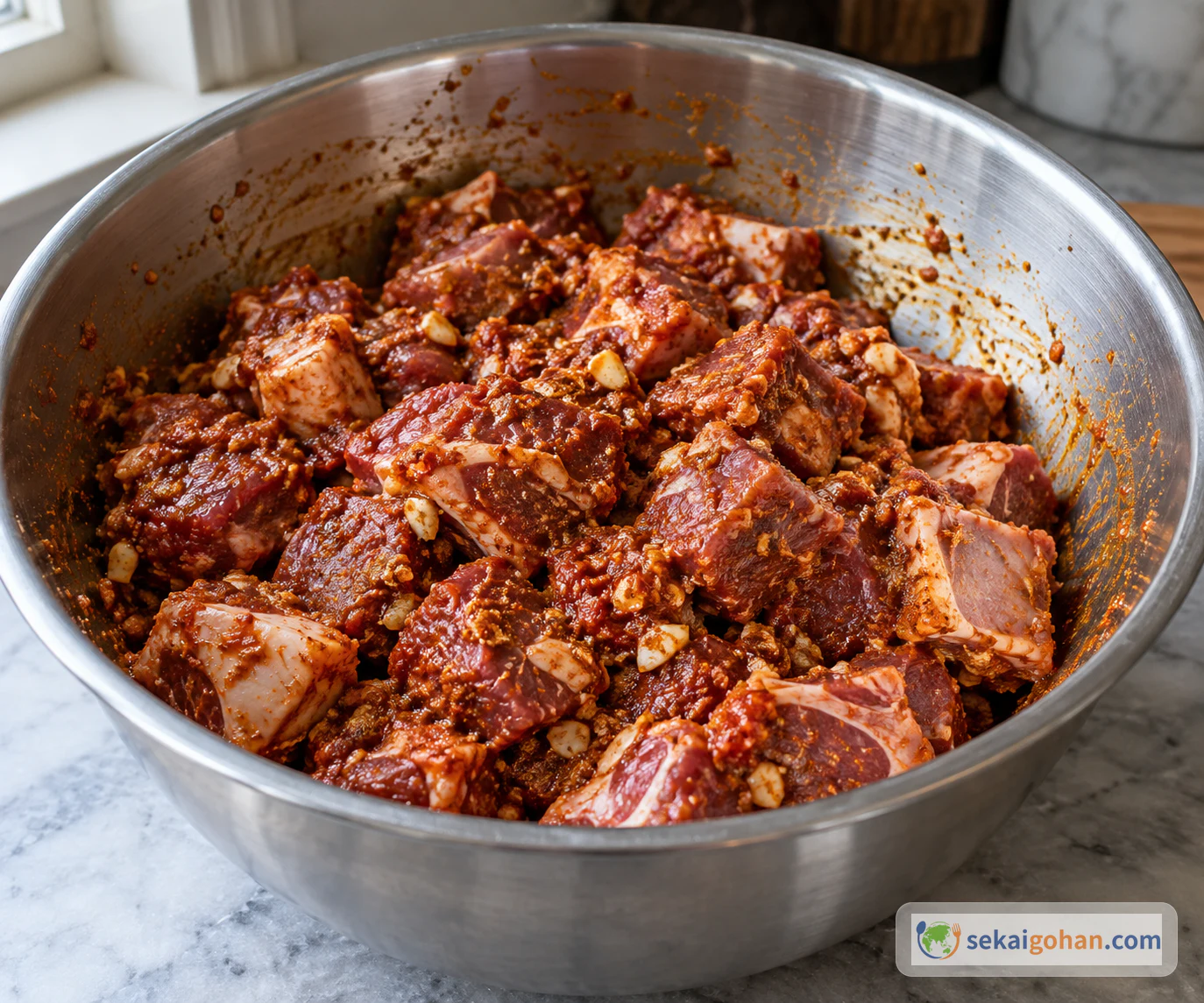
Lamb shoulder. This recipe is written for lamb shoulder, so keep lamb as the main meat. If your supermarket doesn't carry it, ask a butcher or a halal butcher. They also sell ready-made merguez if you'd rather skip the grinding, and many will grind your lamb and fat for you if you don't own a grinder.
Fat. Lamb fat gives the most lamb flavor, but beef or pork fat works too. If you avoid pork, choose lamb or beef fat.
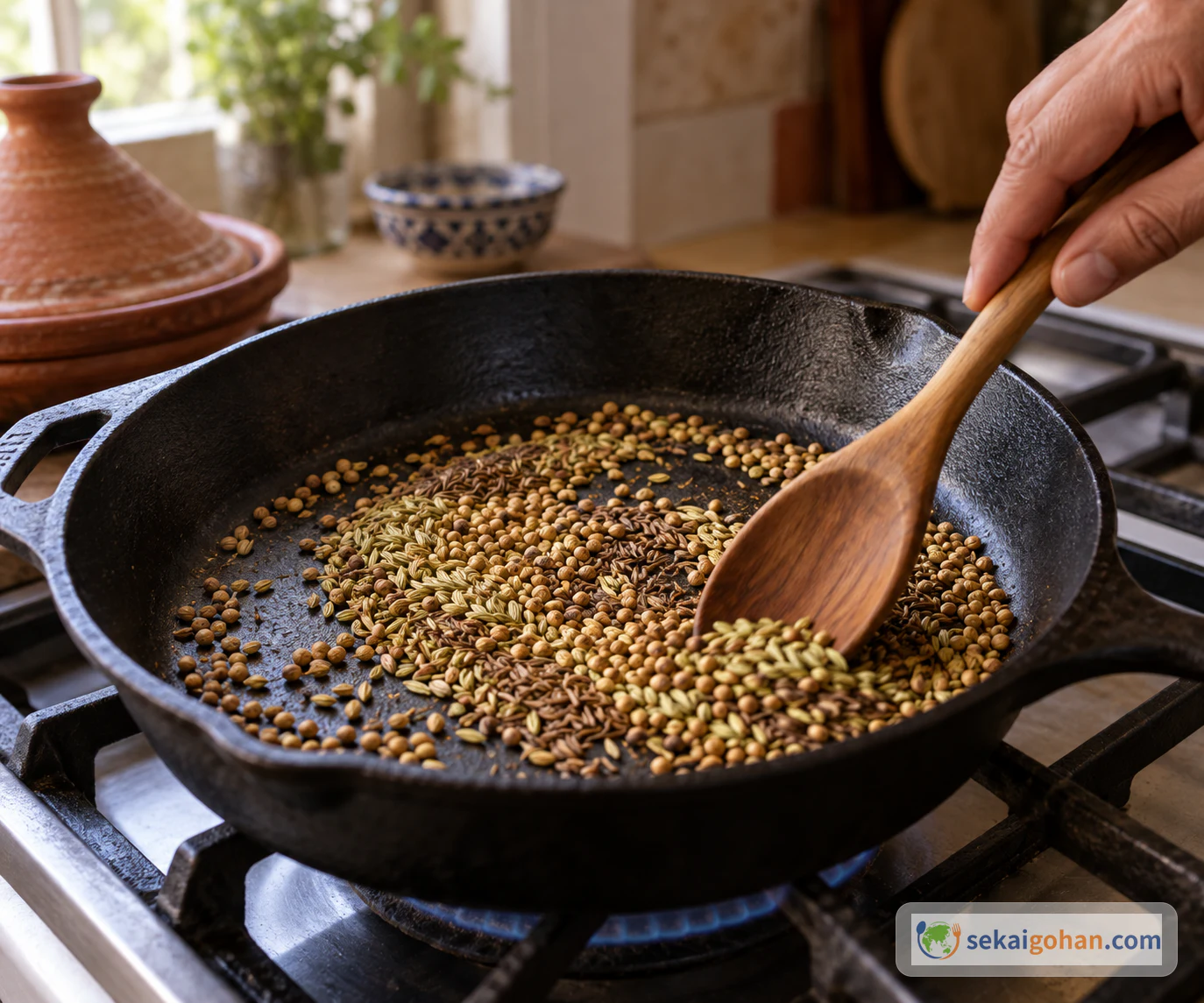
Spices. Toast whole seeds and grind them fresh. Ground cumin, coriander or fennel give a flatter aroma, and their weights don't convert one-to-one from the teaspoon amounts.
Salt. The 2 tbsp measure assumes Diamond Crystal kosher salt, whose crystals are light and flaky. Other salts pack differently into a spoon, so go by the 18 g weight.
Harissa. Commercial harissas differ in salt, heat and acidity, so the same 2.75 oz (75 g) can taste noticeably different from one jar to the next. Read the label for salt and chili content, and taste a little on its own first. If your jar is fiery, use less harissa or less cayenne.
Casings and stuffer. Lamb casings are sold salted or chilled; check that they're labeled for food use.
Equipment
- Cast-iron skillet (for toasting the seeds)
- Spice grinder
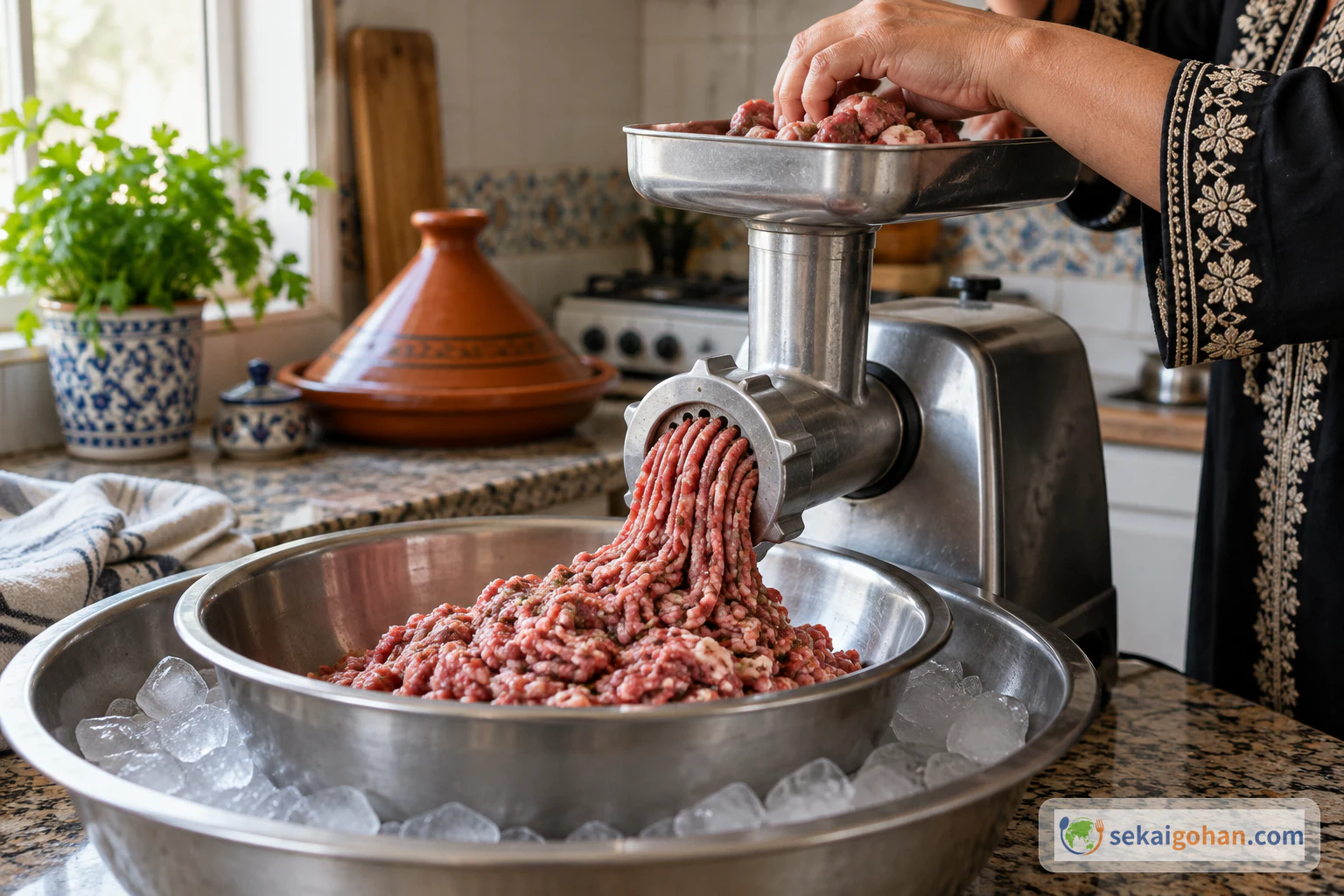
- Meat grinder with a small die
- Two bowls that nest, plus ice for the outer one
- Stand mixer with a paddle attachment
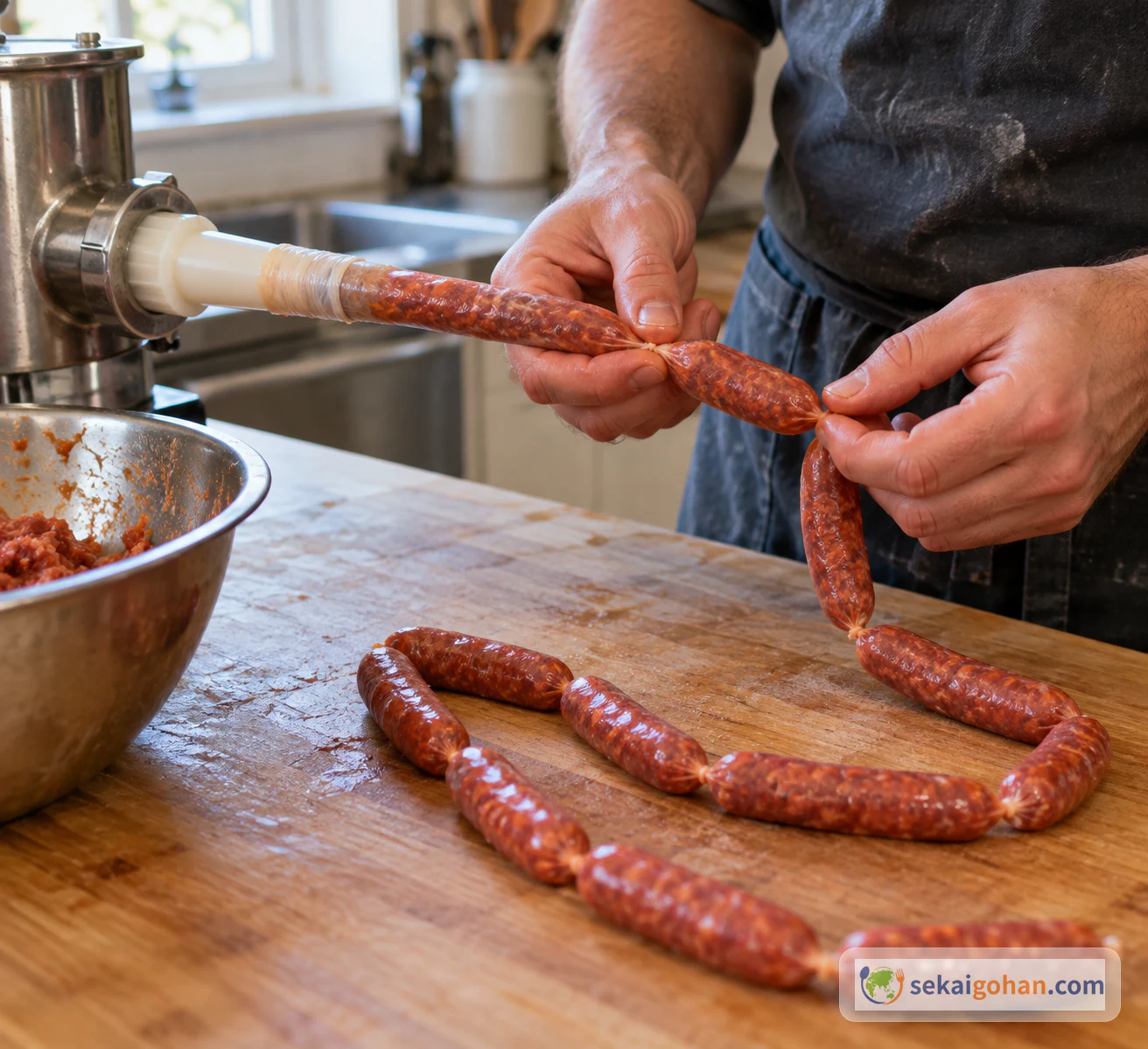
- Sausage stuffer (or a stuffing tube attachment for your grinder)
- Skillet or charcoal grill
- Instant-read thermometer
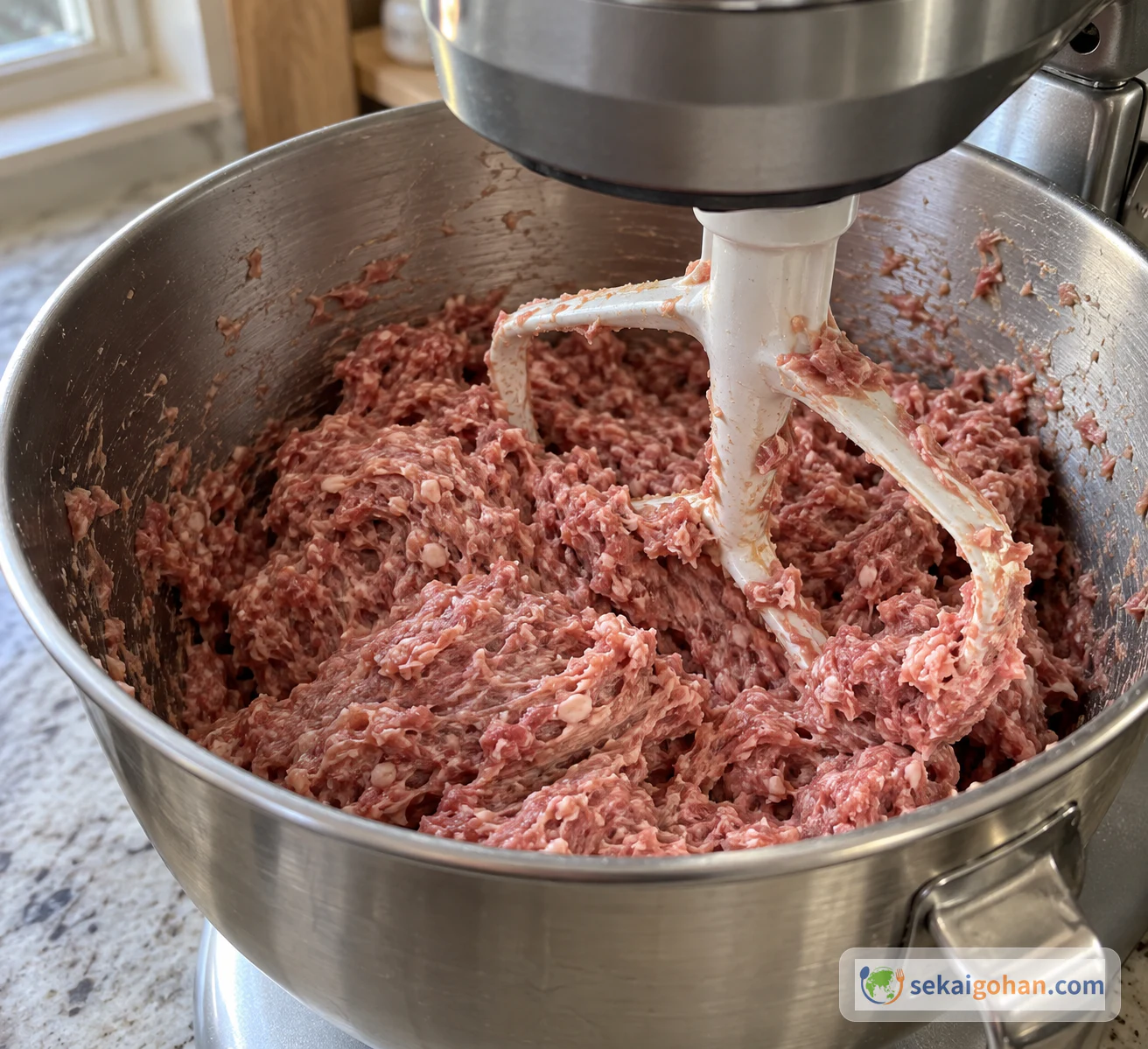
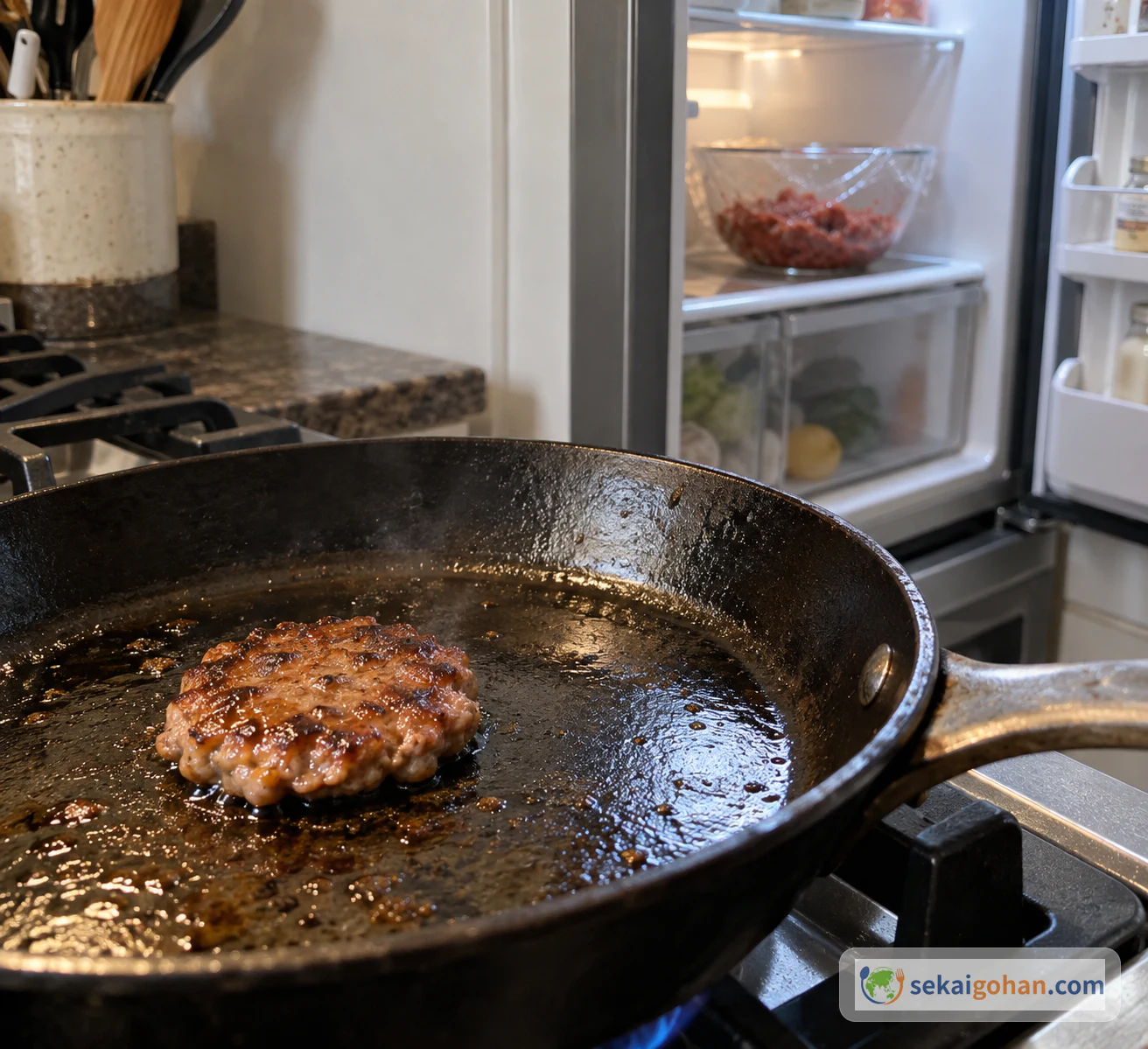
Keep the meat, fat and mixture refrigerated between tasks. Never taste the raw mixture; cook a test patty instead. Ground meat and sausage need to reach 71°C (160°F) in the center, checked with a thermometer, not judged by color or time. Wash hands, boards and equipment after contact with raw meat.
Merguez Troubleshooting
Keep the meat and fat cold from the first cut to the casing, mix until the meat turns sticky, and cook until a thermometer reads 71°C (160°F) in the center of a link. Those three habits matter more than any single spice.
| Problem | Likely cause | What to do |
|---|---|---|
| The cooked sausage is crumbly or dry | The meat and fat warmed up while grinding, or the mixture wasn't mixed until sticky | Chill everything between steps, grind over ice, and mix after adding ice water until the mixture clings together |
| Seasoning tastes uneven | Spices weren't spread over the meat before grinding | Coat the cubes evenly in step 2, and use the test patty to check before stuffing |
| Too hot, or not hot enough | Harissa brands vary widely in heat | Taste the test patty and adjust before stuffing; for the next batch, change the harissa or cayenne |
| Casings split | Overfilled links, or very high direct heat | Fill evenly without straining the casing, and start the links on indirect heat |
| Flare-ups on the grill | Fat dripping onto the coals | Move the links to the indirect side until the flames settle |
| Browned outside, center not done | Cooking only over strong direct heat | Finish over gentler heat and check with a thermometer until the center reaches 71°C (160°F) |
Serving Merguez and Variations
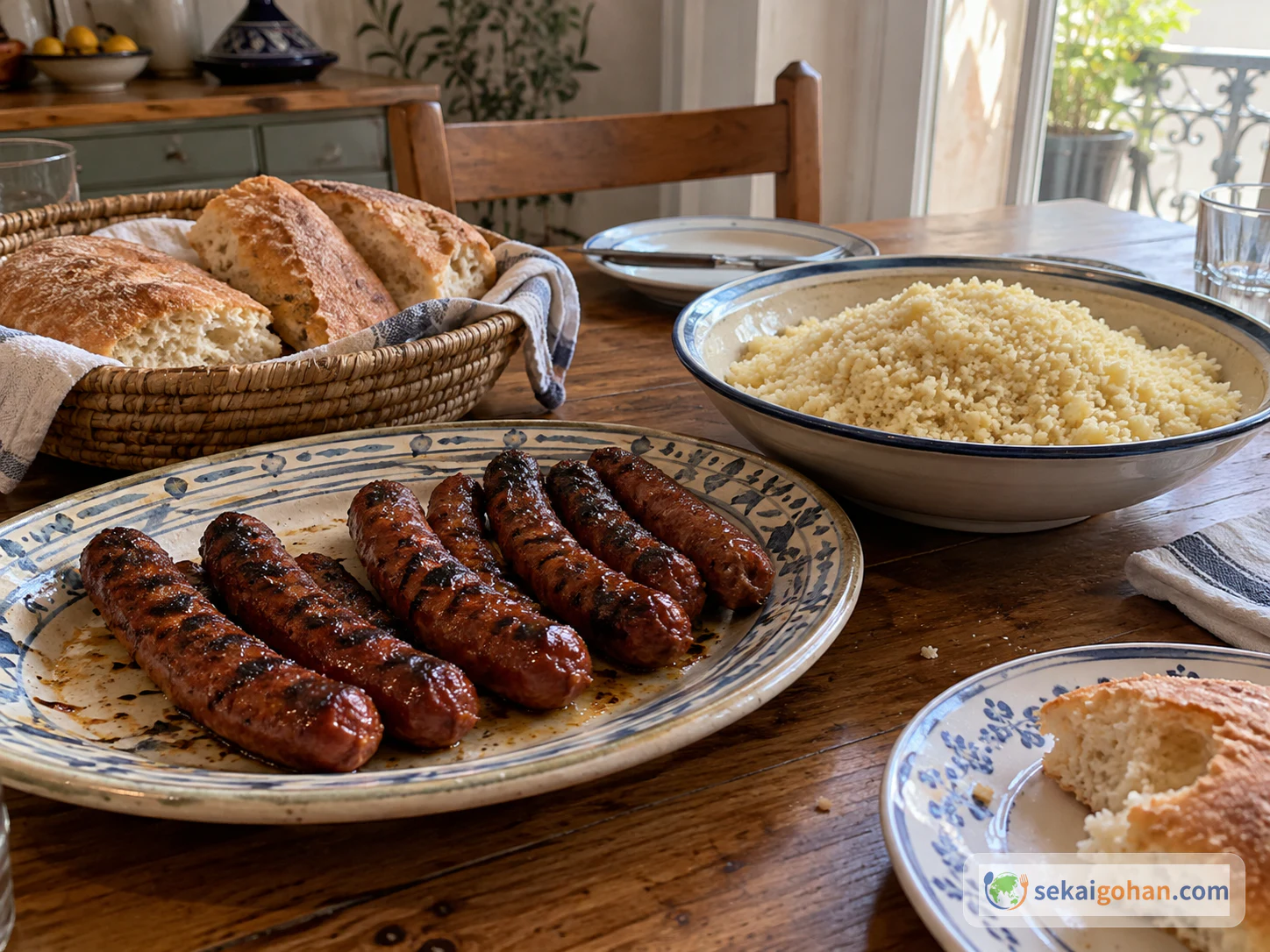
Serve the links with couscous, add them to a tagine, or split a baguette and fill it the French way. Put a dish of harissa on the side, as Tunisian tables do. For a simple meal, plain bread is all you need.
No stuffer? Shape the same mixture into small patties and cook them like the test patty, to 71°C (160°F) in the center. The flavor is the same, though you lose the snap of the casing and the slim shape. You can also cook the mixture loose in a skillet, breaking it up as it browns, and spoon the crumbles over couscous or into bread. For milder heat, use a gentler harissa or less cayenne; it shifts the balance, so it won't taste like the full-heat version.
Frequently Asked Questions
Is merguez Moroccan?
It's a Maghrebi sausage, found across North Africa. This recipe uses Moroccan harissa, and Tunisian tables pair merguez with harissa too.
Why 71°C (160°F) and not a lower temperature?
Ground meat and sausage should reach 160°F (71°C) in the center, the safe minimum internal temperature. Some recipes call for 155°F (68°C), which falls below it. Cooking time depends on link thickness and heat, so trust the thermometer, not the clock.
Can I use beef or pork instead of lamb?
Keep lamb shoulder as the main meat here. Merguez made with beef or veal exists, but those are different formulas. The fat is up to you: lamb, beef or pork.
What if I can't find harissa?
It's worth tracking down, since harissa carries the heat and chili flavor and replacing it changes the sausage considerably. Search for it under the name "harissa" and compare labels for chili content and salt.
How should I store leftovers?
Keep raw and cooked sausage refrigerated, and reheat leftovers until steaming hot.