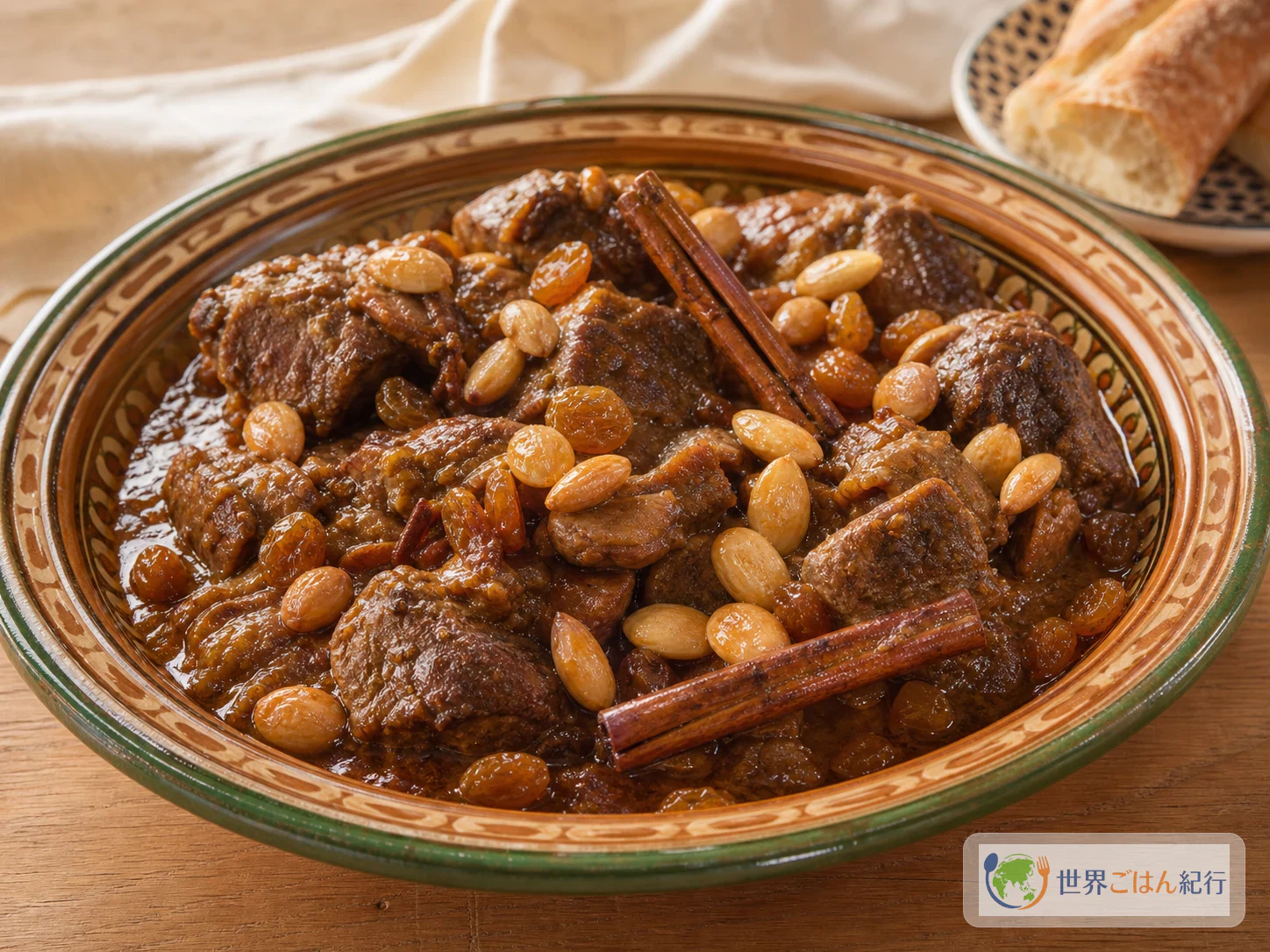
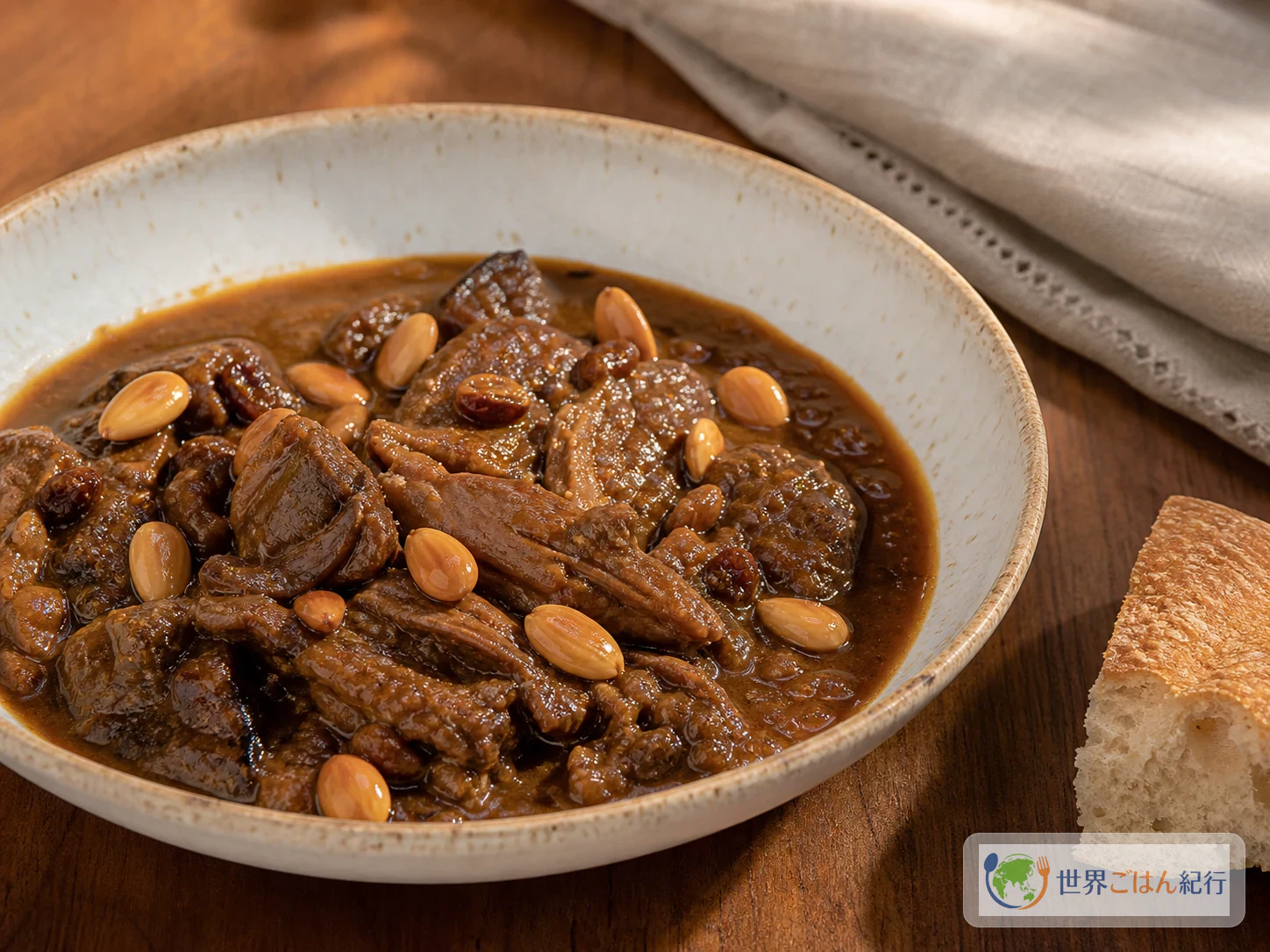
Lift the lid a little, and behind the sweet scent of cinnamon comes the deeper smell of lamb fat and onion. With raisins and honey in the pot, you might expect something sugary. The first taste, though, is the savor of lamb and the warmth of ginger. Mrouzia (المروزية) is Fez's festive lamb stew, simmered with spices and fruit, and the sweetness goes in only after the meat has turned tender.
Mrouzia, a Festive Dish from Fez
Mrouzia is a Fez dish for Eid al-Adha, the feast of sacrifice, and one of Morocco's representative dishes alongside tagine and couscous. Moroccan cooking differs by region and layers Berber, Arab-Andalusian, and Jewish traditions, so mrouzia is better understood as a dish of Fez than simply as "Morocco's sweet lamb." For more background, read about Fez food culture and Moroccan gastronomy.
The spelling varies when the name is transliterated.
Eid al-Adha and regional differences
The meat from the feast of sacrifice doesn't all go into one meal, and mrouzia uses several cuts, including shoulder, neck, shank, ribs, and leg. The timing varies by region. In one region it is eaten in the first two days of Eid, while in another it comes toward the end of the seven-day celebration. In Rabat, a similar sweet-and-salty dish is sometimes called "mouassel." The name, the day, the cut, and the fruit all change from home to home.
The old way of making it
Old-style mrouzia was simmered for a long time from leftover bones and meat, so nothing went to waste. The meat was also preserved by cooking off its moisture, covering it in fat, and storing it in clay vessels, which was the food culture of an era without refrigerators. Don't reproduce this method at home or keep the stew at room temperature.
The one rule to keep
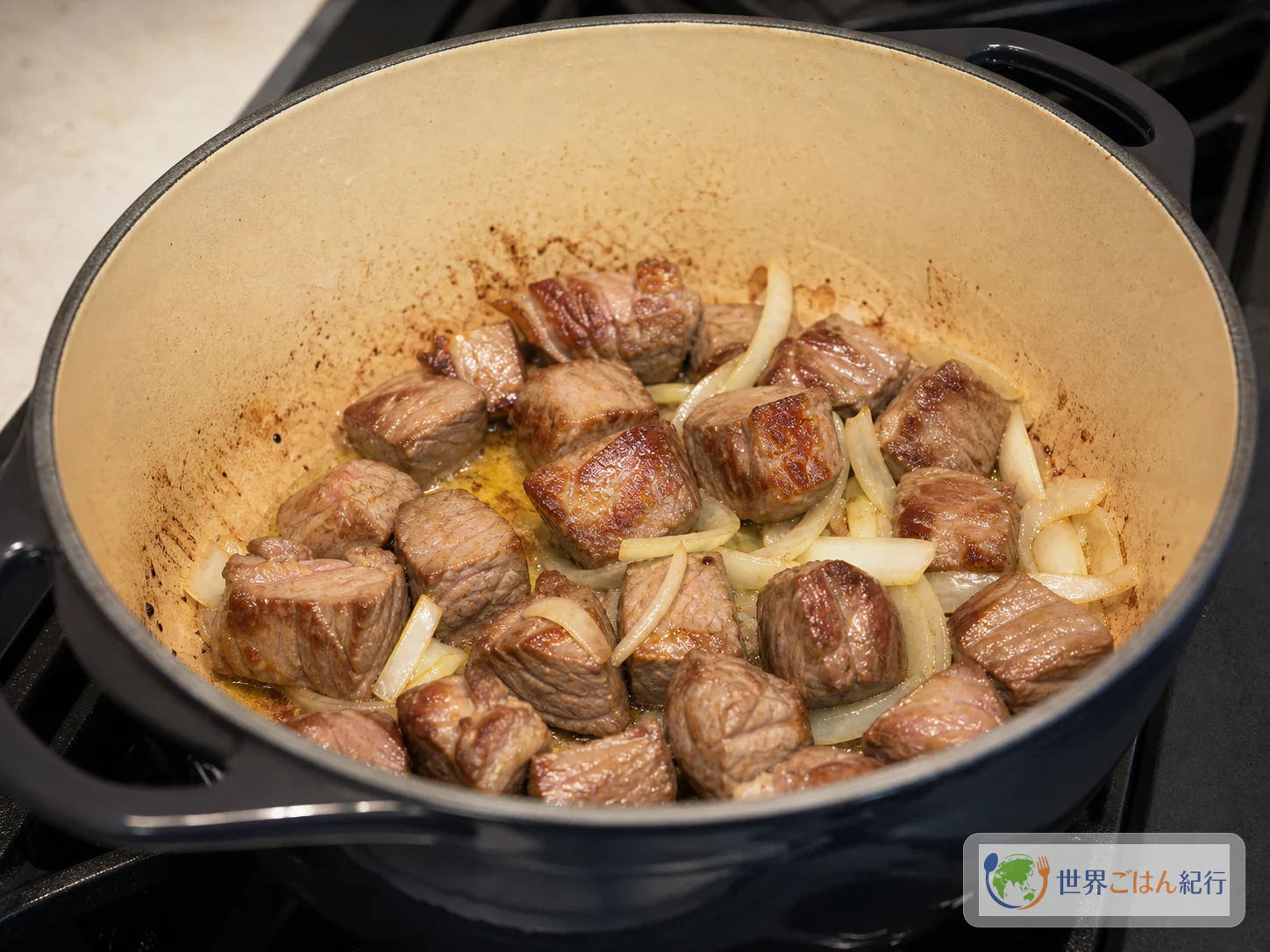
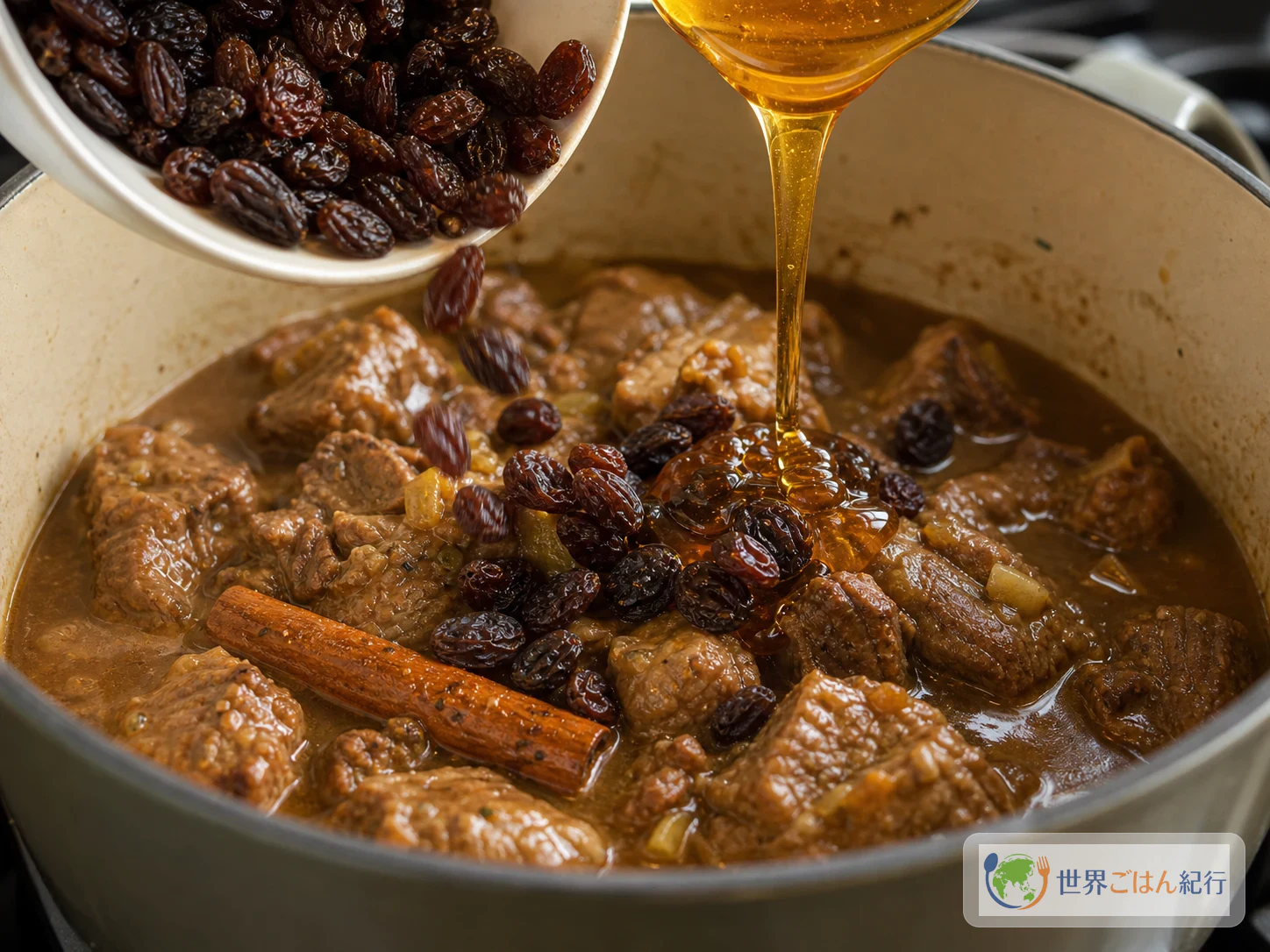
Some local recipes use bone-in shoulder, neck, and shank, but at home, lamb shoulder cut into 3–4 cm cubes is easier to handle in a large pot. Whatever cut you use, the one thing to keep is the order of loosening the meat first and thickening the sweetness afterward. Add the raisins and honey once the meat is nearly tender, then reduce the sauce at the end, and you can carry the scent of the festival into a home pot.
Ingredients, and the Core of Flavor to Keep
The amounts below serve four. The result shifts with the sweetness of the raisins, the cut of meat, and the strength of the spices. This version is built for home cooks: it brings out the savor of lamb first and adds honey modestly.
No wheat or dairy is used. It uses almonds, so if you have a nut allergy, leave out the garnish. Commercial spice blends can contain sesame, nuts, celery, chile, and more, so check the ingredient label before buying.
If you do not have ras el hanout, mix 1 tsp cumin, 1 tsp coriander, 1/2 tsp cinnamon, 1/4 tsp black pepper, and 1/2 tsp paprika. It will not taste like a commercial product, but you can build the order of earthy aroma, sweet aroma, and the pungent warmth that comes after. If you increase only the cumin, it moves toward curry rather than mrouzia, so keep a small amount of cinnamon.
Should you buy the aromatic spice as a jar?
If you plan to cook tagine, couscous, and sautéed pumpkin or carrots after mrouzia, a jar of North African-style spice mix is worth buying. A typical blend contains coriander, caraway, chile, garlic, cinnamon, and clove. It also works in Tunisian and Algerian cooking, and it is an easy way to try the aroma of ras el hanout from a single jar.
People who dislike caraway or chile, or who will make this only once, can skip the jar and use the homemade blend above. When you buy, check the net weight and whether the ingredients include chile.
Choosing Ingredients for Mrouzia
Mrouzia suits people who enjoy the aroma of lamb and the taste of fruit with meat. When you cook it away from Morocco, the question is how far you can substitute. It's easier to keep the center of the dish and know in advance which changes will shift the aroma or texture.
| Where you hesitate | Closer to authentic | Choice in a home kitchen |
|---|---|---|
| Meat | Bone-in shoulder, neck, shank, and so on | 1.25 lb (600 g) cubed lamb shoulder. Increase to 1.75 lb (800 g) if bone-in |
| Spices | Ras el hanout with ginger, cinnamon, saffron | Buy a jar of the blend, or substitute cumin and coriander |
| Sweetness | Raisins and honey | Adjust from 3.25 oz (90 g) raisins and 2 tbsp honey |
| Garnish | Blanched almonds | Dry-toast unsalted almonds. Omit if nuts cannot be eaten |
| Staple | Scooping the sauce with bread | Choose from bread, unsalted couscous, or firmly cooked white rice |
Meat
If you switch to bone-in lamb, use 1.75 lb (800 g) including bone in place of 1.25 lb (600 g) of boneless meat. Don't add extra liquid at the start. Keep the meat covered by one half to two thirds, and simmer 20–30 minutes longer, until a skewer slides in. Beef or goat also work in place of lamb. With 1.25 lb (600 g) beef shank, simmer 20–30 minutes longer than lamb while watching the liquid. The aroma of lamb fat will be weaker, and the stew holds together better if you keep the order of cinnamon and ginger rather than adding more ras el hanout.
Spices
Ras el hanout is worth buying if you will keep using it in tagines and vegetable dishes, such as Moroccan tagine or zaalouk. If you're making mrouzia just once, a substitute of cumin and coriander from your cupboard keeps the outline of the dish. Saffron builds aroma even in a small amount, but the dish works without it. Adding 1/4 tsp turmeric brings the color closer, but the flowery aroma won't come back, so choose based on whether you only want the yellow.
Sweetness
If the sweetness of raisins worries you, choose ones with some acidity, and start with 2 tbsp honey instead of 3 tbsp. For a lamb-forward version, use 1 tbsp honey and reduce the raisins to 2 oz (60 g). Keep the cinnamon and ginger as they are, though. With less sweetness, the layers of spice keep the stew from tasting like plain salty meat.
Almonds
Almonds add toastiness and crunch, but they aren't central to mrouzia. If there's an allergy at the table, leave out the garnish and finish with the raisins alone. If you switch to another nut, check the allergen labeling on the product.
Method
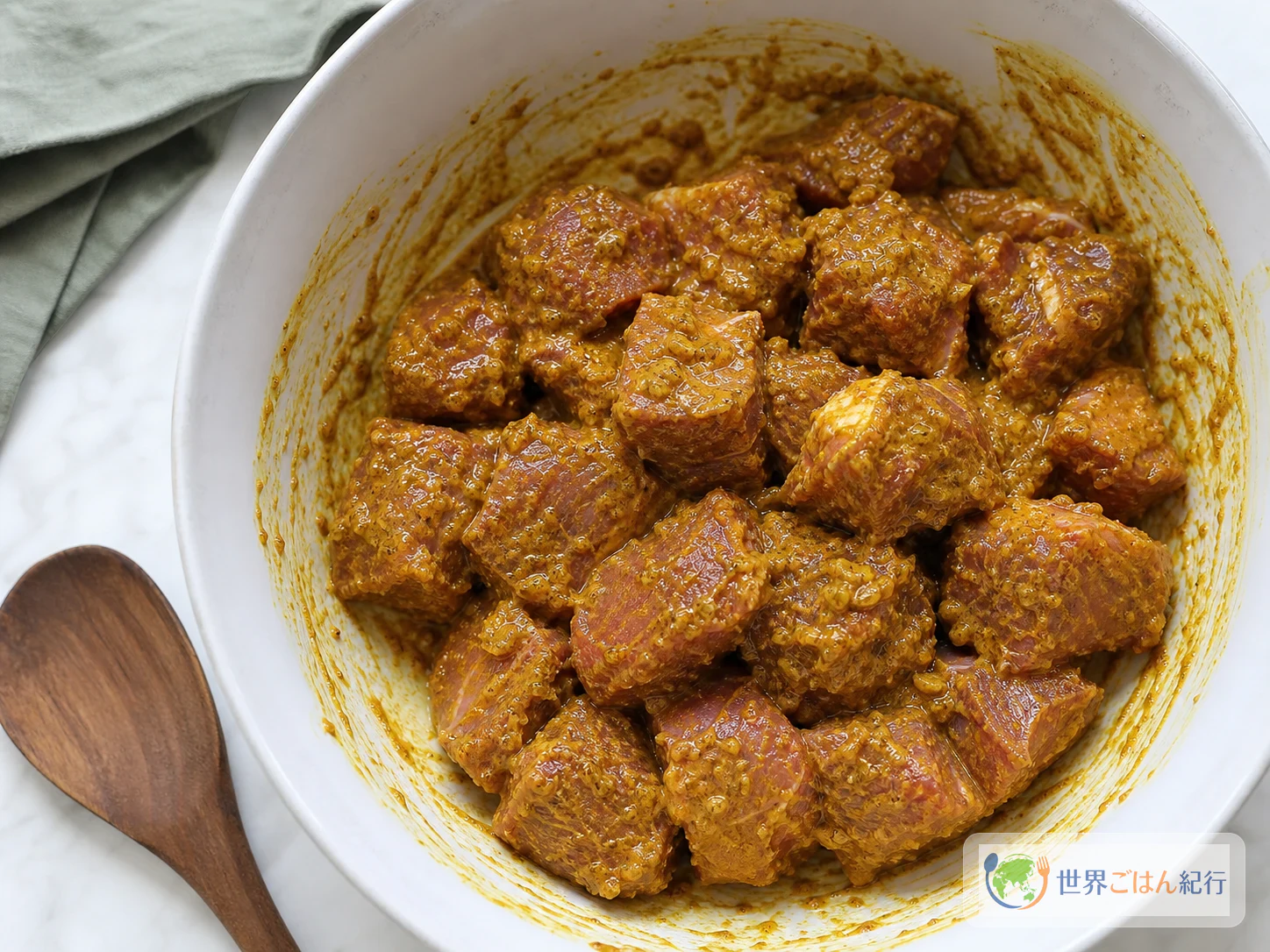
If you do the marinating the night before, the aroma deepens. If you are short on time it can be made with 30 minutes, but since the spices have less time to settle on the surface of the meat, check and adjust the aroma of the sauce at the end.
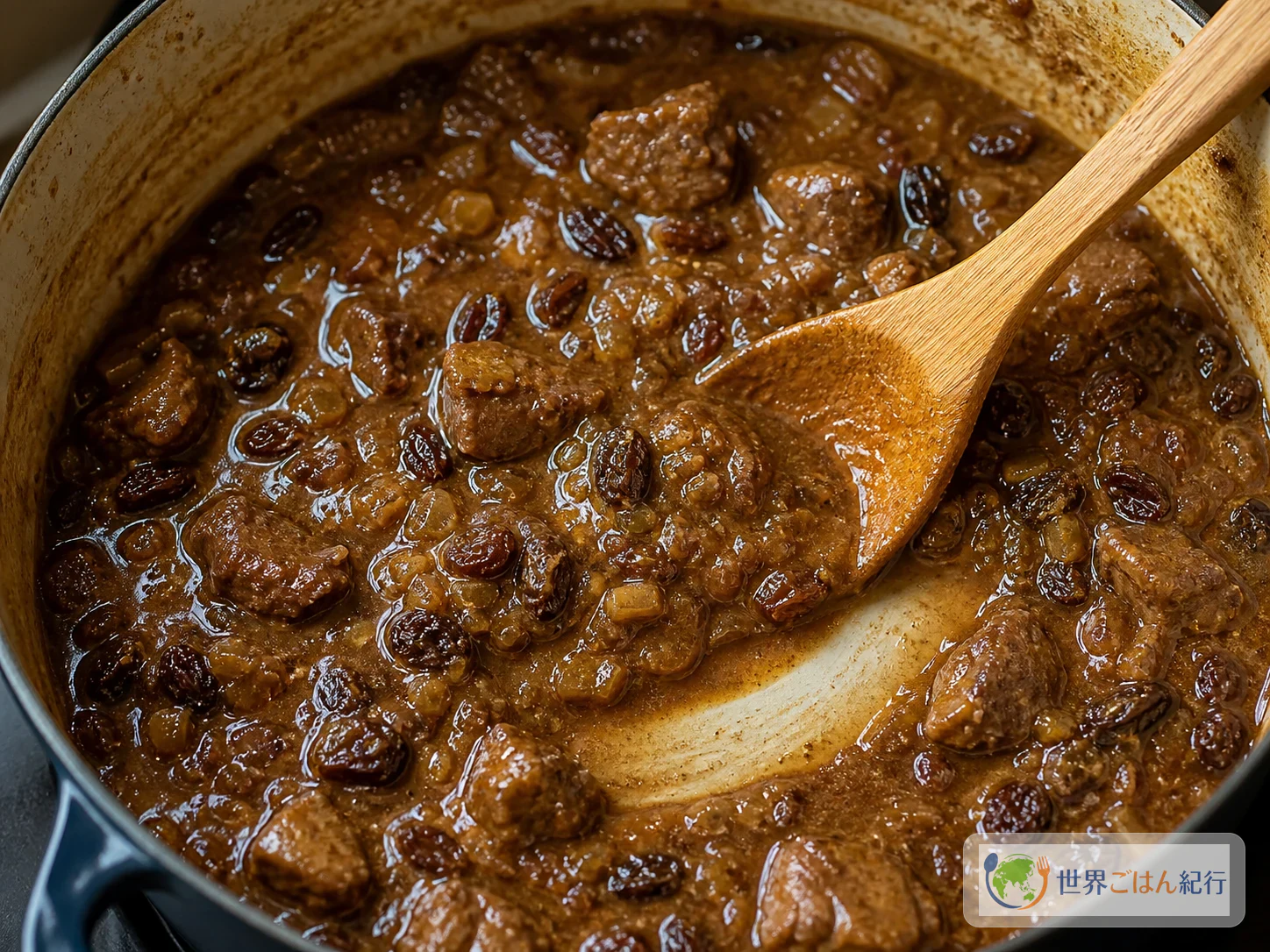
If the bottom of the pot is sticky and the sauce clings thickly to the meat, set the meat aside on a plate. Add 2 tbsp boiling water at a time and thin it over low heat, bring it back to where the trace of a wooden spoon disappears quickly, and then return the meat. Do not pour in cold water all at once, because the fat separates easily and the temperature of the sauce drops.
Mrouzia Troubleshooting
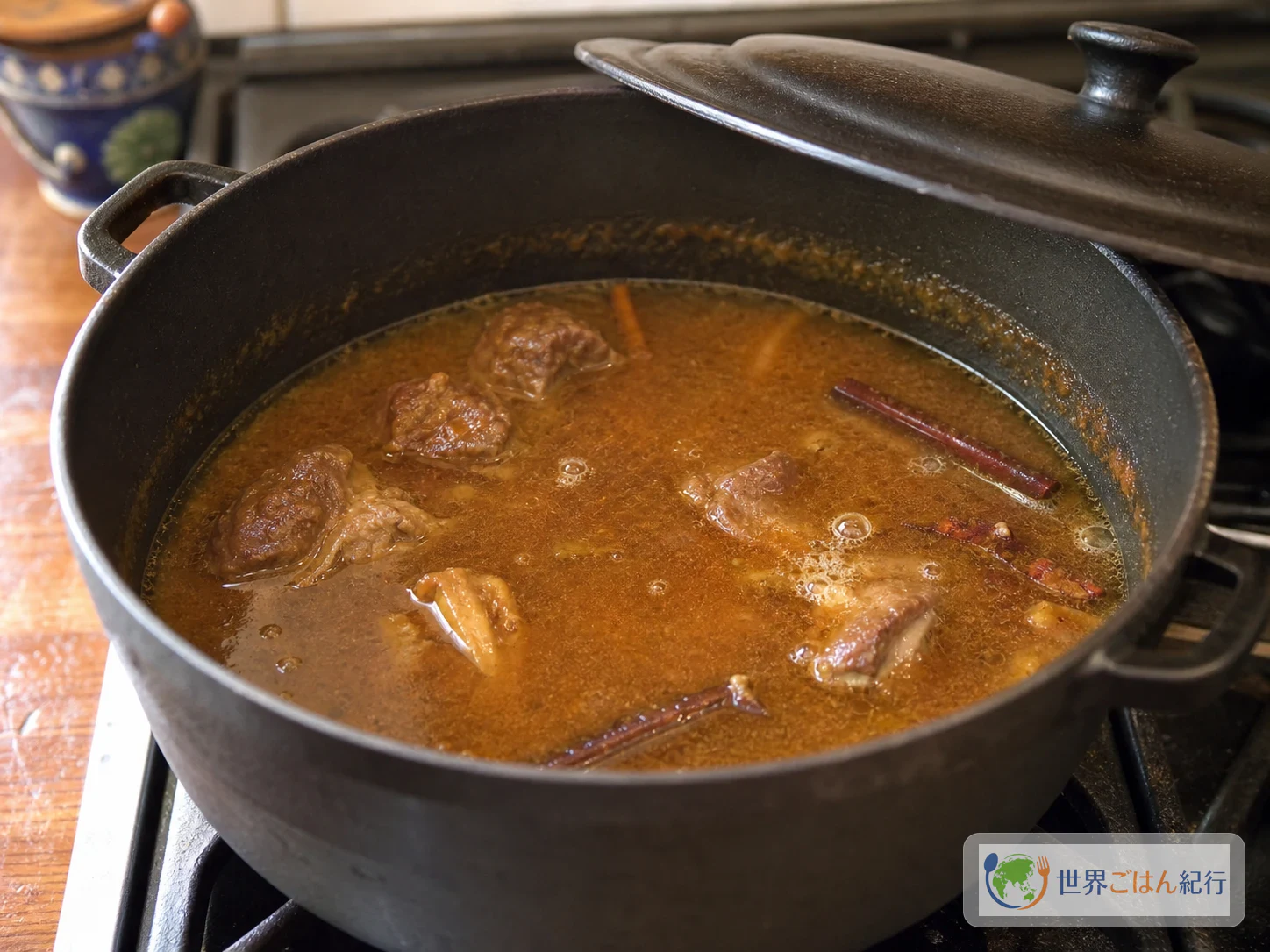
Time makes the meat tender, not big bubbles. A hard boil drops the liquid suddenly, tightens the surface of the meat, and can scorch the bottom of the pot. Keep small bubbles over low heat with the lid on, and replace only the lost liquid with boiling water.
Cook lamb steaks and roasts to 145°F (63°C) and rest them for 3 minutes; that is the safe minimum. In a stew like mrouzia, though, reaching 145°F (63°C) and the shoulder muscle loosening are separate things. Use the temperature to confirm safety, and judge readiness by how easily a skewer goes in and how thick the sauce is.
The sweetness changes with the raisin variety and how dry they are. Start with 2 tbsp honey, taste before turning off the heat, and add 1 tbsp if needed. If you start with the maximum, you have fewer ways to pull the sweetness back.
If the finished stew still tastes too sweet, resist adding a lot of acid to the pot. Serve it with unsalted couscous or warm vegetables so each bite carries less sauce, and next time start with 1 tbsp honey and 2 oz (60 g) raisins.
Serving and Storing Mrouzia
Serving
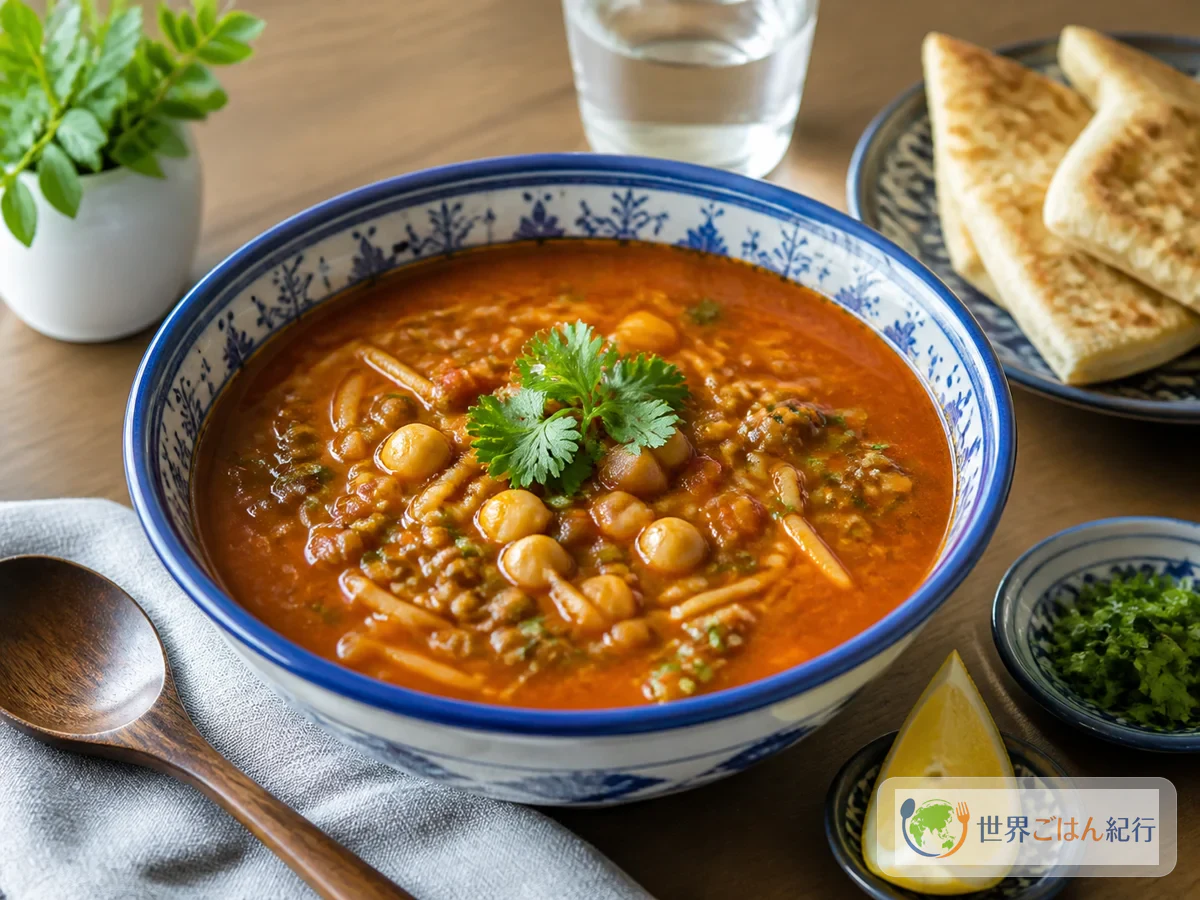
Locally, the sauce is scooped up with bread. If you serve couscous or rice instead, keep the staple's salt modest; the sauce is rich, and an over-seasoned staple pushes saltiness ahead of the sweetness of the raisins. An acidic salad on the side makes the sweet stew easier to finish. For a next dish from the Moroccan cuisine overview, harira of beans and tomato keeps the richness of lamb from carrying through the whole meal.
Storage
Once the stew has cooled a little, move the meat and sauce into a shallow container, keep the almonds separate, and refrigerate. Eat it within 2 days, counting the day it was made.
Reheating and leftovers
To reheat, add 2 tbsp water to the pot and warm over low heat for 8–10 minutes, until it is steaming through to the center. If the sauce starts to scorch, add water a teaspoon at a time, and if it has loosened, take off the lid for just 1–2 minutes. The microwave sets the sauce at the edges first, so heat small portions for a short time. The next morning, tear bread into small pieces and scoop up the sauce; it makes a fine breakfast without cutting the meat any smaller.
Frequently Asked Questions
Is mrouzia a very sweet dish?
It can be, but it doesn't have to taste like a confection. With 3.25 oz (90 g) raisins and 2 tbsp honey, you taste the lamb and spices first. If sweet meat dishes are new to you, start with 1 tbsp honey and add sauce a little at a time at the table.
Is ras el hanout essential?
No. Use 1 tsp cumin, 1 tsp coriander, 1/2 tsp cinnamon, 1/4 tsp black pepper, and 1/2 tsp paprika instead. It won't taste exactly like a commercial blend, since blends differ by product.
May I try the old method that could be stored at room temperature?
Not for storage at home. The old preservation relied on other conditions, such as cooking off the meat's moisture thoroughly and covering it in fat. Always refrigerate the home version and eat it within 2 days.
Does the taste fall apart without almonds?
No. The almonds are a finish for toastiness and texture, and without them the flavor of the meat, raisins, honey, and spices remains. If you have a nut allergy, it's safer to leave out the garnish than to swap in white sesame automatically.