Ingredients and steps on one page. Print it, or choose “Save as PDF” in the print dialog.
Sekai Gohan
Carbonnade Flamande: Belgian Beef Stew Braised in Beer
Ingredients
Main ingredients
| Ingredient | Amount | Substitutes & notes |
|---|---|---|
| Beef chuck (in one piece) | 2.25 lb (1 kg) | Beef short rib or shank also works. A cut with a good balance of fat and lean |
| Belgian beer (brown ale) | 2 cups (500 ml) | A dark beer or stout can substitute (see below) |
| Onions | 4 (thinly sliced) | The large amount of onion is the base of the sauce's sweetness |
| Bacon | 3.5 oz (100 g) | Cut slab bacon into 0.5 inches (1 cm) cubes |
| Brown sugar | 2 tbsp | Light brown sugar works |
The flavor of carbonnade is decided by the beer. Ideally use a Belgian brown ale (Leffe Brune, Chimay Red, Westmalle Dubbel and so on). Its sweetness and malt depth are ideal for a braise. If you can't get one, choose a dark, malty beer with gentle bitterness, such as a dark lager. A stout works too, though it is bitter and needs the brown sugar to balance.
Avoid lagers and pilsners. Their bitterness stands out and does not balance with sweetness even after braising.
Seasonings and spices
| Ingredient | Amount | Substitutes & notes |
|---|---|---|
| Dijon mustard | 2 tbsp | Whole-grain mustard works |
| Red wine vinegar | 2 tbsp | Apple cider vinegar works |
| Thyme | 4 sprigs | 2 tsp dried thyme works |
| Bay leaves | 2 | — |
| Garlic | 3 cloves (crushed) | — |
| Soft (low-protein) flour | 2 tbsp | All-purpose flour is fine |
| Butter | 1 oz (30 g) | — |
| Salt | 1.5 tsp | Adjust to taste |
| Black pepper | 1/2 tsp | — |
| Parsley | 2 tbsp | Chopped to 2–3 mm. For finishing |
| Sandwich bread | 2 slices | Spread with mustard and sink into the sauce (see below) |
The hidden touch in carbonnade is bread spread with mustard. Spread plenty of Dijon on the bread and float it on the sauce, mustard side down. As the stew cooks, the bread dissolves and adds body and flavor to the sauce. It is a piece of Flemish home-cooking wisdom. Where Czech svíčková thickens with cream, carbonnade thickens with bread: both are beef braises, but the approach differs.
Side (frites)
| Ingredient | Amount | Notes |
|---|---|---|
| Potatoes | 1.75 lb (800 g) | A waxy-to-all-purpose potato; fry twice |
| Vegetable oil | about 1.25 quarts (1.2 L) | A guide is 2 inches (5 cm) deep in an 8 inches (20 cm) pot. In Belgium, beef fat is used |
| Salt | 1/2 tsp | Sprinkle on freshly fried frites. Add more to taste |
| Mayonnaise | 6 tbsp | 1 tbsp per person. In Belgium, mayonnaise rather than ketchup |
Steps
1Prepare and sear the beef
20 min
Cut the beef into large 2 inches (5 cm) chunks. Large cuts that resist falling apart are traditional for carbonnade. Coat all sides with 1 tsp salt and black pepper, then dust evenly with 2 tbsp flour. The flour absorbs moisture from the meat and forms a thin film that helps browning.
Put 15 g butter and 1 tbsp oil in a large pot and heat over high heat. Add the beef without crowding (searing in two batches is best) and sear 2–3 minutes per side until deeply browned. The browning decides the color and deep flavor of the sauce. Remove the seared meat to a plate.
2Cook the onions until golden-brown
25 min
Add 15 g butter to the same pot and cook the bacon over medium heat for 5 minutes to render the fat. Add the 4 sliced onions and cook over medium-low heat for 20 minutes, until the volume has reduced by more than half, everything is a deep, glossy amber, and a thin light-brown film forms on the bottom of the pot.
This is the most important step for the flavor of carbonnade. As the water in all those onions slowly cooks off and the sugars caramelize, a deep sweetness develops. If the bottom threatens to burn, add 2 tbsp water and scrape it up; this deglazing layers on more flavor. Add the 3 cloves of garlic and cook 2 minutes to release the aroma.
3Start braising in the beer
10 min + 4 hours of simmering
Return the beef to the pot and pour in 2 cups (500 ml) Belgian beer. The beer should about cover the meat and onions; if short, add ½–¾ cup (100–200 ml) water.
Add 2 tbsp brown sugar, 2 tbsp wine vinegar, 4 sprigs thyme and 2 bay leaves. Spread plenty of Dijon mustard on one side of 2 slices of bread and float them on the surface of the sauce, mustard side down.
Bring to a boil once over high heat, skim carefully, then cover and simmer over low heat for at least 3 hours, ideally 4. Every hour, lift the lid, check the liquid, and add ½ cup (100 ml) water at a time if needed.
Braising in the oven is steadierIf holding a low flame on the stove for 4 hours is difficult, braise in the oven at 325°F (160°C) for 3.5–4 hours. Put the whole pot in the oven. The temperature stays even, so there is no worry about scorching.
4Finish the sauce
15 min
When the braise is done, the bread should have dissolved completely. Remove the thyme sprigs and bay leaves. Taste and adjust with salt and pepper. If it lacks sweetness, add 1 tsp brown sugar; if it lacks acidity, add 1 tsp vinegar.
If the sauce is thin, remove the lid and reduce over medium heat for 10–15 minutes. The ideal consistency "just coats the spoon." The meat should be tender enough to fall apart when touched with a fork.
5Make the frites (Belgian-style twice-fried potatoes)
30 min
Cut the potatoes into 0.5 inches (1 cm) square sticks, soak in water for 10 minutes to remove starch, and pat dry.
Heat the oil to 325°F (160°C) and fry the potatoes for 6–7 minutes. They should not take on color yet but should be cooked through. Remove and rest 5 minutes.
Raise the oil to 375°F (190°C) and fry again for 2–3 minutes until crisp and golden. Sprinkle with salt and they are done. This double frying is the secret of Belgian frites, giving a crisp outside and fluffy inside.
6Plate
5 min
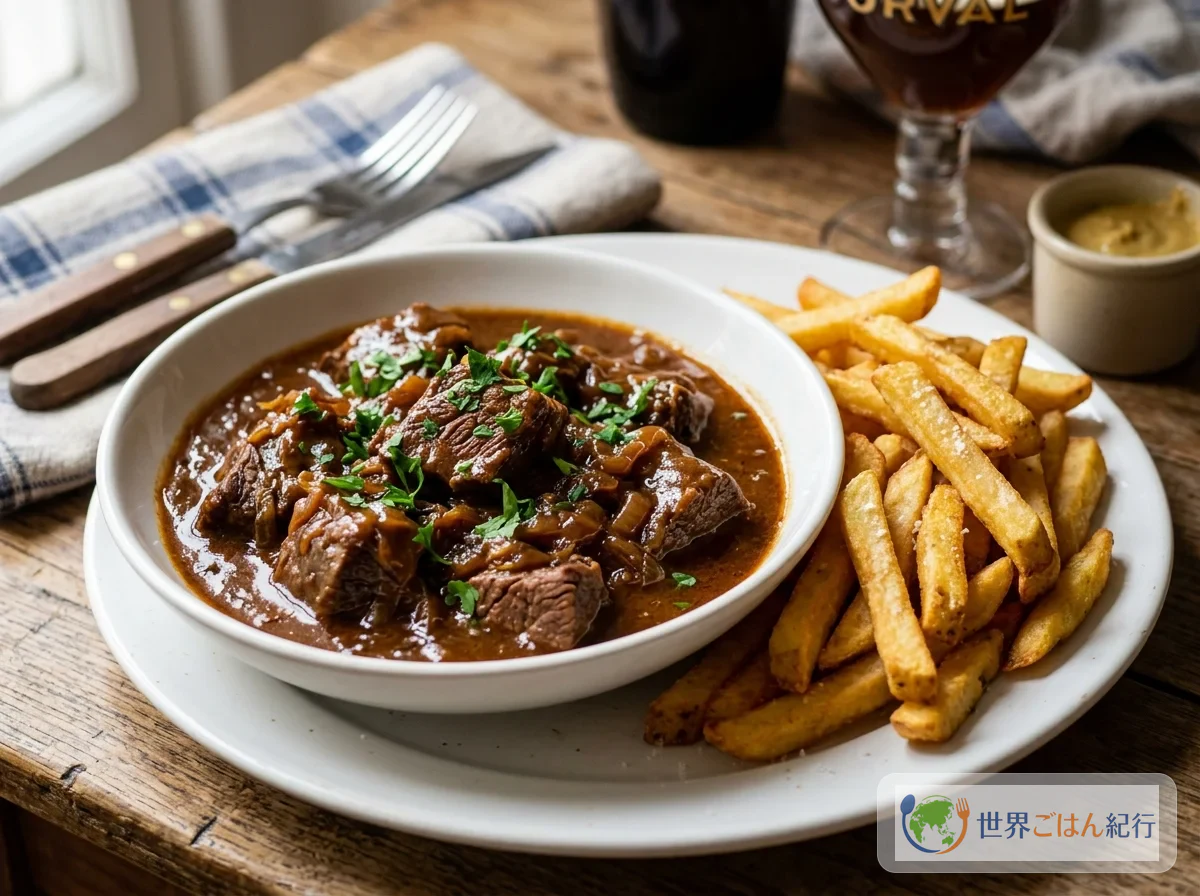
Ladle plenty of carbonnade into a deep plate and set the frites alongside. Chop the parsley to 2–3 mm and scatter it over the surface, and serve mayonnaise on the side. A plating that is easy to eat lets the sauce spread thinly across the bottom of the plate with the corners of the beef just showing. In Belgium, it goes without saying that frites are eaten with mayonnaise, not ketchup.