Ingredients and steps on one page. Print it, or choose “Save as PDF” in the print dialog.
Sekai Gohan
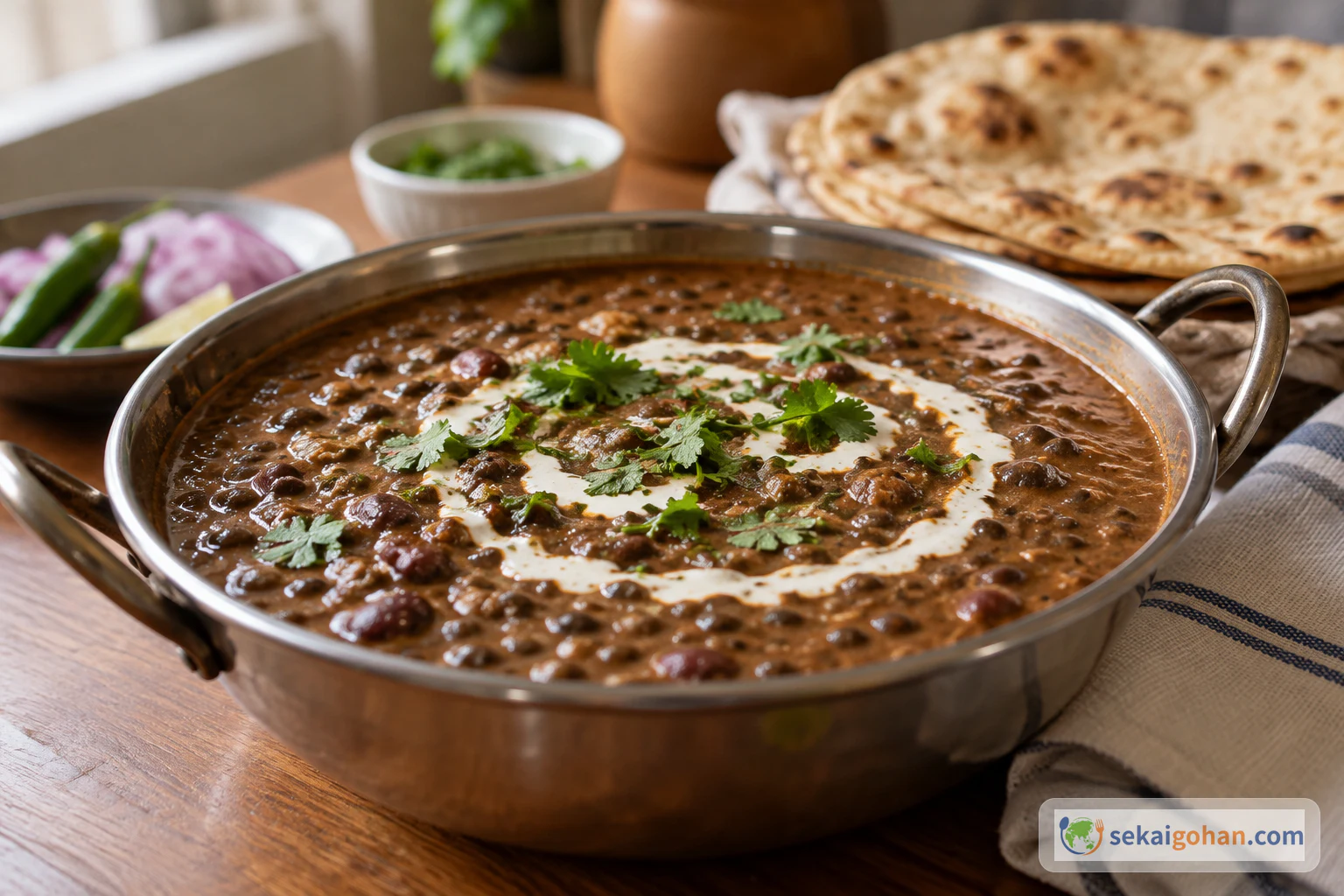
Dal Makhani: Punjabi Whole Black Urad and Rajma Simmered with Butter (दाल मखनी)
Ingredients
Beans
| Ingredient | Amount | Role and notes |
|---|---|---|
| Whole black gram (sabut urad), skin on | 1/2 cup | The main bean. Gives the dark color, texture and body |
| Red kidney beans (rajma), dried | 2 tbsp | A small supporting amount of bean flavor and bite |
| Water for soaking the urad | Plenty | Soak in its own bowl overnight; discard before cooking |
| Water for soaking the rajma | 2–3 times the volume of the beans | Soak in a separate bowl from the night before; discard before boiling |
| Fresh water for boiling the rajma | Enough to cover well | For the separate vigorous boil in an ordinary pot |
| Water for pressure cooking | 3 cups | Adjust to the beans and your cooker's instructions; add hot water if it threatens to catch |
| Salt | To taste | Some with the beans, adjusted again later |
| Red chilli powder | 1 tsp | Heat and color. Half with the beans, half in the masala |
| Fresh ginger | 2 inch piece | Chopped. Half with the beans, half in the masala |
Masala and finish
| Ingredient | Amount | Role and notes |
|---|---|---|
| Butter | 3 tbsp | The dairy richness of makhani |
| Oil | 1 tbsp | For blooming the cumin with the butter |
| Cumin seeds | 1 tsp | Whole seeds, bloomed in fat |
| Garlic | 6 cloves | Chopped |
| Onion | 1 large | Finely chopped |
| Green chillies | 2 | Slit; adjust to taste |
| Tomatoes | 2 medium | Ripe, puréed |
| Garam masala | 1 tsp | Aroma toward the end |
| Cream | A little, to finish | Swirled on top |
| Fresh coriander | A little | To garnish |
Steps
1Soak the black urad and rajma separately overnight
Rinse the whole black urad and the rajma, then put them in separate bowls. Cover the urad with plenty of water, and the rajma with water 2–3 times its volume. Leave them to soak from the night before.
The aim is for water to reach the center of every bean. Keep the two kinds apart, because the rajma needs its own boil before it meets the urad. When you are ready to cook, discard both soaking waters.
2Boil the rajma separately, then pressure cook all the beans
Put the drained rajma in an ordinary pot with fresh water and bring it to a vigorous boil. Keep it boiling hard for at least 10 minutes, or longer if the bag says so.
Lift the boiled rajma out of its pot and put it in the pressure cooker with the drained urad. Add the water, salt, half the red chilli powder and half the chopped ginger. Use about 3 cups of water at this stage, but the rajma has already soaked up some during its boil, so top up if needed. Make sure there is enough liquid to keep the beans from scorching.
Beans swell and foam under pressure. Follow your cooker's instructions for the maximum amount of legumes, the water level, pressurizing and releasing pressure. Once the cooking is done and the pressure has fully released as the manufacturer directs, open the lid. Take out a few beans with a clean spoon and press them. If any rajma or urad still has a hard core, cook again according to your cooker's instructions and check again. Never serve red kidney beans that are not fully cooked.
3Bloom the cumin and cook the aromatics
In a heavy pan, warm the butter and oil together. Add the cumin seeds and heat until they darken slightly and smell fragrant. Add the remaining ginger, the garlic and the onion. Cook over medium heat until the onion turns golden brown.
Keep the heat at medium. If the onion or garlic scorches, it turns bitter, and that bitterness carries through the whole dal.
4Cook the tomato down to a paste
Add the slit green chillies, the tomato purée and the remaining red chilli powder. Keep cooking and stirring until the tomato is no longer watery and raw, and has reduced to a thick paste.
Oil separating at the edges of the paste is a good sign. What matters most is that the raw, watery stage has passed. Cooking the tomato down here prevents a sharp acidity later.
5Add the cooked beans and their liquid
Pour the soft-cooked beans into the masala together with their cooking liquid. Stir in the garam masala and adjust the salt.
6Simmer low until the dal thickens
Simmer over low heat, stirring the bottom of the pan so nothing sticks. Keep going until the beans soften further and the liquid turns thick and creamy. Judge by texture rather than the clock.
If the dal gets too thick, add a little hot water. If it is thin, take the lid off and let it reduce.
7Finish with cream and coriander
While the dal is hot, swirl a little cream over the top and scatter with fresh coriander. Serve with rice, naan or roti.