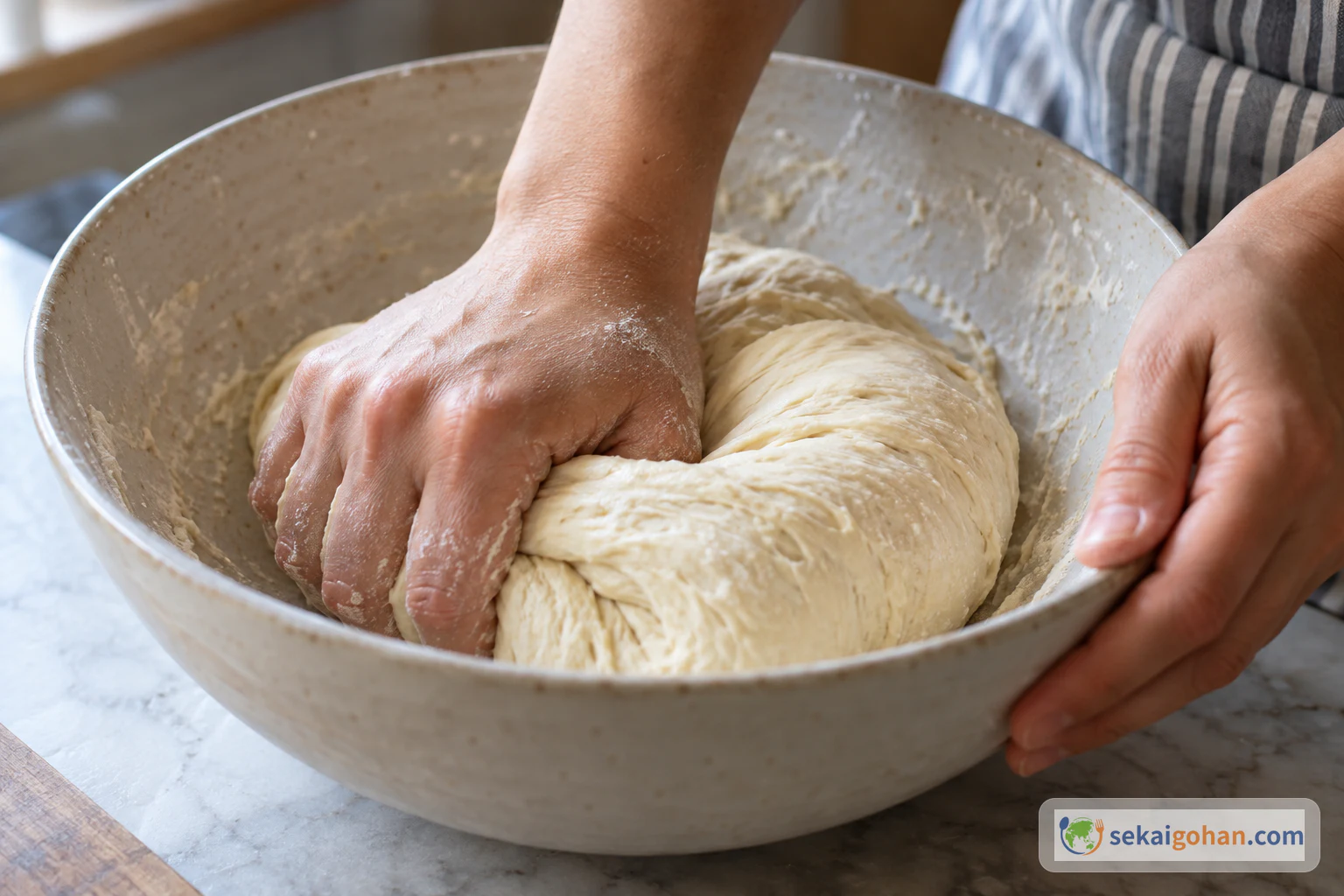
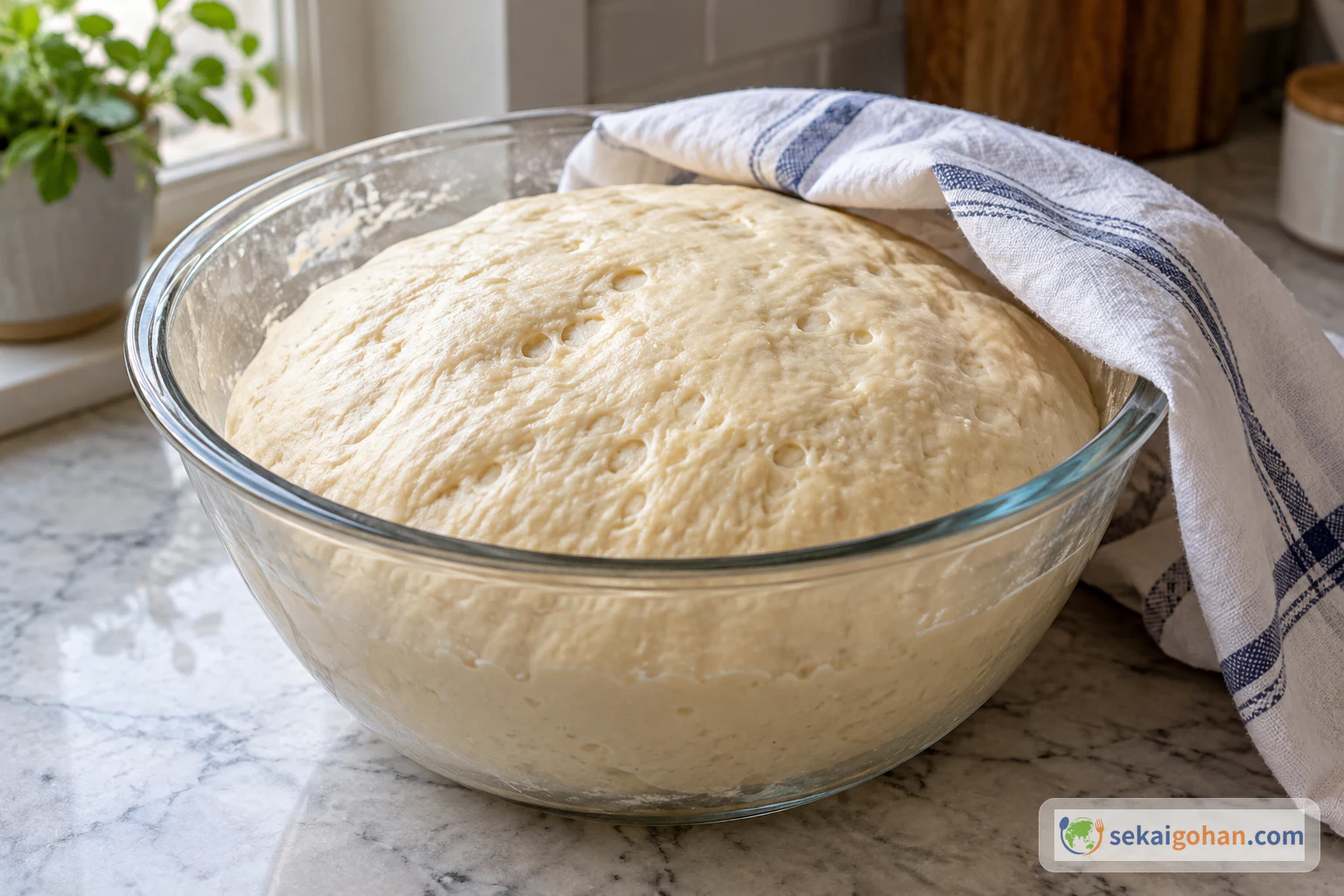
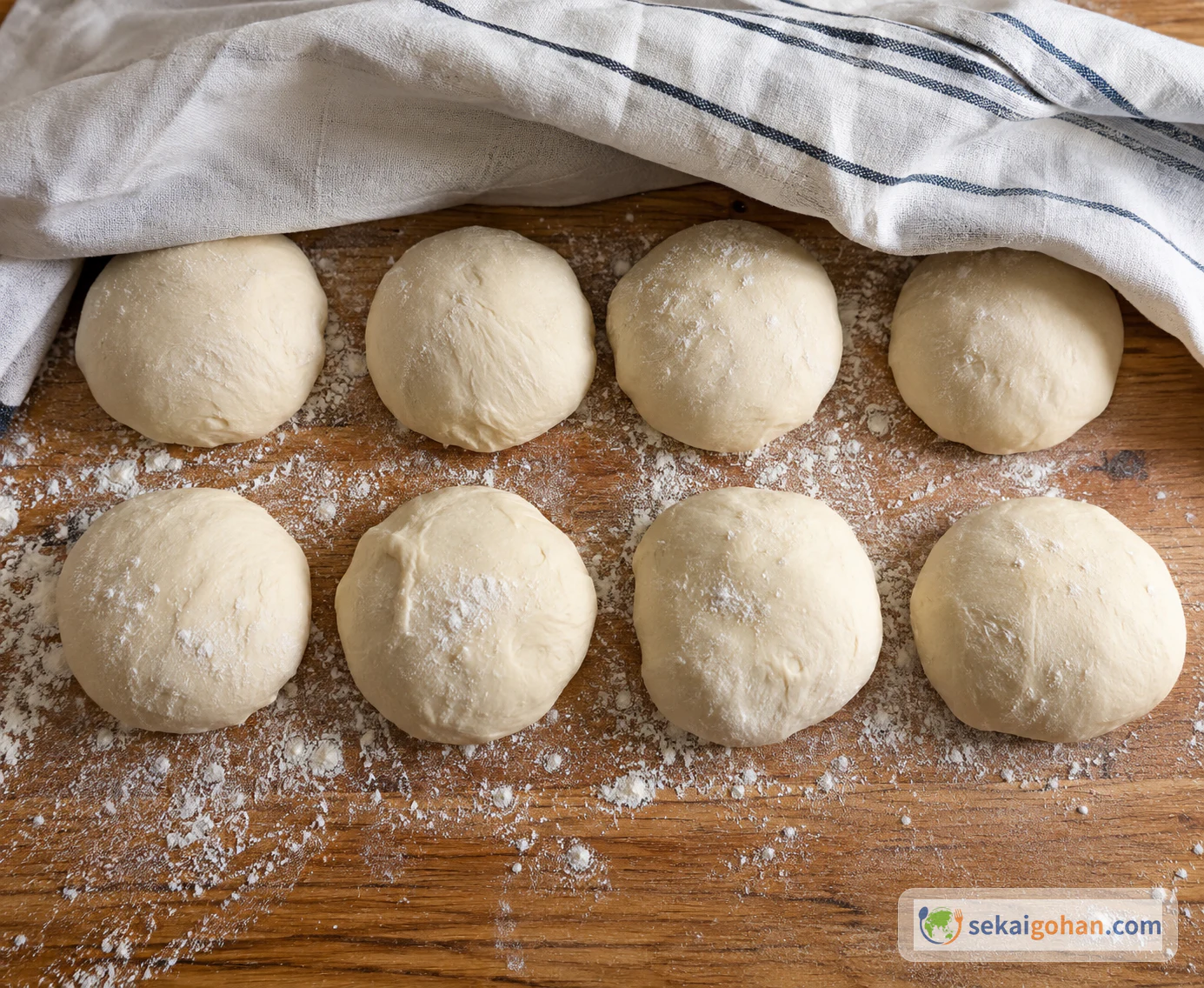
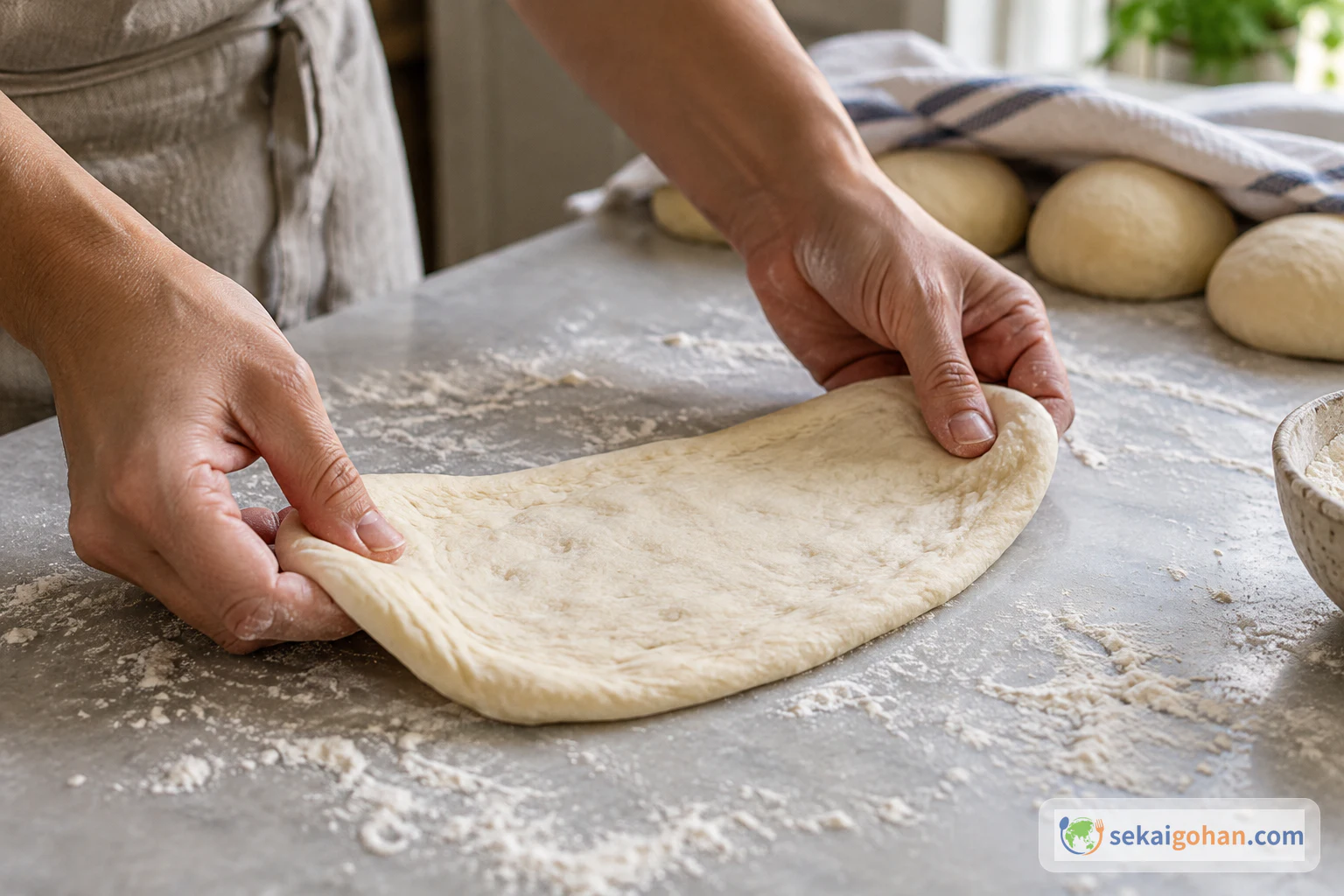
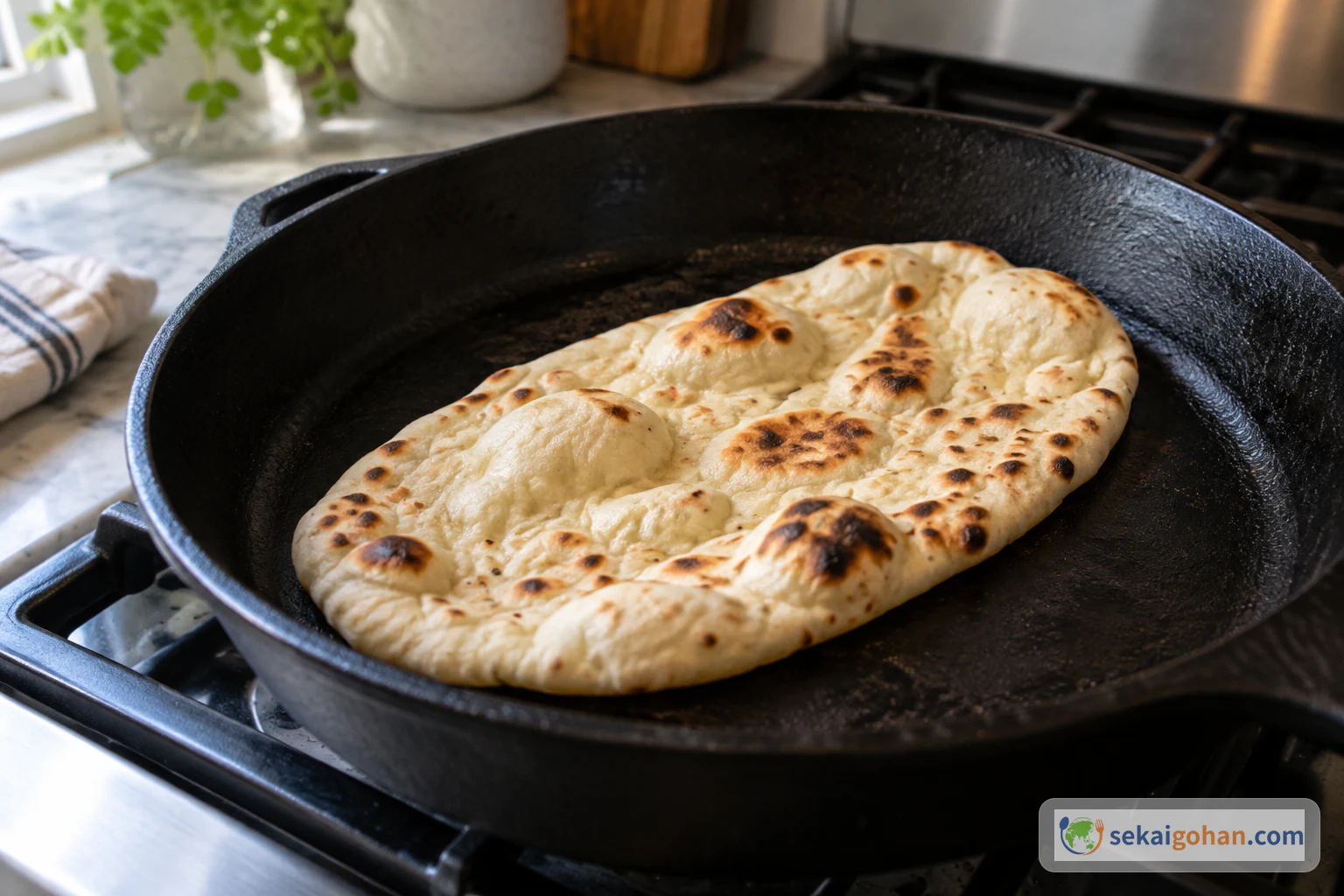
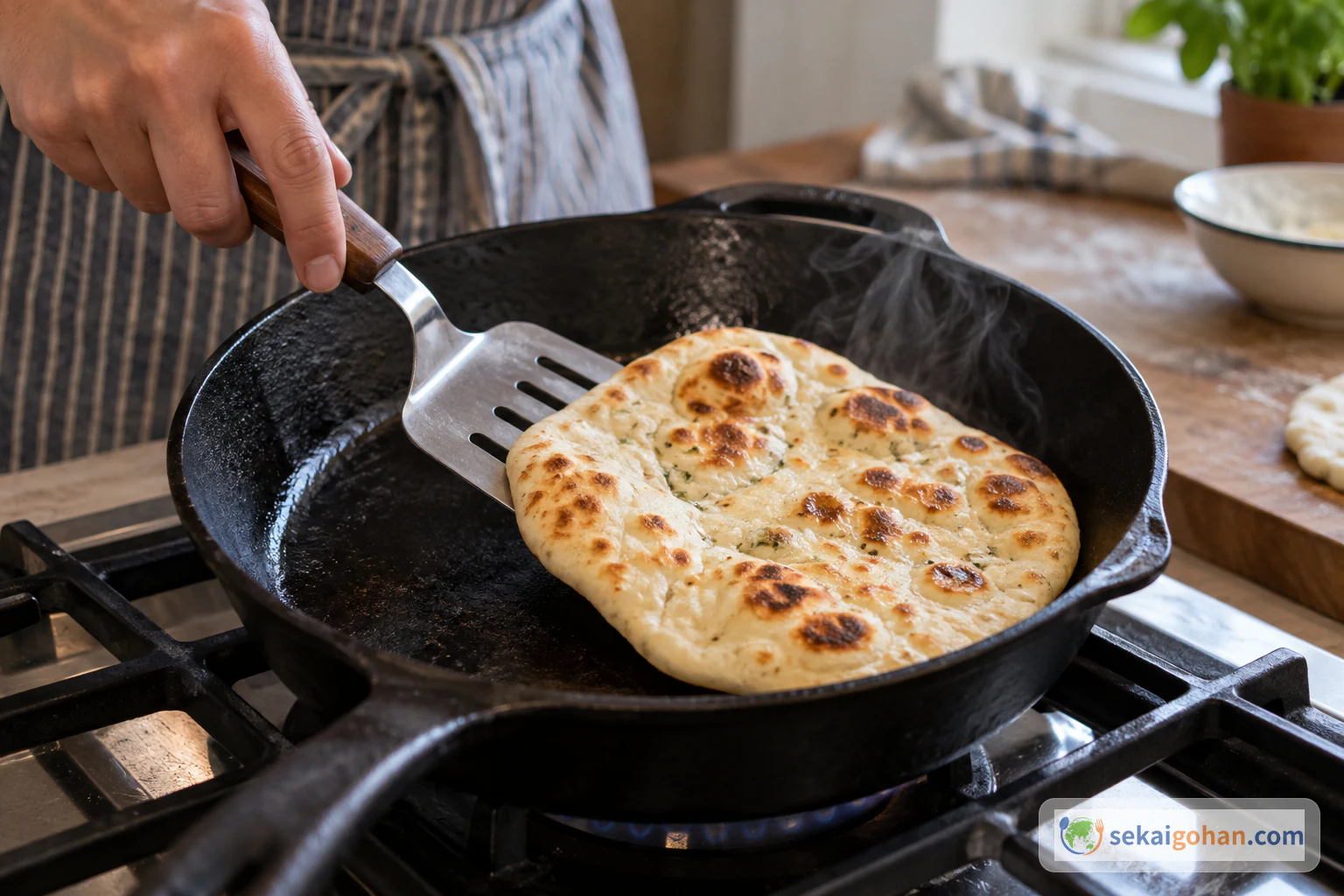
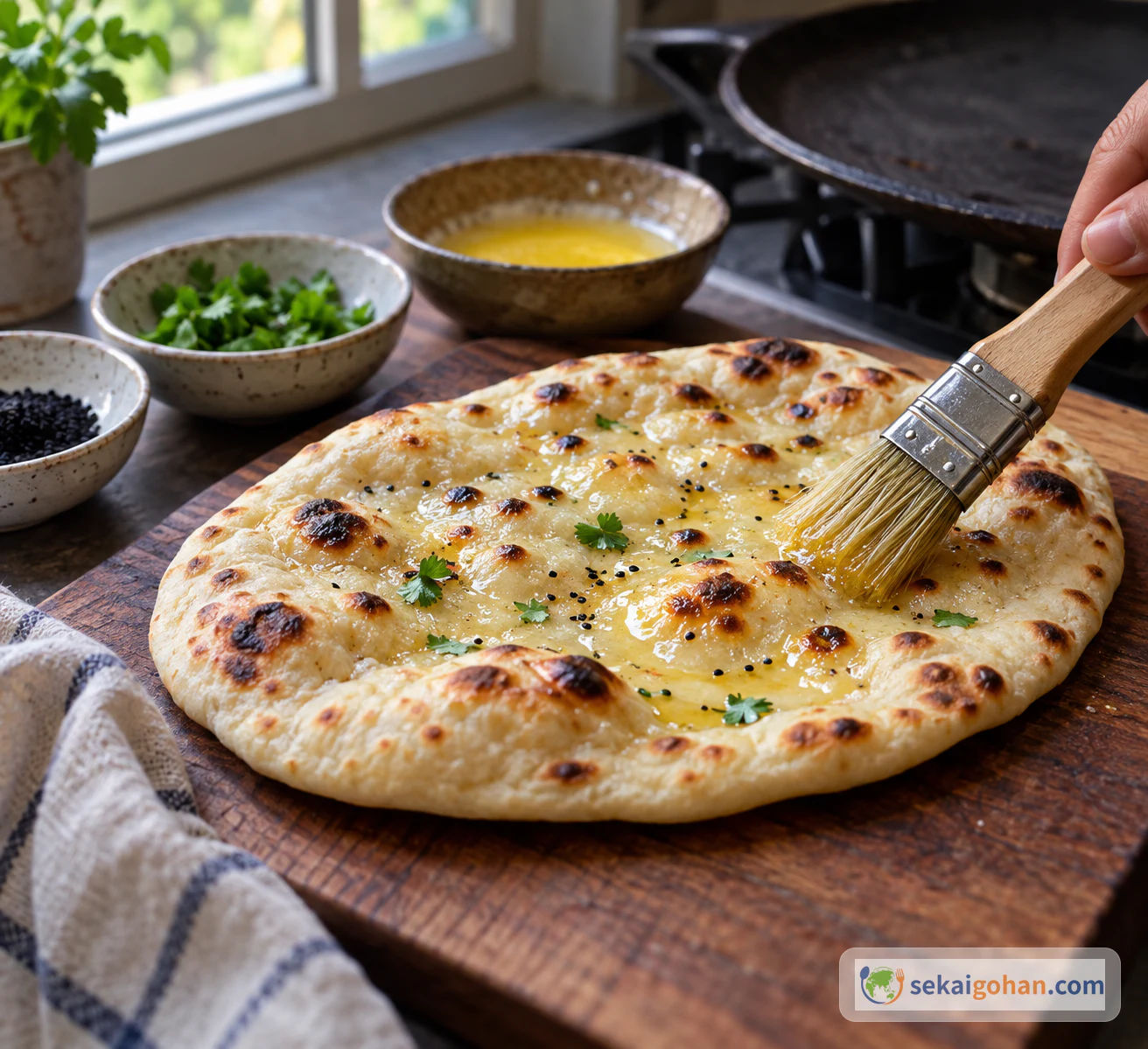
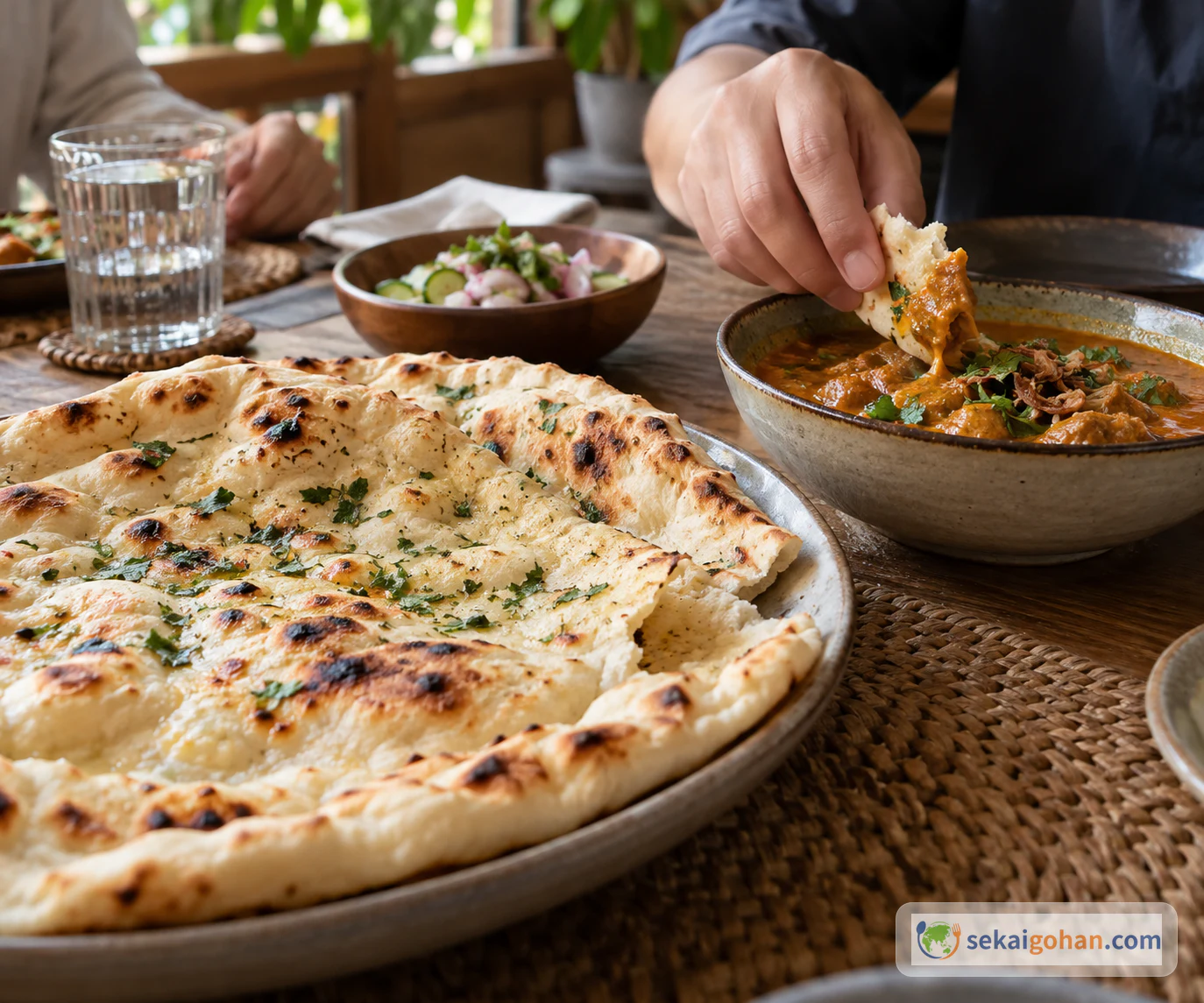
Naan from a tandoor comes off the oven wall soft inside, with a blistered, charred crust. Most home kitchens don't have a tandoor, but a heavy cast-iron skillet or griddle gets you close. Bubbles rise across the dough, brown spots freckle the surface, and the crumb stays soft and a little chewy. Naan is a leavened wheat bread from South Asia. This one is enriched with yogurt and ghee or butter, then brushed with more melted fat while it's still warm. The recipe makes 8 naan in about 2 hours, and most of that time is hands-off rising and resting.
About Naan
In its classic form, naan is slapped against the inside wall of a very hot tandoor oven. The word naan is related to the Persian word for bread, but the bread's exact history and origins are contested. For more about the country's cooking, see India on Sekai Gohan.
A skillet gives you good, recognizable naan, but it's a home adaptation. A tandoor wraps the bread in heat from all sides, while a pan cooks one side at a time. You'll get bubbles, brown spots and a soft crumb. Deeper char is where the tandoor still wins.
Naan, roti and chapati
India has many breads besides naan, including tawa roti, tandoori roti, kulcha and lachha paratha. Naan is thicker, softer and richer than tandoori roti. One ingredient alone doesn't decide what a bread is called, but these are the usual differences:
| Naan | Roti / chapati | |
|---|---|---|
| Dough | Yeasted wheat dough (this recipe also uses yogurt and ghee or butter) | Generally unleavened |
| Thickness and texture | Thicker, soft, with bubbles | Generally thinner, everyday bread |
| Traditional cooking | Baked in a tandoor | Varies; tawa roti is cooked on a flat pan, tandoori roti in a tandoor |
Naan in Indonesia
Naan isn't Indonesian, but some restaurants there serve it. In 2023, a naan shop in Palembang had an Indian cook, used imported atta flour, and served its naan with curry and tandoori chicken. In Jakarta, the Indian menu at Hookah Habibi Cafe lists plain naan, garlic naan and cheese naan alongside tandoori roti.
Ingredients: One Formula for 8 Naan
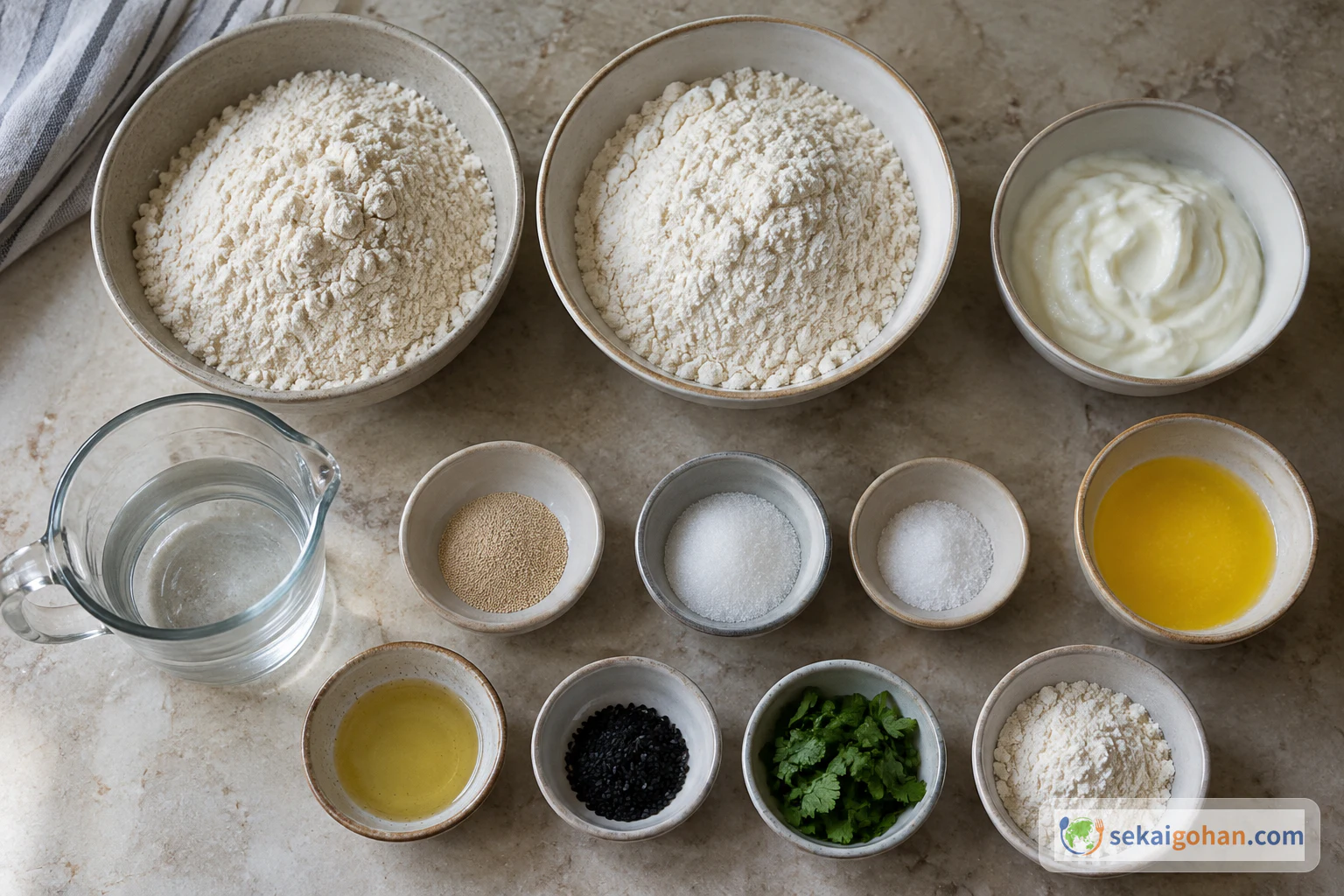
Where a weight is given, it is the more reliable measure. Yeast, sugar and salt are measured in spoons. Weigh the flour, water and yogurt if you can.
Volumes. In US cups and spoons, these are 1 1/2 cups all-purpose flour, 3/4 cup bread flour, and 1/2 cup + 2 tbsp warm water. They also include 5 tbsp Greek yogurt and 2 tbsp melted ghee or butter, both for the dough and again for brushing. If your cups and spoons follow a different standard, use the gram weights instead.
Flour outside the US. Flours labeled "all-purpose", "plain" or "bread" differ in protein from country to country. In Japan, local bread flour (kyōrikiko) suits the 3.25 oz (90g) bread-flour portion, and local cake flour or medium-strength flour suits the 6.5 oz (180g) all-purpose-flour portion. Neither is identical to US flour. The dough takes up water differently, so treat local flour as your own adjustment.
Greek versus ordinary yogurt. Use thick, full-fat Greek yogurt. Thicker strained yogurt and looser yogurt change how wet the dough feels. Ordinary plain yogurt holds more liquid, so the dough will be softer and stickier. It is not an equivalent swap.
Yeast, sugar and salt. The recipe uses instant yeast. If you only have another type of dried yeast, check the product's own instructions for how to use it in place of instant. Leaving out the sugar or replacing it with honey changes the recipe. A spoonful of coarse or flaky salt is not the same amount of salt as a spoonful of fine table salt.
Nigella and cilantro. Find nigella seeds at import grocers or online. The bread works without them. Black sesame has a different aroma, so don't use it as a stand-in. Salted butter for brushing adds some saltiness.
This naan contains wheat (gluten) and dairy (yogurt, and ghee or butter). This recipe does not offer allergy-safe substitutions; changing these ingredients changes the formula and texture. If you use packaged products, check their labels. Don't taste the raw dough.
Equipment
- A large mixing bowl, plus scales and US measuring spoons
- A work surface for kneading
- A lid, plate or clean cloth to cover the dough
- A rolling pin (optional; hands work too)
- A heavy cast-iron skillet or a griddle that can take high heat
- A pastry brush and a spatula
- A clean cloth or foil to keep the cooked naan warm
Choosing Flour, Yogurt and Fat for Naan
All-purpose flour and bread flour share the work in this dough. Full-fat Greek yogurt keeps it soft. You can use either ghee or butter, both in the dough and for brushing. They taste different, though, and salted butter gives a saltier finish.
Method: From Soft Dough to Bubbled Bread
The times in each step are guides. Room temperature changes how fast the dough rises, and your stove and pan change how fast the bread browns.
Fixing Common Naan Problems
Most naan problems come down to the dough or the heat. Cook on a hot, dry pan and judge doneness by color, not by the clock.
| Problem | Likely cause | What to do |
|---|---|---|
| The dough is stiff and won't stretch | Not risen enough, too little rest, or a flour that absorbs water differently | Give it the full rest after dividing. Next time, add extra flour only a little at a time and note how it differed from the formula |
| The naan doesn't puff | Tired yeast, an incomplete first rise, or a pan that wasn't hot enough | Check your yeast, let the dough roughly double, and preheat the pan thoroughly. Don't press the bread into the pan |
| The surface burns before bubbles form | The heat is too high | Lower the heat or lift the pan off the burner for a moment, then adjust with the next piece |
| The naan turns hard as it cools | It sat uncovered | Wrap each piece in a clean cloth or foil as it is done and serve warm |
Serving and Shaping Naan
Naan is best eaten warm, soon after cooking. Wrap each piece in a clean cloth or foil as it comes off the pan so it stays soft while you cook the rest.
You can make the bread thick or thin. For thicker, softer naan, shape it about 6 inches (15 cm) round or 7 inches (18 cm) oval. For thinner naan, go to about 8 inches (20 cm) round or 10 inches (25 cm) oval. Stick to one style per batch so all the pieces cook the same way. A brush of ghee or butter is all the bread needs, though you can add nigella seeds and cilantro if you like.
Frequently Asked Questions
Should I oil the skillet?
No. Cook the naan on a dry pan over medium-high heat. The oil in this recipe only greases the rising bowl. The ghee or butter goes into the dough and onto the finished bread.
Can I use regular yogurt instead of Greek yogurt?
Yes, but it changes the recipe. Regular yogurt is looser, so the dough will feel wetter and softer, and the handling and texture will be different.