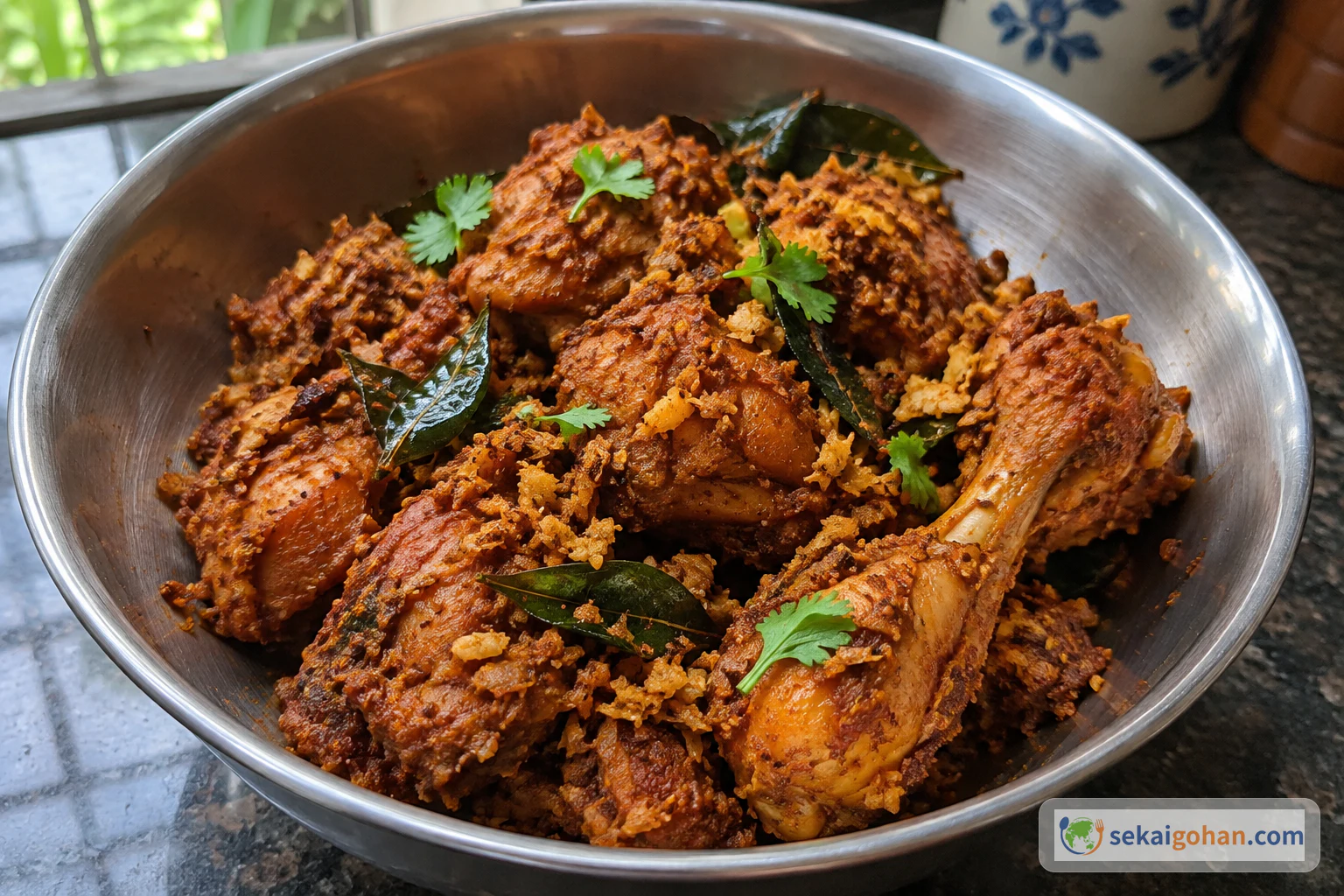
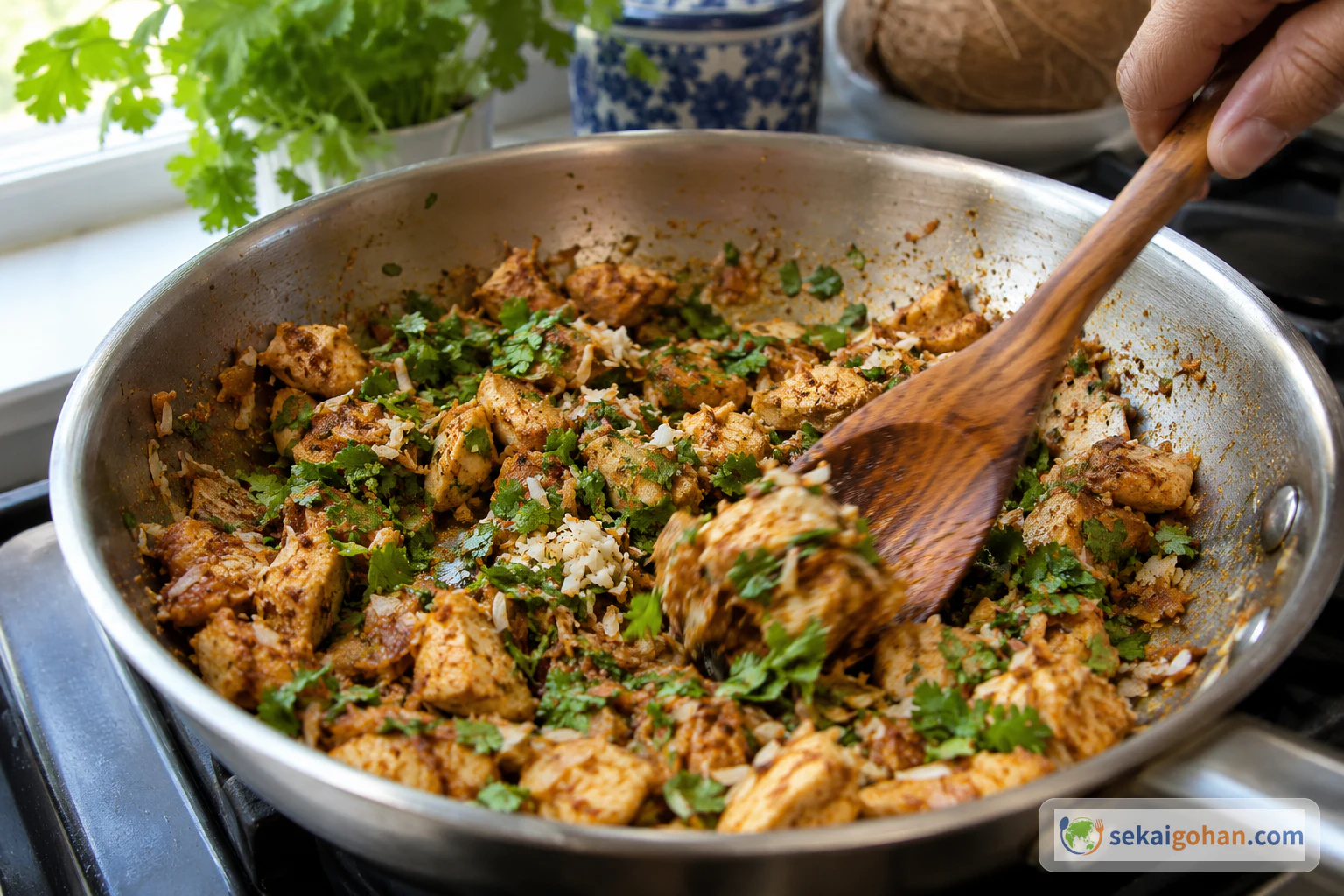
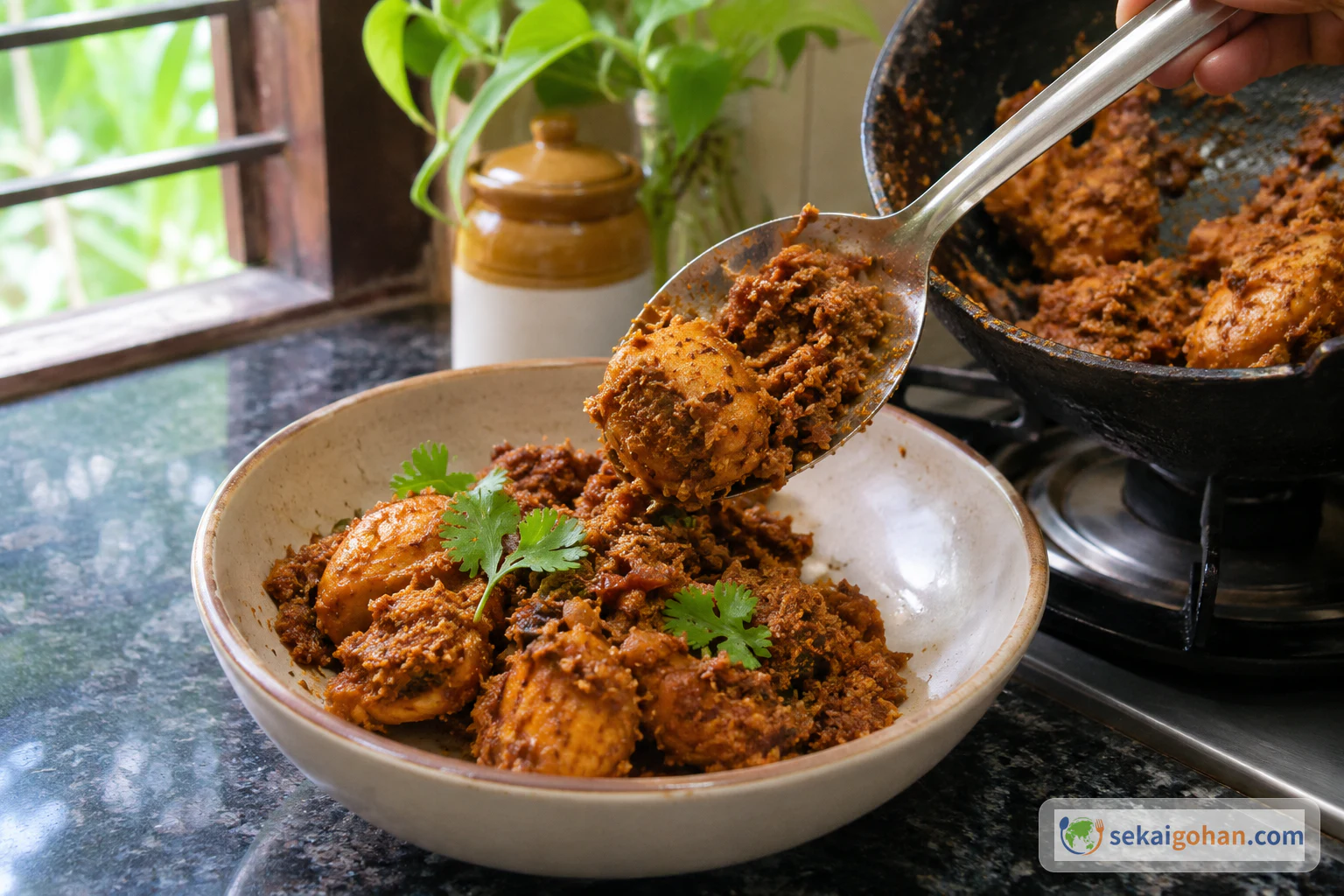
Bone-in chicken comes out of the pan wrapped in a coarse, reddish-brown masala, flecked with golden toasted coconut and fresh coriander. There's hardly any sauce, just spice clinging to every piece. This is chicken sukka from Mangalore, on India's southwest coast: chicken seared in ghee with golden onions and curry leaves, then simmered briefly with roasted whole spices, Bedgi chillies and tamarind. It tastes toasty, gently sour and warm with chilli, and it's best with neer dosa. For more dishes from the same country, see the India country page.
About Mangalorean Chicken Sukka
Names and Origins
The dish is called Mangalorean Chicken Sukka or Kori Ajadina (Tulu), and it is tied to Mangalore and Udupi. The name "sukka" is linked to "sukha," meaning dry. That fits the style: the finished dish is dry to semi-dry, with the masala coating the chicken rather than forming a curry sauce.
One Name, Many Masalas
The same name covers clearly different recipes. One Billava-style version, "Chicken Sukka (Billava Style)," grinds two masalas separately, one of them with coconut. It cooks the chicken with the masala on low heat without water, adds the coconut masala later, and finishes by pouring onions and curry leaves fried in oil and ghee over the top. Another version uses less chicken and splits the coconut between a ground paste and a later addition.
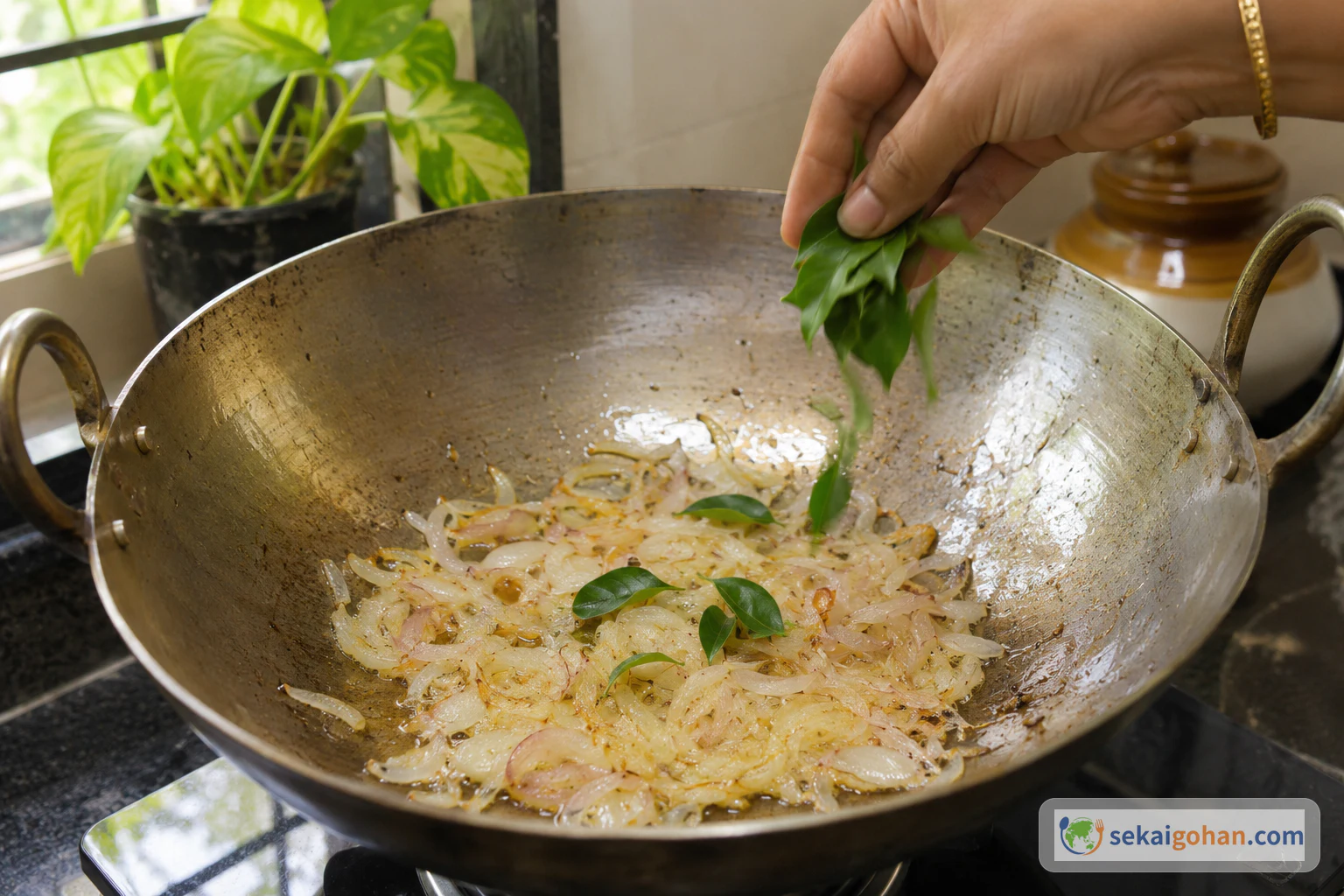
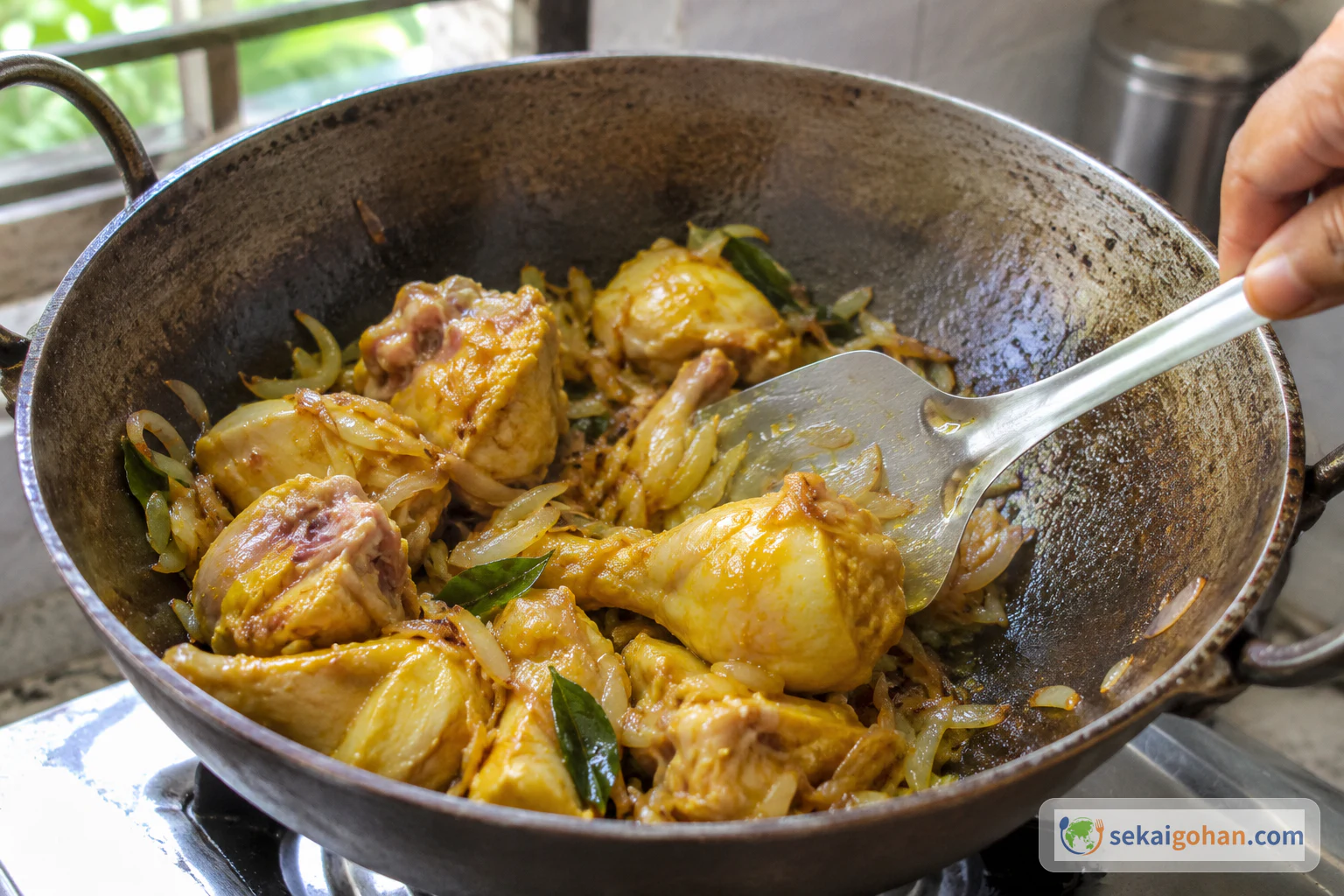
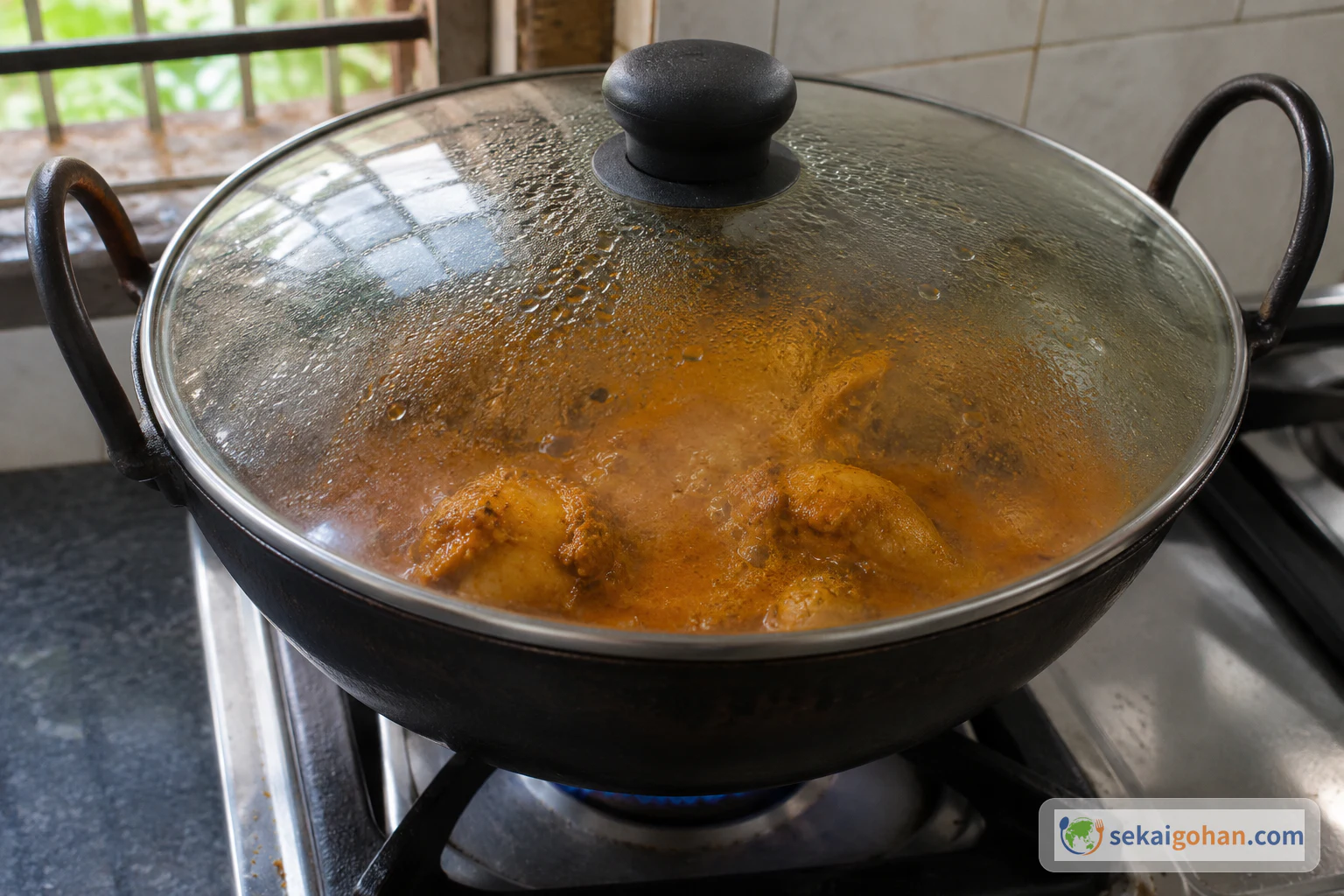
The recipe here works differently. It simmers the chicken with a cup of water, keeps all of the coconut out of the grind, and fries the onions and curry leaves in ghee at the start, before the chicken goes in.
How the Flavor Is Built
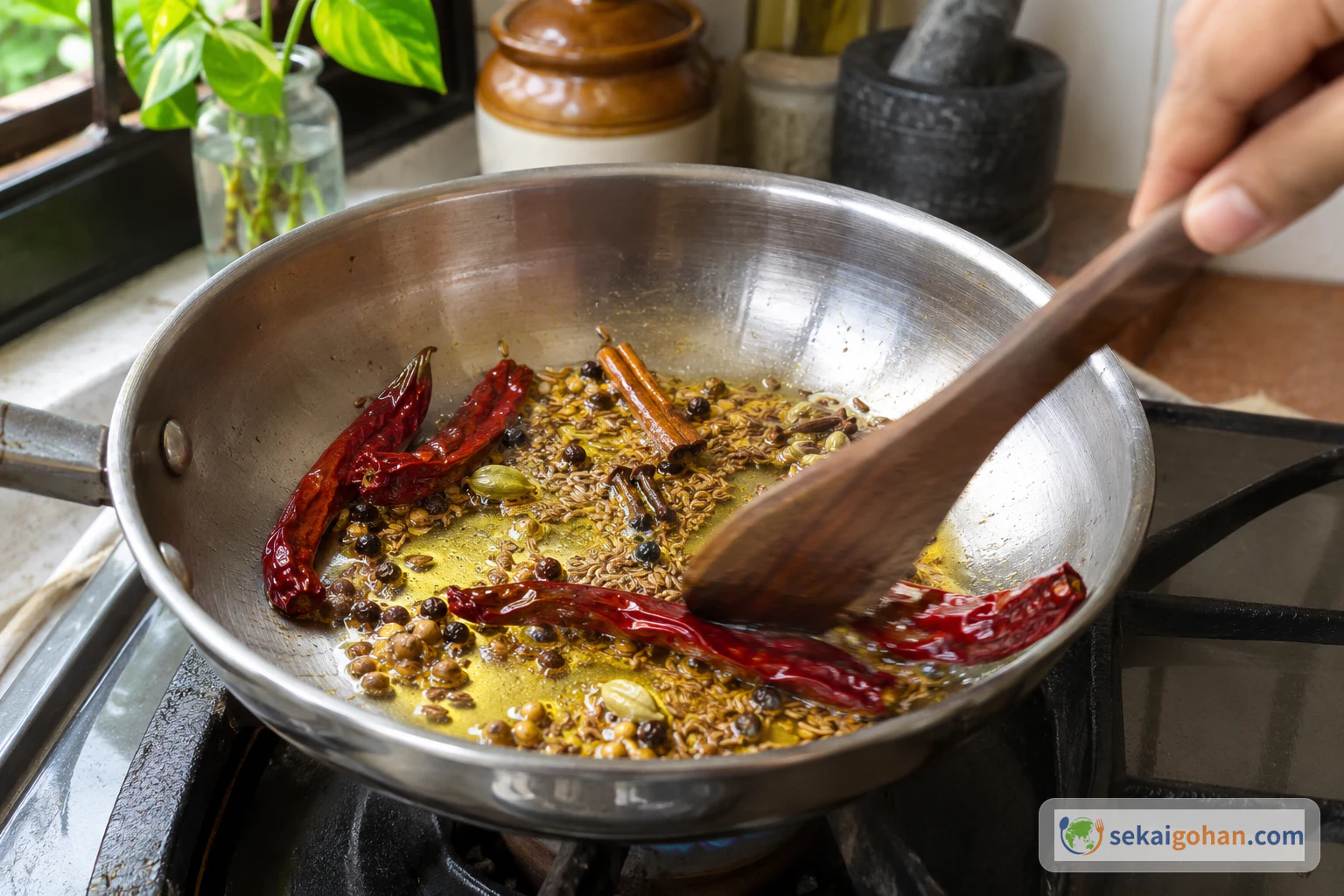
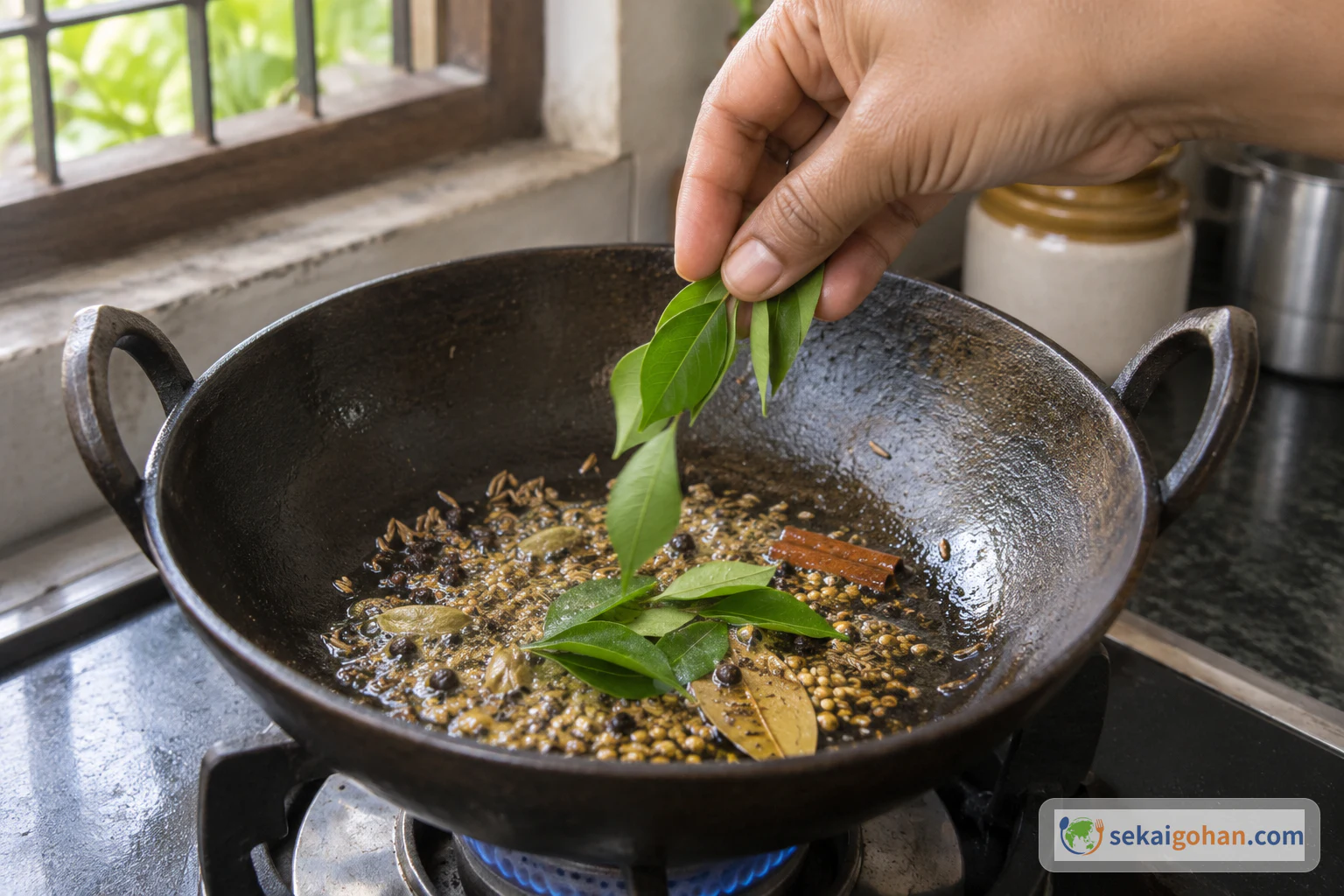
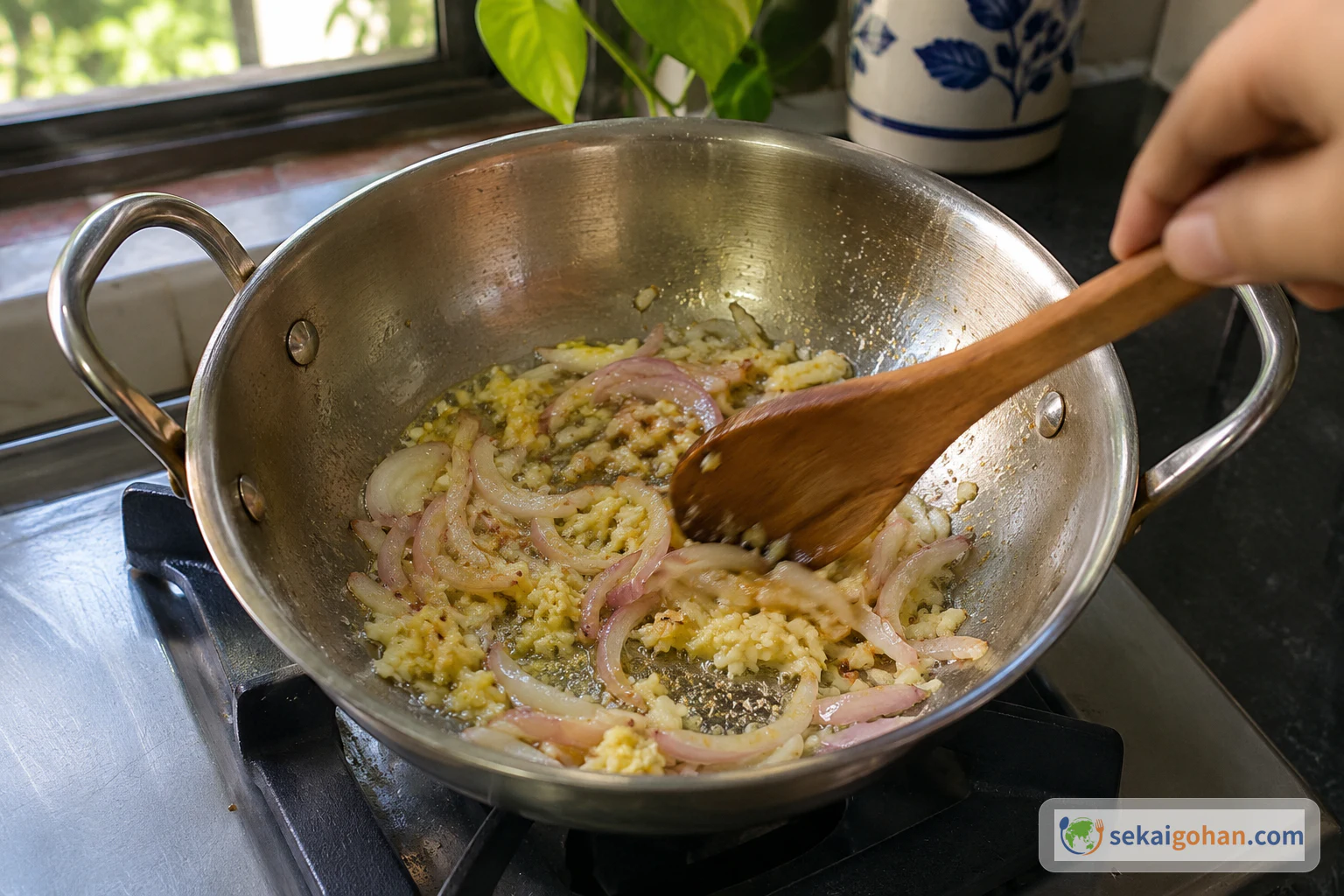
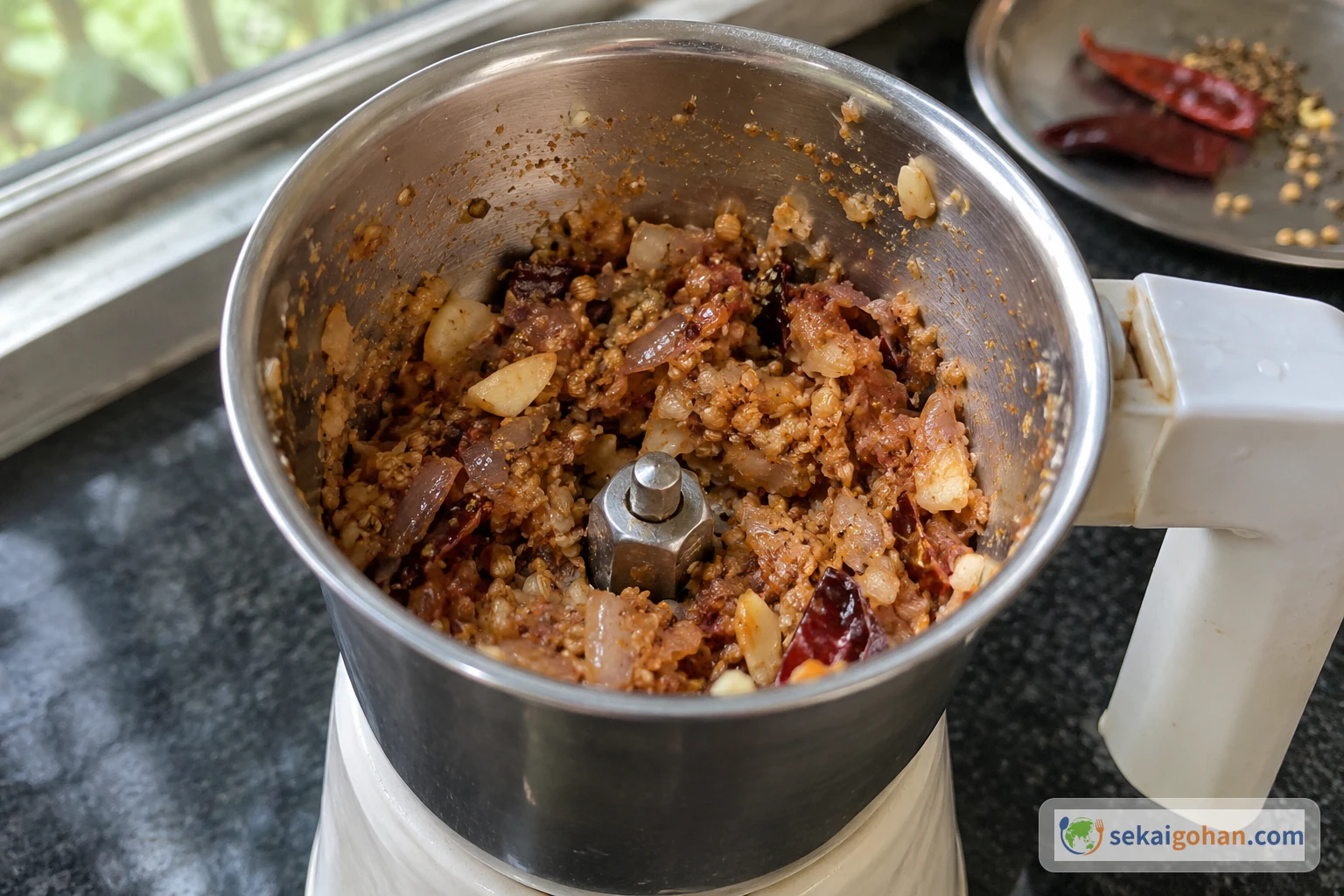
The trick is to keep the main flavors apart until late in cooking. Warm the whole spices and dried red chillies in ghee in a small pan, cumin first, then add curry leaves for a final minute. In the same pan, fry ginger, garlic and one onion to light golden. Once both mixtures cool, grind them coarsely with a teaspoon of tamarind pulp, which adds a sour edge to the roasted spices.
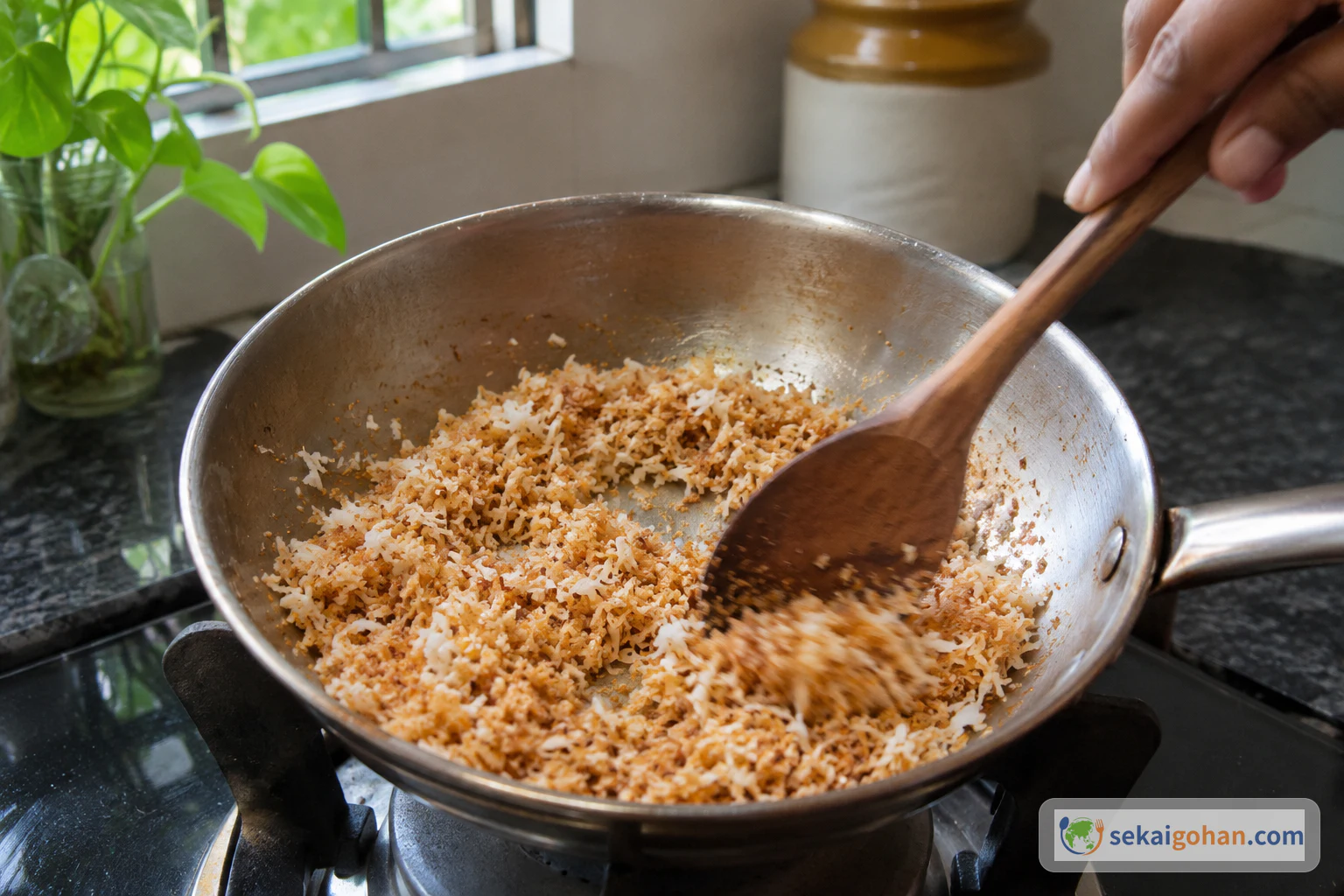
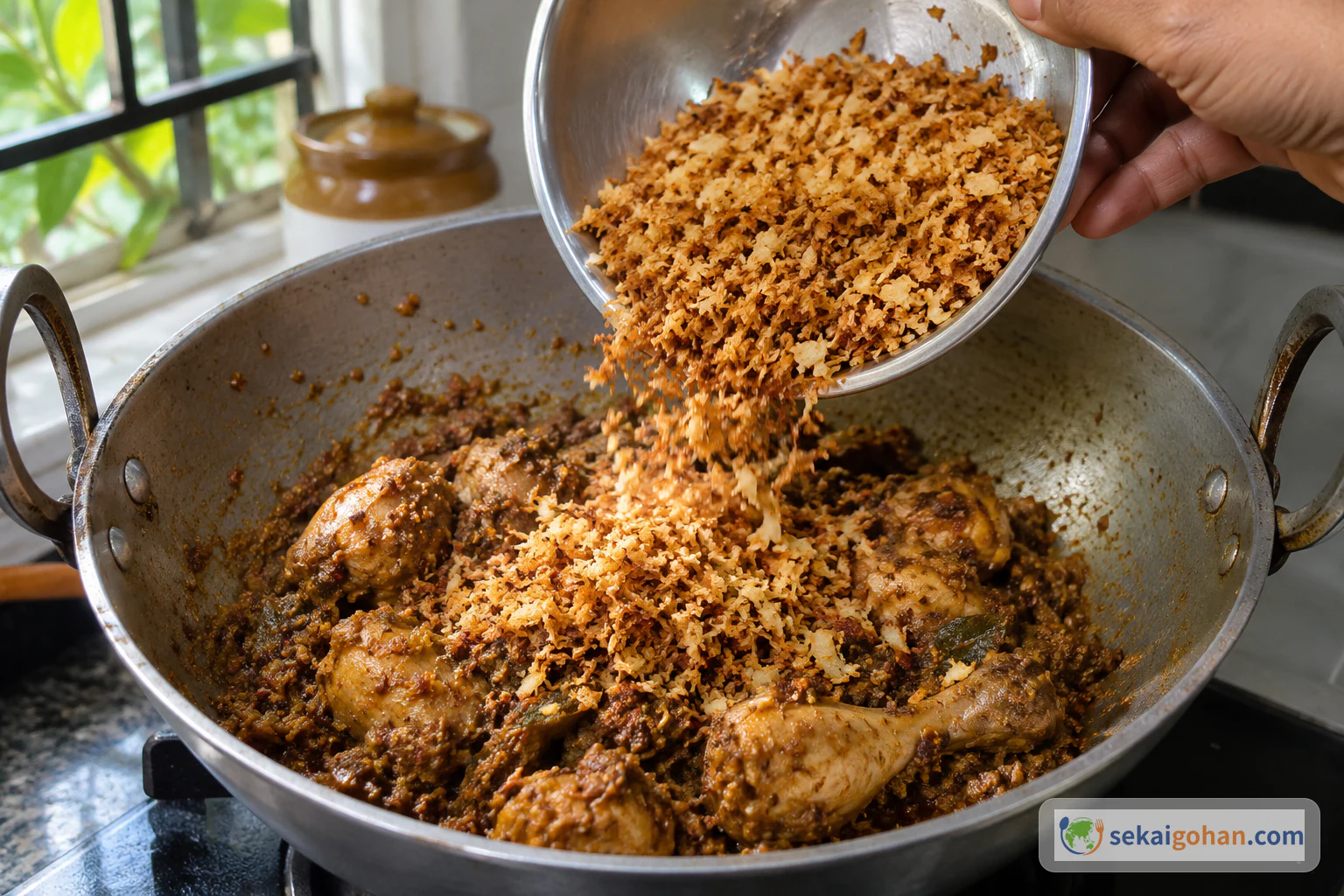
The coconut is toasted alone until golden and set aside. It meets the chicken only after the simmer, so it stays on the surface as its own toasty texture instead of disappearing into the masala.
Ingredients for 4 Servings
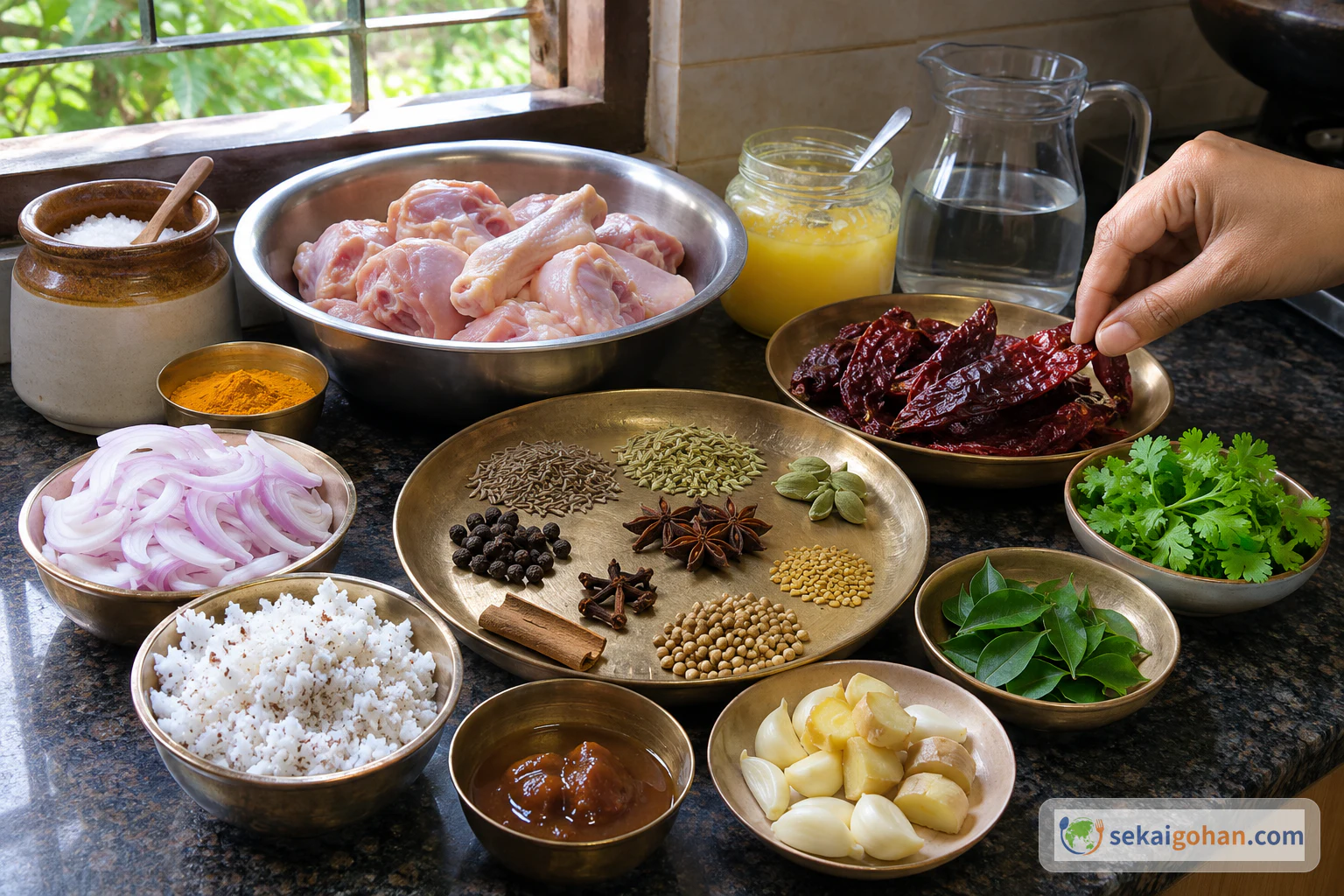
Ghee, onions and curry leaves are each used in more than one step. The Role column shows how to split them. Keep the ghee in one container and measure each portion as you reach that step. Neer dosa is an optional side dish, not part of the ingredients.
The main ingredient to watch is chicken. Consider individual allergies to coconut, ghee (made from milk) and the spices, and avoid cross-contact. Do not taste the raw chicken or the marinade; taste only after the chicken is fully cooked. Do not use plates or utensils that touched raw chicken for the cooked dish.
Choosing Ingredients for Chicken Sukka
Bedgi dried red chillies set much of the color and aroma of the masala. You may also find them sold as Mangalorean dried red chillies, so check the seller's description. Any other dried red chilli changes the heat, color and aroma, so treat a swap as an adjustment, not a straight replacement.
Fresh scraped coconut is what gets toasted and folded in at the end. Desiccated coconut has a different moisture content and texture, so it won't behave the same way.
Curry leaves go in at two points. Leaving them out changes the aroma, and no other leaf stands in for them.
Ghee can be swapped for vegetable oil, though the aroma and richness change. Tamarind pastes vary in concentration, so using one in place of tamarind pulp will shift the sourness.
Chicken: the method is written for bone-in pieces. Boneless chicken cooks in a different time, so check doneness with a thermometer rather than the clock.
Equipment
- A bowl for marinating the chicken
- A small heavy pan for the spices, aromatics and coconut
- Plates or bowls for cooling the fried spices, the fried aromatics and the toasted coconut
- A spice grinder or mixer for coarse grinding
- A large kadai or deep, heavy frying pan with a lid
- A food thermometer
Method: Roast, Grind, Sear, Simmer, Then Coconut
The simmering times below are a guide. Bone size, piece size and heat all change how long chicken takes, and color or texture alone cannot tell you it is safe. Measure the thickest part of the meat with a food thermometer, away from the bone, and cook until it reaches 165°F (about 74°C).
Chicken Sukka Troubleshooting
| Problem | Likely cause | What to do |
|---|---|---|
| The spices smell burnt or start to smoke | Heat too high, or left too long | Keep to medium heat and about 2–3 minutes, stirring. How fast spices toast depends on the burner and the thickness of the pan |
| The masala tastes flat and coconut-heavy | The coconut was ground into the masala | Toast the coconut alone in step 5 and add it only in step 10 |
| The heat or color is very different from expected | A different dried chilli was used | Chillies vary in heat and color by type. Settle on the type and number before you start |
| The chicken has not reached 165°F (about 74°C) after 10–15 minutes | Larger pieces, thicker bones, lower heat | Keep it covered and cooking, then check the thickest part of the meat again. Time and color alone aren't reliable |
| The finished dish is not completely dry | This is normal | The dish is dry to semi-dry, with the masala clinging to the chicken. Stop before it turns bone dry |
Serving Chicken Sukka
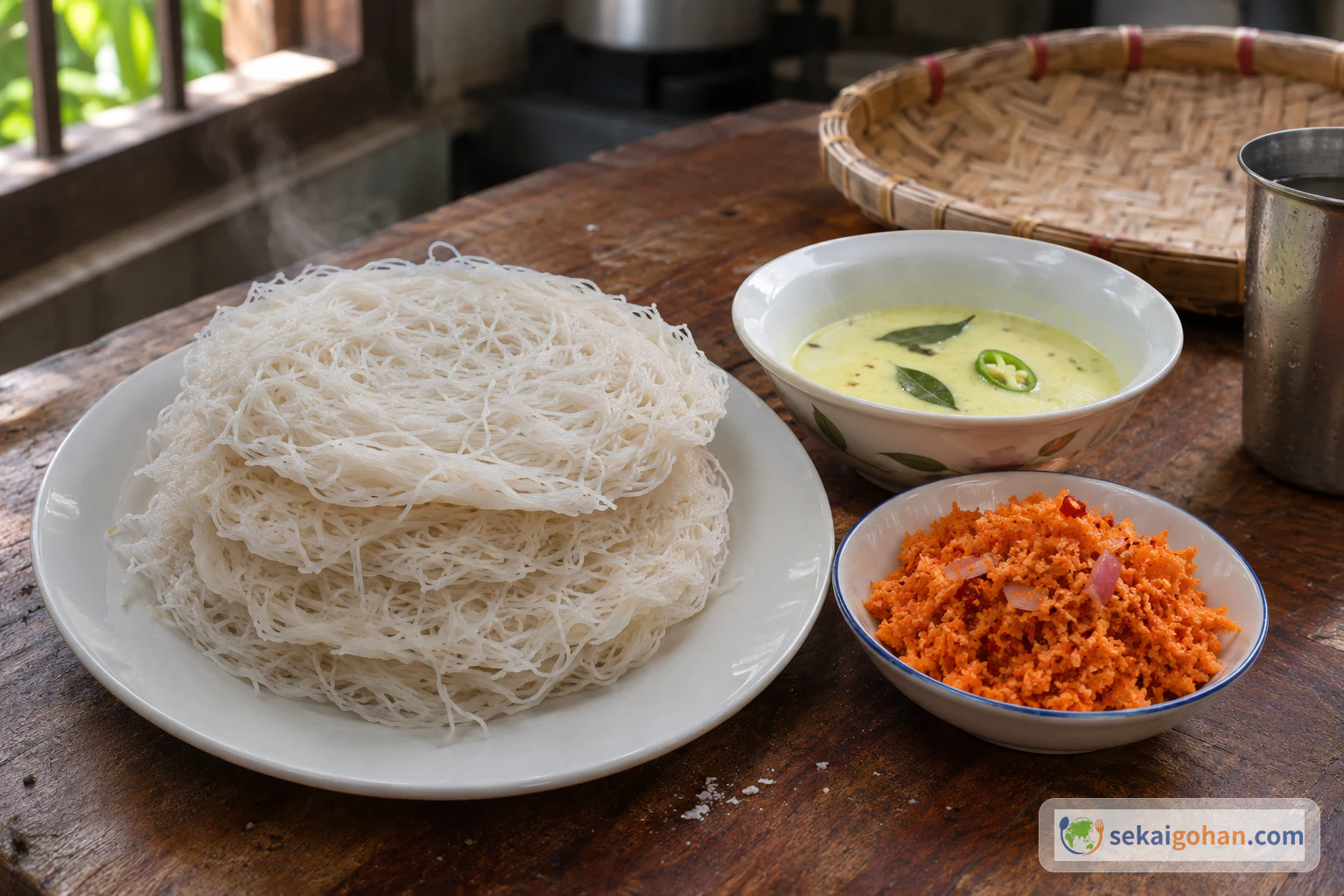
Neer dosa is the classic partner, but rice works well too. If you want a milder or hotter dish, change the type or number of dried chillies. Keep in mind that this also changes the aroma and red color of the masala, so it's worth making the dish as written first.
When you prepare and serve it, keep raw chicken and the cooked dish separate, and use clean plates and utensils for anything that didn't touch raw chicken.
Frequently Asked Questions
Are Kori Sukka and Mangalorean chicken sukka the same thing?
The names overlap, since both Mangalorean Chicken Sukka and Kori Ajadina are used for this dish. The masala, the amount of coconut and the order of steps differ from one version to the next, though, so the same name doesn't guarantee the same recipe.
Should all the liquid be cooked off?
No. Aim for a thick masala that clings to the chicken, dry to semi-dry rather than bone dry.
How many minutes does bone-in chicken need?
The times in the method are a guide. Bone size, piece size and heat all change how long it takes. Cook until the thickest part of the meat reaches 165°F (about 74°C) on a food thermometer, without touching the bone.