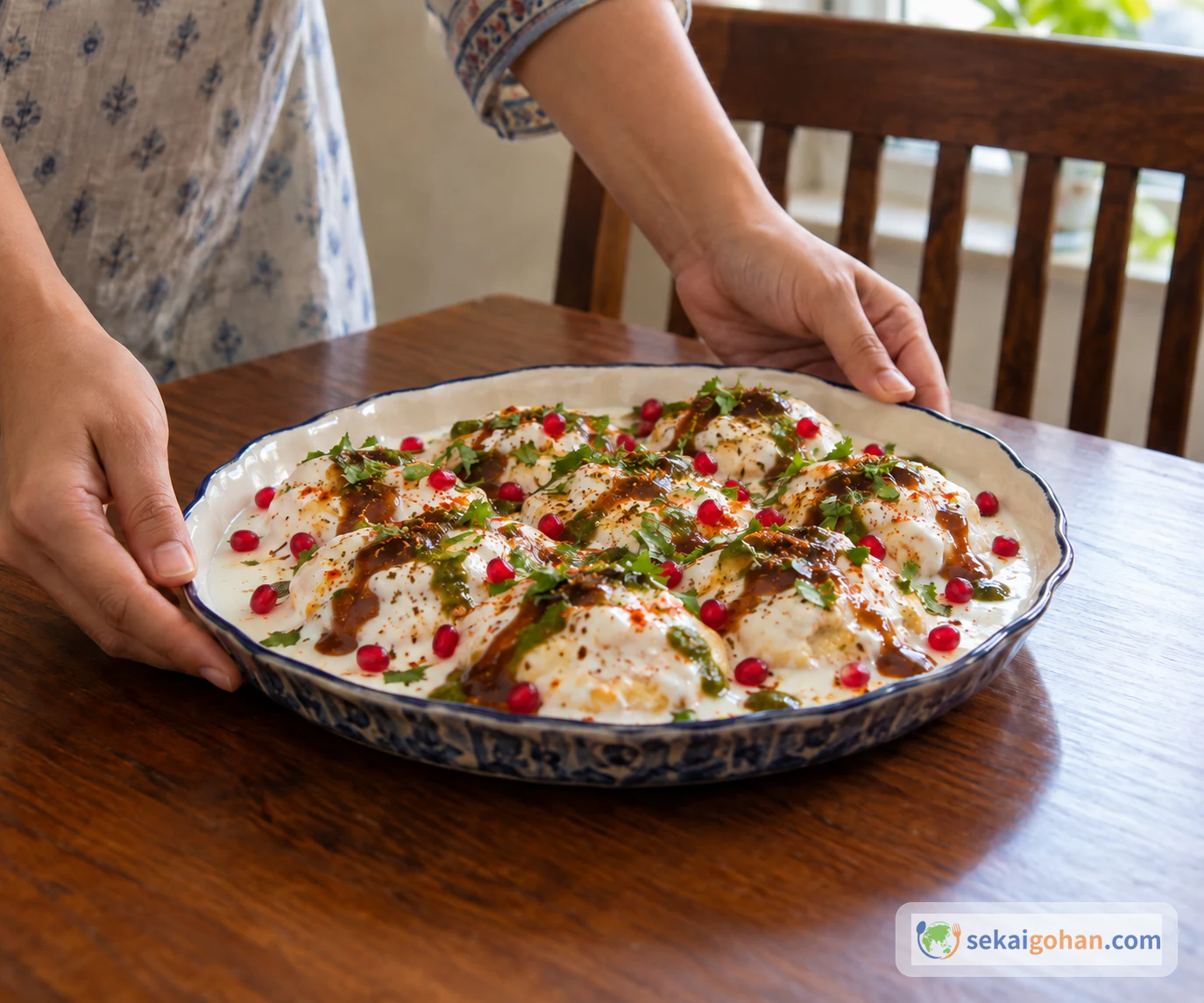
Dahi Vada (North Indian Style): Soaked Urad Dal Vadas Under Chilled Yogurt with Two Homemade Chutneys

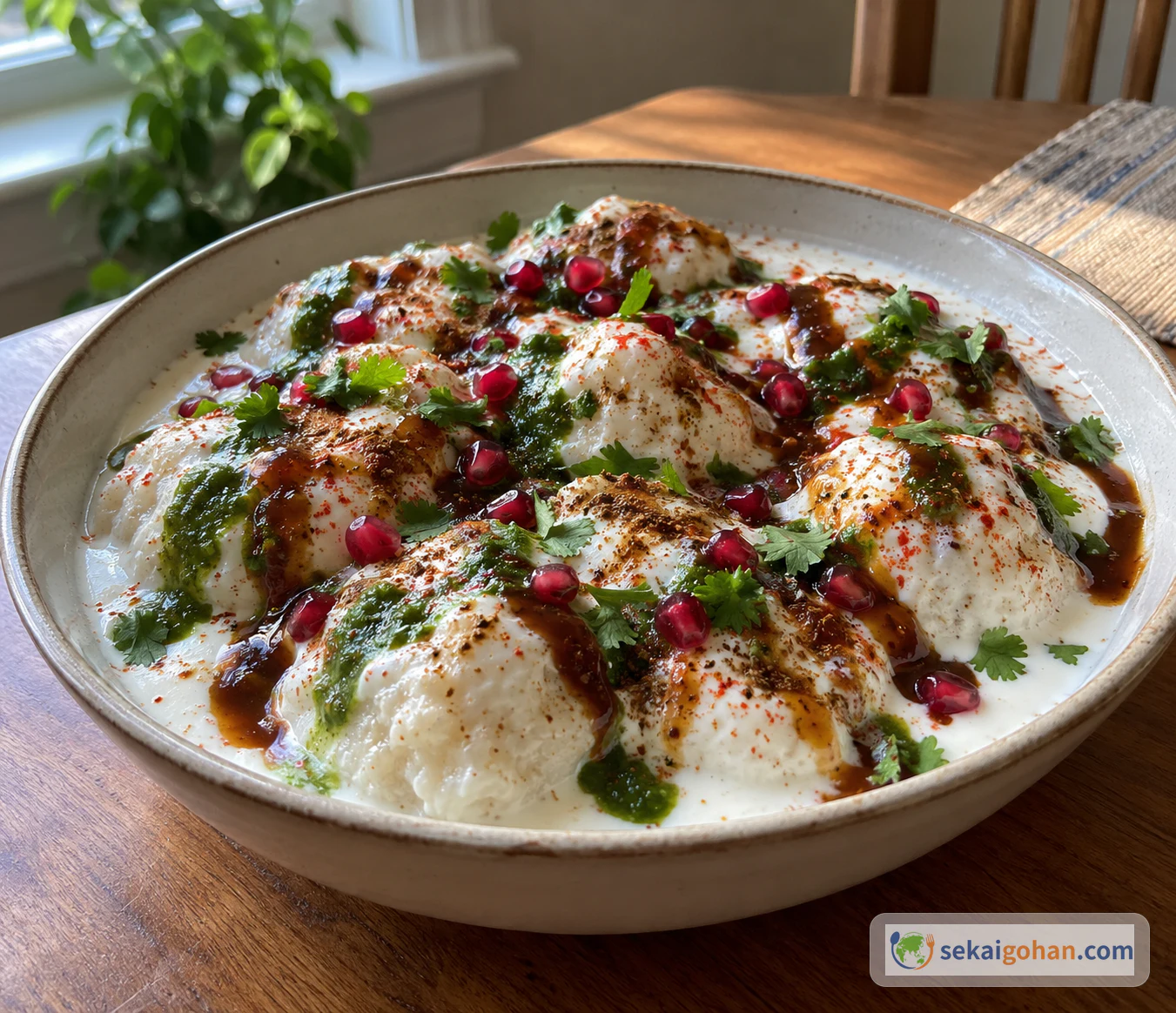
Dahi vada layered with chilled unsweetened yogurt, two chutneys, pomegranate and coriander
Cuisine
Indian

How to make dahi vada following one author's North Indian Style recipe: urad dal vadas fried at 180–190°C, soaked in room-temperature water while still hot, gently squeezed, then covered in chilled unsweetened curd and finished with homemade tamarind and coriander chutneys, roasted cumin, chaat masala and pomegranate. Includes every amount from the source, the two batter-water ranges kept as written, troubleshooting, and what the name does and does not tell you.

Cooking flow

Cooking steps

STEP11 / 10

Start two overnight soaks in separate bowls

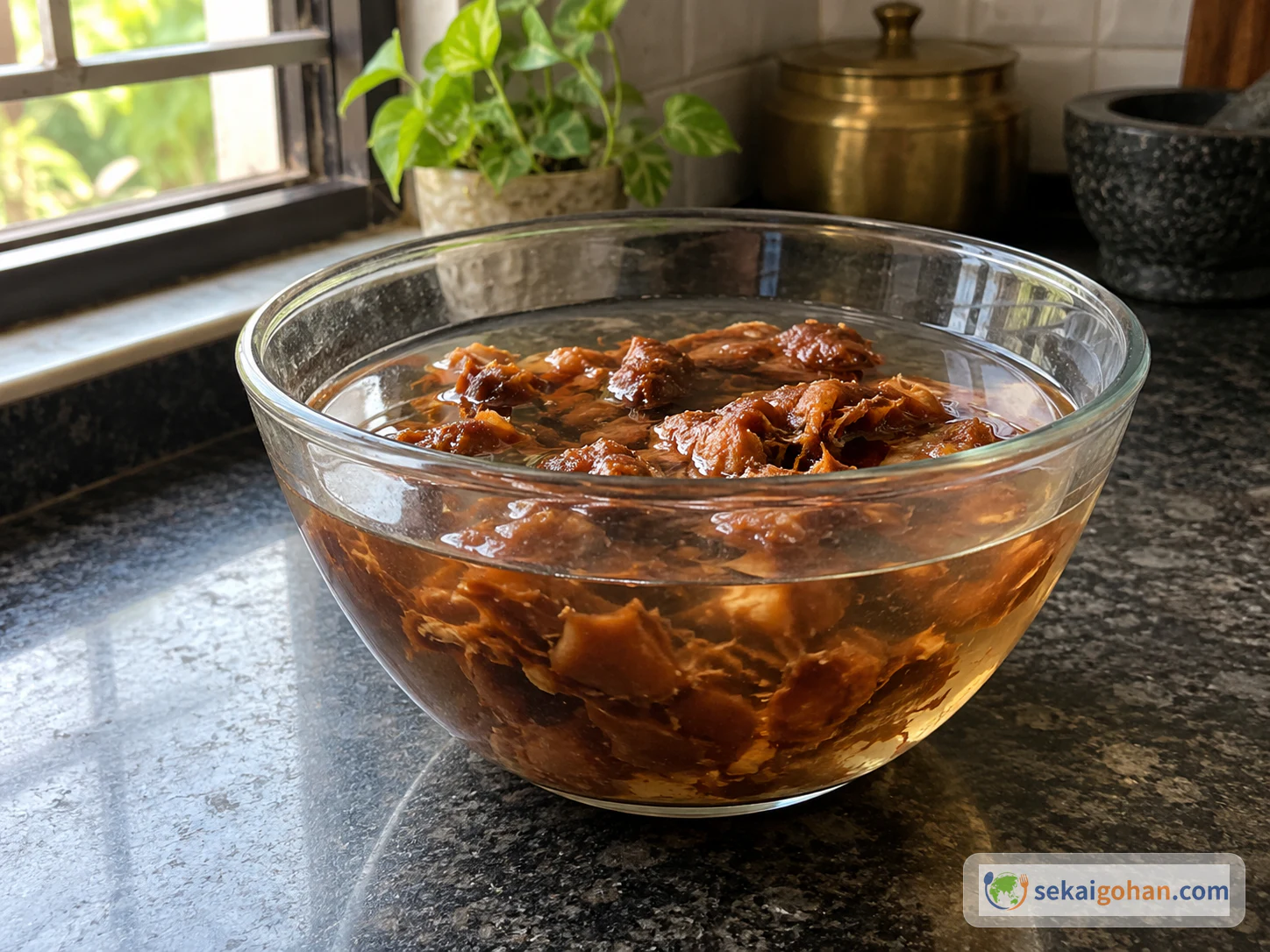
Seedless tamarind soaking in its own bowl of water
The tamarind soaks in its own measured water

In one bowl, soak 1/2 cup tightly packed seedless tamarind in 1.75 cups water.

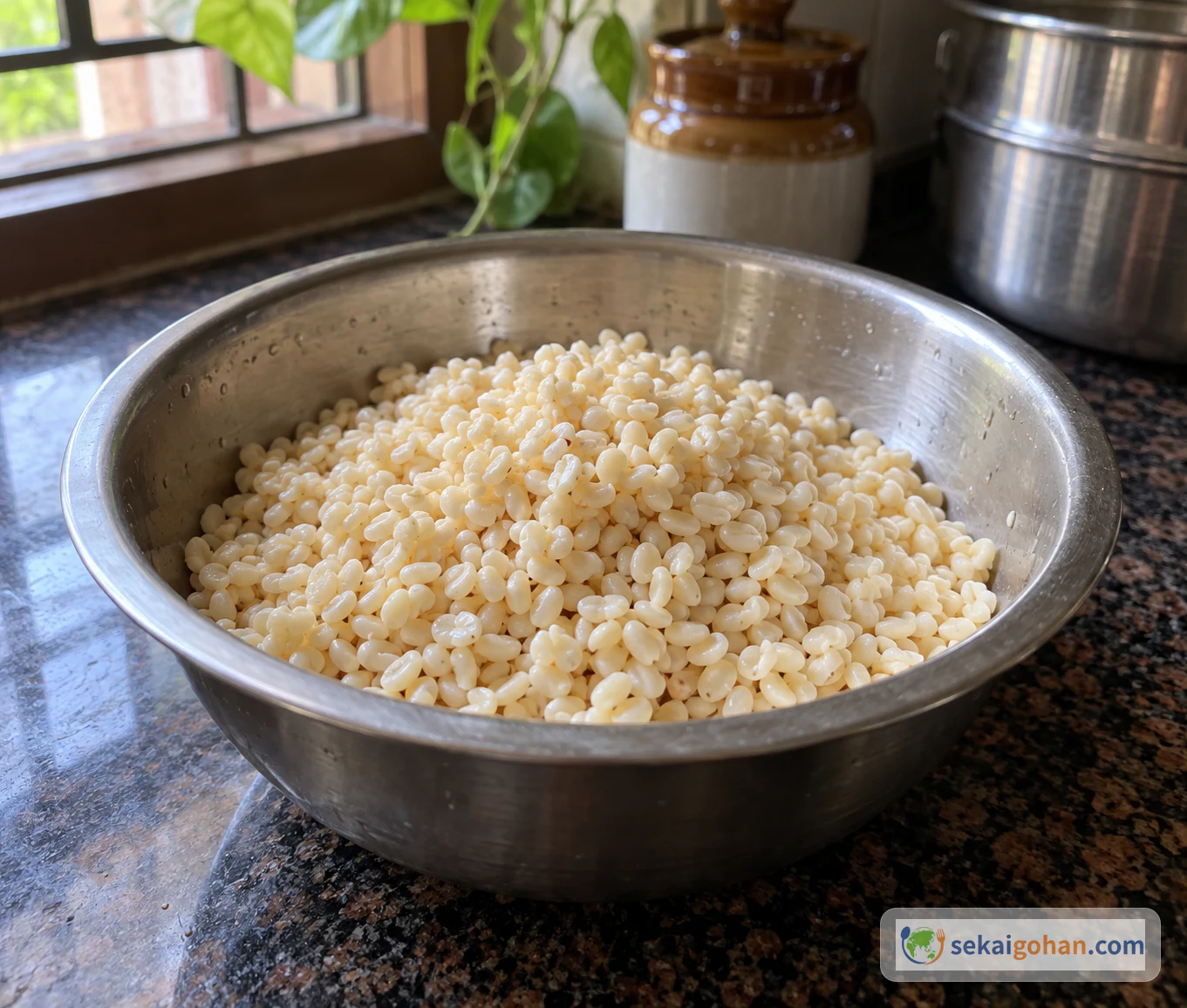
In a second bowl, prepare 7 oz (200 g) skinless split urad dal: pick it over, then rinse it 3–4 times.

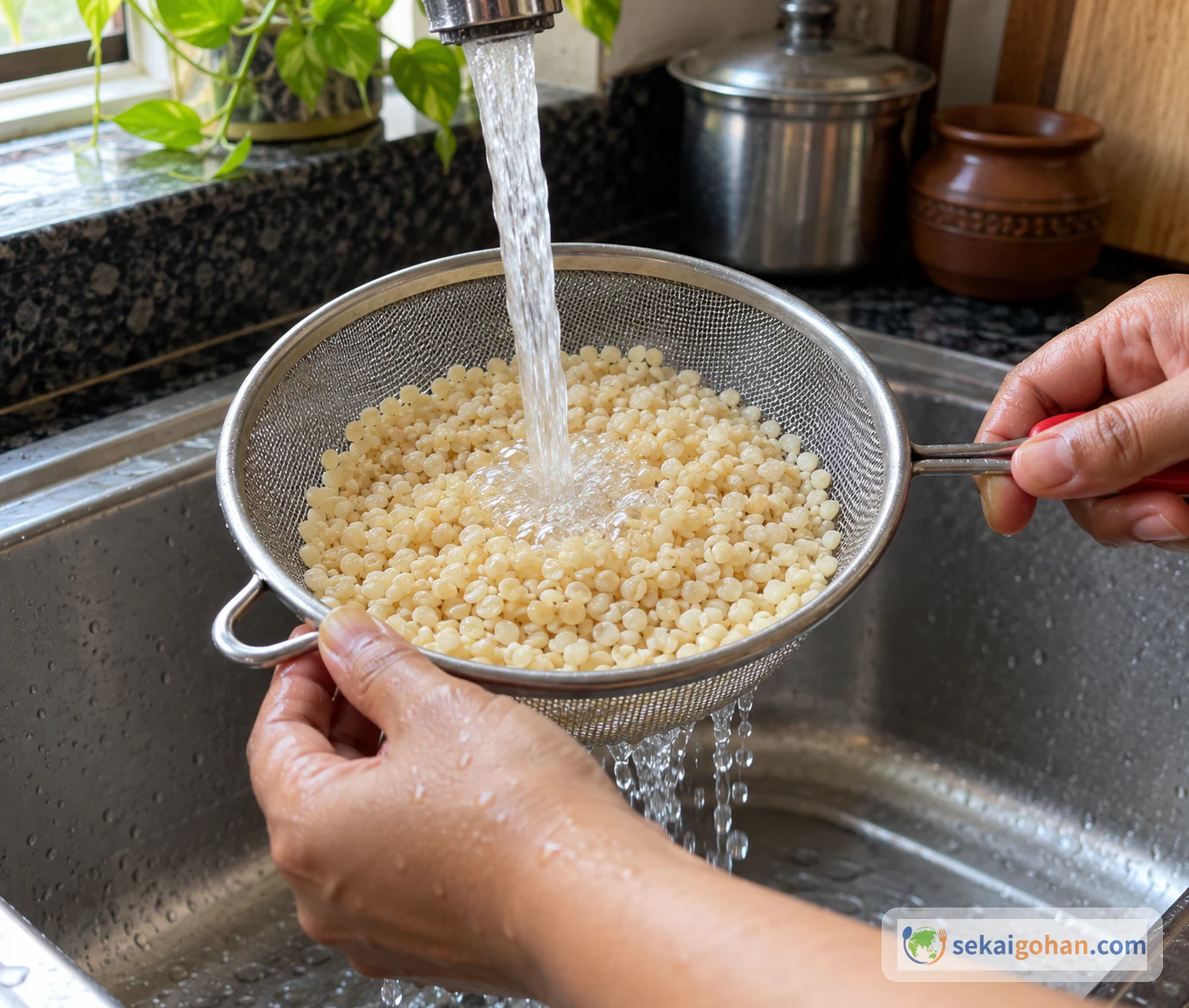
Rinsing skinless split urad dal under running water
Rinse the dal 3–4 times before soaking

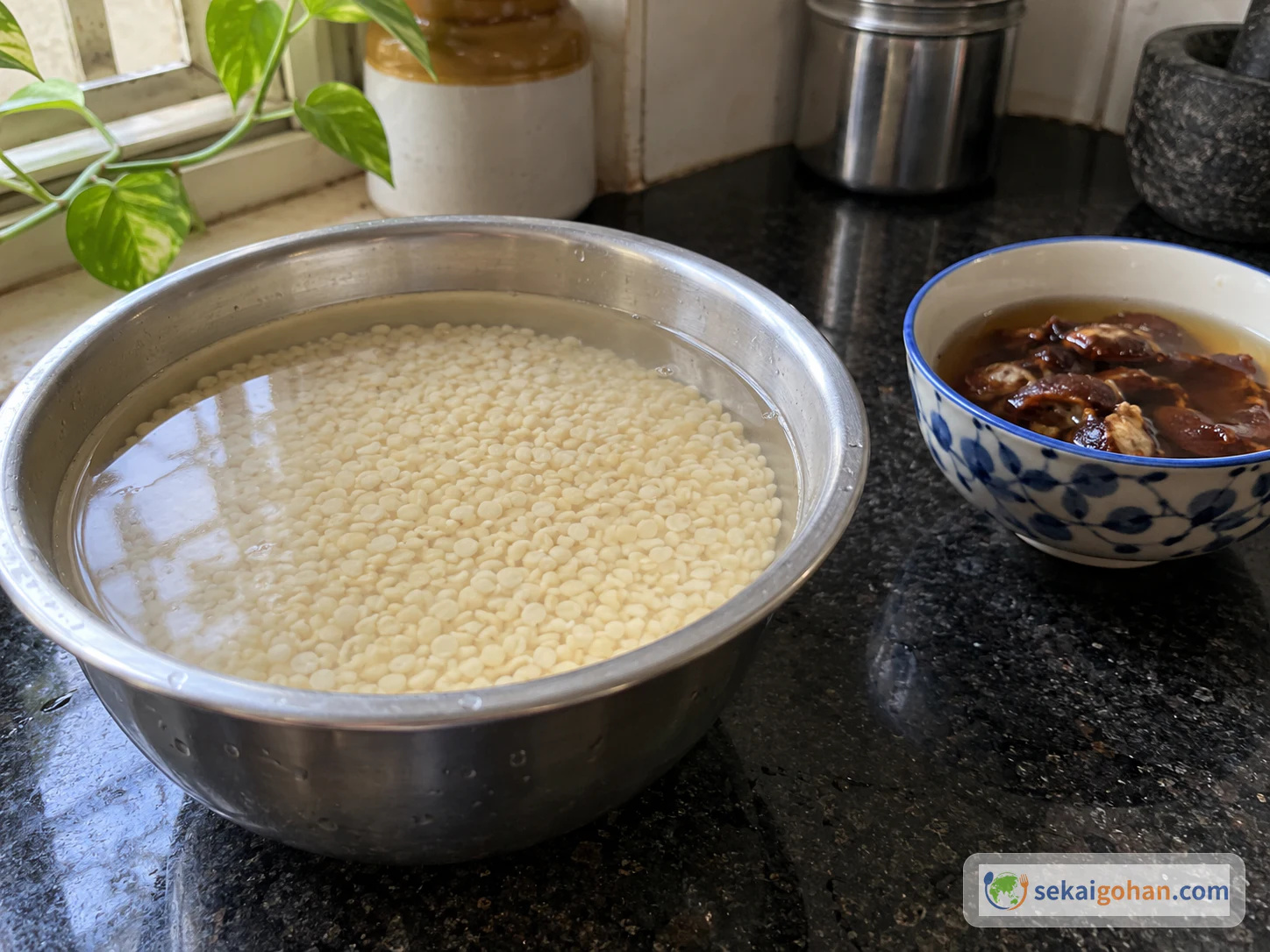
Cover the rinsed dal with enough water and leave it overnight.

Skinless split urad dal soaking in water in its own bowl for the overnight soak
The dal soaks separately from the tamarind

Each one gets its own overnight soak, and the waters are never shared. Starting both on the same night is just a way to organize the work.

STEP22 / 10

Make the tamarind chutney and let it cool

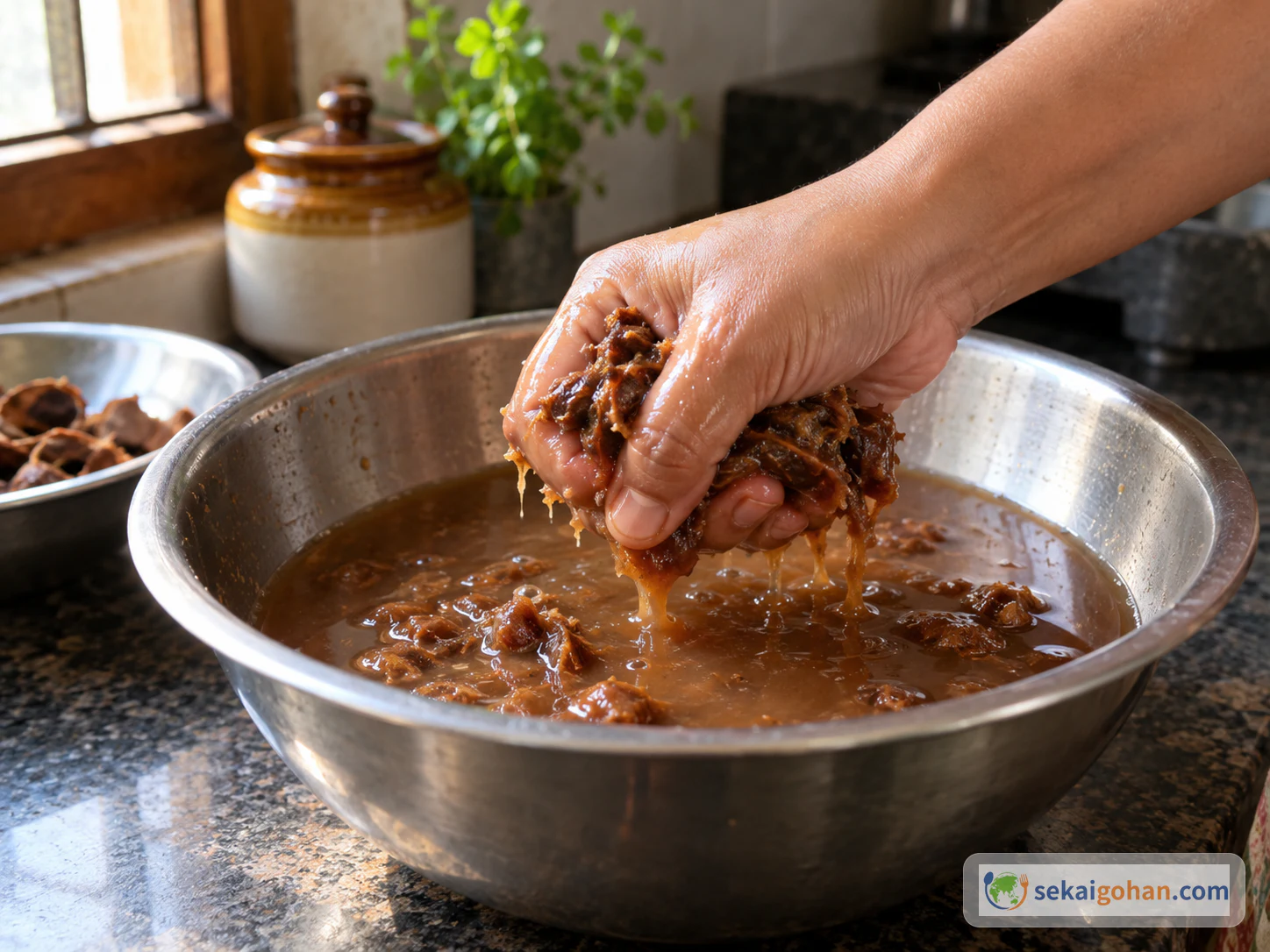
Squeezing soaked tamarind in the same bowl
Work the pulp in its own soaking water; no extra water goes in

Squeeze the soaked tamarind with your hand in the same bowl it soaked in.

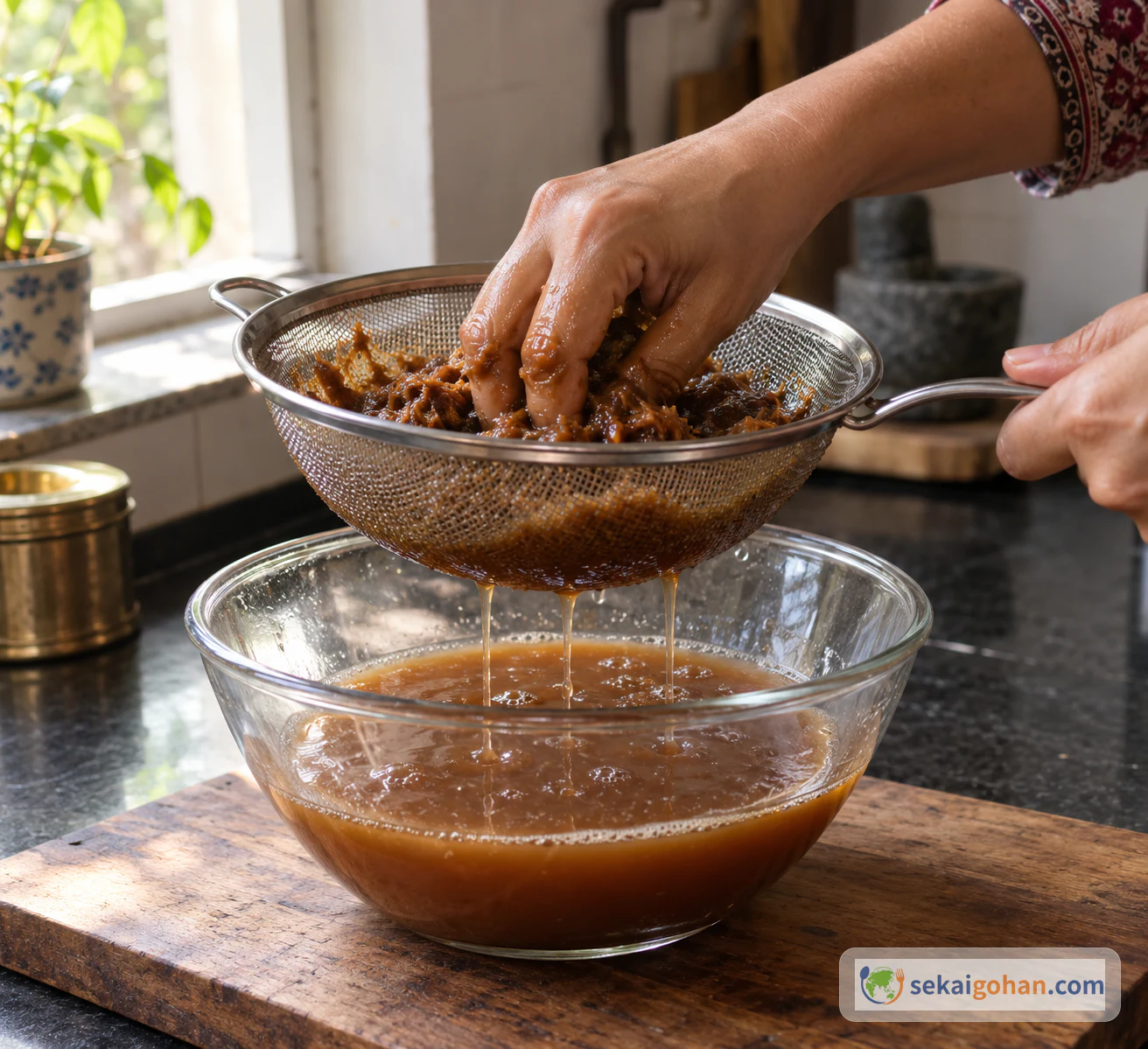
Strain it and keep the extract. Do not add more water.

Straining the tamarind and keeping the extract
The strained extract is what goes into the pan

In a small saucepan, warm 1 tsp oil over low heat.

Warming oil over low heat in a small pan for the tamarind chutney
Low heat for the tempering oil

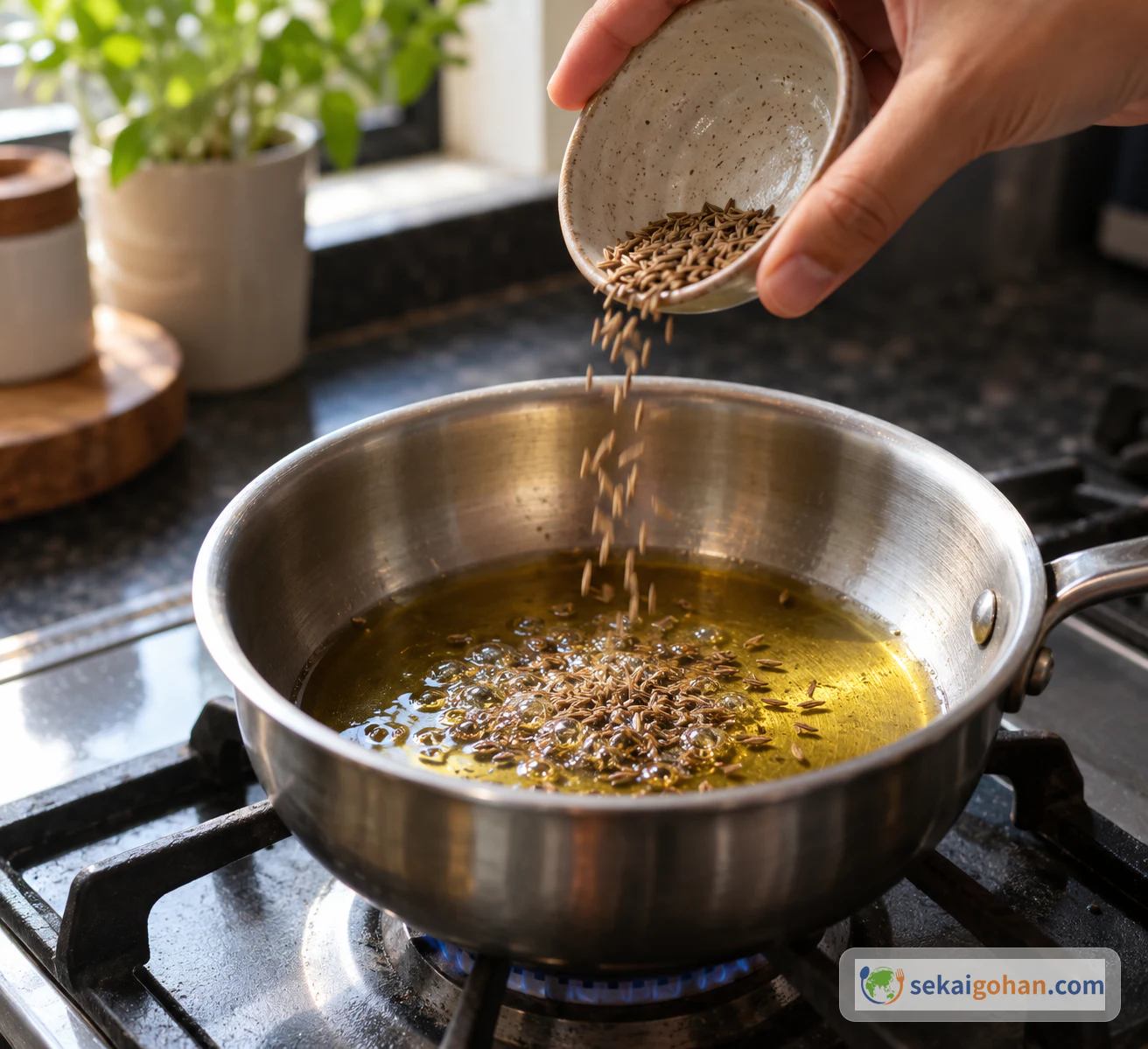
Add 1/2 tsp cumin seeds and let them crackle.

Adding cumin seeds to the warm oil
Let the cumin seeds crackle first

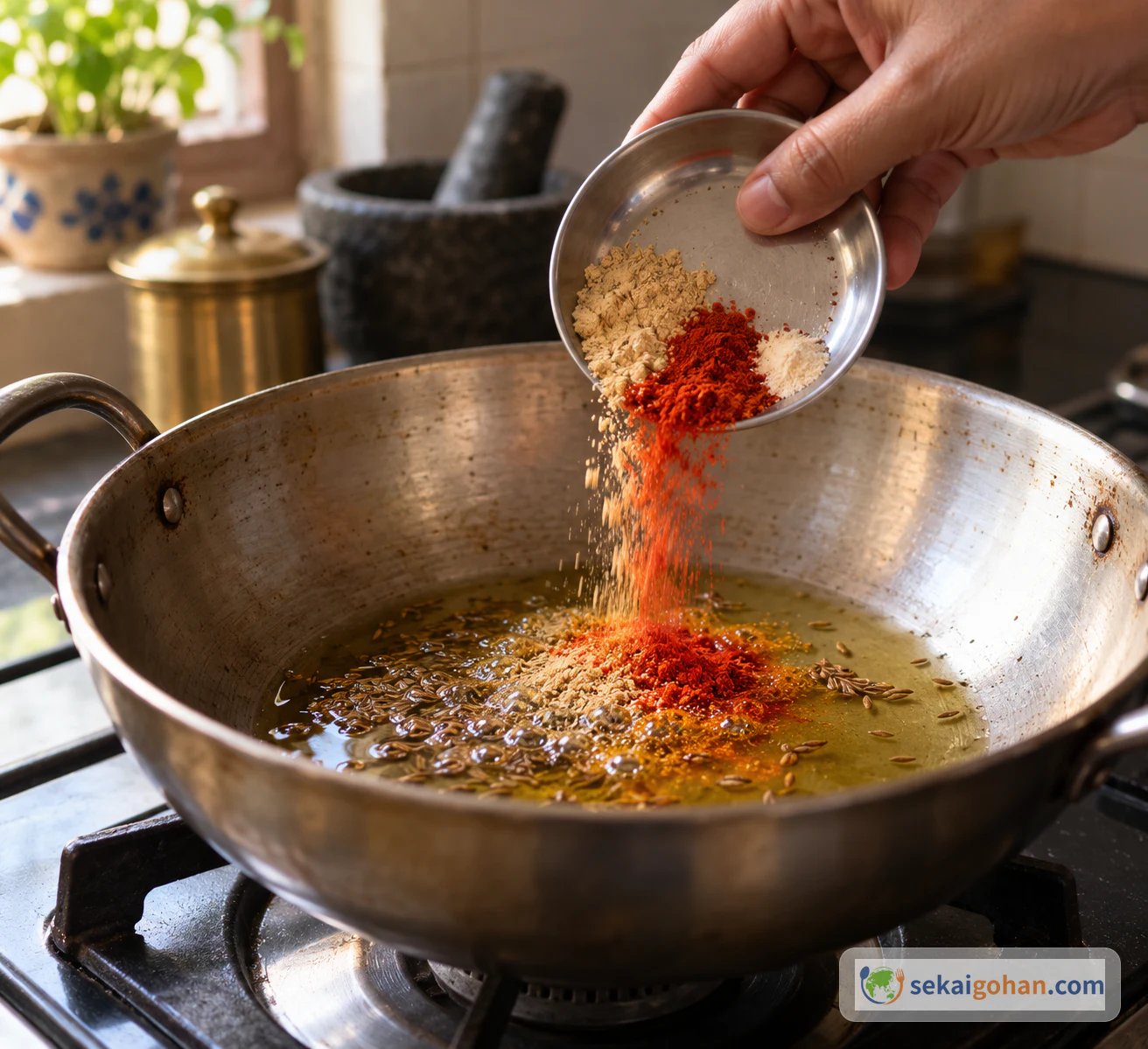
Add 1/2 tsp ginger powder, 1/4 tsp red chili powder and a pinch of hing.

Adding the spices to the oil with crackled cumin
Ginger powder, red chili powder and hing go in together

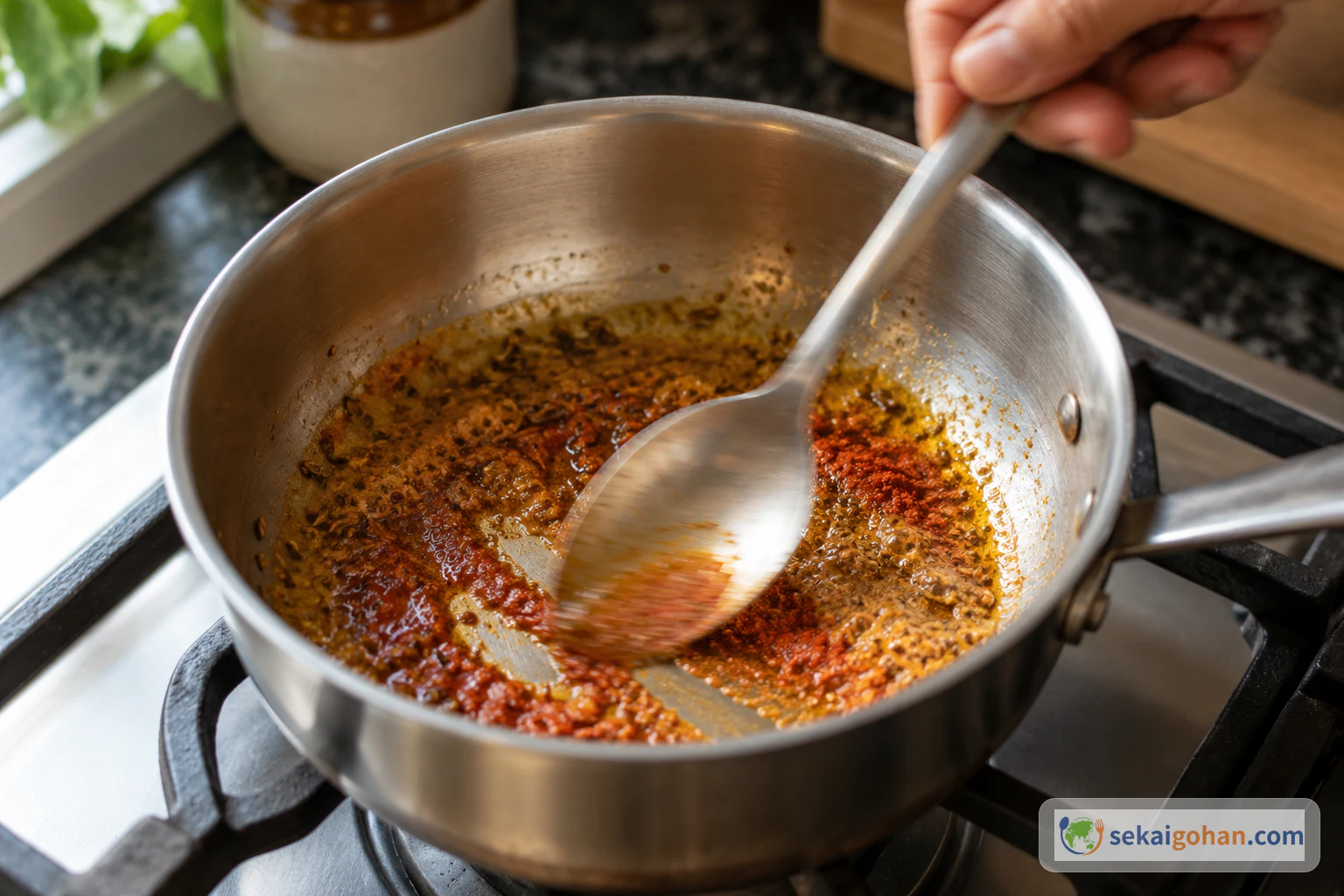
Stir them through the oil.

Stirring the spices in the oil
A quick stir before the liquid goes in

Pour in the tamarind extract.

Adding the strained tamarind extract to the pan
Pour the extract over the tempered spices

Cook for 2–3 minutes.

Heating the tamarind extract in the pan
Cook the extract with the spices for 2–3 minutes

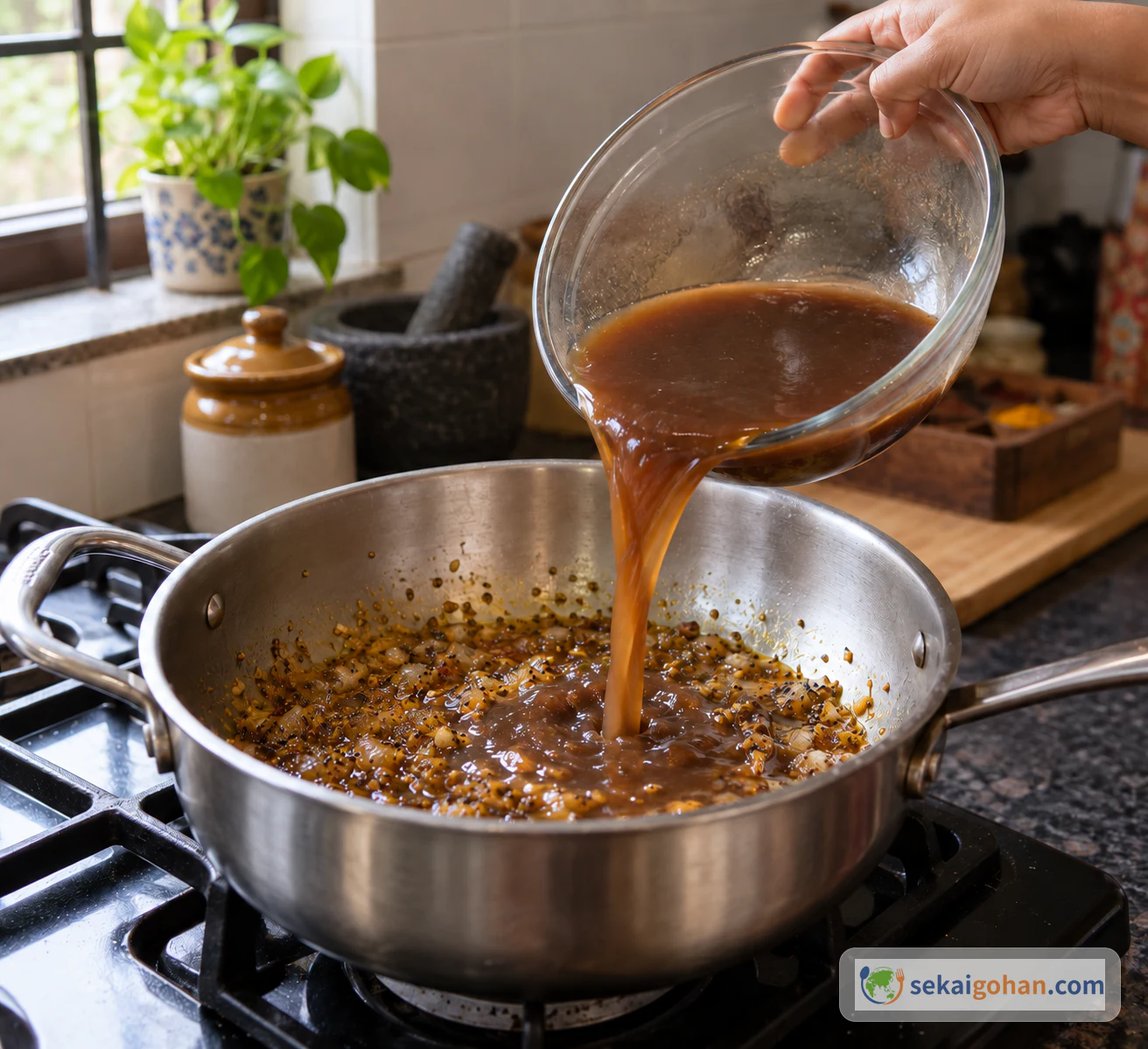
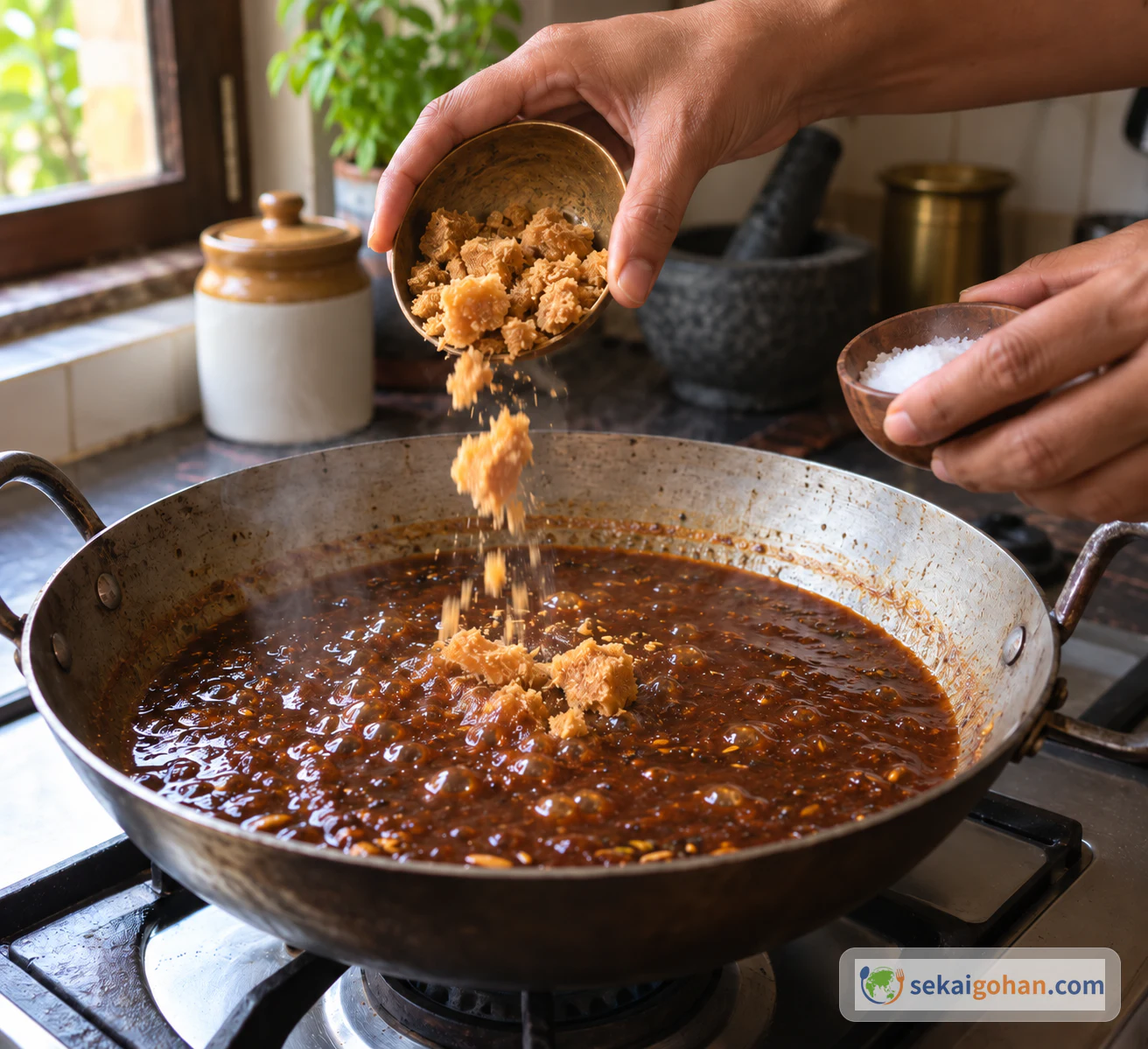
Add 7 tbsp jaggery and salt as needed.

Adding jaggery and regular salt to the simmering tamarind
Jaggery and salt go in after the first few minutes

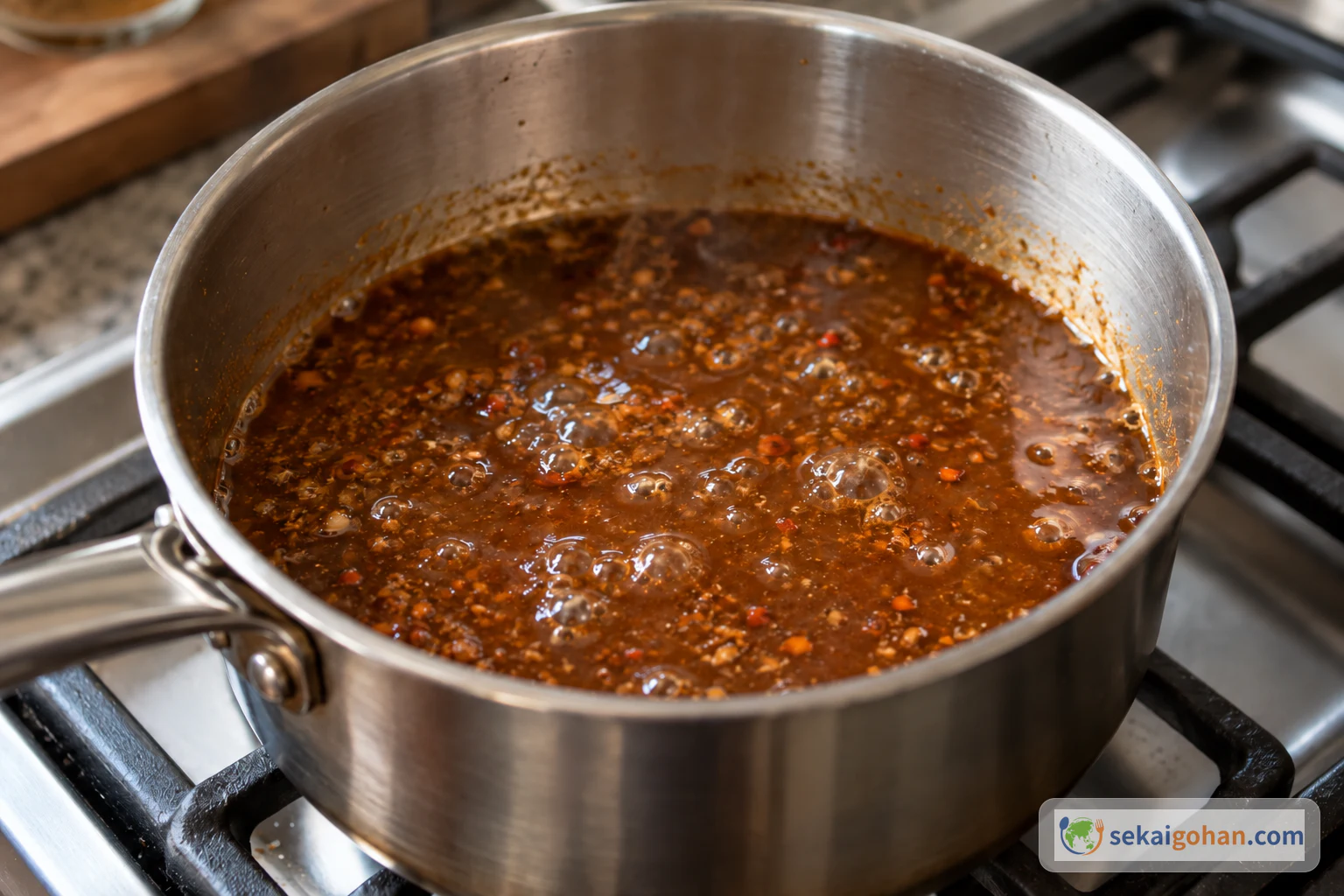
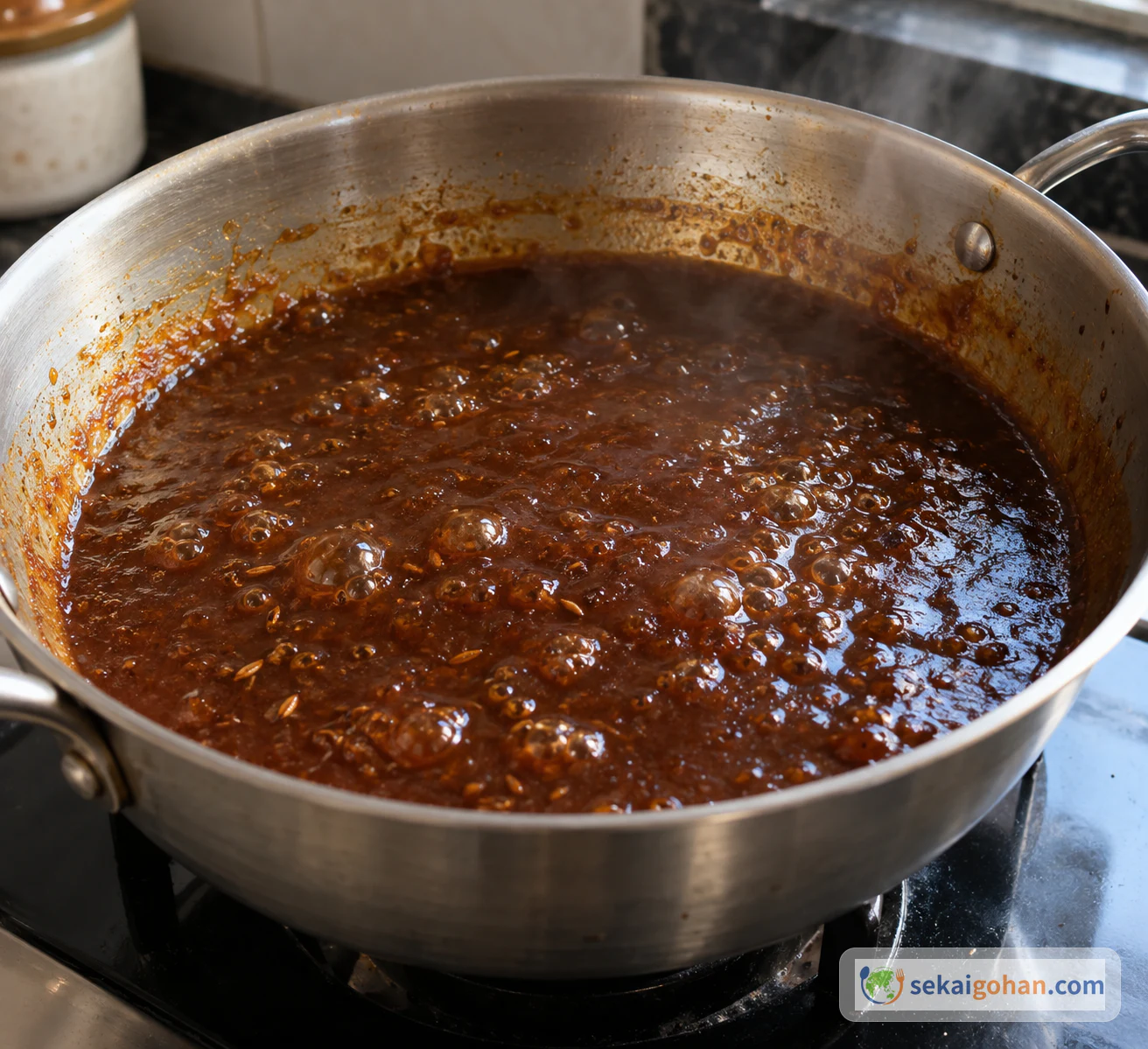
Simmer over low to gentle medium-low heat for 4–5 minutes, until it thickens.

Simmering the tamarind chutney over low heat until it thickens
Simmer gently until the chutney thickens

Take it off the heat and let it cool. Have this chutney ready before you start frying.

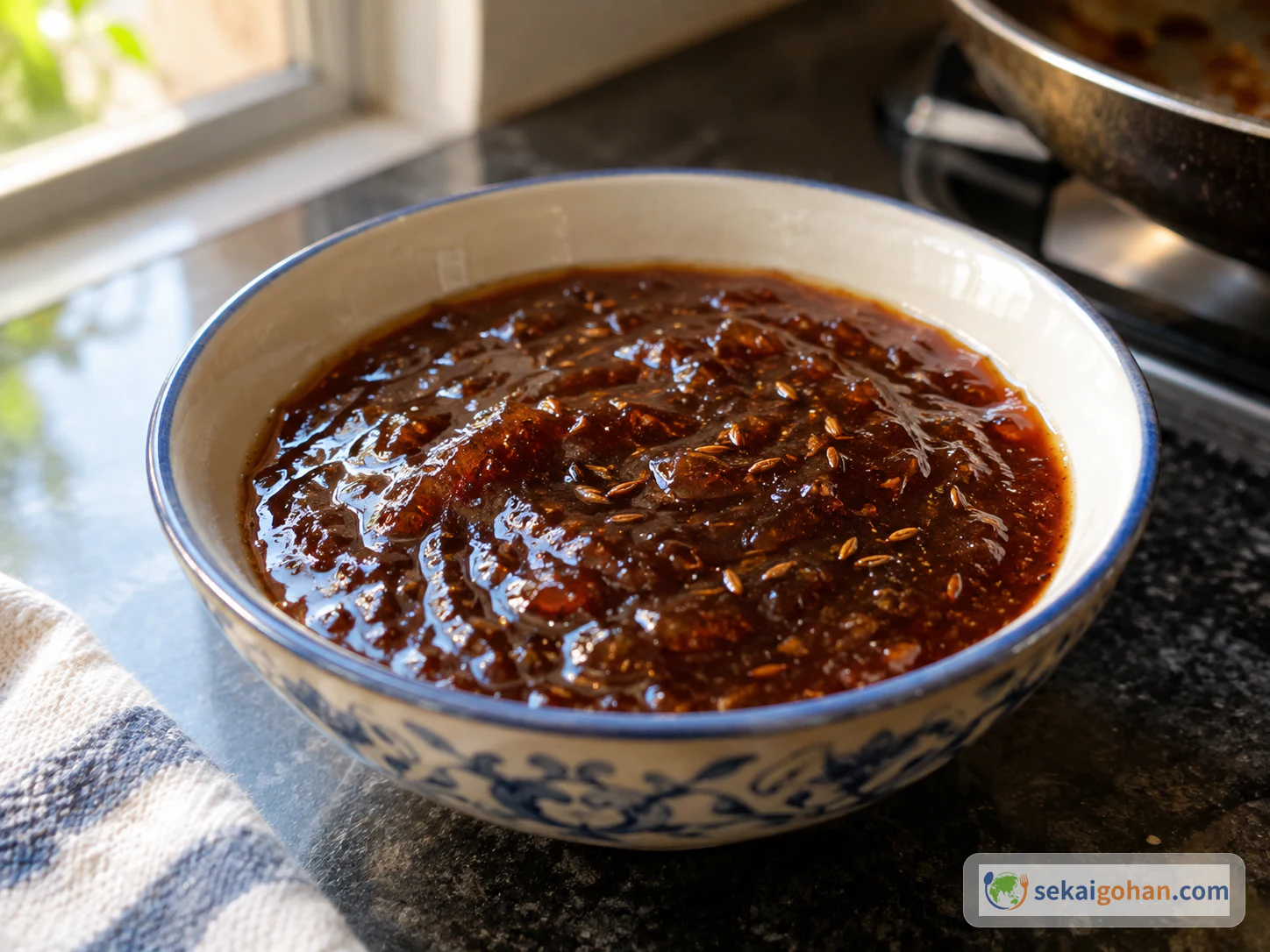
Cooled tamarind chutney in a small bowl
Thickened, then cooled
STEP33 / 10

Blend the coriander chutney

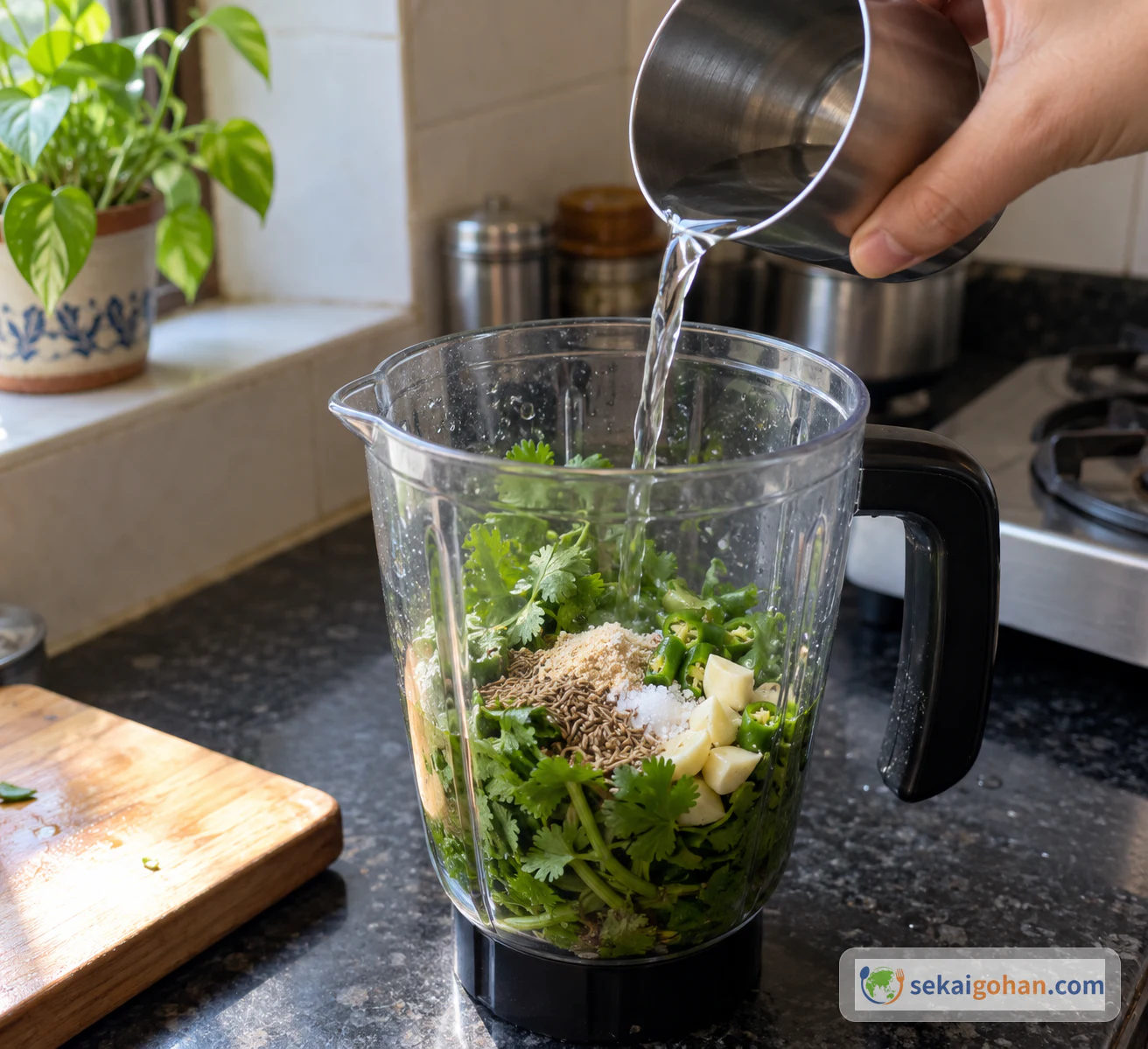
Adding water to the coriander chutney ingredients in the blender
Start with 2 tbsp water

Put 2 cups coriander leaves, 1/2 tsp amchur, 1/2 tsp chopped garlic, 1 tsp chopped green chili, 1/2 tsp cumin seeds and salt in a blender, then add 2 tbsp water.

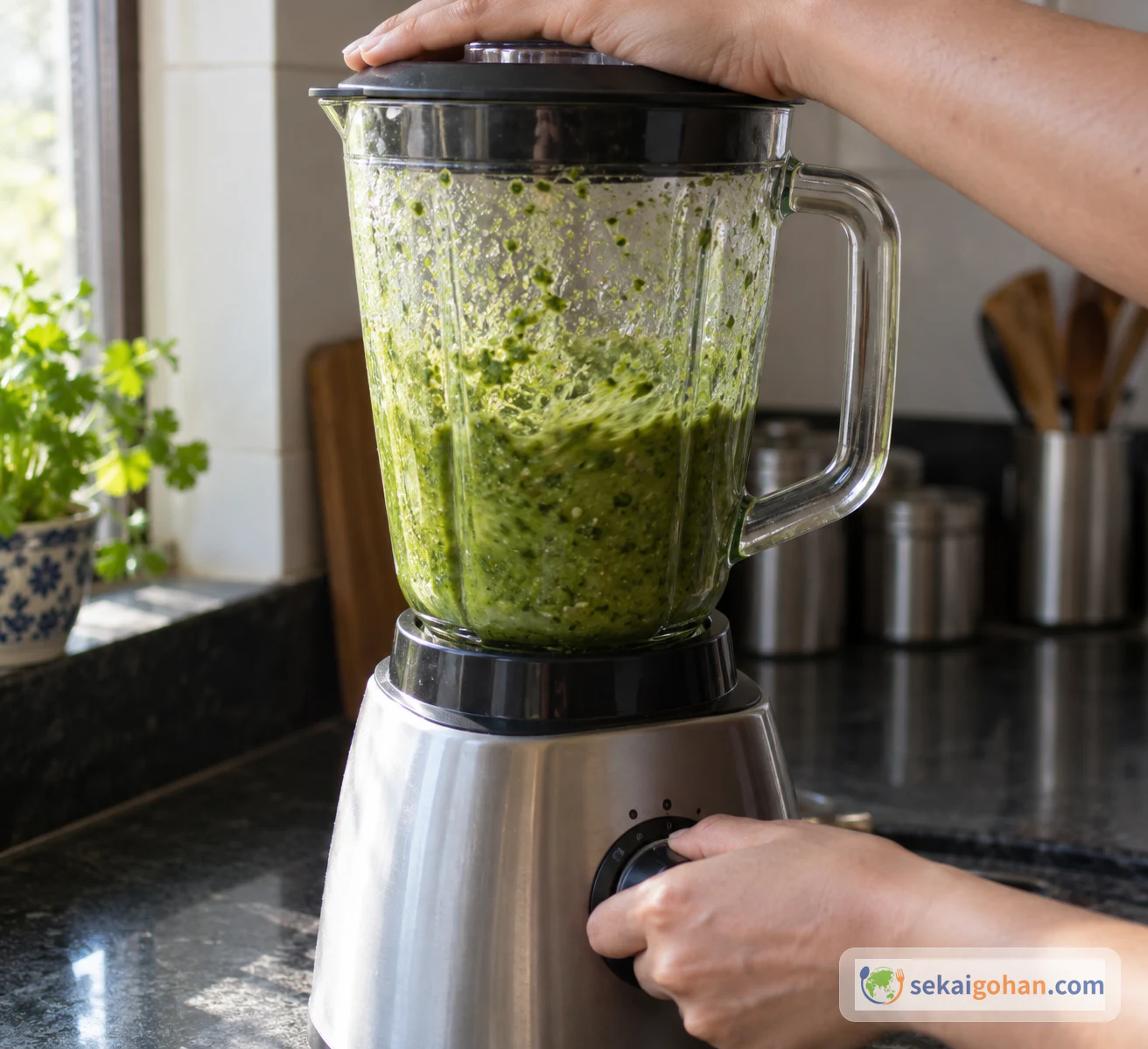
Blend until smooth. If it needs more water to blend, add a little.

Blending the coriander chutney until smooth
Blend raw; this chutney is never cooked

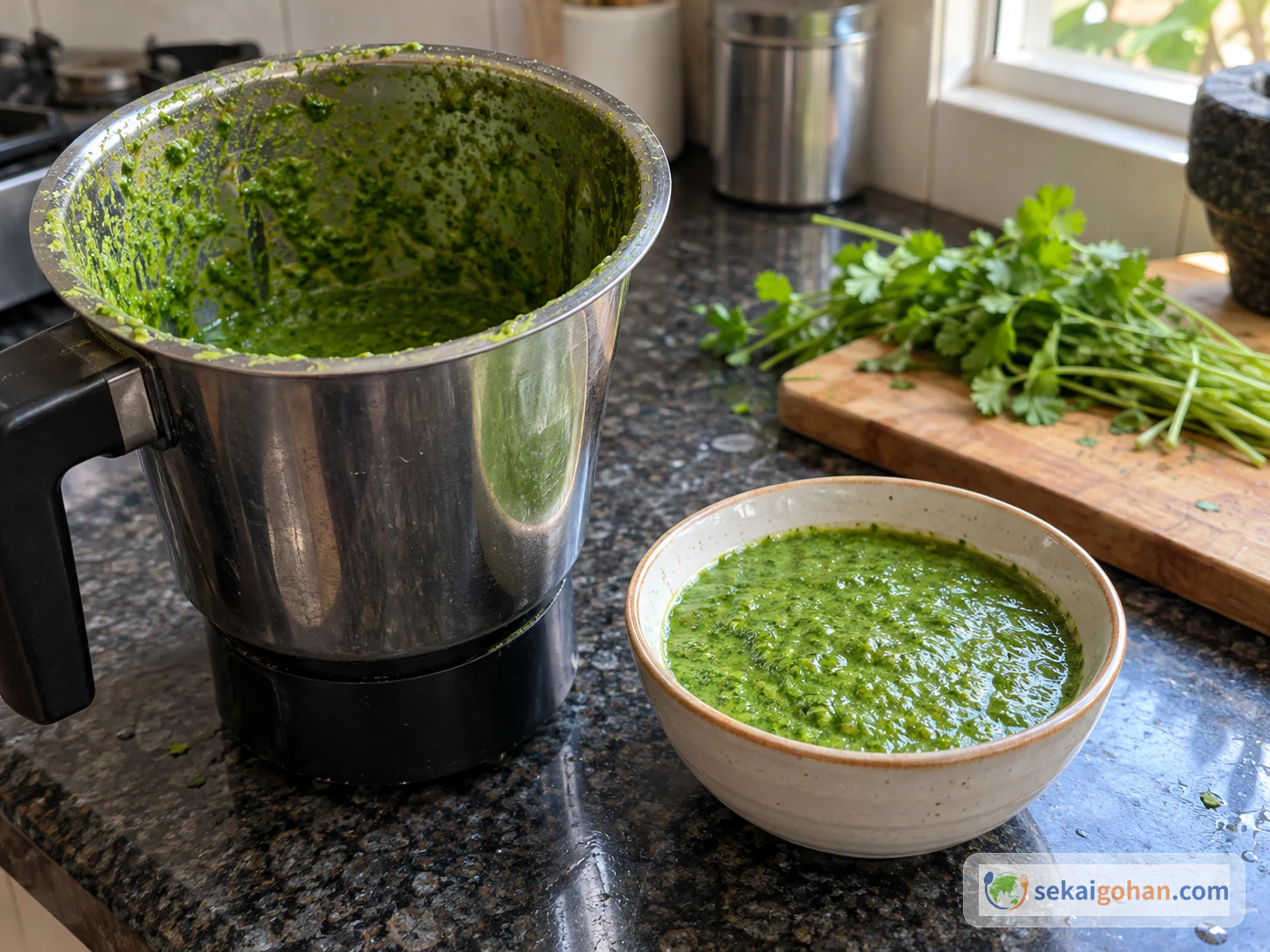
Set it aside, uncooked. Both chutneys are now ready before any frying.

Finished coriander chutney set aside in a small bowl
The green chutney waits for assembly
STEP44 / 10

Grind and whisk the urad dal batter

Overnight-soaked urad dal, drained
Drained dal ready for the grinder

Drain the overnight-soaked dal.

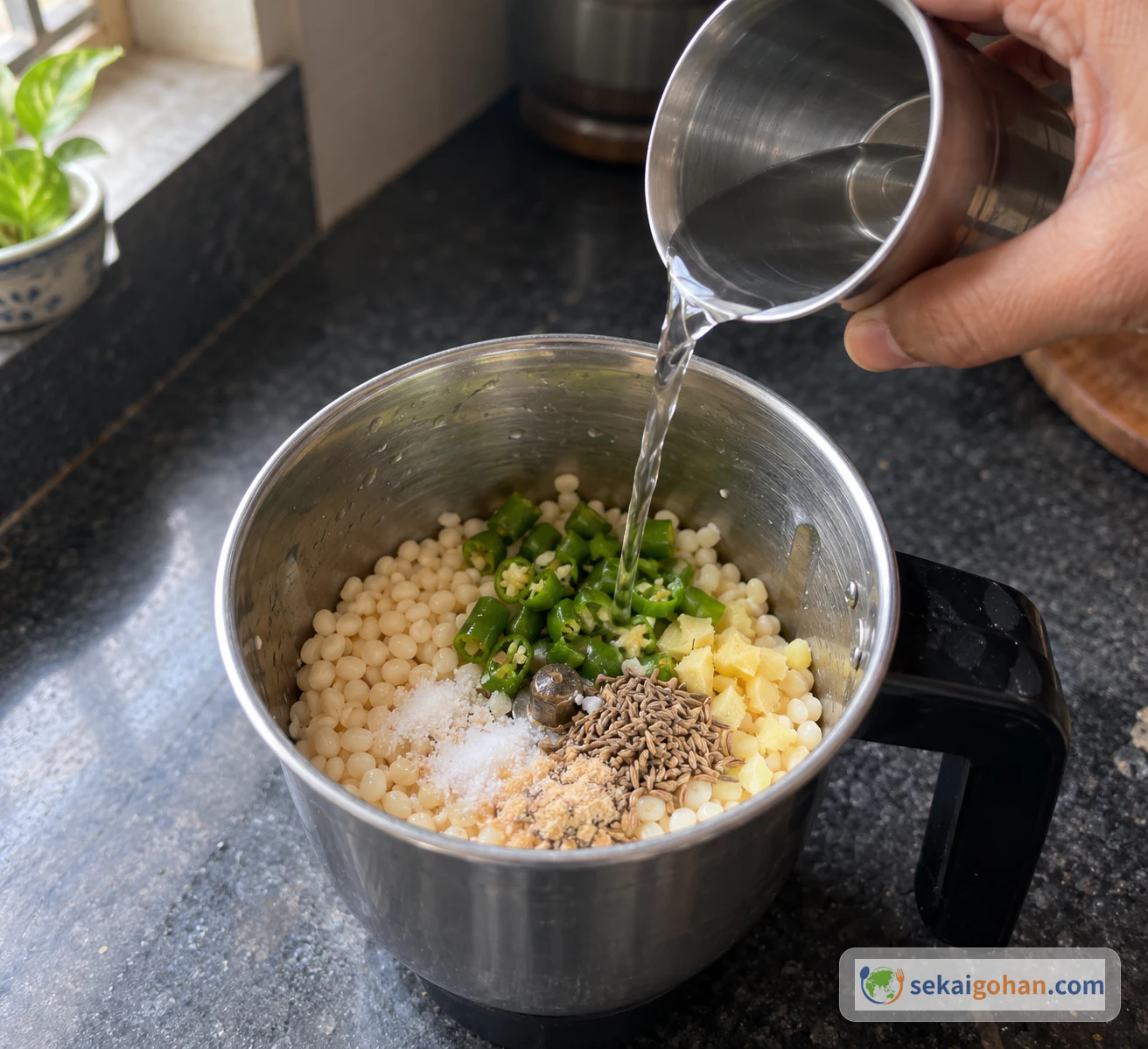
Put it in a grinder with 1/2 tsp chopped green chili, 1 tsp chopped ginger, 1 tsp cumin seeds, a pinch of hing and salt as needed. Add 1/4–1/2 cup or 1/2–3/4 cup of water in parts, a little at a time.

Adding grinding water a little at a time to the seasoned dal
Add water in parts, not all at once

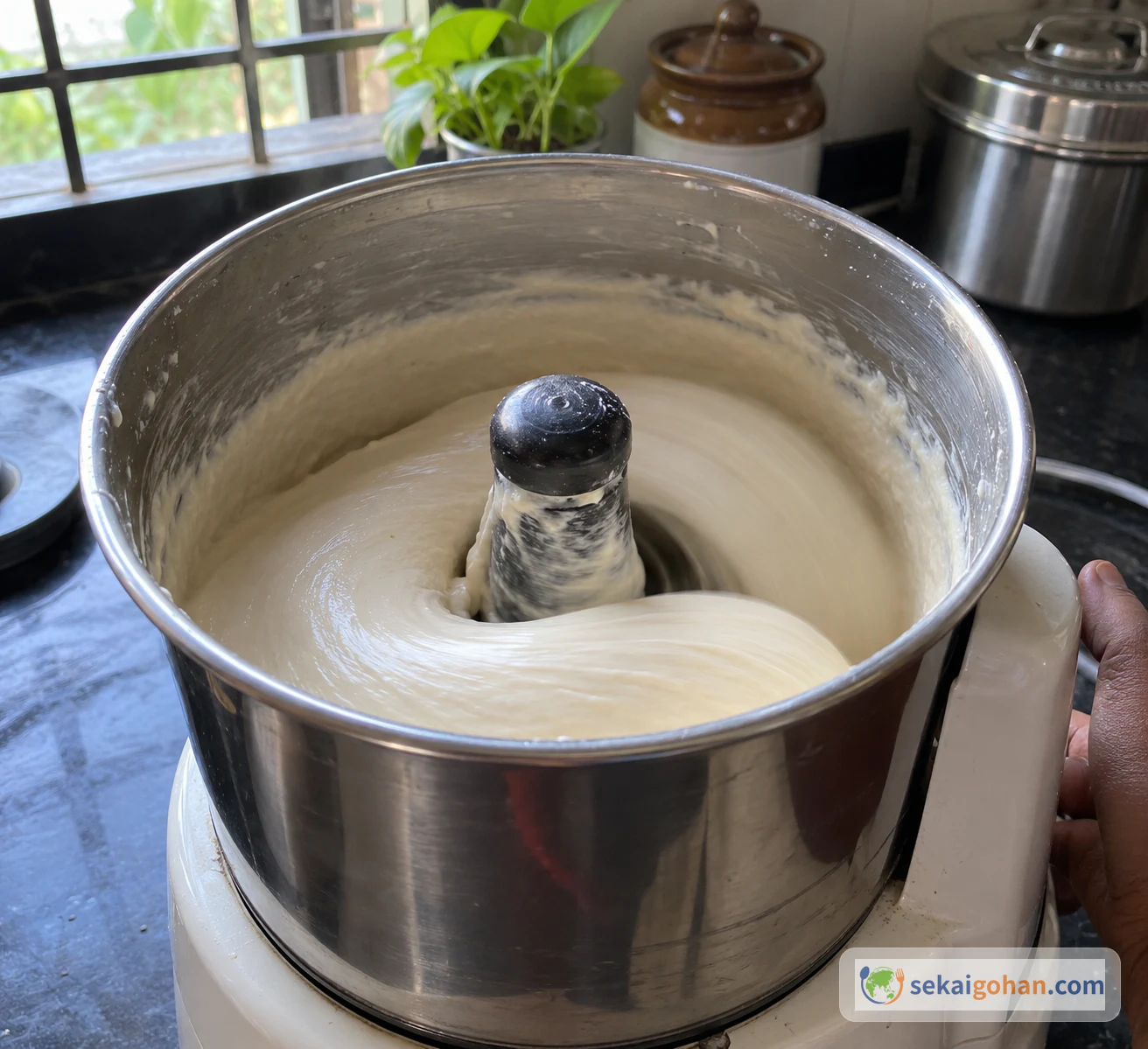
Grind to a smooth, thick to medium-thick batter that still flows.

Grinding the dal and spices into a smooth, thick batter
Thick to medium-thick, smooth and flowing

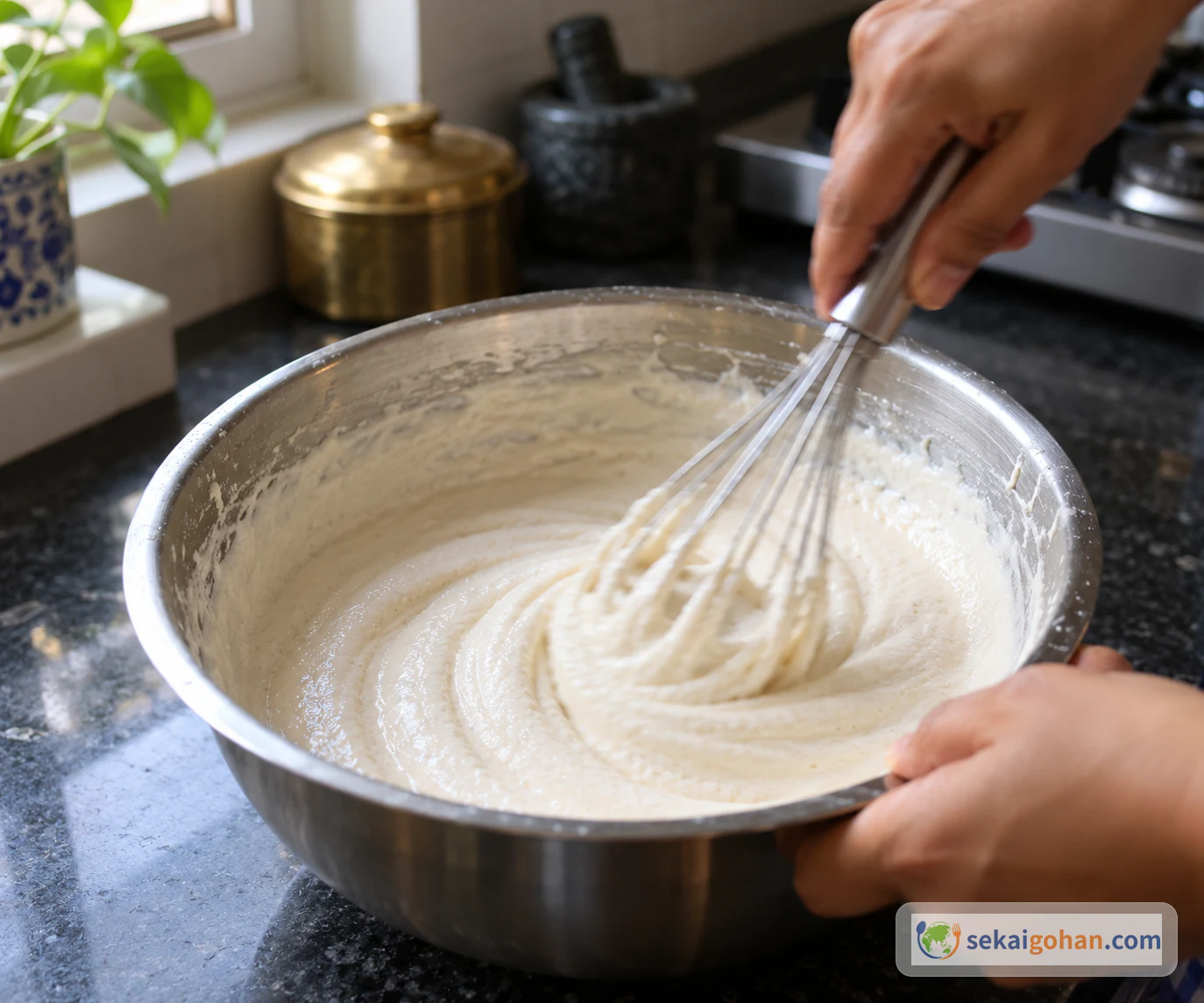
Transfer to a bowl and whisk for 2–3 minutes to aerate it.

Whisking the ground urad batter
Whisk for 2–3 minutes

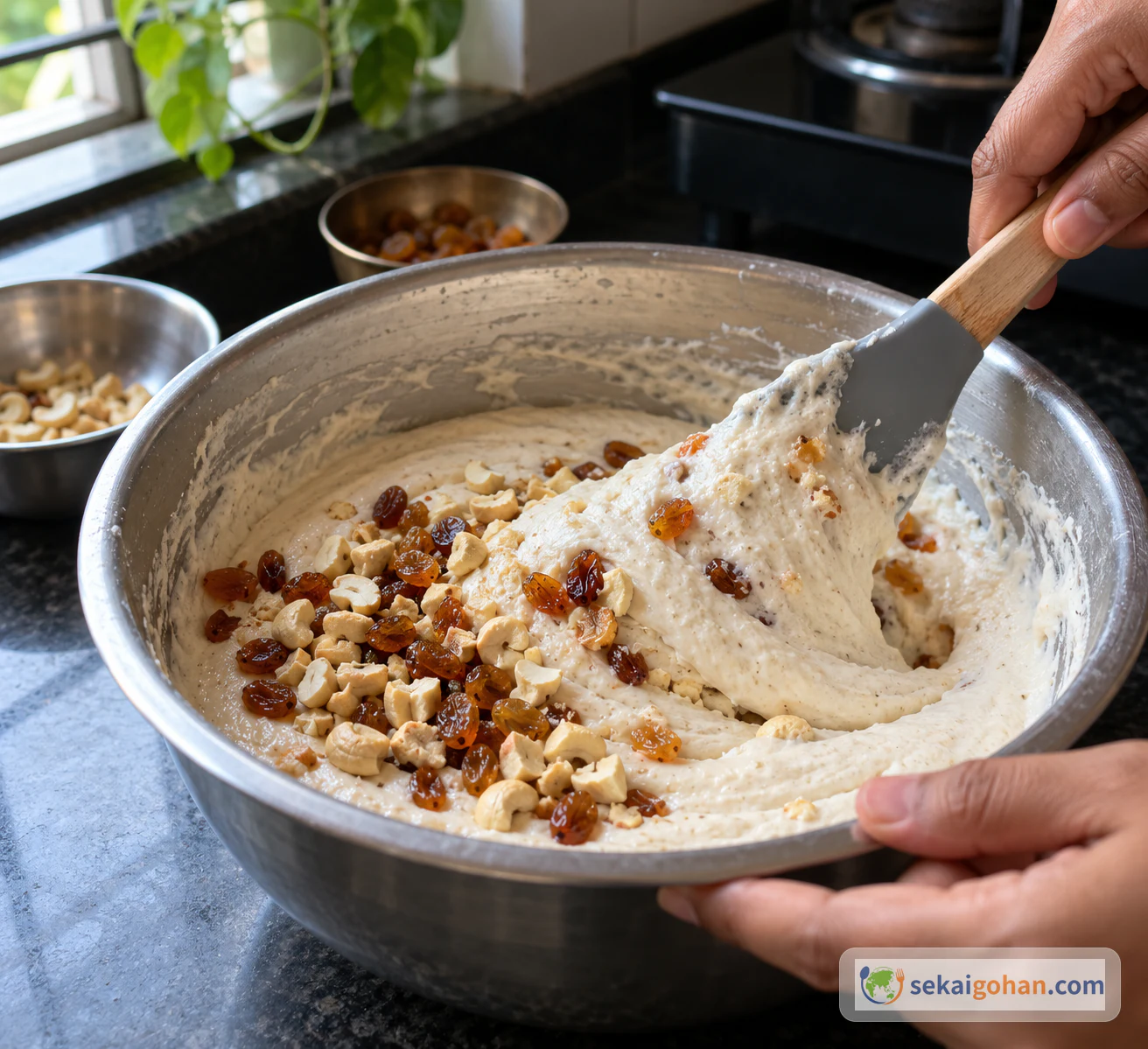
Fold in 1 tbsp chopped raisins and 12 chopped cashews, if using. Both are optional.

Folding chopped raisins and cashews into the batter
Optional raisins and cashews, folded in gently
STEP55 / 10

Deep-fry the vadas

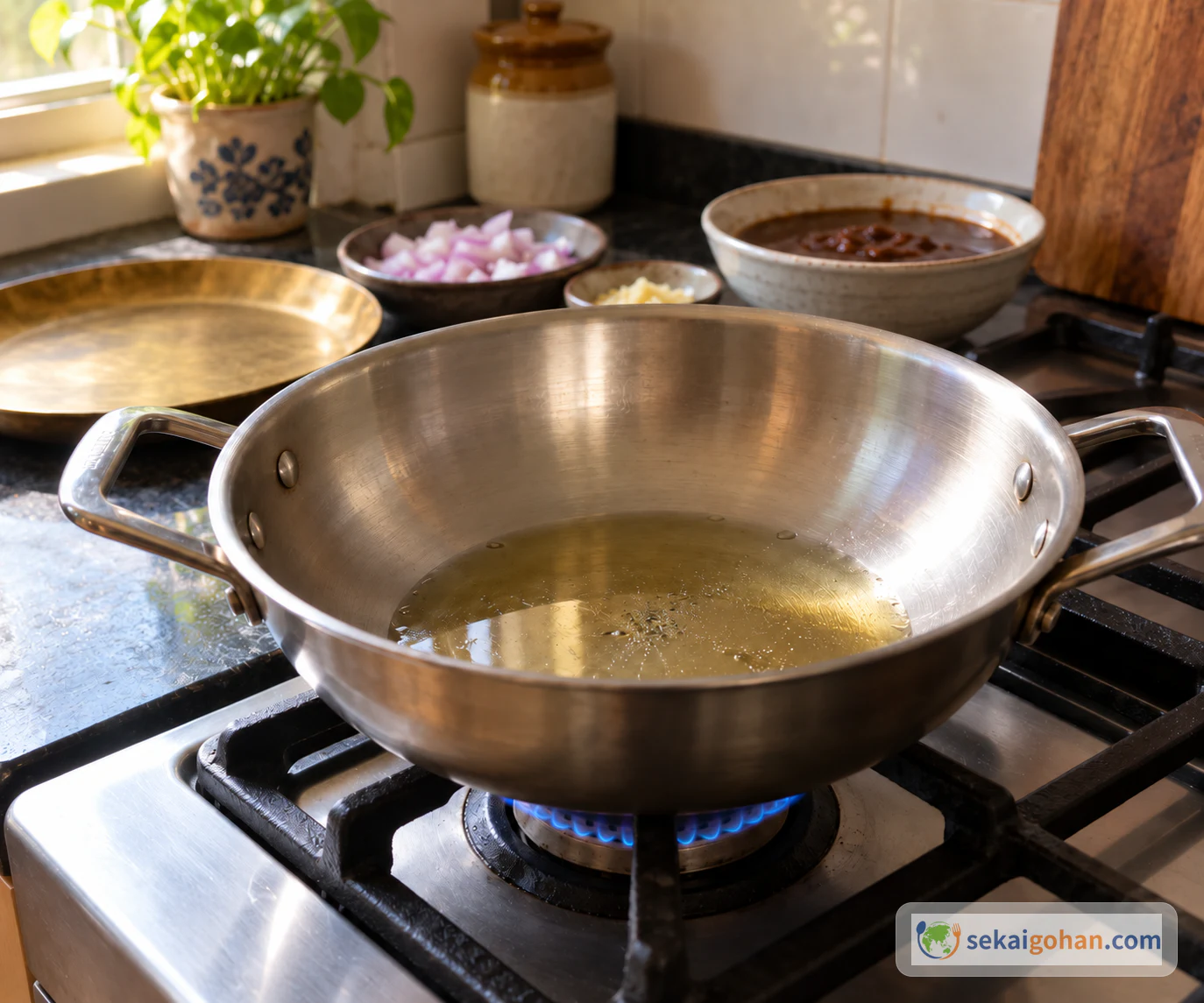
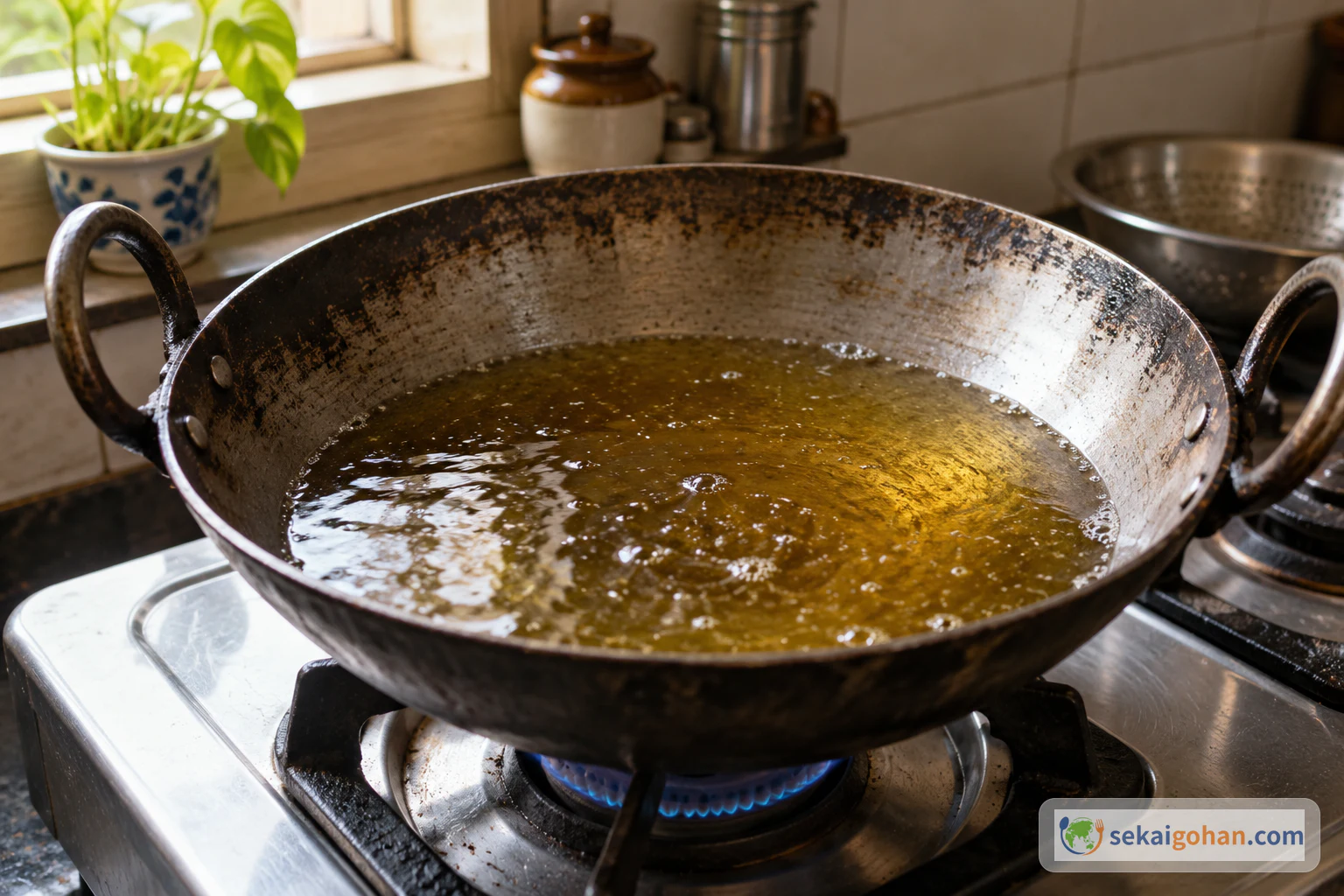
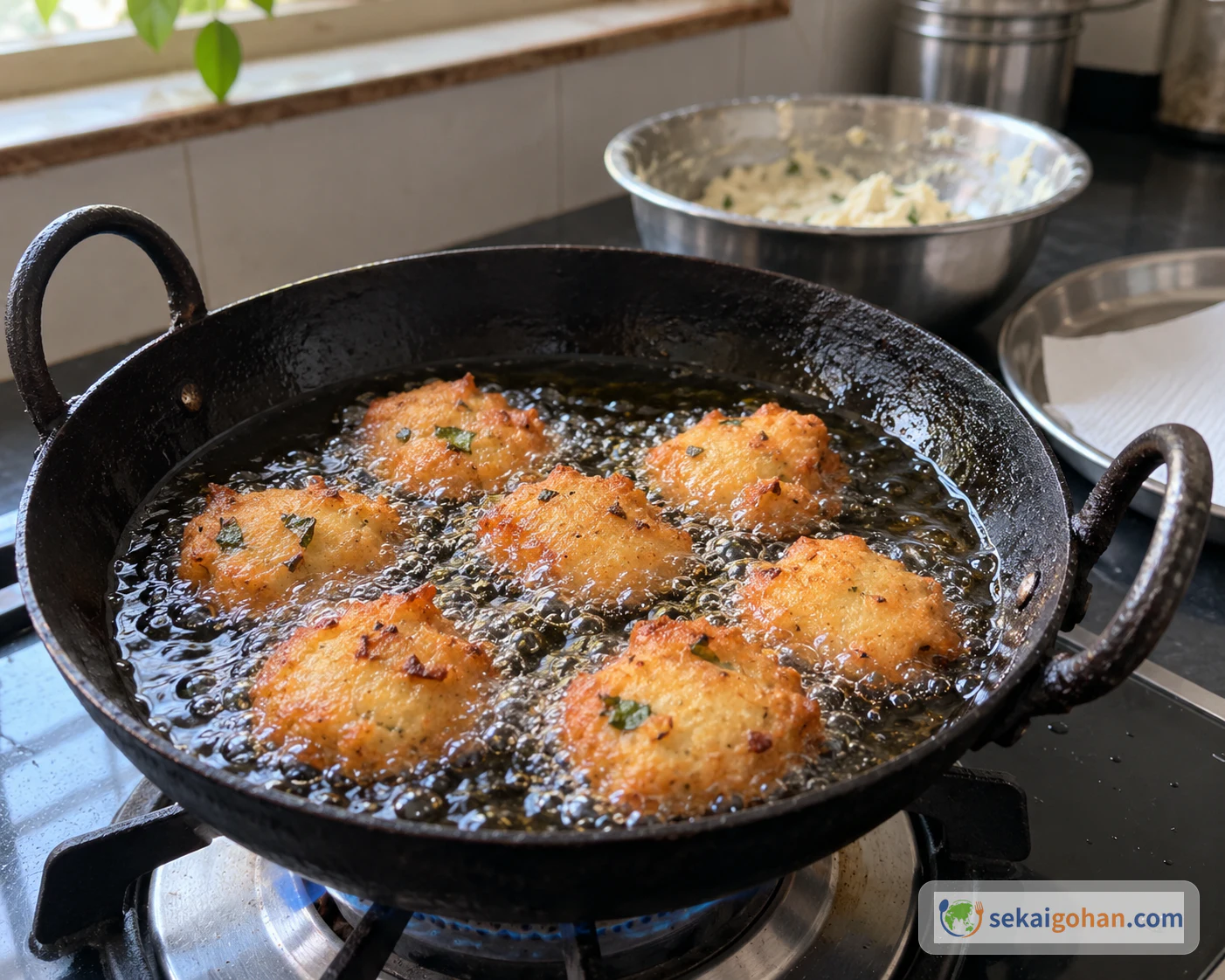
Heating frying oil in a kadai
Bring the oil to 180–190°C

Heat the oil in a kadai or pan to medium heat, 180–190°C (up to 375°F).

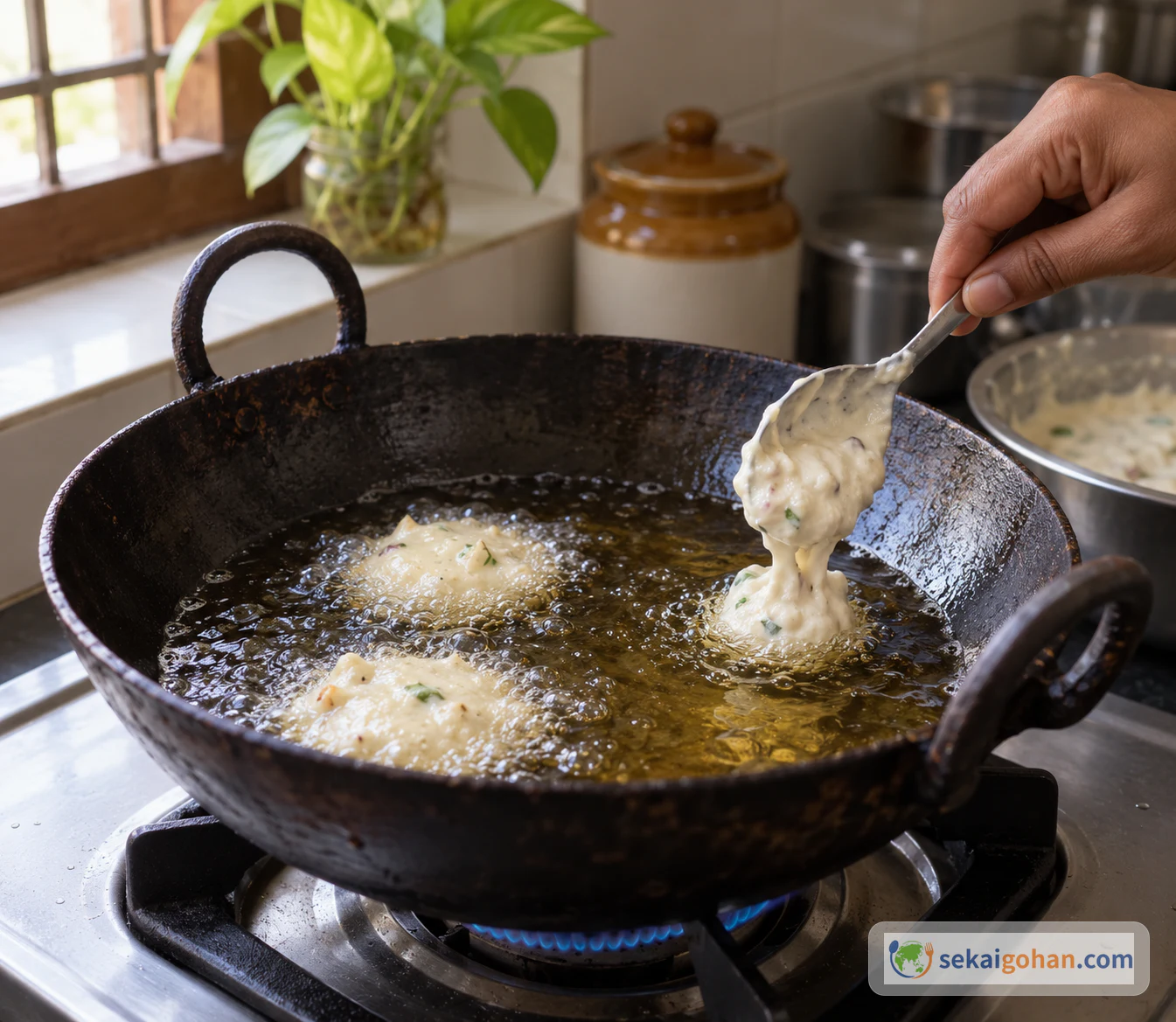
Drop spoonfuls of batter into the oil, without crowding the pan. Keep your hands away from the hot oil.

Dropping a spoonful of batter into the oil
Spoon the batter in and leave space between pieces

When the base and sides turn pale golden, turn them.

Turning a vada once its base and sides are pale golden
Turn at pale golden

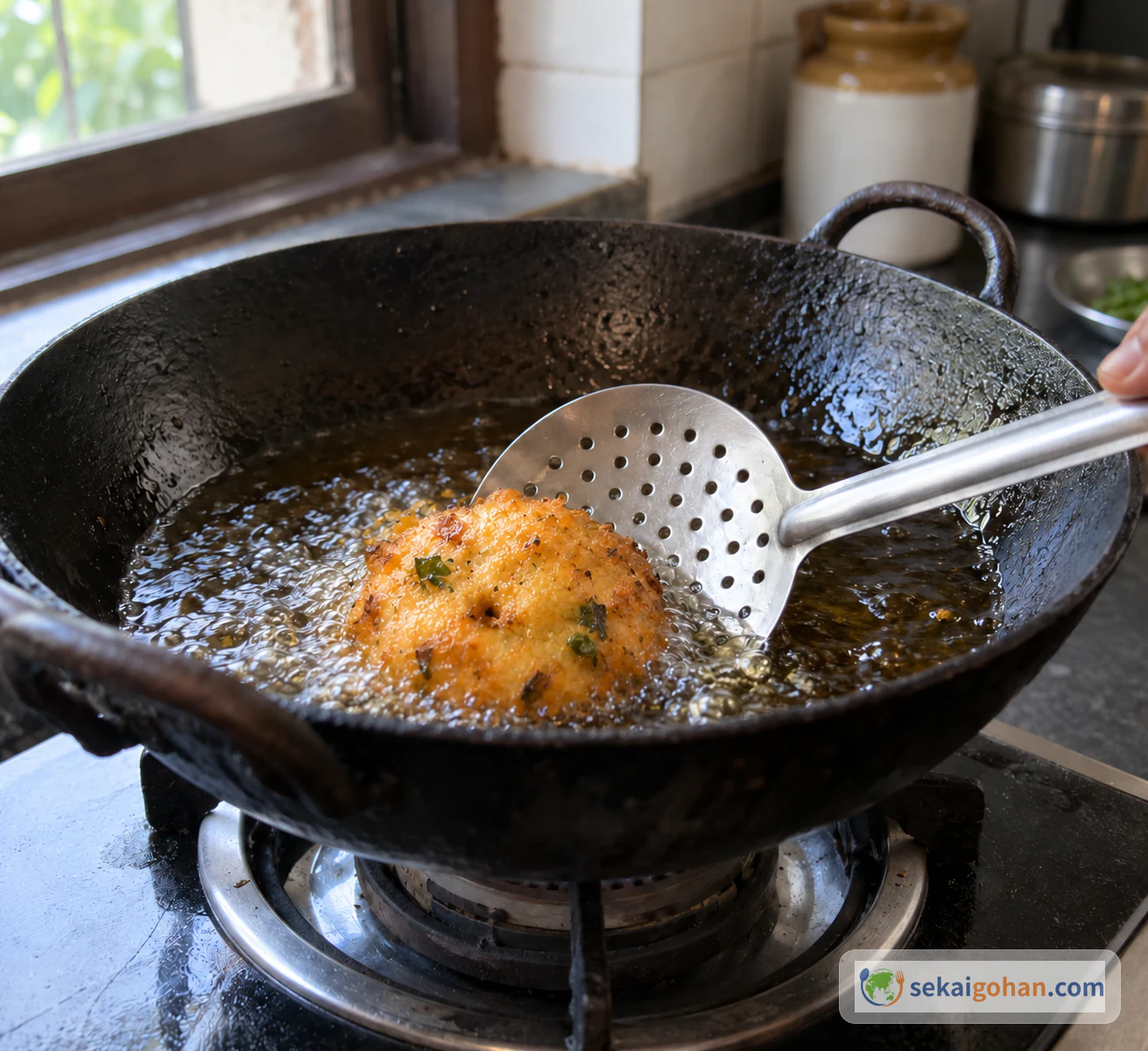
Fry until golden and crisp all over.

Vadas fried golden and crisp
Golden and crisp all over

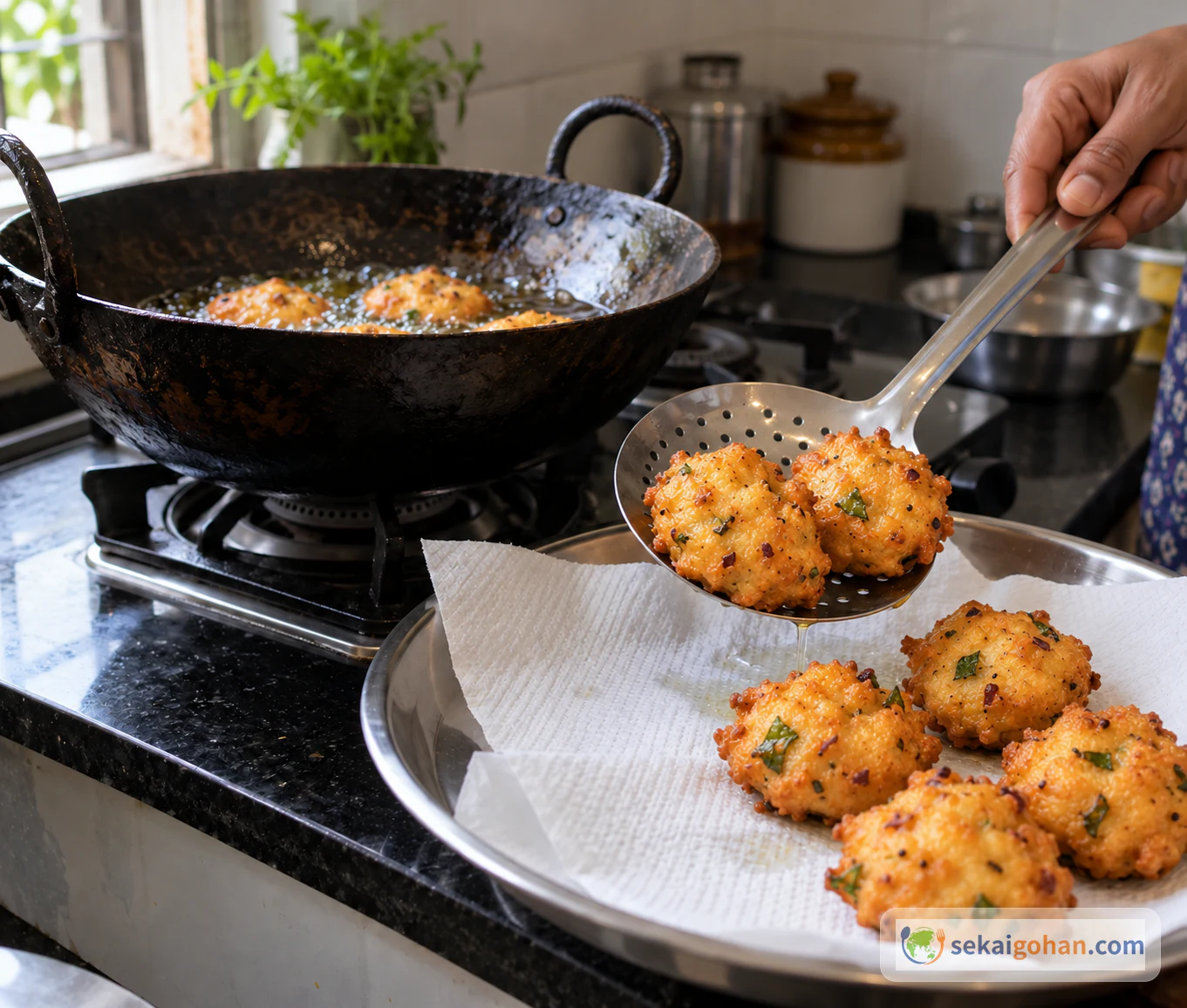
Lift them out onto paper towels.

Draining fried vadas on paper towels
Drain on paper towels
STEP66 / 10

Soak in water while hot, then squeeze gently

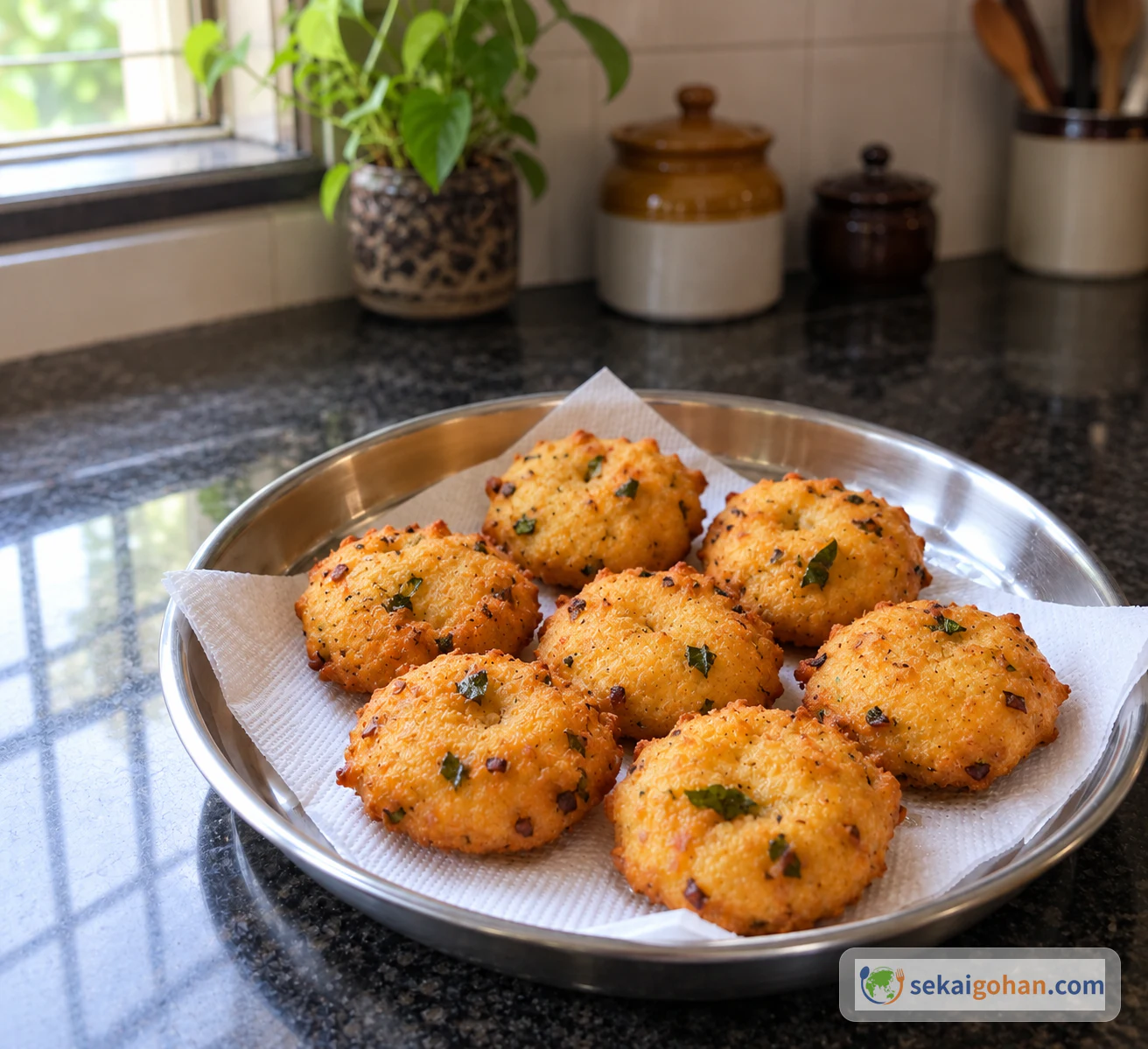
Freshly fried vadas resting before going into water
A short rest of 2–3 minutes; they stay hot

Let the fried vadas sit for 2–3 minutes.

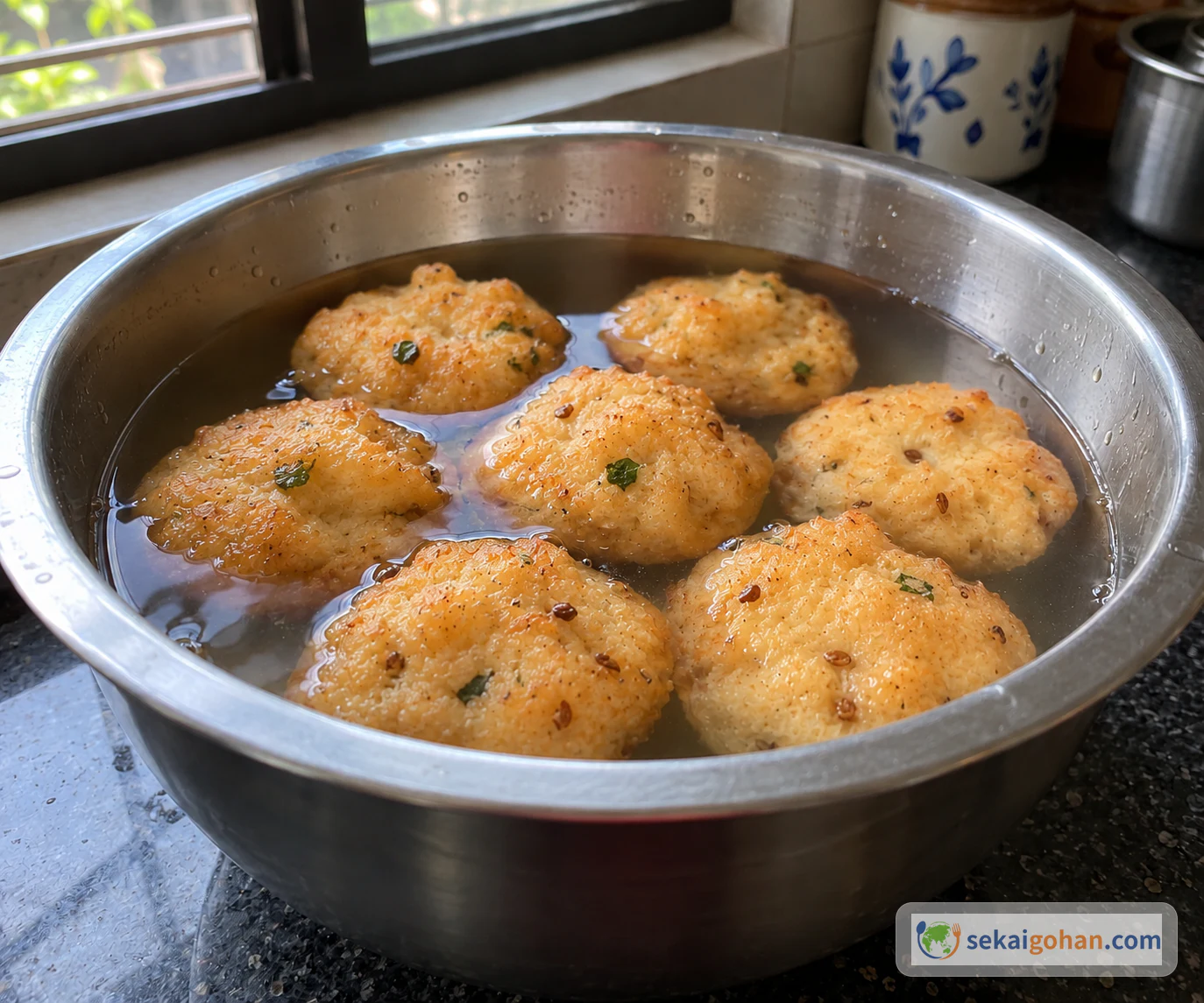
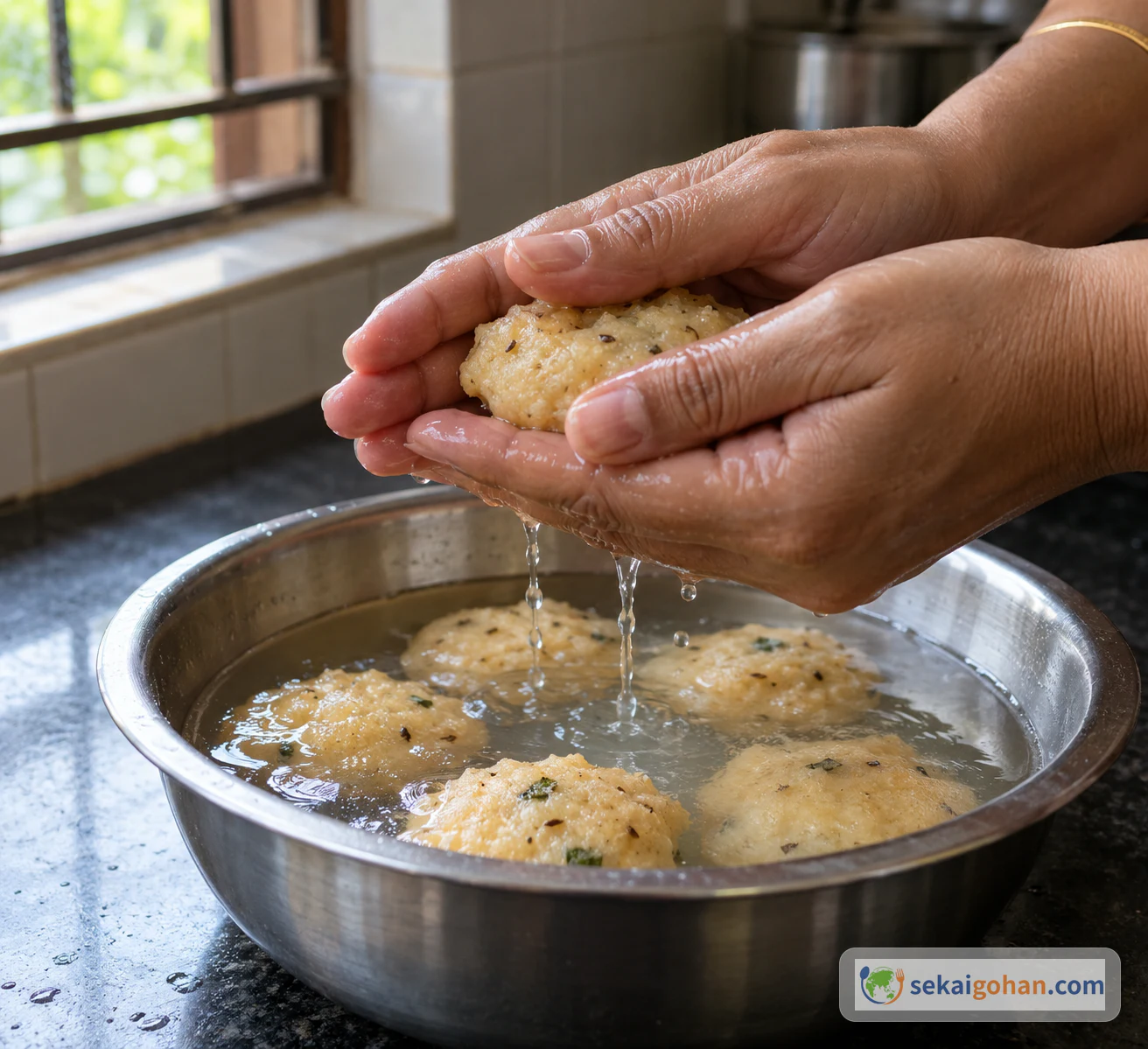
While they are still hot, put them into room-temperature water and soak for 12–15 minutes. Use plain room-temperature water, not hot water or ice water.

Fried vadas soaking in water
Room-temperature water, 12–15 minutes

Take each vada and press it gently between your palms to remove the excess water without breaking it. Move straight on; do not let the squeezed vadas wait overnight.

Gently squeezing a soaked vada between the palms
Press, don't crush
STEP77 / 10

Whisk the chilled curd

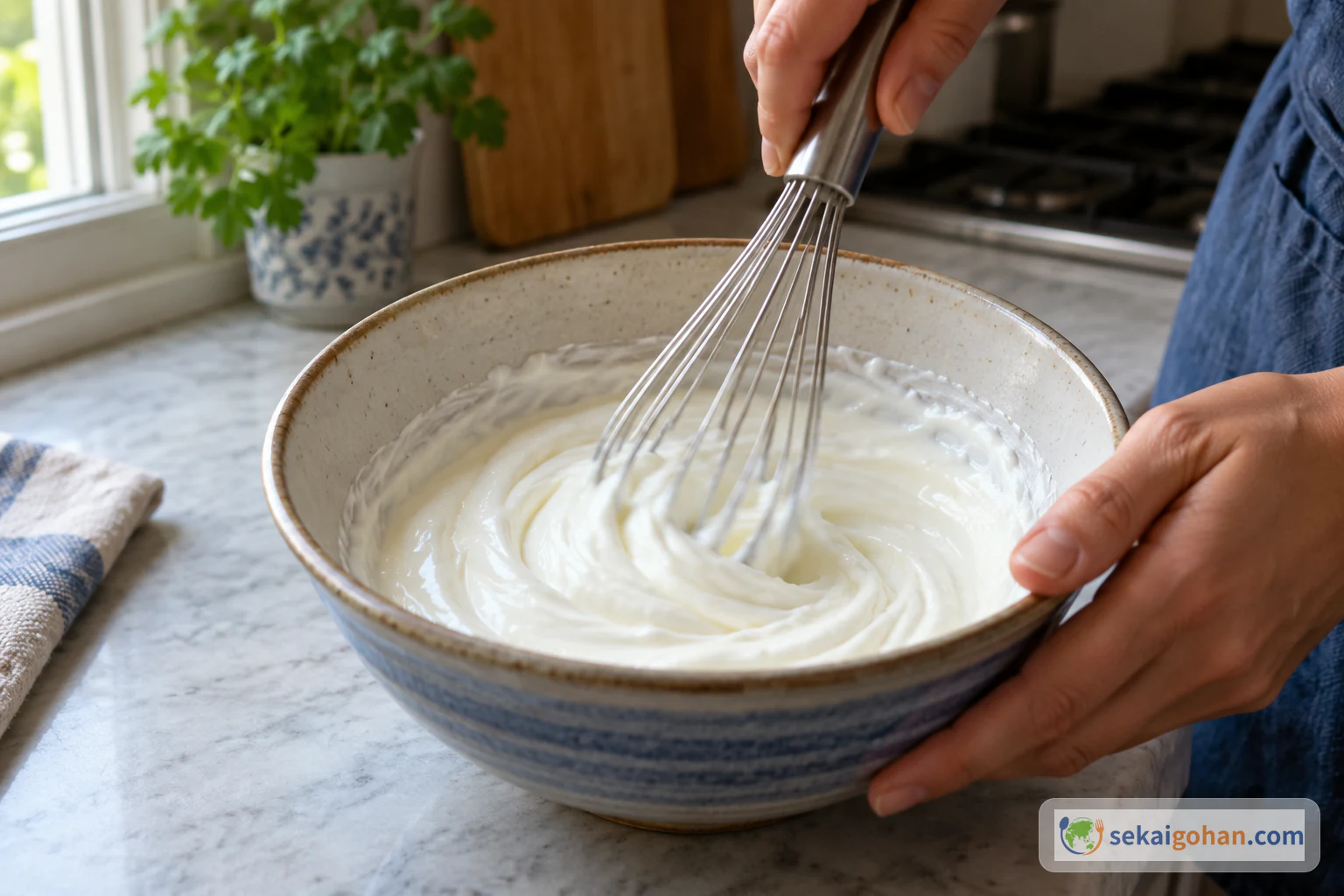
Whisking chilled unsweetened yogurt until smooth
Curd only, whisked smooth

Whisk 2.5 cups chilled unsweetened curd or plain yogurt until smooth. Add nothing else: no sugar, milk or salt.

STEP88 / 10

Arrange the vadas on a tray

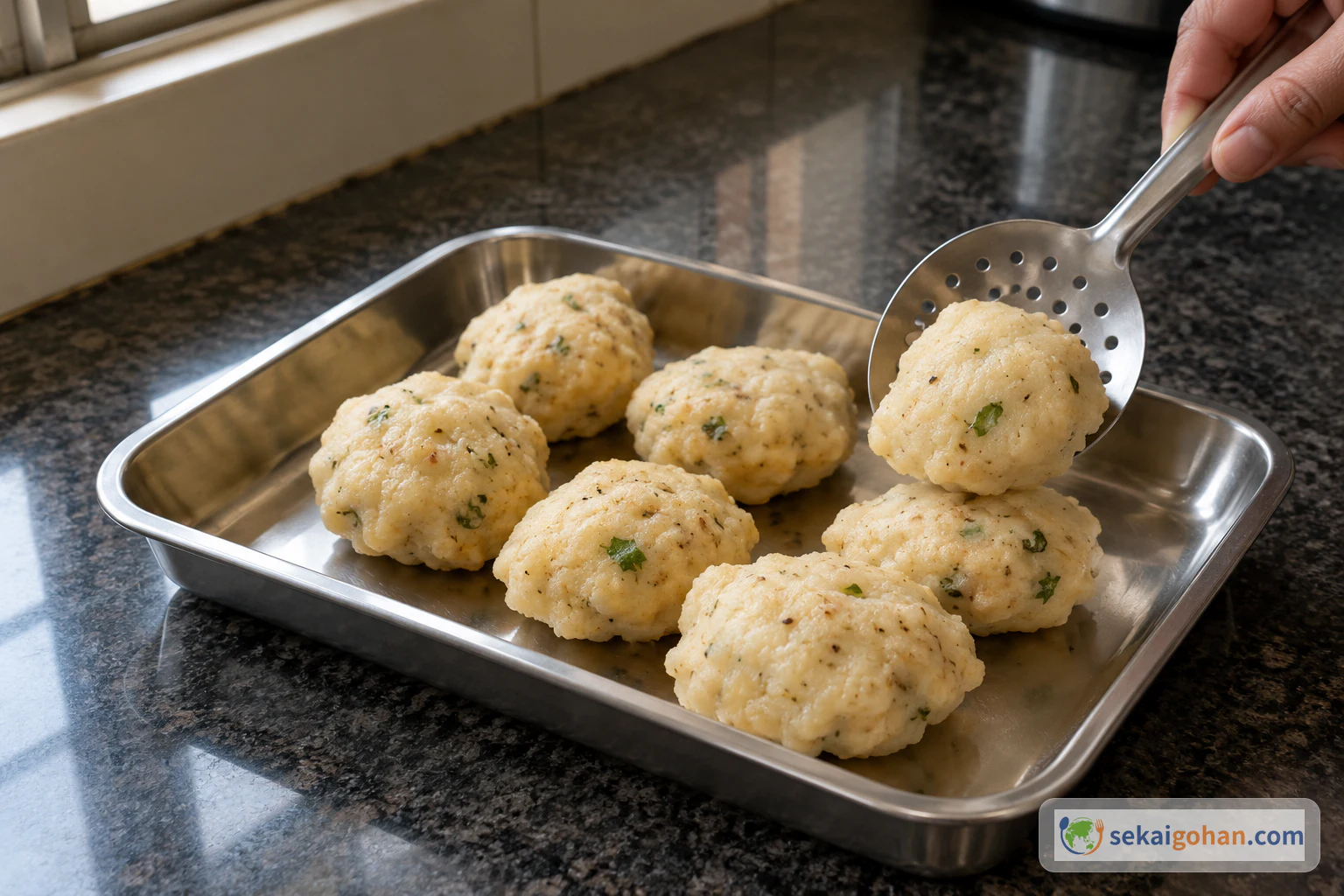
Arranging the squeezed vadas on a serving tray
Soft, squeezed vadas, ready for the curd

Place the squeezed vadas on a serving tray.

STEP99 / 10

Cover with the whisked curd

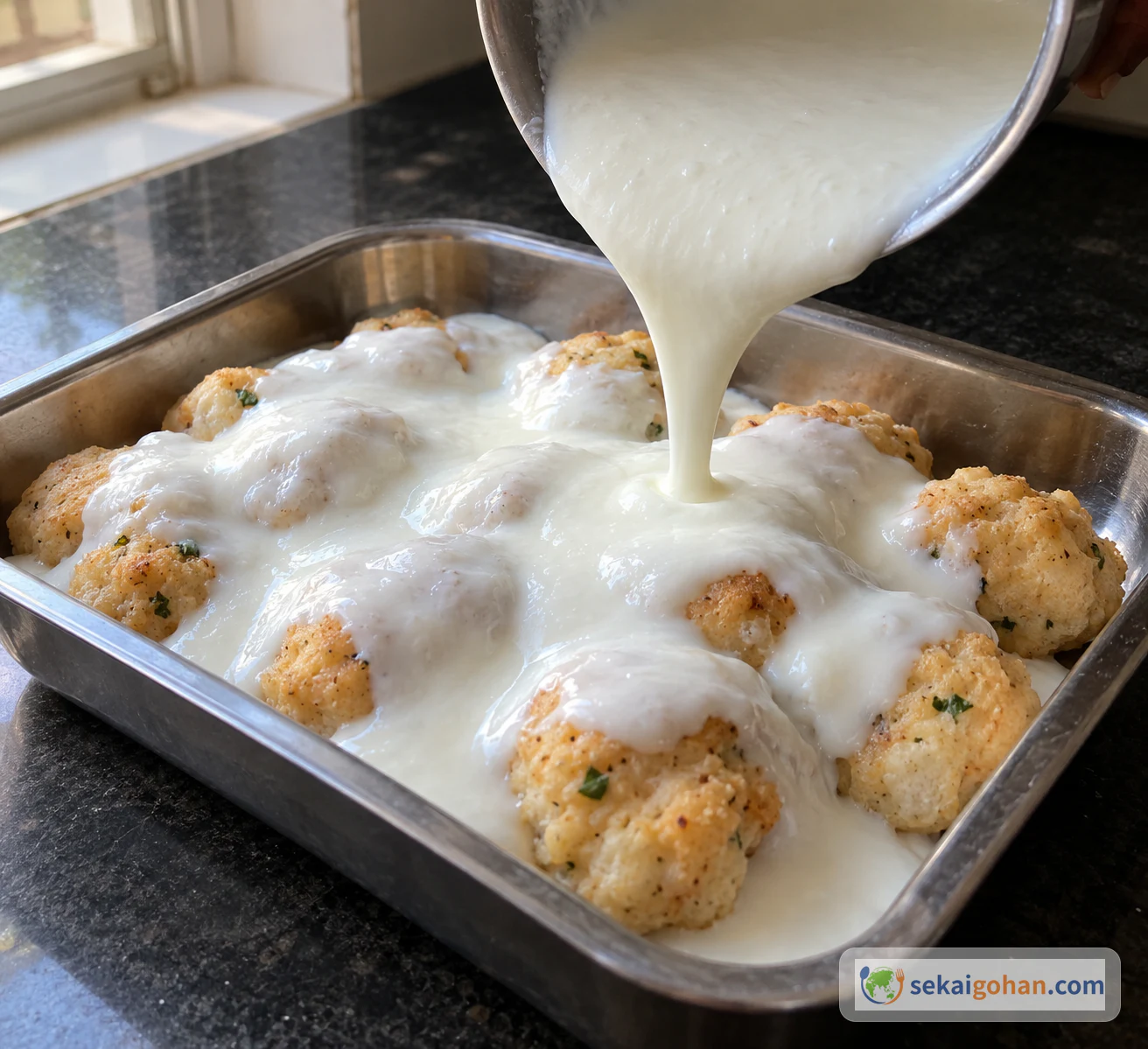
Covering the vadas on the tray with whisked yogurt
Cover the vadas completely

Pour the whisked curd over the vadas to cover them.

STEP1010 / 10

Add the chutneys and finish, then serve right away

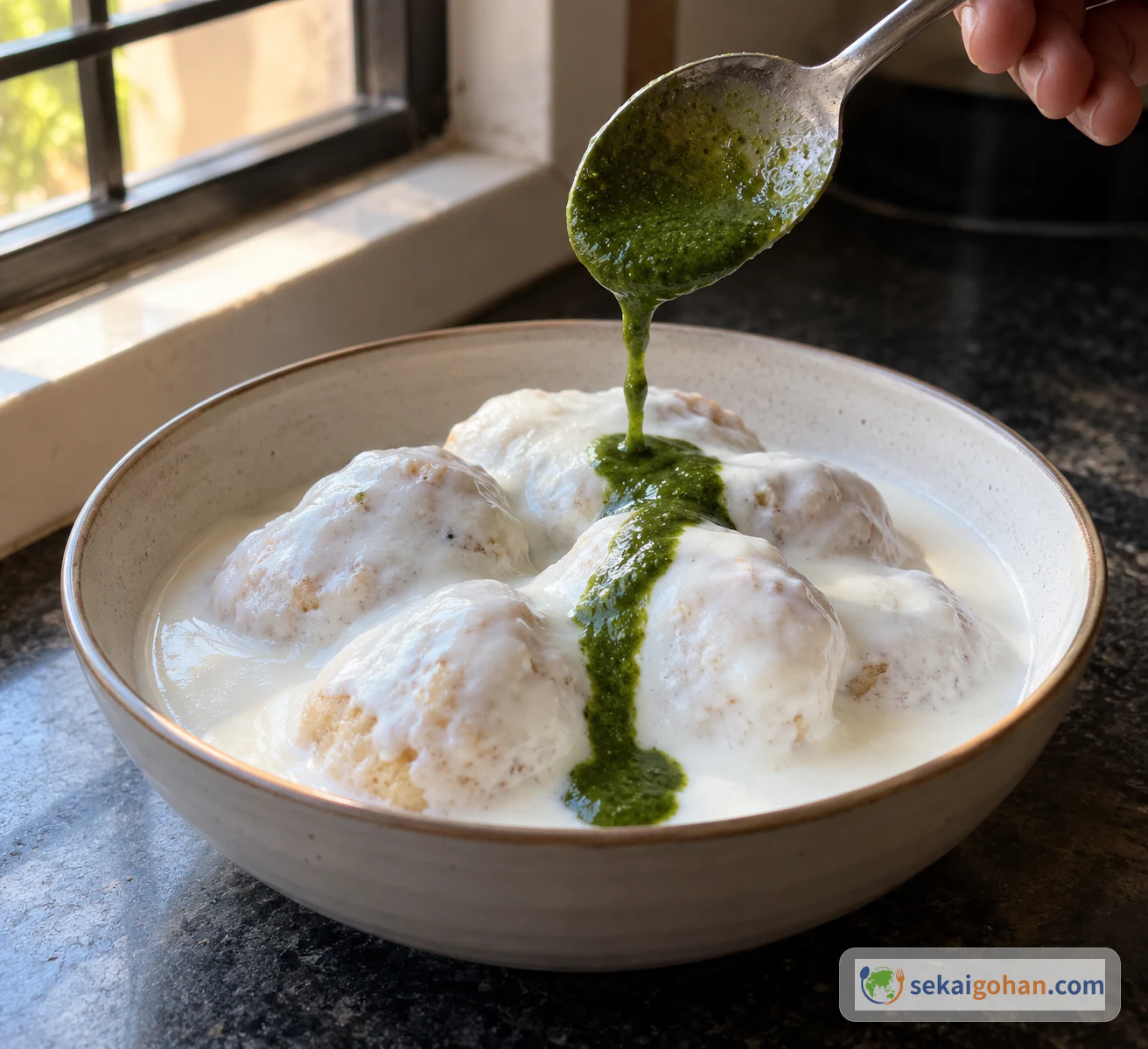
Adding coriander chutney over the yogurt-covered vadas
Green chutney first, to taste

Spoon over the coriander chutney to taste.

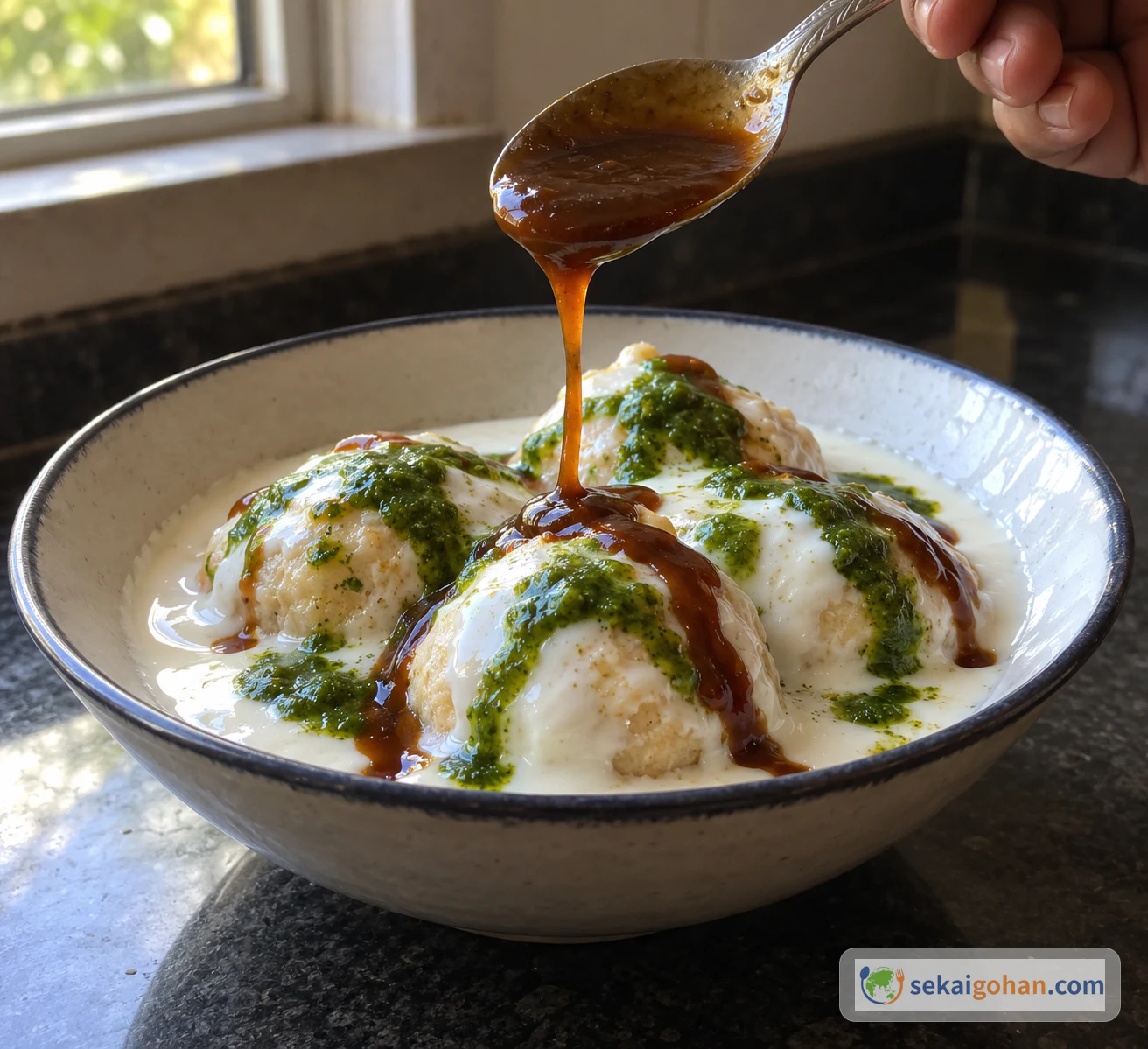
Then add the tamarind chutney separately, also to taste. You do not need to use all of either chutney.

Adding tamarind chutney separately over the vadas
Brown chutney as its own ribbon

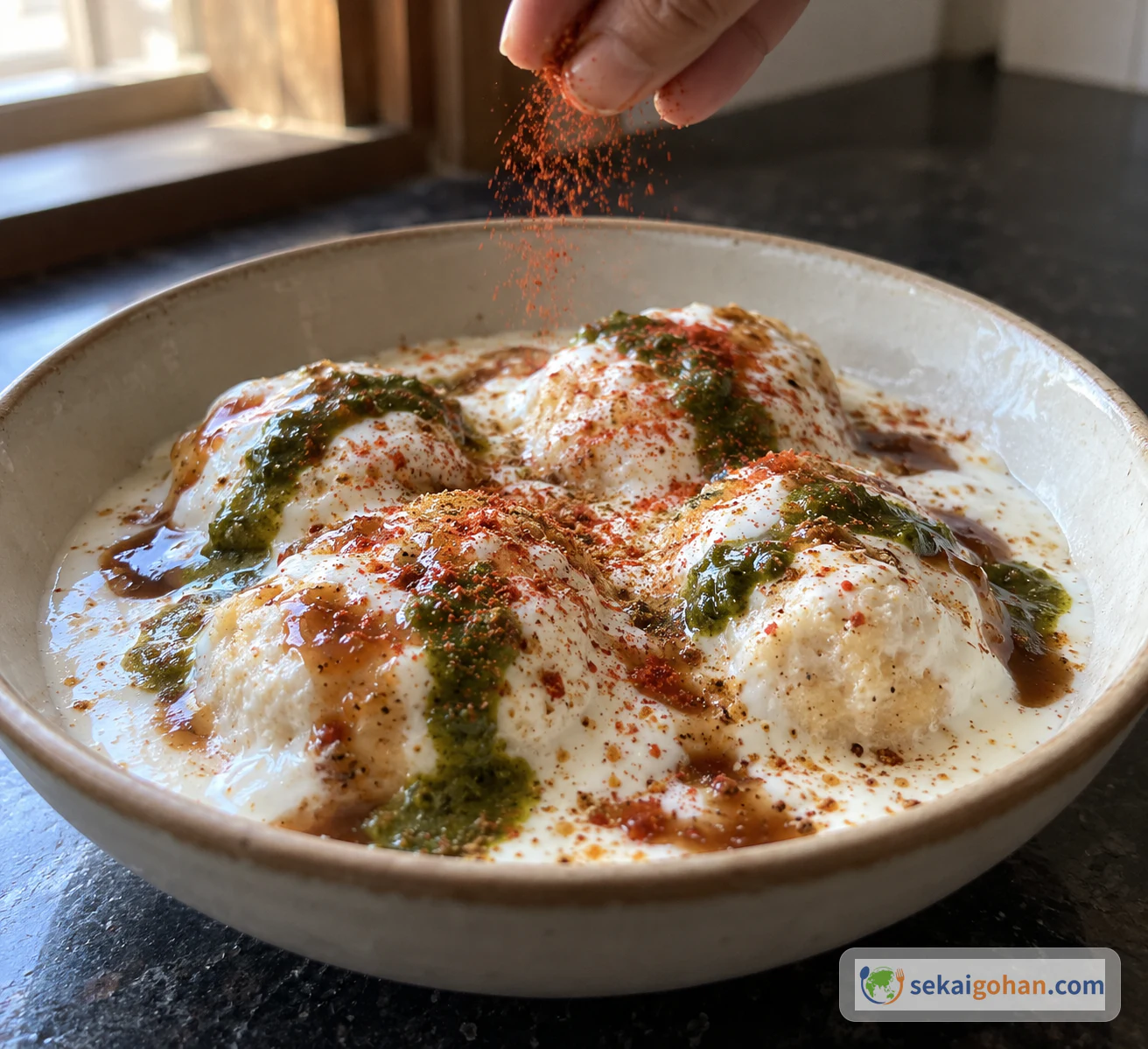
Sprinkle over 1/4 tsp red chili powder.

Sprinkling red chili powder as a finish
A light dusting of red chili powder

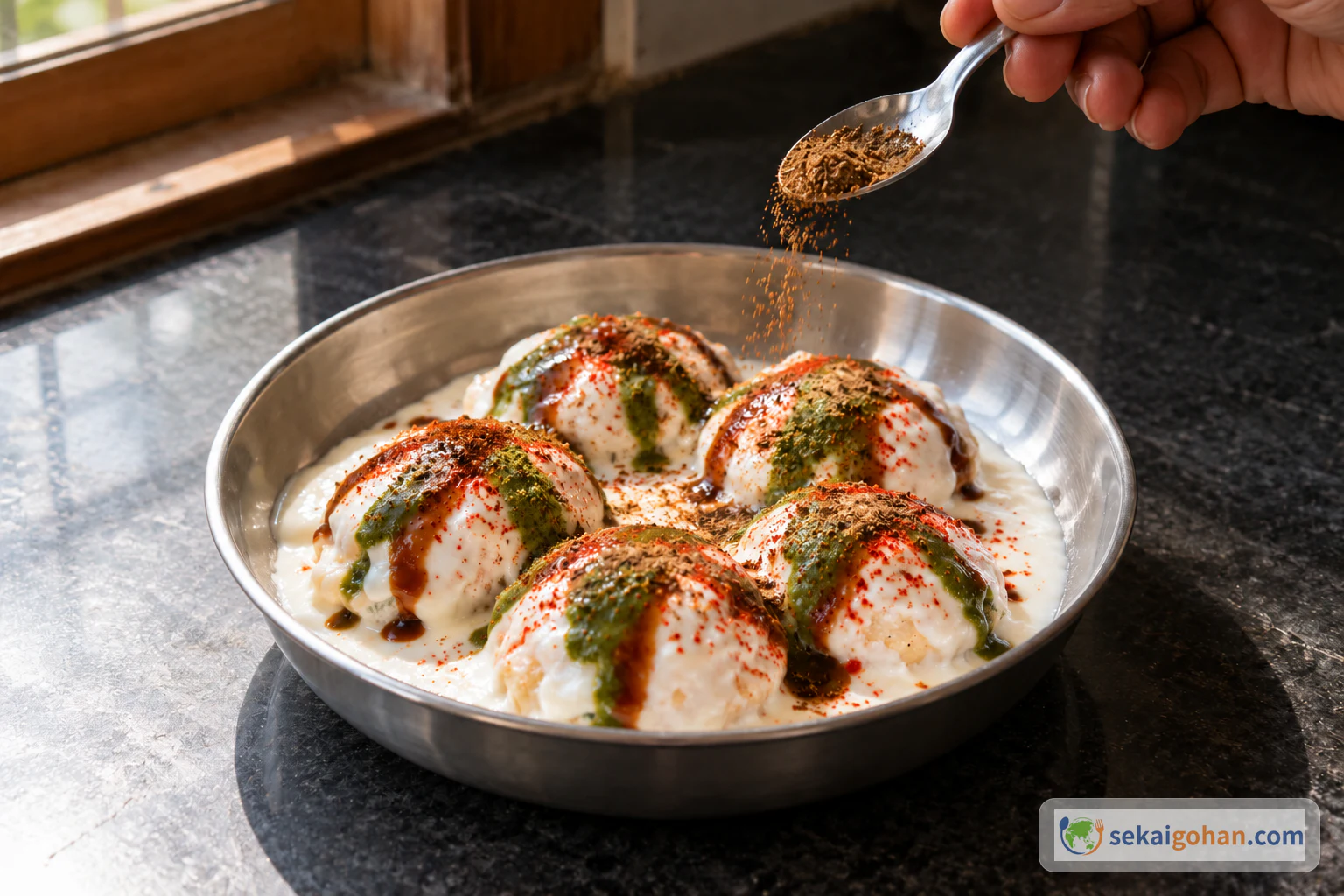
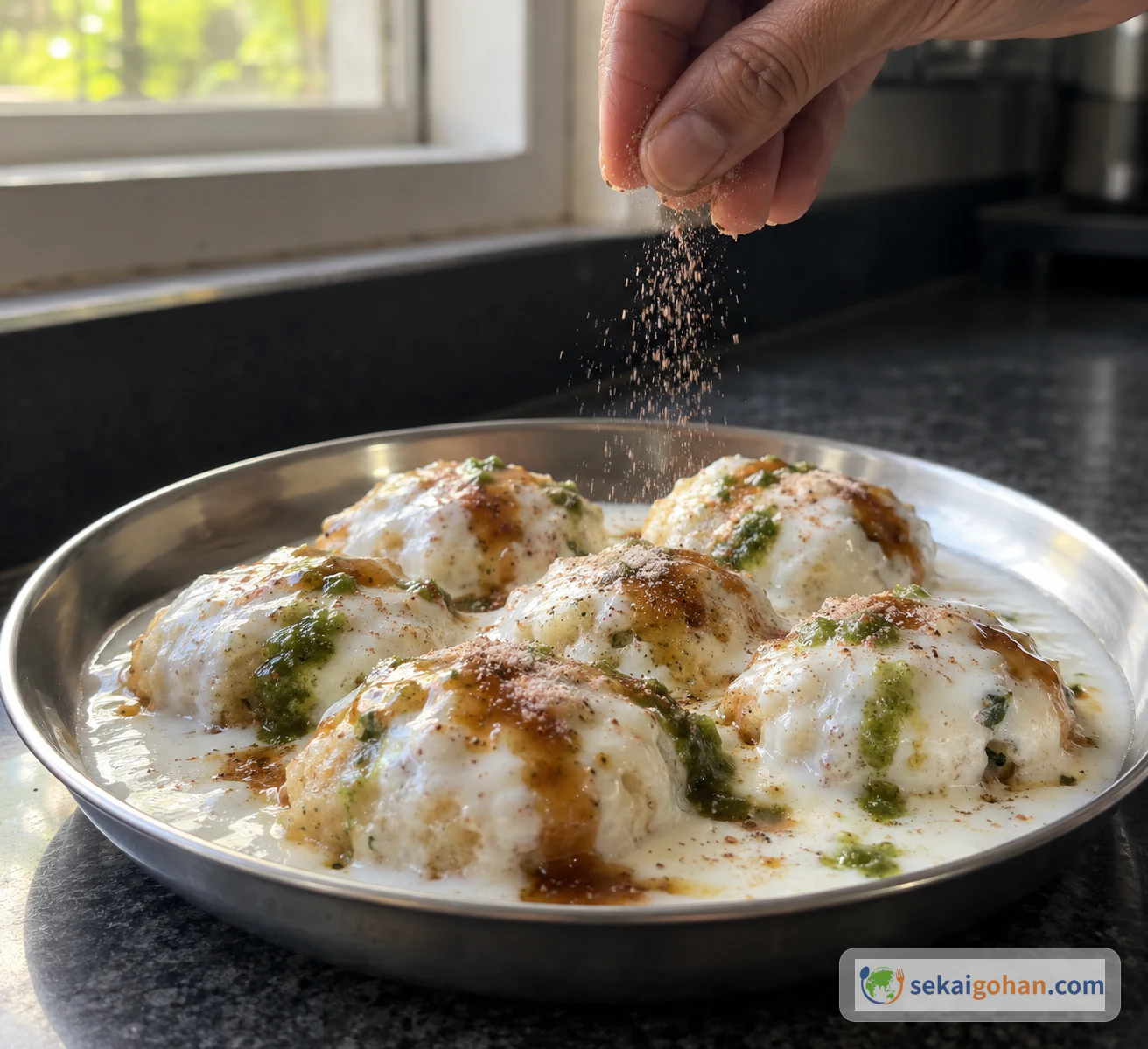
Add 1 tsp roasted cumin powder.

Sprinkling roasted cumin powder
Roasted cumin powder, not whole seeds

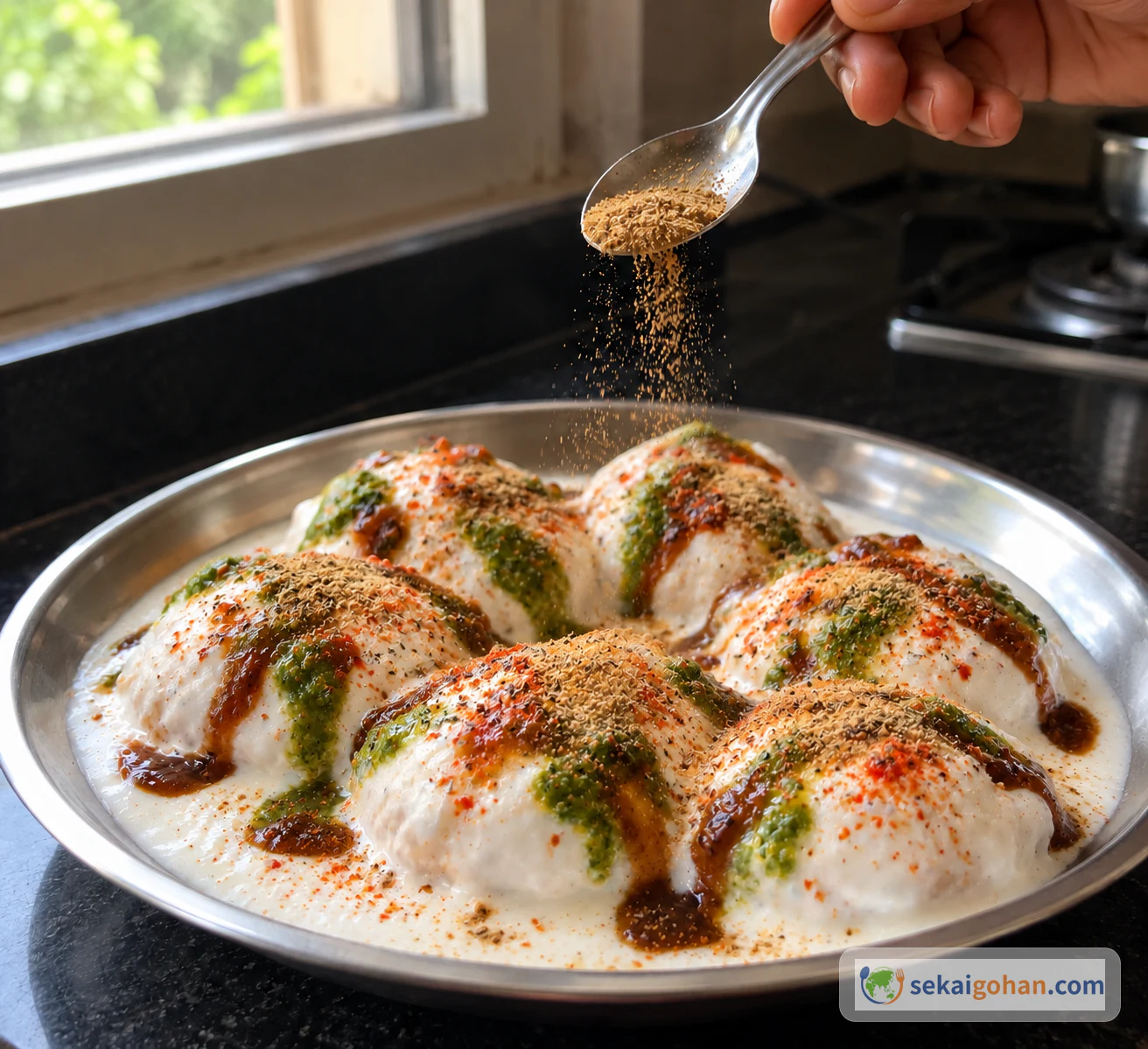
Add 1/2 tsp chaat masala.

Sprinkling chaat masala
Chaat masala over the top

Add black salt as needed, if using.

Sprinkling optional black salt as a finish
Optional black salt

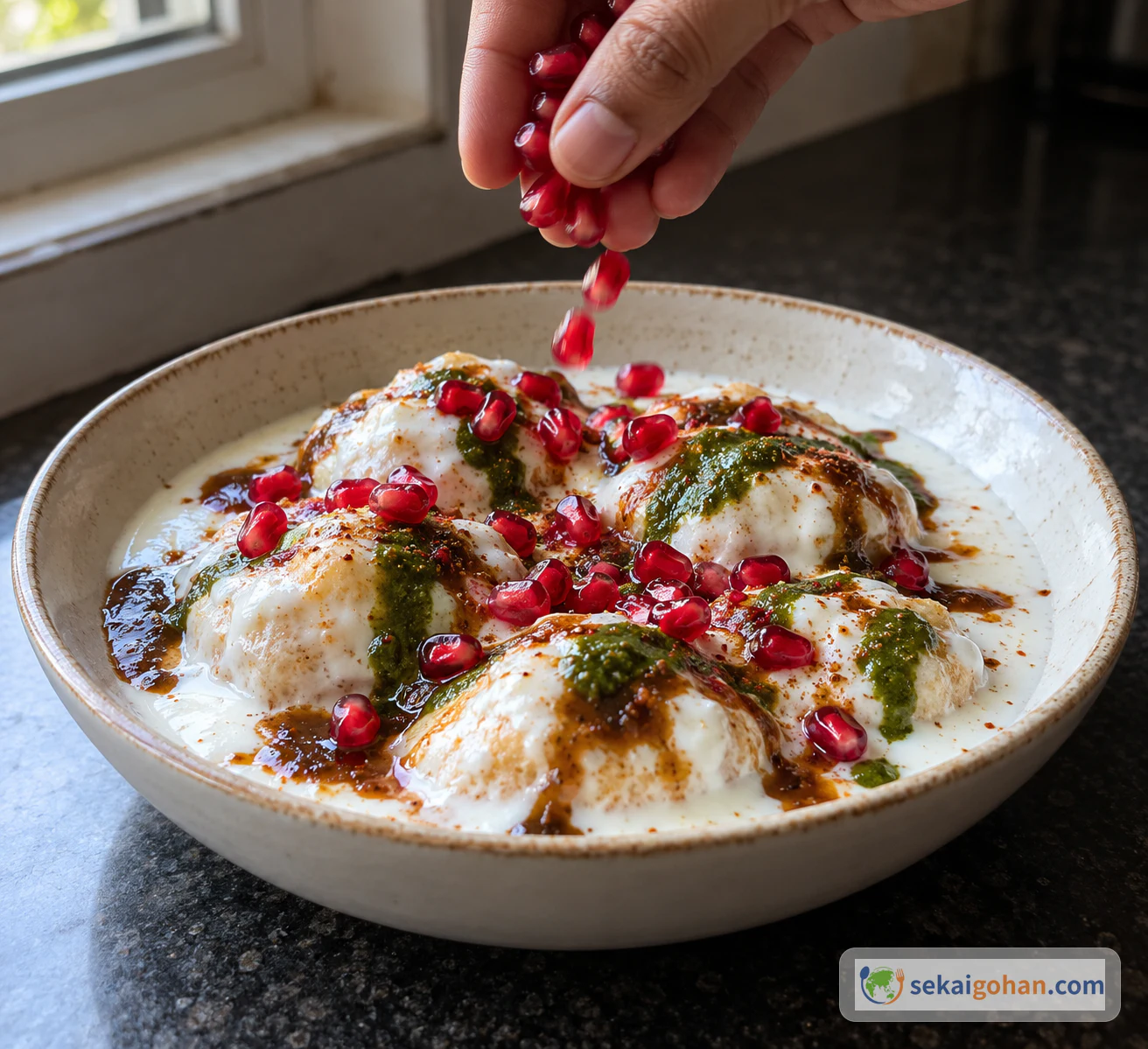
Scatter 1/4 cup pomegranate arils, if using.

Scattering pomegranate arils as a finish
Optional pomegranate arils

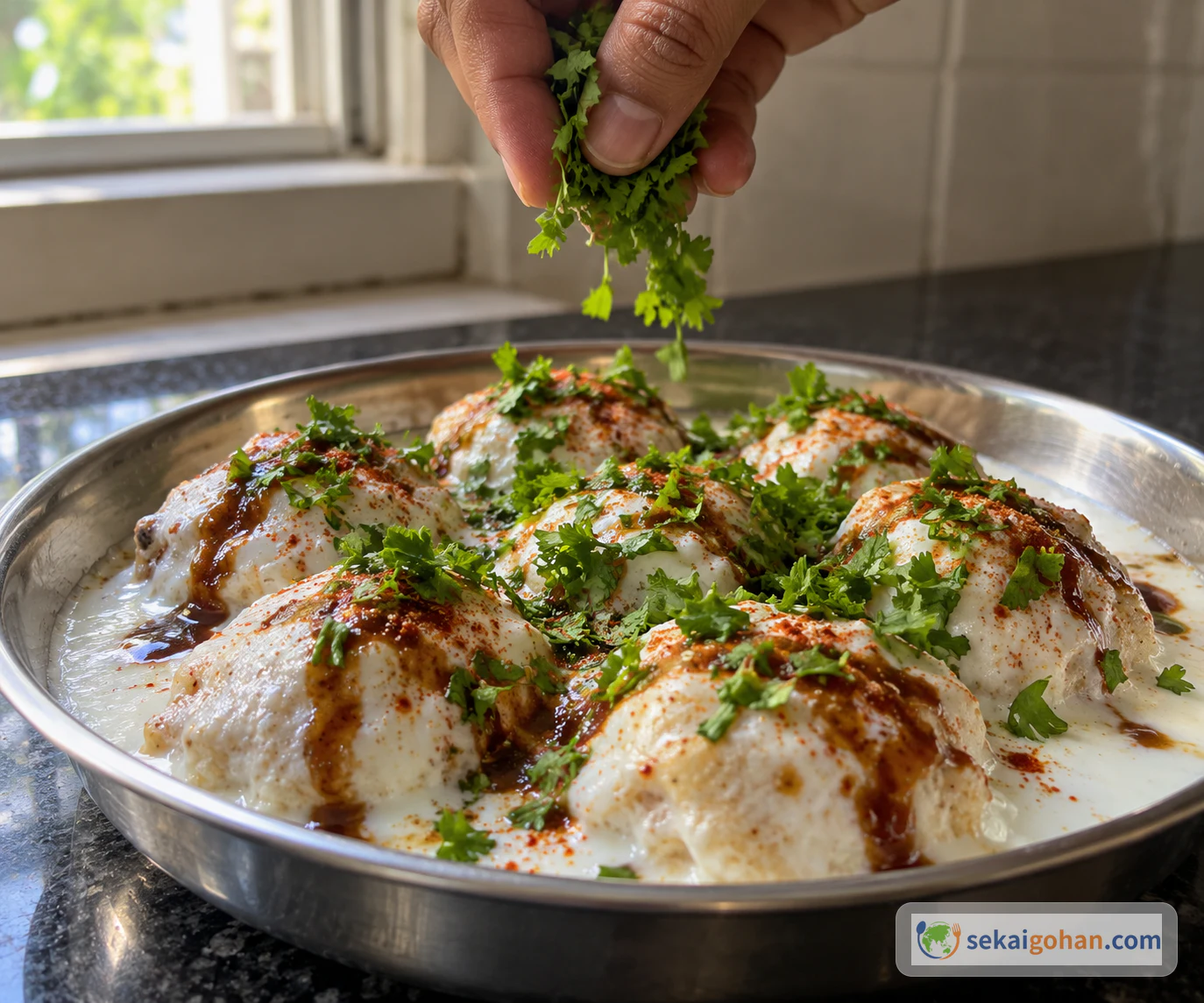
Finish with 2 tbsp chopped coriander leaves.

Scattering chopped coriander leaves as a finish
Chopped coriander as the final herb

Serve straight away.

Serving the finished dahi vada at the table
Serve as soon as it is assembled
0 / 0
Ingredients

Ingredients

1 / 1

Ingredients

Ingredient Amount Role
Vada batter and frying
Skinless split urad dal (urad dal) 200 g (heaped 1 cup) The base of the vadas; soaked overnight, drained and ground
Green chili, chopped 1/2 tsp Heat in the batter
Ginger, chopped 1 tsp Aroma in the batter
Cumin seeds 1 tsp Whole seeds in the batter
Asafoetida (hing) A pinch Seasoning for the batter
Salt As needed Regular salt
Water for grinding 1/4–1/2 cup or 1/2–3/4 cup, added in parts Add in parts until the batter is thick to medium-thick and flowing
Raisins, chopped 1 tbsp (optional) Folded in after whisking
Cashews, chopped 12 (optional) Folded in after whisking
Oil for deep-frying As needed Frying the vadas
Water for soaking the dal Enough water, as needed Overnight soak
Room-temperature water for the fried vadas As needed Soaking the hot vadas; separate from the grinding water
Tamarind chutney
Seedless tamarind 1/2 cup, tightly packed Sour base
Water 1.75 cups For soaking the tamarind only
Ginger powder 1/2 tsp Warm spice
Asafoetida (hing) A pinch Seasoning
Cumin seeds 1/2 tsp Crackled whole in oil
Red chili powder 1/4 tsp Heat
Jaggery 7 tbsp Sweetness
Salt As needed Regular salt
Oil 1 tsp For tempering the spices
Coriander chutney
Coriander leaves 2 cups The body of the green chutney
Dry mango powder (amchur) 1/2 tsp Tang
Garlic, chopped 1/2 tsp Pungency
Green chili, chopped 1 tsp Heat
Cumin seeds 1/2 tsp Whole-seed aroma
Salt As needed Seasoning
Water 2 tbsp to start, more only if needed Helps the blender run smooth
Curd and finishing
Chilled unsweetened curd or plain yogurt 2.5 cups Covers the squeezed vadas
Red chili powder 1/4 tsp Finishing heat and color
Roasted cumin powder 1 tsp Finishing aroma; a different ingredient from whole cumin seeds
Chaat masala 1/2 tsp Finishing seasoning
Black salt As needed (optional) Finishing seasoning
Pomegranate arils 1/4 cup (optional) Finishing color and bite
Coriander leaves, chopped 2 tbsp Final herb
0 / 0

The vadas come out of the oil golden and crisp, rest on paper for 2–3 minutes, then slide, still hot, into a bowl of plain room-temperature water. After 12–15 minutes they're soft enough to press gently between your palms; the excess water runs out and the vadas hold together. Only then do they meet the cold. They go onto a tray under a layer of whisked, chilled, unsweetened curd, with a ribbon of green coriander chutney and a ribbon of brown tamarind chutney on top. A scatter of red chili, roasted cumin, chaat masala, pomegranate and chopped coriander finishes the plate. Everything here is made from scratch: the vadas, both chutneys and the finishing spices.

About Dahi Vada

People use the names for this family of dishes loosely. Dahi Vada and Dahi Bhalla are both common, and different regions have their own names. The dishes behind those names don't always line up exactly. In Lahore, dahi bhallay is sold as street food.

Two dishes on this site are related but quite different. Panipuri is a hollow fried shell, filled and eaten with flavored water. Raita is a cold yogurt side built around cucumber. Dahi vada is the one where you fry urad dal batter, soak and squeeze the vadas, and layer two chutneys over them. For more dishes from the same country, see India.

Ingredients: Vadas, Two Chutneys, Curd and Finish

The recipe has four parts, and the two chutneys are finished before any frying begins.
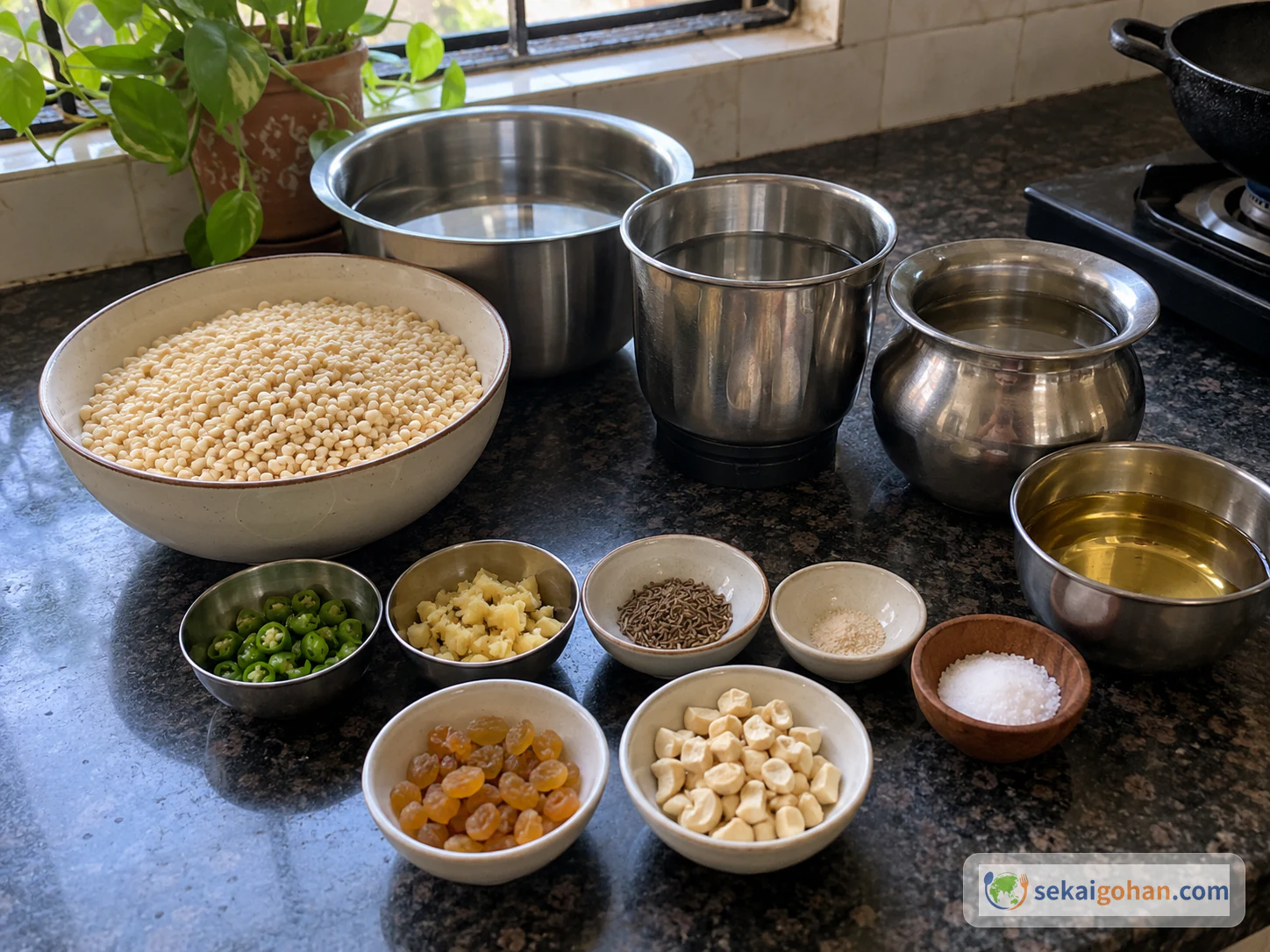
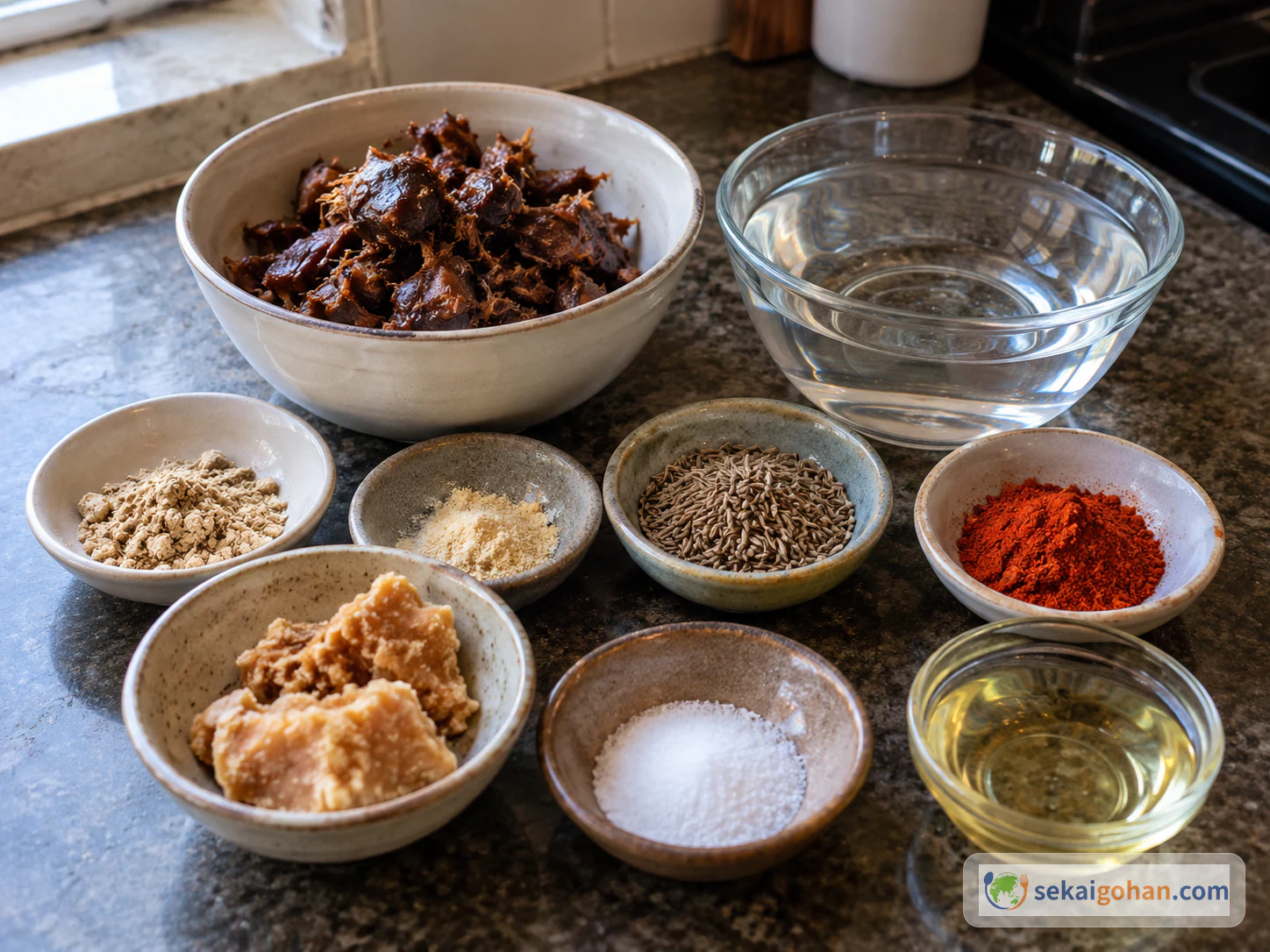
Ingredients for the urad dal vadas, with separate water vessels for soaking and grinding
The vada batter: urad dal, seasonings, optional raisins and cashews, frying oil and separate water for each stage
Tamarind, jaggery and spices for the tamarind chutney
The tamarind chutney is sweetened with jaggery, not sugar
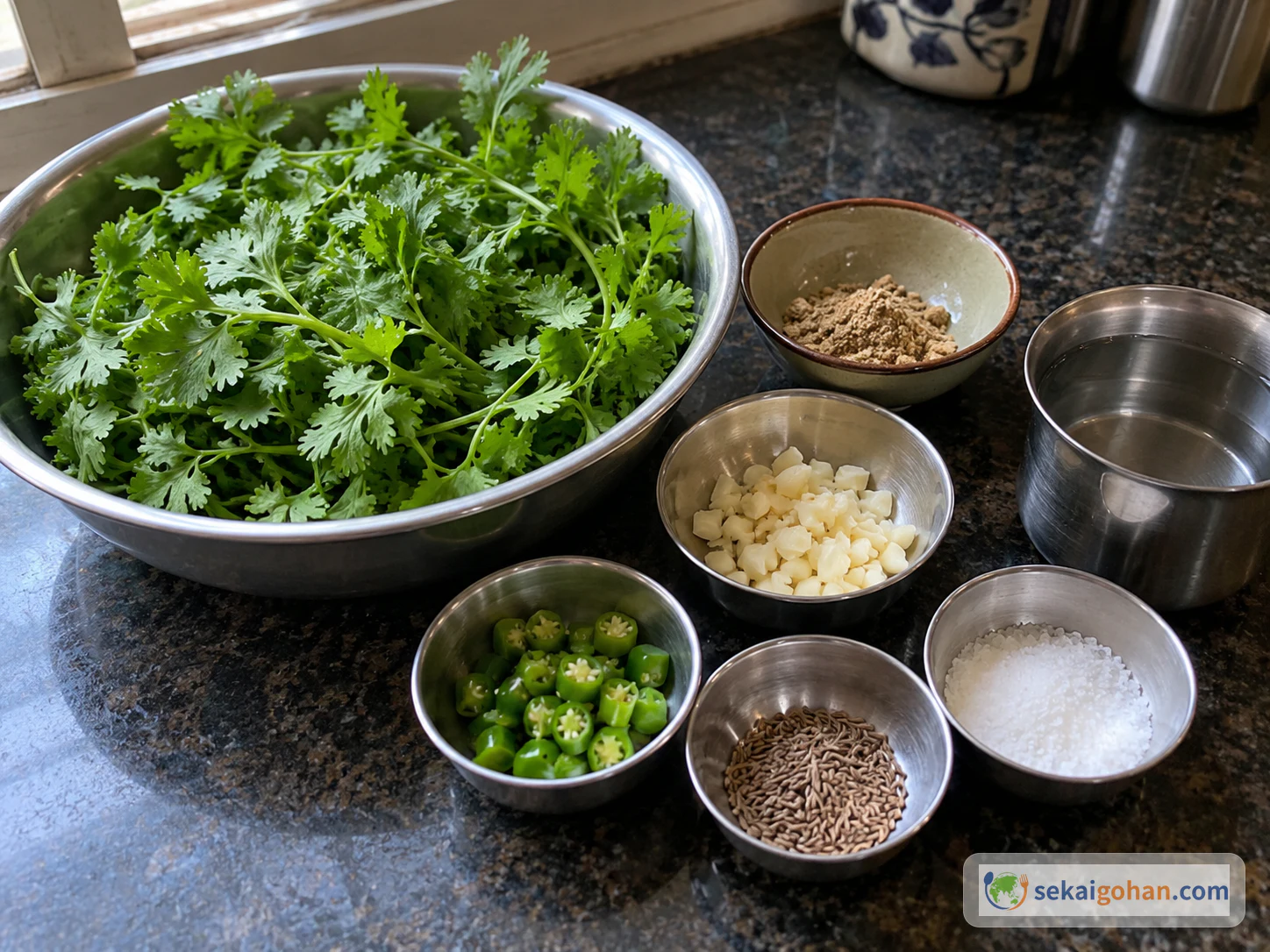
Coriander leaves, amchur, garlic and green chili for the coriander chutney
The coriander chutney is blended raw, never cooked
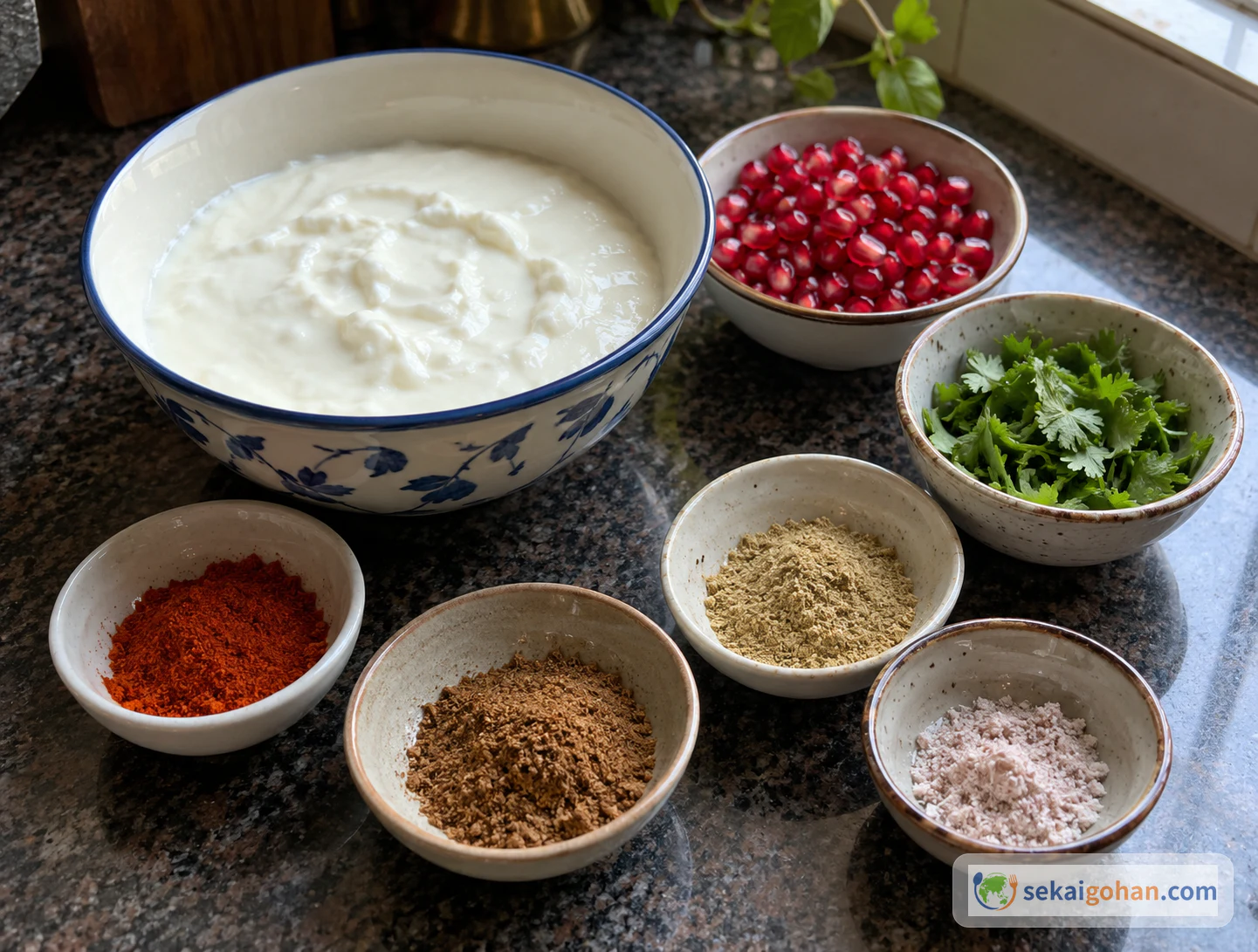
Unsweetened yogurt with finishing spices, pomegranate and coriander
Plain chilled curd and the finishing layer

Choosing Ingredients for Dahi Vada

The recipe makes about 60 vadas. That's a piece count, not a number of servings. The frying oil and soaking water have no set amounts: use enough oil to fry in, and enough water to cover the dal or the fried vadas.

  • Water for the batter. The ingredient list says 1/4–1/2 cup and the method says 1/2–3/4 cup. Either way, add it a little at a time. Stop when the batter is smooth, thick to medium-thick and flowing.
  • Jaggery for the tamarind chutney. The chutney is sweetened with 7 tbsp jaggery, within a range of 7–8 tbsp.
  • Whole cumin seeds. The batter and both chutneys use whole seeds. Roasted cumin powder goes in only at the finish.
  • Salt and chili. Use ordinary salt in the batter, as needed. Use plain red chili powder rather than another chili product.
  • Curd or plain yogurt. Either works, as long as it's unsweetened and chilled. Don't add sugar, milk or salt to it.
  • Optional items. Raisins, cashews, black salt and pomegranate can all be left out. The rest of the recipe stays the same.

Equipment

  • Two separate bowls for the overnight soaks
  • Fine sieve
  • Small saucepan for the tamarind chutney
  • Blender for the coriander chutney
  • Grinder or blender for the urad dal batter
  • Whisk and a mixing bowl
  • Kadai or heavy pan for deep-frying
  • Slotted spoon and a regular spoon for dropping the batter
  • Paper towels
  • A bowl for soaking the fried vadas
  • Serving tray

Method: Chutneys First, Then Fry, Soak, Squeeze and Assemble

The order matters

Both chutneys are finished before the oil goes on the stove. Once the vadas are fried, they go straight into water while still hot, then into the curd. There is no step where fried vadas wait overnight.

Leftovers

Serve as soon as it is assembled.

Common Dahi Vada Problems and Fixes

What you notice What to look at What to do
The batter is too stiff to flow How much water has gone in Add a little more water and grind again, within the ranges above
You're worried about adding too much water Adding it all at once Add water in parts and check the batter between additions
The batter seems dense before frying Whether it was whisked Whisk for 2–3 minutes before folding in any add-ins
Vadas crowd together in the oil Too many spoonfuls at once Fry fewer at a time and leave space between them
You can't tell when to turn them Color of the base and sides Turn when the base and sides are pale golden; lift out when golden and crisp all over
The vadas are still firm after frying Whether they went into water while hot Rest them only briefly, then soak in room-temperature water
A vada tears when squeezed How hard you're pressing Press gently between both palms, just enough to release excess water
The coriander chutney won't blend smoothly Too little liquid in the blender Add a little more water beyond the first 2 tbsp, only as needed

Serving and Adjusting Dahi Vada

Add each chutney to taste. Some people want more of the green, some more of the brown. Several ingredients also come with a range, so you can move within it to suit yourself:

Ingredient This recipe Range
Cashews in the batter (optional) 12 12–15
Jaggery in the tamarind chutney 7 tbsp 7–8 tbsp
Amchur in the coriander chutney 1/2 tsp 1/2–1 tsp
Water in the coriander chutney 2 tbsp to start 2–3 tbsp or as needed
Red chili powder to finish 1/4 tsp 1/4–1/2 tsp
Chaat masala to finish 1/2 tsp 1/2–1 tsp

Frequently Asked Questions

Does "about 60" mean this feeds 60 people?

No. The recipe makes about 60 vadas, which counts pieces, not servings.

How long do I soak the dal?

Overnight. Plan on roughly 8 hours of prep and 45 minutes of cooking.

Should I use hot or ice water for soaking the fried vadas?

Neither. Use room-temperature water, and put the vadas in while they're still hot, after a 2–3 minute rest out of the oil.
Sources

  • Dassana Amit, "Dahi Vada Recipe (North Indian Style)," Veg Recipes of India. The primary recipe: the page's own North Indian Style label, all ingredients and amounts, both homemade chutneys, the separate overnight soaks, frying, soaking in water, squeezing and assembly, plus the author's displayed times and the yield of about 60 vadas. Same-night scheduling of the two soaks is an editorial arrangement, not an explicit instruction on the page. https://www.vegrecipesofindia.com/dahi-vada-recipe/
  • Anushree Shetty, "Dahi Vada," Simple Indian Meals. A separate author's page using the same dish name, used only to compare how the name is used across pages. None of its ingredients or steps are used in this recipe. https://simpleindianmeals.com/dahi-vada/
  • Sheharyar Rizwan, "Dahi bhallay – quintessential street food," Dawn, 2021. Reporting on a related street food in Lahore. Its account of one shop and one family is used only as that specific case, not as the origin of the dish or a universal standard. https://www.dawn.com/news/1648392/dahi-bhallay-quintessential-street-food