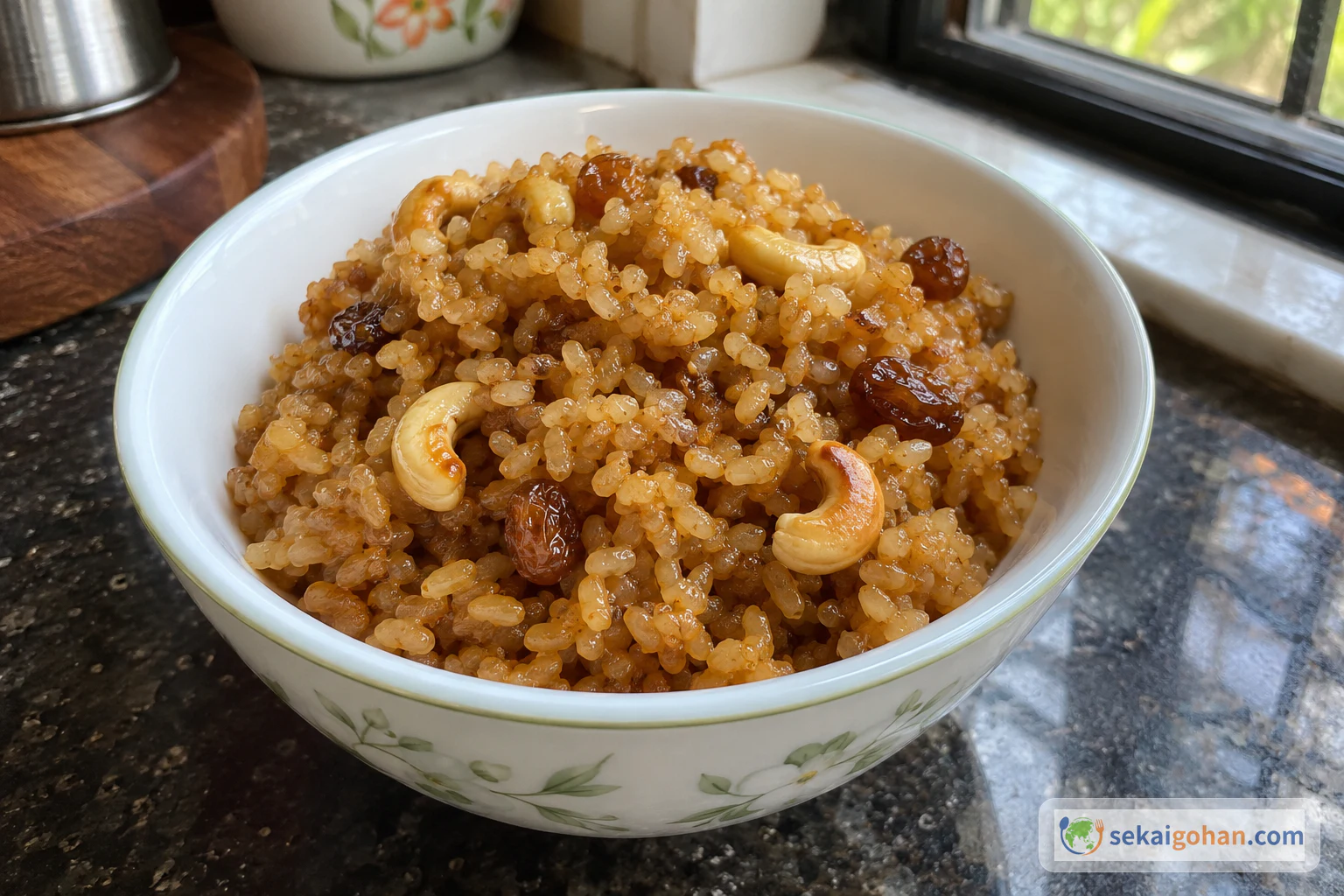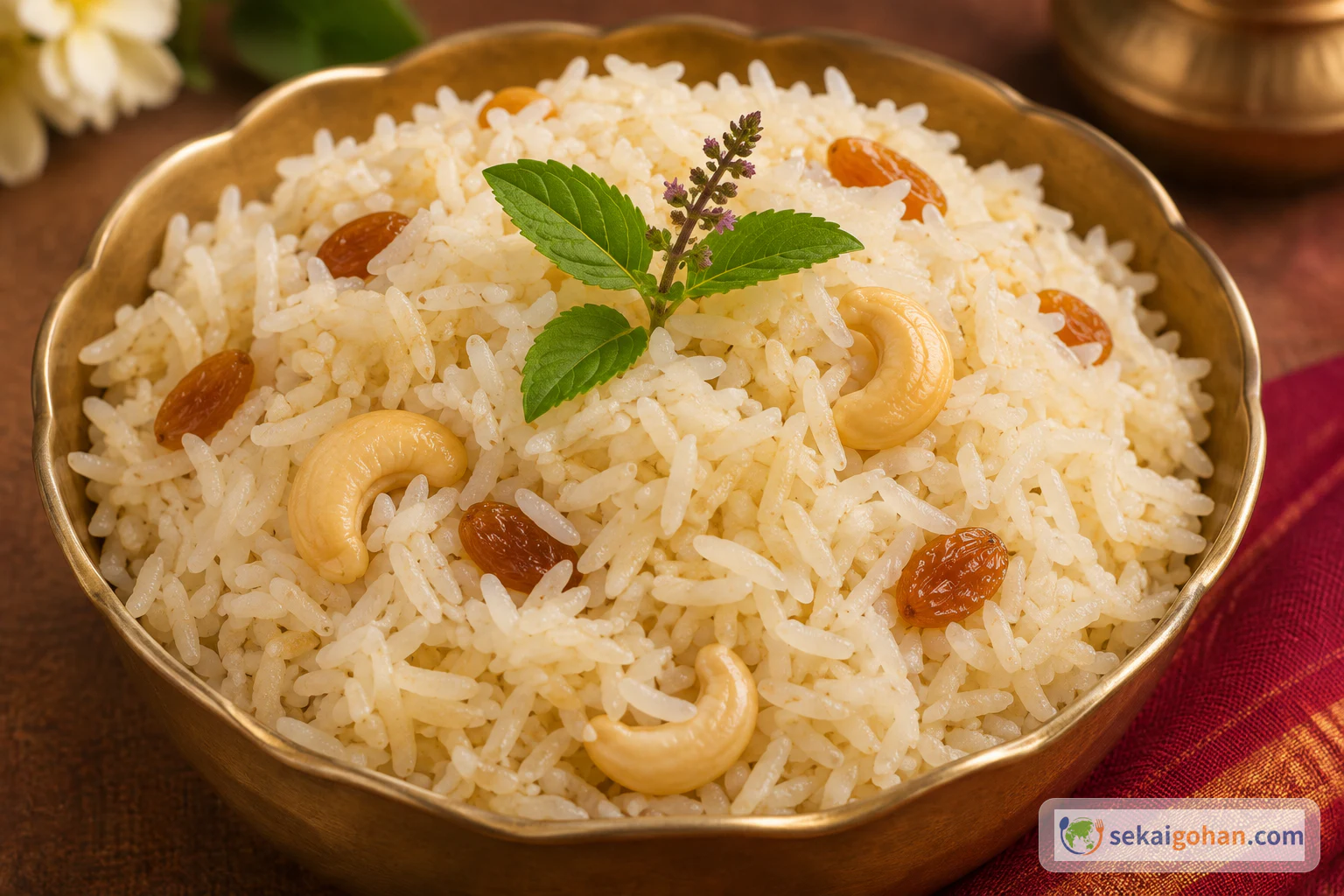
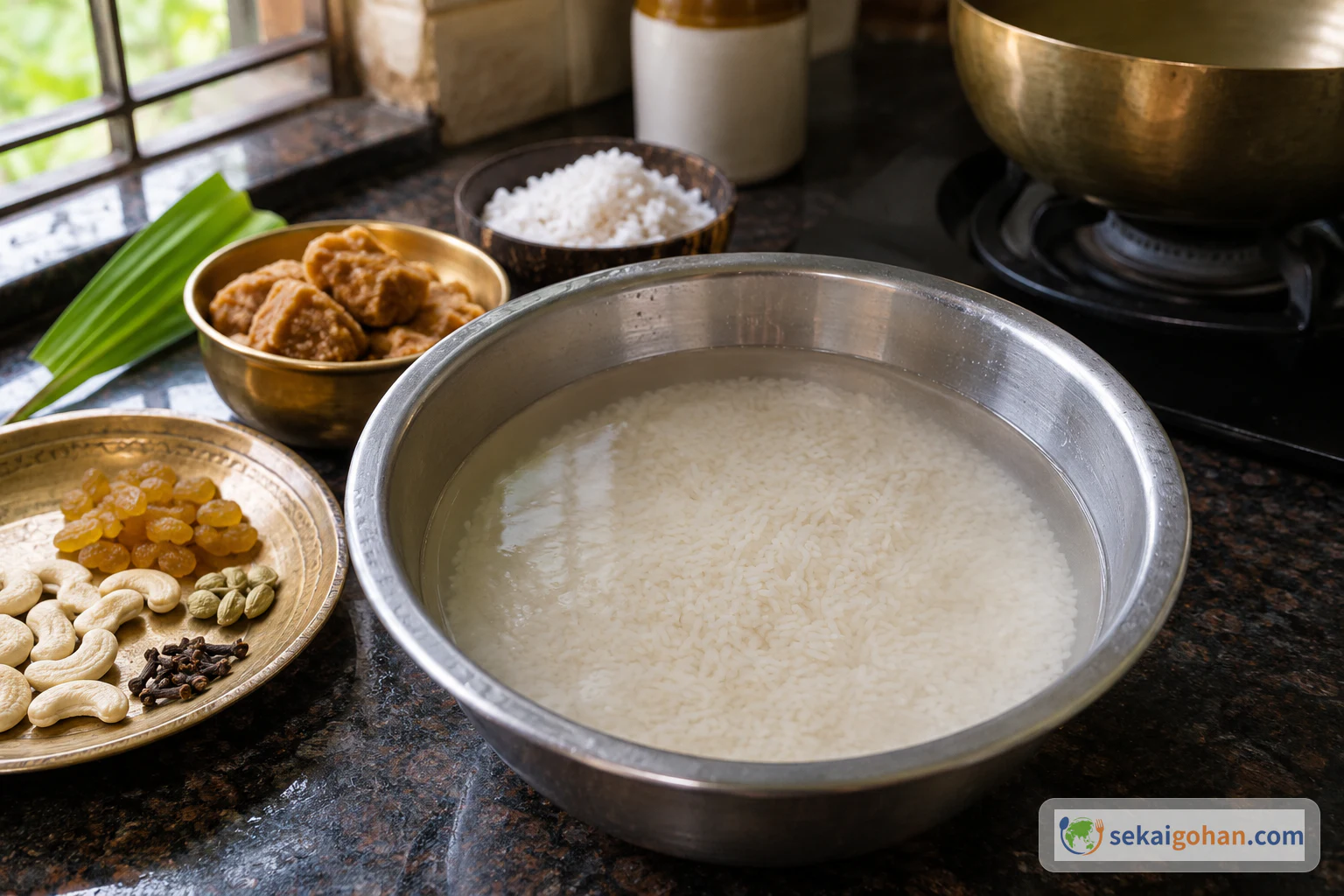
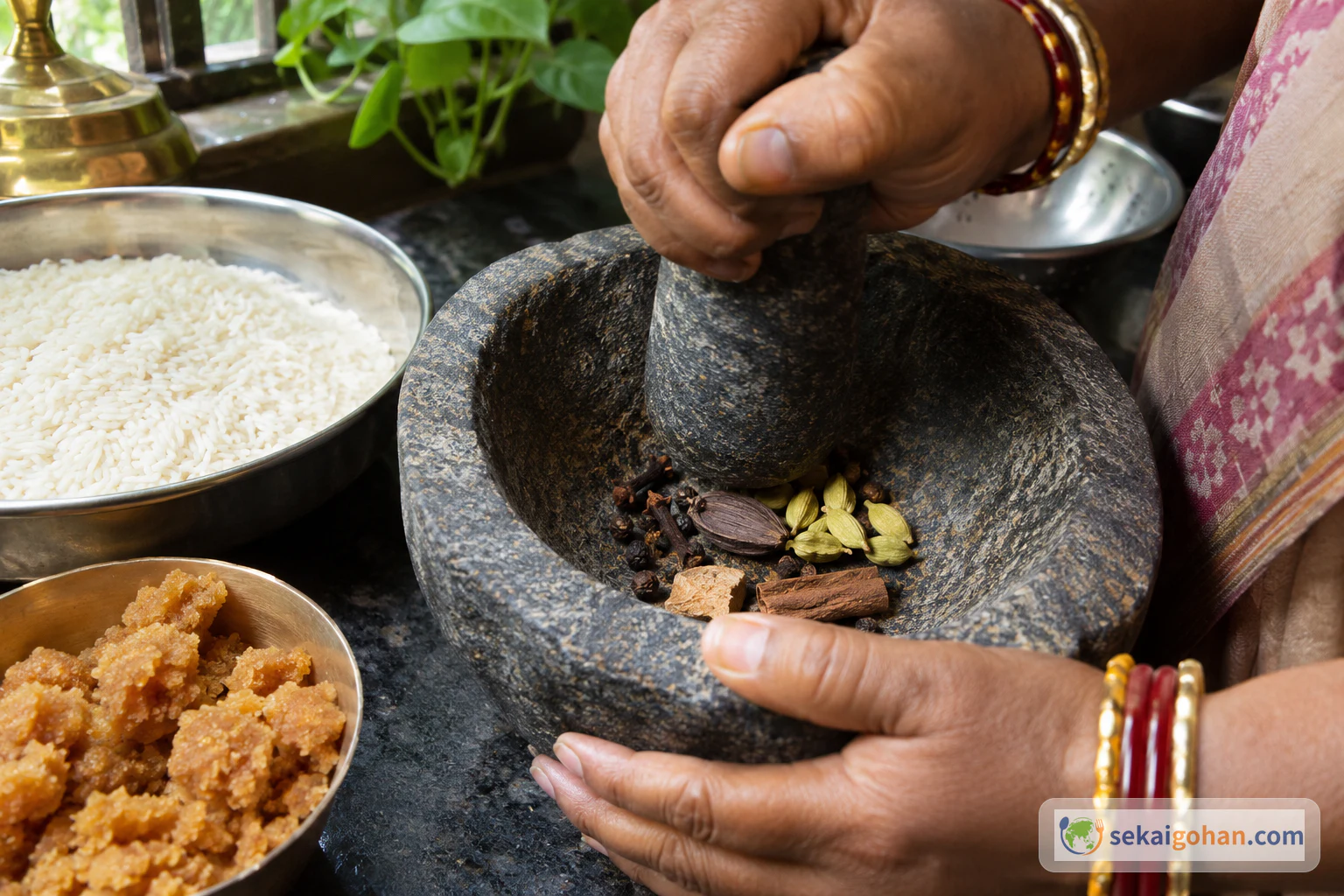
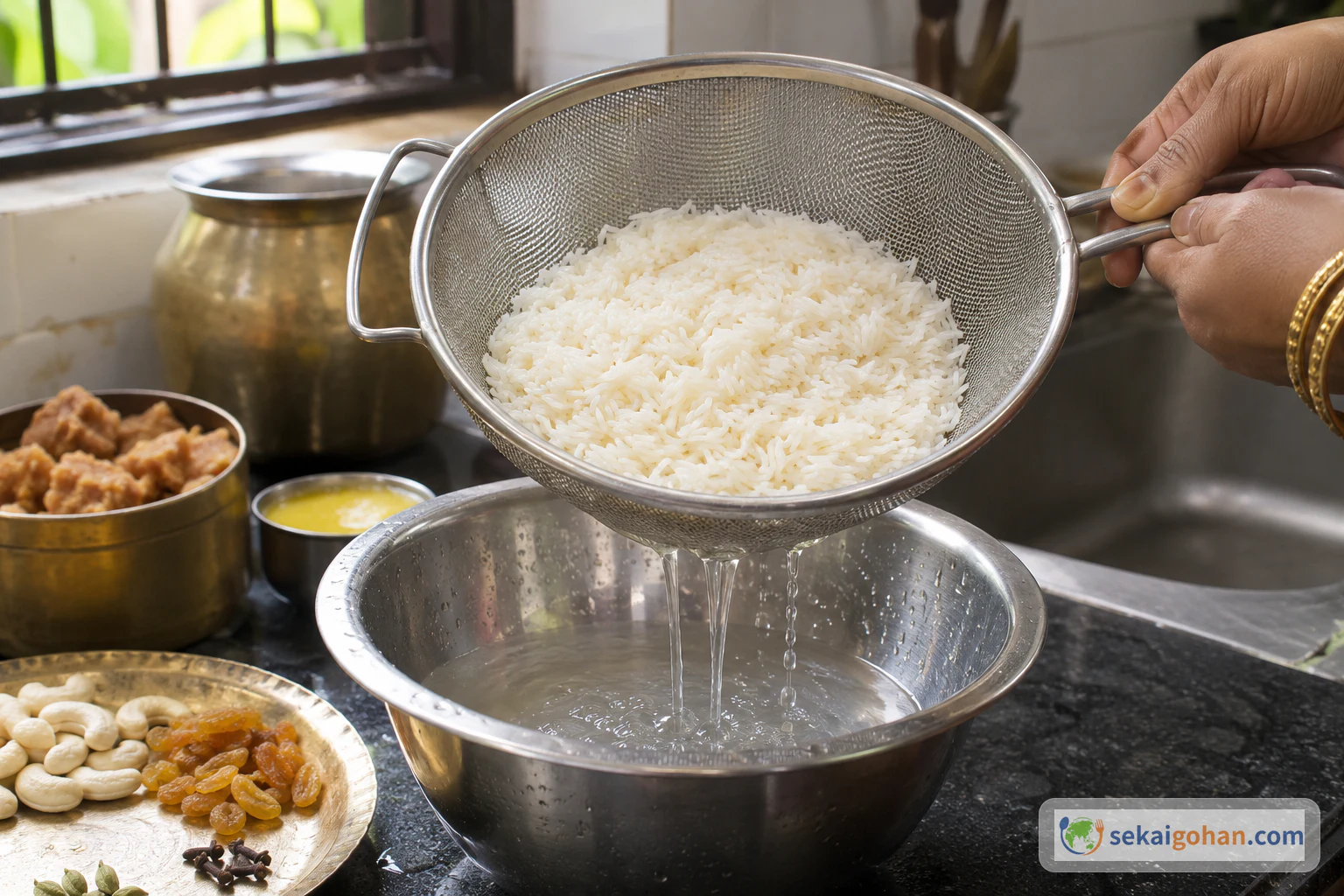
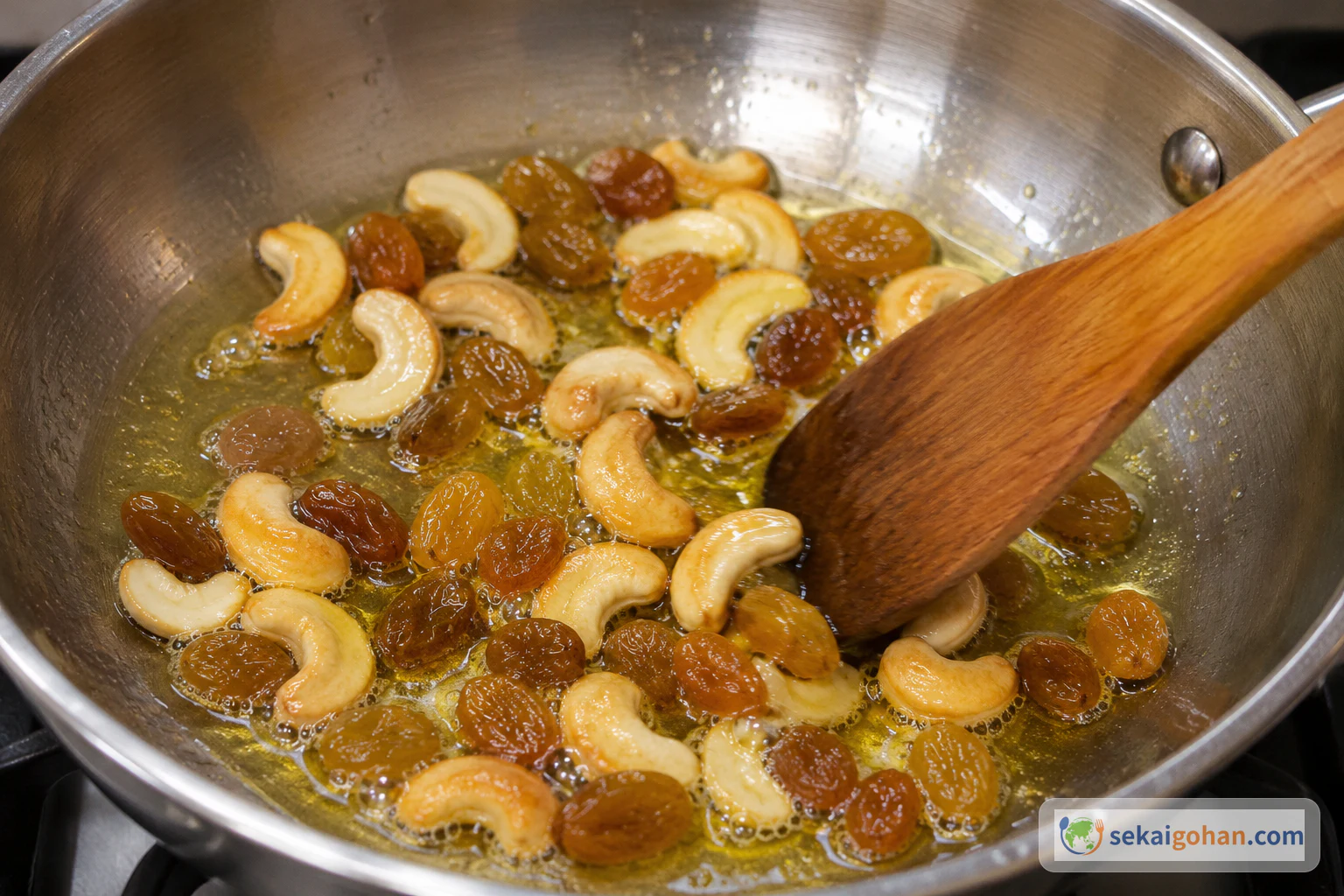
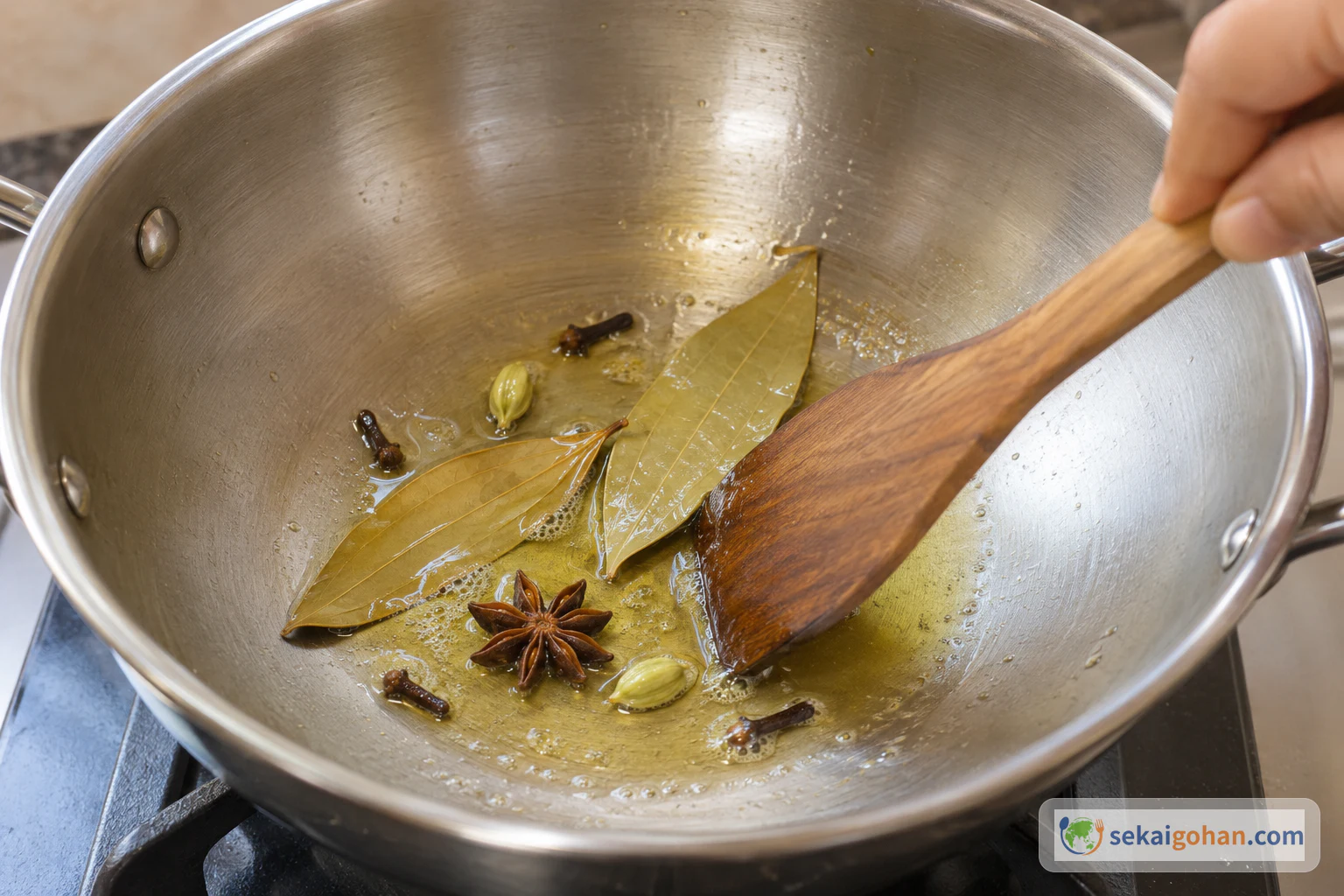
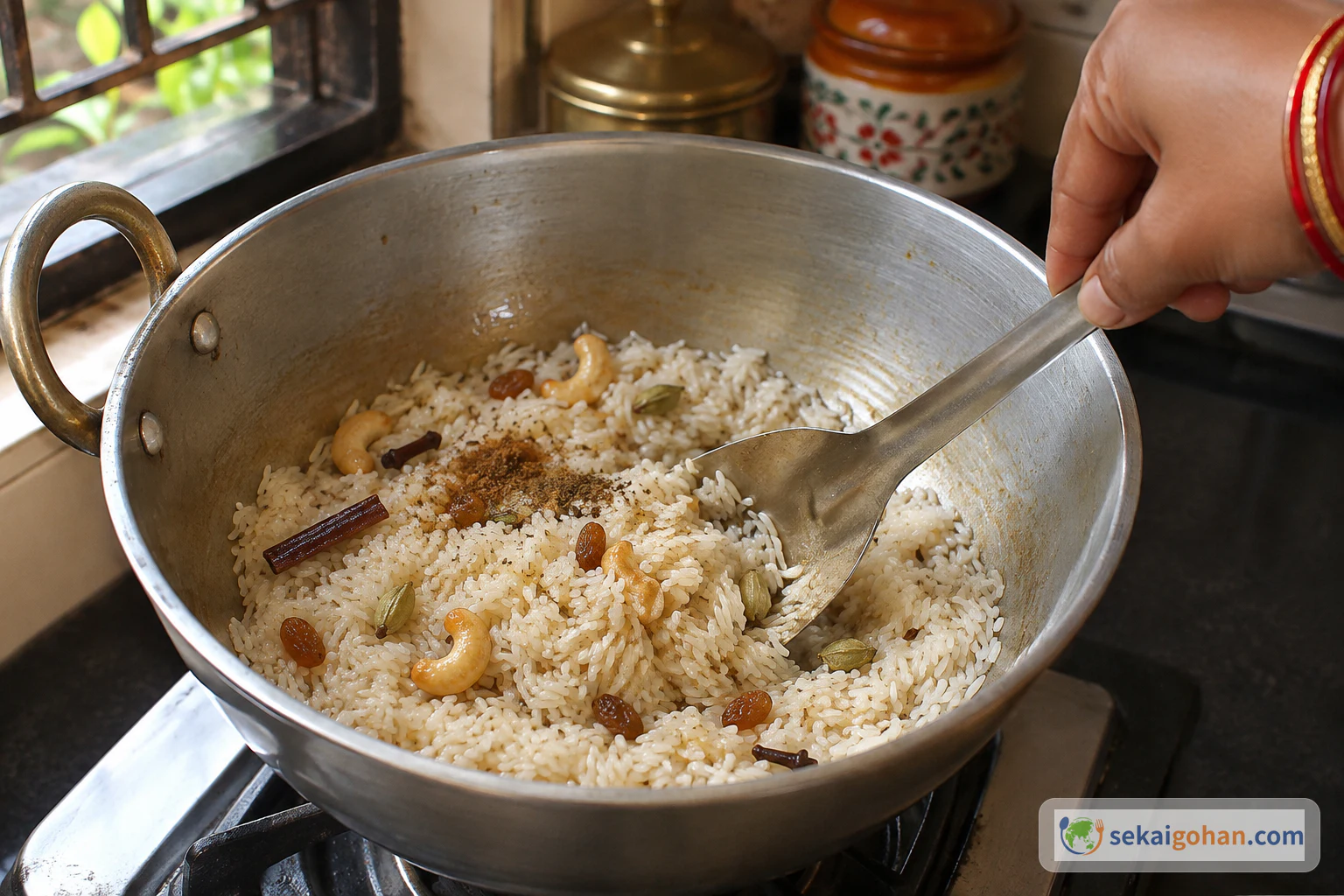
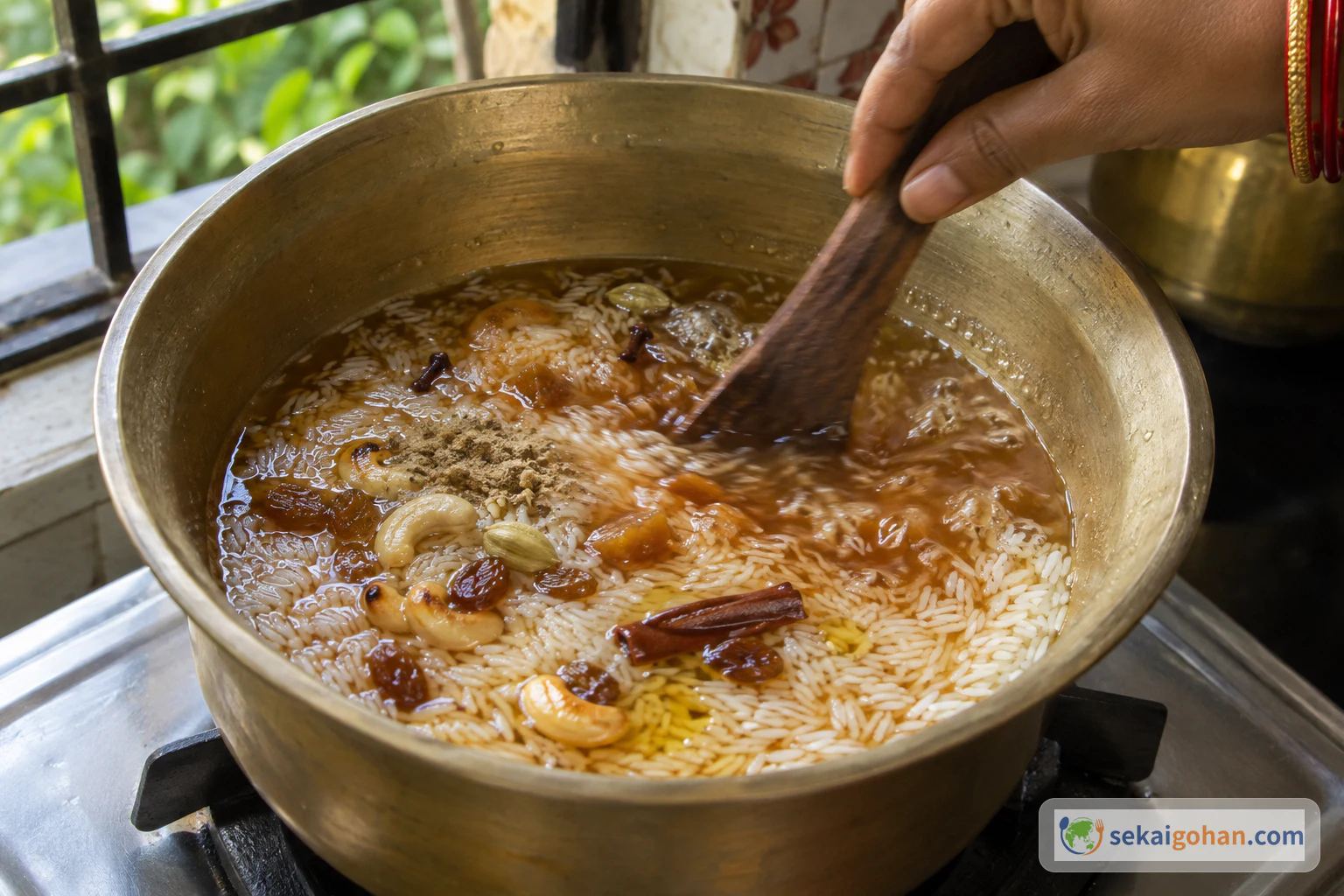
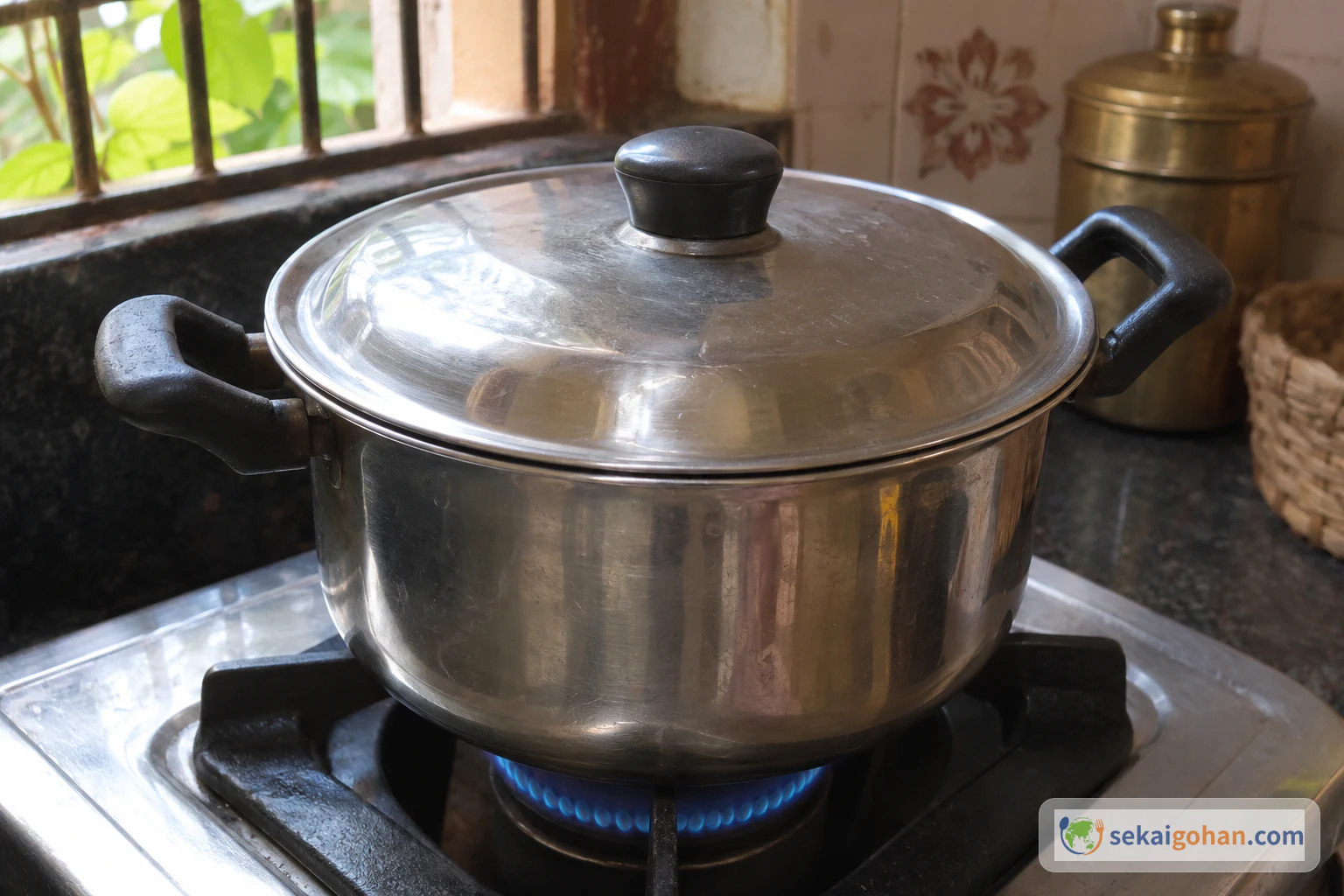
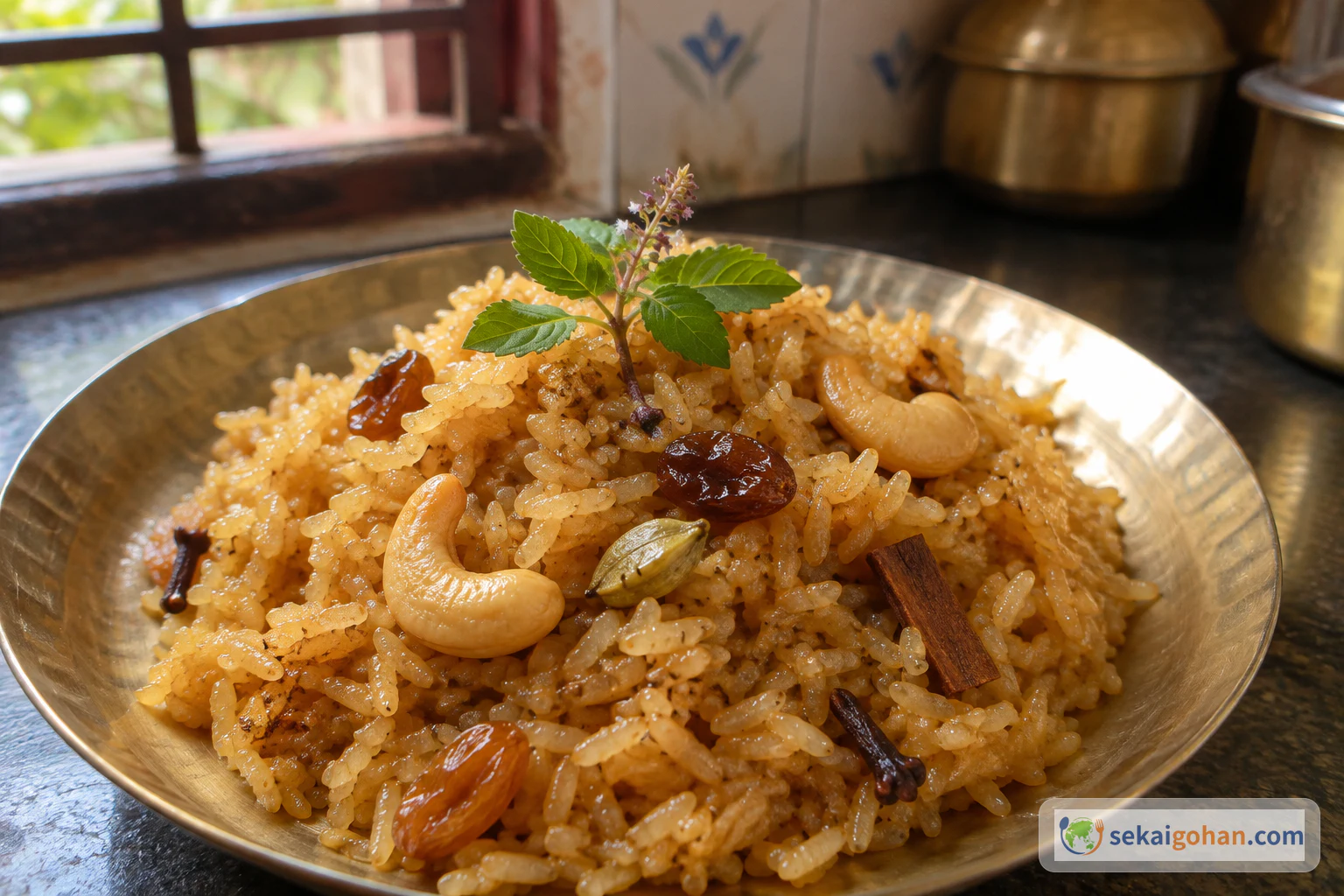
If "sweet rice" makes you picture a soft pudding, kanika (କାନିକା) will surprise you. This traditional sweet dish from Orissa (Odisha) starts out like a spiced rice: soaked rice is fried in ghee with whole spices, then jaggery and water go in, and the pot cooks covered. Made with sona masuri rice, it comes to the table warm, finished with a sprig of holy basil.
Kanika in Odisha
In Odisha, kanika is served to finish a festive meal, and it turns up at weddings, threading ceremonies and other celebrations. You'll sometimes see it spelled "Kanaika." The name covers more than one recipe, each with its own rice, sweetener and additions. This version keeps to sona masuri rice, jaggery, ghee and whole spices.
For more dishes from the country, visit our India page.
Ingredients (Serves 4)
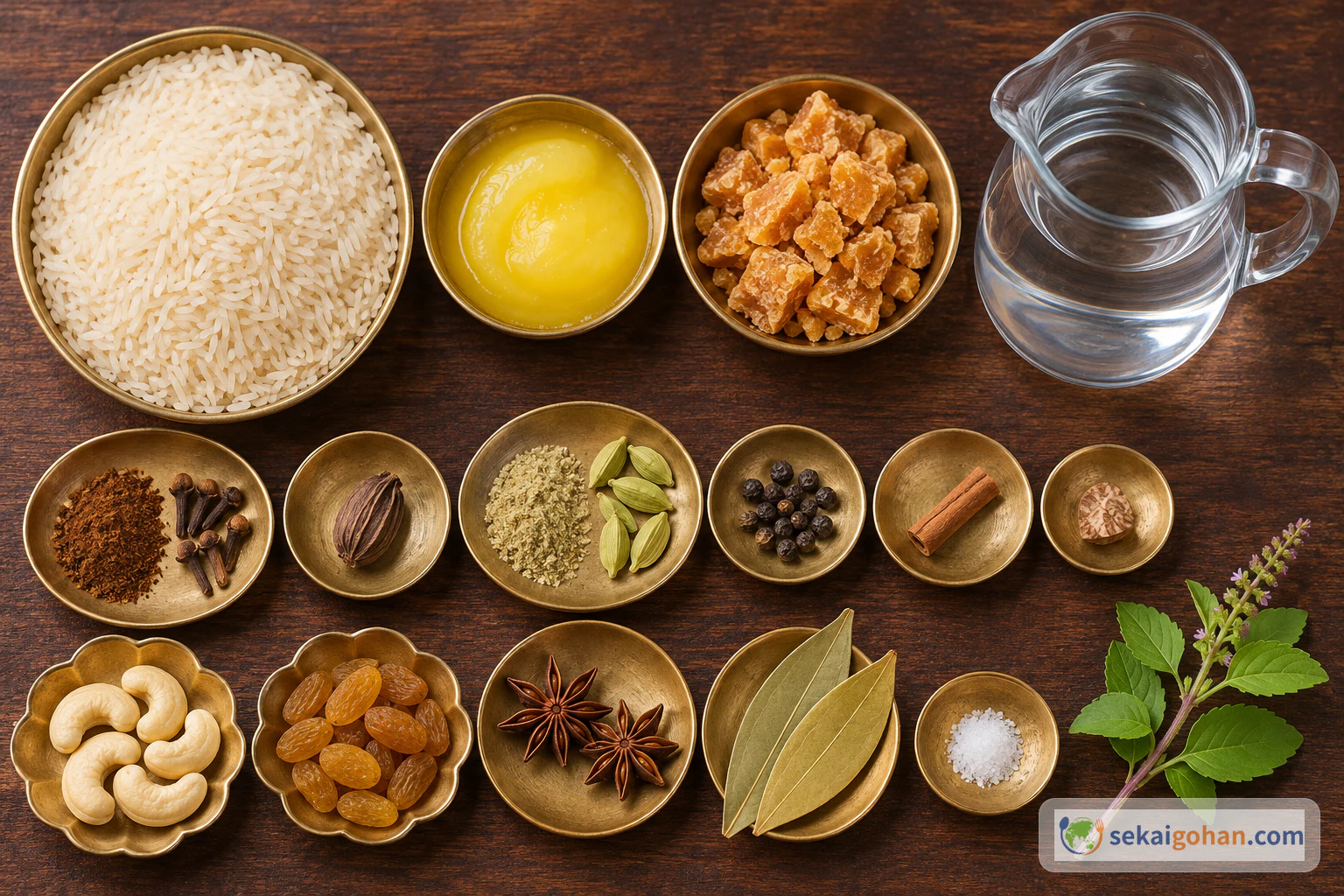
Equipment
- Bowl for soaking the rice
- Strainer
- Small knife and cutting board
- Spice grinder or mortar and pestle
- Heavy pot with a lid, for frying and cooking the rice in one pot
- Spatula and slotted spoon
- Small plate for the fried cashews and raisins
- Measuring cup and spoons
Choosing and Substituting
Sona masuri rice and Indian jaggery will keep you closest to this version, and every swap below changes the dish a little. The amounts are in cups, so use the same cup for the rice, jaggery and water to keep their proportions. The 3 cups of cooking water are separate from the soaking water. Go by eye for the nutmeg (a small piece), the salt (a pinch) and the holy basil (a sprig).
- Rice: If you can't find sona masuri, try a short- to medium-grain rice without a strong aroma.
- Jaggery: Use Indian jaggery if you can. Japanese black sugar (kokuto) has a different flavor and composition.
- Ghee: Clarified unsalted butter works, though it brings its own dairy flavor. Watch it closely while frying.
- Black cardamom: It has a strong aroma, and green cardamom in its place gives a different scent.
- Cloves and cardamom: Buy whole cloves and whole green cardamom pods rather than ready-ground spice or loose cardamom seeds.
- Cinnamon: A common cinnamon stick will do, though the aroma changes with the type.
- Nutmeg: Take a small amount from a whole nutmeg.
- Star anise: You can leave it out, but the flavor will change.
- Bay leaves: Use what you can find and expect some difference.
- Raisins: Any variety works.
- Holy basil: If you can't find it, leave it out. The cooking stays the same, but the look and aroma change. Shiso and ordinary basil are different plants and won't stand in for it.
This dish contains cashews (a tree nut). Check the ghee label for milk components, and check all product labels for cross-contact information.
Method
Each step below is one short action, and everything before step 4 happens before the heat goes on.
Troubleshooting Kanika
Most problems with kanika come down to heat. Keep an eye on the pot and turn the burner down if the ghee, nuts or spices start to scorch. If something turns out wrong, check these points against the recipe before you change the water, heat or cooking time.
| What you notice | What to check |
|---|---|
| The spices seem too strong | Did more than 2 tsp of the ground mix go in? Were the whole cloves and cardamoms split 5 and 5, not added twice? |
| The dish seems greasy | Did you use only the 2 tbsp ghee, without adding more for the whole spices or rice? |
| The rice seems too firm or too wet | Was it soaked for 30 minutes and well drained? Was it cooked covered for 10–15 minutes? Did you use the same cup for rice and water? A different rice cooks differently. Note what you changed for next time. |
| The sweetness seems uneven | Was the jaggery chopped, and fully dissolved before the lid went on? |
| The cashews or spices scorch | Was the heat too high? Lift the cashews out once golden, and move on to the rice once the whole spices smell fragrant. |
Serving Kanika and Variations
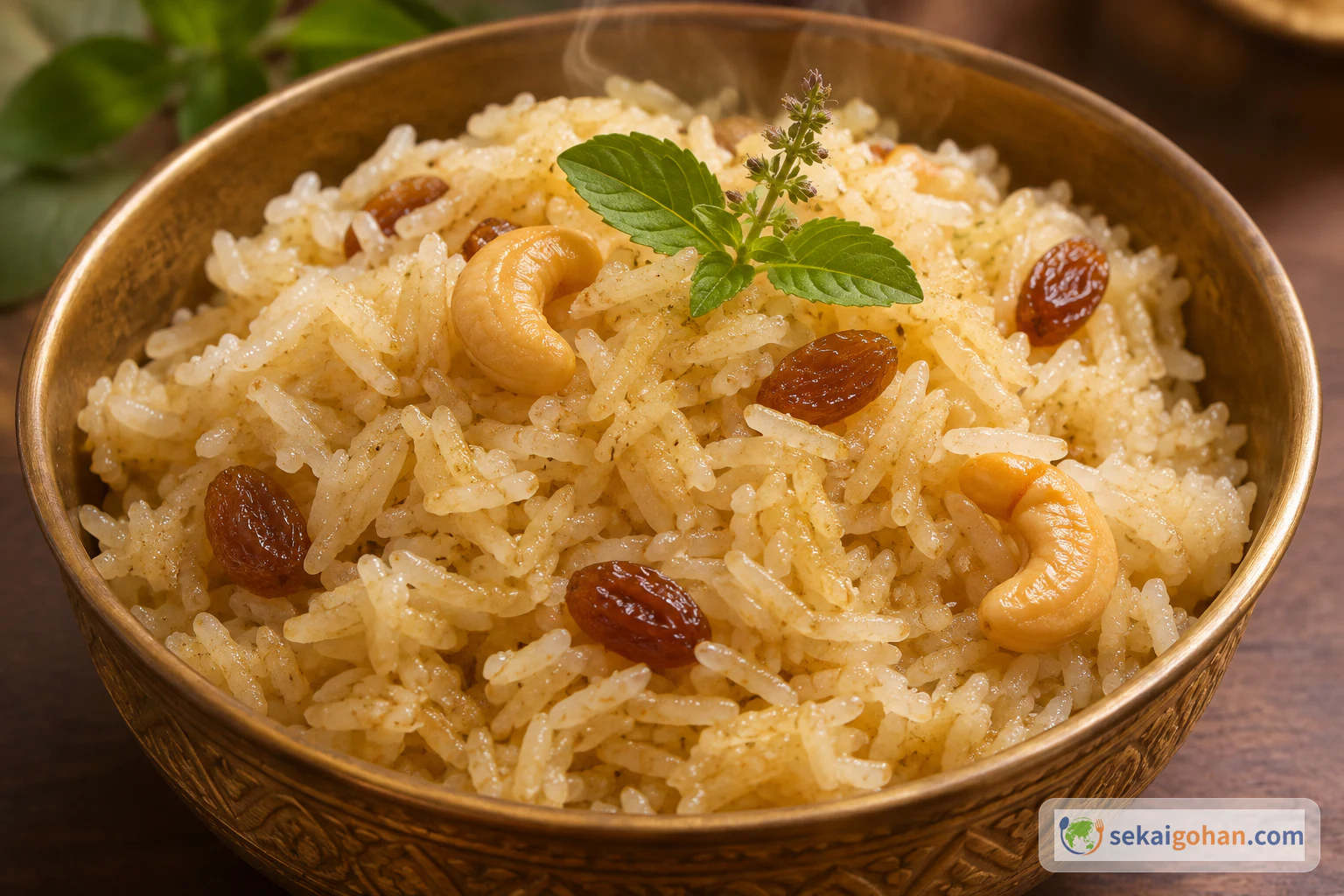
Serve kanika warm, soon after cooking, with the cashews and raisins through the rice and a sprig of holy basil on top. It's meant to be eaten fresh.
Another kanika uses basmati or a local aromatic rice with chana dal, sugar, raisins, turmeric, whole spices and nutmeg or mace. Treat it as a separate recipe with its own amounts, not as extras to add to this one. You can also cook this version with a different rice or sweetener. See Choosing and Substituting for what each swap changes.
Frequently Asked Questions
Is kanika a kind of pulao?
Both cook spiced rice in a pot. What sets this version apart is the jaggery dissolved in the cooking water.
Is holy basil safe to eat raw?
Yes. Holy basil (tulsi) leaves and flowers are edible raw and taste bitter and spicy. Here the sprig is a garnish added after cooking, so rinse it well under running water and drain it first. Buy holy basil sold as food, not as a supplement or essential oil.
How long does kanika keep?
Serve it warm and freshly made. This recipe has no storage time.