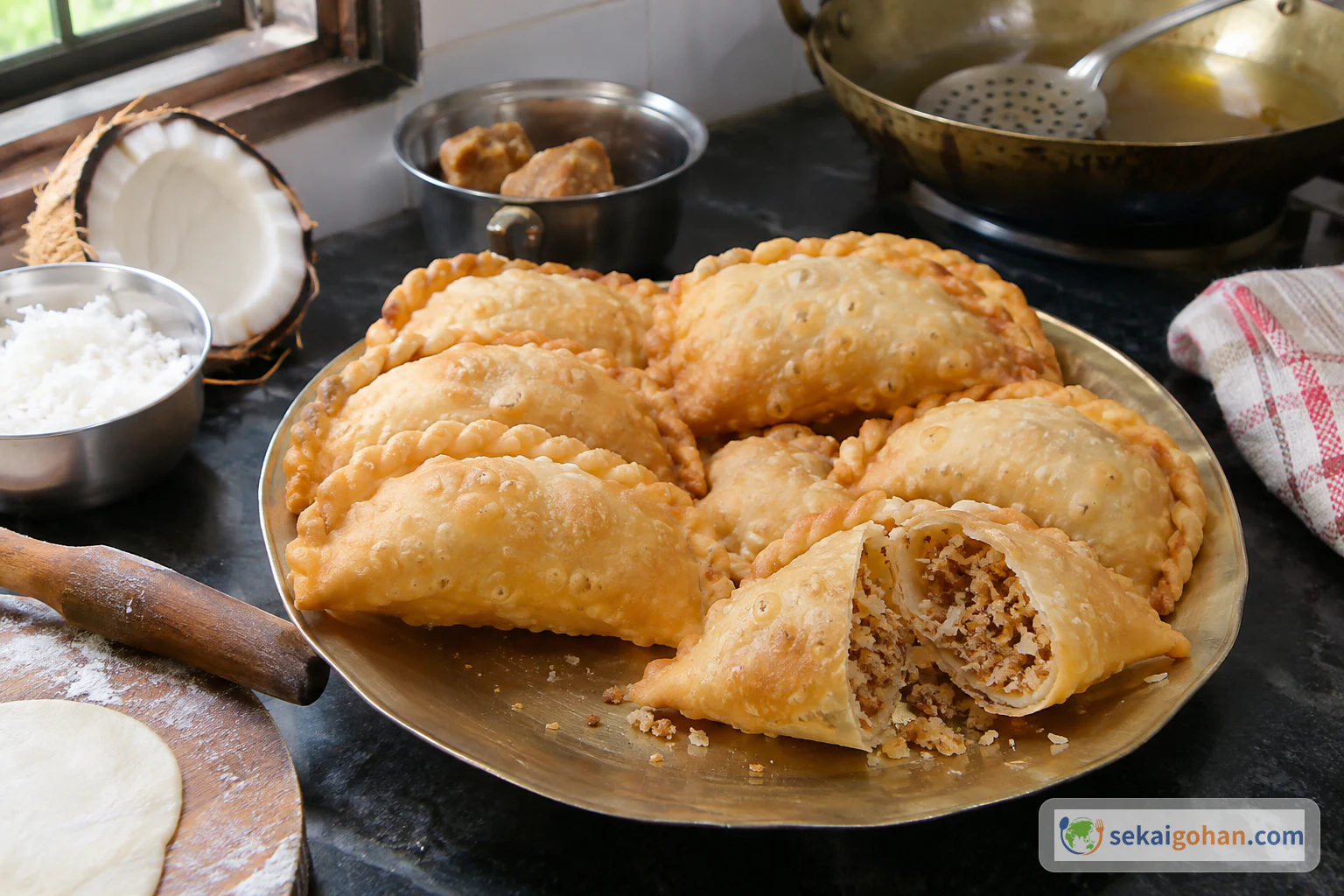
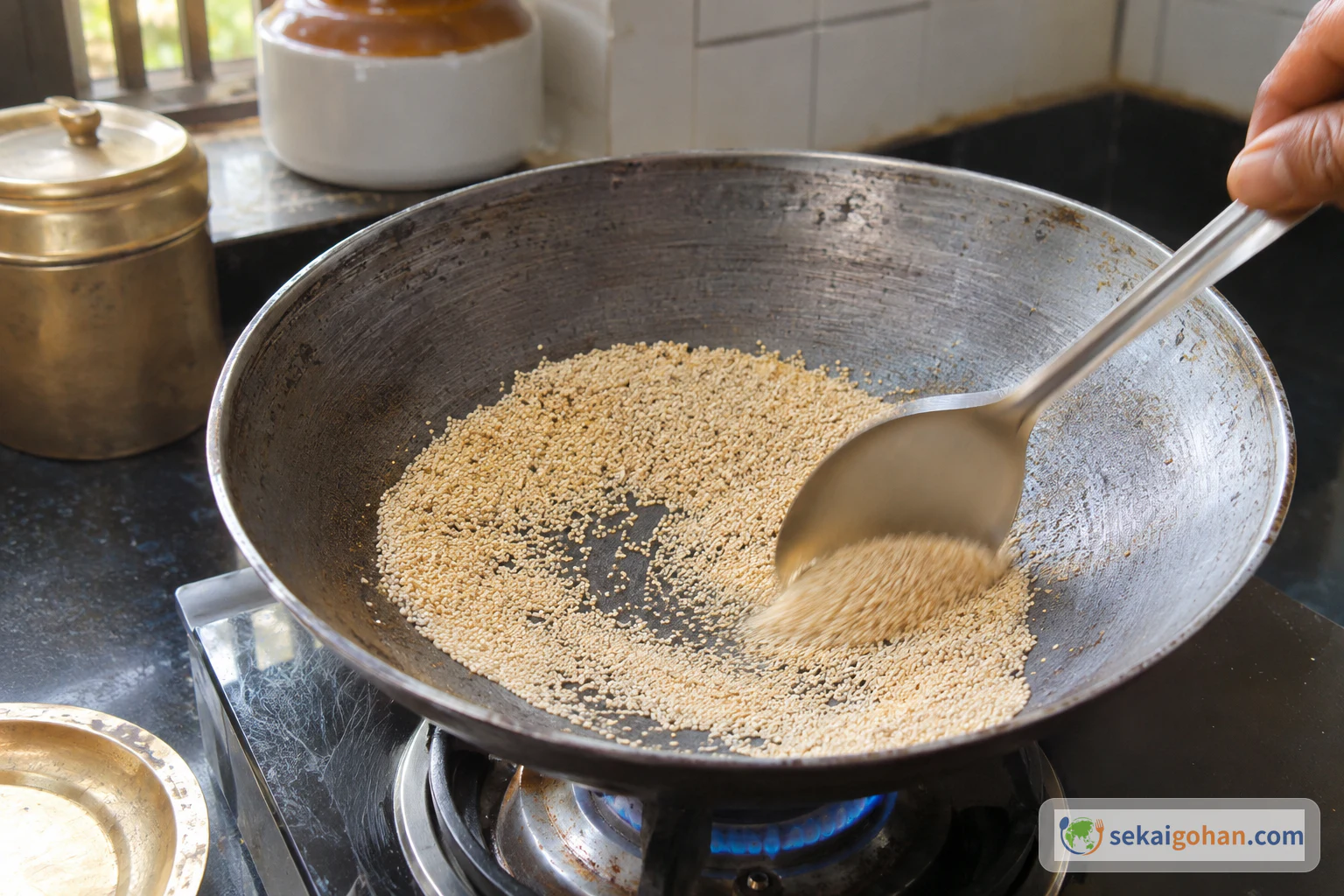
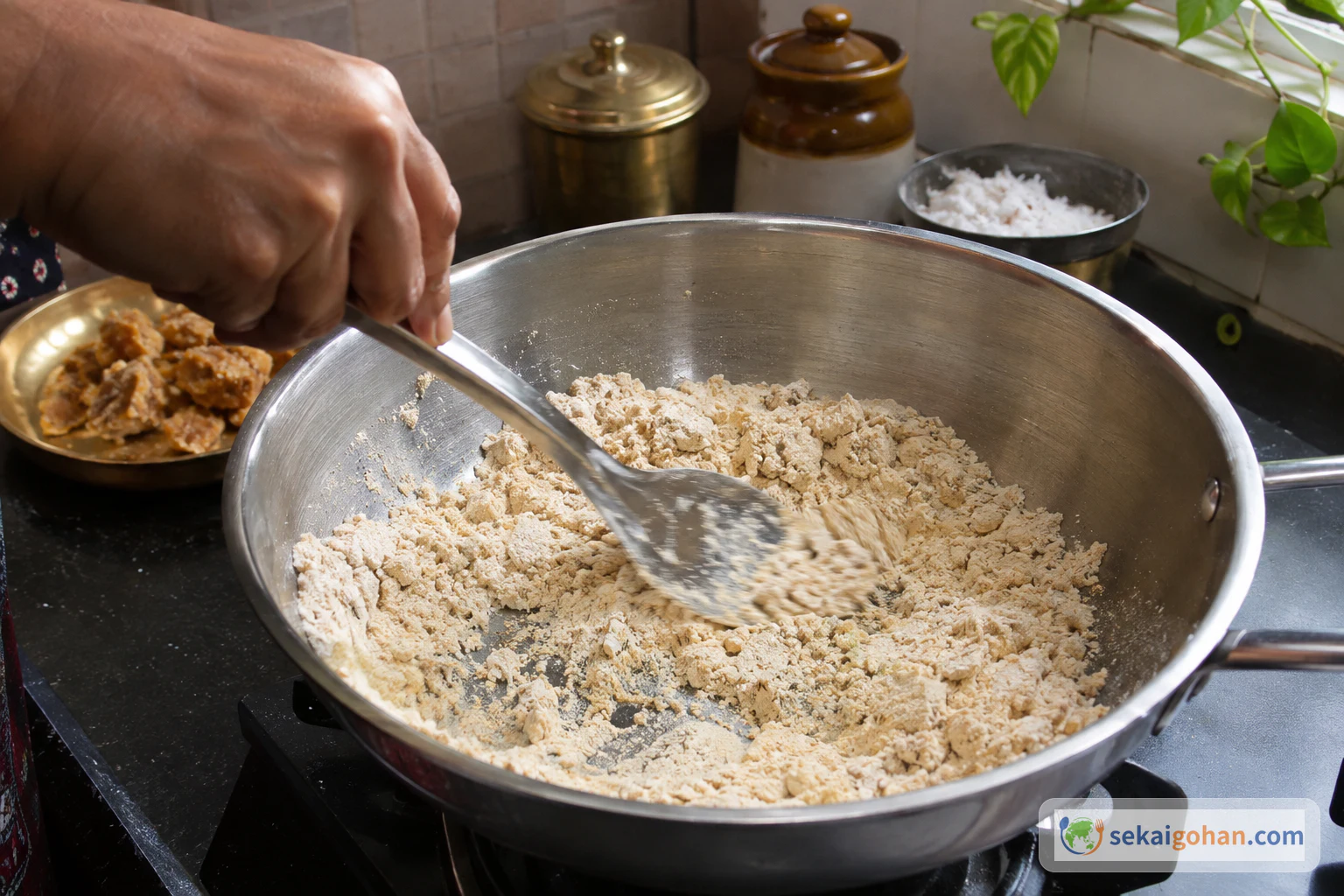
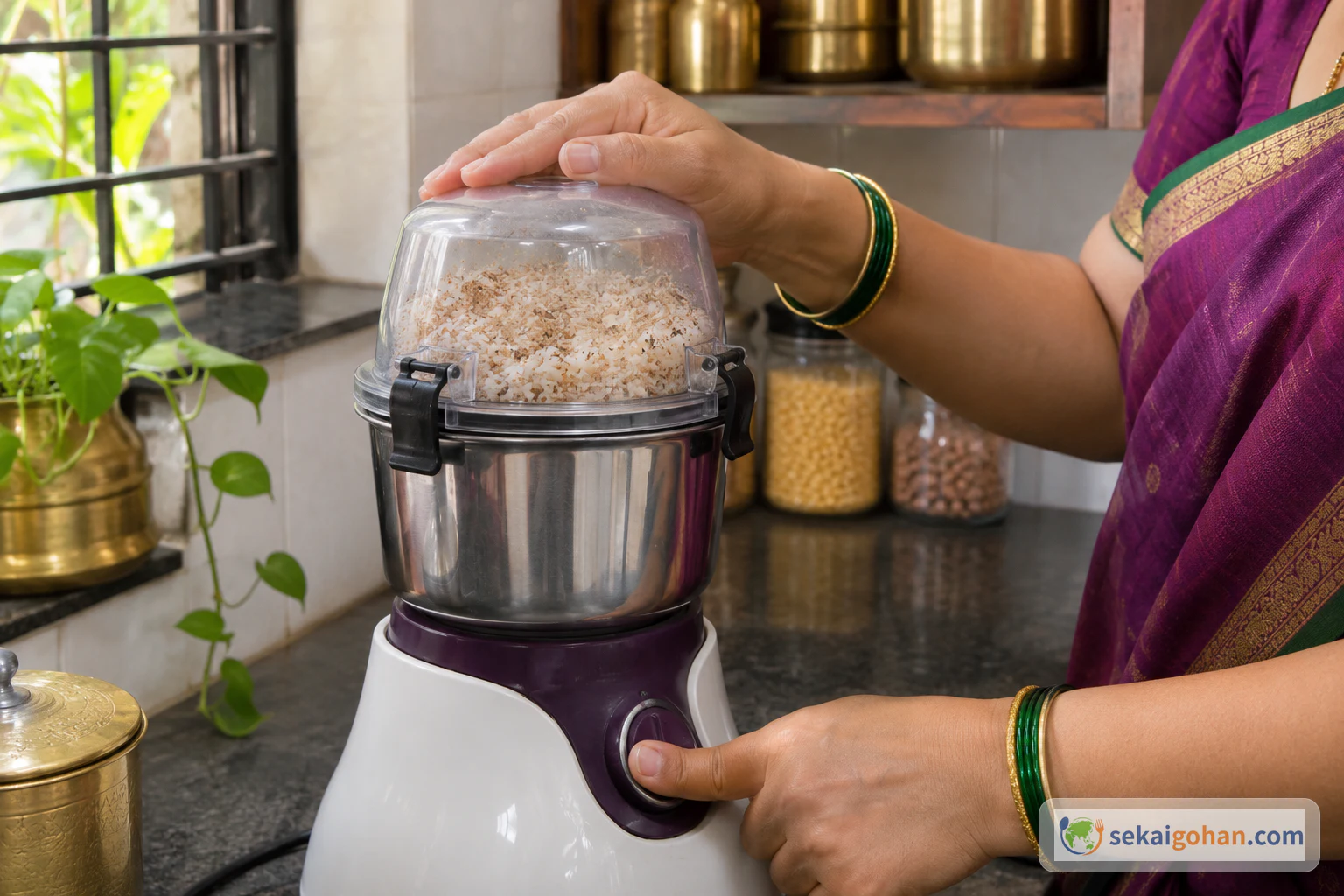
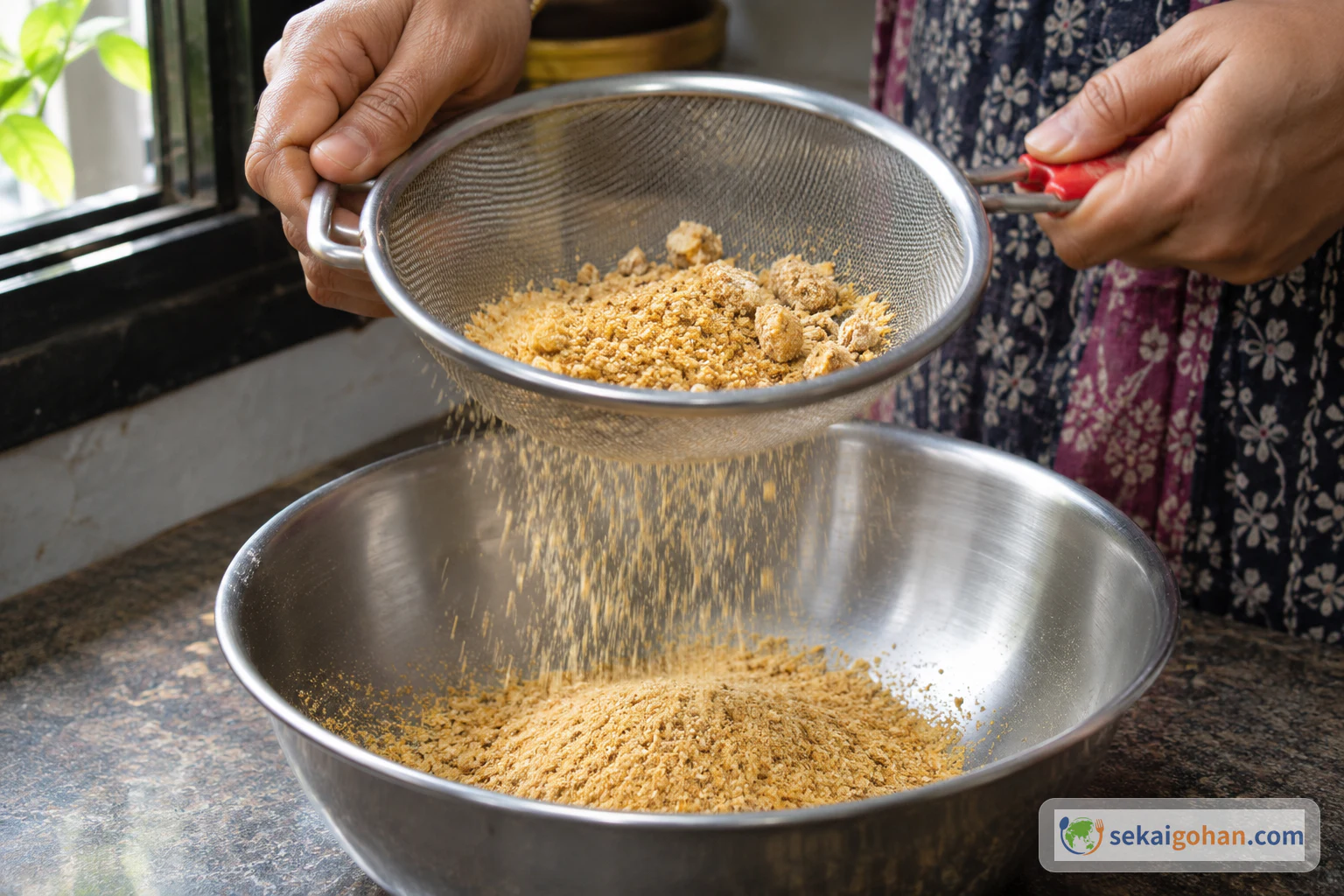
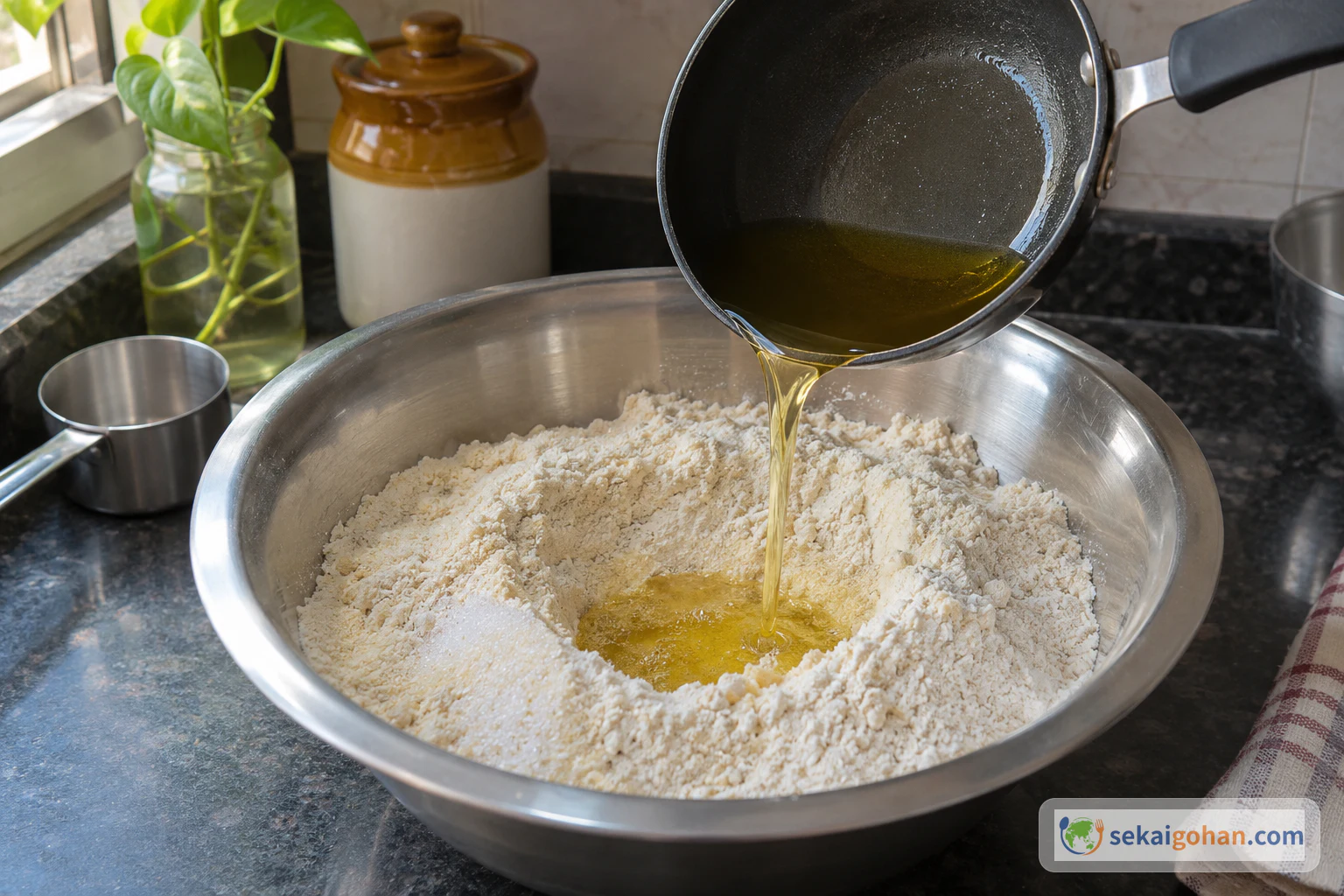
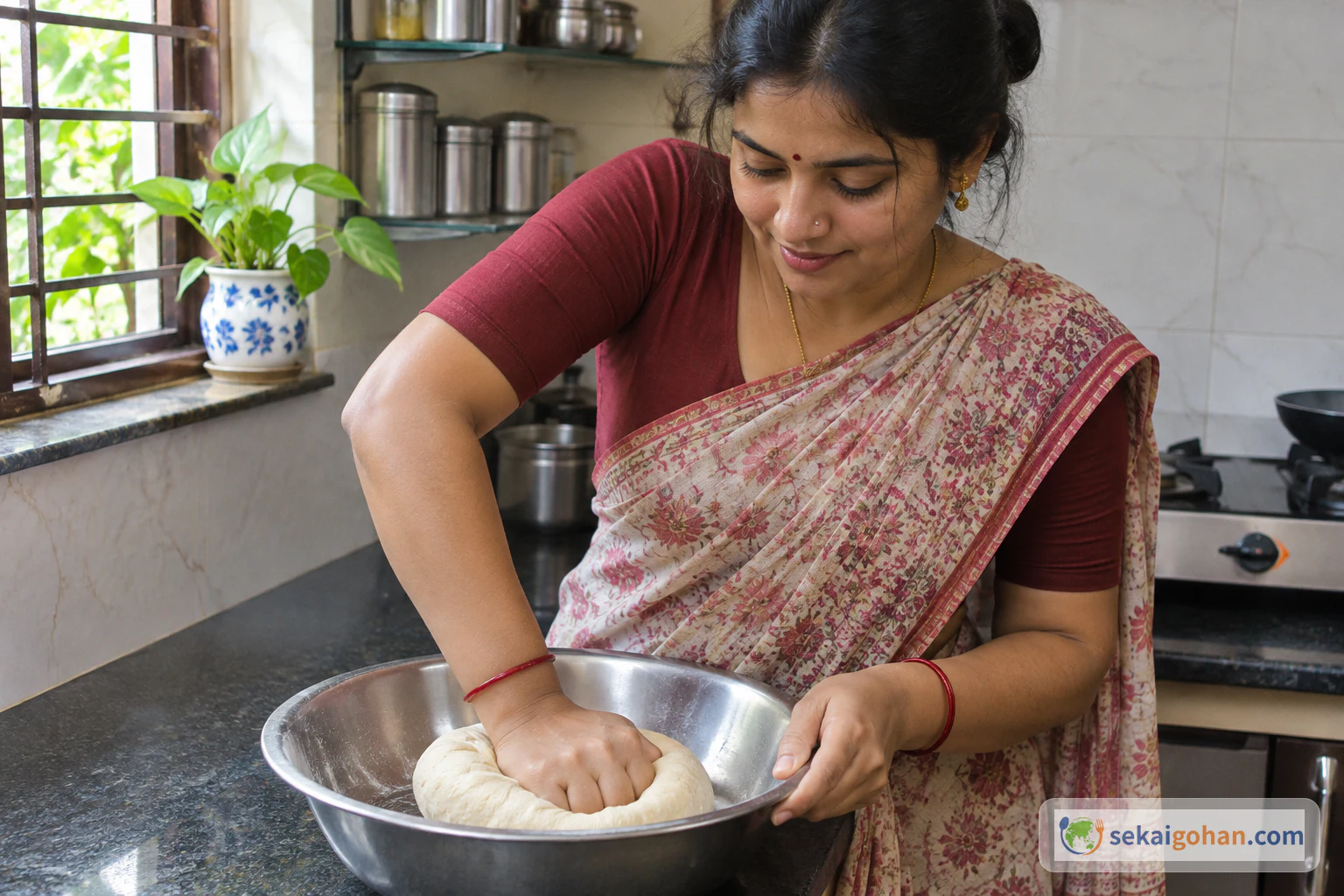
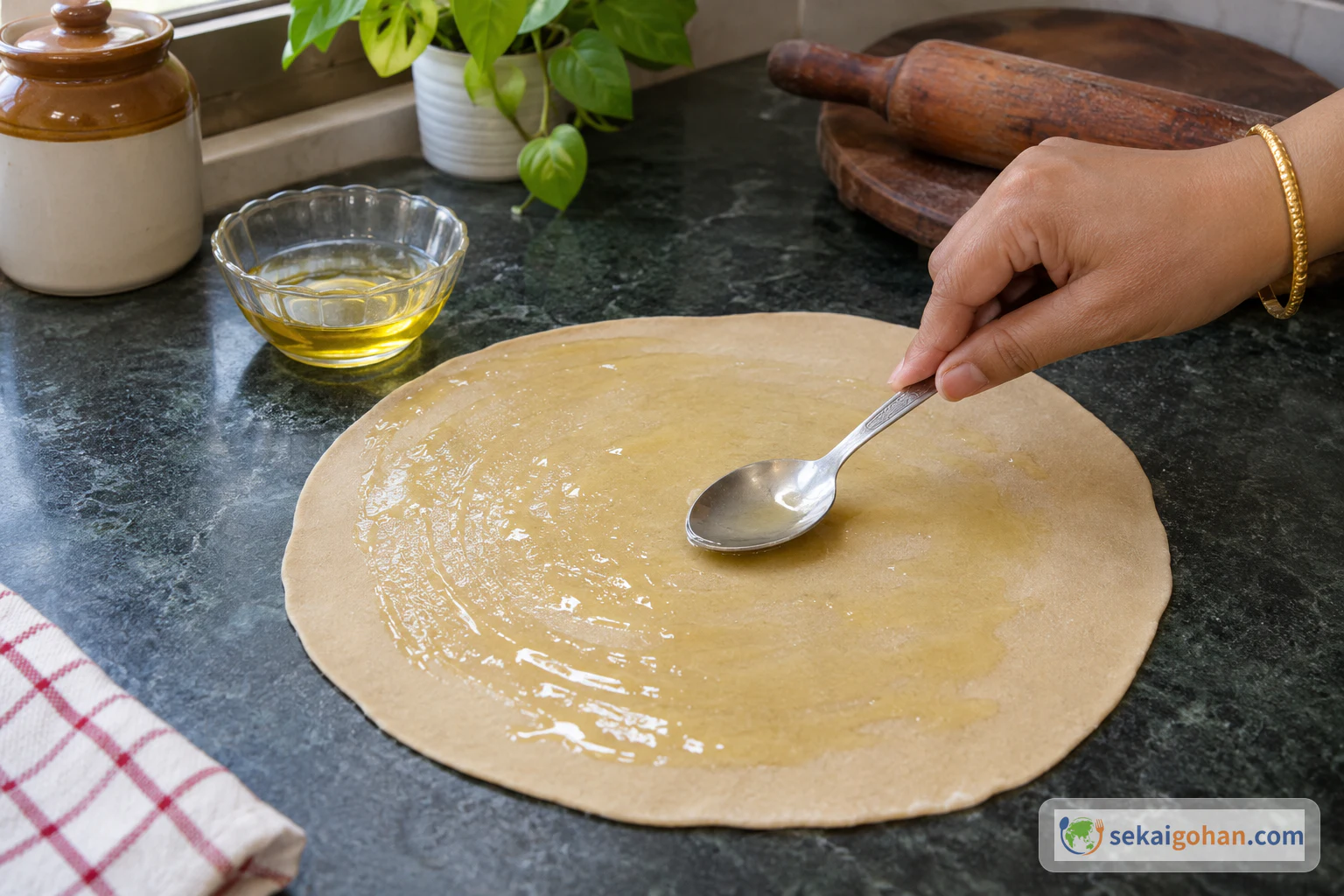
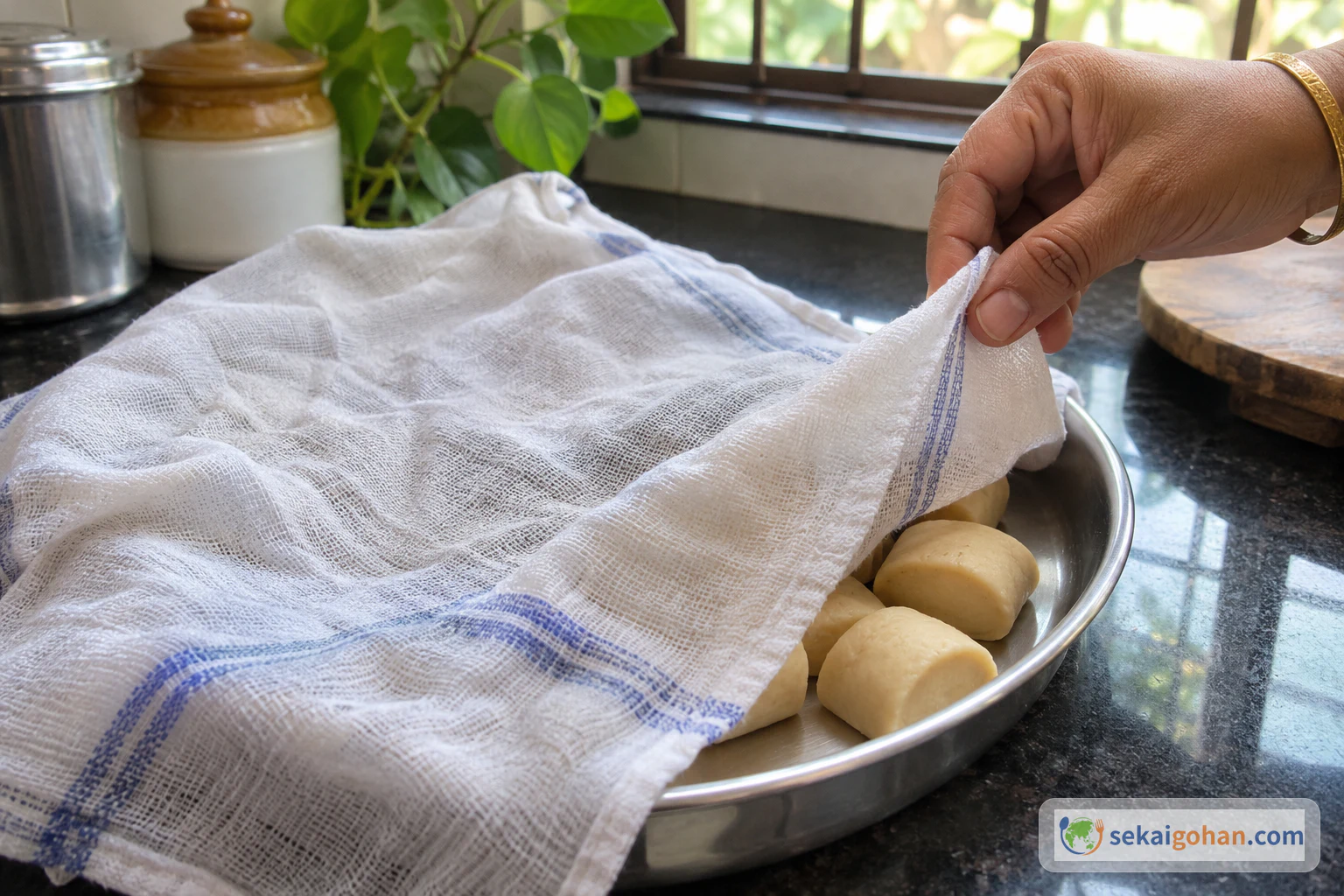
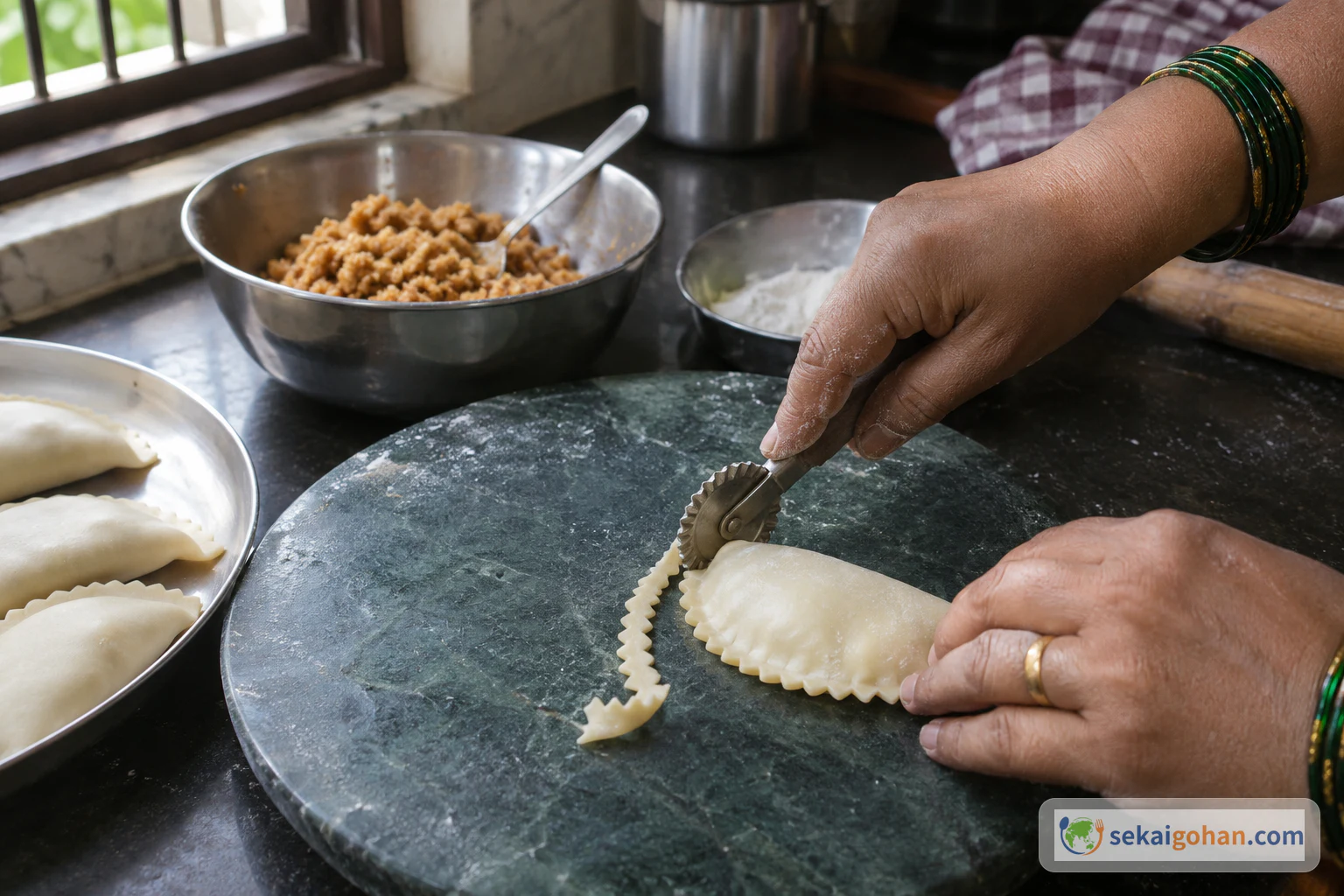
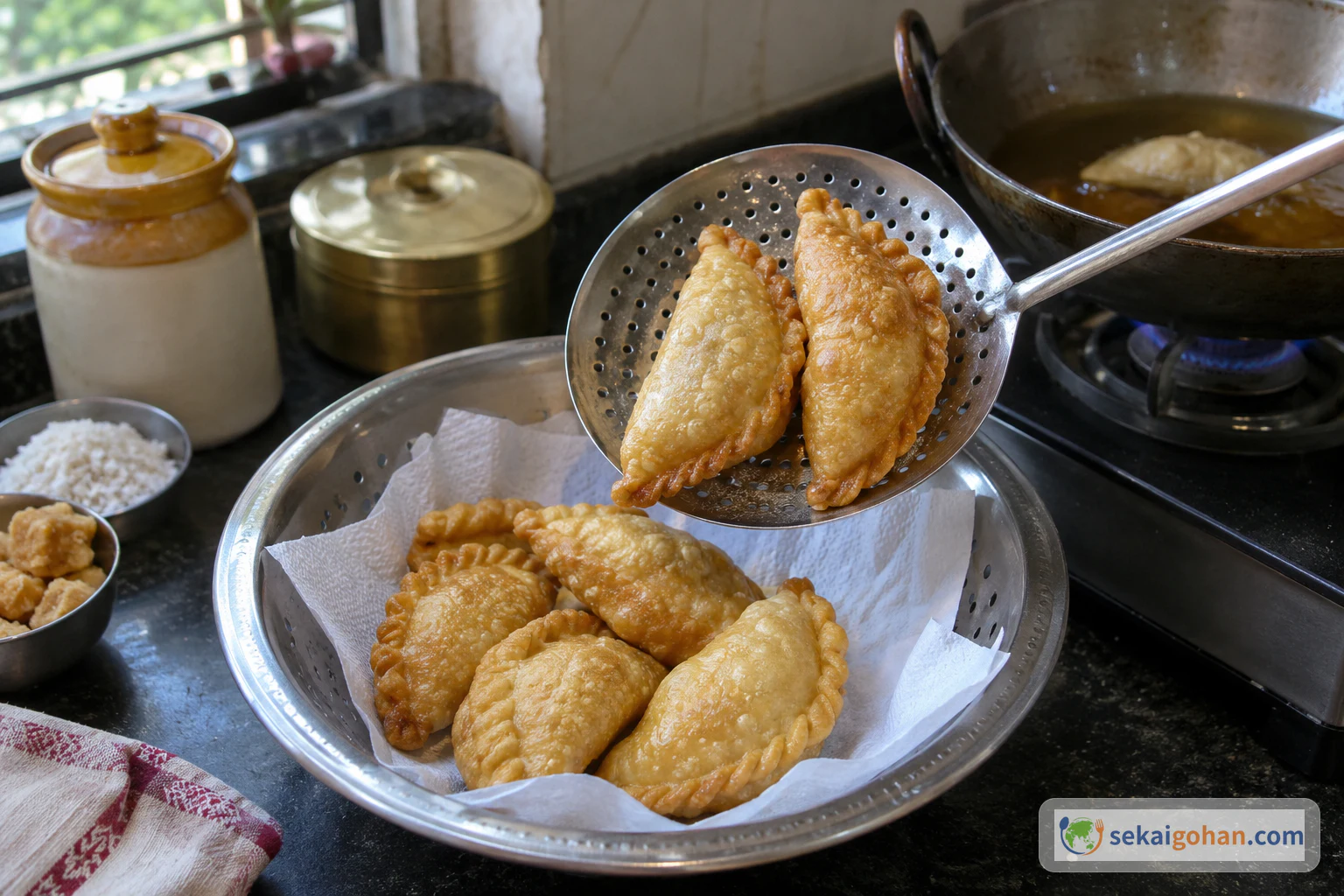
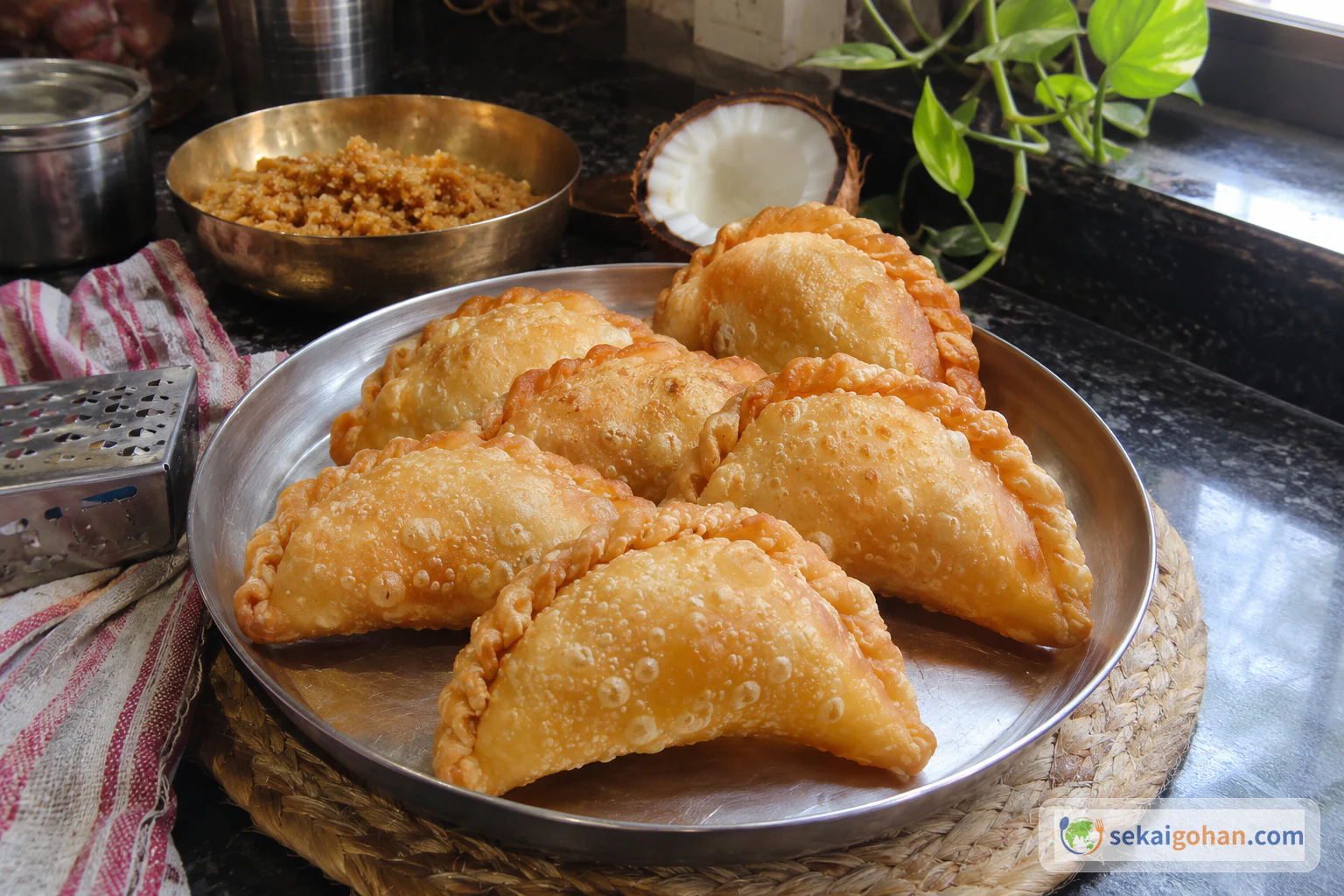
In the days before Diwali, home kitchens in Maharashtra are busy making faral, the sweets and snacks for the festival. Karanji (करंजी) is one of them: a layered half-moon pastry with a dry, sweet filling. The filling takes some patience. You roast the dry coconut, sesame and poppy seeds one at a time, then cool and grind each on its own before combining them with roasted rava, roasted whole wheat flour, grated jaggery, cardamom and nutmeg. This is the traditional fried version, a home recipe from India. It shares its shape with gujiya and Goan nevri, but those are separate regional dishes.
Ingredients: Filling, Wrapper and Four Separate Uses of Oil
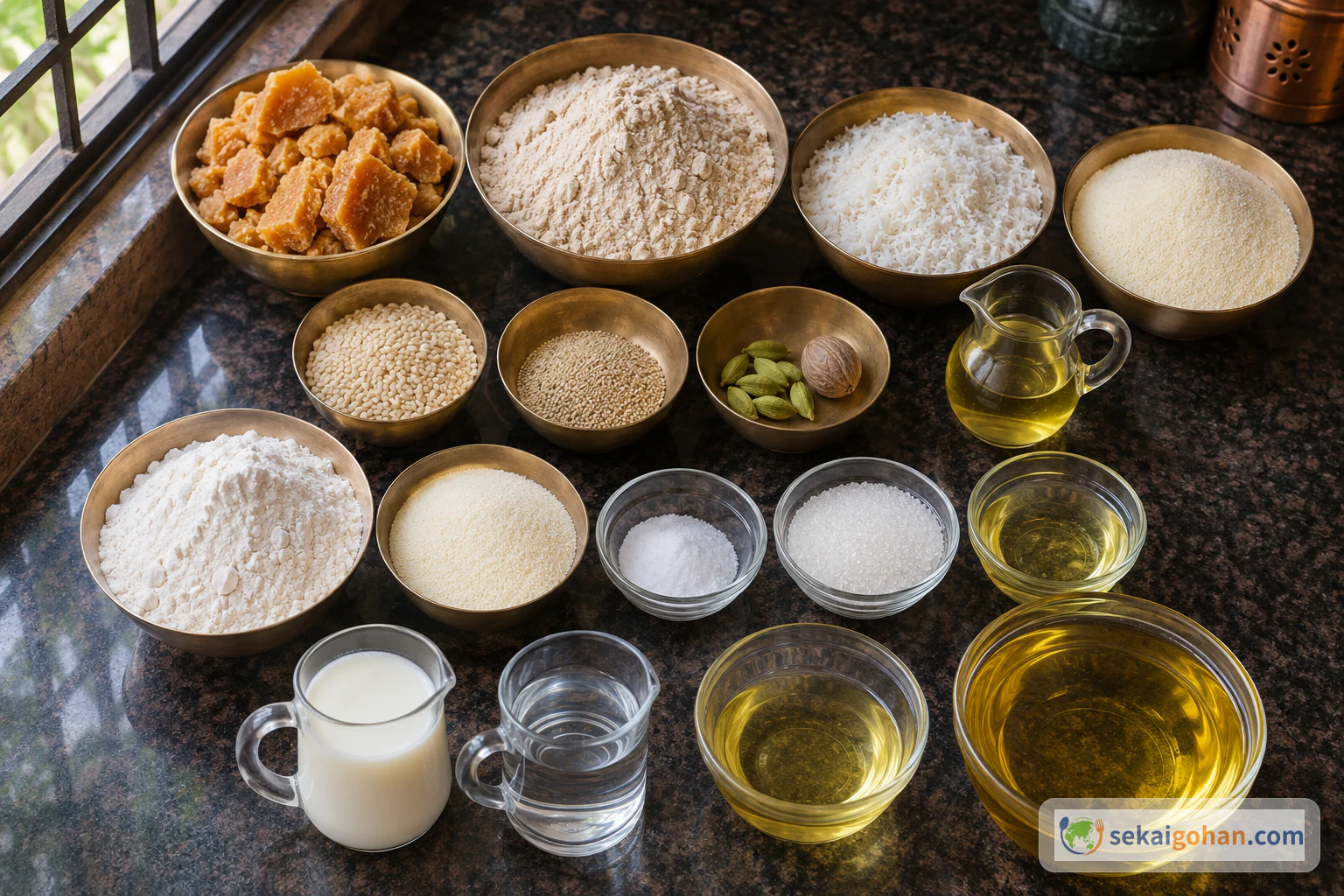
Keep the oils apart as you work. The filling oil, the wrapper oil, the layering oil and the frying oil are all separate amounts.
This recipe contains wheat, milk, sesame and almond. Read the ingredient and product labels for everything you use, including the almond oil.
Equipment
- Pans for dry-roasting and roasting the filling ingredients
- Small separate pan for heating the wrapper oil
- Spice grinder, small food processor, or mortar and pestle
- Grater for the jaggery
- Food processor for the filling
- Fine-mesh sieve, if lumps remain in the filling
- Mixing bowl and spoon
- Clean damp cloth
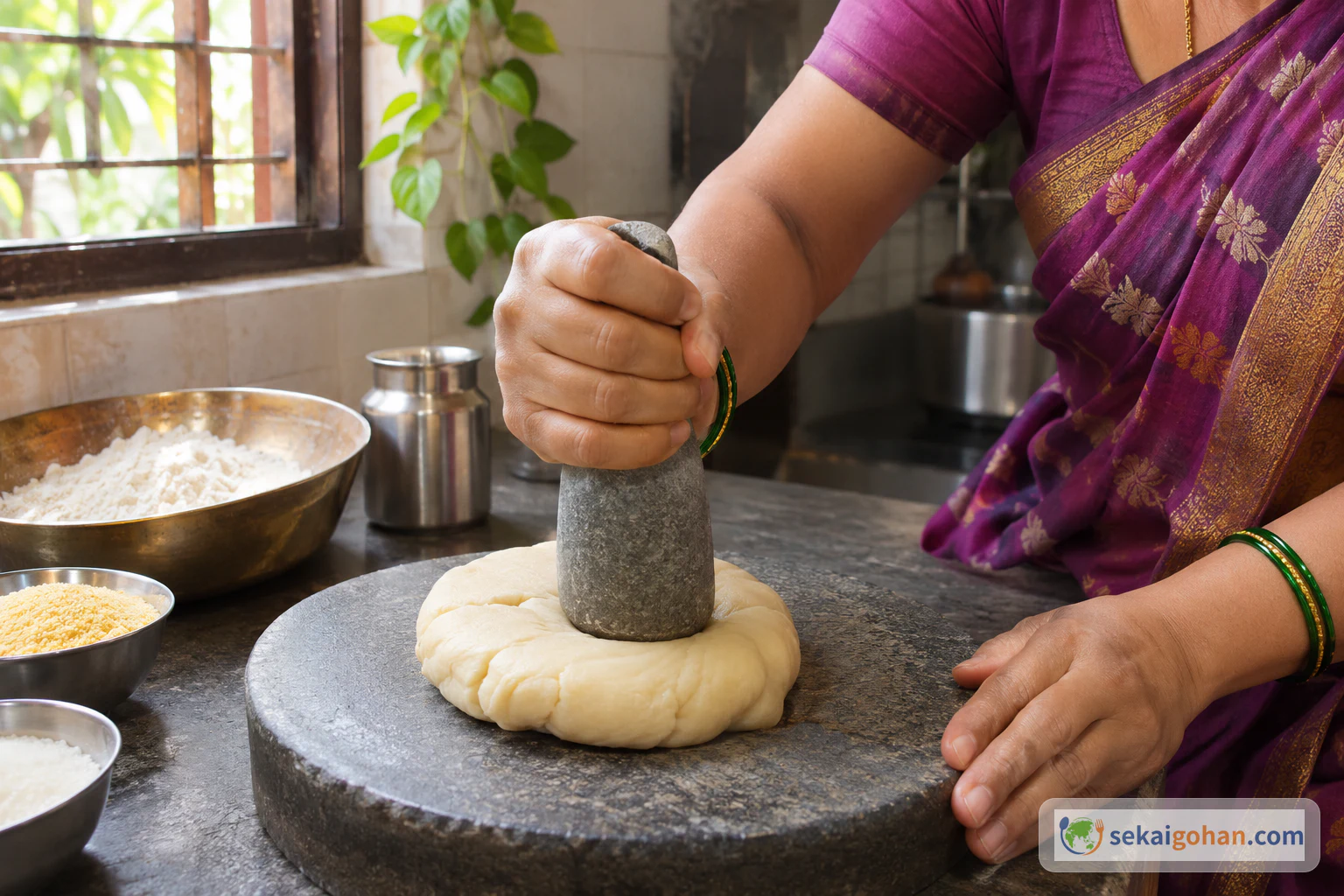
- Clean stone pestle for food use and a sturdy food-use surface
- Rolling pin
- Knife and board
- Pastry cutter
- Deep pan for frying and a slotted spoon or skimmer
- Paper-lined vessel for draining and a rack for cooling
Choosing Ingredients for Karanji
Jaggery. If you can't find jaggery, use Japanese kokuto (black sugar) instead.
Rava. Look for fine semolina. A coarser grain is a different ingredient.
Almond oil. Choose an almond oil sold for eating.
Liquid. The dough uses a mix of milk and water, so it contains milk.
Karanji Dough Safety and Troubleshooting
Keeping the Milk Dough Cold
Because it contains milk, karanji dough is a perishable food. That's why it rests in the refrigerator for 2 hours, covered with a damp towel, and not on the counter. Keep these limits in mind as you work:
- Refrigerator temperature. Keep it at 40°F (4°C) or below. In Japan, the guide is 10°C or below.
- Time out of the refrigerator. Perishable food should not sit out for more than 2 hours, or 1 hour above 90°F (32°C). That total includes kneading, 15–20 minutes of pounding, dividing, shaping and waiting to fry.
- Dough you aren't working on. Keep it covered in the refrigerator.
Start only when you can work straight through to frying and serving on the same day. Keep your time out of the refrigerator within 2 hours, or 1 hour above 90°F (32°C).
Troubleshooting
| What happens | What to do |
|---|---|
| Large lumps remain in the filling | Shake it through a sieve (step 4) |
| The food processor is straining during the long run | Stop and follow the manual, using short pulses and rests |
| You have to stop partway through | Cover the dough or formed pastries and put them in the refrigerator |
| Dough has been out longer than the limit | Throw it away. Do not fry it |
| Frying will run past today | Do not start the dough. Begin only when you can finish in one day |
| The chilled dough handles differently than you expected | Keep the other portions covered in the refrigerator and work one at a time |
| Fried karanji are still uneaten after the time limit | Fry only as many as will be eaten within the time limit |
Frequently Asked Questions
Why are there so many separate amounts of oil?
Each oil does a different job. The filling uses 3 tbsp of almond oil: 1 tbsp for the rava and 2 tbsp for the whole wheat flour. The wrapper uses 2–3 tbsp of heated oil in the first mix, then 1 tbsp on each of the four chapatis, for 4 tbsp in all. Frying uses its own oil.
Do I really need to pound the dough?
Yes. Pound the rested dough for 15–20 minutes with a stone pestle before dividing it.
What oil temperature and frying time should I use?
Heat the oil until medium-hot, then fry until golden.
Can I store karanji or make them ahead?
Serve them fresh. Eat them within 2 hours of frying, or within 1 hour above 90°F (32°C).
Which allergens does it contain?
Wheat, milk, sesame and almond. Read the labels on the ingredients and products you use.