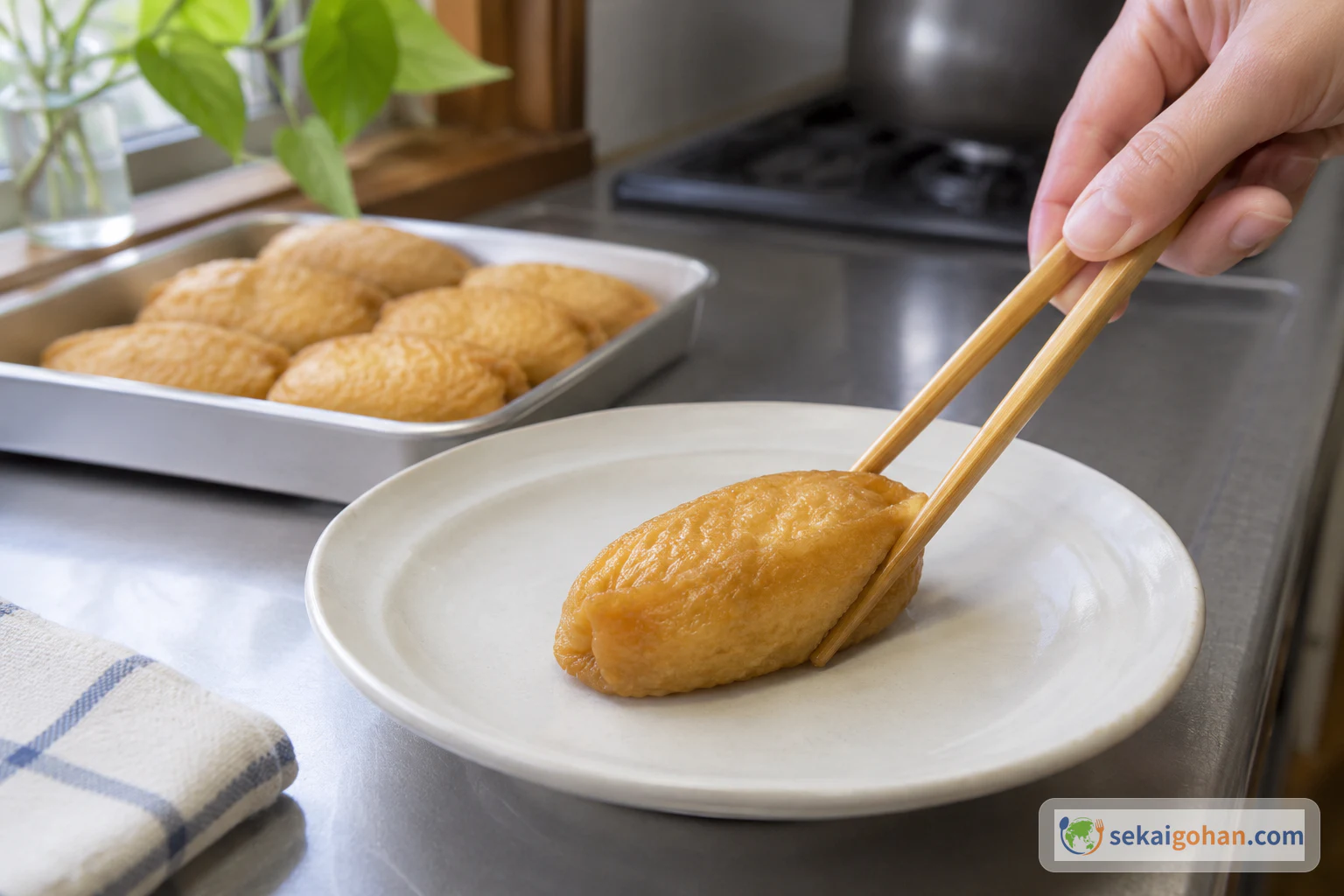
Inarizushi: Sweet-Savory Tofu Pouches Filled with Sesame Sushi Rice (いなり寿司)

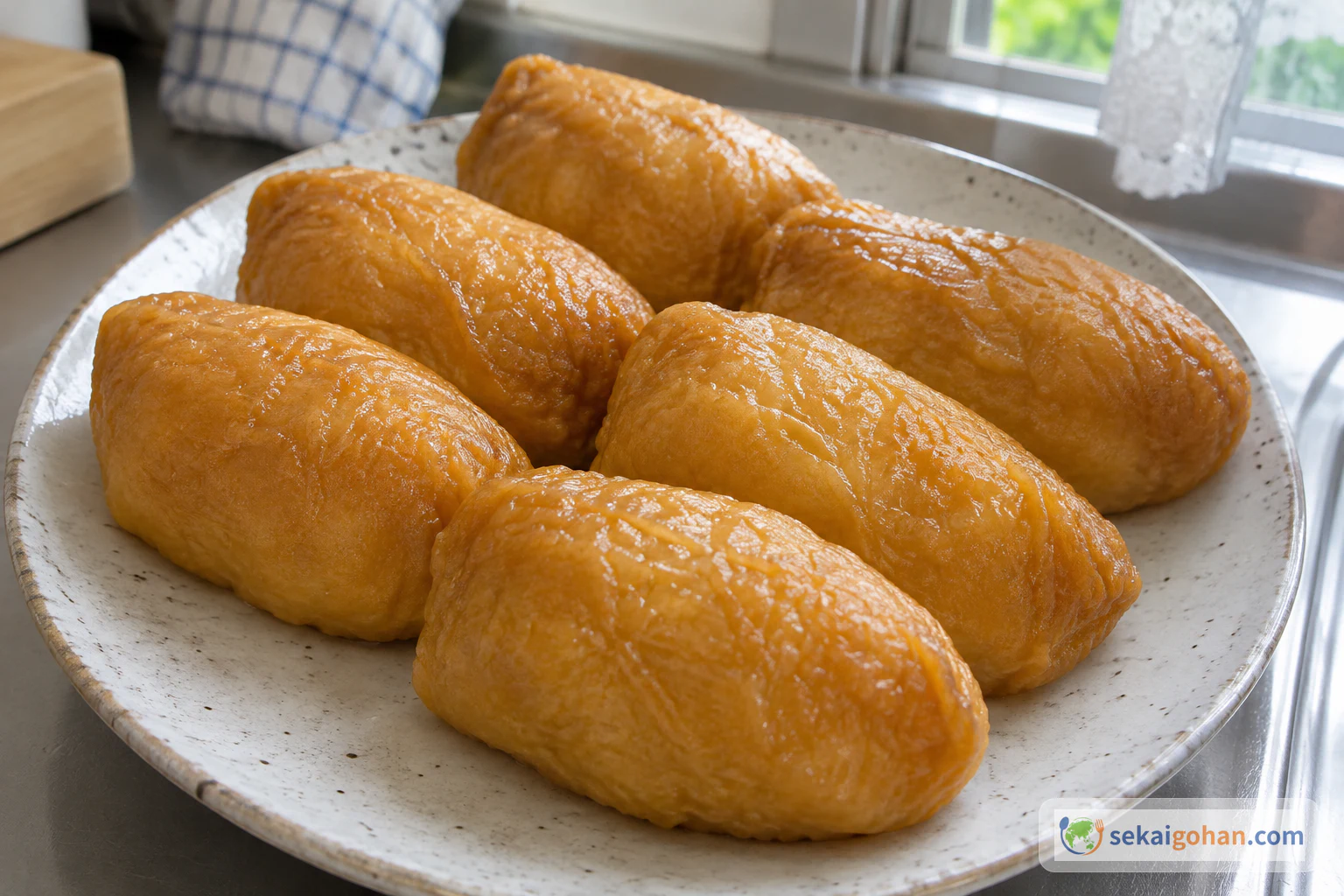
Oblong inarizushi filled with sesame sushi rice
Serves
10 pieces
Cuisine
Japanese

How to make inarizushi, Japanese abura-age tofu pouches simmered in sweet-savory dashi and filled with sesame sushi rice, folded into an oblong shape. Ten pieces, with the rice, the sushi vinegar, oil removal, opening the pouches and the seasoning order step by step, plus regional shapes such as the red, sweet Tsugaru style.

Cooking flow

Cooking steps

STEP11 / 8

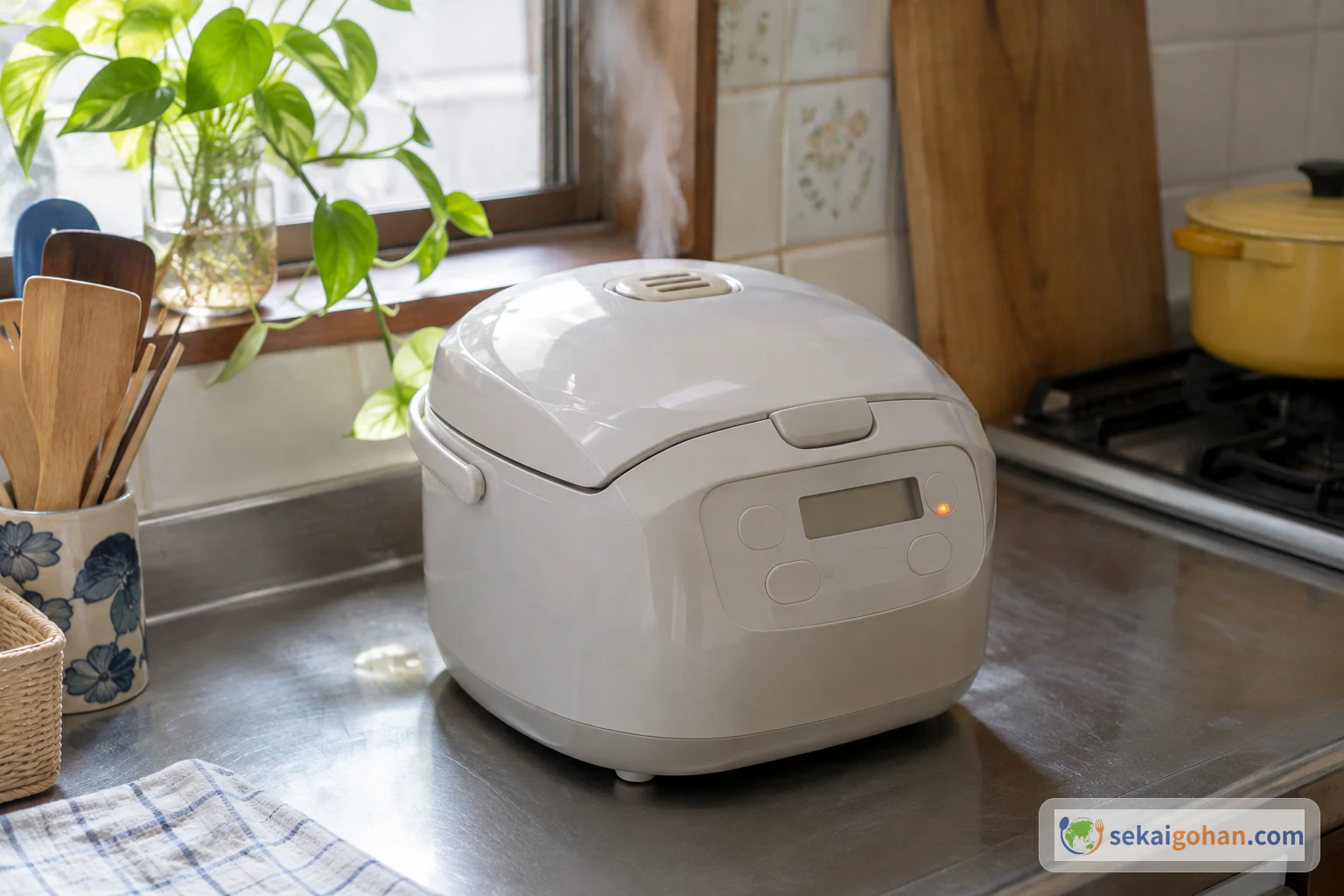
Cook the rice with kombu

Cooking the rice
Cook the rice with the kombu

Rinse 2 gō of rice in a clean bowl, as you normally would before cooking. Drain it and put it into the inner pot of the rice cooker. Pour in 2 gō of water and lay the 2 inches (5 cm) square of kombu on top. Close the lid and cook until the cooker finishes.

STEP22 / 8

Warm the sushi vinegar and rest the rice

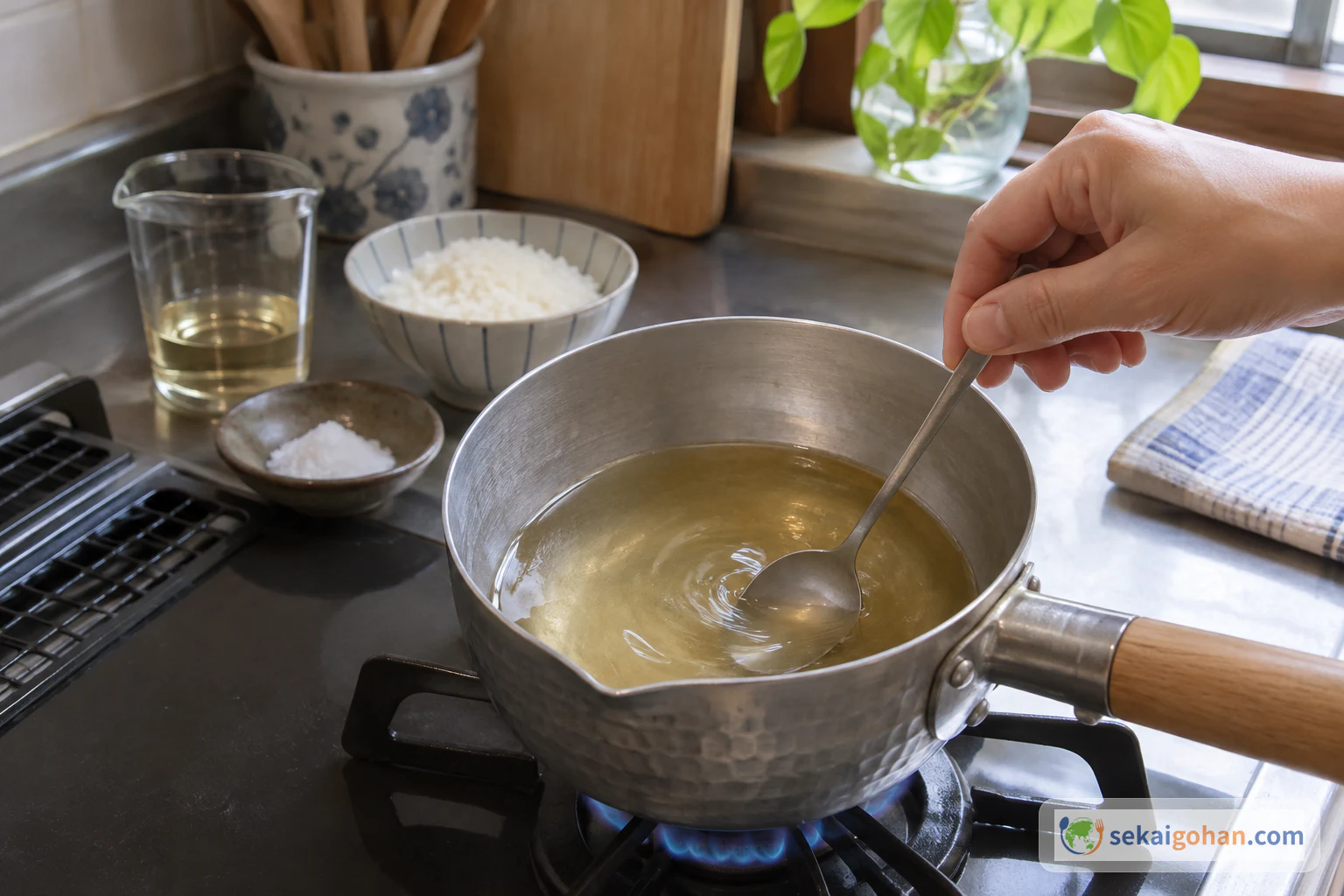
Warming the sushi vinegar
Warm the vinegar, sugar and salt until the sugar dissolves

While the rice cooks, put the vinegar, the 3 tbsp of sugar for the rice and the salt in a small saucepan. Warm gently, stirring, just until the sugar dissolves, and keep the sesame aside for later. When the rice is cooked, leave it to steam with the lid closed for about 10 minutes.

STEP33 / 8

Season the rice into sesame sushi rice

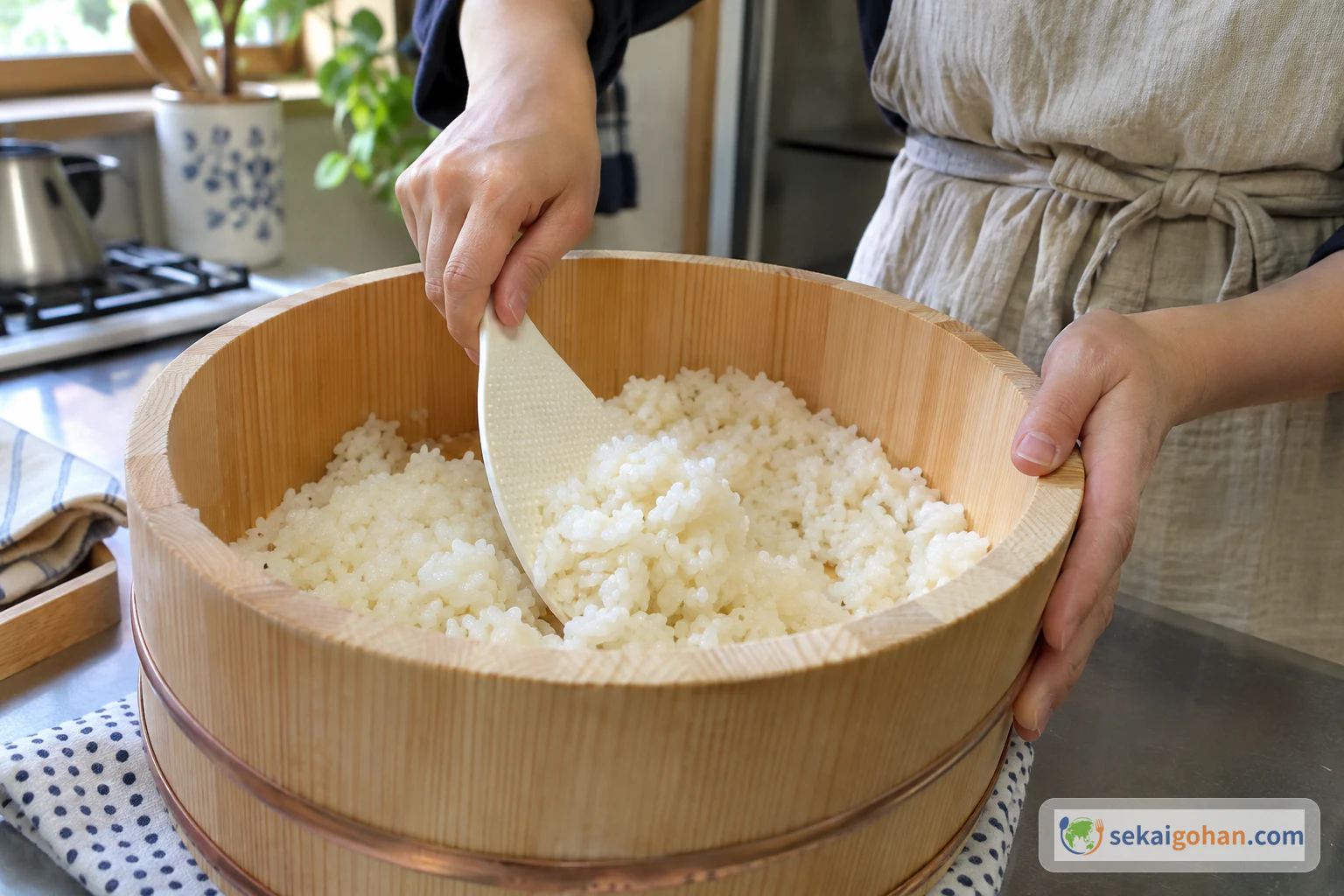
Making sushi rice
Fold gently so the grains stay separate

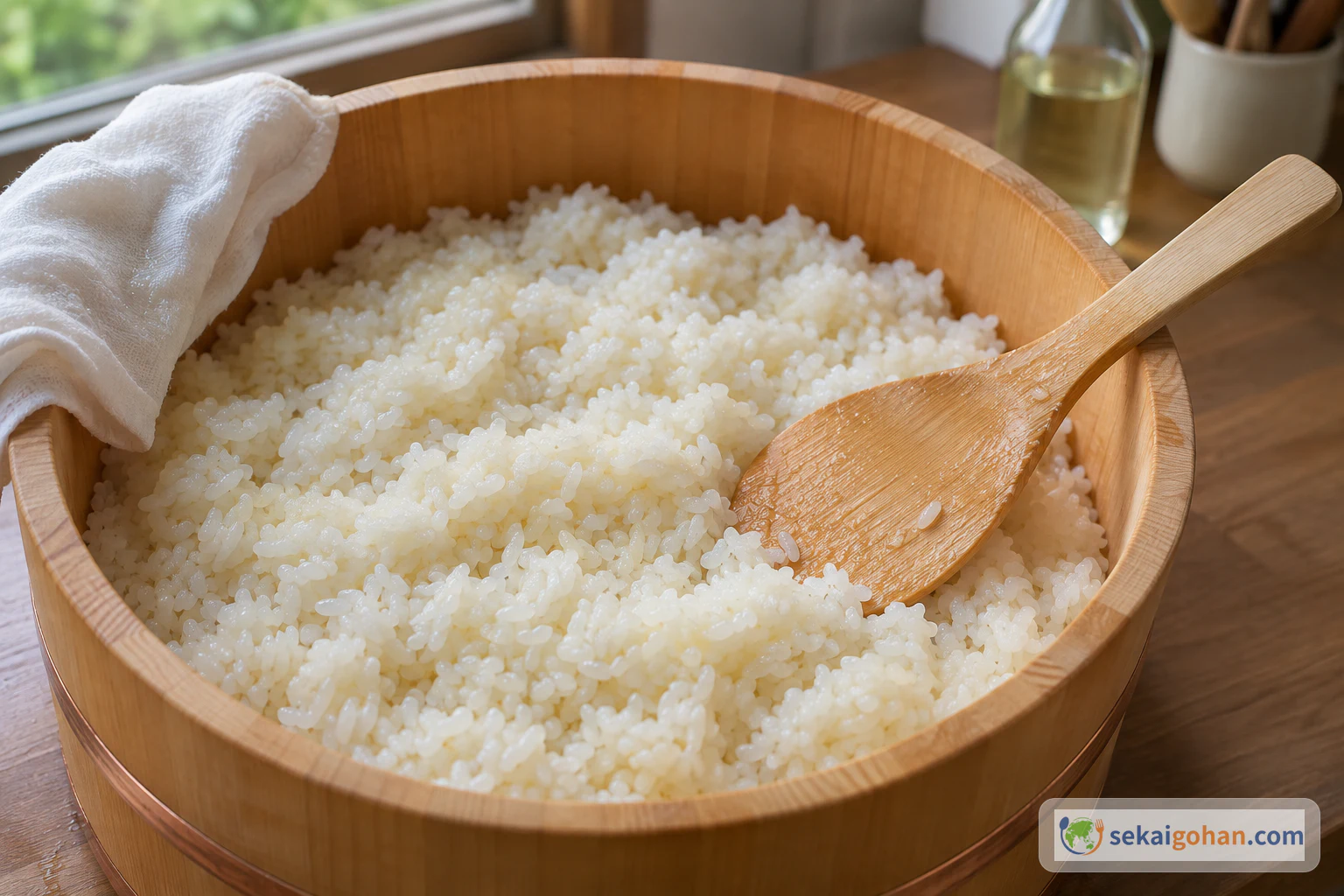
Move the rice to a wide mixing tub or bowl and pour the warm sushi vinegar over it. With a rice paddle, cut and fold the vinegar through the rice without mashing the grains. Add the 2 tbsp of roasted sesame and fold it in evenly. The grains should stay separate, with the sesame spread throughout.

STEP44 / 8

Remove the oil from the abura-age

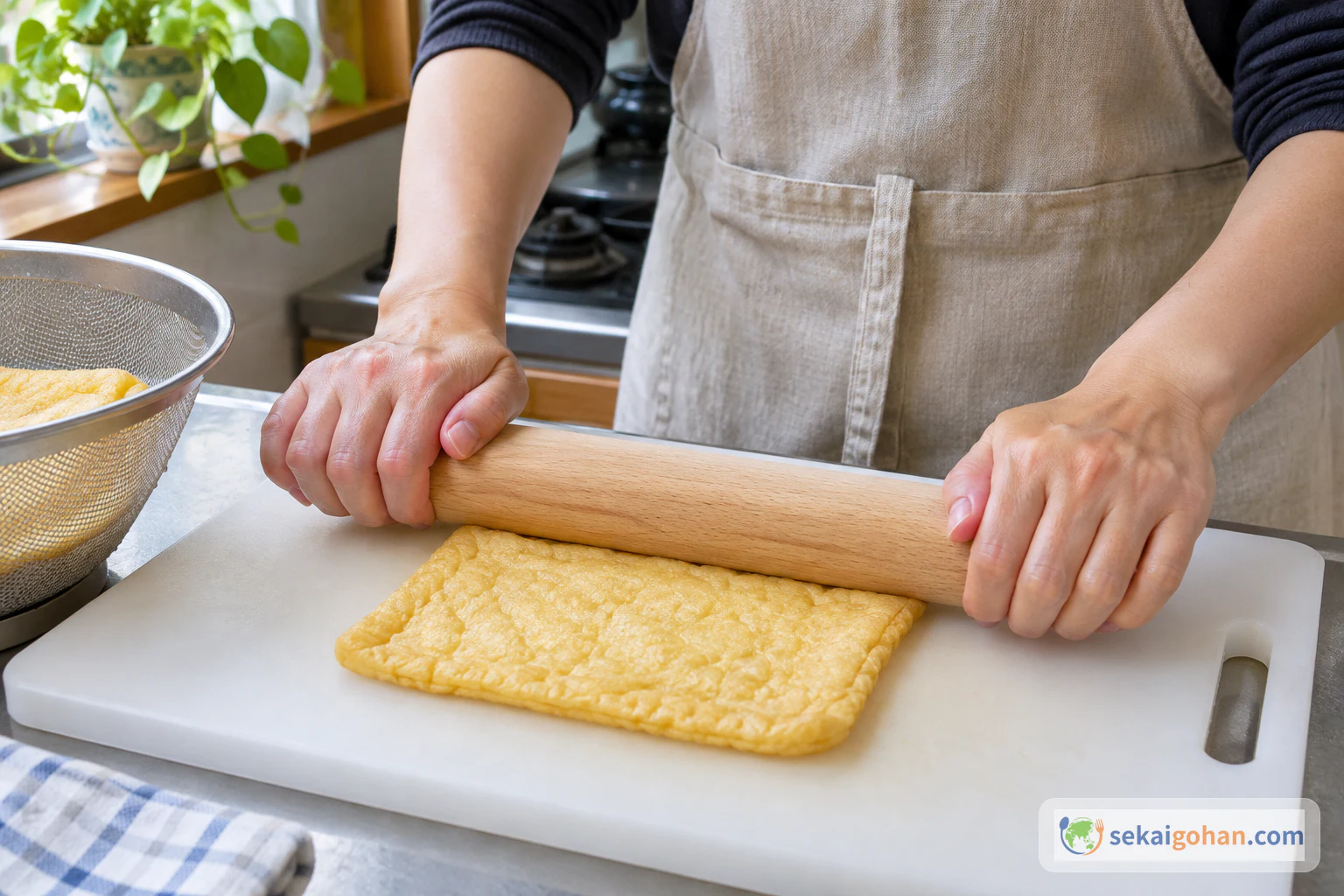
Pressing oil out of abura-age with a rolling pin
Roll gently across the flat sheet

Put the 5 sheets of abura-age into a pot of boiling water and boil for about 5 minutes to remove the oil. Lift them out with tongs into a colander, and don't touch them with bare hands while they are hot. When they are cool enough to handle, lay one sheet at a time on a clean board and gently roll a rolling pin over it to press out the oil. Roll lightly so the sheet doesn't tear.

STEP55 / 8

Cut and open the pouches

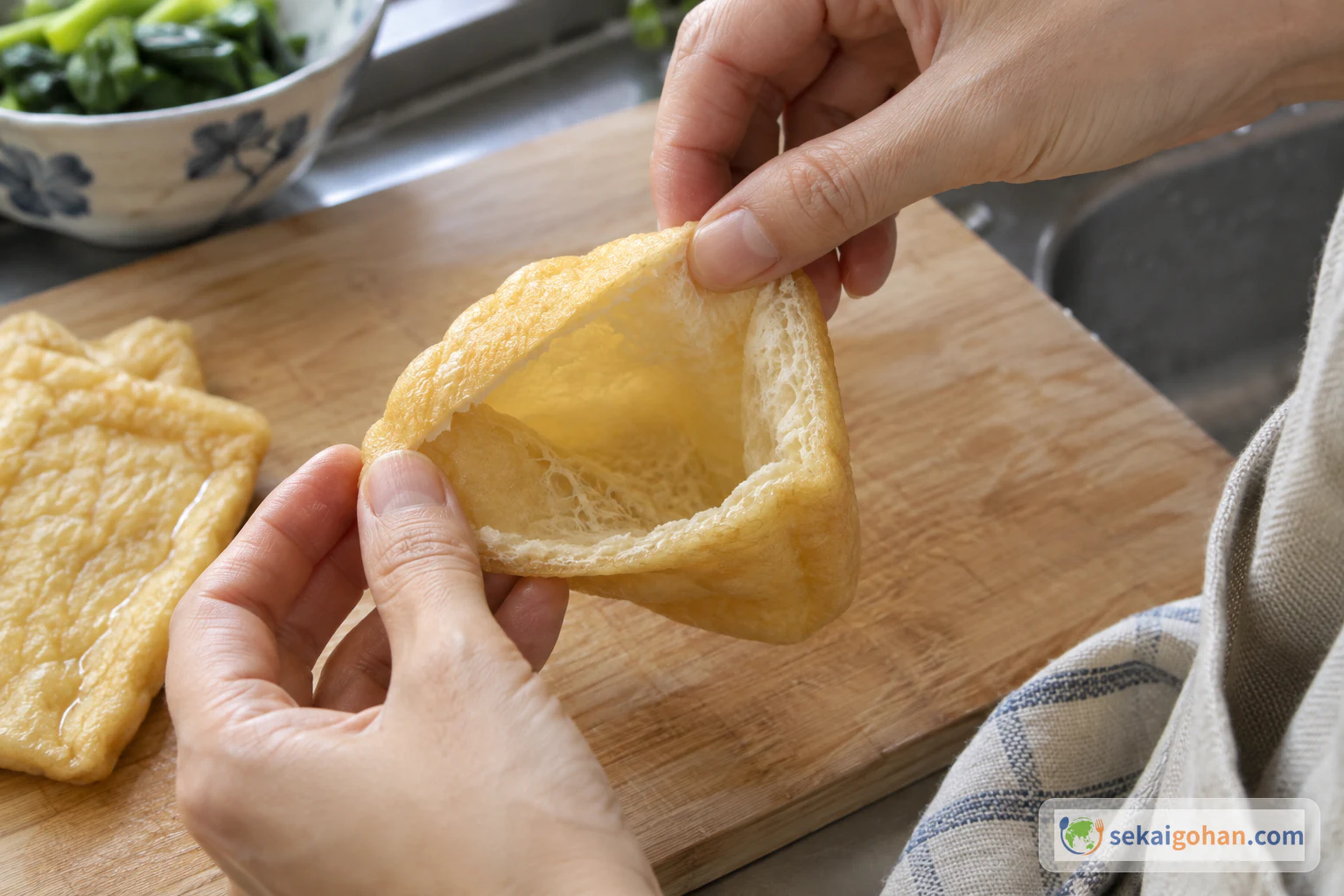
Opening abura-age into a pouch
Open each half carefully from the cut edge

Cut each sheet in half to make 10 pieces. Working from the cut edge, ease the two layers apart with your fingertips to open each half into a pouch. Go slowly so the pouches don't tear. Each half should now be an open pouch.

STEP66 / 8

Sweeten the pouches in dashi

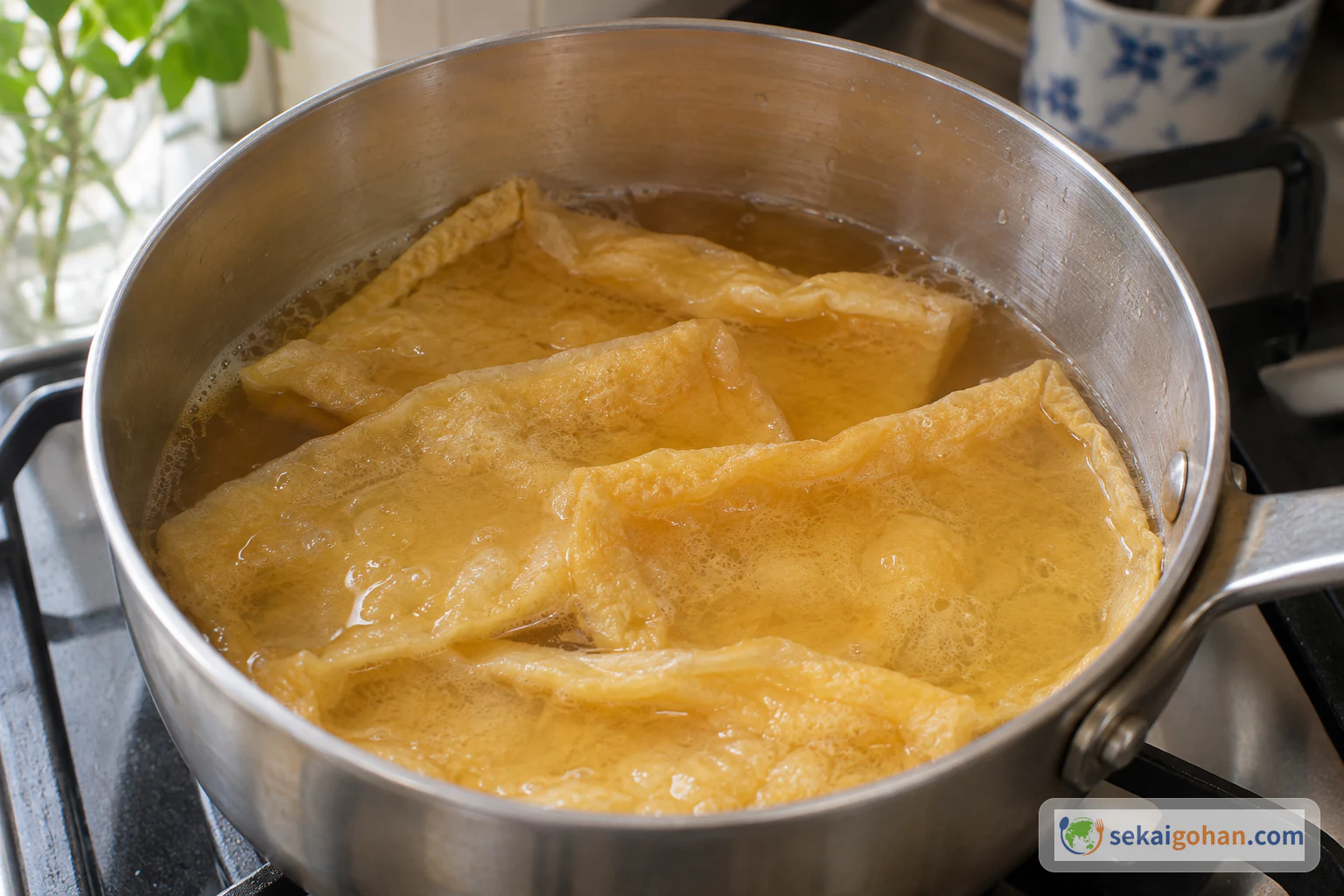
Letting the sweetness soak into the pouches
The pouches heat gently in the sweetened dashi

Pour the 1 1/2 cups of prepared dashi into a saucepan and lay the open pouches in it. They are the only solid food in this pot. Add the 3 tbsp of sugar for simmering and the 2 tbsp of mirin. Heat gently so the pouches take in the sweetness before any soy sauce goes in.

STEP77 / 8

Simmer with soy sauce and cool

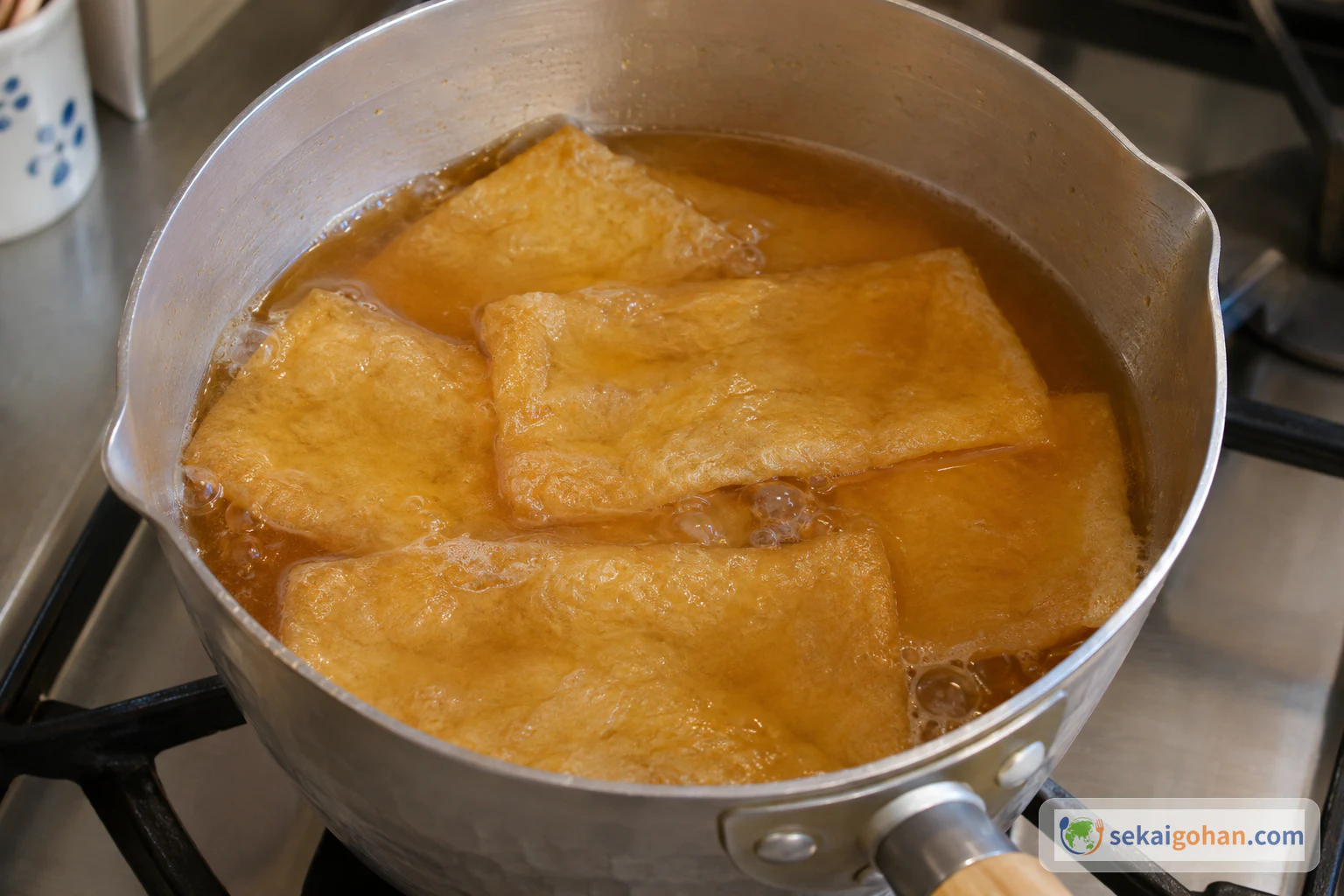
Simmering the pouches in seasoned dashi
Simmer gently and keep an eye on the liquid so nothing scorches

Add the 1/2 tbsp of usukuchi soy sauce and the 1 tbsp of koikuchi soy sauce. Simmer gently so the pouches absorb the seasoned liquid, and keep the heat low enough that nothing scorches. Turn off the heat when the pouches are golden brown and have taken on the flavor. Take the pan off the heat and let the pouches cool until you can handle them with your hands without burning yourself.

STEP88 / 8

Fill the pouches and plate

Folding the opening and plating inarizushi
Rest each piece on its folded opening

Divide the sesame sushi rice into 10 equal portions and shape each loosely into an oblong. With clean hands, hold a pouch open and gently push one portion of rice inside, then fill all 10 the same way. Fold the open edge of each pouch over the rice and set it on the plate with the fold underneath, so the smooth top faces up.

0 / 0
Ingredients

Ingredients

1 / 1

Ingredients

Ingredient Amount Role
Rice (米) 2 gō Cooked for the sushi rice
Water (水) 2 gō For cooking the rice
Kombu (昆布) 1 piece, 5 cm square Cooked with the rice
Vinegar (Chidorisu, 千鳥酢) 3 tbsp Sushi vinegar
Sugar (砂糖), for the sushi vinegar 3 tbsp Sushi vinegar
Salt (塩) 1/2 tbsp Sushi vinegar
Roasted sesame seeds (炒りごま) 2 tbsp Folded into the seasoned rice
Abura-age for sushi (寿司用油揚げ) 5 sheets Halved to make 10 pouches
Dashi (だし汁), prepared 1 1/2 cups Simmering liquid for the pouches
Sugar (砂糖), for simmering 3 tbsp Sweetens the pouches
Mirin (みりん) 2 tbsp Sweetens the pouches
Japanese usukuchi soy sauce (薄口醤油) 1/2 tbsp Seasons the pouches
Japanese koikuchi soy sauce (濃口醤油) 1 tbsp Seasons the pouches

There are two separate 3 tbsp portions of sugar, one for the rice and one for the pouches; measure them into different dishes. Usukuchi and koikuchi are two different soy sauces, added one after the other. The dashi goes into the pot already made and strained, as liquid only.

0 / 0

A good inarizushi pouch is glossy and golden brown, soaked through with a sweet, savory simmering liquid and packed with warm, sesame-flecked sushi rice. The pouch is abura-age, thin Japanese fried tofu, simmered gently in dashi, sugar, mirin and two kinds of soy sauce. The sweetness of the tofu against the vinegared rice is what makes these little parcels so easy to keep reaching for.

What Inarizushi Is

Inarizushi is abura-age simmered sweet and savory and filled with vinegared rice or glutinous rice. It starts as two separate preparations that only meet at the very end. One is a pot of abura-age, boiled in hot water to remove the oil and then simmered in dashi until it turns golden. The other is rice cooked with a square of kombu, seasoned with sushi vinegar and flecked with roasted sesame. Once the pouches are cool enough to handle, the rice goes inside and each piece is folded closed.

Within that shared outline, the shape, the rice, the sweetness and the mix-ins all change from place to place. Depending on the region, the pouches range from oblong to triangular, and the rice may hold sesame or sweet-vinegared lotus root. This version makes oblongs.

The most distinct regional form comes from Tsugaru in Aomori Prefecture. Tsugaru inarizushi is made mainly with glutinous rice, mixed with red ginger that turns it pink, and it is very sweet.

For more dishes from the same country, see Japanese recipes on Sekai Gohan.

Ingredients for 10 Pieces
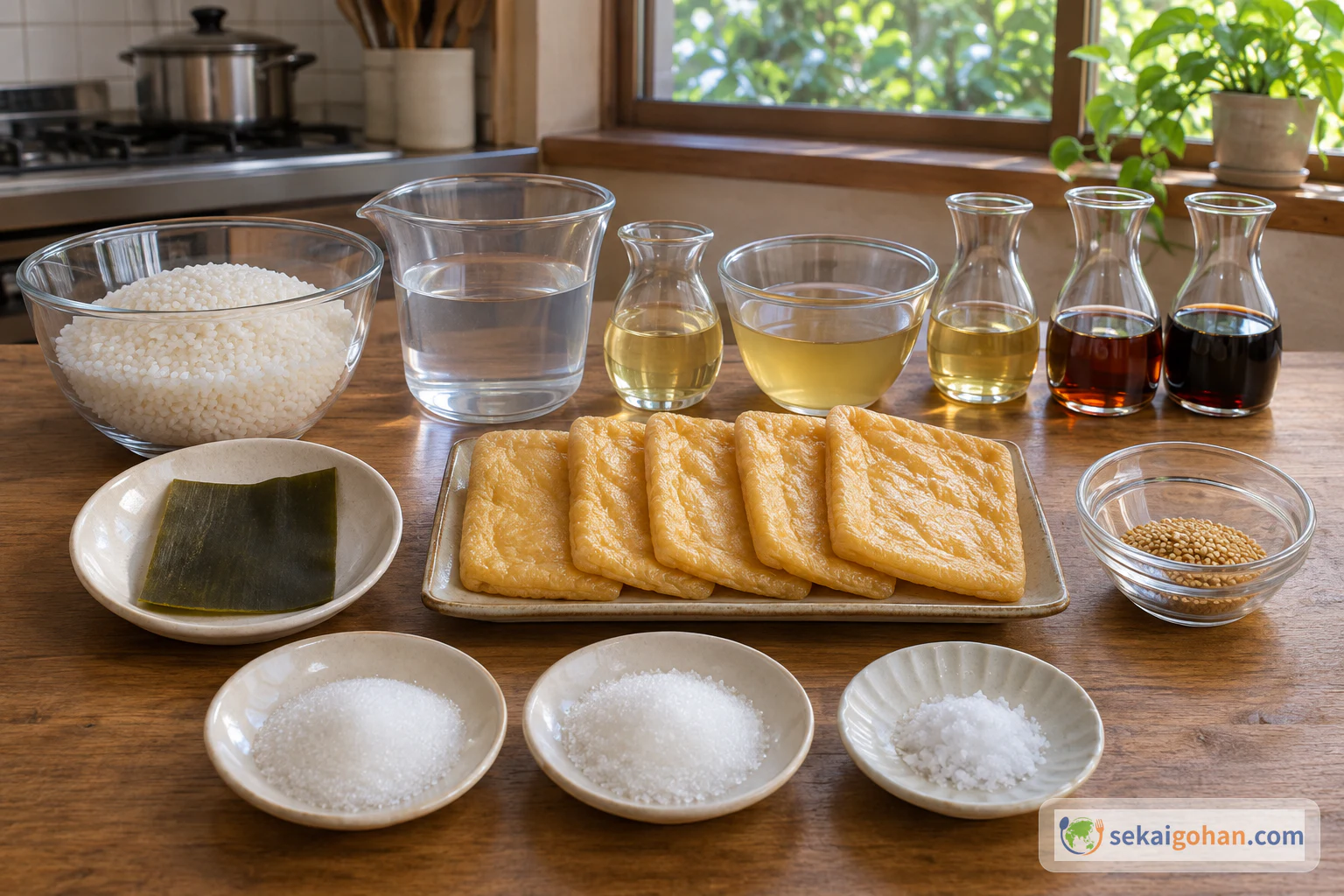
Ingredients for 10 inarizushi pieces
Rice, kombu, sesame, five sheets of abura-age, the liquids, and three separate small dishes for two sugars and salt

Equipment

  • Rice cooker
  • Small saucepan, for warming the sushi vinegar
  • Pot of boiling water, for removing oil from the abura-age
  • Tongs
  • Colander
  • Rolling pin
  • Knife and cutting board
  • Saucepan, for simmering the pouches
  • Wide mixing tub or bowl, for the sushi rice
  • Rice paddle (shamoji)
  • Spoon and measuring spoons

Choosing Ingredients for Inarizushi

Abura-age and Vinegar

Abura-age. Look for thin abura-age sold for sushi, which opens into a pouch more easily. Large ordinary abura-age can be halved and opened the same way, but it is thicker and tears differently, so it behaves like a different ingredient. Ready-seasoned inari pouches are also sold; they skip the oil removal and simmering, and their flavor comes from the product's own seasoning.

Vinegar. This recipe uses Chidorisu. Another rice vinegar or grain vinegar will still make sushi rice, but the aroma and sourness change. A premixed sushi-vinegar product has its own seasoning balance.

Dashi, Soy Sauce and Sesame

Dashi. A common bonito-and-kombu dashi works. For a plant-based version, kombu dashi can stand in, though the savory depth will be different.

Soy sauces. Replacing all the usukuchi with koikuchi changes the color and saltiness. If you have no usukuchi, add koikuchi a little at a time and taste rather than swapping it in at the same amount.

Sesame and sake. Any color of roasted sesame works, so use the one you like. Sake is optional.

Serving and leftovers

Eat inarizushi freshly made. Don't leave the sushi rice or the simmered pouches sitting out at room temperature for a long time.

Inarizushi Problems and Fixes

Most of the work comes down to four things: opening thin abura-age into pouches without tearing them, removing the oil so the pouches can take in the simmering liquid, letting the rice rest before the vinegar goes in, and keeping the order in which the seasonings join the pot. When something goes wrong, it is usually one of these.

Problem Likely cause What to do
The pouch tears as you open it Pulled too fast, or thick abura-age Open slowly from the cut edge with fingertips. Thin abura-age for sushi is easier to open
The abura-age is too hot to work with Handled straight from the pot Let it rest until it is safe to touch before rolling or filling
The liquid is running low and the pan is starting to catch Heat too high during simmering Lower the heat and keep watching; don't let the pouches scorch
The sushi rice is pasty Stirred or pressed too hard Cut and fold with the paddle rather than mashing
Sugar is still gritty in the sushi vinegar Not warmed long enough Keep warming gently and stirring until it dissolves
The sesame isn't evenly spread Added in one clump Scatter it over the rice and fold through in several passes

Frequently Asked Questions

Why two kinds of soy sauce?

Usukuchi and koikuchi are different seasonings, and each does its own job for the color and saltiness of the pouches. They go into the pot one after the other, after the sugar and mirin.

How long should I simmer the pouches?

Watch the pot rather than the clock. Keep the heat gentle so nothing scorches, and turn it off when the pouches are golden brown and have taken on the flavor.

Why are the openings folded underneath?

Folding the open edge over the rice and resting each piece on that fold gives the oblong its shape. Other shapes and ways of closing exist across Japan.

Can I make these ahead?

Inarizushi is best eaten freshly made. Don't leave the sushi rice or the simmered pouches at room temperature for a long time.
Sources

  • Murayama Zousu Co., Ltd. (Chidorisu), "いなり寿司(10個)" (Inarizushi, 10 pieces). The complete ingredient list and method used here: rice, water and kombu; Chidorisu vinegar, sugar, salt and roasted sesame for the sushi rice; sushi abura-age with dashi, sugar, mirin, usukuchi and koikuchi soy sauce; the rice rest and the oil-removal guide; filling 10 pieces. https://www.chidorisu.co.jp/suteki/osushi/suteki-163.html
  • Ministry of Agriculture, Forestry and Fisheries of Japan, "Inarizushi | Our Regional Cuisines (Aomori/Tsugaru)." The general description of inarizushi as simmered abura-age filled with vinegared or glutinous rice, the Tsugaru form with red ginger, glutinous rice and a very sweet taste, and variation by region and household. https://www.maff.go.jp/e/policies/market/k_ryouri/search_menu/5977/index.html
  • Kikkoman Corporation, "Inari-zushi." Inarizushi as thin abura-age pouches filled with sushi rice, regional shapes from oblong to triangular, additions such as sesame or sweet-vinegared lotus root, and the use of ready-seasoned commercial pouches. https://www.kikkoman.com/en/culture/foodforum/recipe/traditional-34-1.html