Miso Soup with Kabocha and Japanese Eggplant in Kombu Dashi

Miso soup in kombu dashi with pieces of kabocha squash and Japanese eggplant
Serves
2 servings
Cuisine
Japanese

A two-serving miso soup of kabocha and Japanese eggplant in kombu dashi, based on one published Japanese home recipe. Learn how to soak and heat the kombu, cut the vegetables so they cook evenly, and add the miso at the end so its aroma stays.

Cooking flow

Cooking steps

STEP11 / 6

Soak the kombu

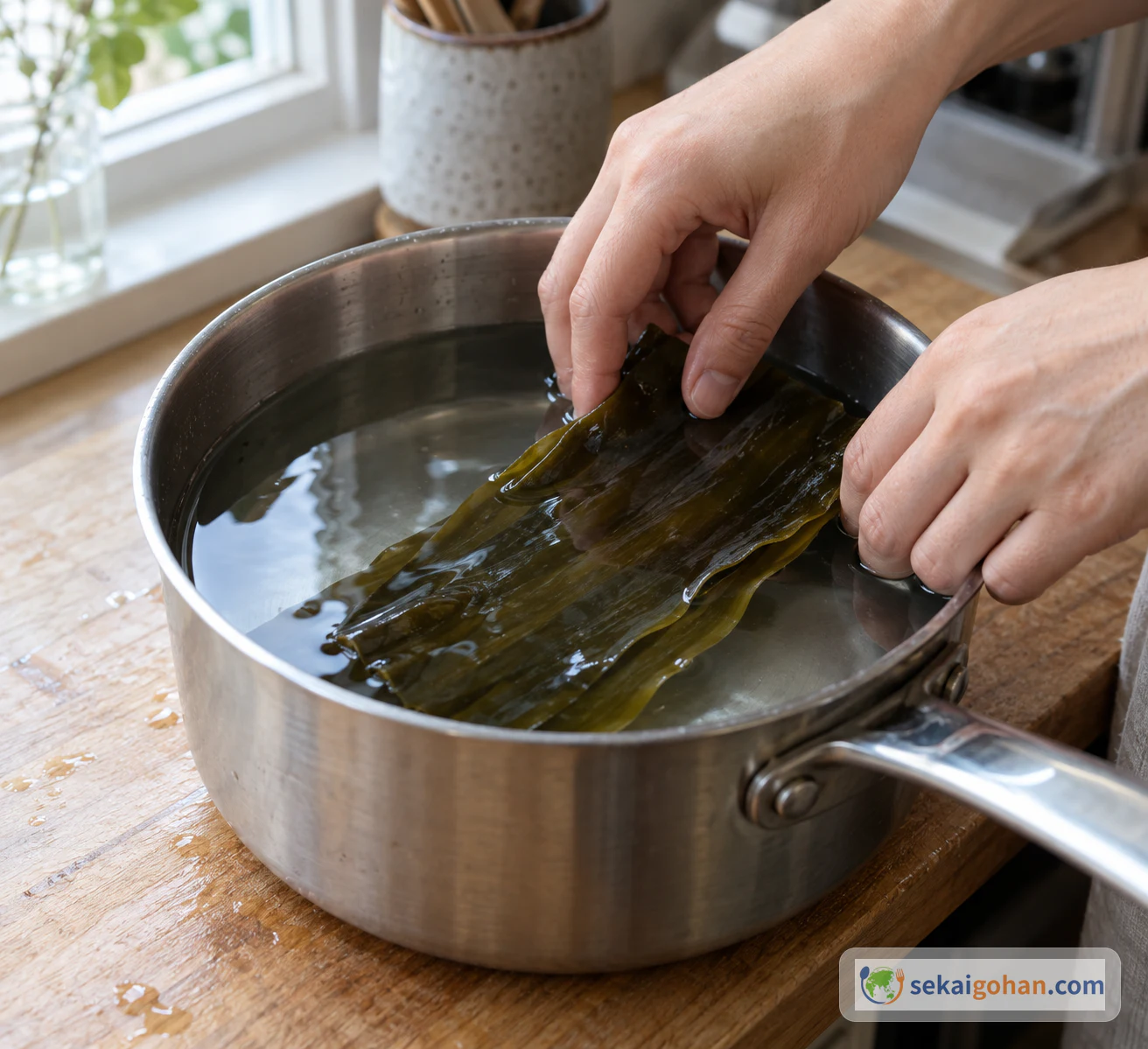
Kombu soaking in a saucepan of water to start the dashi
Leave the kombu under the water for 3 hours before heating

Put 10 g kombu and 2 cups (500 ml) water in a saucepan and leave it to soak for 3 hours. No heat is used yet.

STEP22 / 6

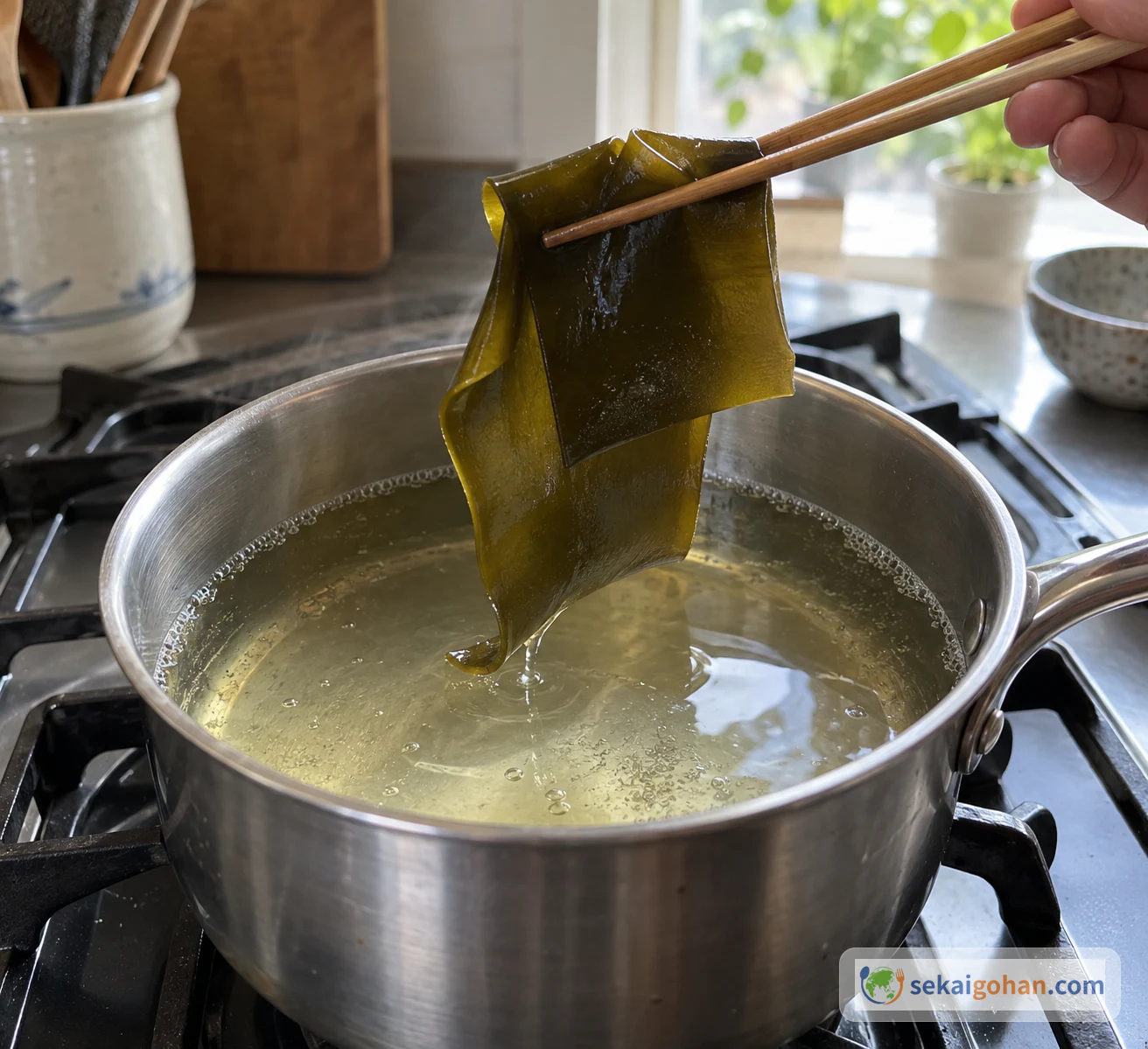
Heat gently and lift out the kombu just before it boils

Lifting the kombu out with chopsticks as small bubbles form at the edge of the pan
Take out the kombu when tiny bubbles appear around the edge, before a full boil

Set the pan over medium-low heat. Watch the inside edge of the pan. When small bubbles start to gather there and the water is just about to boil, turn off the heat and lift out the kombu. Don't let it reach a rolling boil. Go by sight rather than temperature.

STEP33 / 6

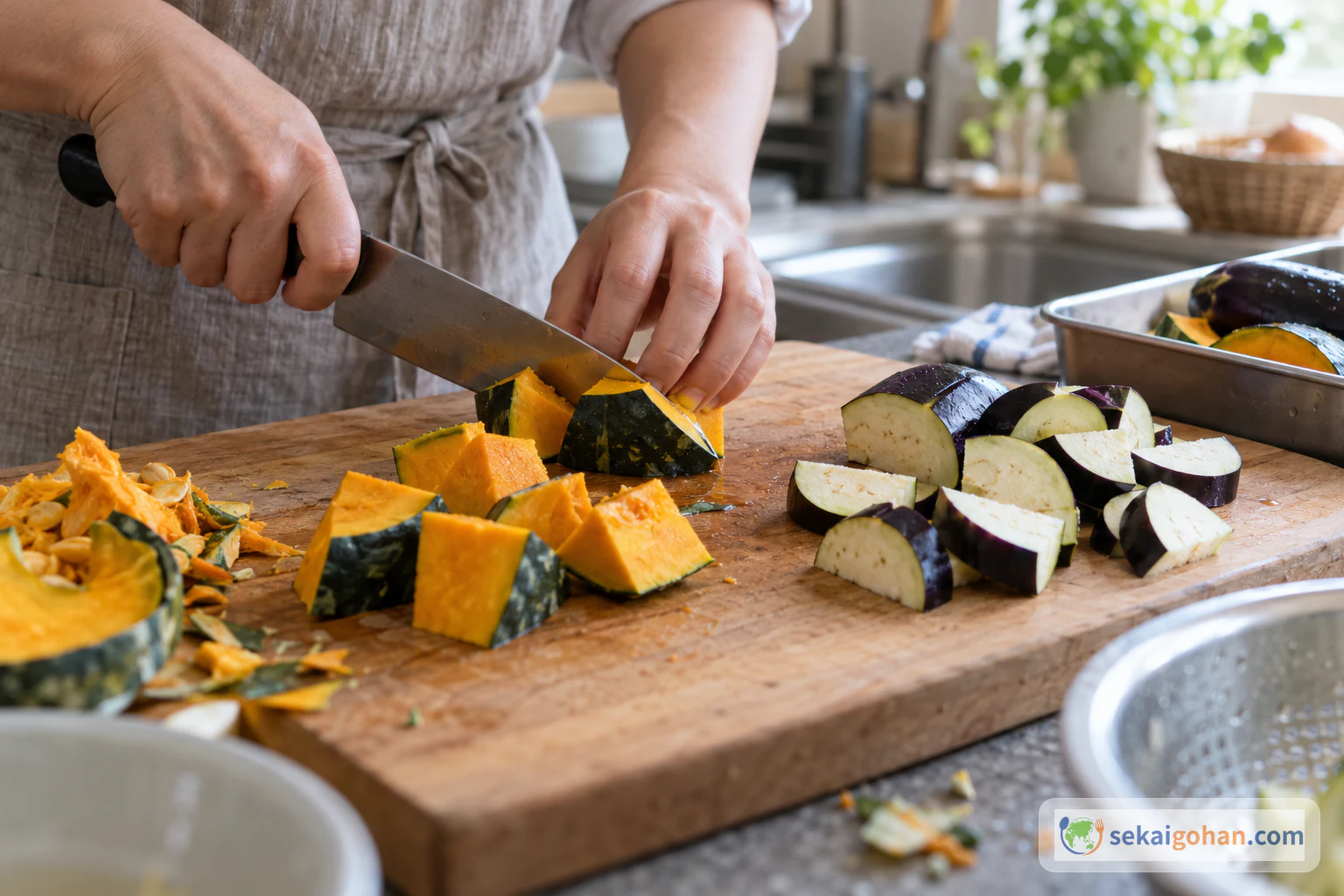
Cut the kabocha and eggplant

Kabocha cut into bite-size pieces and Japanese eggplant sliced into half-moons about 1 cm thick
Bite-size kabocha and roughly 1 cm eggplant half-moons cook at a similar pace

Cut the kabocha into bite-size pieces. Cut the eggplant into half-moons about 0.5 inches (1 cm) thick. Cut size changes how quickly vegetables cook, so keeping the pieces even helps them finish together. Very small kabocha pieces are more likely to fall apart.

STEP44 / 6

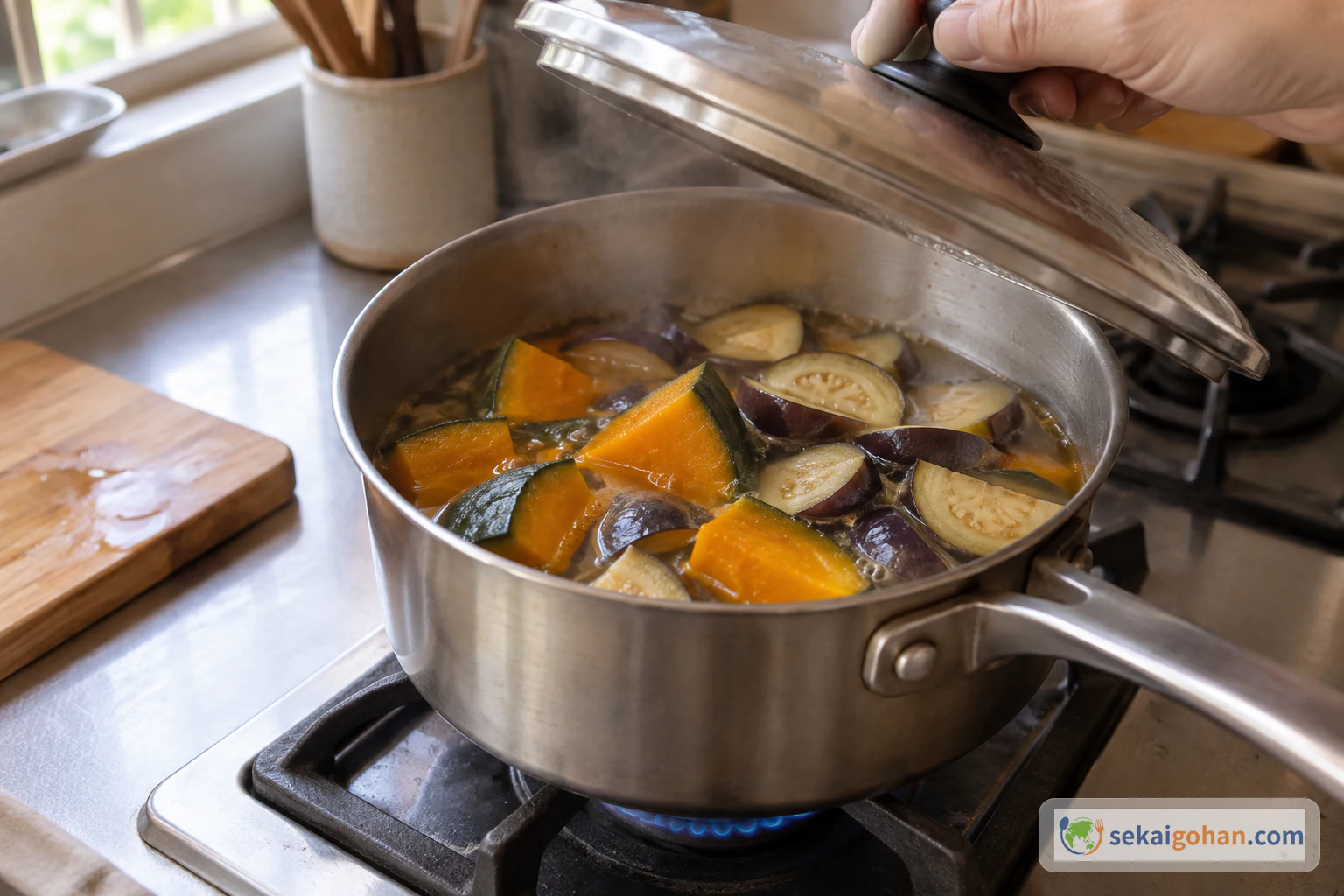
Simmer the vegetables in 1¼ cups (300 ml) of dashi

Kabocha and eggplant cooking in kombu dashi as the lid is lifted to check them
Simmer covered over low heat, lifting the lid only to check the vegetables

Measure 1¼ cups (300 ml) of the kombu dashi into a separate pot and warm it over medium heat. When it begins to bubble gently, add the kabocha and eggplant. Cover the pot and cook over low heat for about 4 minutes.

Lift the lid briefly to check. The kabocha edges should still hold their shape, and a chopstick should slide through. If the vegetables still feel firm, cook them a little longer and check again.

STEP55 / 6

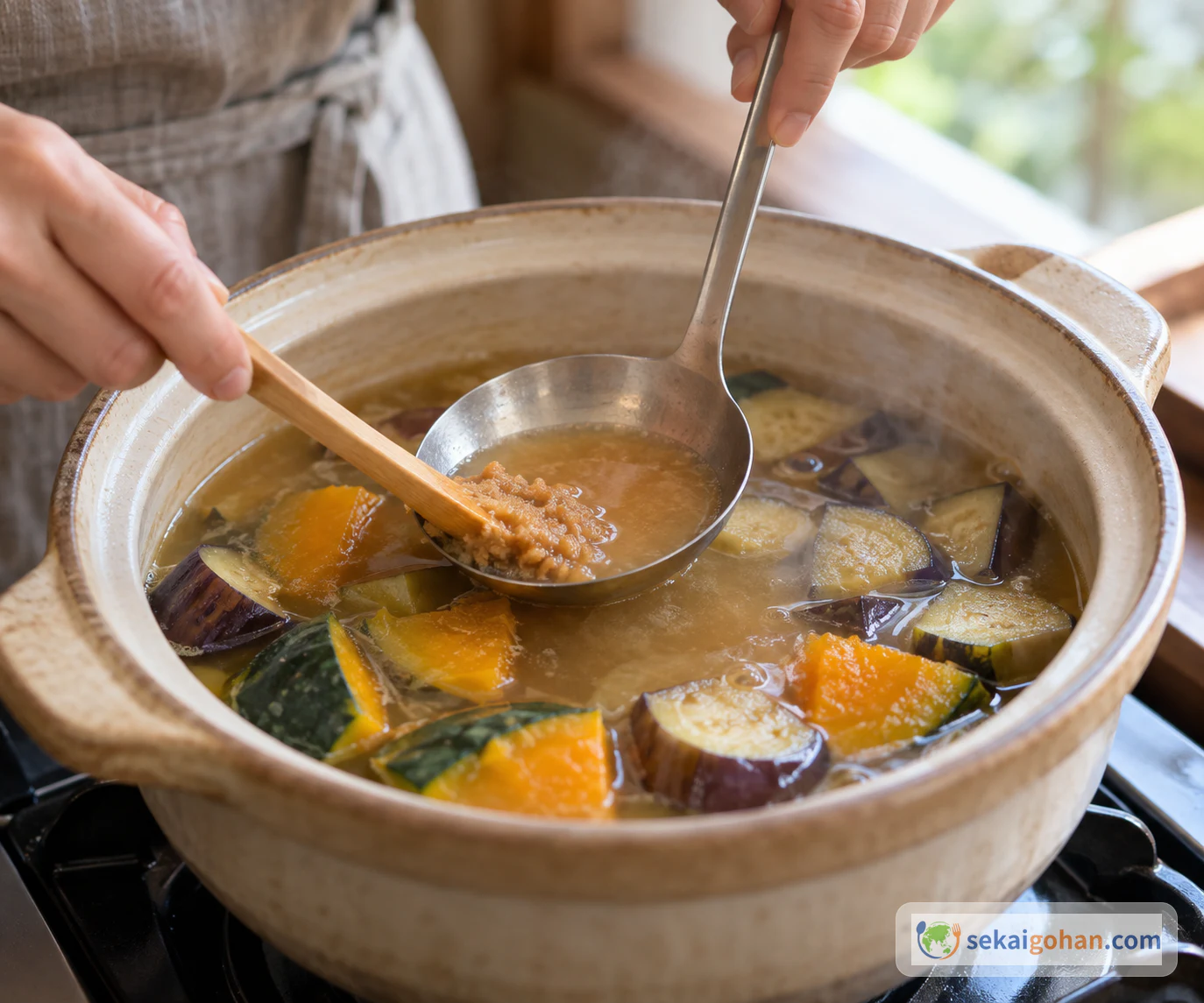
Dissolve the miso and stop just before it reboils

Dissolving miso in a ladle with a little warm broth
Loosen the miso in the ladle with a little broth before stirring it into the pot

Add the miso only once the vegetables are cooked. Put the miso in a ladle, scoop up a little of the hot broth, and stir to loosen the miso bit by bit. Then stir it into the pot. Repeat until all the miso has dissolved.

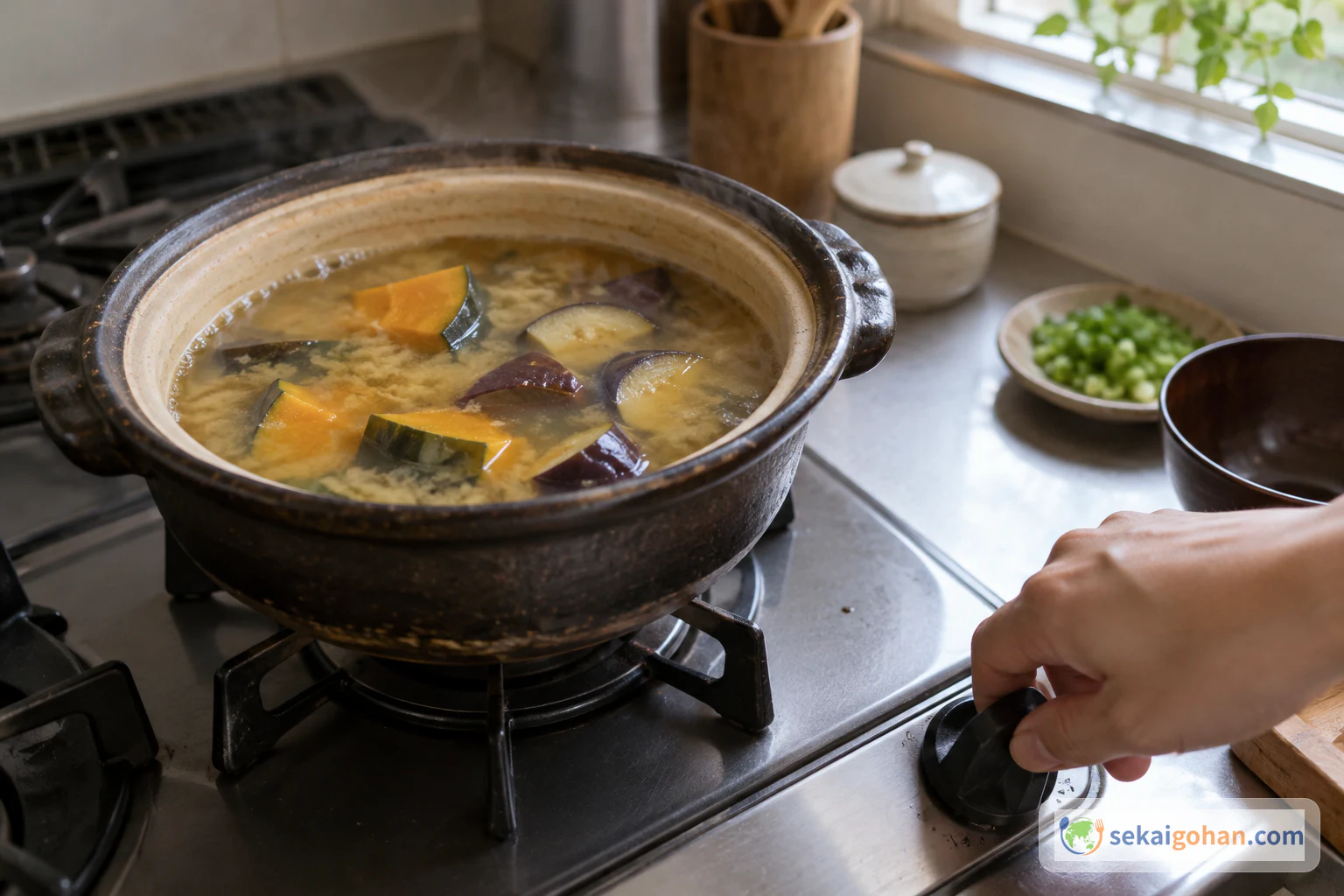
Warm the soup gently. As the miso aroma rises and the soup is just about to return to a boil, turn off the heat. In Japanese this moment is called niebana. Don't keep the soup boiling after the miso goes in; long boiling weakens the miso's aroma.

Turning off the heat just before the miso soup comes back to a boil
Turn off the heat as the aroma rises, just before the soup returns to a boil
STEP66 / 6

Serve

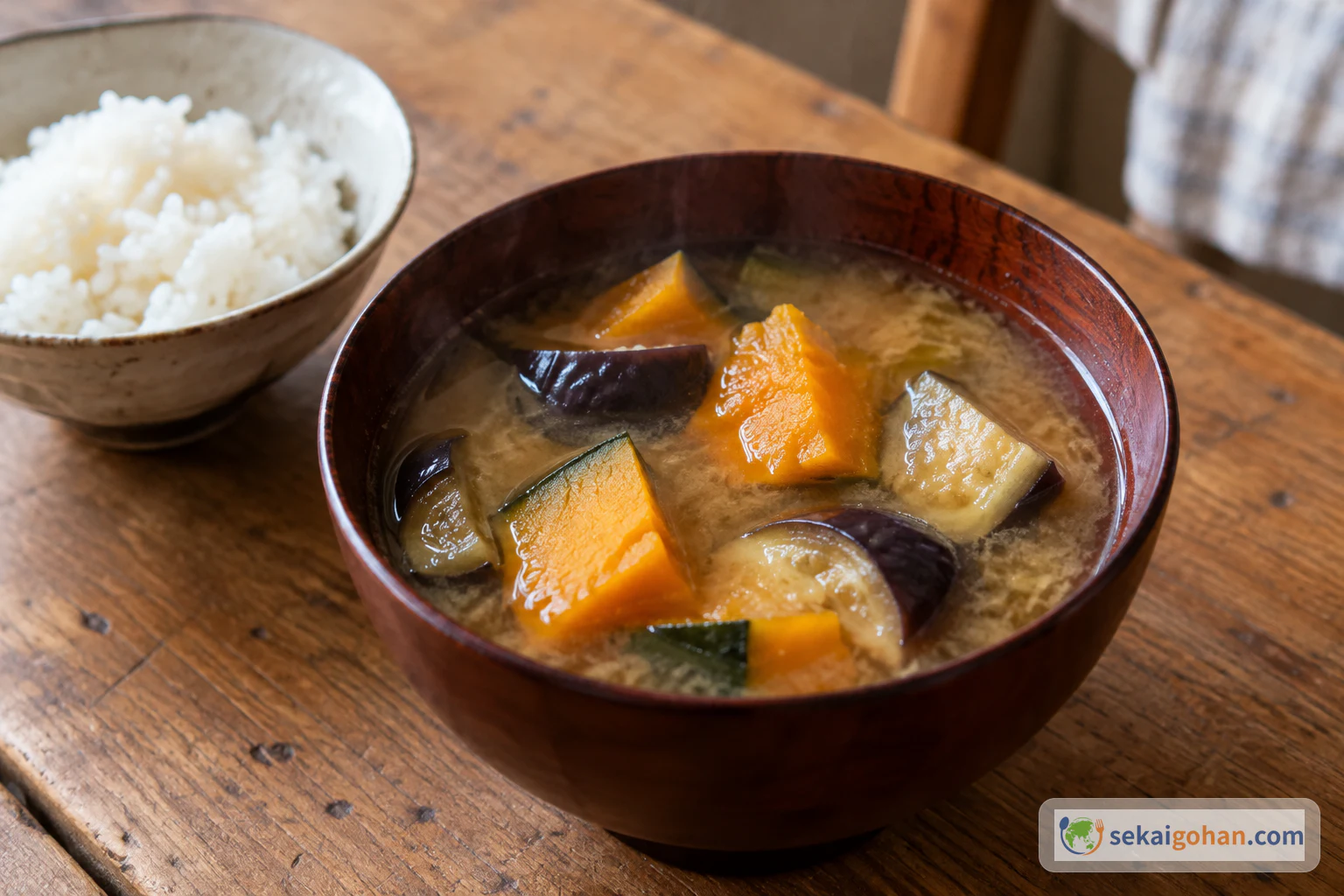
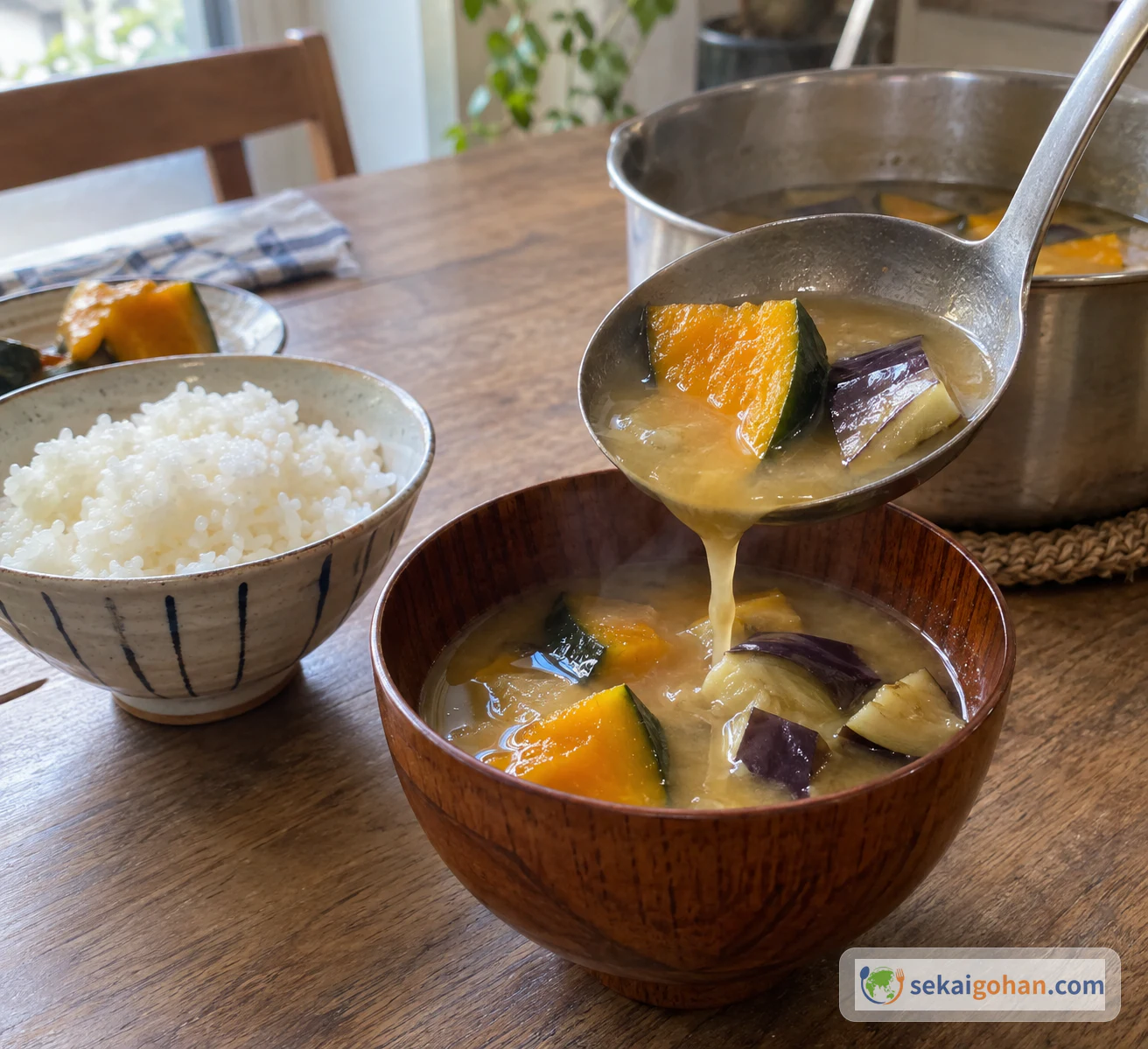
Kabocha and eggplant miso soup served in a bowl on a table with rice
Serve the soup beside rice, with both vegetables visible in the bowl

Ladle the soup into bowls so each one shows both kabocha and eggplant. Serve it next to a bowl of rice. The rice is part of the meal, not an ingredient in the soup.

0 / 0
Ingredients

Ingredients

1 / 1

For 2 servings

Ingredient Amount Role and notes
Kombu 10 g Makes the dashi
Water 2 cups (500 ml) For soaking and heating the kombu. Measure only 1¼ cups (300 ml) of the finished dashi into the soup; don't pour all of it in
Kabocha 2 oz (60 g) Sweetness and body. Another kind of squash will change the texture and sweetness
Japanese eggplant 1 (2.75 oz (80 g)) Turns soft in the dashi
Miso 1 1/2 tbsp Saltiness and fermented aroma. Any type
0 / 0

Kombu gives this miso soup a gentle savoriness, and the miso adds its fermented aroma on top. Kabocha squash brings sweetness, while Japanese eggplant turns soft and silky in the broth. It's a simple bowl for two, built on a dashi made only from kombu.

Miso Soup at the Japanese Table

In Japan, a bowl of rice and a bowl of miso soup often sit side by side at an ordinary breakfast or dinner. It's everyday home food, and there is no single fixed recipe. Each household makes it its own way, with its own dashi, its own miso and whatever vegetables are in season. For more about the country's food, see Japan.

Ingredients and Preparing the Kombu Dashi
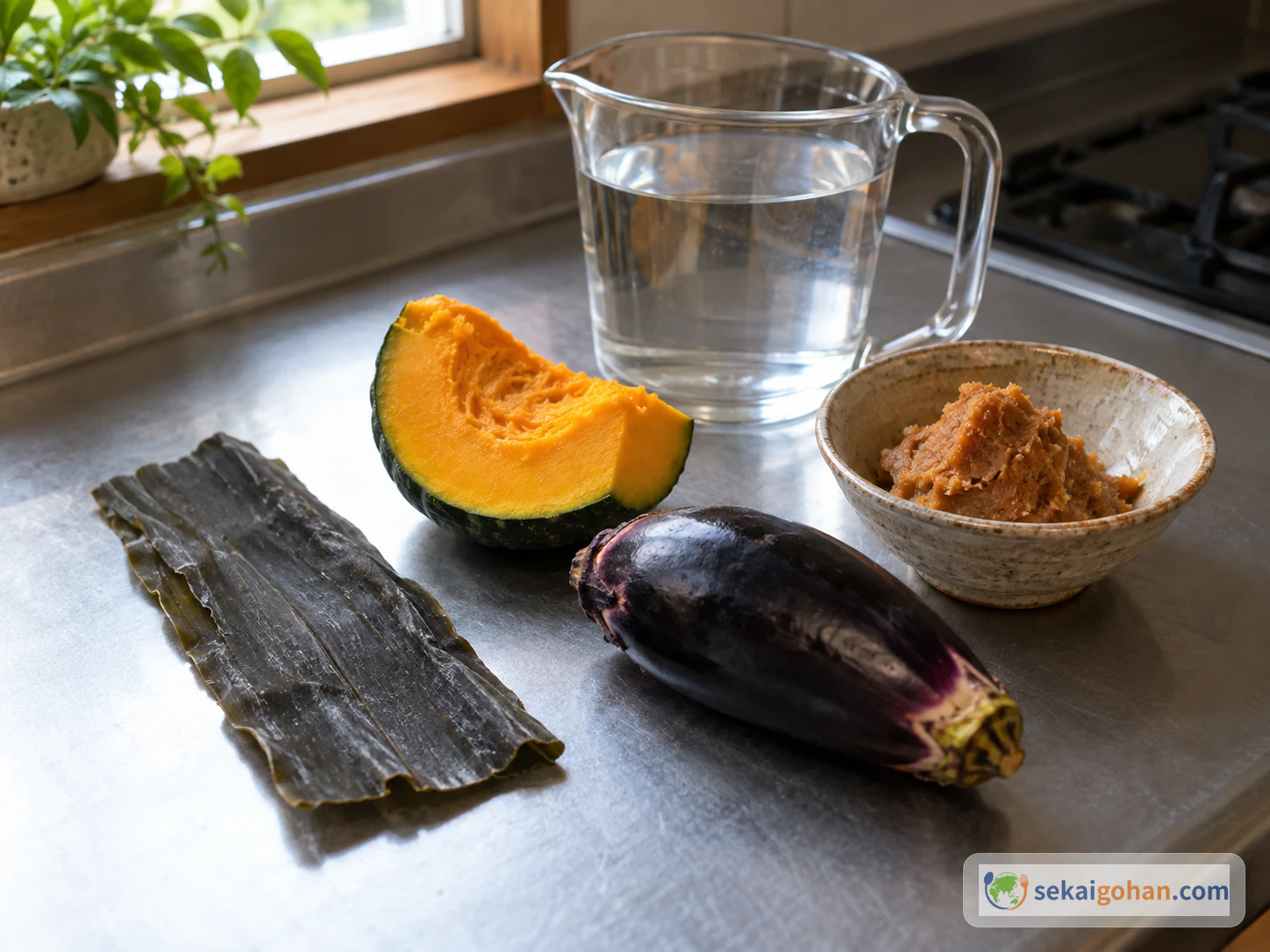
Kombu, kabocha, Japanese eggplant and miso laid out as ingredients for miso soup
Kombu, water, kabocha, Japanese eggplant and miso: nothing else goes into this version

Before you cook, keep two numbers apart. You use 2 cups (500 ml) of water to make the kombu dashi. Only 1¼ cups (300 ml) of that finished dashi goes into the soup. The amounts below are for two servings.

Miso products differ in saltiness and flavor, so the same spoonful can taste different from one brand to the next. Start with 1 1/2 tbsp and taste.

Allergens and labels

Miso is made from soybeans, so if you have a soy allergy, do not assume any miso is safe. Ingredients vary by product, and some miso is made with barley or wheat. Check the ingredient and allergen label on the miso you buy.

Equipment

  • A saucepan for soaking and heating the kombu
  • A second pot for cooking the soup
  • A measuring jug for the 2 cups (500 ml) of water and the 1¼ cups (300 ml) of dashi
  • A knife and cutting board
  • A ladle (and chopsticks for lifting out the kombu). A small miso strainer is handy but optional

Choosing Miso and Dashi

Miso can be made with rice koji, barley koji or soybean koji, and its color and flavor also change with the production method and salt content. The kabocha's sweetness makes it easy to taste how one product compares with another, so this is a good soup for trying a few. Think of the differences as saltiness and aroma rather than one miso being better.

Because the dashi is made only from kombu, the soup has no bonito (katsuobushi) flavor. A bonito-based dashi would give you a soup that tastes noticeably different.

Method: Cook the Vegetables, Then Dissolve the Miso

About timing

Cutting and cooking the vegetables takes about 10 minutes. That doesn't include the 3-hour kombu soak, so start the soak well ahead.

Troubleshooting Kabocha and Eggplant Miso Soup

What happened Likely cause What to do
The miso aroma is faint The soup boiled for a while after the miso went in Add the miso last and turn off the heat just before it reboils
The soup tastes thin All 2 cups (500 ml) of water went into the soup, or the amounts got mixed up Use 2 cups (500 ml) only to make the dashi, then measure 1¼ cups (300 ml) of finished dashi into the soup
The vegetables are still firm Cut sizes or your stove differ from this recipe Keep the lid on, cook a little longer and check again before adding the miso
The kabocha broke apart The pieces were cut very small Cut bite-size pieces and keep them even
Too salty, or not salty enough Miso varies in saltiness by product Adjust with more or less miso; this recipe adds no extra salt

Prep Tips and Variations

Making the soup easier
  • Soak the kombu ahead. Starting the 3-hour soak earlier shortens the time you spend at the stove later.
  • Even eggplant slices. Cutting the eggplant to the same width makes it easier to see when it's done.

If you change the vegetables, remember that cut size changes cooking time. Root vegetables cook faster in thin slices, tofu can be scooped in with a spoon, and leafy greens can simply be torn by hand.

Frequently Asked Questions

Which miso should I use?

Use the type you like. Miso products differ in saltiness and aroma, so start with 1 1/2 tbsp and taste. If you have allergies, read the label, since some miso contains barley or wheat as well as soy.

Can I soak the kombu overnight in the fridge instead?

Cold-brew dashi in the refrigerator is a different method. This recipe uses the 3-hour soak and heating in the pot.

Can I store leftover soup?

No storage time or reheating instructions are given for the finished soup. The storage time for cold-brewed kombu dashi applies only to the dashi itself, so don't use it for the finished soup.

Sources

  • Kikkoman Corporation, "Miso Soup with Kabocha and Japanese Eggplant." Main source for the ingredients, amounts and method. Also covers the everyday role of miso soup, the differences between rice, barley and soybean miso, how to make the kombu dashi, and turning off the heat just before the soup reboils so the miso keeps its aroma. Source check date: 2026-10-23. https://www.kikkoman.com/en/cookbook/washoku/misosoup.html
  • Ministry of Agriculture, Forestry and Fisheries of Japan, "Miso soup." Used only as an example of a different filling, with tofu, wakame and green onion. Not mixed into this recipe. Source check date: 2026-10-23. https://www.maff.go.jp/e/policies/market/japan-cuisine/japan/8/index.html
  • Ajinomoto Co., Inc., "Misoshiru no tsukurikata" (How to make miso soup, in Japanese). Used only for general advice on how cut size changes cooking time and on simple ways to prepare fillings. Its amounts are not used. Source check date: 2026-10-23. https://www.ajinomoto.co.jp/hondashi/misoshiru/how/index.html