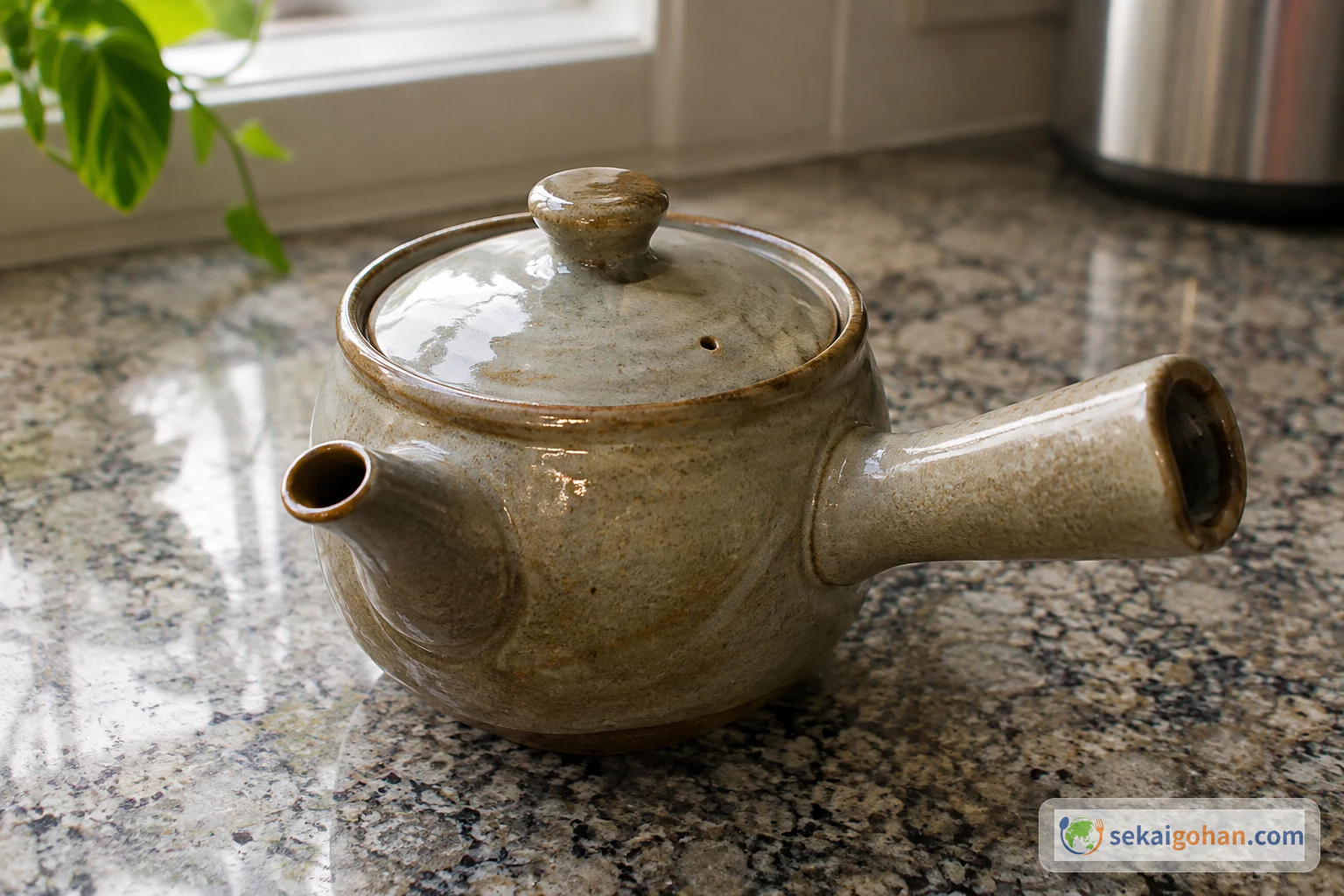
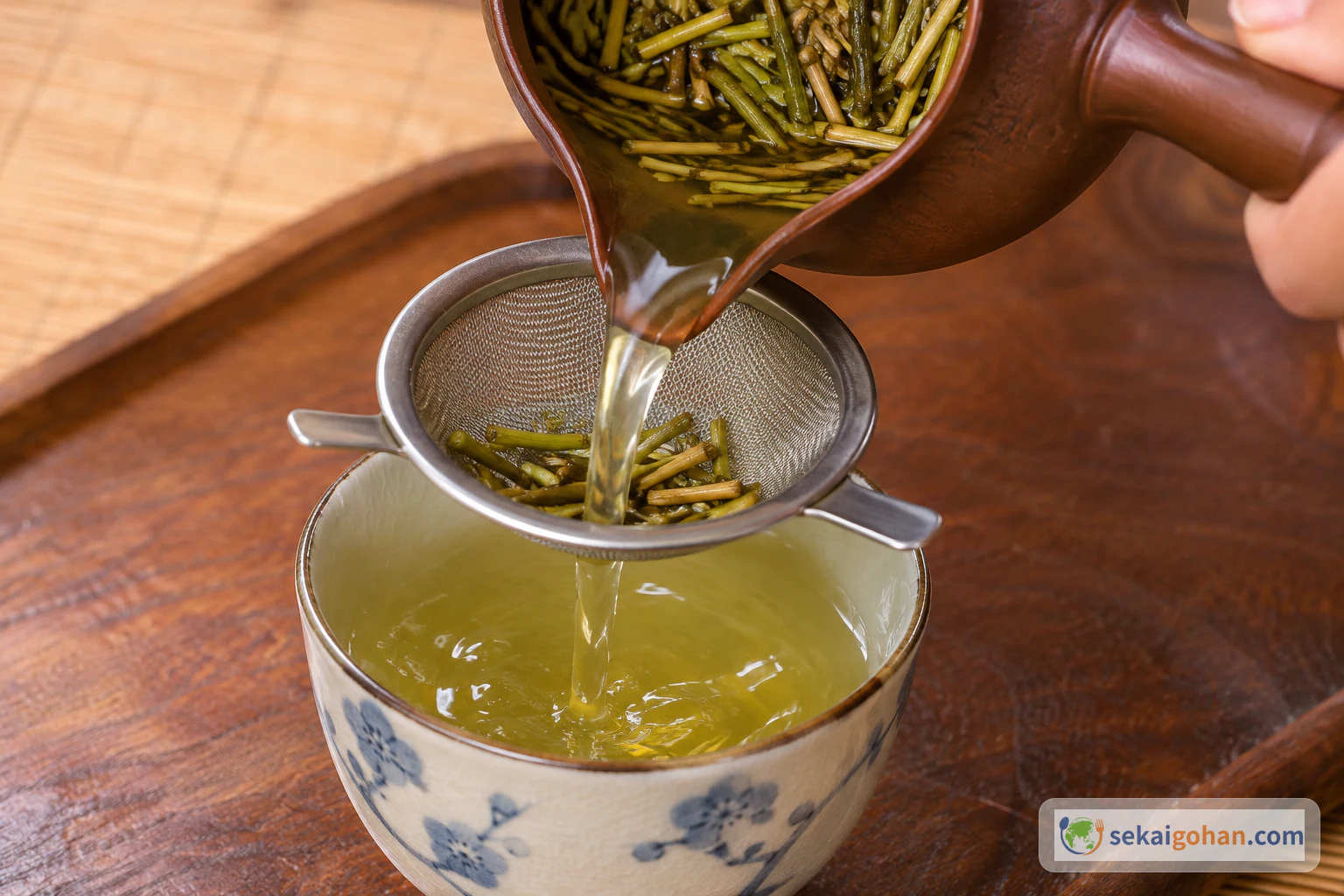
Kukicha: Brewing Japanese Stem Green Tea in a Kyusu (茎茶)

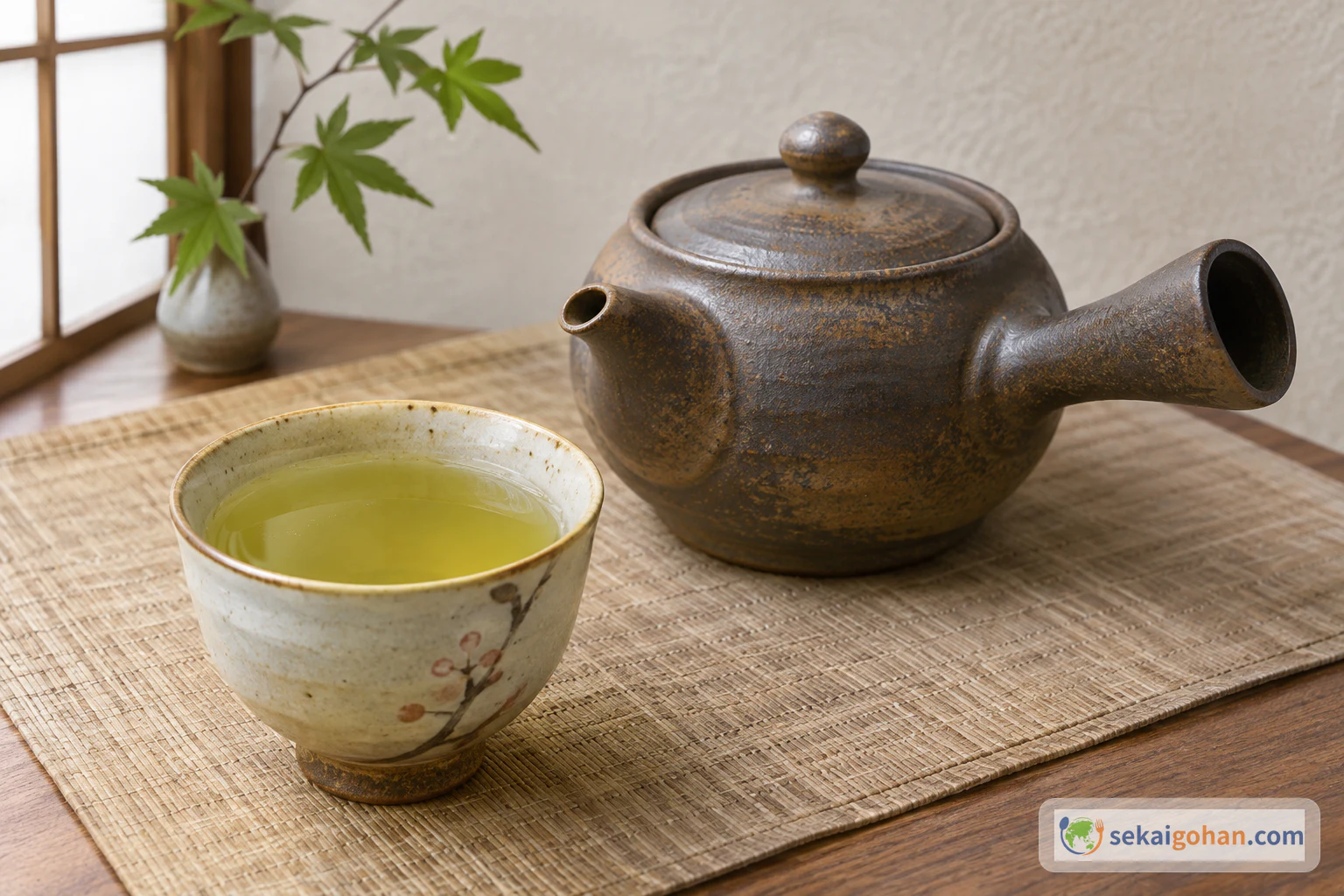
A single serving of kukicha brewed in a kyusu, served in a teacup on the table
Serves
1 serving
Cuisine
Japanese

How to brew one cup of kukicha (茎茶), the Japanese green tea made with tea stems and some leaf, in a kyusu teapot: 2–3 g of tea and 80 ml of water cooled to 80–90°C, steeped for 60–120 seconds and poured through a strainer to the last drop. Also covers how kukicha differs from karigane, roasted bōcha and sencha, and why steeping guidance varies between tea sellers.

Cooking flow

Cooking steps

STEP11 / 10

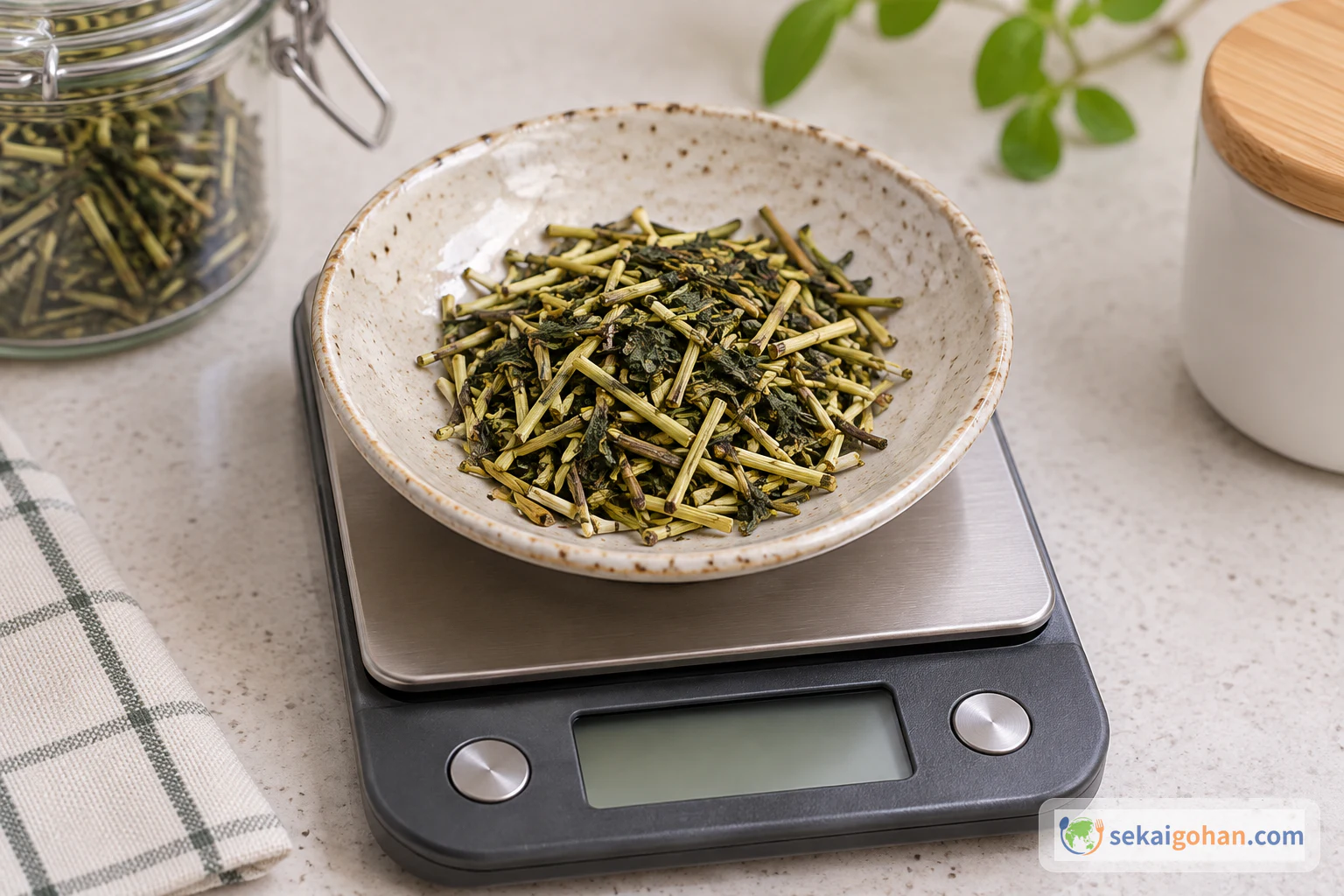
Weigh the tea

Weighing dry kukicha on a scale
Weigh the dry stems and leaf before any water is involved

Weigh 2–3 g of kukicha on a kitchen scale.

STEP22 / 10

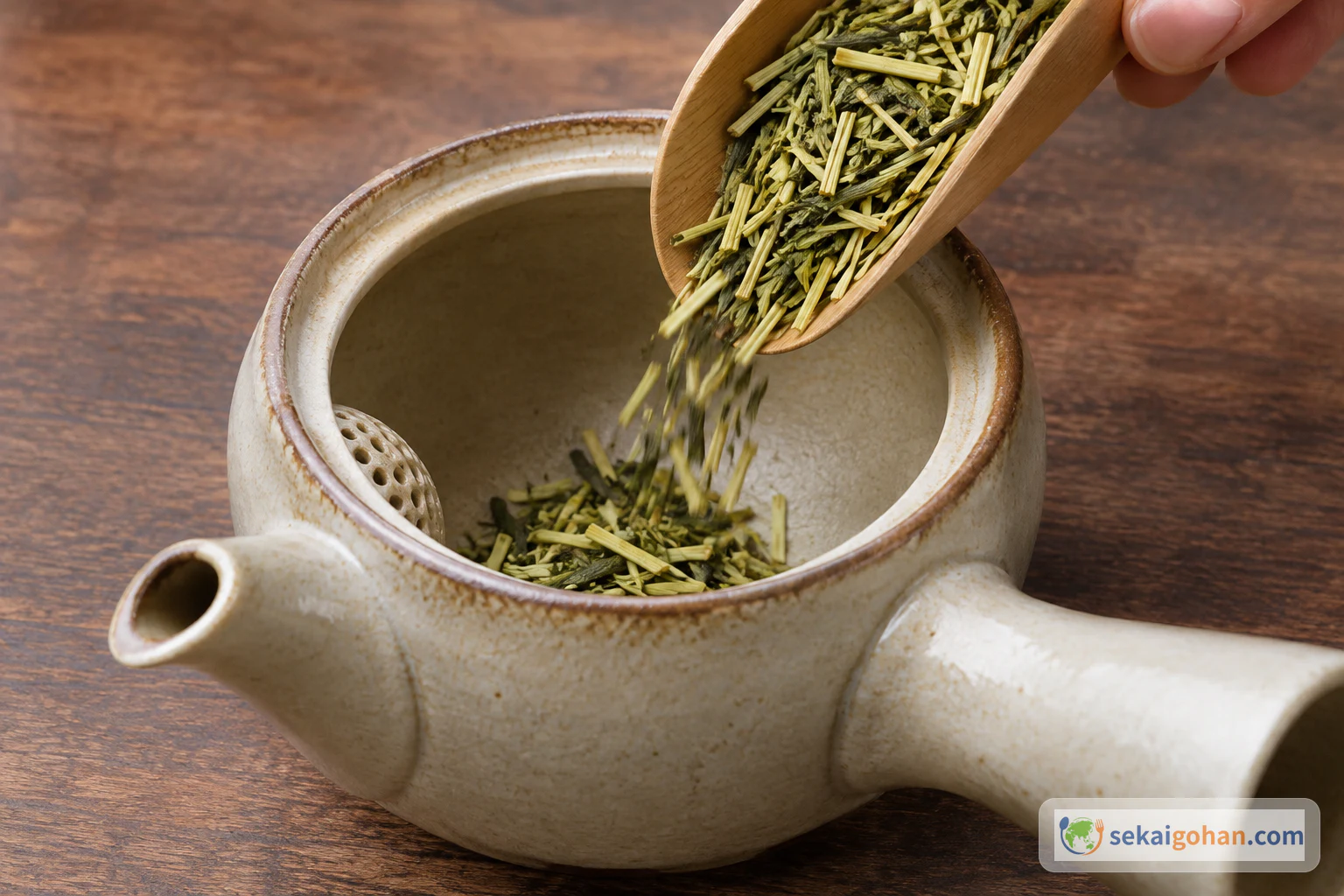
Put the tea in the kyusu

Adding the weighed kukicha to an empty kyusu
The dry tea goes into the empty pot first

Tip the weighed tea into a clean, dry kyusu.

STEP33 / 10

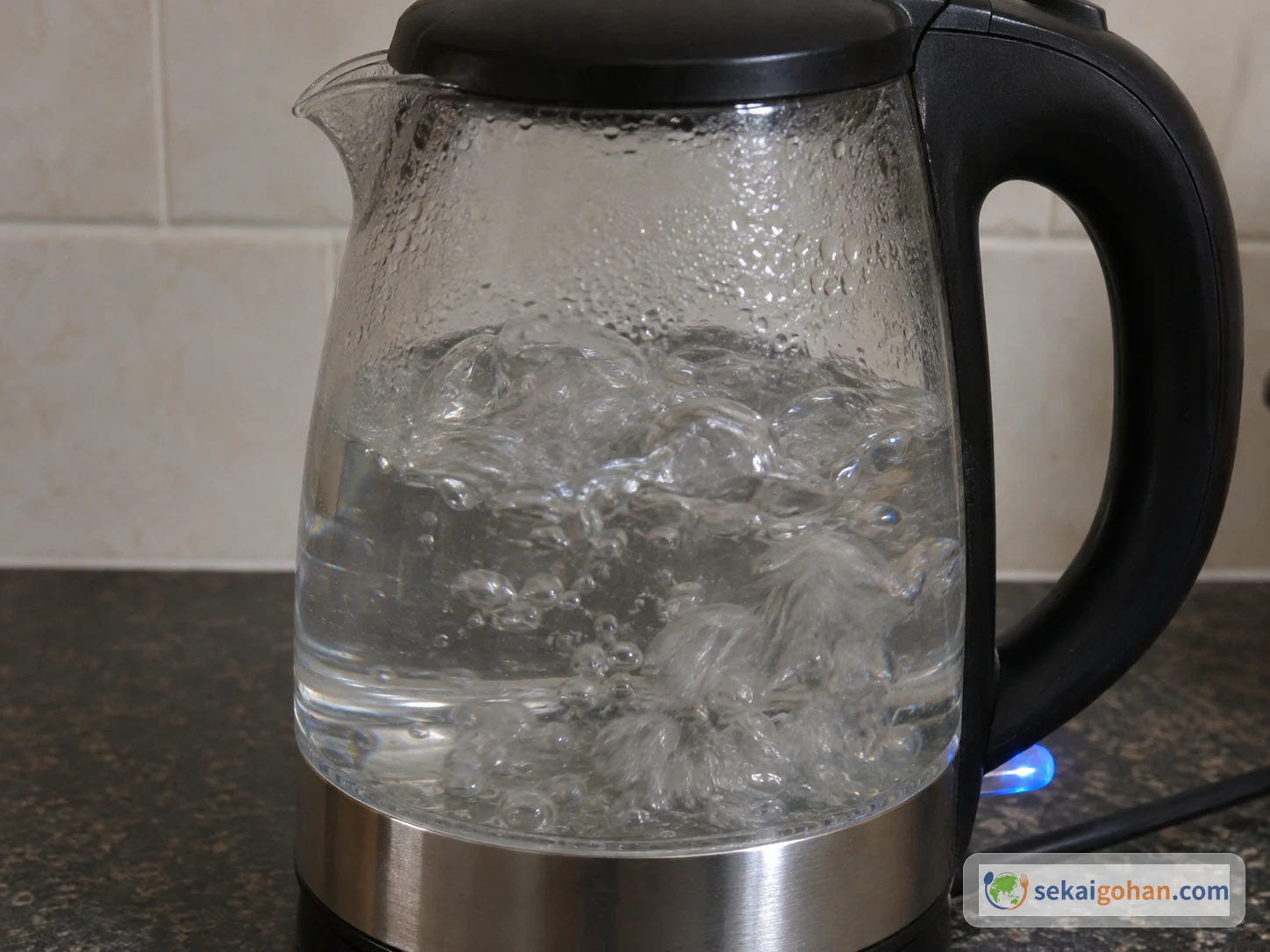
Boil the water

Water boiling in a kettle
Boil plain drinking water, filling the kettle at least to its minimum level

Bring drinking water to a boil in a kettle. Boil enough water to meet your kettle's minimum fill line rather than only ¼ cup (80 ml); some will be left over.

STEP44 / 10

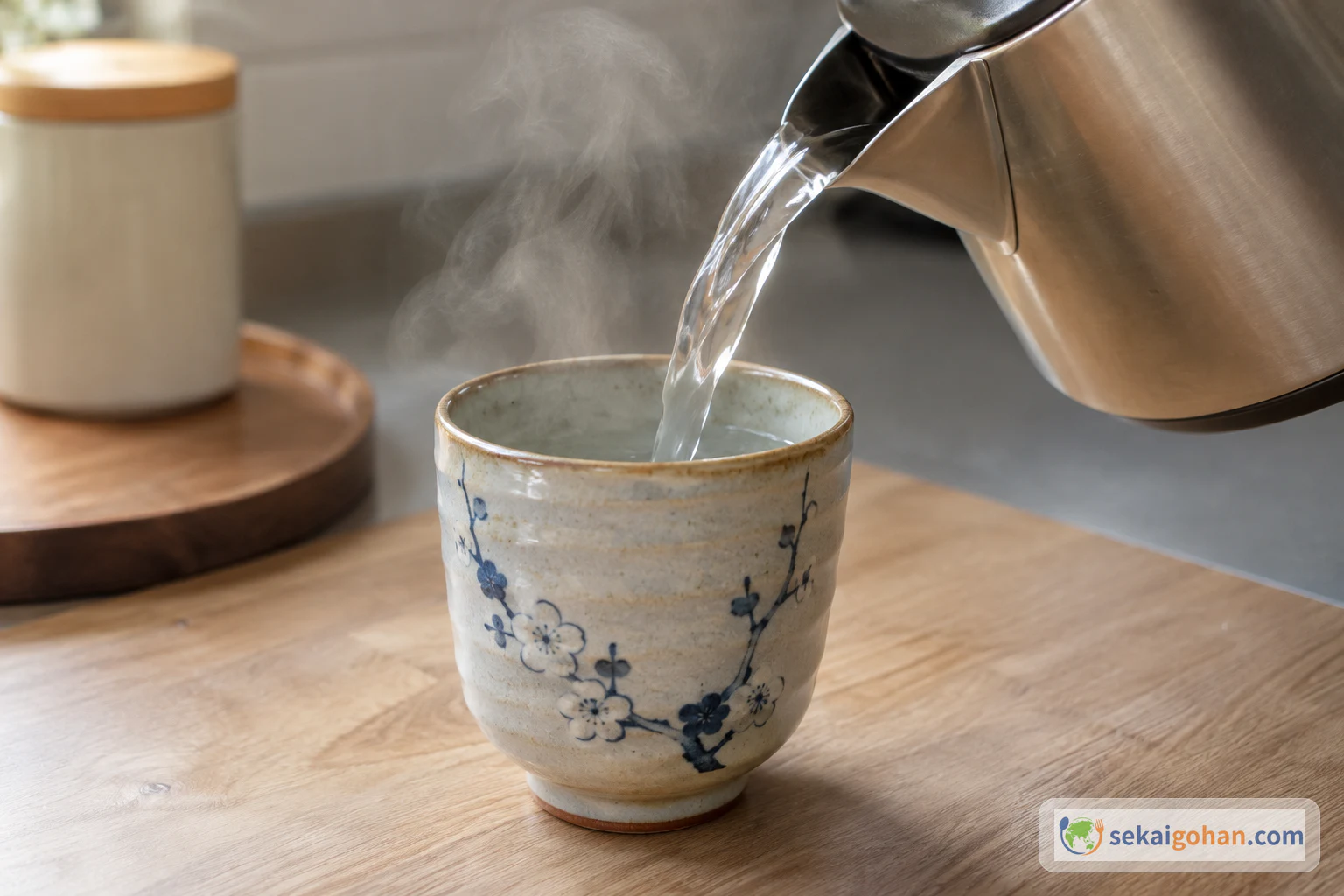
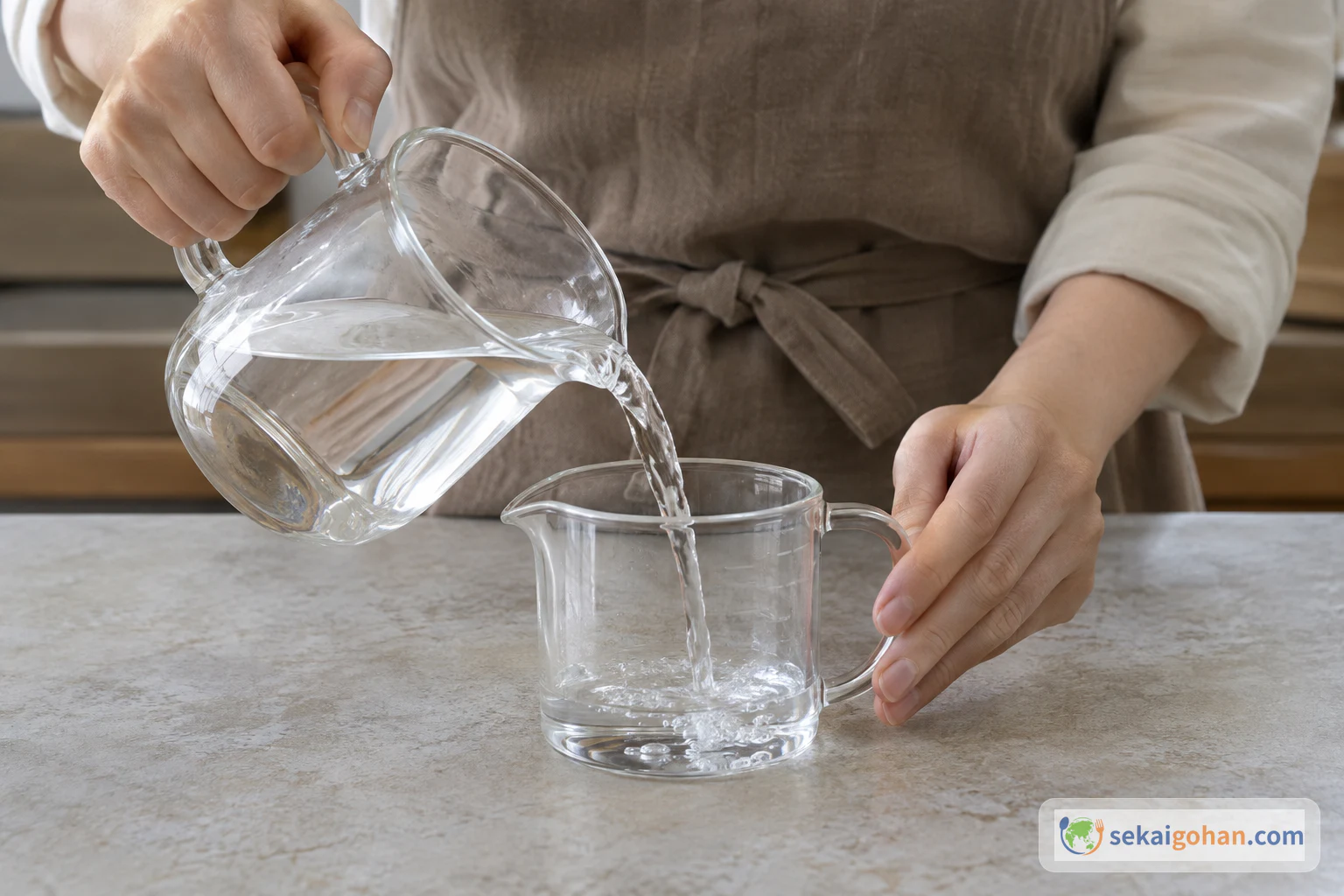
Pour the boiled water into a separate vessel to cool

Pouring boiled water into a separate vessel to bring the temperature down
Moving the water to another vessel starts the cooling

Pour the boiling water into an empty heat-safe cup or vessel and let it cool toward 80–90°C. Each transfer to another vessel drops the temperature by roughly 10°C.

STEP55 / 10

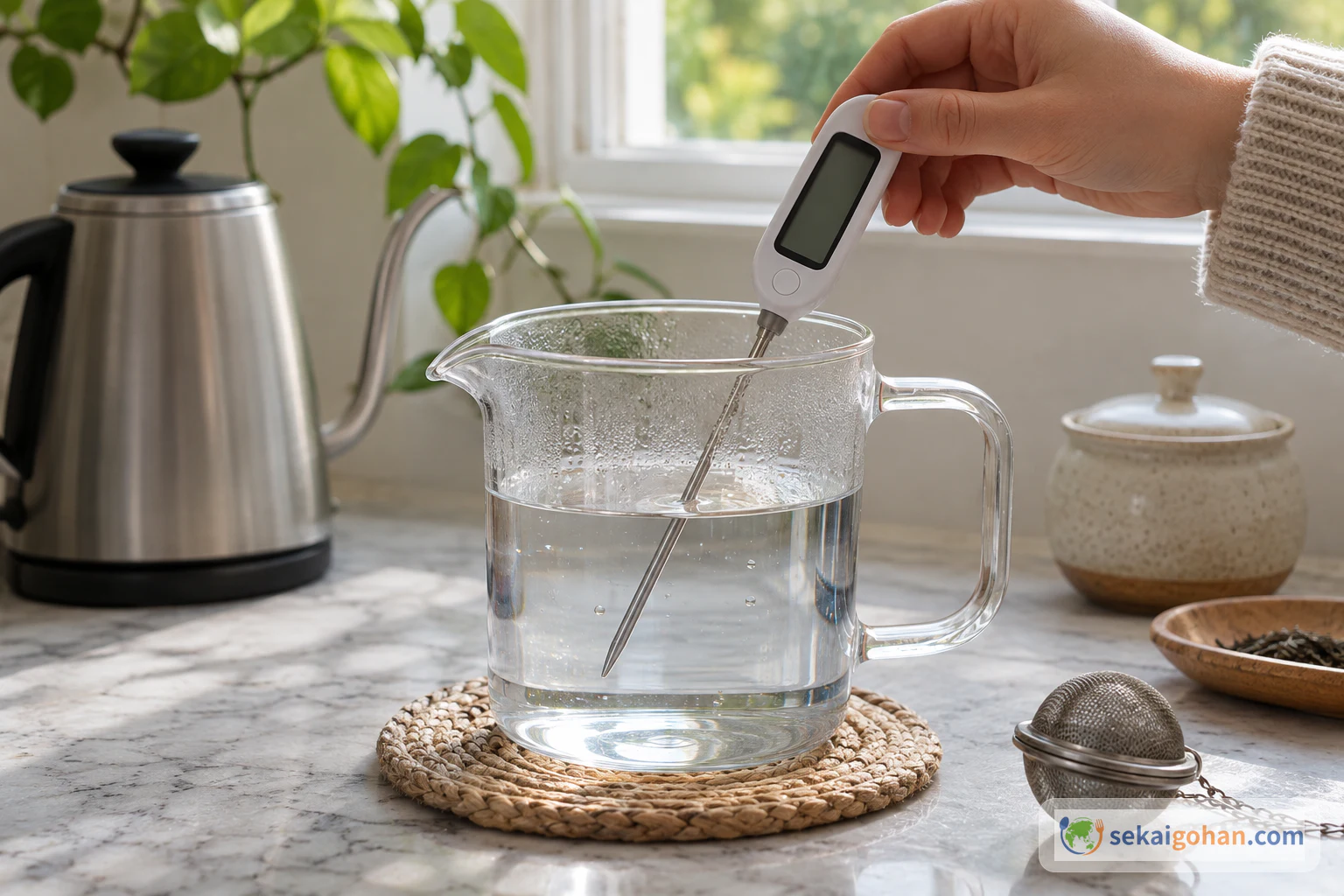
Check the temperature

Checking the cooled water with a thermometer
Confirm the temperature with a thermometer rather than by eye

Check the cooled water with a thermometer. Continue when it reads within 176–194°F (80–90°C). If it is still hotter, wait a little and check again.

STEP66 / 10

Measure ¼ cup (80 ml) of the cooled water

Measuring the cooled water for brewing
Measure the brewing water after cooling, before it reaches the kyusu

Pour the cooled water into a heat-safe measuring cup and measure out 80 ml for brewing. Check that it is still within 80–90°C before it goes into the pot.

STEP77 / 10

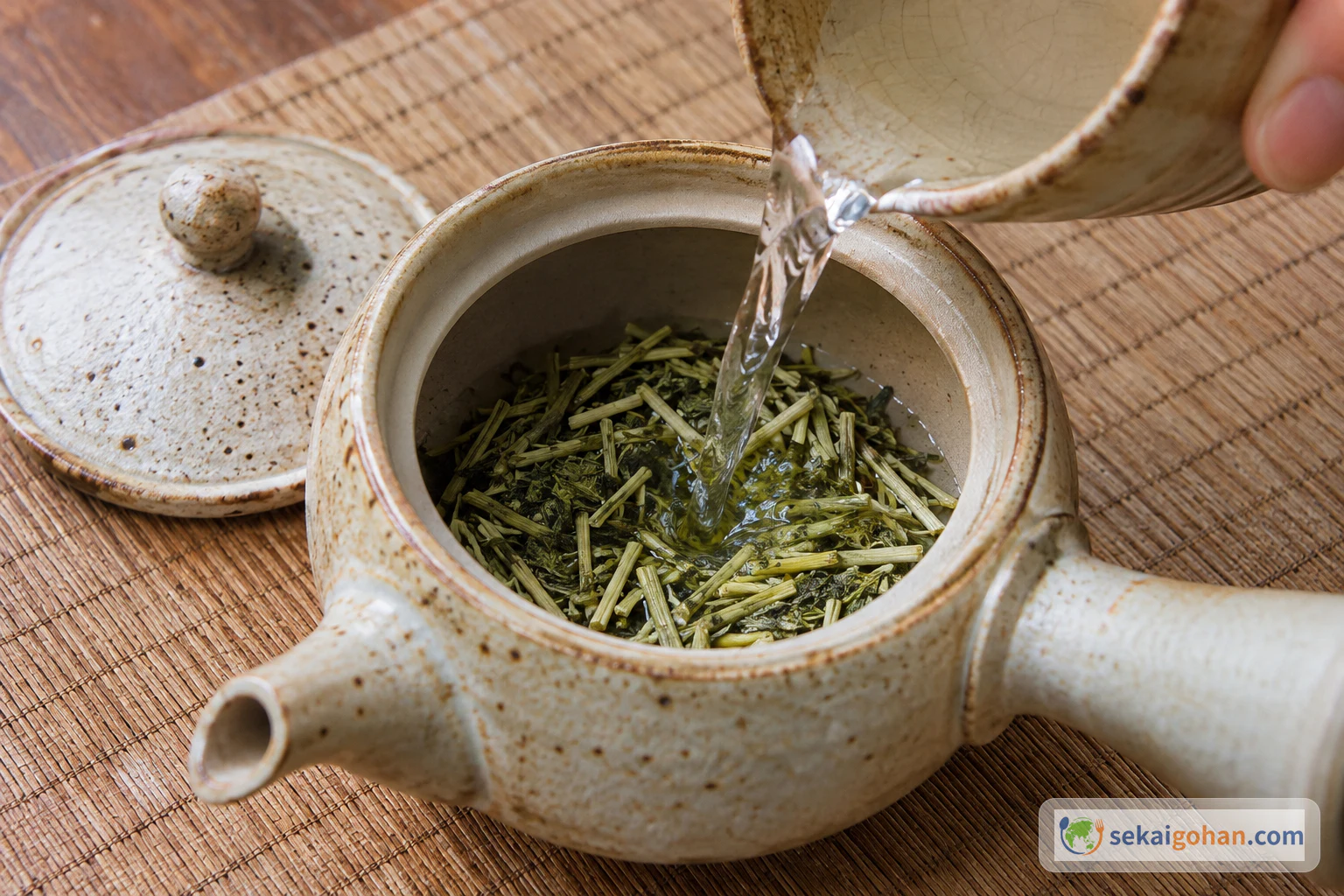
Pour the water over the tea

Pouring cooled water over the kukicha in the kyusu
Pour the cooled water so it covers all the stems and leaf

Pour the measured water into the kyusu so that all of the tea is soaked.

STEP88 / 10

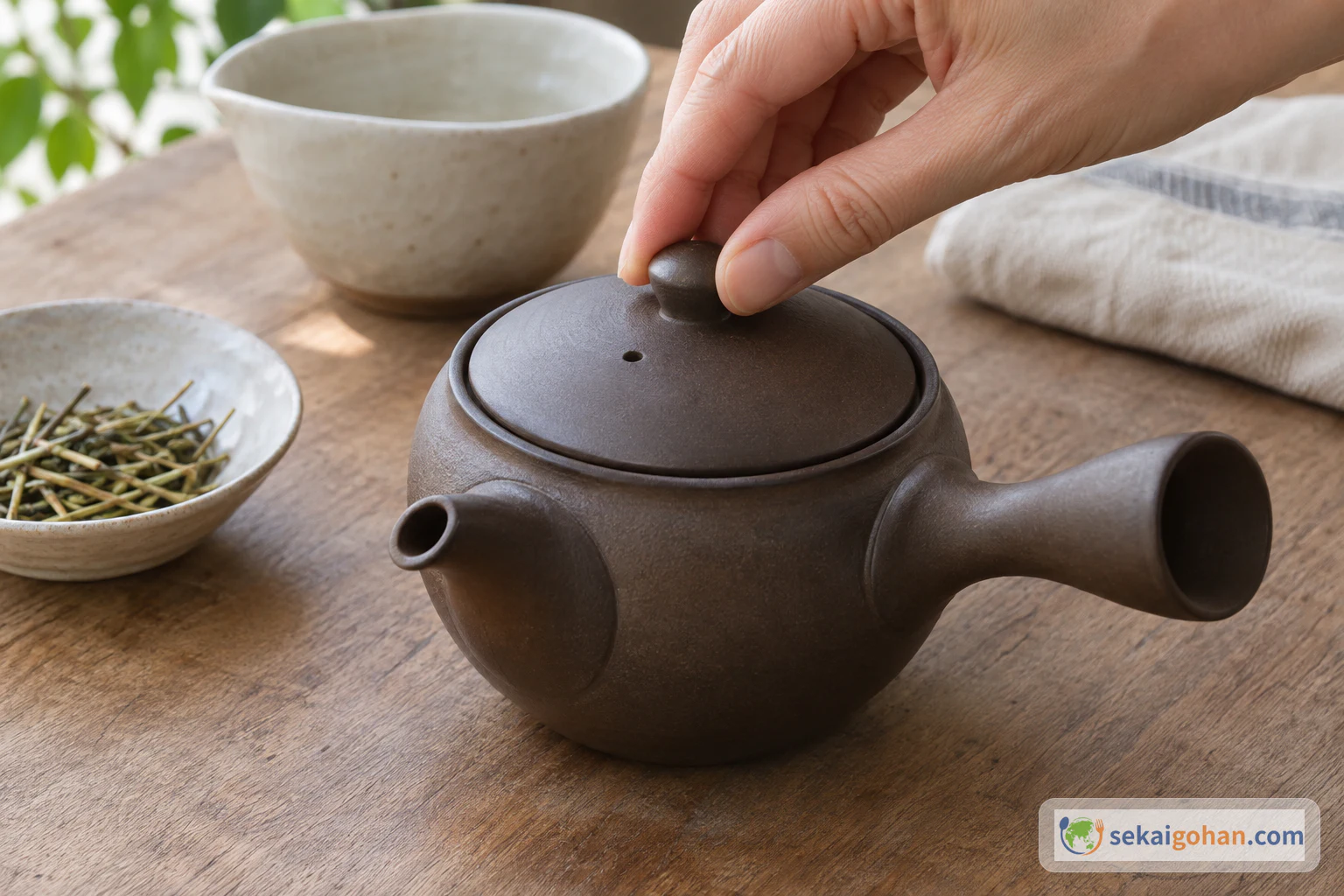
Close the lid

Closing the lid of the kyusu after adding the water
Close the lid as soon as the water is in

Put the lid on the kyusu.

STEP99 / 10

Let it steep

A lidded kyusu resting while the kukicha steeps
Let the closed pot rest without moving it

Leave the kyusu undisturbed for 60–120 seconds. Adjust within this range for your tea and preference.

STEP1010 / 10

Pour through a strainer to the last drop

Pouring kukicha through a strainer into a teacup, all the way to the end
Pour every drop out, leaving only the spent stems behind

Pour the tea through a strainer into the teacup, tilting the kyusu until the very last drop is out. Do not leave tea sitting in the pot. Serve right away.

0 / 0
Ingredients

Ingredients

1 / 1

Ingredients

Ingredient Amount Role
Kukicha (茎茶), unroasted Japanese stem green tea 2–3 g The tea itself: stems with some leaf
Drinking water for boiling as needed Boil enough for your kettle; only part of it is used
Cooled water for brewing ¼ cup (80 ml) Measured after cooling to 176–194°F (80–90°C), then poured over the tea

Use water that is suitable for drinking. Weigh the tea on a scale rather than measuring it with a spoon. Nothing else goes into the cup: no sugar, milk or lemon.

0 / 0

A pinch of pale stems and leaf fragments, a small teapot, and water that has been boiled and then allowed to cool a little. That is about all kukicha (茎茶, also written kuki-cha) asks of you. This Japanese green tea is made from the stems, stalks and twigs of the tea plant, often with some leaf mixed in, and here it is the ordinary, unroasted kind, brewed one cup at a time in a kyusu, the Japanese side-handled teapot. For more dishes and drinks from the same country, see Japan.

What Kukicha Is

Kukicha is a green tea made mainly from stems, leaf stalks and twigs. Commercial kukicha often includes some leaf too, so a bag may look like a mix of pale green sticks and small dark-green fragments.

The names around this tea overlap, and each one means something specific. Karigane traditionally means kukicha made from gyokuro stems. Roasted bōcha is one regional example of stem tea, but it is a different tea altogether: brown and toasted.

Ingredients: Tea and Water for One Cup
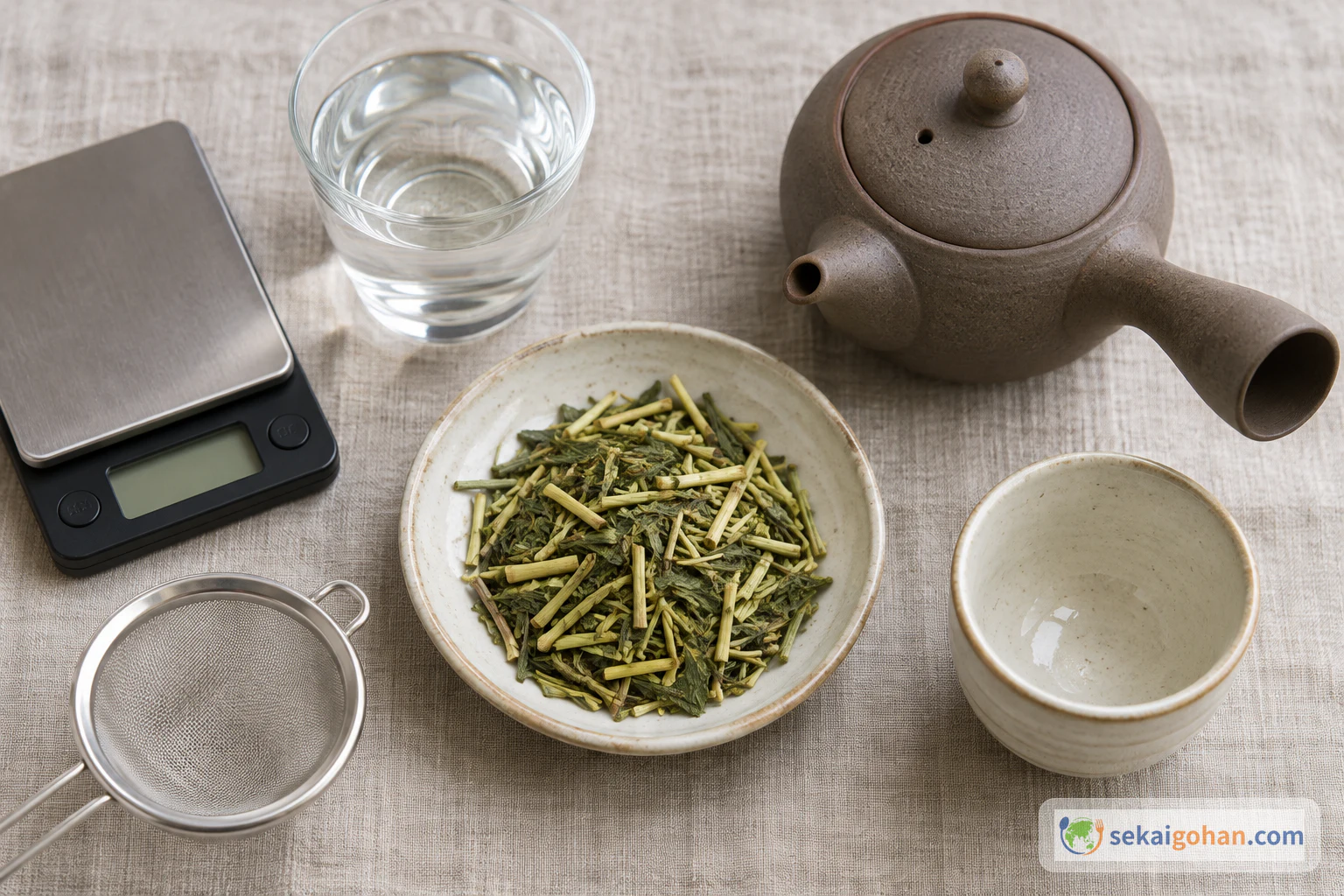
Dry kukicha leaves with water, a kyusu, a teacup and a scale
Loose unroasted stem tea and plain water are the only ingredients

Equipment

  • Kitchen scale, ideally reading in 0.1 g steps
  • Kyusu (Japanese teapot) with a lid, clean and dry
  • Kettle
  • Heat-safe cup or vessel for cooling the boiled water
  • Thermometer
  • Heat-safe measuring cup
  • Tea strainer (if your kyusu has no built-in strainer)
  • Teacup

Choosing Kukicha

Look for a bag labeled 茎茶 or kukicha, with pale green stems and some leaf. If your supermarket doesn't carry it, Japanese tea shops and online Japanese tea sellers are the places to search. Skip roasted stem tea (such as roasted bōcha or hōjicha-style stems, which are brown) and powdered tea; they are different teas.

Sencha, made from the leaf, is also a green tea, but it has a different flavor and won't stand in for kukicha. Brew it as its own cup.

Hot water and teaware

You will be handling boiling water, a hot kettle and hot vessels. Use heat-safe cups and measuring cups, hold the kettle and kyusu by their handles, and keep your hands clear of steam when pouring.

Method: Weigh, Cool, Steep, Pour

The order matters

Put the dry tea in the pot first. Boil the water, cool it in a separate vessel, check the temperature, and only then measure the ¼ cup (80 ml) that goes into the pot.

The 80 ml is the water you pour in, not a promise of 80 ml in the cup. The tea absorbs some water, so the amount you drink will be somewhat less.

When Kukicha Doesn't Come Out Right

What happened Likely point to check What to do next time
The water was still above 90°C at the temperature check Not enough cooling time, or a vessel that holds heat Wait and check again, or move the water to another vessel; always confirm with the thermometer
The water dropped below 80°C Too long between cooling and pouring, or too many transfers Check the temperature again just before measuring and pouring, and move straight on to the pot
Some stems stayed dry or floated on top The water did not cover all the tea Pour so that all of the tea is soaked before closing the lid
The cup tasted thinner or stronger than you like Tea amount and steeping time at one end of the range Adjust within 2–3 g and 60–120 seconds rather than going outside the ranges
Tea was left sitting in the pot The kyusu was not fully emptied Tilt the pot all the way and pour to the last drop
No thermometer at hand Cooling by transferring vessels only Transfers give an approximate drop; a thermometer is more reliable

Kukicha varies by product and grade, so treat these ranges as a starting point. If the tea you buy comes with its own brewing instructions, compare them with the ones here and pick one approach rather than mixing the two.

Serving Kukicha to More Than One

The tea amount is per person, so scale it up for each extra cup. When pouring for several people, pour a little into each cup in turn, going back and forth, so the strength comes out even. Whether it's one cup or several, empty the pot to the last drop.

Frequently Asked Questions

Is kukicha the same as karigane?

Not exactly. Karigane traditionally means kukicha made from gyokuro stems, and the names are used differently depending on raw material, grade and region.

Can I skip the thermometer and just pour between cups?

You can cool the water by transferring it between vessels, dropping about 50°F (10°C) each time. A thermometer is the more dependable way to land within 176–194°F (80–90°C).
Sources

  • HOKUSAN & CO., LTD. (Shizuoka Japanese tea wholesaler), "How to Serve Japanese Green Tea." The adopted brewing method: the kukicha row of its brewing table giving 2–3 g per person, 80 ml of water, 80–90°C and 60–120 seconds; the advice to pour the teapot out fully; and the approximate cooling of about 10°C each time water is moved to another vessel. The table gives ranges, not one exact time or temperature, and does not name a specific cultivar or product. https://hokusan-trade.jp/howto/
  • Tealife SG, Yuki Ishii (founder and CEO), "The Ultimate Guide to Kukicha and Karigane." Used for background: kukicha includes stems, stalks and twigs; karigane historically refers to kukicha from gyokuro stems; roasted bōcha is one regional example of stem tea. Its own brewing method (4 g / 200 ml, 70–80°C, 30 seconds) is shown for comparison only; its table and text give different amounts, and neither is adopted. Health claims on the page are not used. https://japanesetea.sg/japanese-tea-pedia/kukicha-and-karigane/
  • Kagoshima Tea, "Kukicha." A merchant's product-specific brewing suggestion (1 g / 100 ml, 80°C, one minute) and a separately described second infusion, shown for comparison only and not adopted into this recipe. https://kagoshimatea.com/pages/product-kukicha