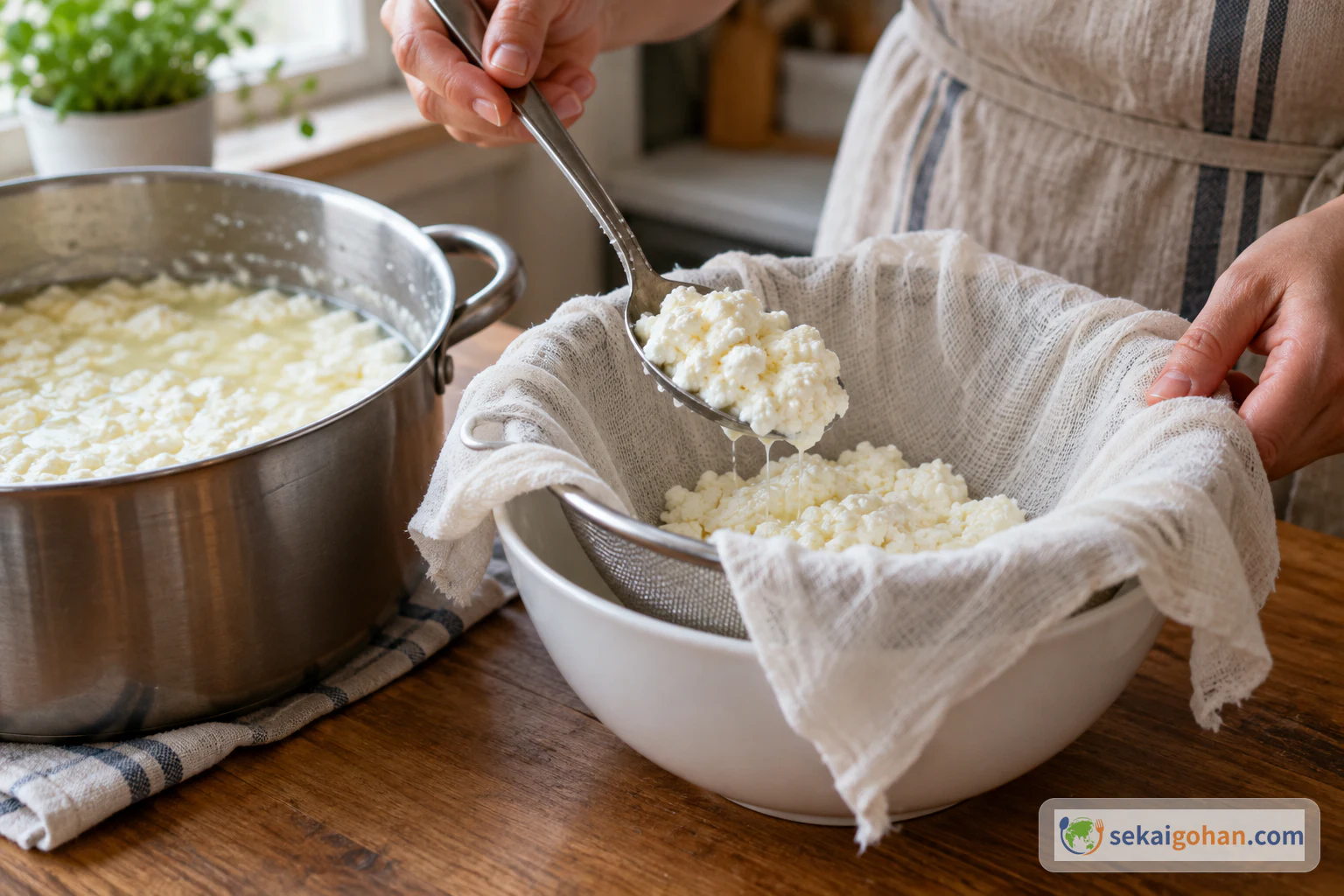
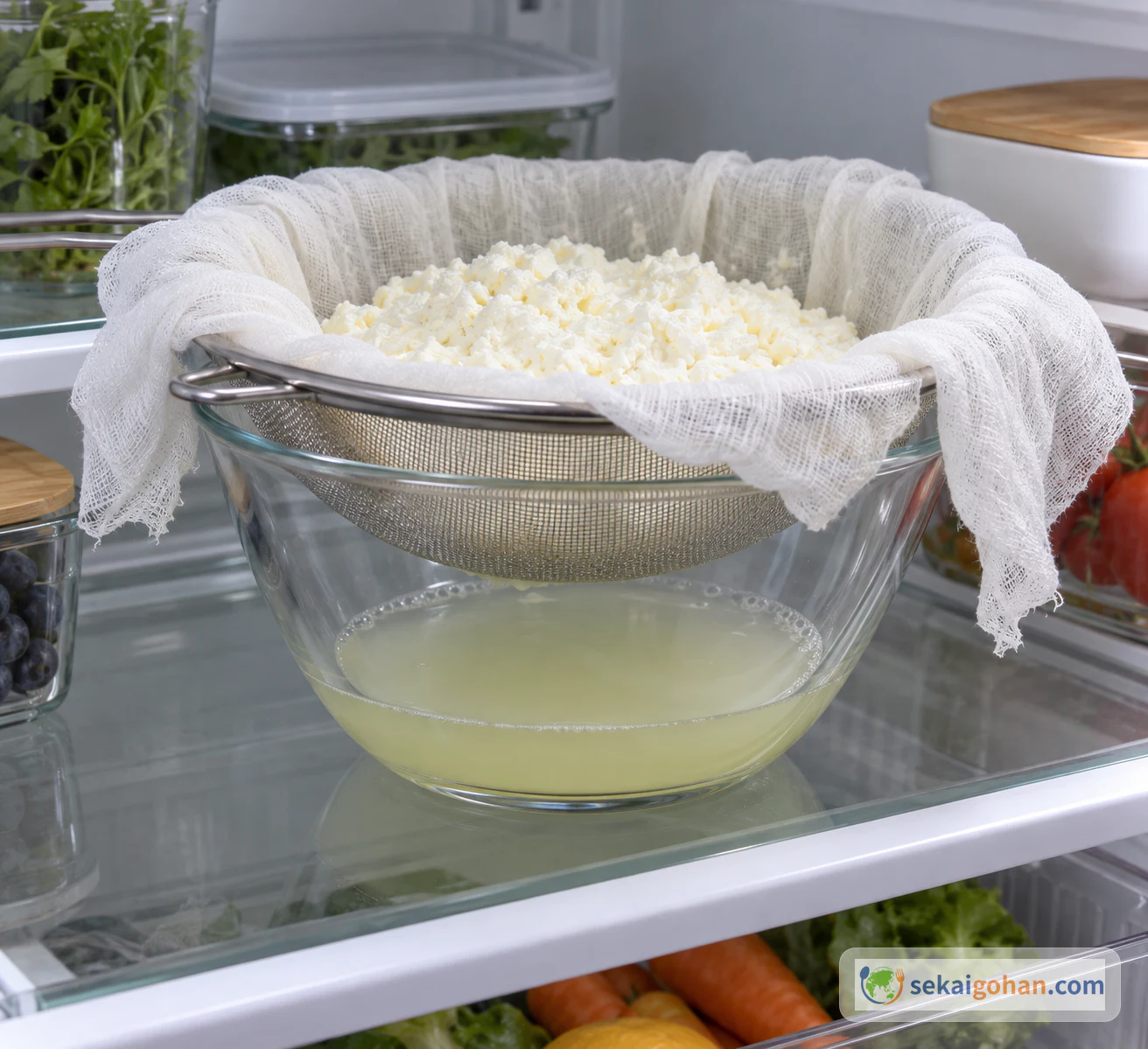
Thick, ivory and eaten with a spoon, skyr looks like a very thick yogurt, and most people treat it that way: plain or sweetened, at breakfast or as a snack. Traditional Icelandic skyr, though, is an acid-set fresh cow's-milk cheese. Milk is set into a curd, and the curd is strained through cloth until the whey runs off. That draining, not stirring, is what gives skyr its dense, spoonable body. At home, 2 litres of skimmed milk gives you about 1 litre of skyr and about 1 litre of whey.
Skyr in Iceland
Skyr has been an Icelandic specialty since the time of settlement. The milk is usually skimmed and set with bacterial cultures and rennet. Skyr was relatively cheap to make compared with cheese, which is a likely reason Icelandic cheesemaking traditions faded.
In traditional artisanal making, the starter is carried over from a previous batch of skyr, and calf rennet goes in if the milk sets weakly. Skyr is made in many ways today, and the home method here is one simple version.
Skyr's place in Icelandic life has also shifted, from everyday food to national food heritage. Branding and global markets have shaped that heritage story, so modern marketing is a poor guide to what the old tradition actually was. For more Icelandic dishes, see the Iceland country page.
Ingredients: Skimmed Milk, a Spoonful of Skyr and Rennet
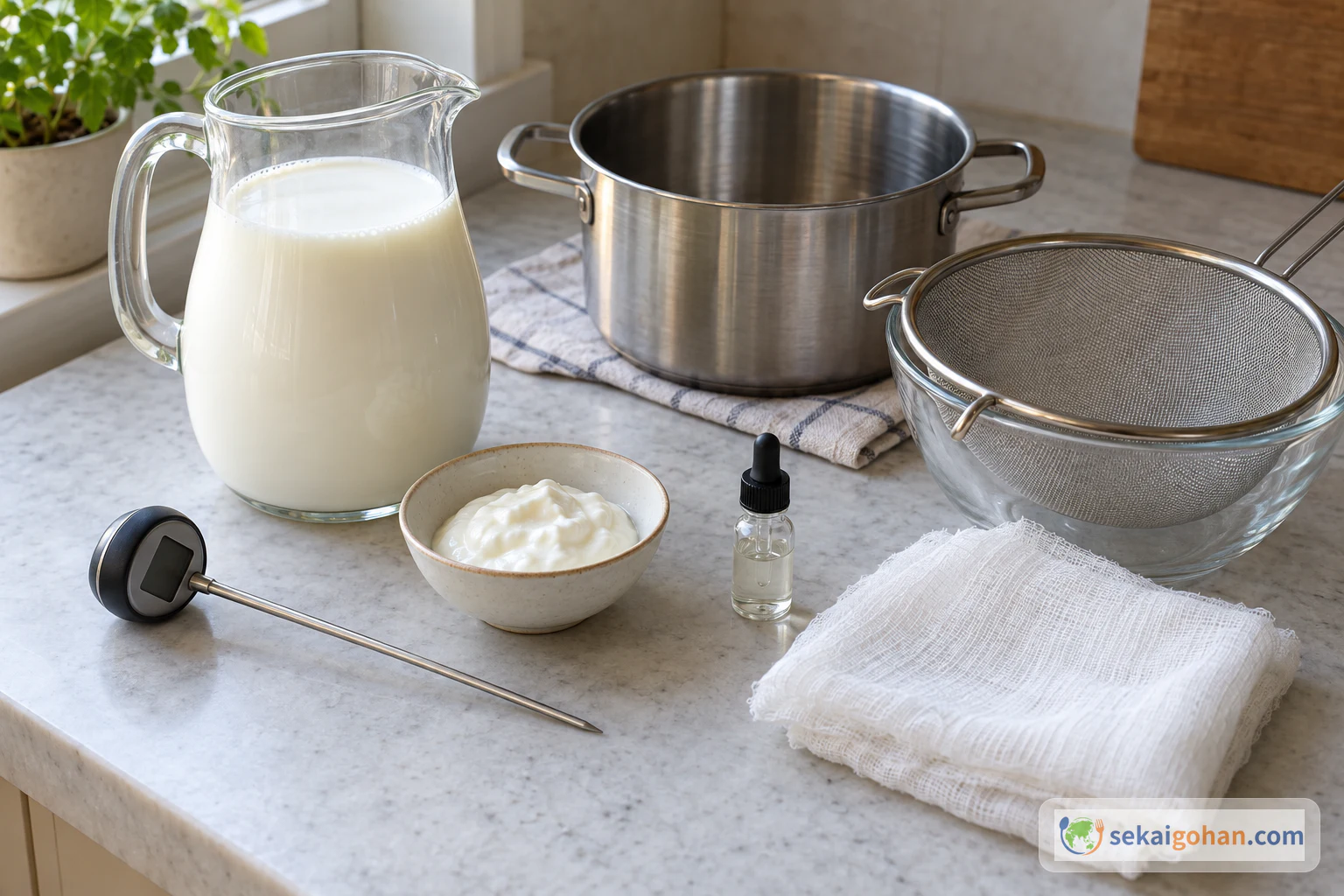
Equipment
- Heavy pot with a lid
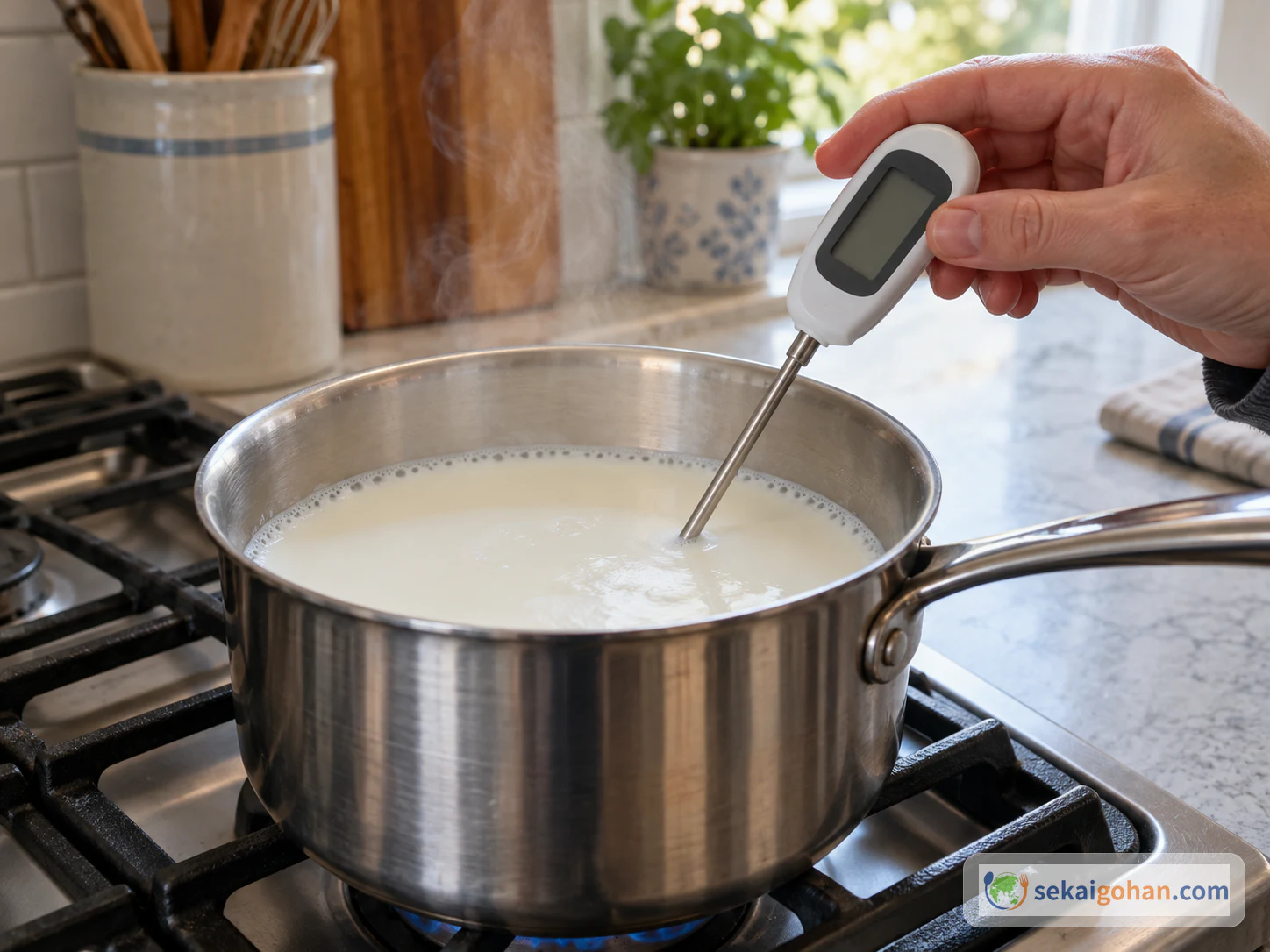
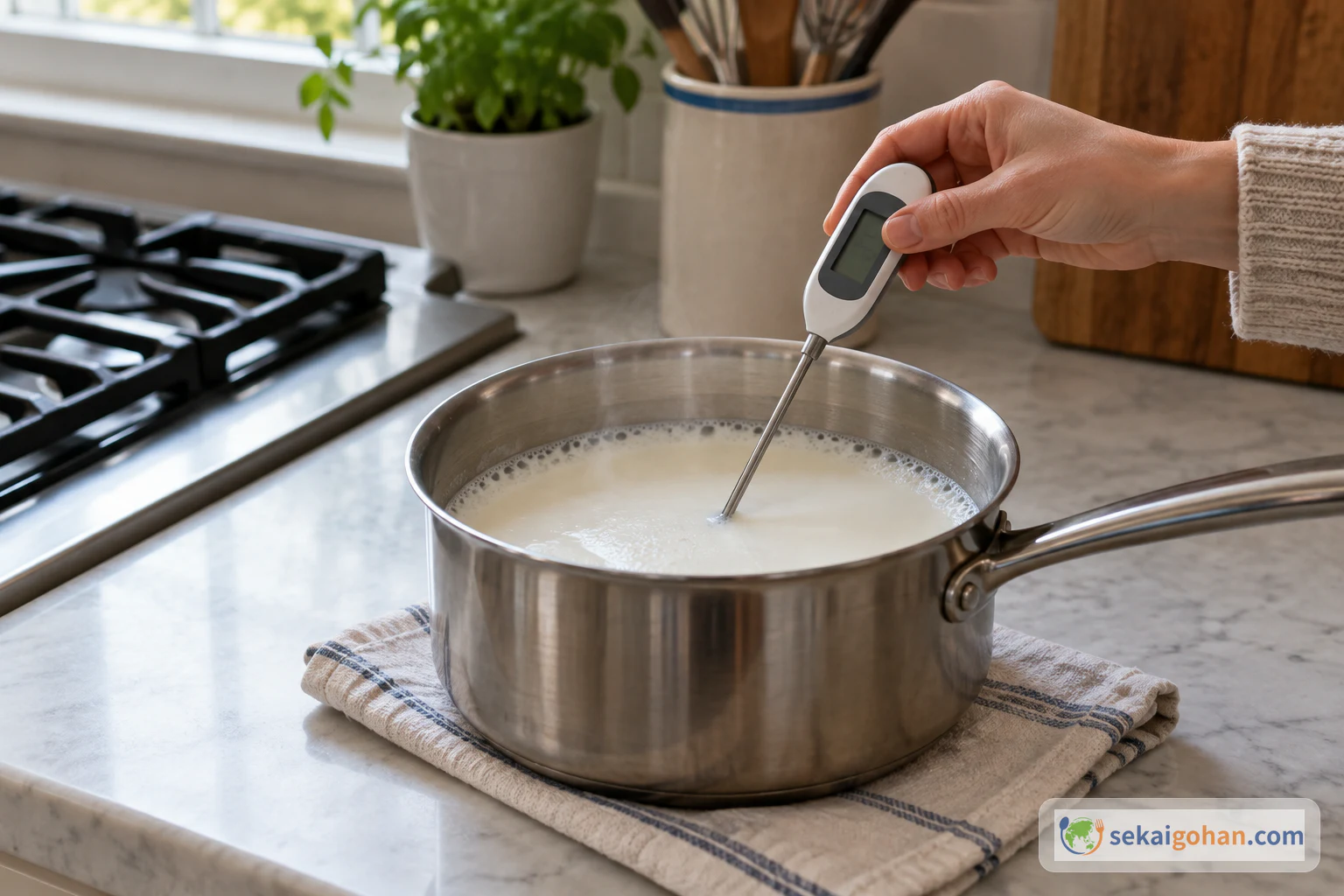
- Thermometer that reads at least 194°F (90°C) and 102°F (39°C)
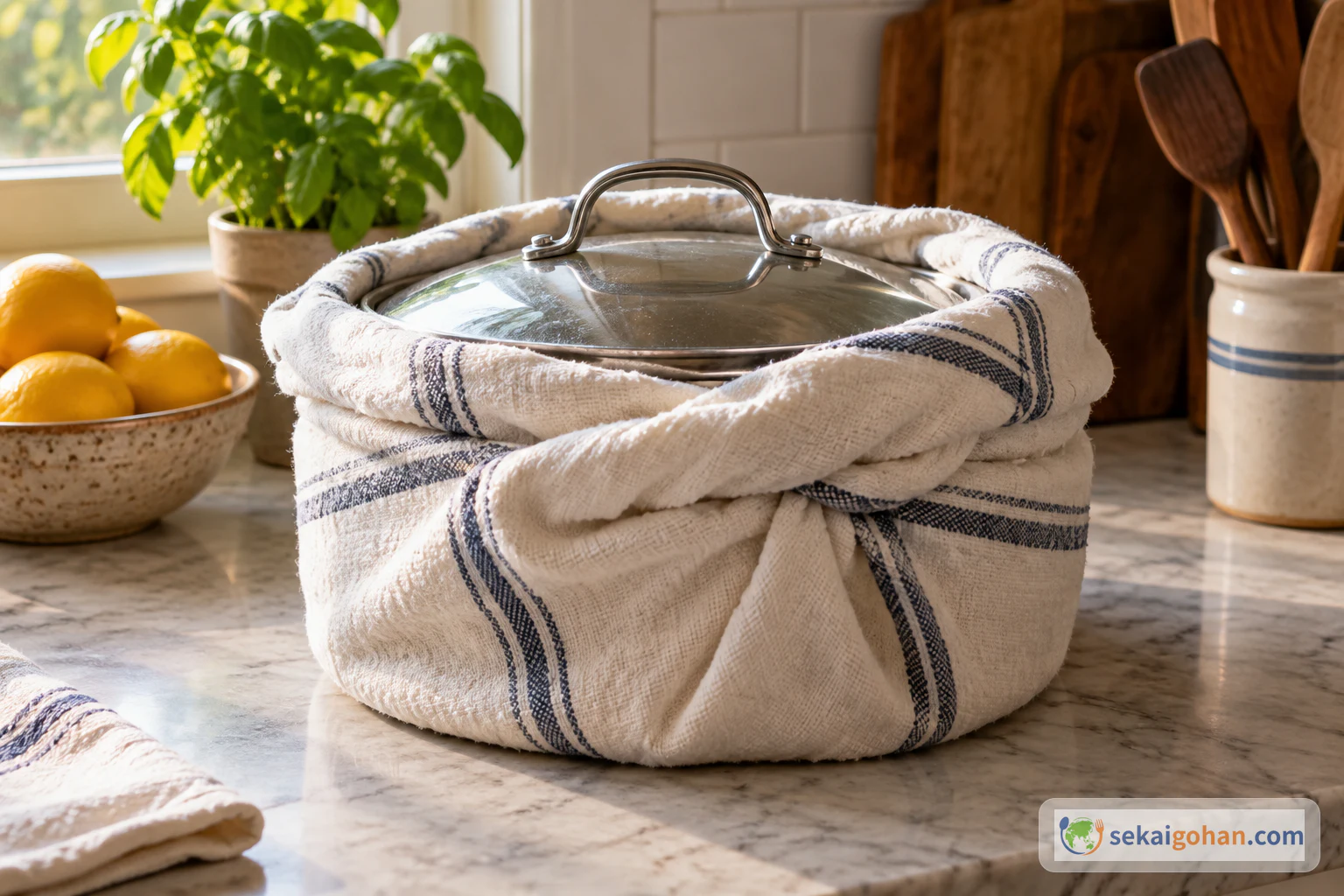
- Towel for wrapping the pot
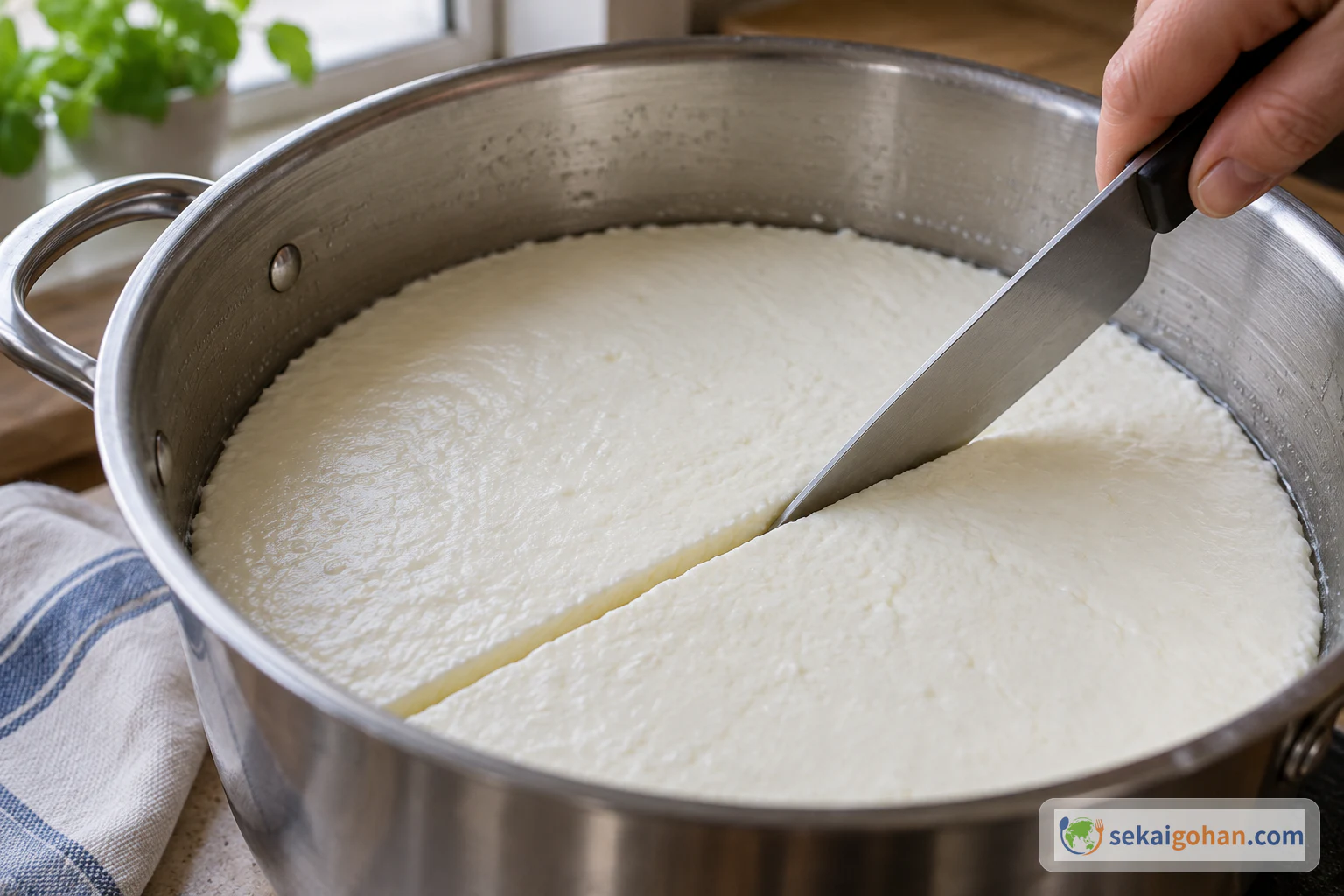
- Long knife
- Sieve or colander
- Clean cheesecloth or similar cloth
- Bowl to catch the whey, sized to hold the sieve
Choosing the Starter, Rennet and Milk for Skyr
Starter. Traditionally, the starter is skyr from a previous batch. For your first batch, use a plain store-bought skyr with live cultures. Plain yogurt, sour cream or buttermilk will work in a pinch, but they change the flavor, and what you get is a skyr-style strained dairy rather than skyr started the traditional way.
Rennet. Rennet comes in different strengths and forms, so 2 drops will not suit every product. Go by the label for your rennet and your milk volume; converting a powder or tablet into drops is guesswork.
Rennet strength differs between products. Read your rennet's label before you start.
Milk. Use skimmed milk, as Icelandic makers usually do.
Method: From Hot Milk to Firm, Drained Skyr
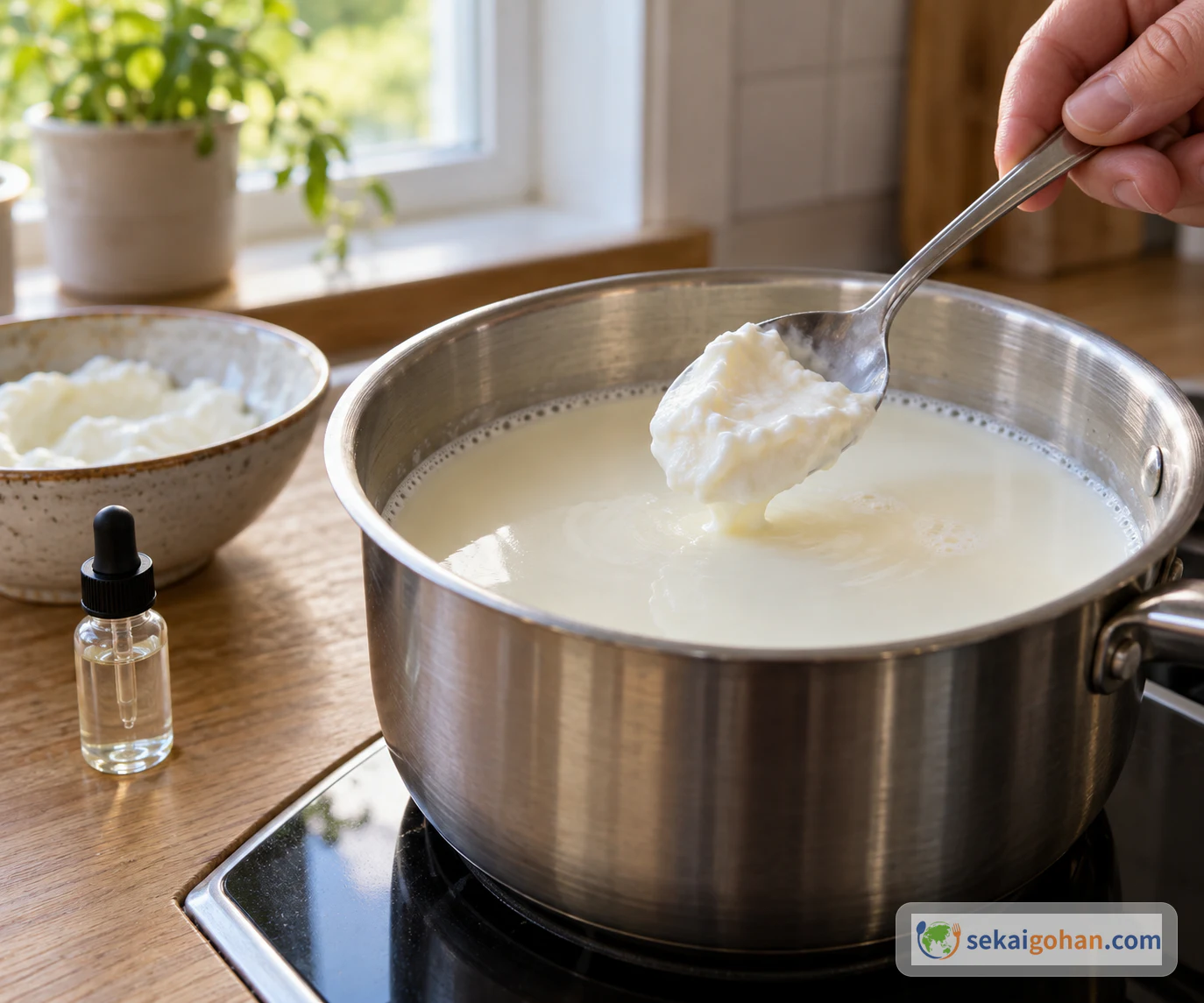
Two checks decide the batch: the milk at 102°F (39°C), and a knife cut that stays open. Check the actual state before moving on.
Common Skyr Problems and Fixes
Measure the temperatures and check the curd with a knife. Treat the clock as a guide.
| What you see | Where to look | What to do |
|---|---|---|
| The knife cut closes up | The curd has not set firmly enough yet | Give it a little more time, keeping it warm, then test again |
| The milk barely sets | Temperature when the starter went in; rennet amount; whether the starter had live cultures | Check that the milk was at 102°F (39°C), the rennet matched the label, and the skyr was plain with live cultures. Traditional makers add calf rennet if the milk sets weakly |
| Still soft and wet after draining | Drainage time and layer depth | Keep draining in the refrigerator within the 12–24 hours, with the curd spread no deeper than 3.5 inches (9 cm) |
| Flavor is different from skyr you have bought | Starter | Yogurt, sour cream or buttermilk starters change the flavor. Next time, use plain fresh skyr |
Serving Skyr
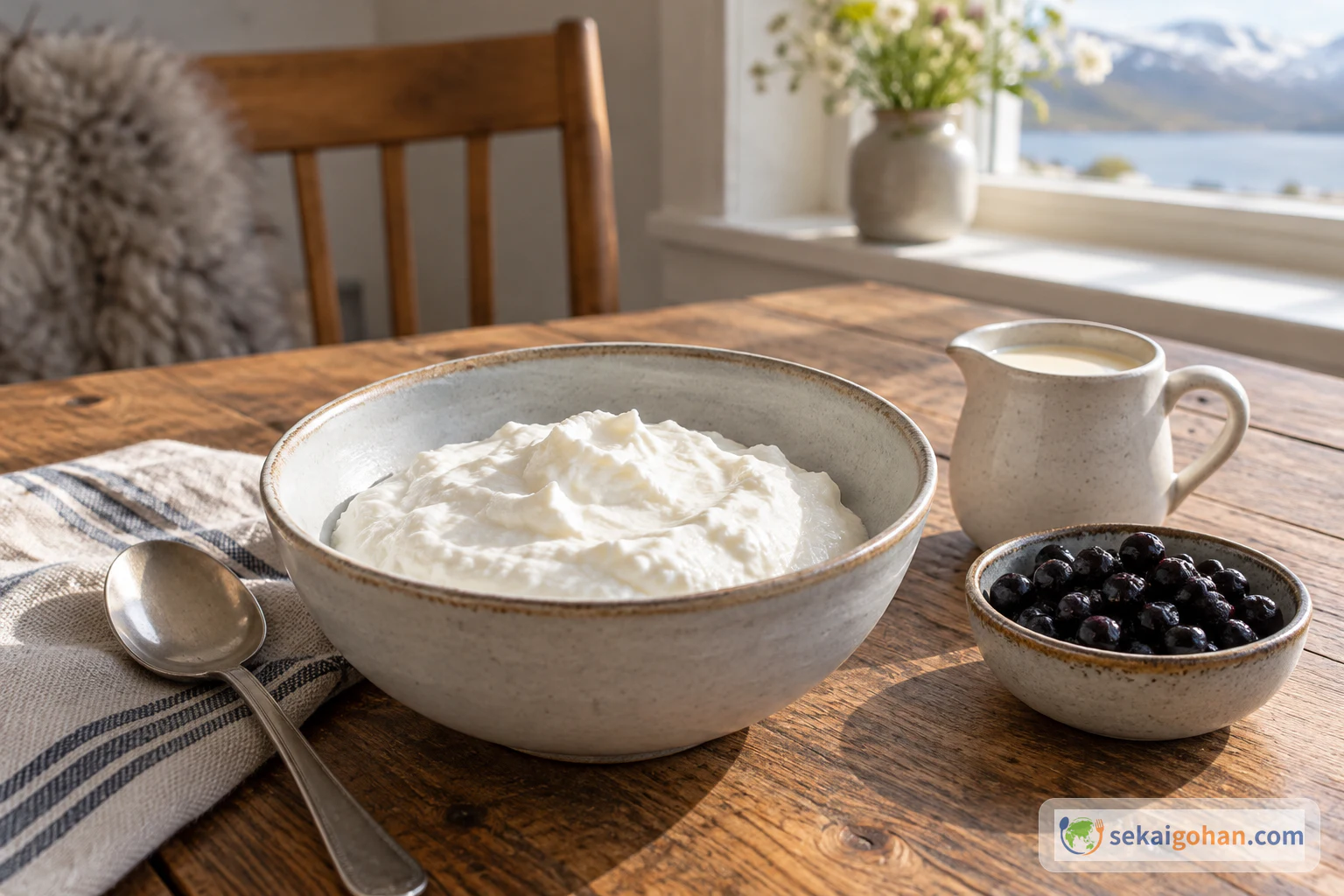
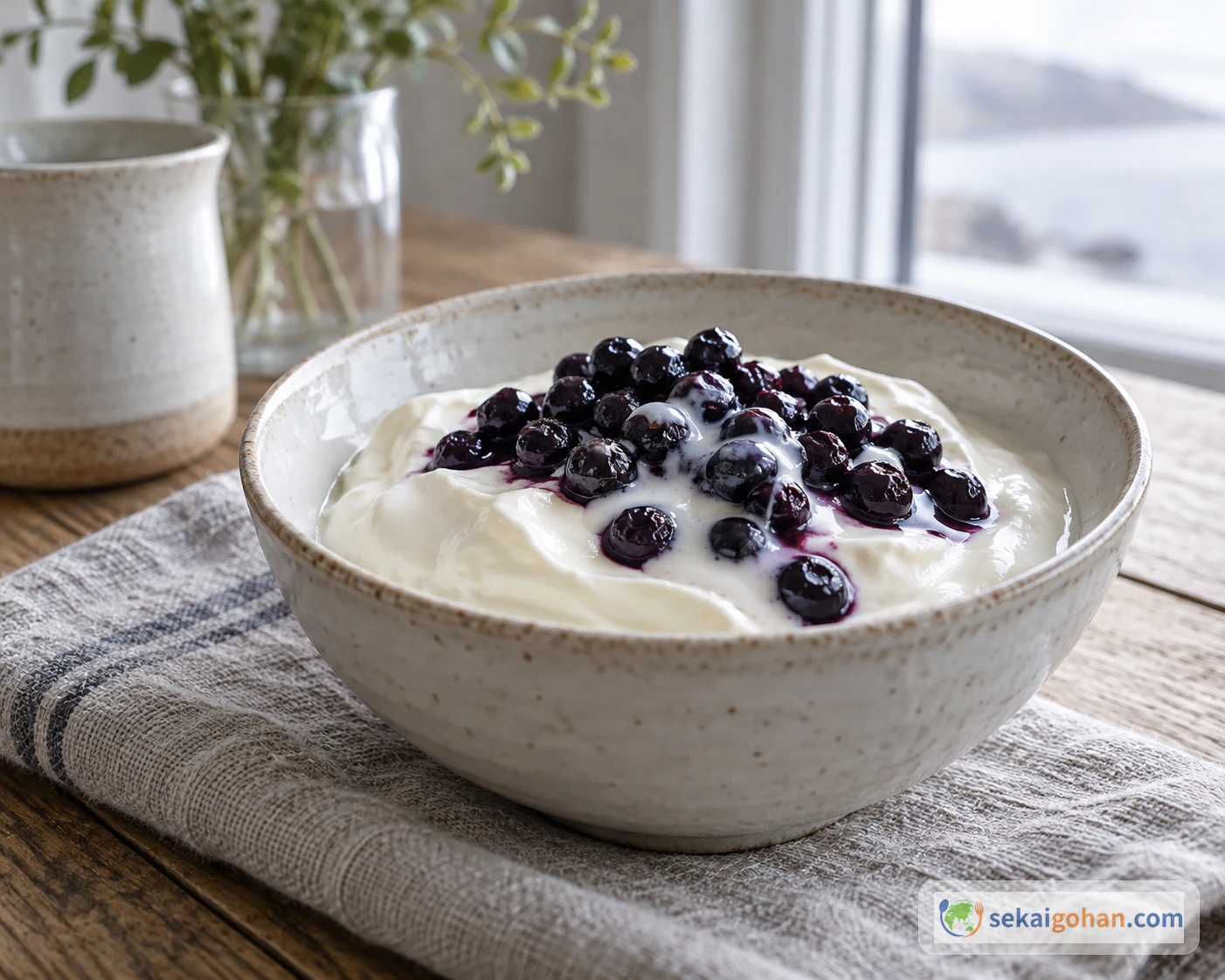
At the table, skyr is eaten plain, with a little sugar, or loosened with cream or milk. In Iceland, try it the classic way, with wild bilberries and cream. Outside Iceland, cultivated blueberries can stand in for the bilberries; it's still lovely, just a different berry flavor.
Frequently Asked Questions
What does the rennet do?
It helps the milk set into a curd firm enough to hold a knife cut, working alongside the bacterial cultures.
How long does homemade skyr keep?
Store it in a clean, covered container in the refrigerator and use clean utensils. It keeps for 4–5 days.