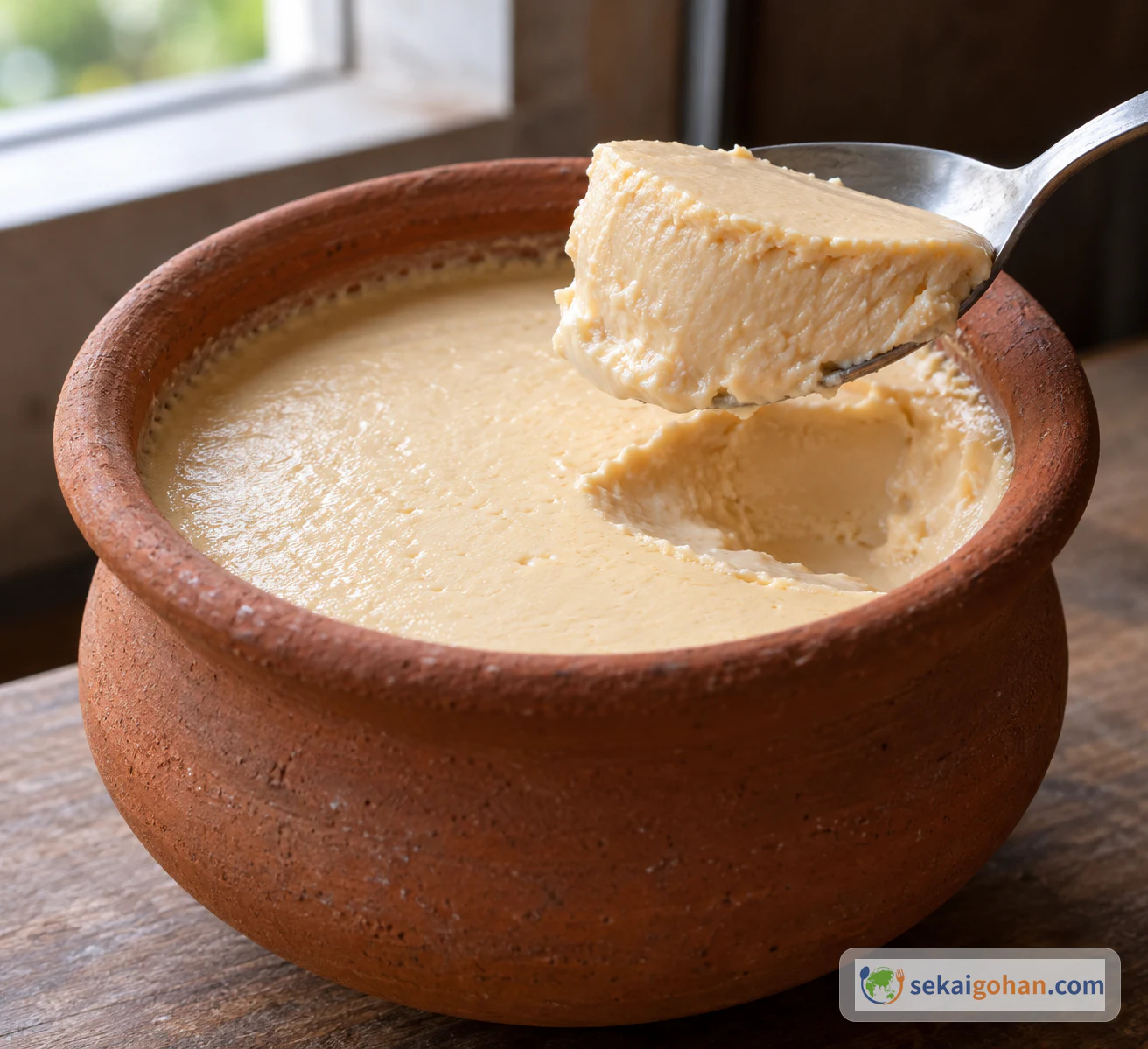
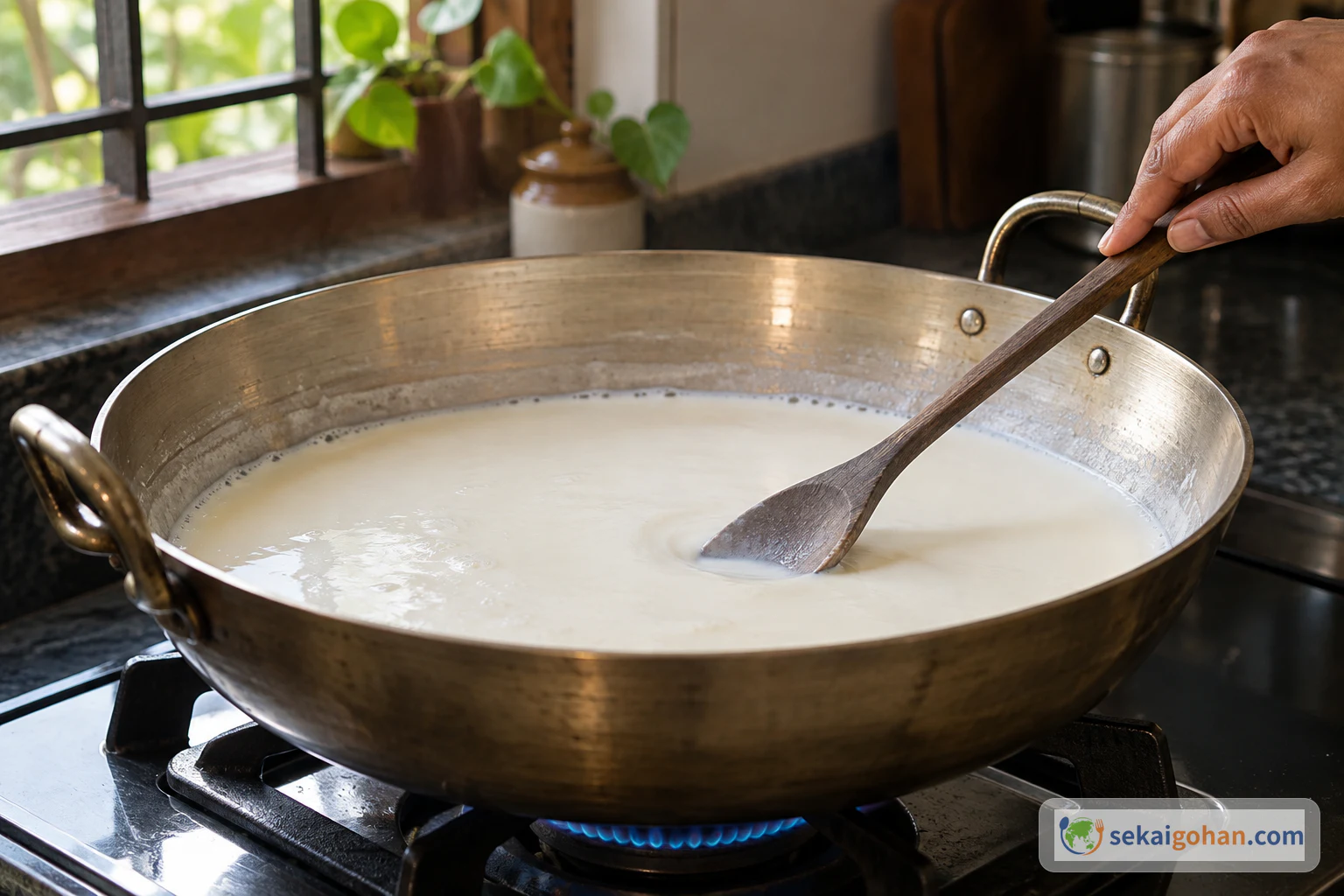
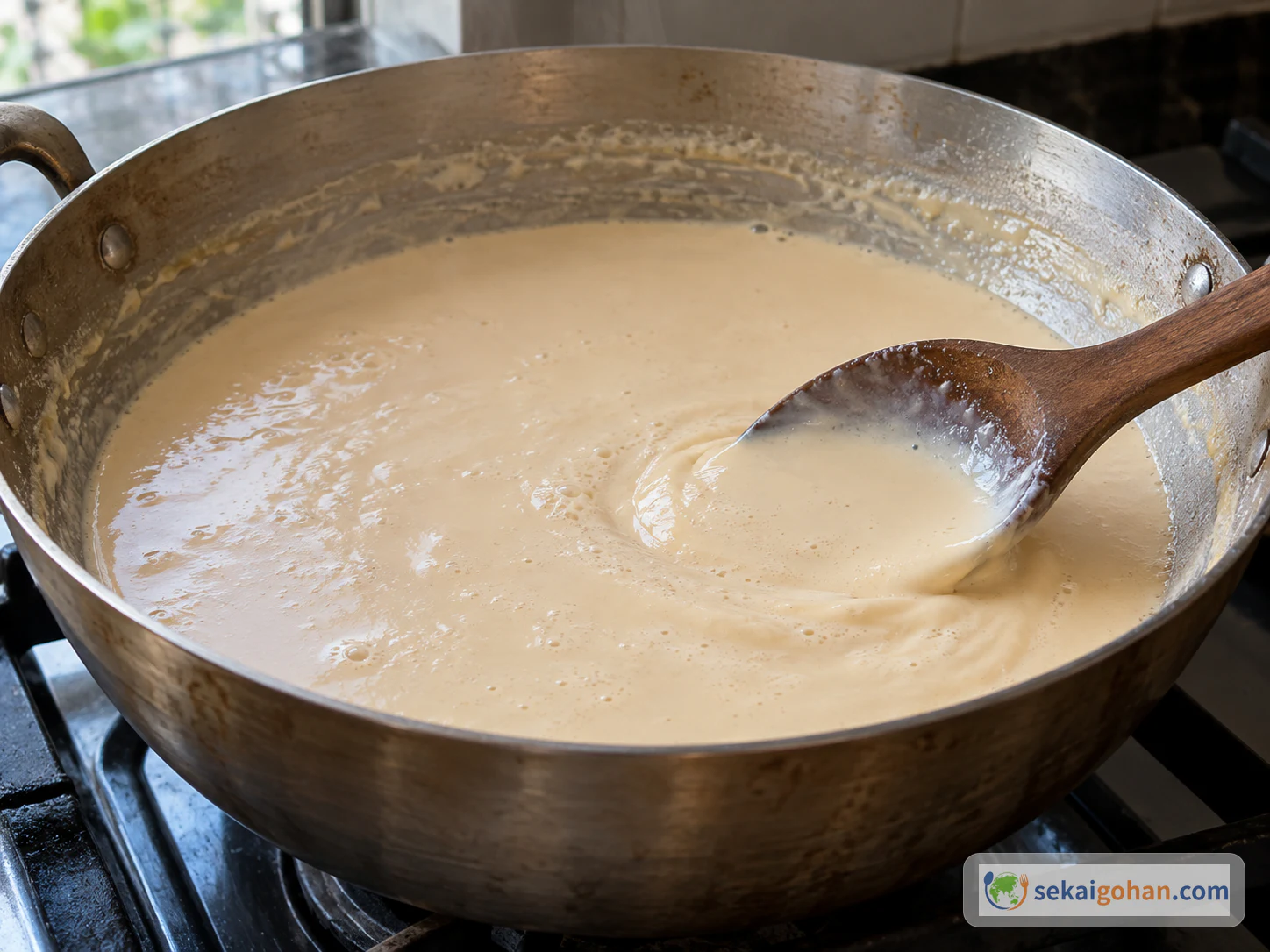
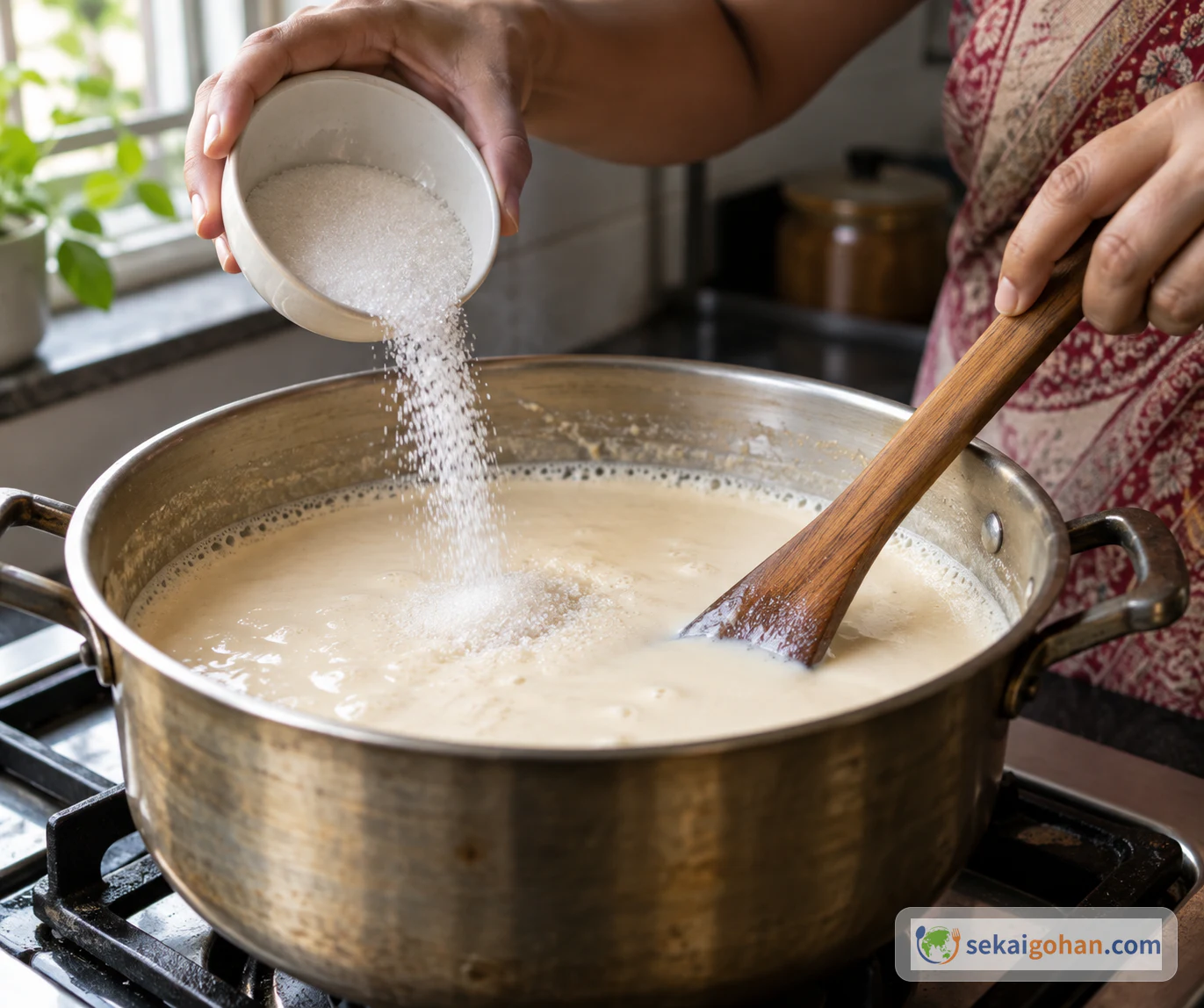
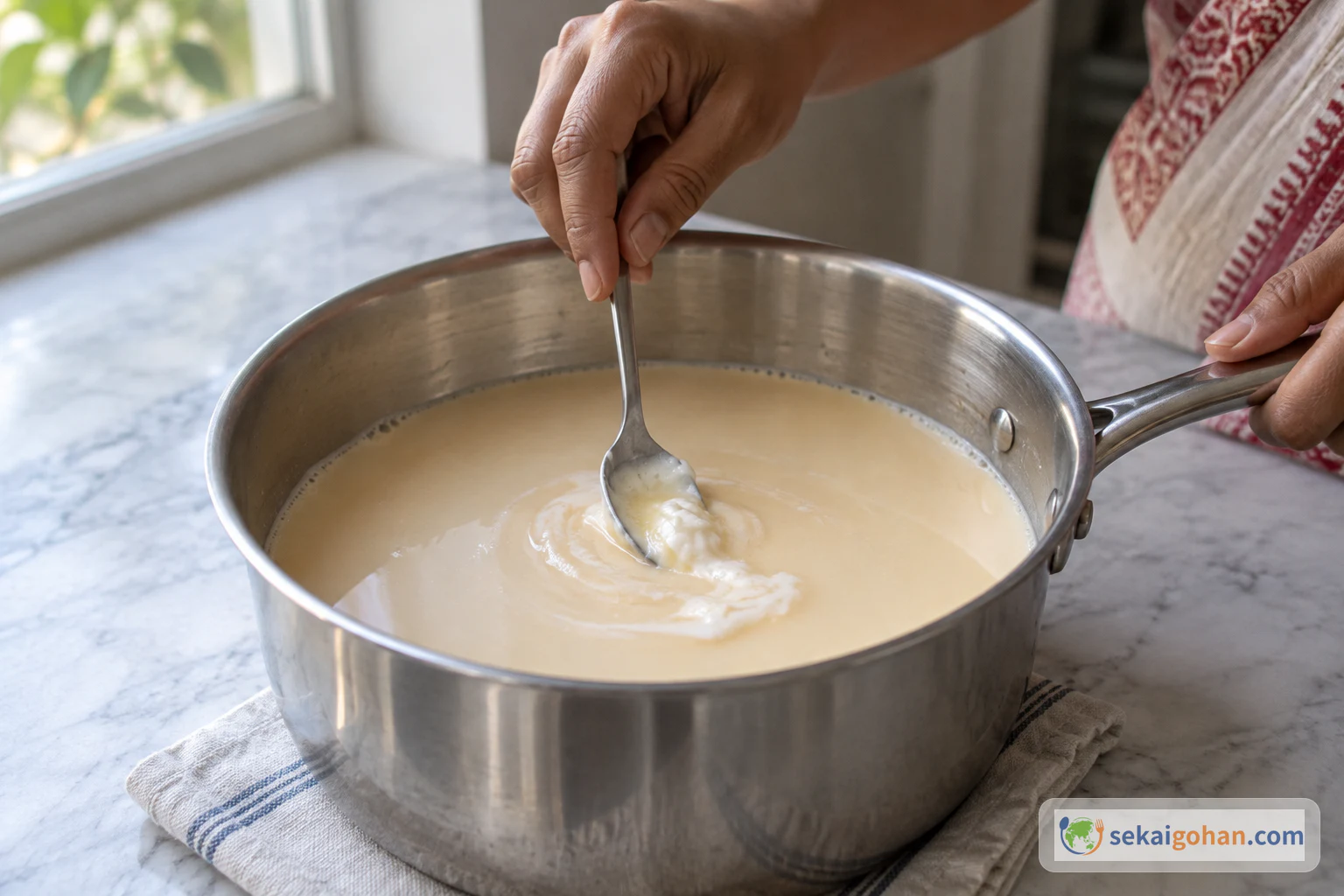
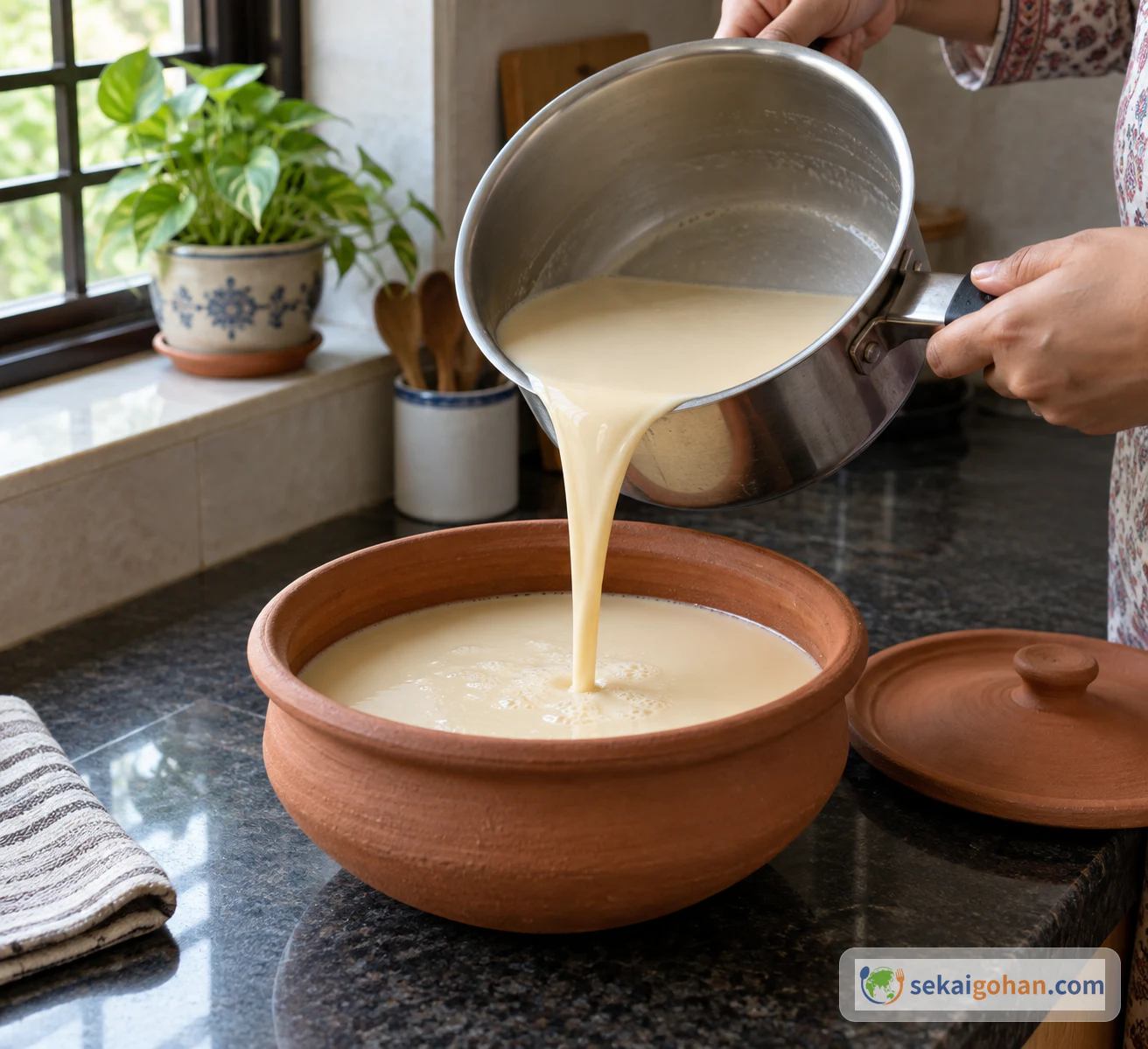
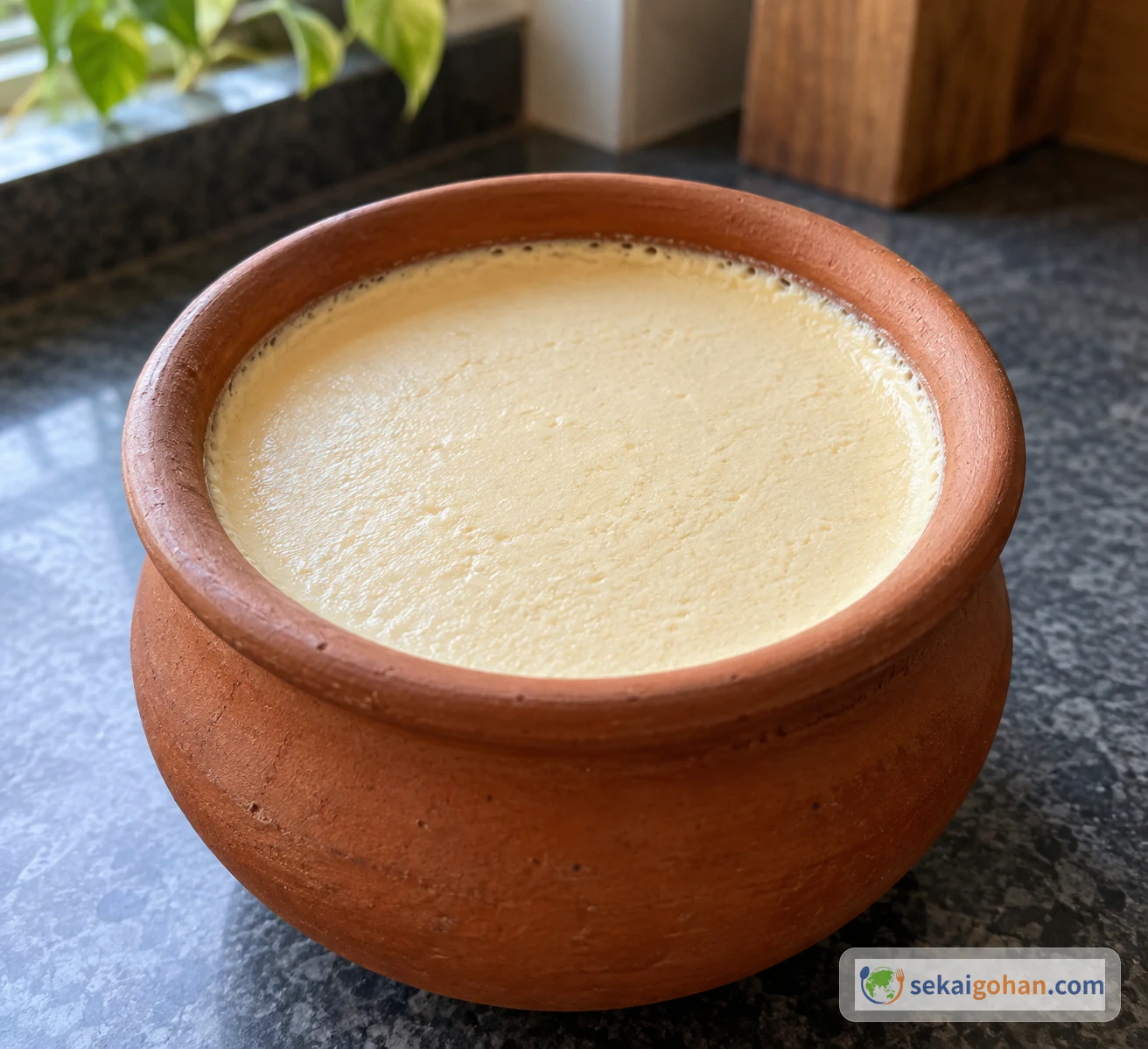
In Sherpur, in the Bogura district of northern Bangladesh, producers cook down milk and sugar until it turns reddish, ladle it into clay pots called sora or into cups, and leave it covered overnight. By morning it has set into Bogurar doi (বগুড়ার দই), a sweetened fermented milk named for the district, formerly written Bogra. The milk is reduced slowly to about half its weight before the sugar goes in, so the doi is denser and sweeter than everyday plain yogurt. How it turns out depends on the milk, the reduction, the sugar, the weather and the maker's skill.
Bogurar Doi in Sherpur
Makers and Producers
Bogurar Doi is a registered Geographical Indication, GI-29, with an application date of January 1, 2018. Most of it is made in Sherpur Thana, by makers from more than one community: Ghosh families, Muslim makers, and people of the Pal community, along with related tradespeople.
Around Sherpur there is a broad network of producers, suppliers and pot makers. One producer works with 1.5 lb (700 g) milk and 6.5 oz (180 g) sugar per sora. Producers keep quiet about what they consider the doi's distinctive features.
A Disputed History
Nobody agrees on where it began. One account traces the doi to the Ghosh makers of Sherpur and dates its start to just after the 1947 Partition. Others describe a tradition of about 250 years and credit other figures, including Ghetu Ghosh.
If you are exploring more Bangladeshi food, bhapa pitha is a steamed rice cake and a completely different dish.
Bogurar Doi: The Confectioner's Method and a Home Version
The confectioner's method gives neither a temperature nor a measured amount of starter, and an ash-covered fire is not a controlled, safe way to keep milk warm at home. For those stages, follow the home version, and keep the two methods' temperatures and times separate; the ash fire's temperature is unknown.
| Stage | Confectioner's method | Home version |
|---|---|---|
| Starter | A pinch of old doi | 2 tablespoons (about 30 mL) of live-culture plain yogurt |
| Cooling | Until the milk has cooled; no temperature given | 42–46°C (108–115°F), checked with a thermometer |
| Vessel | Warmed earthen pot | Clean, food-safe earthen pot, or a clean glass or ceramic container |
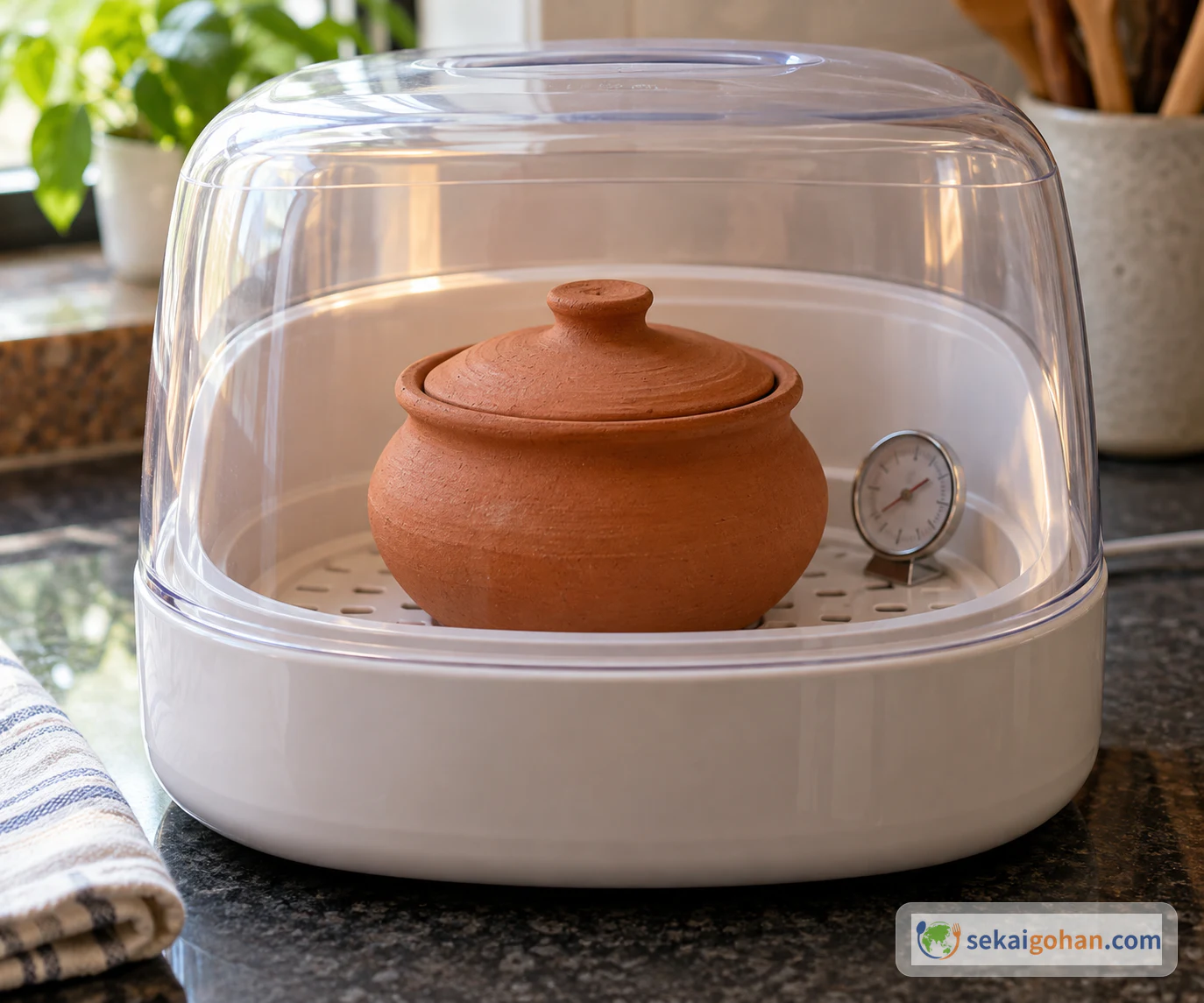
| Keeping warm | On a fire covered with ash for 4 hours, plus 1.5–2 hours more if unset | Held at 42–46°C (108–115°F) for 6–10 hours |
| Finishing | Chilled once set | Refrigerated at 4°C (40°F) or lower once set |
Ingredients: Milk, Sugar and a Live Starter
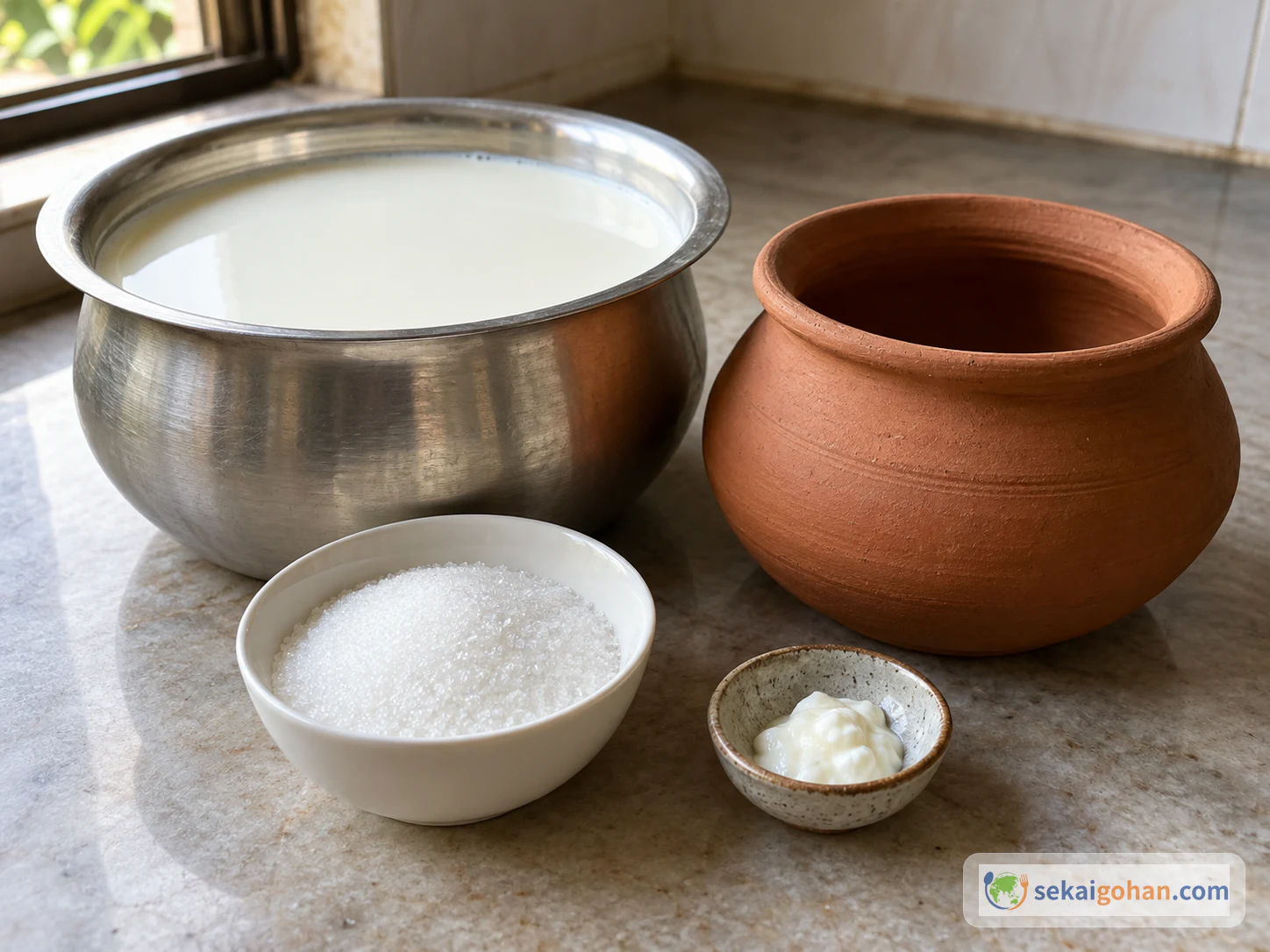
This recipe contains milk and is not suitable for anyone with a milk allergy.
Equipment
- Wide, heavy pot
- Fine strainer
- Long spoon or spatula
- Kitchen scale
- Food thermometer
- Clean, food-safe earthen pot (sora) with a cover, or a clean lidded glass or ceramic container
- Temperature-controlled yogurt maker or another warmer you can monitor with the thermometer
Choosing Milk and Starter for Bogurar Doi
- Milk: The traditional recipe calls for cow's milk without giving a fat level, so whole milk is the closest home choice. Choose pasteurized milk where possible, and always heat unpasteurized milk thoroughly.
- Starter: Use plain yogurt labeled as containing live cultures, within its date and as fresh as possible; yogurt without live cultures will not set the milk. The usual ratio is 2 tablespoons per 4 cups (about 946 mL) of milk. Here you are setting about 2.75 lb (1.25 kg) of reduced milk and sugar, which is larger, thicker and sweeter than plain milk.
- Packaged culture: With a purchased dried starter, follow the maker's directions in place of the yogurt amount.
- Plant-based yogurt: It won't work here. Its cultures set differently, and it won't give the regional style.
Method: From Slow Reduction to a Chilled Set
Clean every pot, spoon and container before you begin. Judge each stage by the weight of the milk, the thermometer reading and the look of the set, not the clock alone.
Bogurar Doi Troubleshooting
| Problem | What to check | What to do |
|---|---|---|
| A film or scorching forms on the bottom of the pot | Heat level and how often you stir | Lower the heat and stir the bottom often, before any burnt smell reaches the milk |
| The doi is white, or it is tan | Length of the reduction | Neither color is a failure. A longer reduction changes the color and flavor |
| The milk stays liquid | Starter freshness and live cultures, temperature when the starter was added, warming temperature, cleanliness of the equipment | Continue only if the thermometer shows you can hold 42–46°C (108–115°F). If it does not set under these conditions, discard it without tasting |
| It smells off, or shows mold or an unusual color | Do not taste it to check | Discard it |
Serving Bogurar Doi and Variations
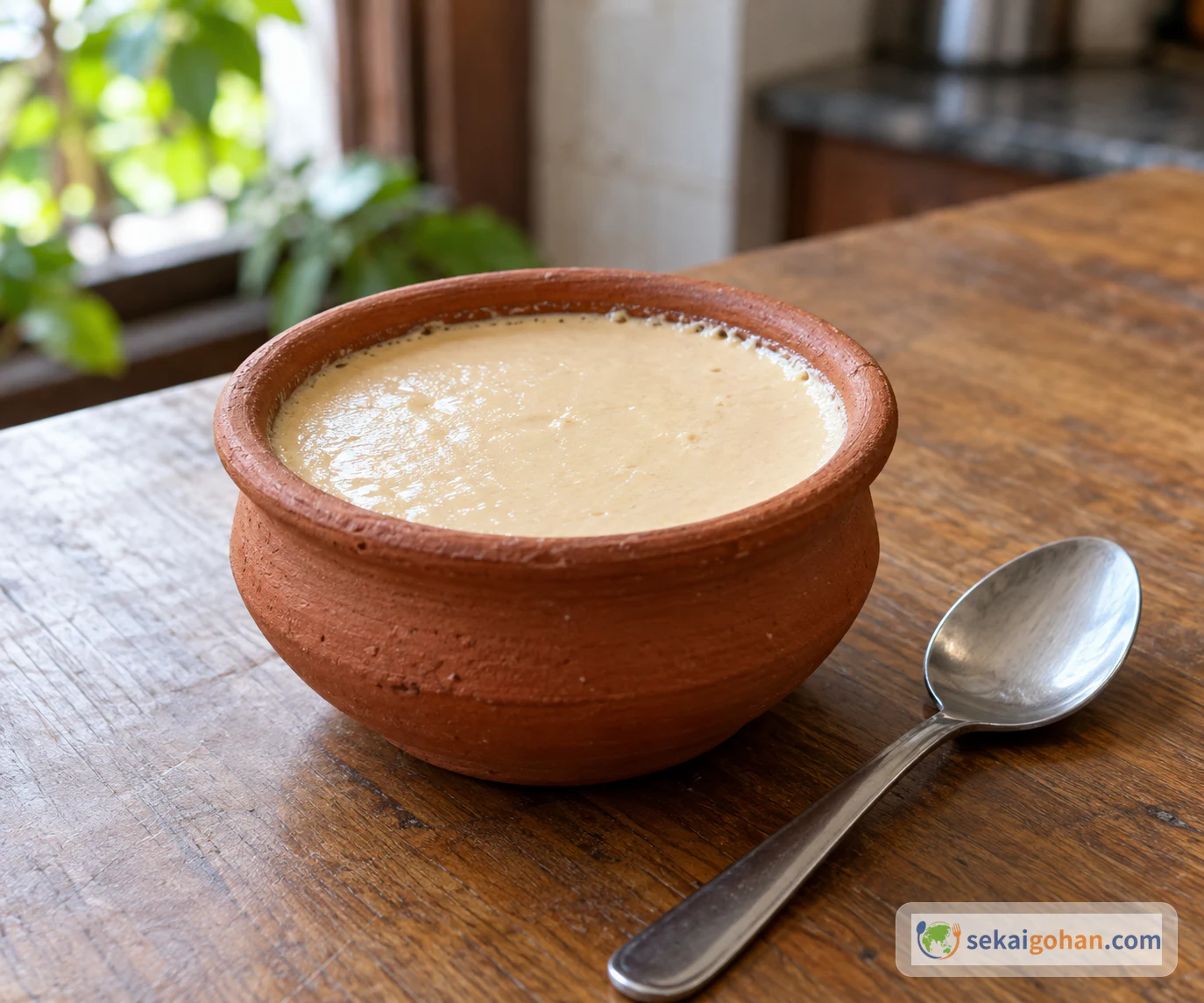
Serve the doi chilled, right in its pot, and scoop it out with a spoon. It needs no nuts, garnish or accompaniment.
The variations below all use the same base ingredients. There's no baking soda, separate caramel, cardamom or jaggery in this doi.
- White finish: Reduce the milk by half in about 2 hours.
- Ghee-colored finish: Allow 3–3.5 hours, and still confirm that the milk has reduced to about half.
- Glass or ceramic container: A clean, food-safe container works with the same temperature control. It will ferment, but it won't match the absorption or texture of clay, and remember that a clay pot by itself never replaces temperature control.
- Packaged live starter: Follow the maker's directions rather than estimating from the confectioner's pinch of old doi.
Frequently Asked Questions
Are Bogurar doi and mishti doi the same?
They share the sweet, fermented-milk style, but Bogurar Doi is the name tied to Bogura and its GI listing.
How much doi does this make?
The confectioner's method lists 2.25 lb (1 kg) as the output, which does not match adding 9 oz (250 g) of sugar to 2.25 lb (1 kg) of reduced milk.
How long does it keep in the refrigerator?
Keep it refrigerated at 4°C (40°F) or lower, and discard it if it smells off or shows mold or an unusual color.