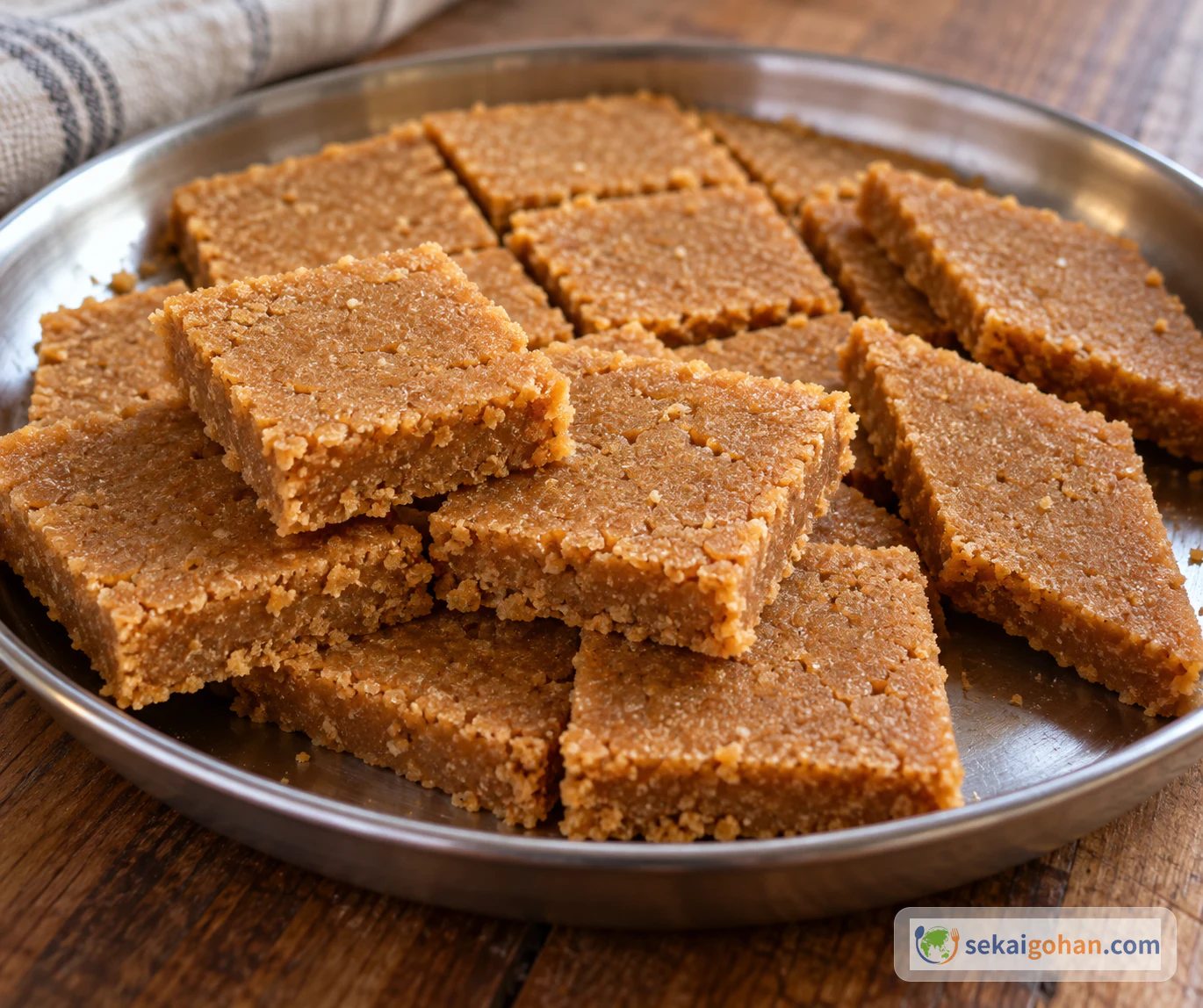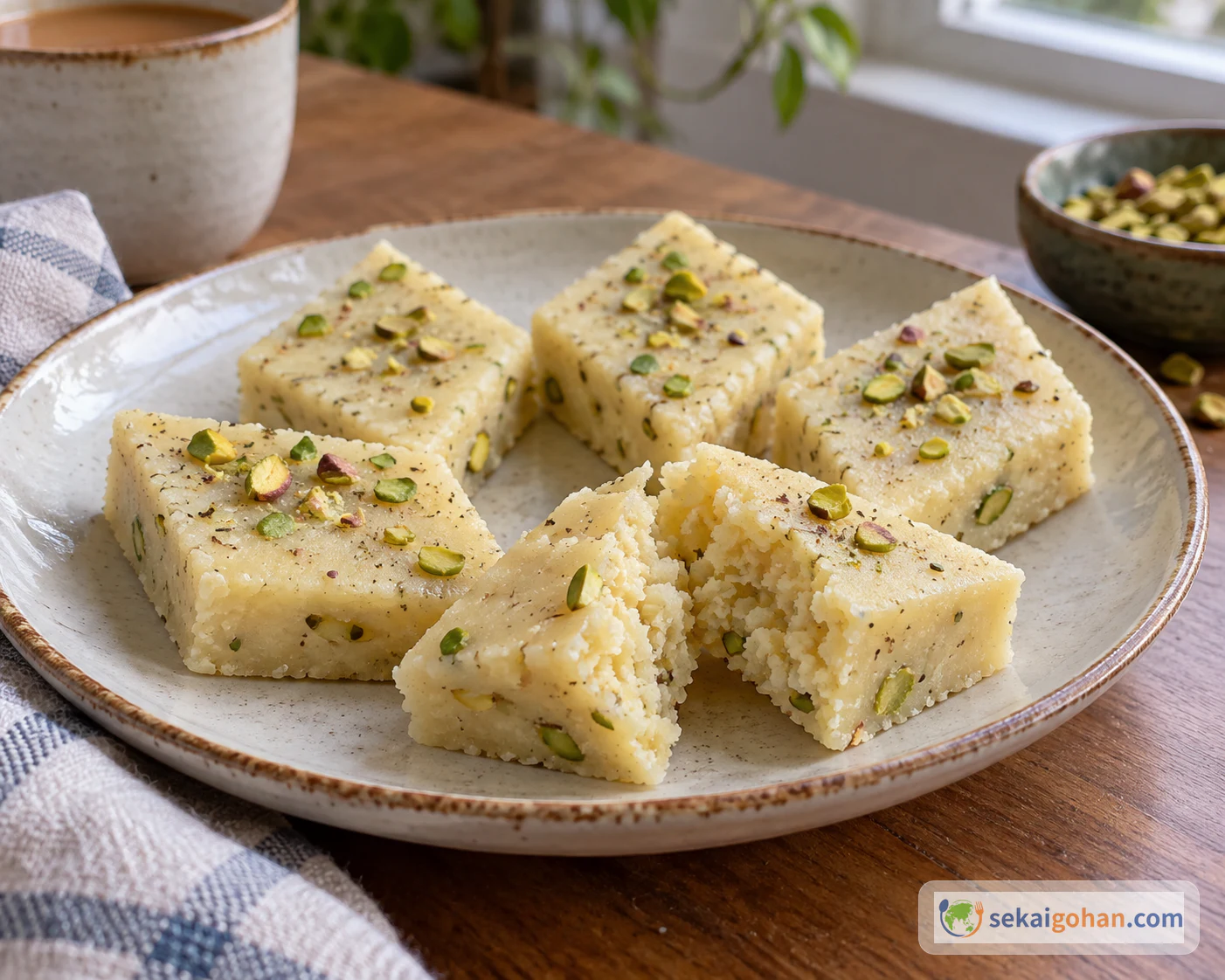
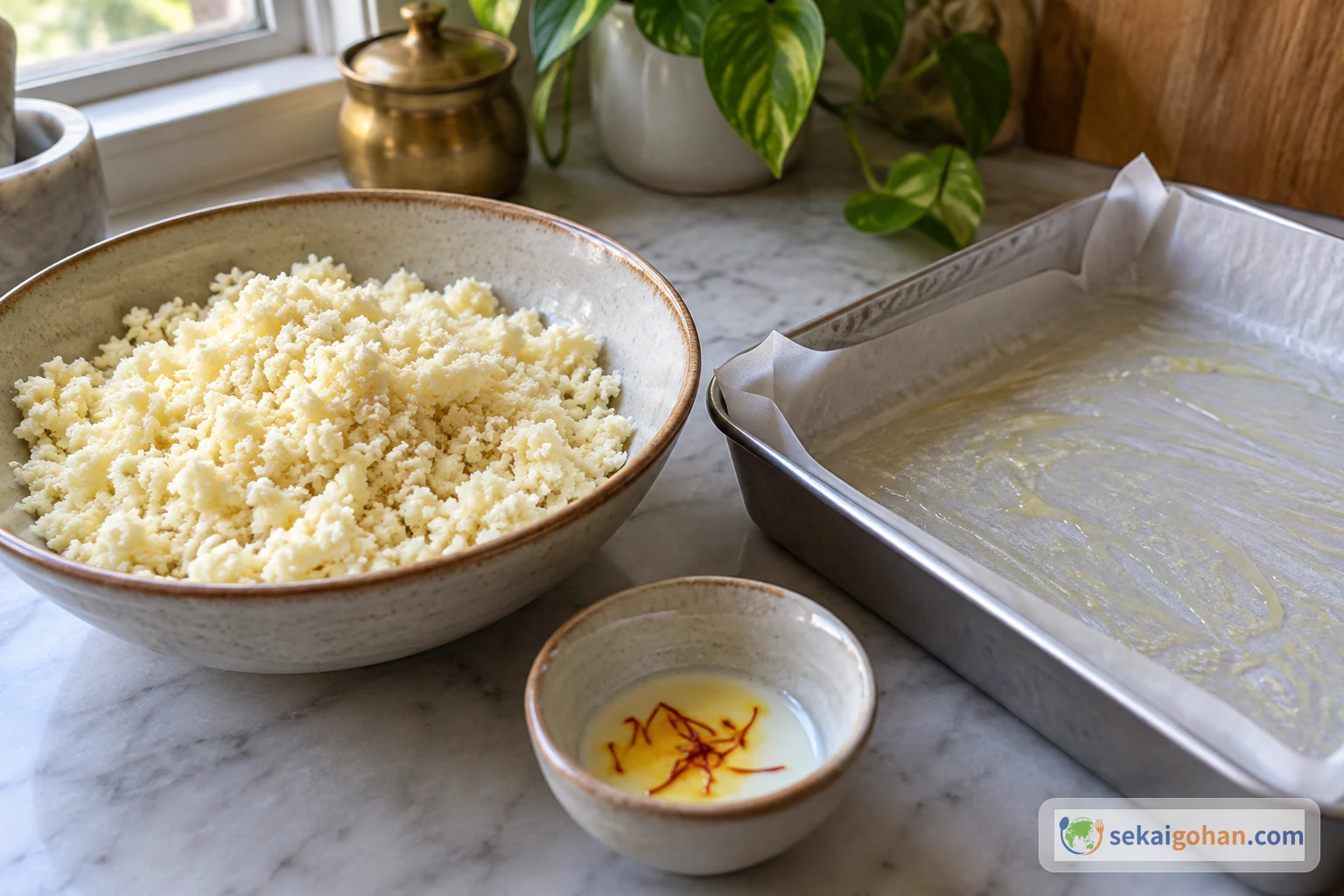
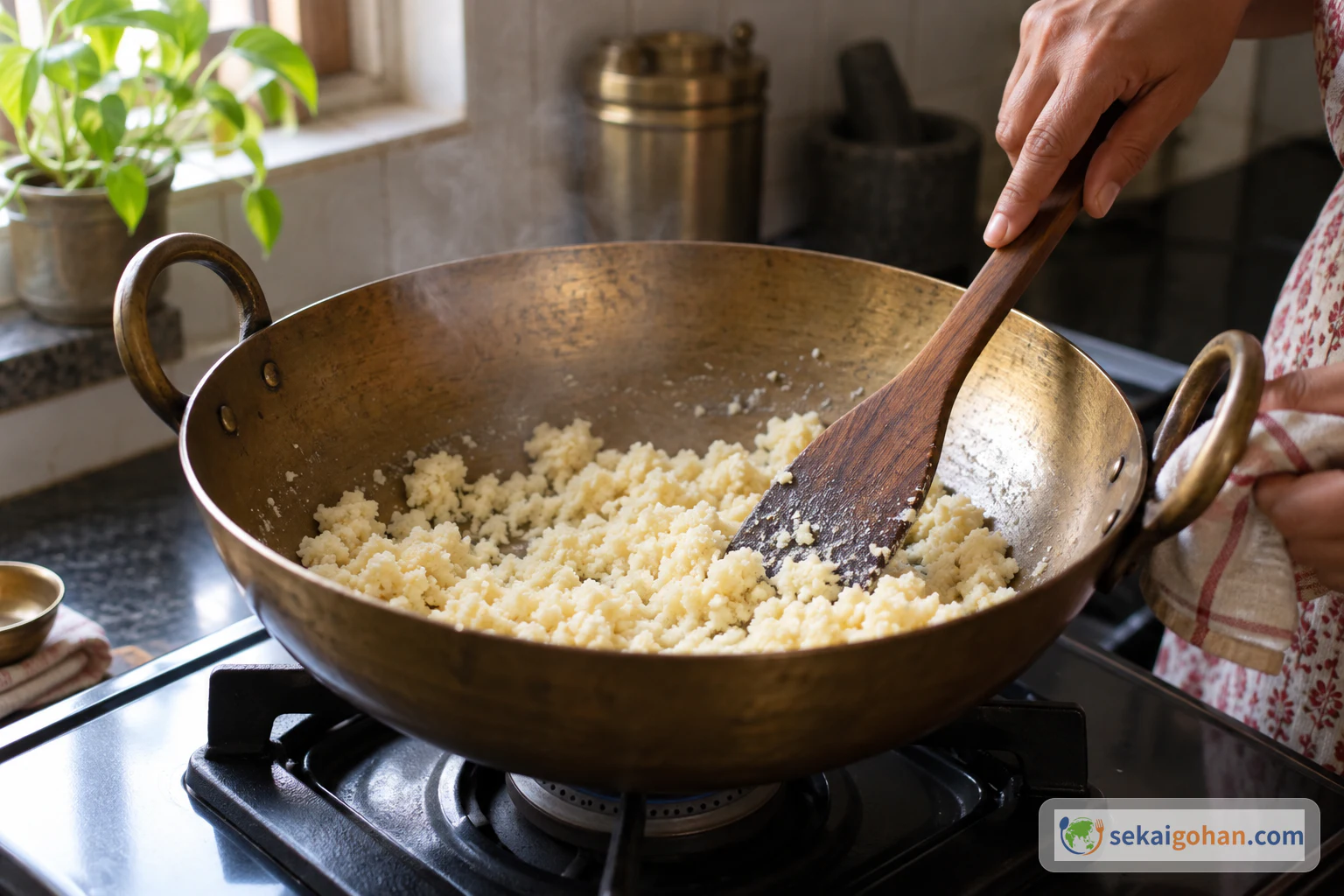
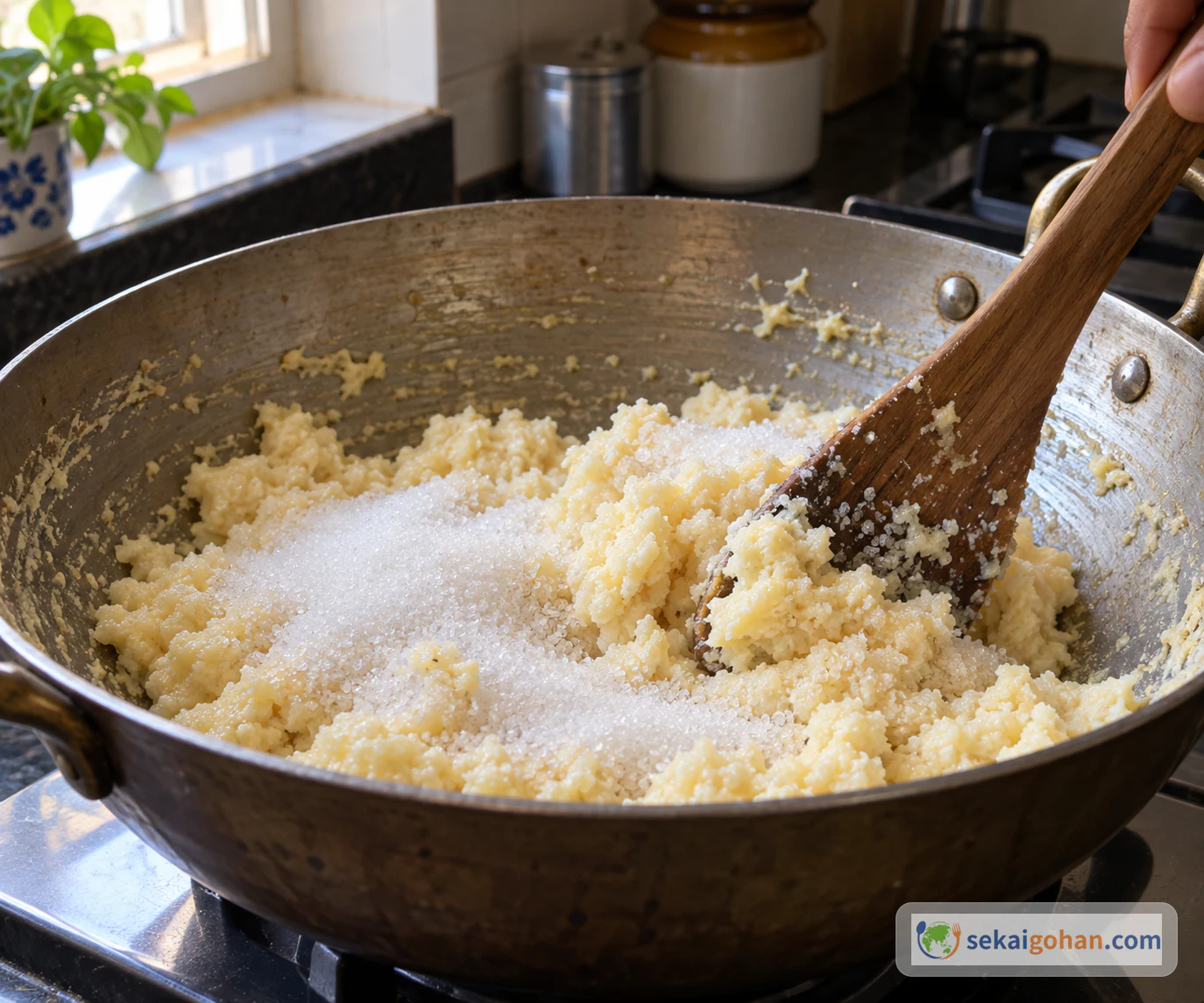
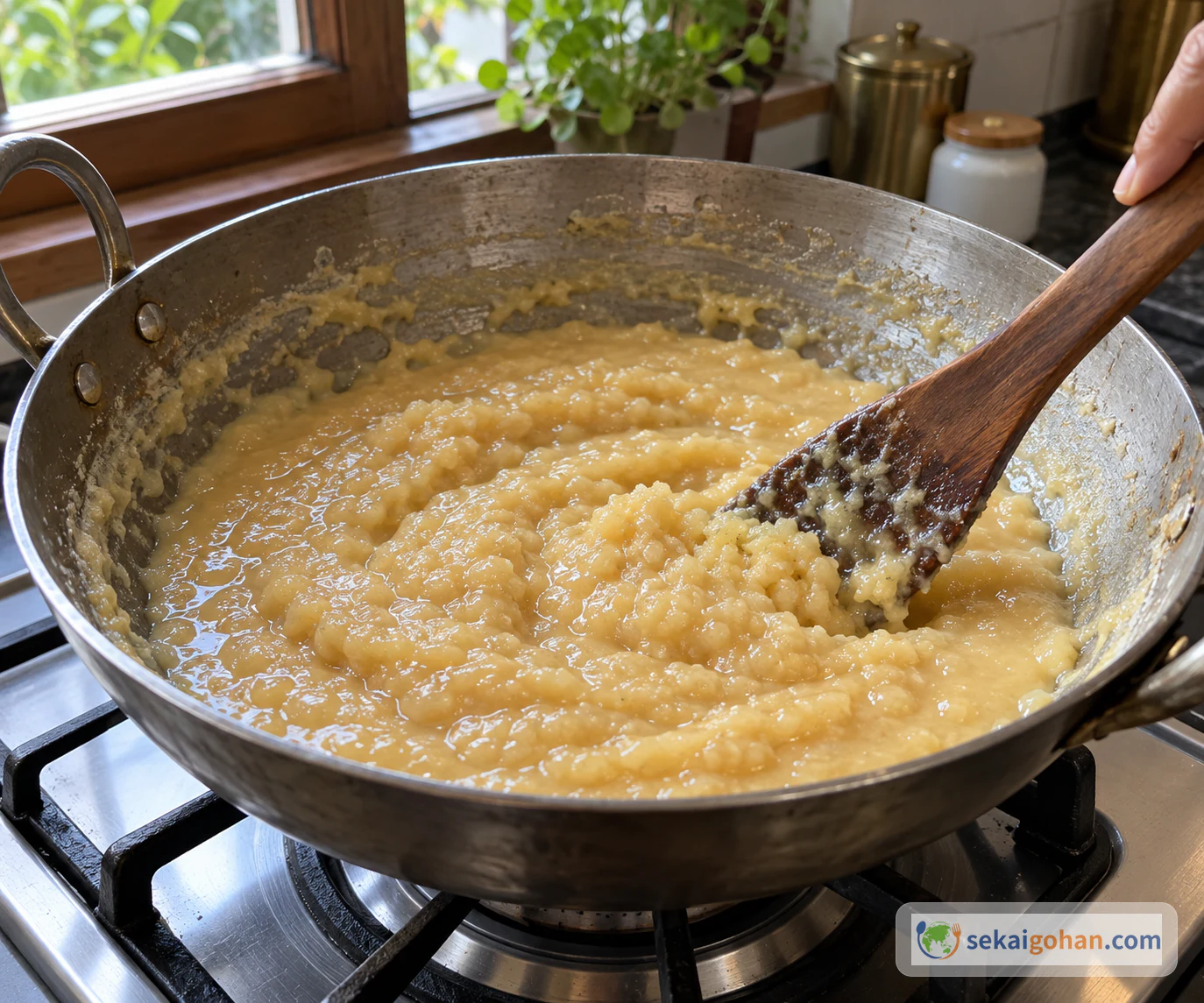
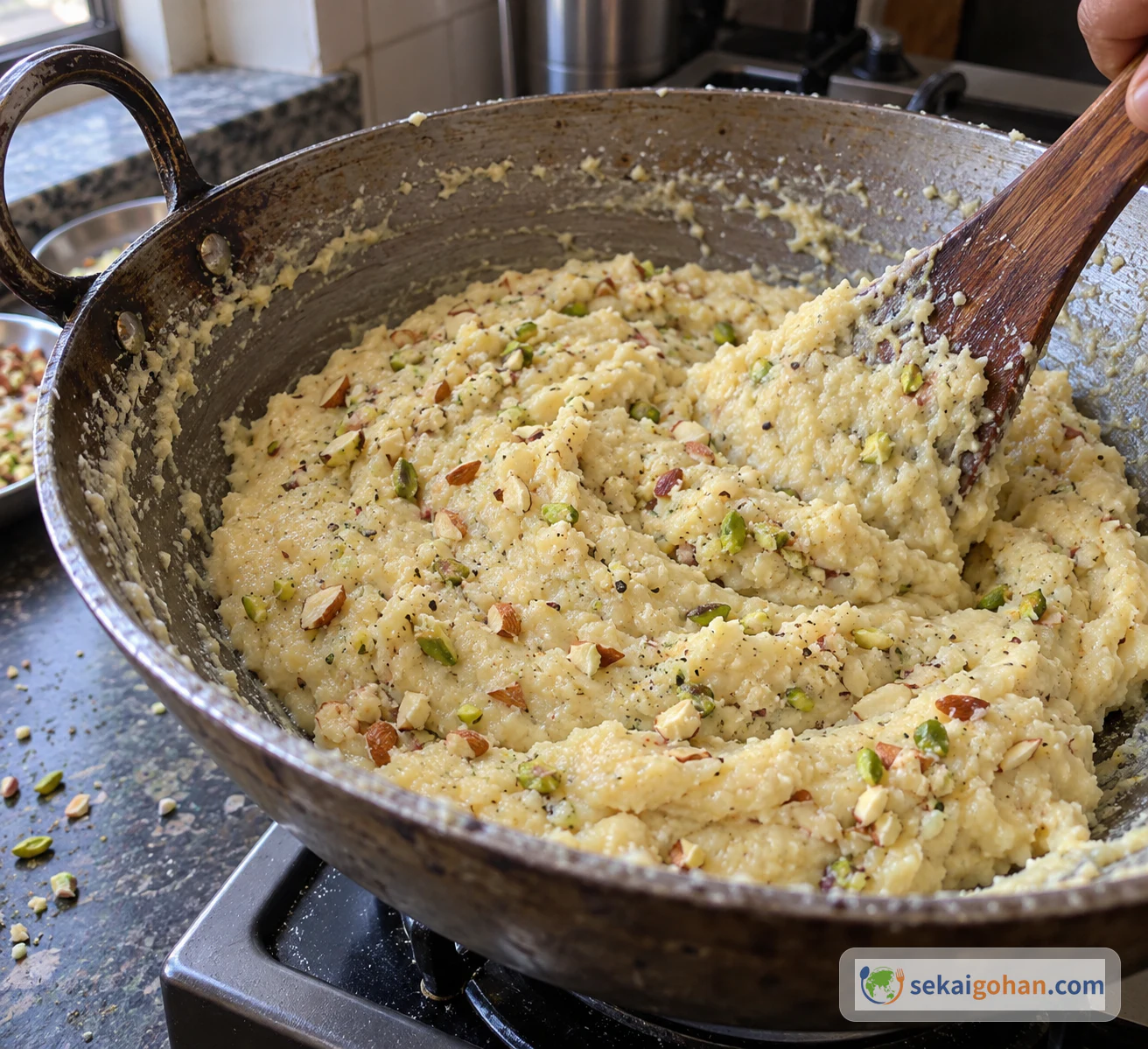
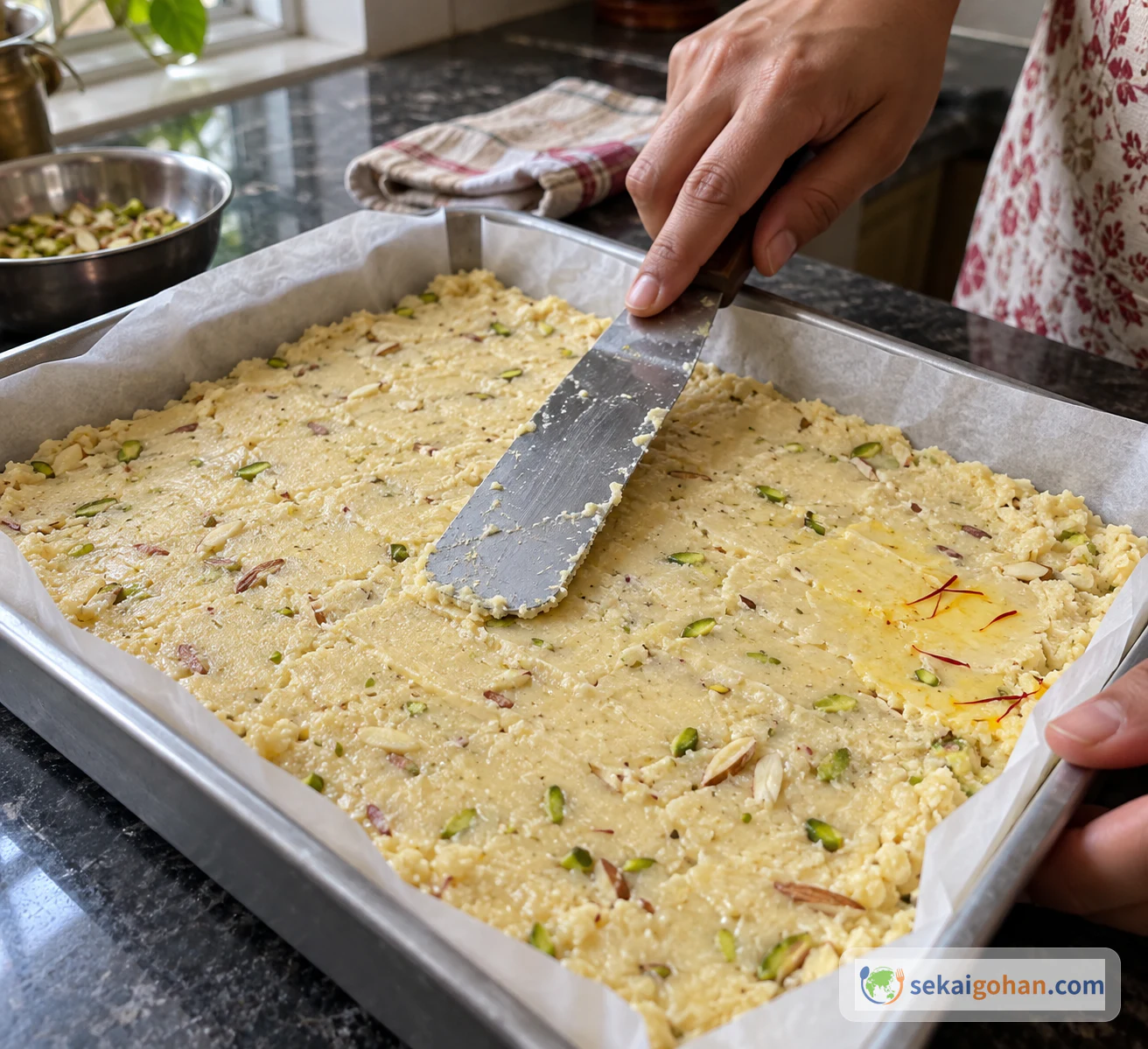
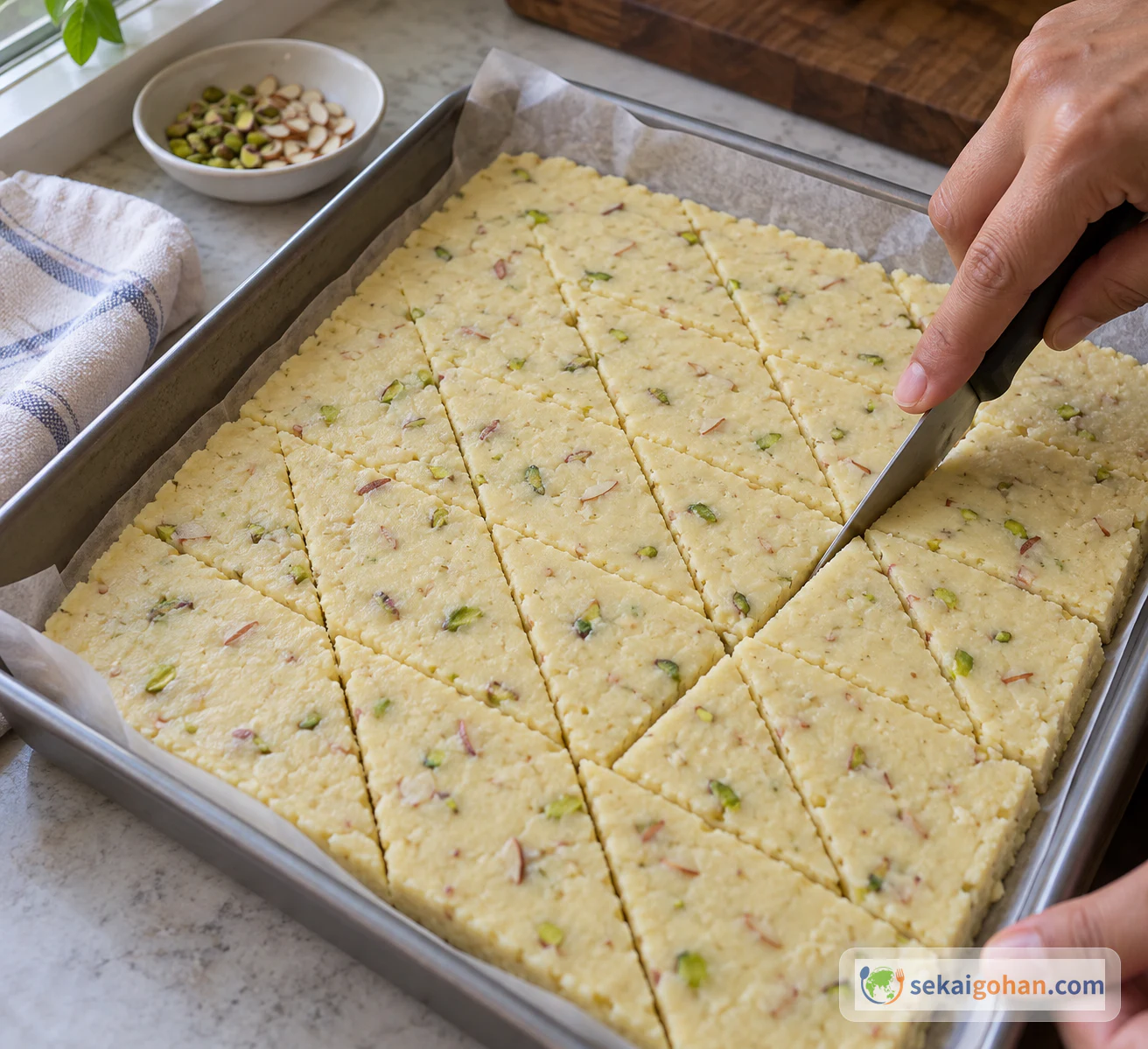
Warm khoya sits crumbly and pale in a heavy pan. Once the sugar goes in and the heat comes back on, the sugar melts and the whole thing turns loose and glossy for a moment, then slowly, with low heat and steady stirring, starts coming away from the sides of the pan. That change is the heart of a plain khoya barfi, a North Indian sweet of milk solids cooked down with sugar, scented with cardamom, scattered with nuts and cut into small squares or diamonds once set.
Khoya Barfi and Its Many Relatives
Barfi is a whole family of Indian sweets, and its color, texture and shape depend on what it's made from. Besides khoya, it's made with coconut, besan (gram flour), fruit, nuts and more. Coconut barfi and besan barfi share the name but follow their own formulas, so each needs a recipe written for that type. The version here is a basic North Indian barfi built on unsweetened khoya and sugar.
Khoya (also called mawa) is milk cooked down into concentrated milk solids. There are several types, each suited to different sweets. Khoya gives this barfi its body and richness, so how you source it matters more than any other choice you'll make.
Punjab shows just how much one name can cover. In Faridkot, Dodha burfi is a local specialty with its own formula. Its origin story is dated to 1912: a Punjabi wrestler created it, and the family carried it on through the migration after Partition.
For more dishes from the same country, see India.
Ingredients: Unsweetened Khoya at the Center
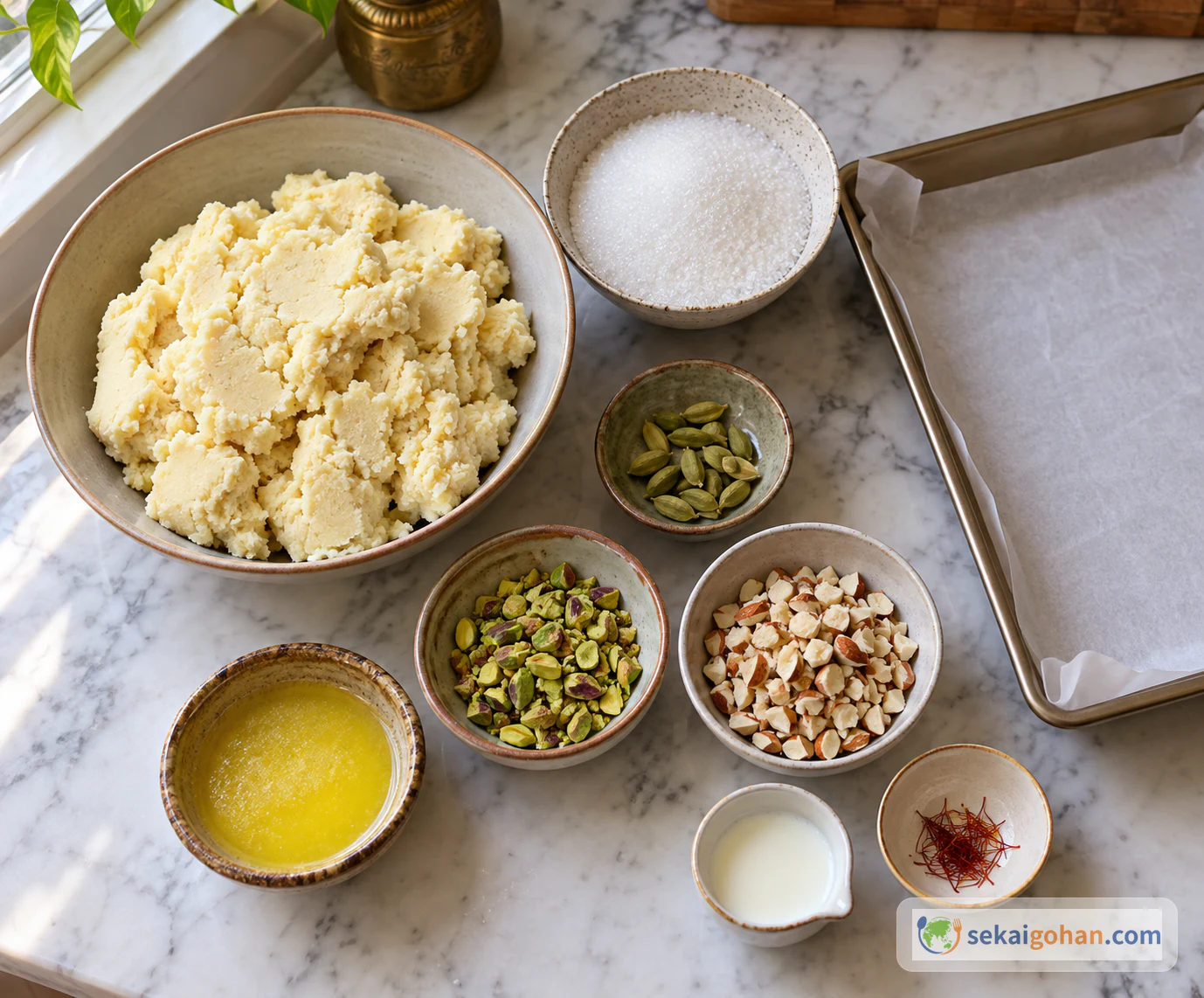
This batch makes 14 slices; the slice size has not been measured.
The photos in this article use almonds as the second nut.
Equipment
- A small heavy-bottomed pan or kadai
- A wooden spatula
- A fine grater, or a fork for crumbling
- A shallow tray that can be lined with parchment
- Parchment paper
- A small knife for cutting
- A mortar and pestle for the cardamom (optional)
Choosing Ingredients for Khoya Barfi
Khoya. Look for unsweetened khoya (mawa) at Indian grocery stores or South Asian grocery shops online; "khoya," "mawa" and "unsweetened" are useful search terms. Check the label to see whether it's sold chilled or frozen, and confirm that it is unsweetened.
Milk powder, condensed milk and fresh milk are not equivalents. Their moisture, sweetness and milk-solid content differ from khoya's, so swapping one in at the same weight won't give the same mixture or texture. If you can't find khoya, a recipe written for the ingredient you do have will serve you better.
Cardamom, whole pods or ground, is sold at Indian grocers and import food shops. Stick with it; cinnamon or other spices would change the sweet's aroma. A different sugar changes the texture. For nuts, unsalted is the better choice, and use either almonds or cashews alongside the pistachios rather than both. Ghee only greases the tray, and unsalted butter would bring a different flavor.
This barfi contains dairy (khoya, ghee, and milk if used) and tree nuts (pistachios, plus almonds or cashews). The nuts are optional. Leaving them out does not by itself make the barfi safe for anyone with a nut allergy, so check khoya and other product labels for shared-facility or cross-contact statements.
Method: Warm, Sweeten, Reduce, Set
Use the minute ranges below as a starting point. Pan material, pan size and burner strength all change the timing. Stop the reduction when you see the mixture thicken slightly and pull away from the sides of the pan.
Getting the Texture Right
Firmness is decided after the sugar goes in. As the sugar melts, khoya that was crumbly a moment ago turns loose and glossy, which is why the pan seems to go backwards in step 3. Low heat and steady stirring then drive off the moisture until the mixture thickens slightly, holds together and begins to leave the sides of the pan. That release is your cue to stop.
Treat the 8–9 minutes as a starting point. Pan weight, burner strength and batch size can each shift it by a few minutes, so watch the pan rather than the clock. If a batch disappoints, check this stage before blaming the ingredients.
| Problem | Likely cause | What to do |
|---|---|---|
| It stays soft and will not set | Stopped before the mixture began to leave the sides of the pan | Leave it in the tray. Next time, keep cooking until the mixture thickens slightly and releases from the sides |
| Hard or very chewy | Cooked too long after the sugar went in | Stop as soon as the mixture starts pulling away from the sides |
| Browned or scorched spots | Heat too high, thin pan, or not enough stirring | Keep the heat low, use a heavy-bottomed pan, and stir often |
| Texture is off even though the timing matched | A different dairy product was used in place of khoya | Use unsweetened khoya; milk powder and similar products behave differently |
Serving, Storing and Varying Khoya Barfi
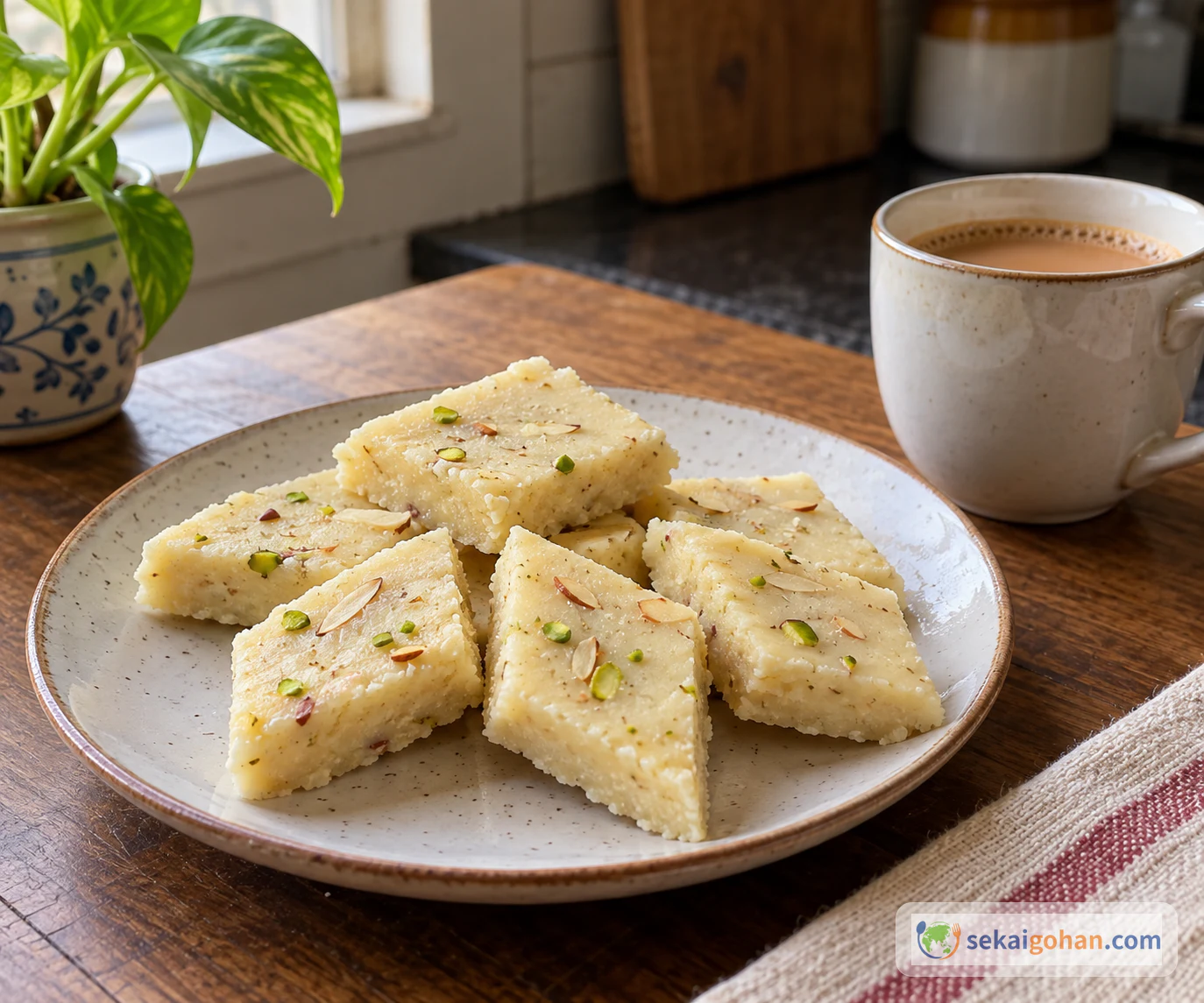
Barfi is served as it is, in small pieces, and isn't reheated. Khoya is rich, so a small plate goes a long way.
Keep barfi in an airtight container in the refrigerator, and eat it soon.
For a pistachio-forward barfi, let the pistachios be the nut you notice while keeping the amounts as written. The nuts are optional, but see the allergen note above before treating a nut-free batch as nut-safe.
Frequently Asked Questions
Are barfi and burfi different sweets?
No. They are two spellings of the same name, which is tied to barf, meaning snow, for the sweet's white look.
Can I make it without saffron?
Yes. Saffron and the milk it soaks in are optional. Leave both out and the barfi still comes together.