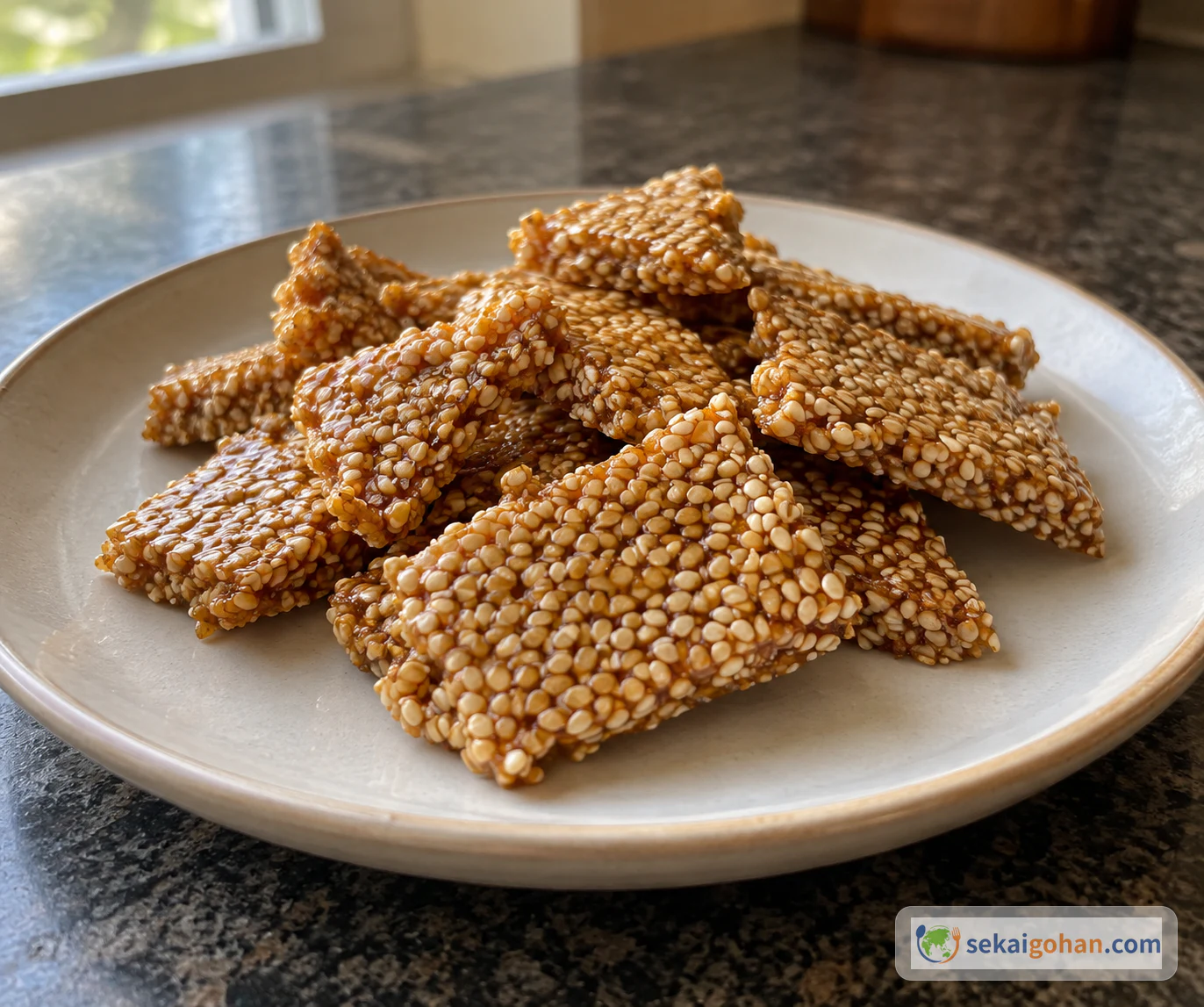
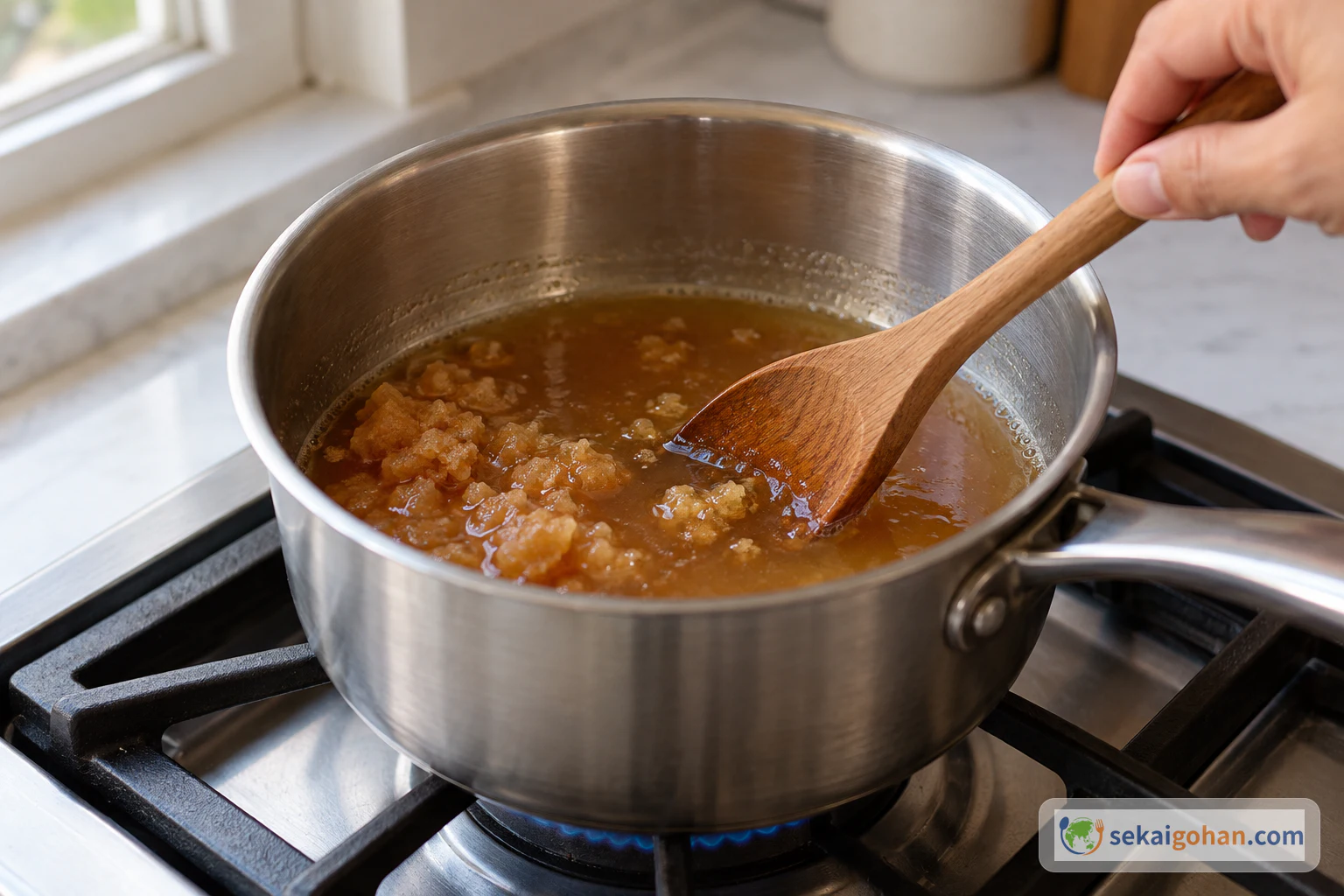
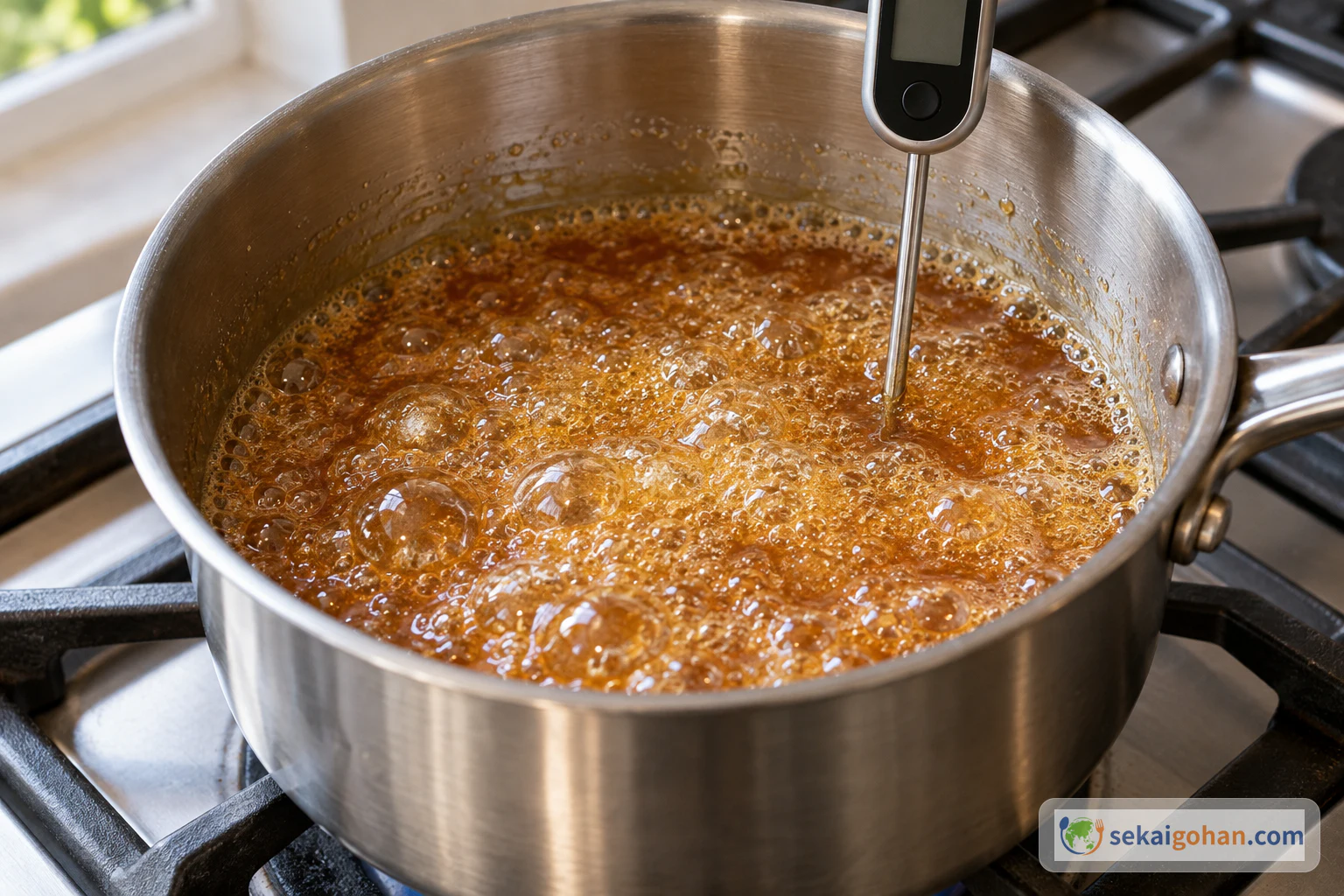
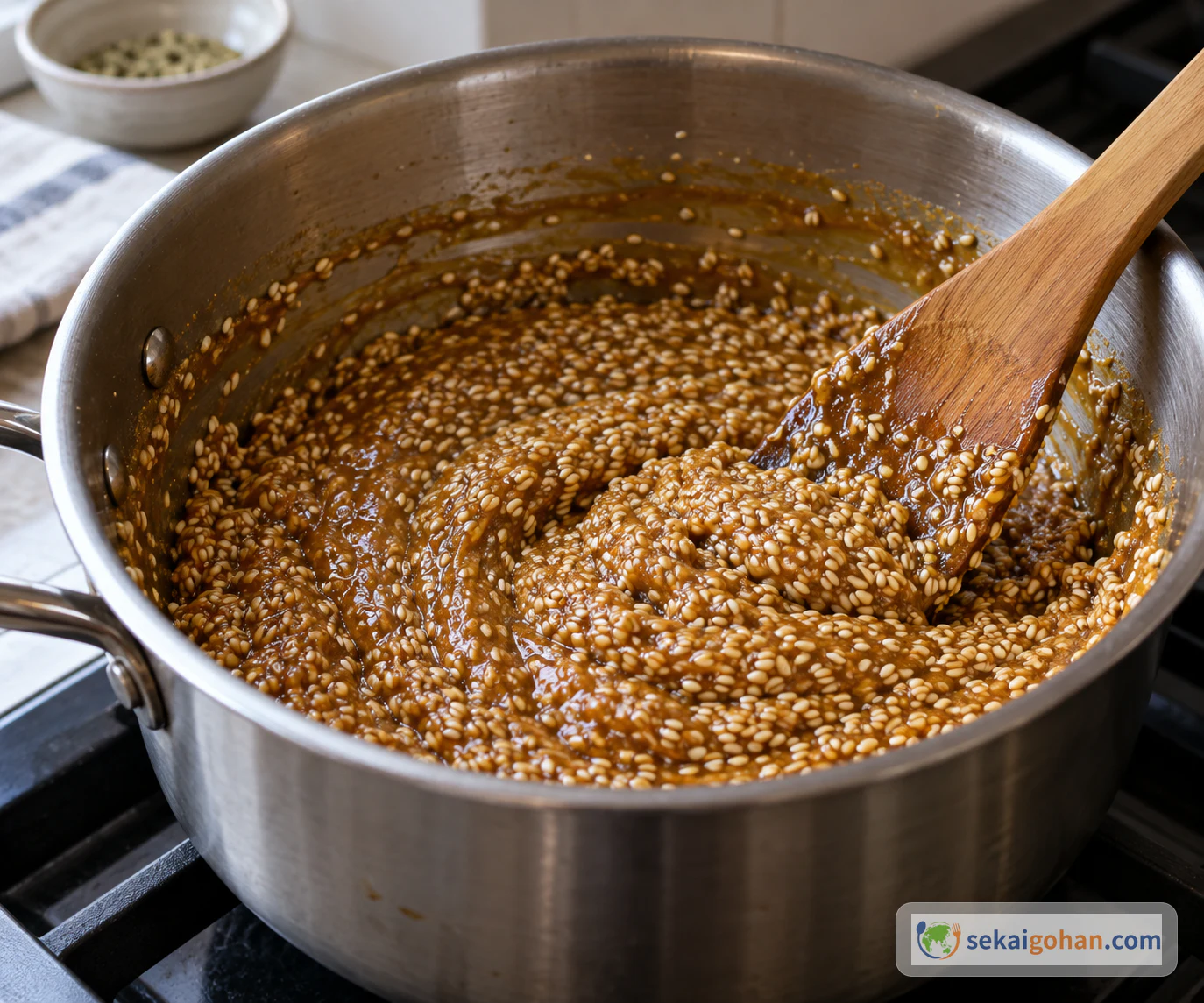
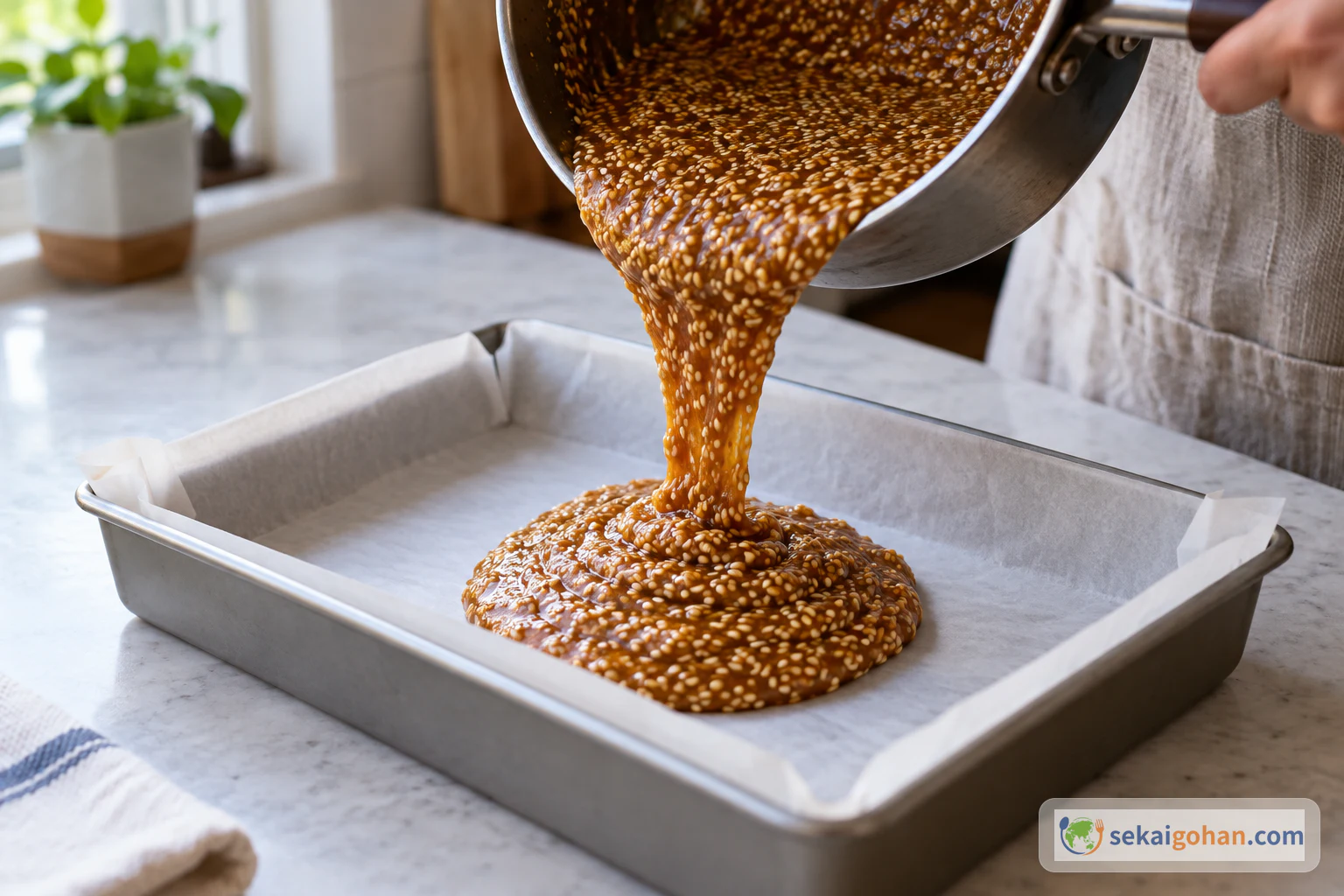
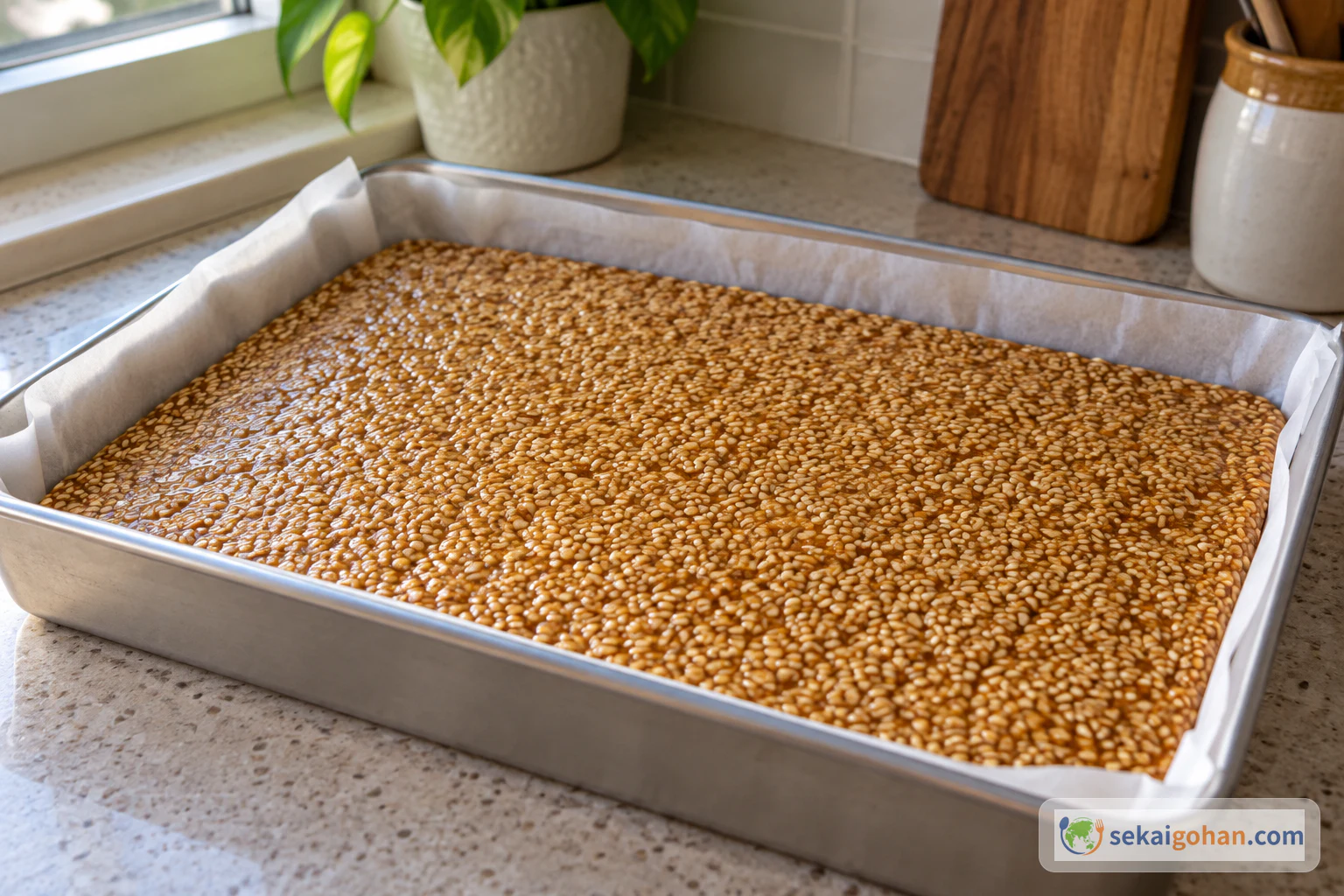
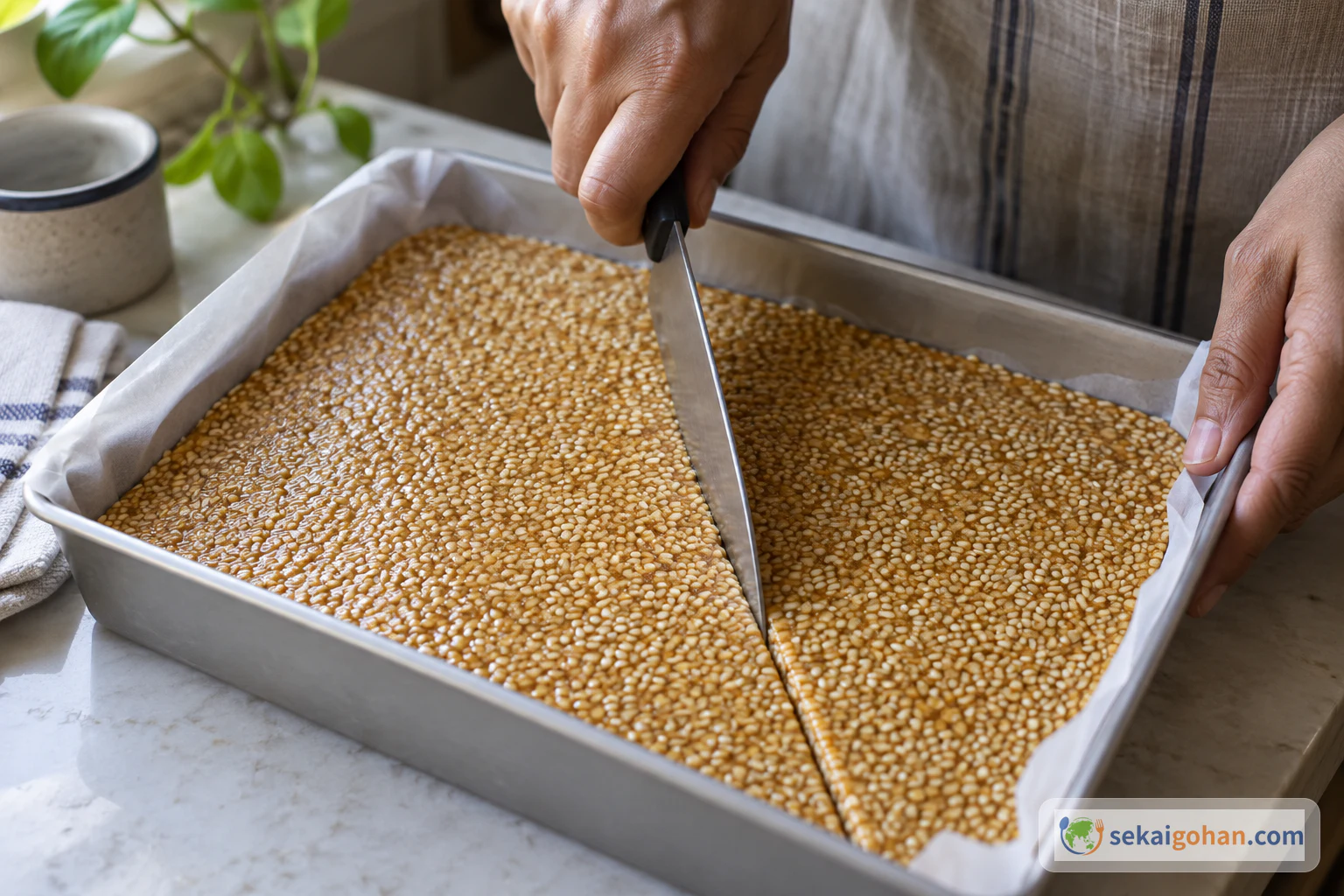
Grated jaggery melts into water over medium heat, then boils on its own, with the spoon set aside, until the syrup is ready for toasted sesame, ground cardamom and ghee. Poured into a lined pan and left until firm, it cuts into 25 pieces of til ki gajak, a sesame and jaggery sweet from India. The hands-on work is short: 5 minutes of prep and 10 of cooking. Most of the time goes to waiting, since the slab needs to stand for 4 hours, or until firm. For more dishes from the same country, visit the India country page.
Til ki Gajak and the Gajak Family
Gajak names a whole family of dry sweets. Its types include Gud-Til Gajak, made with jaggery (gud) and sesame (til), Til Revadi Gajak, another sesame-based type, Peanut Jaggery Gajak/Chikki and Til Mawa Gajak, named for mawa. Names and recipes vary from region to region.
Peanut Jaggery Gajak/Chikki is the one case where the two names appear together. Elsewhere, gajak and chikki are separate sweets, so it helps to keep them apart.
Gajak originates in Morena, in Madhya Pradesh, where it is made with sesame and jaggery, especially in winter. "Morena Gajak" is a registered geographical indication for Madhya Pradesh, certificate number 436. The version here is a home-style sesame and jaggery sweet, separate from that registered product.
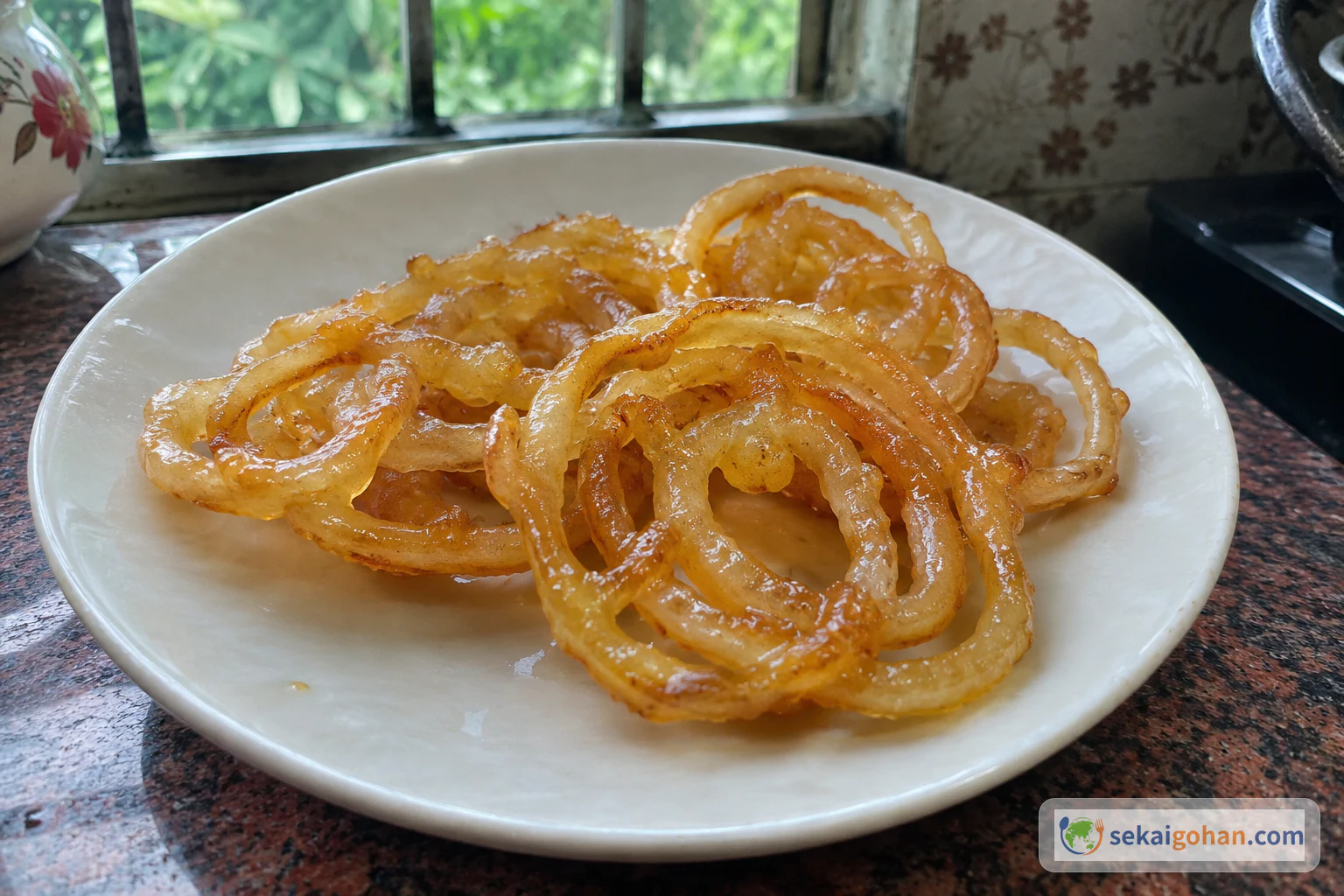
Similar names can lead you to quite different sweets. Khasta Gaja, from Odisha, is a dough of maida, atta, ghee and curd that is rolled, sliced, deep-fried and soaked in sugar syrup. Sweet Gaja is strips of maida dough, deep-fried and dipped in syrup, and Chhena Gaja is built mainly on chhena and semolina, fried and then soaked in syrup. All of them differ from til ki gajak in both ingredients and method.
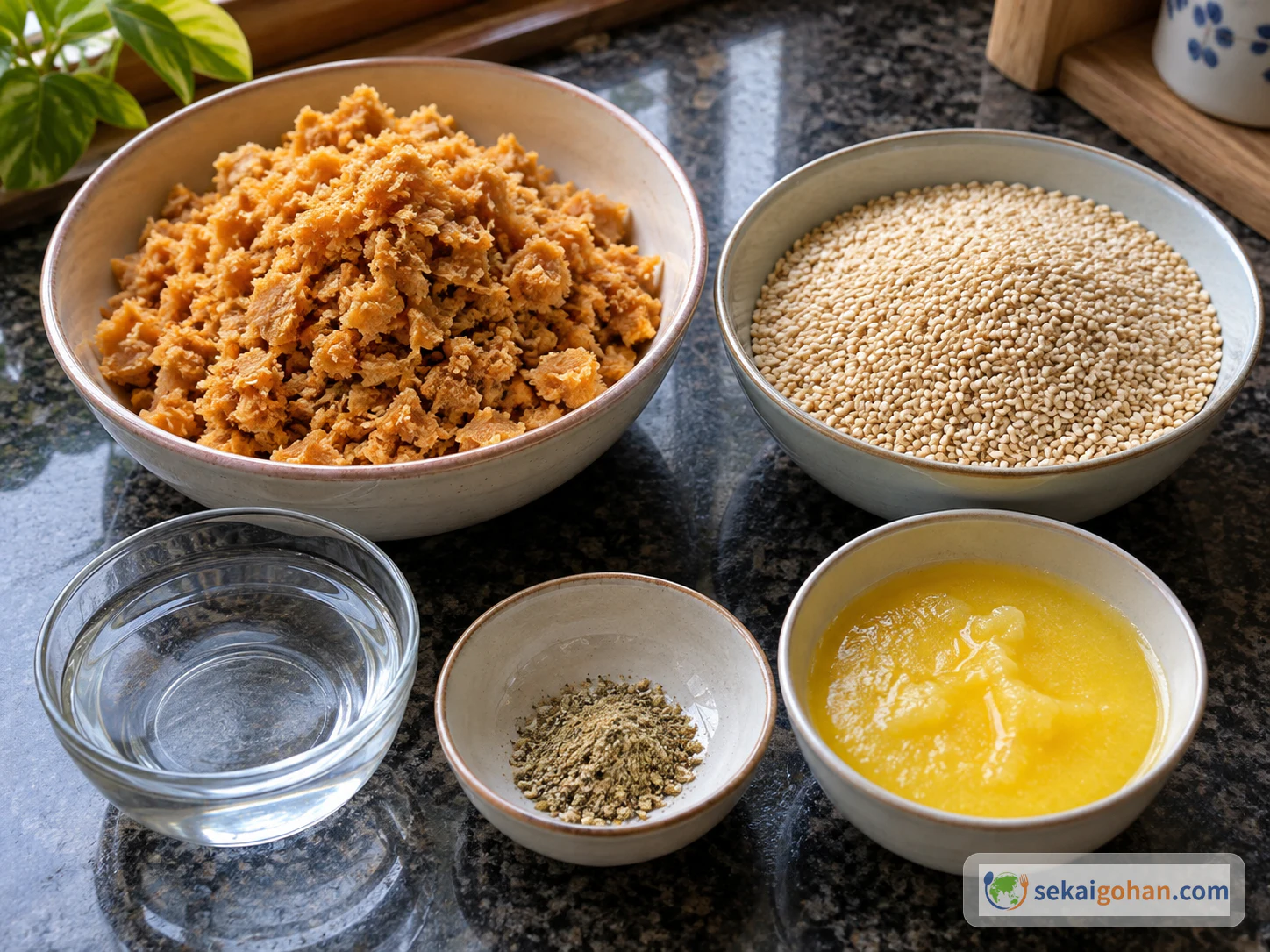
Ingredients: One Batch, 25 Pieces
Equipment
- Saucepan
- Spoon for stirring
- Sugar (candy) thermometer, if you use the 275°F (135°C) endpoint
- 8 inches (20 cm) × 12 inches (30 cm) slice pan, lined
- Knife for cutting
Choosing Jaggery and Sesame for Til ki Gajak
Jaggery is the ingredient worth seeking out. Try delis, spice shops and Asian food shops, and at shops that sell South Asian ingredients, look for "jaggery" or "गुड़" (gud). Palm sugar is listed as an alternative, though this batch is made with jaggery throughout.
The sesame goes into the syrup already toasted, so buy seeds sold as toasted.
The sweet contains sesame, and ghee is a dairy product. Keep both allergens in mind when you serve it to others.
Method: From Dissolved Jaggery to 25 Pieces
Boiling sugar syrup is very hot and can cause serious burns. Do not touch it, and take care while you watch the pan and while you pour.
Til ki Gajak Cues at Each Stage
There are only a few signals to watch, and here they are in order.
| Stage | Cue to watch | What to do |
|---|---|---|
| Dissolving | The jaggery has dissolved in the water | Keep stirring over medium heat until it has, then bring to a boil |
| Boiling | The syrup has come to a boil | Stop stirring from this point |
| Cooking the syrup | 5 minutes have passed, or the thermometer reads 275°F (135°C) | Use one of the two endpoints, then add the sesame, cardamom and ghee |
| Setting | The slab is firm | If it is not firm at 4 hours, leave it longer before cutting |
Frequently Asked Questions
Can I make it without a sugar thermometer?
Yes. After the syrup boils, you can cook it for 5 minutes without stirring or until a sugar thermometer reads 275°F (135°C). Either endpoint works, so the thermometer is optional.
How long does it keep?
It can be stored for up to 2 weeks, but no container or temperature is given. Treat that as an upper limit rather than a guaranteed safe storage period for a home kitchen.