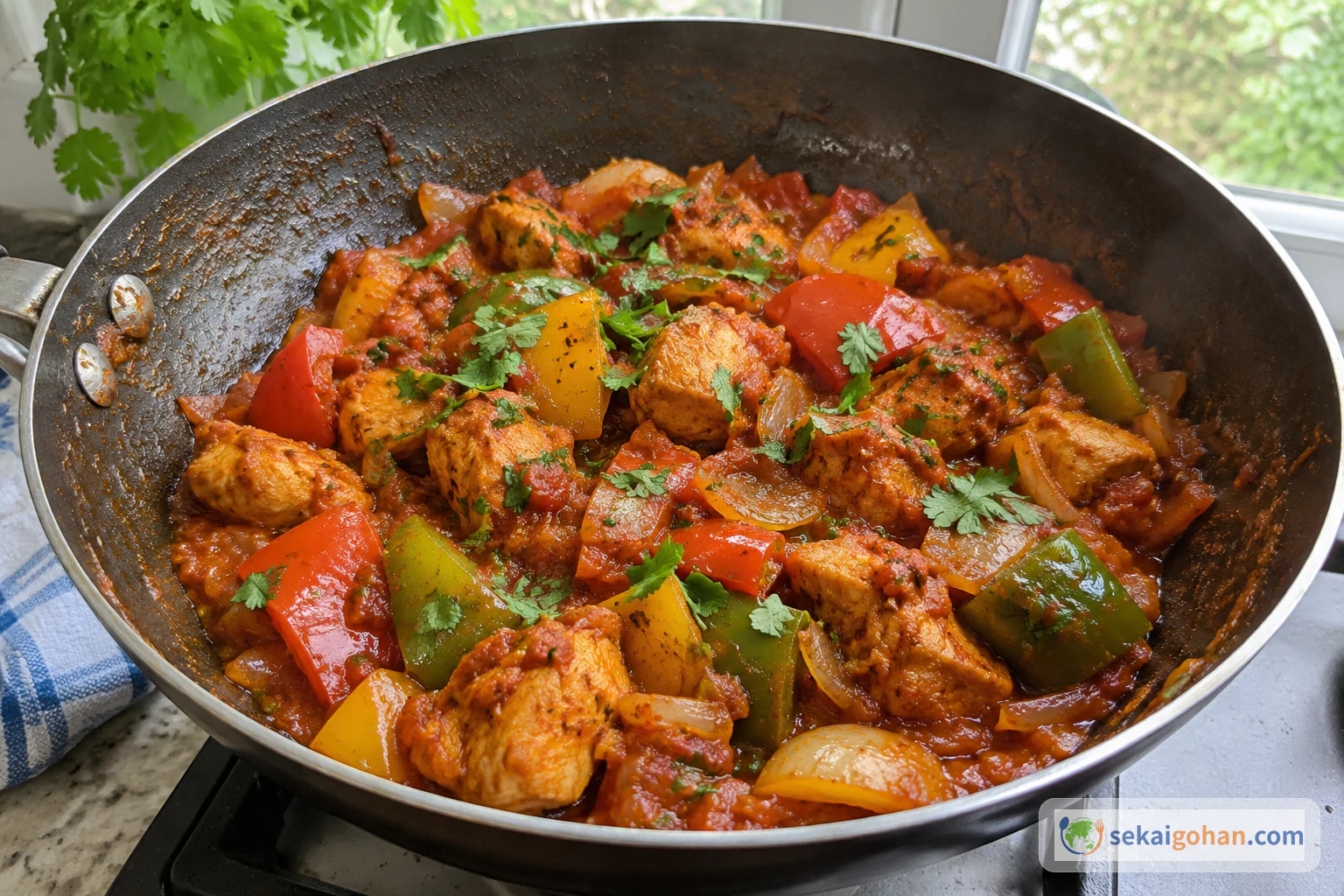
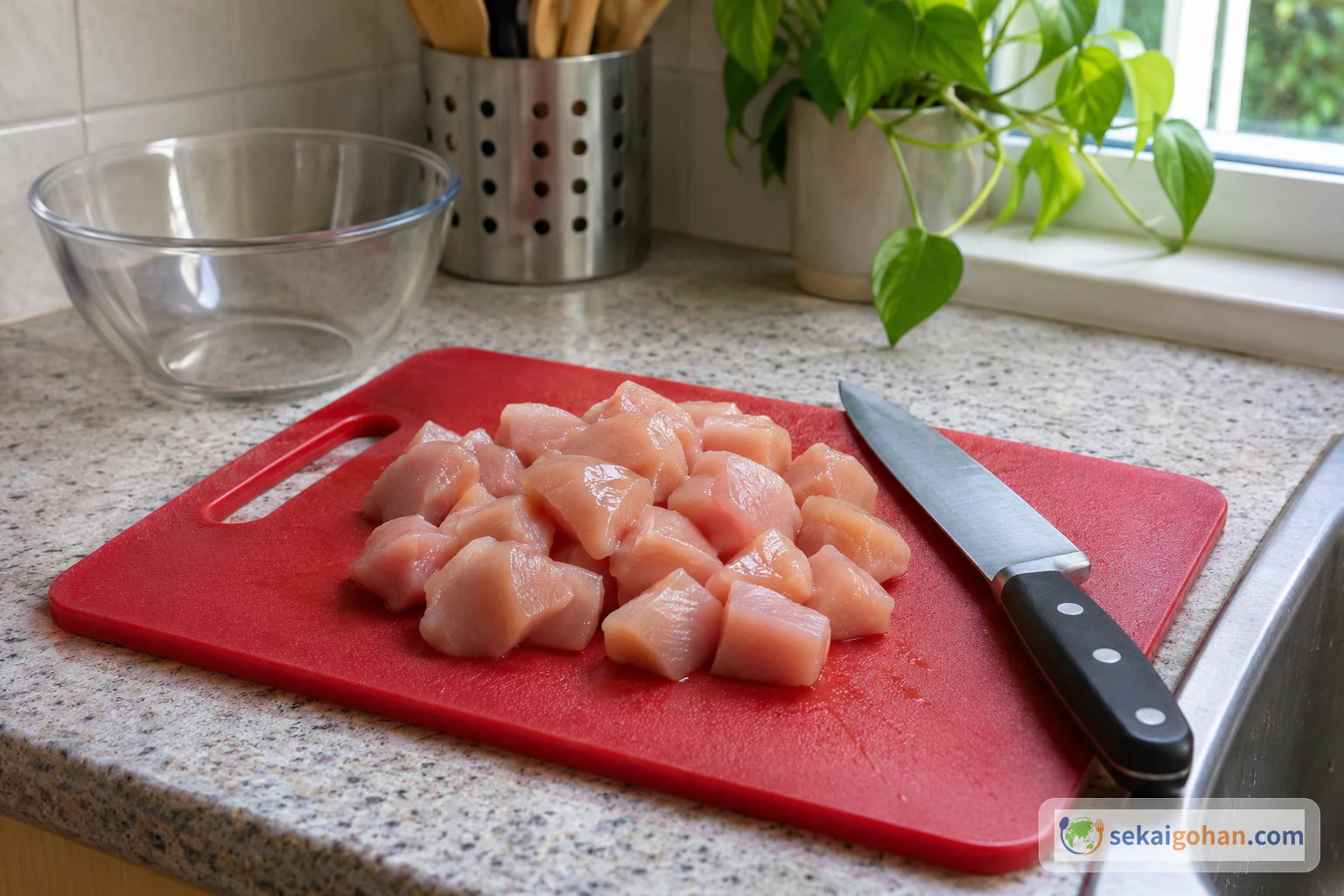
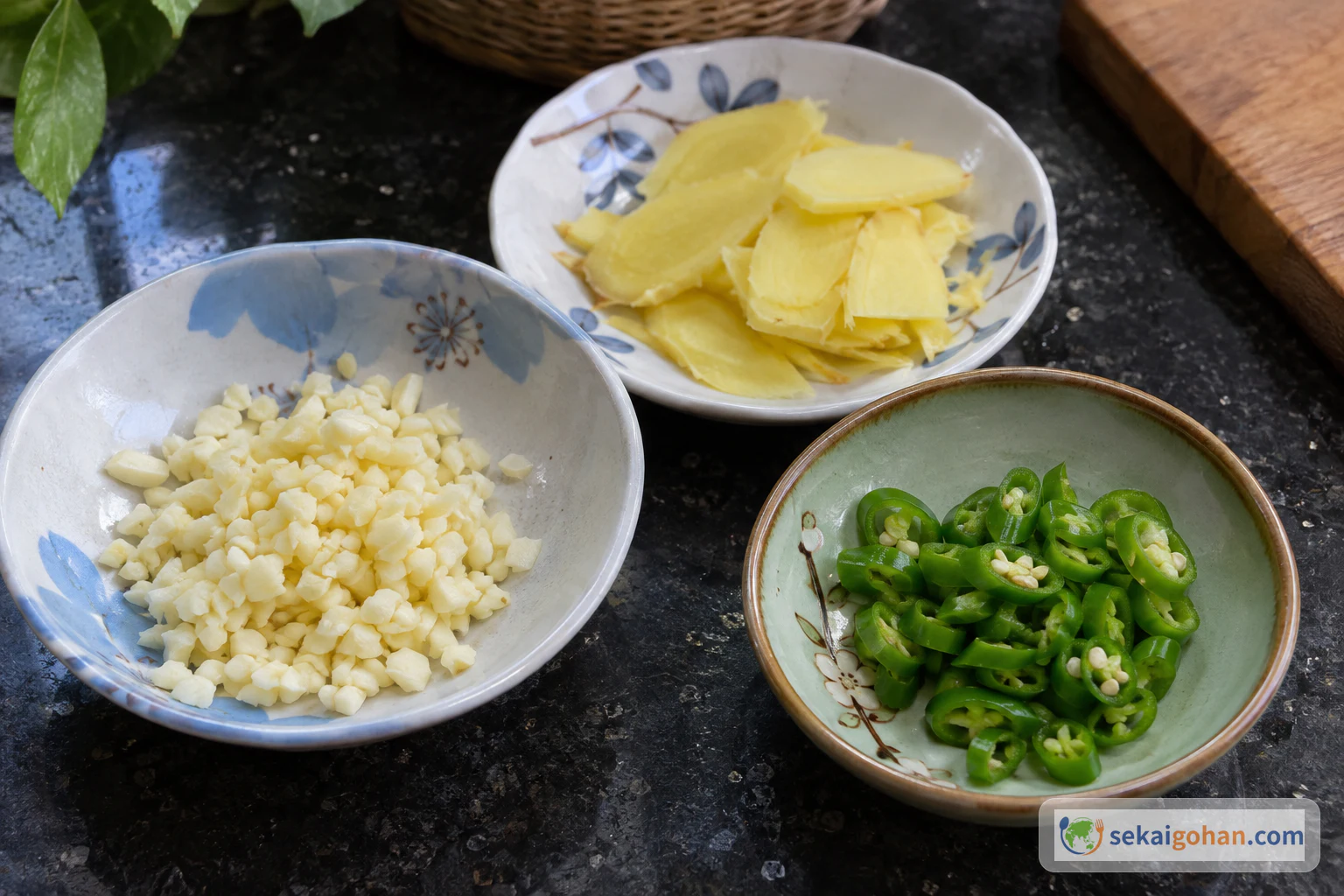
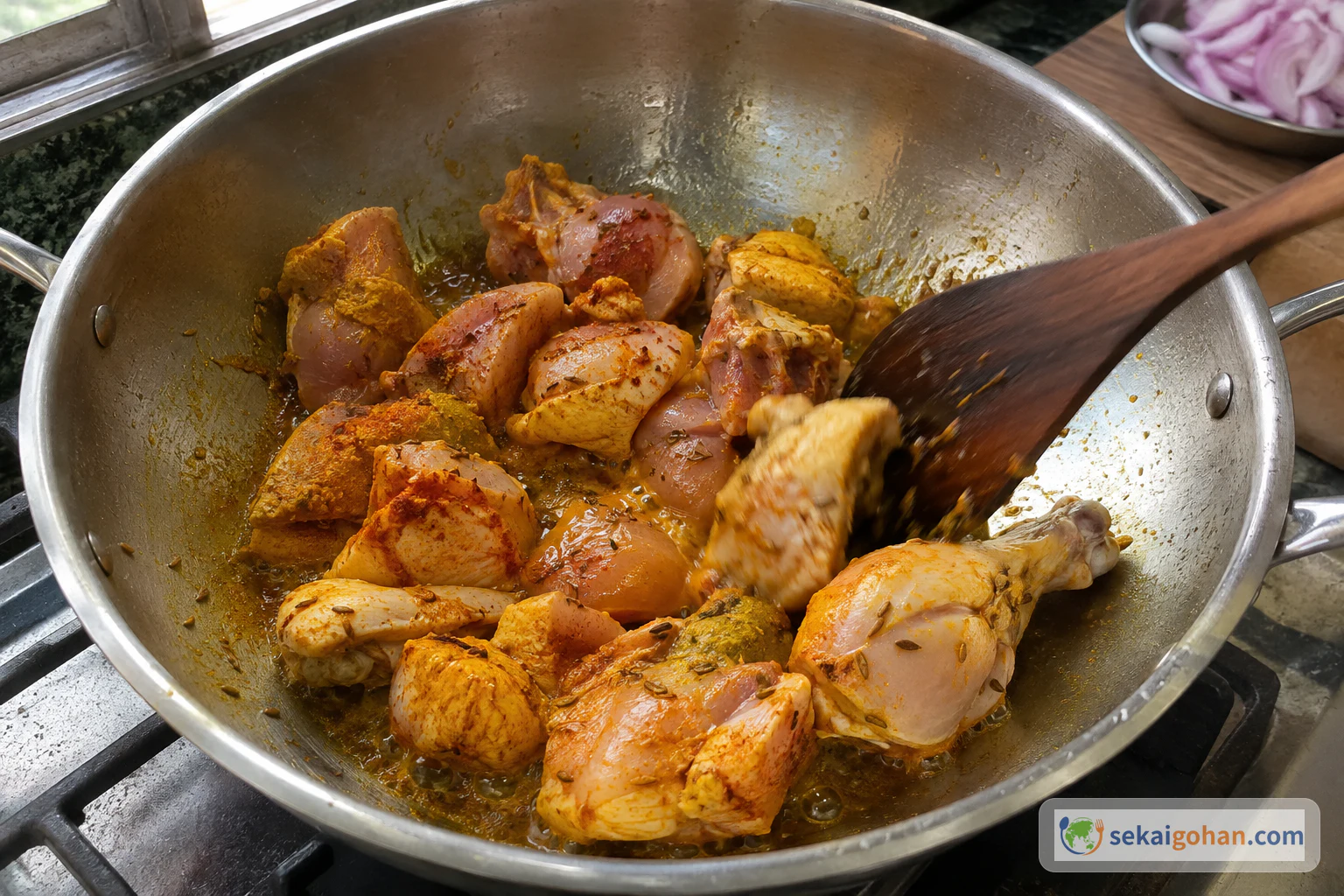
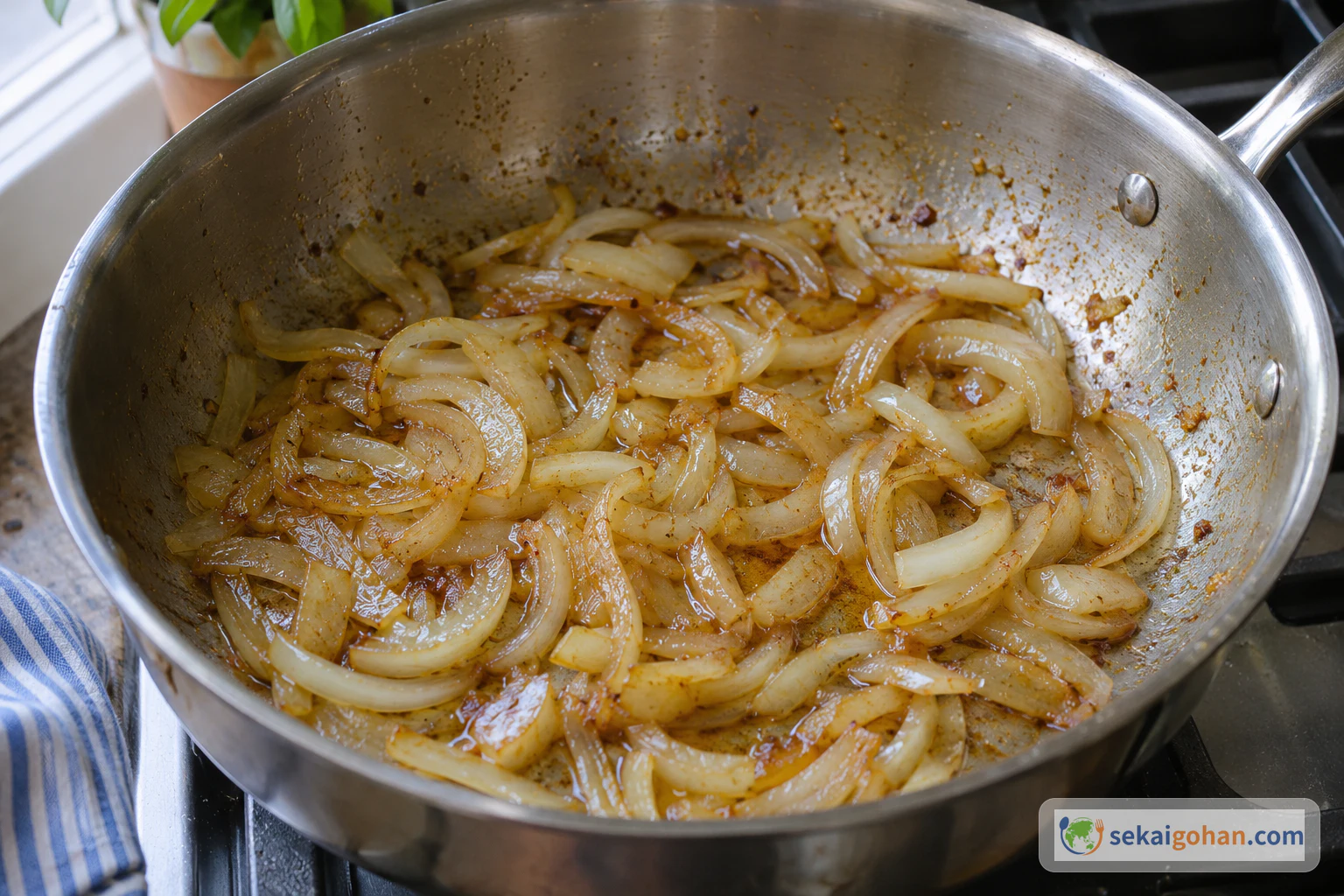
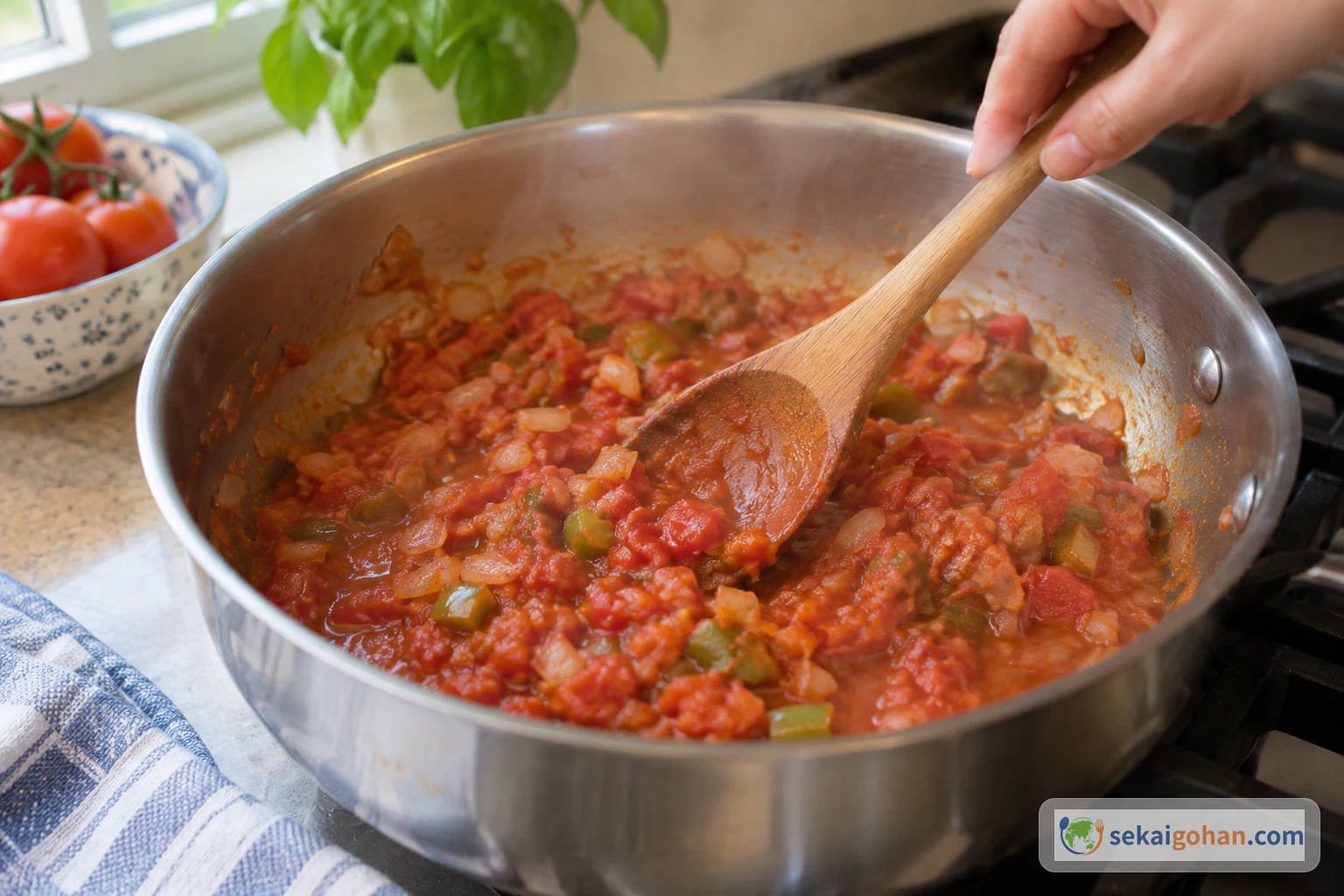
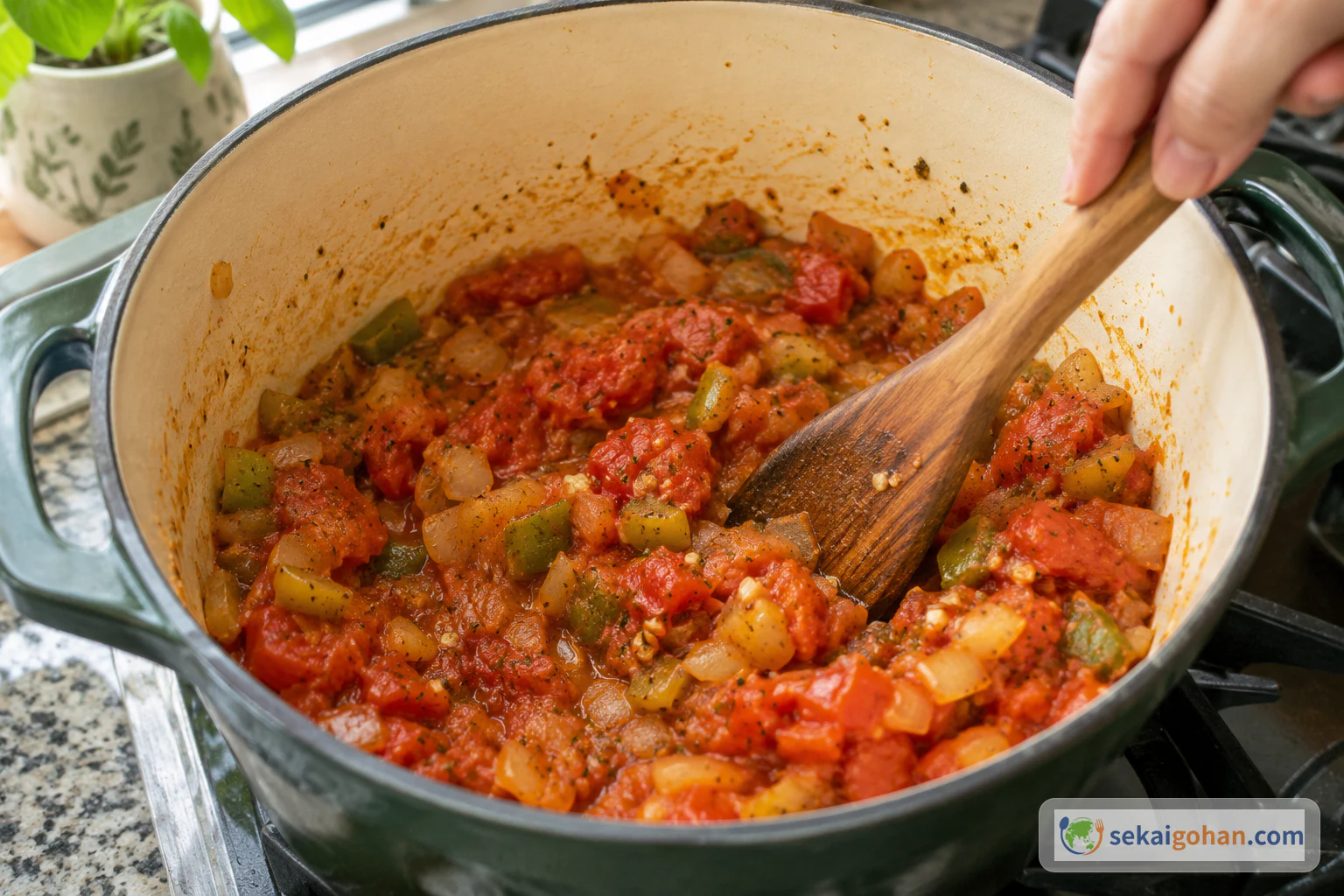
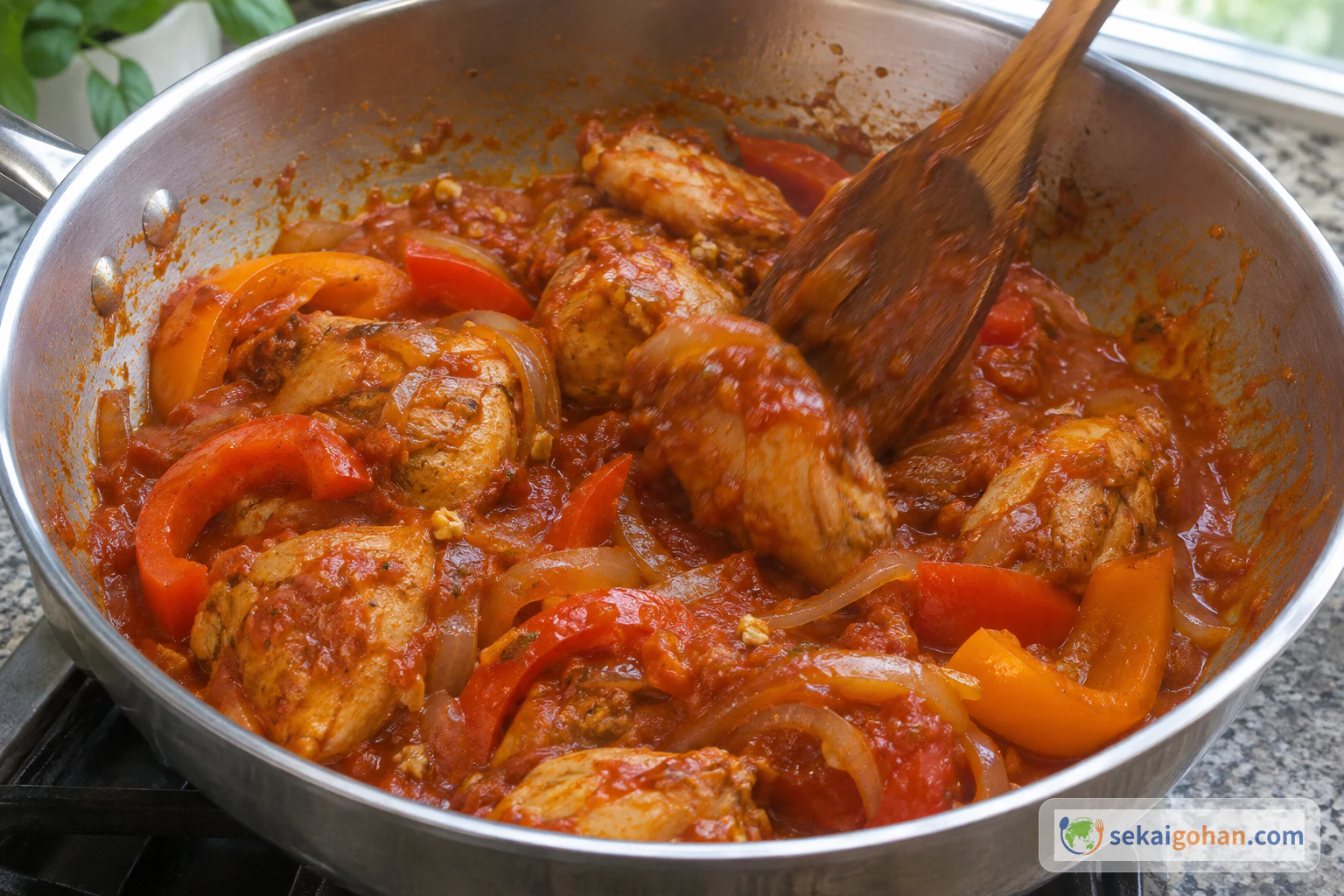
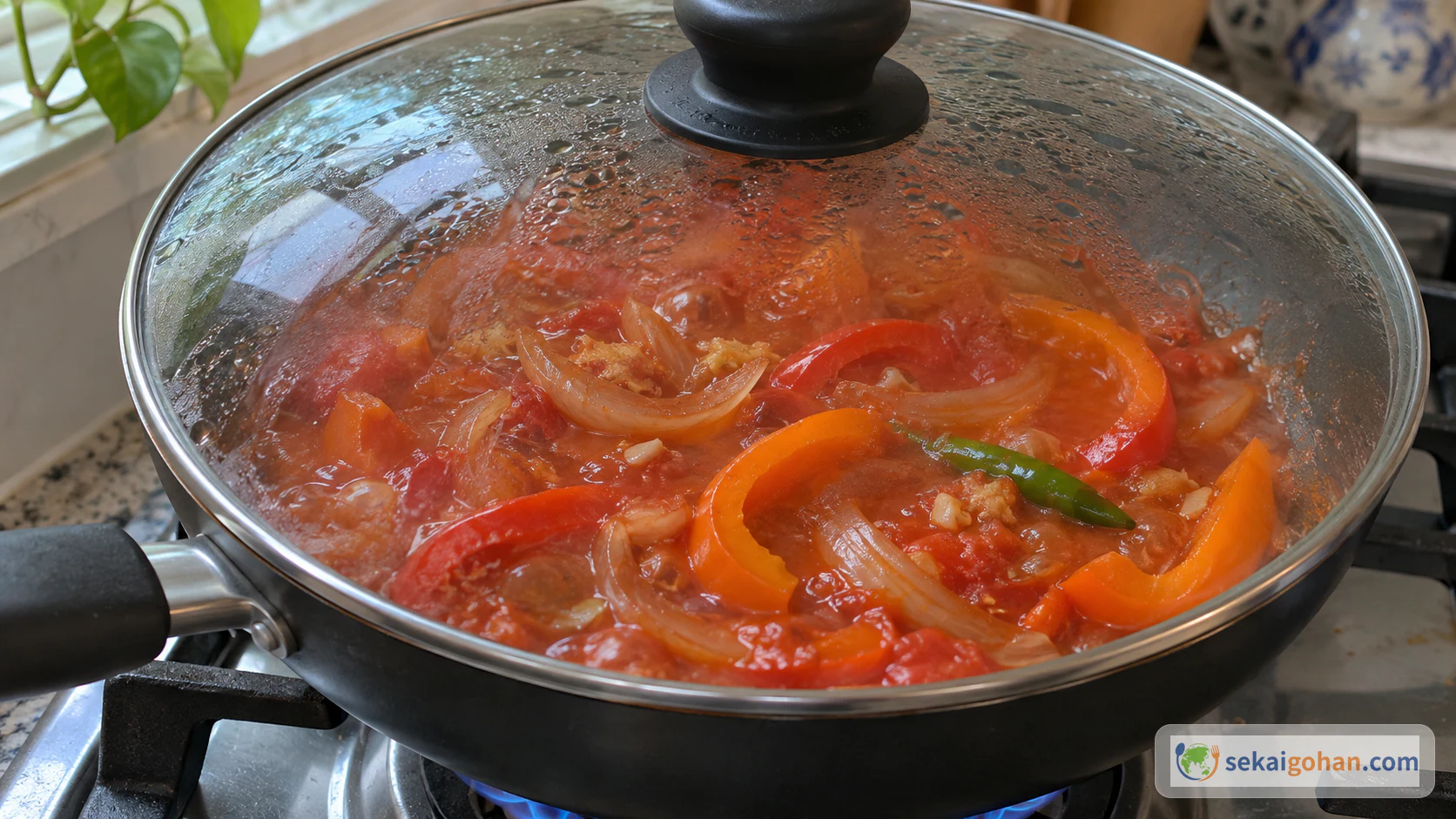
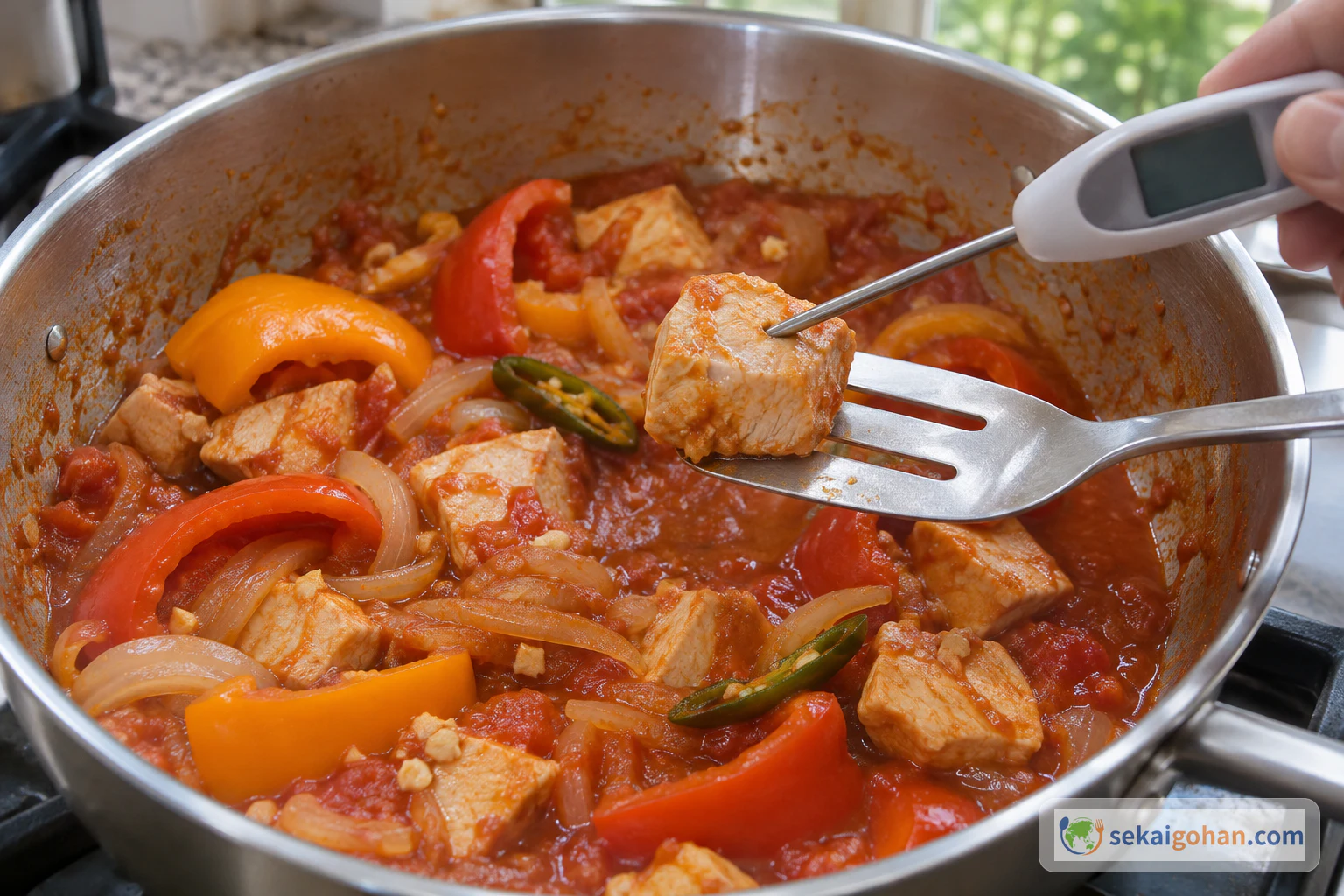
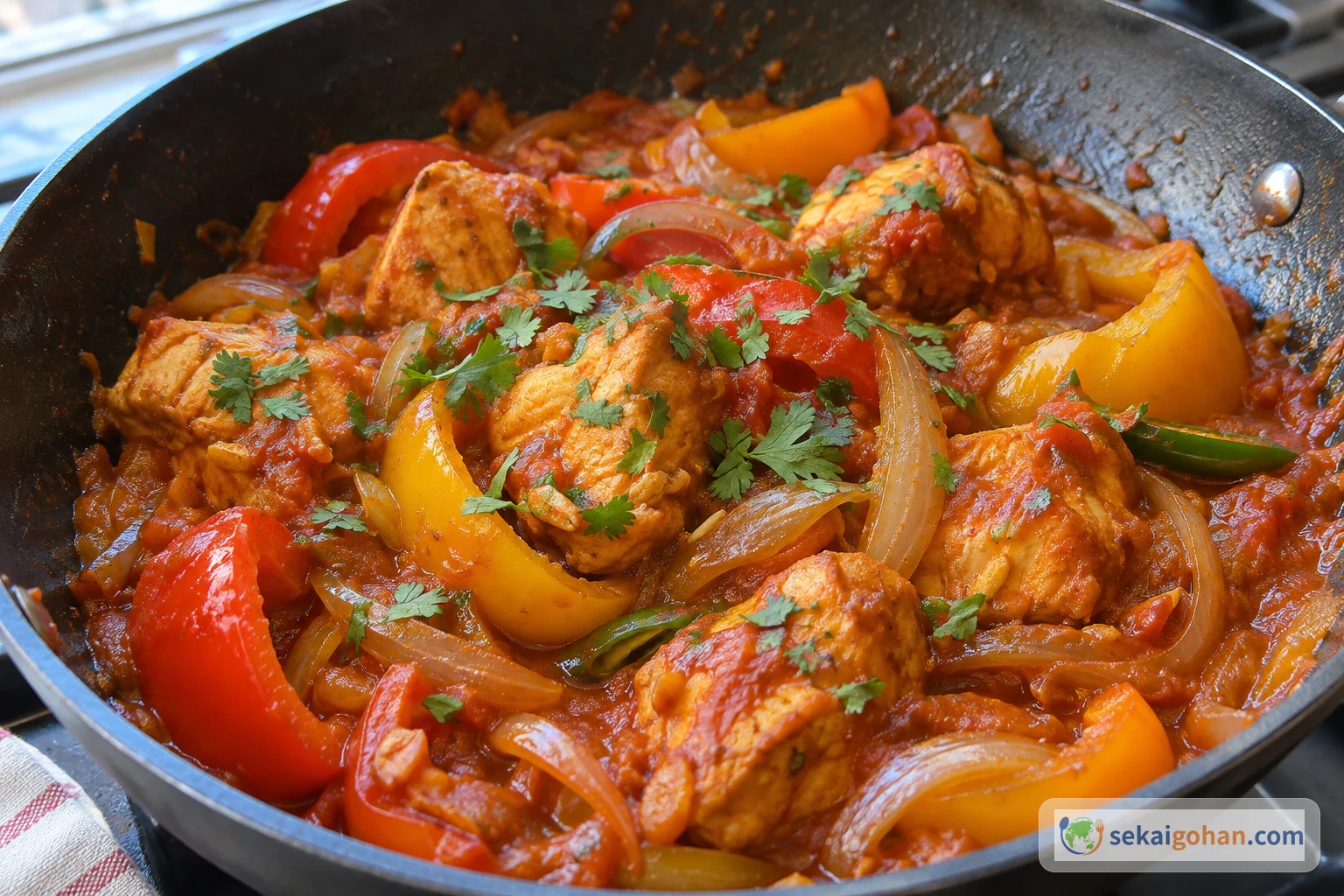
Cumin seeds, turmeric and red chili powder hit hot oil along with cubes of boneless chicken. After a few minutes the outside of the chicken just starts to turn white. Then it comes out of the pan, and the spiced oil and juices stay behind. Sliced onions soften in that oil, then ginger, garlic and chunks of bell pepper go in, then smooth tomato. Only after all that does the chicken go back in, with sliced green chilies and a little water, under a lid. This home-style chicken jalfrezi serves four. For more dishes from the same country, see our India page.
About Chicken Jalfrezi
The name is usually written jalfrezi in English. It's often explained as jhal (spicy) plus frezi (stir-fry), so a "spicy stir-fry." One story from the colonial period says leftover meat was fried up with onion, garlic, ginger, vegetables and hot spices. That story is part of the dish's lore, not an established origin, and nobody knows who first made it or when. This version starts from raw chicken.
Jalfrezi is a name more than a fixed set of ingredients. Chicken is common, but cooks also make vegetarian, prawn and cottage cheese (paneer) versions, and each one is its own dish.
Ingredients (Serves 4)
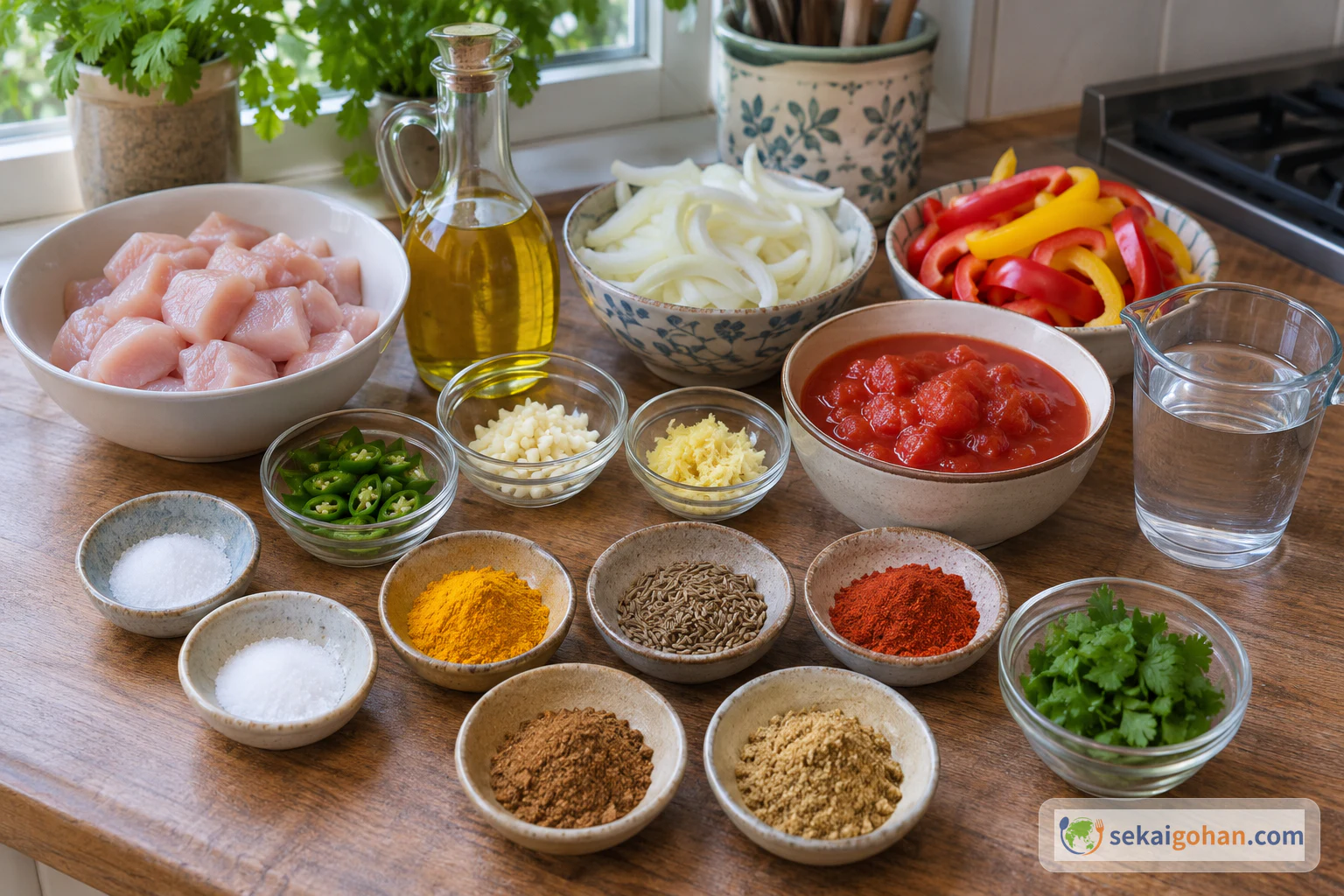
Rice or chapati, plain yogurt and lemon are served alongside if you like. They are not part of the pan; see the serving section below.
Equipment
- A large frying pan with a lid (heavy-based is easiest to manage during the simmer)
- A blender for the tomatoes, or a potato masher or fork
- A cutting board and knife kept for raw meat, plus a separate board for vegetables
- A heat-safe plate for the partly cooked chicken
- A clean food thermometer
Choosing Ingredients for Jalfrezi
Rapeseed oil is used both to fry the chicken and to build the sauce.
Boneless chicken can be thigh or breast, so use whichever you can find. Cut the pieces to an even size so they cook at the same pace. Either way, check the center of the thickest piece at the end.
Bell peppers can be red, yellow or green. The recipe calls for two large sweet peppers. Smaller, thinner peppers aren't a one-for-one swap, and they will change the color, the sweetness and how much pepper ends up in the pan.
Green chilies are a separate ingredient from the peppers, and they bring the heat. Their heat varies a lot between varieties and even between batches, and chili powders vary from brand to brand. Red chili powder can't simply replace the chilies, and there's no fixed conversion. If you're cautious about heat, get to know your chilies and your powder before you cook.
Cumin seeds are whole seeds, not ground cumin. Coriander powder is ground coriander seed, a different ingredient from the fresh coriander leaves you finish the dish with. Garam masala is its own spice blend and can't stand in for either one.
At the start, the chicken is only fried briefly until its surfaces begin to turn white. That is not cooked through. It finishes cooking later, after it goes back into the sauce. Heat the chicken until the center reaches 167°F (75°C) for at least 1 minute. Do not judge doneness by color, by the clock, by how the pan looks or by a photograph. Keep raw chicken, and the boards, knives, hands and plates it has touched, away from cooked food.
Method: Fry, Set Aside, Build the Sauce, Return and Simmer
Prepare everything first (steps 1–4). The chicken is fried briefly and removed (steps 5–9), the sauce is built in the same pan (steps 10–19), and the chicken returns to finish cooking in the covered sauce (steps 20–31).
Jalfrezi Troubleshooting
| Problem | Likely cause | What to do |
|---|---|---|
| The spices or chicken catch on the base early on | Not stirred often enough over medium heat | Stir often through the 3–4 minutes on medium heat, as in step 3 |
| The chicken looks done before the simmer | The first fry only starts to whiten the surfaces | Take it out as planned; it finishes cooking in the covered sauce |
| The center of the chicken has not reached 167°F (75°C) for 1 minute | Thick pieces, uneven cubes | Keep the pan covered and simmering on low, then check the thickest piece again |
| No blender | — | Crush the canned tomatoes with a potato masher or the back of a fork |
| You doubled the cumin by habit | Adding cumin at both spice stages | The heaped teaspoon goes in once, with the chicken; add none with the coriander powder and garam masala |
| The heat is stronger than expected | Green chilies and chili powder vary in heat | Serve plain yogurt on the side, and next time use chilies and powder you know |
Serving Jalfrezi and Other Versions
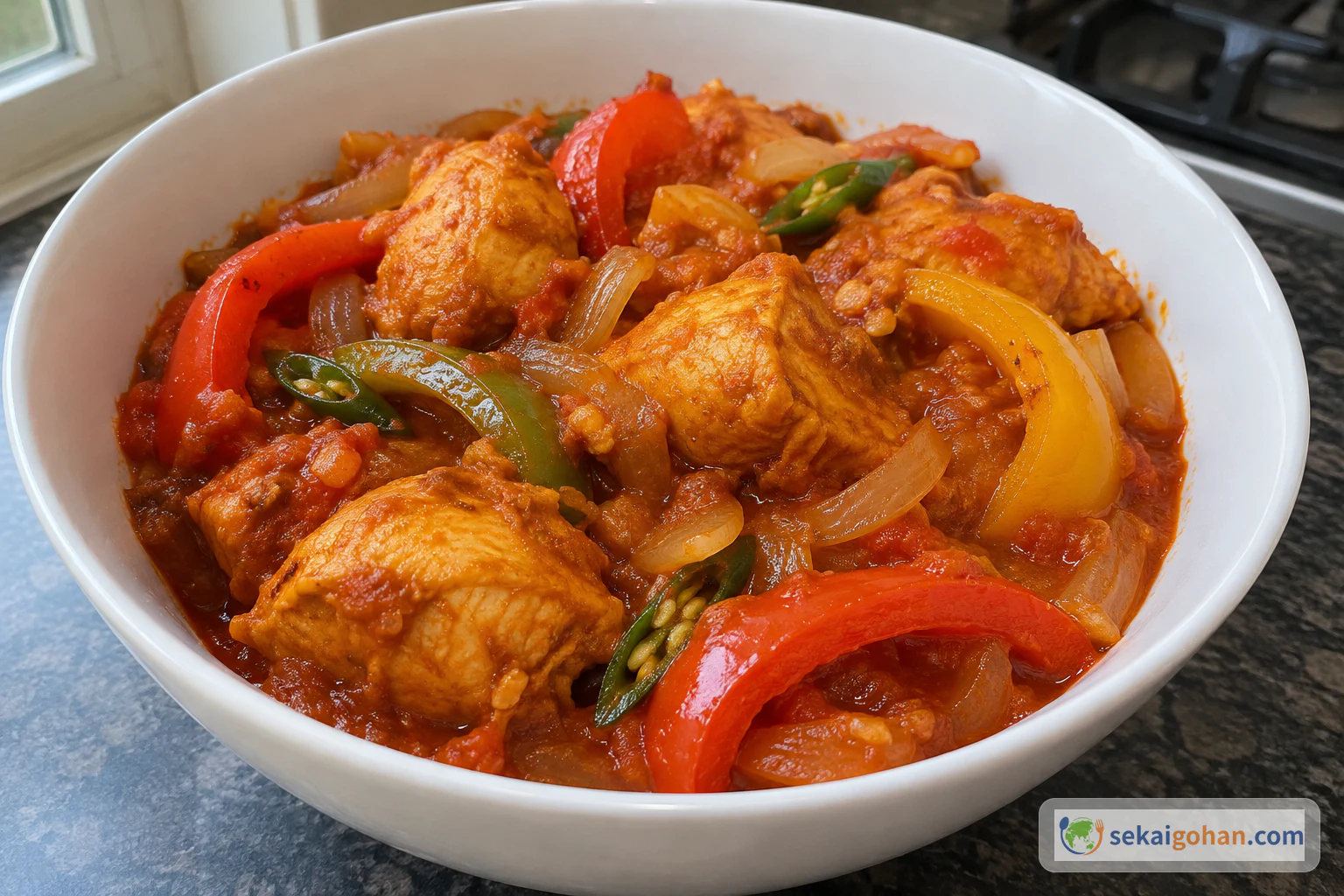
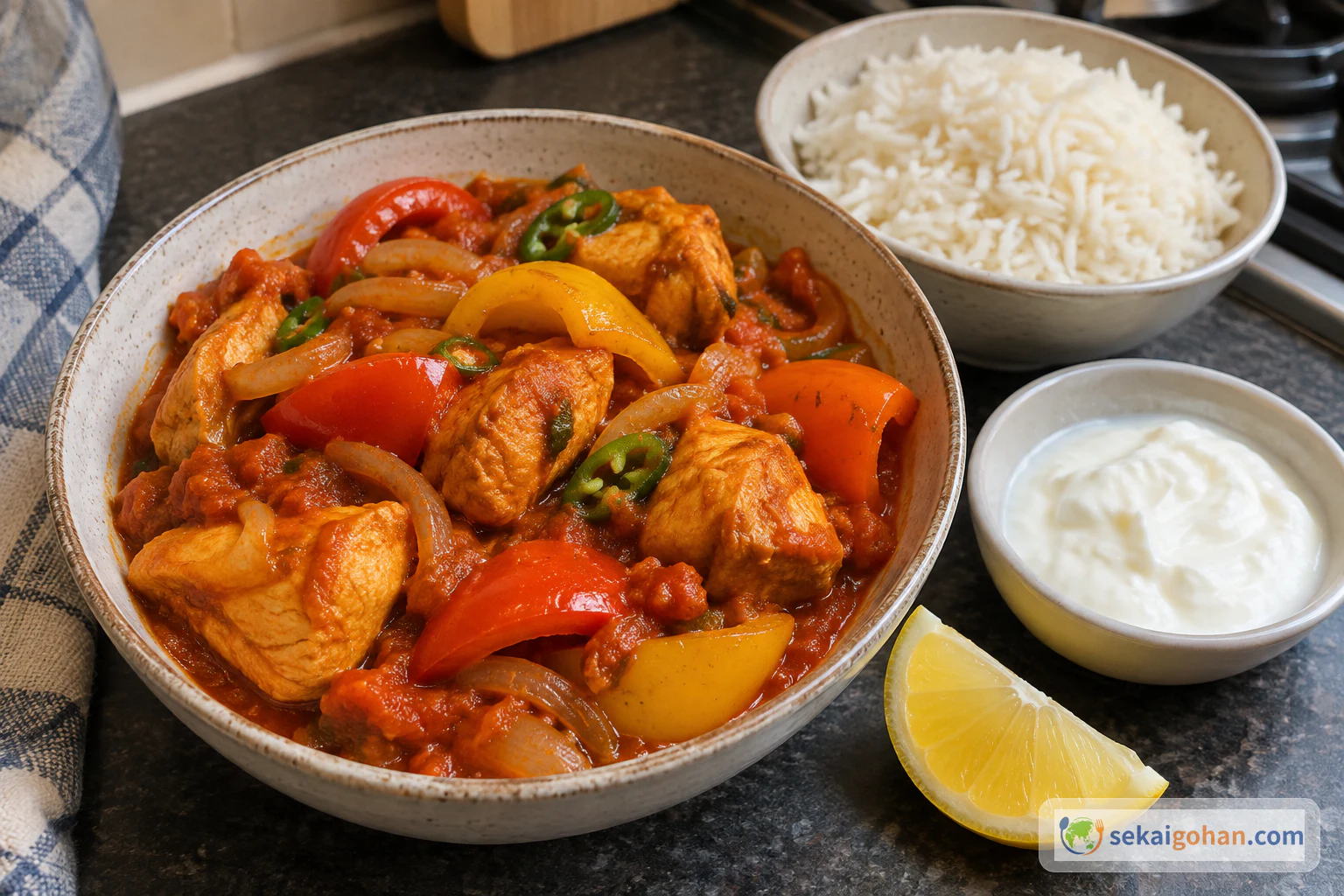
Serve the jalfrezi hot, with rice or chapati if you like. Plain yogurt and lemon are optional. Keep them on the side so everyone can add a spoonful of yogurt or a squeeze of lemon to their own portion at the table, instead of stirring them into the pan.
Other jalfrezis are made differently. One version uses chicken, onion, red pepper, chili, tomato and spices but cooks an onion sauce separately and brings everything together at the end. Its marinade, sauce and spice amounts don't carry over to this recipe, and neither do the amounts for the vegetarian, prawn or paneer versions.
Frequently Asked Questions
Which cut of chicken should I use?
Use boneless thigh or breast. Cut the pieces evenly and check the center of the thickest piece at the end (step 9).
Can I leave out the salt?
Yes, the salt is optional. If you use it, split it in two: half a teaspoon with the chicken and half a teaspoon with the later spices.
How long does it take?
Plan on 15 minutes of prep and 25 minutes of cooking. Some steps are timed only as "a few minutes," so go by what you see in the pan and by the chicken check rather than the clock.