Khasta Kachori with Moong Dal: Flaky Fried Discs with a Coarse Spiced Lentil Filling

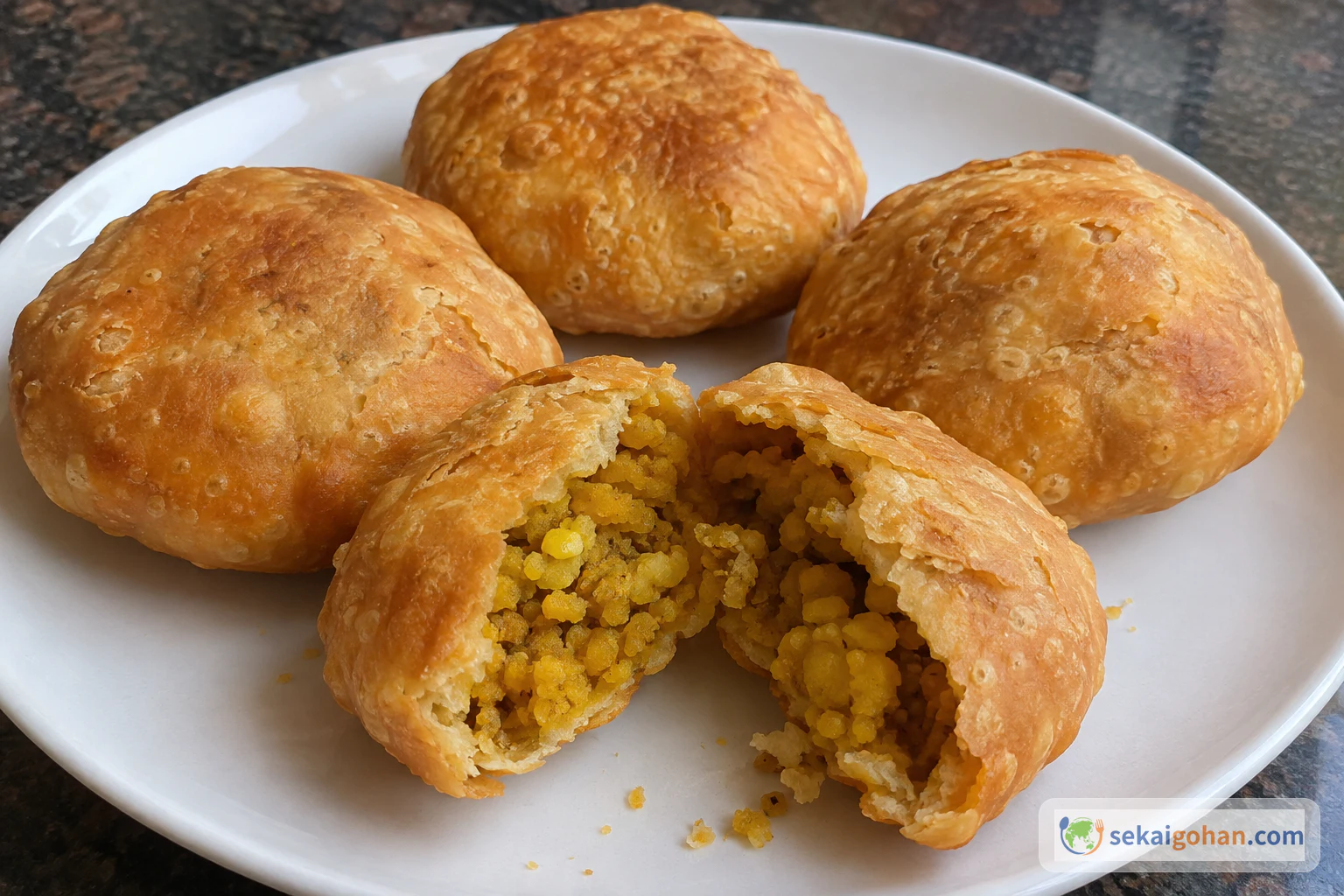
Round golden kachori on a plain plate, one split open to show its coarse yellow moong dal filling
Cuisine
Indian

How to make khasta moong dal kachori, a round, medium-thick fried pastry with a crisp ghee-rubbed shell and a coarse filling of soaked yellow moong dal and dry spices. Covers the dough feel, adding water in portions, adding the spices one at a time, sealing and shaping, slow frying at low to medium-low heat, and safe frying habits.

Cooking flow

Cooking steps

STEP11 / 12

Make the ghee-flour crumbs

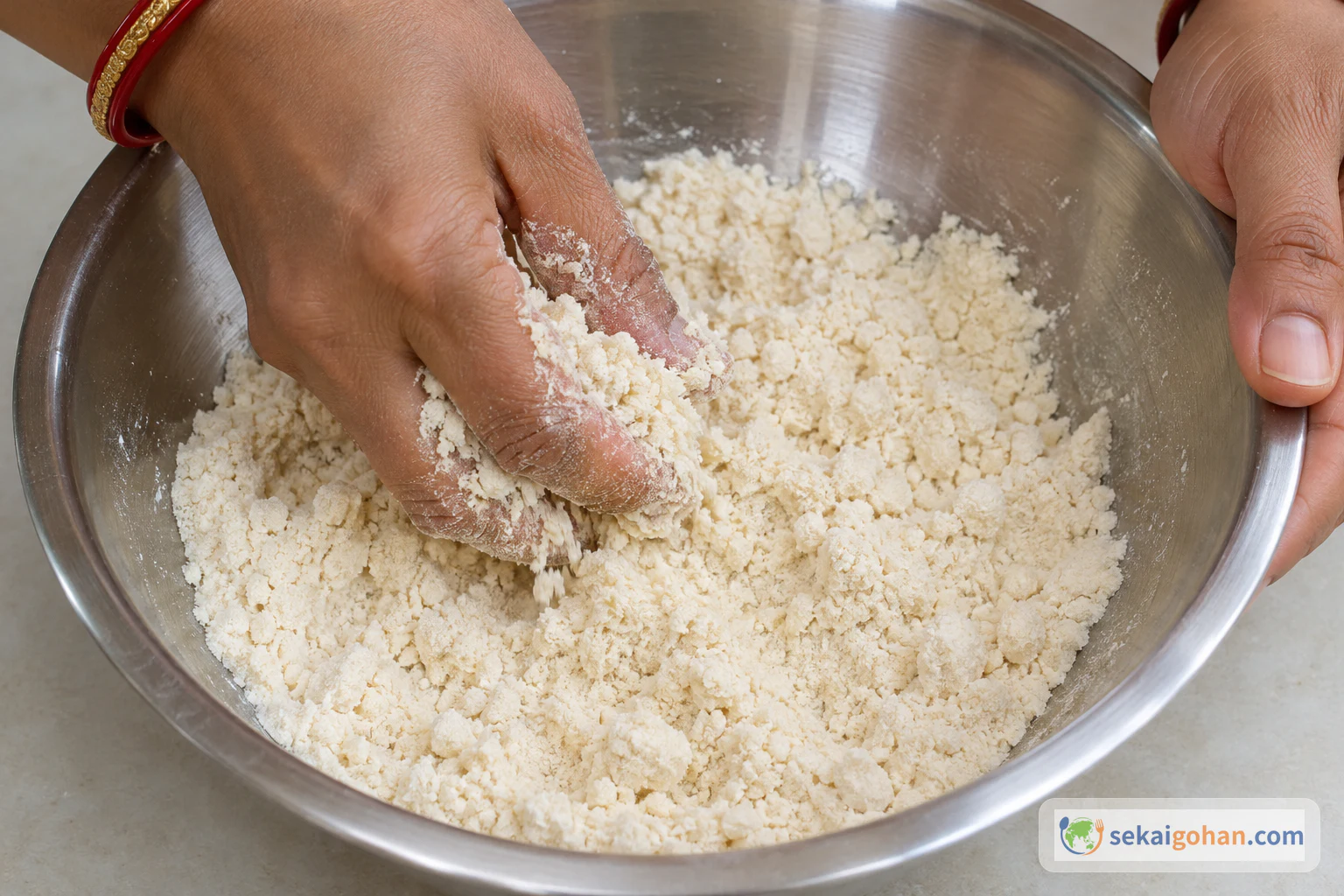
Fingertips rubbing ghee into flour to make breadcrumb-like crumbs
Rub until the mixture looks like loose crumbs

Put the maida and 1/2 tsp salt in a large bowl and stir until the salt is evenly spread through the flour. Add the 1/4 cup ghee for the dough, which should be semi-solid, soft enough to flow slowly from the cup. Rub it into the flour with your fingertips until the mixture looks like breadcrumbs. Squeeze a little in your hand: it should hold its shape without falling apart.

STEP22 / 12

Knead and rest the dough

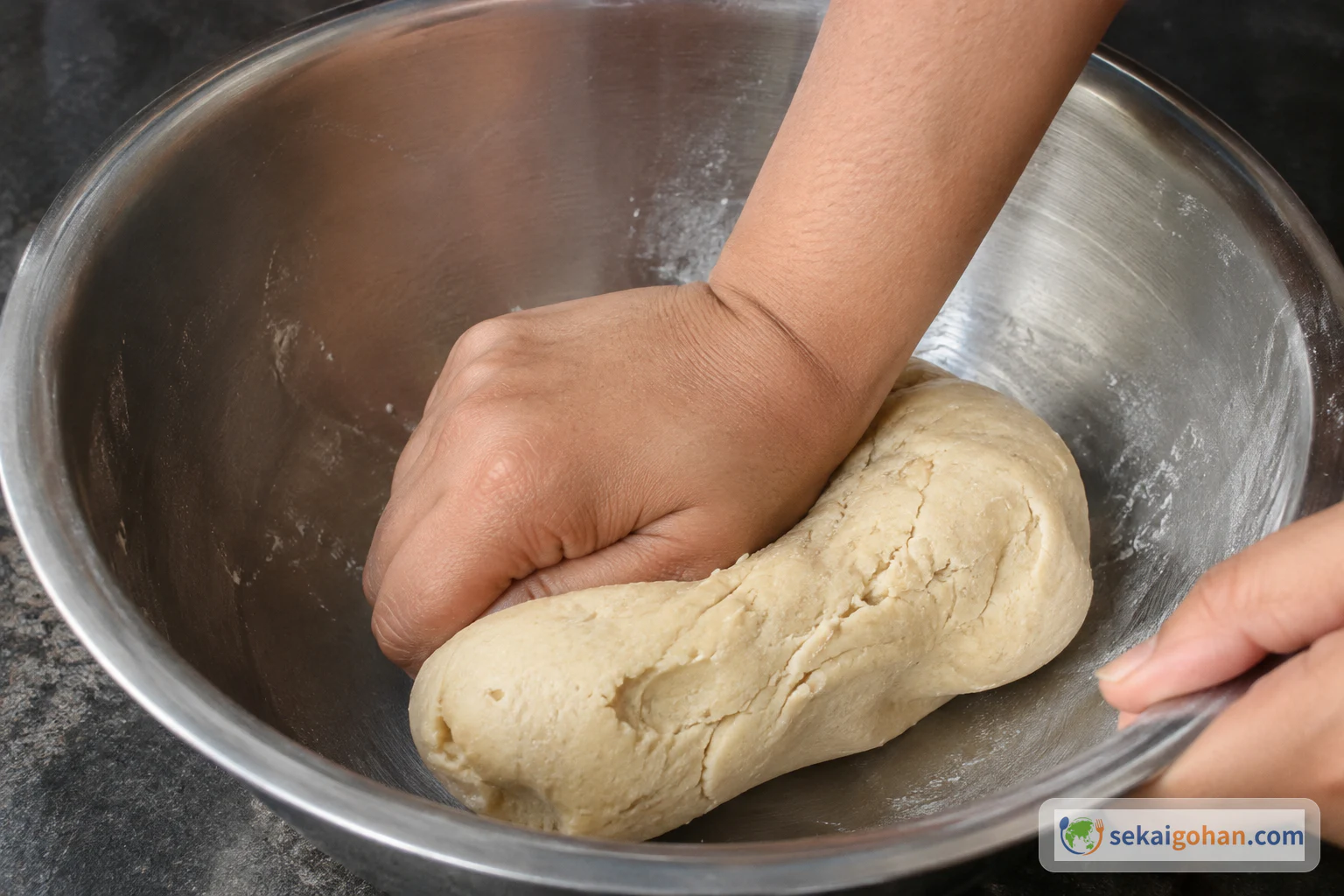
Kneading the dough into a smooth, semi-soft mass in the bowl
Smooth and semi-soft, not sticky

Add the water a little at a time rather than all at once, using more or less than 1/2 cup depending on the dough. Mix it in with your hand until the flour starts to come together, then knead, adding water bit by bit as needed. If the dough feels dry, add a little more water; if it turns sticky, add a little flour. Cover with a damp cloth and rest for 30 minutes, once the dough is smooth and semi-soft to soft but not too soft.

STEP33 / 12

Soak and grind the moong dal

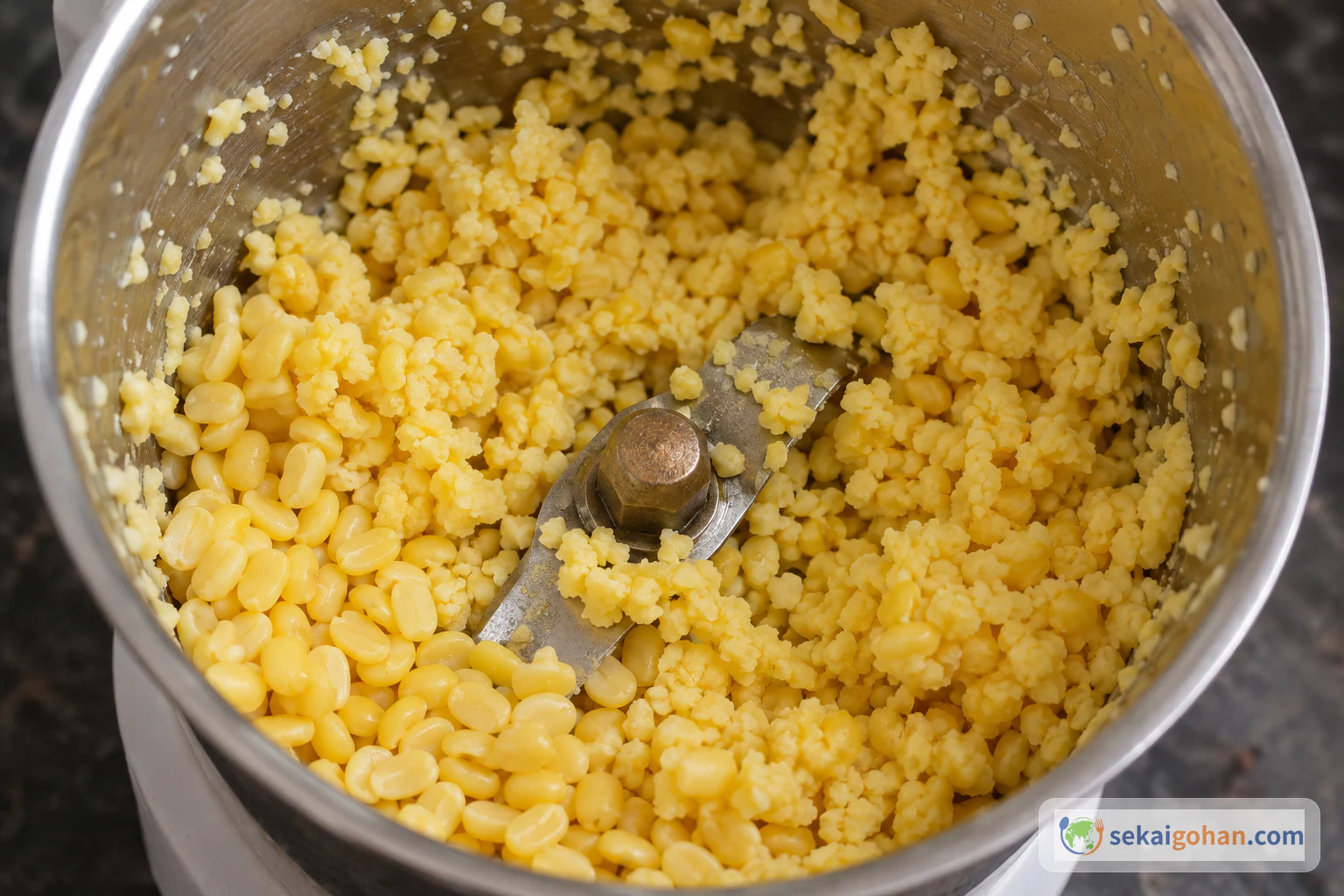
Drained yellow moong dal pulsed into coarse, uneven crumbs in a grinder
Coarse crumbs, not a smooth paste

Rinse the 1/2 cup yellow moong dal in water, then cover it with plenty of water and soak for 2 hours. Drain it completely in a sieve before grinding. Pulse the drained dal in a grinder without adding any water. Stop while it is still coarse; do not grind it to a paste.

STEP44 / 12

Toast the spices in ghee

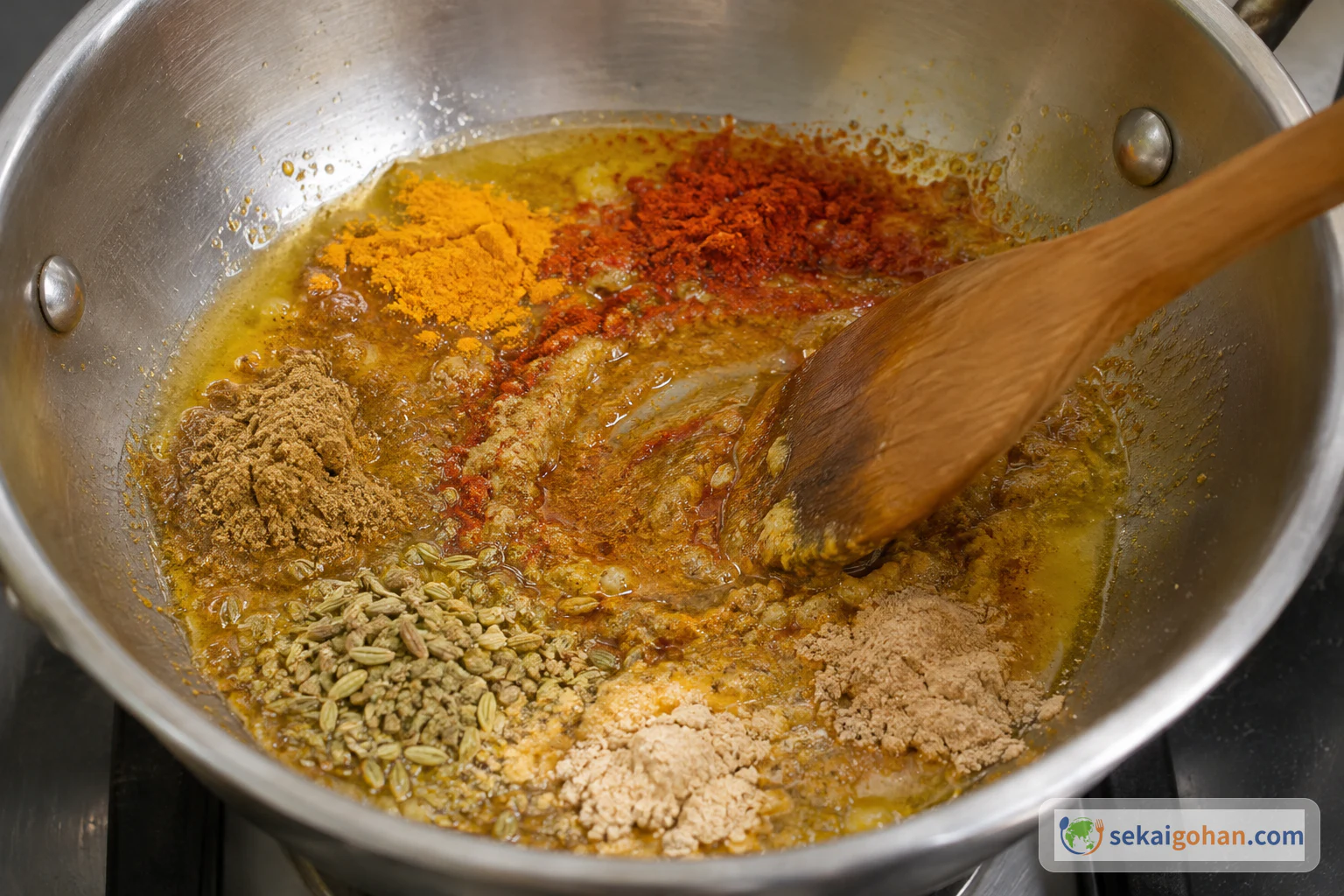
Stirring the ground spices into the ghee over the lowest heat
Stir gently on the lowest heat

Put the 1/2 tbsp ghee for the filling in a pan and warm it over low heat. Once it has melted, lower the heat to the lowest setting, or turn it off, before adding the spices. Add the turmeric powder, red chilli powder, cumin powder, coriander powder, crushed fennel seeds and dry ginger powder, then the amchur powder last. Stir gently over the lowest heat and watch the pan closely so the spices don't burn.

STEP55 / 12

Cook the dal filling

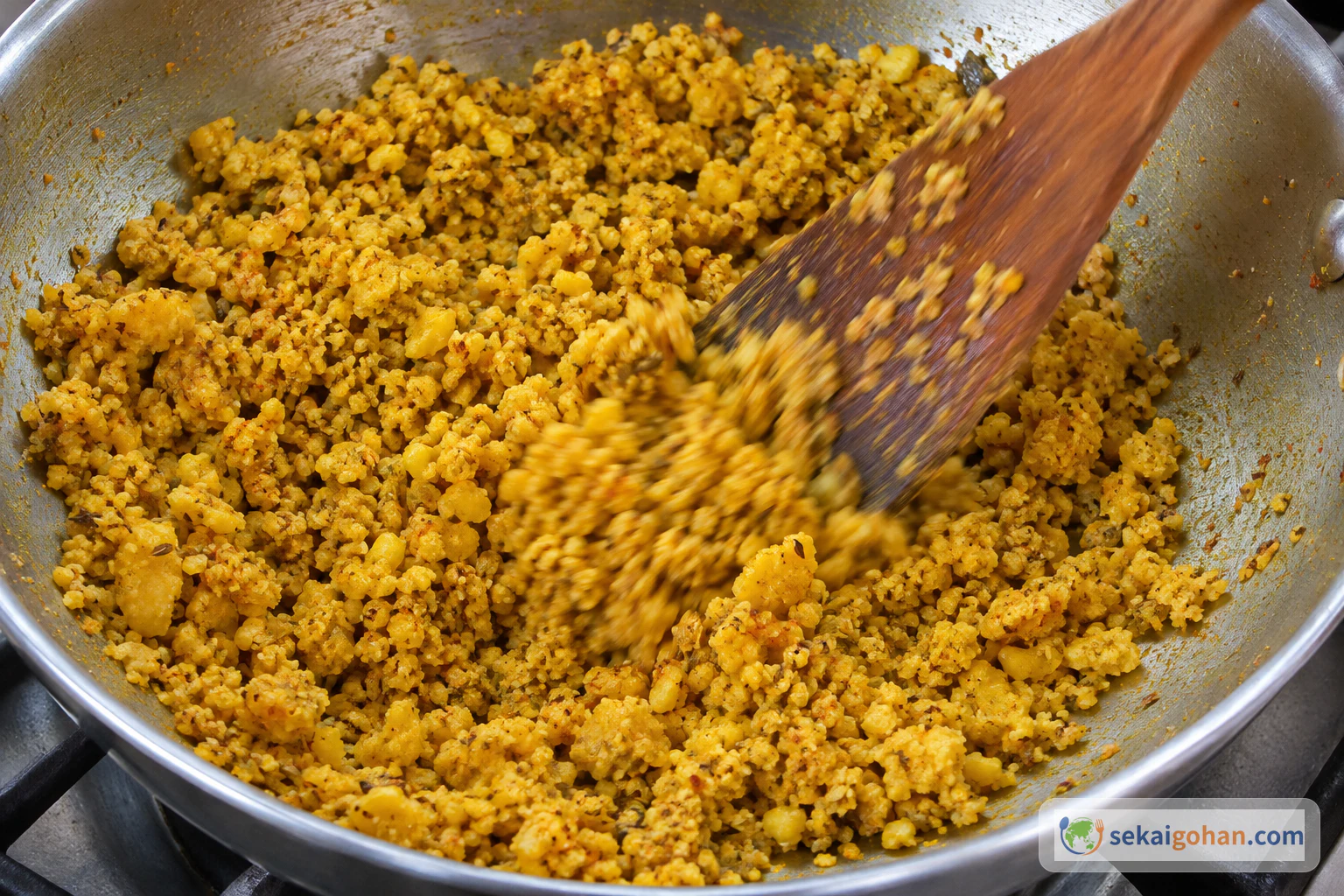
Stirring the crumbly dal filling constantly over low heat
Keep stirring over low heat

Add the coarsely ground moong dal to the spice pan, along with salt to taste and a pinch of hing. Over low heat, mix until the dal, spices, salt and hing are evenly combined. Keep the heat low and sauté for 3–4 minutes, stirring all the time, until the crumbly filling is cooked through.

STEP66 / 12

Cool and shape the filling

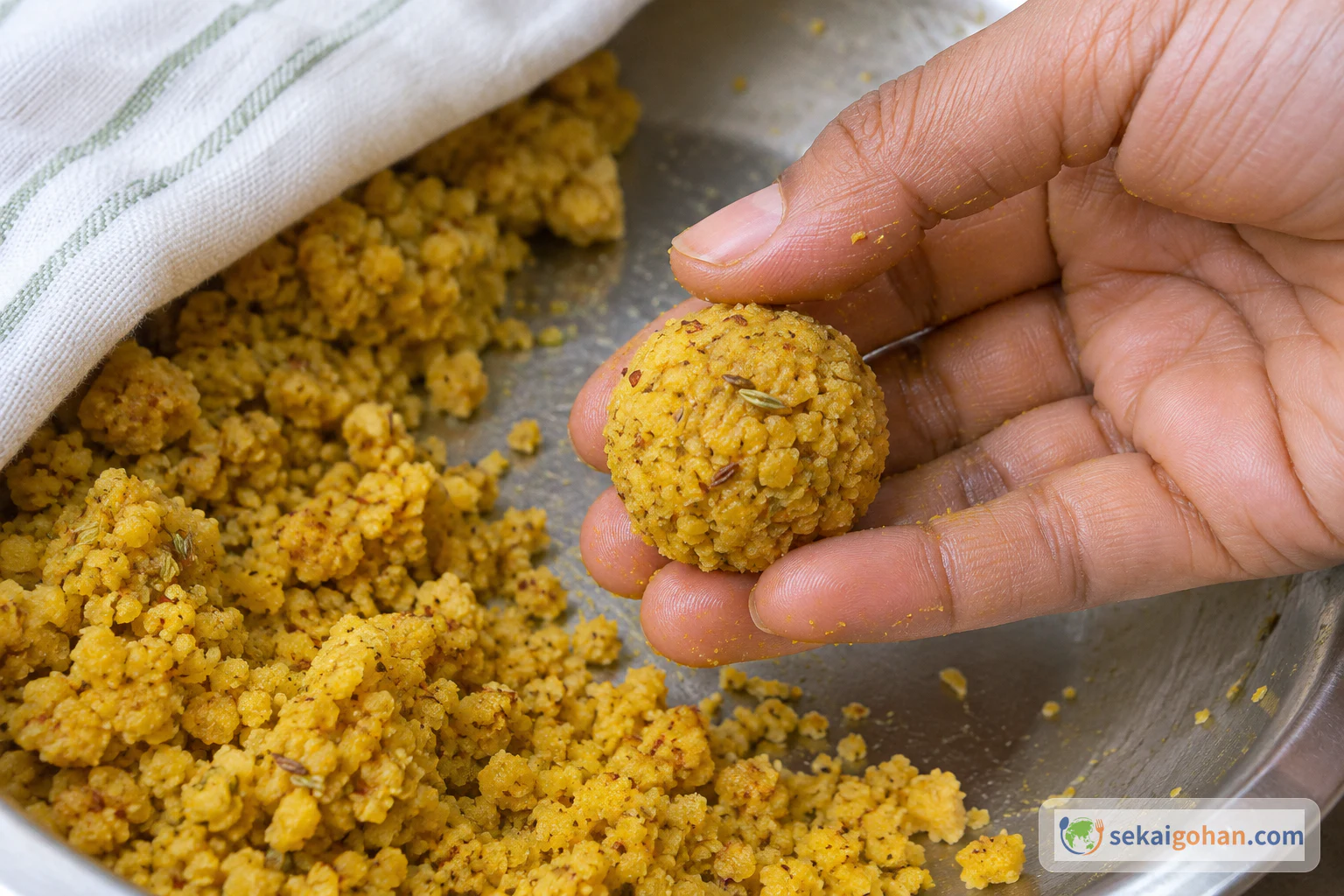
Shaping the coarse filling into a small ball by hand
Small filling balls, kept covered

Move the filling to a plate and let it cool until warm or cool. Don't leave it sitting out for long. Shape it into small balls and keep them covered while you prepare the dough.

STEP77 / 12

Portion the dough

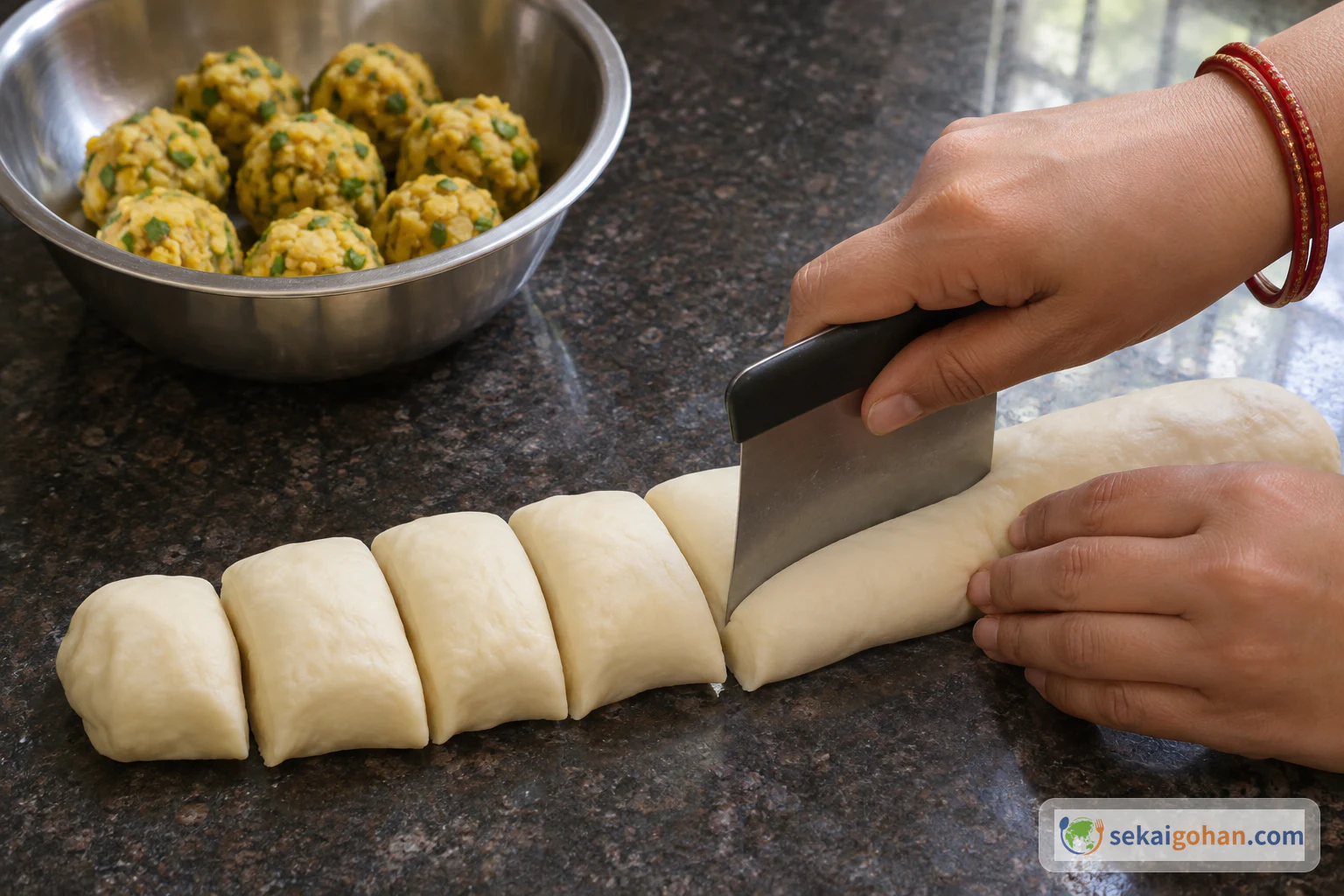
Cutting the dough log into equal portions
One dough portion for each filling ball

After its 30-minute rest, knead the dough lightly once more. Roll it into a log on a clean board. Cut the log into equal portions, as many as you have filling balls, so each ball has its own piece of dough.

STEP88 / 12

Fill the dough

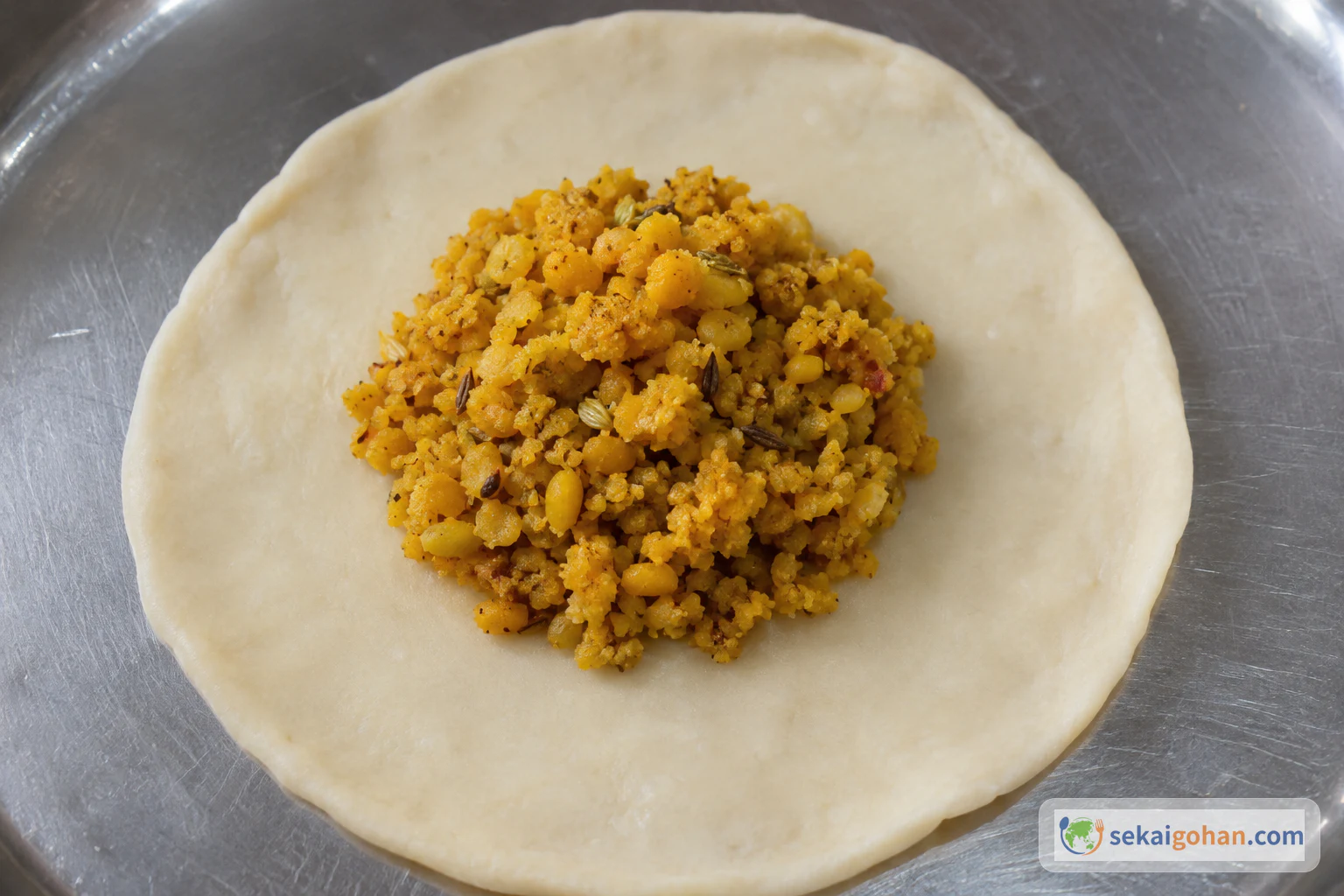
A ball of coarse dal filling placed in the center of an open dough disc
Filling in the center

Take one portion and roll it into a smooth ball between your palms. Press the ball with your fingers into a round disc, making the edges thinner than the center. Set one filling ball in the middle and press it down lightly, so it sits settled inside the open disc.

STEP99 / 12

Seal and roll

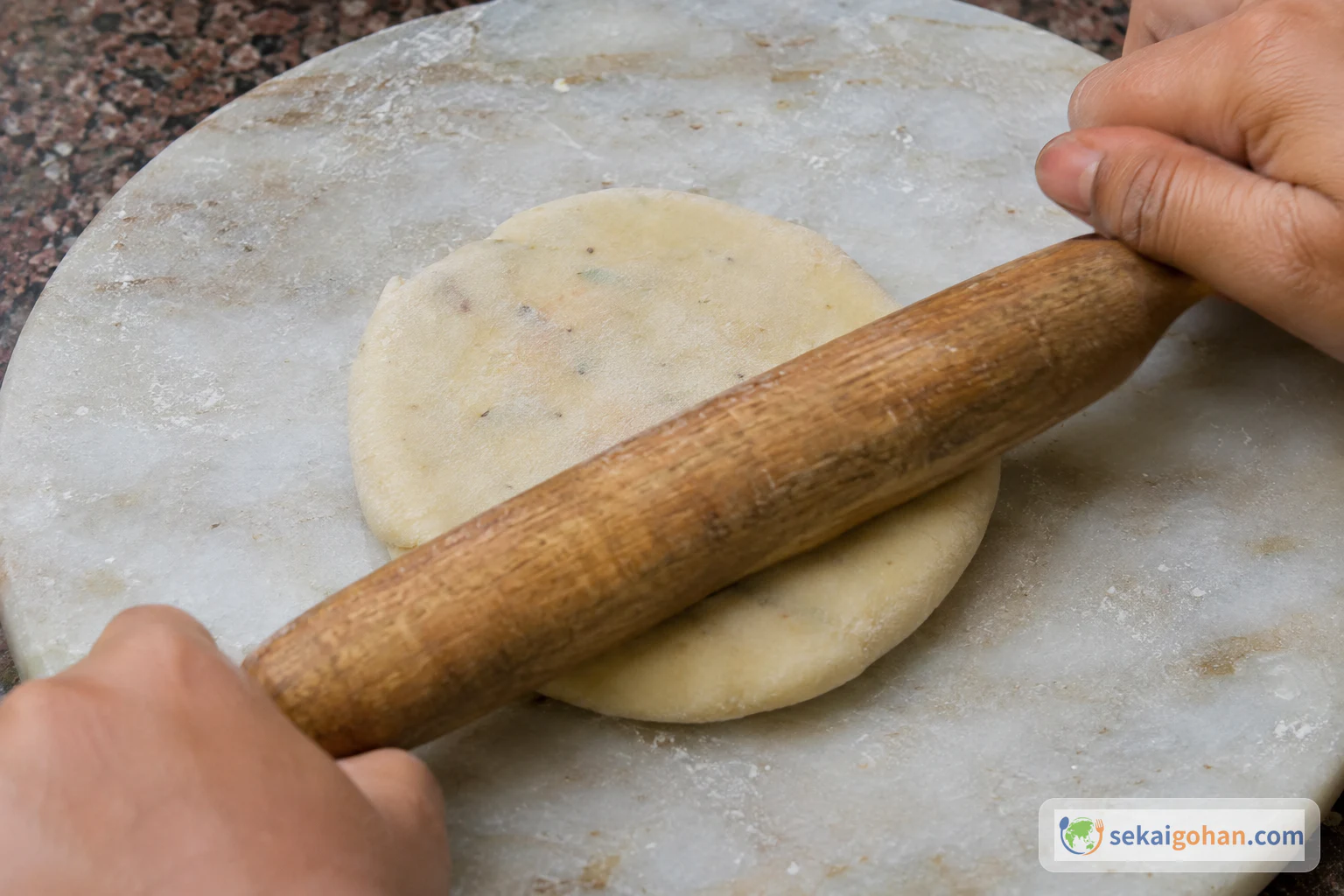
Rolling a sealed stuffed parcel into a medium-thick disc
Medium-thick, not thin

Bring the edges of the dough up over the filling and pinch them together in the center to seal. If there is a lump of extra dough at the sealed top, you can pinch it off without opening the seal. Press the parcel gently from above to flatten it. Roll it gently with a rolling pin into a medium-thick disc; don't roll it thin.

STEP1010 / 12

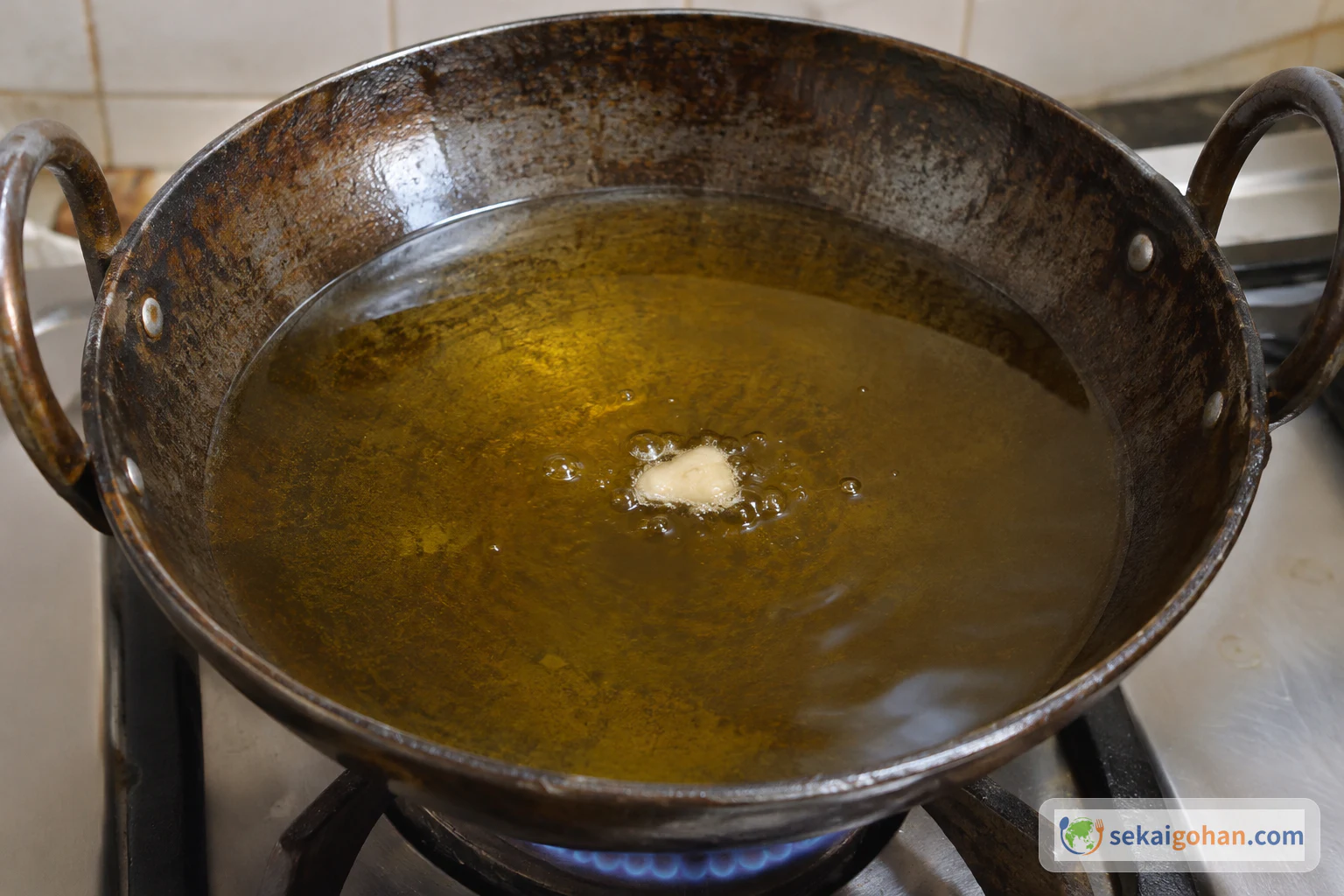
Heat and test the oil

A tiny piece of dough floating in the frying oil as a readiness test
The test piece should rise slowly and steadily

Repeat with the remaining dough and filling, keeping all the shaped kachori covered with a damp cloth. Heat the frying oil in a kadai over low to medium-low heat, and stay beside the stove from now until frying is finished. Drop in a tiny piece of dough. When it rises slowly and steadily to the surface, the oil is ready.

STEP1111 / 12

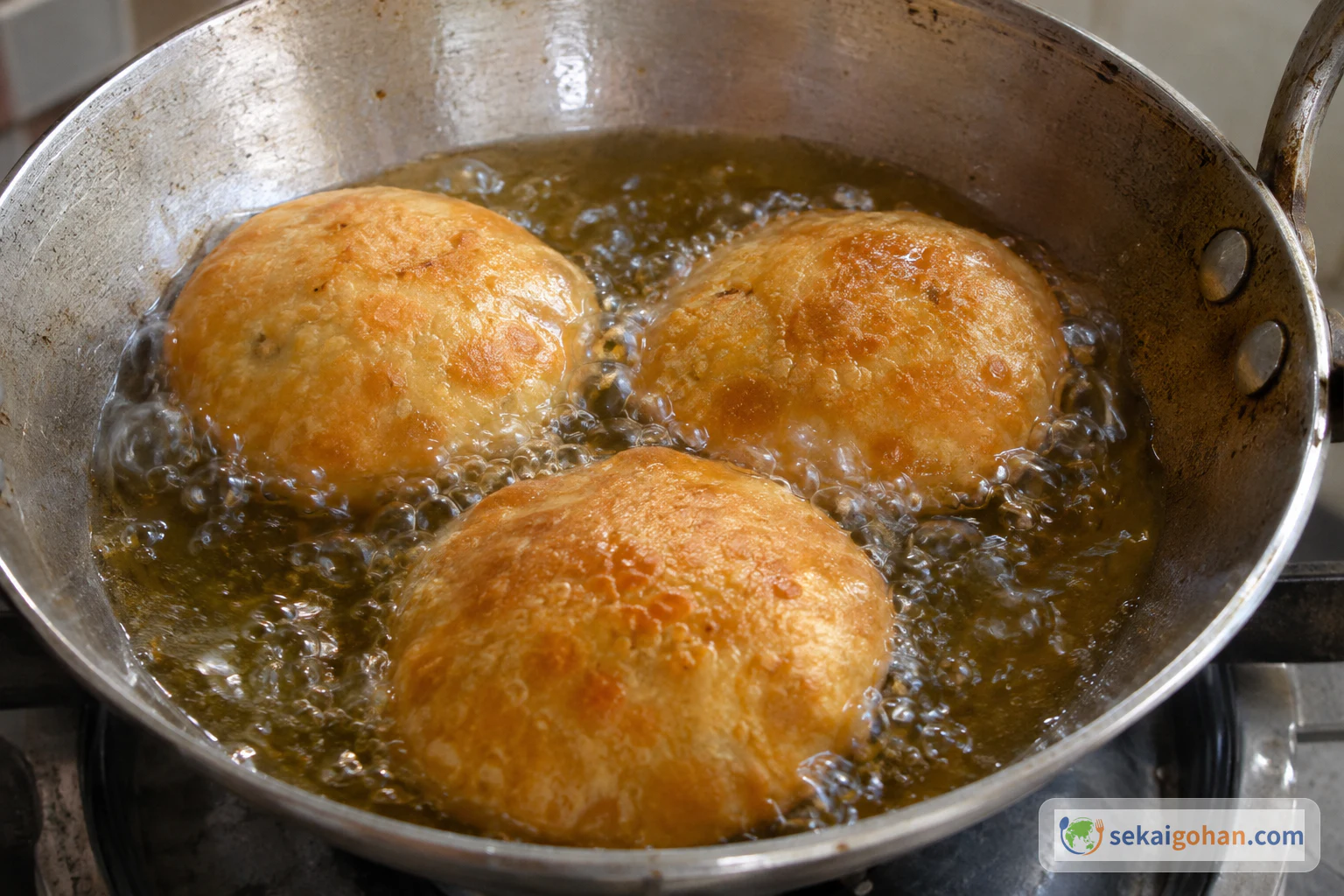
Fry the kachori

Kachori frying slowly in oil until golden and crisp
Fry slowly until golden and crisp

Gently slide in a small batch, about 2 to 3 depending on the size of your pan, without crowding them. As they begin to puff up, nudge them gently with a slotted spoon. When the underside turns pale golden, turn them over. Keep frying over low to medium-low heat, turning as needed, until golden and crisp. Expect about 7–9 minutes, but go by the color and crispness, not the clock or the bubbles. Never leave the pan.

STEP1212 / 12

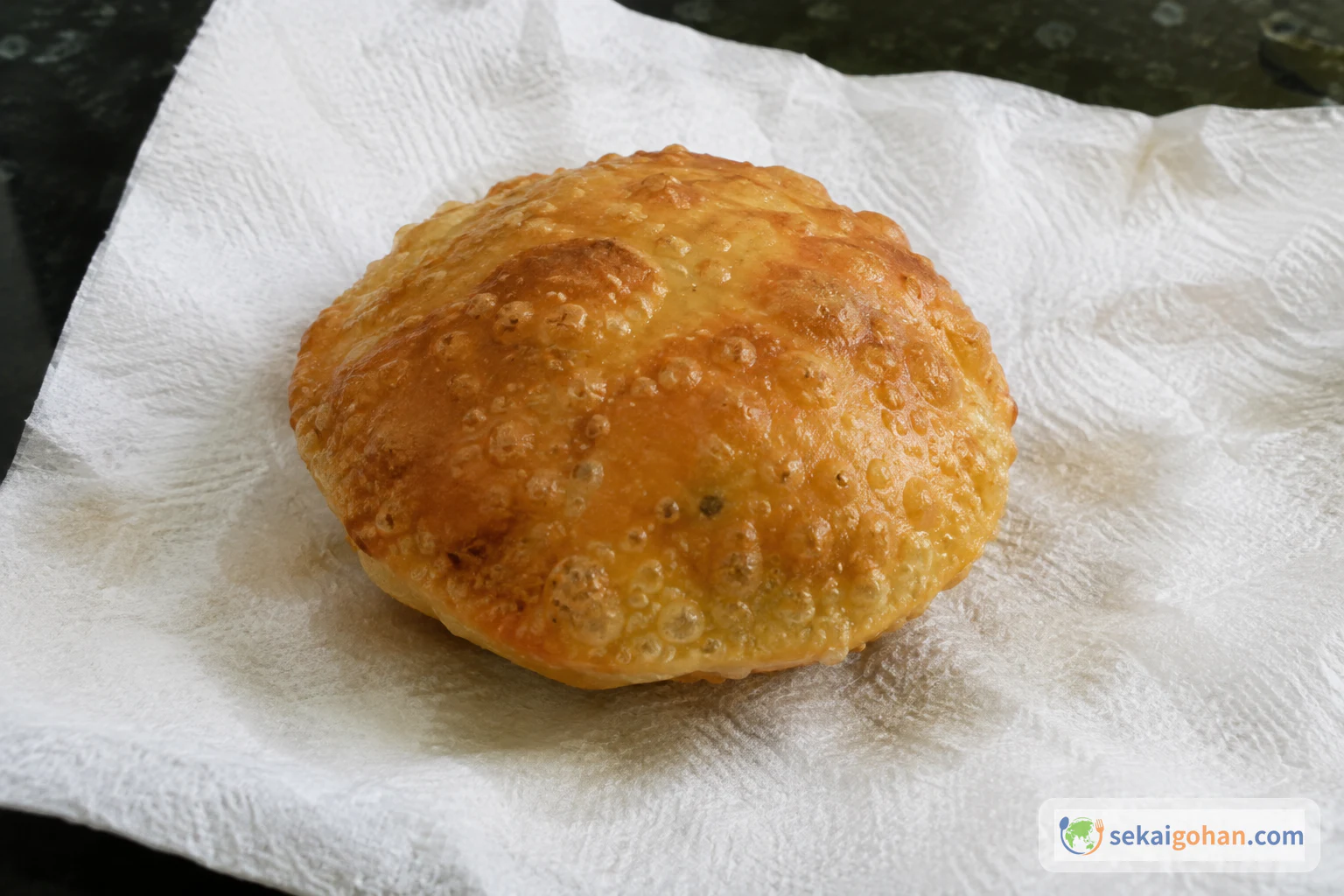
Drain and serve

A freshly fried kachori resting on a paper towel
Drain on paper towels

Lift each kachori out with a slotted spoon and hold it over the pan so the oil drains back in. Set the fried kachori on paper towels. Serve them warm, plain, as they are.

0 / 0
Ingredients

Ingredients

1 / 1

Ingredients

Ingredient Amount Role
All-purpose flour (maida) 2 cups / 250 g Dough: the base of the shell
Salt 1/2 tsp, or to taste Dough: seasoning
Ghee 1/4 cup Dough: rubbed into the flour for a crisp, flaky shell
Water 1/2 cup, or as needed Dough: added in portions; use more or less depending on the dough
Moong dal, hulled and split yellow 1/2 cup Filling: soaked, drained and coarsely ground
Ghee 1/2 tbsp Filling: warms the spices and dal
Turmeric powder 1/4 tsp Filling: seasoning
Red chilli powder 1/2 tsp Filling: seasoning
Cumin powder 1/2 tsp Filling: seasoning
Coriander powder 1 tsp Filling: seasoning
Crushed fennel seeds 1 tsp Filling: seasoning
Dry ginger powder (saunth) 1/2 tsp Filling: seasoning
Dry mango powder (amchur) 1 tsp Filling: seasoning
Salt to taste Filling: seasoning
Asafoetida (hing) 1 pinch Filling: seasoning
Oil for deep frying as needed Frying

Use hulled, split yellow moong dal: small, flat, pale yellow halves without green skins. Keep the dough ghee and the filling ghee separate when you measure.

0 / 0

A good khasta kachori has a shell that shatters when you bite into it, and a filling that still has some texture. The filling is yellow moong dal, ground coarse and cooked in ghee with warm spices. The dough is rubbed with ghee so it turns flaky. Then the kachori fry slowly, at low to medium-low heat, until the outside is golden and crisp all the way around. This version is the moong dal kachori of Uttar Pradesh, in North India.

Khasta Moong Dal Kachori from Uttar Pradesh

Kachori are round discs of wheat dough wrapped around a spiced filling and deep-fried. There are many regional styles with different fillings, and recipes vary a lot from cook to cook. Khasta means crisp and flaky, which is exactly what this shell should be. For more dishes from the same country, see India.

For the filling, hulled, split yellow moong dal is soaked and drained well, then pulsed coarse without any water so it never turns to paste. It is warmed in ghee with ground spices added one at a time. Small balls of this filling are sealed inside the dough and flattened into medium-thick discs. They fry slowly, so the shell crisps through instead of browning fast on the outside.

Next door in Rajasthan, moong dal kachori take a different route. That version uses 9 oz (250 g) maida with 7 oz (200 g) moong dal and 1.75 oz (50 g) ghee, plus ginger-garlic paste and a different set of spices. The dal is dry-roasted, cooled and coarsely ground, then brought together with water.

Before you start

Plan for the dough to rest for 30 minutes and the dal to soak for 2 hours.

Ingredients
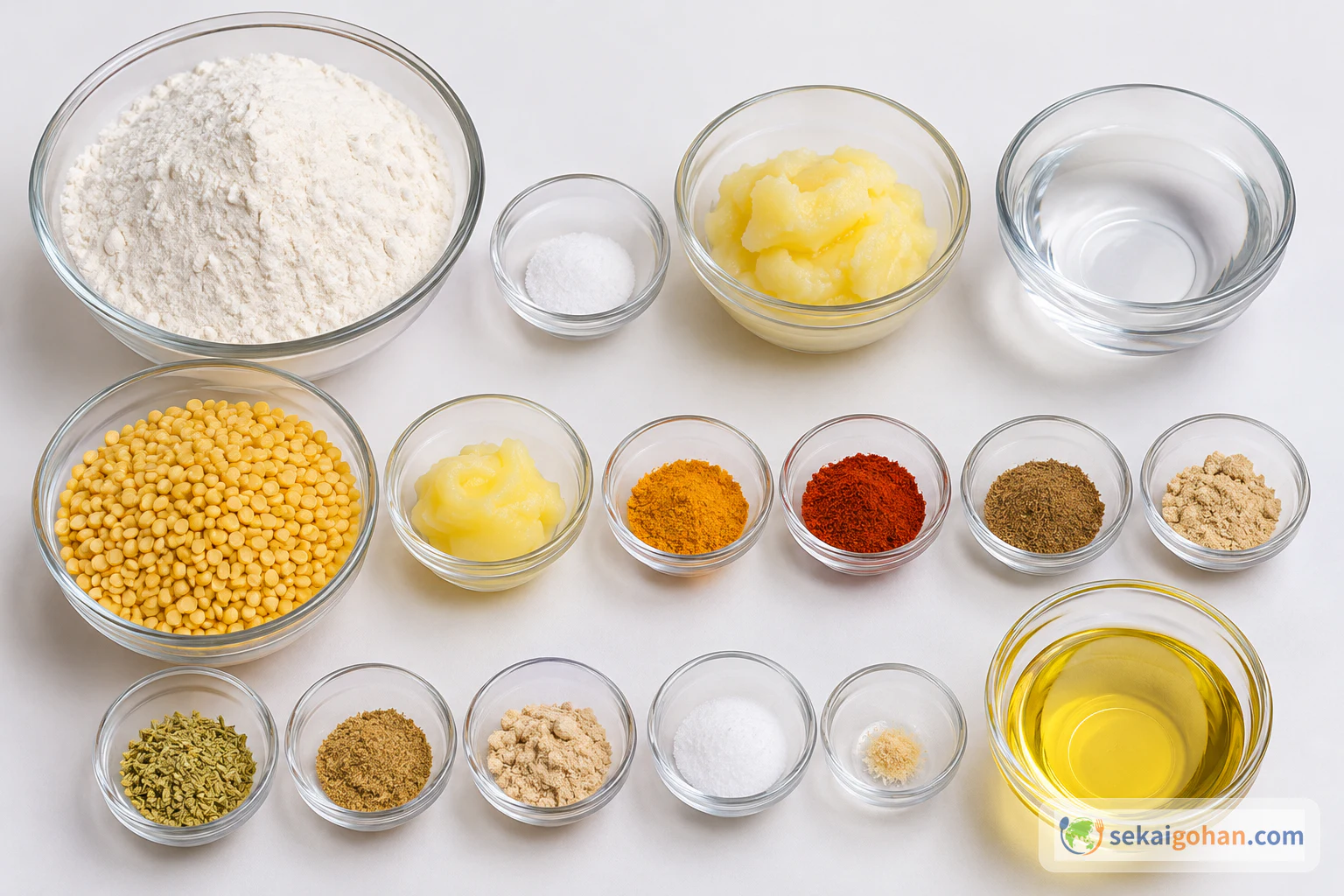
Ingredients for kachori laid out separately: flour, salt, ghee and water for the dough; yellow moong dal, ghee, individual spices, salt and a pinch of hing for the filling; and frying oil
Dough, filling and frying oil, each kept separate

Choosing the Dal, Ghee and Spices

  • Yellow split moong, not whole green moong. Hulled, split yellow dal grinds into the coarse, uneven crumbs this filling depends on. Whole green mung beans are a different ingredient.
  • Ghee throughout. Ghee goes into both the dough and the filling.
  • Crushed fennel seeds rather than fennel powder.
  • Dry ginger powder (saunth) rather than fresh ginger.
  • Dry mango powder (amchur) rather than lemon juice.
  • Asafoetida (hing). A pinch goes into the filling.

The ground spices go into the warm ghee one at a time. It helps to measure each into its own small bowl before you start.

Equipment

  • Large mixing bowl
  • Clean cloth, dampened
  • Bowl for soaking and a fine sieve for draining
  • Small grinder or blender that can pulse
  • Small pan and a spatula for the filling
  • Plate for cooling the filling
  • Clean board and a knife or bench scraper
  • Rolling pin
  • Tray for the shaped kachori
  • Kadai or deep, heavy pan for frying
  • Slotted spoon
  • Paper towels

Method

Frying safety

Stay by the pan the whole time the oil is on the heat. If you have to step away, turn off the heat first. If your stove has an oil-overheating safety feature, use it. If oil ever catches fire, never pour water on it: the water turns to steam instantly and throws burning oil out of the pan. Don't throw mayonnaise on it either.

The method runs in four parts: the dough, the filling, shaping, and frying.

Kachori Problems and Fixes

What you notice What to check What to do
The dough feels dry The dough needs more water Add a little water and knead again
The dough feels sticky The dough is too wet Knead in a little flour
The test piece of dough does not rise slowly and steadily The oil is not at the right point yet Adjust the heat within low to medium-low and test again before adding kachori
Kachori bump into each other in the pan Too many at once Fry a smaller batch suited to your pan

Serving and Freshness

Serve kachori plain and warm, straight from the pan. They are complete on their own, though chutney, fried chillies or yogurt on the side never hurt. Kachori are best made and eaten fresh.

Wash your hands and keep your tools clean while you work. If you have to stop partway through cooking, refrigerate the food. Don't leave it out at room temperature for long.

Frequently Asked Questions

How many kachori does this recipe make?

Expect 12, or about 9 to 10. Divide the dough to match the number of filling balls you actually shape.

Is 1/2 cup of water the maximum?

No. Start with 1/2 cup and add more in portions until the dough is smooth and semi-soft to soft. You may end up needing more or less; adjust by feel.

What oil temperature should I use?

There is no set temperature. Heat the oil over low to medium-low heat and drop in a tiny piece of dough. When it rises slowly and steadily, the oil is ready. Frying takes about 7–9 minutes, but judge by a golden, crisp surface. Stay by the pan while the oil is hot.
Sources

  • Dassana Amit, "Kachori Recipe (Khasta Kachori With Moong Dal)," Dassana's Veg Recipes. The recipe this article follows: its description of several regional kachori styles and its North Indian, Uttar Pradesh label; the ingredient amounts, the recipe card and the numbered method; the pinch of hing in the method that is missing from the ingredient list; the difference between the card's 12 kachori and the method's about 9 to 10; the 2-hour soak, 30-minute rest, 3–4 minute sauté, about 7–9 minute frying guide and warm serving. https://www.vegrecipesofindia.com/dal-kachori-recipe/
  • Dolly Singh, "मूंग दाल कचौरी कैसे बनाते है? Rajasthani Moong Dal Kachori Recipe?," Recipes in Hindi. Used only for comparison: a different Rajasthani moong dal kachori with 250 g maida, 200 g moong dal, 50 g ghee, ginger-garlic paste and dry-roasted dal. Its amounts and steps are not mixed into this recipe, and its storage claim is not used. https://recipesinhindi.net/rajasthani-moong-dal-kachori-recipe/
  • Ministry of Health, Labour and Welfare (Japan), "家庭でできる食中毒予防の6つのポイント" (Six points for preventing food poisoning at home). General hygiene guidance: clean hands and utensils, refrigerating food when cooking is interrupted, and not leaving food at room temperature for long. It does not set storage periods for this dish. https://www.mhlw.go.jp/topics/syokuchu/dl/point0709.pdf
  • Fire and Disaster Management Agency (Japan), "火災" (Fire), Disaster Management e-College. Stay by the pan while frying, turn off the heat if you step away, and use a stove with an oil-overheating safety feature where possible. https://www.fdma.go.jp/relocation/e-college/cat67/cat49/cat42/1-36.html
  • National Research Institute of Fire and Disaster, Fire and Disaster Management Agency (Japan), "天ぷら油火災(マヨネーズでの消火)" (Tempura oil fires: putting them out with mayonnaise). Pouring water on burning oil turns it to steam and scatters hot oil, which is very dangerous; using mayonnaise is not recommended either. https://nrifd.fdma.go.jp/public_info/faq/tenpura_mayonnaise/index.html