Korokke: Japanese Beef and Potato Croquettes (コロッケ)

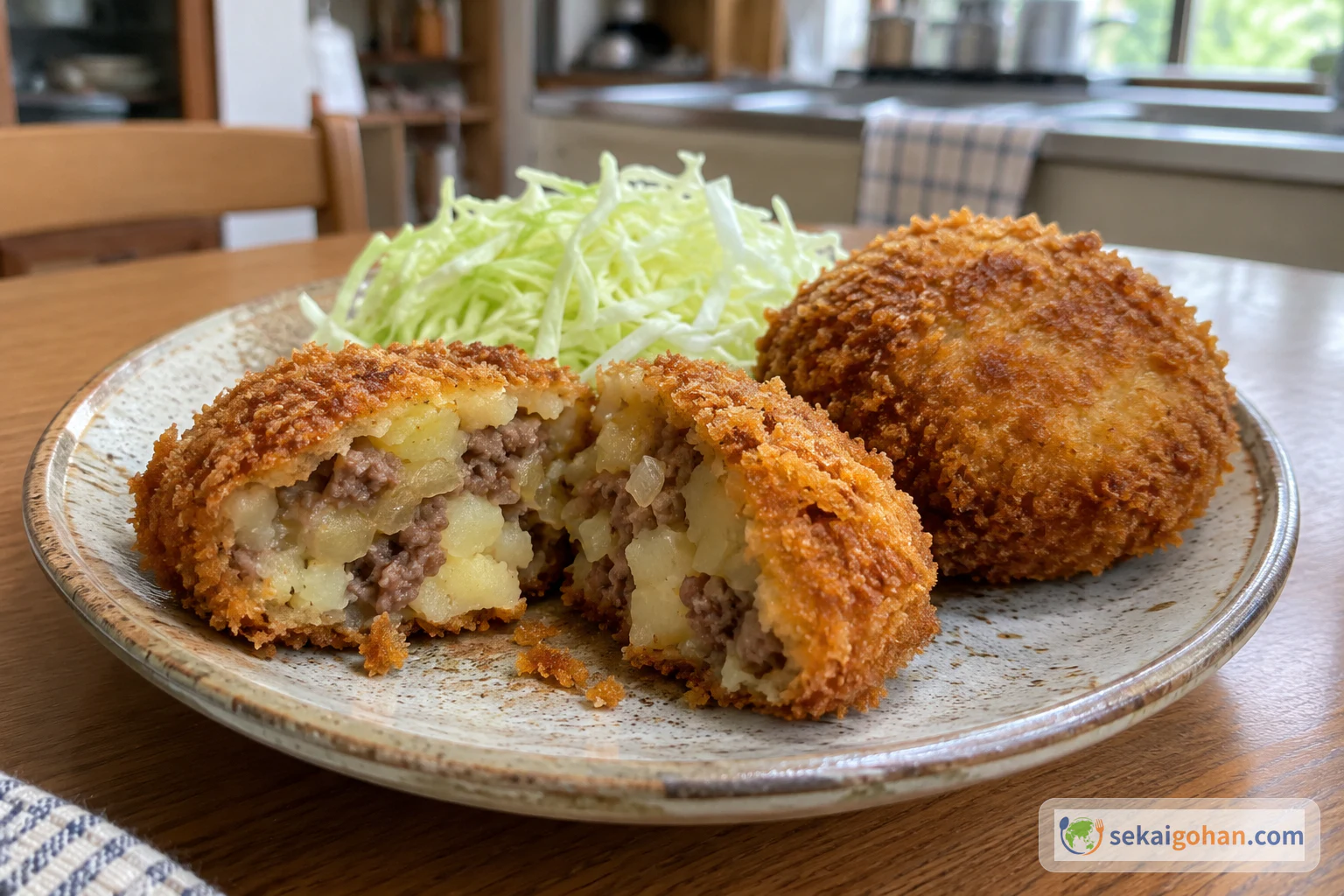
Japanese beef and potato korokke: golden oval croquettes, one cut open to show the filling
Serves
16 croquettes
Level
Intermediate
Cuisine
Japanese

How to make Japanese beef and potato korokke, 16 oval croquettes with a crisp panko crust. Covers drying the potatoes so the filling isn't watery, shaping without air pockets, quick chilling before coating, frying at 340–350°F (170–180°C) a few at a time, and the dish's place in Japan's yoshoku home cooking.

Cooking flow

Cooking steps

STEP11 / 8

Boil the potatoes from cold

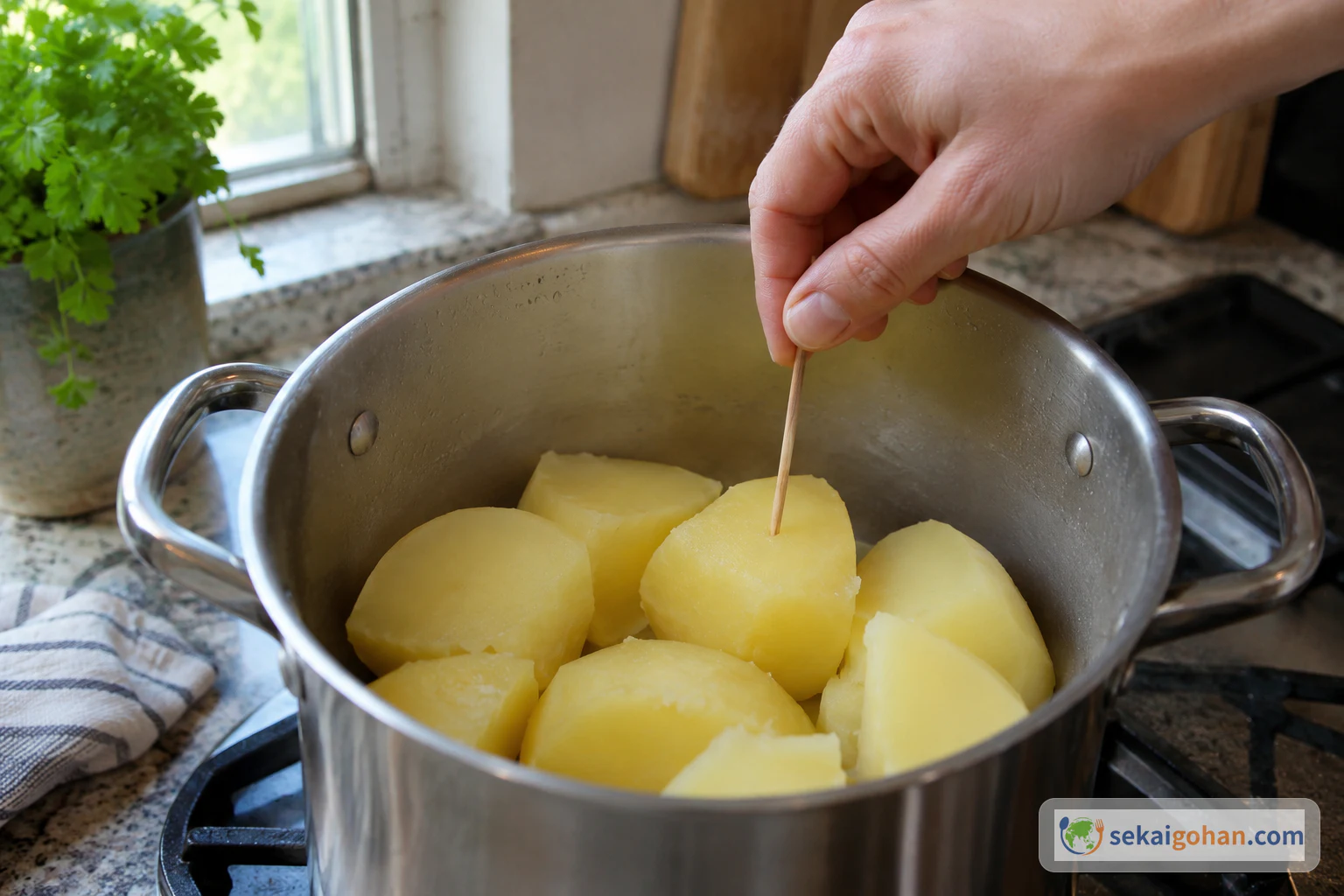
A skewer inserted into a large piece of boiled potato in the pot to check doneness
Test the largest piece: the skewer should go in without resistance

Wash, peel and remove any eyes from the potatoes, then cut each into quarters. Put them in a pot, cover with cold water and bring to a boil over medium heat; this takes about 15 minutes. Then keep the water at a gentle boil for about 15–20 minutes more, until a skewer slides easily into the largest piece.

STEP22 / 8

Cook the onion, then the beef

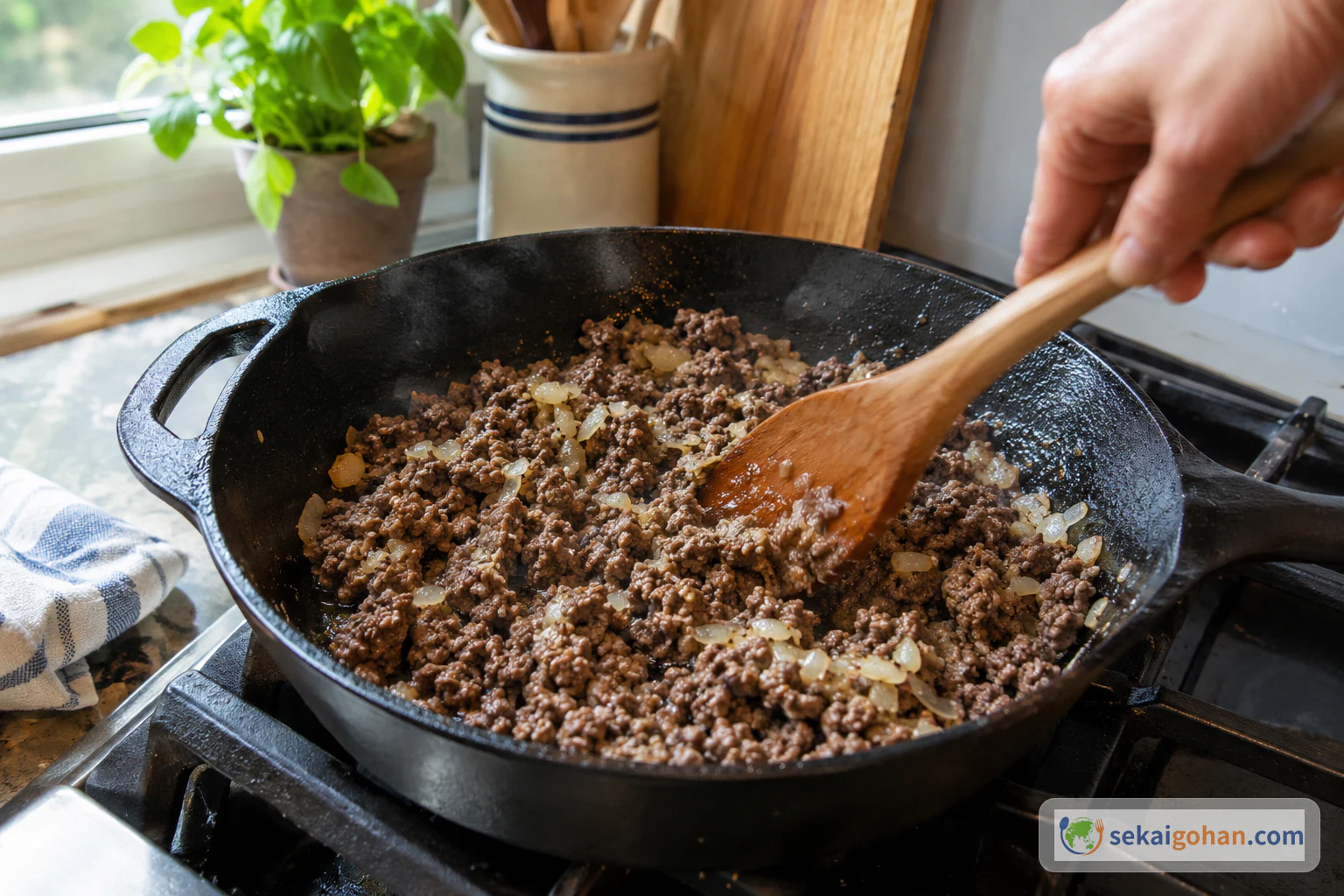
Softened onion and crumbled browned beef stirred together in a skillet
Cook the beef with the softened onion until no pink remains, then confirm with a thermometer

While the potatoes cook, finely chop the onion. Heat 1 Tbsp oil in a skillet over medium heat and cook the onion for 12–15 minutes, until translucent and soft. Add the ground beef with 1/2 tsp salt and 1/4 tsp black pepper, breaking it up as it cooks, until no pink remains. Check with a food thermometer that the center of the beef reaches 160°F (71°C); color alone is not a reliable check. Cook off the excess moisture, then drain away any liquid left in the pan.

STEP33 / 8

Dry and mash the potatoes, then combine

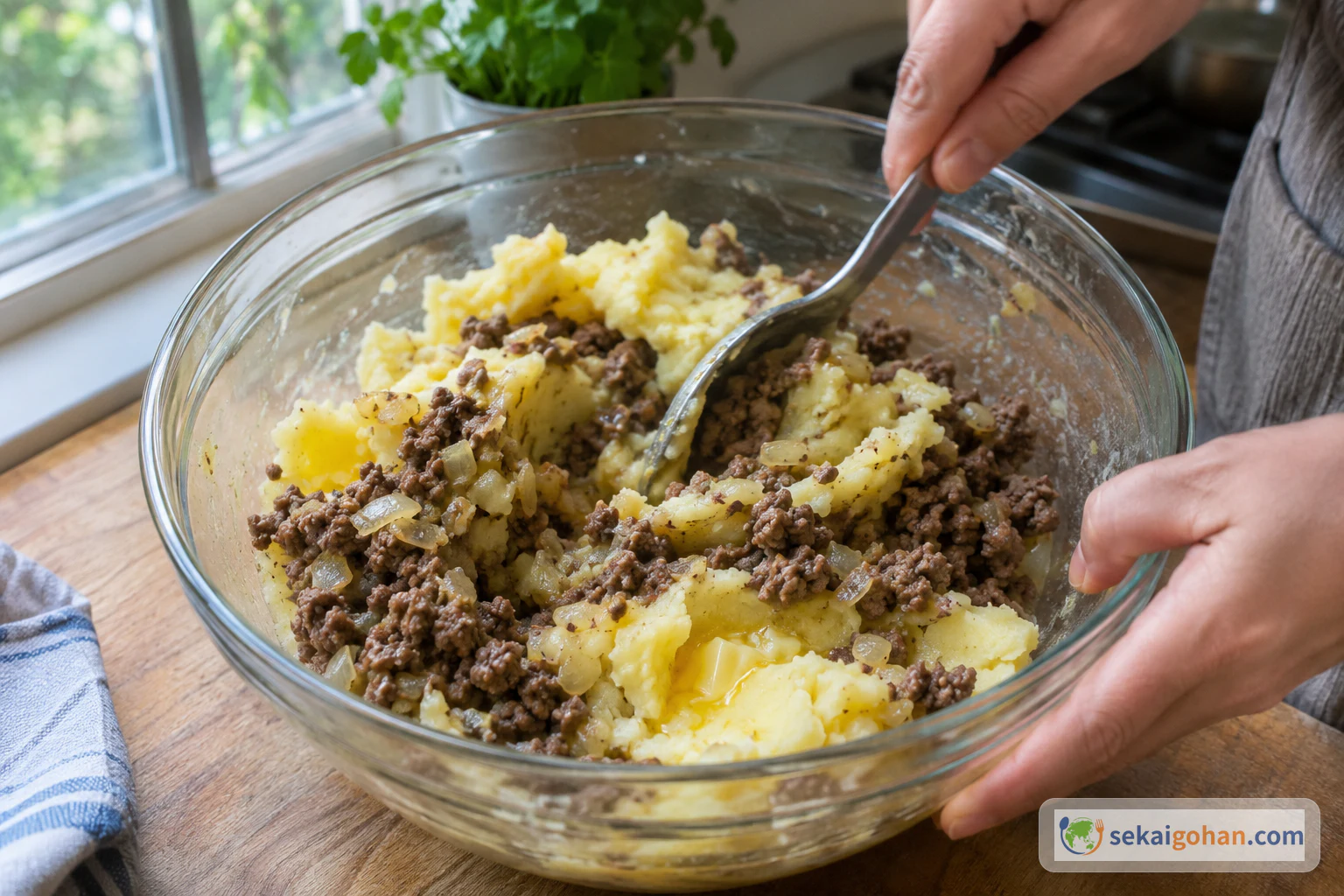
Chunky mashed potato with butter being combined with the beef and onion in a bowl
Fold the drained beef and onion into the mashed potato without working it to a paste

Drain the potatoes and return them to the pot. Over low heat, shake the pot for 1–2 minutes to drive off the surface moisture. While they are still hot, mash them, leaving some small chunks, then mix in the butter, 1/2 tsp salt and 1/4 tsp black pepper. Add the drained beef and onion and fold everything together gently.

STEP44 / 8

Shape 16 ovals and chill them

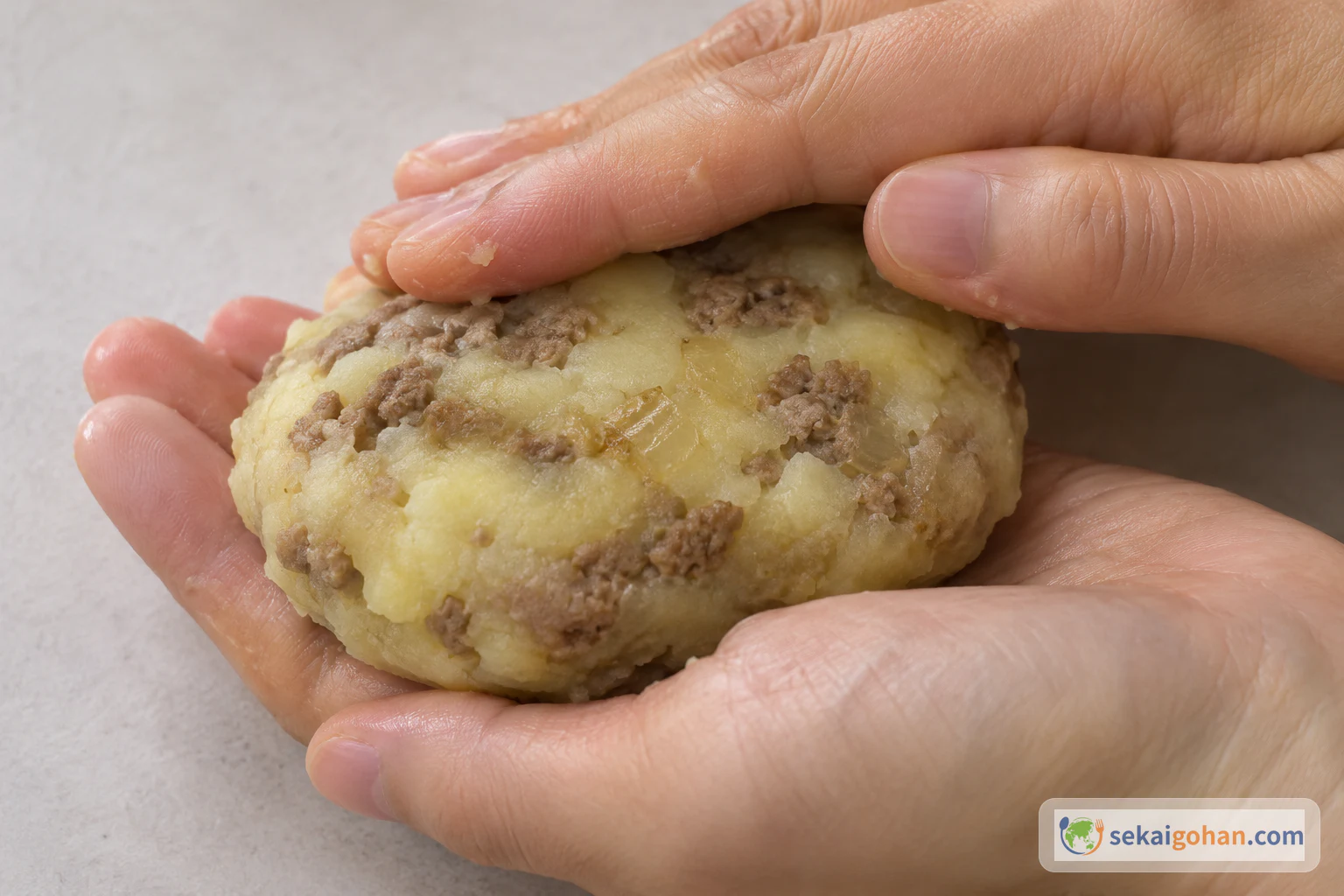
Hands shaping a single warm oval patty of potato, beef and onion
Press each patty firmly so no air is trapped inside

When the mixture is warm but no longer hot, divide it into 16 portions. Shape each into an oval about 3 inches (7.5 cm) long, pressing it firmly between your palms so no air pockets remain inside. Spread the patties out on one or more shallow trays so they cool quickly, then cover and refrigerate for 15–30 minutes. Get them into the refrigerator promptly rather than letting them stand at room temperature.

STEP55 / 8

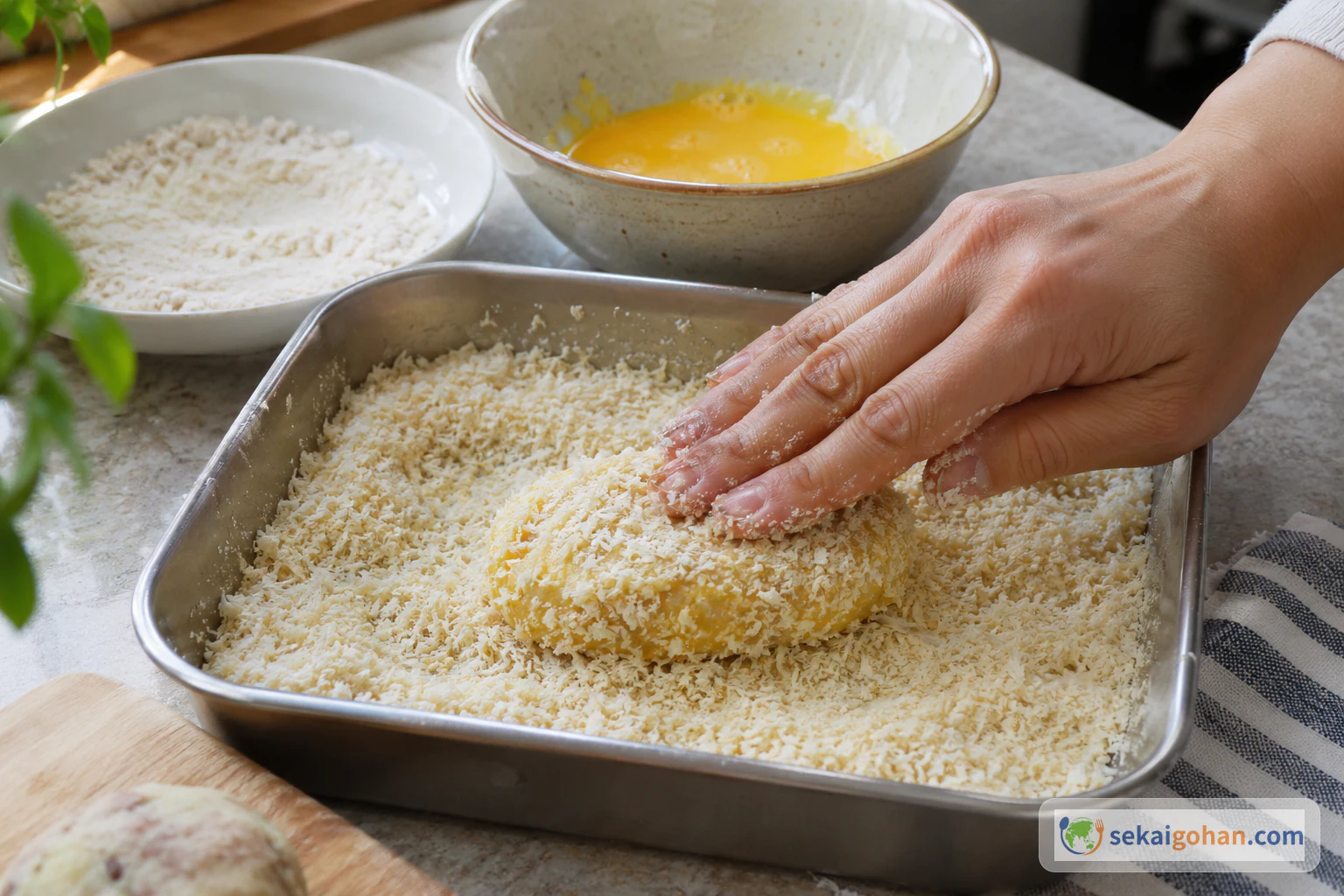
Coat in flour, egg and panko

A floured, egg-dipped patty pressed into panko in a shallow tray
Press the panko on lightly so the whole surface is covered

Put the flour, the beaten eggs and the panko in three separate shallow containers. Take the patties from the refrigerator and coat each one in flour, shaking off the excess, then dip it in egg, then roll it in panko. Press the panko on lightly so it sticks, and make sure every surface is covered.

STEP66 / 8

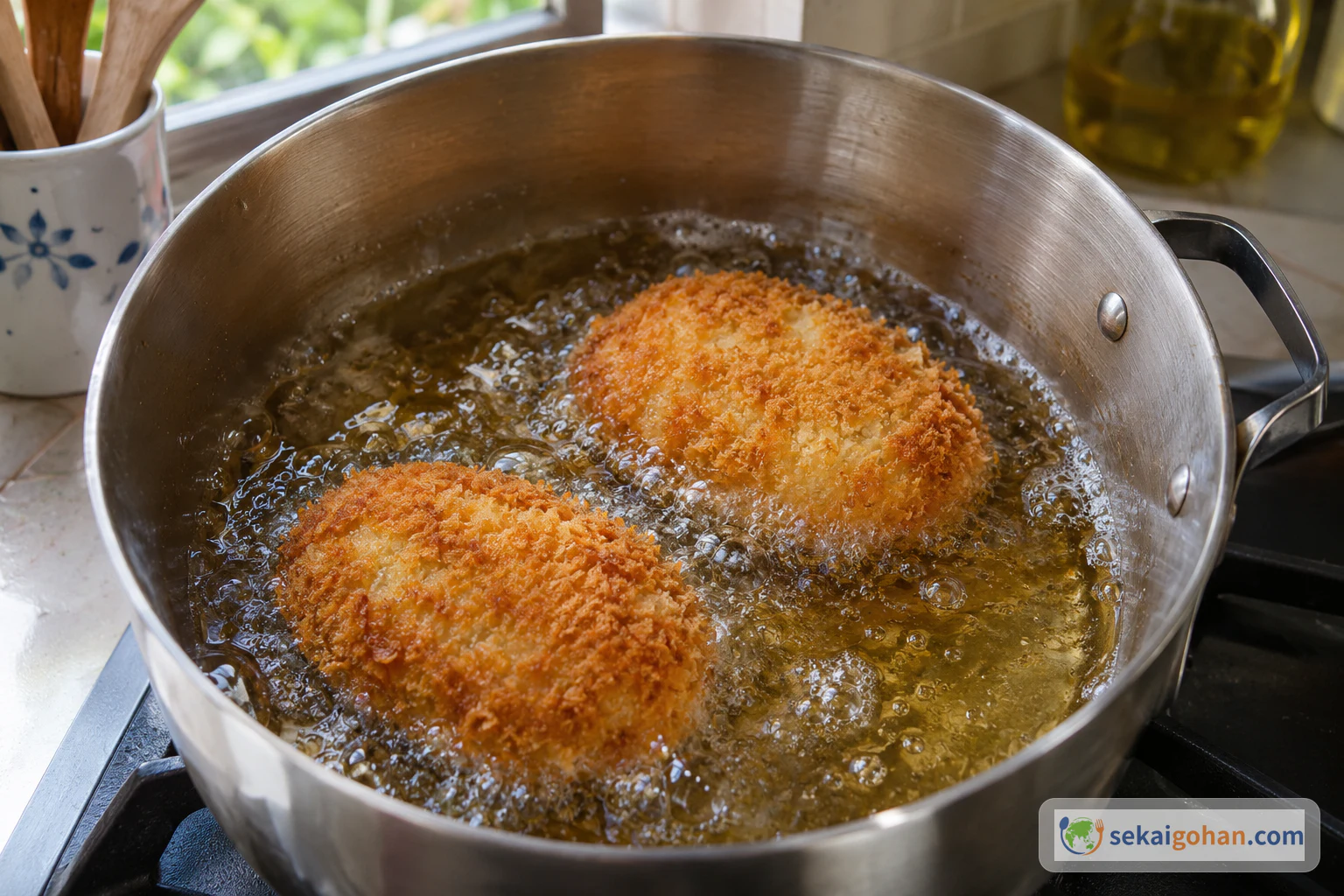
Fry two or three at a time

Two panko-coated croquettes frying in oil with space between them
Fry a few at a time, leaving room between the pieces

Heat the frying oil in a heavy pot to 340–350°F (170–180°C), checking with a thermometer. Lower in 2–3 croquettes at a time so the pot isn't crowded. Leave them undisturbed until golden, turning them gently so both sides color, for about 2–3 minutes. Let the oil come back to temperature before the next batch.

STEP77 / 8

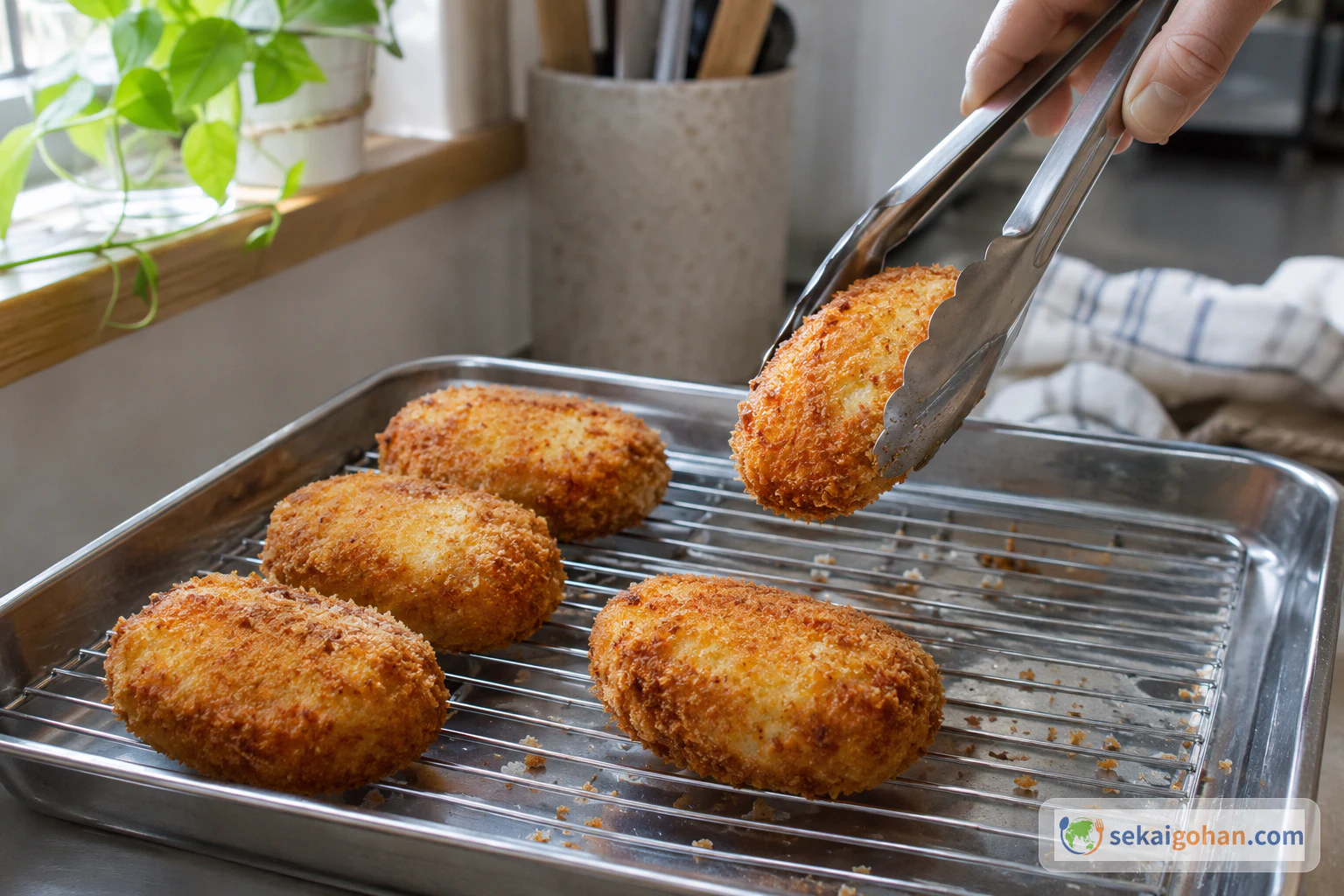
Drain on a rack

Tongs placing a fried golden croquette on a wire rack over a tray
Drain on a rack so the crust stays crisp underneath

Lift the croquettes out and set them on a wire rack over a tray to drain. Keeping them on a rack rather than stacked lets the bottoms stay crisp.

STEP88 / 8

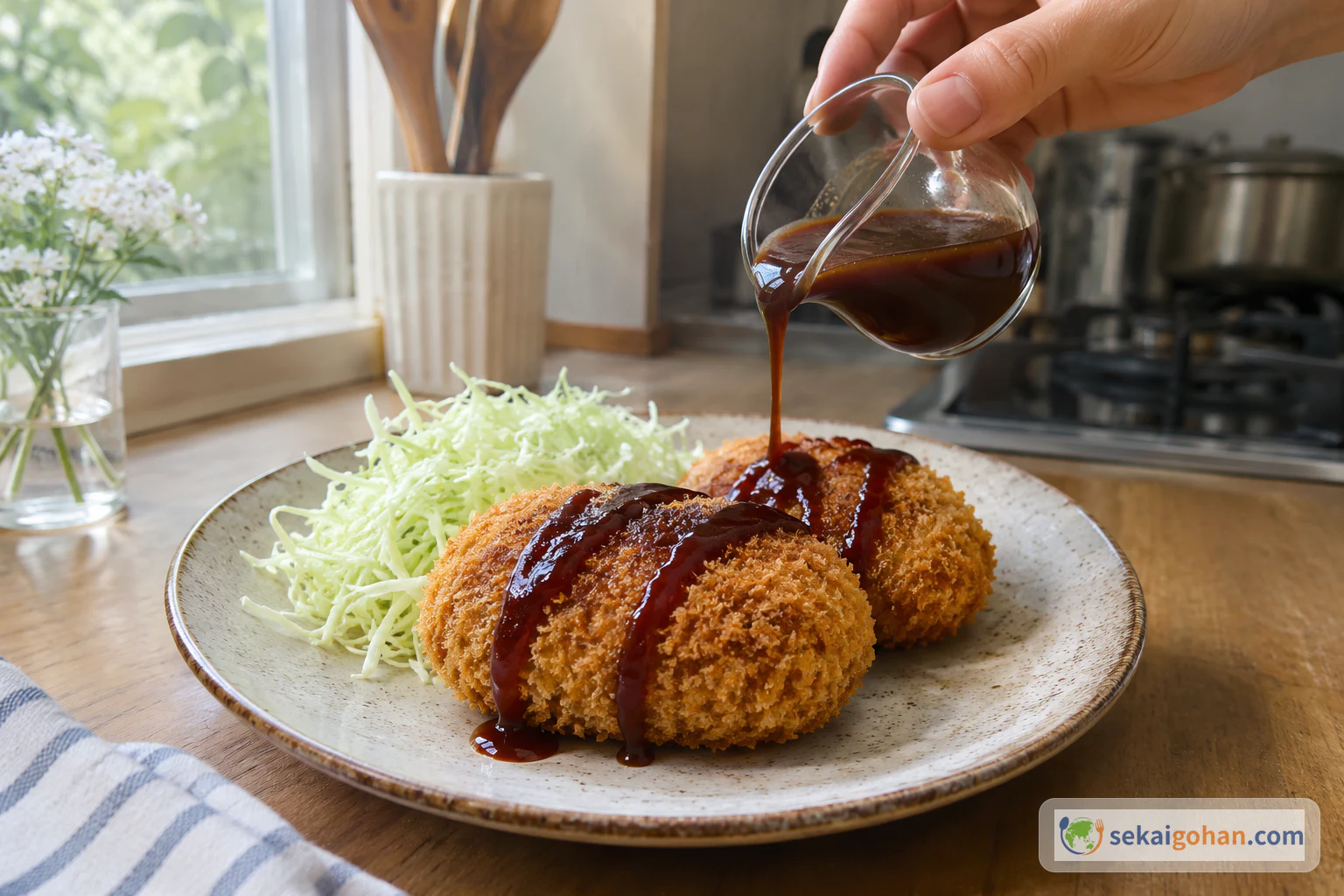
Serve with tonkatsu sauce

Tonkatsu sauce poured over plated croquettes with shredded cabbage alongside
Add the sauce at serving time, with cabbage on the side

Plate the korokke and add tonkatsu sauce to taste, with shredded cabbage on the side if you like. Pour the sauce over at the table rather than mixing it into the filling.

0 / 0
Ingredients

Ingredients

1 / 1

Ingredients

Ingredient Amount Role
Russet potatoes 2 lb (about 4) The body of the filling. Go by weight rather than count
Water as needed For boiling the potatoes, starting cold
Yellow onion 1 (272 g) Finely chopped and cooked until soft and sweet
Neutral oil 1 Tbsp For cooking the onion; separate from the frying oil
Ground beef, 85% lean 1 lb Cooked with the onion for savory depth
Diamond Crystal kosher salt 1/2 tsp for the meat + 1/2 tsp for the potatoes Seasoning, added in two separate portions
Black pepper 1/4 tsp for the meat + 1/4 tsp for the potatoes Seasoning, added in two separate portions
Unsalted butter 1 Tbsp Mixed into the hot mashed potatoes
Plain (all-purpose) flour 1/2 cup First layer of the coating
Large eggs 3 (50 g each without shell) Beaten; second layer of the coating
Panko 2 cups Final layer, for a light, crisp crust
Neutral oil for frying 4 cups, or enough for at least 2 inches (5 cm) depth For deep-frying; this is the depth in the pot, not the amount absorbed
Tonkatsu sauce to taste For serving, at the table
Shredded cabbage as needed Optional side for serving
0 / 0

Break open a freshly fried korokke and the panko shell crackles, then gives way to soft mashed potato with small chunks left in, flecked with browned ground beef and sweet, slowly cooked onion. This is the Japanese croquette, an everyday food that turns up on home tables, in lunch boxes and at neighborhood shops. It comes with a drizzle of tonkatsu sauce and a pile of shredded cabbage. For more of the country's cooking, see Japanese recipes.

Korokke and Japanese Yoshoku Cooking

Korokke is a breaded, fried potato croquette that became part of yoshoku, the Western-influenced cooking that Japan made its own. It was one of the Western-style single dishes that suited rice and took root in Tokyo, and around 1920 a "Korokke Song" was popular. From there it moved from novelty to something ordinary: a side for rice, a bento item, a purchase on the way home.

People still cook korokke at home, and they also buy it ready-made from places such as butcher shops. This is the potato, beef and onion kind. Cream croquettes made with white sauce, and versions with crab, kabocha squash or rice, are separate dishes.

Ingredients for 16 Korokke
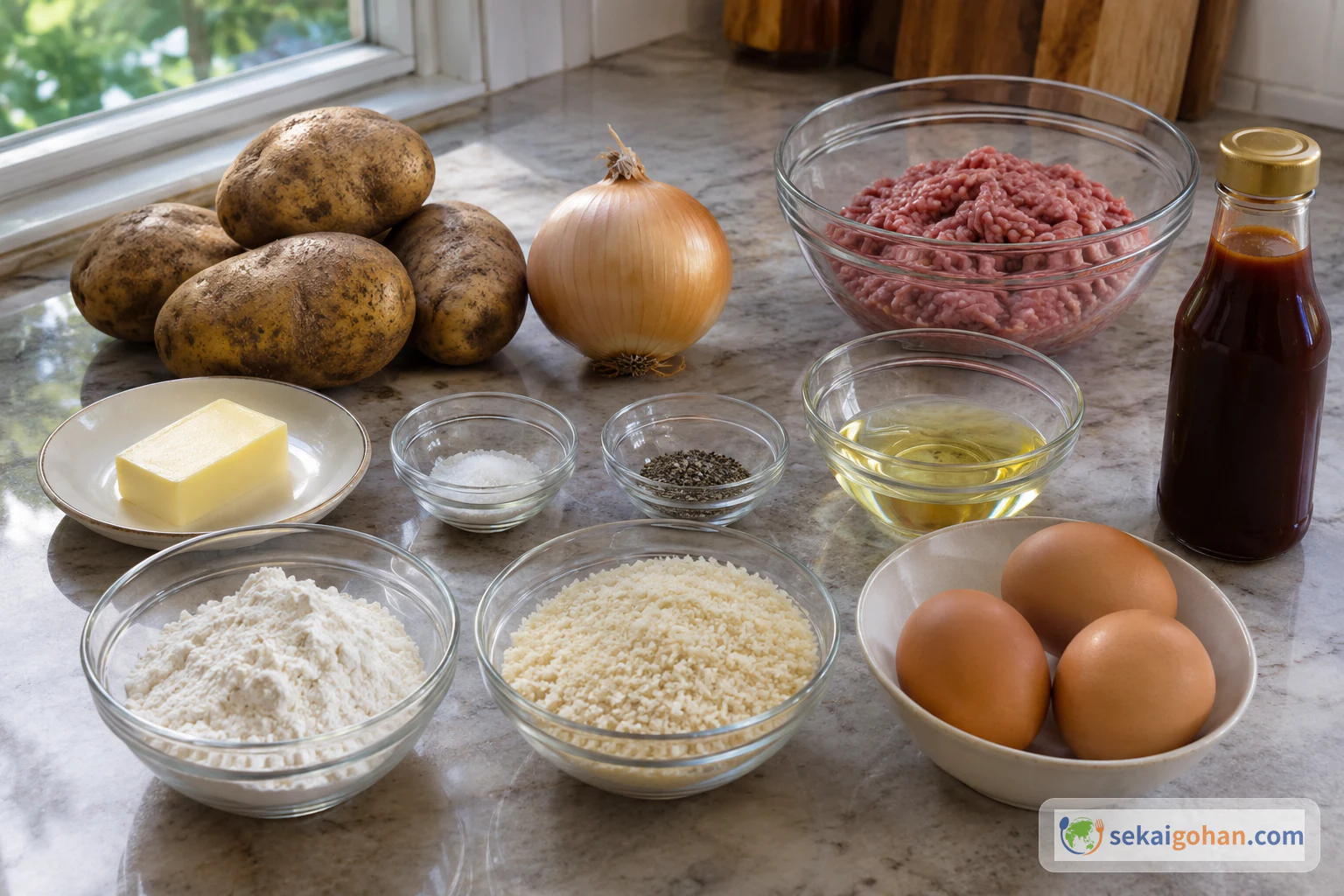
Russet potatoes, a yellow onion, ground beef in its own bowl, butter, salt, black pepper, oil, flour, panko, three eggs and tonkatsu sauce
The filling ingredients, the coating, and the sauce for serving, with the raw beef kept separate

Equipment

  • Large pot for boiling the potatoes
  • Bamboo skewer or thin knife for testing doneness
  • Large skillet and wooden spoon
  • Instant-read food thermometer (for the beef)
  • Potato masher or sturdy fork
  • Large mixing bowl
  • Colander or strainer, for draining the potatoes and the beef
  • One or more shallow trays, plus a cover or wrap, for chilling the patties
  • Two shallow bowls and one shallow tray for the flour, egg and panko
  • Heavy, sturdy pot for deep-frying
  • Deep-fry or oil thermometer
  • Tongs or a slotted spoon
  • Wire rack set over a tray

Choosing Potatoes, Salt and Oil for Korokke

Potatoes. Use russets, a floury potato that mashes dry. In Japan, danshaku (男爵) is a floury potato that can stand in, though its texture is slightly different. Waxy potatoes hold more moisture and work against a firm filling.

Salt. The amounts are for Diamond Crystal kosher salt, which has large, light crystals. Spoon for spoon, fine table salt is much saltier, so use half the volume, or the same weight.

Oil. Use a neutral oil for both the onion and the frying. A heavy, fairly small pot lets you reach the 2-inch (5 cm) depth without a large volume of oil.

Allergens and food safety

This recipe contains wheat (flour, panko), egg, beef and milk (butter). Check the labels on panko and tonkatsu sauce for other allergens. Handle raw ground beef separately from the other ingredients, and check its doneness with a food thermometer rather than by color.

Method: From Dry Filling to Crisp Crust

Where the work happens

Most of the success is decided before any frying: drying the potatoes, draining the beef, shaping firmly and chilling. If the filling is dry and the patties are cold and fully coated, the frying itself is quick.

Fixing Common Korokke Problems

Dry filling, tight shape

Keep the filling dry and the shape tight. Drive moisture off the potatoes, the onion and the beef at each stage, press out air pockets as you shape, and chill the patties before they go into the coating. That way the crust stays whole in the oil.

Problem Likely cause What to do
The filling is wet and won't hold a shape Moisture left in the potatoes, onion or beef Dry the potatoes over low heat after draining, cook the onion until truly soft, cook off the beef's moisture, and don't add the pan juices back
The coating cracks or bursts in the oil Air pockets, a filling that is still warm, or gaps in the coating Press out air while shaping, chill the patties before coating, and cover every surface with flour, egg and panko
The croquettes come out greasy The oil temperature dropped Fry only 2–3 at a time, watch the thermometer, and let the oil recover between batches
The patties slump on the tray The mixture was too hot when shaped Let it cool until warm, not hot, before shaping, then chill

If a batch cracks, work back through the causes in order: moisture, shaping, chilling, then oil temperature.

Serving, Storing and Varying Korokke

Korokke is at its best freshly drained, when the panko is crispest. True to its yoshoku roots, it sits naturally beside a bowl of rice, with shredded cabbage to cut the richness and as much tonkatsu sauce as you like.

For leftovers, cool them quickly, then refrigerate them in a covered container at 40°F (4°C) or below. Cooked croquettes shouldn't sit at room temperature for more than 2 hours, or 1 hour if it is hotter than 90°F.

The filling takes changes well, though the flavor shifts with each:

  • Part pork: Replacing some of the beef with ground pork changes the fat and the savory depth.
  • Mixed ground meat: A beef and pork blend gives a different flavor and releases fat differently, so drain it well.
  • Kabocha squash: Squash korokke is really its own dish. Its moisture and sweetness differ from potato, so it needs a different approach.
  • Smaller croquettes: If you shape them smaller, recheck the frying time rather than relying on the times above.

Frequently Asked Questions

Does the coating order matter?

Yes. Flour first, then beaten egg, then panko. The flour gives the egg something to cling to, and the egg holds the panko. Press the panko on lightly at the end.

Can I let the patties cool on the counter before chilling?

Spread the shaped patties on shallow trays so they cool quickly, then cover and refrigerate for 15–30 minutes. Get them into the refrigerator within 2 hours at room temperature, or 1 hour if it is hotter than 90°F.

Why use a thermometer for the beef if it is cooked until no pink remains?

Color is not a reliable sign that ground beef is safe. Cook it to a minimum internal temperature of 160°F (71°C), and check the center with a food thermometer in step 2.
Sources