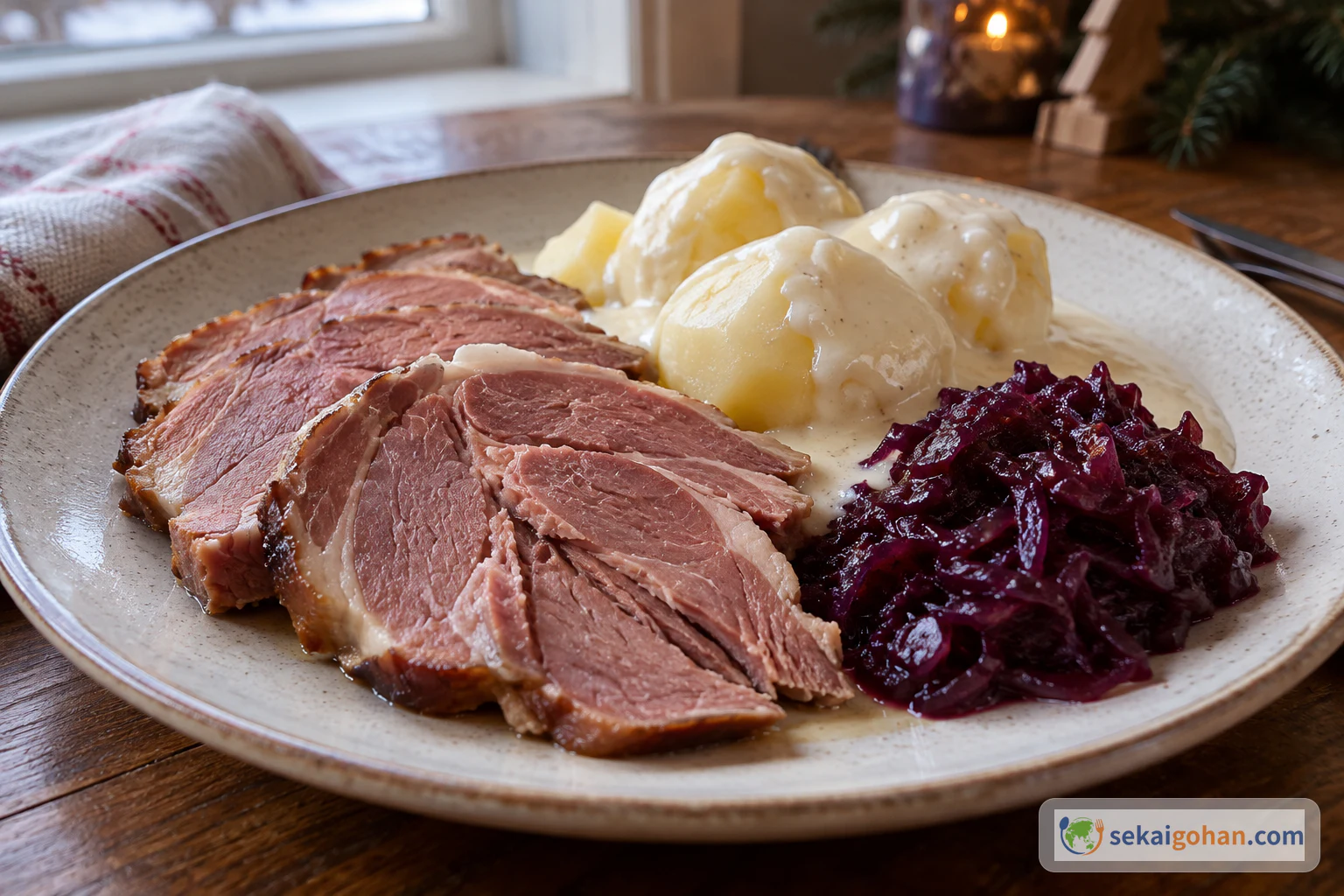
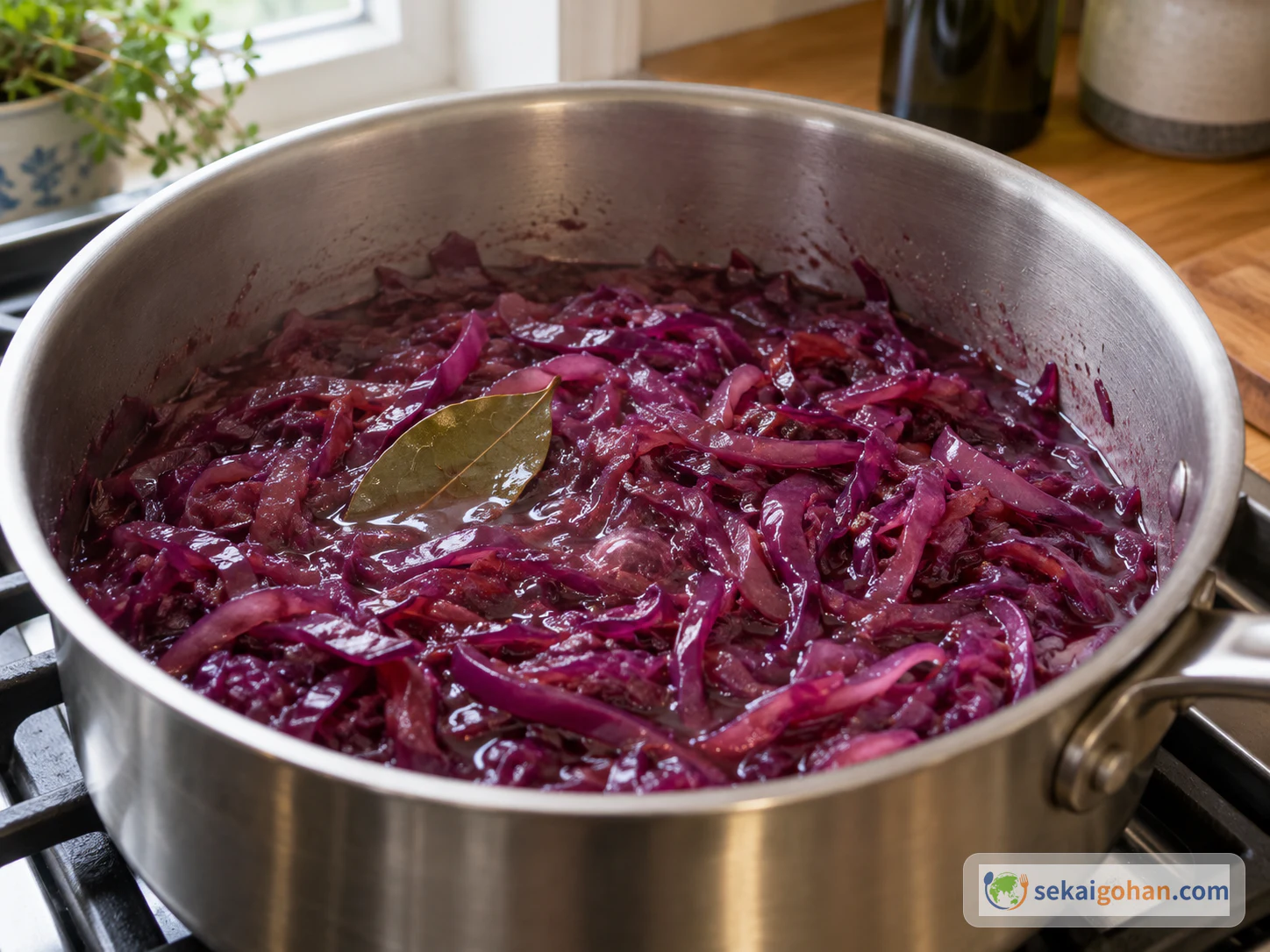
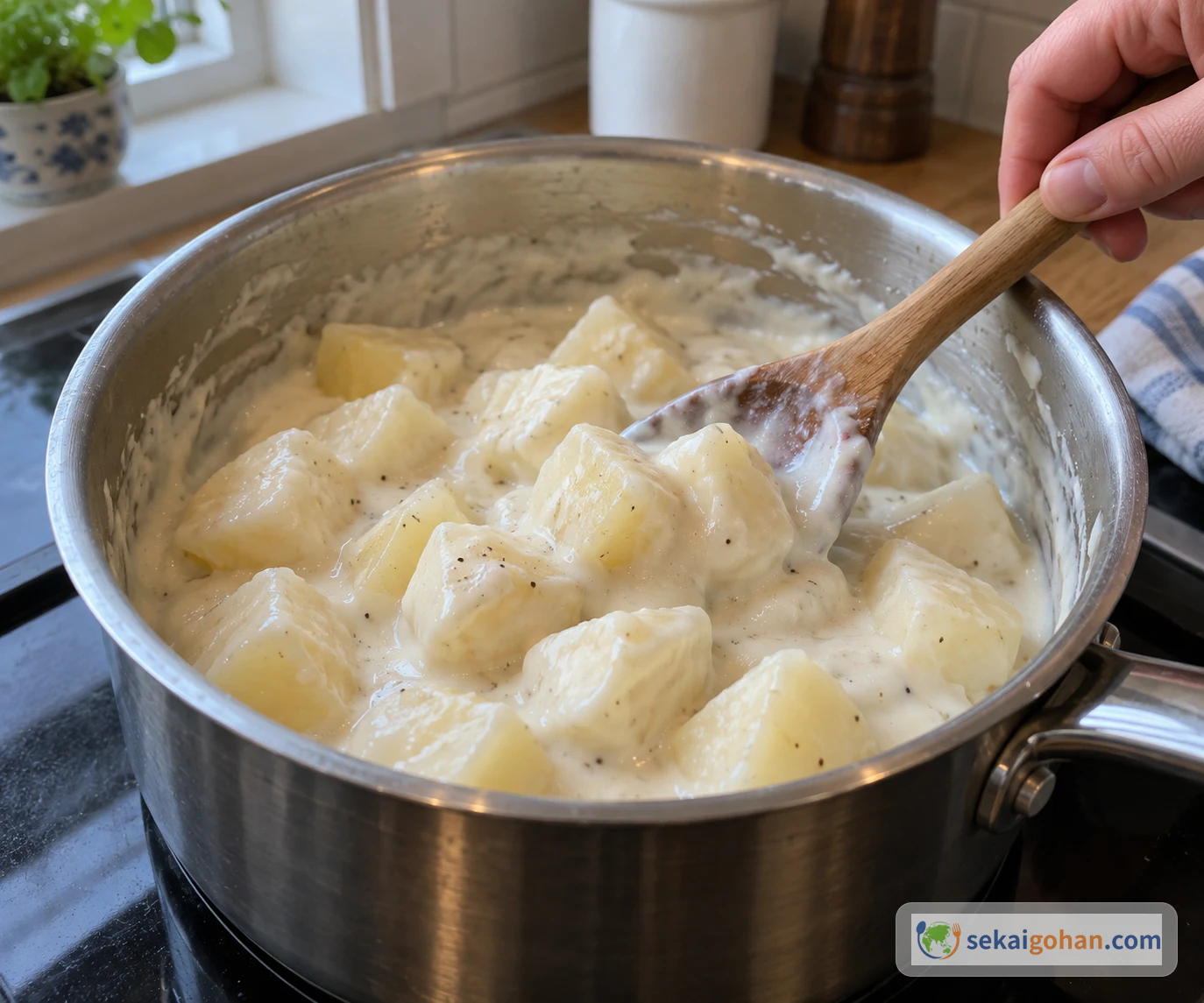
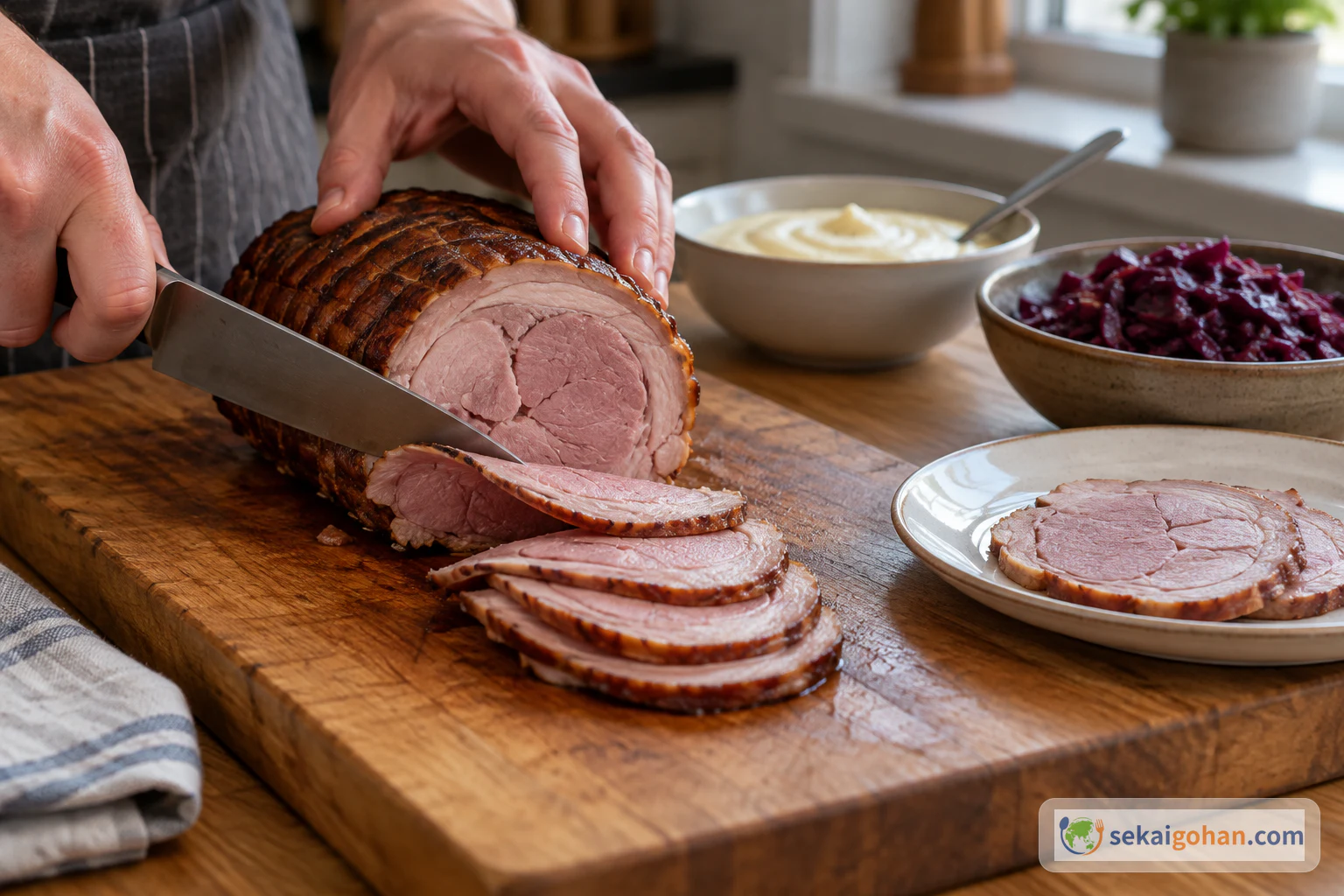
Lift a roll of smoked lamb from the broth it cooled in and slice it thin. Lay the slices beside warm potatoes in white sauce and a spoonful of glossy red cabbage, simmered in wine, vinegar and sugar. Each bite brings together cold meat, warm sauce and sour cabbage. That is Iceland's Christmas hangikjöt: salty, smoky lamb, softened by a mild white sauce and lifted by sharp, sweet cabbage.
About Hangikjöt, Iceland's Christmas Lamb
Hangikjöt (written hangikjöt in Icelandic) is lamb that has already been cured and smoked. Leg or shoulder is dry-salted or brined, then cold-smoked over dried sheep dung or birch. You buy it finished, then cook it, cool it and make the sides yourself.
Its place at Christmas came out of winter necessity. Some households could not get fresh meat for the holiday, so meat smoked in autumn and stored through the season was what they had. Over time, cold hangikjöt became a Christmas dish. It isn't only for the holiday table, though. Icelanders also eat it with bread at lunch.
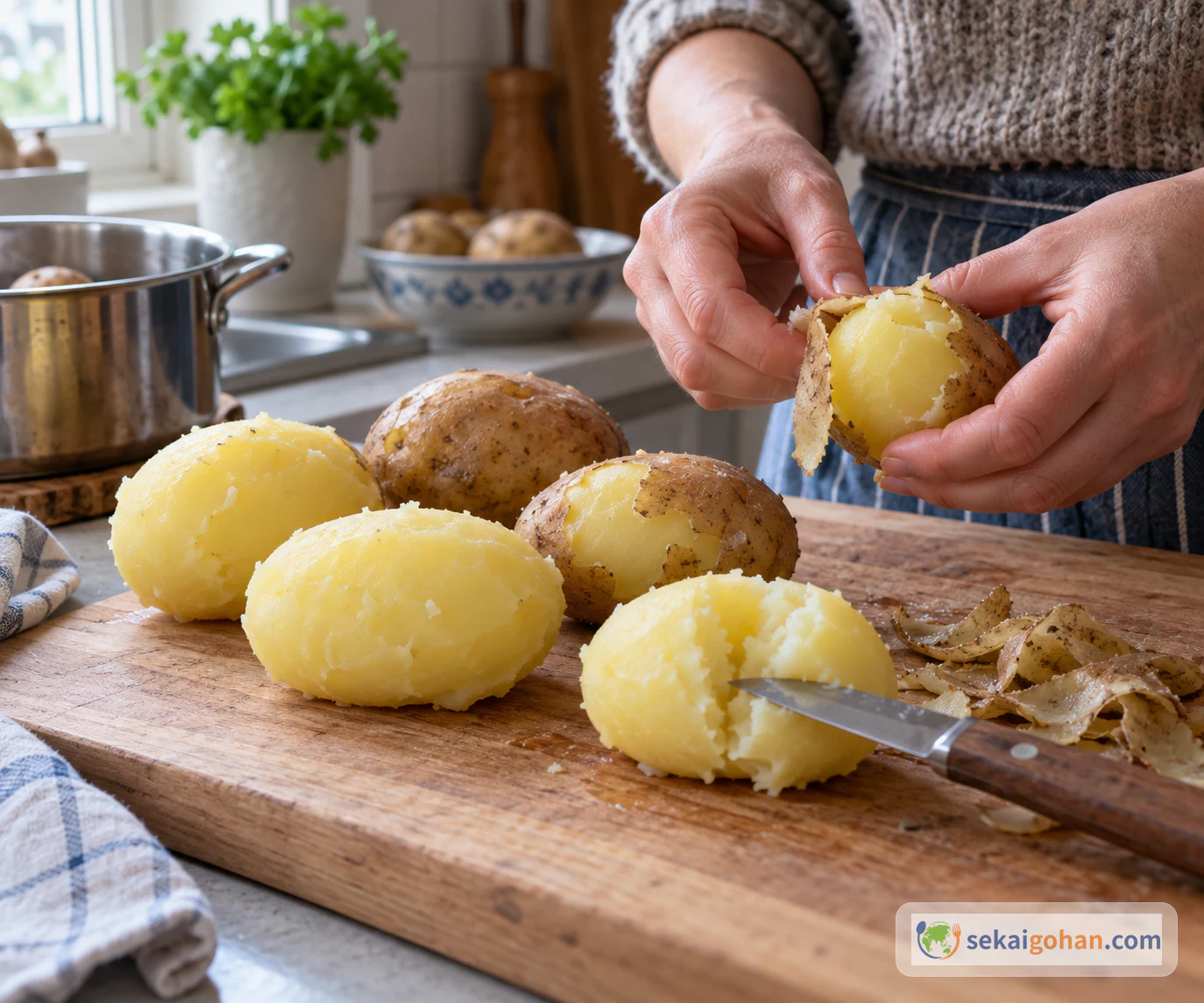
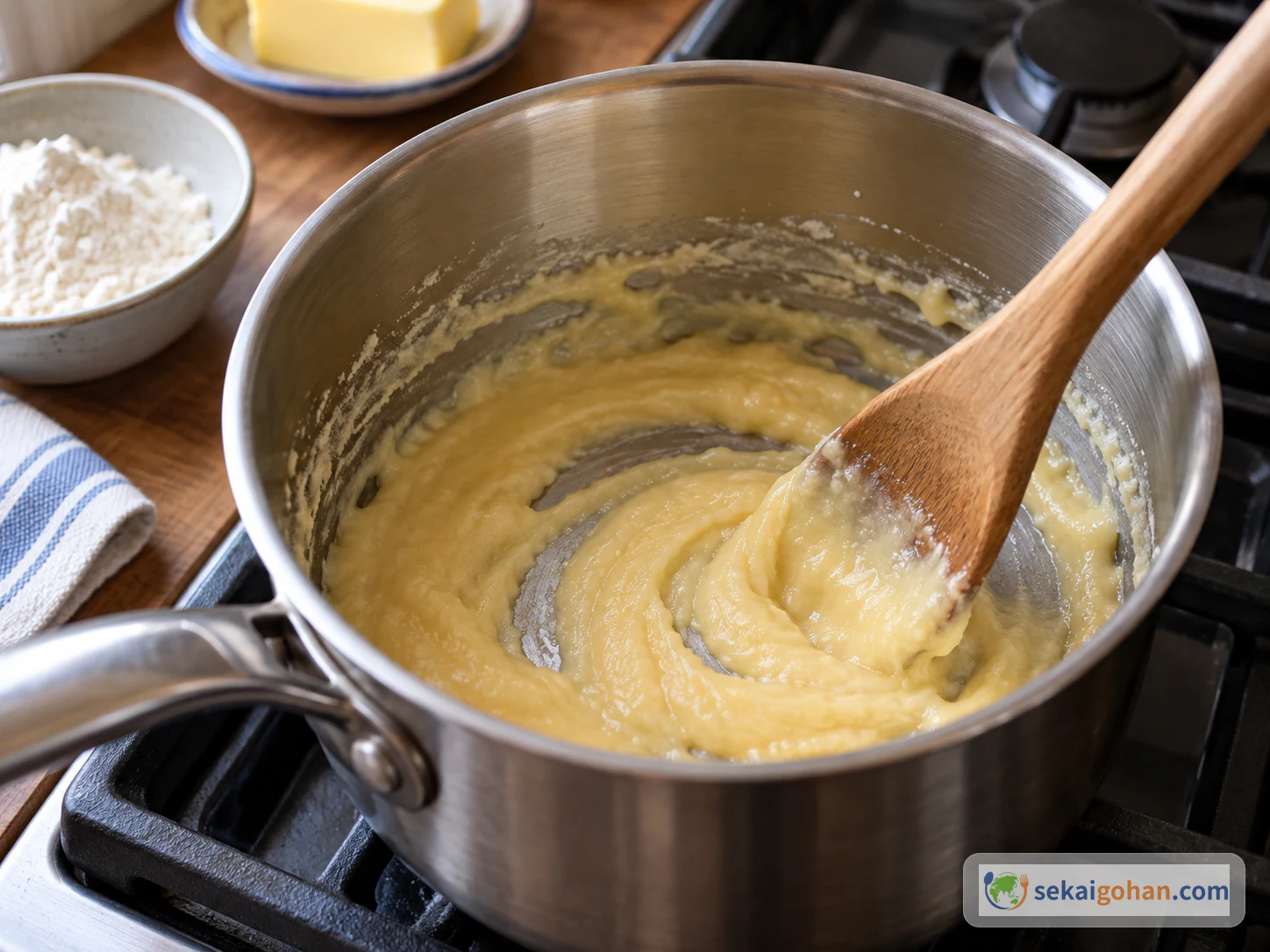
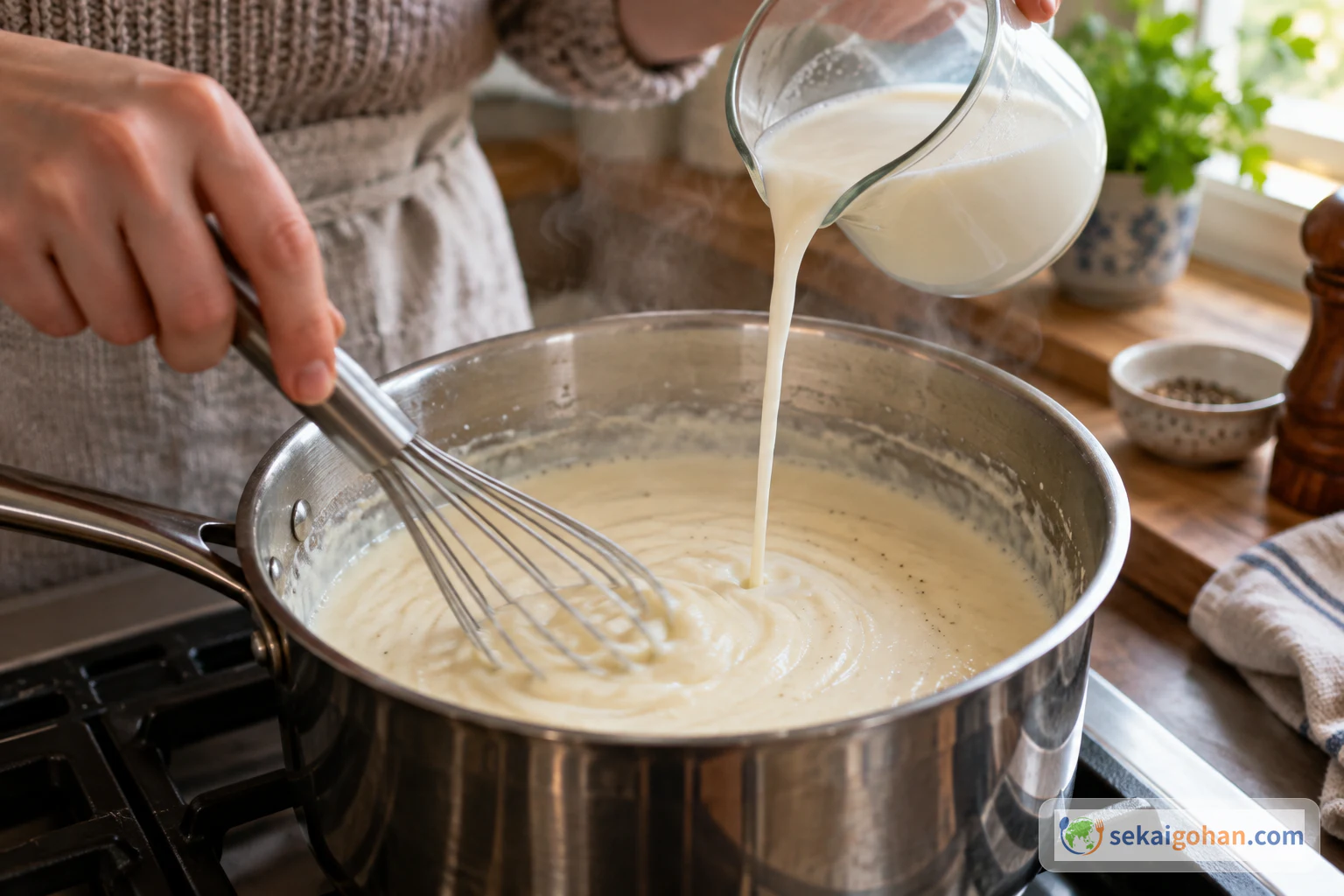
The sides vary from house to house. Potatoes in white sauce are the classic partner, some households sweeten the sauce with sugar, and red cabbage is made in different ways. Here the meat comes with uppstúfur, the white sauce, poured over potatoes, plus red cabbage. For more dishes from the same country, see Icelandic recipes.
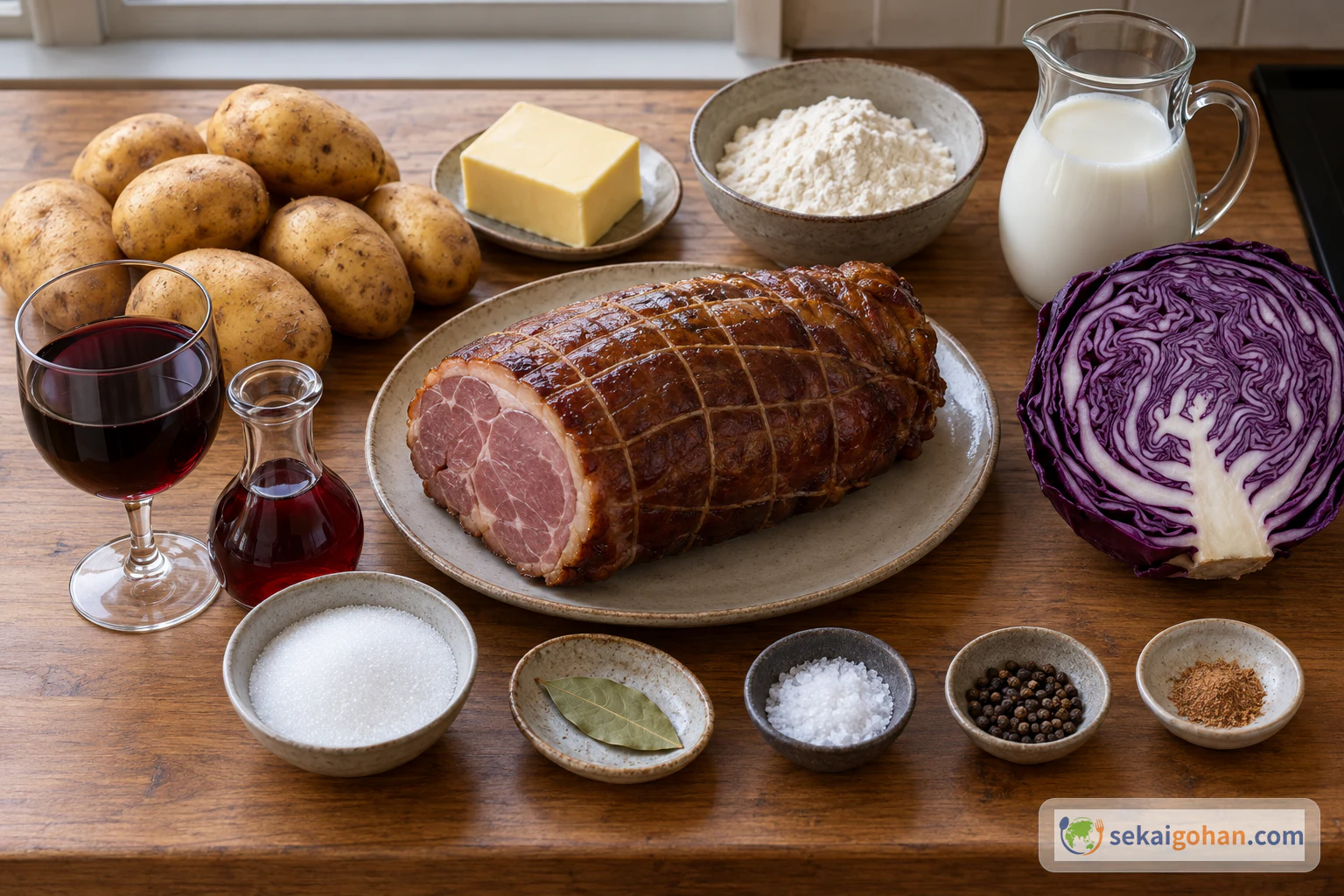
Ingredients: Serves 6, Built Around a 3.25 lb (1.5 kg) Smoked Lamb Roll
Equipment
- A large pot the meat roll fits in without bending
- A larger basin, or a clean sink, for ice water
- Clean shallow containers for cooling and refrigerating the meat and broth
- A pot for boiling the potatoes
- A saucepan for the red cabbage
- A saucepan for the white sauce
- A whisk and a wooden spoon or spatula
- A bamboo skewer or small knife for testing the potatoes
- A kitchen scale
- A cutting board and a sharp knife for slicing the meat
Choosing Hangikjöt and Other Ingredients
You need lamb that has already been salt-cured and smoked, not ordinary lamb. The amounts and cooking time are for a boneless rolled product of about 3.25 lb (1.5 kg). A bone-in smoked leg needs a different method and different times. Products also differ in cut, saltiness and smokiness, so read the label before you buy. If it gives its own soaking or cooking instructions, follow them.
Look for it under the name hangikjöt or Icelandic smoked lamb, and ask at import grocers or shops that carry Nordic foods. Ordinary lamb, smoked ham and other smoked pork are not substitutes. The salt and smoke of cured lamb are what make this dish, and another meat makes a different one.
Everything else is everyday shopping: butter, flour, milk, potatoes, red cabbage, red wine, red wine vinegar, sugar and a bay leaf. The cabbage is cooked in red wine. Any waxy or all-purpose potato you can boil whole will work. What matters is having 1.25 lb (600g) after boiling and peeling.
The sauce contains milk (milk and butter) and wheat (flour). Check the ingredient and allergen labels on the meat product, and the labels on the wine and vinegar. The red cabbage is cooked in red wine.
Method: Cook by Weight, Cool in the Broth, Slice Cold
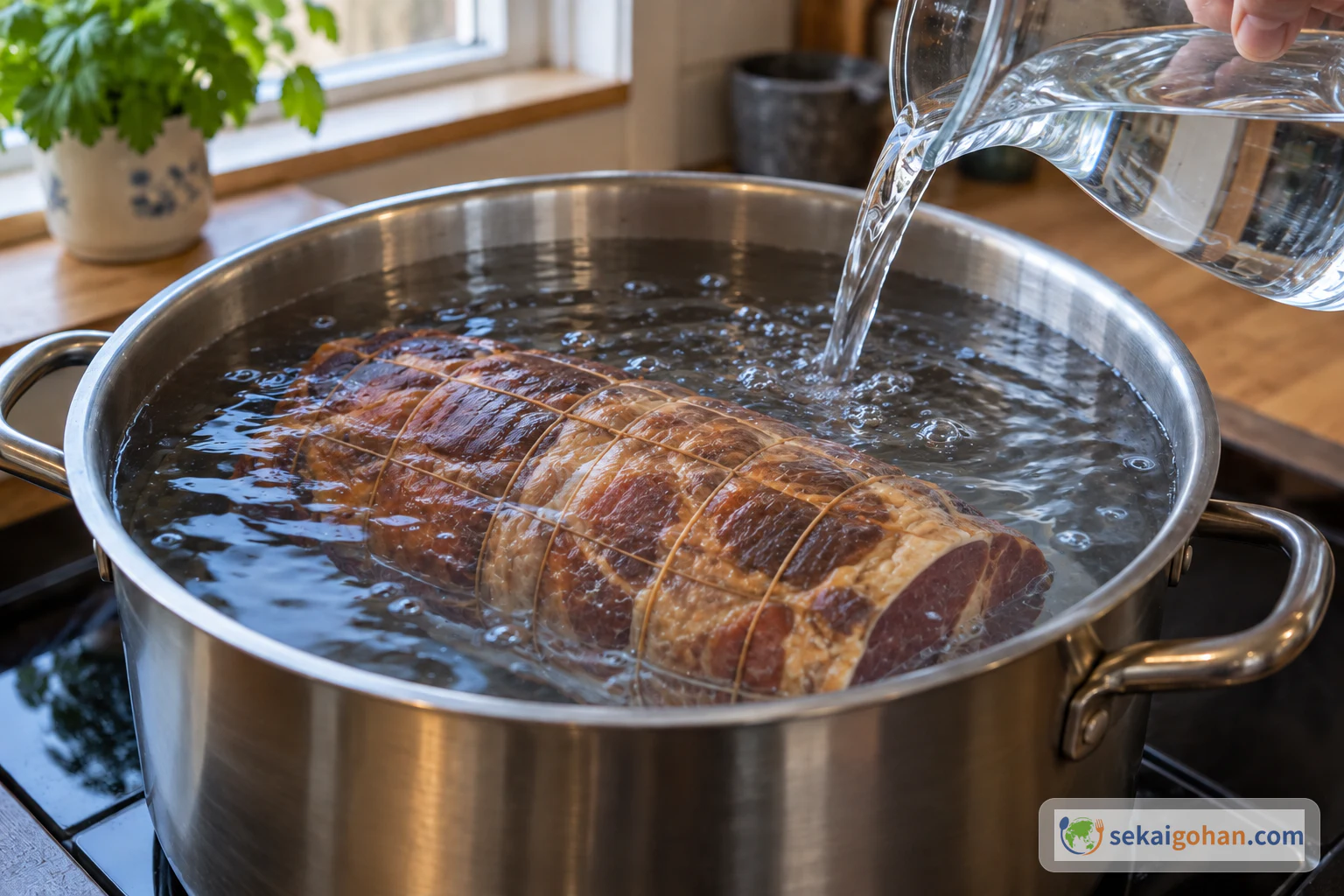
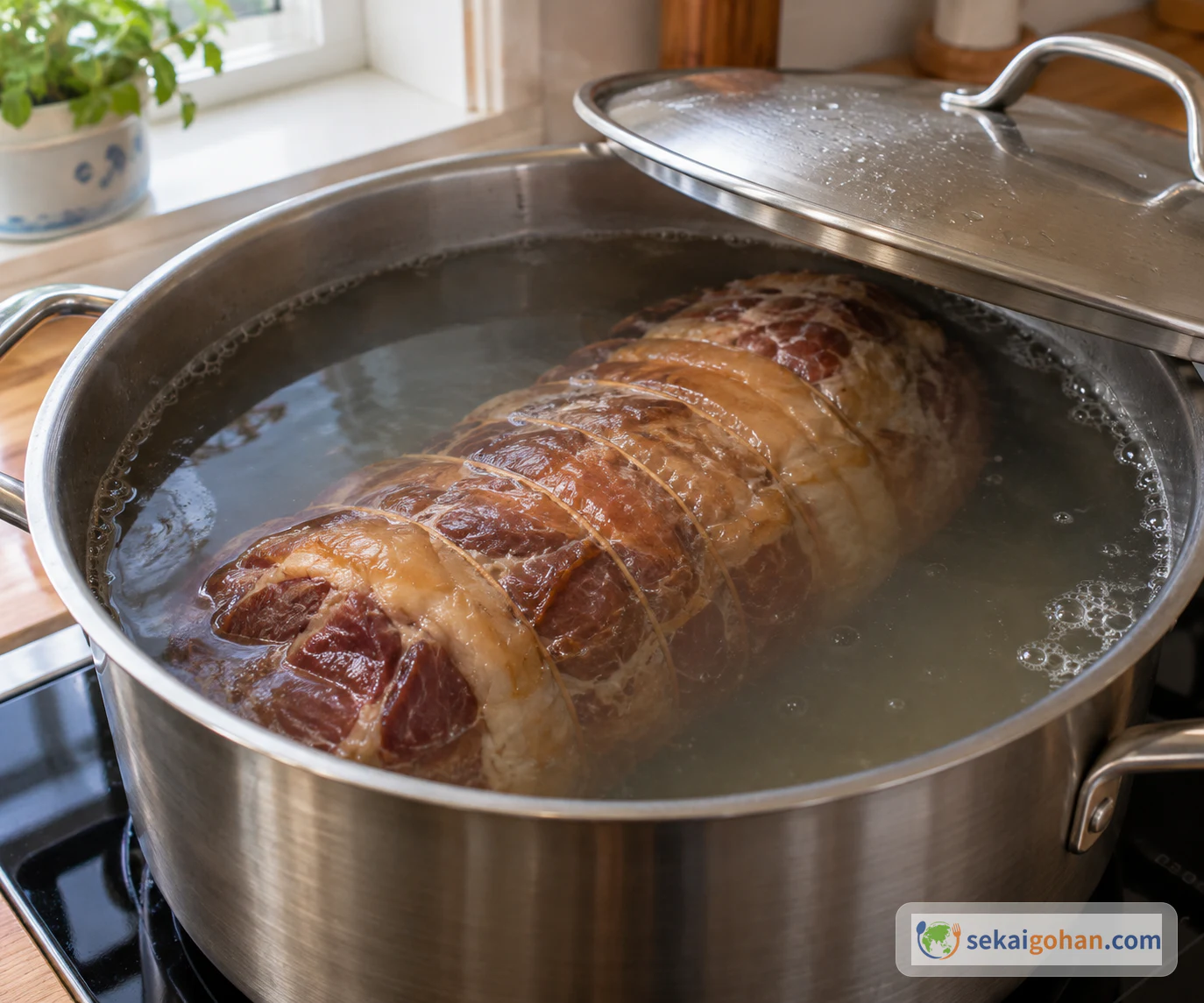
The meat must be completely cold before you slice it, so it is easiest to cook it the day before. Make the red cabbage and the white sauce on serving day. Serve the sauce warm.
Fixing Common Hangikjöt Problems
Judge the meat, potatoes and sauce by how they look and feel as well as by the clock. Most problems come from the meat itself or from rushing the sauce.
| Problem | Likely cause | What to do |
|---|---|---|
| The meat tastes very salty or smoky | Products vary in salt and smoke | Follow any soaking instructions on the label. Season the sauce lightly and taste it alongside a slice of meat |
| The meat crumbles when sliced | Sliced before it was fully cold | Cool it in the broth and chill it completely before slicing. Use times for a boneless roll, not a bone-in leg |
| The sauce has lumps | Milk added too fast | Add the milk a little at a time and keep whisking |
| The sauce catches on the bottom | Heat too high, not stirred often enough | Keep the heat low and scrape the bottom of the pan as you stir |
| The sauce is too thick | Long simmering, or potatoes absorbed liquid | Loosen it with a little milk |
| The red cabbage tastes too sharp | Vinegar and sugar balance | Serve it in small amounts beside the meat and sauce |
Serving, Variations and Storage
Serving and Sides
The holiday version is cold: the meat cooled in its broth, then thinly sliced. Some households serve it warm instead, but that calls for a different cut and different cooking times. Adjust the sugar, salt and nutmeg in the sauce to the saltiness and smoke of your particular meat.
Boiled green peas are a common extra, so serve as many as you like. At Christmas there is often laufabrauð as well, the thin, fried "leaf bread" cut with patterns.
Storage and Reheating
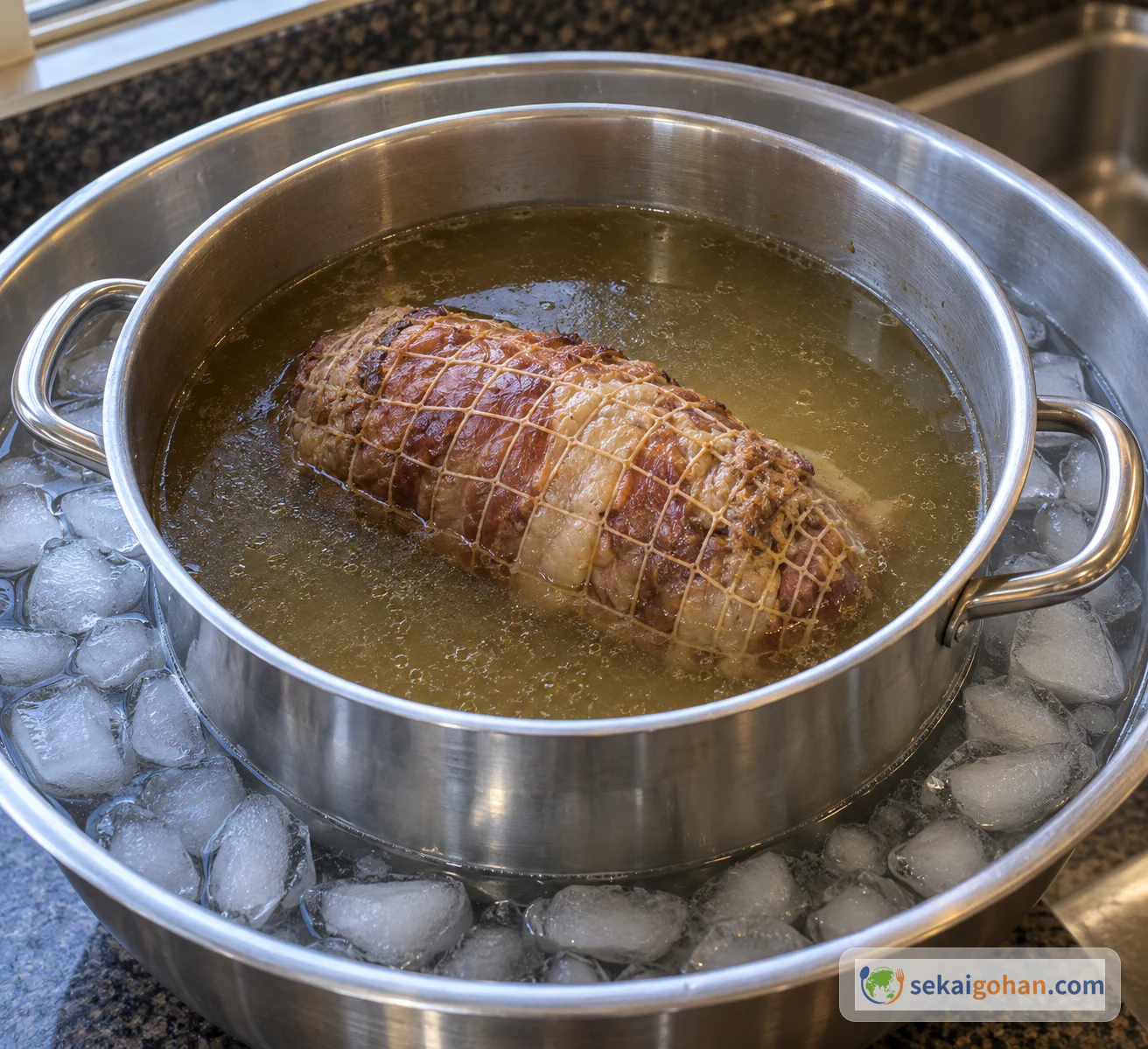
Don't leave the cooked meat or the sauce at room temperature for long. Cool them quickly, either by setting the pot in ice water or by dividing the food into clean, shallow containers, then refrigerate promptly. Store the meat in its broth and take out only what you'll eat. Reheat anything thoroughly, and check the label for the product's own storage guidance.
Frequently Asked Questions
Can I smoke lamb at home to make hangikjöt?
Curing and cold-smoking raw meat is specialized food processing, and the salt, curing agents and temperature all have to be controlled. Start from a finished, commercially made product.
Why is the meat cooled before slicing?
A smoked leg dries out easily when it's cut into large pieces, so it cools in its cooking broth. Fully chilled meat is also much easier to slice thinly.
How long does it take overall?
The cooking itself comes to about two hours, with about 20 minutes for the sauce and about an hour for the cabbage. Boiling the potatoes and chilling the meat take extra time. Plan by the individual steps, and cook the meat the day before.
Is there a version without red wine?
Not here. The red cabbage is cooked in red wine.