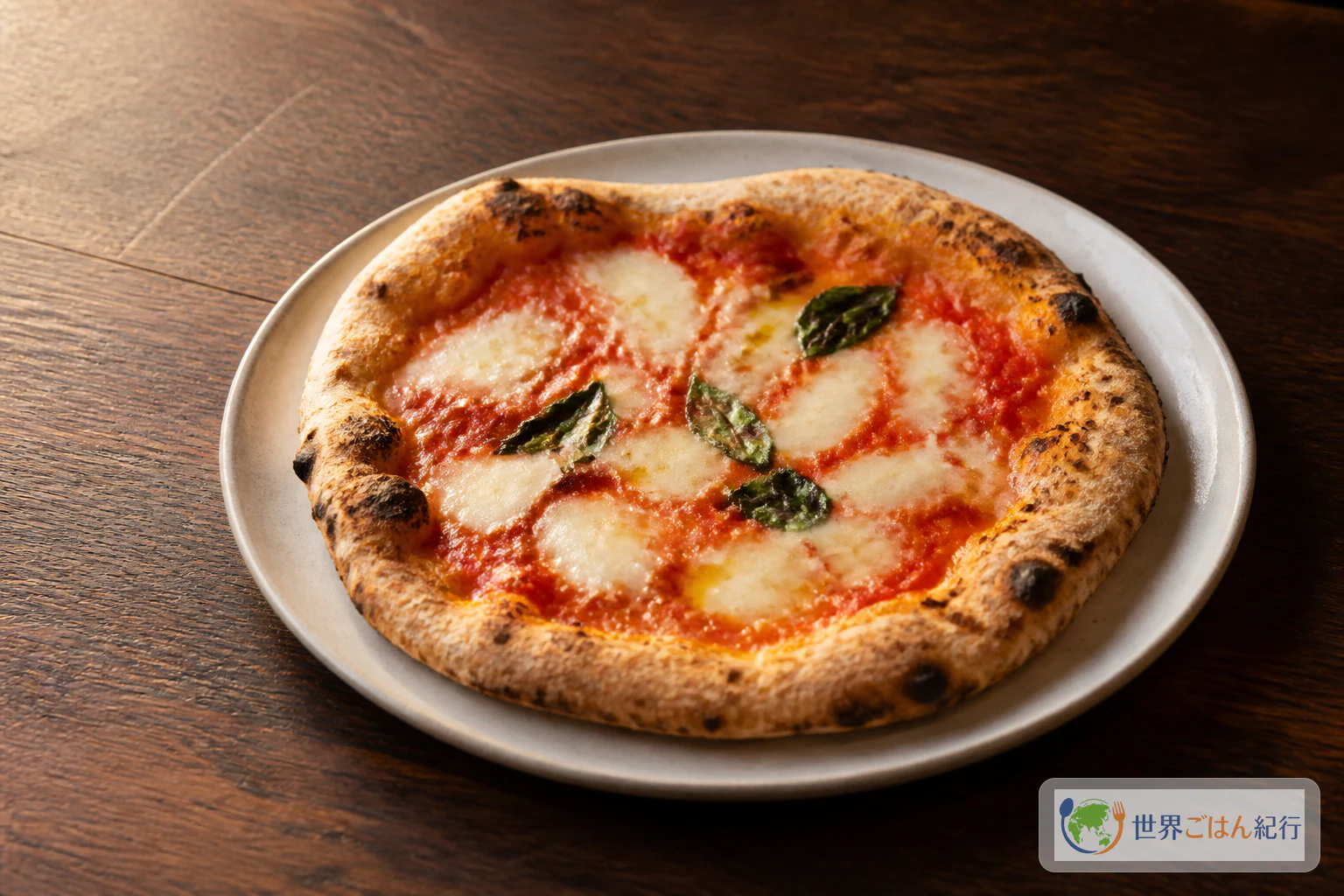
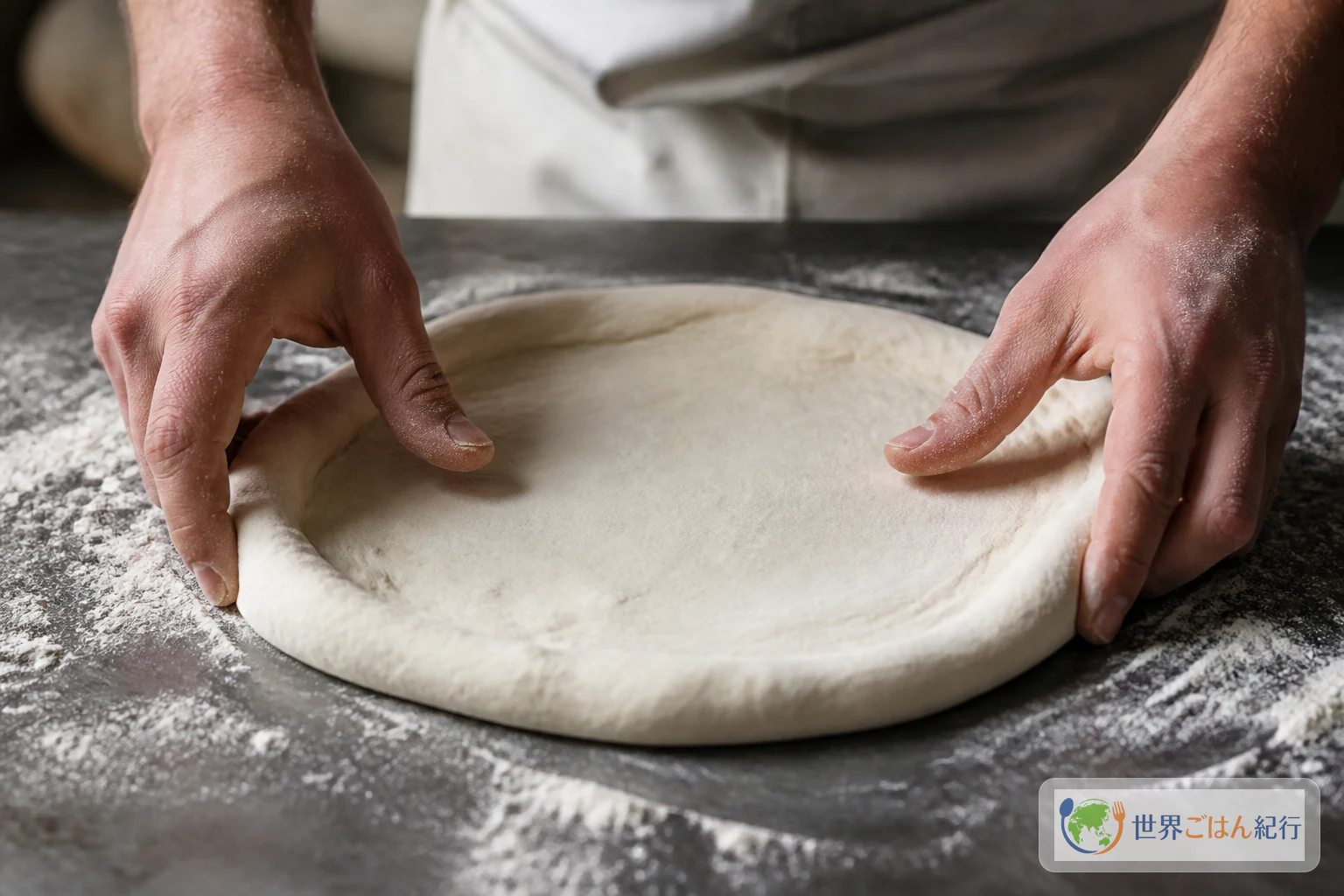
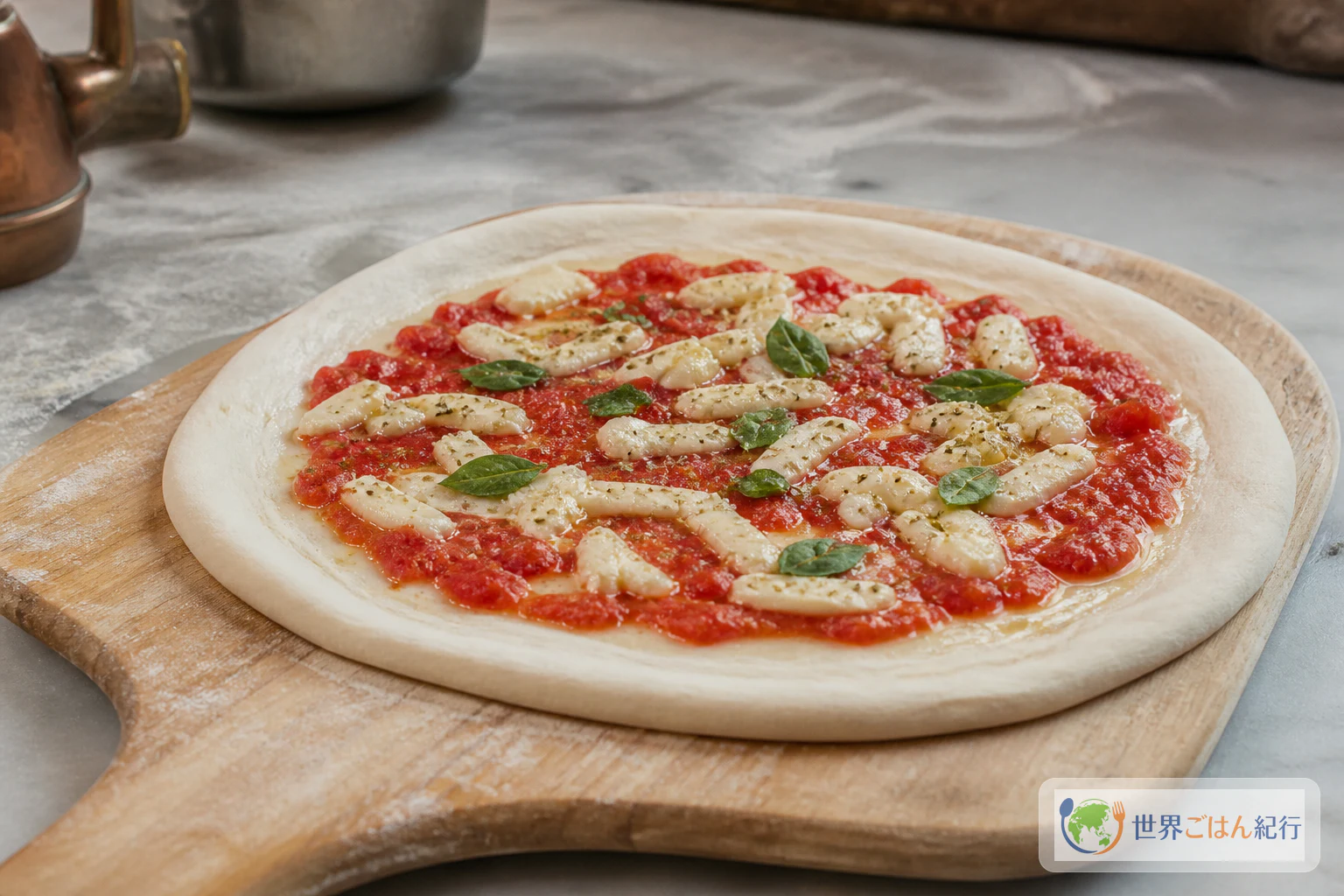
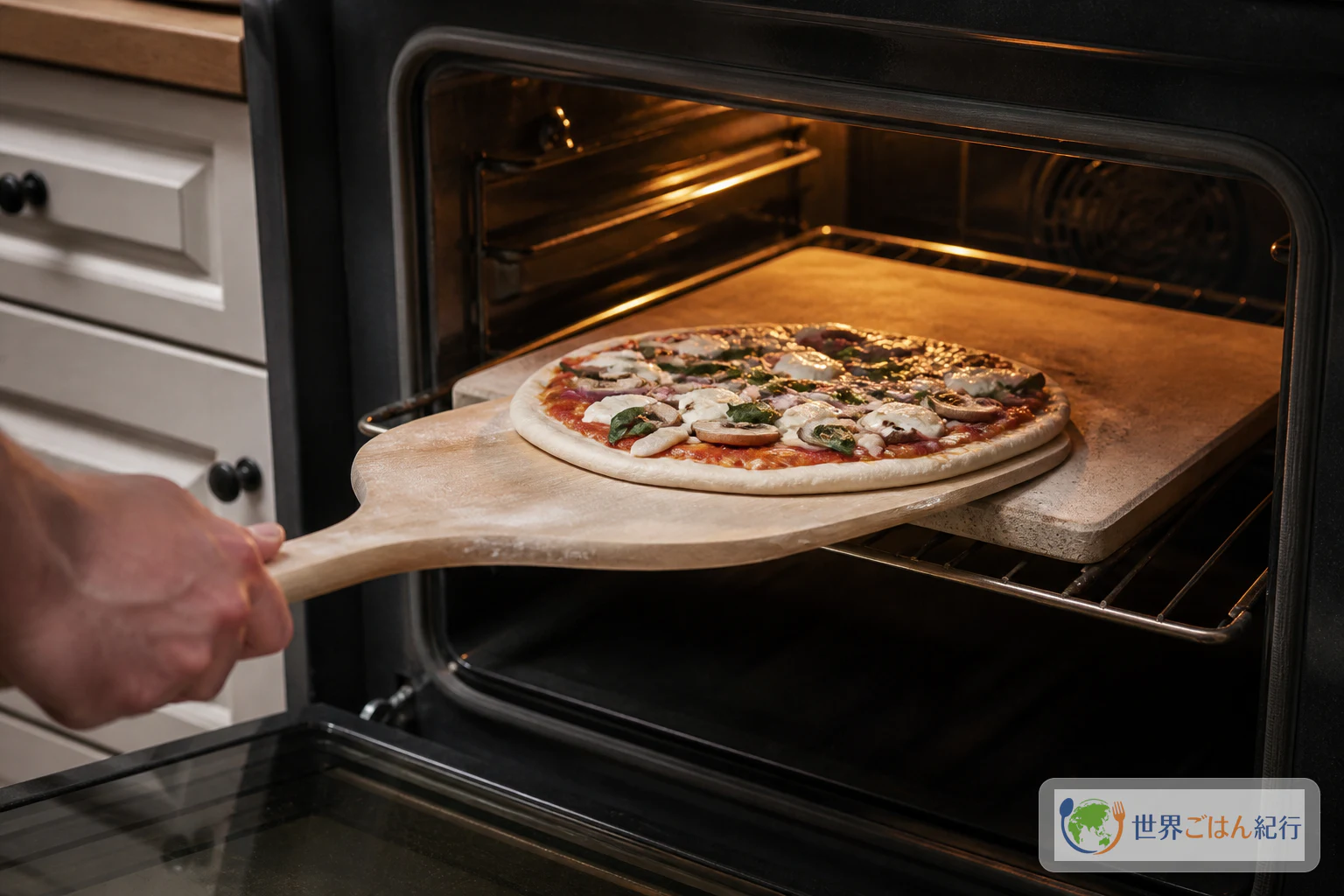
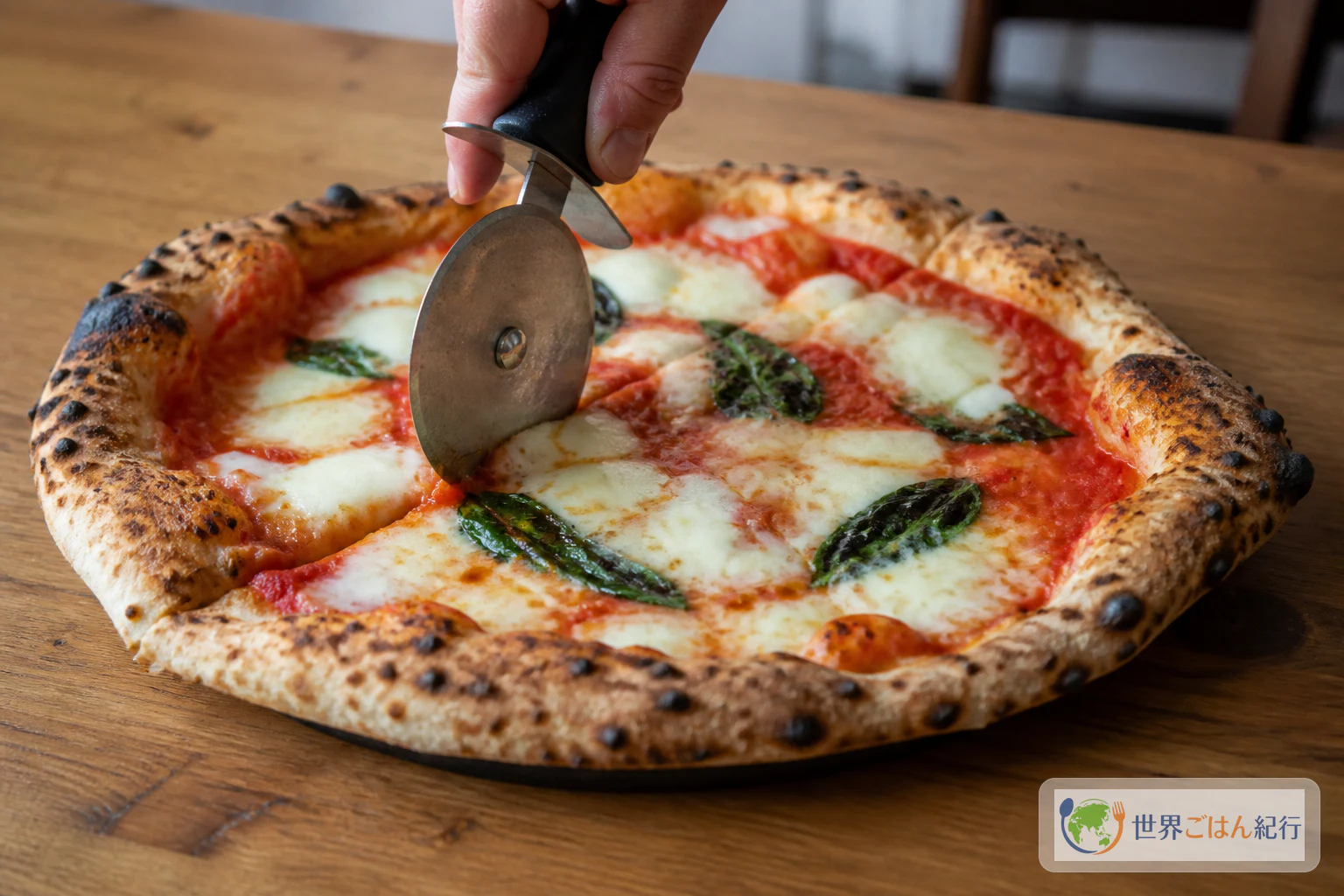
Lift a pizza just out of the oven and the center bends softly while the rim stays puffed with air. A little moisture from the tomatoes remains on the surface, and the charred spots give off the aroma of wheat. Cut it right away and you get two textures in one pizza: the thin center and the thick rim. This is the pizza of Naples, and the method behind it is short: Don't flatten the rim, don't overload it with tomato and cheese, and hit it with high heat for a short time. That sequence is what gives you both a tender center and a toasty cornicione (rim).
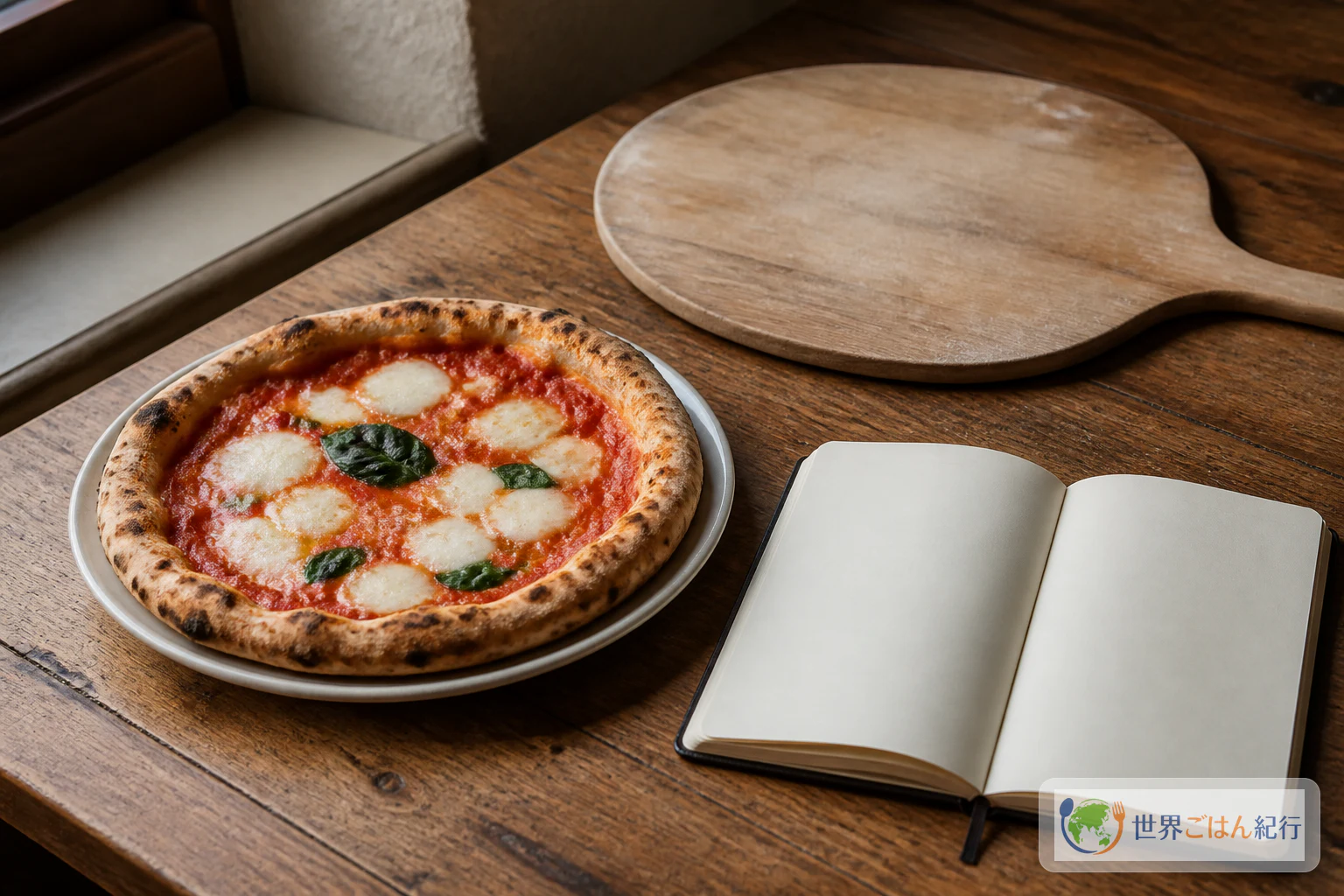
Neapolitan pizza in Naples and at home
When Neapolitans talk about pizza, they talk about the hands of the person making it. The craft of the pizzaiuolo has four stages, from preparing the dough to baking it in a wood-fired oven. Young pizza makers learn by watching the master's hands in the bottega, and the craft carries on across generations and in the places where people gather.
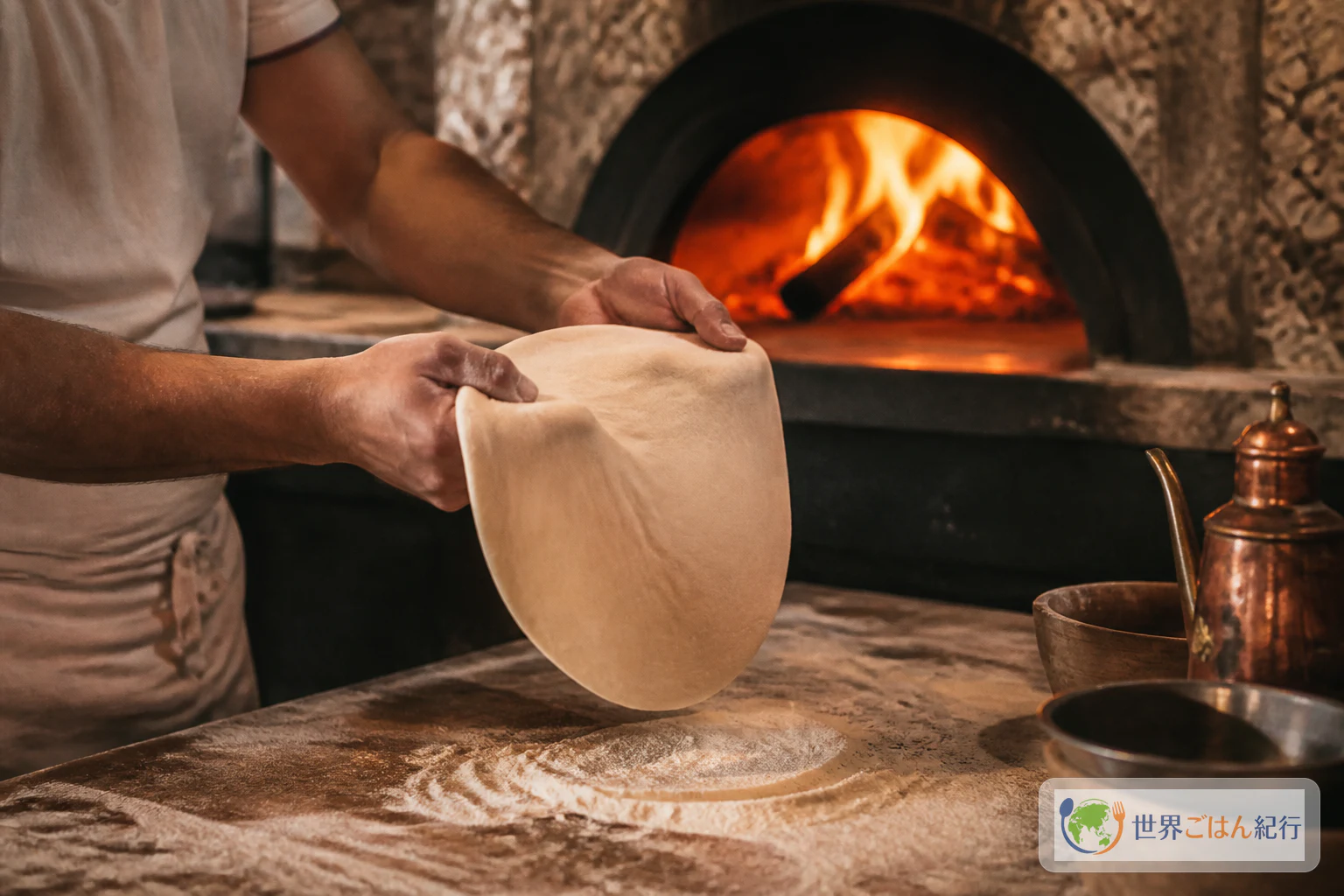
On Naples' street corners you'll also find pizza a portafoglio: a baked pizza folded in four, wrapped in paper and eaten while walking. A plate with a knife and fork is one way to eat pizza in Naples. Carrying a freshly baked one in your hand is just as much a part of the city's food culture.
Verace Pizza Napoletana and the home oven
Authentic Verace Pizza Napoletana is baked in a wood-fired oven at about 485°C (905°F) for 60–90 seconds. A home oven reaches 250–275°C (480–525°F), so you won't get the same result. This recipe makes four 25–28 cm pizzas, with hydration and fermentation times that are easy to manage in a home kitchen. At home, the temperature number matters less than the relationship between a thin center, an untouched rim and light toppings.
Fermentation takes time, but the hands-on time is short. Mix the dough at midday, then in the evening stretch the dough balls one at a time and send each pizza to the table as soon as it's baked.
Marinara and Margherita
The basics of Verace Pizza Napoletana are the Marinara and the Margherita. Both start from tomato, salt, olive oil and dough; the Marinara adds garlic and oregano, the Margherita mozzarella and basil. Make two of each and you can compare how the dough and tomato behave with and without cheese.
With so few toppings, mistakes show. Cook the tomatoes down and the acidity turns heavy; skip draining the mozzarella and the center turns watery. But leave the rim alone, spread the sauce thinly and eat the pizza as soon as it's baked, and the dish comes through even with home-oven heat.
Ingredients (four 25–28 cm pizzas)
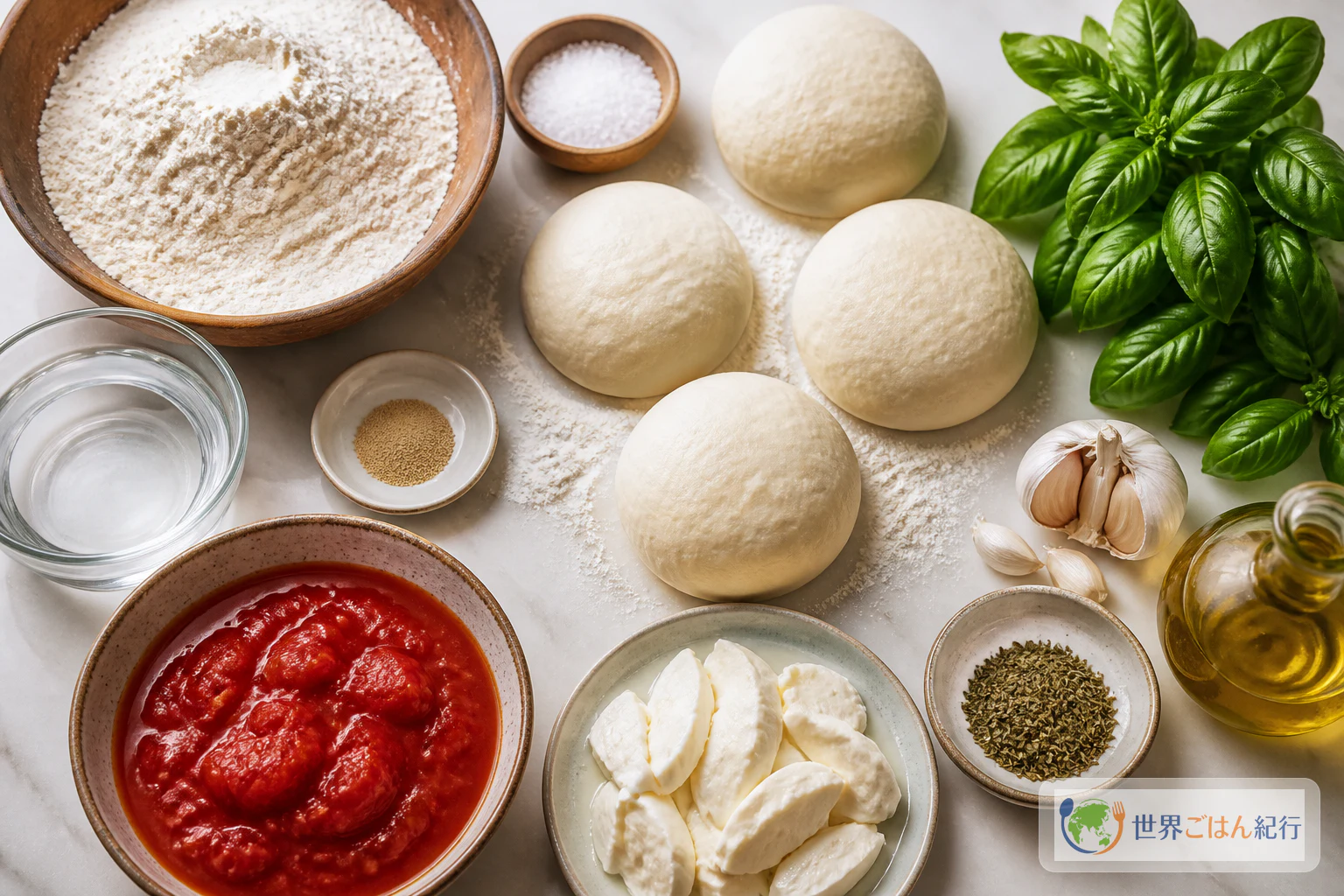
For the dough, you can use type 00 pizza flour if you have it, but easy-to-find bread flour also works. 00 doesn't mean "a magic flour that always makes a light dough"; it's a refinement grade defined by Italian law. It refers to white, highly refined flour with the lowest ash (mineral) content, which comes from the bran and other outer parts of the grain; the grades become progressively less refined through 0, 1, 2 and whole wheat. Protein content and how well the dough tolerates long fermentation differ by brand. Learn the process with bread flour first, then compare 00 flours after you've baked a few times.
This uses wheat, so it isn't suitable for anyone who needs to avoid gluten. Mozzarella is a dairy product. Ingredient labels on canned tomatoes, cheese and yeast vary by product, so check when buying if anyone has food allergies. The amount of dry yeast is small, and adding more by eye speeds fermentation. If you can't weigh to 0.1 g, it's safer to divide 1 g into portions.
Separate what to buy locally from what to seek out
Tomatoes, mozzarella, basil and bread flour are fine bought locally on the day, judging their condition. Handy to have are dried oregano, which defines the aroma of the Marinara, and a small grinder for grinding whole spices a little at a time. Neither is essential.
Dried oregano works not only in Marinara but also in tomato sauces and bean dishes. On days you only bake Margherita, or if you already have fragrant ground oregano, the dish works without buying more.
If you use whole oregano and also plan to grind black pepper or dried chiles, a small grinder lets you use freshly ground spices in small amounts. If you only use ground oregano, you don't need one. For hard spices such as nutmeg, check that your grinder can handle them first.
Method: handle the dough lightly and bake one pizza at a time
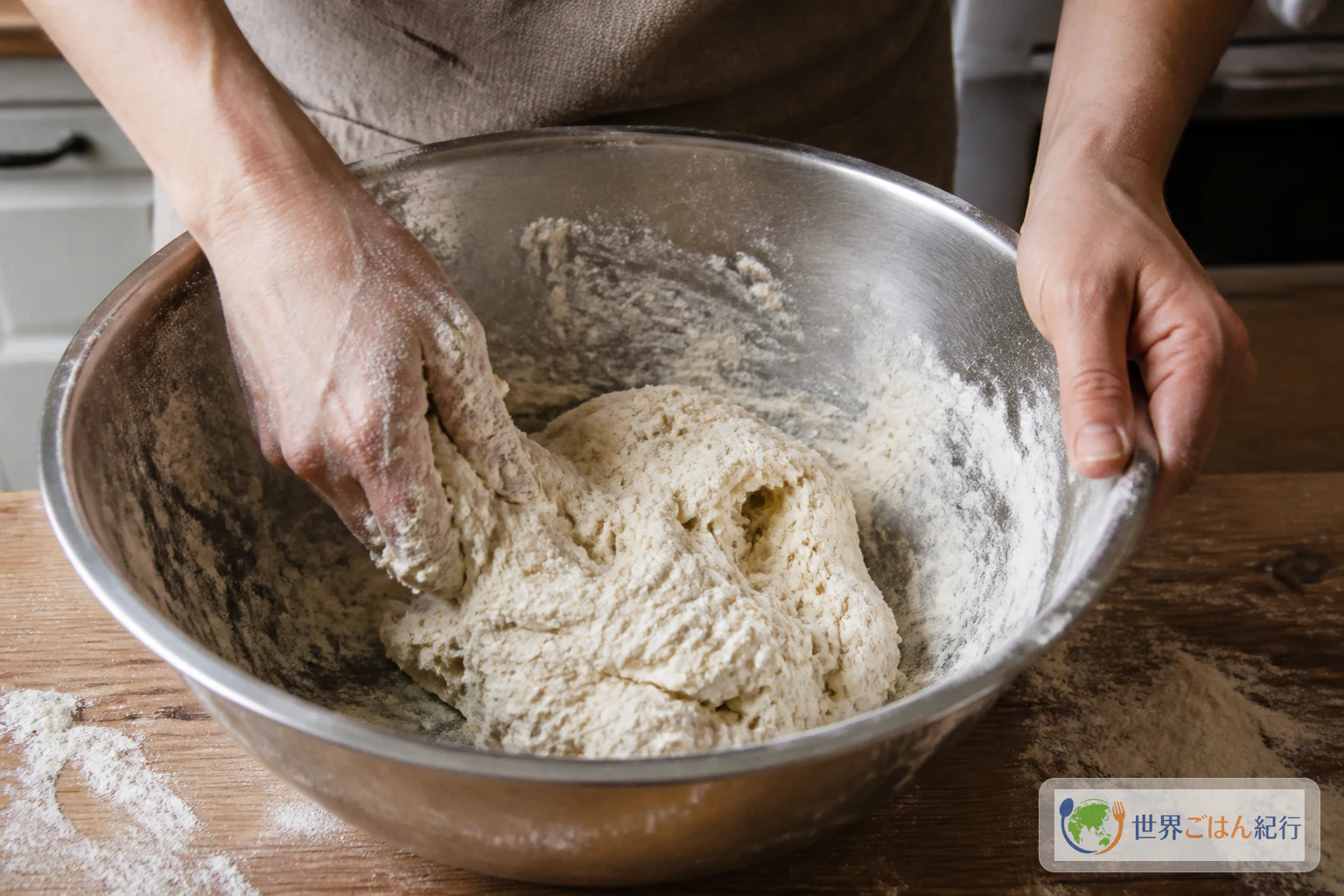
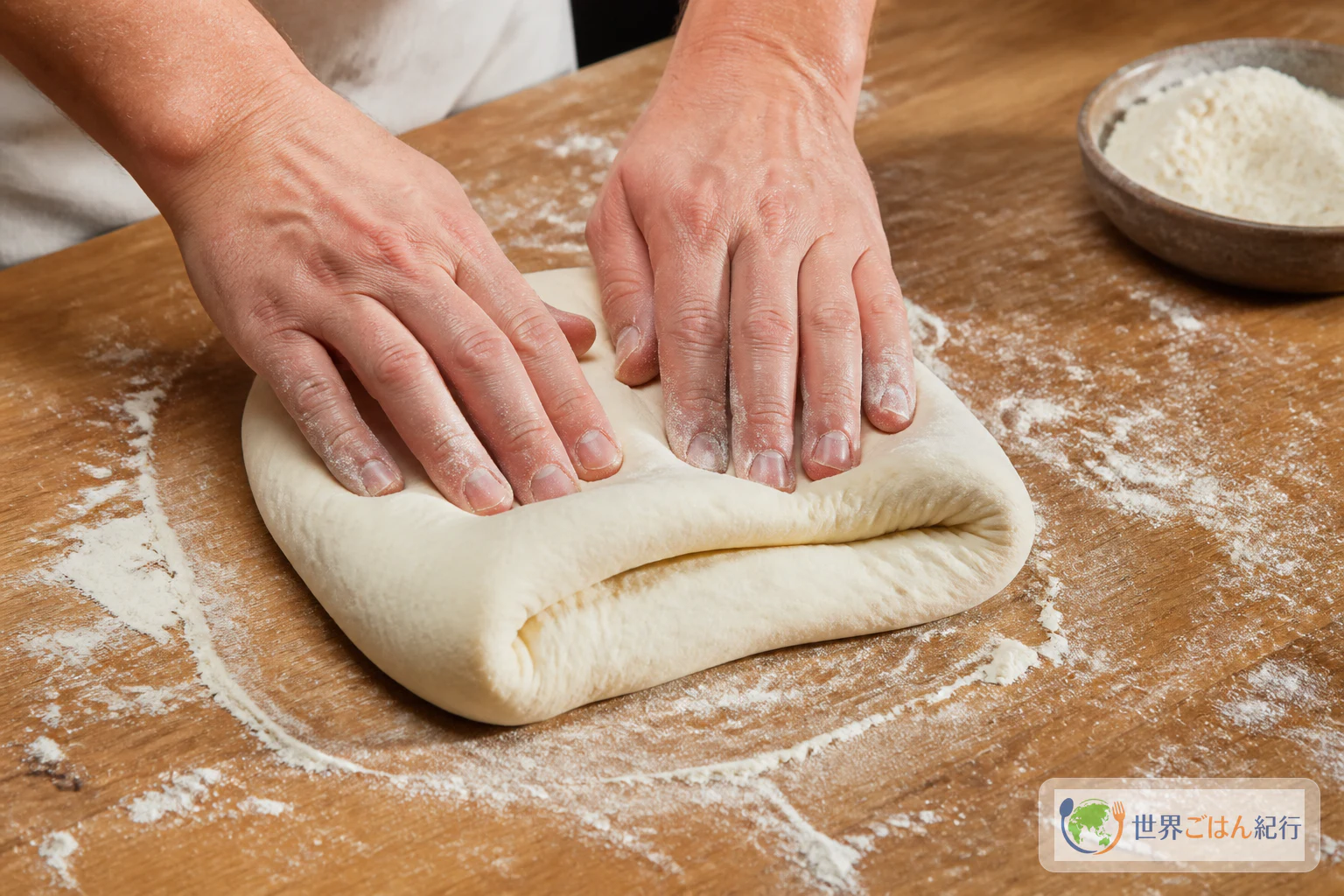
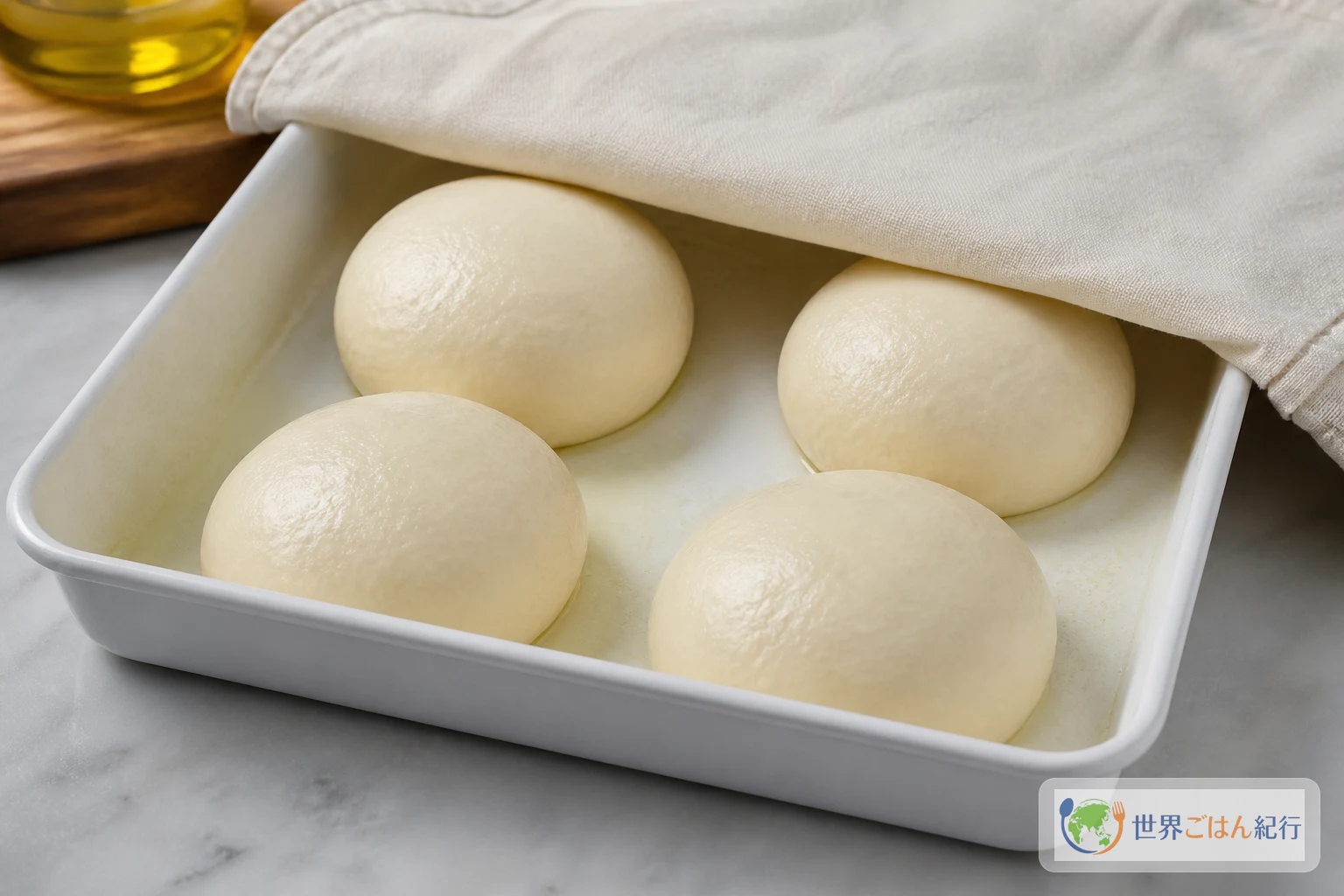
A dough of 13 oz (375 g) water to 1.25 lb (600 g) flour is a little sticky at first. Rather than firming it up with extra dusting flour, rest it and then smooth the surface; that leaves more air in the rim when it bakes. Once the dough is divided into four, keeping the balls you aren't using from drying out is the top priority.
Troubleshooting Neapolitan pizza in a home oven
Rather than chasing wood-oven temperatures, a setup that doesn't lose heat and working one pizza at a time are what pay off. Put the stone or steel on the upper rack and preheat for at least 45 minutes after the oven reaches temperature. An upside-down baking sheet loses heat more easily than a thick stone, so allow about 2 minutes longer; if the bottom comes out pale, preheat longer before the next pizza.
Dough and baking problems
Before you throw out dough that's misbehaving, figure out what's happening. Most problems can be fixed on the next pizza.
| Symptom | What's happening | How to recover |
|---|---|---|
| It shrinks right back when stretched | The dough is cold, or the gluten is tight | Cover so it doesn't dry, rest 10 minutes and press again from the center |
| It sticks badly to your fingers | Over-fermented, or the work surface is warm | Dust only the surface thinly with 5 g flour, without working flour into the dough. If it tears, reshape and rest 20 minutes |
| It won't move off the peel | Tomato moisture has soaked into the dough | Move the toppings to another plate and slip a little flour under the dough. Next time, bake within 1–2 minutes of topping |
| The center is watery | Too much moisture from the tomato or cheese | Drain the tomatoes in a sieve for 5 minutes and leave the cheese on paper for 10 minutes. Reduce toppings by 20% on the next pizza |
| Only the rim burns while the center stays pale | Top heat is strong and the stone isn't hot enough | Move the stone down a rack and preheat 15 minutes longer. Don't use the broiler at the end |
| The bottom is pale and soft | The stone hasn't stored enough heat, or the baking sheet cooled | Preheat at least 10 minutes before the next pizza, and rest the baked pizza on a rack for 30 seconds to let steam escape |
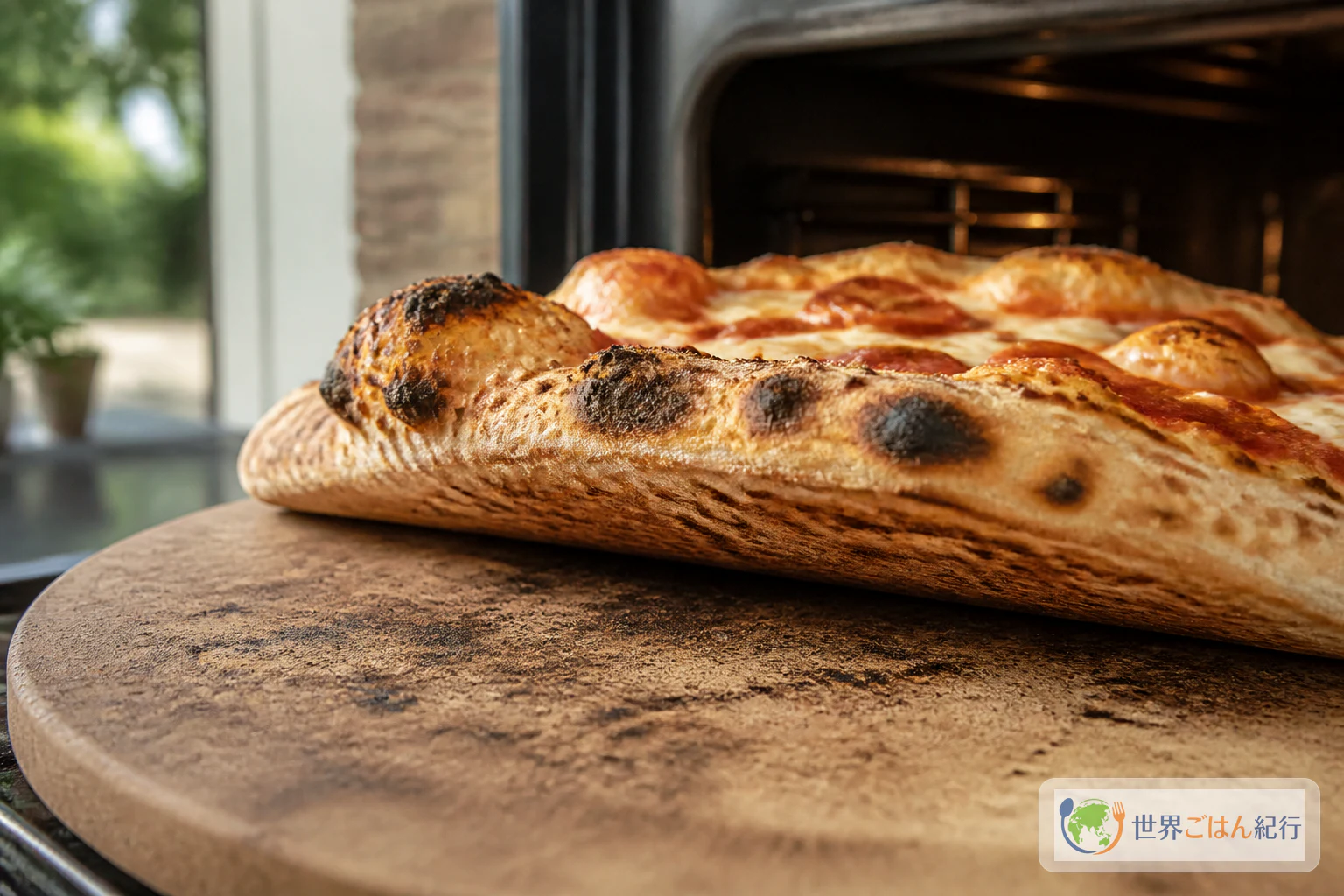
The rim can vary in color around the edge. Look for charred spots on the tops of the big bubbles, a center that bends softly when lifted, and a light brown on the bottom: when all three are there, you've baked it while keeping moisture inside. If the center is stiff, the cause may be wet toppings rather than underbaking, so use less tomato and cheese on the next pizza.
Serving and storing Neapolitan pizza
Neapolitan pizza is traditionally eaten as soon as it's baked. Folded and eaten before the moisture in the center settles, it gives you the springiness of the rim and the acidity of the tomato together. If you're eating it folded by hand, like a pizza a portafoglio, skip the plating and hand out each pizza while it's hot.
At home you can't always bake four at once, and a pizza left waiting on a cold plate steams in the center while the rim deflates. So decide who's eating which, then bake them in turn.
Leftovers
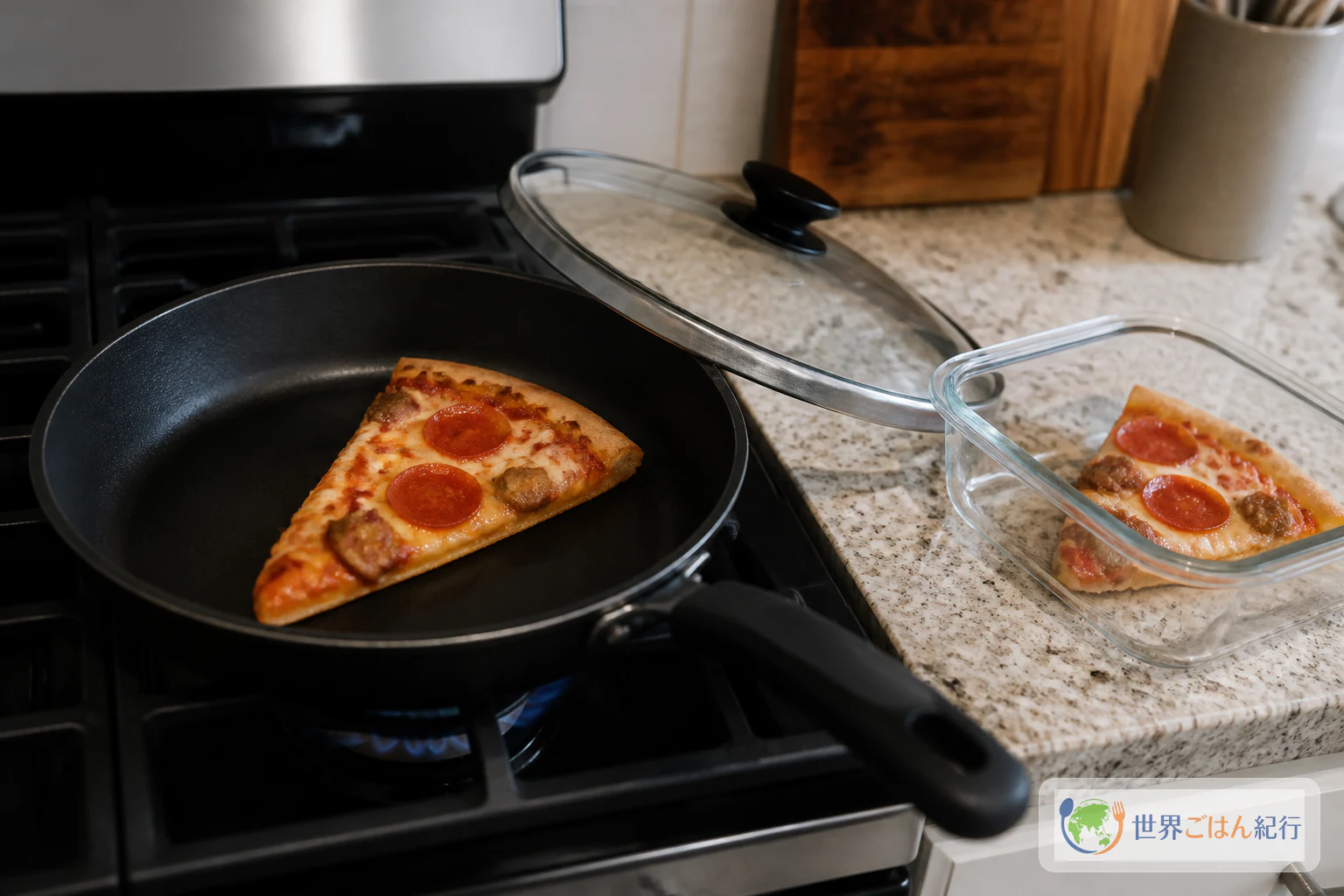
Don't leave leftover pizza at room temperature for long. Divide it into shallow, clean containers to cool it quickly, refrigerate, and reheat it thoroughly to 75°C (167°F) or above. If you have any doubt about the smell, a sticky surface or how it was stored, throw it out rather than deciding by tasting.
The next day, warm a skillet over medium-low heat for 30 seconds, add the pizza, cover, and heat for 2–3 minutes until the bottom recovers. For softer cheese, drop just 1 tsp water down the side of the pan and trap the steam with the lid. A microwave alone tends to toughen the dough, so if you use one, finish by drying the bottom in a skillet or toaster oven.
The nutrition figures are estimates for the ingredients above divided into four; sodium and calories vary with the cheese, canned tomatoes and oil you use. Check labels for wheat, dairy, tomato and so on, and if anyone in the family has dietary restrictions, check the ingredients of any substitutes too.
Home variations on Neapolitan pizza

Once you've baked the first four as Marinara and Margherita, you'll have a feel for topping amounts and how the dough bakes. The pizzas below depart from the official basics, so call them home pizzas rather than Pizza Napoletana and enjoy the freedom.
Mushrooms and greens
Slice 2.75 oz (80 g) shimeji or button mushrooms and sauté in 1 tsp oil for 2 minutes to cook off their moisture. Raw mushrooms make the center watery, so cool them before combining with 2.5 oz (70 g) tomato. Add greens after baking to keep their aroma and color; it's a good way to bring the season onto a pizza.
Spicy salami
Use 1.5 oz (40 g) thinly sliced salami, 4–5 slices, placed along with 2.75 oz (80 g) mozzarella. If it's very fatty, reduce to 1 oz (30 g) and skip the oil. The more toppings you add, the longer it takes to bake, so scatter them around rather than piling them in the center. With salty cured meats, halve the salt added to the tomatoes.
Eggplant and basil
Cut 1 eggplant into 0.25 inch (5 mm) slices, sprinkle with 1 g salt and leave for 10 minutes, then pat dry and brush thinly with oil. Cook 1 minute per side under a broiler or in a skillet, cool, and arrange on top of the tomato. Dealing with the eggplant's moisture and oil in advance keeps the center from getting wet.
Marinara with more oregano
For a cheese-free Marinara with a different aroma, add just 0.5 g more oregano per pizza rather than another half clove of garlic. Double it and the bitterness of the dried herb covers the tomato. Rub whole oregano between your fingers and scatter it just before baking.
White pizza
Skip the tomato and divide 3.5 oz (100 g) ricotta, 5.5 oz (160 g) mozzarella and a little black pepper among the four pizzas. If the ricotta is watery, drain it on paper towels for 10 minutes. On a white pizza the browning of the rim stands out, so keep the center lightly topped and the oil to 0.5 tsp (3 ml) per pizza.
Frequently asked questions
Can I make it without 00 flour?
Yes. Make it with 1.25 lb (600 g) bread flour, and stick with one brand so it's easier to read how the dough changes. If you use 00 flour, set the fermentation time by the volume in the first rise and the spring-back in the second, not by the label alone. Absorption and elasticity differ by product, so you can also hold back some water: mix in 12.5 oz (350 g) first, then add the remaining 25 g according to the dough.
My home oven only goes up to 475°F (250°C).
That works. Check each pizza at 6–8 minutes, and if the center dries before the rim colors, use fewer toppings. Opening the door repeatedly drops the heat, so limit checks to once. Judge doneness by the color of the bottom and the softness of the center rather than by the 900°F (485°C) of a wood oven.
My mozzarella gets watery.
If it's a very moist fresh type, reduce 2.75 oz (80 g) to 2.5 oz (70 g) and reduce the tomato to 2 oz (60 g) per pizza too. Cheese cut too finely releases water all at once, so scatter 1 inch (2–3 cm) chunks to keep the center from getting wet.
What if I want to make the dough the day before?
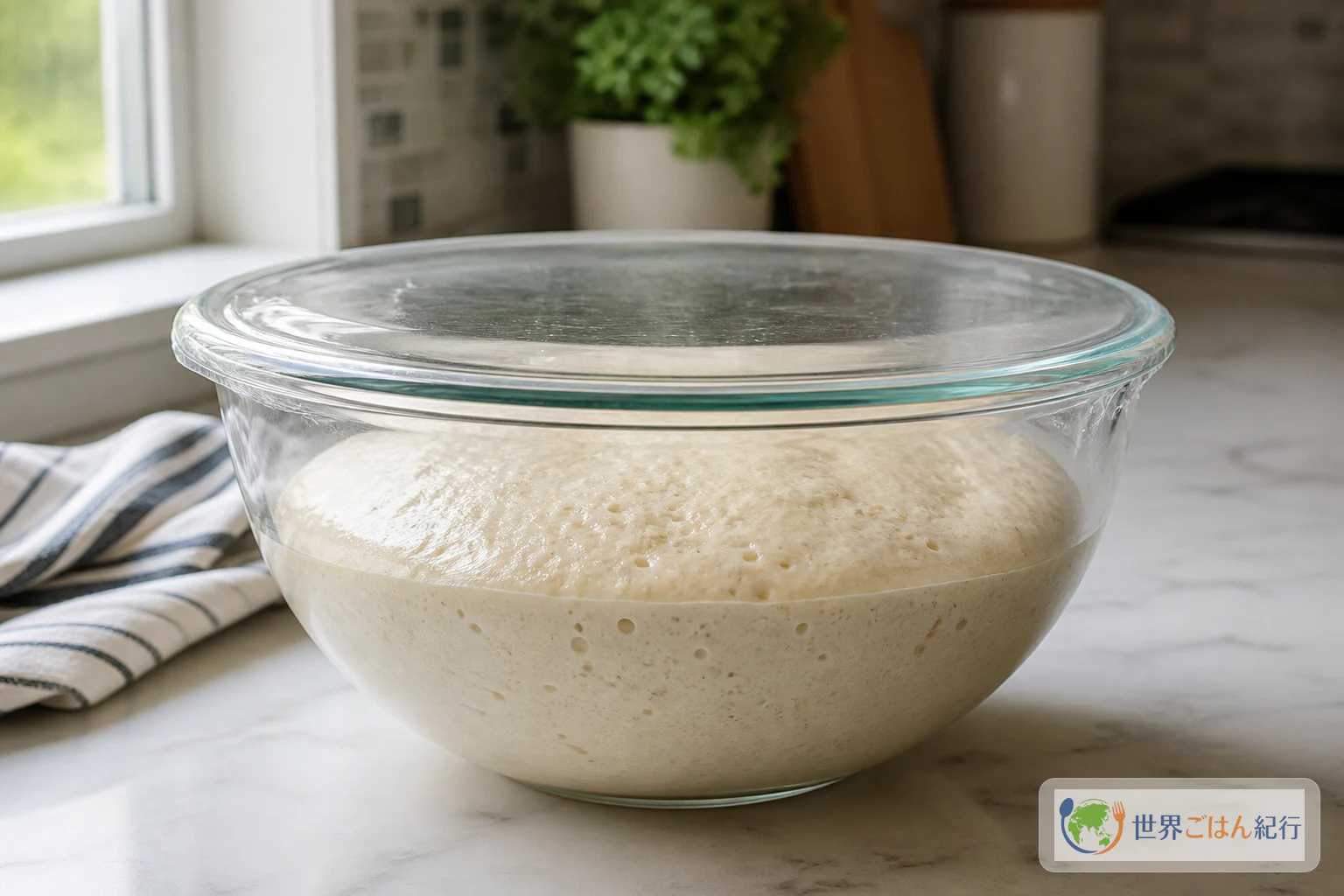
After the 2-hour first rise, divide into 4, put in containers and refrigerate. How fast it proceeds depends on your refrigerator's temperature and the amount of yeast, so the next day take it out to room temperature 4–6 hours before baking and check that it reaches 1.5 times its volume. Stretched cold, it shrinks easily and the rim puffs less, so judge by the dough's elasticity as well as the time.
I don't have a peel. Is there a substitute?
A thin cutting board or an upside-down flat baking sheet works, as long as you dust the surface with a thin layer of bread flour and bake within 1–2 minutes of topping. Parchment paper makes the transfer easier, but follow the product's label for the temperature and time it can withstand. If the dough won't move, don't force it; pulling crushes the bubbles in the rim.