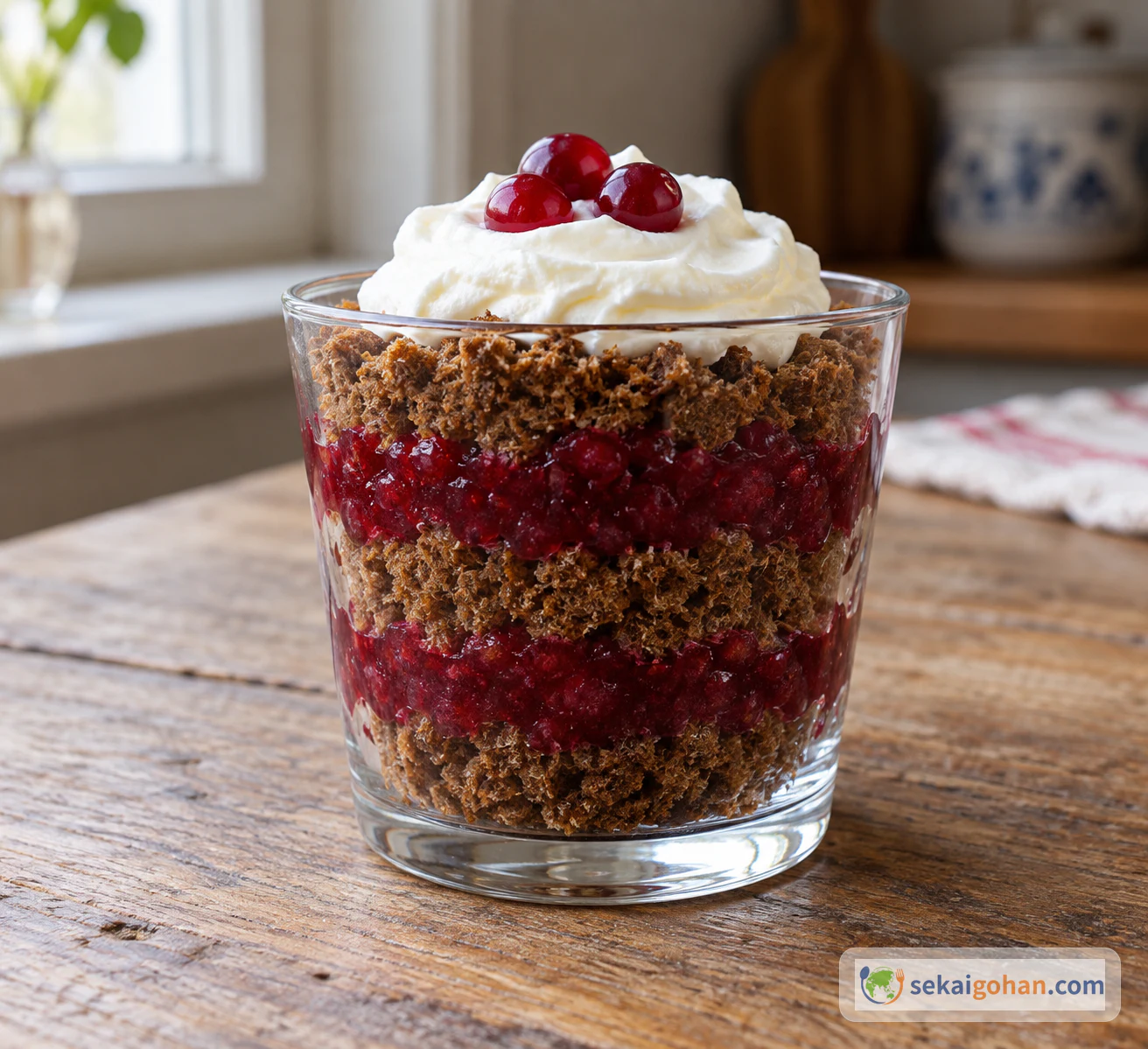
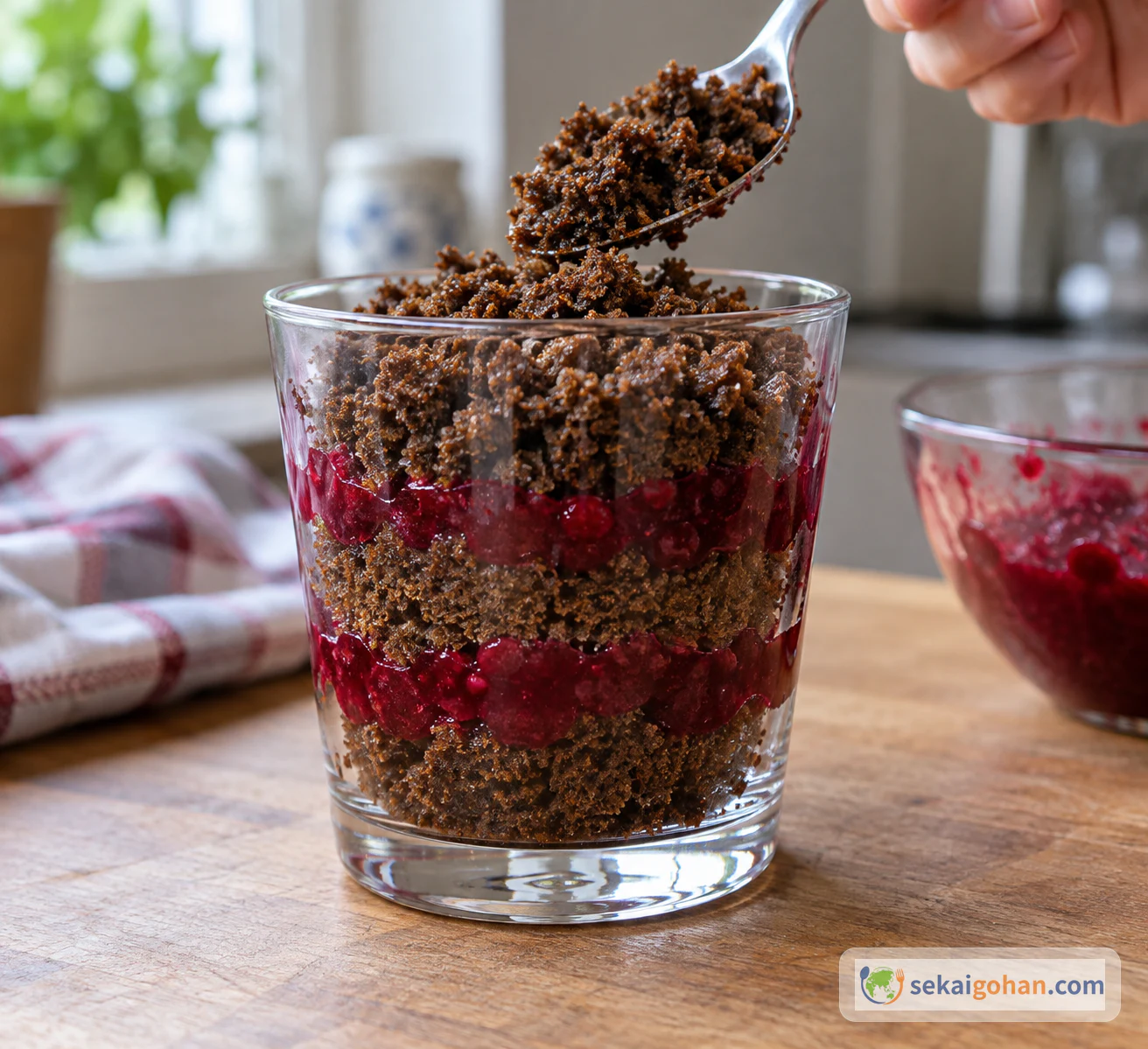
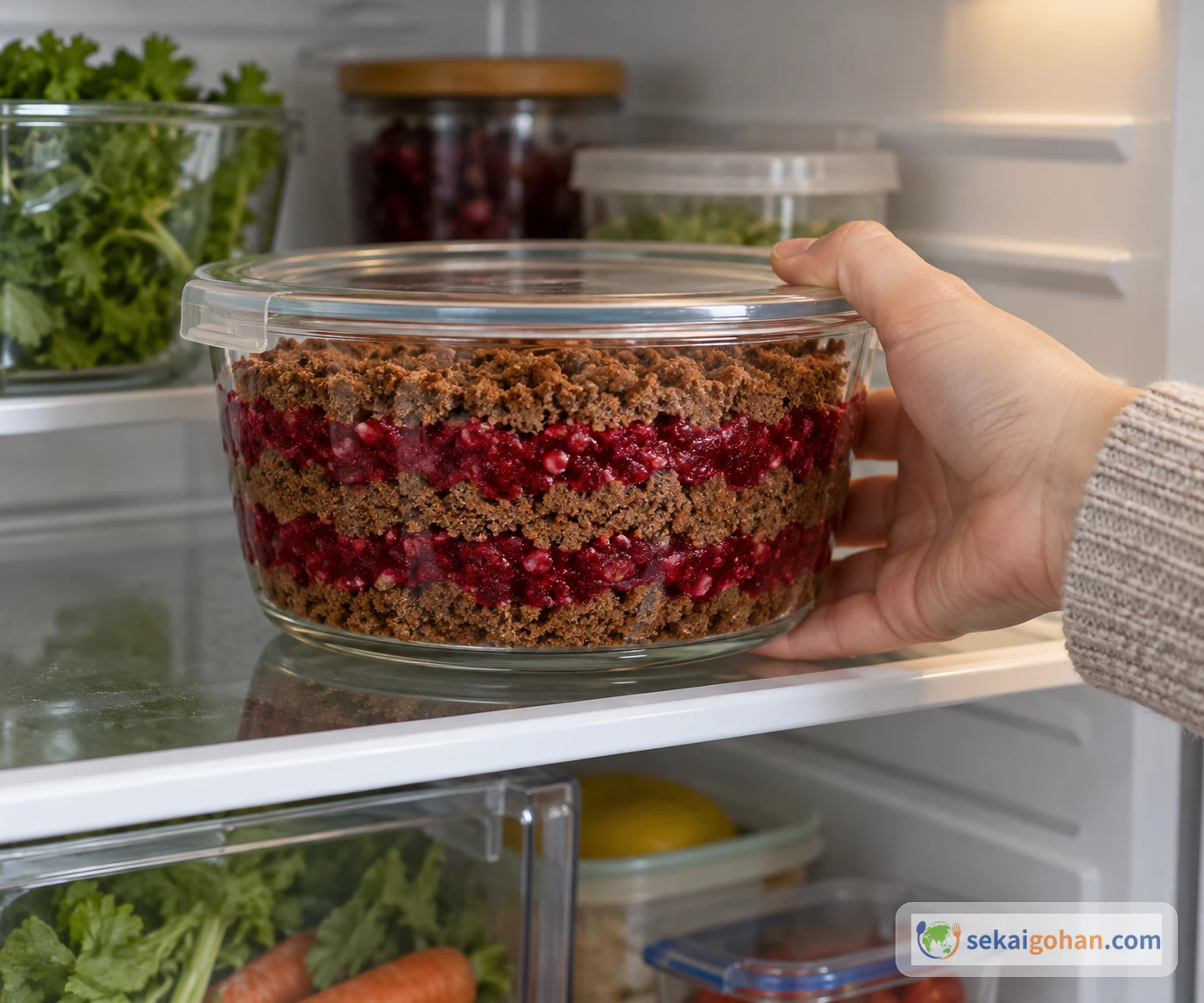
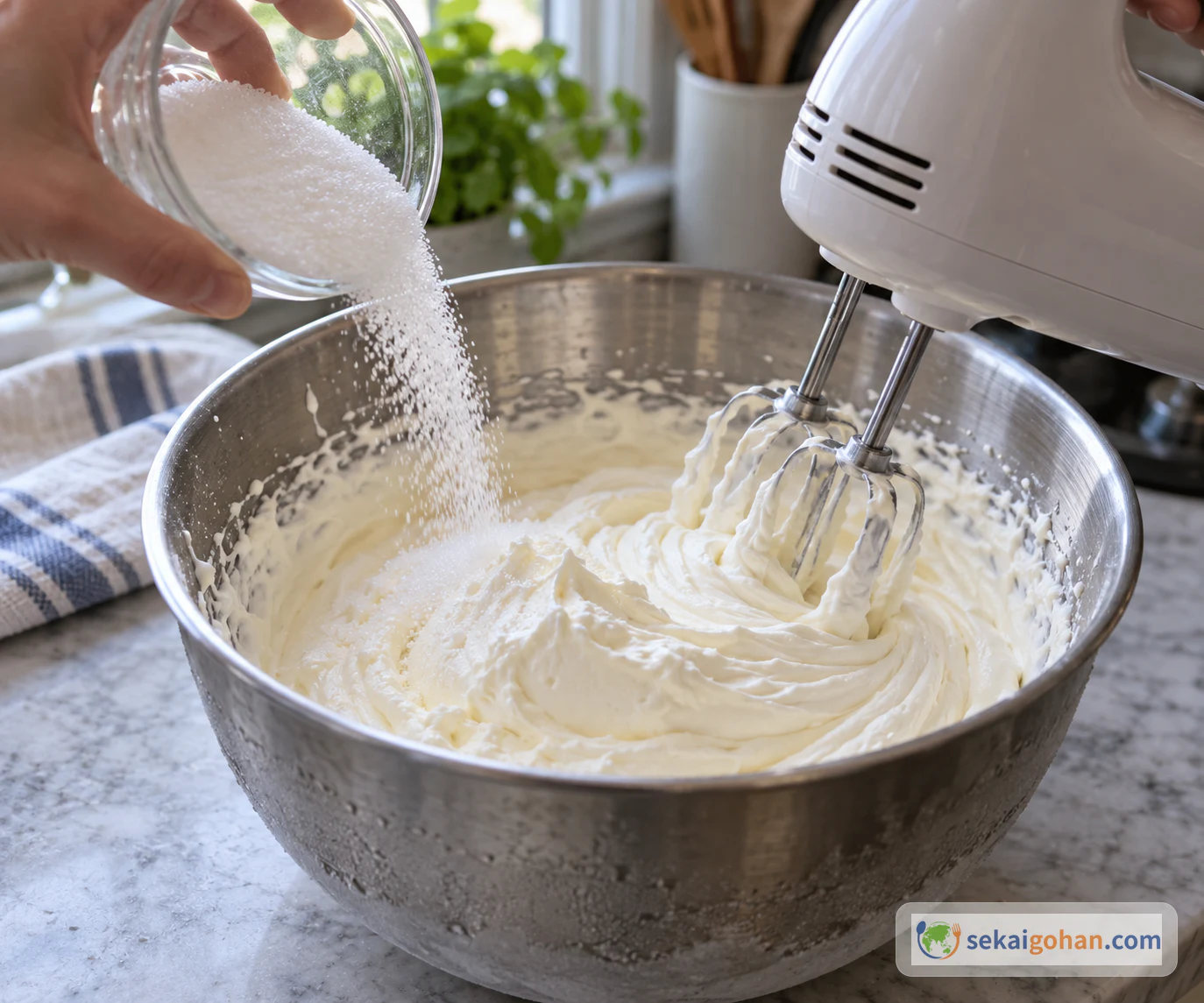
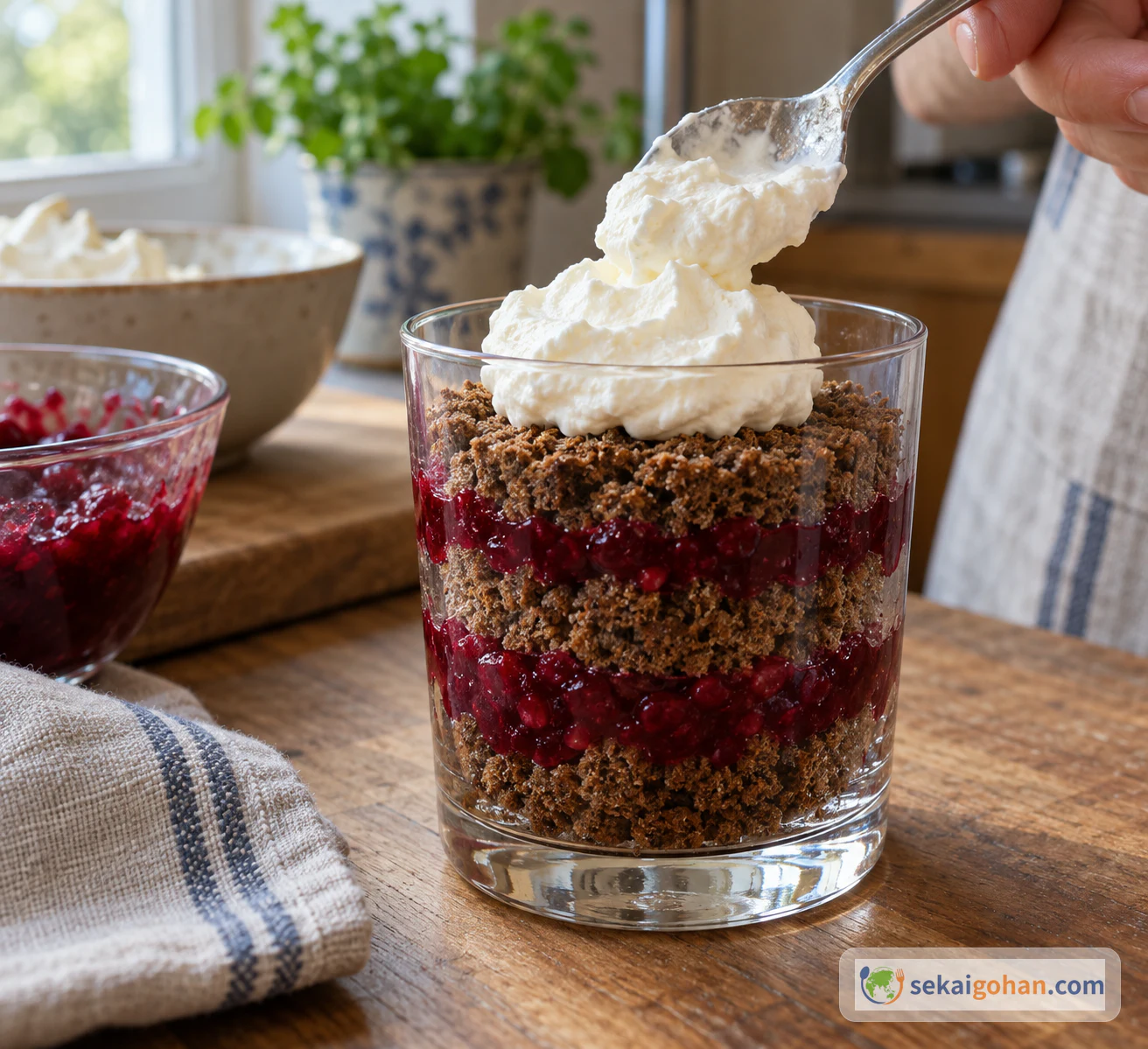
Picture a clear glass. Through its side you can see stripes of dark, coarse rye crumbs and deep red berries, and the last thing to arrive is a white mound of whipped cream. This is rupjmaizes kārtojums, a Latvian layered dessert of rye bread crumbs, whipped cream and tart berries. There's no baking and no toasting: you grate, blend, layer and whip, and the refrigerator does the rest. For more dishes from the same table, see our Latvian recipes.
Rupjmaizes Kārtojums and Latvian Rye Bread
Rupjmaize is a dark rye bread and a national staple, and rupjmaizes kārtojums is a typical dessert made from it. The crumbs are layered in a glass with whipped cream and a tart cranberry or lingonberry jam. It fits a cuisine that draws on local farm and forest produce, where rye bread is part of everyday life.
Three things should stay distinct: the grainy depth of rye bread, the sharpness of the berries, and the roundness of sweetened cream. The cream goes on top at the last moment, never between the layers.
Ingredients: About 4 Small Dessert Glasses
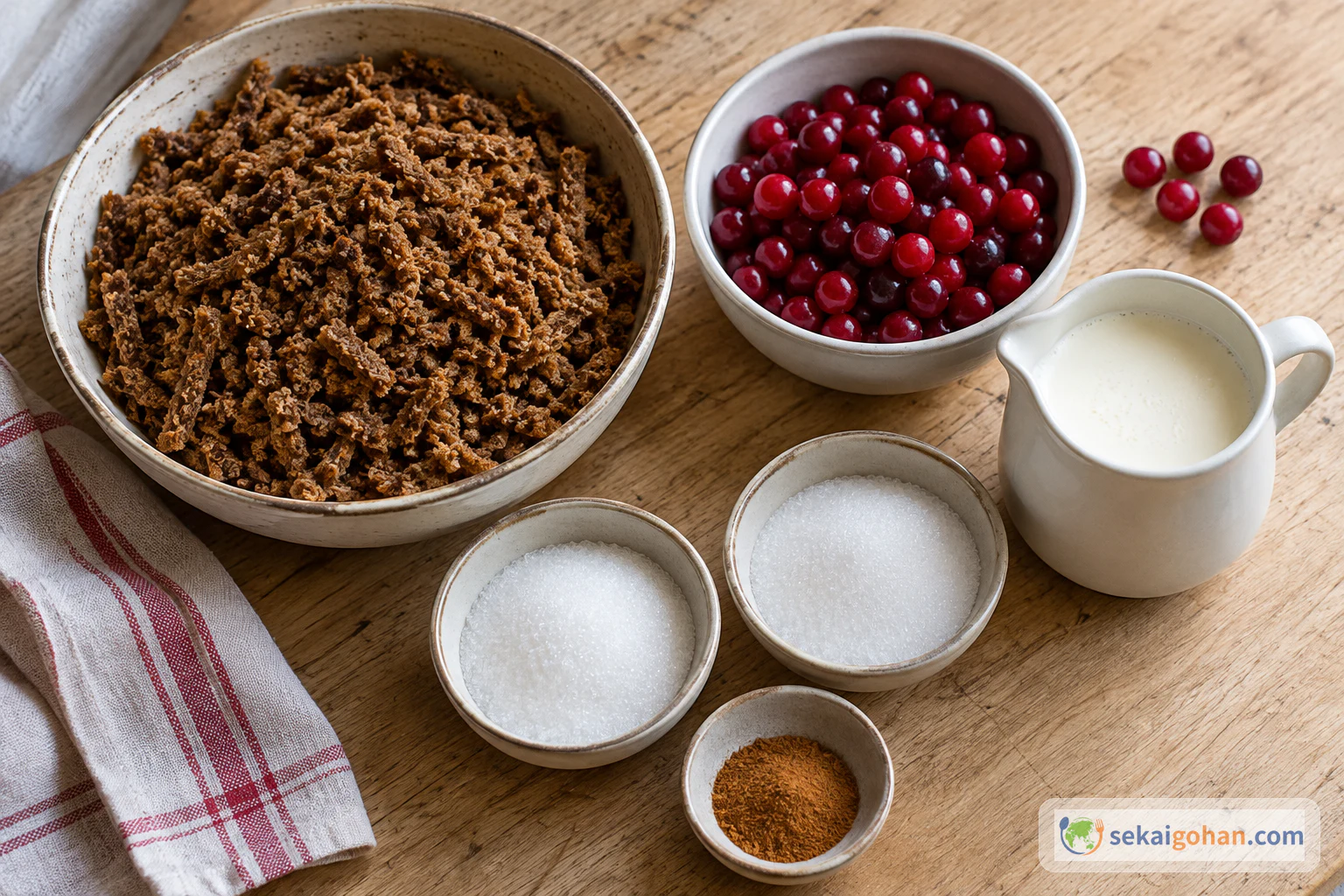
A glāze is a glass, and 1 glāze is 200–250 ml. The 2:1:1 ratio holds as long as you use the same vessel for all three, so a 200 ml measuring cup works well.
Wash fresh berries well under running water, then dry them. Do not use imported frozen berries just thawed: boil them for 1 minute and let them cool before blending. If you garnish with berries, take a few from the measured amount and use washed fresh ones.
Equipment
- Box grater
- Blender
- Hand mixer or whisk
- Mixing bowls
- 200 ml measuring cup
- Tablespoon and teaspoon
- Small clear dessert glasses, plus covers or wrap
- Spoons for layering and serving
- Clean towel or paper towels
- Small pot, if using imported frozen berries
Choosing the Bread, Berries and Cream
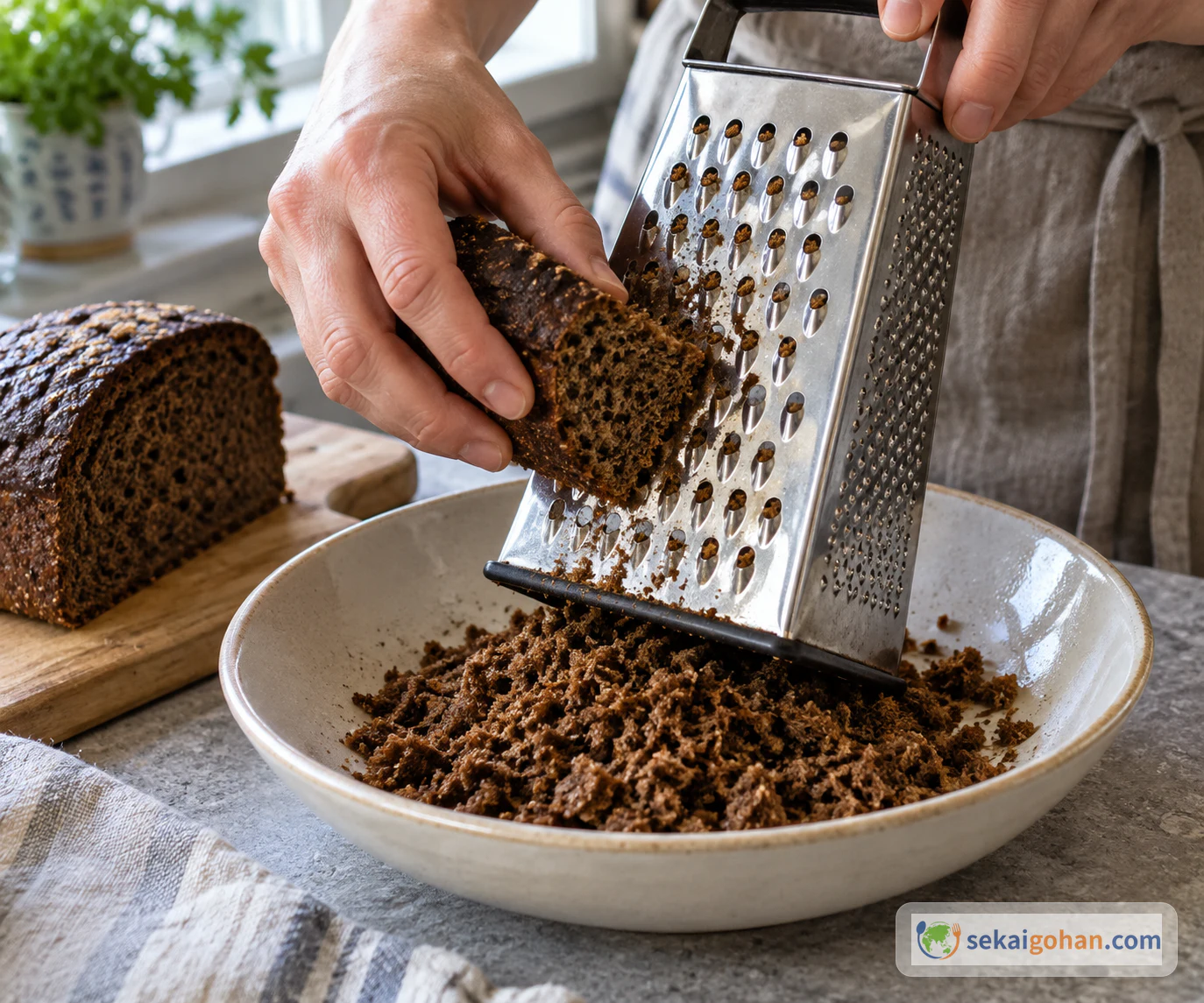
Bread. Look for a dense loaf with a high rye content and little sweetness, and check the label. A rye sourdough or a milder black bread can work, though the sweetness, sourness and toasty notes will shift. Soft white sandwich bread or sweet pastry-style loaves change the character of the dessert.
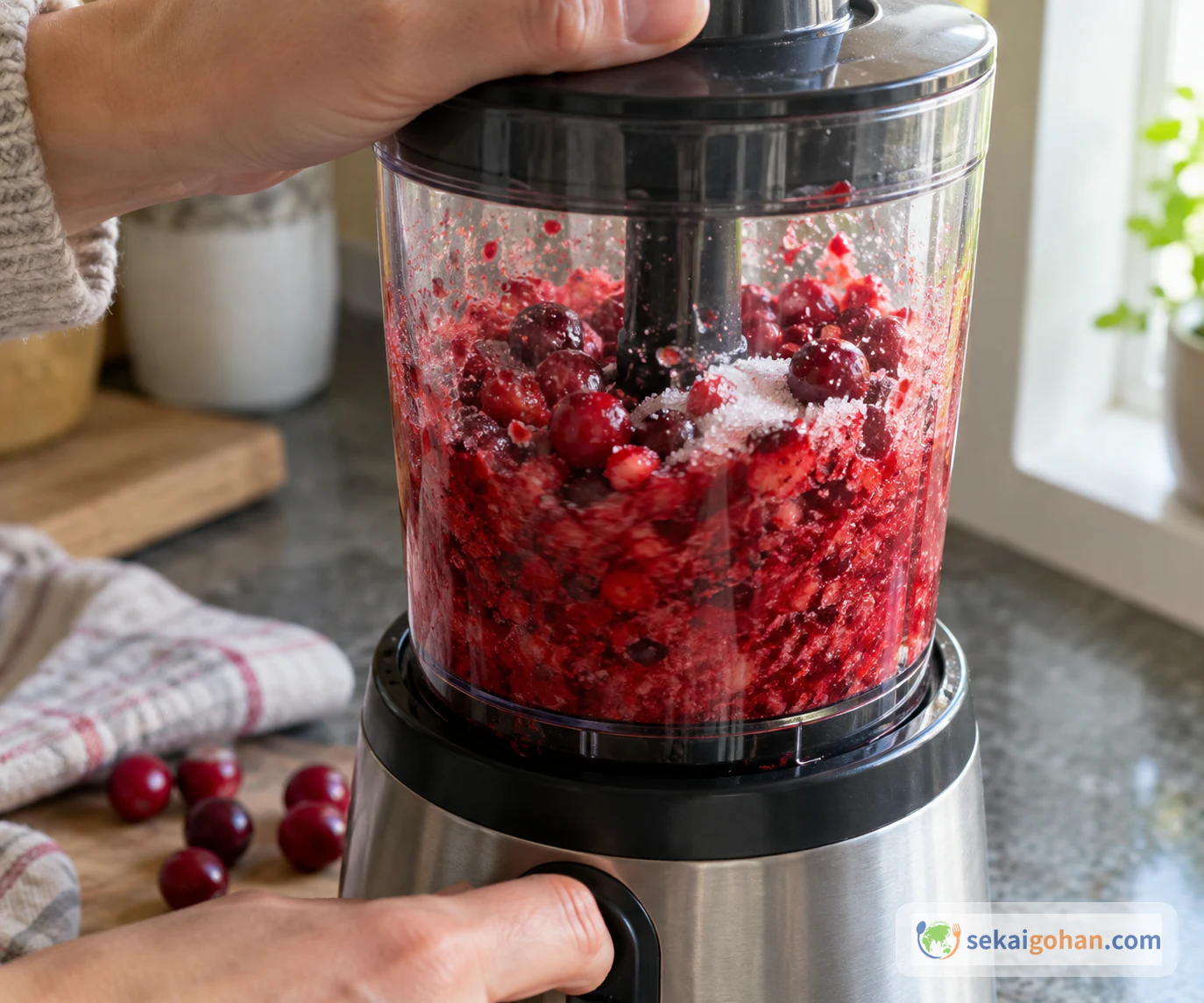
Berries. Unsweetened cranberries or lingonberries are the first choice. Here they are blended with sugar into an uncooked purée rather than cooked into jam. Ready-made jam is convenient, but it changes both the sugar and the moisture, so it makes a different dessert; taste it before deciding how much sugar it needs, if any.
Because the dessert itself is never heated, handle the berries with care.
- Imported frozen berries: The Food Safety Authority of Ireland advises boiling imported frozen berries for one minute before eating them because of norovirus and hepatitis A, and says this is particularly important for vulnerable people. Thawing alone is not enough. This is Irish public advice rather than a universal rule, and it does not cover fresh berries, canned berries, or berries you grow and freeze yourself.
- Fresh berries: The U.S. Food and Drug Administration advises washing produce under running water without soap, detergent or produce wash, then drying it with a clean towel or paper towel. Washing reduces bacteria but does not eliminate them. It also advises keeping perishable produce in a clean refrigerator at 40°F (about 4°C) or below.
- Hands: Japan's Ministry of Health, Labour and Welfare advises washing hands with soap and running water before cooking.
Cream. Use dairy whipping cream with around 35% fat or more so it whips easily, and check the label. A plant-based whipping product changes the flavor.
This dessert contains gluten from the rye and milk from the cream. Check the bread label for other grains and additives.
Method: Layer the Bread and Berries, Finish with Cream
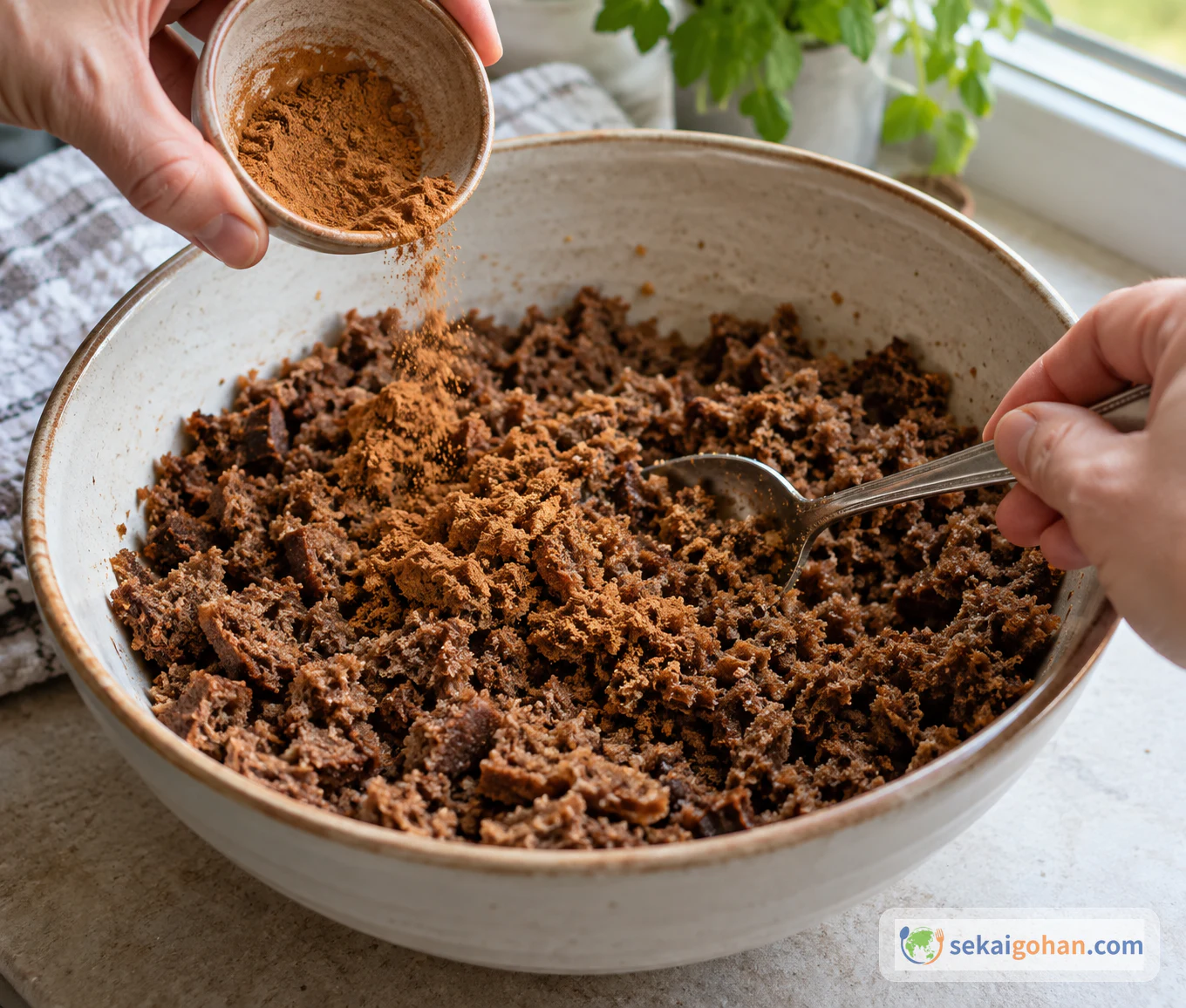
The photos show fresh berries. If you are using imported frozen berries, allow extra time to boil and cool them before step 3.
Rupjmaizes Kārtojums Texture and Troubleshooting
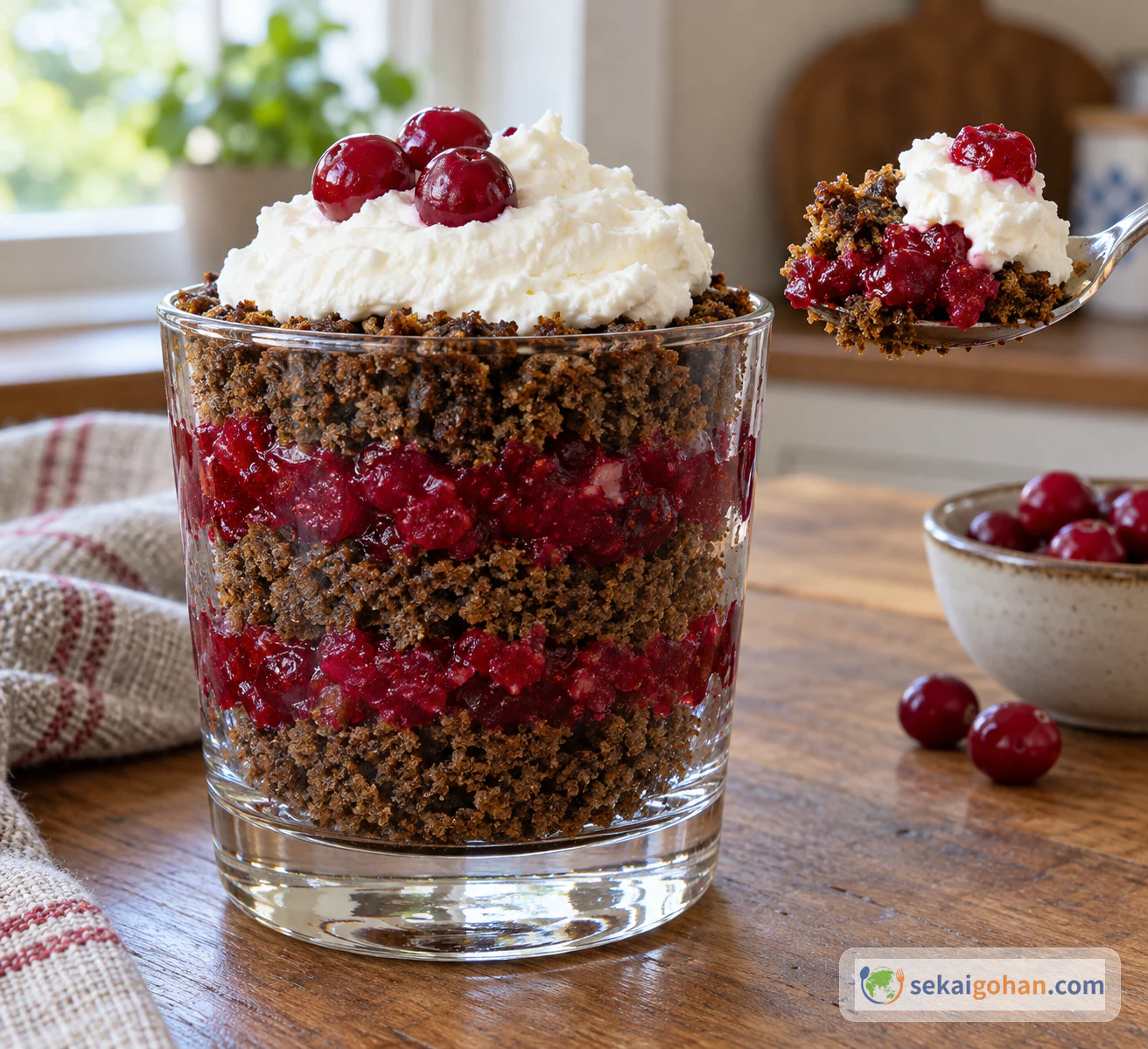
Chilling lets the layers settle and the edges of the crumbs soften, but the result is never a completely uniform pudding. Coarser crumbs and the thickness of your layers both change the bite.
| Problem | Likely reason | What to do |
|---|---|---|
| The bread is too soft to grate | It is too fresh or moist | Let the bread dry a little first. Toasting or frying in butter would make a different dessert |
| The berry layer is watery | Berries vary, and boiled frozen berries can release liquid | Add no water. With boiled frozen berries, hold back some of the liquid |
| The bread softened more than you like | It has rested | For more bite, use thinner layers and eat it sooner |
| The cream will not hold a mound | Low fat, or not whipped enough | Check the fat content on the label, keep the cream cold and keep whipping |
| There are leftovers | The dessert contains cream | Keep it refrigerated and eat it soon |
Rupjmaizes Kārtojums Variations
The dessert has no single fixed form, and Latvian recipes vary widely.
- Lingonberry or cranberry. Either works, and your choice changes the sweet-sour balance.
- Blackcurrant preserves. Lingonberry, cranberry and blackcurrant preserves are popular, and there is also a cranberry-strawberry version. Preserves bring their own sugar and moisture, so the layers behave differently.
- Toasted crumbs. Dried rye bread can be toasted with a little butter, brown sugar and cinnamon.
- Cream between the layers. Some recipes alternate whipped cream through the layers.
- Serve now or rest. Eat it right away for crisp crumbs, or let it rest for softer ones.
- A modern take. Sour cream, blackcurrant syrup and juice, strawberry jam and a reduced balsam syrup, scaled to two portions. It's a substantially different dessert.
Frequently Asked Questions
Is this the same as maizes zupa?
No. Rupjmaizes kārtojums is a layered dessert, while maizes zupa is a sweet soup made from rye bread and fruit.
Can I use frozen berries?
Yes, but don't thaw imported frozen berries and use them raw. Boil them for one minute and let them cool, then continue as you would with fresh berries; the boil may change the color and aroma. Fresh berries skip the boil and should be washed under running water and dried.