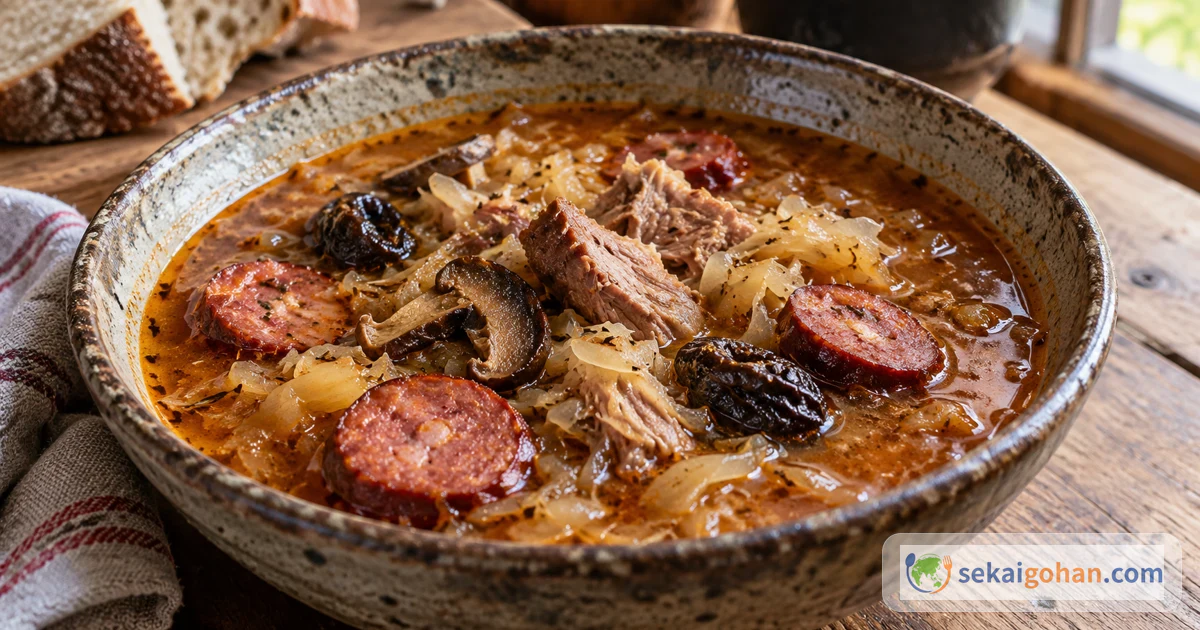
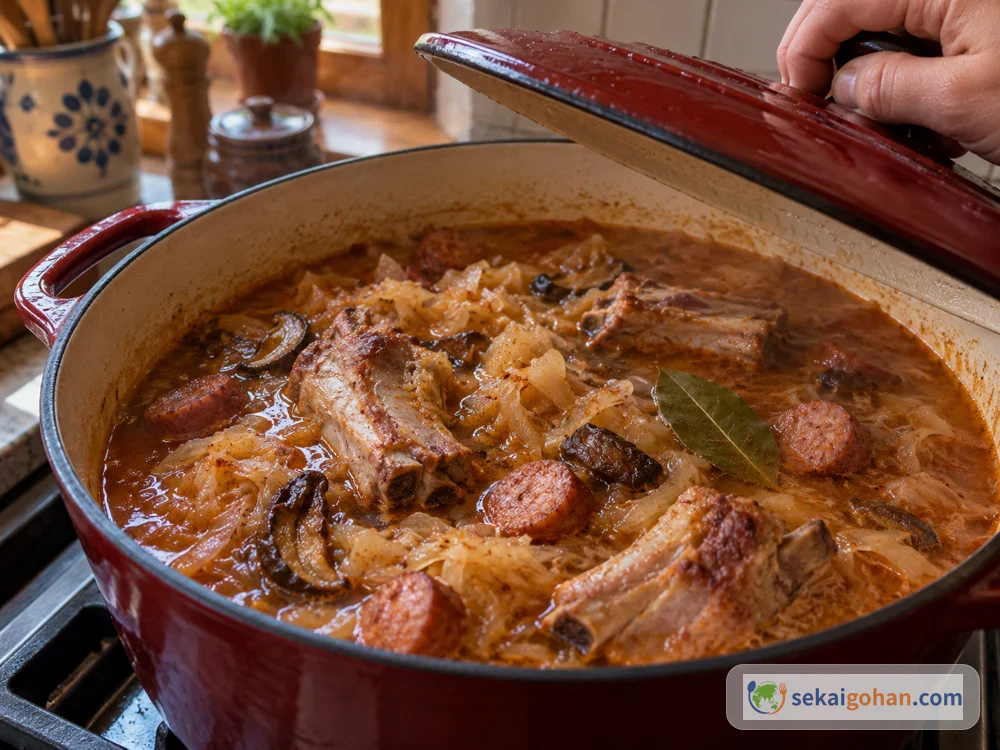
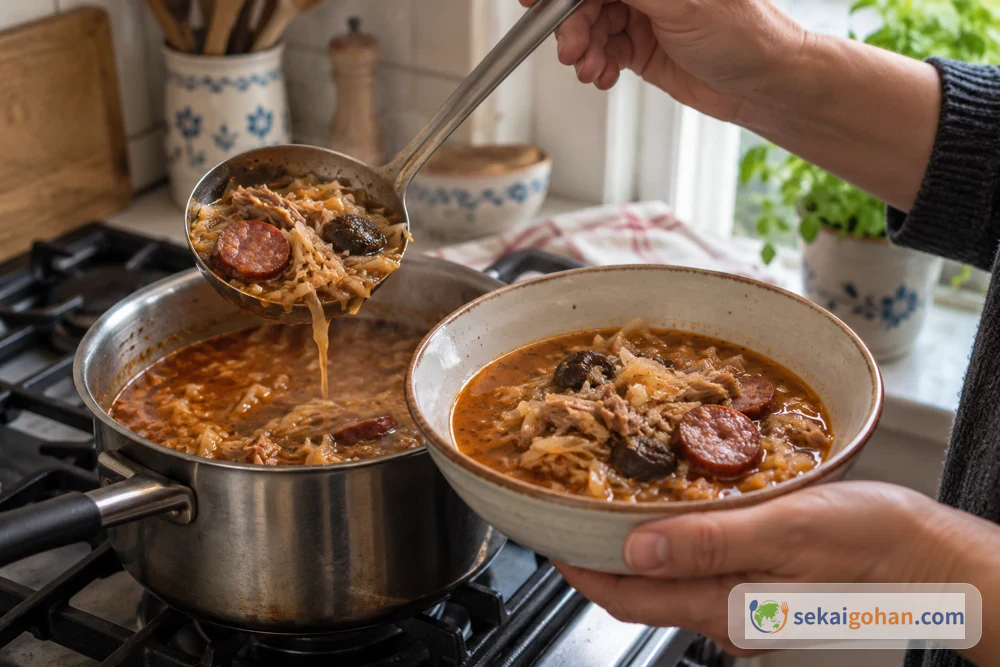
On the evening of December 24, a big pot has been steaming in Slovak kitchens since morning: sauerkraut, smoked meat, and mushrooms picked in the forest and dried. Every time the lid is lifted, the smell of sourness and smoke spreads through the house, and once the family is gathered, the first hot bowl is served. This winter soup is kapustnica.
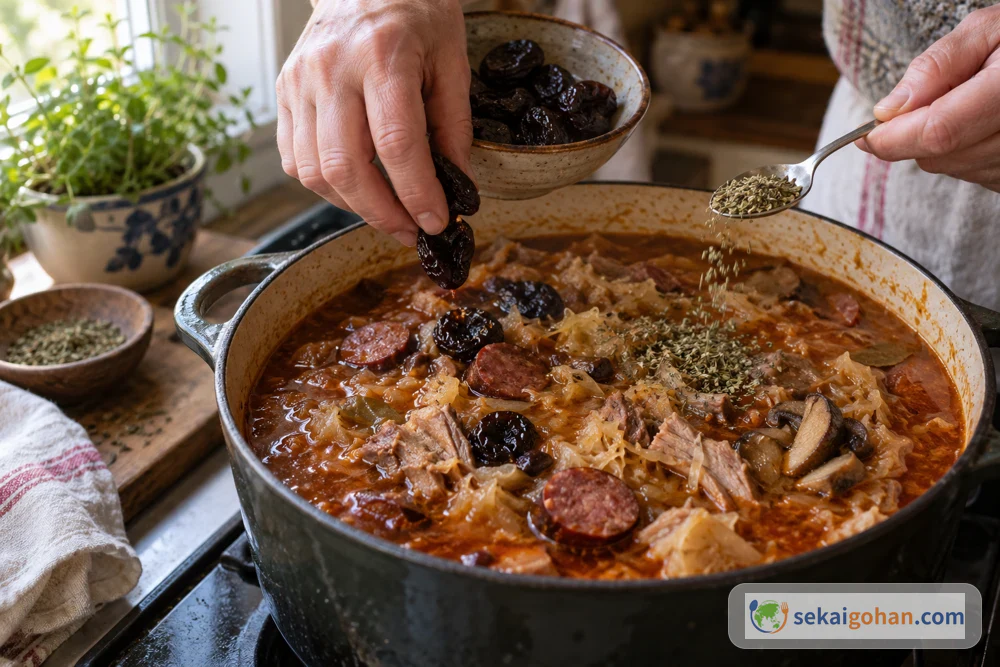
The name comes from kapusta, the Slovak word for cabbage, and literally means "cabbage soup." The taste is far more complex than that: a little sour, a little sweet, and full of smoke. Jarred sauerkraut and smoked sausage get you most of the way there, and dried porcini, prunes and paprika bring it much closer to the Slovak flavor.
Kapustnica and the Slovak Christmas table
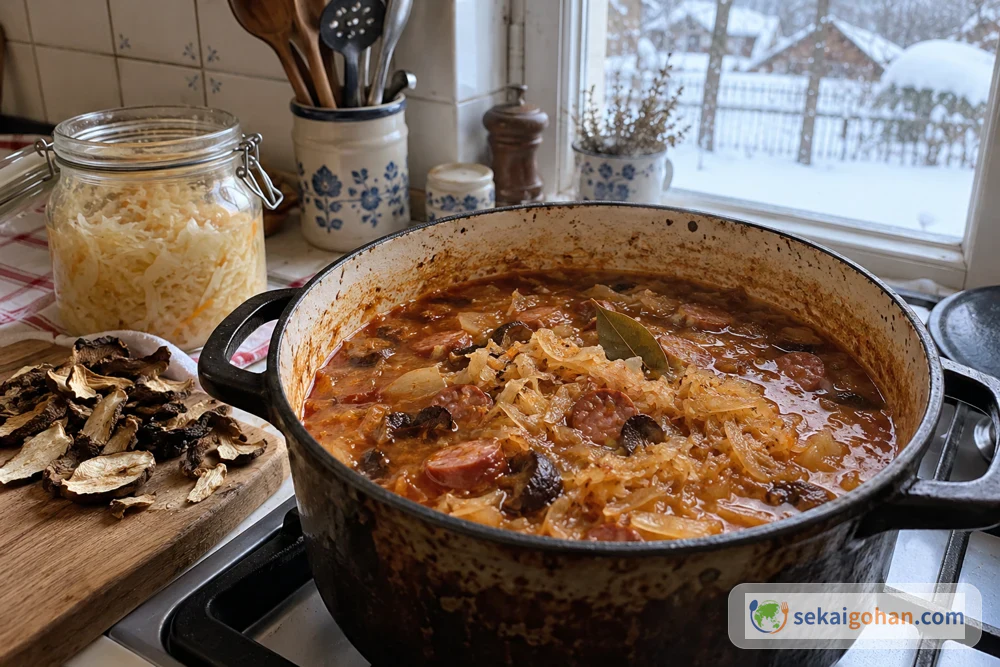
A soup made from winter preserves
Kapustnica comes from a way of life built on fermenting cabbage and keeping it through winter. In central Europe, where winters are harsh, fermented cabbage was the vegetable that lasted until spring. During fermentation, lactic acid bacteria turn the cabbage's sugars into lactic acid, and that is where the sourness comes from. Add mushrooms dried in autumn, plus smoked meat and homemade sausage from a slaughtered pig, and you have a whole pot made from the pantry alone. It is a feast gathered from preserved foods.
Christmas Eve dinner
Ask people in Prešov about their favorite Christmas dish and several will answer "kapustnica." Christmas Eve dinner (štedrá večera) starts with wafers (oblátky) with honey and garlic, a wish for the family's health in the coming year. Carp scales go under the tablecloth so there will be no shortage of money in the new year. After the soup come fried carp and potato salad.
Christmas Eve was originally a day of abstaining from meat. For that reason, some households eat a kapustnica made with mushrooms and prunes and no meat, while others make the one with plenty of meat and smoked sausage for New Year's night. It simply depends on each house's custom.
Regional versions
Even under the name "Slovak Christmas soup," what goes into the pot varies a lot by region. At the Miletičova market near the capital Bratislava, besides the basic meat, cabbage and sausage version, you'll find a smooth kapustnica influenced by Hungarian cooking, with plenty of prunes and sour cream; this style is common around Nitra. In the central Gemer region, forest mushrooms carried the flavor, a tradition from the days when meat was expensive. Even with the same name, the pot's contents differ from village to village, so feel free to change the formula in your own kitchen.
In eastern Slovakia there are also soups close to kapustnica, such as jucha, which combines sauerkraut juice with dried peas or mushrooms, and mačanka, which is thickened and eaten with bread dipped in.
Ingredients (serves 4)
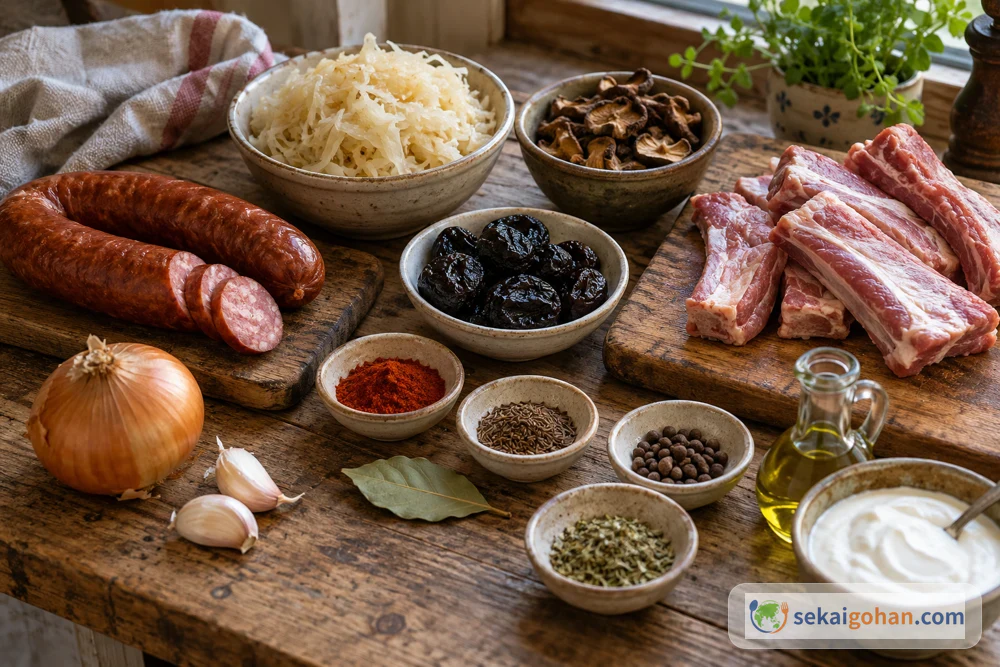
Pork spare ribs and smoked sausage are easier to buy than smoked pork hock (ham hock), so this formula uses them in its place.
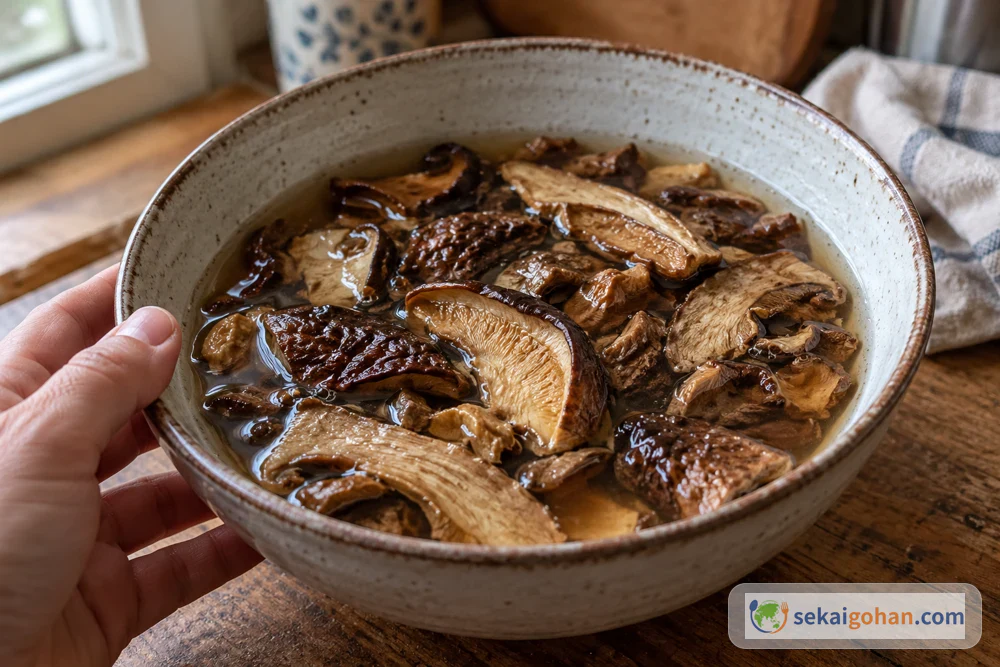
Jarred sauerkraut is sold widely in supermarkets, in imported-food aisles and at delis. The strength of the sourness differs considerably by product, so taste it once before deciding how much liquid to drain. If it is very sour, rinse it lightly with water. If it is mild, add it with its juice. Dried porcini are sold at import food shops or online, and paprika powder, allspice and caraway seeds are in the spice aisle.
For the smoked sausage, choose a coarse-ground one with a strong smoky aroma. Nearly all of the soup's smoky aroma comes from the sausage, so the choice of sausage decides the impression of the finished dish. If you can get Polish kielbasa, it will be closest in flavor.
How to make kapustnica
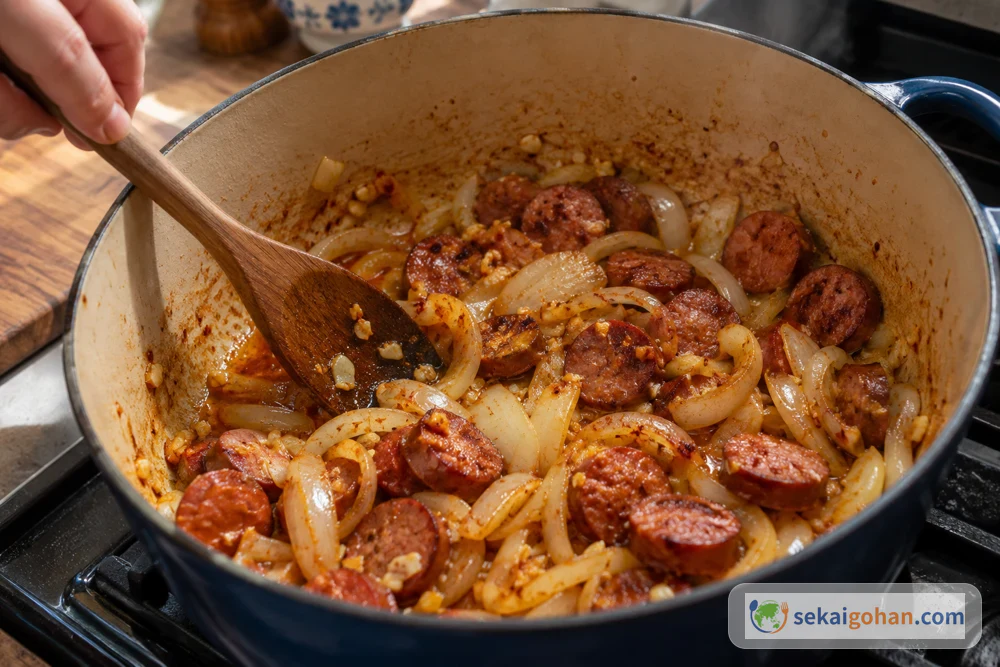
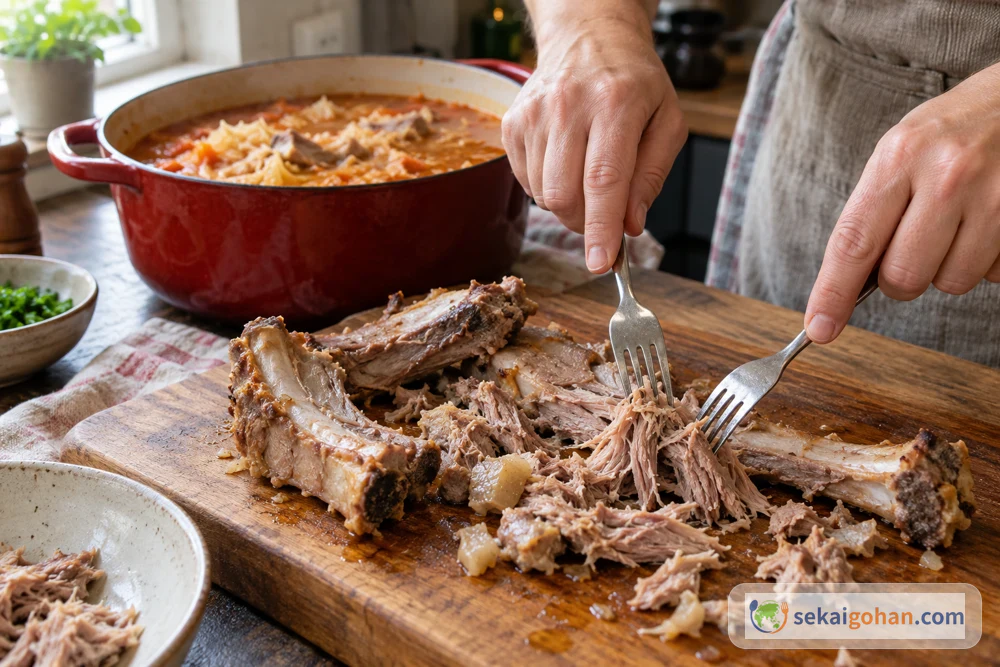
Preparation takes about 20 minutes and simmering about 1 hour 45 minutes. The spare ribs are simmered from raw, so cook them for a long time until the meat comes away from the bone.
Cook pork thoroughly through to the center. Heat the center of the meat to 167°F (75°C) for at least 1 minute to kill pathogenic microorganisms such as enterohemorrhagic E. coli. Color and simmering time alone can mislead, so check the thick parts, such as around the bone, with a thermometer.
Paprika powder brings out its aroma and color when lightly sautéed in oil, but over high heat it scorches in an instant and turns bitter. Always lower the heat once the sausage is in, and if it looks about to scorch, pour in water at once.
Finishing and serving kapustnica
Sweet or white
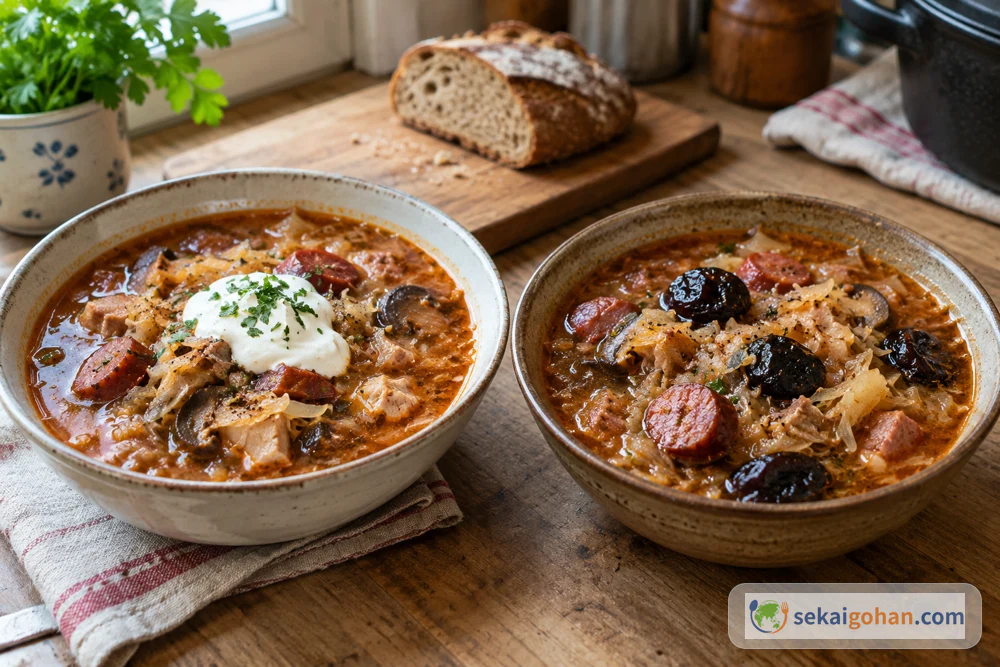
How a household finishes its kapustnica says a lot about its taste. Some add sweetness with prunes or fig jam; some stir sour cream into the pot until the soup turns whitish, while others let each person add it at the table. Some thicken it with a roux of flour and fat (zápražka), and some prefer to drink it thin.
Here, the sour cream goes on at the table, as much as each person likes. If you'd rather stir it into the pot, mix 4 tbsp sour cream with 1 tbsp flour, thin it with a little of the soup, return it to the pot, and warm it for about 1 minute while stirring. The balance of sweetness, sourness and richness can be adjusted in the last 5 minutes. Make the basic version first, then nudge it toward your own taste the next time.
Serving with rye bread
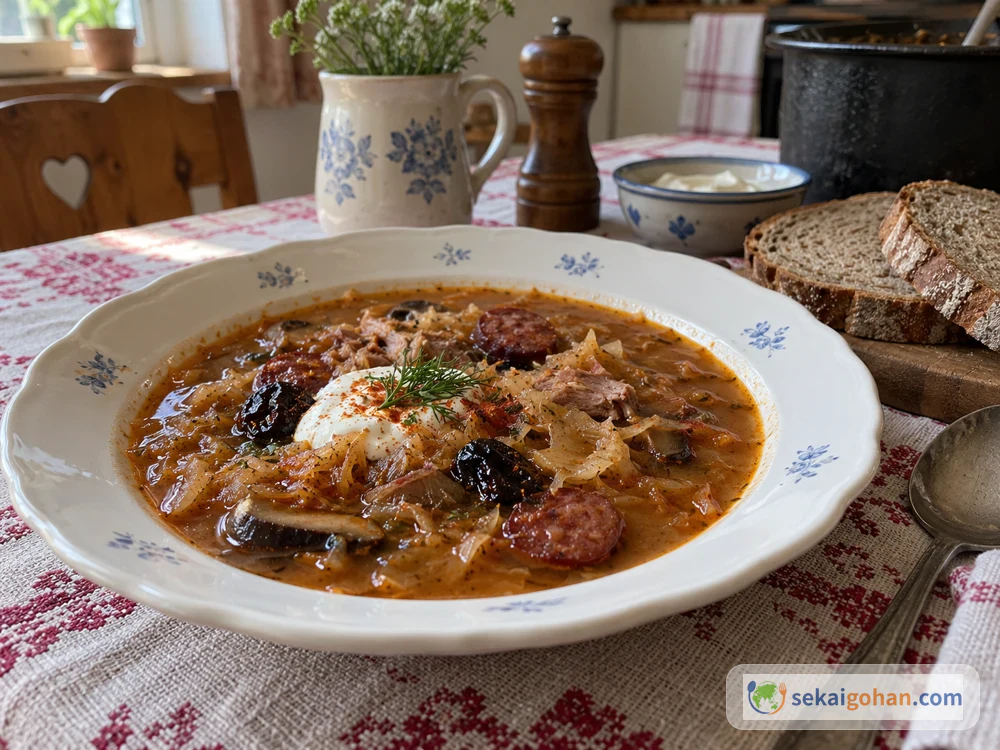
Ladle plenty of the solids into a deep bowl, add a spoonful of sour cream, scatter dill, and sprinkle on just a little paprika. Rye bread or a hard-crusted country bread goes well with the sour soup. In eastern Slovakia it is sometimes served with bobaľky, small round rolls sprinkled with poppy seeds.
Kapustnica appears at New Year as well as Christmas, and Slovak restaurants serve it all year round. Making a big pot and extra keeps it at the center of the table for several winter days. Pair it with the sheep cheese gnocchi Bryndzové Halušky for a full Slovak table.
Frequently asked questions
What if I have no dried porcini?
Dried shiitake works, but the aroma leans noticeably East Asian. A mix of other dried mushrooms comes closer to porcini. Discard the soaking liquid rather than using it.
The sauerkraut is too sour.
Rinse it lightly with water before simmering, or drain it well in a sieve. If the soup is too sour after cooking, dilute it with hot water or add a few more prunes to bring the flavor together.
Can I make it without meat?
Yes. Double the dried mushrooms and bring richness with prunes and sour cream. Without the smoked meat the smoky aroma is gone, so a little more paprika helps fill the gap.
What should I do if I want it spicy?
Use a hot smoked sausage, or add a little coarsely ground chili at the end. Some Slovak cooks make it with a spicy sausage, too.
Can I make it ahead?
Yes. Let it cool before refrigerating, and when reheating, heat it thoroughly until the whole pot is bubbling.