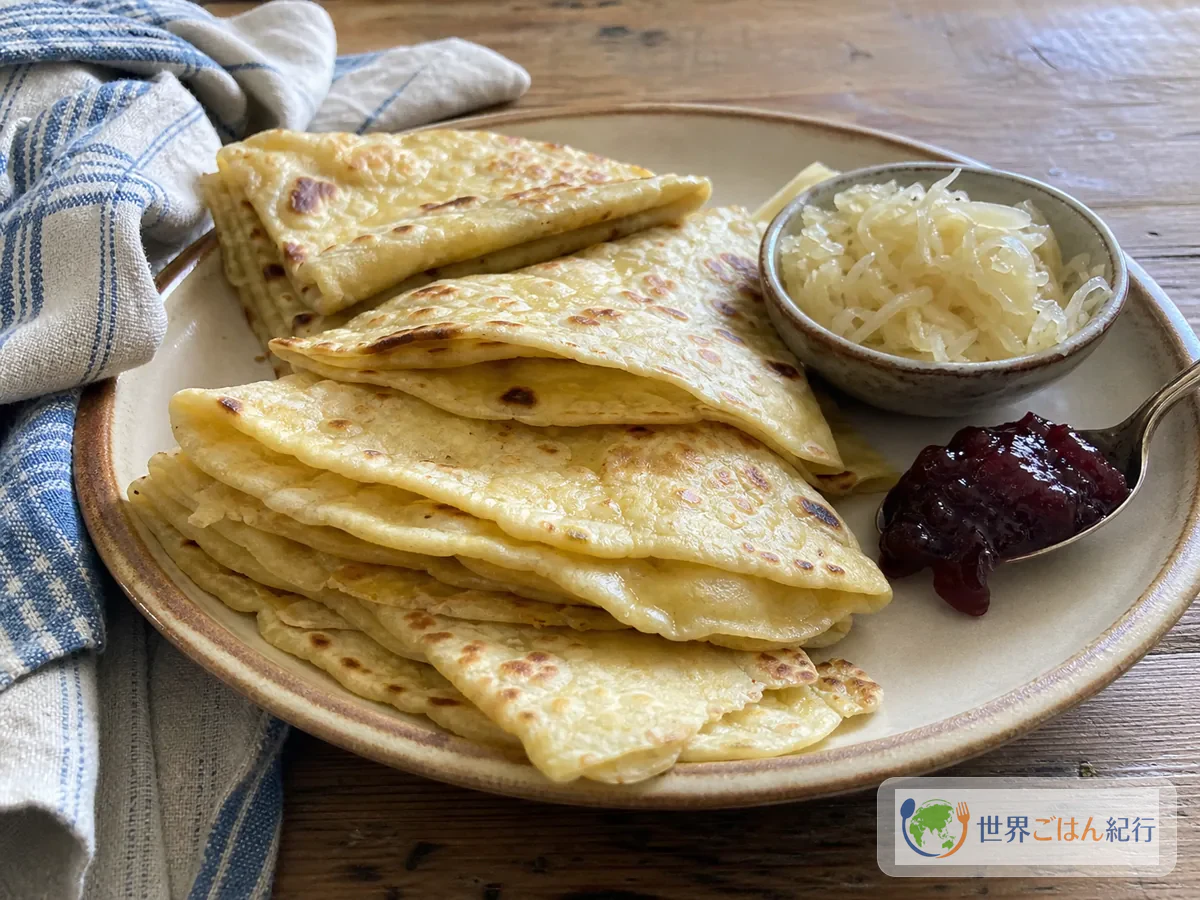
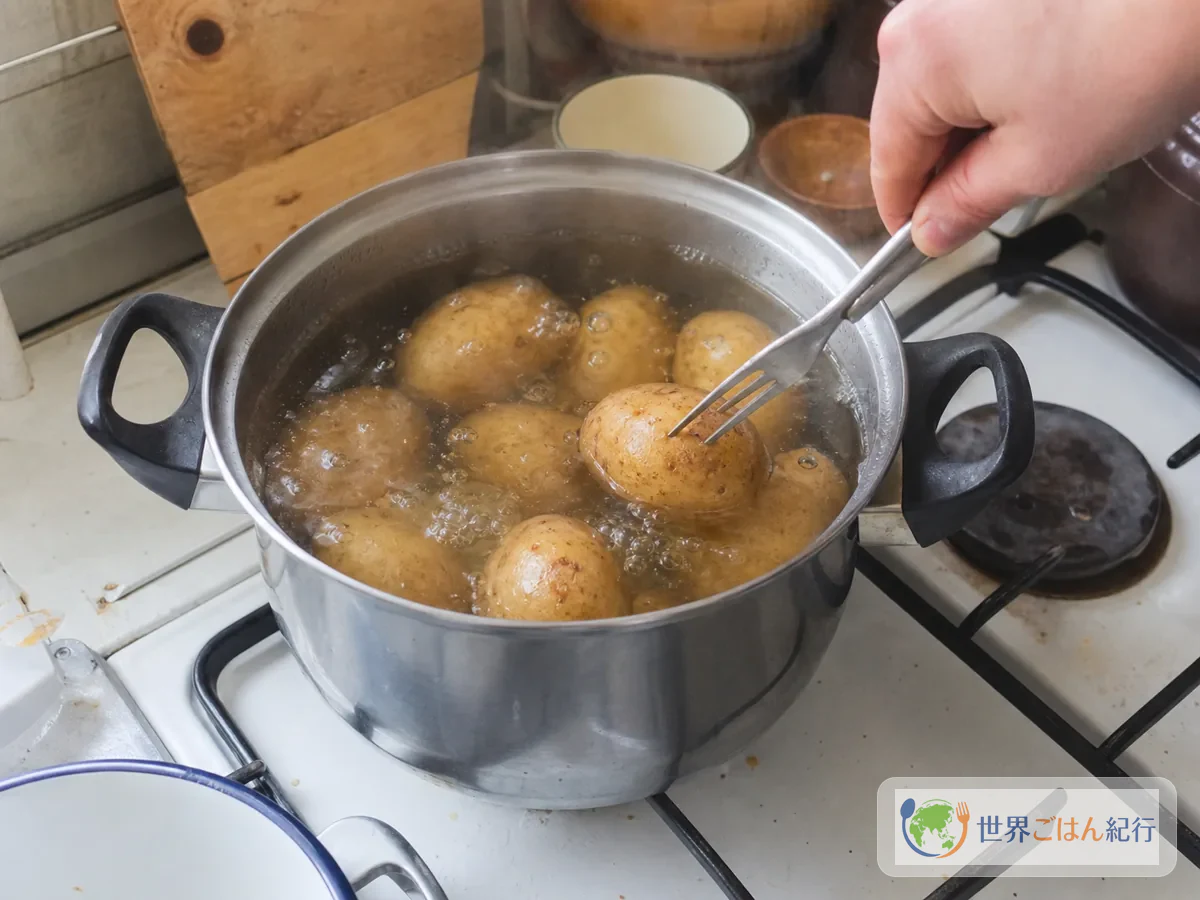
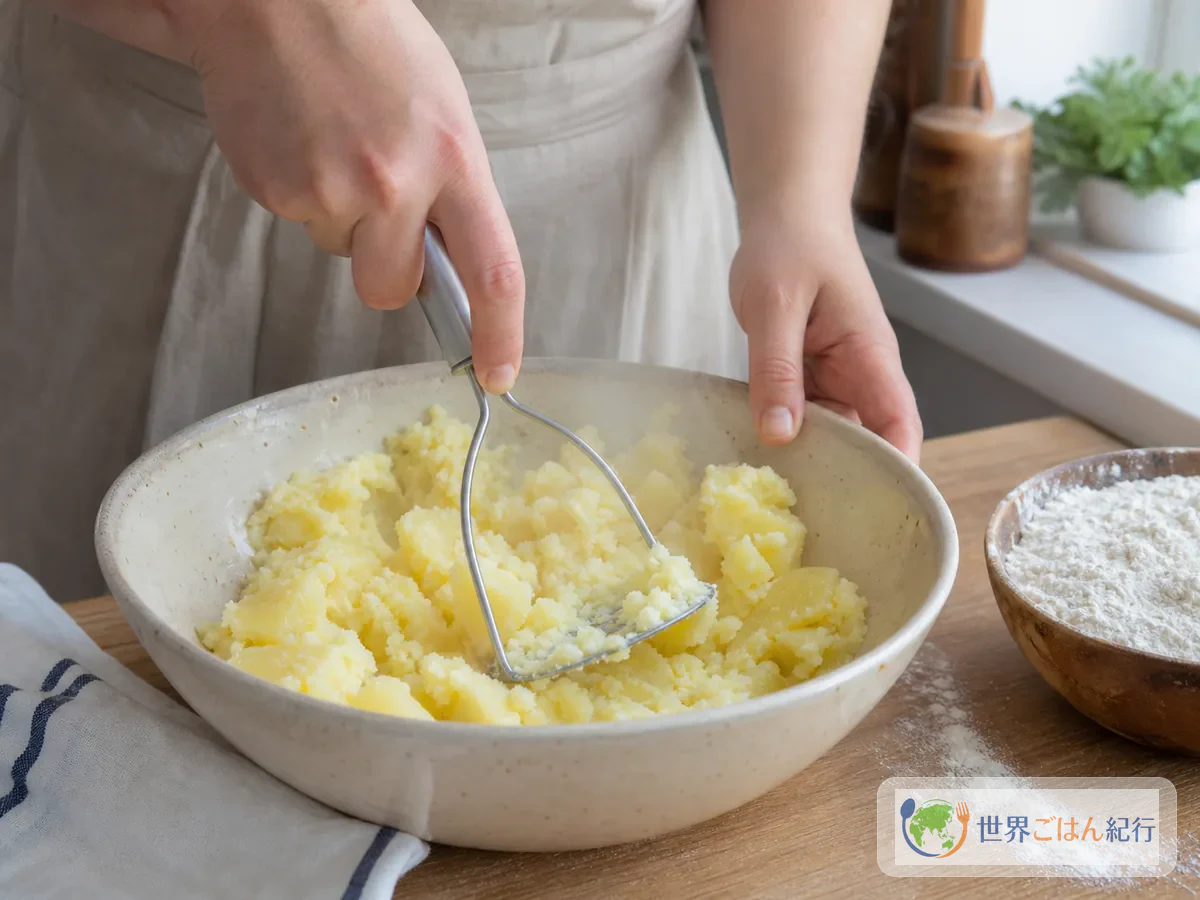
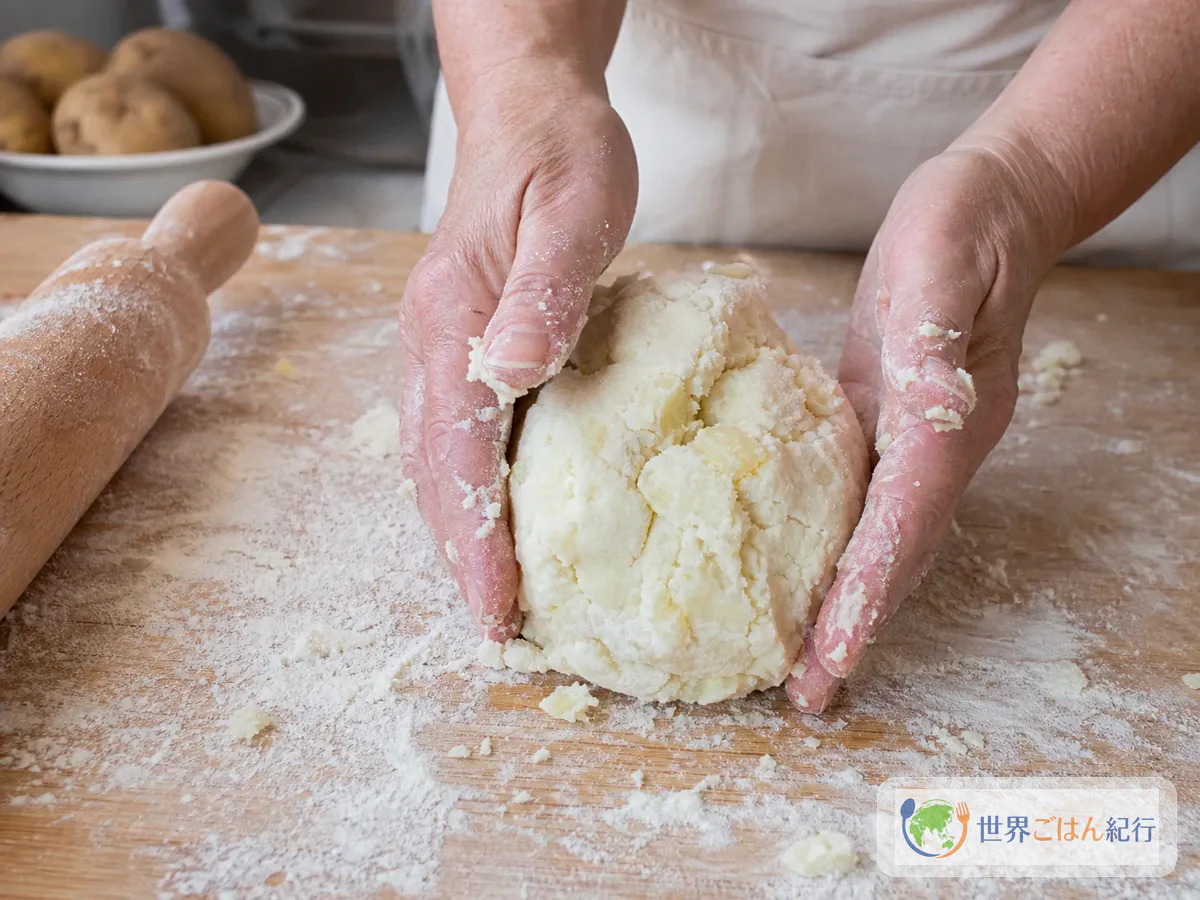
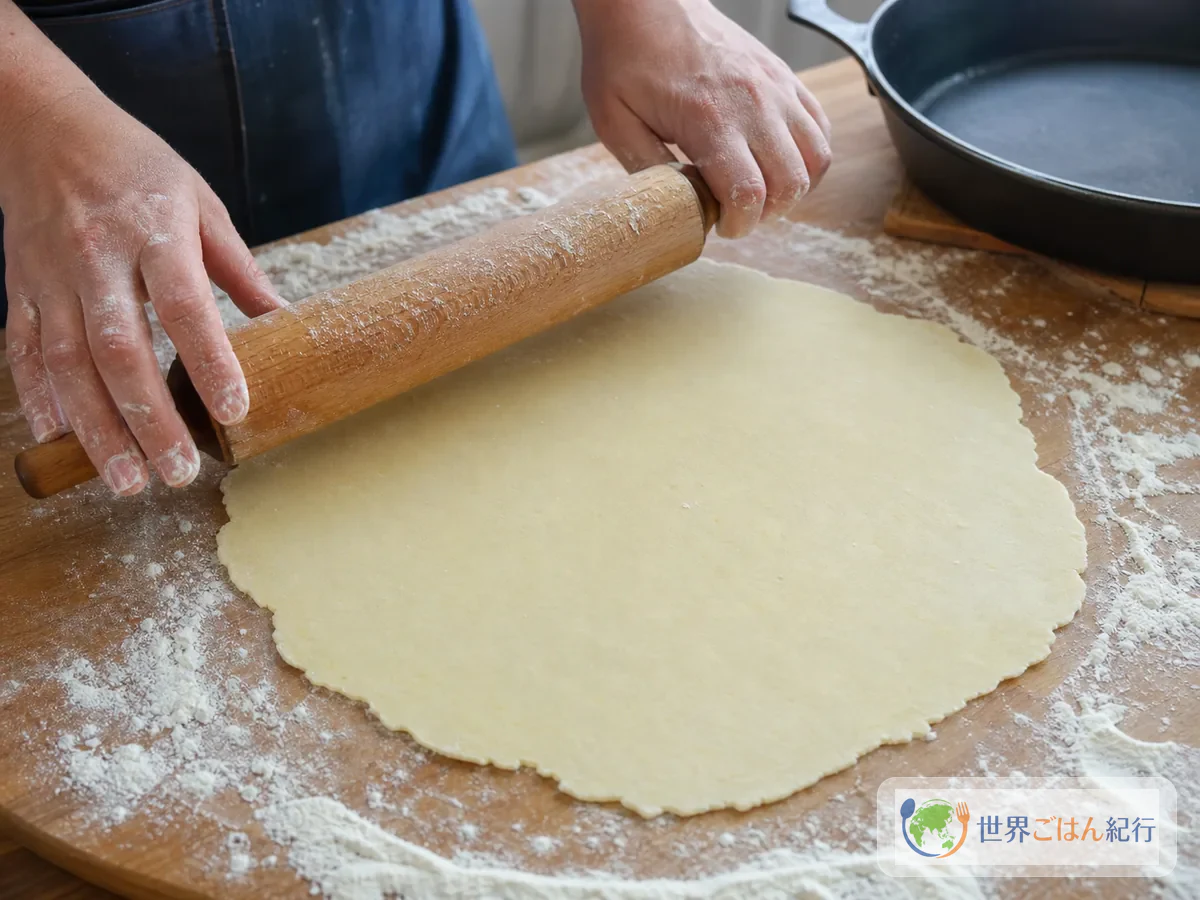
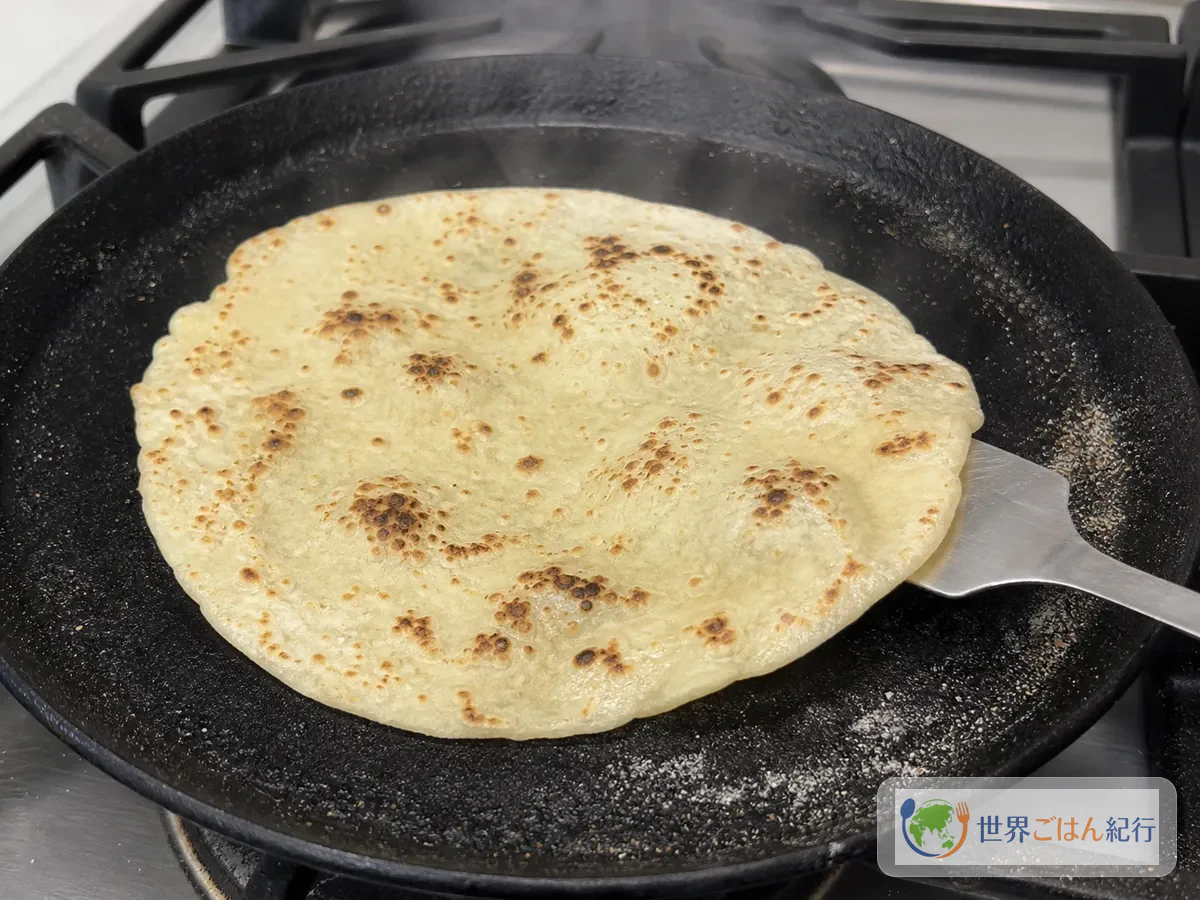
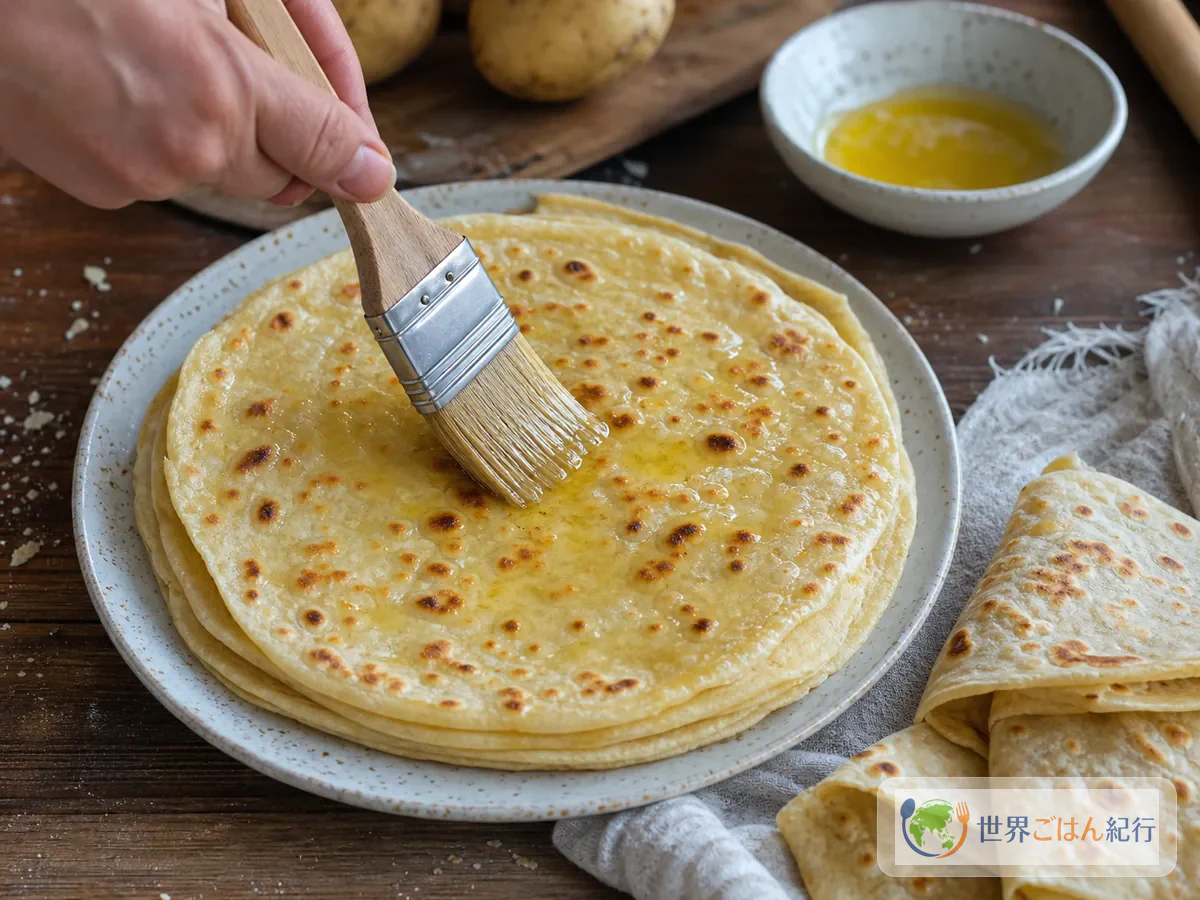
Drained boiled potatoes still hold heat inside their skins. While that heat lasts, mash them, mix in flour, and work the rolling pin back and forth in small strokes until a dough like modeling clay becomes a thin round about 8 inches (20 cm) across. Set it in an ungreased skillet and the flour on the surface dries out as brown spots appear. Lokša (plural lokše) is a Slovak flatbread made from boiled potatoes, wheat flour, and salt. Fresh off the pan, it smells toasty from the dry browning, and it turns soft again the moment you fold it.
Lokša in Slovak cooking
Lokša is a rolled potato dough, not a sweet liquid batter like a pancake. It cooks on a hot, dry griddle or skillet, then gets brushed with fat such as butter or lard and folded or rolled. The ingredient list is short. The skill lies in reading how the moisture and heat change as you go.
The same dough leads to both lunch and dessert. Beside a meat dish, lokša is a thin staple that catches the fat. Rolled around sauerkraut, its acidity lightens each bite. With jam and poppy seeds, it becomes a sweet plate.
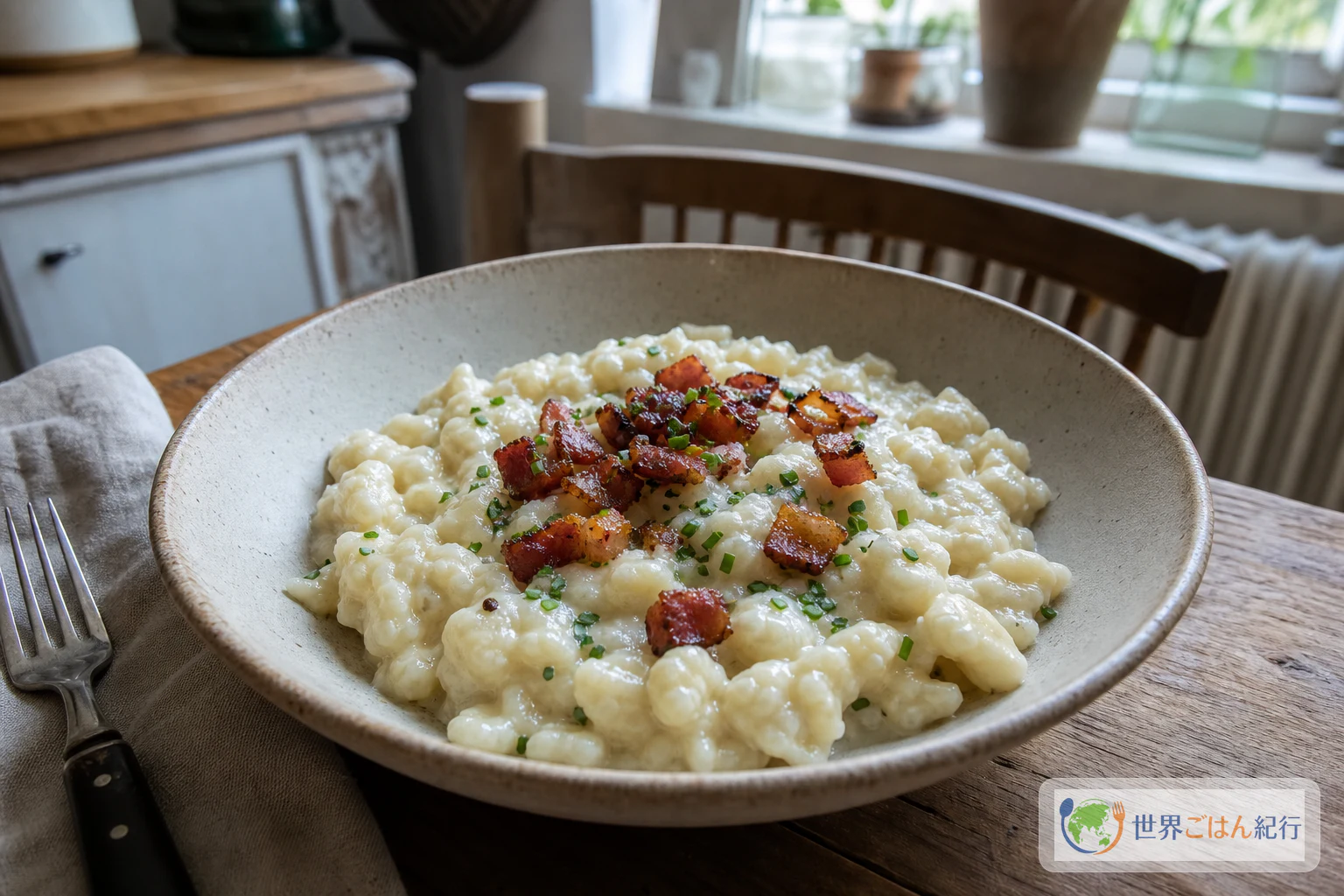
Slovakia has other potato dishes. Bryndzové halušky, for example, are small dumplings tossed with sheep's-milk cheese. Lokša should be thin, dry on the surface, and supple once the fat goes on. Extra flour makes the dough easier to handle, but it works against all three, so resist adding it all at once out of fear of stickiness.
Lokše at the southern feast table
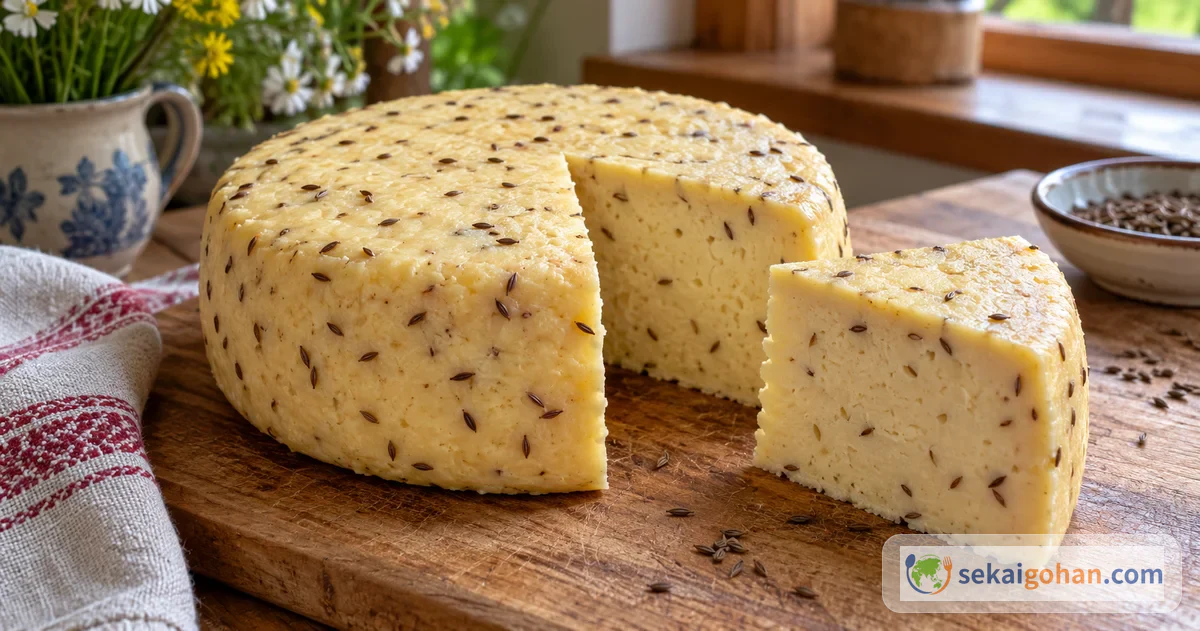
Slovak food changes with the land. Cheese and dairy stand out in the mountains, while cabbage dishes, goose, and lokše belong to the lowlands. Potatoes, cow's and sheep's milk, and cabbage appear everywhere. Lokša grows out of that everyday base, turning the potatoes at hand into a flour-based food.
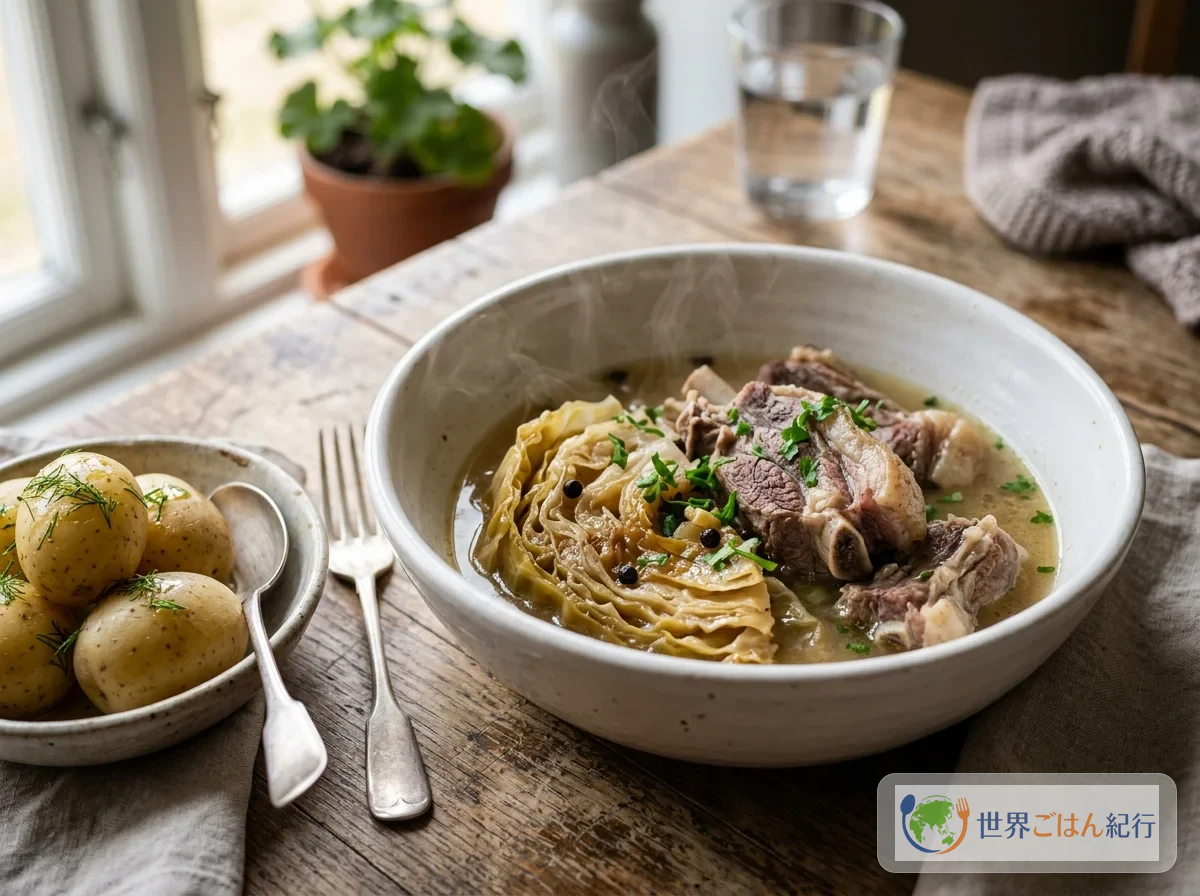
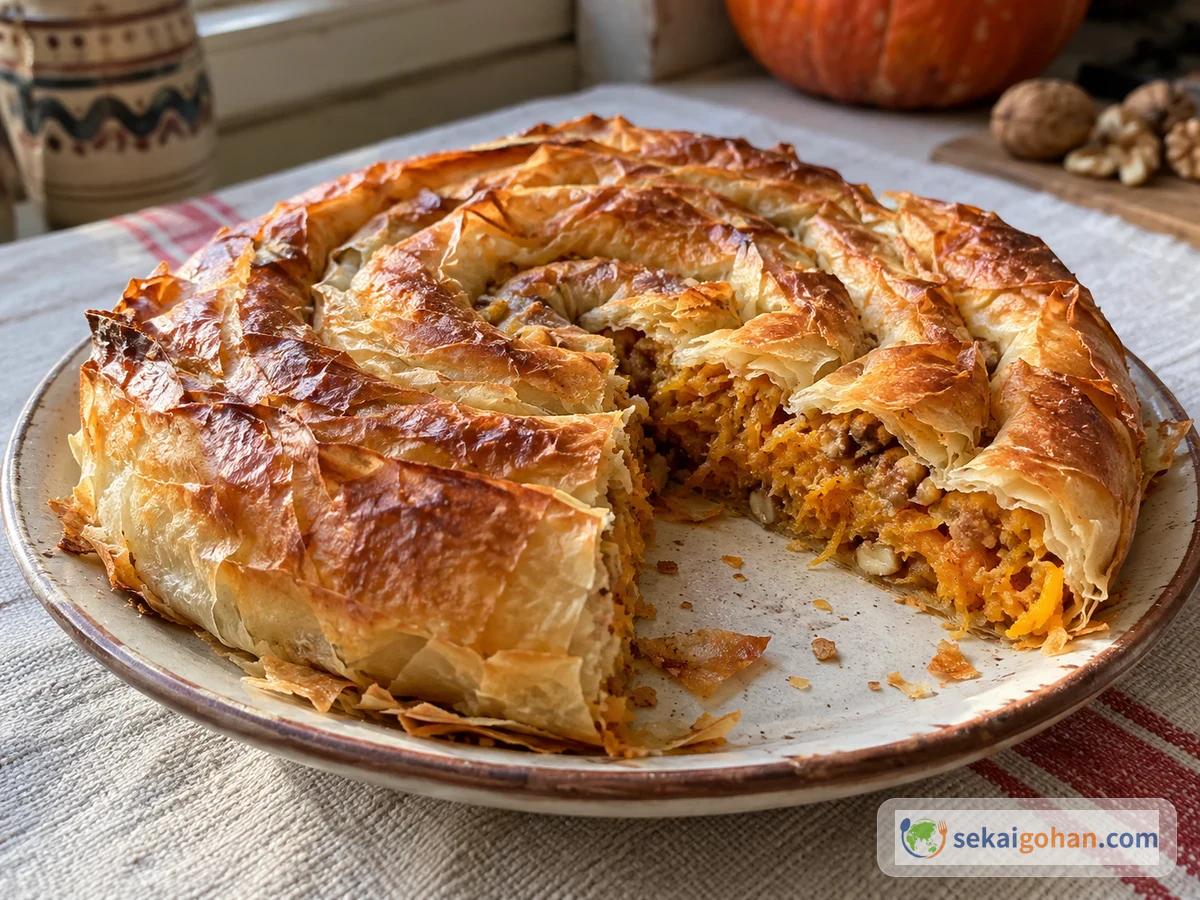
Slovenský Grob, in the Pezinok district of the Bratislava region in the southwest, is known for pairing goose dishes with lokša. Goose raising and feasting have about 100 years of tradition in the south. A roasting method tied to St. Martin's celebrations in German-speaking countries, especially Austria and Germany, was handed down, and roast goose became a fixture at local markets. On these tables, lokša gathers rich meat, braised red cabbage, and young wine onto one plate.
Regional differences in lokša
The dough and the way of eating vary across Slovakia. For the southwestern goose-dish lokša, cooks press potatoes boiled in their skins through a sieve and add salt and flour, plus egg in some places. They roll the dough to about 0.125 inch (2 mm) and cook it in a dry skillet. Some home versions skip the egg and use only potatoes, flour, and salt.
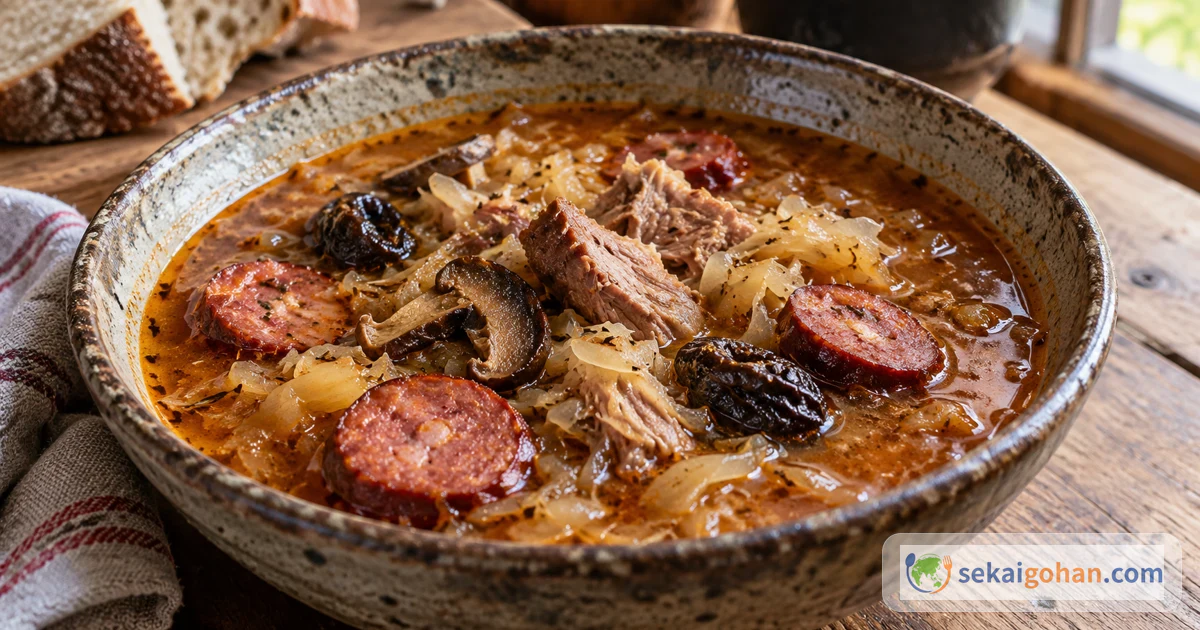
In the east, in Upper Zemplín, "hrubá lokša" is a different thing altogether. It is a thick dough of wheat flour and soured milk, dry-cooked on a board and dipped in a rich mushroom soup called mačanka, or eaten spread with butter or homemade plum jam. So lokša is not always a thin potato bread.
Some local recipes also make a sweet version spread with jam and sprinkled with poppy seeds and sugar. At the southwestern goose table, though, salty lokša with cabbage comes first. If you want both, bake the salty ones first and use the leftover dough for sweet ones. Making them side by side lets you compare thinness and browning.
Five essentials for lokša dough
| What to decide | Standard in this recipe | What happens if it drifts |
|---|---|---|
| Moisture in the potatoes | Boil in their skins, and after draining dry the surface over low heat | You are tempted to add flour to the dough, and the result bakes hard |
| How flour goes in | Start with 4.5 oz (130 g) all-purpose flour and add only what is needed up to 5.5 oz (150 g) | Adding it all at once leaves stickiness and a floury taste |
| Thinness | 8 inches (18–20 cm) across, about 0.125 inch (2 mm) thick | Only the thick parts lag in cooking and it cracks when folded |
| Cooking | No oil, dry-cook at 400°F (180–200°C) | Oil moves it toward pan-frying and the flour scorches easily |
| Finishing fat | Brush thinly on one side right off the pan | Brushed after cooling, the surface dries and tears at the folds |
Ingredients (serves 4)
This makes 8 lokše, 8 inches (18 to 20 cm) across. As a staple, it serves 4; as a side for a meat dish or soup, about 6. Measure the ingredients, and prepare the skillet and dusting flour before you mix the dough. Don't let the dough rest long, since the potato's moisture comes back as it sits. Once you start mixing, keep going through to cooking.
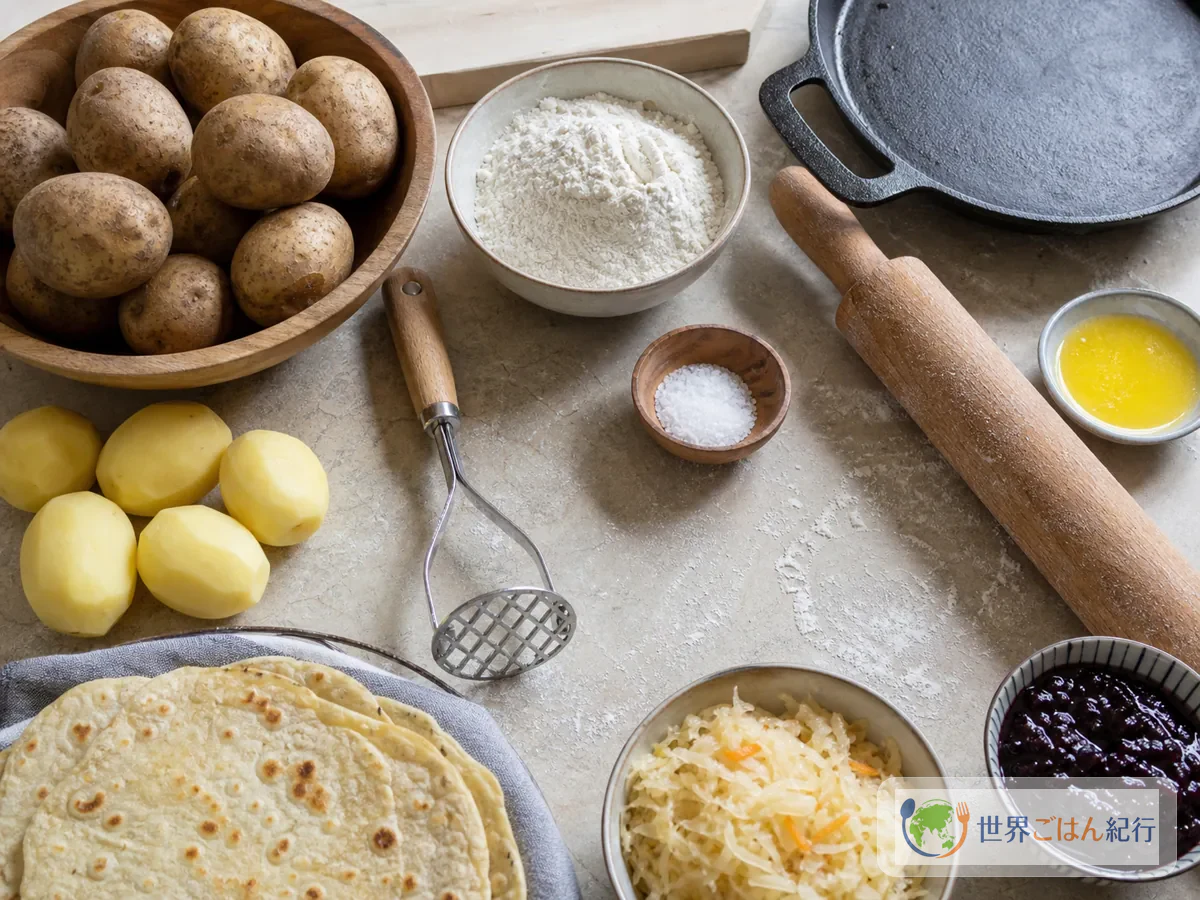
This recipe uses wheat and dairy. Lard is pork fat, and duck fat comes from duck. Poppy seeds and ground sesame are different ingredients; if you react to seeds, check the label before using either. Remove potato sprouts and green parts. Don't use any part that is discolored or bitter, even after boiling in the skin.
Choosing ingredients and tools for lokša
Potatoes and flour
For a first attempt, choose potatoes that hold their shape, such as waxy potatoes. They are easier to handle and make it simpler to judge how much flour to add. Floury or new potatoes also work, but check their moisture after boiling. Dry them until no water remains on the bottom of the pot and the surface looks dry, and you won't need extra flour.
This recipe leaves out egg to put potato aroma and thinness first. Egg changes the dough's moisture and cohesion, so treat an egg dough as a separate blend rather than a fix for cracks.
Sauerkraut, jam, and poppy seeds
Potatoes, all-purpose flour, and butter are at any supermarket. For sweet lokša, plum jam (slivkový lekvár in Slovak) and poppy seeds (mak) define the aroma. Look for them at an import store or in the baking aisle, and skip them if you're making only the salty version. A tart berry jam can stand in for plum jam. Ground sesame can replace poppy seeds, though it pulls the aroma toward Asian cooking, so brush the butter on thinly and keep the sweetness modest.
Bottled or bagged sauerkraut is fine. Squeeze out the liquid before rolling, and warm it lightly if it's very sour. Lightly pickled cabbage gives the texture, but its acidity doesn't come from fermentation, so it tastes different. If you want something to cut the fat of a meat dish, choose a properly sour sauerkraut instead of imitating it with vinegar.
Rolling pin, skillet, and masher
A cast-iron skillet or a heavy frying pan is all you need. A heavy cast-iron pan holds its temperature steady across 8 rounds in a row. When the pan's heat drops, the dough only dries out without browning. If you use a nonstick coating not rated for dry heating, follow its instructions and keep the heat down.
A rolling pin about 12 inches (30 cm) long rolls an 8-inch (18 to 20 cm) round evenly without squashing just the edges. If you have only a short pin and the center stays thick, a wooden one 12 inches (30 cm) long is worth buying.
The potatoes must be mashed smooth, with no pieces over 0.125 inch (2 mm), or bits will catch as you roll. A ricer or fine sieve does the job. If you buy a masher, choose stainless steel that can press hot potatoes in one go; it's handy for halušky and mashed potatoes too.
Method
Plan ahead so you don't stop between mixing the dough and finishing the cooking. Set out the 1.5 oz (40 g) of dusting flour, the rolling pin, a plate for the cooked rounds, and the melted butter first. Preheat the skillet before you mix in the flour. Bake the first one thick to get a feel for the heat. After that, the remaining 7 are easier to match in thickness and heat.
Common lokša failures and fixes
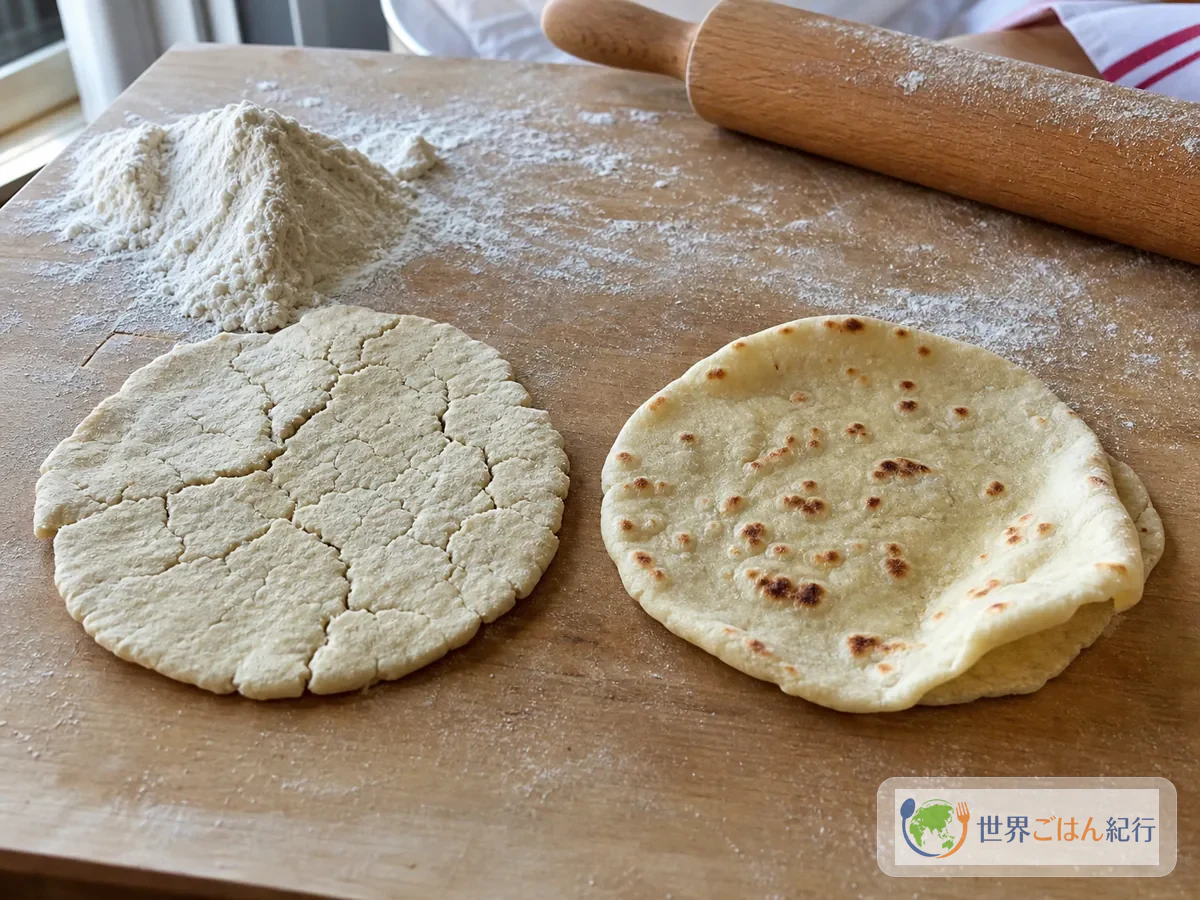
When the dough sticks to the work surface, the instinct is to add flour. If it's soft enough to roll with a thin dusting, check the skillet preheat and the potatoes' moisture first. Treat more flour in the dough as the last resort, since it makes shaping easier but leaves the bake dry and cracking at the folds. Adjust the flour in 10 g steps and keep the rolled thickness the same, so you can see what changed.
| Condition | Cause | Fix |
|---|---|---|
| Tears while rolling | Potato bits are large, the dough is dry | Bring it back thick, mash again, and wet your hands to work the surface for 10 seconds |
| Sticks to the surface | Potatoes too wet, not enough dusting flour on the surface | Add a thin dusting of flour to the surface, only 10 g to the dough, and roll again |
| Hard when cooked | Too much flour, too long a bake from insufficient preheat | In the next dough use 20 g less flour and preheat the skillet 3 minutes |
| Dark browning | Dusting flour scorching in the skillet | Wipe the flour off with a dry cloth after each round and rest 30 seconds |
| White center, burnt edges | Center is thick, heat too high | Bring the center back to 0.125 inch (2 mm) and cook the next over medium-low heat |
| Cracks when folded | Dried out after cooking, fat brushed on too late | Brush thinly with fat right after cooking, and stack with a cloth over |
If the potatoes come out watery after boiling, dry them in the pot for 30 seconds to 1 minute before reaching for flour. The dough is right when it clings thinly to your hand and rolls out to 0.125 inch (2 mm). For even browning, heat a thick cast-iron or iron skillet well over medium heat and wipe off the surface flour after each round. It also helps to jot down how long you dried the potatoes and how much flour went in, since those notes shape your next batch.
Serving, storing, and variations
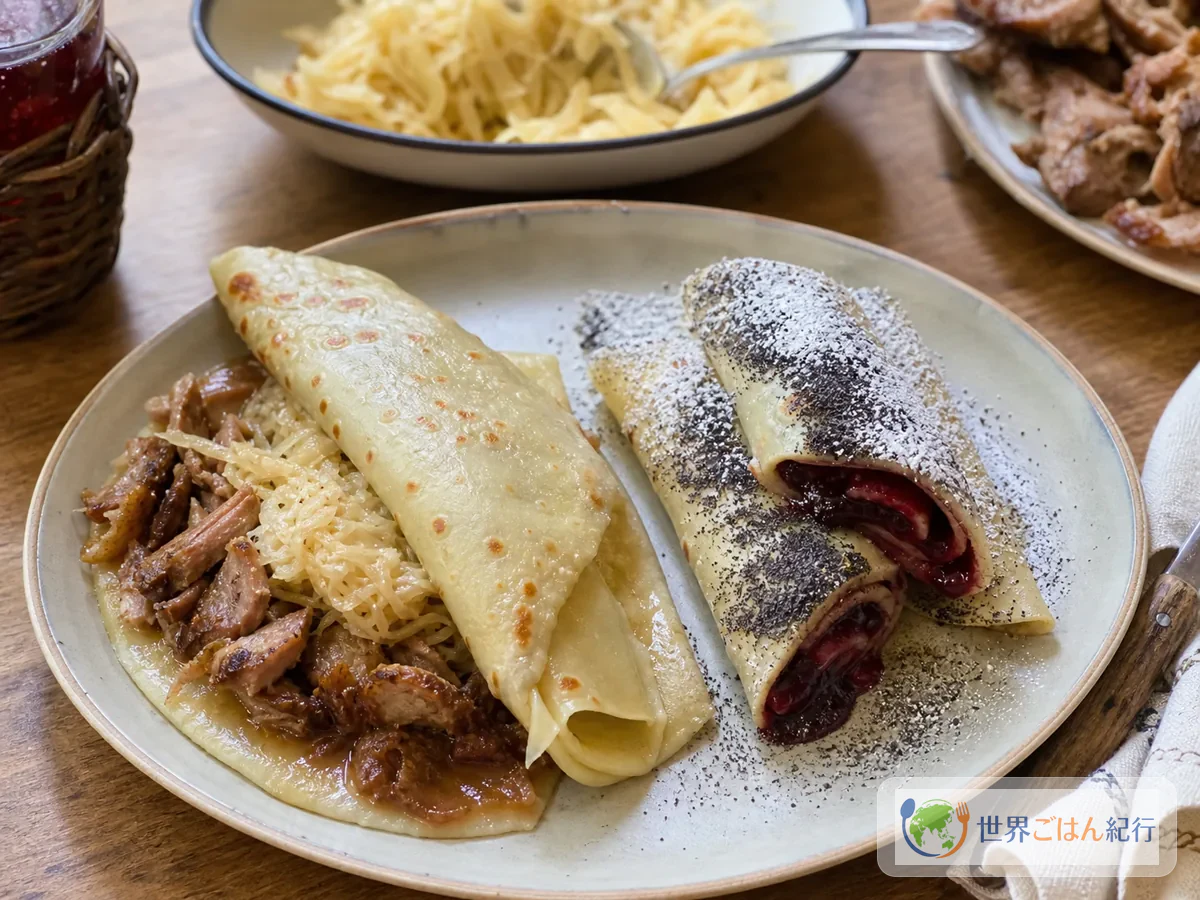
You can bring the Slovak way of eating lokša into a home kitchen by shifting a few roles while keeping the core of the flavor.
| Local combination | Lokša's role | Home-kitchen substitute |
|---|---|---|
| Goose or duck, red cabbage, lokša | Catches the meat's fat and wraps the cabbage's acidity | Skin-on chicken thighs, sauerkraut, lokša |
| Eastern thick lokša and mačanka | Dipped in rich mushroom soup | Serve the potato version beside a bean, cabbage, or mushroom soup |
| Jam, poppy seeds, sugar | Connects the butter aroma to sweetness | Plum jam, tart berry jam, ground sesame |
Serving lokša
For a home take on the southwestern goose dish, roast skin-on chicken thighs in a skillet and brush about 1 tsp of the rendered fat onto each lokša. Leave just a thin sheen; soaked in fat, the dough turns heavy. Add sauerkraut, and its acidity cuts the sweet fat of the meat, so you'll want one more lokša. Duck releases a lot of fat, so let it cool and use only the clear top layer on salty lokše.
From the eastern mačanka, borrow just the idea of serving lokša with soup, since that tradition uses a thick flour dough. If the soup is salty, skip extra salt on the lokša and go light on the sauerkraut.
For sweet lokša, plum jam gives the most local aroma. With ground sesame in place of poppy seeds, use only a little, cut back the powdered sugar, and let the butter come through, so the result doesn't drift toward crêpes.
Potatoes and flour turn into many dishes across the region: Slovak bryndzové halušky, the German-speaking region's egg noodle dish Käsespätzle, and Polish filled pierogi. Dumplings, noodles, filled pockets, and flatbreads each play a different role at the table.
Storing and reheating lokša
To eat lokše right off the pan, stack them on a plate under a cloth and brush on the fat while they're warm. To make them ahead, stack them before the fat goes on, let them cool, and put parchment paper between each one. Use less butter on lokše meant for storage, and brush a little more on after reheating to bring the aroma back. Wrap sauerkraut and jam separately and combine just before eating, so the dough stays dry.
| Storage | Guide | Reheating |
|---|---|---|
| Room temperature | Only while on the table | Right before eating, 20 seconds per side in a warm skillet |
| Refrigerator | 2 days, for best texture | Warm 20 seconds at 600 W, then 30 seconds per side over low heat |
| Freezer | 3 weeks, for best texture | Straight from frozen, 1 minute per side over low heat, then brush with fat |
Do not leave lokše at room temperature; chill them as soon as possible after the meal. A thick stack traps heat in the center, so spread them shallow or portion them out before refrigerating or freezing. Reheat until hot all the way through. Microwaving alone hardens parts of refrigerated lokše, so finish them in a skillet over low heat until the surface bends softly. If there is an off smell, stickiness, mold, or discoloration, do not eat them, no matter how many days have passed.
Leftover lokše can be cut thin and added to soup. Add them right before eating and warm for only 1 minute, or they'll soak up too much broth.
FAQ
Can I boil the potatoes the day before?
Yes. Boil them in their skins, dry them, let them cool, and refrigerate. The next day, don't mix flour into cold potatoes. Warm them in the microwave at 600 W for 1 minute to 1 minute 30 seconds and mash them while they're warm through the center. If they give off a lot of steam, dry them in a pot for 30 seconds before adding the flour.
Can I use bread flour?
You can, but swapping it one-to-one adds elasticity and makes the dough hard to roll to 0.125 inch (2 mm). Lokša should be thin and soft enough to fold rather than chewy like bread, so use all-purpose flour the first time. With only bread flour on hand, start around 0.125 inch (2.5 mm), check the texture, and adjust the next batch.
Is no egg used?
This basic dough has none, though some blends do. The goose-dish version uses 2 eggs for 6.5 lb (3 kg) of potatoes, while other local recipes use only potatoes, flour, and salt. Adding egg to fix cracks changes the moisture, so adjust the flour first, in 10 g steps.
Can I brush it with olive oil instead of butter?
You can, but it moves away from the aroma of Slovak lokša. Unsalted butter comes first, then lard, then fat rendered from roasting chicken or duck; these are easy to find and suit the flavor. If you use olive oil, save it for salty lokše with mushrooms or sauerkraut rather than sweet ones with poppy seeds or jam.
What goes with it if I don't like sauerkraut?
Mushrooms sautéed in butter and seasoned with salt and black pepper still catch the fat. You can also sauté shredded cabbage over low heat until soft and add just 1 tsp of vinegar. It won't taste like fermented sauerkraut, but it gives similar acidity and texture.
Can I make it without a rolling pin or masher?
A sturdy bottle with a flat, clean surface can stand in for a rolling pin. Keep its surface dry and don't press too hard, since a slippery bottle can break. A fine sieve or ricer replaces the masher. Whatever the tool, aim for no potato pieces over 0.125 inch (2 mm).
What if I want to avoid wheat or dairy?
Swapping wheat flour for rice flour and butter for vegetable oil changes the dough's cohesion and aroma, so the result is a different recipe. If you have a wheat or milk allergy, check each product's label and whether cookware is shared. If you must avoid these completely, this dough is not a good fit.