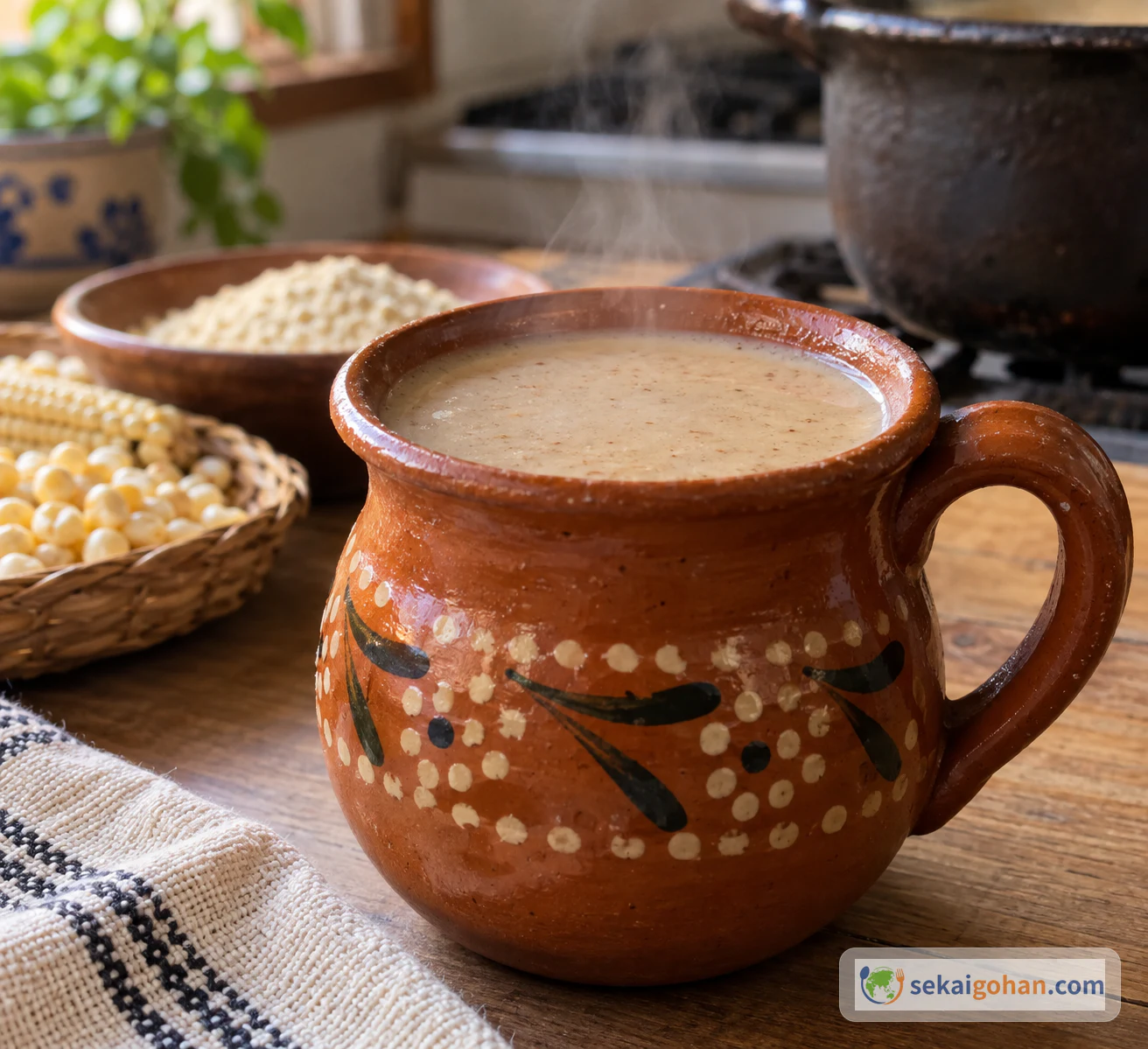
A cup of atole steams beside a plate of tamales. It's a warm Mexican drink made from corn masa (masa de maíz) and water or milk, and it has sat next to tamales on the Mexican table for a long time. The masa does more than add flavor. It gives the drink real body, so atole pours thick and soft instead of thin like flavored milk. This version is a basic one: milk and water sweetened with piloncillo and warmed with cinnamon and vanilla.
About Atole and Champurrado
Atole is a drink made from corn masa with water or milk. It's traditionally served with tamales, and it comes in many forms, with different ingredients, flavors and methods. It isn't always sweet. There's xocoatolli, a sour atole, and there are atoles made with pinole and others built on fruit, beans or chiles.
Champurrado is a related drink that adds chocolate. It's a separate drink of its own, not another name for atole.
Ingredients
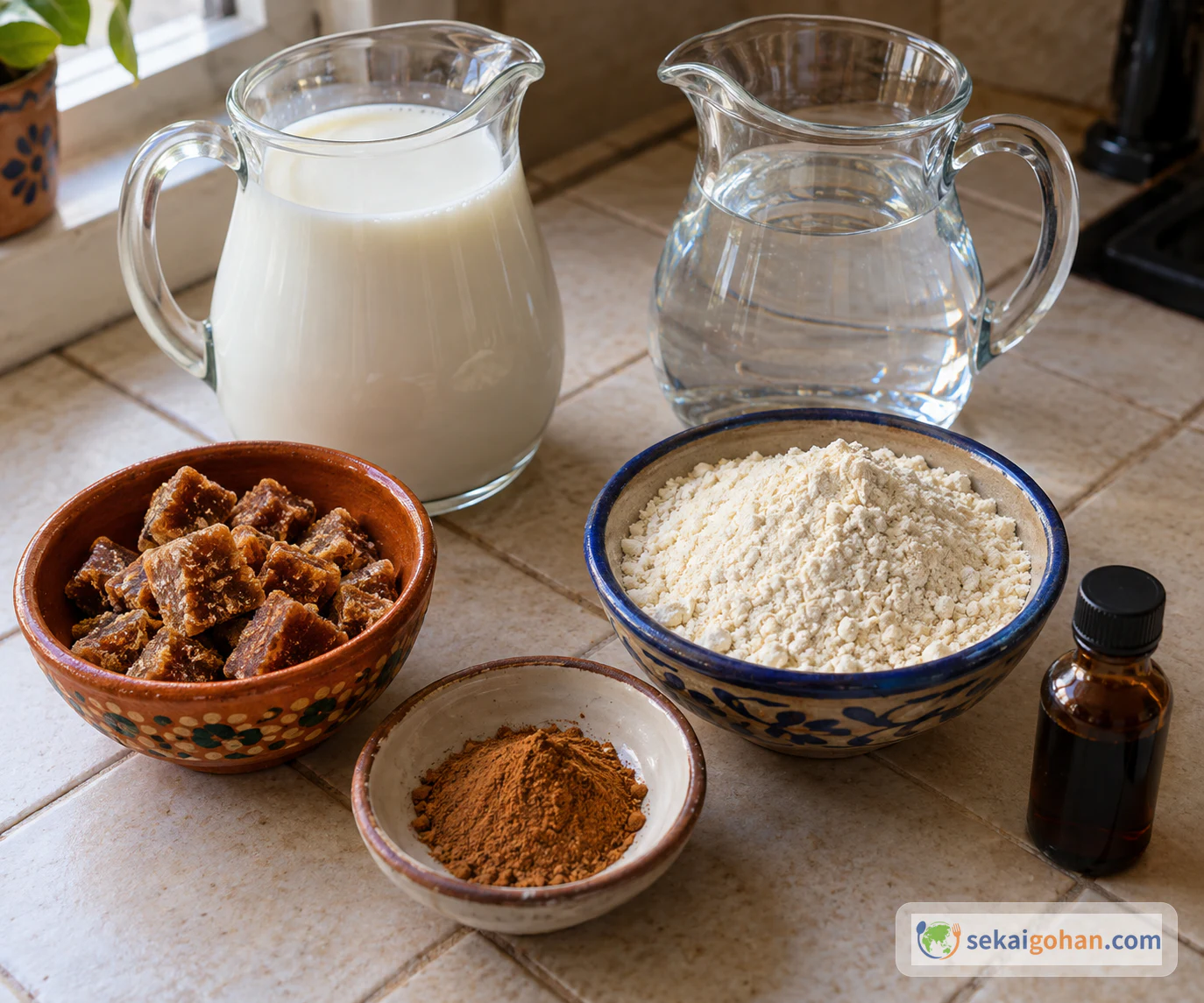
These are the amounts from the Rick Bayless recipe, in its original units. The recipe does not state a yield or number of servings, so none is given here.
For metric, take 1 cup as 240 ml and 1 tsp as 5 ml. That gives 480 ml milk, 480 ml water, 120 ml chopped piloncillo by volume, 120 ml masa harina, 5 ml ground cinnamon and 2.5 ml vanilla extract.
Tamales to serve alongside are optional. Prepare them separately in whatever amount you like, and keep them out of the drink itself.
Equipment
- A large 4-quart (roughly 3.8 L) saucepan. Don't size down to a small pot just because the starting liquid looks modest.
- A whisk
- A clean spoon for tasting once the atole is cooked
Choosing Masa Harina, Piloncillo and Other Atole Ingredients
Masa harina is the flour used for corn dough. In atole it gives the drink its corn flavor as well as its thickness. Check that the package says masa harina, because "corn flour" alone may be something else.
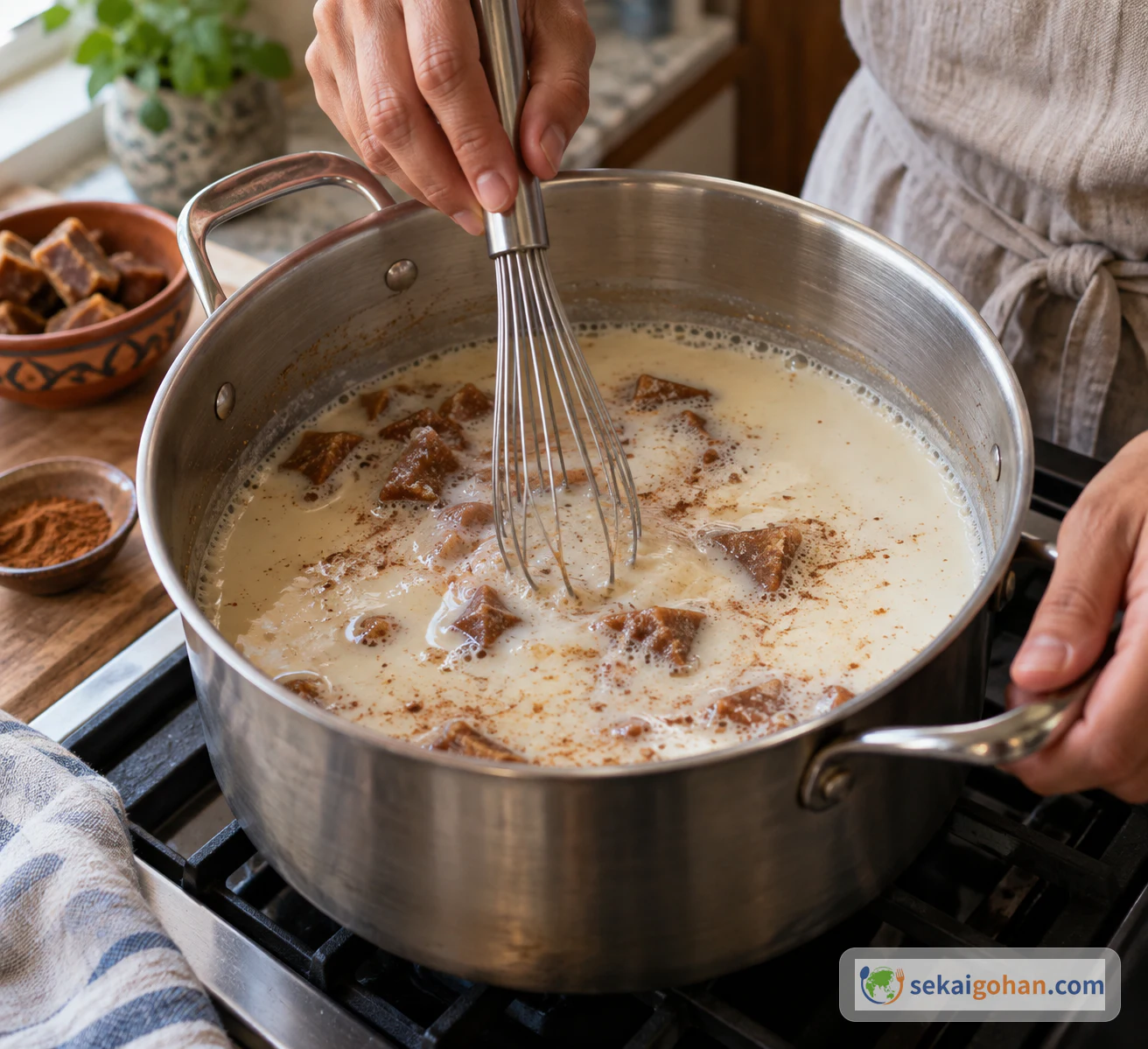
Piloncillo is Mexican raw sugar. It's sold in solid form, so chop it before it goes into the pot. If you can't find it, brown sugar works, though the flavor won't match exactly. Any other unrefined sugar will bring its own flavor too.
- Cinnamon: canela is preferred, but ordinary ground cinnamon is fine.
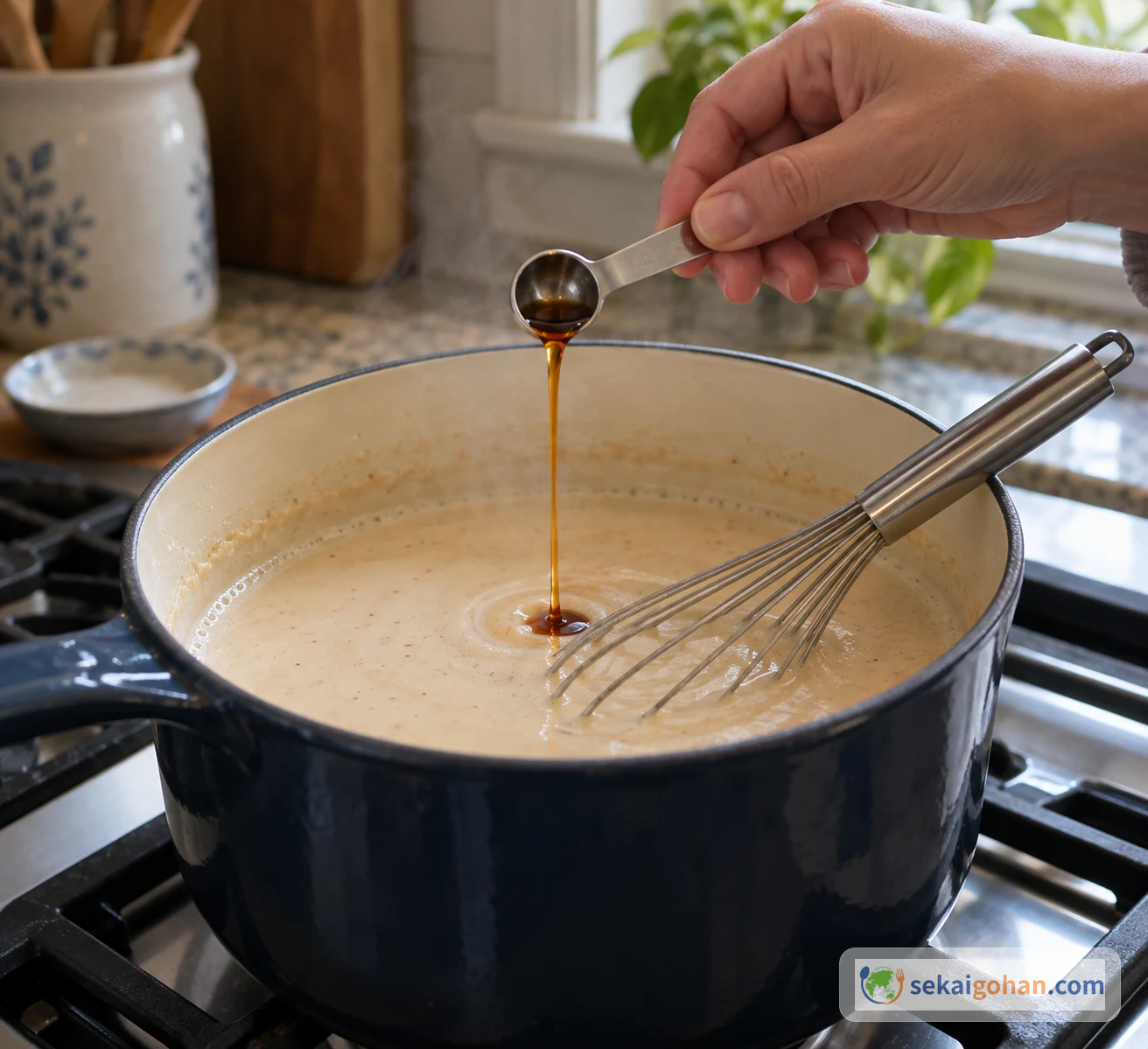
- Vanilla: use vanilla extract. Imitation vanilla and vanilla essence differ in strength, so the same amount won't give the same result.
- Milk: use plain, unsweetened milk. Plant-based milk makes a different drink.
This recipe contains milk. If you serve tamales alongside, check their ingredients and labeling separately.
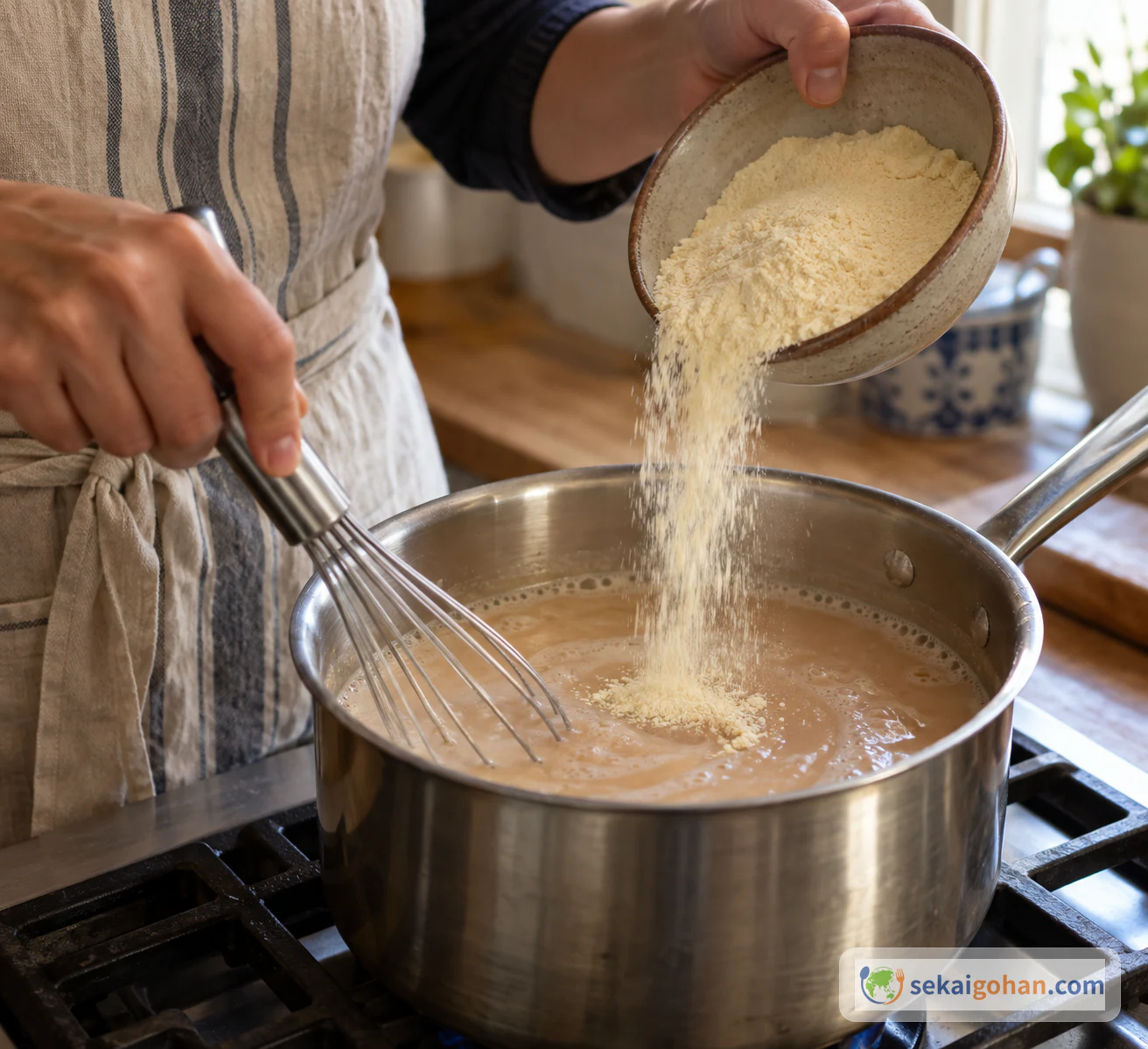
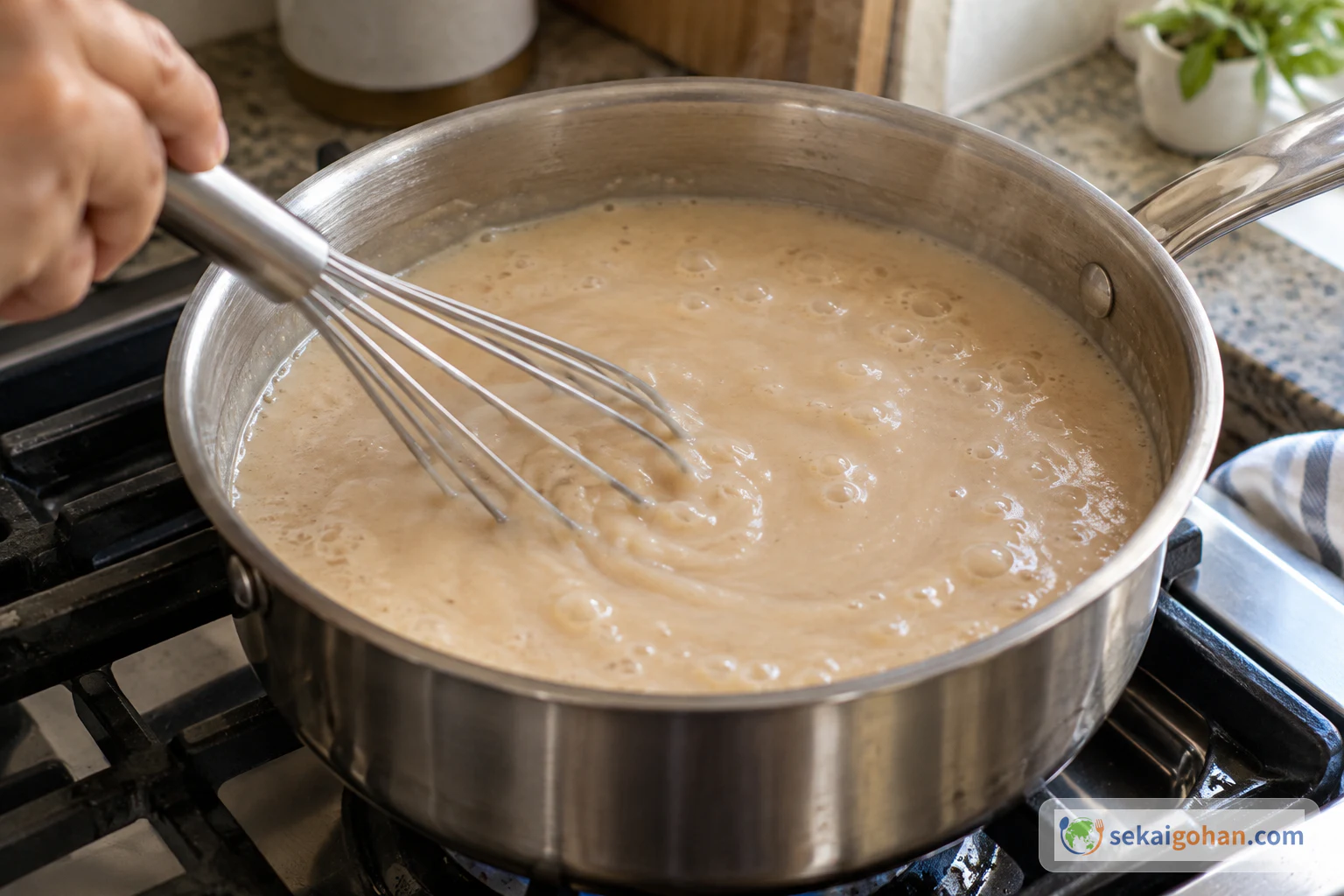
Method: Three Steps, and the Whisk Never Rests for Long
Have the masa harina measured and the vanilla extract within reach. Everything happens in one pot, and the drink is served the moment it comes off the heat.
Fixing Lumps, Thickness and Scorching
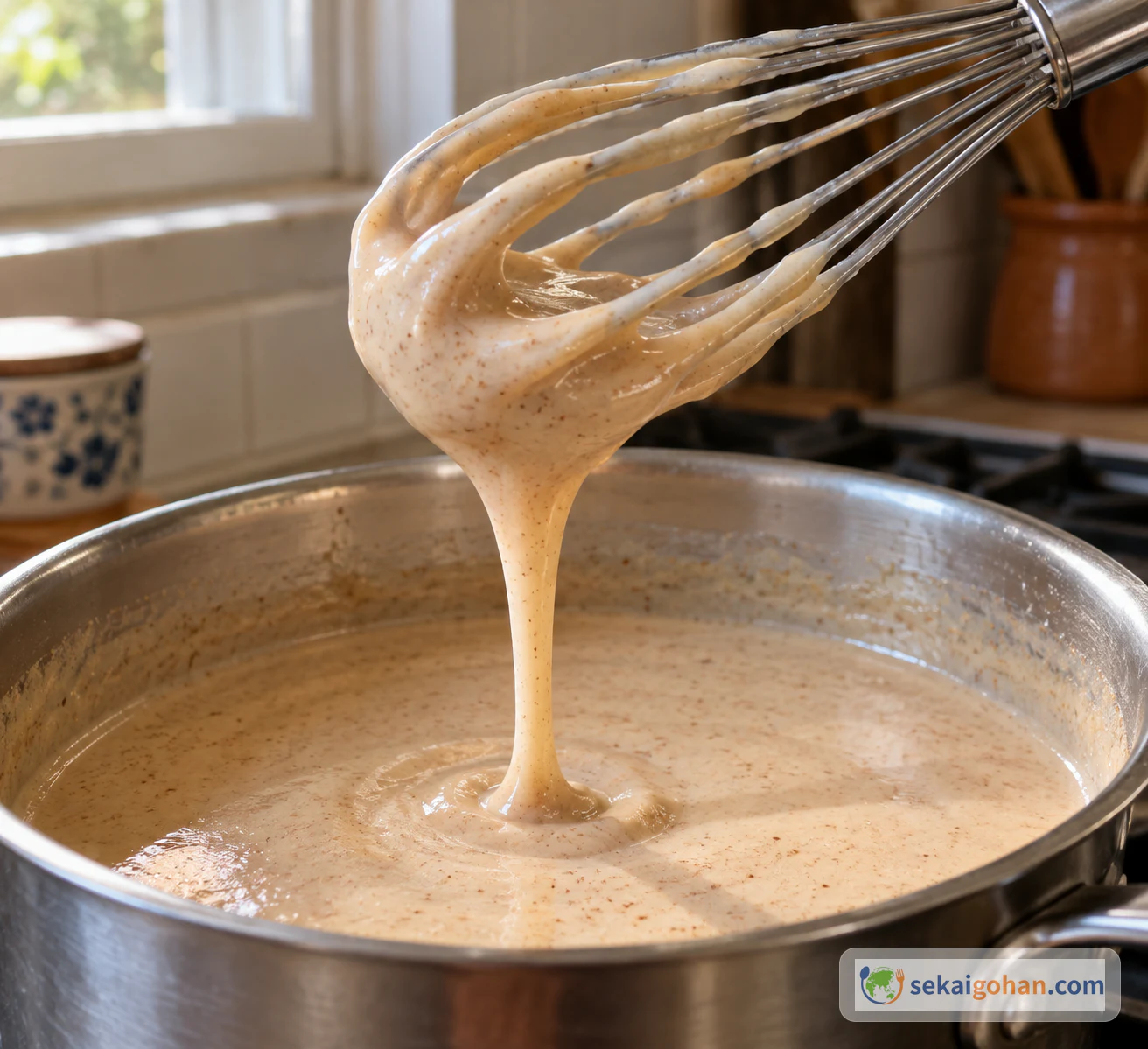
Atole needs few rescues, and most problems come down to how you add the masa and how you manage the heat. Make your first batch as written. After that you'll know how you like the thickness.
| Situation | What to do | Tip |
|---|---|---|
| Lumps when the masa goes in | Sprinkle it in gradually and keep whisking | Add it a little at a time |
| Coarse masa harina | Cook a little longer after it returns to a boil | Keep whisking while it cooks |
| Too thick or too thin | Use the stated amounts for a first try | Make the batch as written before adjusting |
| Worried about scorching | Keep the heat moderate and whisk steadily | This helps prevent a hard boil and scorching |
| Thicker after sitting | Serve immediately | Drink it right away while hot |
Wait to taste until the masa has cooked, and use a clean spoon.
Serving Atole with Tamales, and Other Versions
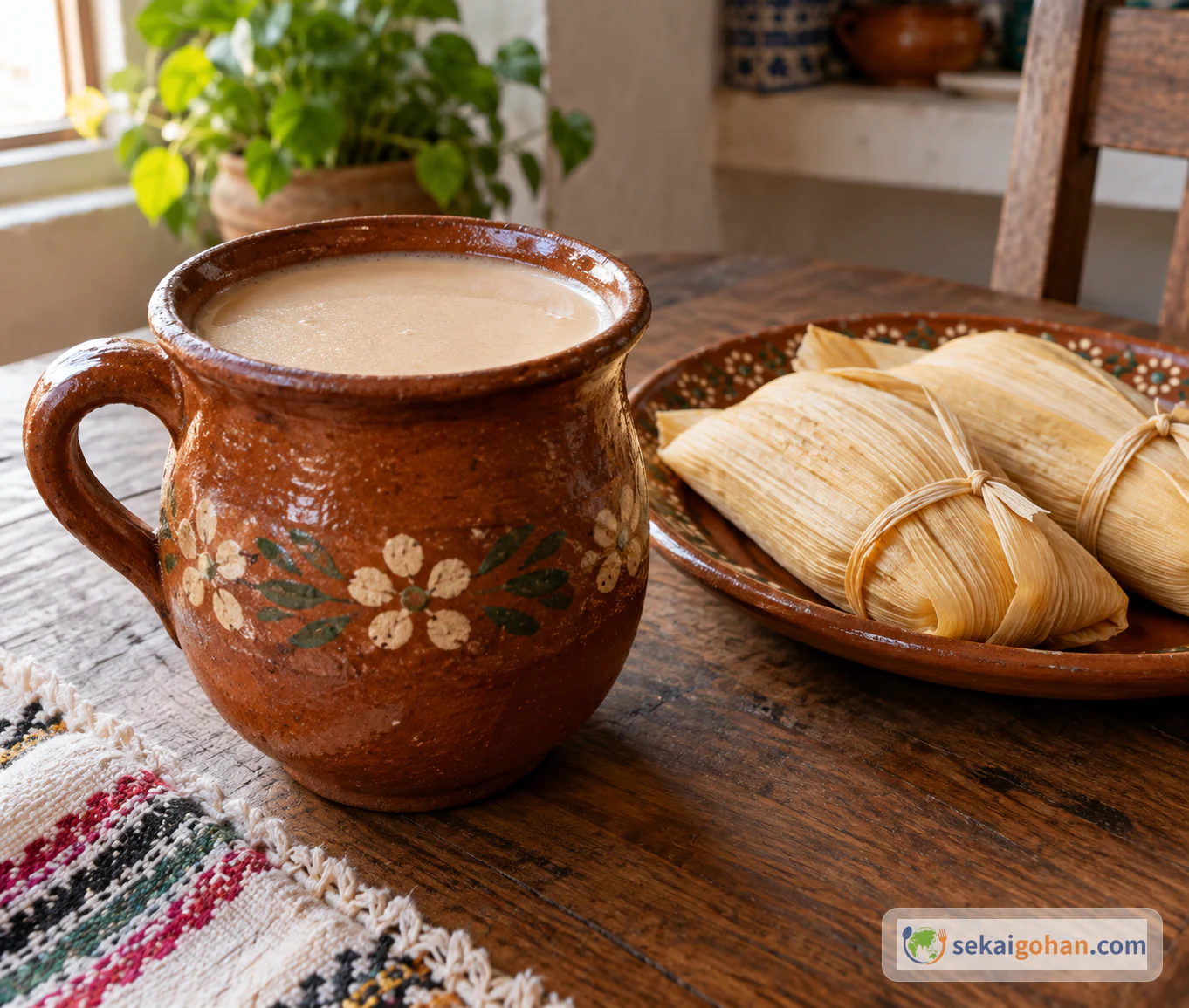
Tamales are the classic partner: a warm, thick drink next to something solid and made of corn. Drink the atole right away, while it's hot. For more of the country's cooking, see dishes from Mexico.
Serve atole straight away, while it is at its best. Atole contains milk, so don't leave leftovers out at room temperature for long. Divide them into clean, shallow containers, cool them quickly and refrigerate. Reheat leftovers to 167°F (75°C) or above.
Some households add fruit or chocolate to their atole. You may also see a different method. It warms water, piloncillo and cinnamon sticks first, dissolves the masa harina in milk, and then simmers everything over low heat for about 10 minutes, until the drink thinly coats a spoon. That version uses its own proportions, so follow it as a separate recipe.
Frequently Asked Questions
What can I use instead of masa harina?
There's no true substitute. Cornstarch or potato starch at the same amount won't make the same drink, because masa harina gives corn flavor as well as thickness.
What's the difference between atole and champurrado?
The main difference is chocolate. Champurrado adds chocolate, while this basic atole is flavored with piloncillo, cinnamon and vanilla.
Can I make it ahead and store it?
It's best served right away. If you have leftovers, cool them quickly in shallow containers and refrigerate them, then reheat to at least 167°F (75°C).