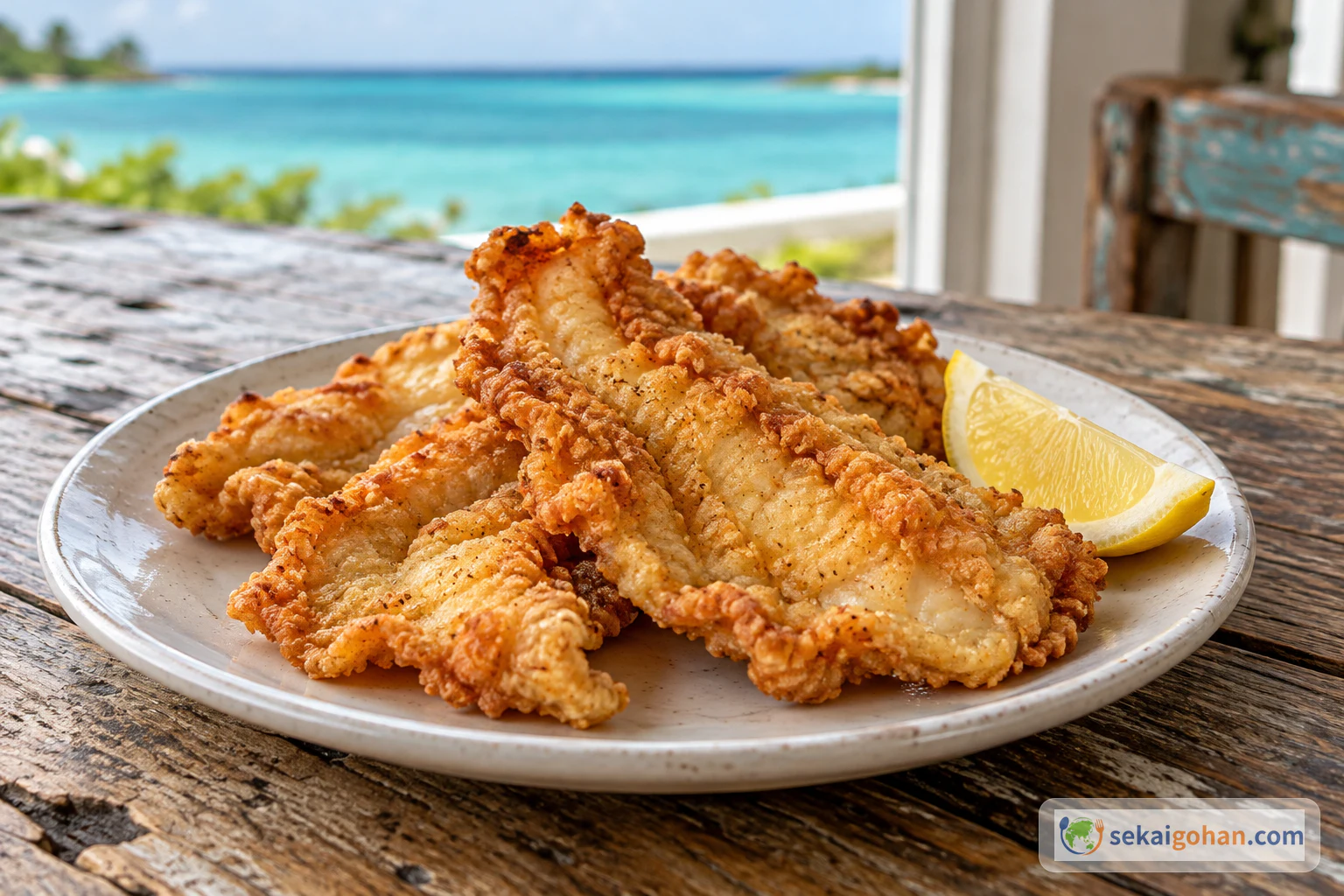
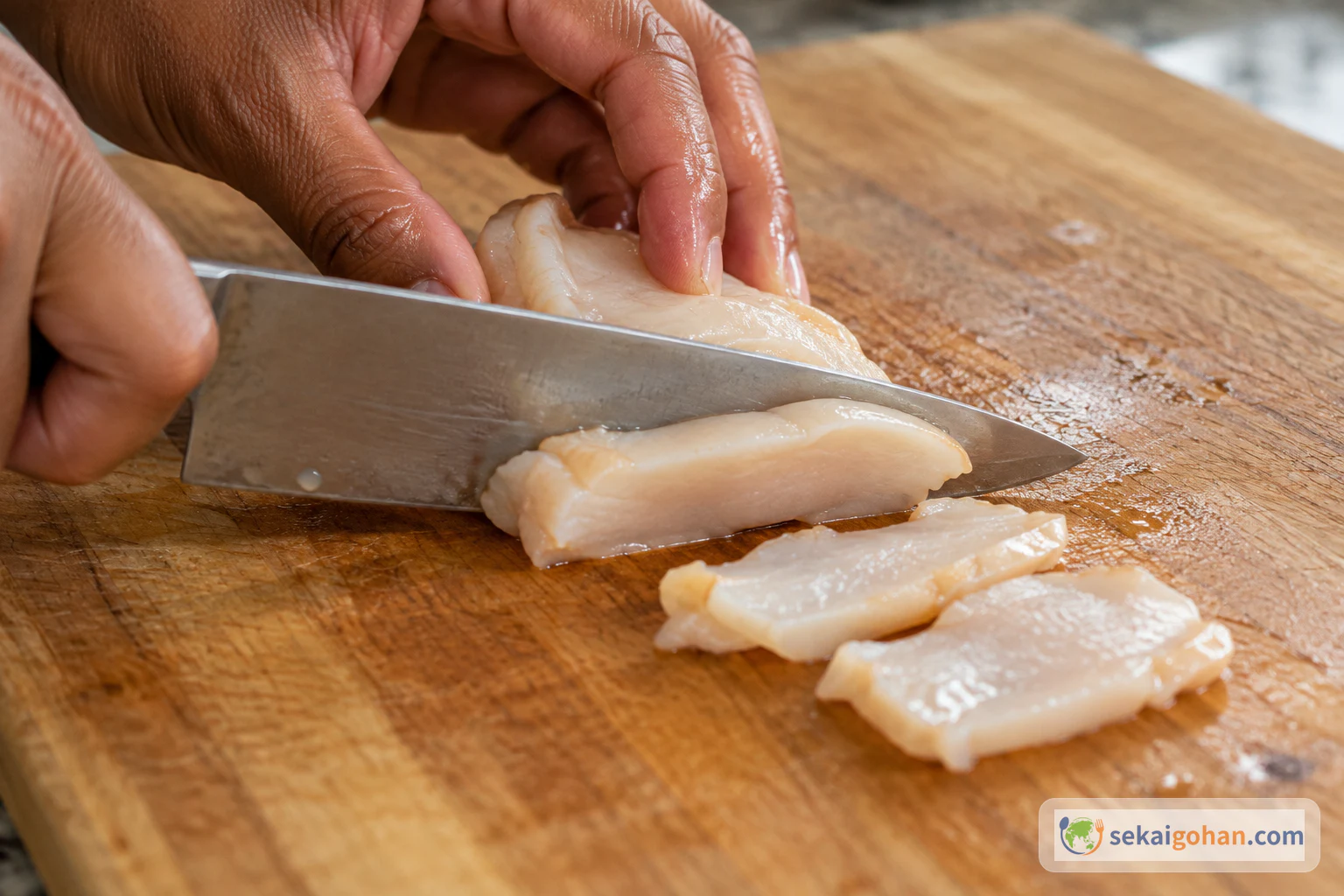
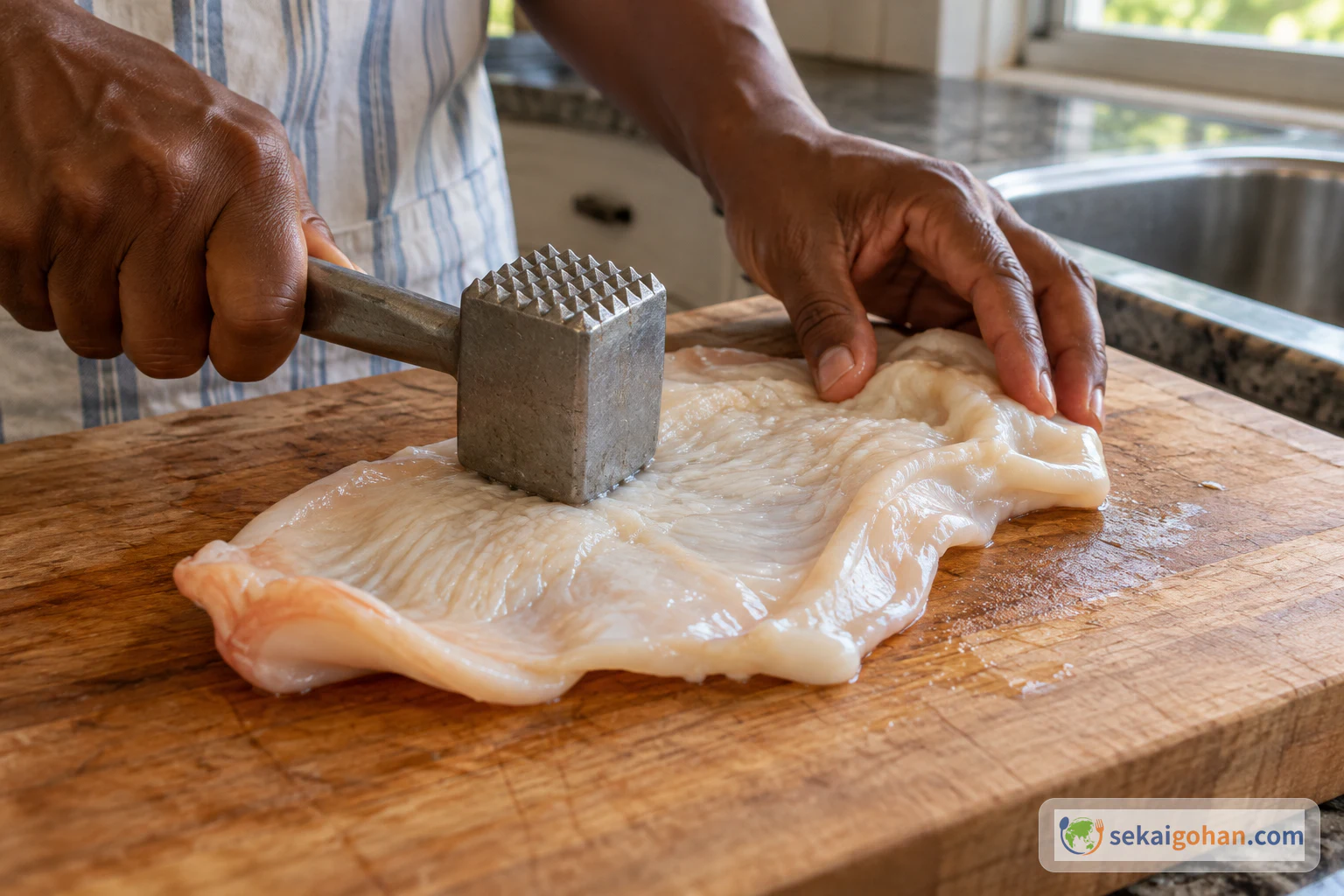
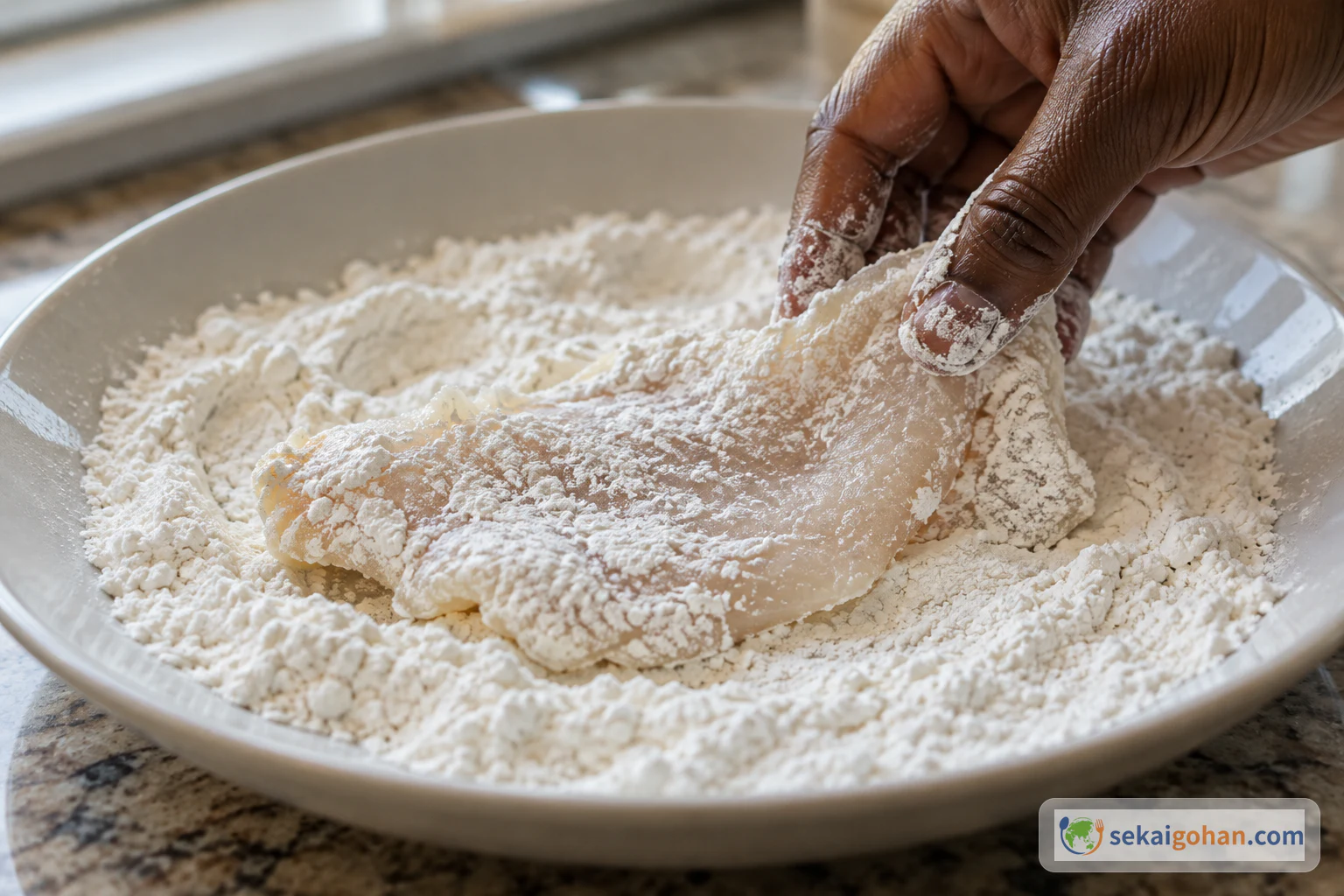
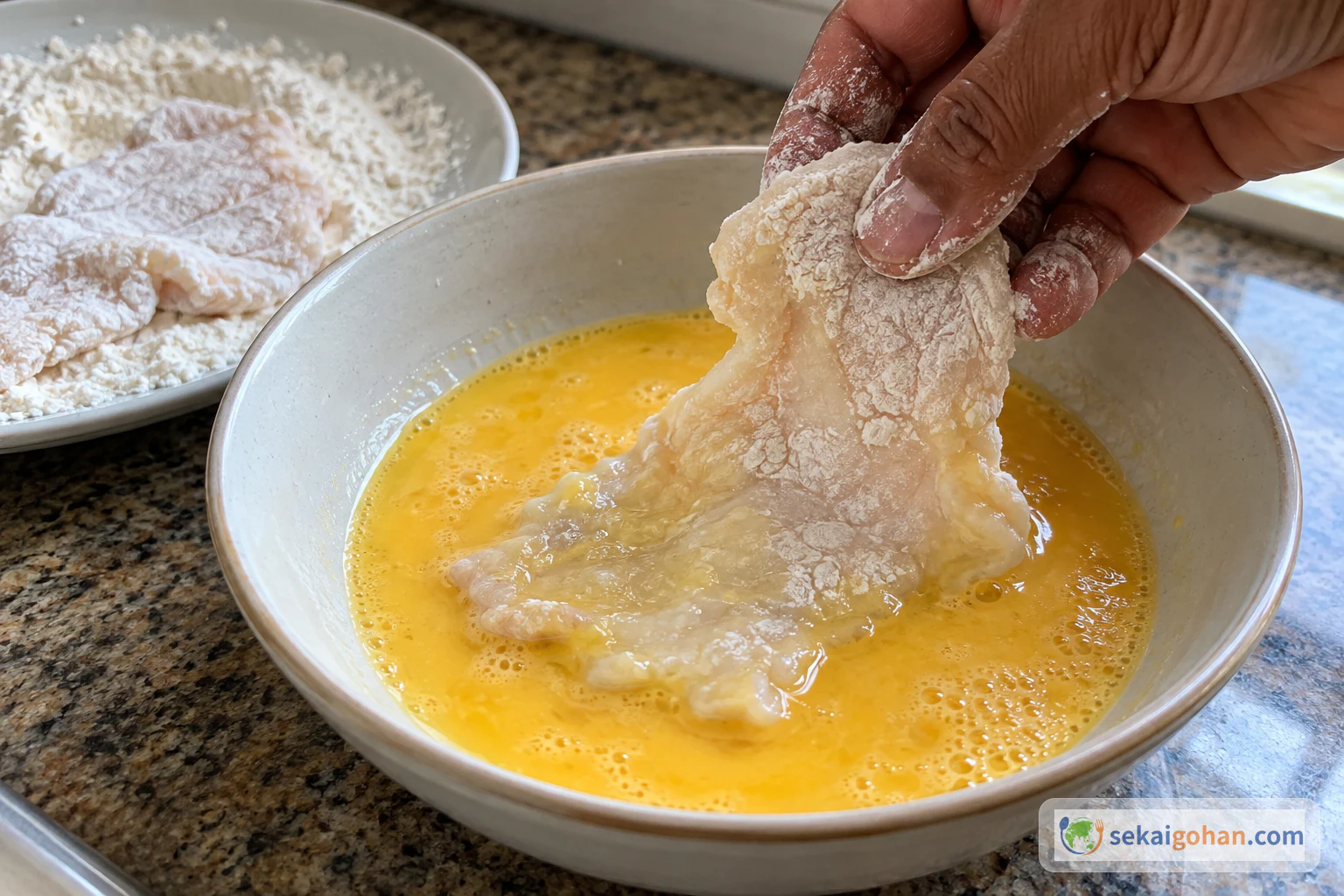
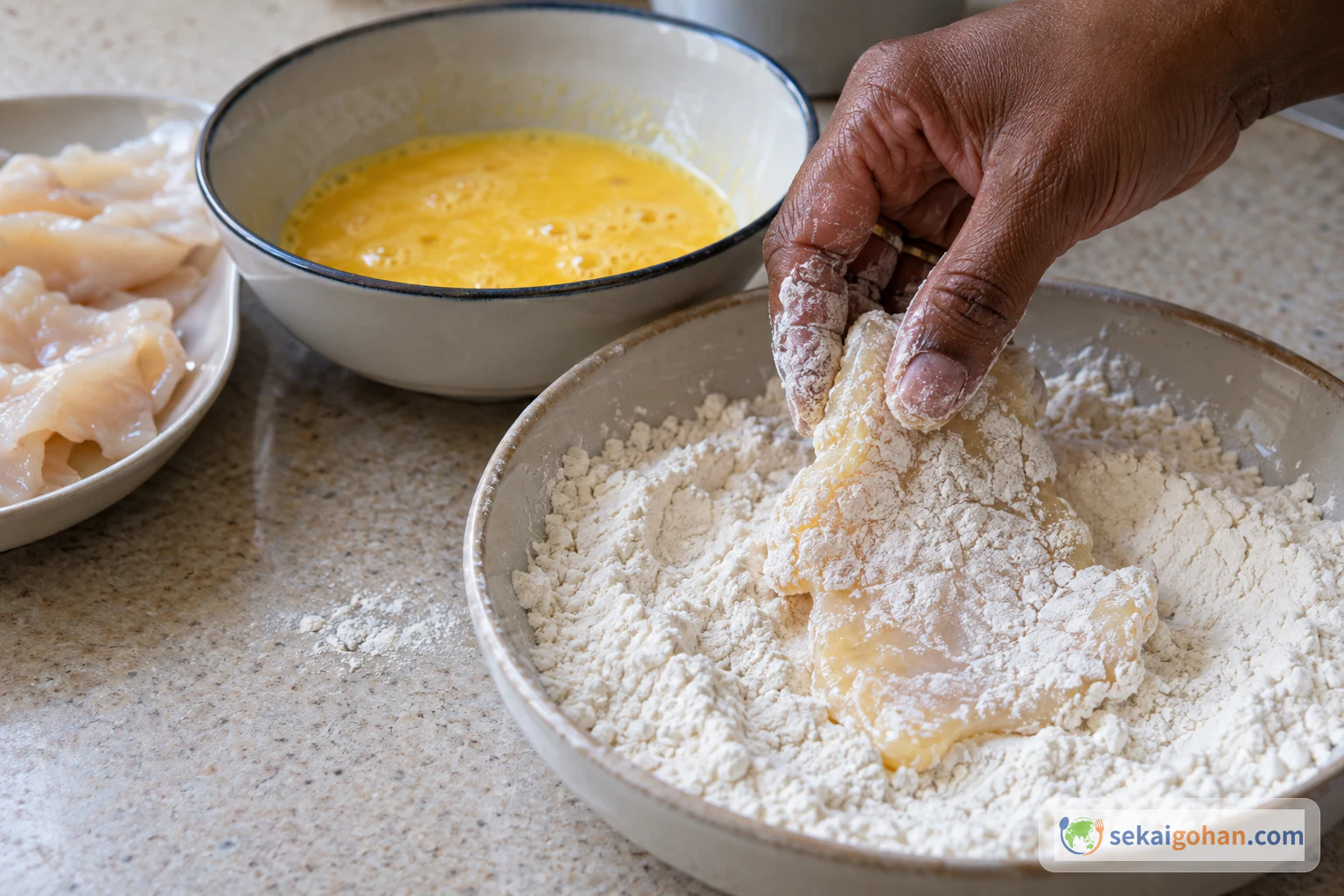
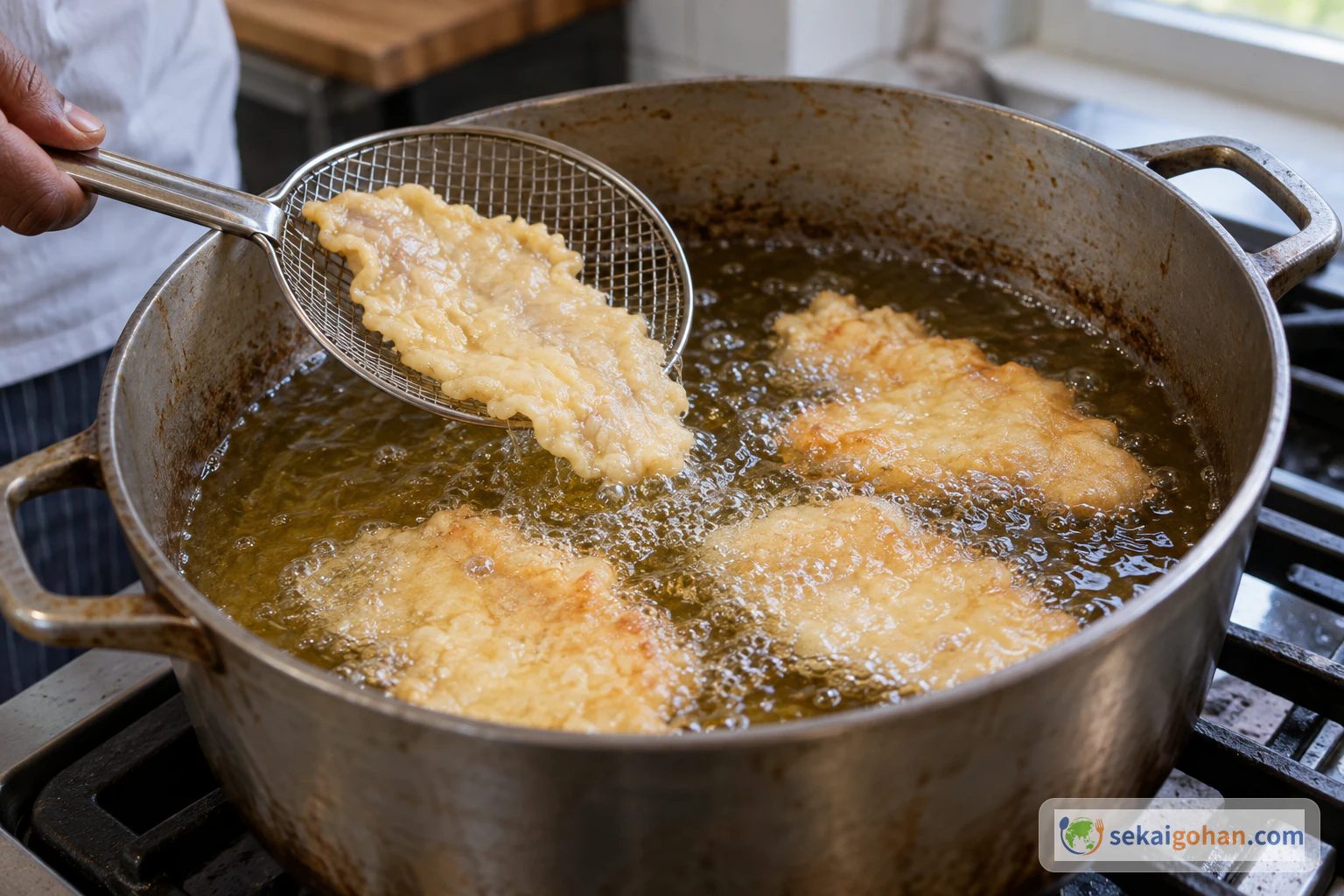
At the Providenciales Fish Fry, cracked conch is one of the plates you'll see most often, and it's the most popular way to eat conch anywhere in the Turks and Caicos. Conch, pronounced "konk," is a sea snail. Here the meat is beaten tender, given a simple coating of flour, egg and flour again, and deep-fried. Despite the name, nobody smashes a shell; the work starts with cutting and beating the meat. It is always served cooked through, never with raw conch.
Cracked Conch in Turks and Caicos Food
The conch most commonly eaten in the islands is the queen conch (Aliger gigas). Local cooks tenderize the meat by beating it, which is why that step comes so early in this recipe. Conch harvest and export rules can change, so check current official sources.
Traditional conch cooking in the Turks and Caicos centers on stews and soups, and the Bahamas has influenced many of these conch dishes. Cracked conch is easy to confuse with a few close relatives:
| Dish | How it differs |
|---|---|
| Cracked conch | Tenderized meat, coated and fried |
| Conch fritters | Small battered fritters, a separate dish |
| Conch salad | Chopped raw meat dressed with citrus and vegetables. A separate dish |
| Cracked conch in the Bahamas | A dish with the same name from another country |
For more from these islands, see our page on the Turks and Caicos Islands.
Frying oil is not in the ingredient list, but the method calls for deep-frying, so you will need oil.
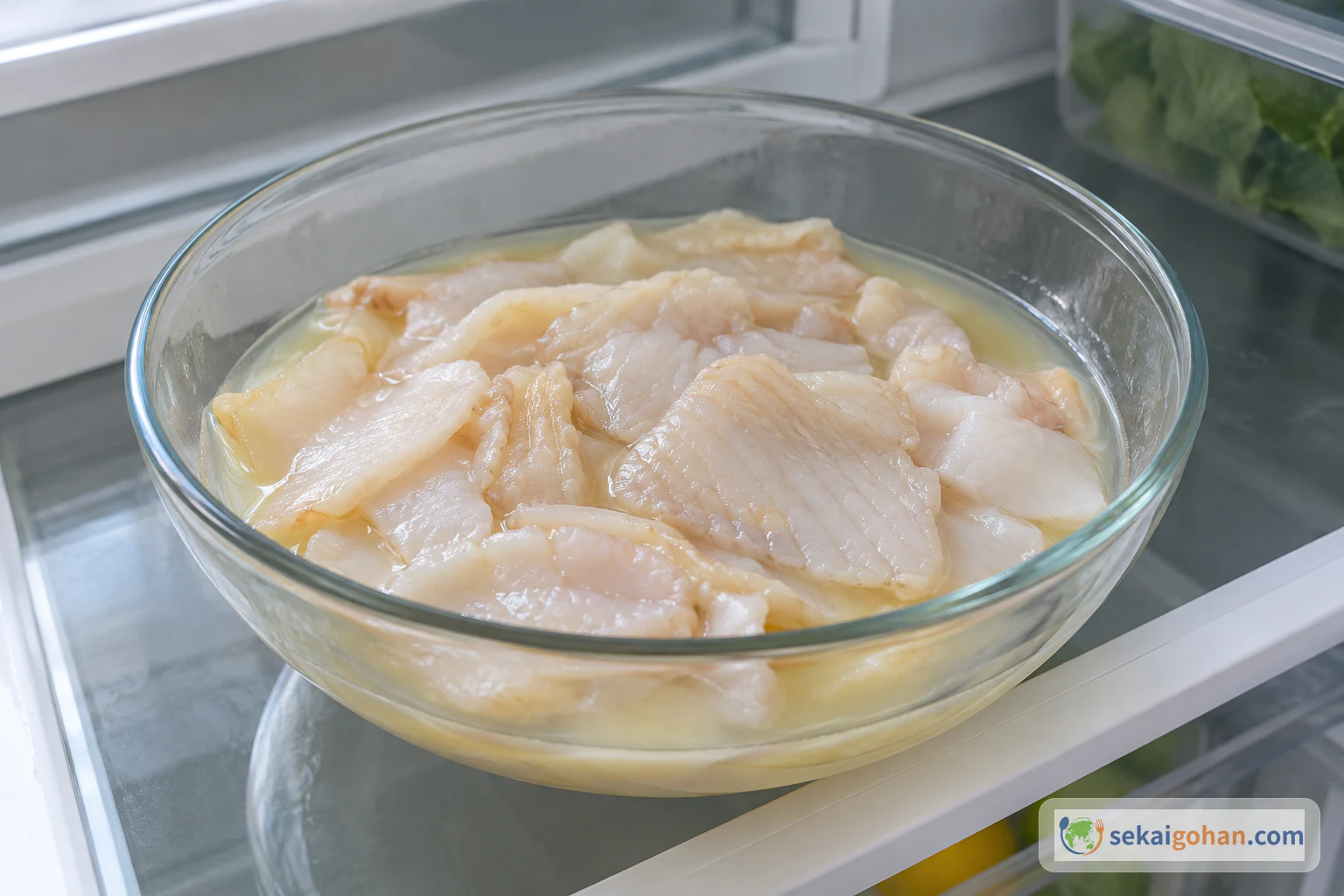
Keep the lemon marinade in the refrigerator, wash the lemon, keep tools separate, discard the used lemon juice, and check the center of the conch. The recipe does not give oil type, oil amount, oil temperature, frying time or cutting thickness.
Ingredients (Serves 4)
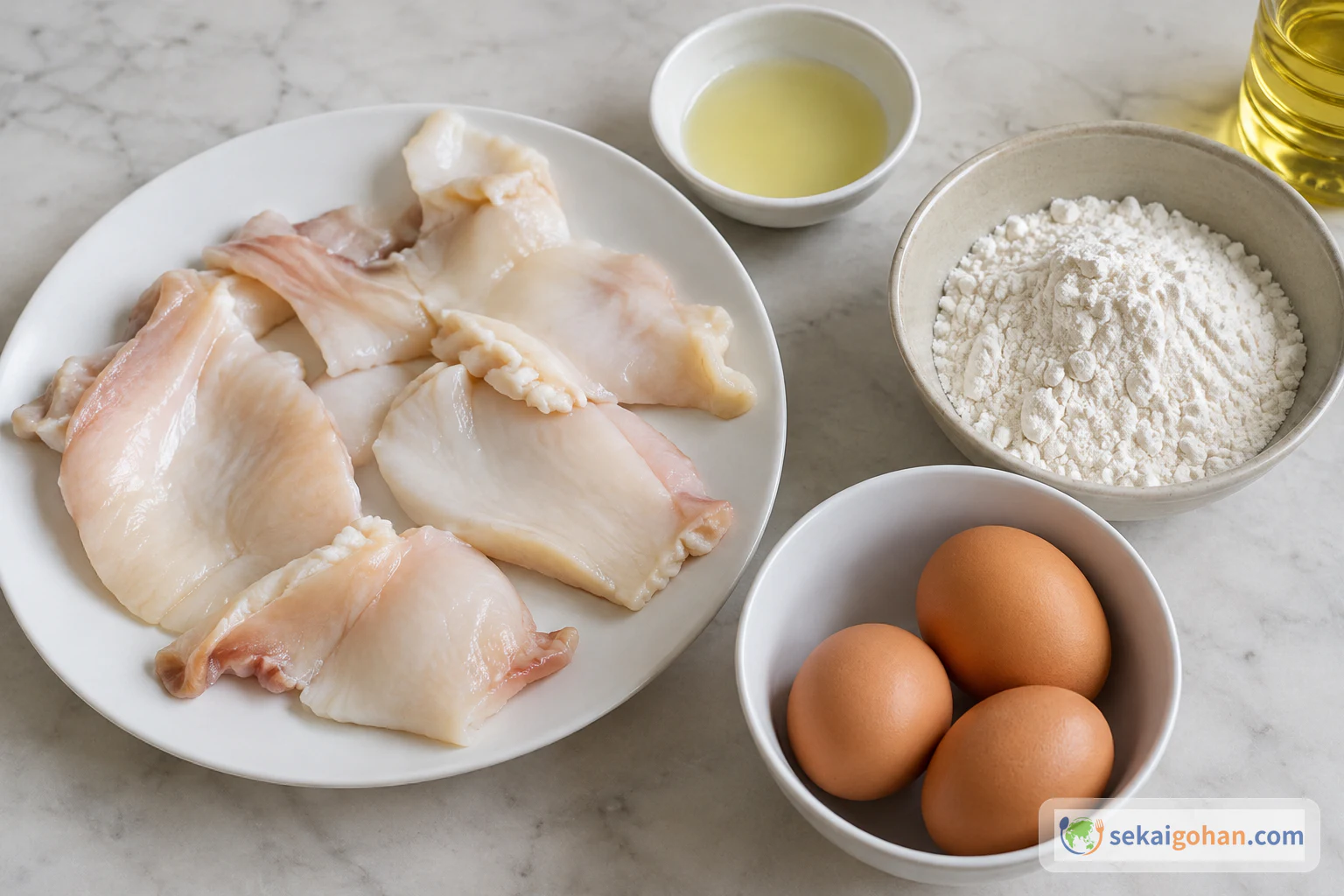
These are the amounts to prepare. Expect some flour and egg to be left over.
Equipment
- Cutting board set aside for raw shellfish
- Sharp knife
- Meat mallet
- Shallow bowl for the marinade
- Shallow dish for the flour
- Bowl for the beaten egg
- Deep pot for frying
- Skimmer
- Food thermometer
Choosing Ingredients for Cracked Conch
Conch: Use the meat out of the shell. Other shellfish and squid don't work as substitutes here; they would need a recipe of their own.
Lemon juice: Wash the peel well before you squeeze the lemons.
Flour and eggs: Plain or all-purpose flour is a straightforward choice for this simple coating, and any size of egg you have on hand will do.
Allergens: This dish contains mollusk, wheat and egg.
Fixing and Serving Cracked Conch
Color alone won't tell you whether fried conch is cooked in the middle, so most problems come down to checking the center properly.
| Situation | What it means | What to do |
|---|---|---|
| The outside looks done, but you are unsure about the inside | Color does not show whether the center is cooked | Check the thickest piece with a thermometer, or cut one open |
| The center has a raw texture or has not reached the target | It needs more cooking | Keep frying, then check again before serving |
| The pieces vary in thickness | Thinner pieces cook through before thicker ones | Always check the thickest piece |
| The oil drops in temperature when you add the conch | Too many pieces went in at once | Fry fewer pieces at a time |
| The cooked conch is still tough | It needs more tenderizing | Next time, beat it more in step 2 |
| Some flour or egg is left over | The listed amounts are for preparation | That's fine; leftovers are expected |
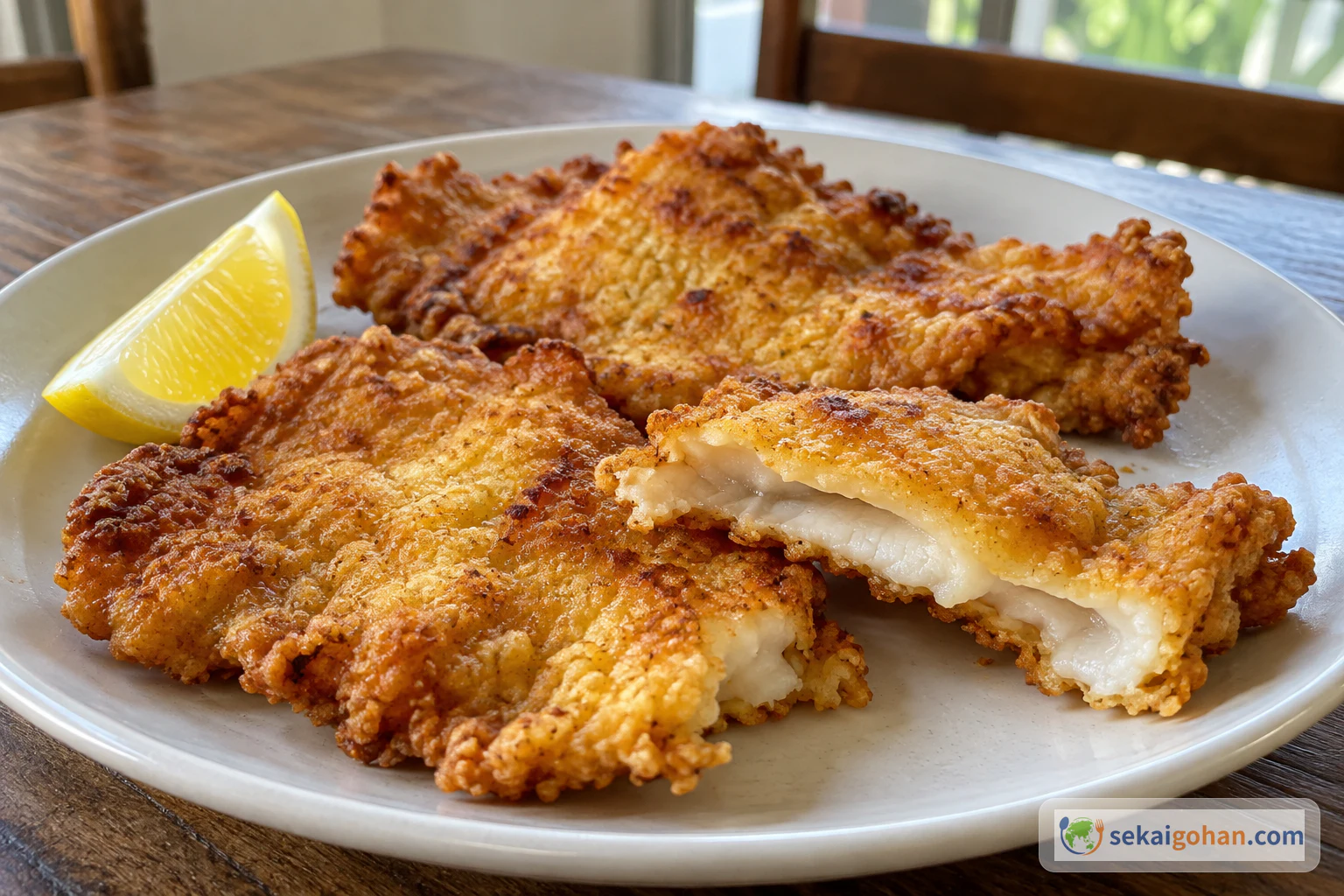
Plate the conch as soon as the center check is done. Fried conch shouldn't sit out at room temperature for long.
Frequently Asked Questions
Why are there no oil temperatures or frying times?
The method simply says to deep-fry, so go by the center instead: 167°F (75°C) for at least 1 minute. If you don't have a thermometer, cut open a thick piece and make sure it is cooked through.
Why marinate in the refrigerator?
Raw conch needs to stay cold, so marinate it for 30 minutes in the refrigerator rather than on the counter. Keep the refrigerator at 10°C or below; 40°F or below is colder.
Can I reuse the lemon juice?
No. Marinade from raw food shouldn't be reused unless you boil it first, and for this recipe it's simplest to discard it.