Lamingtons: Australian Sponge Squares in Chocolate and Coconut

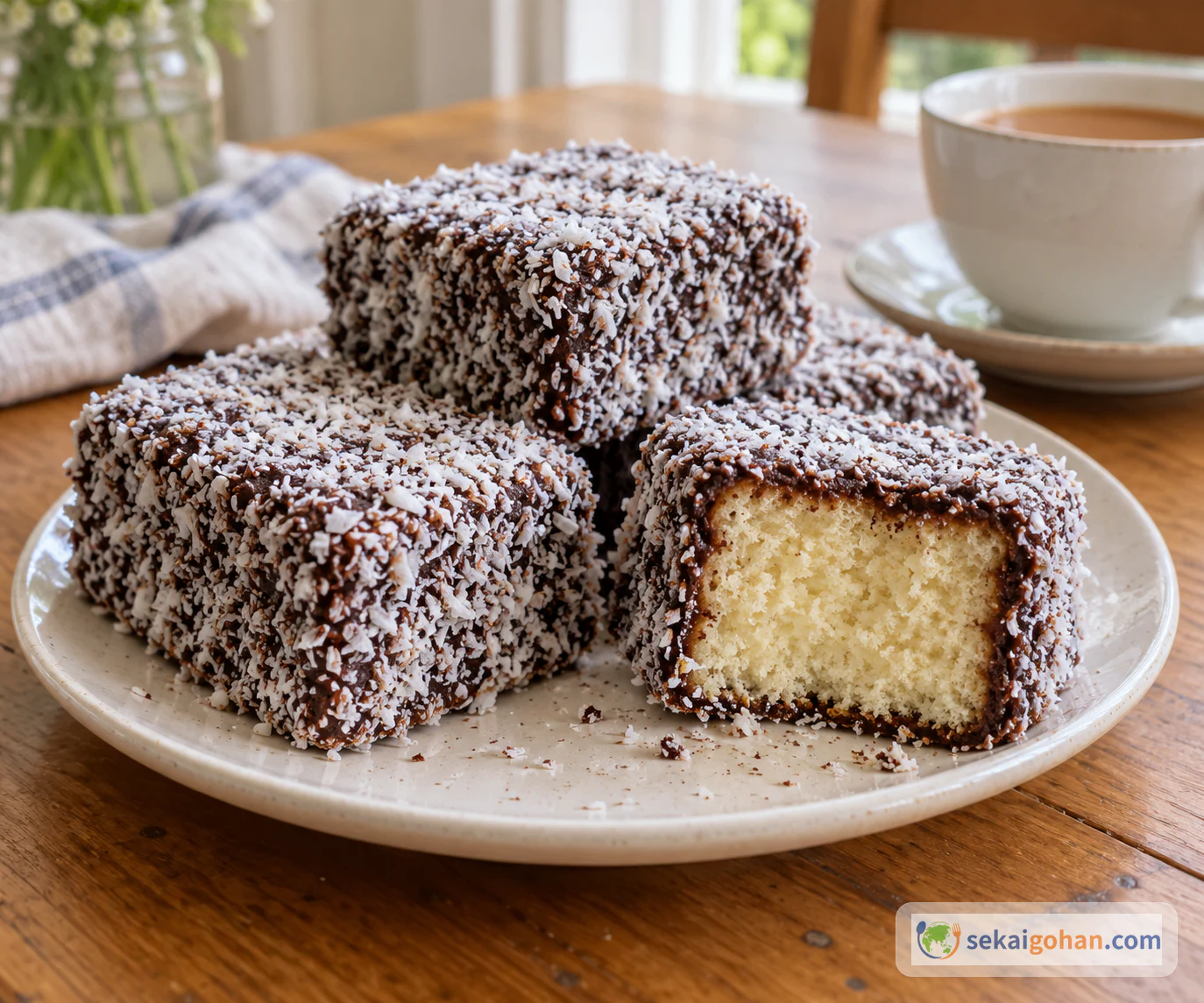
Lamingtons coated in chocolate icing and desiccated coconut, arranged on a white plate
Serves
20 pieces
Cuisine
Australian

How to make classic Australian lamingtons from a light whisked-egg sponge, dipped in dark chocolate icing and rolled in desiccated coconut. Covers why the sponge must be fully cooled, how to keep the icing fluid over a water bath, what Australian cornflour and self-raising flour mean, jam-filled variations, and the fundraising and tea-time culture behind the cake.

Cooking flow

Cooking steps

STEP11 / 12

Prepare the pan and the oven

STEP 1

Grease the 20 × 30 cm pan lightly and line the base with baking paper, pressing it into the corners so the sponge is easy to lift out later. Preheat the oven to 180°C (350°F) conventional, or 160°C (320°F) fan-forced.

STEP22 / 12

Whisk the eggs and sugar to a thick ribbon

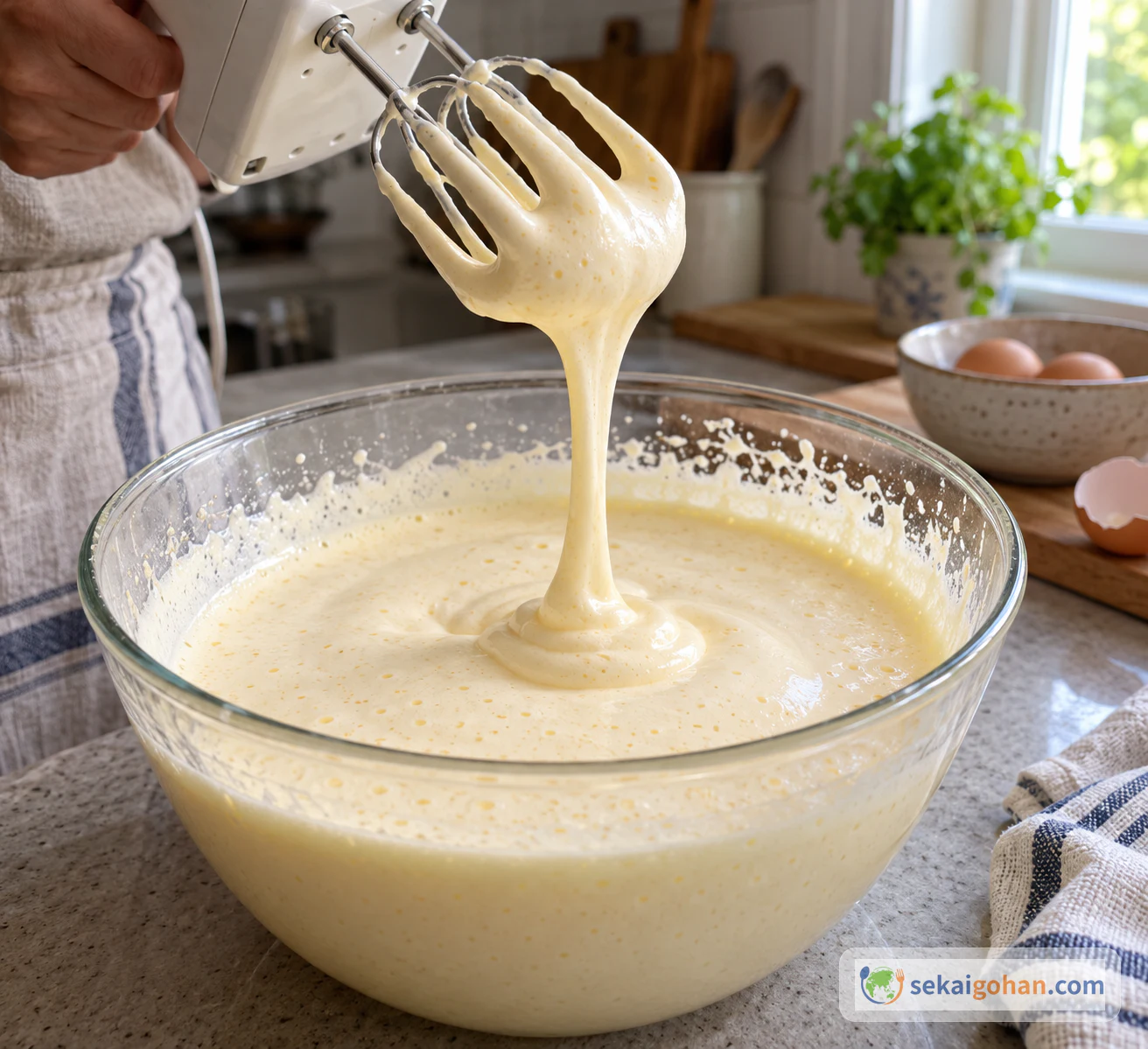
Egg and sugar mixture falling from the beaters in a thick ribbon
Beat until the mixture falls in a thick ribbon that holds on the surface

Put the room-temperature eggs and 5.5 oz (150 g) caster sugar into a deep bowl and beat until the mixture turns pale and thick, about 5–8 minutes. You do not need a thermometer. Lift the beaters: the mixture should fall back onto the surface in a thick ribbon that sits there for a moment before sinking in. This foam gives the sponge its light texture, so don't cut it short.

STEP33 / 12

Sift the dry ingredients three times

STEP 3

Combine 5.5 oz (150 g) self-raising flour and 1.25 oz (35 g) cornflour and sift them together three times. This breaks up lumps and adds air, which makes the next step gentler.

STEP44 / 12

Fold in the flour, then the butter liquid

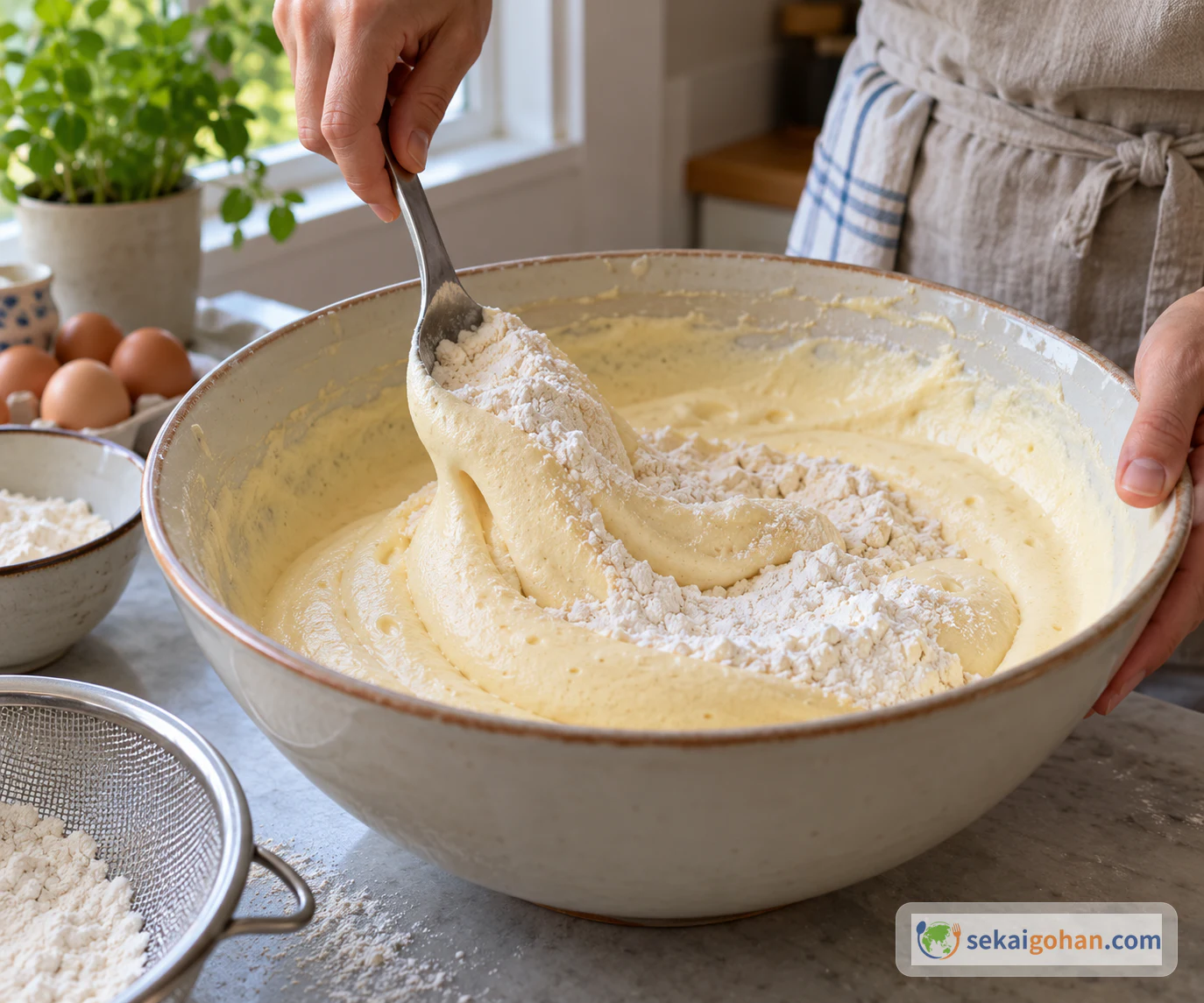
Folding sifted flour into the whipped egg mixture with broad strokes
Fold with broad strokes from the bottom of the bowl, and stop when the flour disappears

Sift the flour mixture over the egg foam in several additions, folding each in with a large metal spoon or a whisk, lifting from the bottom of the bowl and turning it over. Combine the ¼ cup (80 ml) boiling water with the 25 g chopped chilled butter, and when the butter has melted, fold this liquid in last. Stop as soon as no dry flour is visible. Over-mixing breaks the bubbles and gives a heavy, dense sponge.

STEP55 / 12

Pour into the pan

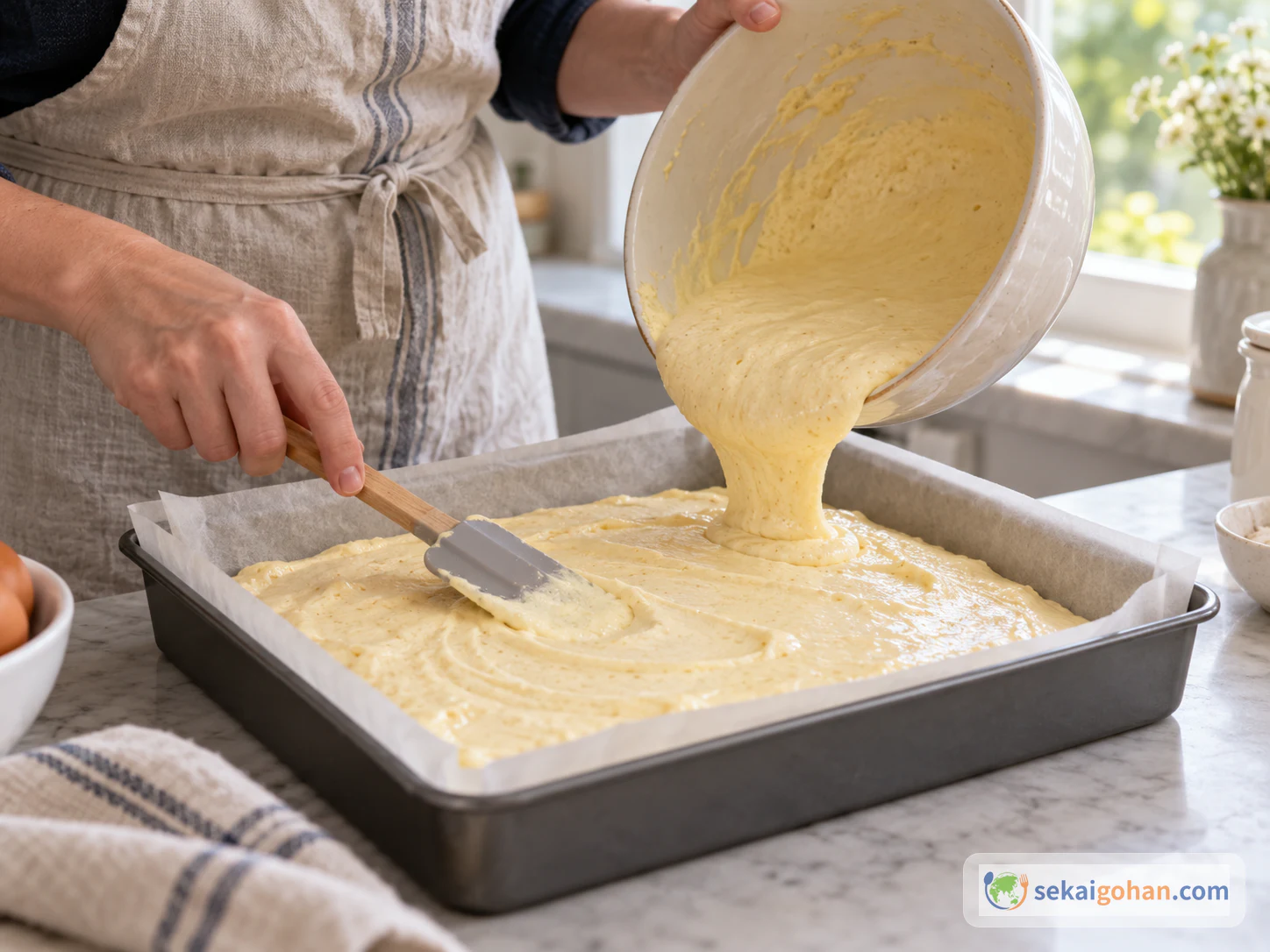
Pouring sponge batter into a 20 × 30 cm pan lined with paper
Pour the airy batter into the lined pan and level it gently

Pour the batter into the lined pan and level the surface gently. Get it into the oven without delay so the foam doesn't settle.

STEP66 / 12

Bake for about 25 minutes and check by touch

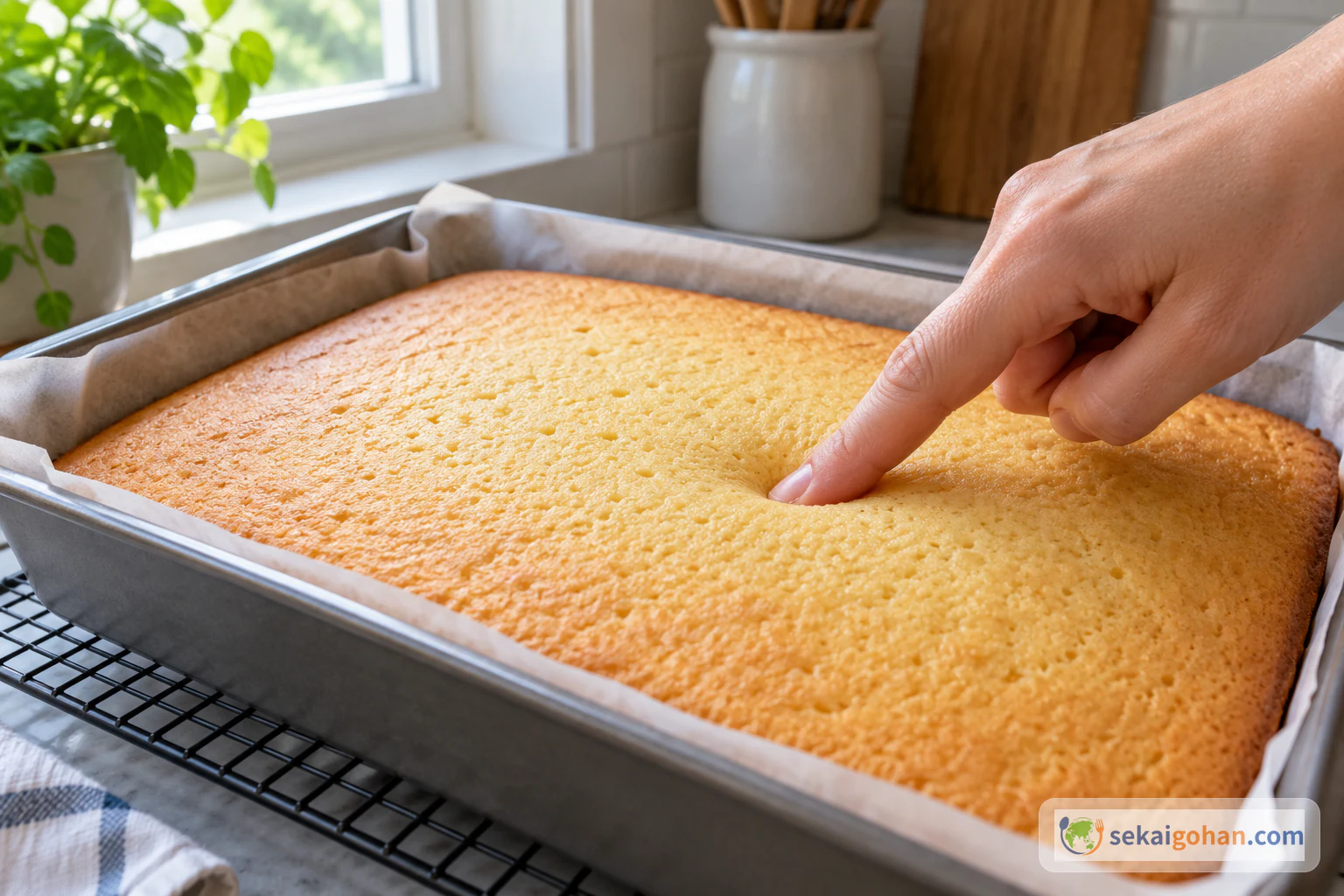
Pressing the baked sponge lightly to check that the surface springs back
Press the centre lightly: a baked sponge springs back

Bake for about 25 minutes, avoiding opening the door often. Ovens vary, so judge by the cake rather than the timer alone: the sponge is done when the centre springs back when pressed lightly and the edges are starting to come away from the sides of the pan.

STEP77 / 12

Cool completely

STEP 7

Turn the sponge out onto a wire rack and let it cool completely. A warm sponge crumbles when cut and falls apart in the icing. Chill it for a few hours or bake it the day before: a firmer sponge is easier to coat. If you're short on time, about 20 minutes in the freezer also firms it up; this step is optional.

STEP88 / 12

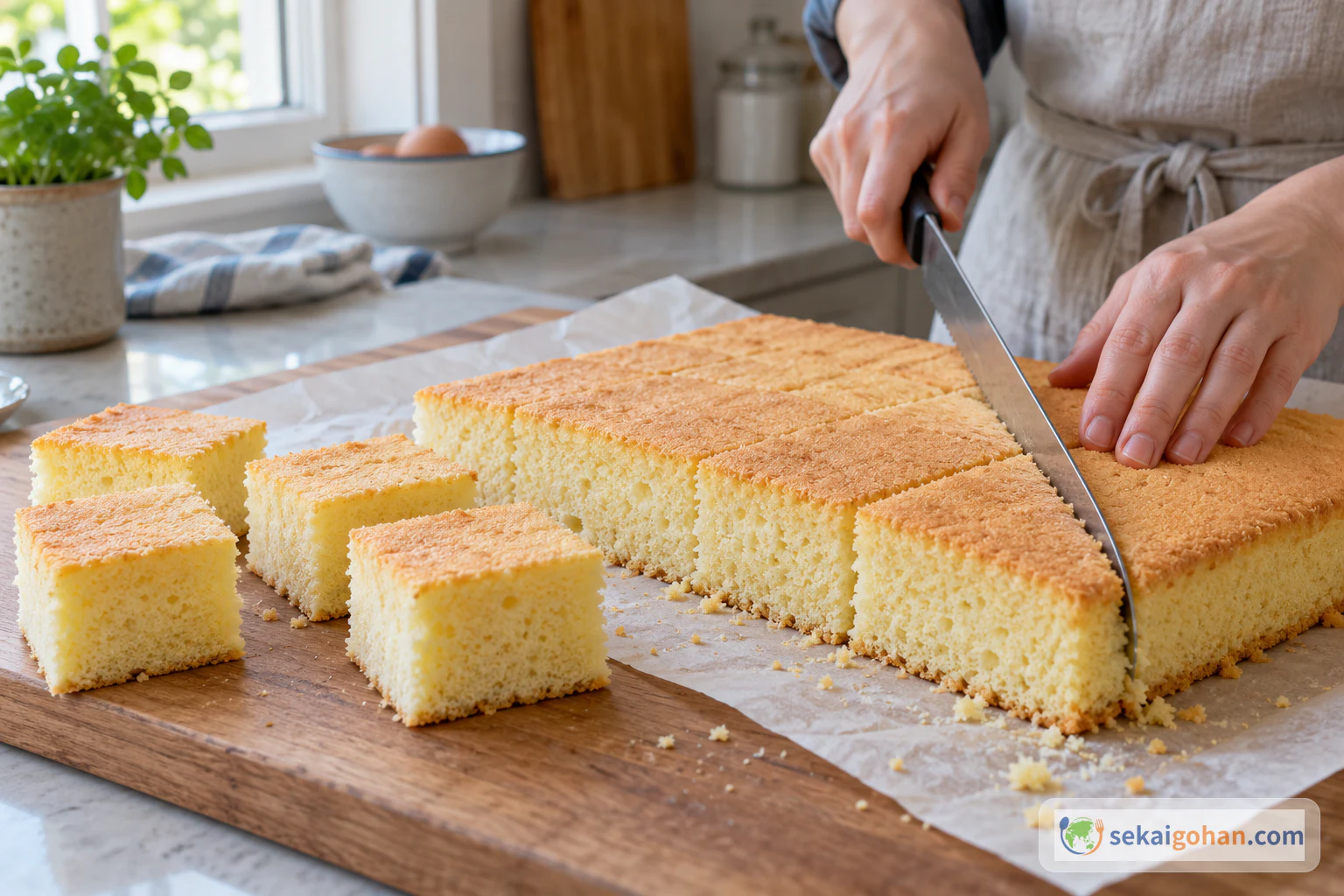
Cut into 20 pieces

Cutting the fully cooled sponge into even squares
Cut only once the sponge is completely cold, and keep the pieces a similar size

Trim any dry edges. Then cut the sponge into 20 pieces of roughly 2 inches (5 cm). A 20 × 30 cm slab would divide into 24 exact 2-inch (5 cm) squares, so aim for 20 pieces of similar size rather than exact measurements. A ruler keeps the pieces even, which keeps the amount of icing and the finished look consistent. Brush off any large crumbs.

STEP99 / 12

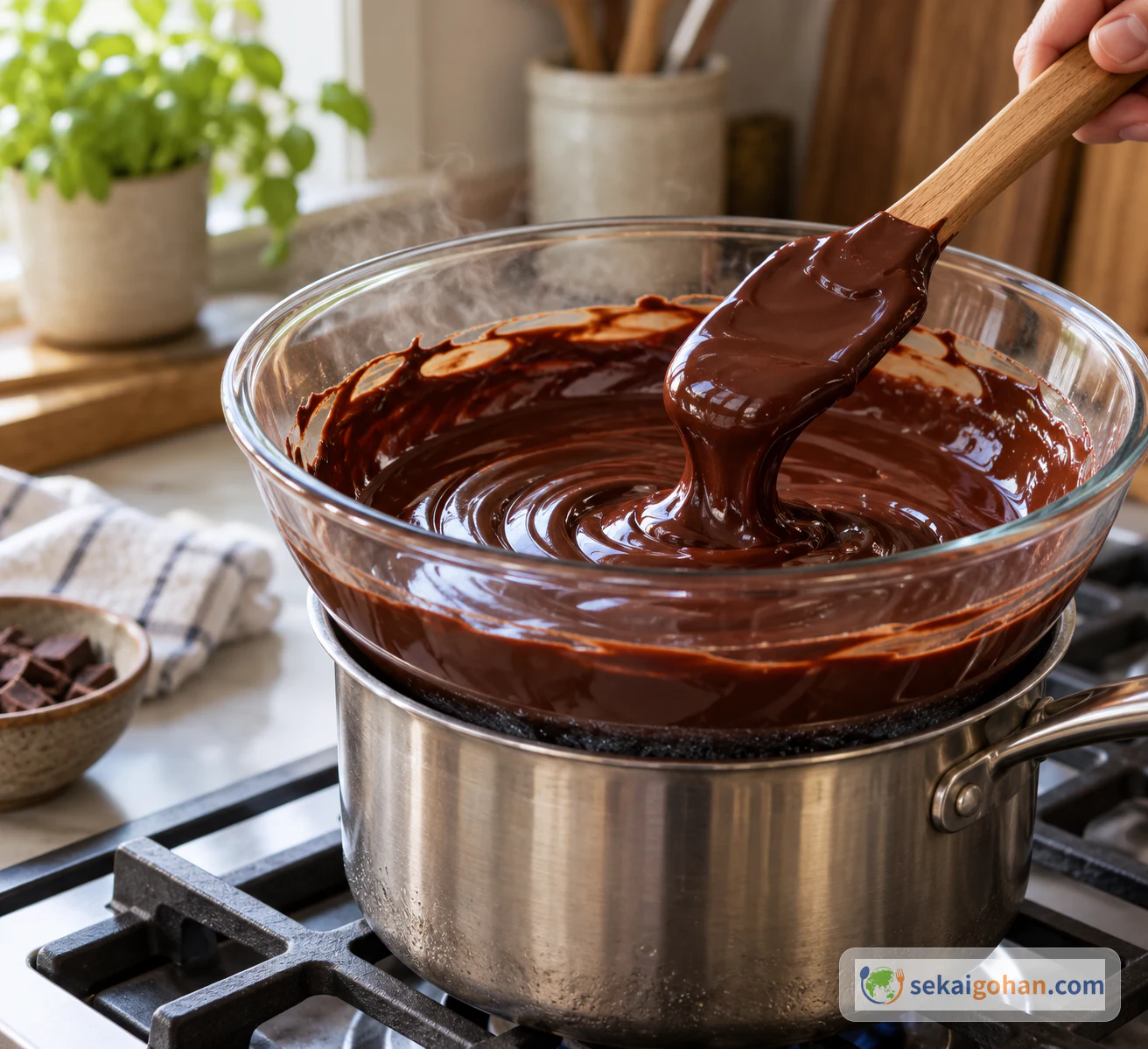
Make the chocolate icing over a water bath

Melting cocoa and dark chocolate over a water bath to make the icing
Keep the icing smooth and fluid over gently simmering water

In a heatproof bowl set over a saucepan of simmering water, combine the ¾ cup (200 ml) boiling water, 20 g cocoa and 5.5 oz (150 g) caster sugar, then add the chopped dark chocolate and stir until melted. The icing is ready when it is smooth and fluid enough to coat a piece of cake. Take care with steam and boiling water, and keep the bowl stable on the pan.

STEP1010 / 12

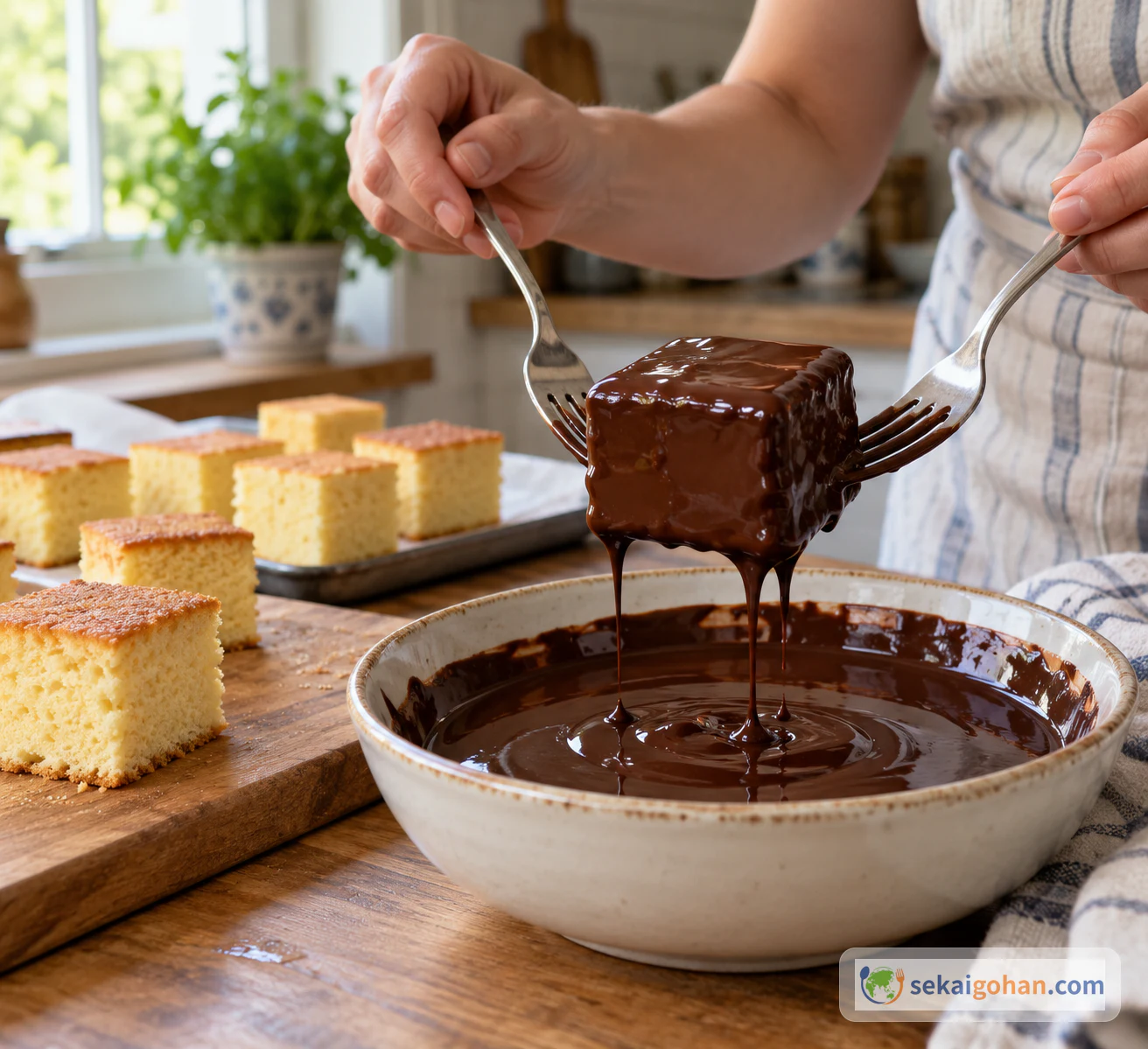
Dip briefly and let the excess drip off

Dipping a cooled sponge square into chocolate icing with forks
Dip briefly on two forks and let the excess icing drip back into the bowl

Using two forks, dip one piece of sponge briefly into the icing, then lift it and let the excess drip back into the bowl. Keep the dip short: a long soak lets the sponge absorb too much icing, so it loses its shape and sheds crumbs into the bowl. Support the piece from underneath with the forks. When the icing cools and thickens, return the bowl to the water bath to loosen it.

STEP1111 / 12

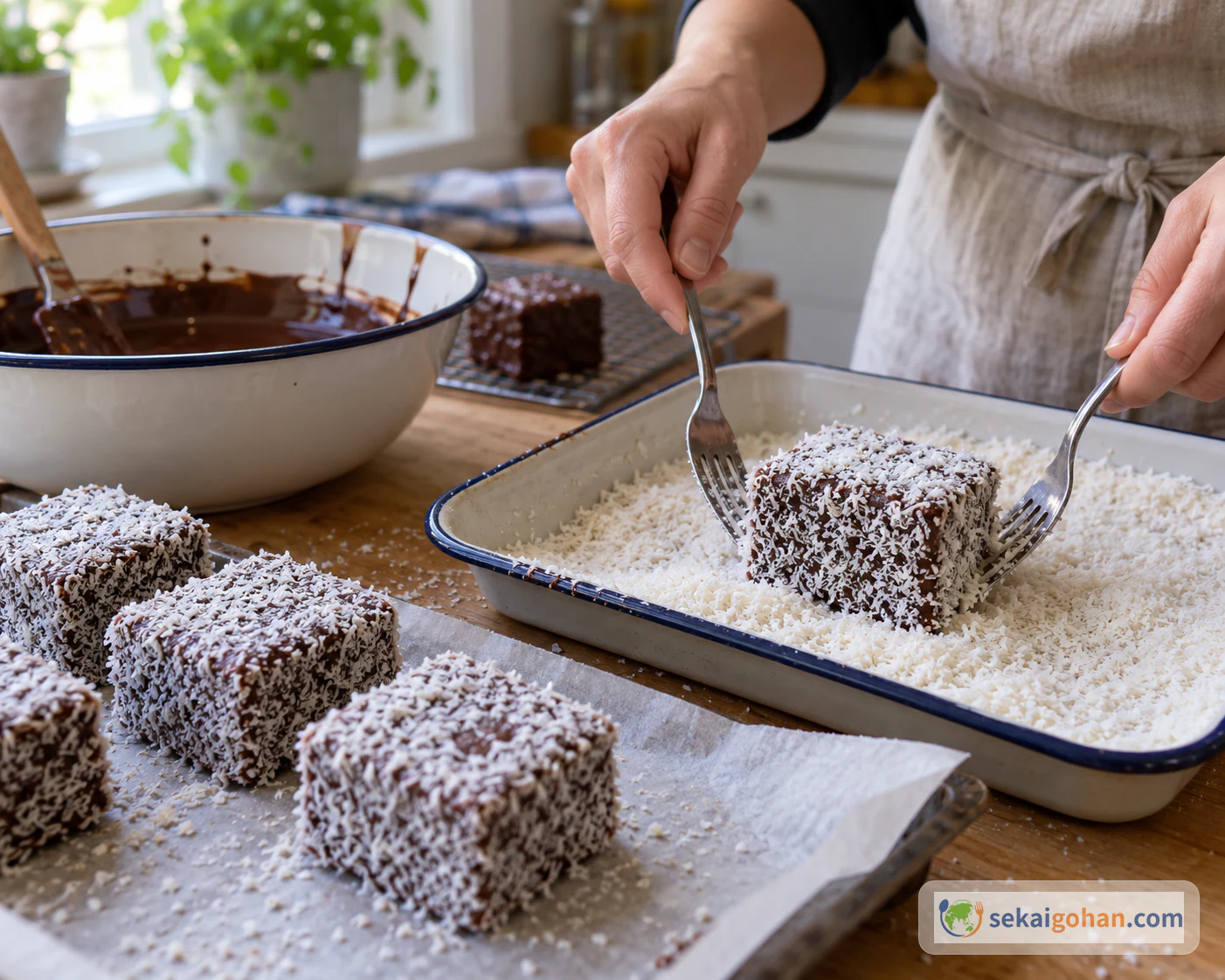
Roll in coconut with a second pair of forks

Rolling a chocolate-coated sponge in desiccated coconut
Use a second pair of forks to roll the iced sponge in coconut while the icing is still wet

Transfer the iced piece to a shallow tray of desiccated coconut and, using a separate, clean pair of forks, roll it until every side is covered. Keeping the coconut forks out of the icing stops the coconut from clumping. Roll rather than pressing hard, and do it before the icing dries.

STEP1212 / 12

Leave to set

STEP 12

Place the finished lamingtons on baking paper or a wire rack and leave them until the coating has settled. Then they're ready to serve, ideally with tea.

0 / 0
Ingredients

Ingredients

1 / 3

Sponge

Ingredient Amount Role and how to choose
Eggs 4 (about 55–60 g each) Bring to room temperature so they whip to a stable foam
Caster sugar (superfine sugar) 5.5 oz (150 g) Whipped with the eggs; gives sweetness and helps the foam hold its shape
Self-raising flour 5.5 oz (150 g) Australian flour with raising agent already added. Do not add extra baking powder on top
Cornflour (cornstarch) 1.25 oz (35 g) Australian "cornflour" is cornstarch. Use cornstarch; do not swap in potato starch
Chilled butter 25 g Chopped, then melted in the boiling water below
Boiling water ¼ cup (80 ml) Melts the butter so it can be folded evenly into the batter
2 / 3

Chocolate icing

Ingredient Amount Role and how to choose
Boiling water ¾ cup (200 ml) Loosens the icing so it coats smoothly. Handle with care
Cocoa powder 20 g Unsweetened cocoa, for colour and bitterness
Caster sugar 5.5 oz (150 g) Sweetness and body for the icing
Dark chocolate (about 70%) 9 oz (260 g) Chopped. Bitterness and how firmly the coating sets
3 / 3

To finish

Ingredient Amount Role and how to choose
Desiccated or shredded coconut 7.5 oz (216 g) Unsweetened dried coconut, for aroma and texture on the outside
0 / 0

A square of pale sponge is lowered on two forks into glossy chocolate icing, lifted out, and left to drip for a moment. Then it goes into a tray of desiccated coconut and gets turned until every face is covered. That's a lamington, Australia's sponge square in chocolate and coconut. It has been a favourite at school and sports-club fundraising sales for more than a century, and it's meant to be eaten with a cup of tea.

It looks simple, and the ingredient list is short. Whether it works depends less on the icing than on the sponge underneath. A sponge that is still warm, or one whose air was knocked out during mixing, soaks up chocolate, sheds crumbs into the bowl and slumps on the fork.

What a Lamington Is and Where It Comes From

A lamington is a square of sponge cake coated in chocolate icing and then in desiccated coconut. You'll also hear "lamingtons" and, in casual Australian speech, "lammos." The basic parts never change: a cake square, a chocolate coating and coconut on the outside. Recipes differ within that frame. Some use a whisked-egg sponge lightened with cornflour and finished with a little melted butter. Others use a creamed butter cake, sometimes with vanilla icing or jam or cream inside. The version here is the whisked-egg sponge with dark chocolate icing.

The squares you're aiming for have a light, airy sponge, a thin film of dark chocolate rather than a thick shell, and dry coconut on every side. Most of the work toward that happens before the icing bowl comes out, because the sponge has to be completely cool.

People still argue over who made the first lamington. The usual story credits the French chef Armand Galland, who is said to have made it for a large "At Home" held by Lady Lamington in June 1900, and the cake was named after the Lamingtons. Other claims exist, including some from New Zealand. There is also a printed record: a recipe titled "Lamington Cakes" ran in Queensland Country Life on 17 December 1900. Put it beside a modern recipe and you can see that the name has lasted while the method of making and assembling the cake has changed.

Ingredients: 20 Pieces from a 20 × 30 cm Pan
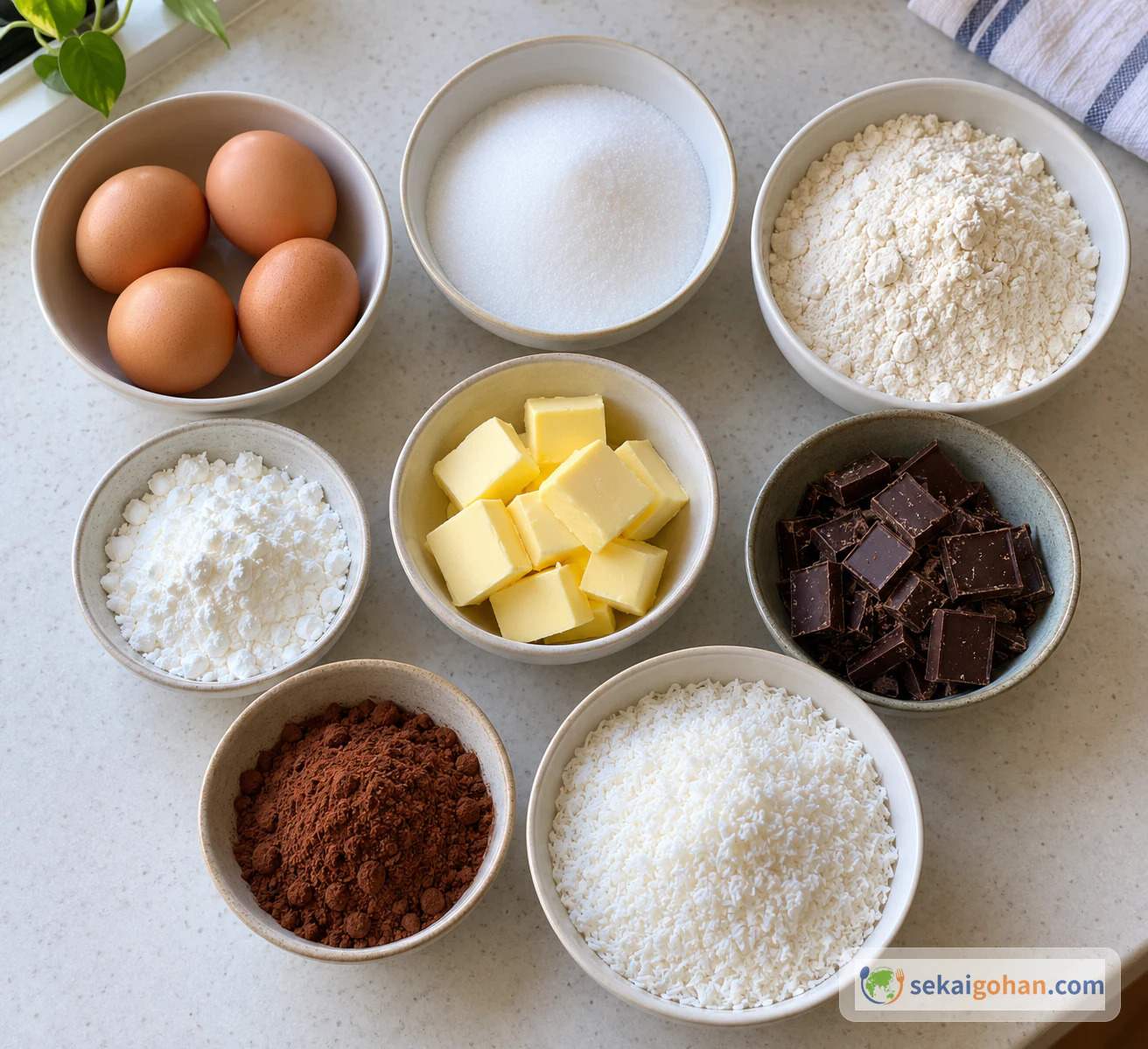
Eggs, sugar, flour, cornstarch, butter, chocolate, cocoa and desiccated coconut laid out for lamingtons
The sponge, icing and coconut each need their own ingredients; weigh them using the table, not the photo

Weigh the dry ingredients and sugar rather than using cups. Australian standard eggs weigh about 55–60 g each, so choose eggs close to that size.

Reading Australian ingredient names
  • Cornflour in an Australian recipe means cornstarch. Potato starch is a different starch; don't treat the two as interchangeable at the same weight.
  • Self-raising flour already contains raising agent, and the blend varies by brand. Use ready-made self-raising flour rather than guessing at a flour-plus-baking-powder mix.
  • Coconut: unsweetened desiccated coconut is the standard. Sweetened shredded coconut makes the whole cake sweeter and changes how the coconut clings.
  • Chocolate: about 70% dark chocolate gives bitterness and a coating that sets. Milk chocolate makes the icing sweeter and changes how it sets and how thick the coat feels.
Allergens

This recipe contains wheat, eggs and milk (butter). Check chocolate and cocoa labels for milk and other allergens, and keep in mind that coconut can be a concern for some eaters; check labelling on each product you use.

Pan and timing: a 20 × 30 cm (about 8 × 12 inch) rectangular pan. A dedicated lamington tin is just a pan of this size; any similar rectangular cake pan you already own will do. Allow about 30 minutes of preparation and about 25 minutes of baking, then extra time for cooling the sponge and for the coating to set. Give yourself a generous window rather than planning to finish in one hour.

Choosing Flour and Starch for Lamingtons

In an Australian recipe, cornflour means cornstarch, and it helps keep this sponge light. Potato starch is a different starch, so swapping it in at the same weight doesn't give the same result. Stick with cornstarch.

Self-raising flour already contains raising agent, and the blend differs by brand. Use ready-made self-raising flour and don't add extra baking powder.

Method: Whisk, Fold, Bake, Cool, Coat

The two places that decide the result

The thickness of the egg foam before the flour goes in, and the temperature of the sponge before it meets the icing. Everything else is careful handling.

Fixing Common Lamington Problems

Problem Likely cause What to do
The sponge is dense and heavy The eggs weren't beaten to a thick ribbon, or the batter was over-mixed after the flour went in Check for the ribbon before adding flour. Fold rather than stir, and stop as soon as the dry flour disappears
The sponge falls apart in the icing The sponge was still warm, or it sat in the icing too long Cool it completely, and chill or briefly freeze it if needed. Dip briefly and support the piece from below with the forks
The icing is thick and the coat comes out heavy The icing has cooled and thickened Rewarm it over the water bath until fluid. Let each piece drip over the bowl before coating
The icing runs off and the coat is thin and patchy The icing is too loose Adjust the consistency and let it thicken slightly before dipping
The coconut won't stick The icing has dried before rolling Roll each piece in coconut straight after dipping. Spread the coconut in a shallow tray and turn the cake rather than pressing it in
Crumbs are floating in the icing Loose crumbs on the cut pieces, or a soft, warm sponge Brush crumbs off after cutting, and firm the sponge in the fridge or freezer before dipping

Serving, Storing and Varying Lamingtons
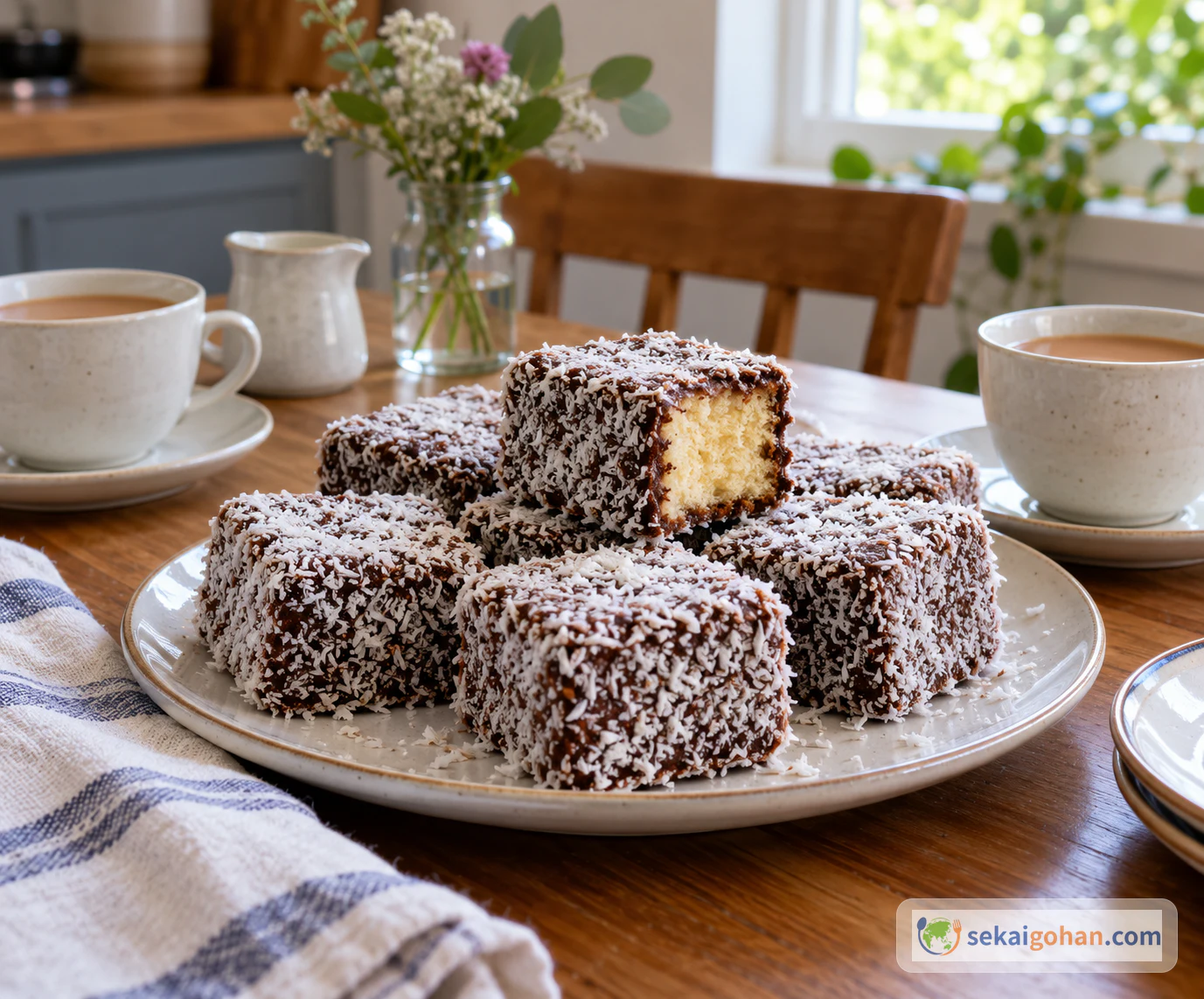
Lamingtons served with tea as an afternoon treat
Lamingtons are often described as a cake to share alongside a cup of tea

The shape is made for fundraising sales. One slab cut into squares gives lots of even pieces that can be coated, set and handed out one at a time, with no slicing at the table. At home, a plate of lamingtons next to a pot of tea is all you need.

Once the lamingtons are completely cool and set, store them in an airtight container. They don't need reheating, and they're best eaten soon. Cream-filled versions must be refrigerated.

Keep the base recipe intact

Try the plain chocolate-and-coconut version first, then change one thing at a time.

  • A thin layer of jam. Raspberry jam is one option. Wait until the sponge is completely cool, then spread the jam thinly between layers before coating so the pieces still hold together on the forks.
  • Cream-filled. Treat this as a separate cake from the base recipe. Once cream goes in, the lamingtons have to be kept in the fridge.
  • A butter-cake base. A creamed butter cake gives a different texture and workflow from the light whisked sponge. Follow one recipe's quantities rather than combining them.
  • Different icings. Vanilla icing is an option alongside chocolate.

Frequently Asked Questions

Why does my sponge collapse into the chocolate?

Check three things in this order: was the sponge completely cool, was the egg foam knocked out during folding, and did each piece stay in the icing too long? Chilling the sponge before coating, dipping briefly and supporting each piece from below with the forks all help.

Can I bake the sponge the day before?

Yes. A firmer sponge is easier to coat, so baking it the day before, or chilling it for a few hours, makes the job easier. Wrap it or keep it in an airtight container so it doesn't dry out.

For more dishes from the same country, see recipes from Australia.
Sources

  • SBS Food, "Classic lamington recipe." Used for the 20-piece recipe and its quantities, the 20 × 30 cm pan, oven temperatures of 180°C conventional / 160°C fan, the baking time of about 25 minutes, whisking the eggs and sugar and folding in the flour and butter liquid, cooling and chilling the sponge before coating, cutting into about 5 cm pieces, the water-bath chocolate icing, and dipping with forks before rolling in coconut. https://www.sbs.com.au/food/recipe/classic-lamington/z49b7cotq
  • TAFE Queensland, "Best-ever lamingtons." Used as a comparison only: a separate recipe with a creamed-butter cake, chocolate and vanilla icings, and a raspberry jam option. Its quantities are not combined with the SBS recipe. https://tafeqld.edu.au/news-and-events/blogs/best-ever-lamingtons
  • Old Government House, Queensland University of Technology, "Battle of the Lamington." Used for lamingtons as a fundraising bake and a cake eaten with tea, the curator's account of the cake's origin and the existence of other claims, and the "Lamington Cakes" recipe it reprints from the 17 December 1900 Queensland Country Life. https://www.ogh.qut.edu.au/history/house-bites/house-bites2/battle-of-the-lamington
  • Coles, "Basic chocolate lamingtons." Used as supporting guidance on not over-folding the flour, checking that the baked sponge springs back, handling the icing with forks, and jam or cream fillings. Not used for cultural history, and its storage suggestions are not treated as a guaranteed shelf life. https://www.coles.com.au/recipes-inspiration/recipes/basic-chocolate-lamingtons