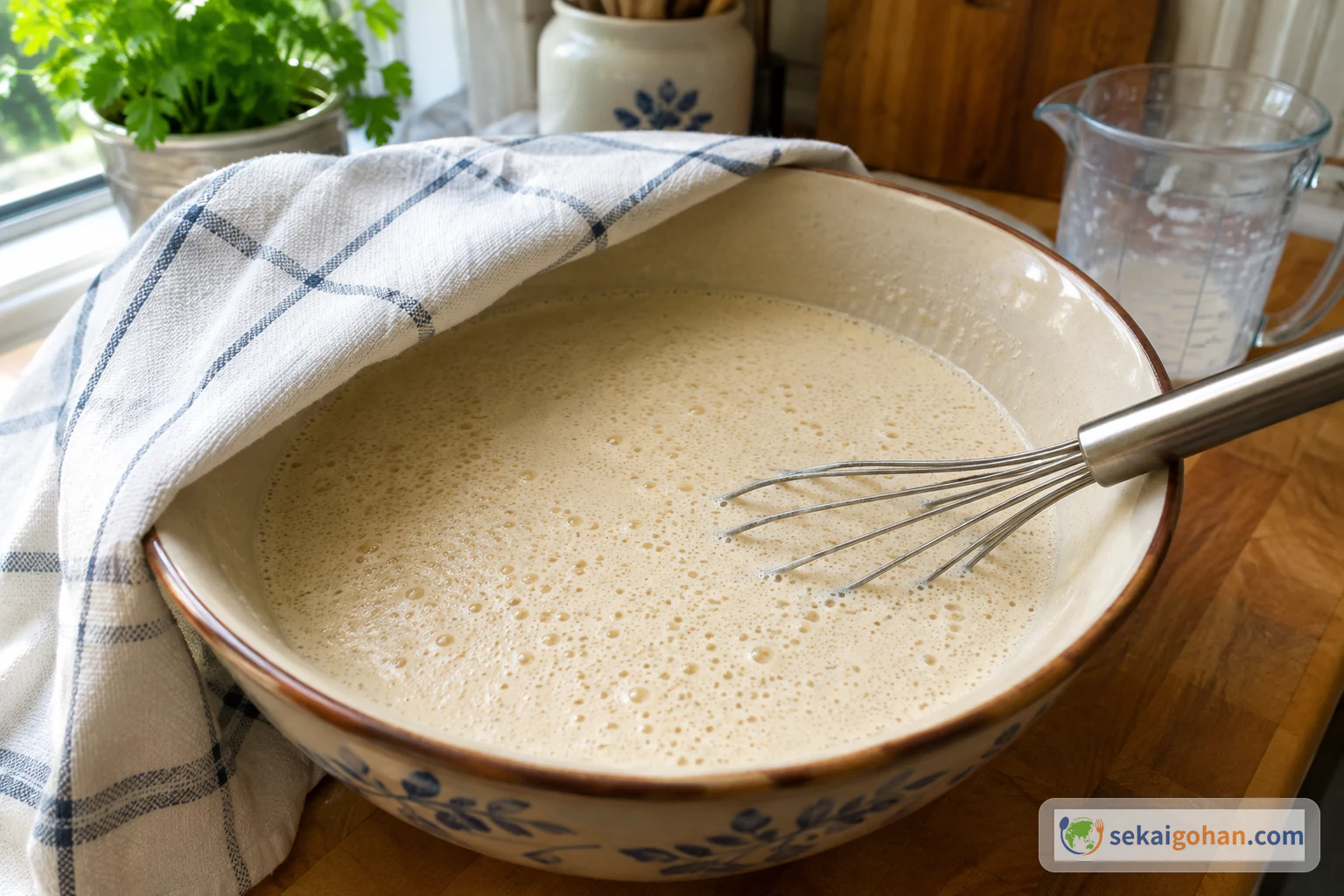
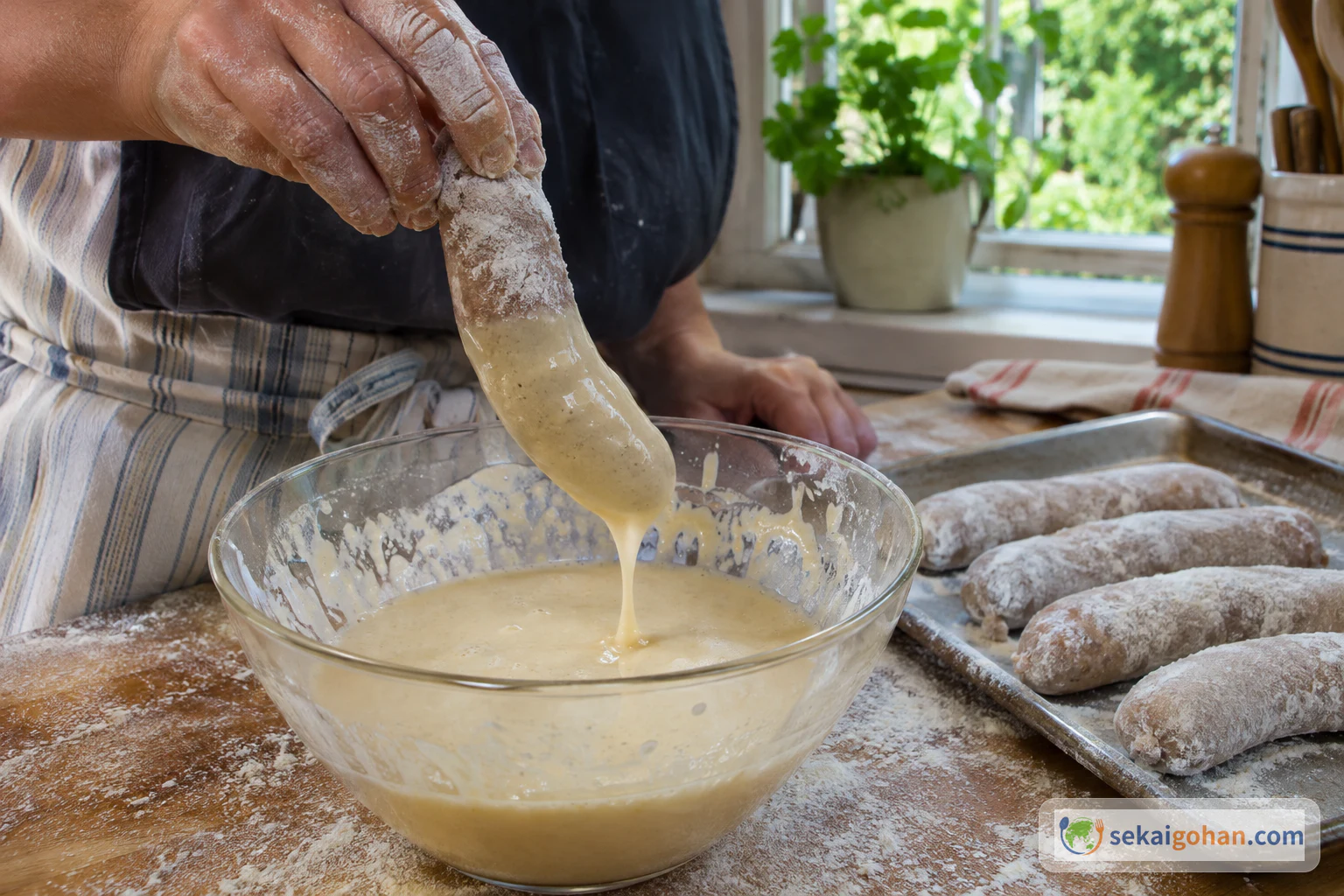
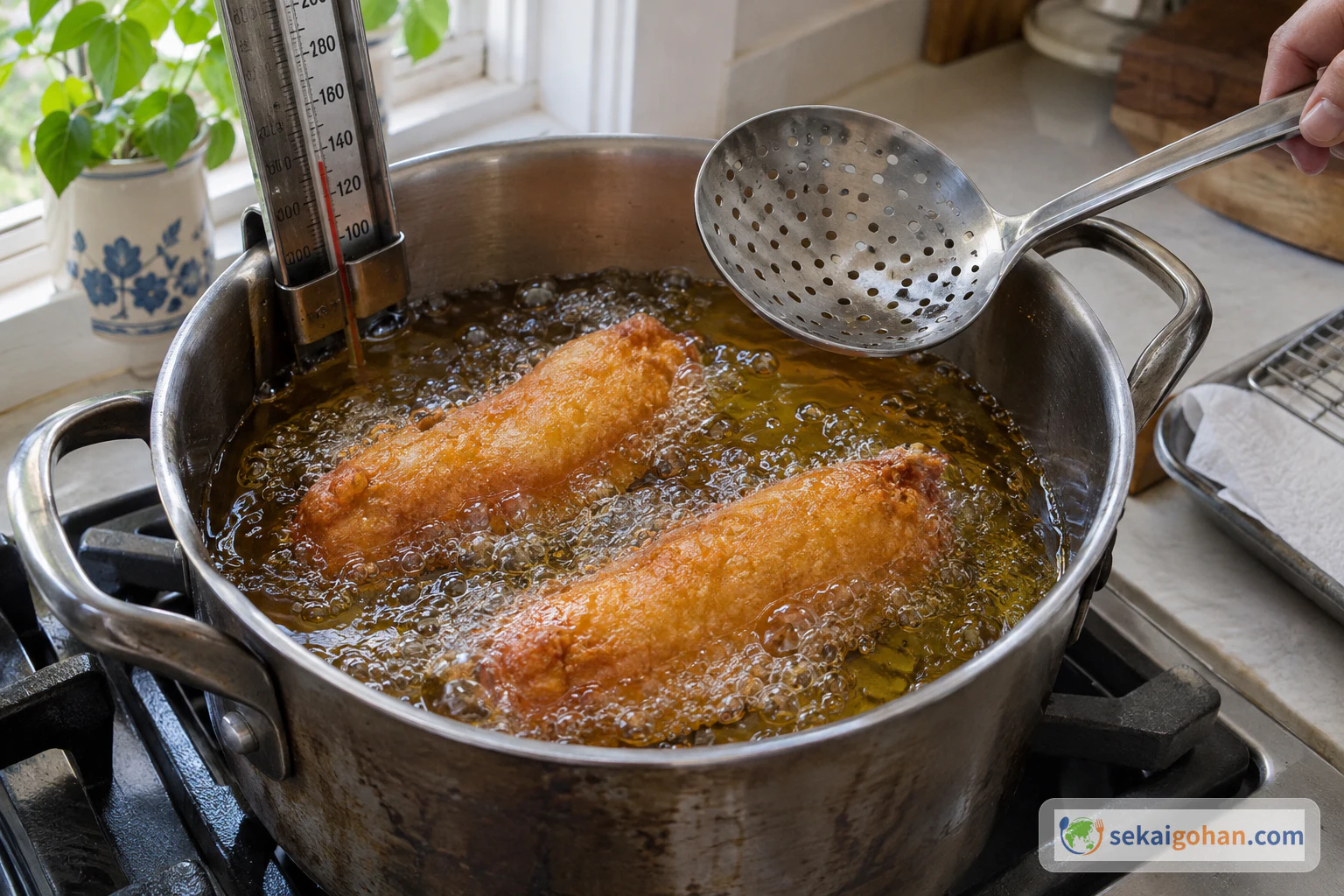

When the dipped sausage goes into the oil, the batter puffs at once. A pale coat swells around it and turns gold while the oil bubbles hard. Lift it out, shake it, add a pinch of salt and a line of tomato sauce, and bite: first a crisp, bready shell, then a soft, fine-textured sausage tasting of white pepper, nutmeg, sage and a little smoke. In Australia this is the battered sav, a saveloy coated in yeasted batter and deep-fried. It was once on nearly every fish-and-chip shop menu, and in Sydney it belongs to the Royal Easter Show. Made at home, the sausage tastes somewhat like a frankfurt, and it comes out of the fryer hot and crackling.
From Cervelas to the Chip-Shop Counter
The name and the sausage
The word saveloy is usually traced to the French cervelas or servelat, and its first recorded use in English is from 1784. In Britain a saveloy is a highly seasoned sausage, typically made from pork with rusk, potato starch, spices and sage, and it is usually stuffed into a bright red collagen casing. Australian saveloys are usually a beef and pork blend. The sausage in this recipe is all pork with no casing: you blend the mixture smooth, shape it by hand, steam it, and the cut end shows a pale pink-brown inside, not red.
How it became Australian
The earliest Australian mention of the saveloy yet found is from 1851, in a list of picnic foods. By 1911 there was a saveloy roll, a hot red sausage in a split bread roll with mustard, tomato sauce or both. The hot dog roll followed in 1922 and the frankfurter roll in 1931. Somewhere along the way the sav went into the fish-and-chip shop fryer in a jacket of yeasted batter. When and where that first happened is not settled. It is a takeaway staple with British roots, eaten at the counter or out of paper with chips, and at the Royal Easter Show in Sydney it is part of the day out. For more of the country's food, see Australia.
To most Australians the saveloy is simply a "sav". A small one is a baby sav, also called a cocktail sausage. At showgrounds you will also meet the dagwood dog and the pluto pup, two more names for battered sausages on a stick. The battered sav described here is a whole saveloy dipped and fried, and you can put it on a stick or leave it off.
Ingredients
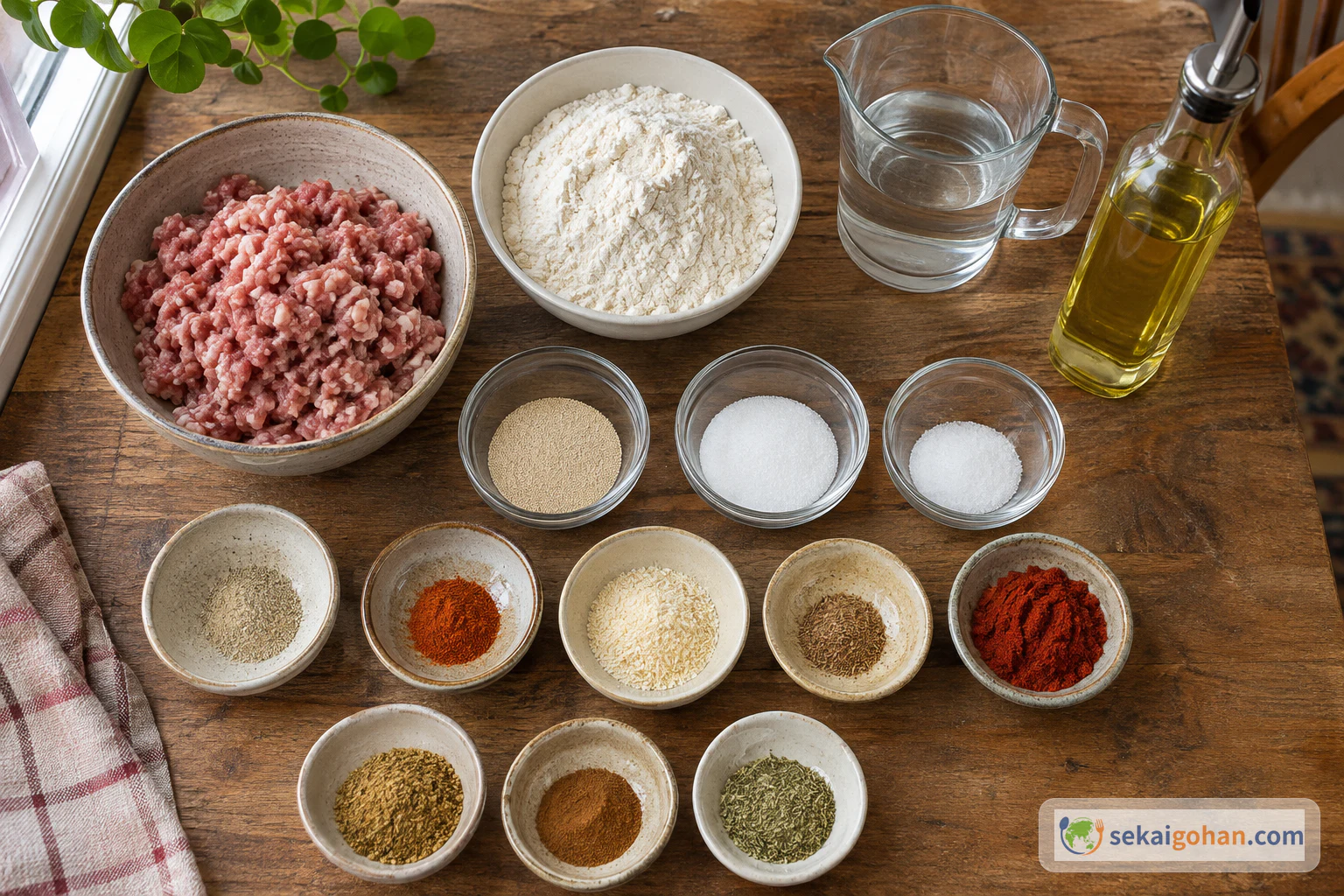
The sausage is made a day ahead and the batter goes together on the day. The spice blend decides the flavour: sage, nutmeg and white pepper make it taste like a sav, and the cinnamon and smoked paprika sit quietly underneath.
This recipe contains wheat (plain flour in the sausage, the batter and the dusting) and pork. It also uses several ground spices, including nutmeg; check the labels if anyone at the table reacts to spices. The recipe uses no milk or egg.
Equipment
- Food processor
- Baking paper
- Bamboo steamer and a pot it sits on
- Digital probe thermometer
- Airtight container
- Sieve, large bowl and whisk
- Clean kitchen towel
- Deep, heavy saucepan
- Deep-fry thermometer
- Slotted spoon
- Wire rack set over paper towels
- Toffee-apple sticks or sturdy wooden skewers (optional)
Choosing and Substituting
Fatty pork mince is the one ingredient you cannot trade down. Lean mince blends just as smooth but can steam up dry and crumbly, so ask the butcher for well-marbled mince, or choose the pack with the most visible white fat.
Smoked sweet paprika and ground sage are the two spices most kitchens lack. Look for them at a spice shop, an import grocer or online. Plain paprika works but loses the smoke, so the sausage tastes flatter. Use dried ground sage. It carries the saveloy flavour more than anything else in the blend, so keep it in. Cinnamon is strong even at 1 teaspoon; measure it level and add no more. Cayenne sets the heat: ¼ teaspoon gives a gentle warmth, ½ teaspoon a definite bite.
Plain flour is the same as all-purpose flour. If you only have instant yeast, follow the instructions on its sachet. For frying, use a mild oil with little smell of its own. Australian tomato sauce is a smooth, ketchup-like sauce, so ketchup is the right dip.
Shop saveloys get their red colour from the casing. This homemade version has no casing and is not dyed, so it stays pale inside the batter, and that is how it should look.
Method
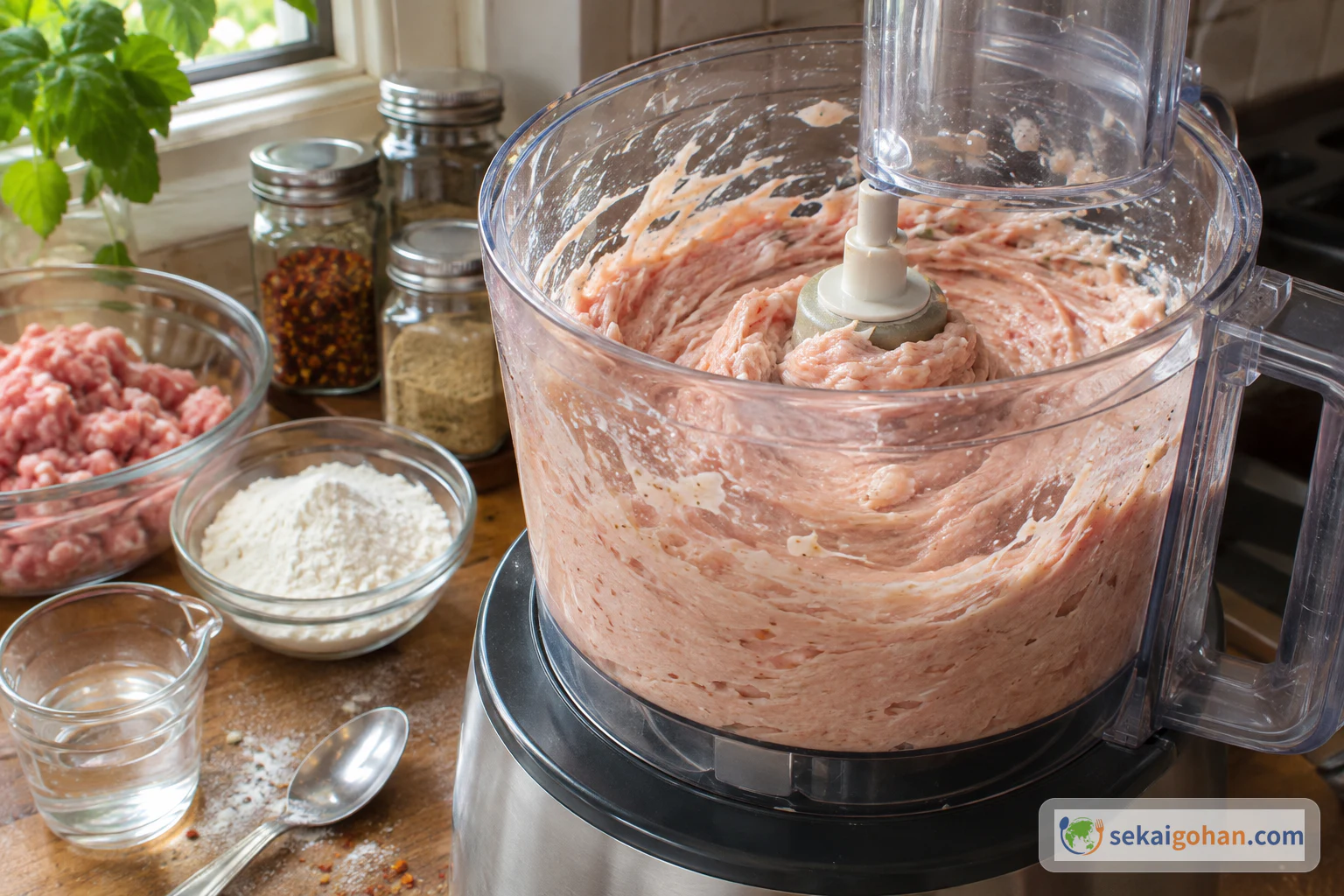
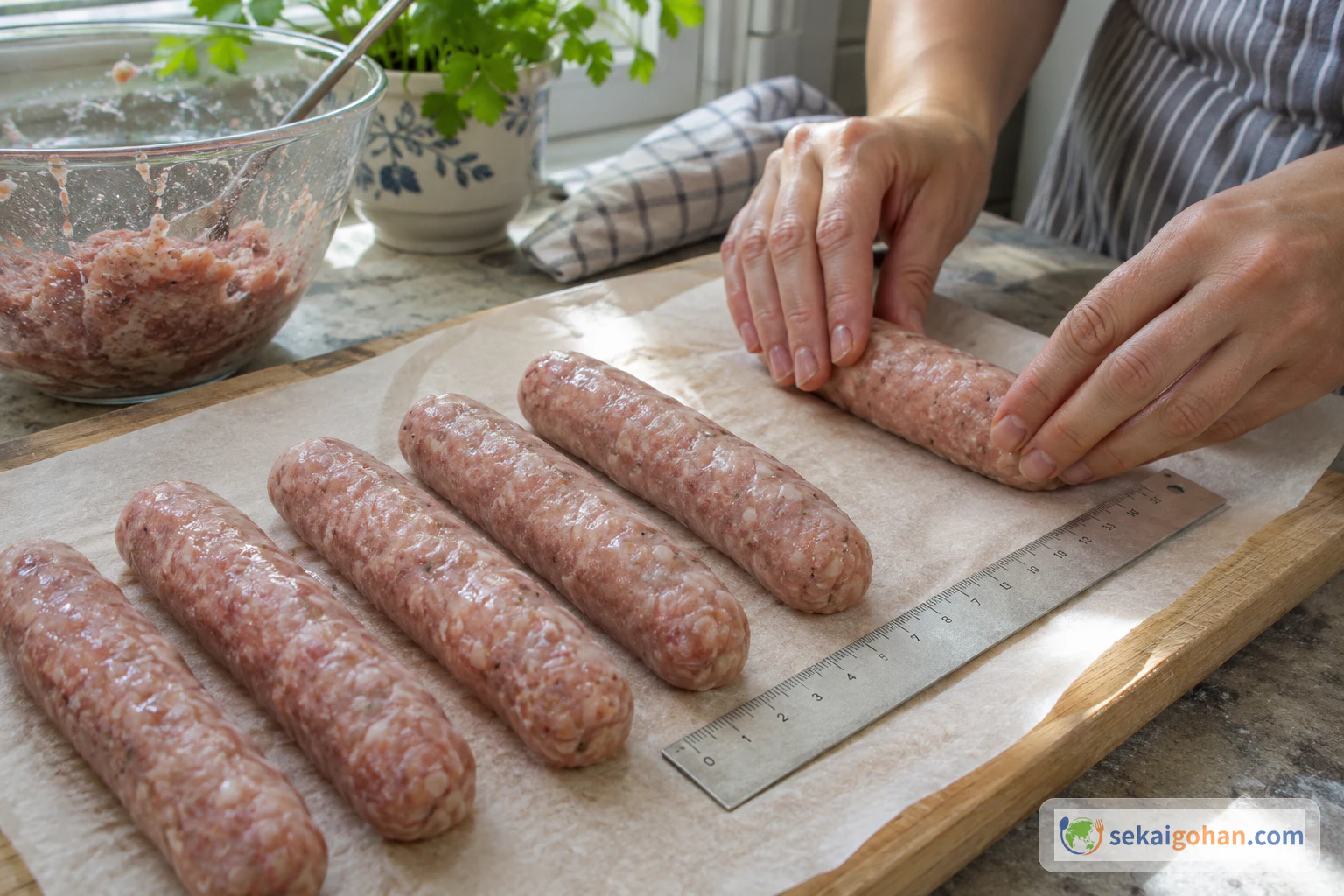
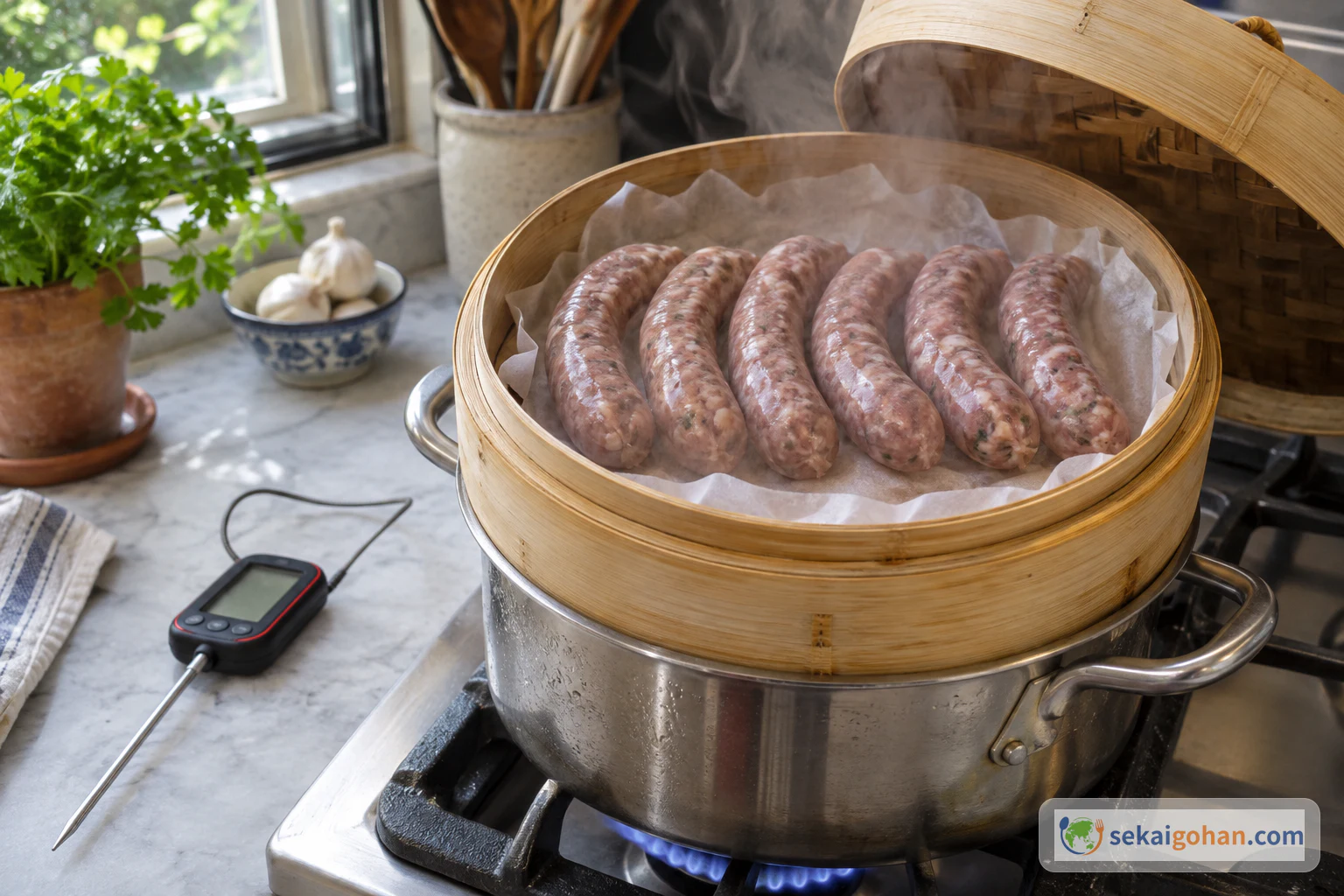
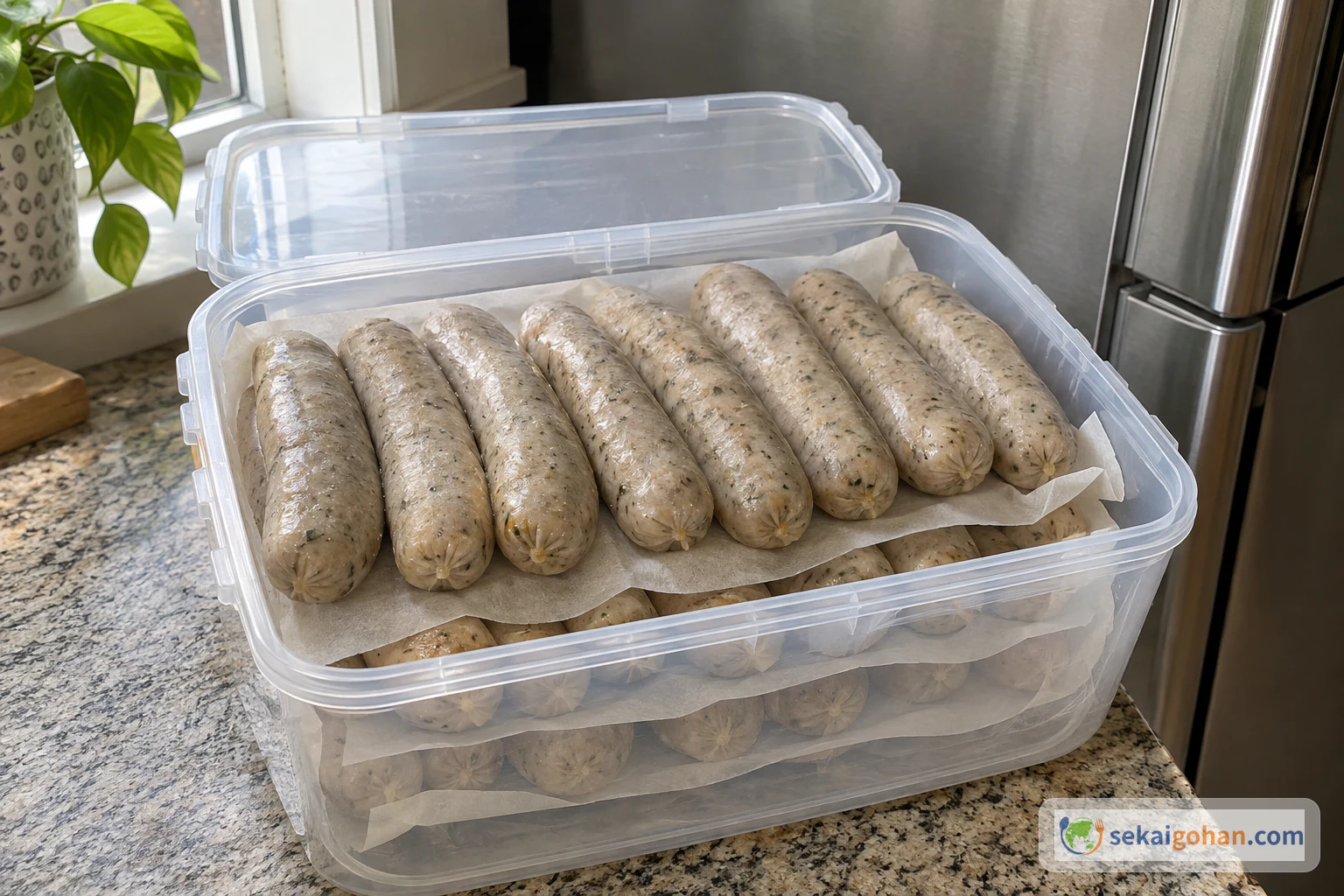
The work is split over two days. On day one, blend, shape and steam the sausages, then chill them overnight. On day two, start the batter about an hour before you eat. That hour is hands-off, so use it to set up the frying station. Then the dipping and frying go quickly, in small batches.
Raw pork mince must never be tasted or eaten. Wash your hands, board and tools after handling it. When frying, use a deep, heavy saucepan no more than half full of oil, clip a thermometer to the side, keep children and water away, and never leave hot oil unattended.
When It Goes Wrong
| What you see | Why | What to do |
|---|---|---|
| The centre reads below 167°F (75°C) after 5 minutes of steaming | The logs are thicker than 1 inch (2.5 cm) | Cover and keep steaming, checking the thickest log until it reads 167°F (75°C). Shape thinner logs next time |
| The batter slides off and leaves bare patches | The sausage surface is damp or was not floured | Pat the sausage dry, roll it in flour, tap off the excess and dip again |
| The coat is thick and lumpy, with a doughy inside | Too much batter left on | Hold the sav by one end and let it drip longer before frying |
| The savs come out pale and greasy | Too many in the pan, so the oil cooled | Fry a few at a time and wait for the thermometer to return to 355°F (180°C) between batches |
| The batter has not risen after an hour | The spot is too cold, or the yeast needs different handling | Move the bowl somewhere warmer and give it more time; with instant yeast, follow its sachet |
| The sausage is dry and crumbly | The mince was too lean | Use well-marbled pork mince next time |
Serving and Variations
At the table
A battered sav is fish-and-chip shop food. Serve it hot, salted, with tomato sauce and a bowl of hot chips, eaten with your fingers straight from the paper. It suits the same nights fish and chips do: a fish-and-chip shop party at home, a backyard gathering, or a show day you are recreating in the kitchen. Fry them just before eating, because the crust is best in the first minutes out of the oil.
On a stick, showground style

Push a toffee-apple stick into the flat end before dipping, as in step 7. The stick gives you a handle for dipping, turning in the oil and eating, and it turns the sav into hand-held show food. Stand them in a jar with a cup of tomato sauce alongside.
Saveloy roll

Skip the batter altogether. Reheat a steamed sav, tuck it into a split soft white roll and add a line of mustard, tomato sauce or both. It is softer and simpler than the battered version and puts the spiced sausage at the centre. Make sure the sausage is piping hot before it goes into the roll.
Baby savs and heat
Shape the leftover paste into short baby savs and steam, chill, dip and fry them the same way, checking that the centre reaches 167°F (75°C) after steaming. For a sav with more bite, use the full ½ teaspoon of cayenne. For children, use ¼ teaspoon and let the white pepper carry the warmth.
Frequently asked questions
Why are shop savs red and mine pale?
Shop saveloys are usually stuffed into a red collagen casing, and the colour comes from that casing. This sausage is shaped by hand and steamed without a casing or any colouring, so it is pale pink-brown inside. The taste comes from the spice blend, not the colour.
Is a battered sav the same as a dagwood dog or a pluto pup?
They are close relatives under different names. Dagwood dogs and pluto pups are the showground names for battered sausages on a stick, and a battered sav is a saveloy dipped in yeasted batter and fried, with or without a stick. The yeasted batter and the sage-and-nutmeg saveloy are what make it a sav.
Why steam and chill the sausage before frying?
Steaming cooks the meat gently, and you can check it with a thermometer before any batter goes on. Chilling overnight leaves the sausage cold and firm, so it holds its shape when you roll it in flour and dip it. The short fry then only has to puff and crisp the batter.
Can I use a regular saucepan instead of a deep-fryer?
Yes. Use a deep, heavy saucepan no more than half full of oil, with a thermometer clipped to the side so you can hold 355°F (180°C). Fry a few at a time so the oil stays hot.