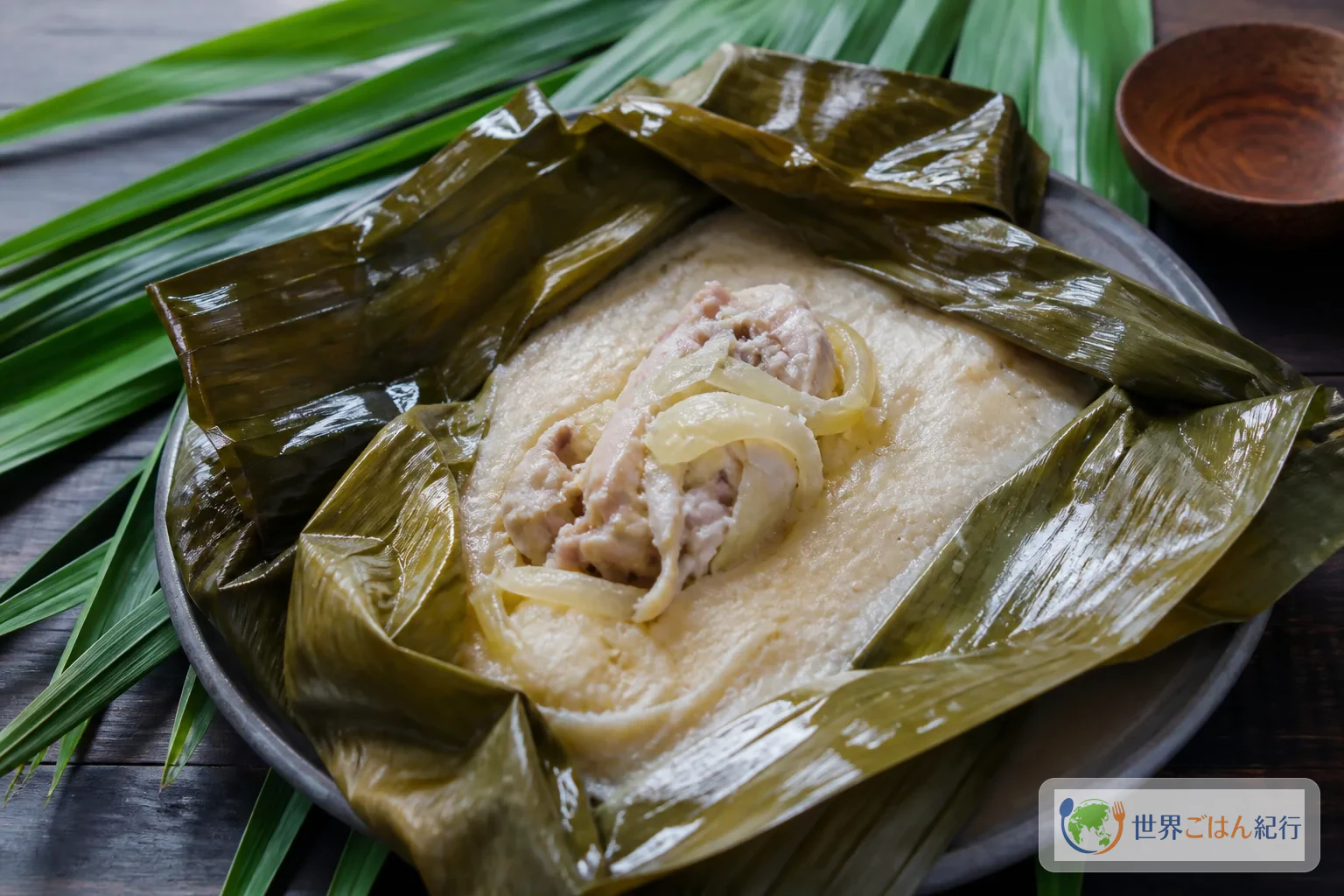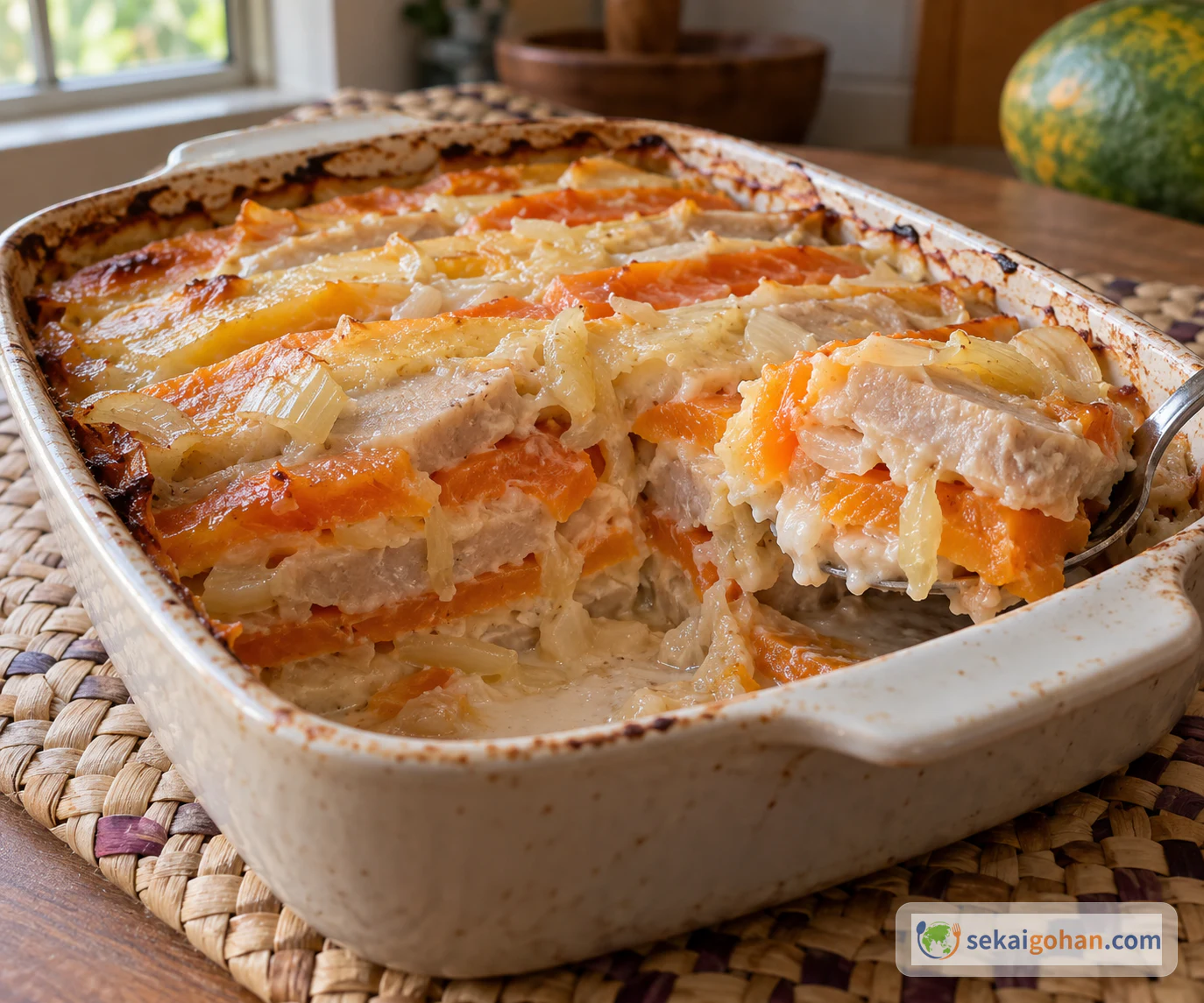
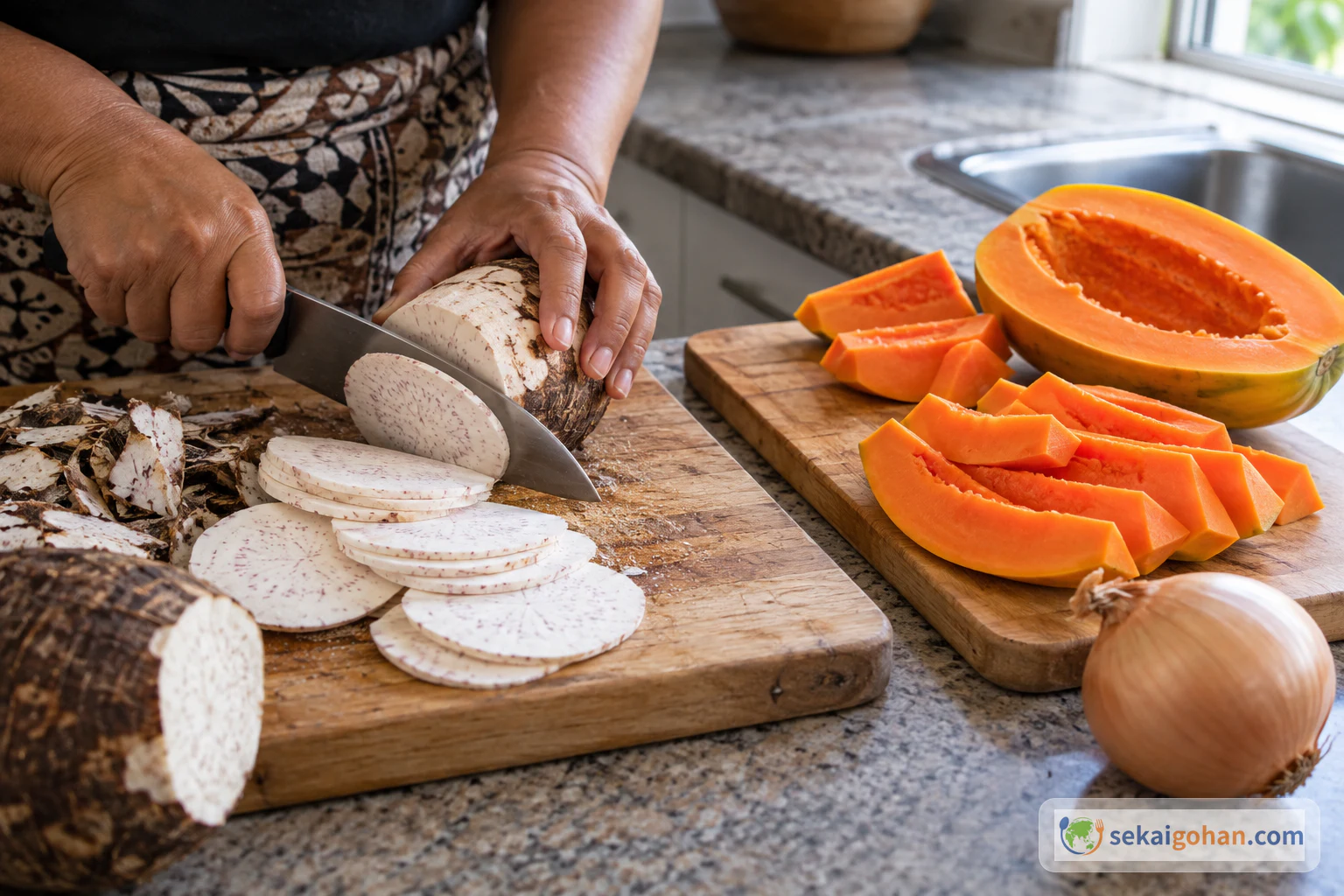
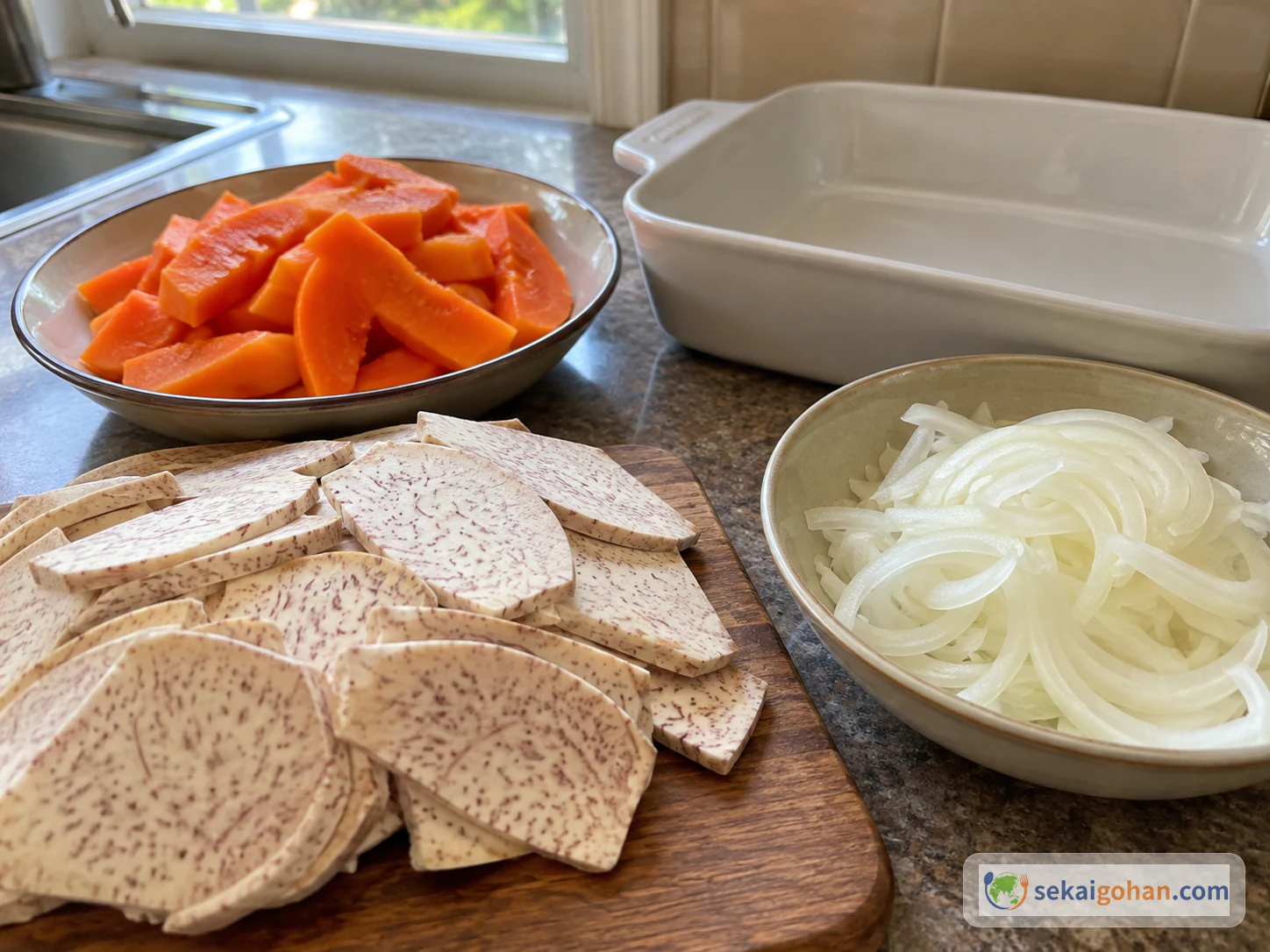
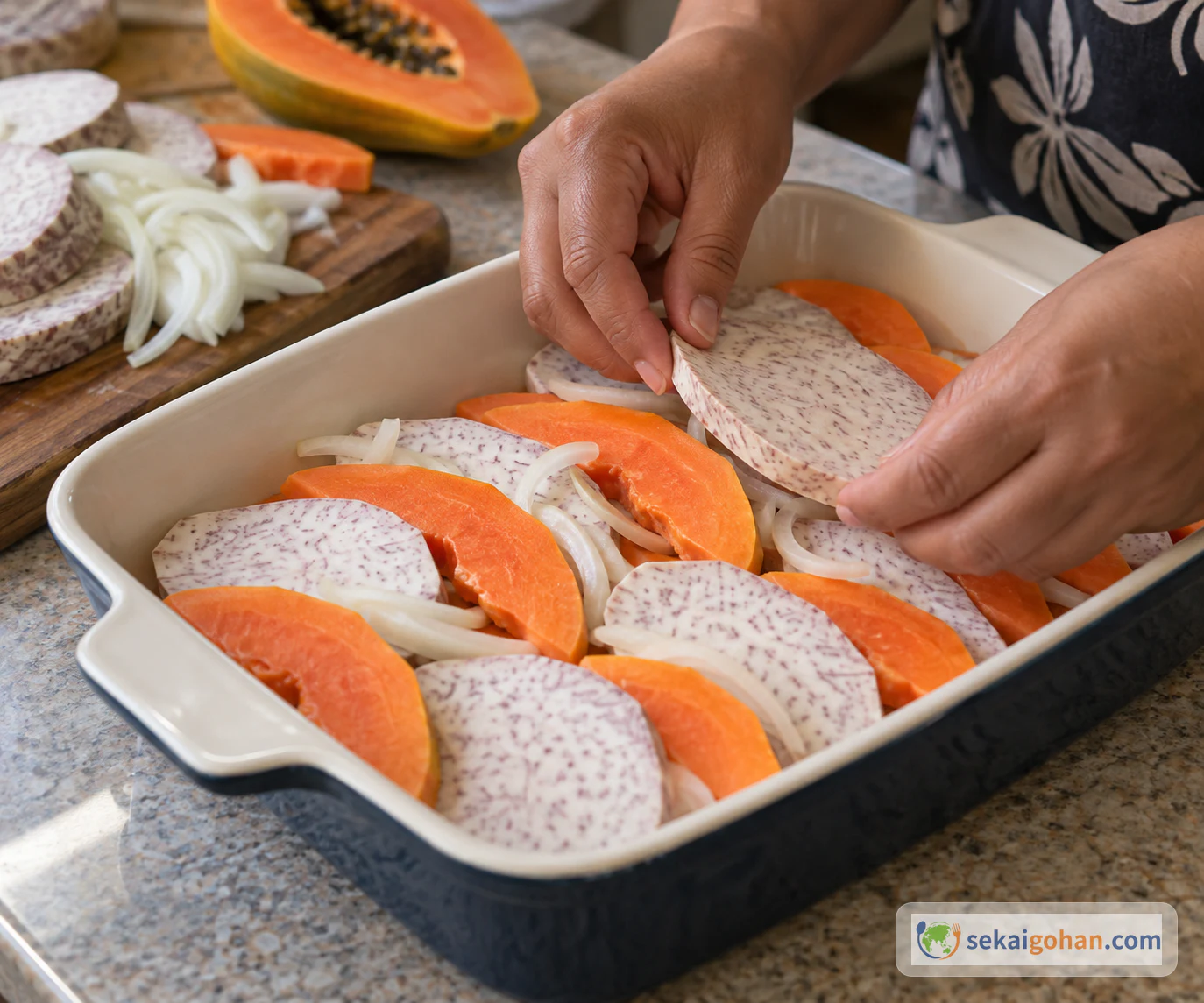
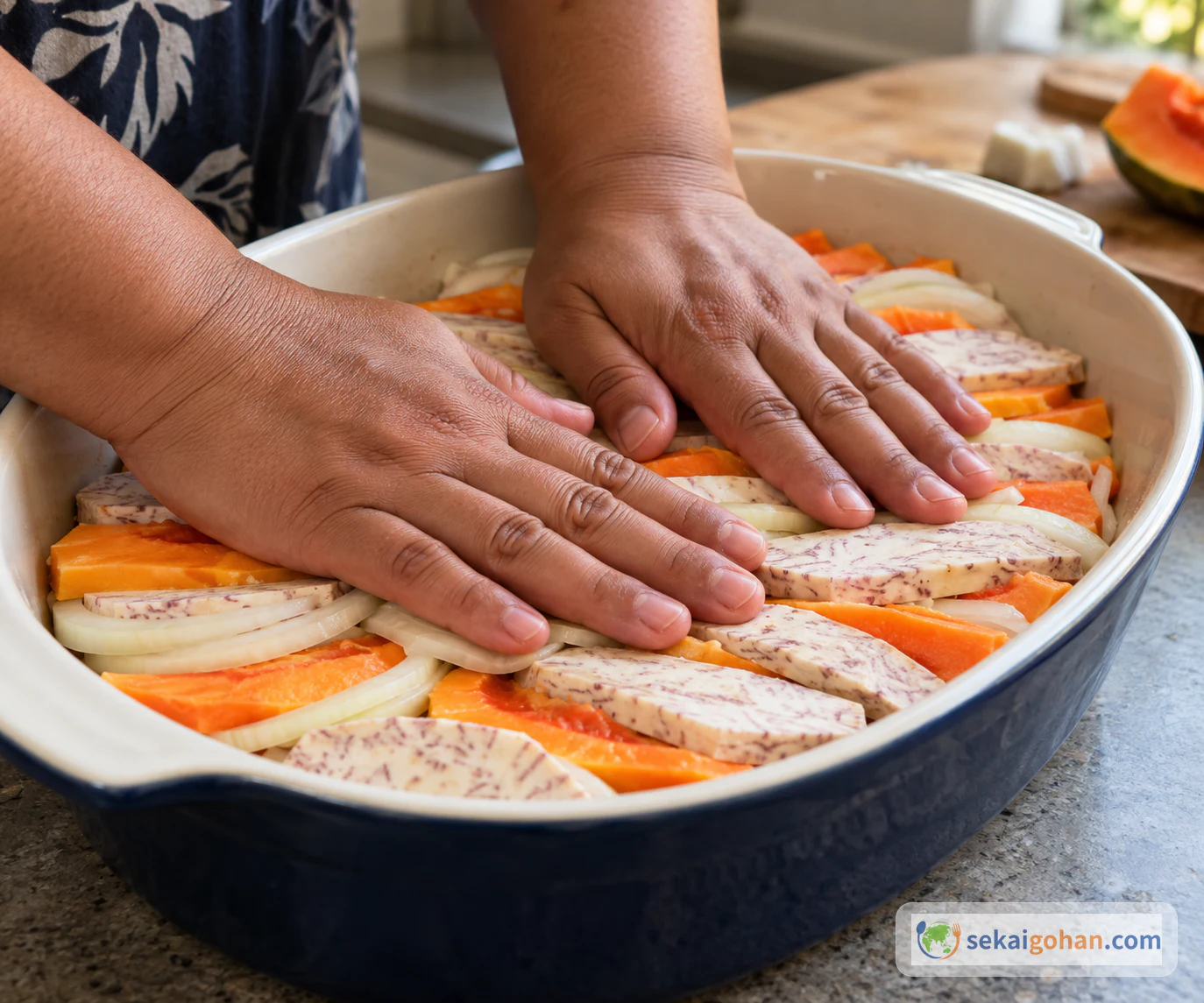
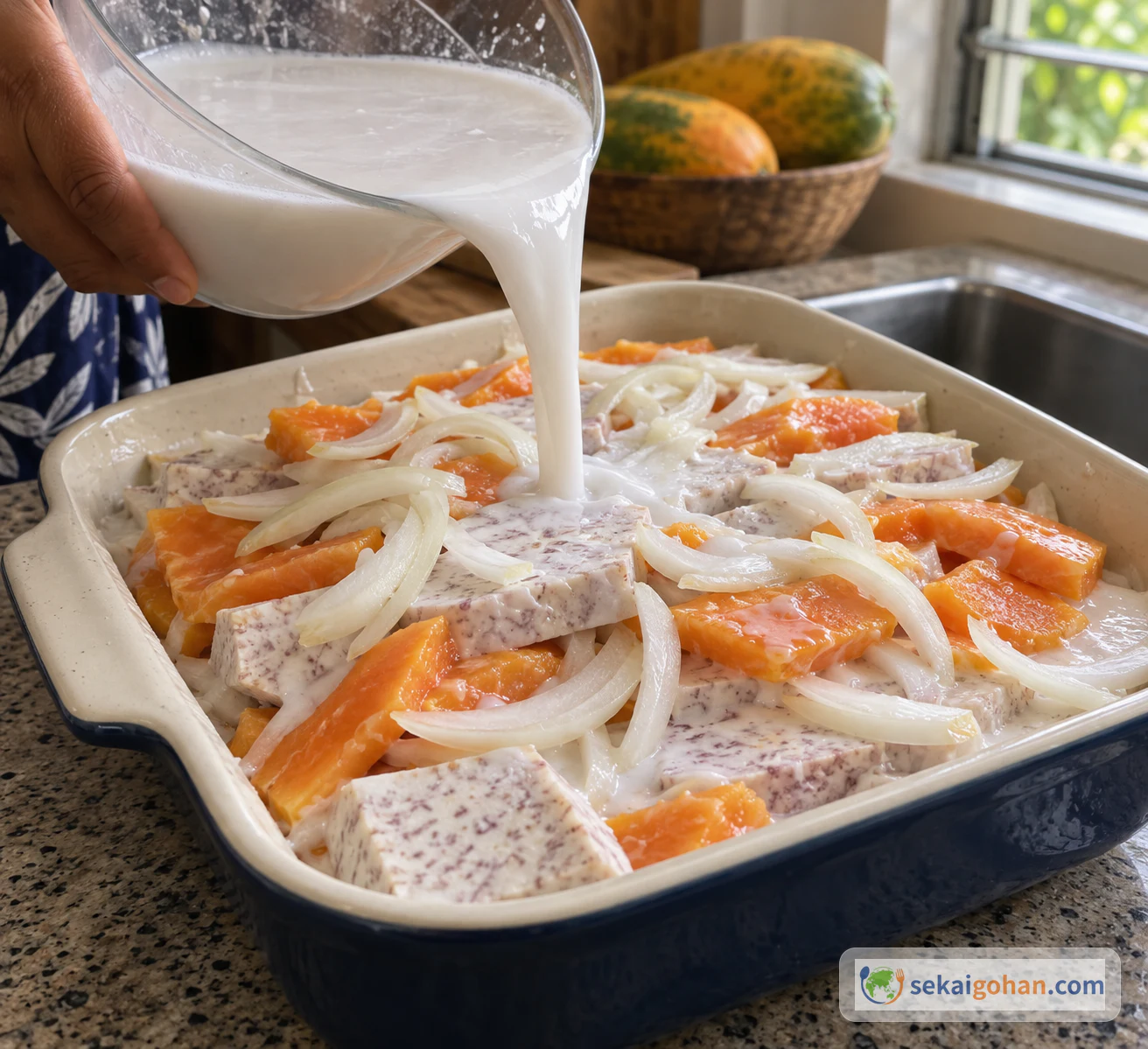
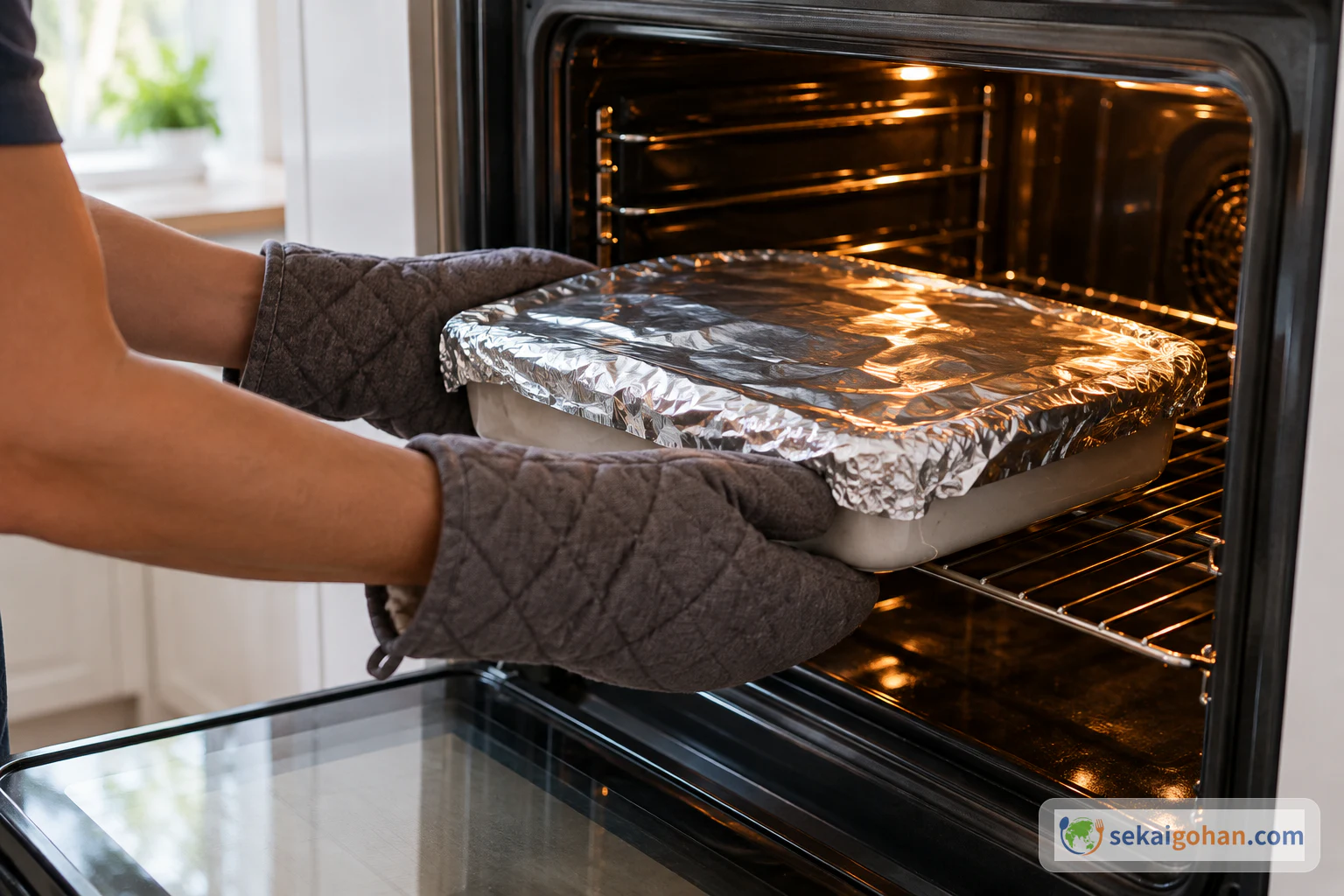
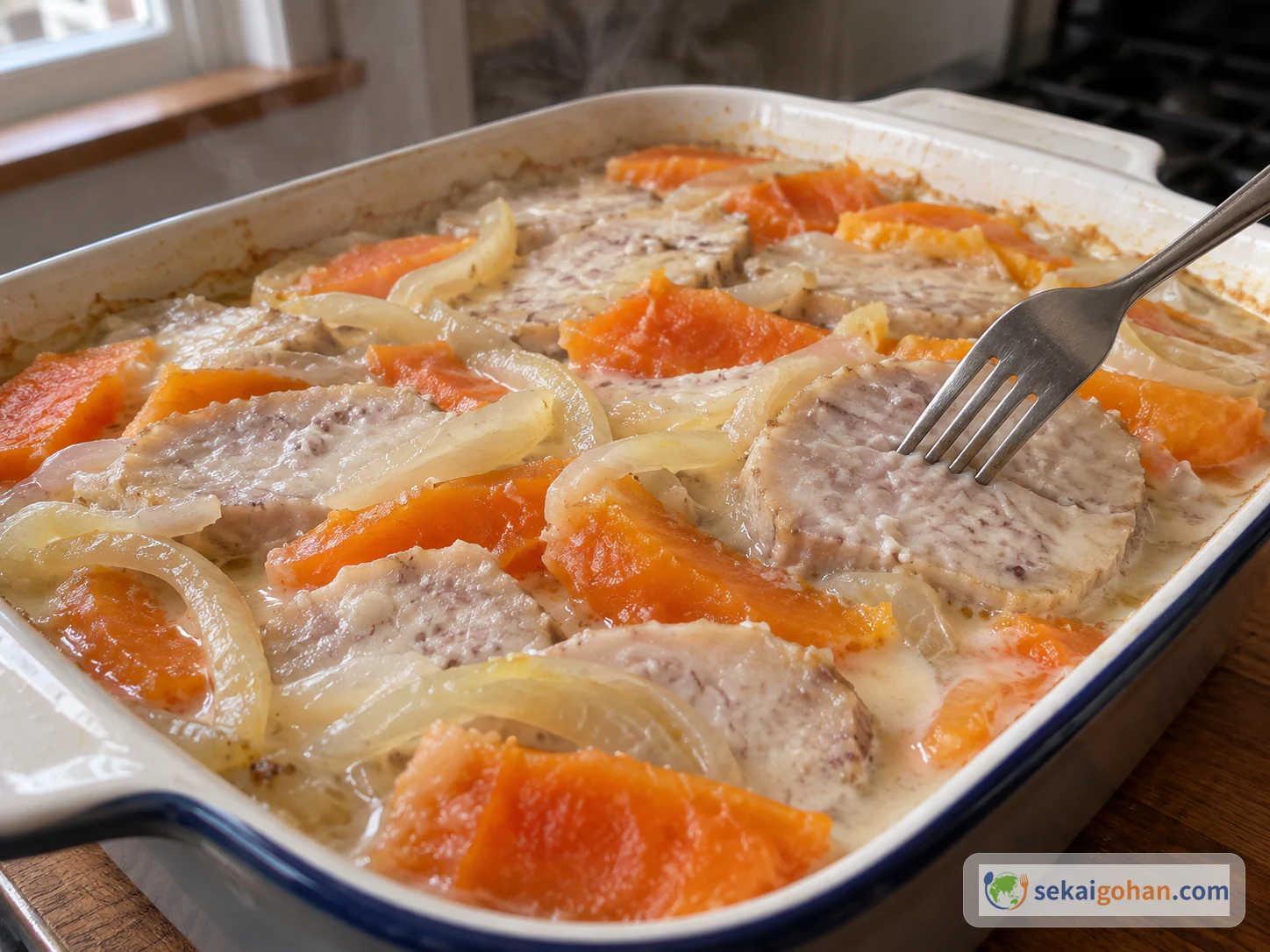
In a deep baking dish, pale slices of taro alternate with the deep orange of ripe pawpaw, with thin rings of onion tucked between them. Coconut cream thinned with water is poured over the top and slips down into the gaps, then the dish is covered with foil and slid into the oven. When it comes out, the taro is tender, the pawpaw has softened into it, and the coconut holds the whole thing together.
This is takihi, a traditional dish from Niue. It pairs the gentle sweetness of the fruit with the starchy, savory body of the taro, and it's served beside meat or fish.
Takihi, a Traditional Niuean Dish
Takihi is a Niuean dish of taro and pawpaw (papaya) baked with coconut cream. It is one of the island's traditional foods. Because ripe pawpaw is one of its two main ingredients, it has a natural sweetness, which makes it a good partner for seafood, meat or fish.
Everything in it comes from the island's everyday larder. Local foods on Niue include taro, breadfruit, cassava, shellfish and coconut crab, along with seasonal tropical fruits sold at the makete (market) in Alofi.
Takihi was once made by placing the ingredients on banana leaves and cooking them in an umu, using hot stones. The umu is still part of community life on the island and appears at annual village showdays that showcase local cooking and cultural skills. At home, a covered baking dish in the oven does the same job: the layered taro and fruit cook slowly in coconut, enclosed so the moisture stays in.
Ingredients for Takihi
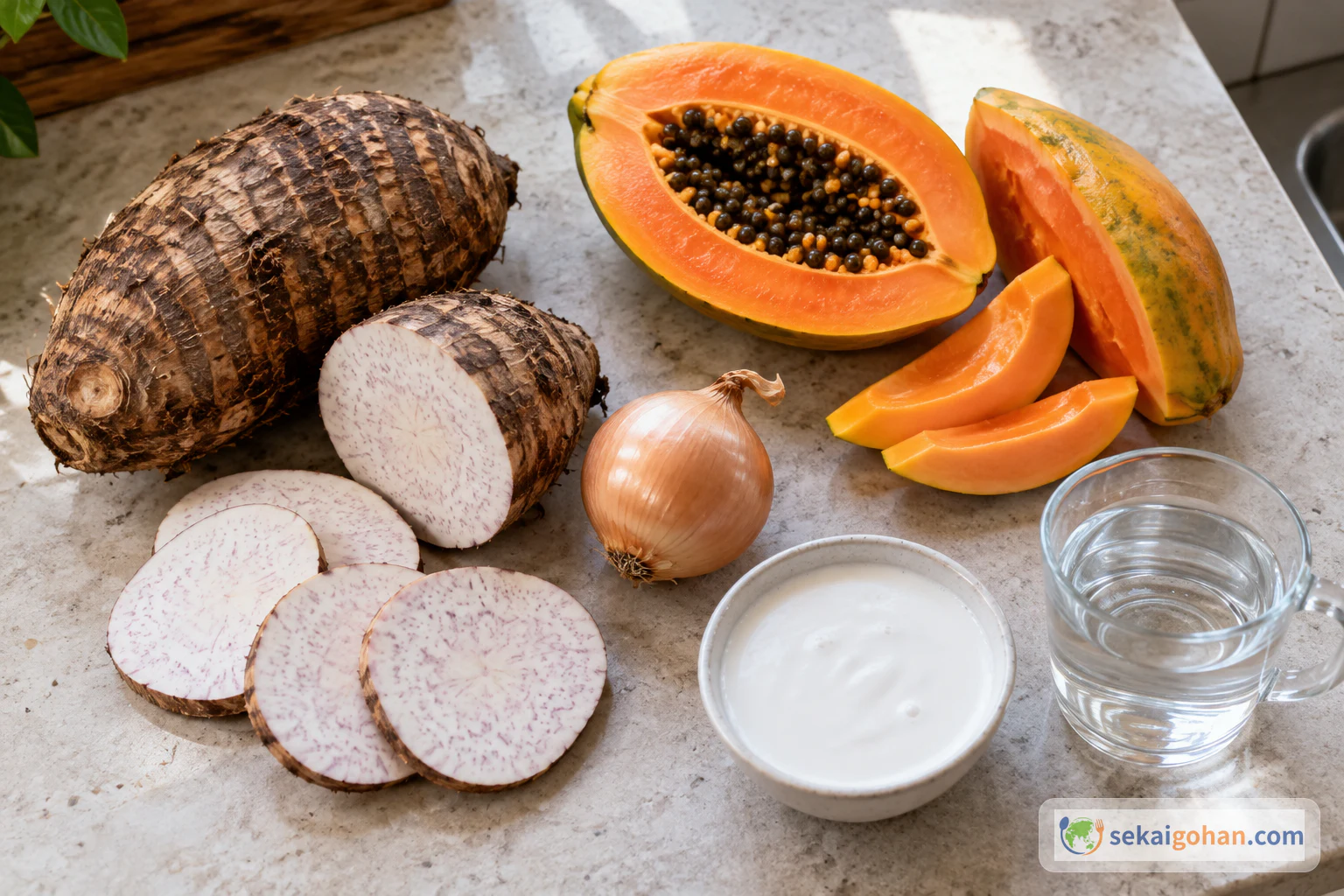
This recipe uses no salt, sugar, oil or banana leaves. Versions with extras are covered further down.
Taro must not be eaten raw. Bake until the taro is cooked and soft all the way through. Coconut cream is a coconut product, so take care if anyone eating has a coconut allergy, and check the label of the coconut cream you buy for allergen information and any shared-facility statements.
Equipment
- Oven
- Ovenproof baking dish, deep enough to hold several layers plus the liquid
- Aluminium foil, to cover the dish
- Knife and cutting board
- A fork or skewer, to test the taro
Choosing Taro, Pawpaw and Coconut Cream
Taro. Use fresh taro, peeled and sliced. Frozen taro is easier to find in some places, but it behaves differently, so look for fresh when you can.
Pawpaw or ripe papaya. In New Zealand and Pacific English, "pawpaw" means papaya. Choose fruit that is properly ripe, with orange flesh. Green (unripe) papaya won't give the sweetness and soft texture the dish is built around.
Onion. One ordinary supermarket onion is fine.
Coconut cream. Look for plain, unsweetened coconut cream. Measure it and the water separately with the same cup measure, then combine them, so the proportion stays as written.
Method: Slice, Layer, Press, Pour, Cover and Bake
The time is a guide. The real finishing point, as the recipe gives it, is taro that is cooked through and soft when you pierce it.
Common Takihi Problems and Fixes
| What you notice | Likely reason | What to do |
|---|---|---|
| The taro is still firm after about 1½ hours | Thicker slices, a deeper dish, or an oven that runs differently | Keep baking until the taro is soft when pierced. Don't serve it firm |
| Some slices are soft, others still firm | Slices of uneven thickness | Keep baking until the firmest taro is soft. Next time, aim for more even slices |
| The layers fall apart when served | The layers were not pressed together | Next time, press the layers down before pouring in the liquid |
| The dish tastes flat or not sweet enough | Underripe papaya | Next time, choose properly ripe pawpaw with orange flesh |
Serving Takihi with Fish or Meat
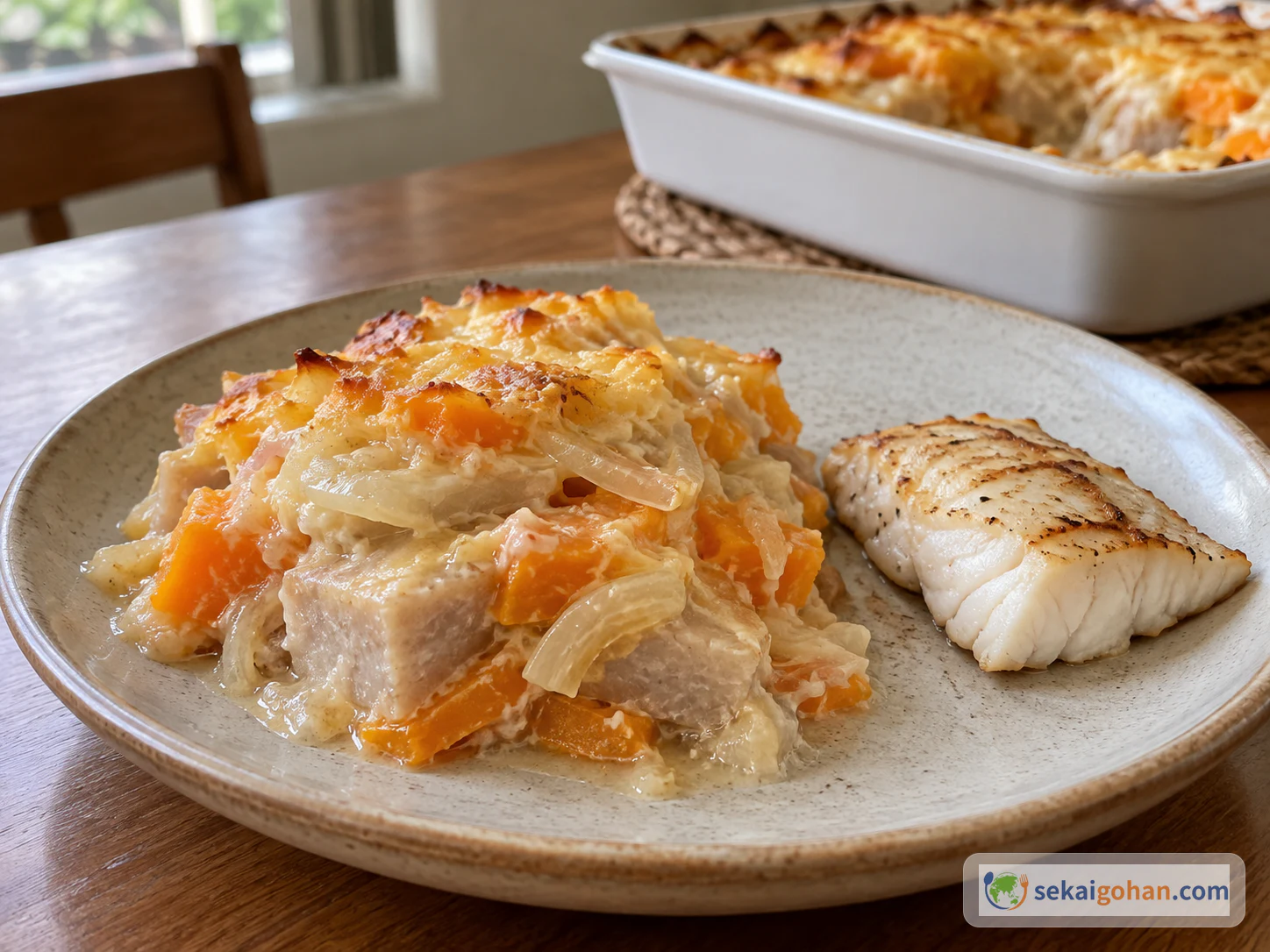
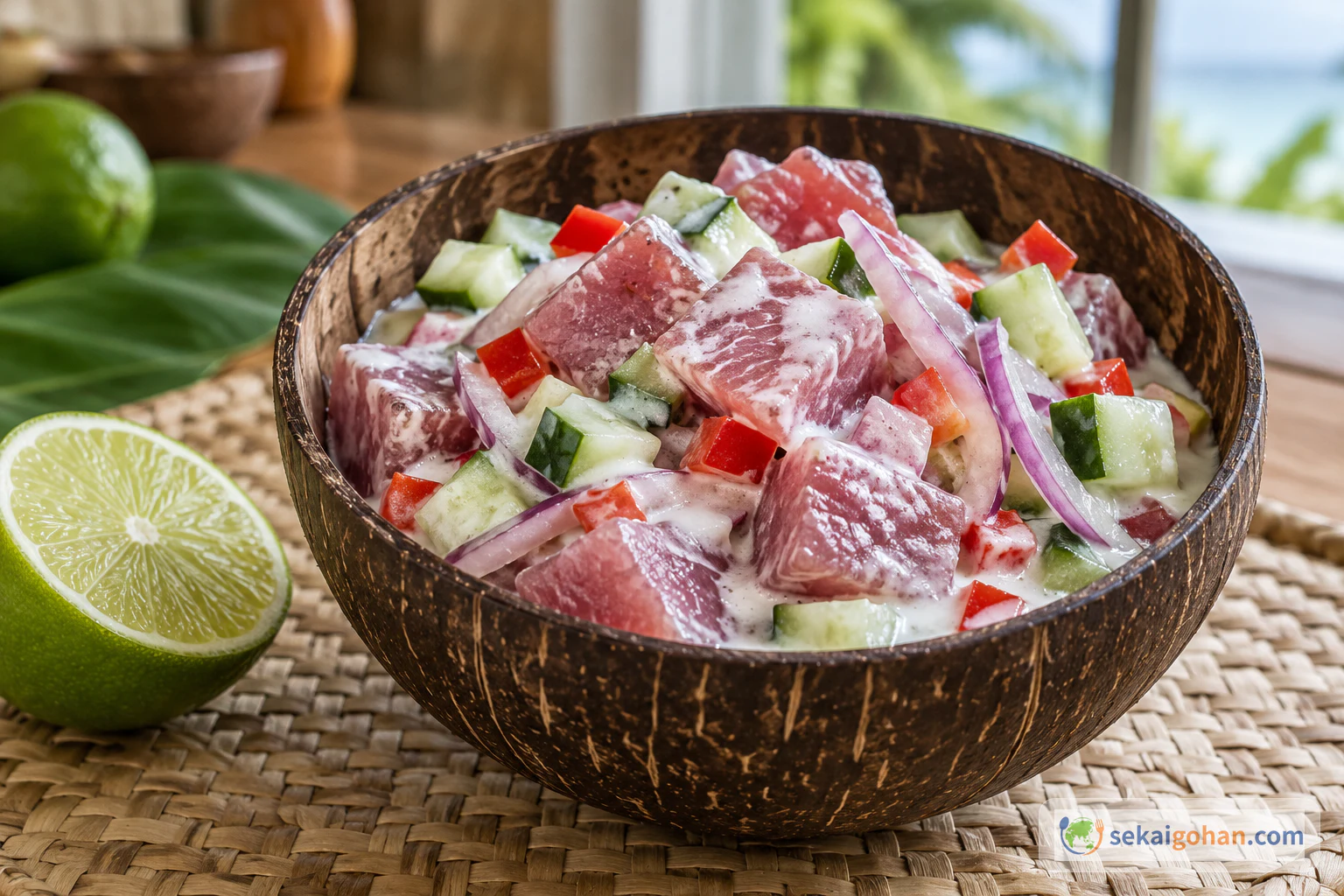
Takihi goes well with seafood, meat or fish. Keep the accompaniment simple, like a plainly cooked piece of fish, and let the sweetness of the pawpaw and the softness of the taro do the work. If you'd like another Pacific dish to cook alongside it, try Fijian kokoda.
Frequently Asked Questions
Is takihi a sweet dish?
It has a natural sweetness from the ripe pawpaw, but there's no added sugar. It works as a side dish with seafood, meat or fish.
Can I use frozen taro?
This recipe is written for fresh taro, so use it if you can find it. Frozen taro is usually precooked first and then baked for less time. Whatever you use, cook the taro until it is soft all the way through.