Payesh: A Bangladeshi Family's Chilled Rice Pudding with Saffron

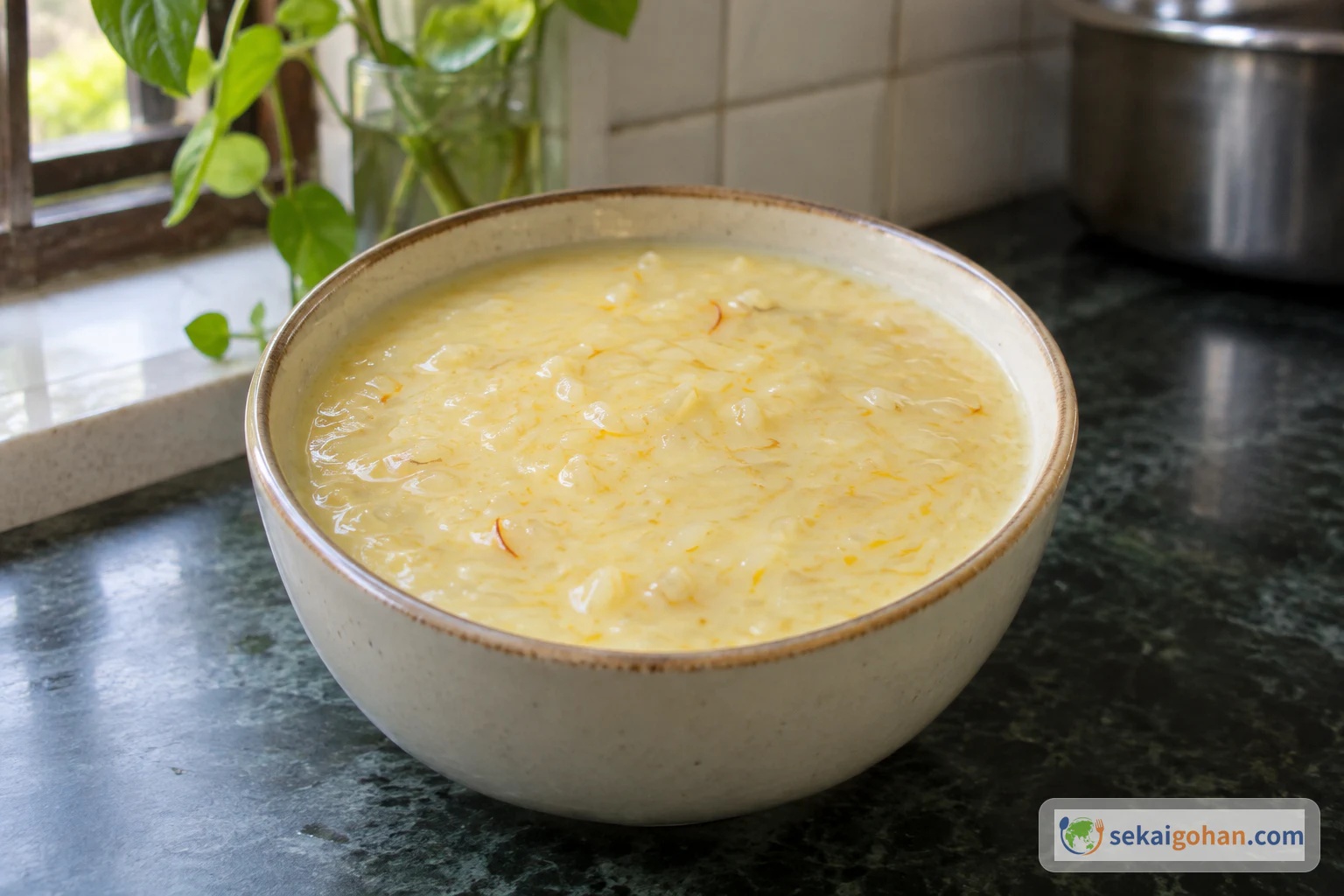
A bowl of chilled payesh
Serves
8 servings
Cuisine
Bangladeshi

How to make payesh, a chilled rice pudding of fragrant rice, milk, saffron and cashews, from one Bangladeshi family's recipe published by SBS Food. Includes clear steps, the thickness cue, how to divide and return the three cups of hot milk, and how to chill it quickly in shallow dishes.

Cooking flow

Cooking steps

STEP11 / 11

Wash and soak the rice

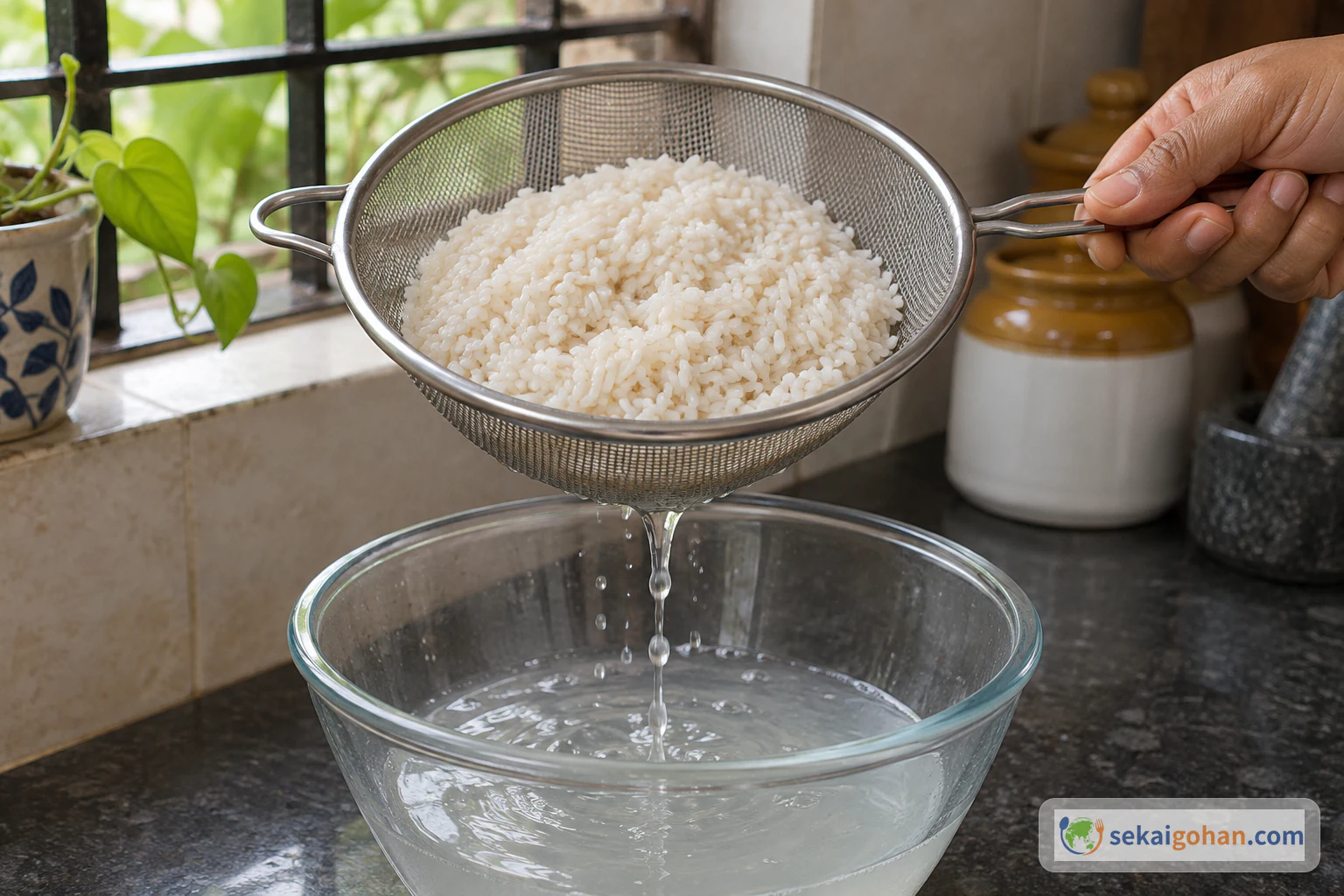
Soaked rice draining in a sieve above a bowl
Drain the rice after soaking

Rinse the fragrant rice in water. Cover the washed rice with fresh water and soak for 1 hour, keeping the rice under the water. Lift the soaked rice into a sieve and let the water drain away until no more drips fall.

STEP22 / 11

Warm the milk

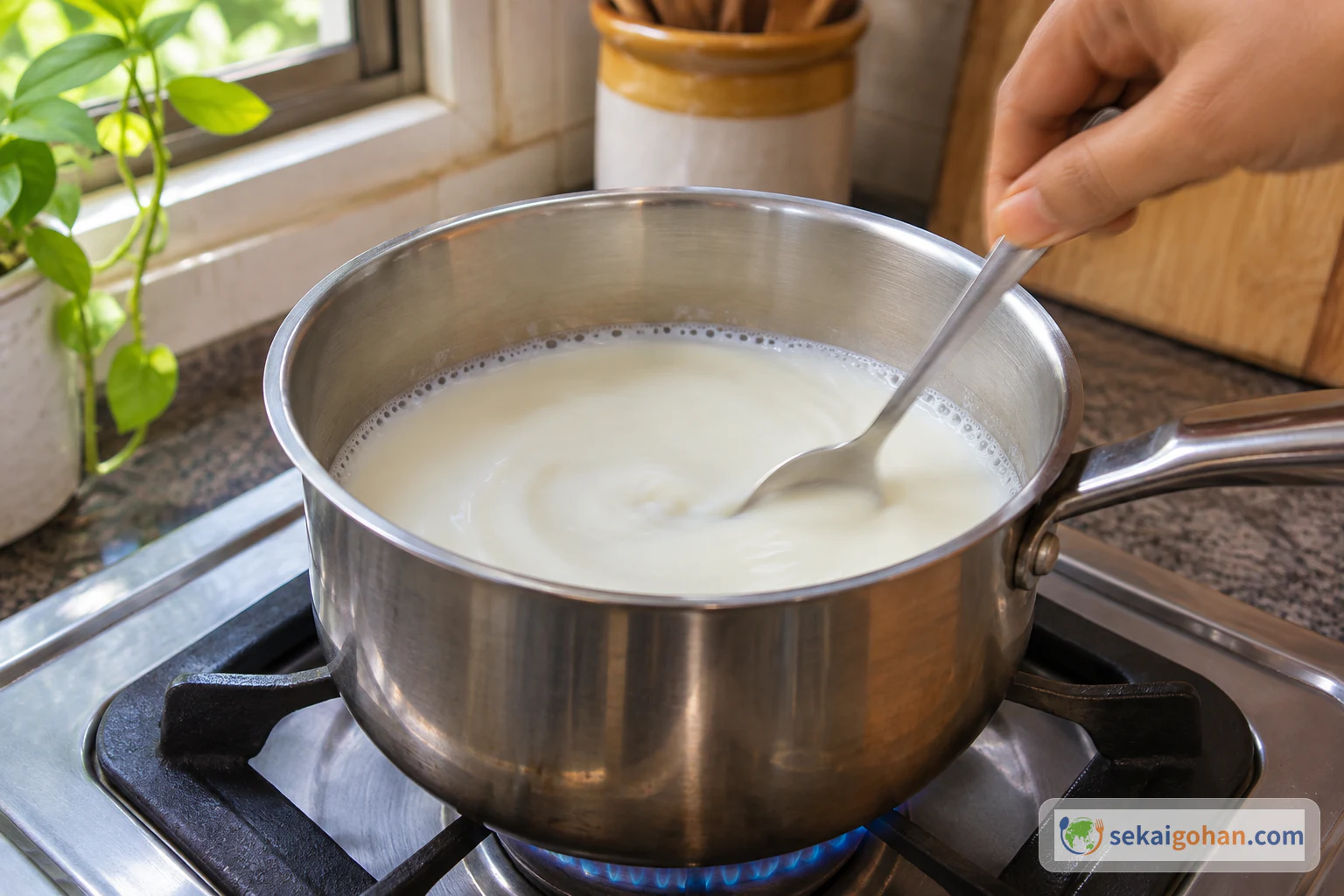
Stirring milk as it warms in a heavy saucepan
Warm the milk while stirring

Pour the 1 quarts (1L) of milk into a heavy-bottomed saucepan and set it over medium-low heat. Stir so it doesn't catch on the bottom, and warm it without letting it boil until it starts to simmer.

STEP33 / 11

Add the sugar and spices

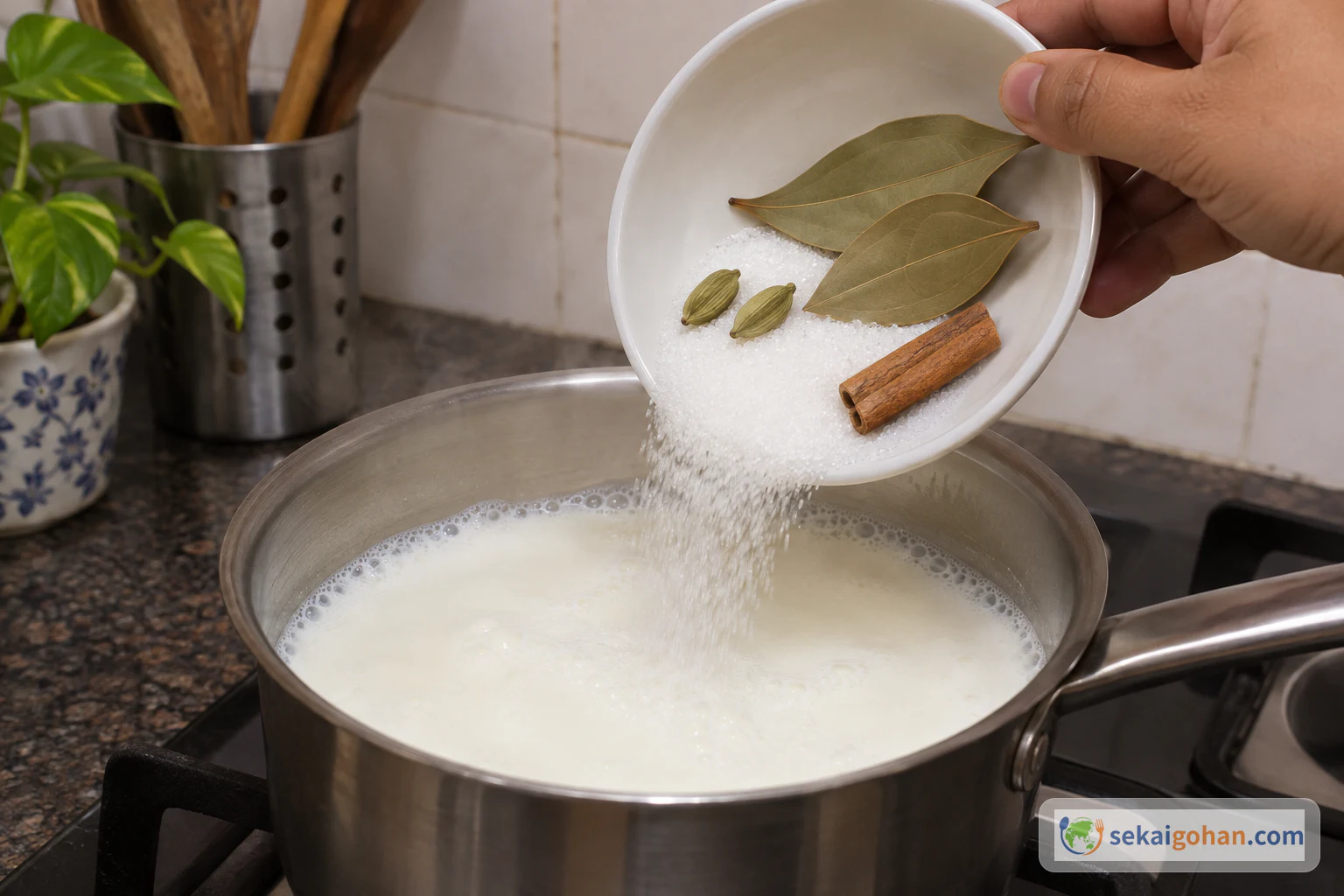
Adding sugar and whole spices from a bowl to simmering milk
Add the sugar and whole spices when the milk starts to simmer

When the milk starts to simmer, add the caster sugar, cardamom pods, bay leaves and cinnamon stick. Keep stirring so the milk doesn't catch on the bottom of the pan. The sugar should dissolve into a sweet, spiced milk.

STEP44 / 11

Divide some hot milk among three cups

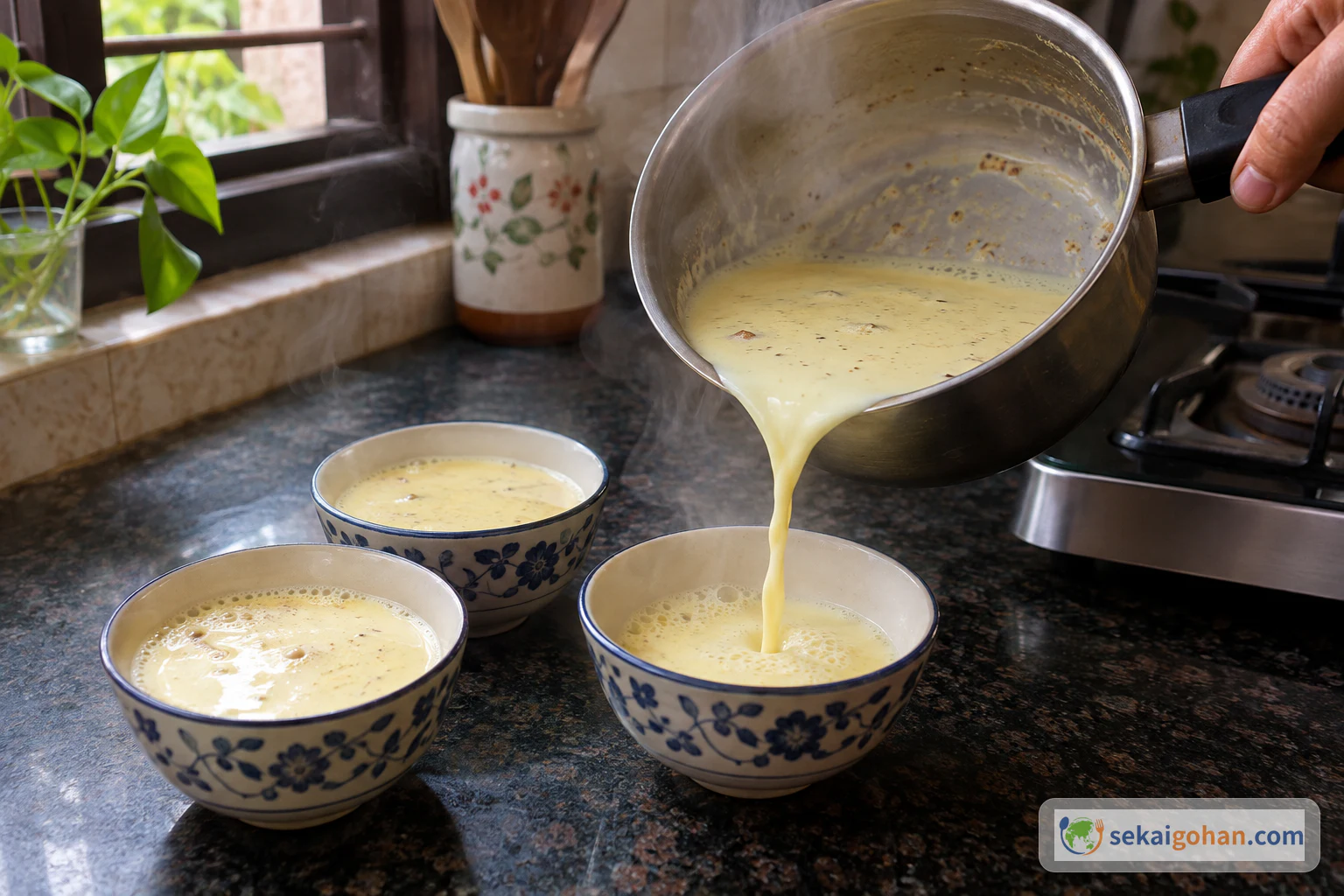
Pouring hot milk from the saucepan into one of three small bowls
Share the reserved hot milk among three small cups

Take about 6 Australian tbsp of hot milk from the pan and divide it among three small cups. That amount is the total for all three cups, not 6 tablespoons each, and the cups need not hold equal amounts. Each cup should now hold a little steaming milk.

STEP55 / 11

Infuse the saffron and soak the rice and cashews

Rice and cashews sitting in a cup of milk
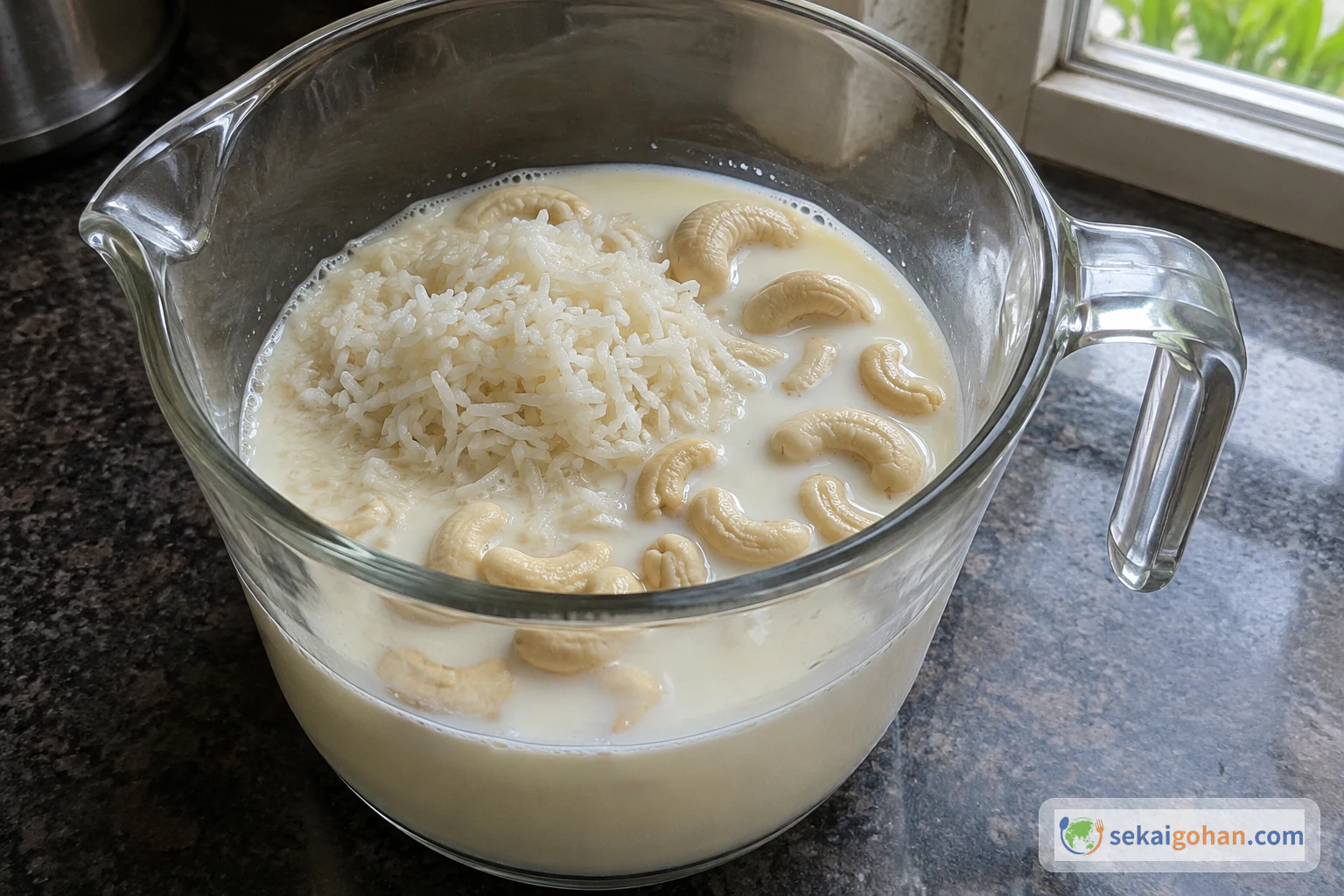
Rice and cashews go into the second cup

Add the saffron to the first cup and let it infuse the milk with aroma and color. Put the drained rice and the 10 cashews into the second cup and let them soak for a couple of minutes. The saffron milk turns golden, and the rice and cashews sit softened in the milk.

STEP66 / 11

Blend the rice and cashews

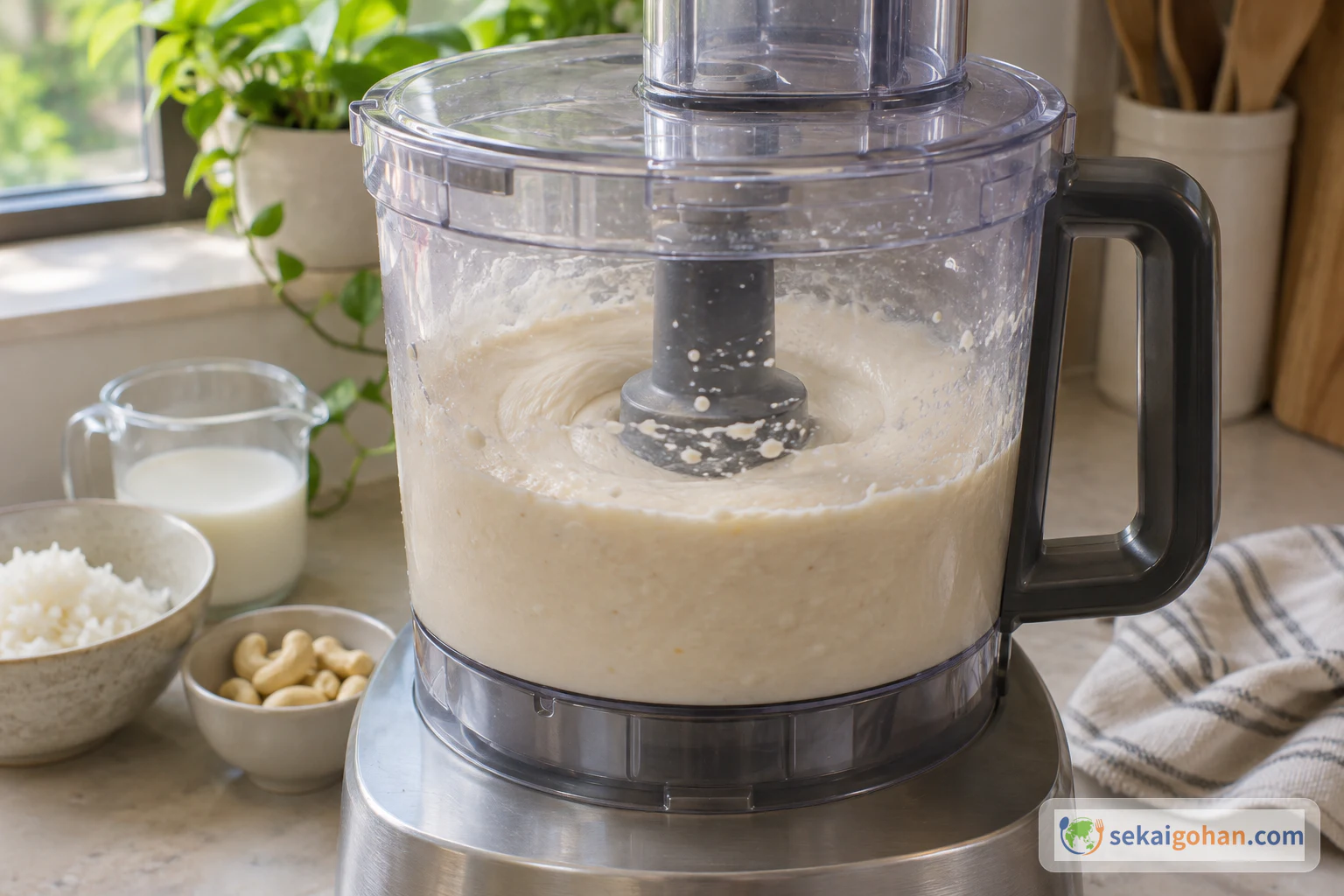
Rice and cashews blended to a mostly smooth paste in a food processor
Blend until mostly paste

Transfer the rice, cashews and their milk to a food processor whose maker allows warm liquids, and use it according to its instructions. Blend until most of the mixture is a paste. A few remaining grains are fine. Do not pour hot liquid into a sealed spice grinder.

STEP77 / 11

Dissolve the milk powder

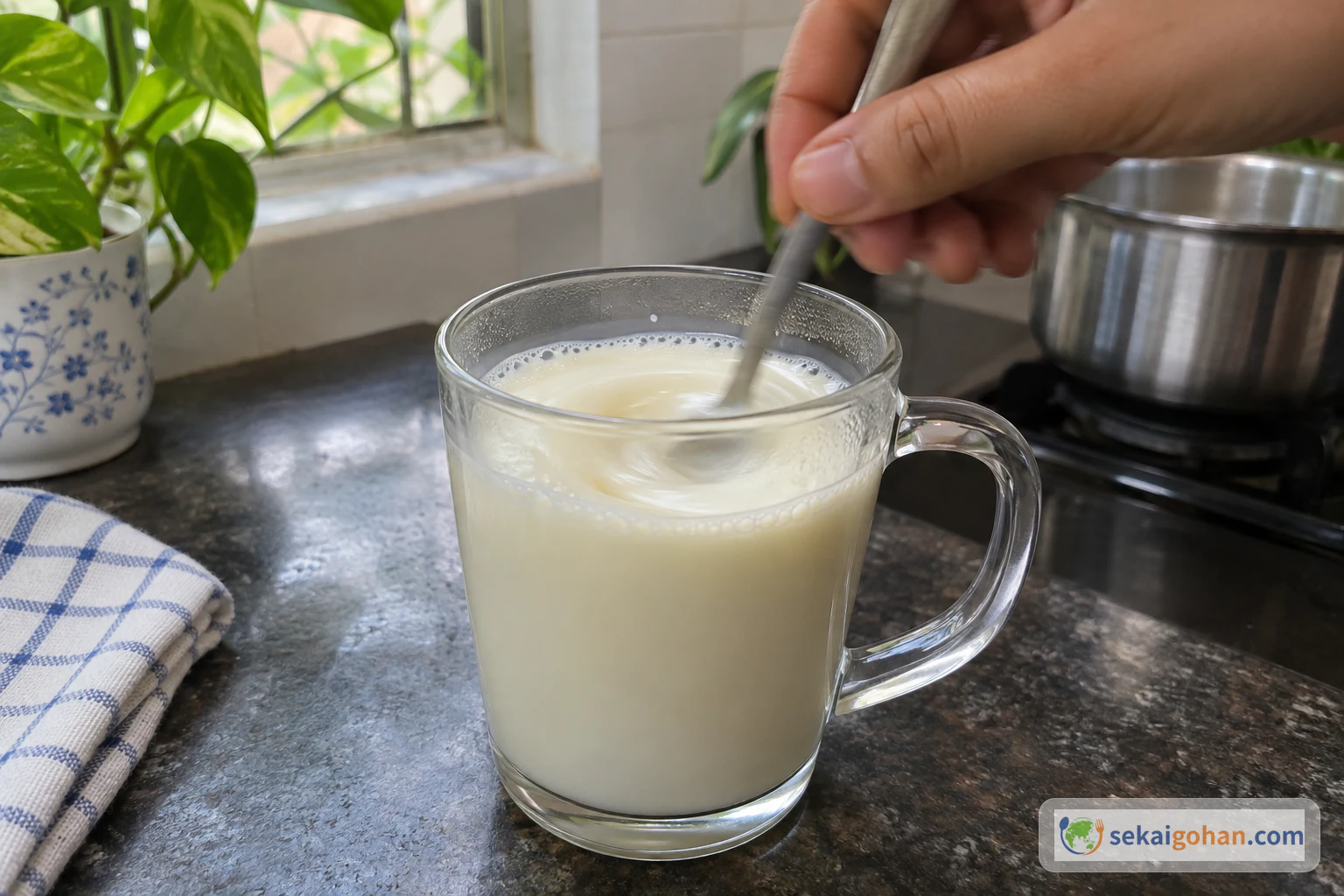
Stirring milk powder into a cup of hot milk until smooth
Milk powder dissolves in the third cup

Add the 2 Australian tbsp of milk powder (40ml total) to the hot milk in the third cup. Stir until it has dissolved completely and the milk looks smooth.

STEP88 / 11

Return everything to the pan

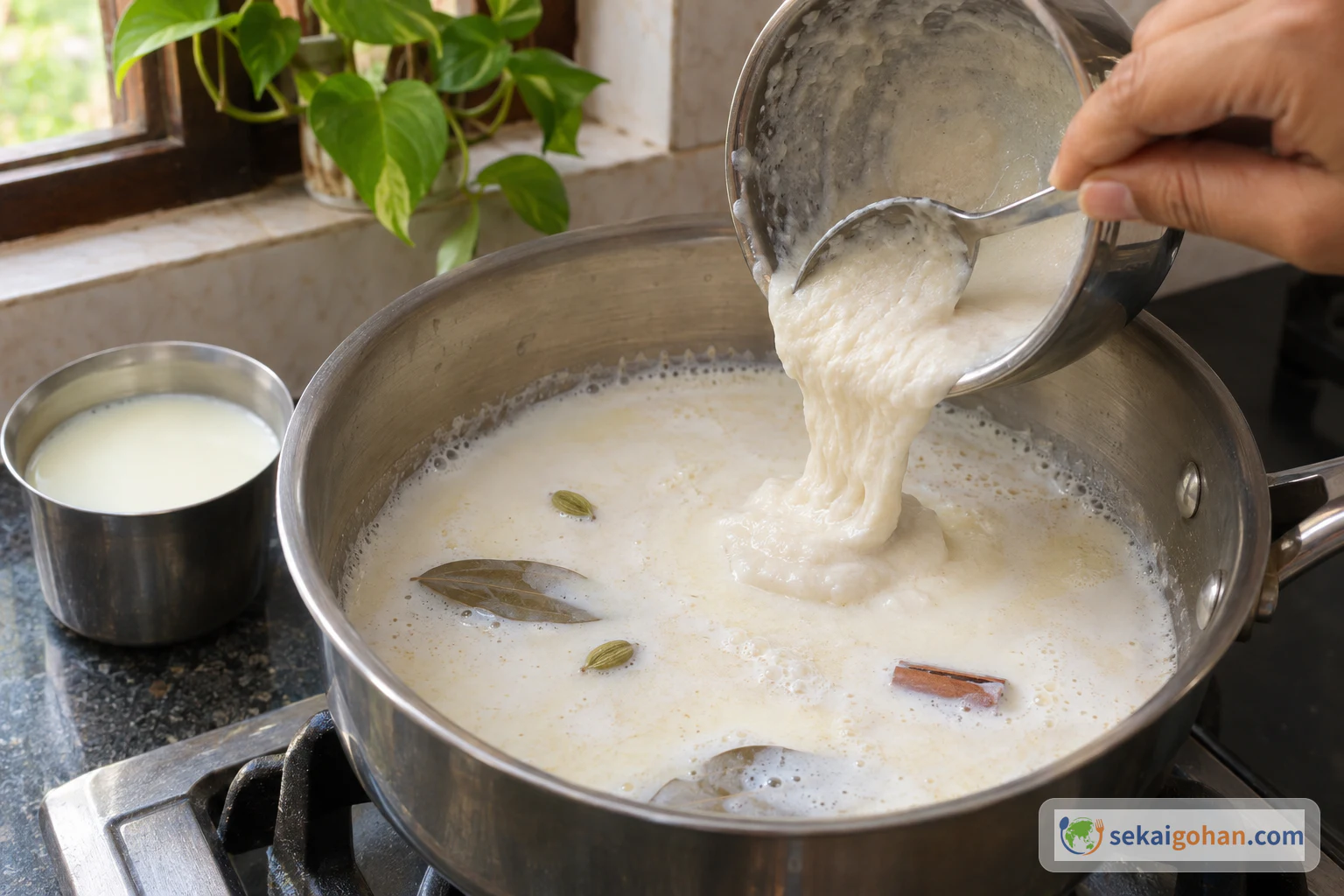
Spooning rice and cashew paste into the saucepan
The paste goes into the pan

Pour the saffron milk back into the saucepan. Spoon in the rice and cashew paste, then pour in the dissolved milk powder mixture. The pan should hold one pale golden, creamy mixture.

STEP99 / 11

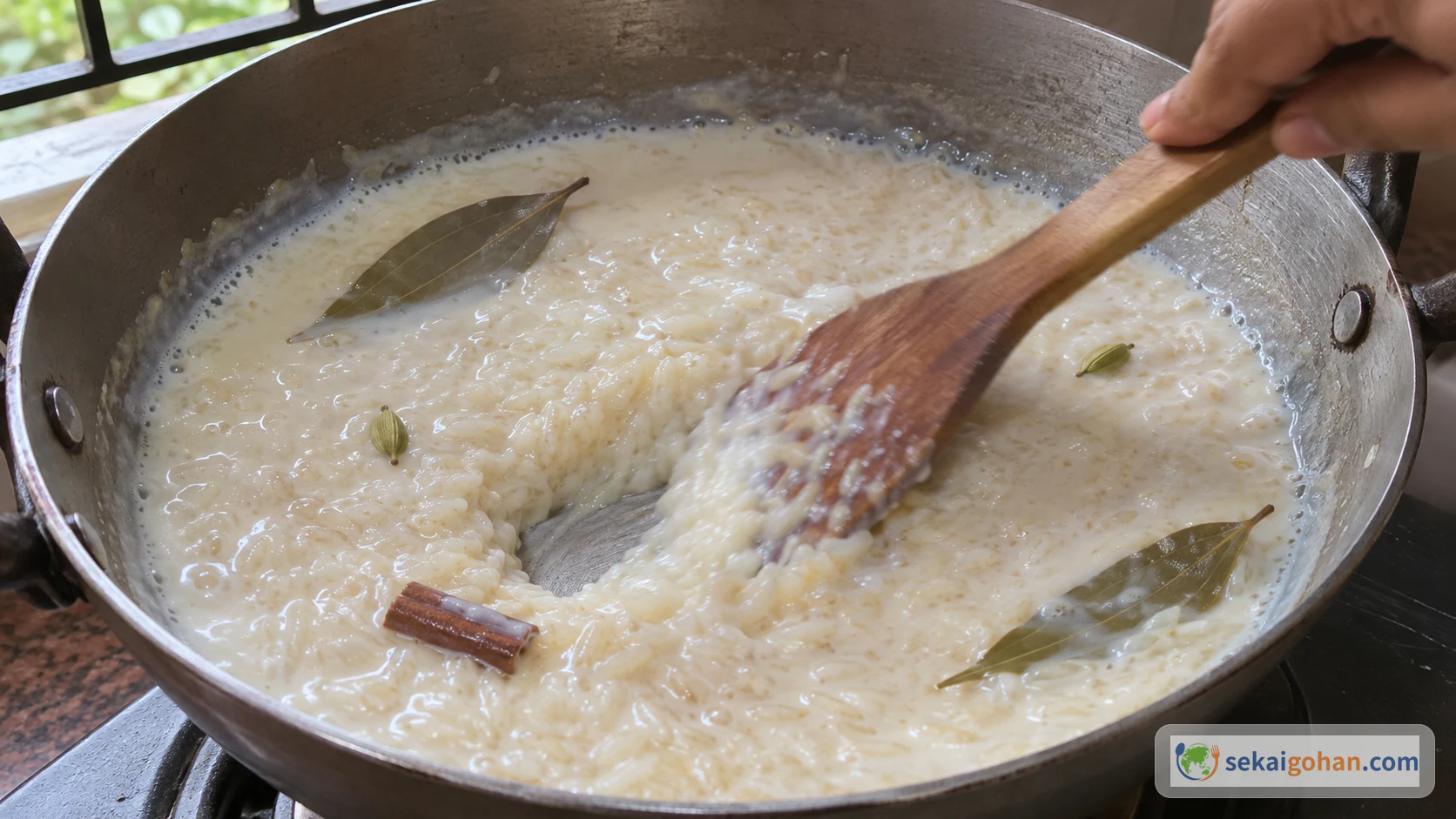
Stir over low heat until thick

Stirring thickening payesh with a wooden spoon, scraping the bottom of the pan
Stir until the spoon clears the bottom of the pan

Keep stirring over low heat until the pudding is thick and the bottom of the pan shows clearly when you scrape it with a wooden spoon. Turn off the stove as soon as the pudding reaches that thickness.

STEP1010 / 11

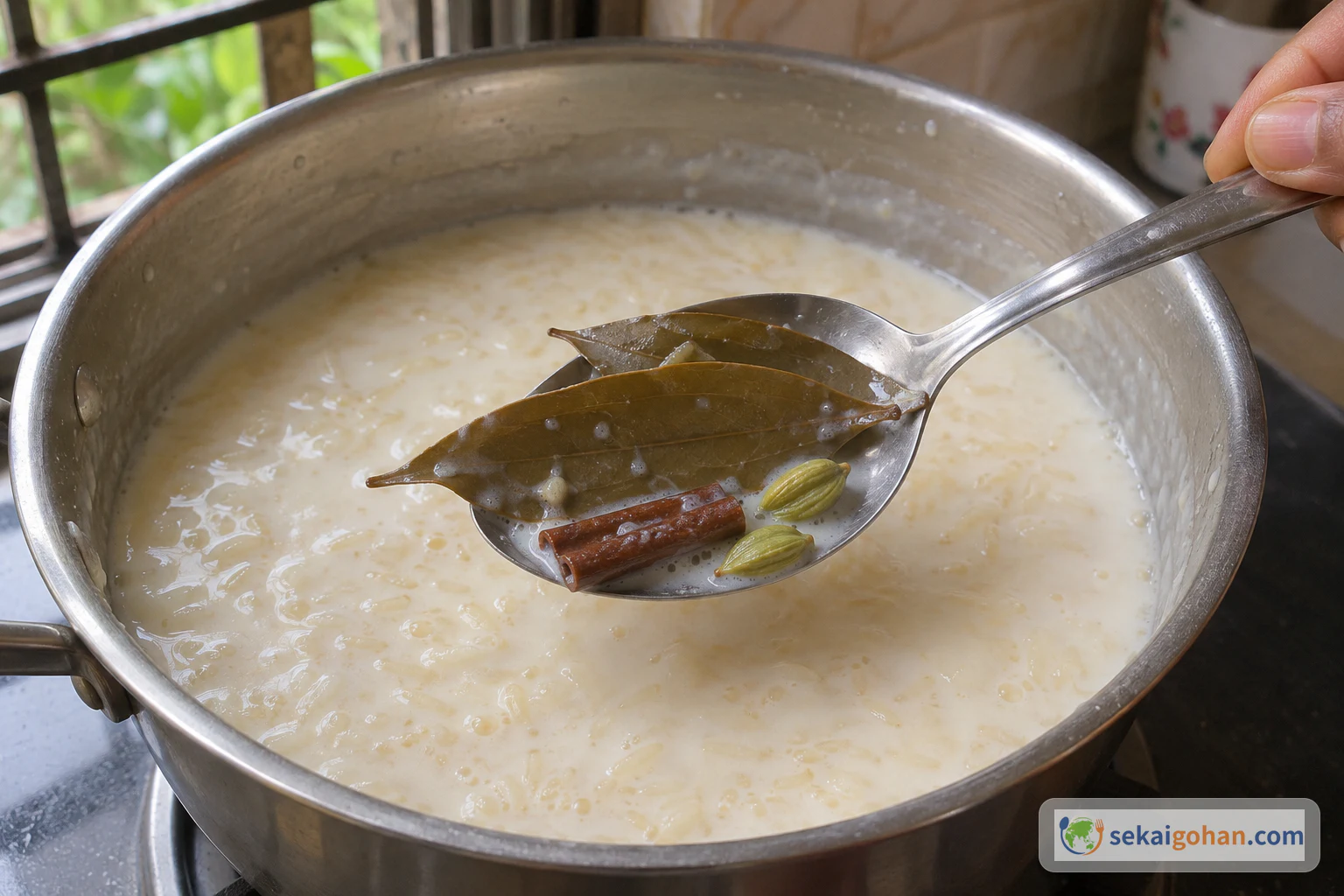
Remove the spices and add the rosewater

Lifting bay leaves, cinnamon and cardamom pods out of the pan with a spoon
Lift out the whole spices before portioning

Use a clean spoon to lift out the bay leaves, cinnamon stick and cardamom pods. With the heat still off, add the 1/4 tsp of rosewater to the pan. Stir with a clean spoon until the rosewater is mixed through.

STEP1111 / 11

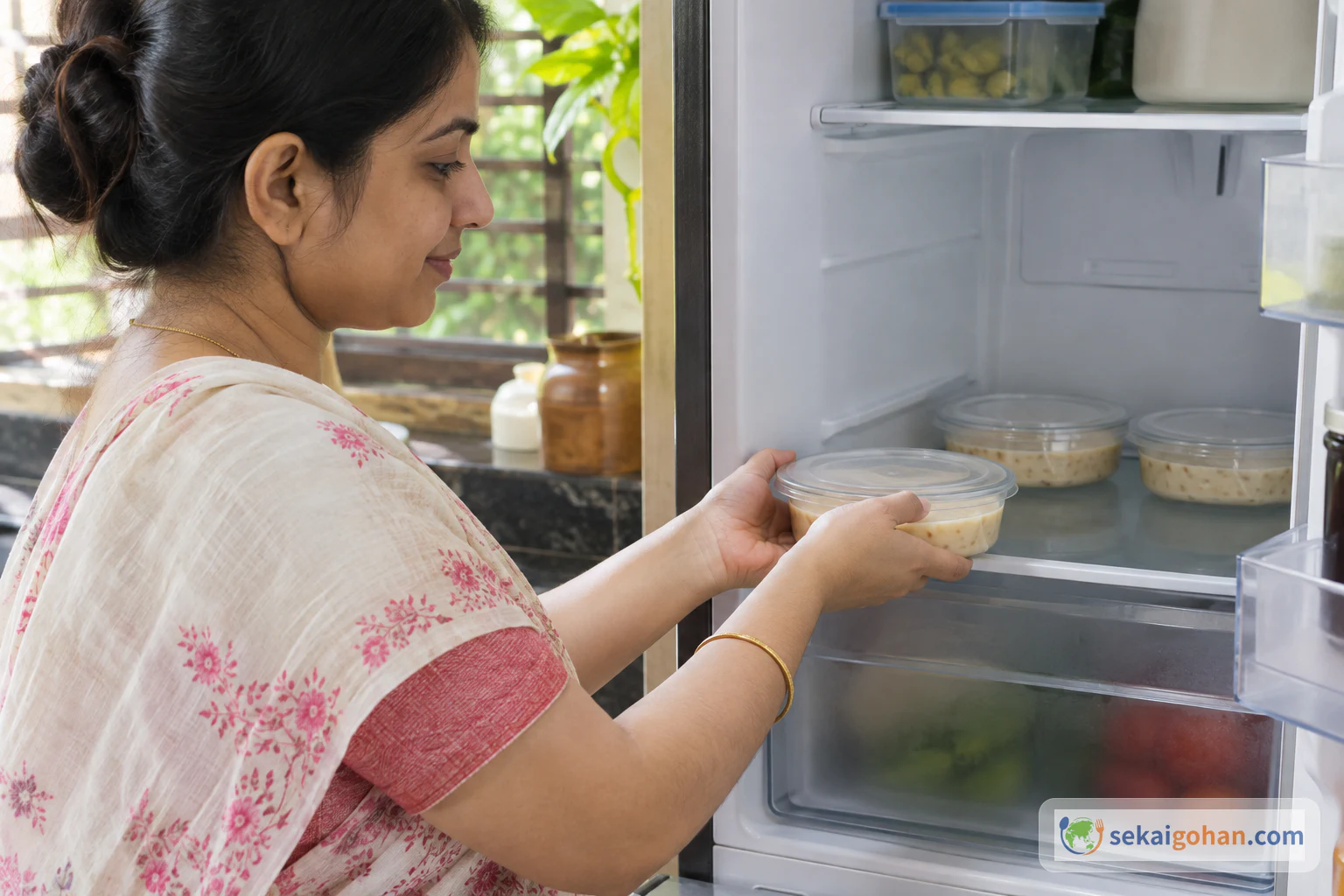
Portion and chill

Placing covered shallow portions of payesh into a refrigerator
Move the covered portions into the refrigerator

Right away, transfer the pudding into clean, shallow individual dishes. Don't leave it in the pan to cool. Cover the dishes and put them straight into a refrigerator set at 39°F (4°C) or below. Chill for at least 30 minutes before serving.

0 / 0
Ingredients

Ingredients

1 / 1

Ingredients

Ingredient Amount Role
Fragrant rice (kalijeera or chinigura) 3 Australian tbsp The grain of the pudding, blended with the cashews
Commercially pasteurized full-cream milk 1L The body of the pudding
Caster sugar 1 Australian cup (250ml) Sweetness
Green cardamom pods 2 Whole spice, simmered in the milk
Dried bay leaves 2 Whole spice, simmered in the milk
Cinnamon stick 1 inch Whole spice, simmered in the milk
Saffron threads 1 pinch Infused in hot milk for aroma and color
Ready-to-eat unsalted cashews 10 Blended with the rice into a paste
Full-cream milk powder 2 Australian tbsp (40ml total) Dissolved in hot milk and returned to the pot
Food-grade culinary rosewater 1/4 tsp Stirred in after the heat is off
Water as needed For washing and soaking the rice
0 / 0

Picture a small bowl of pale cream pudding, the rice fine and soft, with a gentle tint of saffron. This is payesh, a Bangladeshi rice pudding made from small, fragrant rice cooked in full-cream milk scented with cardamom, bay leaf and cinnamon. It's served chilled, and it tastes of warm spice, saffron and slowly cooked milk.

Payesh in Bangladesh

Payesh is often served at Eid in Bangladesh. This is one family's version. Bangladeshi payesh recipes vary a lot from kitchen to kitchen. One version uses basmati, saffron, bay, cardamom and mixed nuts. Another cooks milk powder in water, then crushes pulao rice, fries it in ghee and cooks it in the milk. Those methods differ from this one, so keep their amounts and steps separate from this recipe.

What sets this version apart is how the hot milk gets used. Saffron, the rice with cashews, and the milk powder each get their own cup of hot milk before everything goes back into the pot. For more dishes from the country, see the Bangladesh page.

Ingredients: Serves 8
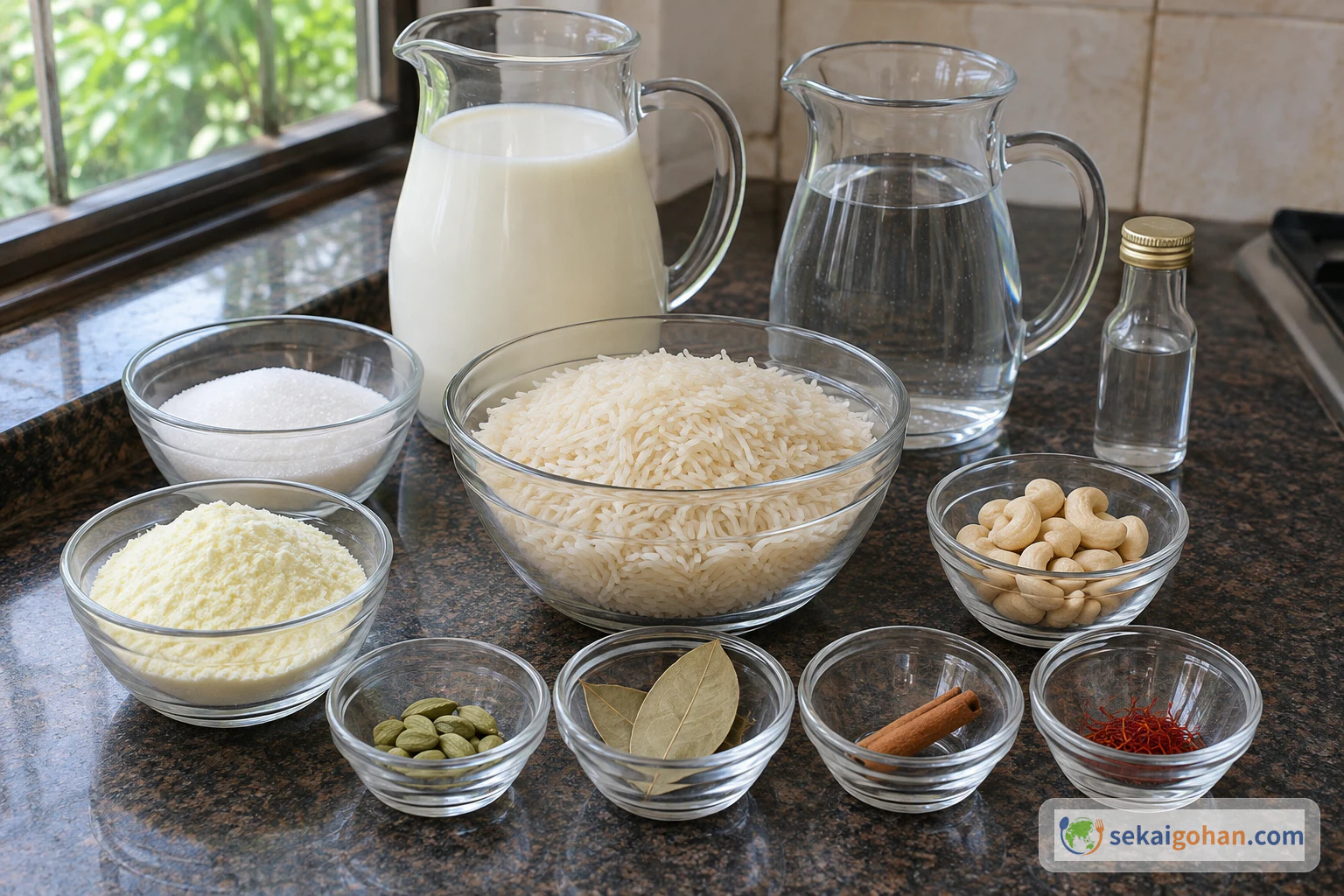
The ingredients for payesh set out separately
Fragrant rice, milk, sugar, whole spices, saffron, cashews, milk powder, rosewater and water

The hot milk for the three small cups comes from the 1L in the pot, so it is not an extra ingredient. Use about 6 Australian tbsp in total for all three cups, not for each.

Equipment

  • Fine sieve
  • Small bowl for soaking the rice
  • Heavy-bottomed saucepan
  • Wooden spoon
  • Clean spoon for lifting out the spices and stirring in the rosewater
  • Three small cups or bowls
  • Food processor whose maker allows warm liquids
  • Measuring spoons and a measuring cup
  • Clean, shallow individual dishes with covers

Choosing Ingredients for Payesh

The measures are Australian: 1 tsp = 5ml, 1 tbsp = 20ml and 1 cup = 250ml. That matters most for the spoon measures, because an Australian tablespoon holds more than a US one.

  • Rice: Kalijeera or chinigura is ideal. If you can't find either, use basmati or another small-grain fragrant rice and keep the other amounts the same.
  • Milk: Use commercially pasteurized full-cream milk, not raw milk.
  • Cashews: Choose ready-to-eat, unsalted cashews, and check the package to confirm.
  • Rosewater: Choose a product labeled food-grade and intended for cooking. Stir it in after the heat is off.
  • Food processor: You'll be blending the rice and cashews in warm milk, so use a processor whose maker allows warm liquids, and follow its instructions.
Allergens

This pudding contains milk, milk powder and cashews. Check the labels on the products you buy for allergens and possible cross-contact.

Payesh Troubleshooting

What you see What to do
The milk is catching on the bottom of the pan Stay at medium-low heat and keep stirring
The milk has reached a simmer Add the sugar and whole spices now, without waiting for a boil
Some rice grains remain after blending A few are fine. If most of the mixture isn't paste yet, keep blending, following your processor's instructions
The milk powder is still lumpy in its cup Keep stirring until it has dissolved completely, then return it to the pan
The spoon doesn't clear the bottom of the pan Keep stirring over low heat. The thickness is your cue, so there is no set time to follow

Cooling, Serving and Garnishing Payesh
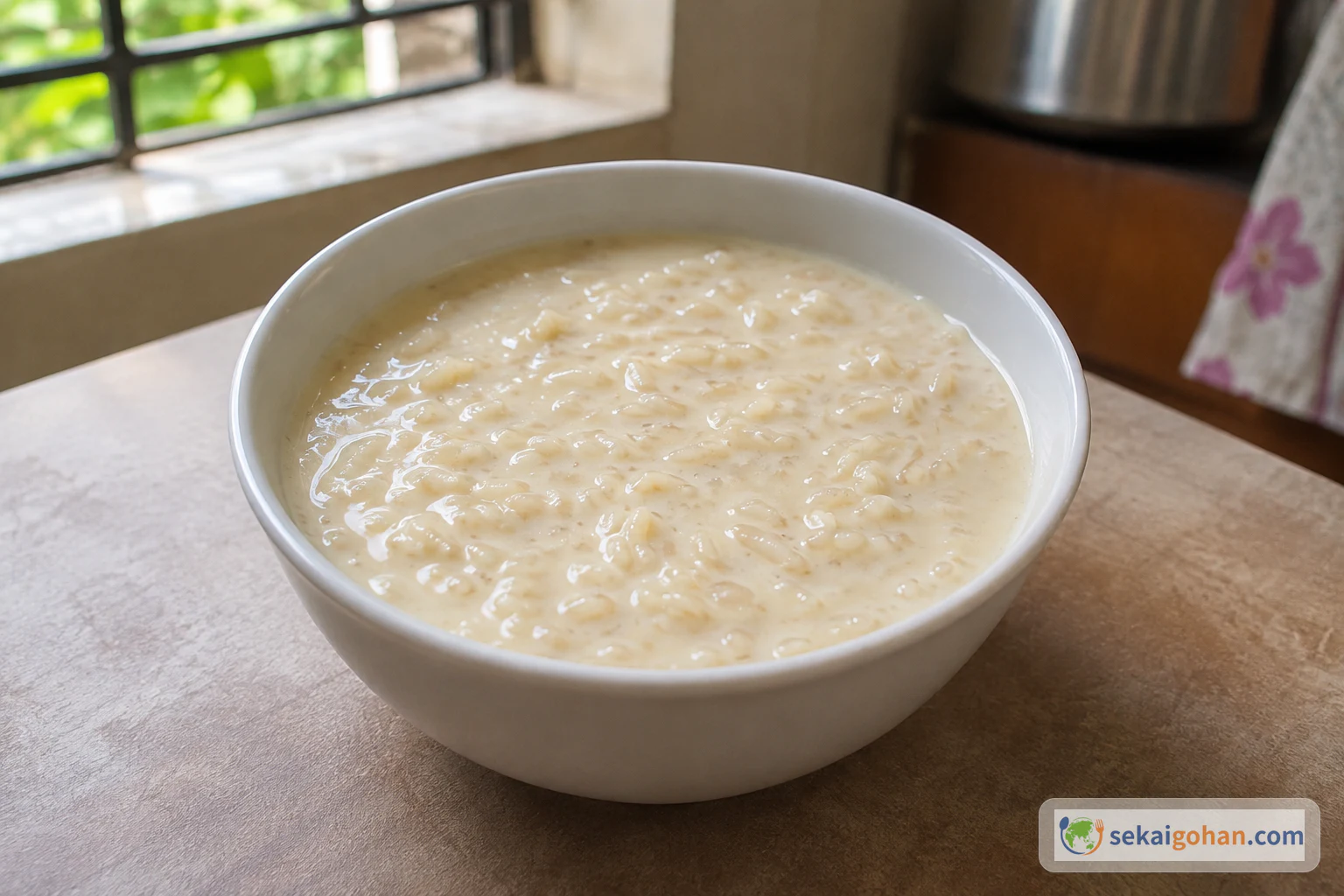
A small bowl of chilled payesh on a simple table
Serve the payesh chilled, with no garnish needed

Once the heat is off, lift out the whole spices so the pudding is easier to eat. Then get it into clean, shallow dishes and into the refrigerator without delay. Shallow containers cool faster than a deep pot, so don't leave the pudding to cool in the pan. Keep your refrigerator at or below 40°F/4°C.

Perishable food should spend no more than 2 hours unrefrigerated, or 1 hour when the surrounding temperature is above 90°F/32°C. Treat that as a limit, not a waiting time. Chill the payesh for at least 30 minutes before serving so it sets to the right texture.

If you'd like a garnish, scatter 1 tsp of crushed nuts and a few edible flowers over the top. They're optional.

Frequently Asked Questions

Why divide the hot milk into three cups?

Each cup has its own job. One infuses the saffron, one holds the rice and cashews before blending, and one dissolves the milk powder. All three then go back into the pot in the order shown in the method.

Why not rest it at room temperature before chilling?

The pudding contains cooked rice, and cooked rice should be chilled as quickly as possible, ideally within one hour. Dividing it into smaller portions helps. Put it straight into shallow dishes and refrigerate it, then chill for at least 30 minutes before serving.
Sources