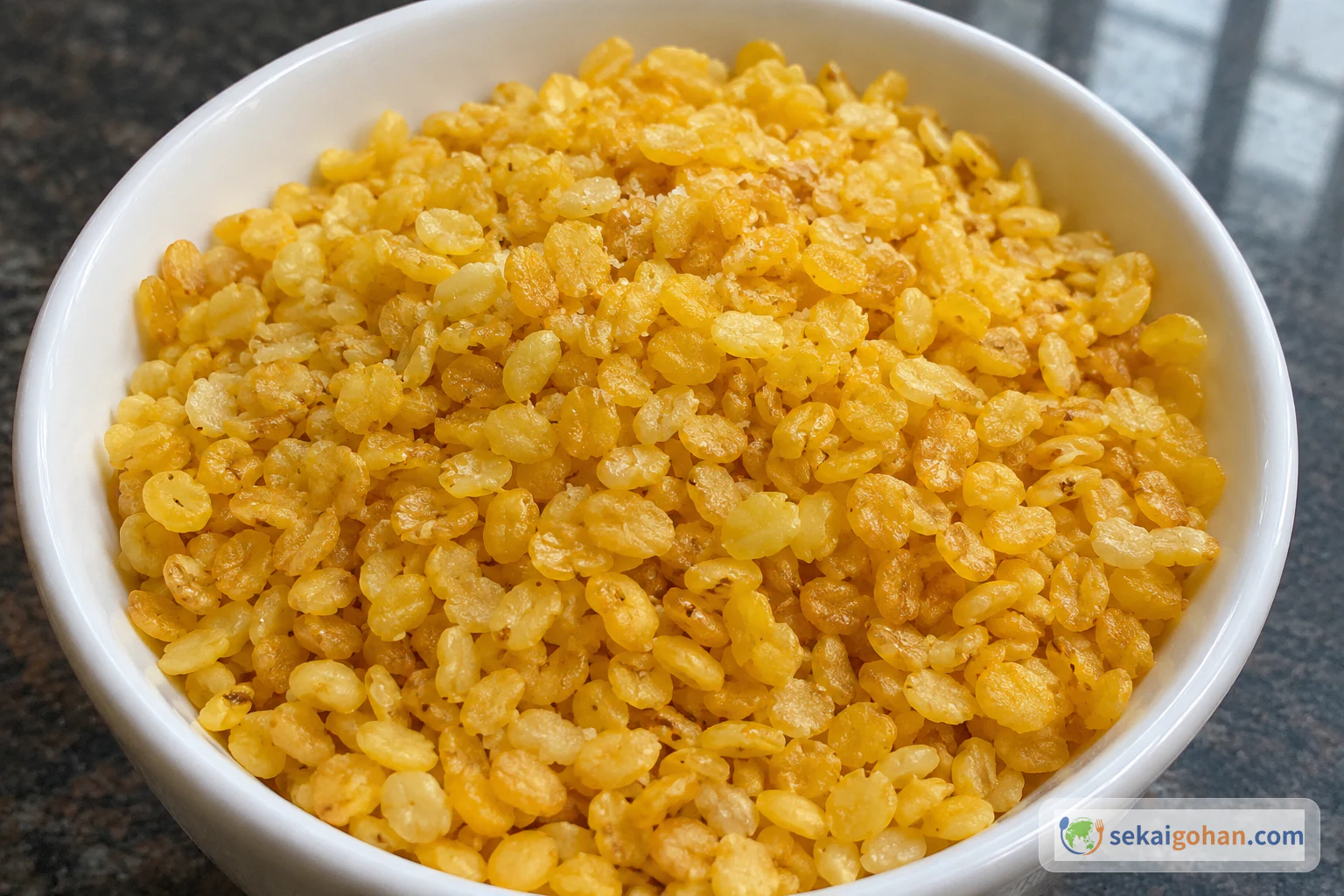
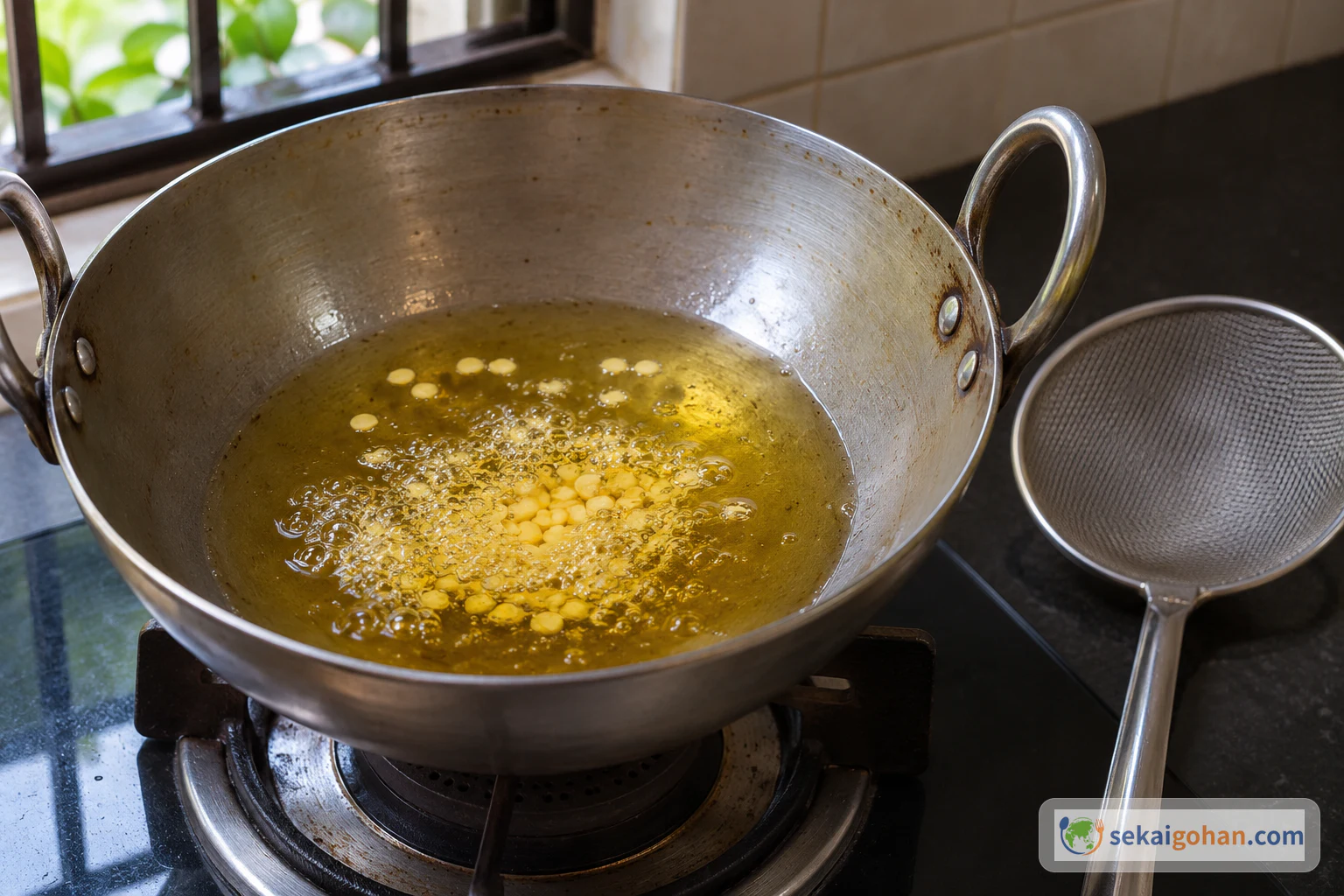
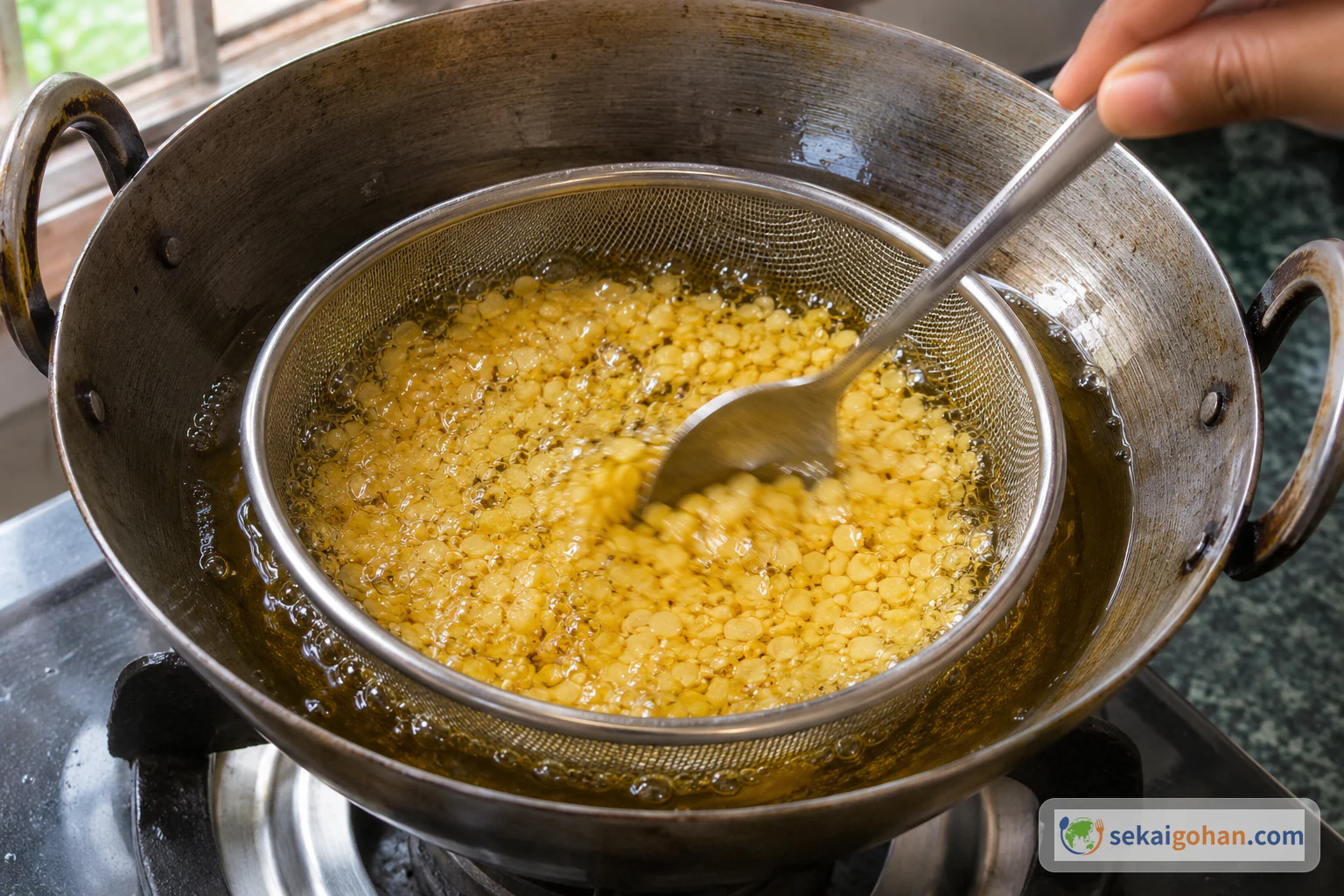
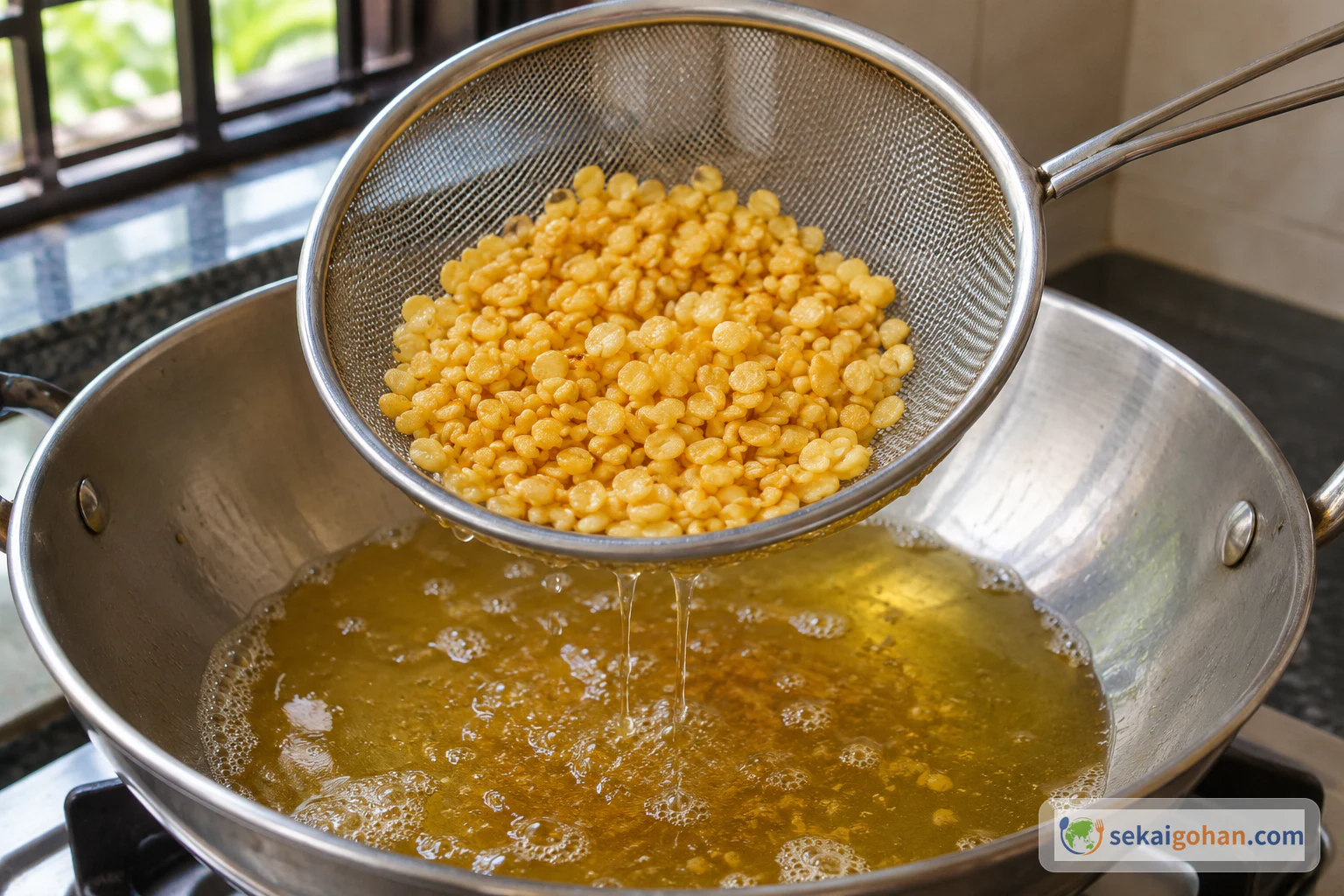
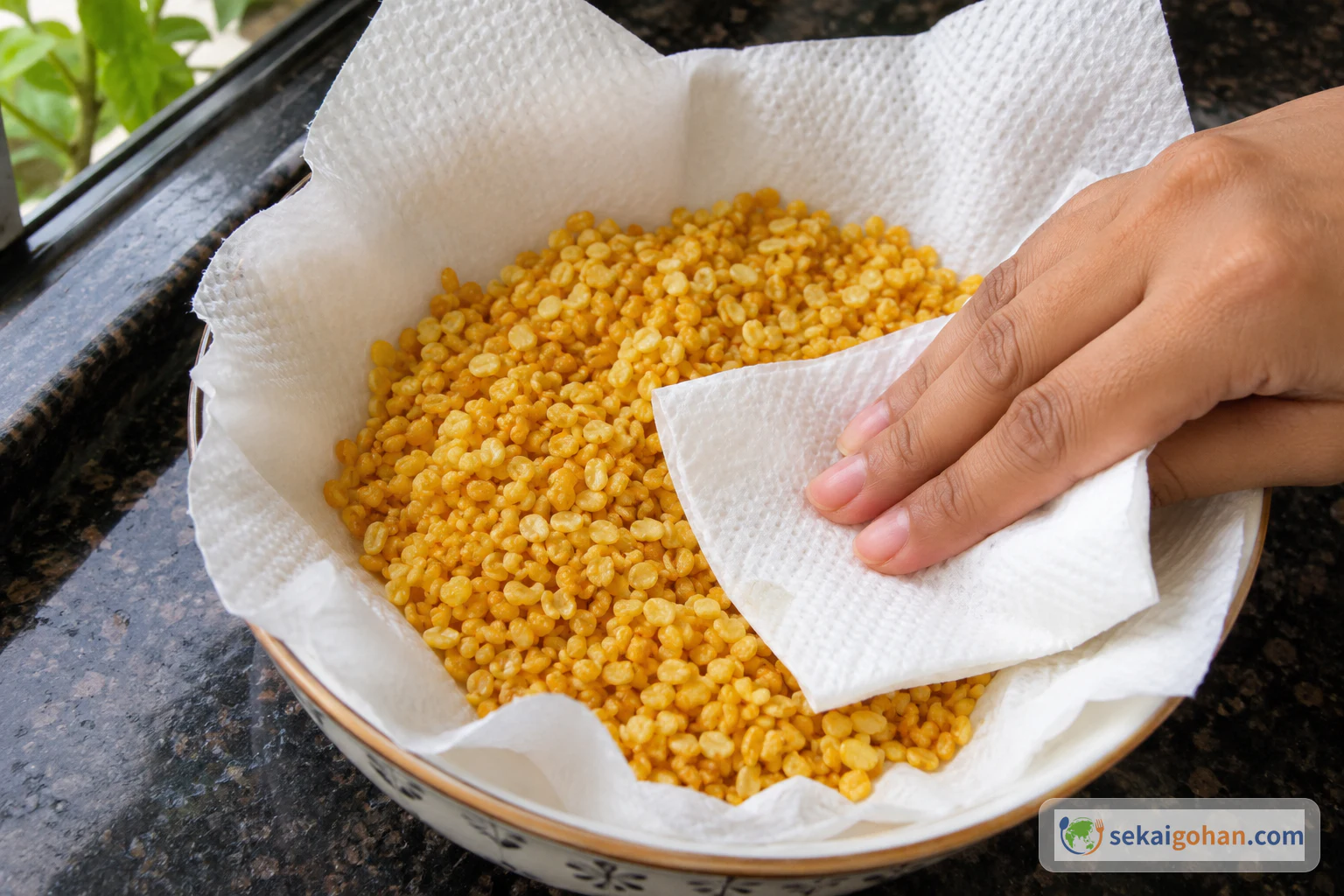
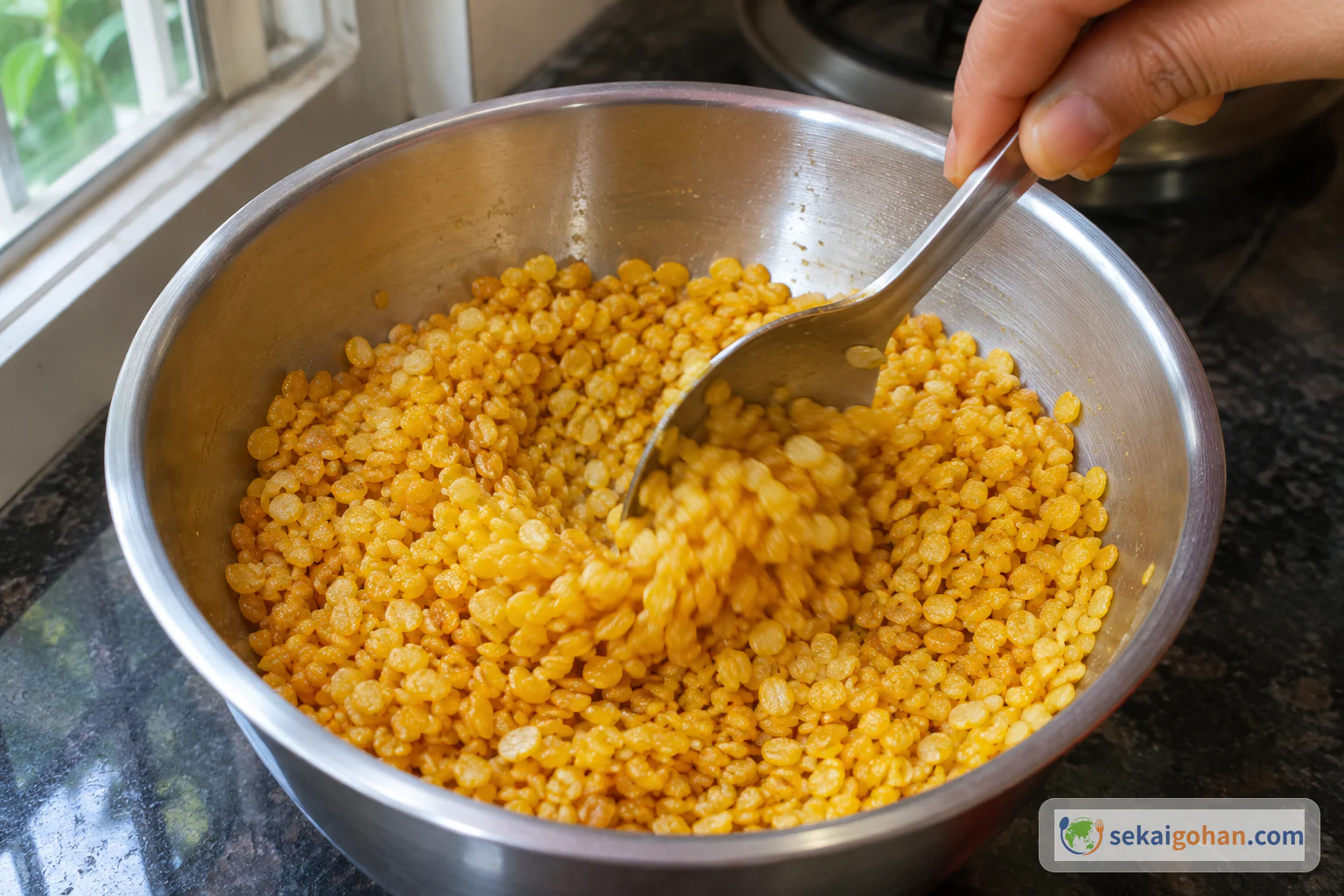
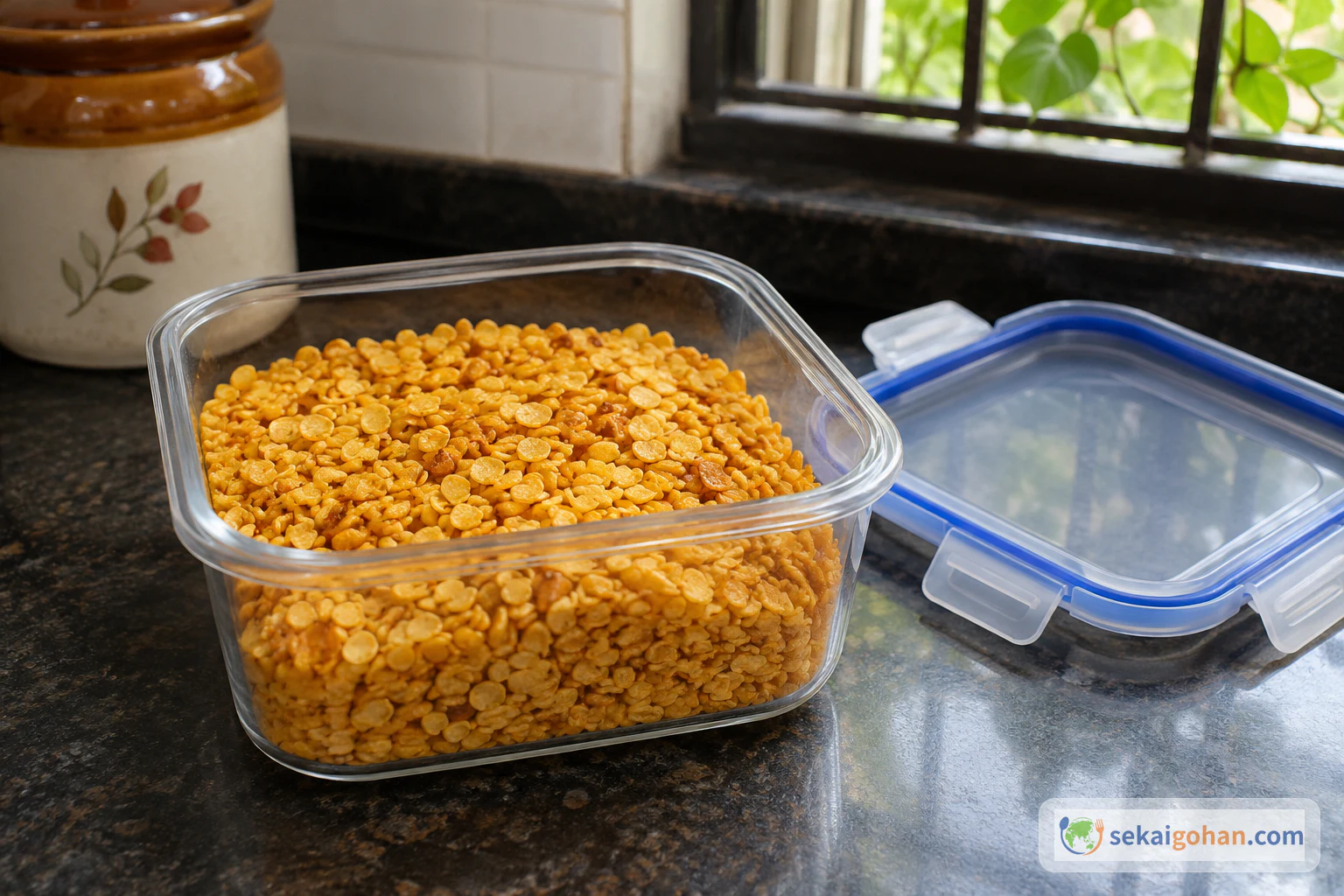
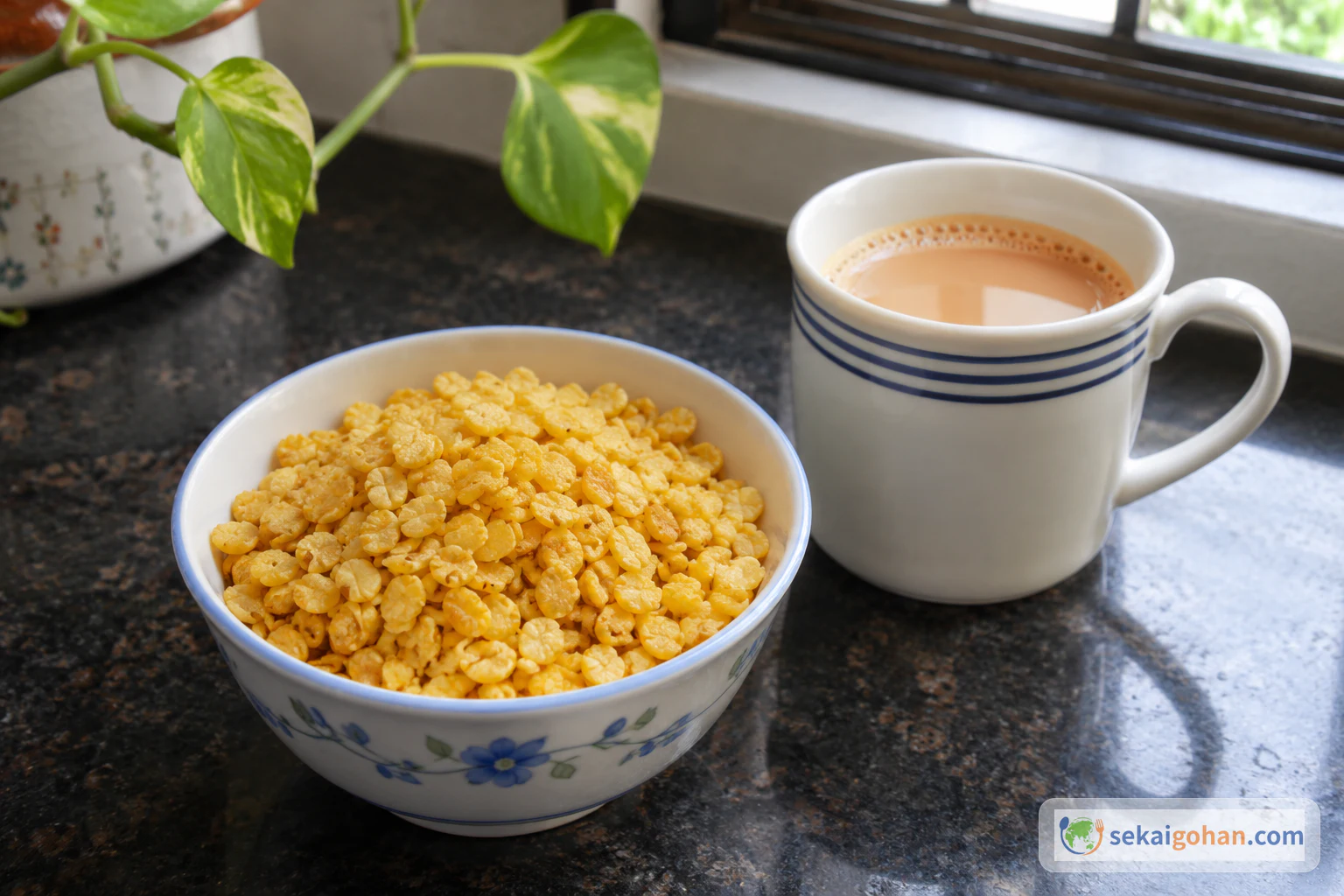
Fresh from the oil, a batch of moong dhal namkeen is a little heap of small golden grains, slightly shrunk and crisp, with salt scattered over them while they're still hot. Once they cool, you have a crunchy, salty snack to eat by the handful or alongside a cup of tea. It's made from dried mung dal, soaked, dried on a towel and fried a handful at a time. Think of it as a home version of the dry, crunchy fried dal sold in packs. For more of the country's cooking, see the India country page.
About Moong Dhal Namkeen
Namkeen broadly means savory snacks. This one is mung dal fried and finished with salt. It's a long way from the dal you simmer into a soft curry: the grains go into hot oil after soaking and come out dry and crunchy.
The same name covers more than one thing. Some cooks add a pinch of baking soda, and others add several seasonings. A different dish called "Mung Namkeen" tosses fried mung dal with onion, tomato, coriander, green chili, lemon juice and salt, which makes it closer to a fresh chaat than a dry snack. The version here is the plain one: dal, oil, salt and water for soaking.
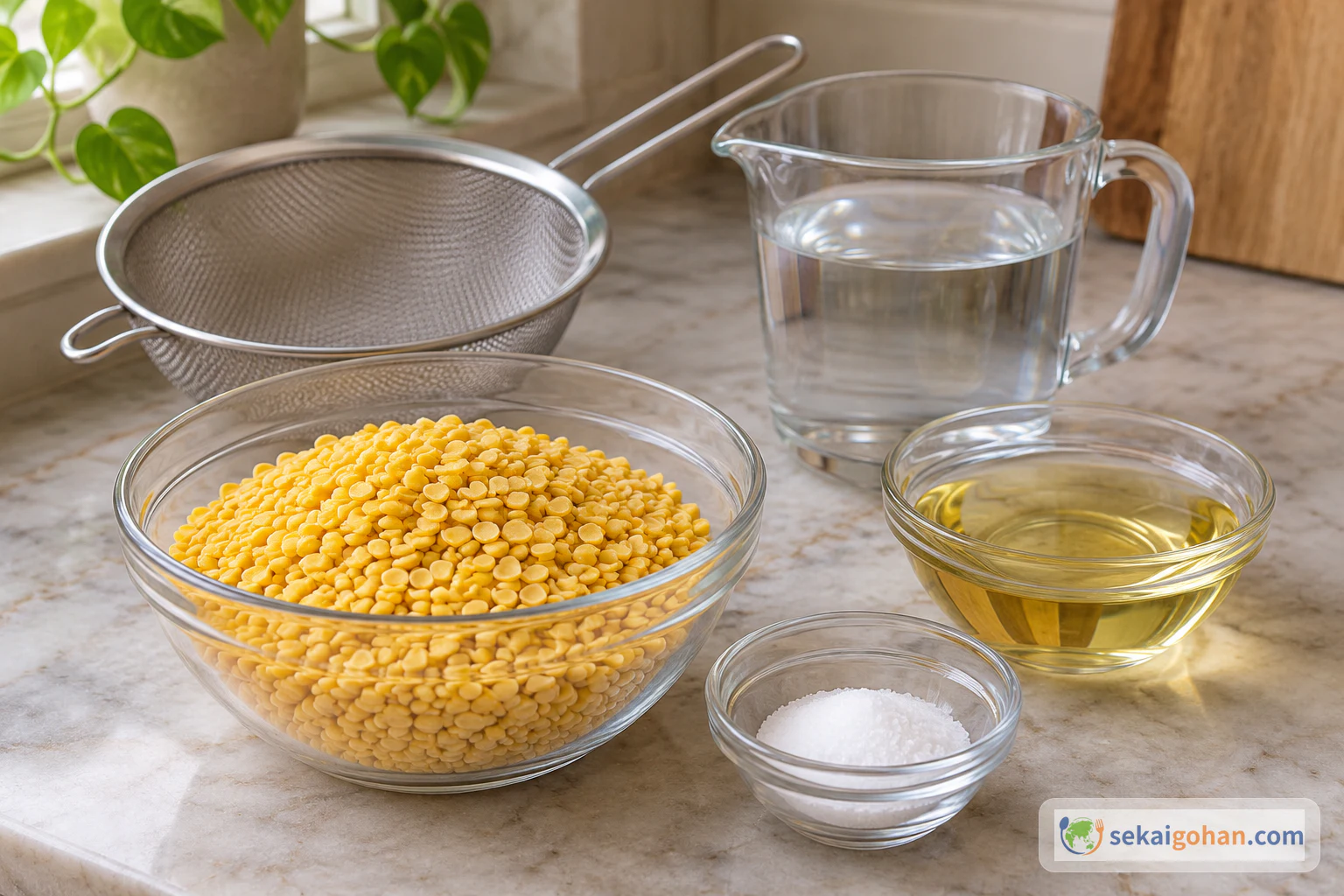
Ingredients: Dal, Oil, Salt and Water
Equipment
- A bowl for washing and soaking
- A clean, dry kitchen towel
- A deep pot or kadai for frying
- A fine mesh strainer that small grains can't slip through
- A spoon for stirring inside the strainer
- A bowl lined with paper towels, plus extra paper towels
- An airtight container
A thermometer is not required; readiness is judged by how a few grains behave in the oil.
Choosing the Dal and Oil
- Dal: Use split yellow mung dal with the skins removed. That's what the method and photos are based on. Whole green mung beans are a different ingredient.
- Oil: Any oil works. A neutral-flavored vegetable oil is an easy choice that lets the taste of the dal come through.
- Salt: Use plain salt. Seasoned salts, black salt and spice blends belong to the variations.
- Allergies: The main ingredient is a legume. Check the labels on your dal and frying oil for cross-contact or shared-facility statements.
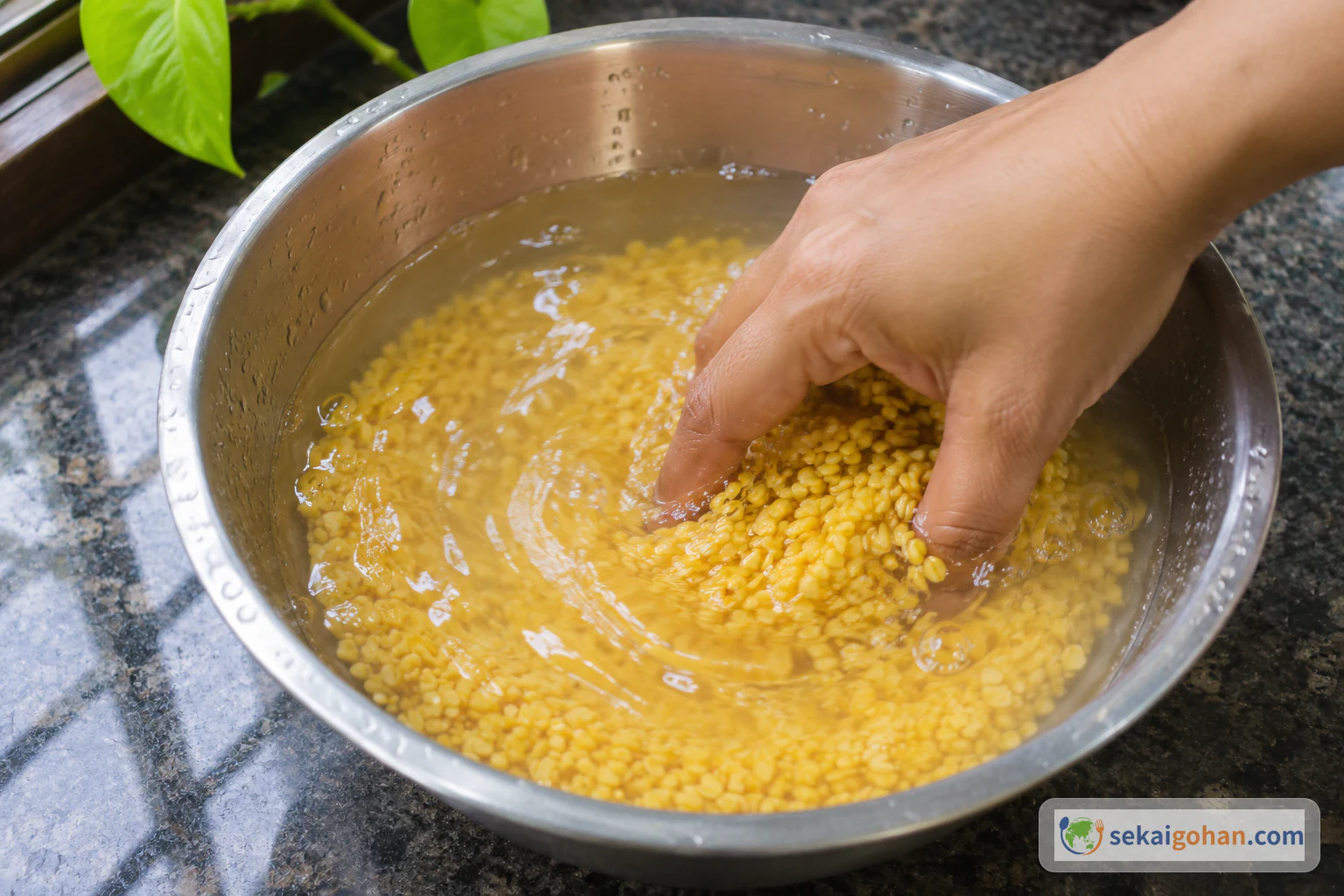
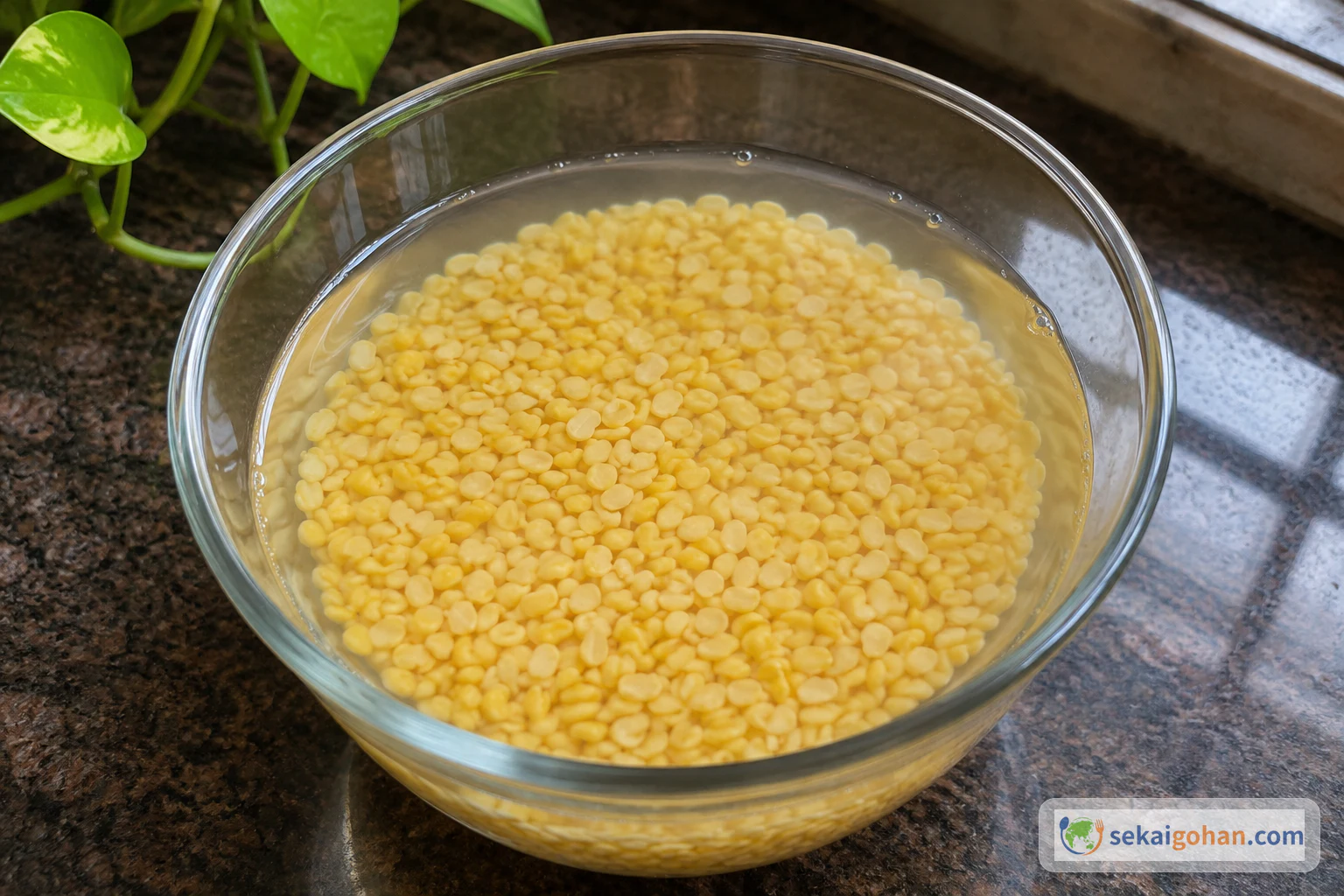
Method: Wash, Soak, Dry, Then Fry in Small Batches
Make sure the dal has no visible water droplets before it goes into the oil, and keep water and wet hands away from the pot. Use a deep pot, fill it no more than halfway with oil, and stay with it while it is on the heat. Do not heat the oil until it smokes. If oil ever catches fire, never use water to put it out.
Soaking and drying take most of the time; the frying itself goes quickly, one small batch after another. Have the towel, paper-lined bowl and salt ready before you start heating the oil.
Moong Dhal Namkeen Troubleshooting
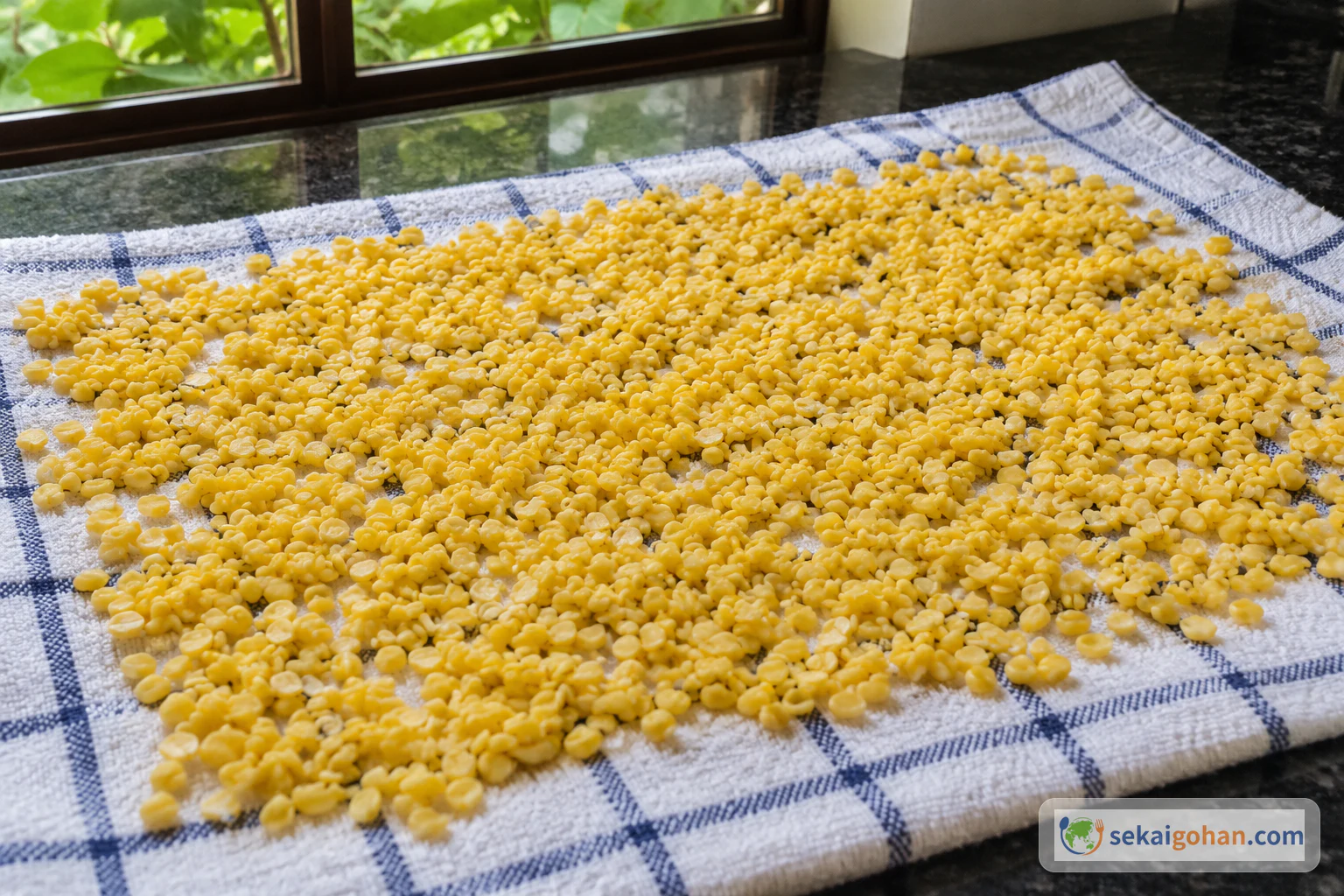
Everything depends on the moment the dal goes into the oil. Grains that still carry water droplets make the oil spit and fry unevenly, so drying matters as much as frying. You're only drying the surface, though; the grains should stay soaked inside. Some cooks fry the dal while it's still slightly moist, but any moisture carried into hot oil makes spattering more likely.
Each batch takes only 1–3 minutes, so you can adjust as you go. Before frying the rest, let a few grains from the first batch cool slightly and taste them.
| What you see | Likely cause | What to do next batch |
|---|---|---|
| Grains are hard rather than crisp | Oil not hot enough | Test again with 1–2 grains and wait until they rise quickly |
| Oil foams up hard or spits | Dal still damp, or too much in the basket | Leave the remaining dal on the towel longer and fry a smaller amount |
| Dal tastes greasy | Too much dal at once, or not dry enough | Fry smaller batches and blot every batch with fresh paper |
| Oil is smoking | Oil too hot | Lower the heat and let it settle before the next batch. Ready does not mean smoking |
| Salt doesn't stick | Salt added after the dal cooled | Salt each batch right after blotting, while it is still hot |
Every grain should be dry on the surface before it goes into the oil, fried only briefly in small batches, and salted while it is still hot.
Storing and Varying Moong Dhal Namkeen
Let the namkeen cool completely, then keep it in an airtight container. It's best eaten within about a week, while it's still crisp.
Each of these options changes the snack, so make it as its own version instead of adding bits to the plain one.
- Adjust the salt: The simplest change. Start light and add more to each hot batch until it tastes right to you.
- With baking soda: Use 1 cup (200 g) moong dal with a pinch of baking soda and 1/2 tsp salt. Soak for 4 hours and dry on a cloth for 30 minutes. Follow these steps on their own instead of mixing them into the plain recipe.
- Spiced finish: Chaat masala, black salt and chili powder are options. There are no set amounts, so add them to taste if you want a spiced snack.
- Chaat-style Mung Namkeen: Soak the dal for 6–8 hours, dry it for 30 minutes, fry over low heat, and toss with onion, tomato, coriander, green chili, lemon juice and salt. With fresh vegetables mixed in, it won't keep like the dry snack, so eat it right away.
Frequently Asked Questions
How long should the dal soak?
3–4 hours for this plain version.
What temperature should the oil be?
You can skip the thermometer. Heat the oil until it's very hot, then drop in 1–2 grains. If they rise quickly, the oil is ready, well before it starts to smoke.
How many people does this serve?
There's no set serving count. The 1 cup / 200 g is the dry dal going in, not the weight of the finished snack.