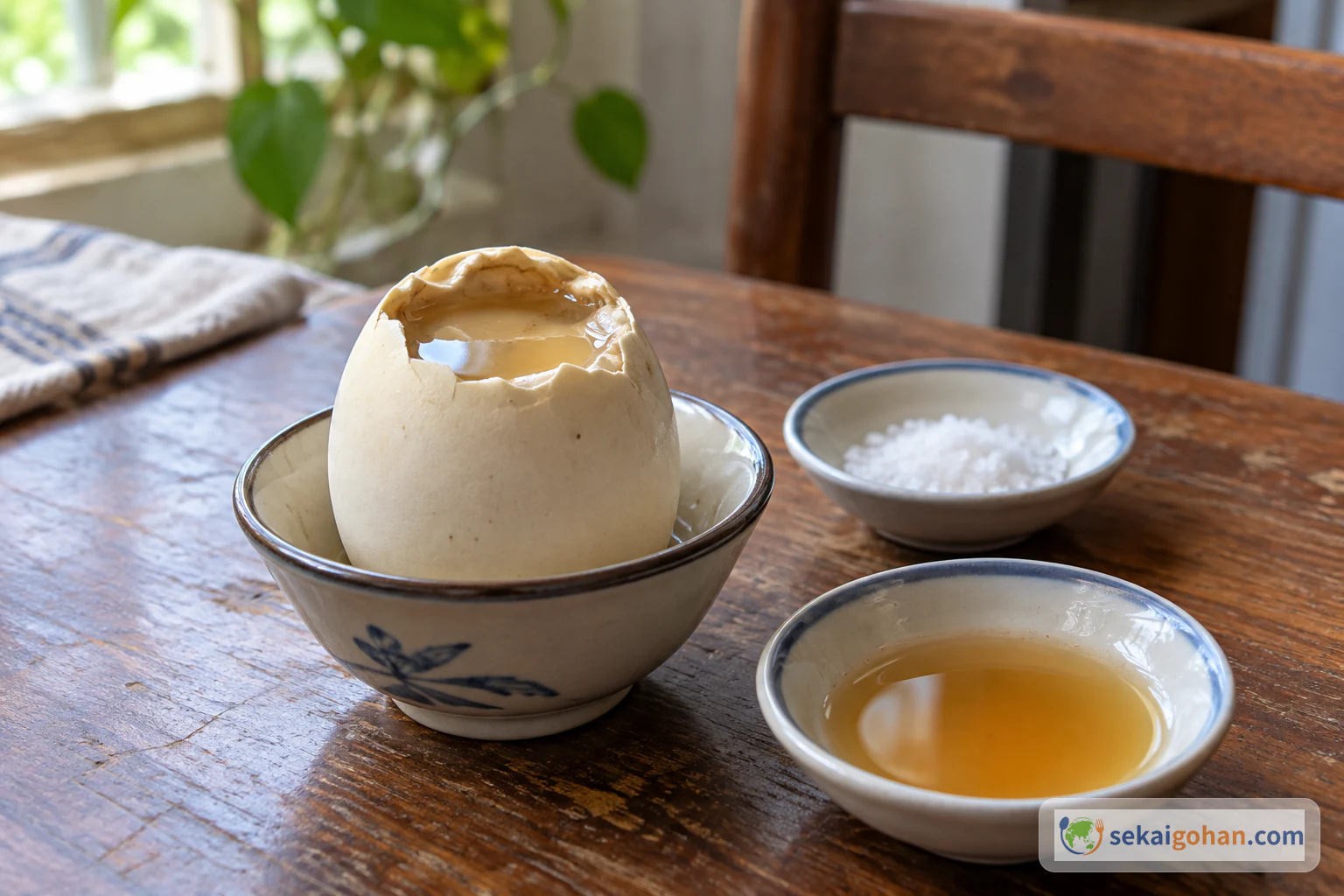
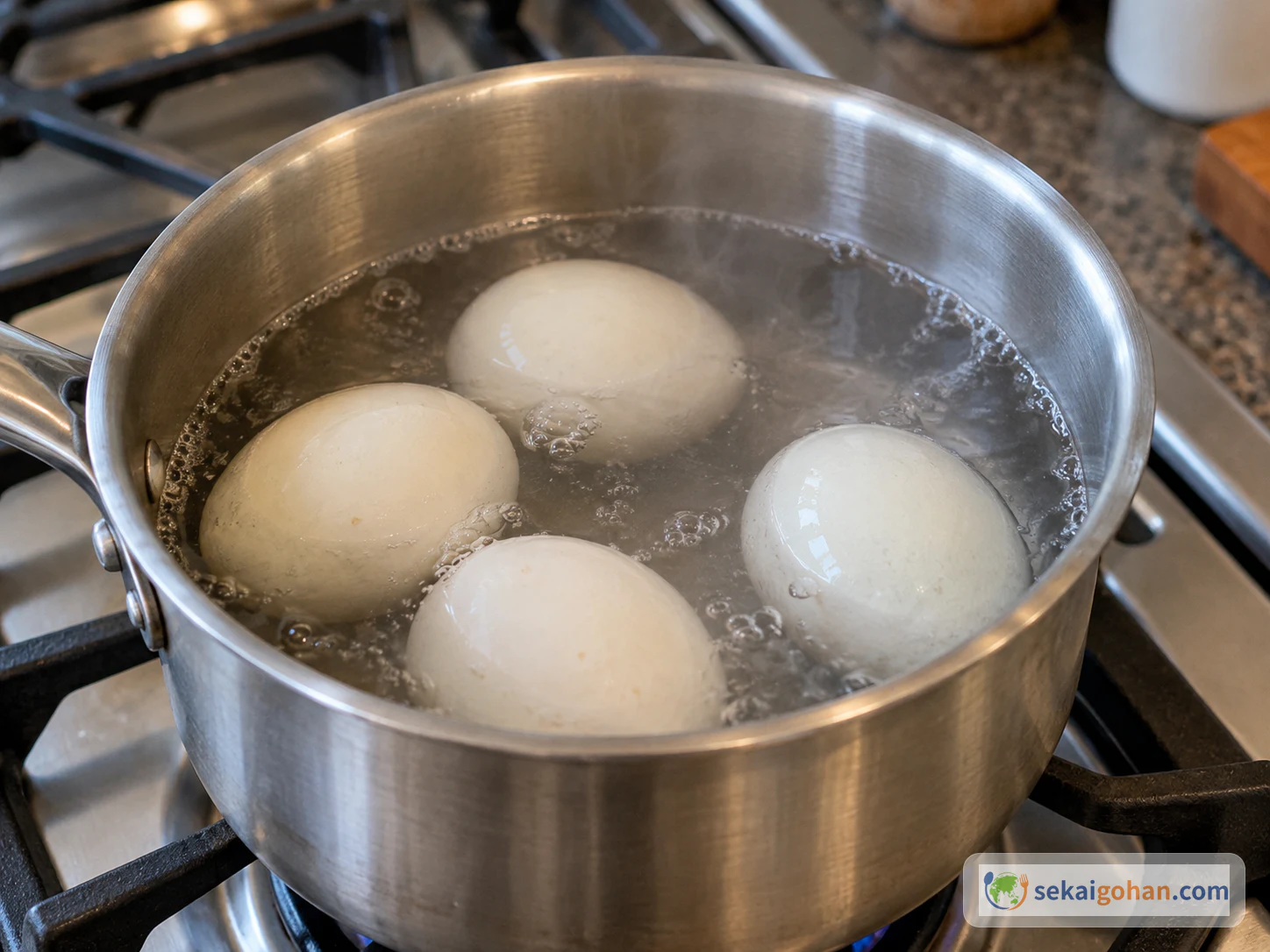
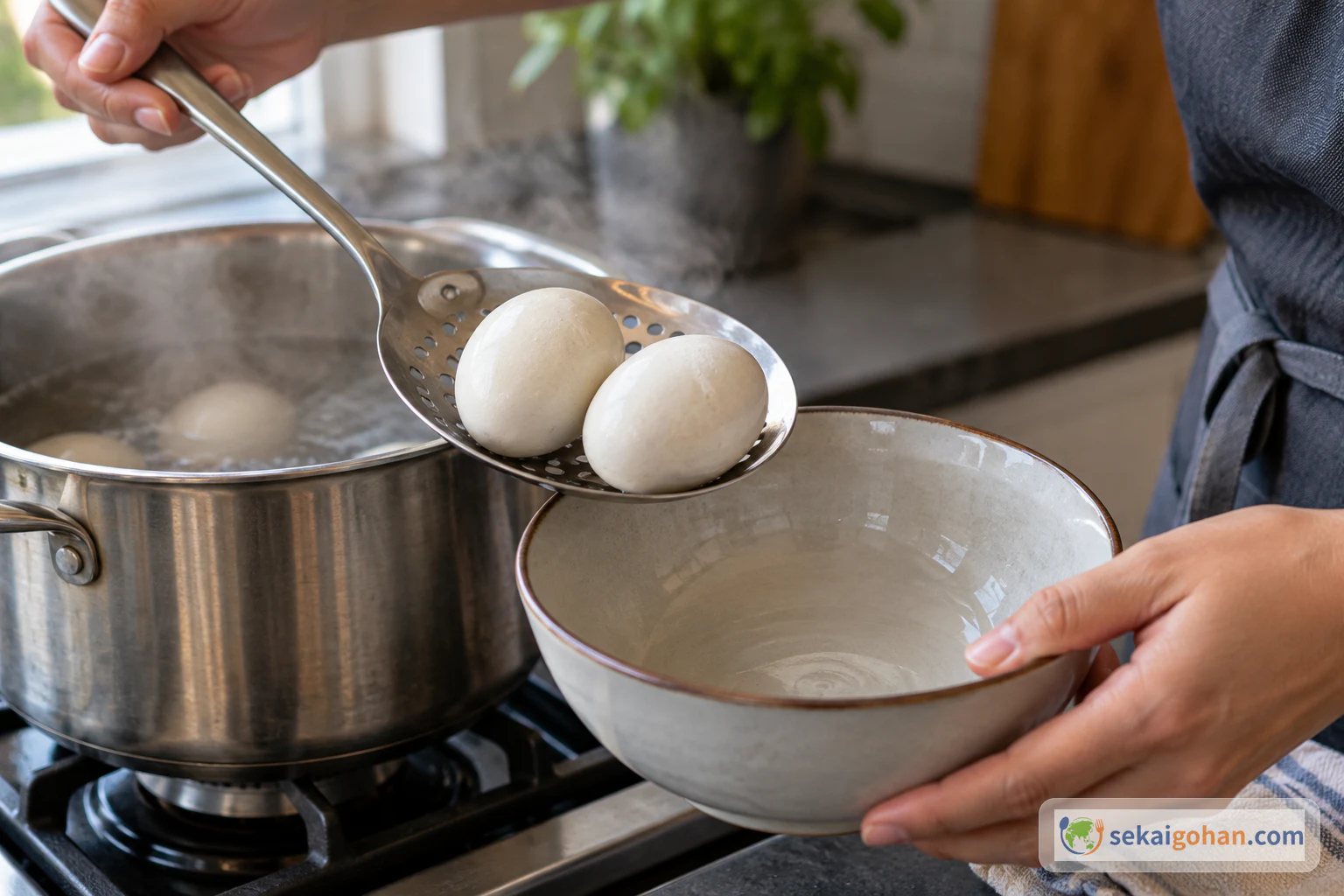
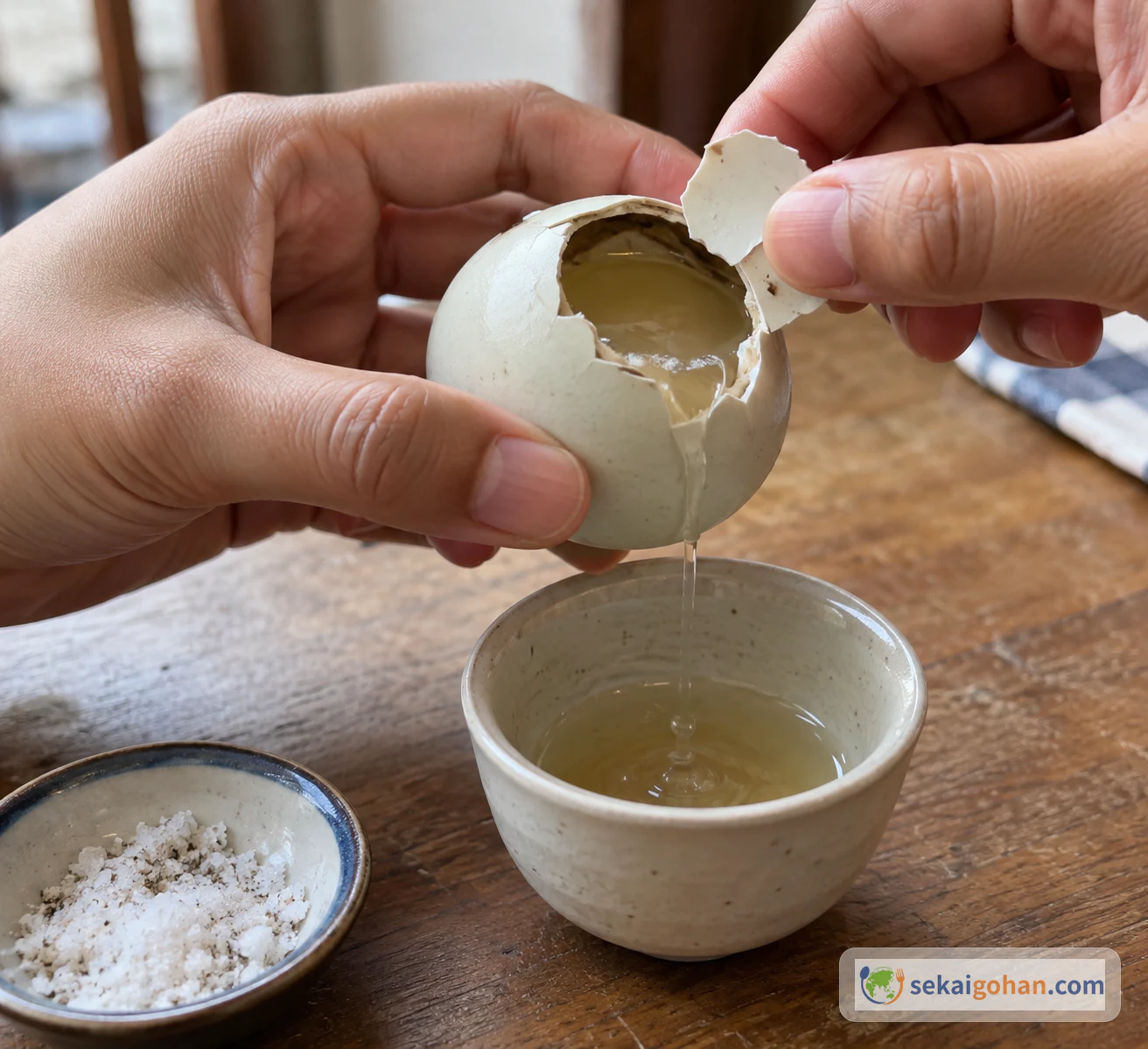
Balut is sold on the street at night and eaten while it's still warm. You crack the top of the shell, sip the broth first, then eat the yolk and the young duck with a pinch of salt or a splash of garlic vinegar. It is a fertilized duck egg, incubated and then boiled or steamed, and in the Philippines it has its own local preferences and its own trade. For more of the country's cooking, see our dishes from the Philippines.
What Balut Is and Where It Comes From
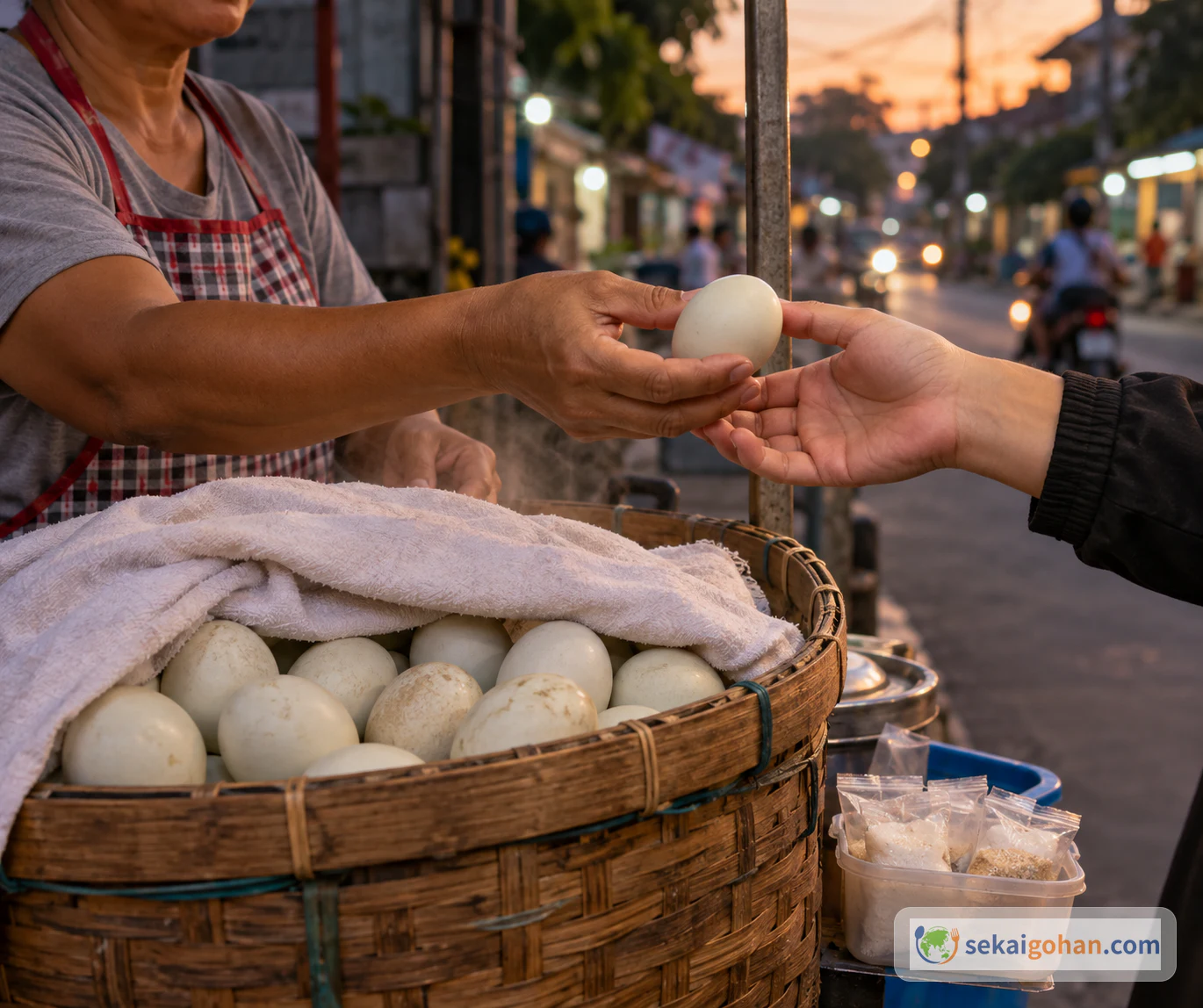
Balut, also written balot, is a fertilized, incubated egg, usually a duck egg, cooked before eating. It belongs to a wider Asian family of incubated eggs. Balut and penoy are not the same thing. Penoy is an incubated unfertilized duck egg.
Preferred stages vary. Makers commonly aim for 17–18 days, and the range runs from 14 to 18 days, with many preferring 17. Related foods in Vietnam and Cambodia are commonly made at later stages.
Pateros is closely tied to the trade and developed an important balut industry. Production, and the livelihoods around it, later spread to Laguna, Central Luzon, and elsewhere, and opinions still differ on what makes balut authentic. The origins are less settled: scholars discuss Chinese influence and how the craft became localized in the Philippines, but accounts of when it arrived differ.
Ingredients: Six Balut Eggs and Separate Seasonings
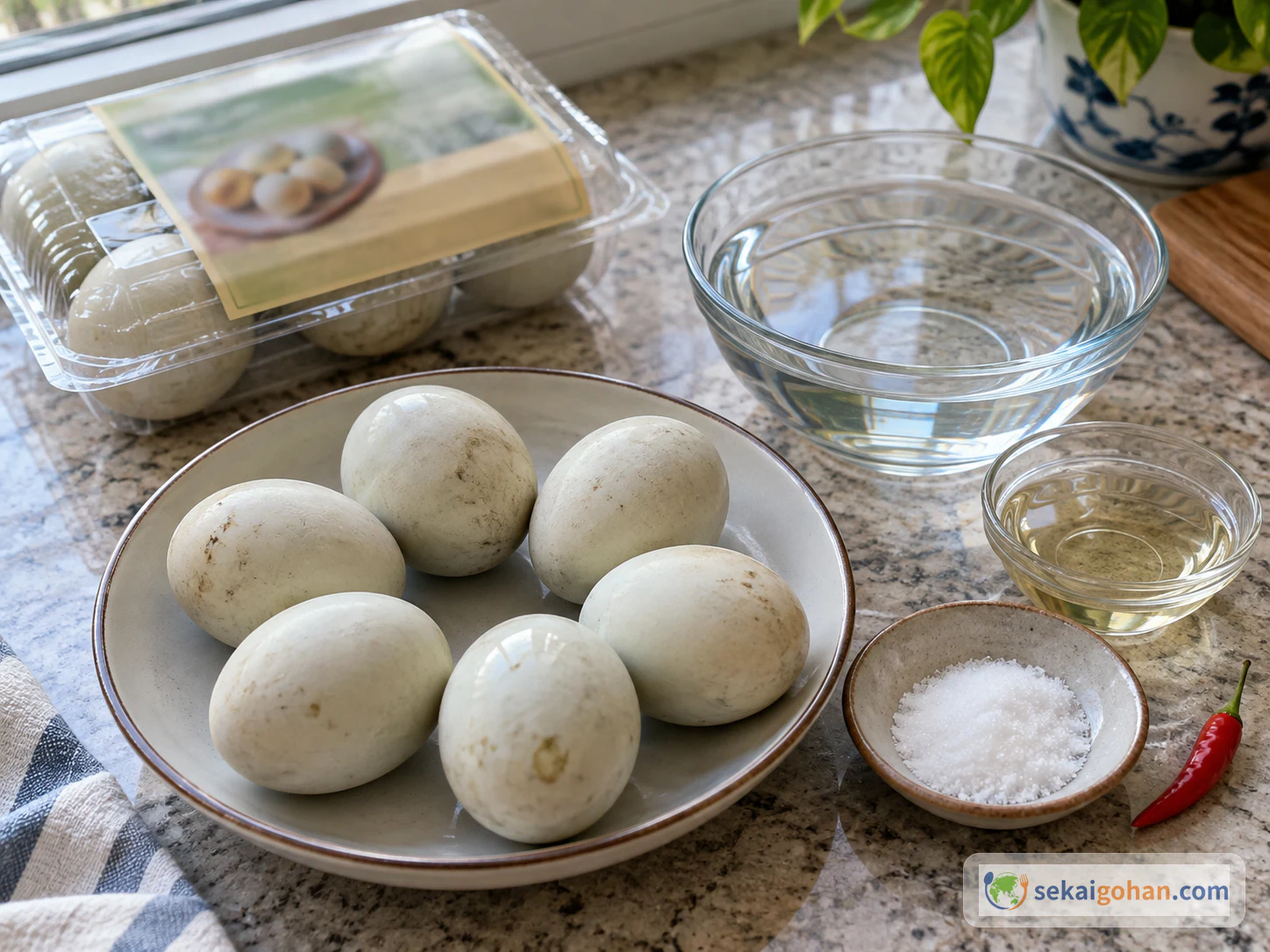
Equipment
- Saucepan large enough to hold the eggs in one layer
- Slotted spoon
- Heat-safe bowl
- Small dishes for the salt and vinegar
- Kitchen timer
- Food thermometer for checking the test egg
Choosing Balut and Its Seasonings
Balut has no real substitute. Chicken eggs, raw duck eggs, and penoy all make a different food. Never cook hatching eggs or try to incubate eggs at home.
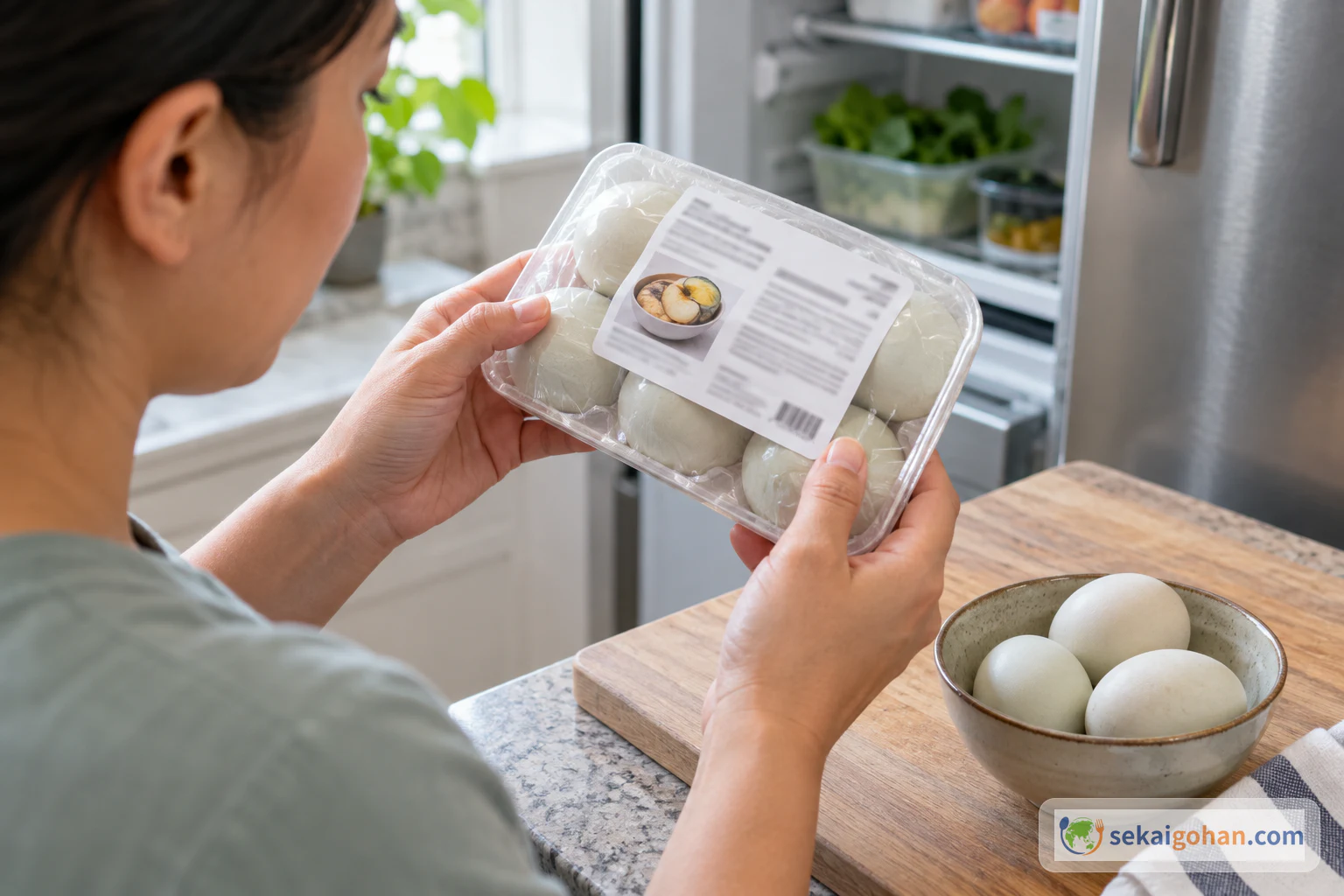
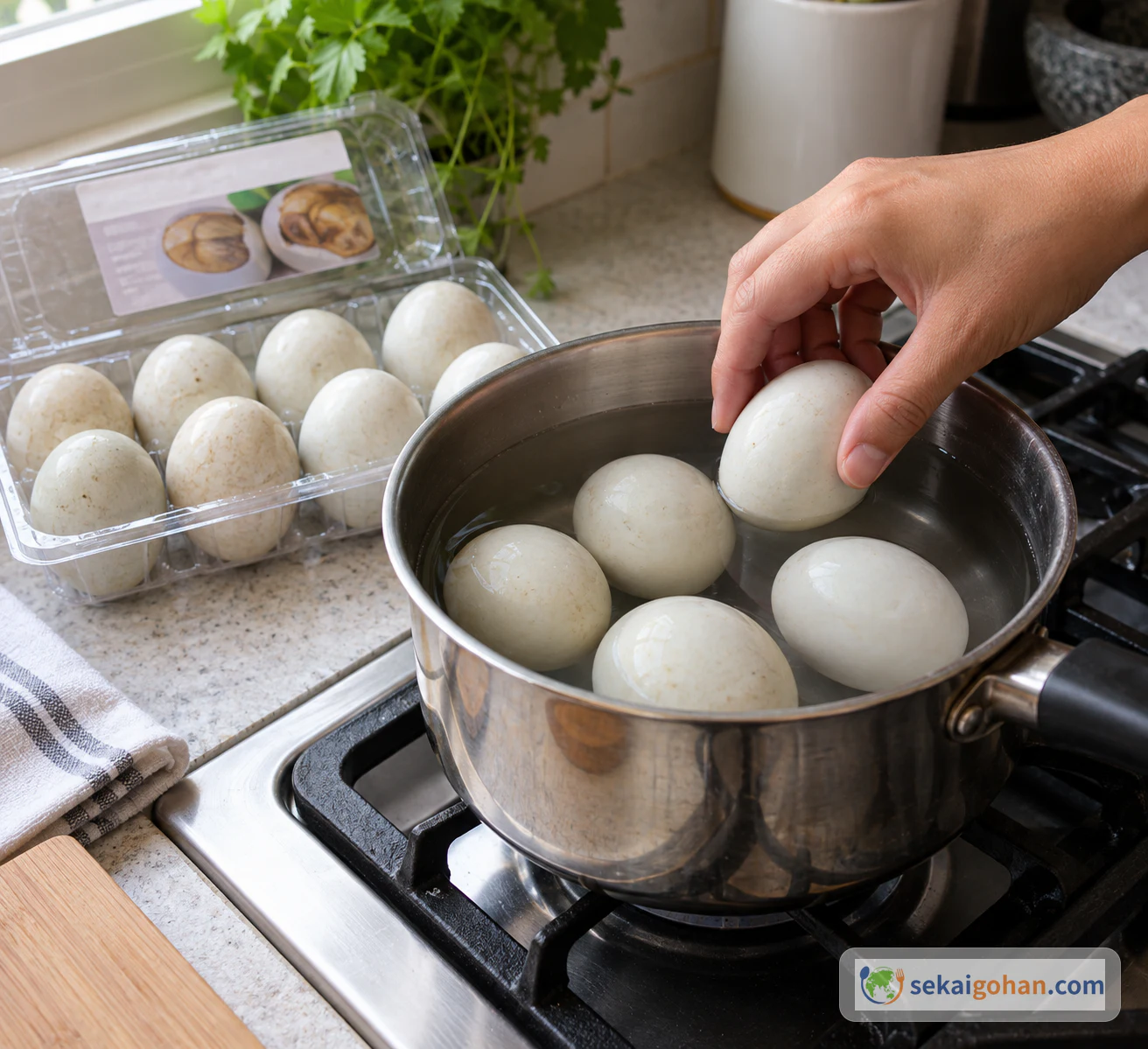
Ask at a Filipino or Asian grocery, or a Philippine-food importer, for food-grade balut. It can be hard to find in some places, and if you can't find a properly labeled product, skip this recipe. Before buying, check whether the eggs are raw and need boiling, already cooked, or frozen. The boiling time in the method is for raw eggs only.
For the dip, rice vinegar is easier to find than cane vinegar, though its aroma is different. Leave out the chili for a milder dip.
Balut Troubleshooting and Safe Handling
The eggs should be fully set and thoroughly heated through to the center, reaching 167°F (75°C) or higher for at least 1 minute. Cook until both the yolk and white are firm.
| Problem | What to do |
|---|---|
| The package doesn't say whether the eggs are raw or cooked | Ask the seller. If you can't confirm the cooking state, don't use the eggs |
| You can only find ordinary duck eggs or hatching eggs | Don't use them. Ordinary duck eggs are not balut, and home incubation isn't an option |
| The eggs are already cooked or frozen | Skip the raw-egg boiling time and follow the package directions |
| The label's time differs from this recipe | Follow the label |
| The test egg isn't fully set or heated through | Don't eat it. Return the unopened eggs to the gently boiling water, keep cooking, and test another |
| You want to judge doneness from the outside | The shell's appearance, the incubation age, and how developed the embryo looks are not home safety tests |
| The vinegar or salt is too strong | Serve both separately and add a little at a time |
Do not serve undercooked eggs to children, older adults, pregnant people, or anyone with weakened immunity. Balut is a duck egg, so people with egg allergies should treat it as an allergen.
Serving, Variations, and Storage
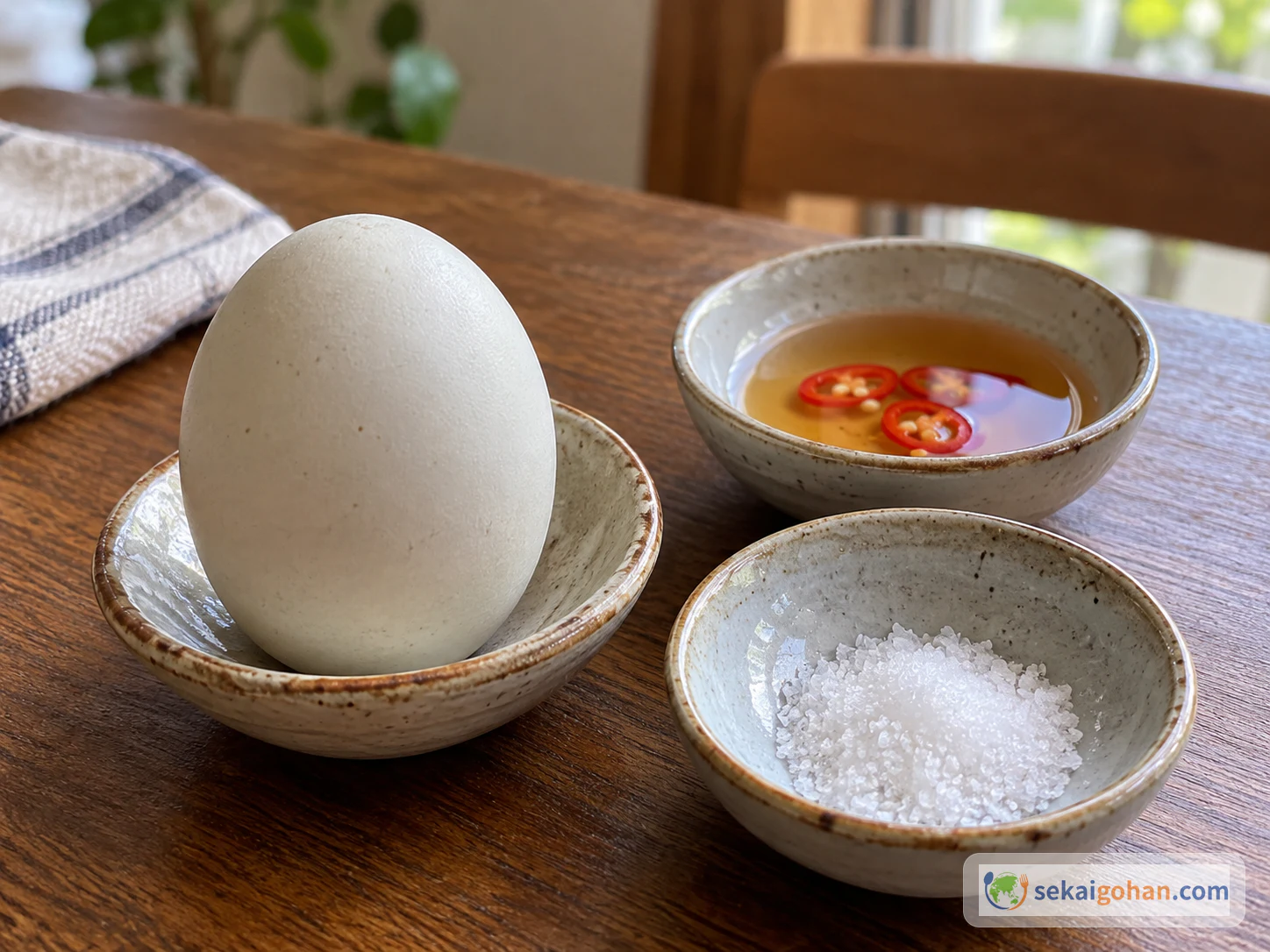
Balut is a small snack, so it can stand on its own, apart from a full Filipino meal built around dishes like monggo, sinigang, or kare-kare. The seasoning is where the plate changes:
| Variation | What changes | Note |
|---|---|---|
| Salt only | Keeps the seasoning simple | A common accompaniment |
| Vinegar only | Adds a sharper finish | Also common. Garlic vinegar and soy sauce are also used |
| Chili vinegar | Adds heat | Optional. Wash raw chili well under running water first |
| Balut sa puti | An earlier developmental stage found locally | For context only. Do not try to make it at home |
| Tokwa't balut | Combines cooked balut and fried tofu with a dressing of vinegar, onion, chili and seasoning | A separate composed dish |
For leftovers, cool them, refrigerate within 2 hours, and use within 2 days, unless the product label says otherwise.
Frequently Asked Questions
Do I have to eat the embryo and the white?
Tastes differ. Most people drink the broth first, then eat the yolk and embryo, and some leave the firm white behind.
Why 30–35 minutes instead of 20–30?
Start timing the 30–35 minutes once the water reaches a steady gentle boil. Some cooks use 20–30 minutes, but that timing doesn't say when to start counting, so the two can't be compared directly. A Vietnamese-style method uses about 35 minutes. Whatever the timing, make sure the eggs are fully set and heated through.