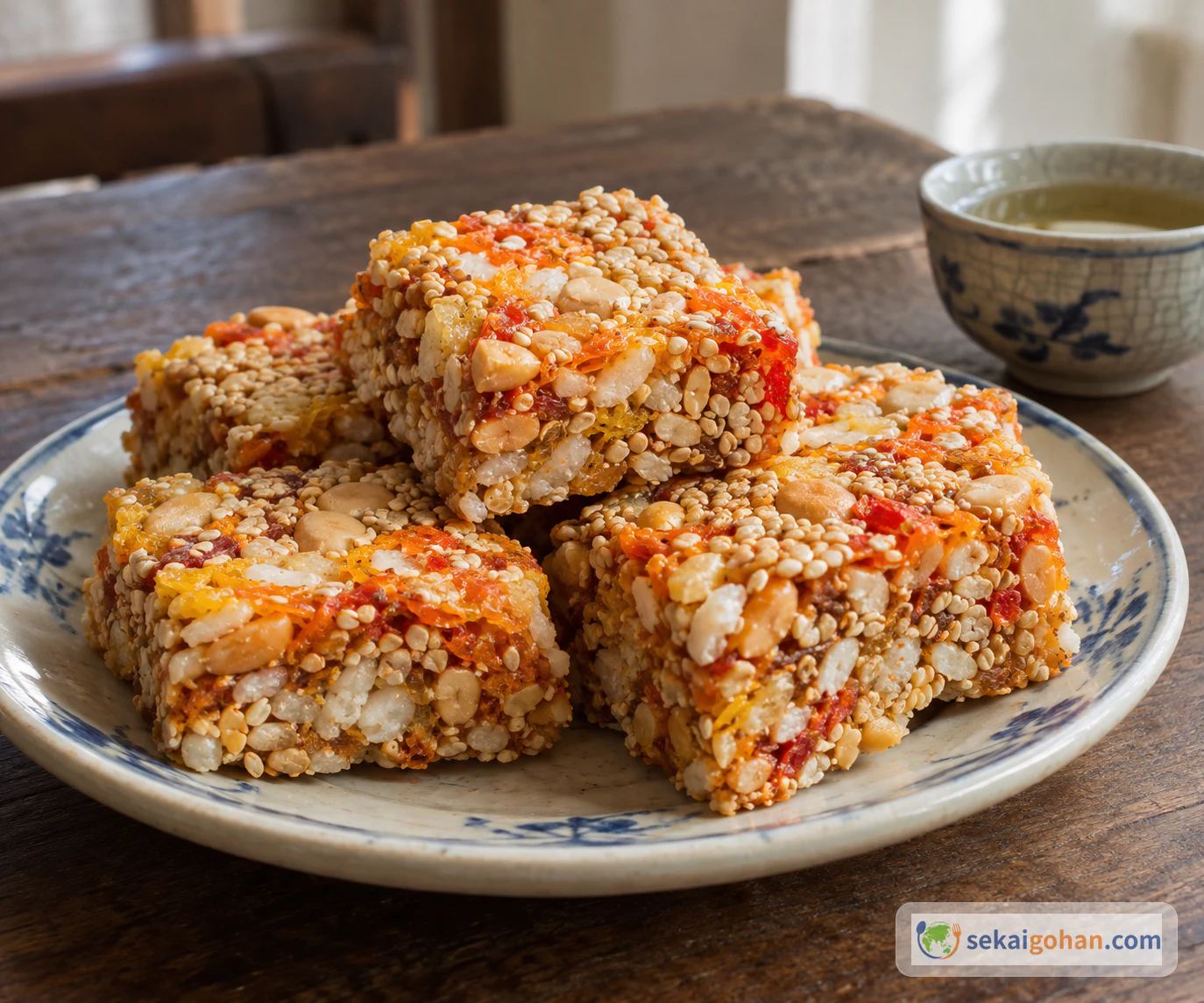
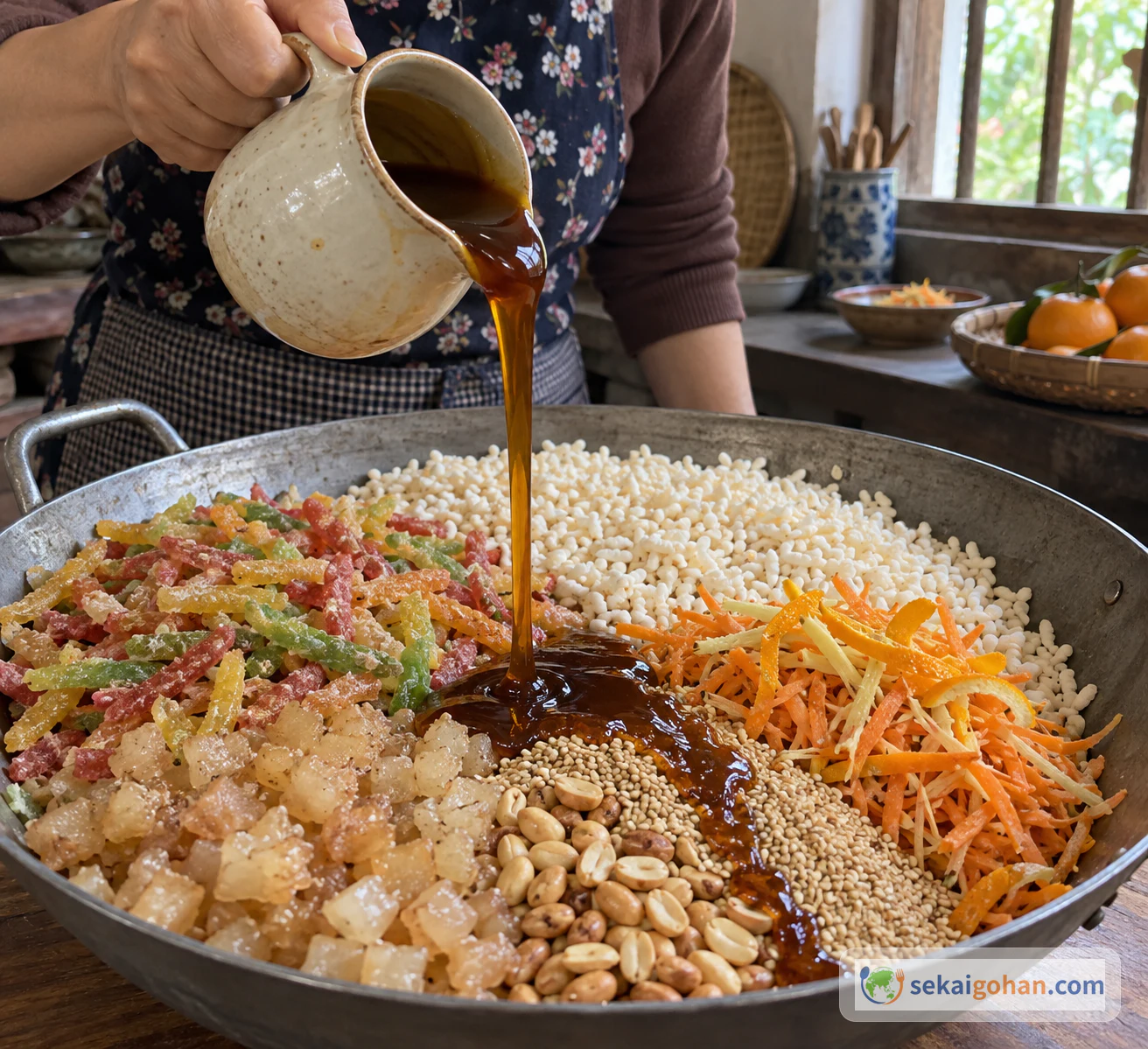
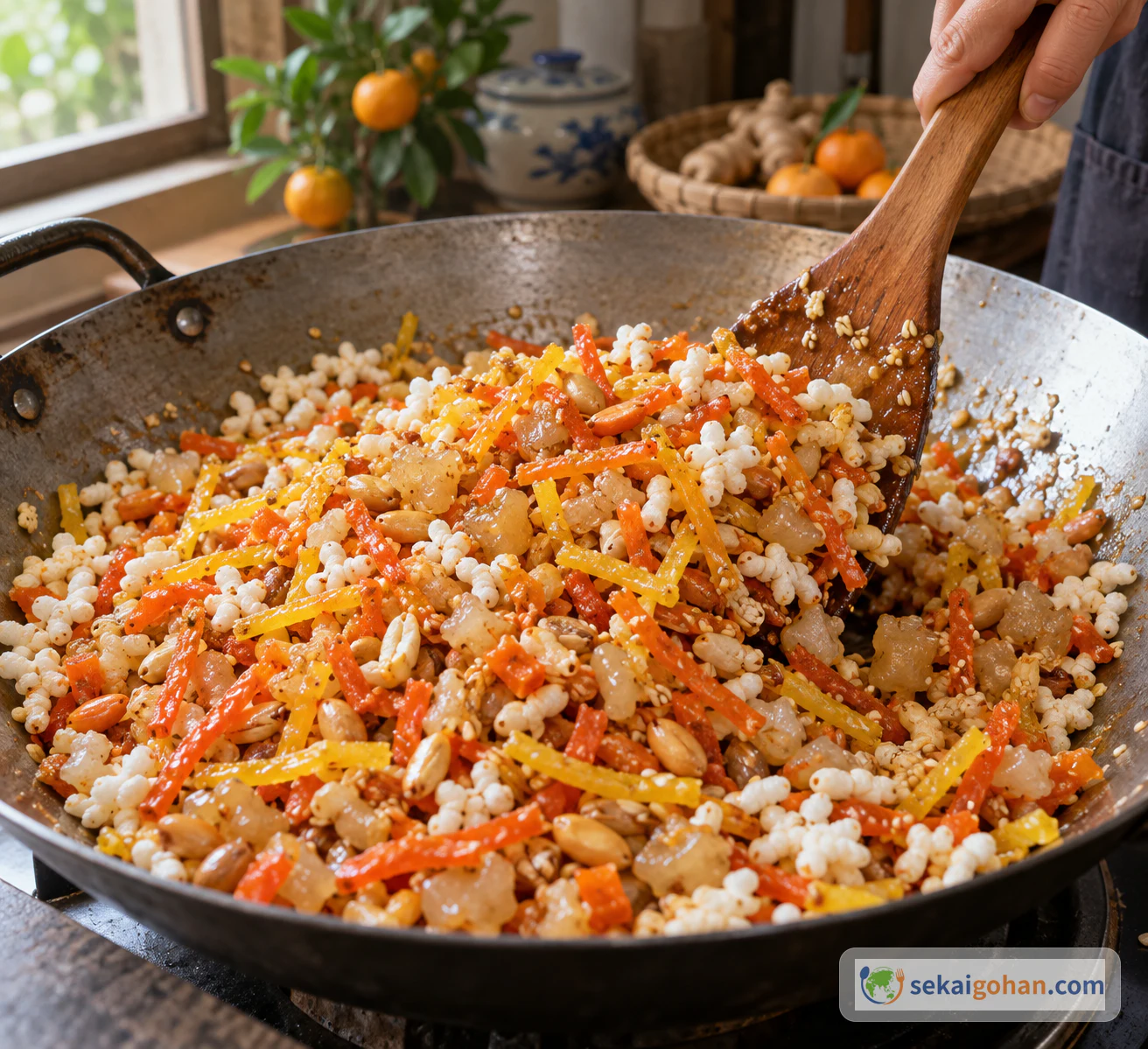
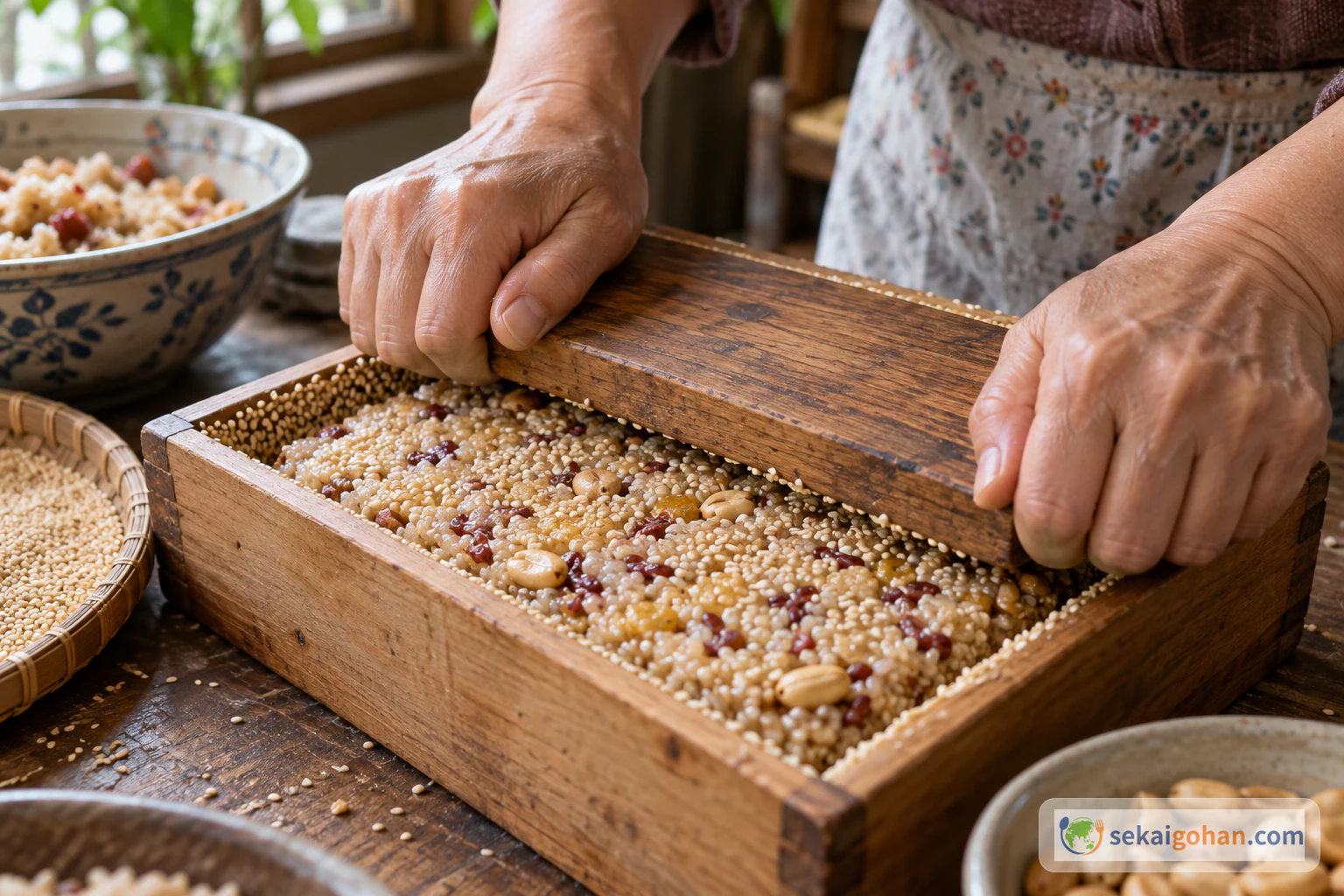
At Tết in Thái Bình, bánh cáy is cut into small pieces and eaten with hot tea, each bite flecked with red and yellow. The same bars are placed among the offerings to the ancestors, carried as gifts to parents, and sent home with guests who came from far away as a taste of home. Under the color is a pressed sweet of fried sticky-rice pieces, white puffed rice, roasted peanuts and sesame, all held together by sugarcane molasses. It is crisp, rich and fragrant, and it takes a lot of work for something cut so small. For more dishes from the country, see the Vietnam country page.
Bánh Cáy and Nguyễn Village
Origin of Bánh Cáy
Bánh cáy comes from Nguyễn village (làng Nguyễn), in Nguyên Xá commune of Đông Hưng district, in what was historically Thái Bình province in northern Vietnam. The village is known for this sweet, a simple gift from the countryside made through laborious work. Villagers tell a story that a woman named Nguyễn Thị Tần created it at the royal court, and that the king gave it its name.
The Name
Bánh covers a wide range of cakes and sweets, and cáy is the name of a small crab. The colored rice pieces look like the eggs of the cáy crab, and the sweet is named for that resemblance. There is no crab, roe or seafood of any kind in it. What matters most in the finished bar is those small flecks of yellow and red scattered through the rice.
How the Parts Fit Together
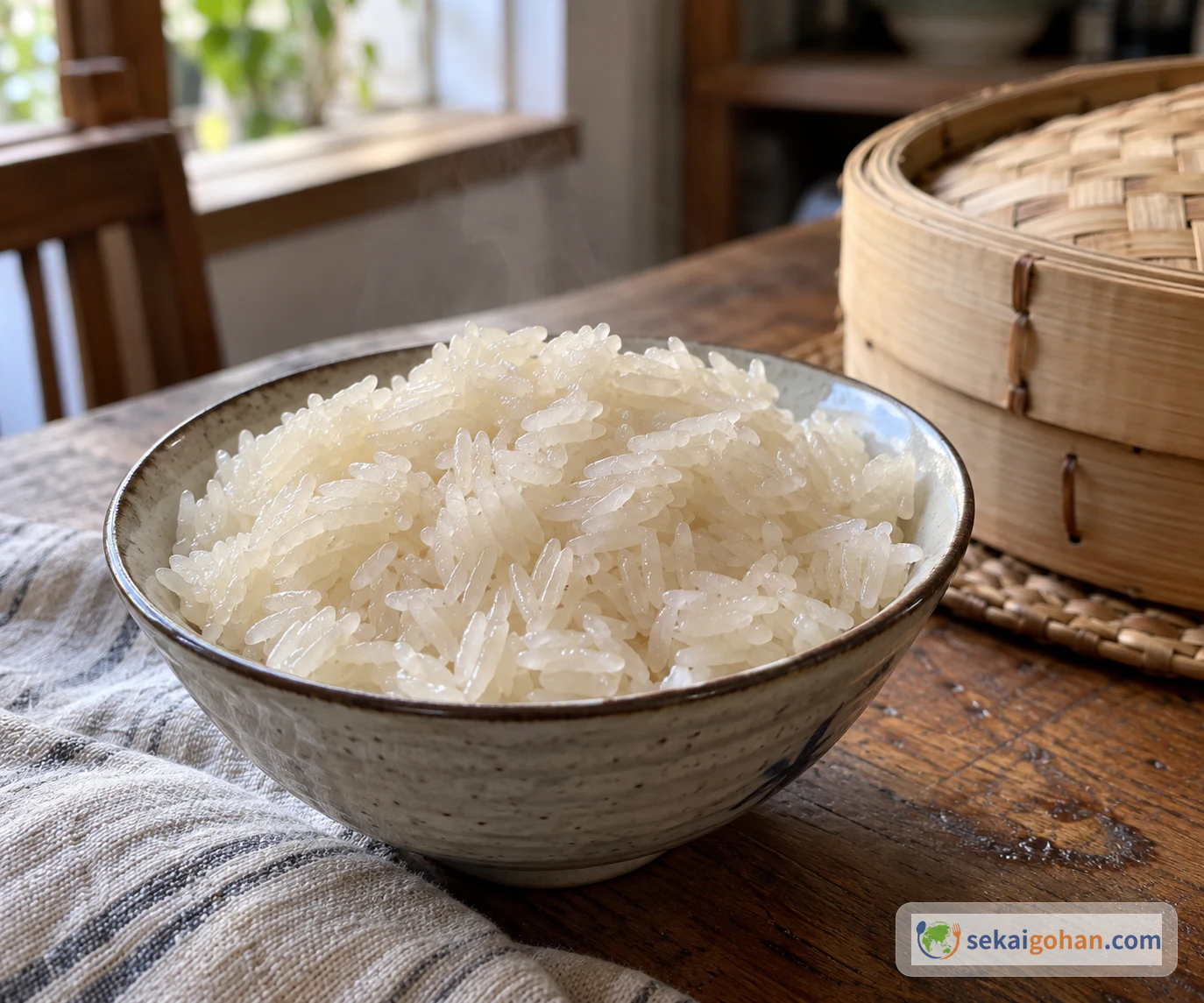
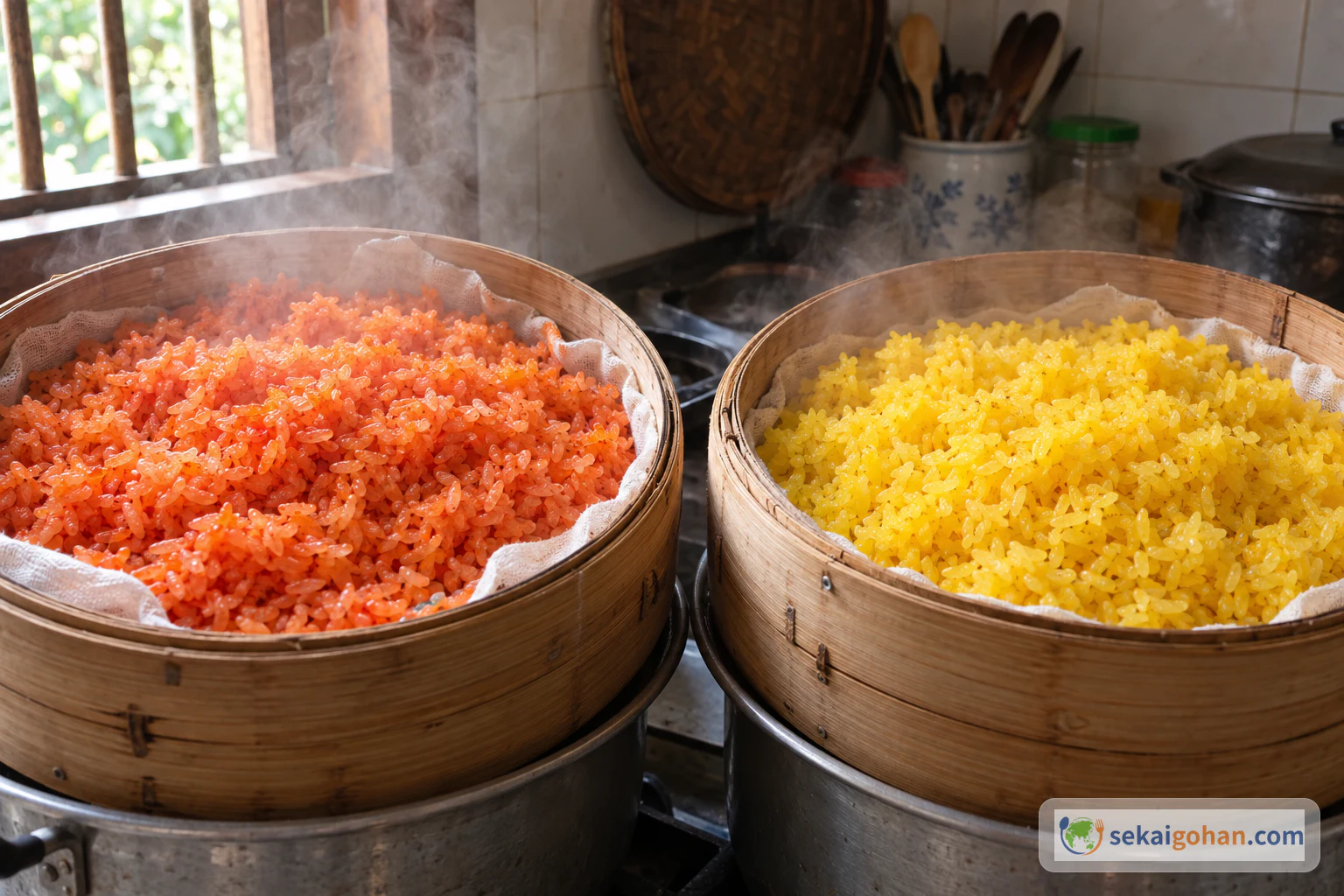
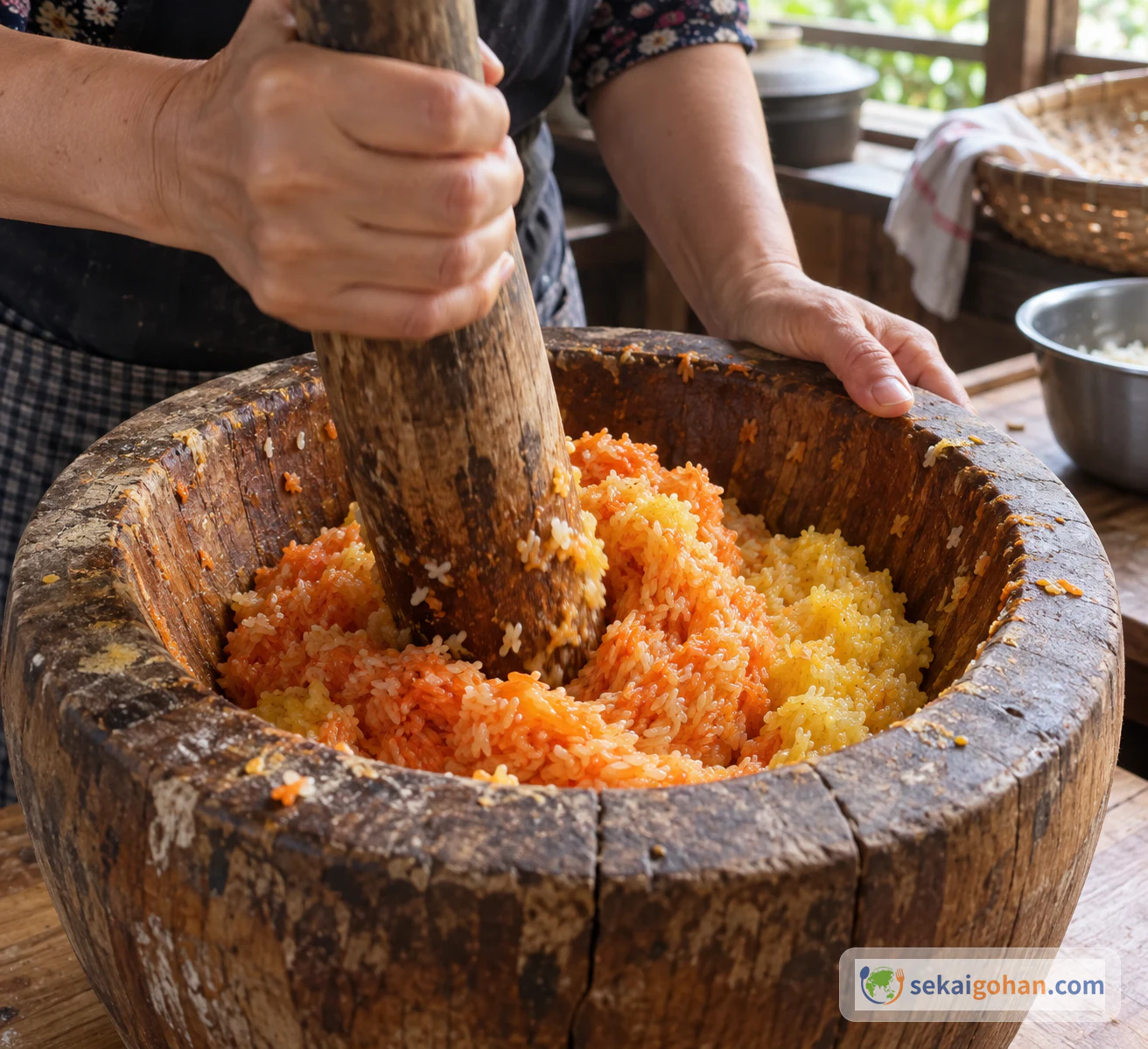
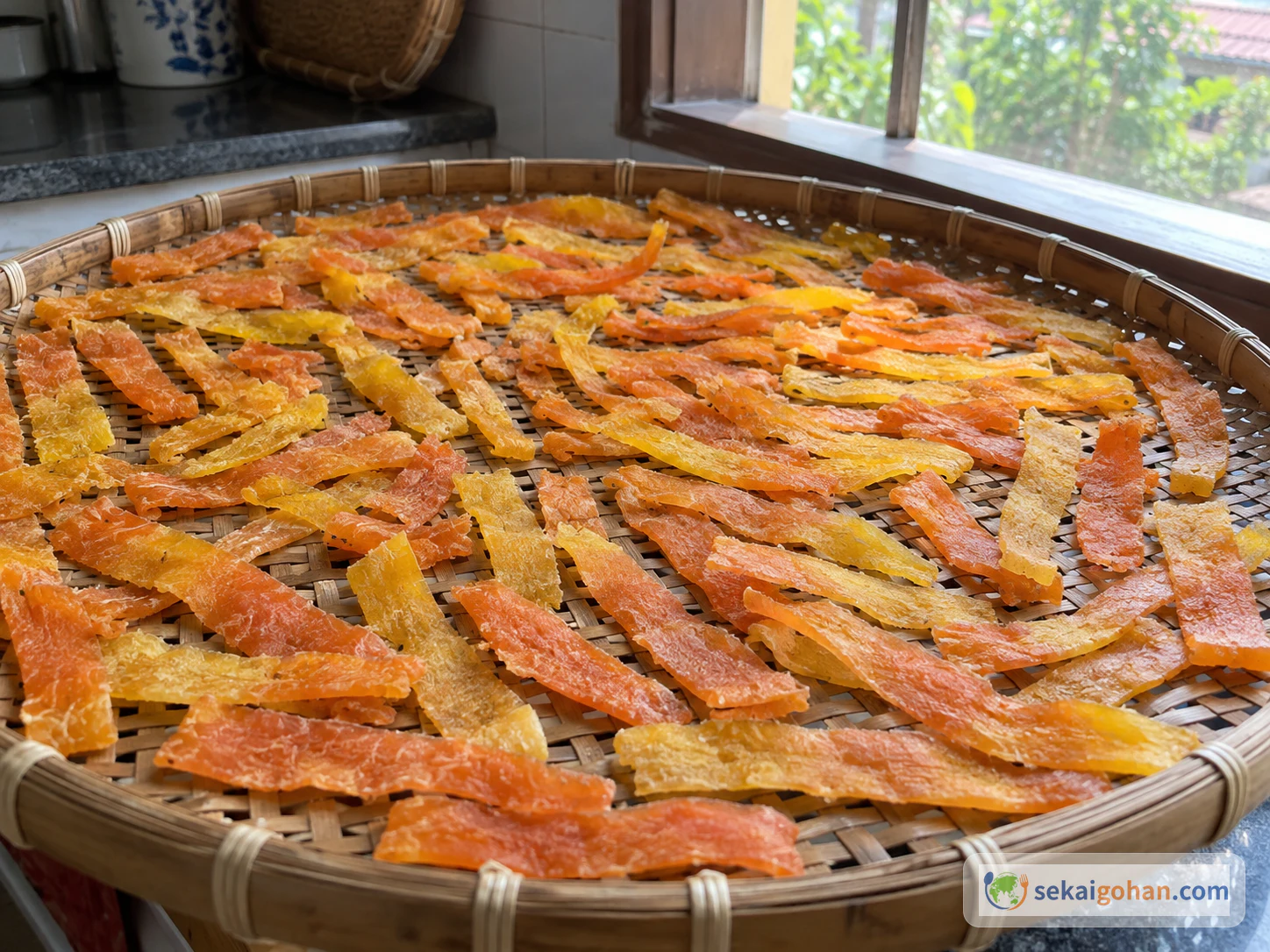
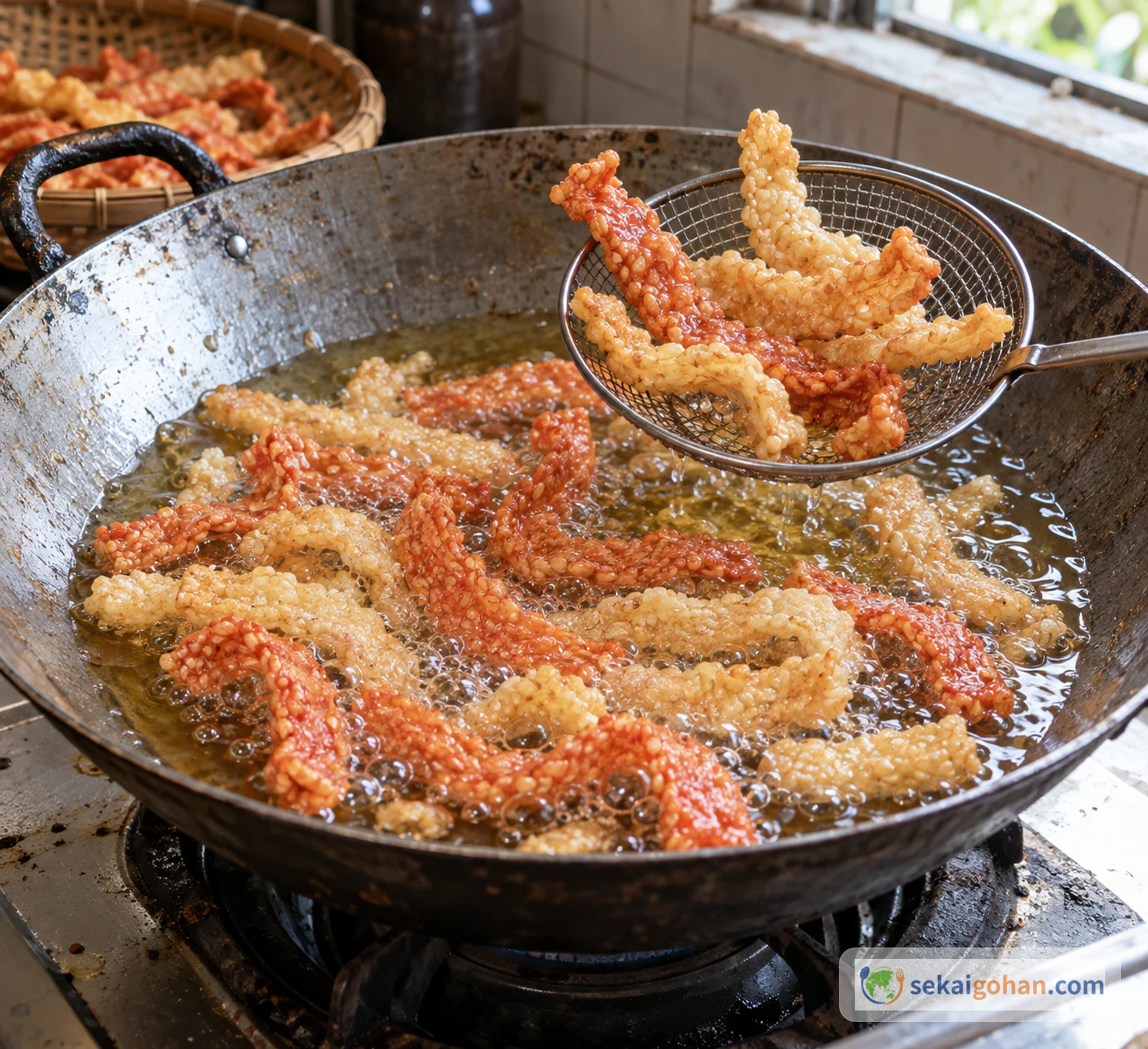
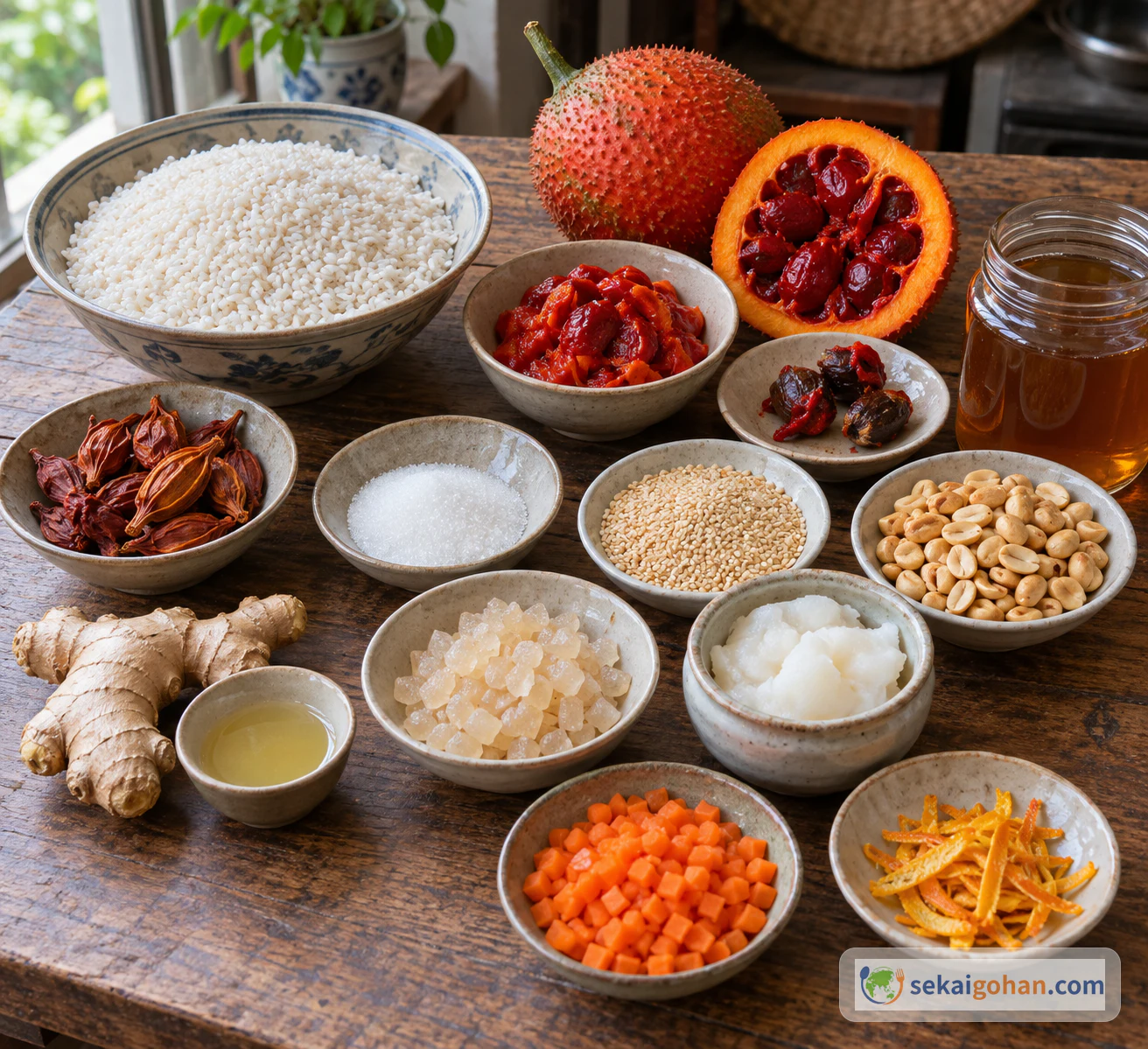
Each bar is made of many small parts, and two textures of rice carry it. Sticky rice is colored red with gấc fruit and yellow with gardenia, then steamed, pounded, rolled thin, cut into narrow strips, dried and fried in lard until it puffs and turns fragrant. Another portion of the rice is popped separately into plain white puffed rice, and it stays apart from the colored pieces until the two meet in the final pan.
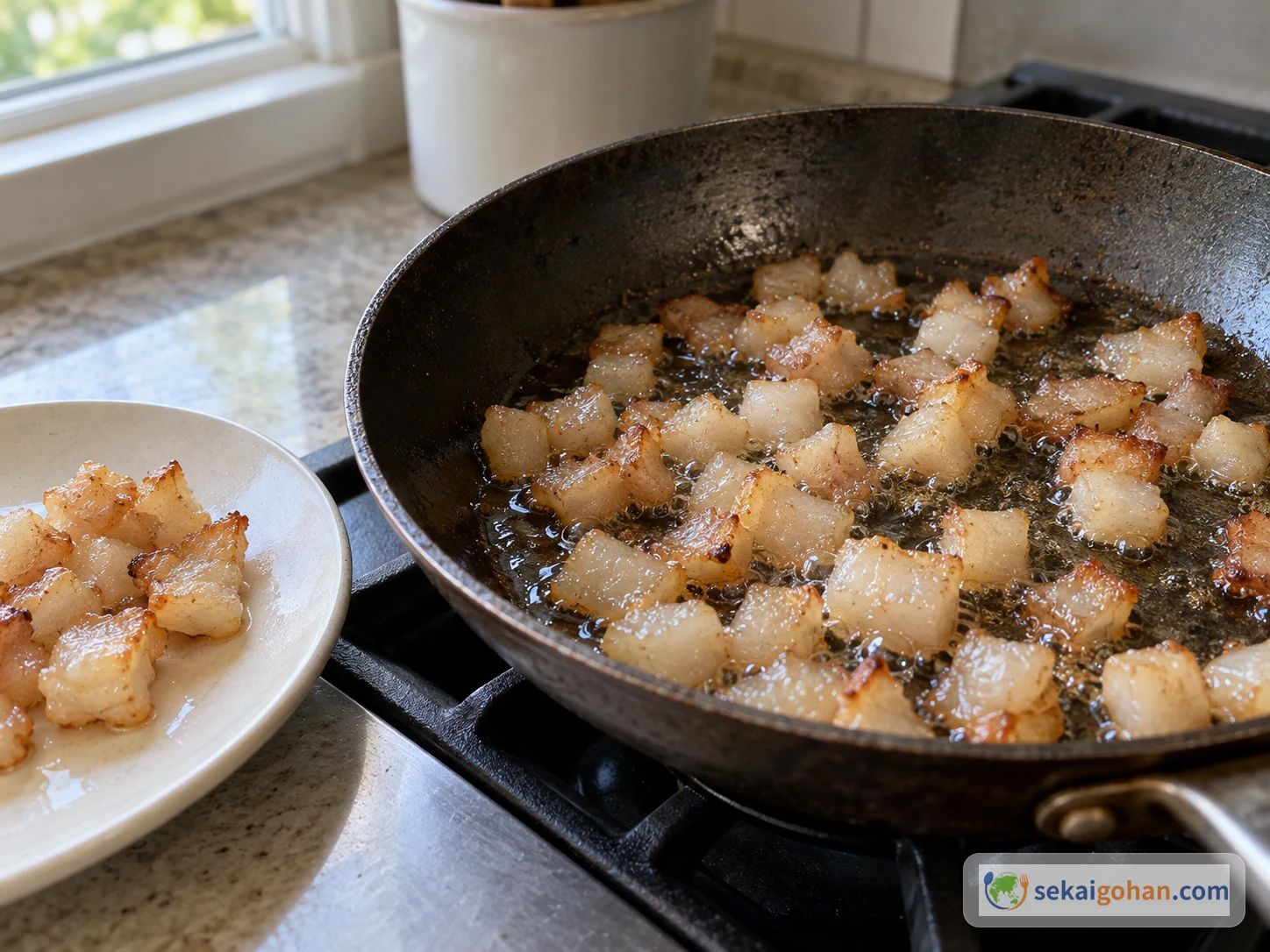
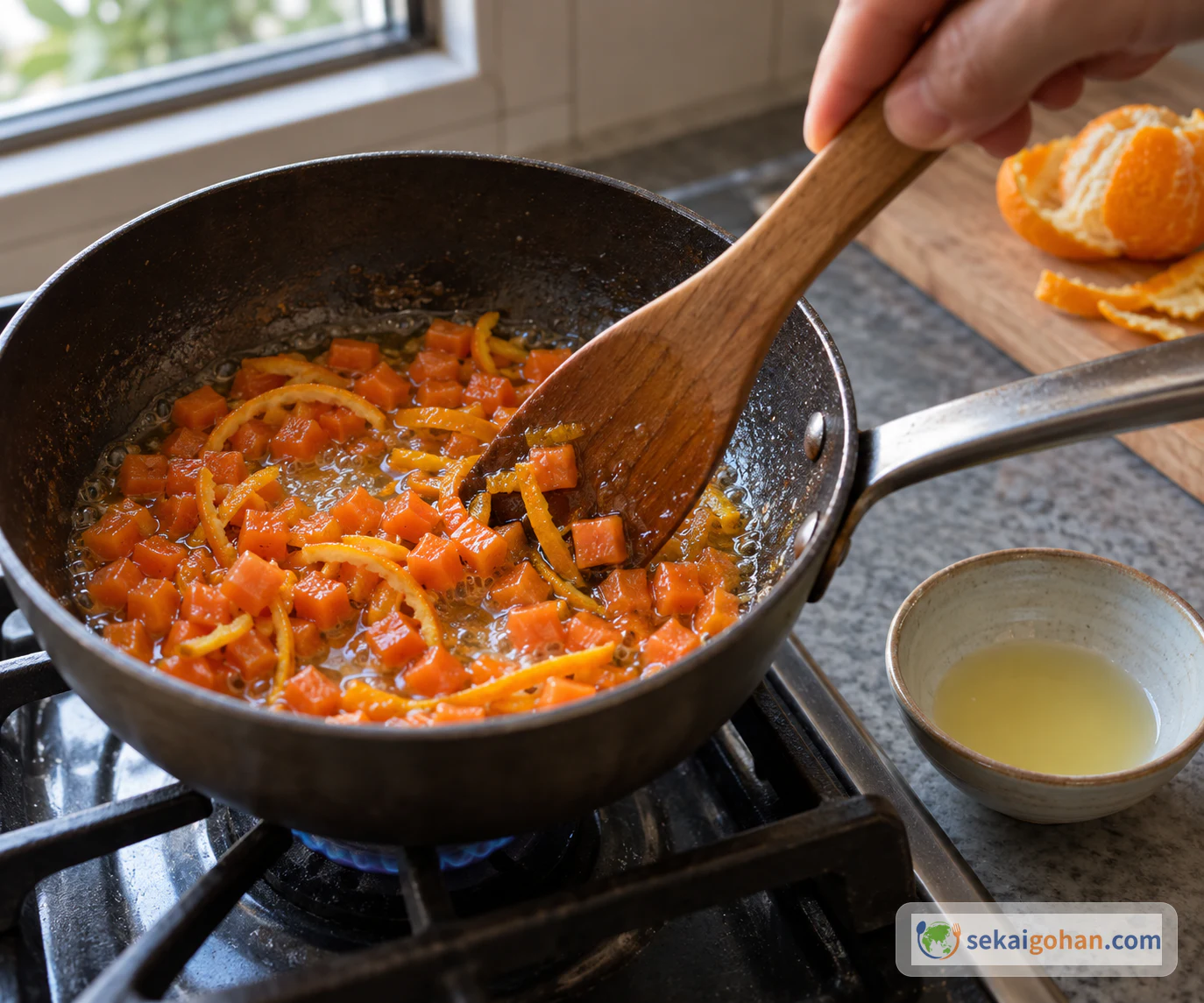
Roasted peanuts and sesame, cooked pork fat, and carrot cooked with sugar, ginger juice and fresh mandarin peel join the rice. Sugarcane molasses (mật mía) binds everything before it is pressed into a sesame-lined wooden mold.
Every workshop has its own touches, and home versions vary even more. One home version uses malt syrup, winter melon and rice wine, and colors three portions of steamed rice, a different route from the two colored portions and separate popped rice of the traditional method.
Ingredients
Equipment
- Steamer with two baskets, one for each color
- Mortar and pestle for pounding the steamed rice
- Rolling pin and knife
- Drying rack
- Deep pan and skimmer for frying the strips
- Dry pan for popping rice and roasting peanuts and sesame
- Small pan for the carrot
- Broad pan and wooden spatula for mixing
- Rectangular wooden mold (a small square pan works too) and a flat board for pressing
A thermometer for the frying fat helps, but you do not need to buy anything special. Tools you already own will do.
This sweet contains peanuts, sesame and pork fat. Check labels on every bought ingredient for allergens and shared-facility statements. Hot lard and warm molasses are both part of the method, so keep children and pets away from the stove.
Choosing Ingredients for Bánh Cáy
Sticky rice. The traditional choice is gạo nếp cái hoa vàng, a Vietnamese sticky rice. Ordinary glutinous rice is easier to find, but it is a different rice, so expect a different result.
Gấc for red. Gấc is the fruit of Momordica cochinchinensis, a plant of the gourd family with a large, spiny fruit; the red comes from the soft pulp around its seeds. Annatto is a different plant and won't stand in for it here. Vietnamese grocers sometimes sell gấc pulp frozen, and if you can't find it, leave the red out and keep only the yellow strips.
Gardenia for yellow. Use food-grade gardenia fruit (quả dành dành). Turmeric powder will color the rice yellow, but it changes the aroma and flavor, so the bar becomes an adapted version rather than the traditional one.
The binder. Use sugarcane molasses, mật mía. Malt syrup (mạch nha) is a different ingredient, and recipes built on it follow their own formula rather than a one-to-one swap.
Allergens and diet. Peanuts and sesame are central, and the bar contains pork fat and is fried in lard. Check product labels for shared-facility statements and keep cross-contact in mind in your own kitchen.
Method: Making Each Part, Then Pressing Them Together
Every part is prepared on its own and only meets the others in the final pan. Get all components ready before the molasses goes in, because the mixture needs to be pressed while still warm.
Common Problems with Bánh Cáy
The checks below rely on what you can see in the pan and the mold.
| Condition | Likely cause | What to do |
|---|---|---|
| The strips don't puff in the fat | Not dry enough | Dry the remaining strips longer before frying |
| The block crumbles after unmolding | Pressed after the mixture cooled, or not pressed firmly enough | Have the mold ready before adding molasses, and press while warm |
| The bar looks like granola, with no white rice | The popping portion was skipped or mixed in with the colored strips | Keep the white popped rice as a separate component |
| The colors look orange rather than red and yellow | Natural blending during pounding | Nothing to fix; this is how it should look |
Serving Bánh Cáy and Variations
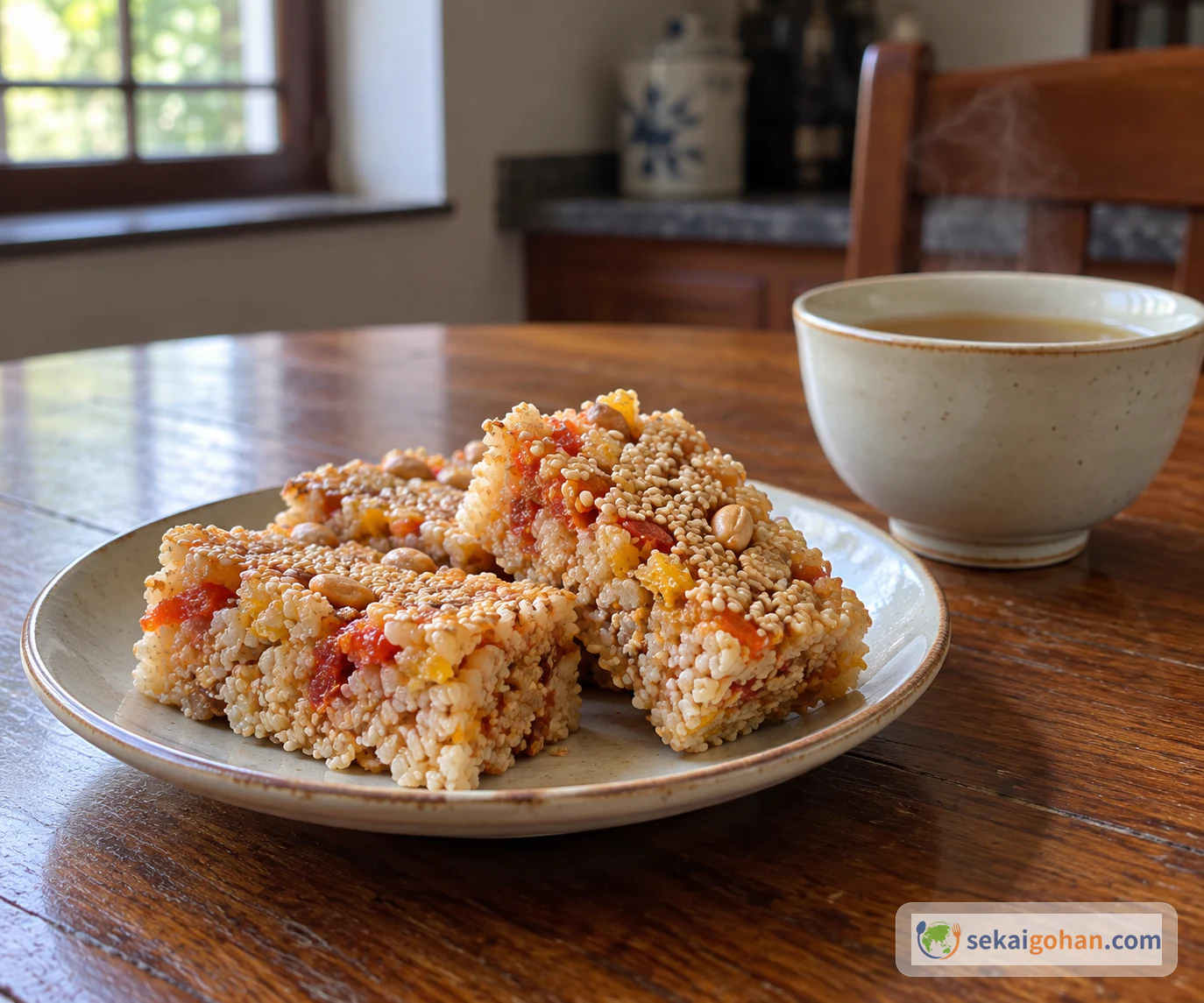
Cut the bars small and serve them with hot tea. If you make bánh cáy outside Vietnam, a plate of small bars and a pot of tea is enough to set the scene.
The mold is the one thing you can change freely: one large mold or several small ones changes only the shape. Leaving out the pork fat is a bigger step, since it changes the richness and the way the bar binds, and it moves the sweet away from the traditional version.
Frequently Asked Questions
Why are there no weights or times?
The traditional method gives the ingredients and the order of work, but no quantities, times or temperatures. Judge each stage by the state of the rice and the mixture in front of you.
What about the pork fat cured for about half a month?
Village makers treat pork fat with sugar for about half a month before dicing and cooking it. At home, keep pork fat out of room temperature for that long.