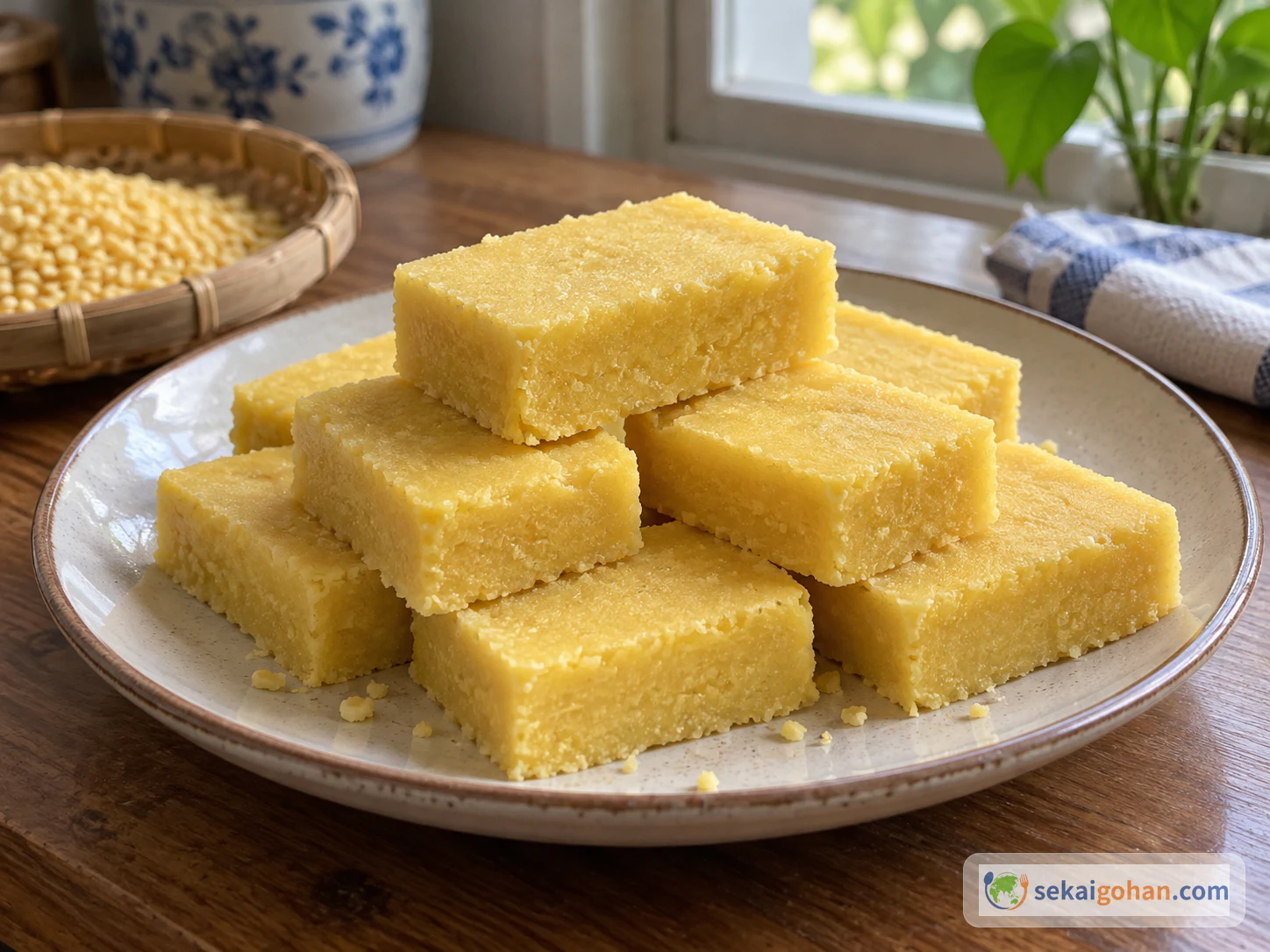
Small yellow cakes on a plain plate and a cup of green tea beside them: that is how bánh đậu xanh is meant to be eaten. The name means "mung bean cake," and the recipe is close to that simple. Mung beans and sugar are pressed into small shapes, and the result is evenly yellow all the way through, with no filling and no outer crust. The cake is closely tied to Hải Dương, where people give it as a gift.
About Bánh Đậu Xanh
In Vietnamese, "bánh" covers cakes and many flour- or grain-based foods, "đậu" means bean, and "xanh" means green. If you go looking for more, search with the Vietnamese spelling and "mung bean cake" together. That turns up this pressed sweet rather than baked versions.
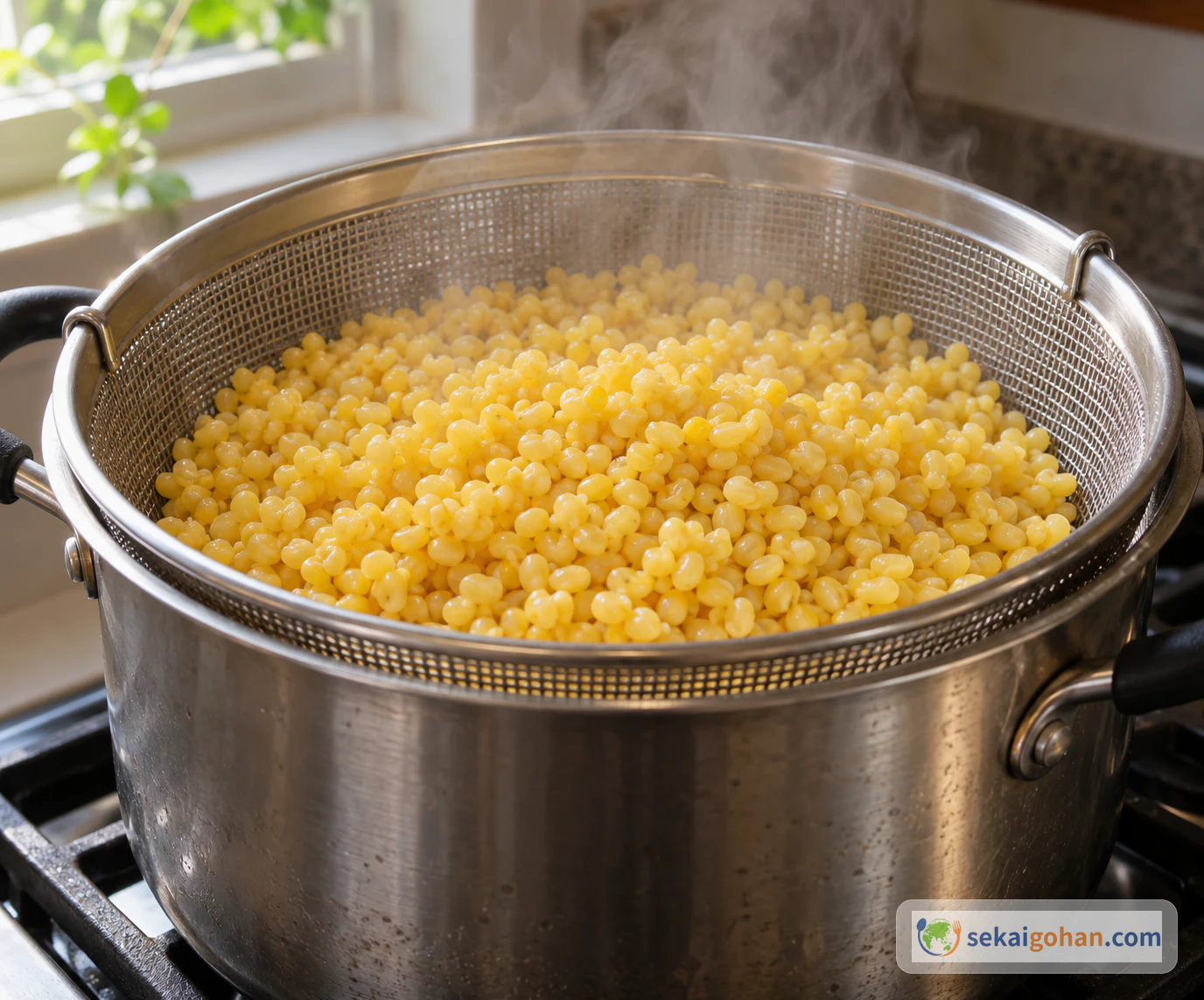
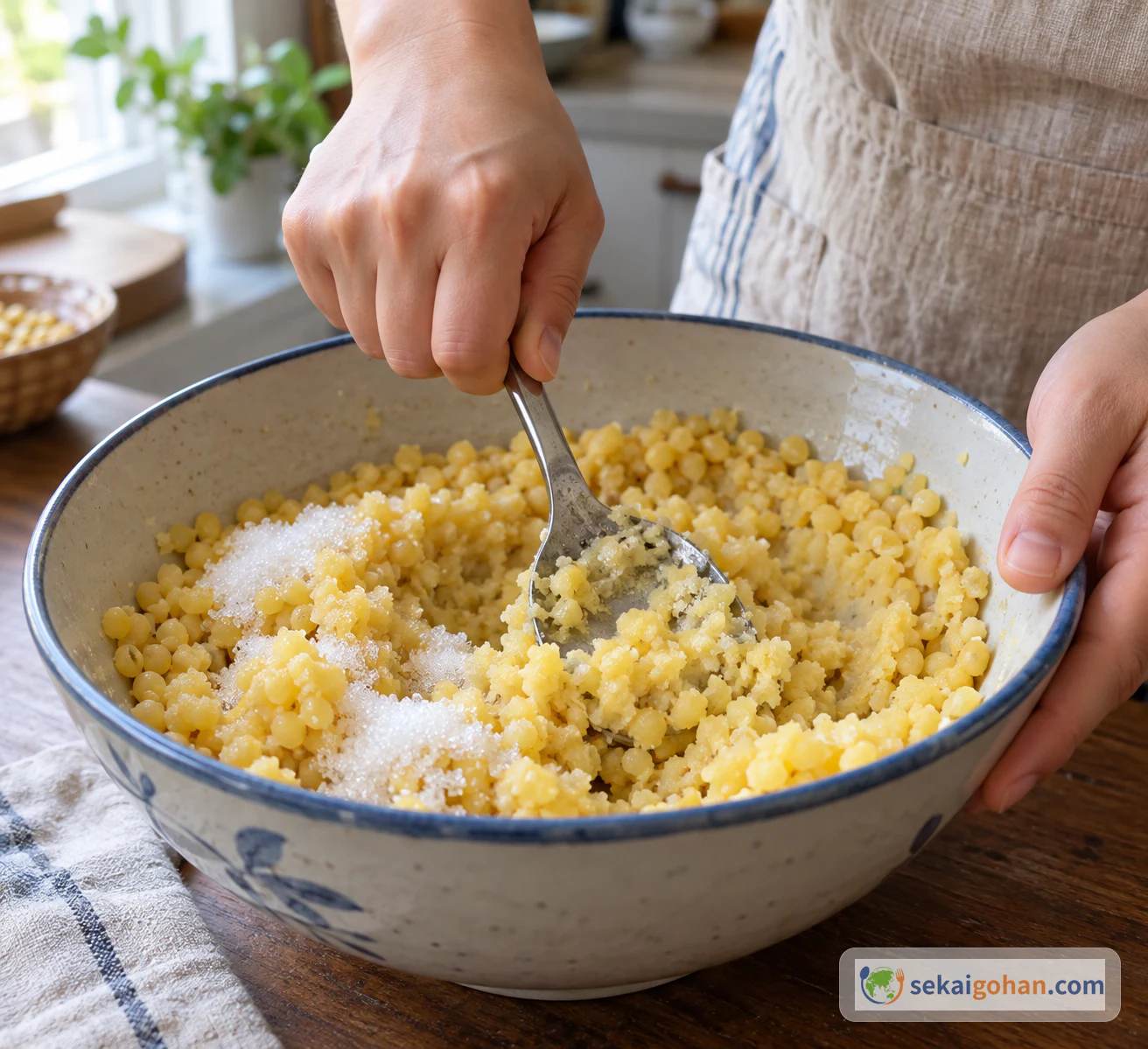
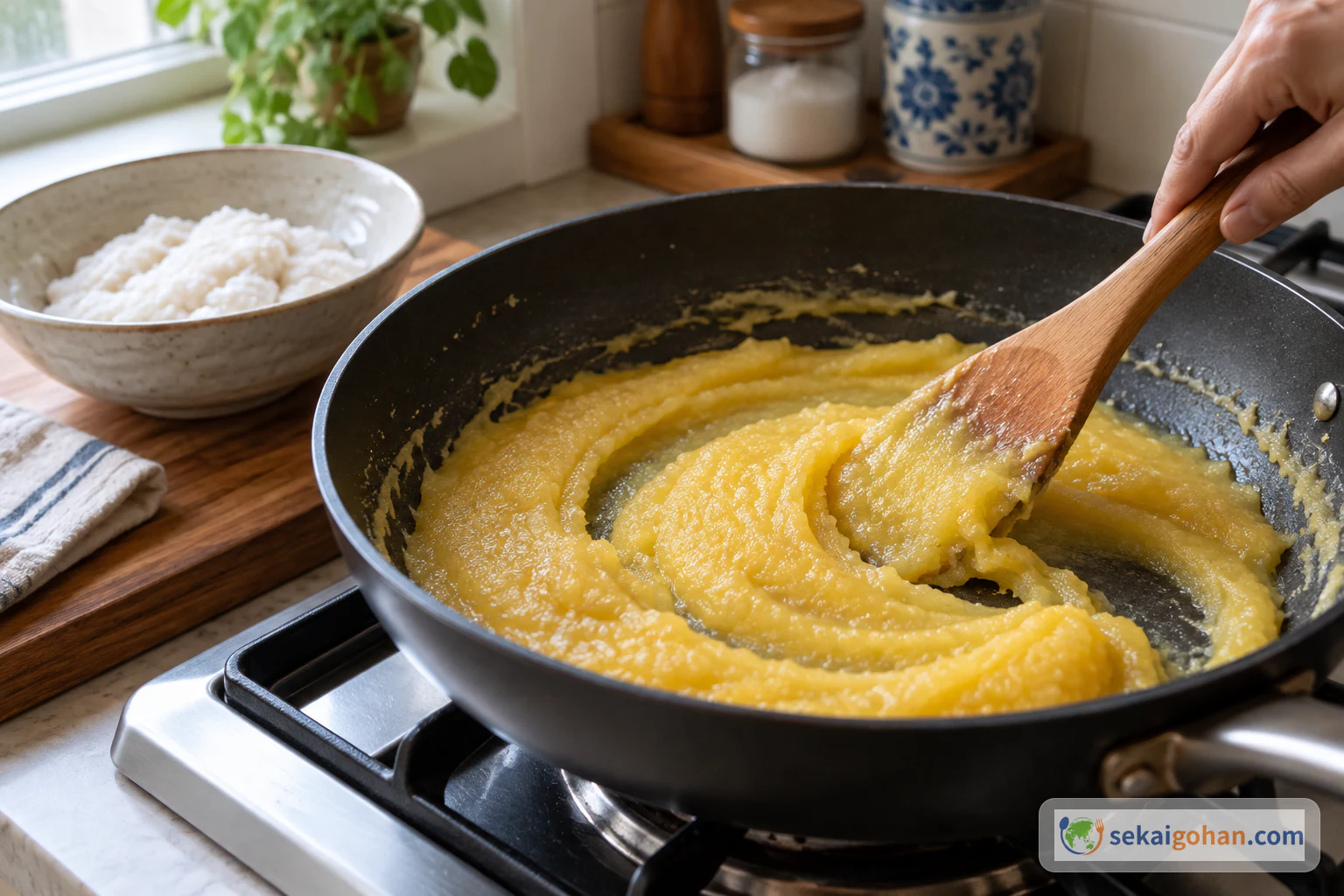
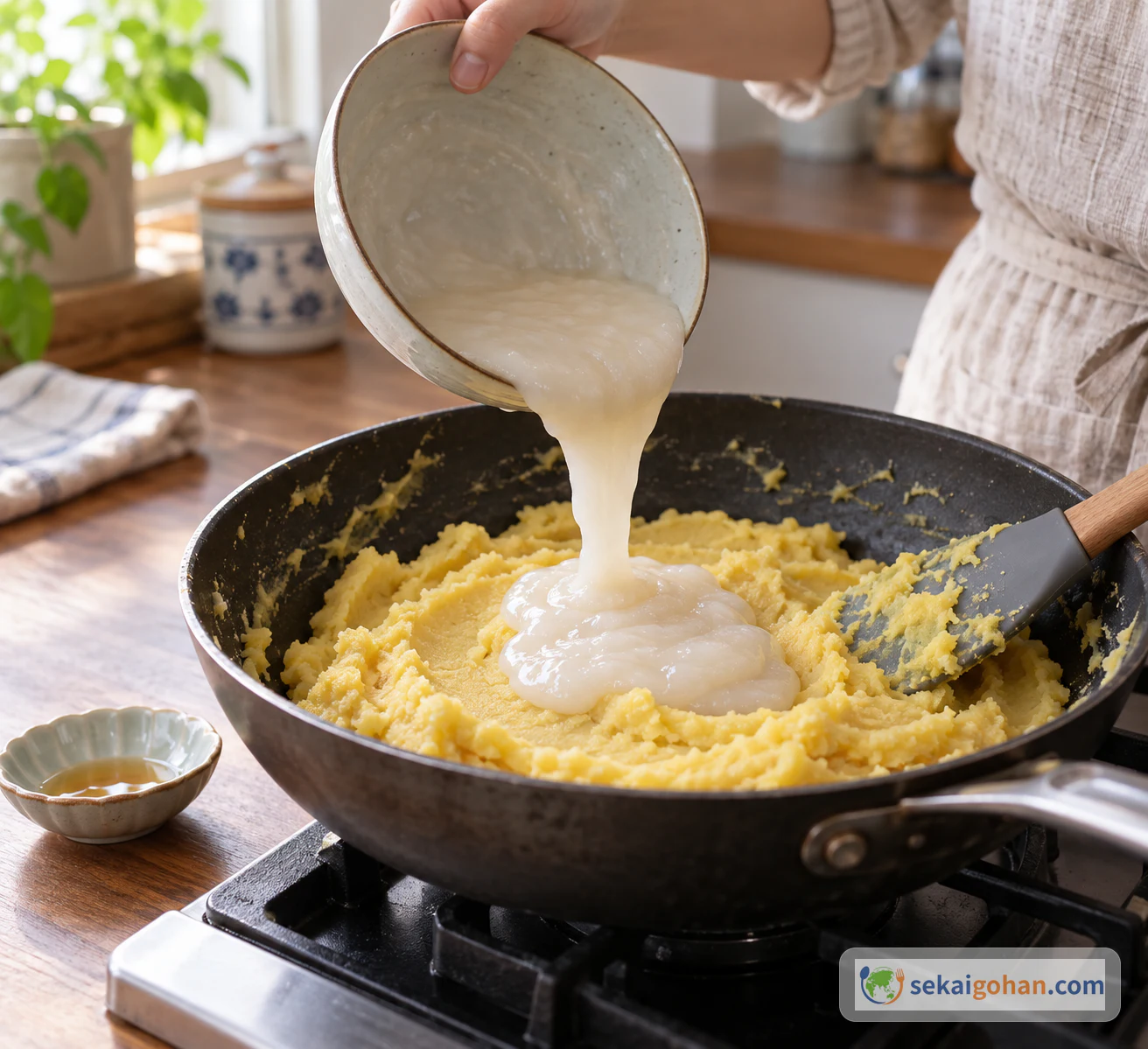
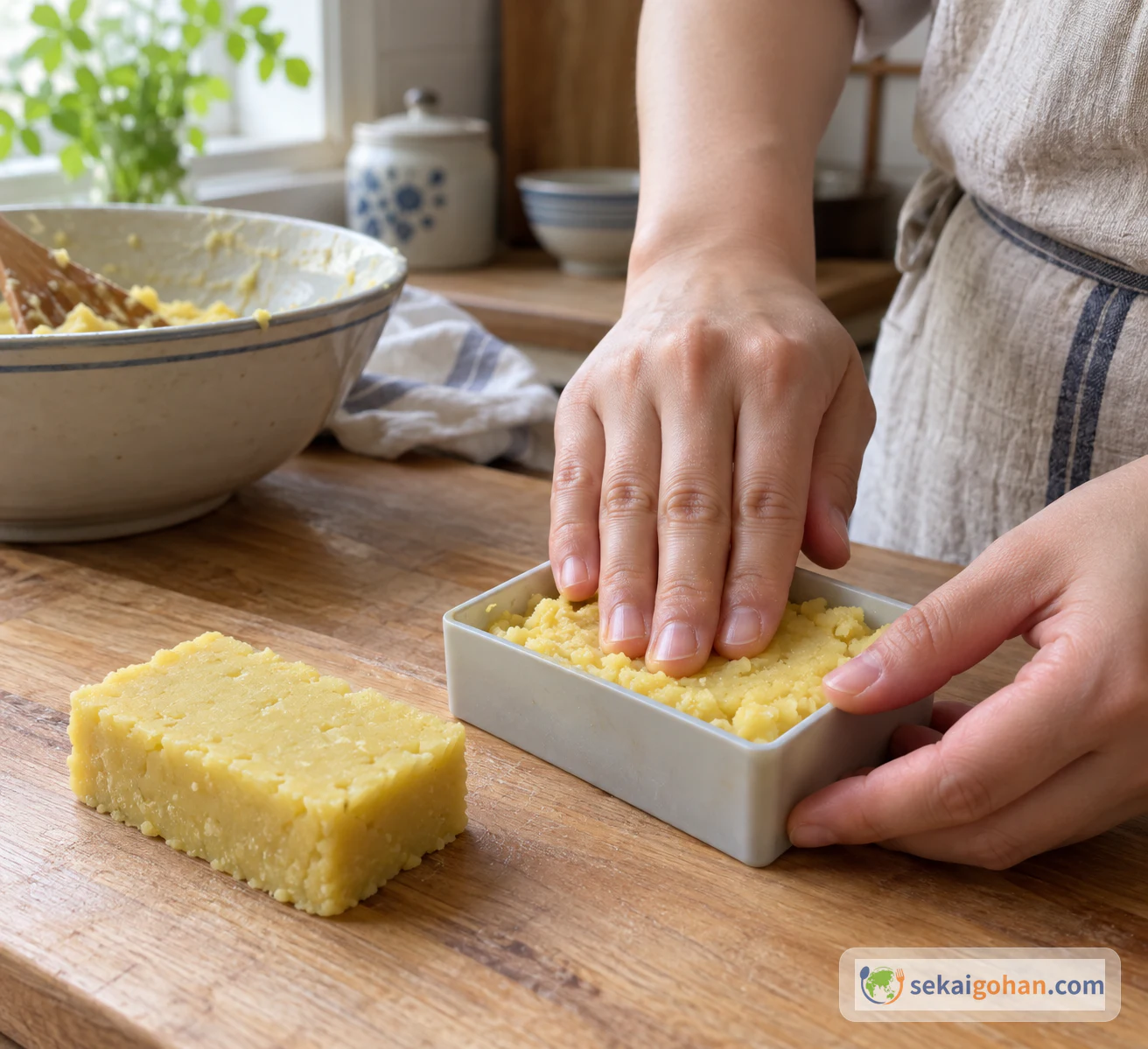
In Hải Dương, the cakes come from workshops, and several modern brands sell them in gift packaging. Commercial and artisan makers work from mung bean flour, sugar, pork fat and a floral fragrance, and they roast, mill and press it. At home the method is gentler. Peeled split mung beans are soaked and steamed, mashed with sugar, and cooked into a paste in a pan. The paste is bound with koh fun (cooked glutinous rice flour) and oil, scented with flower water, and pressed into a mold once it is cool enough to handle. For more dishes from the same country, see Vietnam.
The name overlaps with a few other sweets, so it helps to tell them apart. Baked mung bean cakes (bánh đậu xanh nướng), the mung bean filling inside mooncakes, and Chinese mung bean cakes with red bean filling are all different things. This cake has no wrapper and no filling, and it contains no sesame, coconut, butter, milk, egg or meat.
Ingredients
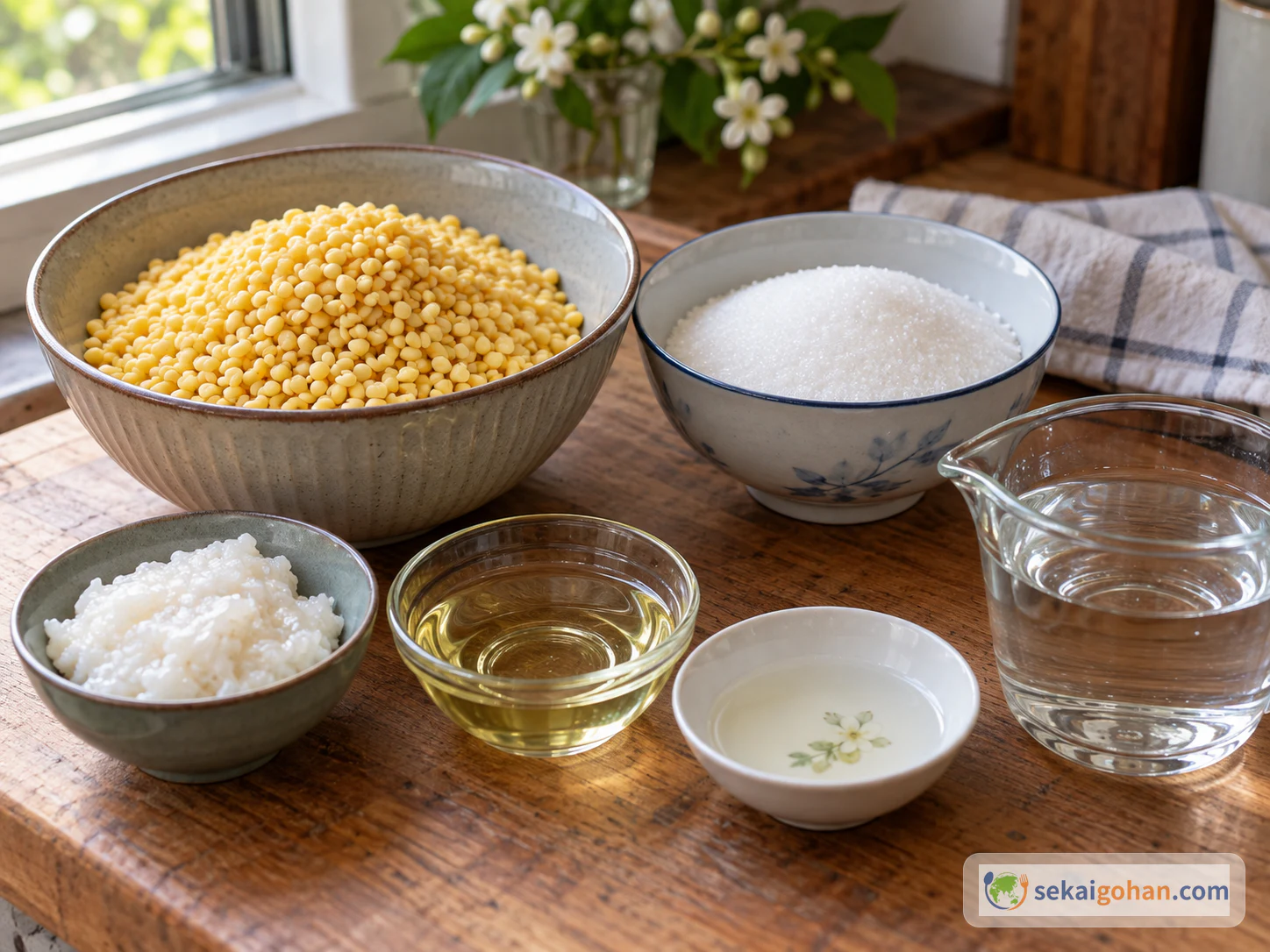
Choosing Mung Beans, Koh Fun and Pomelo Flower Water
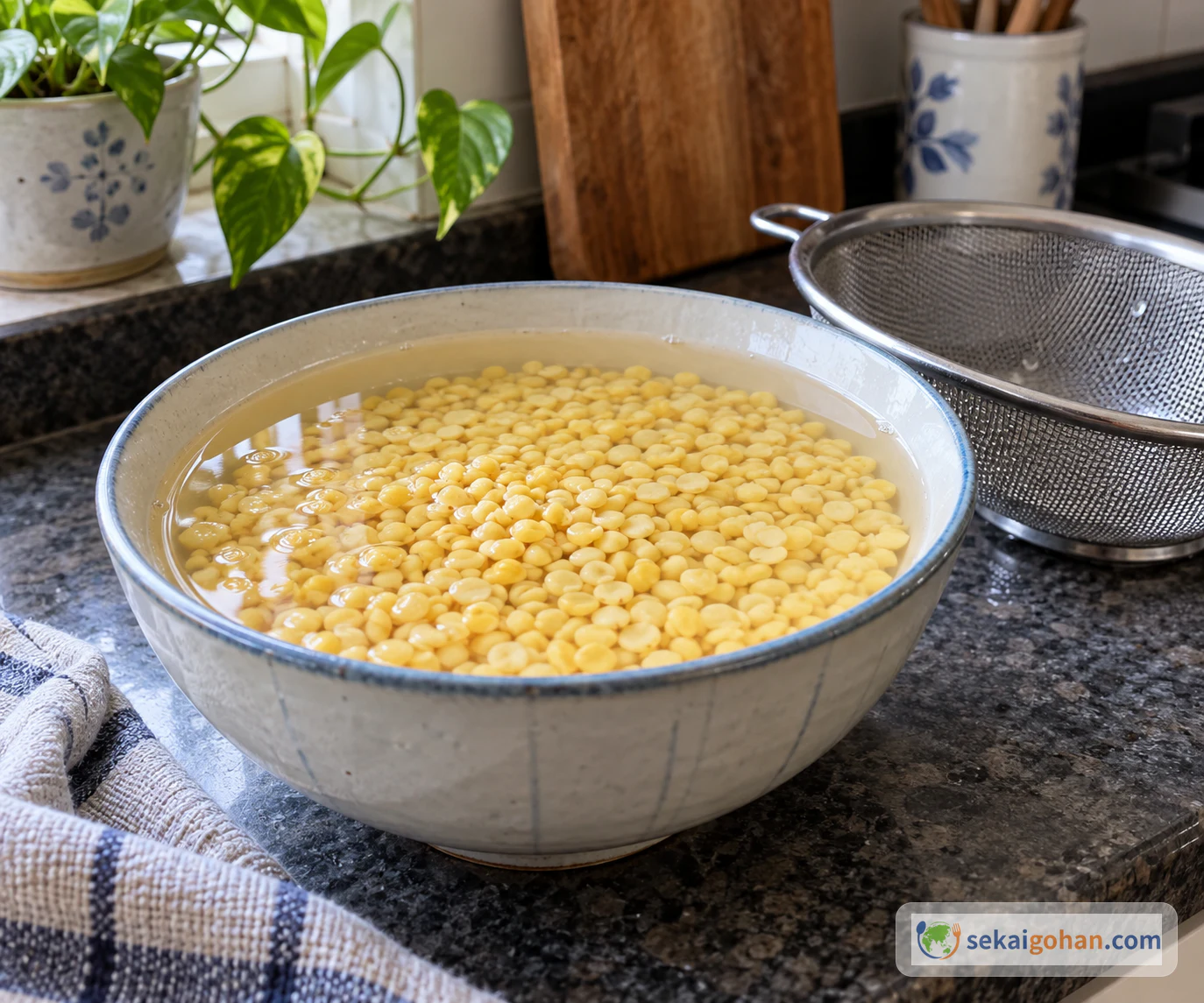
Mung beans. Look for dried, peeled, split mung beans, which are yellow rather than green. Whole skin-on beans won't give the same result. The weight in the ingredient list is for dry beans.
Koh fun. This is glutinous rice flour that has already been cooked, so check that the package says cooked or roasted. Raw glutinous rice flour, potato starch and cornstarch are different ingredients and won't stand in for it.
Pomelo flower water. Choose a product sold as food grade. Essential oils and cosmetic floral waters can't be swapped in at the same amount. Vanilla or mali also work, but pick only one fragrance and expect the flavor to change.
Sugar and oil. Ordinary white sugar and a neutral vegetable oil are all you need. The mold goes in dry, with no extra oil.
Equipment
- Bowl and strainer for soaking and draining
- Steamer
- Mixing bowl
- Potato masher or sturdy spoon
- Pan for cooking the paste
- Heatproof spatula
- Small bowl for mixing the koh fun and oil
- A small, plain cake mold (a rectangular one is a practical choice; any simple shape works)
Method: Steam, Mash, Cook in Two Stages, Then Press
Cooking in the pan has two parts: about 20 minutes for the beans and sugar, then about 10 more minutes after the flour-and-oil mixture goes in. Add the fragrance only at the very end.
Common Problems with Bánh Đậu Xanh
| Condition | Where to look | What to do |
|---|---|---|
| The paste is coarse or grainy | The beans were not soft enough after steaming | Next time, steam until a bean mashes easily under light pressure before moving on |
| The base of the pan is scorching | Heat too high or stirring paused | Keep to medium heat and stir continuously, scraping the whole base through both stages |
| The cakes crumble when released | Temperature, moisture or pressing pressure | Note how warm the mixture was, how moist it felt and how firmly you pressed |
| The flavor seems flat or perfumed | Fragrance choice | Use one fragrance only, at ½ tsp, added at the very end |
Most of it comes down to three signs. The beans should mash easily, the paste should keep moving under the spoon, and the mixture should be comfortable to hold before you press it. If you make these more than once, write those conditions down each time. That record is the most useful thing you can keep.
Serving, Storing and Varying Bánh Đậu Xanh
Serving
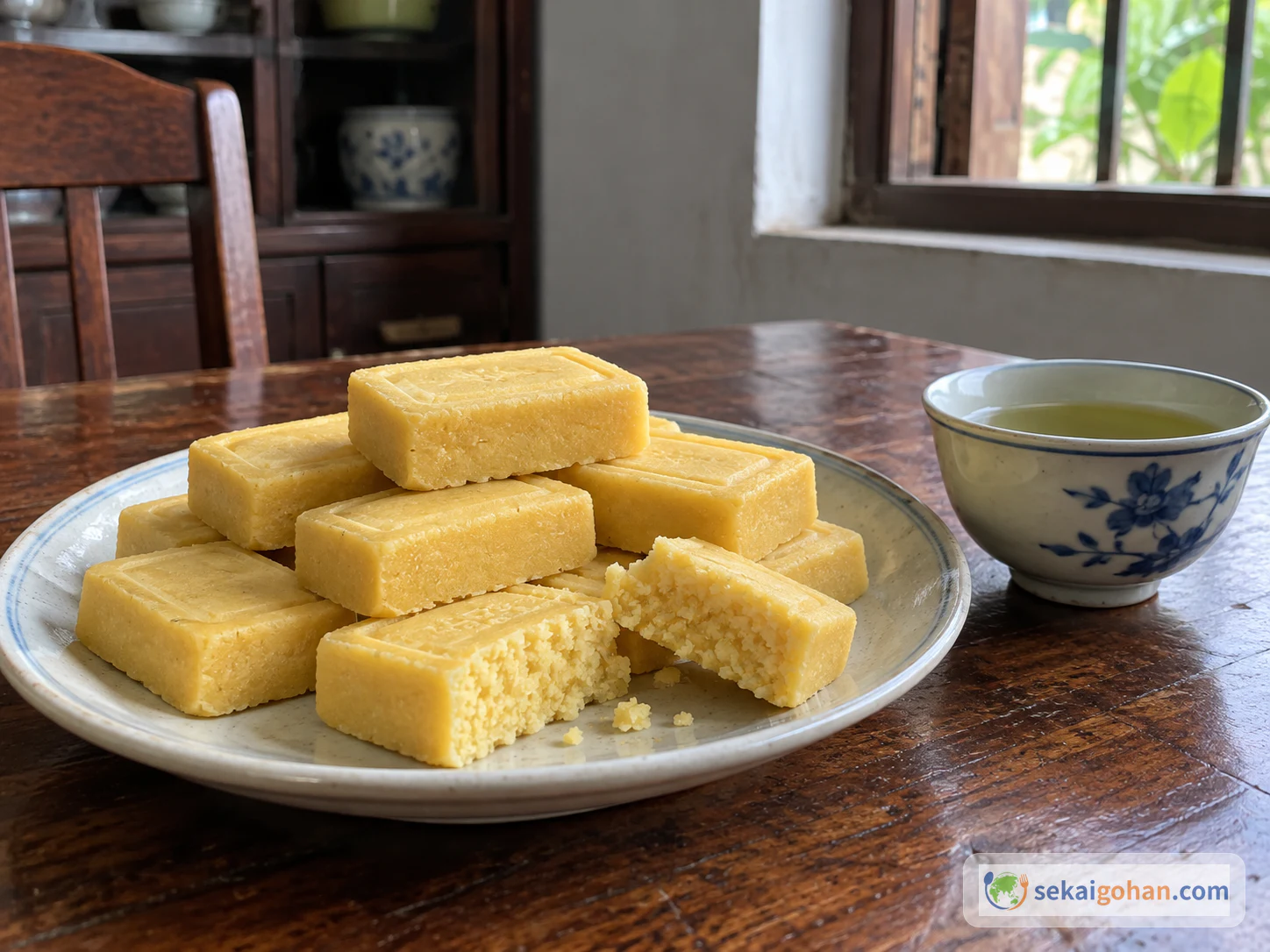
Serve the cakes with green tea. A few small pieces on a plain plate are enough. Homemade cakes look a lot like the shop-bought ones, small, yellow and neatly pressed, but they are moister and come without the packaging.
Hygiene and Leftovers
Work with clean hands and clean utensils, especially when you press the mixture by hand. Packaged commercial cakes keep for months, but homemade cakes are a different product, so don't leave them at room temperature for long. Divide any leftovers into shallow containers, cool them quickly, and store them in the refrigerator.
Variations
- Sweetness. Sugar can go from 5.5 oz (150g) to 7 oz (200g). This version uses 5.5 oz (150g); for a sweeter batch, go up within that range.
- Oil. Use 2–3 tbs oil. This version uses 2 tbsp.
- Fragrance. Swap pomelo flower water for vanilla or mali. Use just one, not a blend.
- Mold shape. A small plain mold, rectangular or otherwise, changes only the look.
The Hải Dương workshop cakes, made with roasted flour and pork fat, are a separate cake. Their ingredients don't belong in this one.
Frequently Asked Questions
How many cakes or servings does this make?
That depends on the size of your mold, so count the cakes as you press them.
Can I boil the beans instead of steaming them?
Boiling is a separate home method. The beans are boiled and mashed, and sugar is added at half the weight of the cooked, mashed beans. The paste then goes into an oiled mold. That ratio works from cooked weight, so it doesn't carry over to the dry beans here. For this recipe, steam them.
Is this the same as the dry, powdery cakes from Hải Dương workshops?
Both are pressed mung bean sweets, but they aren't the same. The workshop method uses roasted mung bean flour and pork fat. This home version uses steamed beans, koh fun and vegetable oil. Because the moisture, fat and flour handling differ, the textures won't be identical.