
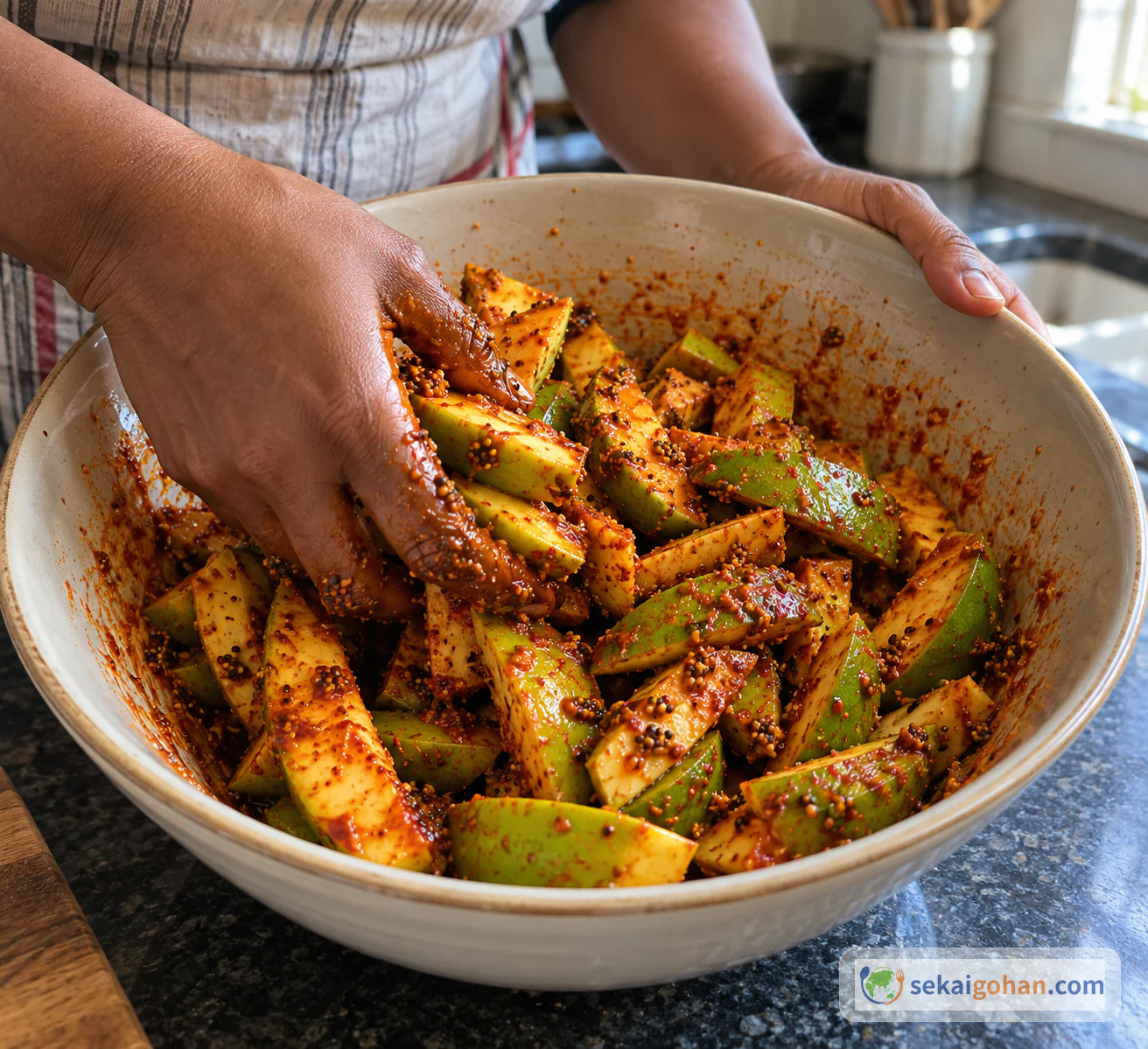
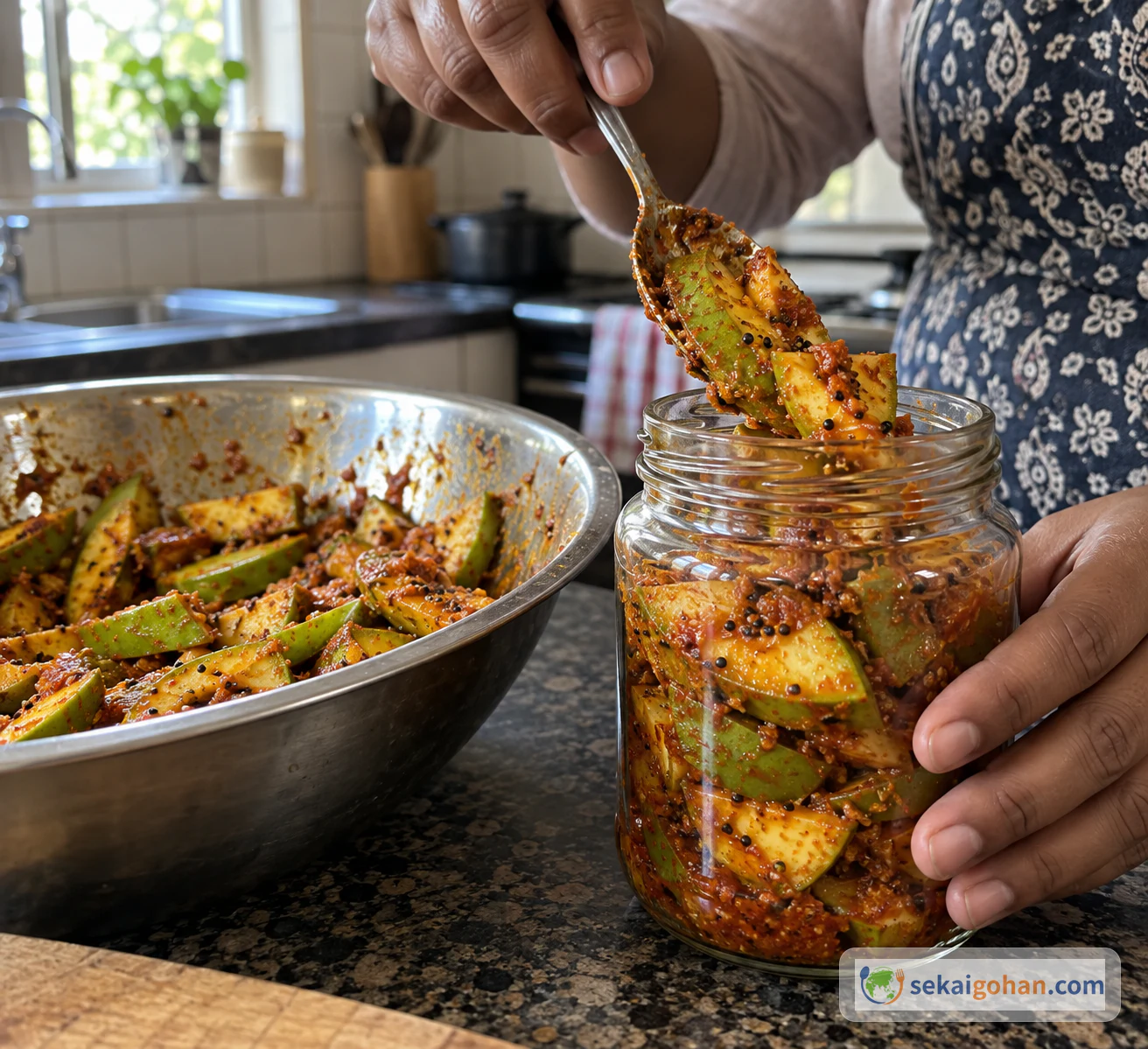
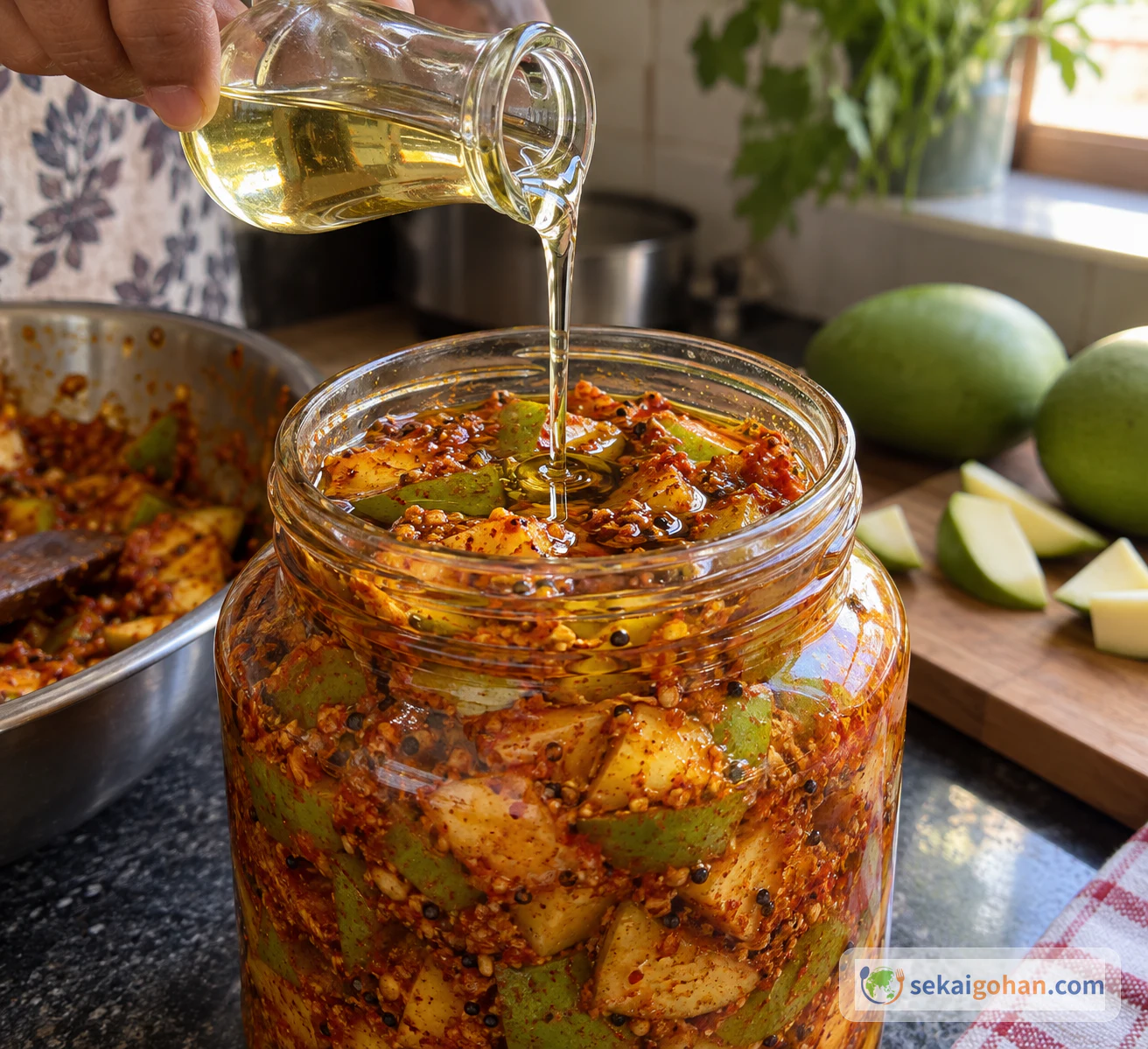
A small dish of firm green mango slices, coated in red chilli and oil and flecked with mustard seeds, sits beside a plate of curry and rice. Atjar, or atchar, is a spicy pickle or relish of sliced or chopped vegetables or fruit, and in South Africa it is usually eaten with curried dishes. Green mango is one of its oldest forms; it was being made into atjar as far back as 1798. You'll find it next to curry and rice, and alongside amagwinya and kota.
Mango Atchar in South Africa
Atchar has Indian roots, and in South Africa it has become a condiment localized across South African communities. The name tells the same story of travel: the word traces from Afrikaans atjar through Malay achar to Persian āchār, and achar is also a form in Indian English. For more dishes from the same country, visit the South Africa page.
Why Mango Atchar Lives in the Refrigerator
Make this atchar, keep it in the refrigerator at 41°F (5°C) or below, and eat or freeze it within 4 days of combining the mango with oil. Oil does not preserve food. Do not keep this atchar at room temperature.
The reason is botulism. Oil has no preservative effect, and covering food with it shuts out air, creating the oxygen-free conditions C. botulinum favors. Acid has to bring vegetables below pH 4.6 before oil goes in. Roasted vegetables in oil made at home are hazardous, especially above refrigerator temperature, and a commercial roasted eggplant product in oil has been linked to botulism.
So the vinegar in this atchar is only a supporting measure. The main controls are refrigeration and time: chill it right away at 5°C or below, and eat it within 4 days or freeze it.
Ingredients
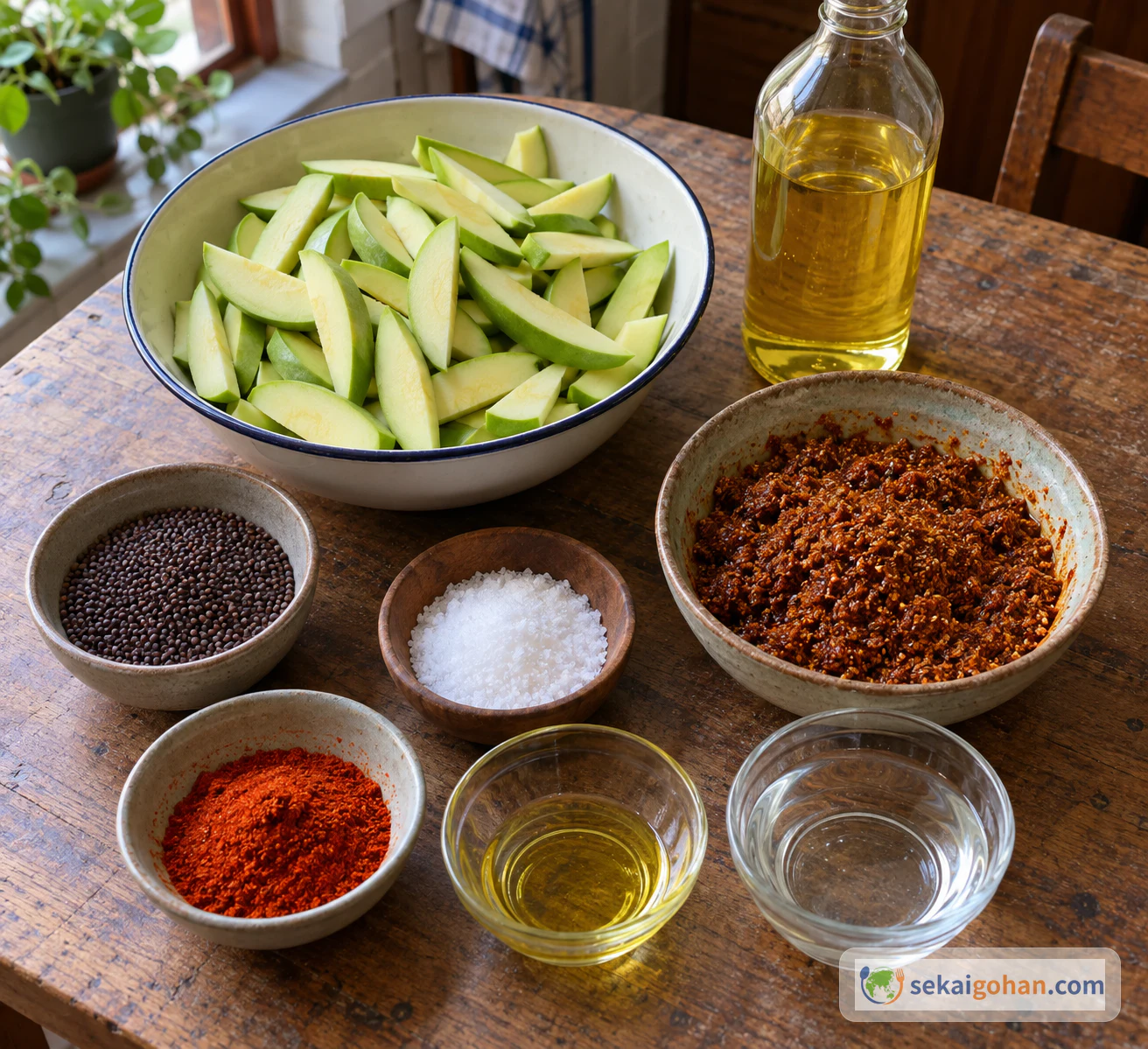
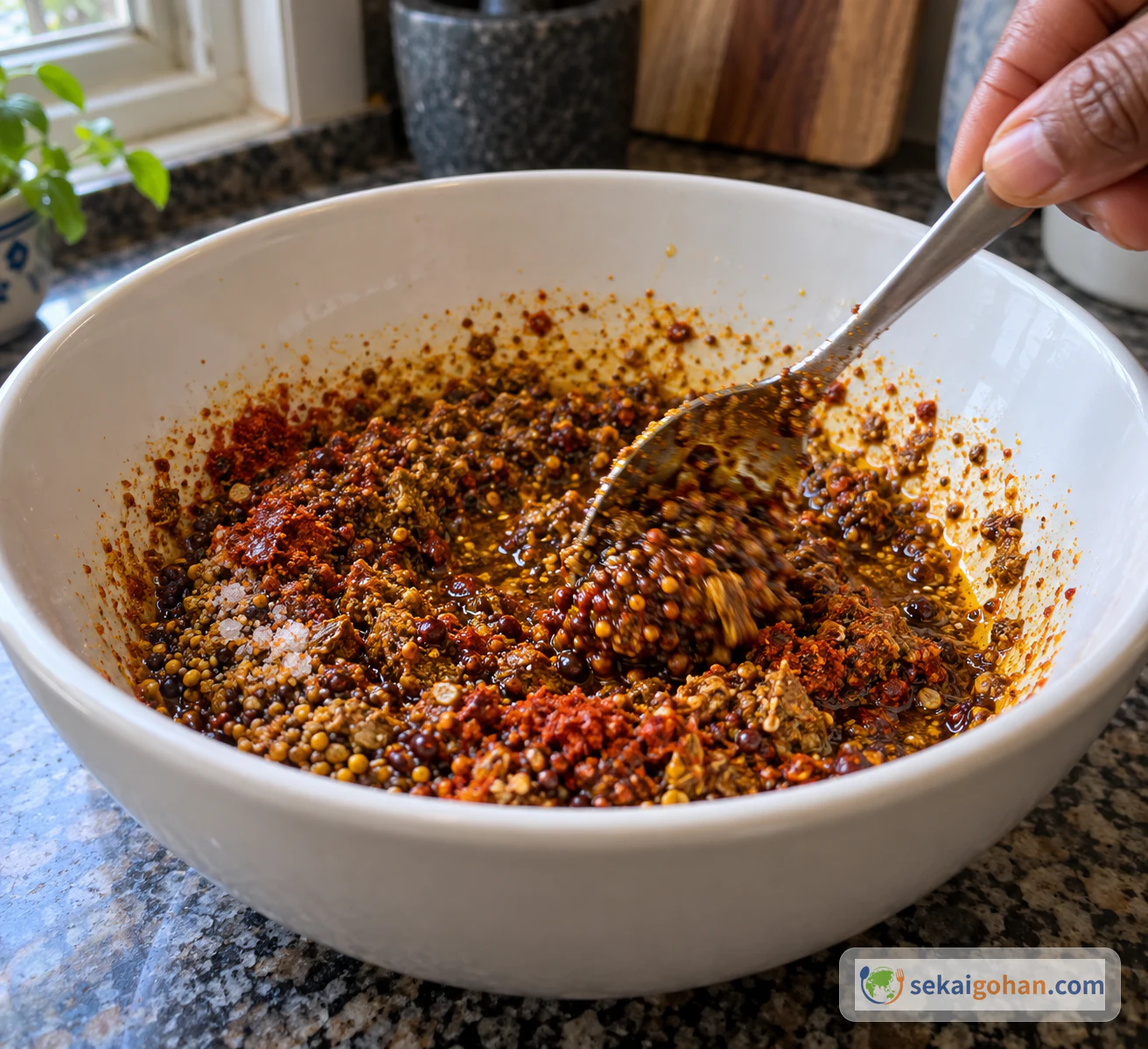
Vegetable oil is used twice: once in the spice mix and once to cover the top of the jar.
Equipment
- Knife and clean cutting board
- Clean trays
- Oven and oven thermometer
- Clean cloth, if sun drying
- Kitchen scale
- Measuring cups and spoons
- Clean glass bowl
- Bowl for the spice mix
- Clean spoons
- Clean glass or plastic container
- Pen and label for the dates
Choosing the Mango, Masala and Vinegar
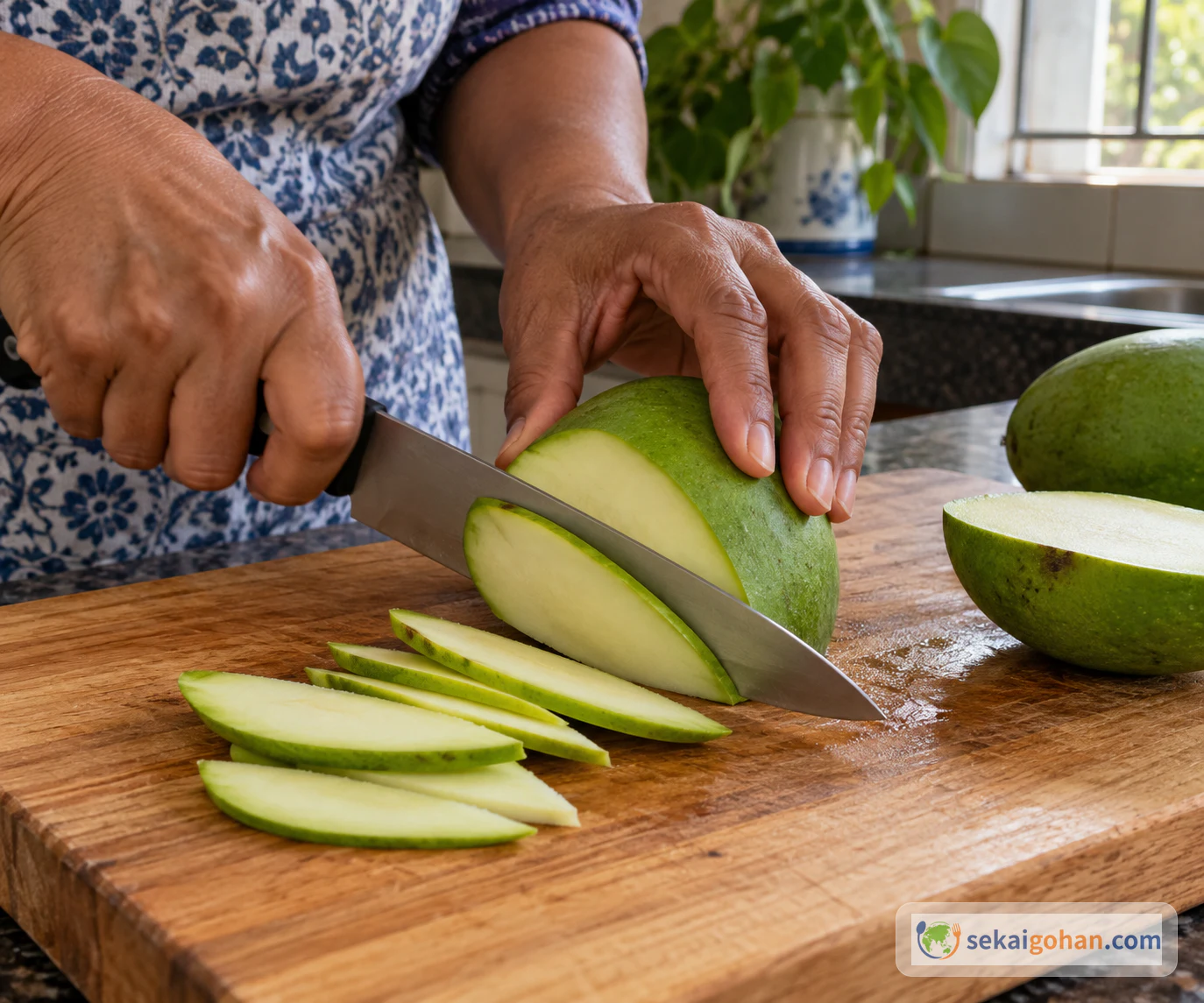
Mango: Choose hard, unripe fruit. Sweet ripe mango has a different texture and sourness, so it won't work here.
Masala: Use atchar masala or pickle masala. Without it, you'll be making a different condiment.
Chilli powder: Heat varies a lot from product to product, so know how hot yours is before you add the full 4 tbsp.
Mustard seeds: Use whole seeds rather than ground mustard.
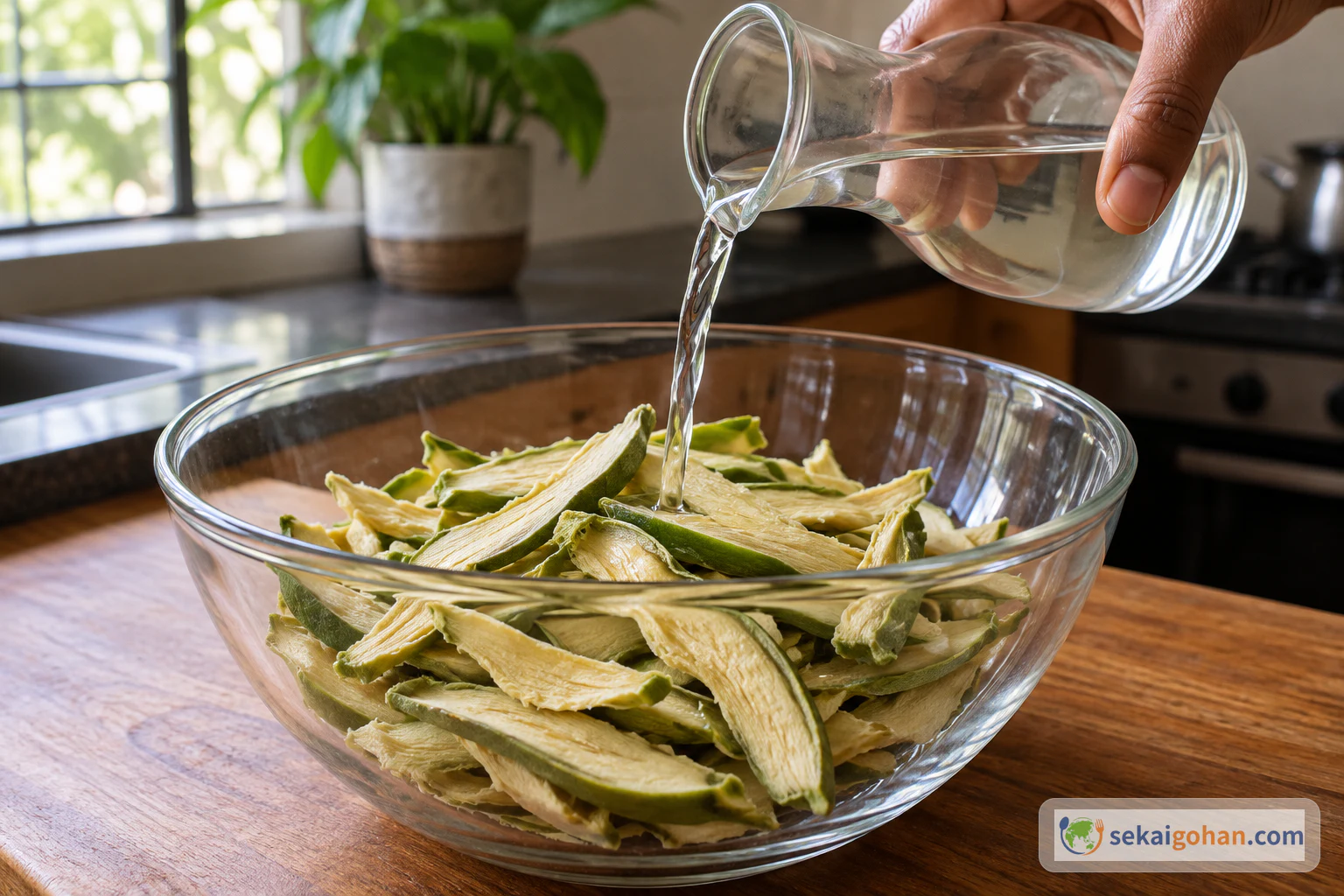
Vinegar: Check the label for at least 4% acidity, and use it undiluted.
Weighing: Weigh only the dried mango and the vinegar, to check their ratio in step 3.
Method: Dry, Acidify, Spice, Cover, Refrigerate
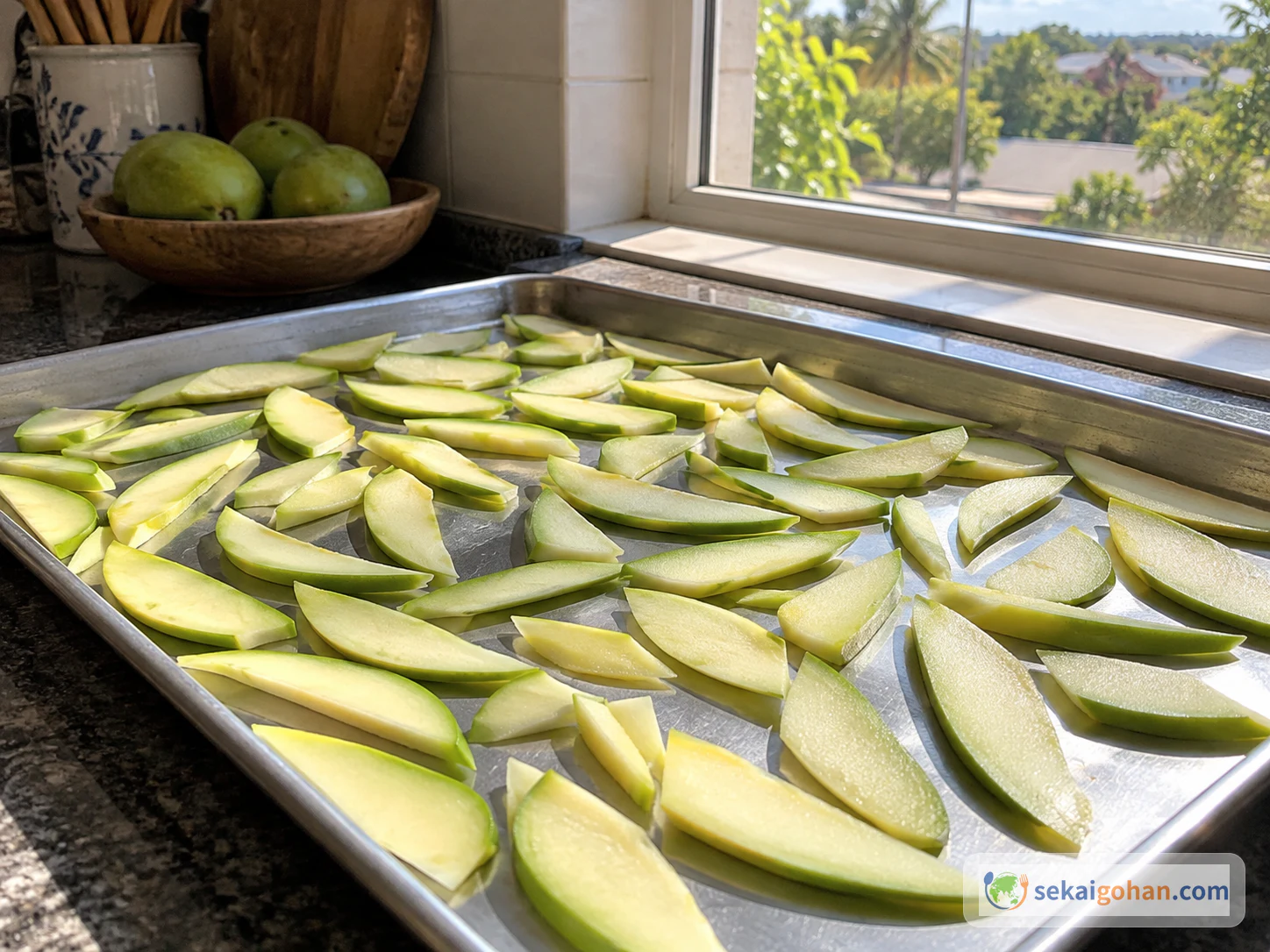
Drying takes hours and the vinegar stage runs overnight. Once the mango meets the oil, the 4-day limit begins, so make this when you will actually eat it within that time.
Troubleshooting Mango Atchar
| What you notice | What it means | What to do |
|---|---|---|
| Moisture shows or squeezes out, or a folded slice sticks to itself | The mango is not dry yet | Keep drying and test again after cooling, however long it has been |
| Your weather is cooler or more humid than the sun-drying limits | Sun drying is not suitable | Use the oven |
| The mango weighs more than 3 times the vinegar | There is too little vinegar | Add more vinegar, never water |
| The vinegar does not cover the slices | This is expected | Go by the weight ratio, not the liquid level |
| The surface is not fully covered with oil | Too little covering oil | Add a little more until it is covered |
| You won't finish it by the date on the label | Day 4 is the limit | Freeze the rest before then |
| It was left at room temperature, or has a bulging container, off smell, mold or fizzing | It should not be eaten | Throw it away without tasting it |
Serving Mango Atchar and Other Styles

A spoonful goes a long way next to curry and rice, amagwinya or kota. Use a clean spoon each time, and put the container back in the refrigerator as soon as you've served it.
Atchar recipes go in quite different directions, and each works as its own dish:
- A cooked-spice mango atchar: Mango, garlic, salt, chilli, cumin, coriander, masala, honey, cornflour or potato flour, mustard seeds, curry leaves and olive oil. The spice mixture is cooked and poured over the mango, then oil is added and the atchar is refrigerated for at least 12 hours.
- A boiled style: In 1959, atcha was described as mango boiled in a hot red curry mixture.
- Bangladeshi aam er achar: Also a green mango pickle in the wider achar family, but from a different country and regional style, with its own seasoning and method.
Frequently Asked Questions
Can I keep it in a cool place for a week?
No. Home-prepared oils without tested acidification need refrigeration or freezing, and room-temperature storage is unsafe. Tested acidification procedures can't be extended to ingredients that haven't been researched.
Doesn't the vinegar make it safe?
Not on its own. Keep the mango-to-vinegar weight ratio at 3 to 1 or less, and refrigerate. Even with acid, yeasts and molds can still spoil food that isn't kept cold.
Does the salt or the drying extend the 4 days?
Don't count on either. Keep the salt at 2 tbsp, but not as a safety measure. Fully dried, plain tomatoes in oil keep 6 months in the refrigerator, but that doesn't carry over to this mango.
Why 4 days?
The advice for fresh vegetables or herbs in oil is to refrigerate them, use them within 4 days, or freeze them for long-term storage, and to label containers with both dates. For home-prepared garlic and herb oils, the maximum given is 2 to 4 days in the refrigerator, or freezing. That guidance was written for vegetables and herbs rather than mango, so 4 days serves here as a conservative limit.
Should I drain the vinegar before adding the spice oil?
No. Keep all the vinegar in, because the ratio counts it as part of the mix.
Why 41°F (5°C) and not 50°F (10°C)?
50°F (10°C) or below is general advice for homemade sealed foods, while 41°F (5°C) or below is specified for vegetables and herbs bottled in oil. The lower of the two is the safer choice.