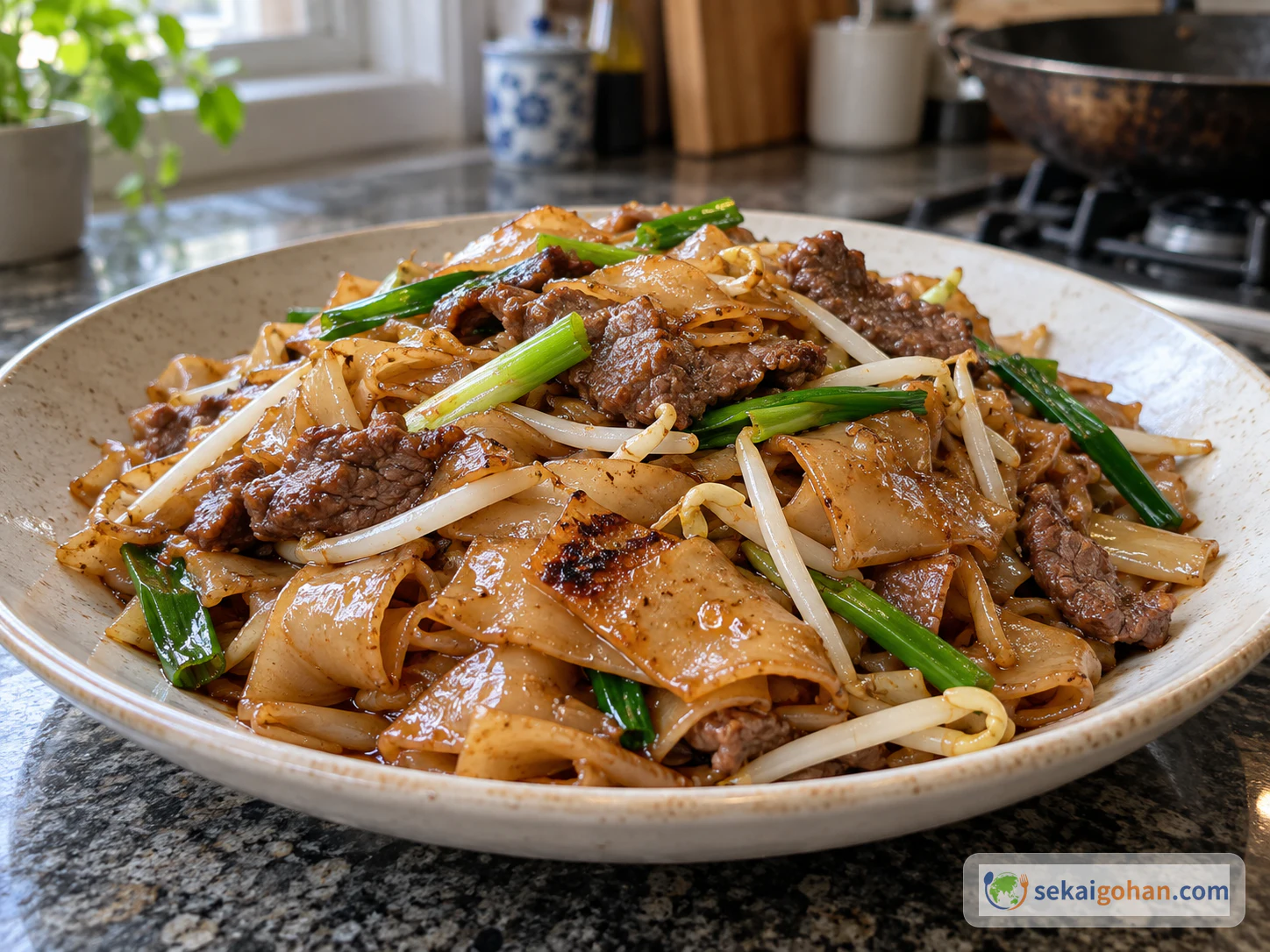
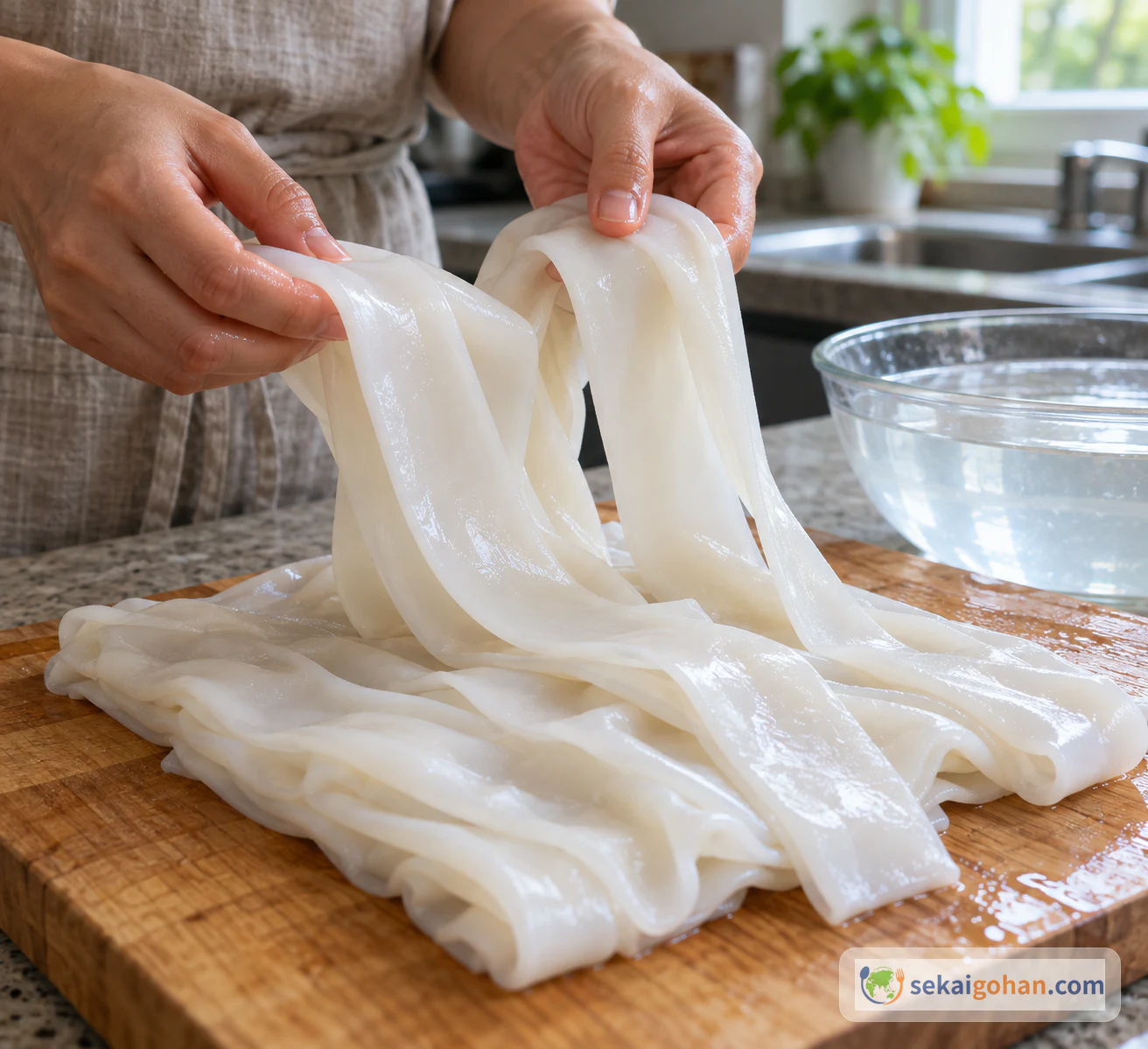
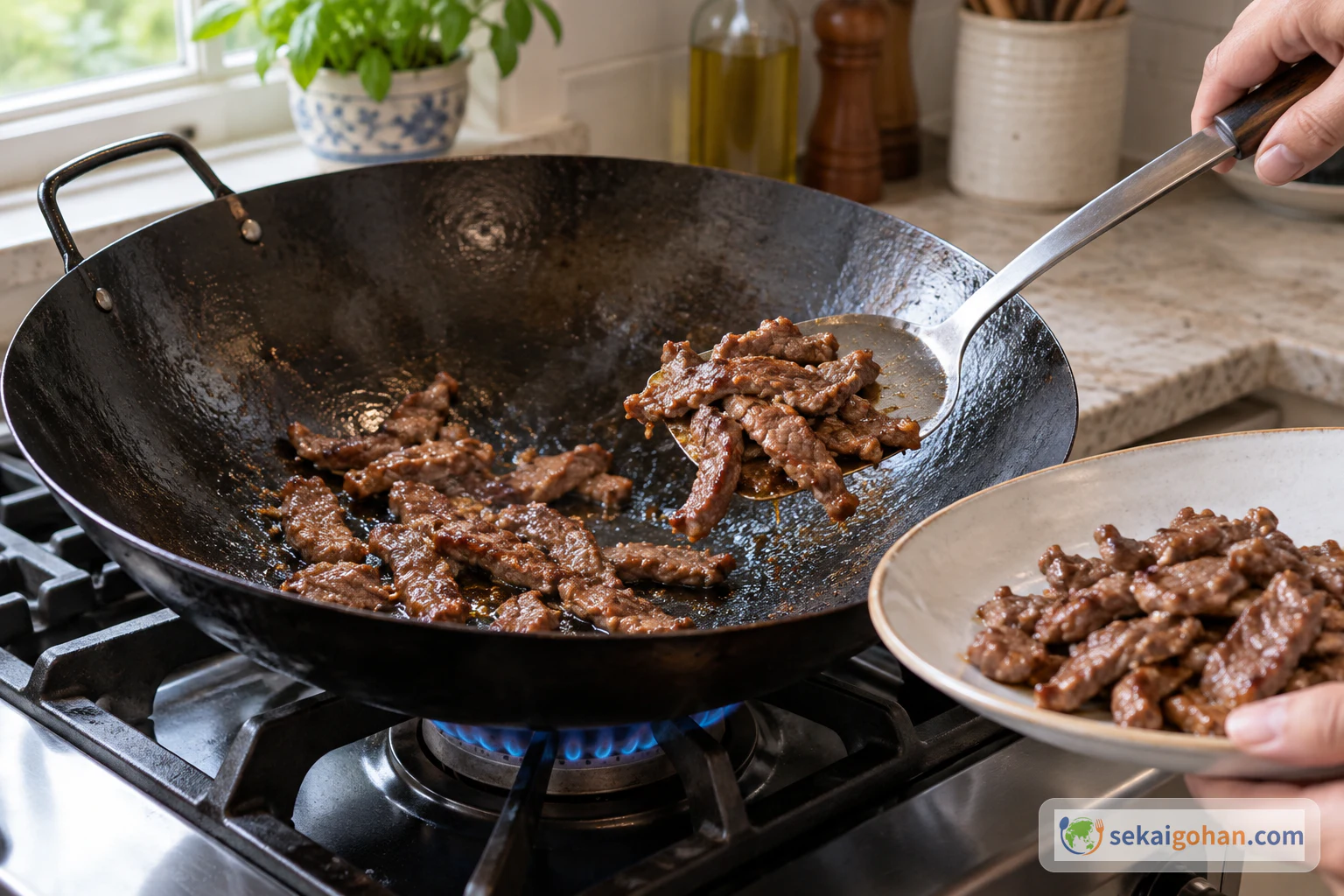
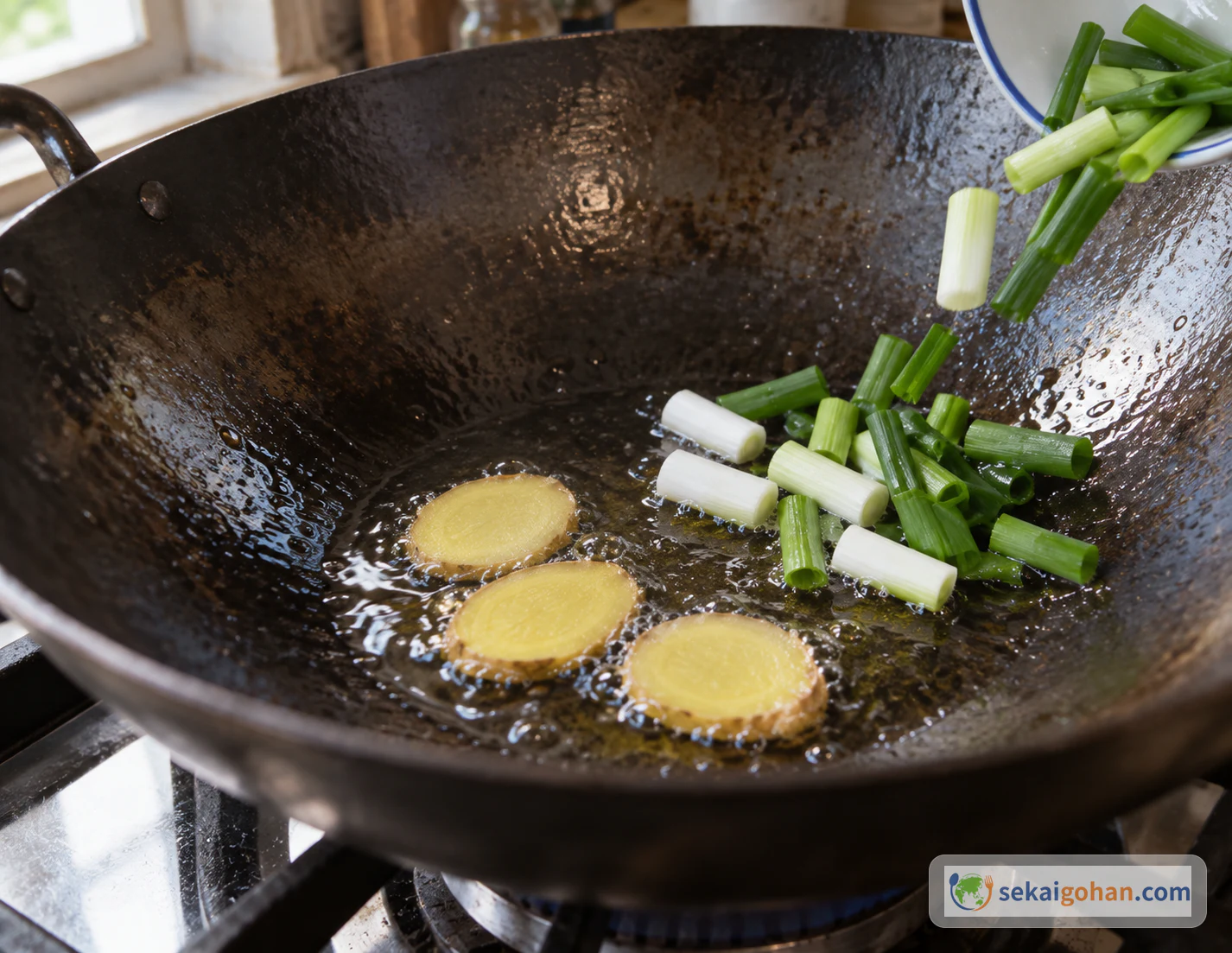
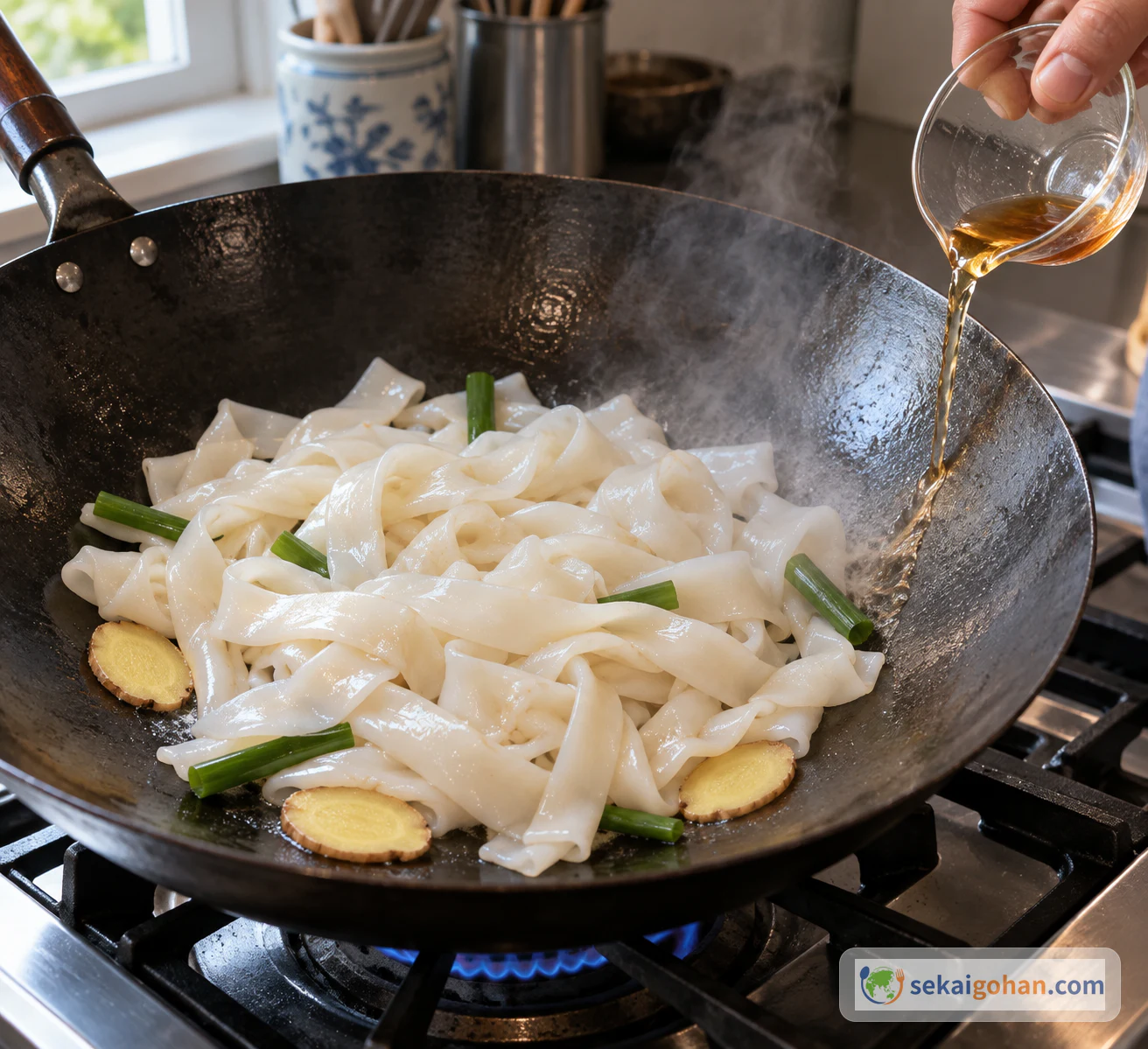
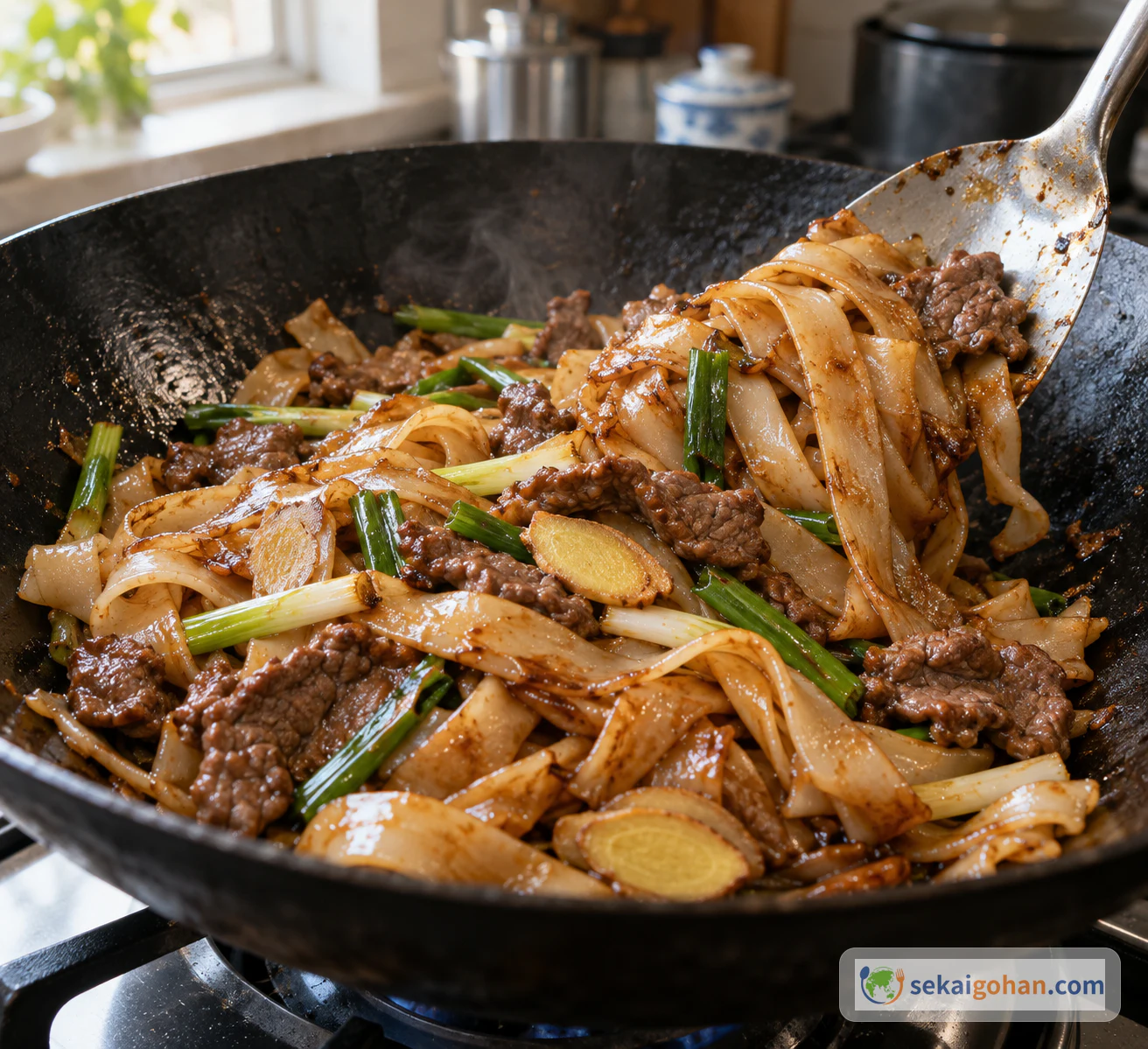
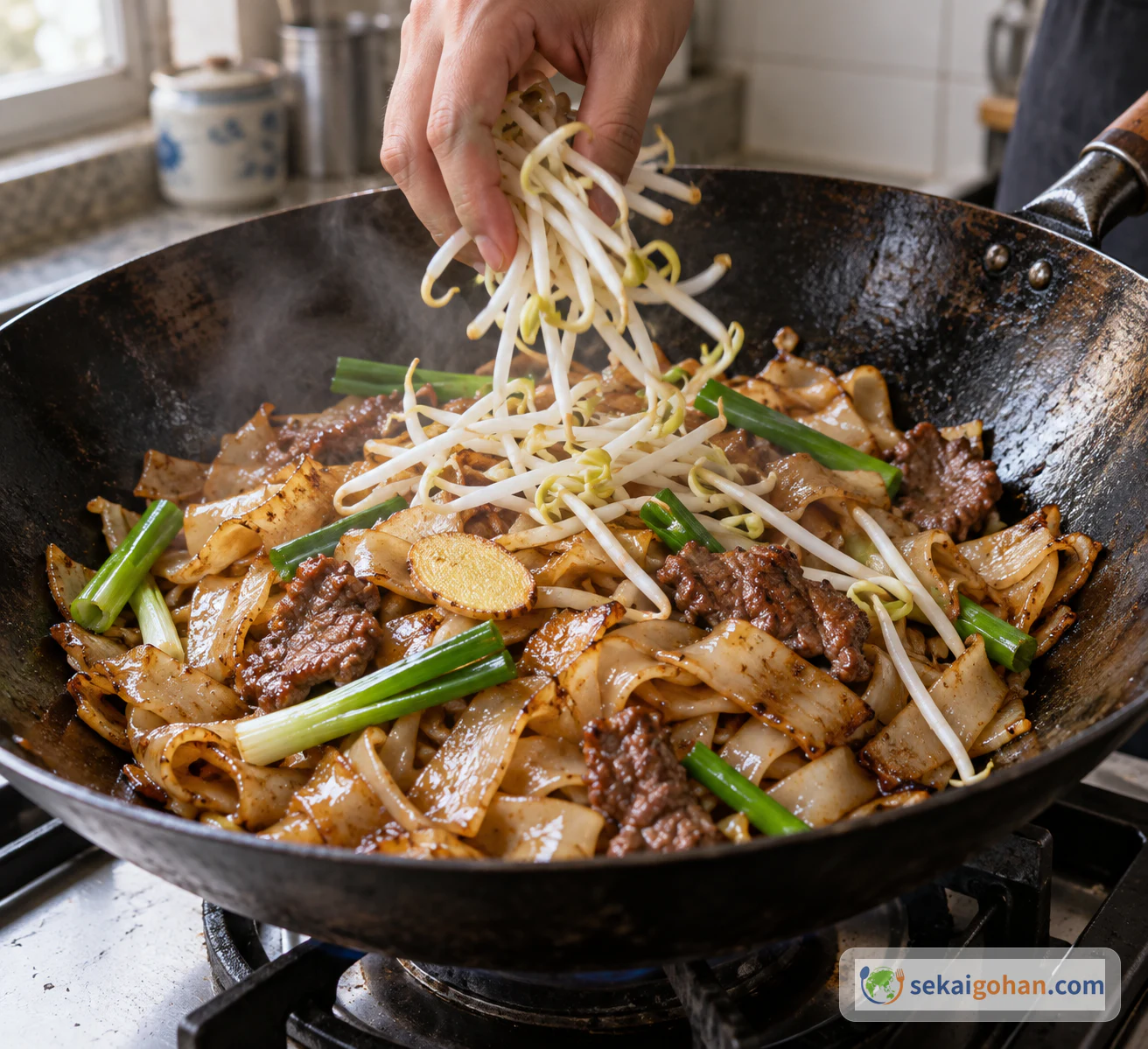
Flat rice noodles spread across a very hot wok. Shaoxing wine goes in around the rim, soy sauce follows, and the aroma rises as the seasonings hit the hot metal. What lands on the plate are glossy, soy-coated noodles tangled with scallion, browned beef and crisp bean sprouts. This is beef chow fun, 乾炒牛河, a Cantonese stir-fry of beef and wide rice noodles called he fen or ho fun (河粉), and it's all about savory, toasty flavor with no sauce pooling underneath.
About Beef Chow Fun
The Cantonese pronunciation is gon1 caau2 ngau4 ho4, and the name reads almost like a recipe: 乾 for dry, 炒 for stir-fried, 牛 for beef, and 河 for flat rice noodles. You'll also see it written 干炒牛河. Shahe, in Guangzhou, is often told as the origin of the name for flat rice noodles.
That word "dry" matters. The sauce should coat the noodles rather than collect beneath them, which sets this dish apart from noodles served under a thick gravy. A good plate has long noodles, browned beef and sprouts that still crunch.
Beef chow fun belongs to the Cantonese kitchen, and it's loved at restaurants and street stalls alike. It differs from chow mein, which uses thin wheat-and-egg noodles, and from biangbiang noodles, which are wide but made from wheat. You can explore more dishes from China.
The dish is prized for wok hei (鑊氣), the toasty aroma of food seared in a very hot wok. A home stove can't match a restaurant burner, so aim for something achievable: have everything ready, cook fast over high heat, and coax the noodles toward that toasted aroma without tearing them. Heat, timing and gentle handling count most, which is why restraint with the sauce and care with the noodles matter so much at home.
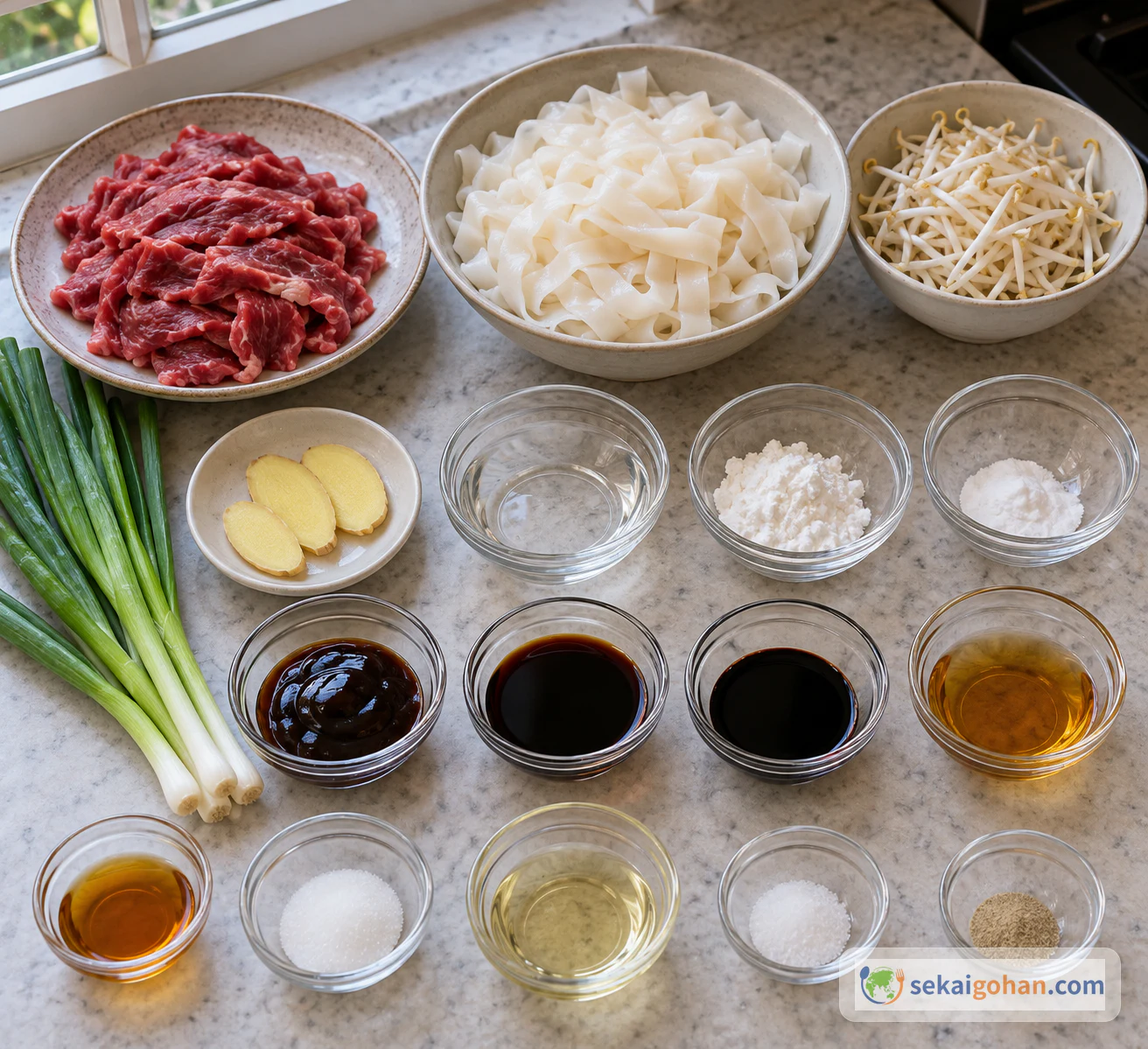
Ingredients: Serves 4
Equipment
- Wok, or a heavy skillet if you cook in smaller batches
- Wok spatula
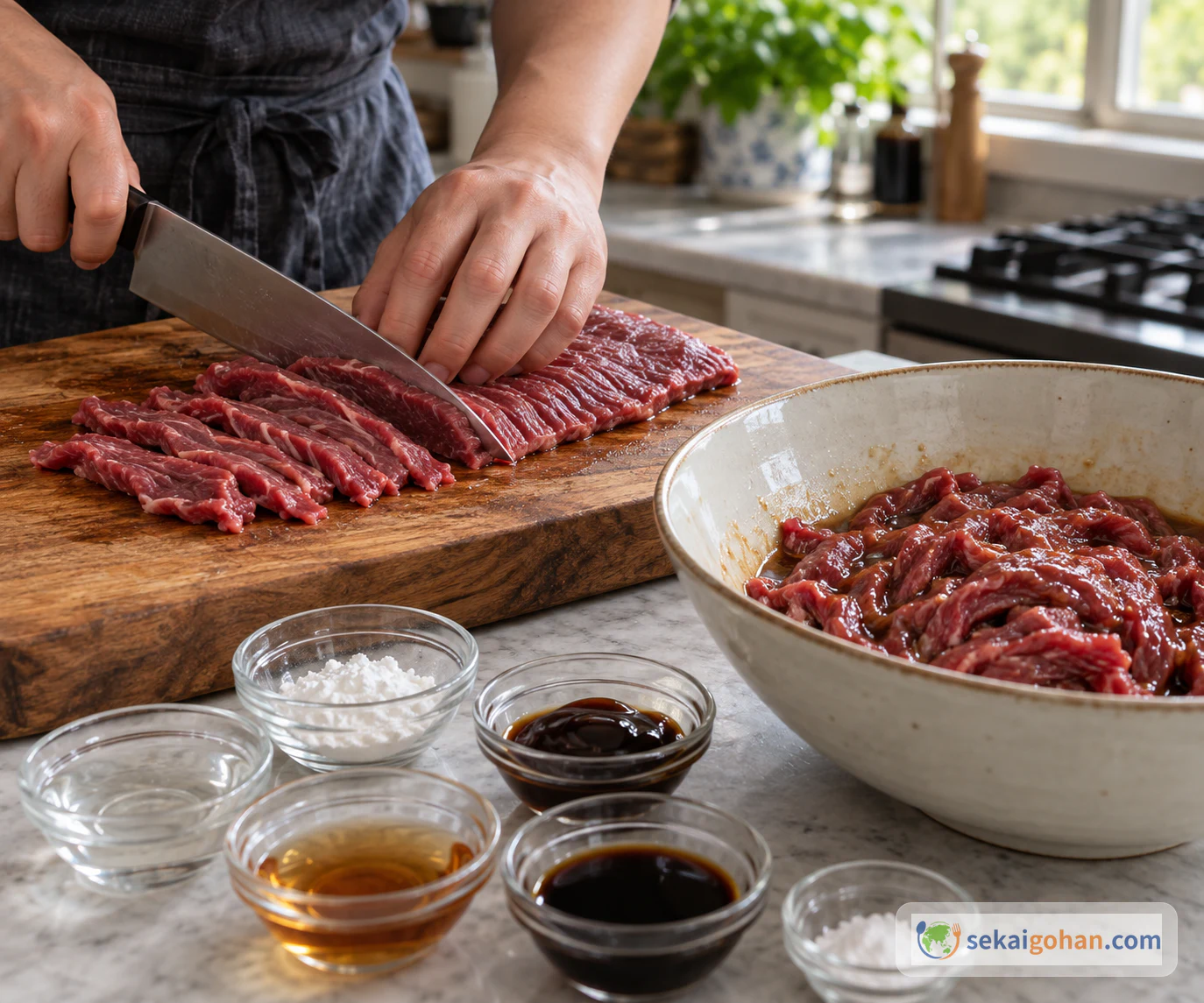
- Sharp knife and a cutting board for the raw beef
- Bowl for marinating the beef
- Pot of boiling water, a bowl of cold water and a strainer, in case the noodles are stuck together
- Clean plate for the cooked beef
Choosing Noodles, Soy Sauce and Beef
Noodles. Fresh wide rice noodles do the most to shape the texture of the finished dish, so look for them first, and follow the storage and heating directions on the label. Dried wide rice noodles keep better but won't match fresh ones in texture or weight. Rehydrate them according to the bag's directions, usually a few hours in hot water or overnight in cold, and don't swap them gram for gram with fresh noodles.
Soy sauces. Regular soy sauce and dark soy sauce do different jobs here, so they aren't interchangeable. Japanese koikuchi soy sauce can stand in for Chinese dark soy sauce if needed, though the color and sweetness will differ. Used in place of regular soy sauce, it will change the saltiness and color.
Shaoxing wine. Japanese cooking sake works as a substitute, but it will change the flavor.
Beef. A 225g package is about 8 oz, which is less than the 10 oz (about 283g) of flank steak this recipe needs. If flank is hard to find, use another lean stir-fry cut such as beef round, sliced across the grain; the texture will differ.
Cornstarch. Potato starch (katakuriko) is a different ingredient, so it won't behave exactly the same.
This dish contains soy (soy sauce), oysters (oyster sauce) and sesame (sesame oil), and soy sauce, oyster sauce and Shaoxing wine products may contain wheat. Check the labels of the products you buy.
Marinate raw beef in the refrigerator, and keep tools that touched raw beef away from the cooked dish. For a safe internal temperature for beef, check your local food-safety authority's guidance.
Method: Prepare Everything, Then Cook Fast
Line up the beef, noodles, scallions, ginger, sprouts and seasonings within reach before you heat the wok. Once the beef goes in, there is little time to stop and measure.
Beef Chow Fun Fixes for Torn, Steamed or Wet Noodles
Three habits help most: separate the noodles before you start, match the amount in the pan to its surface area, and let the noodles sit long enough to pick up some browning before you turn them.
| Problem | Likely cause | What to do |
|---|---|---|
| Noodles tear as you separate them | They are cold and stiff, and you are pulling too hard | Let them come closer to room temperature, or loosen them in boiling water for about 30 seconds, then separate them gently |
| Noodles look steamed and saucy | The pan is overcrowded and has lost heat | Cook in smaller batches, dividing the oil so that you don't exceed the total amount |
| Noodles break into short pieces | They are being stirred too often | Wait for some browning, then turn them from underneath with the spatula |
| The wok turns wet at the end | Water on the sprouts is lowering the pan temperature | Drain the sprouts well and add them in stages if needed |
| Liquid collects on the plate | Too much sauce, or a wok that has cooled down | Don't add more sauce; next time, use smaller batches |
| The aroma is milder than at a restaurant | A home burner has limits | Keep the heat as high as you can ventilate safely |
If you can't safely heat your wok until it smokes, turn the heat down to a level your ventilation can handle. Dealing with smoke and spattering oil comes before chasing aroma.
Serving and Varying Beef Chow Fun
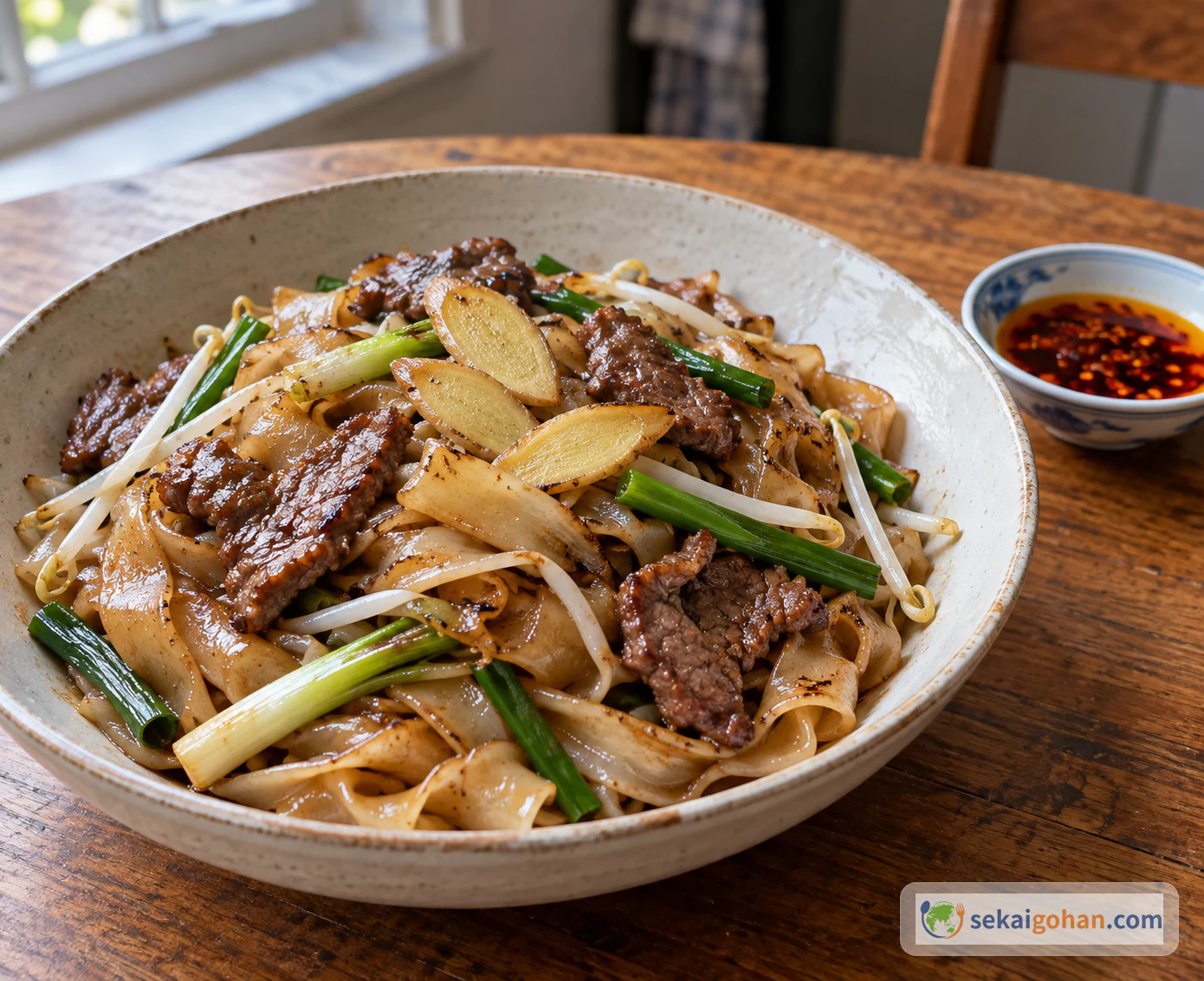
Beef chow fun is at its best the moment it leaves the wok, so bring it straight to the table; it doesn't make ahead well. If you like heat, set out chili oil in a small dish rather than adding it to the wok, so it stays out of the frying oil and seasoning.
Some versions use yellow chives (韭黄) instead of scallions, which changes the character of the dish. And if your pan is small, cook in several batches instead of cutting the ingredients, dividing the oil so the total stays the same.
Frequently Asked Questions
My fresh noodles went stiff in the refrigerator. What should I do?
Separate them slowly by hand. If they're still stiff, give them a short dip in boiling water, about 30 seconds, then move them to cold water and drain well. Follow any directions on the label first. Fresh ho fun tends to crack after refrigeration, so don't force them apart.
Do I need a wok?
A wok makes it easier to spread the noodles over high heat, but a heavy skillet works too. In either pan, smaller batches are easier to manage on a home stove, so cook four servings in batches.
Can I eat it the next day?
It's best eaten freshly cooked, so plan to make it right before serving.