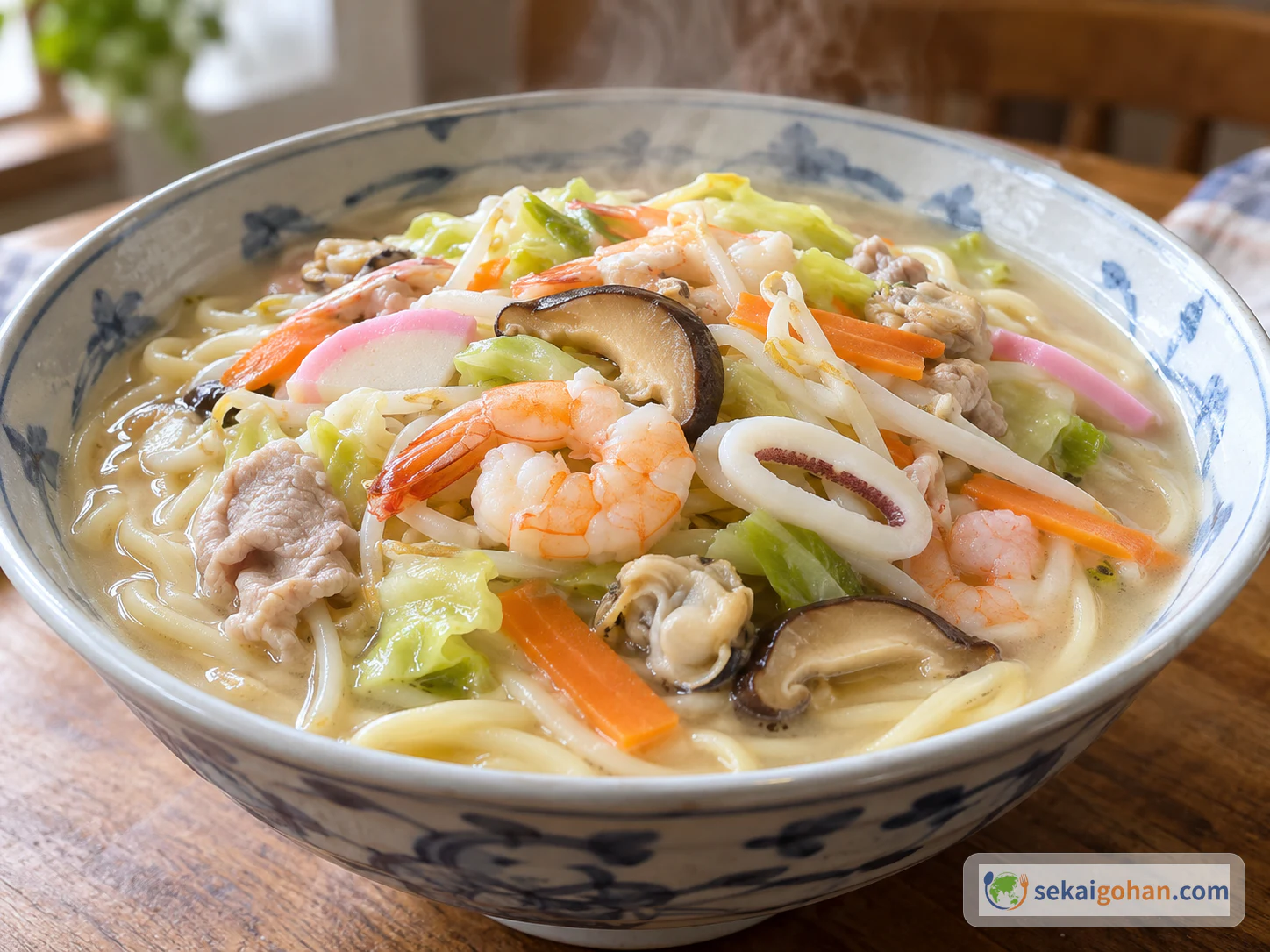
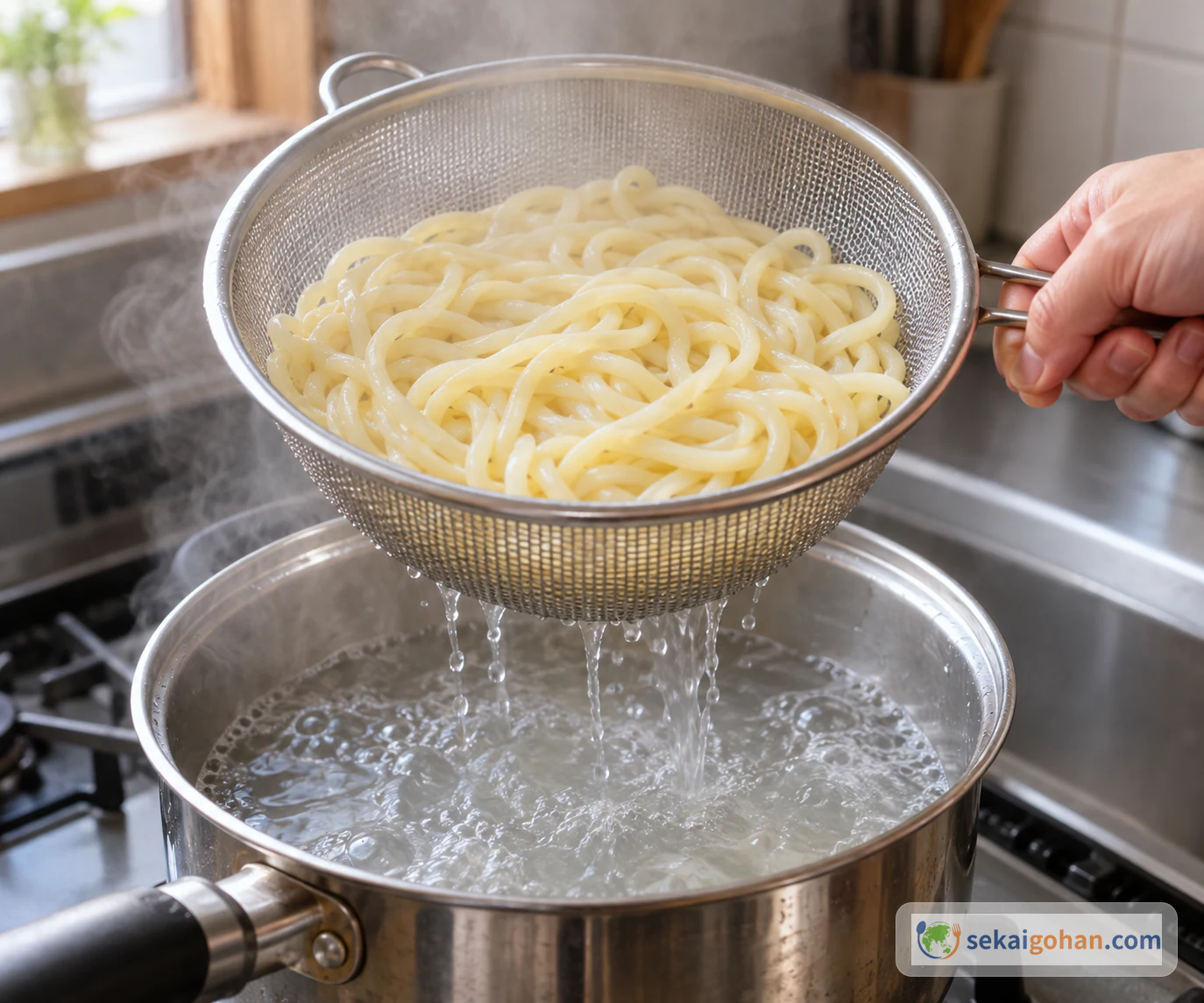
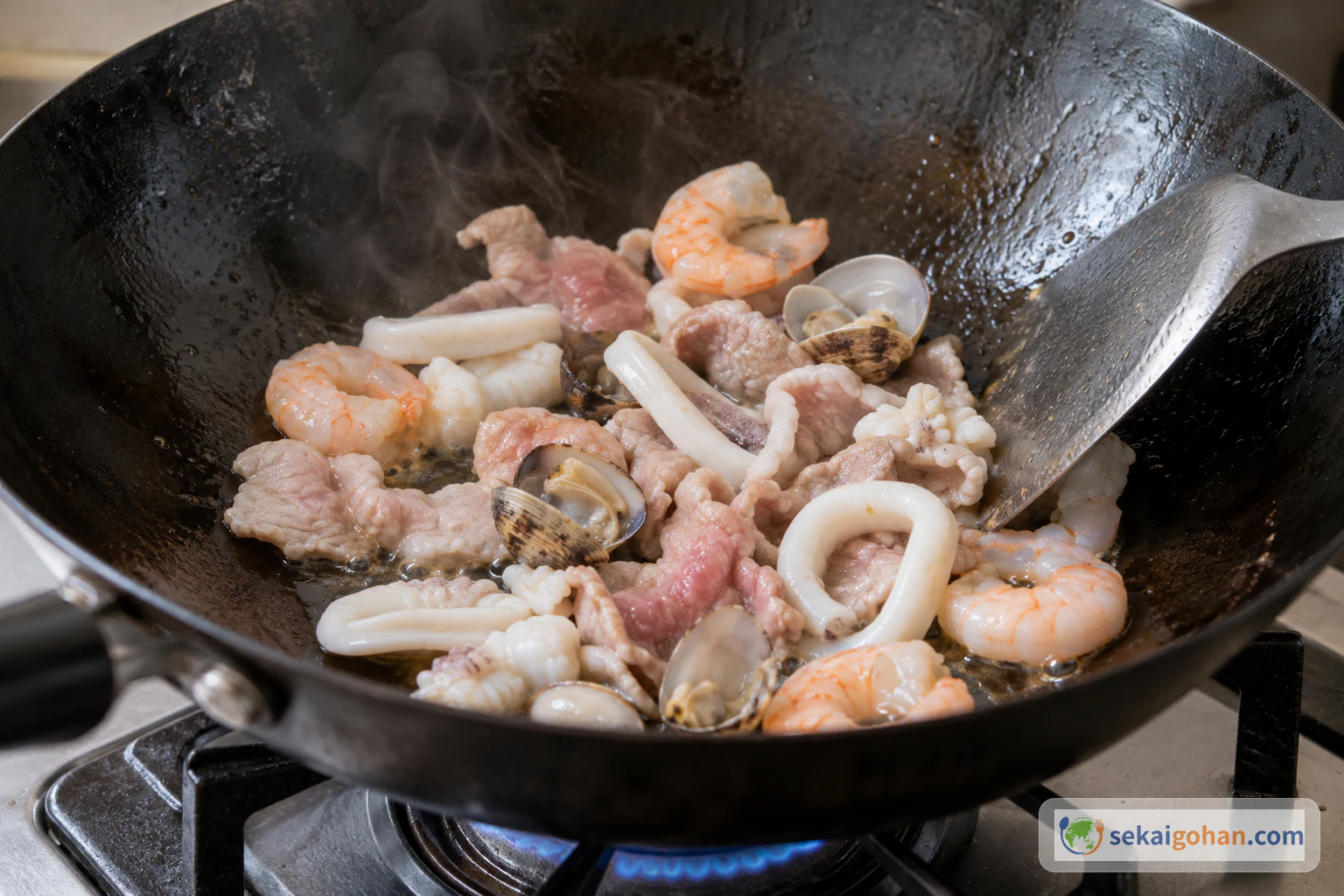
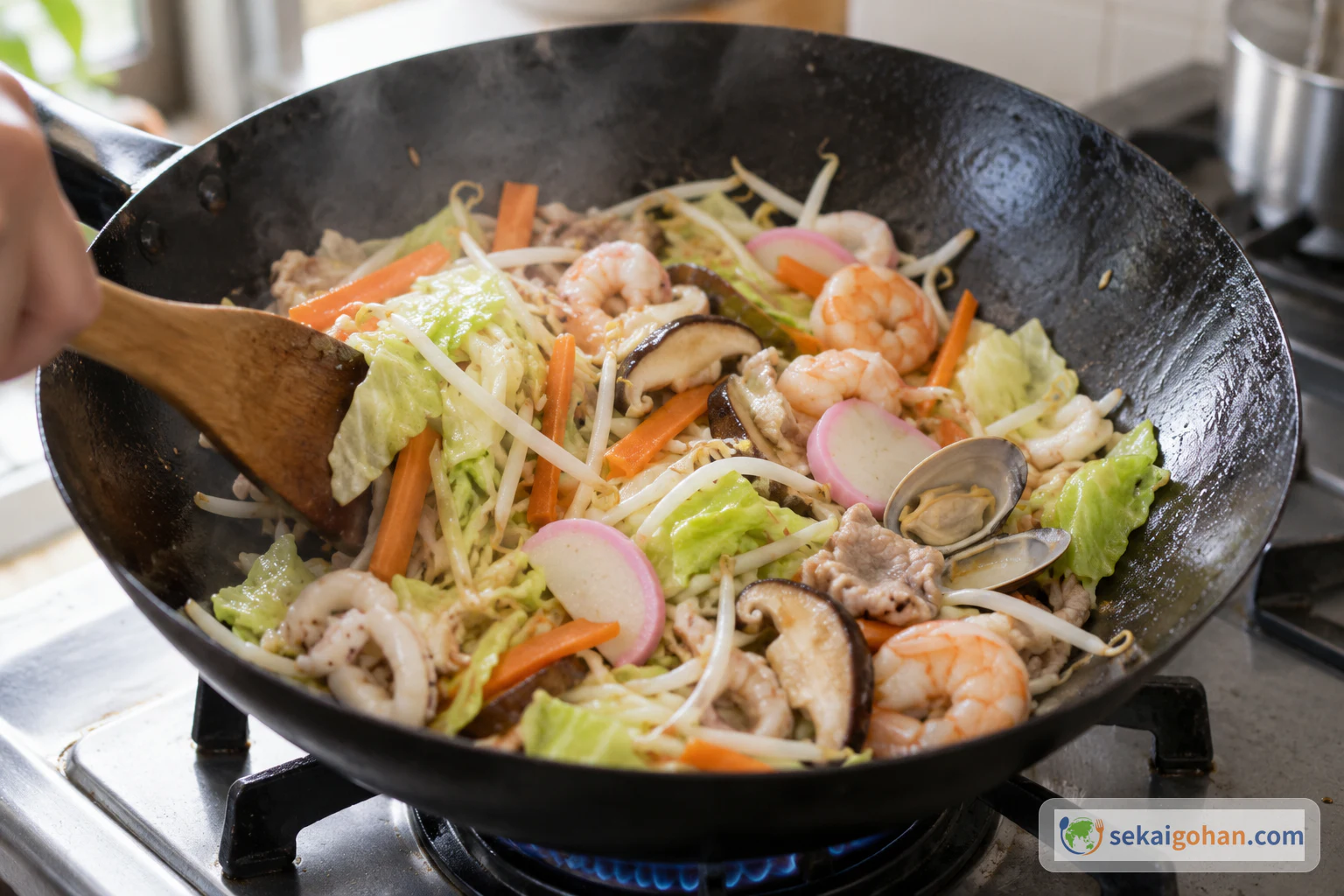
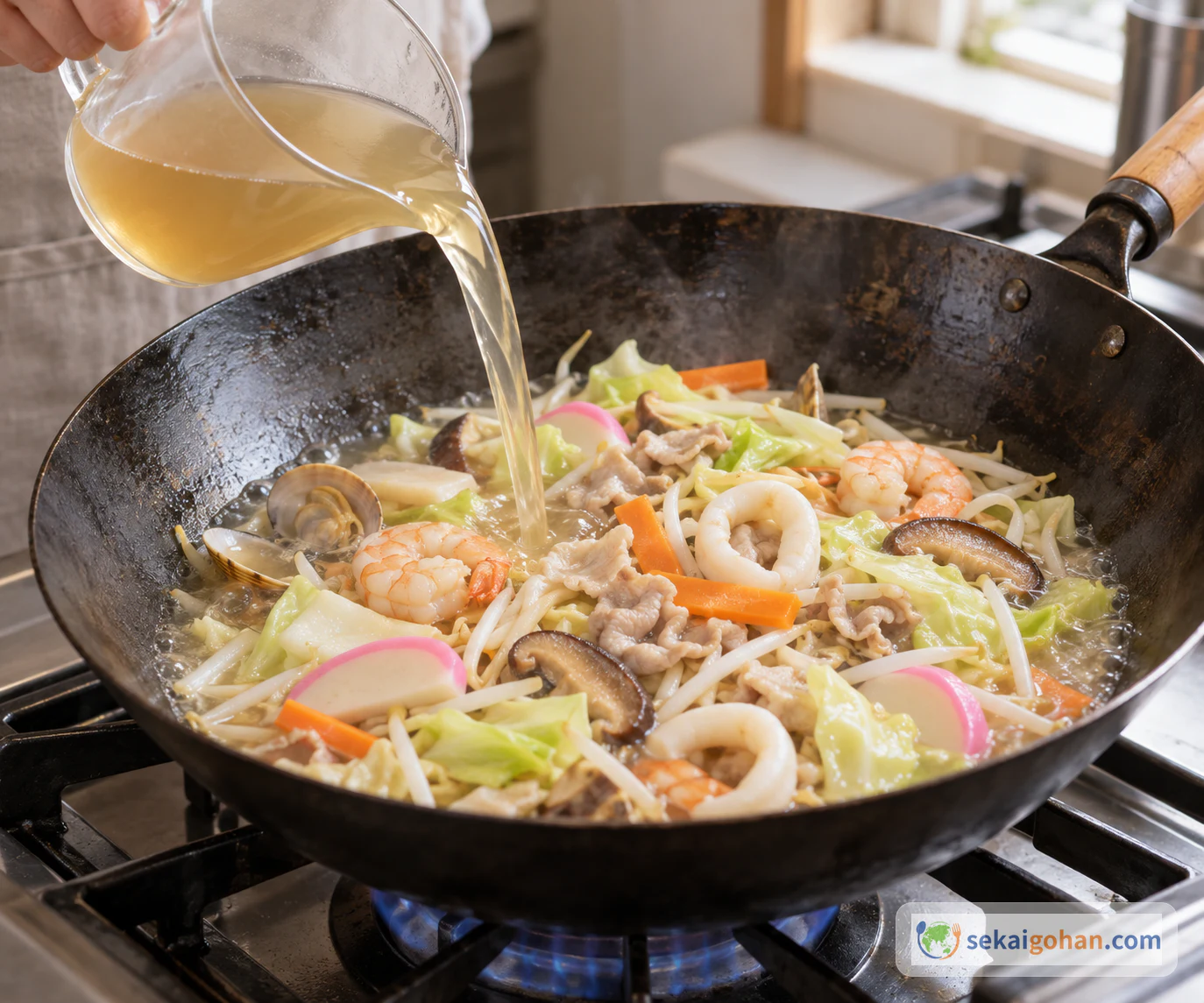
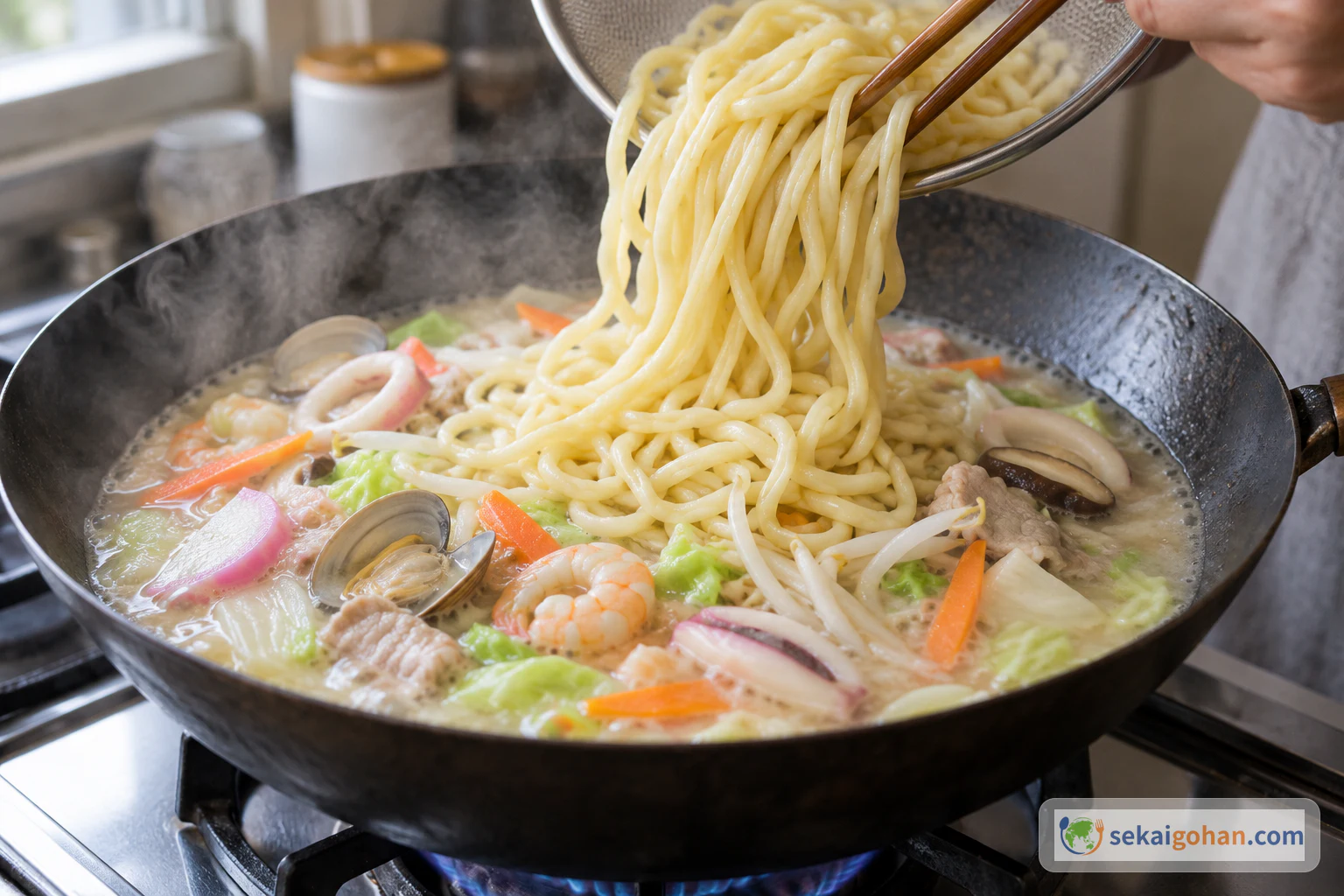
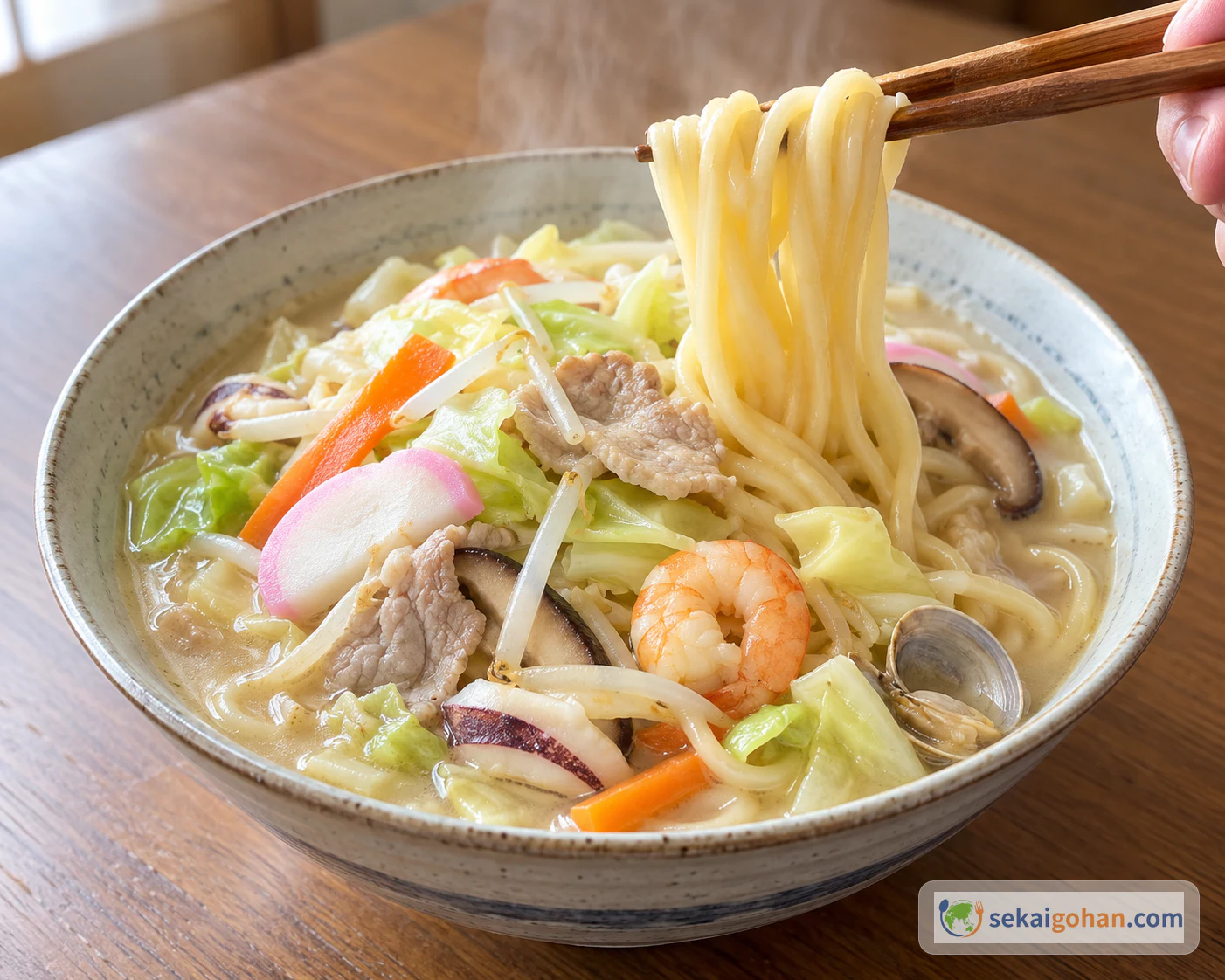
Steam rises off the wok as pork, peeled shrimp, squid and clams hit the hot oil and start to change color. Carrot, cabbage, bean sprouts and shiitake follow for a quick toss. Then a light soup goes in and comes to a boil, and noodles boiled in their own pot finish simmering in it with everything else. This is Nagasaki champon (ちゃんぽん), the everyday noodle soup of Nagasaki Prefecture in southwestern Japan: pork, seafood and vegetables all in one bowl, with noodles that have soaked up the broth. For more dishes from the same country, see our Japan page.
About Nagasaki Champon
Champon is a family dish eaten every day in Nagasaki. The usual origin story says it was created in 1899 by Chin Heijun (陳平順), owner of the Chinese restaurant Shikairo in Nagasaki, to give Chinese students something filling and affordable. The name has more than one explanation. One theory traces it to a Chinese word (喰飯, read "shanpon"), another to a Portuguese word meaning "to mix."
The ingredients are not fixed. Pork, kamaboko, vegetables, squid and shrimp are common, and the seafood changes with the season. The soup varies too. The prefecture has two main styles: a richer pork-bone Nagasaki champon and a lighter chicken-based Obama champon. The soup in this recipe is a home formula built on chicken stock powder, so it is a copy of neither.
What defines the dish is that the noodles are simmered in the soup. Here they are boiled separately first and then finished in the broth with the toppings.
That is also what sets champon apart from sara udon, its Nagasaki neighbor. Sara udon comes in two forms, one with thick noodles and one with thin, crisp fried noodles under a thickened sauce. Neither is a noodle soup finished in broth.
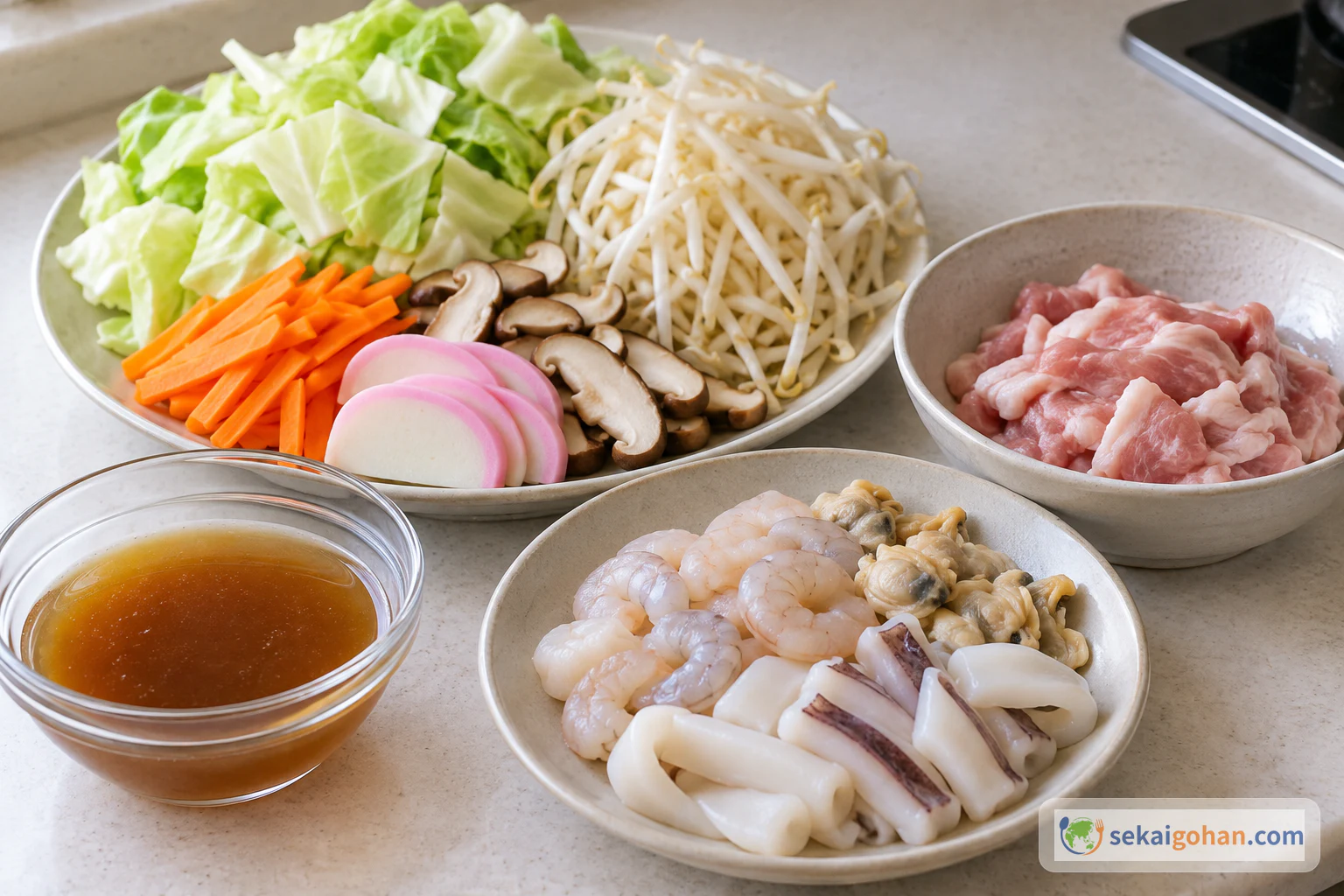
Ingredients: Serves 2
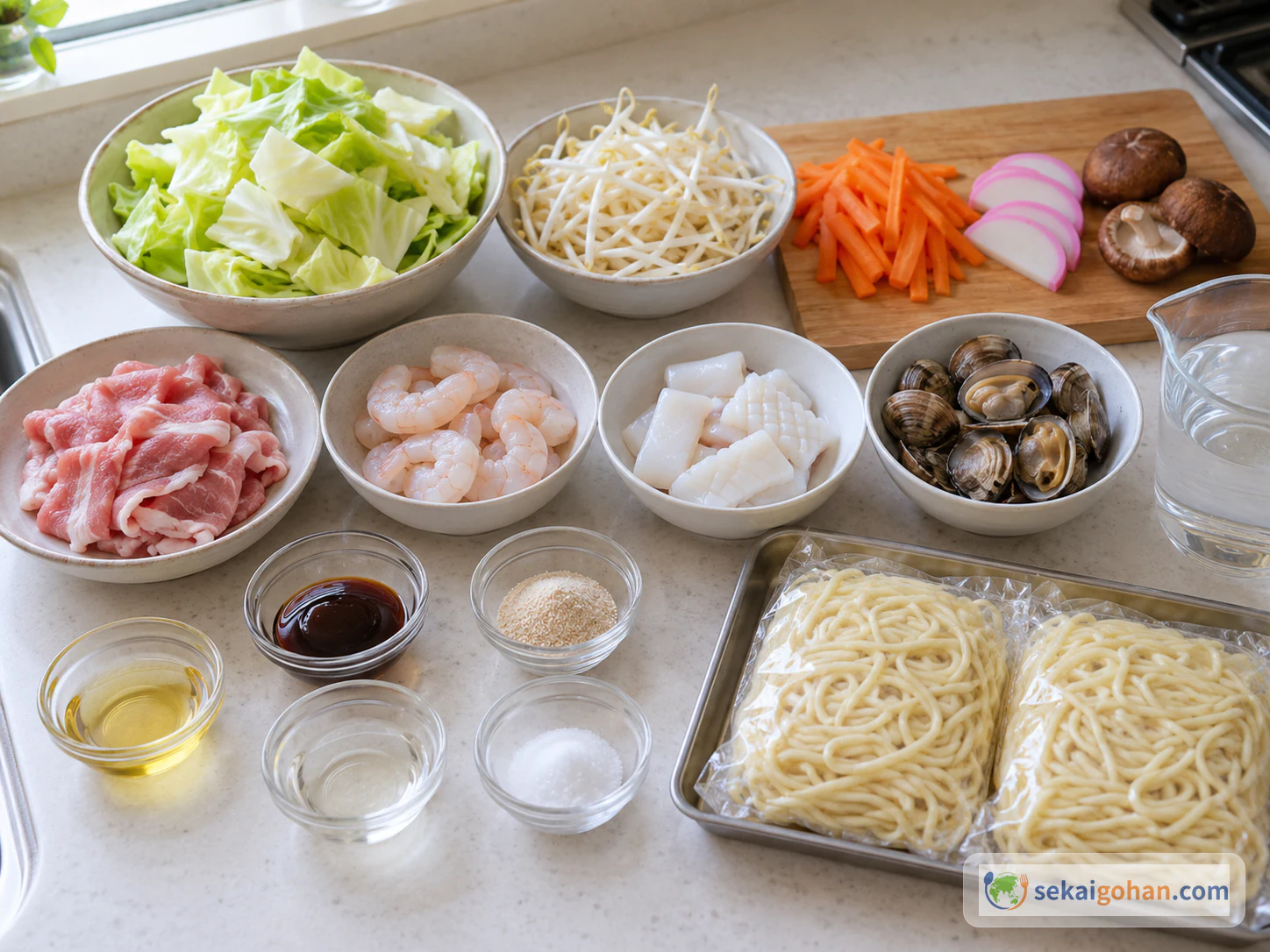
Cut the pork, seafood and vegetables into easy-to-eat pieces. Mix the soup ingredients together before you start cooking.
Equipment
- A pot and a colander for boiling and draining the noodles
- A wok, or a frying pan large enough to hold the toppings, soup and noodles together
- Measuring spoons and a measuring cup
- A small bowl for premixing the soup
- A knife and cutting board
Choosing Champon Noodles and Ingredients
Look for noodles sold as Nagasaki champon noodles. They are made to be finished in the soup, the way this recipe uses them. Ramen and yakisoba noodles give you a different bowl. The thin, crisp fried noodles sold for sara udon belong to another dish entirely. Brands differ, so follow the cooking directions on your package.
Any ordinary Japanese fish cake works as the kamaboko. In Nagasaki, red-and-white kamaboko is a familiar champon topping, so use it if you can find it; the amount stays at 1 oz (30g).
The soup is a simple mix of commercial chicken stock powder and seasonings. You don't make a bone broth, and you don't add milk, lard or extra aromatics.
This dish contains shrimp, squid, clams and fish cake. Noodles, oyster sauce and stock powder can also contain wheat, soy and other allergens, so check the label of every product you use. Keep raw pork and seafood cold until cooking, and wash hands, boards and knives after handling them.
Method: Noodles in Their Own Pot, Then Everything in One Soup
Mix the soup → boil and drain the noodles in a separate pot → stir-fry pork and seafood → lightly stir-fry the vegetables → add the soup and bring to a boil → add the noodles and simmer in the soup.
Add the kamaboko with the vegetables so every ingredient gets used. The steps below assume the pork and seafood are raw when they go into the wok.
Cook the pork and seafood until they are fully cooked through before serving. A change in color alone does not prove they are cooked all the way through.
Common Champon Problems and Fixes
| What happened | Likely cause | What to do |
|---|---|---|
| The noodles are thin and crisp, or turn soggy in the soup | Sara udon fried noodles were used | Use noodles sold as Nagasaki champon noodles |
| The soup tastes watery | Noodle-boiling water was added to the soup | Keep the 1¾ cups (400 ml) soup water separate from the boiling water |
| The noodles were only boiled and served | The last step was skipped | Return the drained noodles to the soup and simmer them with the toppings |
| The pork still looks pink after stir-frying | Not cooked through yet | Keep cooking until fully cooked; don't rely on color change alone |
| The vegetables are limp before the soup goes in | Stir-fried too long in step 4 | Toss the vegetables only lightly before adding the soup |
| Kamaboko left on the board | It was forgotten | Add it with the vegetables in step 4 |
Champon Variations in Nagasaki
Around Nagasaki, champon shifts with the season and the kitchen. These are separate versions with their own amounts and methods, so treat them as inspiration rather than swaps for this recipe.
| Variation | What it looks like | How it relates to this recipe |
|---|---|---|
| Seasonal seafood | Clams in summer, oysters in winter | This recipe uses clams |
| Nagasaki traditional vegetables | Tsujita Chinese cabbage and Nagasaki red turnip, plus lotus root, onion, shiitake and pork belly, with a prepared champon soup and boiled noodles | A separate recipe with its own amounts and soup |
| Omura base-kitchen champon | A version with chicken-bone stock and milk | A different broth and method |
Frequently Asked Questions
Do I really boil the noodles separately?
Yes. Boil them in a separate pot, following the package directions for time, and drain them. At the end, simmer them in the soup with the toppings.
Should the pork and seafood be raw or precooked?
Raw. They go into the wok uncooked and are stir-fried first. Cook them until they are fully cooked through, since a change in color alone doesn't prove they're done.
Does "clams 2.75 oz (80g)" include the shells?
The amount doesn't say whether shells are included.
Can I store and reheat leftovers?
Check the noodle package for guidance on storing and reheating.