Kashiwameshi: Fukuoka's Mixed Rice with Sweet-Savory Chicken and Burdock (かしわめし)

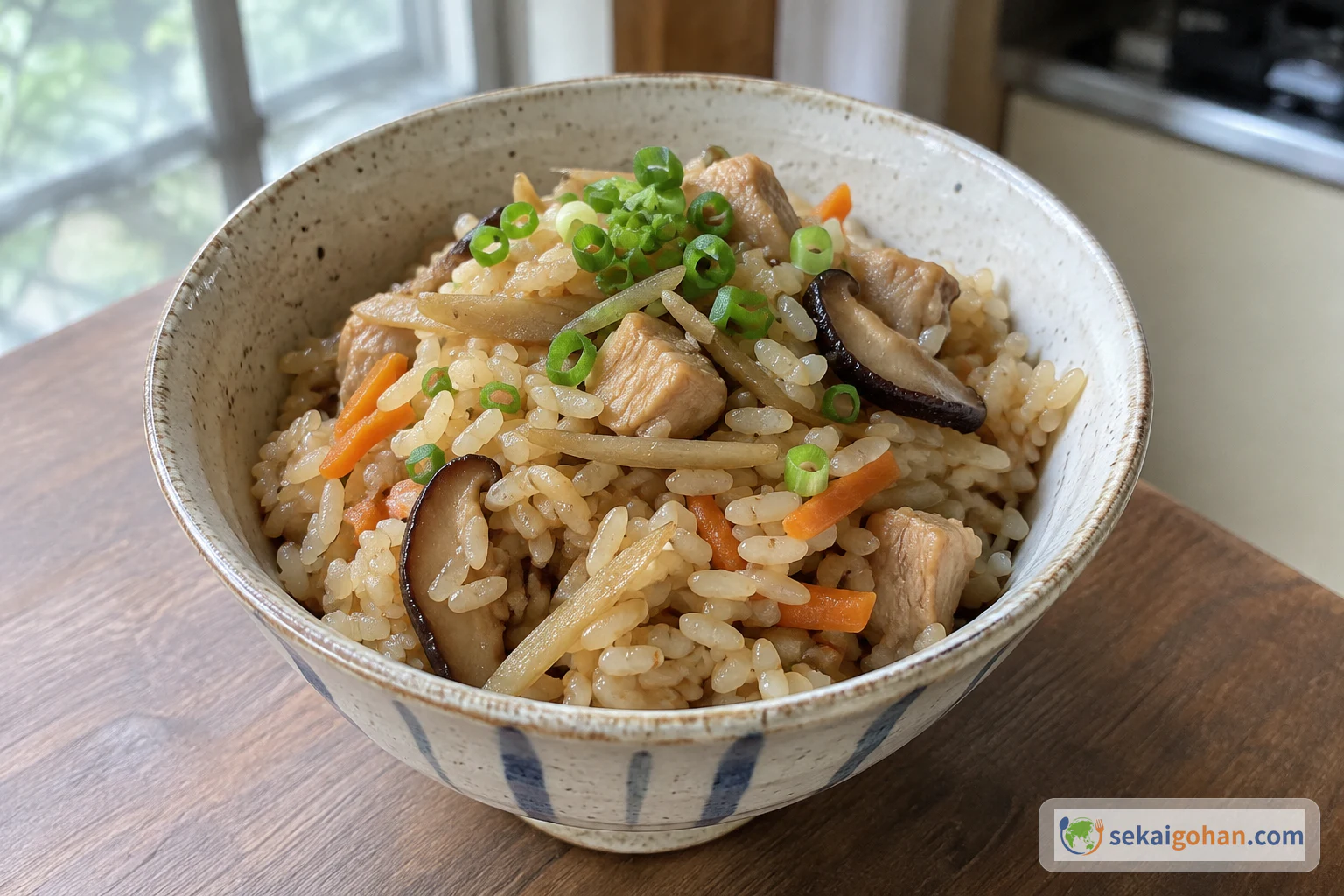
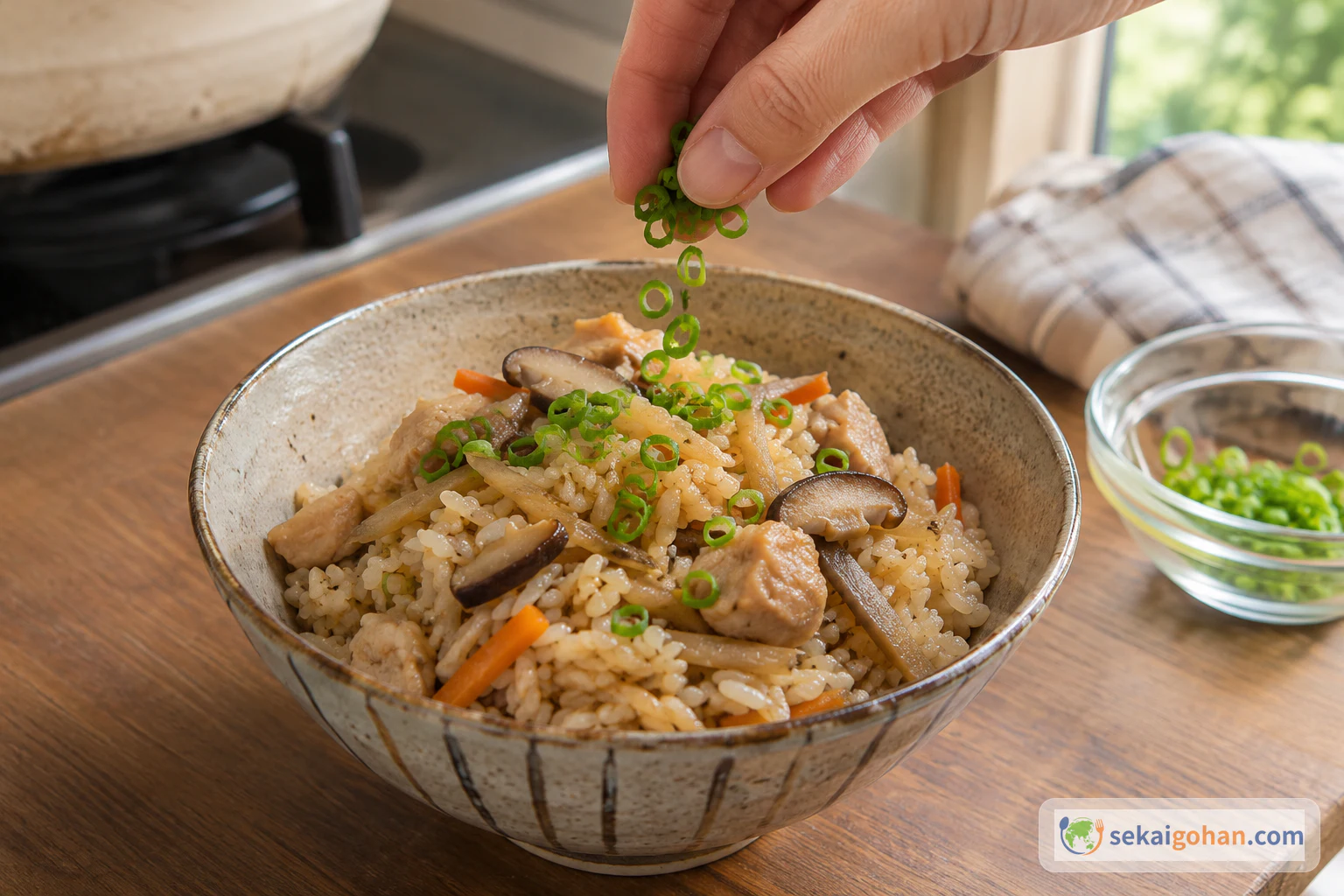
Fukuoka kashiwameshi: cooked rice mixed with chicken, burdock, carrot and dried shiitake, topped with scallions
Serves
4 servings
Cuisine
Japanese (Fukuoka)

How to make kashiwameshi, the Fukuoka regional dish of freshly cooked rice mixed with chicken, burdock, carrot and dried shiitake simmered in a sweet-savory sauce. Covers amounts for 4 servings, using the shiitake soaking liquid, heating chicken safely, handling the raw scallion garnish, and how this version differs from rice-cooker and station-bento kashiwameshi.

Cooking flow

Cooking steps

STEP11 / 7

Wash, soak and cook the rice

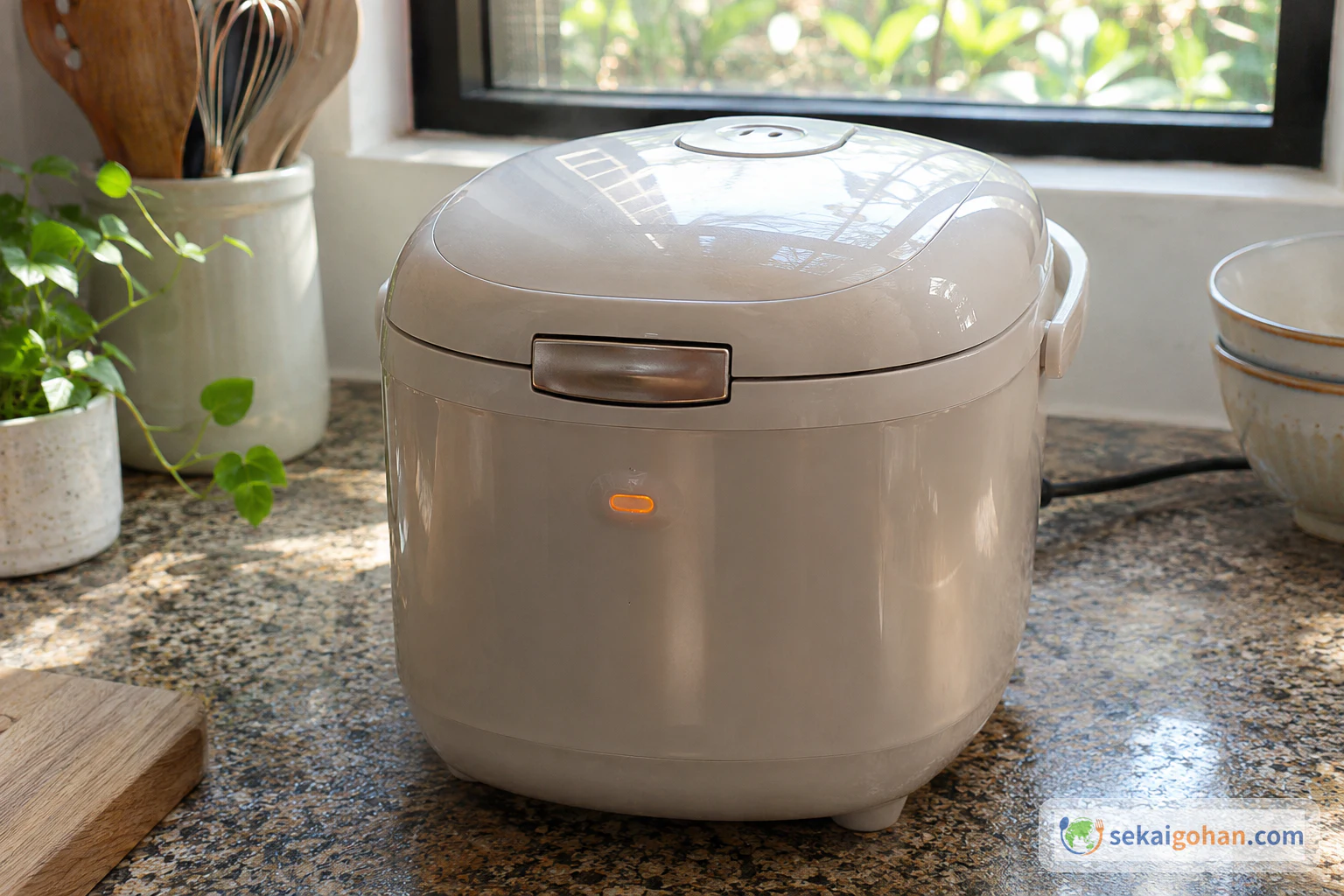
A closed rice cooker cooking the soaked rice
The rice cooks plain

Wash 1.7 go of rice in a bowl of water, then drain it. Pour in plain water equal in volume to the rice, adding no seasoning. Leave the rice in its water for about 30 minutes. Cook the rice and its water as usual on the rice cooker's normal setting, without the chicken, vegetables or seasoning. The rice cooks plain while you prepare the filling.

STEP22 / 7

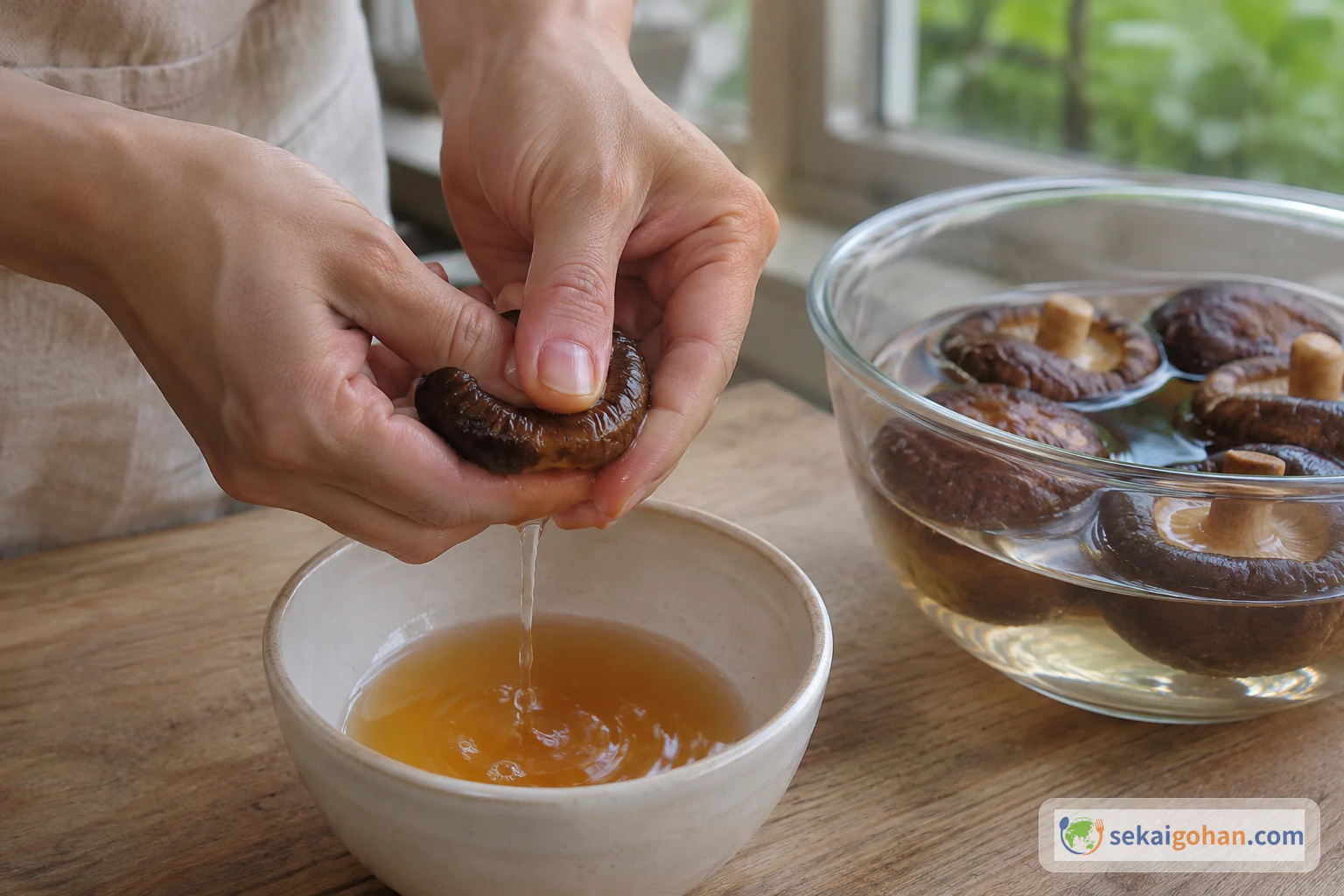
Rehydrate and slice the shiitake

Hands squeezing a softened shiitake over a bowl that catches the soaking liquid
Catch the liquid in a separate bowl

Put the 4 small dried shiitake in a bowl with enough water to cover, and leave them until soft. Squeeze the softened mushrooms over a small bowl, and keep 4 tbsp of the soaking liquid to add to the pan later. Cut the woody stem base from each mushroom, then cut the mushrooms into thin strips. The tough bases are gone and the strips are thin, with the soaking liquid kept to one side.

STEP33 / 7

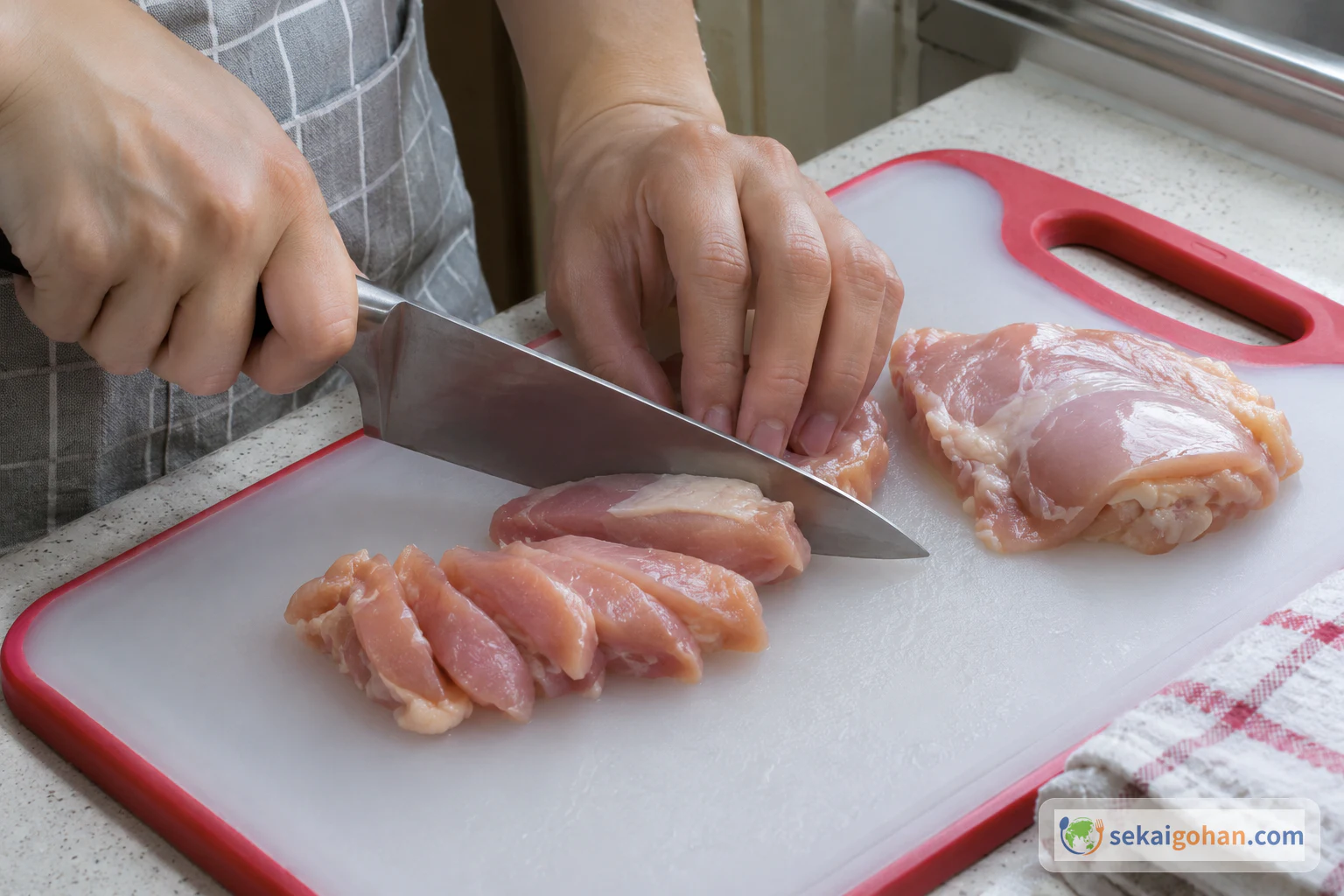
Slice the scallions and chicken

Raw chicken thigh being cut into small diagonal slices on a raw-meat cutting board
Keep raw chicken away from other foods

Just before cutting, wash the scallions well under running water and drain them. Slice them into thin rounds with a clean knife and board that have not touched raw chicken, and set aside 12g for the garnish. Without washing the chicken, cut 4 oz (120g) of chicken thigh into small diagonal slices on the raw-meat board, blotting any excess liquid with a paper towel. Afterward, wash and sanitize the knife and board, then wash your hands. The scallions are in thin rounds, the chicken is in small slices, and the raw-meat tools are clean.

STEP44 / 7

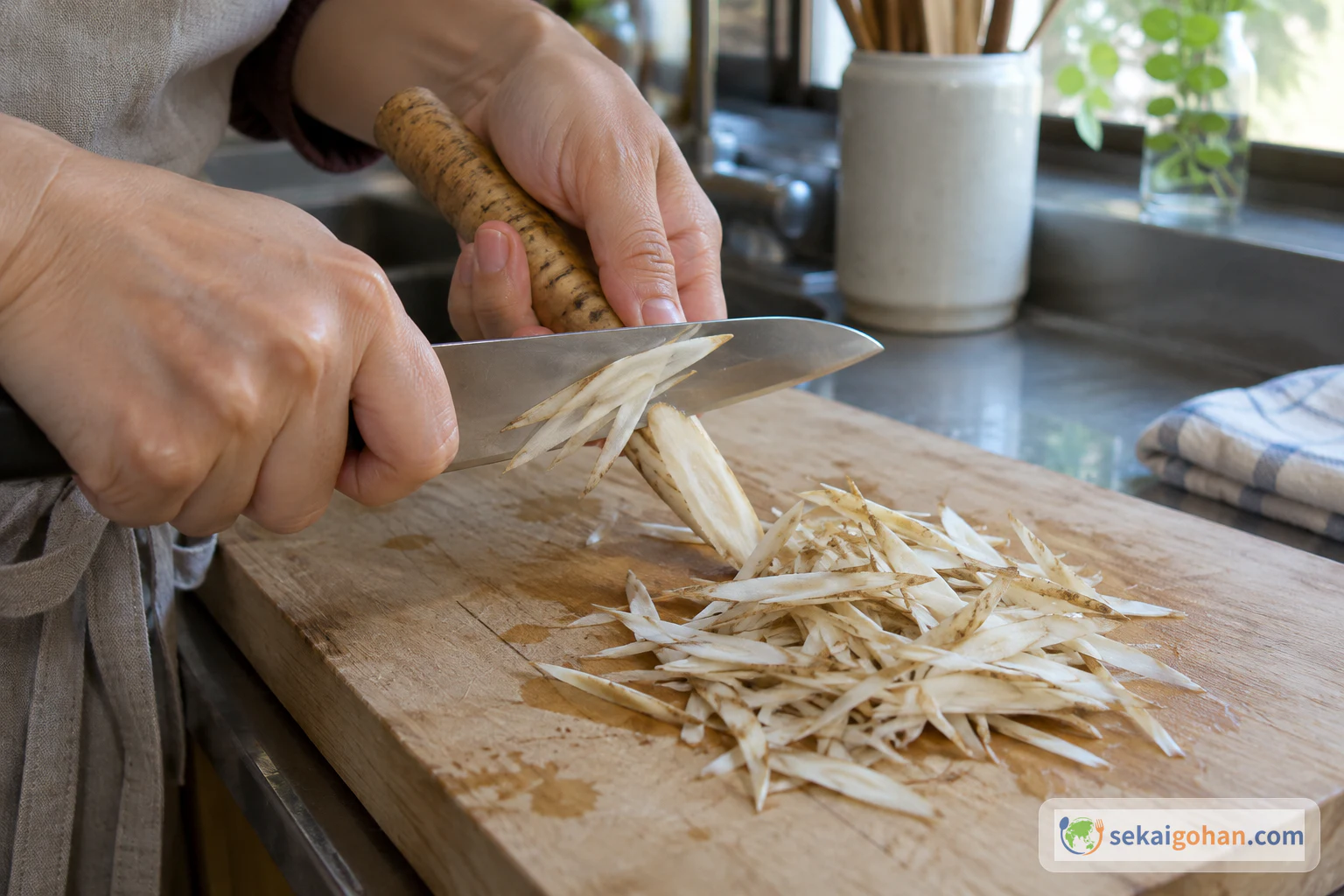
Prepare the burdock and carrot

A knife shaving burdock root into thin curls
Thin, tapered curls of burdock

On a clean board that has not touched raw chicken, use a clean knife to shave 2 oz (60g) of burdock into thin curls (sasagaki). Peel 2 oz (60g) of carrot, then cut it into thin matchsticks. The burdock forms thin, tapered curls and the carrot sits in thin matchsticks to go with the burdock and shiitake.

STEP55 / 7

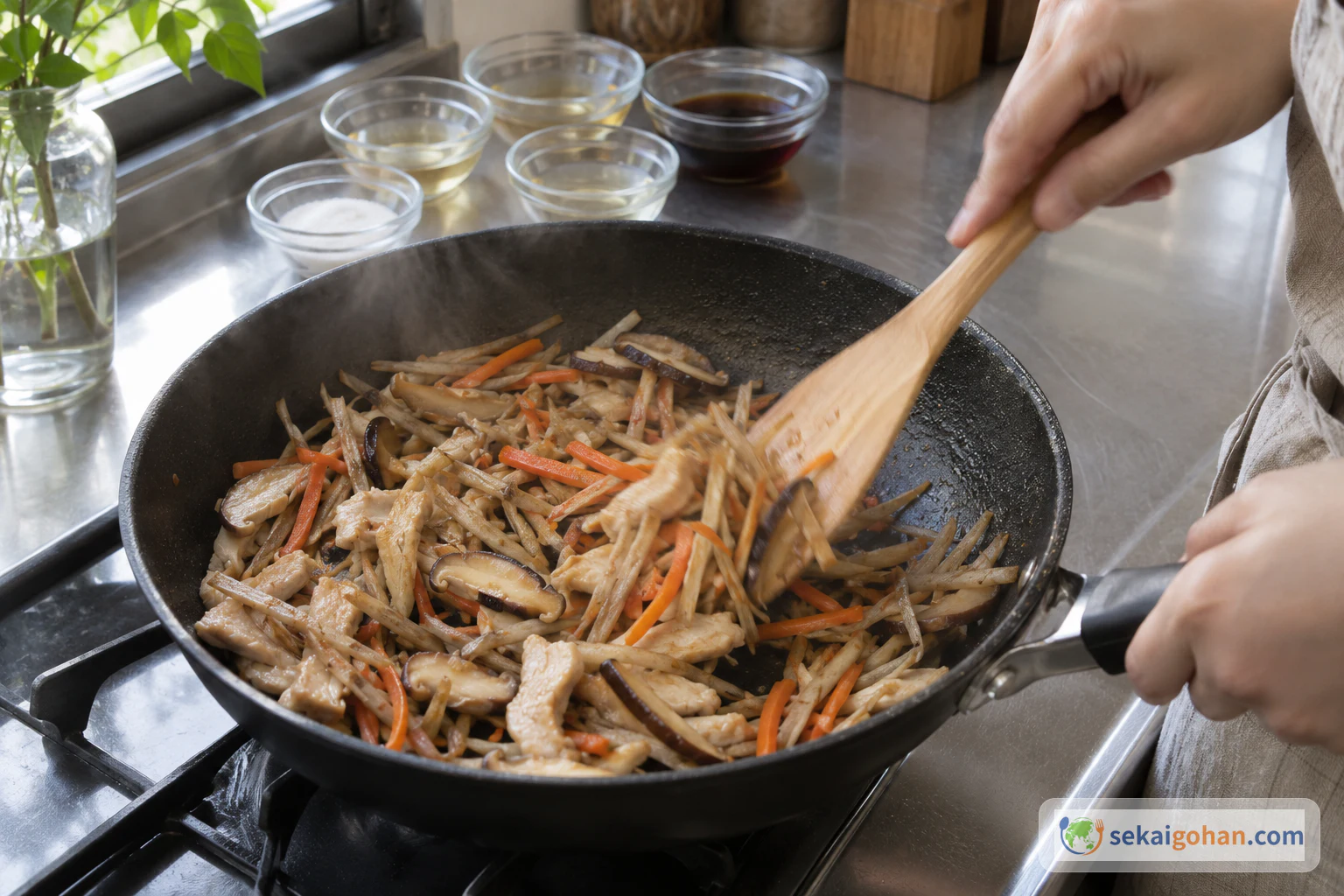
Stir-fry the chicken and vegetables

Chicken, burdock, carrot and shiitake being stirred in a frying pan
The liquids stay out of the pan for now

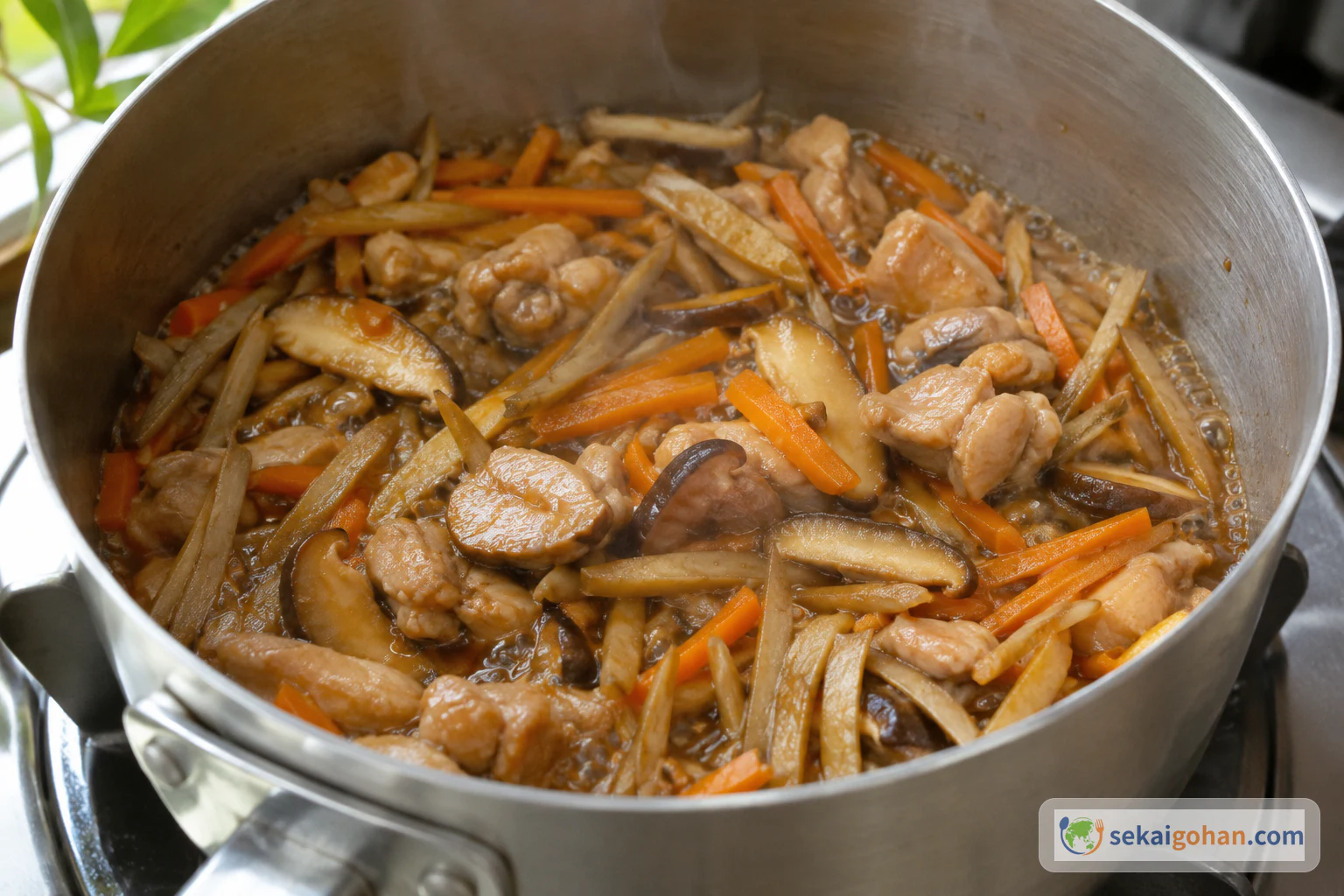
Heat an empty frying pan over medium heat, then add 1 tsp of sesame oil. Add the chicken and stir-fry it on its own, keeping any tool that touched raw chicken away from the rice and scallions. When the chicken is starting to cook through, add the burdock, carrot and shiitake, and stir-fry everything together. The vegetables are mixed through the partly cooked chicken, with no liquids in the pan yet.

STEP66 / 7

Season and simmer the filling

Chicken and vegetables simmering over low heat in a soy-colored sauce
Judge the sauce by eye and the chicken with a thermometer

In a small bowl, combine 4 tsp each of sake, sugar, mirin and soy sauce, then pour it over the chicken and vegetables. Pour in the 4 tbsp of shiitake soaking liquid. Simmer over low heat until the sauce clings to the filling and little liquid remains in the pan, lowering the heat and stirring if it looks close to scorching. Check the chicken with a thermometer: the center should reach 167°F (75°C) or higher for at least 1 minute.

STEP77 / 7

Mix and serve

A hand scattering sliced scallions over mixed kashiwameshi
The scallions go on top, uncooked

Add the simmered filling to the cooked rice. Fold it through with a clean paddle until it is spread evenly through the rice. Scatter the 12g of scallions over the top, and serve while freshly made. The scallions stay uncooked on top of the mixed rice.

0 / 0
Ingredients

Ingredients

1 / 1

Ingredients

Ingredient Amount Role
Rice (米, kome) 1.7 go Rinsed, soaked and cooked plain
Water for the rice Same volume as the rice Soaks and cooks the rice
Boneless chicken thigh (鶏もも肉) 4 oz (120g) Main filling, cut into small diagonal slices
Burdock root (ごぼう, gobō) 2 oz (60g) Earthy flavor and bite, shaved into thin curls
Carrot (人参, ninjin) 2 oz (60g) Sweetness and color, peeled and cut into thin matchsticks
Dried shiitake (干ししいたけ) 4 small Rehydrated, stems trimmed, cut into thin strips
Water for soaking the shiitake As needed Softens the mushrooms
Shiitake soaking liquid (戻し汁, modoshijiru) 4 tbsp Simmering liquid for the filling
Sesame oil (ごま油) 1 tsp For stir-frying the chicken
Sake (酒) 4 tsp Seasoning A
Sugar (砂糖) 4 tsp Seasoning A
Mirin (みりん) 4 tsp Seasoning A
Soy sauce (醤油) 4 tsp Seasoning A
Scallions (万能ねぎ, bannō negi) 12g Raw garnish, added last
0 / 0

Steam rises from a pot of plain white rice while, in a frying pan nearby, chicken, burdock, carrot and dried shiitake simmer down in sake, sugar, mirin, soy sauce and the mushrooms' own soaking liquid. Once the sauce has reduced and clings to the filling, everything goes into the rice and is folded through, and a handful of raw scallions finishes the bowl. This is kashiwameshi, a sweet-savory chicken mixed rice from Fukuoka. The rice cooks on its own, plain, so each grain picks up the glossy sauce only at the end.

Kashiwameshi in Fukuoka

Kashiwa is the word for chicken in Kyushu, so the name points straight to the main ingredient. Kashiwameshi turns up across Fukuoka Prefecture as an everyday meal at home and in casual restaurants, and it also appears at festivals, school sports days and other special occasions. The local chicken is Hakata jidori. For more from the country, see our Japan page.

Other Forms of Kashiwameshi

The same name covers quite different dishes. One version marinates the chicken and cooks it with the vegetables and rice together in a rice cooker, which makes it a separate recipe with its own amounts rather than a shortcut for this one. Kashiwameshi can also be shaped into rice balls and eaten with udon.

Northern Kyushu has a station-bento form, too. At Orio Station in Kitakyushu, kashiwameshi is sold on the platform: rice cooked in chicken broth, topped with chopped chicken, shredded egg and nori. The platform sale dates to 1921, a history that belongs to this one tradition rather than to kashiwameshi as a whole.

How It Differs from Chicken Rice

The name might bring other chicken rice dishes to mind. Singapore's Hainanese chicken rice and Wenchang chicken rice from Hainan are built around cooked chicken and rice prepared with its broth or fat. Fukuoka's mixed version takes a different route, with a stir-fried and simmered filling folded into plain rice.

Ingredients for 4 Servings
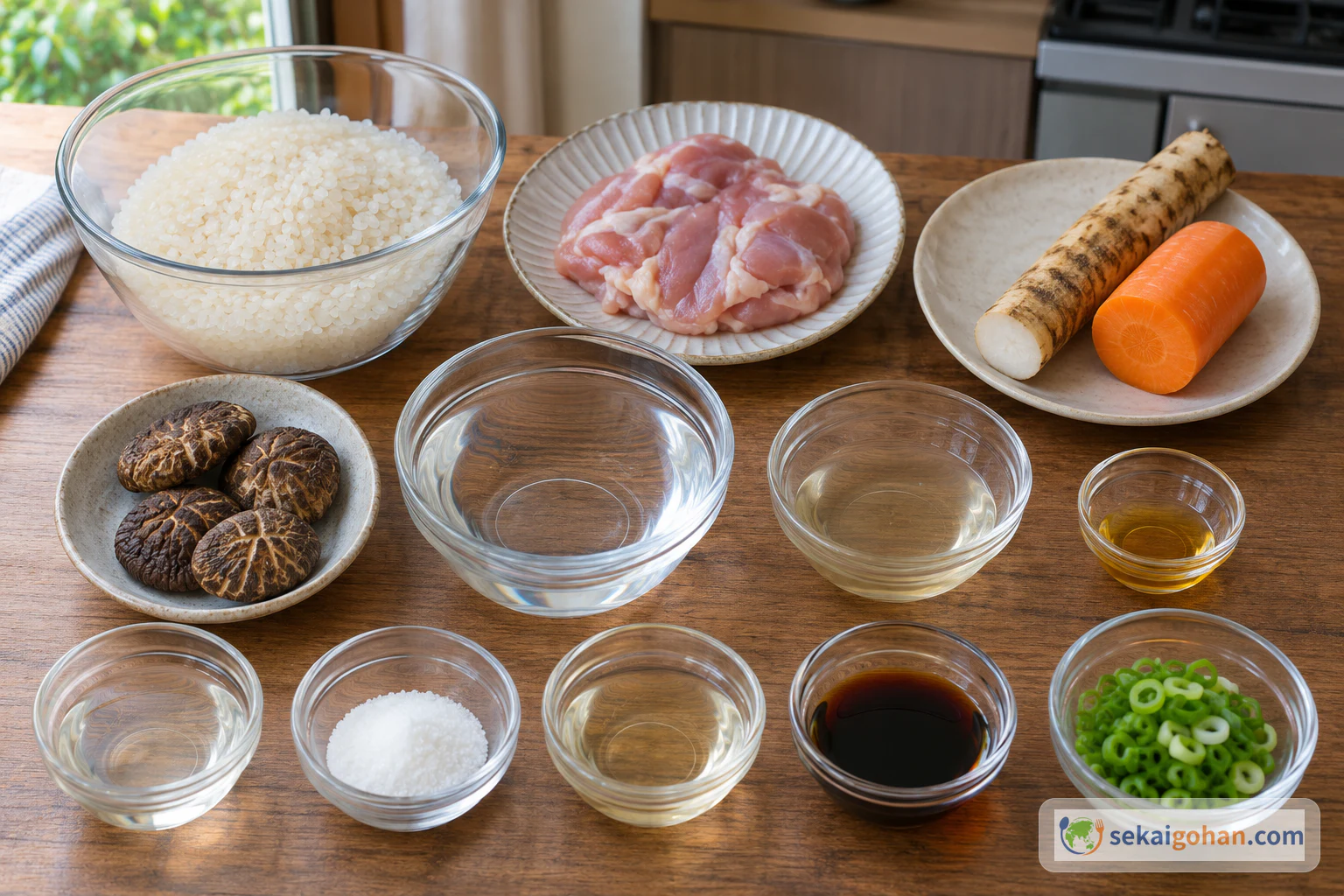
Rice, chicken thigh, burdock, carrot, dried shiitake, a bowl for the soaking liquid, sesame oil, sake, sugar, mirin, soy sauce and scallions for four servings
Everything for the rice, the filling and the garnish

Choosing Ingredients for Kashiwameshi

  • Rice: Ordinary non-glutinous Japanese rice works; any variety is fine.
  • Chicken: Ordinary chicken thigh works well.
  • Dried shiitake: Keep these. They supply both the mushrooms and the soaking liquid, which fresh shiitake or granulated stock can't replace.
  • Soy sauce: Use regular dark soy sauce (koikuchi), in the amount given, rather than converting for light soy sauce.
  • Sugar: Ordinary white sugar works, in the same amount.
  • Sake: Use drinking-style Japanese sake if you can. Cooking sake can contain salt, so leave the salt out rather than compensating.
  • Mirin: Choose true mirin (hon-mirin); mirin-style seasonings are a different product.
  • Allergies: Soy sauce can contain soy and wheat. Check the labels on your soy sauce, sake and other products.

Equipment

  • Rice cooker
  • Frying pan
  • Knife and cutting board reserved for raw chicken
  • Separate clean knife and cutting board for vegetables
  • Bowls, including small ones for the soaking liquid and seasoning
  • Colander
  • Vegetable peeler
  • Measuring spoons
  • Kitchen scale
  • Spatula
  • Clean rice paddle
  • Food thermometer

Method: Cook the Rice, Simmer the Filling, Then Mix

Chicken and raw scallion safety

Don't eat chicken raw or undercooked. Heat it until the center reaches 167°F (75°C) or higher for at least 1 minute, and check with a thermometer: color, photos and cooking time alone can't confirm that it is safe. Don't wash raw chicken, because splashing water can spread contamination. Keep raw chicken and the tools that touched it away from other foods, including the cooked rice and scallions, and wash your hands after handling it. The scallions are eaten without further cooking, so wash them well under running water and cut them with a knife and board that have not been used for raw chicken.

Troubleshooting Kashiwameshi

Problem What to do
The sauce is close to scorching Lower the heat and stir.
A lot of liquid remains in the pan Keep simmering over low heat until the sauce clings to the filling.
The chicken looks done, but you are unsure Check the center with a thermometer. Color and time alone can't confirm safety.
The chicken hasn't reached the safe temperature Keep heating until the center has been at 167°F (75°C) or higher for at least 1 minute.
You discarded the soaking liquid Separate stock isn't the same. Save the liquid at step 2 next time.
The scallion knife or board touched raw chicken Switch to a clean knife and board that have not touched raw chicken.

Serving and Variations

Kashiwameshi is a dish to serve freshly made, while the rice is still warm and the scallions bright. If you'd like an easy change, cut the burdock into thin strips instead of shaved curls; both work.

Frequently Asked Questions

What does "go" mean, and can I convert it?

A go is a Japanese volume measure for rice. Measure 1.7 go of rice and use water in the same volume, whatever container you use.

How much water do I need to soak the shiitake?

Enough to cover the mushrooms. The amount that matters for the sauce is 4 tbsp of soaking liquid.

How do I heat the chicken safely?

Heat the chicken until the center reaches 167°F (75°C) or higher for at least 1 minute. Don't wash raw chicken, and keep raw meat away from other foods.

Why wash the scallions and use a separate board?

The scallions go in raw, with no heating step after them. Wash them under running water and cut them on a board, with a knife, that has not touched raw chicken. Keep meat and vegetable cutting boards separate.
Sources

  • Ministry of Agriculture, Forestry and Fisheries of Japan (MAFF), "Kashiwameshi, Fukuoka Prefecture" (かしわめし 福岡県), Our Regional Cuisines (うちの郷土料理); recipe provided by the Health Promotion Division, Public Health and Medical Bureau, Fukuoka City. The basis for the 4-serving ingredients and method, the meaning of "kashiwa," the dish's place in Fukuoka home cooking and occasions, and the note on regional and household differences. https://www.maff.go.jp/j/keikaku/syokubunka/k_ryouri/search_menu/menu/kashiwa_meshi_fukuoka.html
  • Japan Umami Seasoning Association, "Kashiwameshi" (かしわめし), recipe by Hideko Oba. Used only for comparison, as a rice-cooker version with different ingredients, and for its note on eating kashiwameshi as rice balls with udon. https://www.umamikyo.gr.jp/recipe/2859/
  • Crossroad Fukuoka (Fukuoka Prefecture official tourism site), "Kashiwameshi Platform Sales" (かしわめしの立ち売り). Used for the Orio Station bento and the site's own account of the platform sale's 1921 start. https://www.crossroadfukuoka.jp/spot/11604
  • Ministry of Agriculture, Forestry and Fisheries of Japan (MAFF), "To Enjoy Chicken Dishes: Beware of Campylobacter Food Poisoning" (鶏料理を楽しむために~カンピロバクターによる食中毒にご注意を!!~). Used for heating chicken to 75°C or higher at the center for at least 1 minute, not washing chicken, and keeping raw meat and its tools away from other foods. https://www.maff.go.jp/j/fs/campylobacter.html
  • Ministry of Health, Labour and Welfare of Japan (MHLW), "Six Points for Preventing Food Poisoning at Home" (家庭でできる食中毒予防の6つのポイント). Used for the general points on washing raw vegetables under running water and separating cutting boards for meat and vegetables. Summarized, not quoted. https://www.mhlw.go.jp/www1/houdou/0903/h0331-1.html