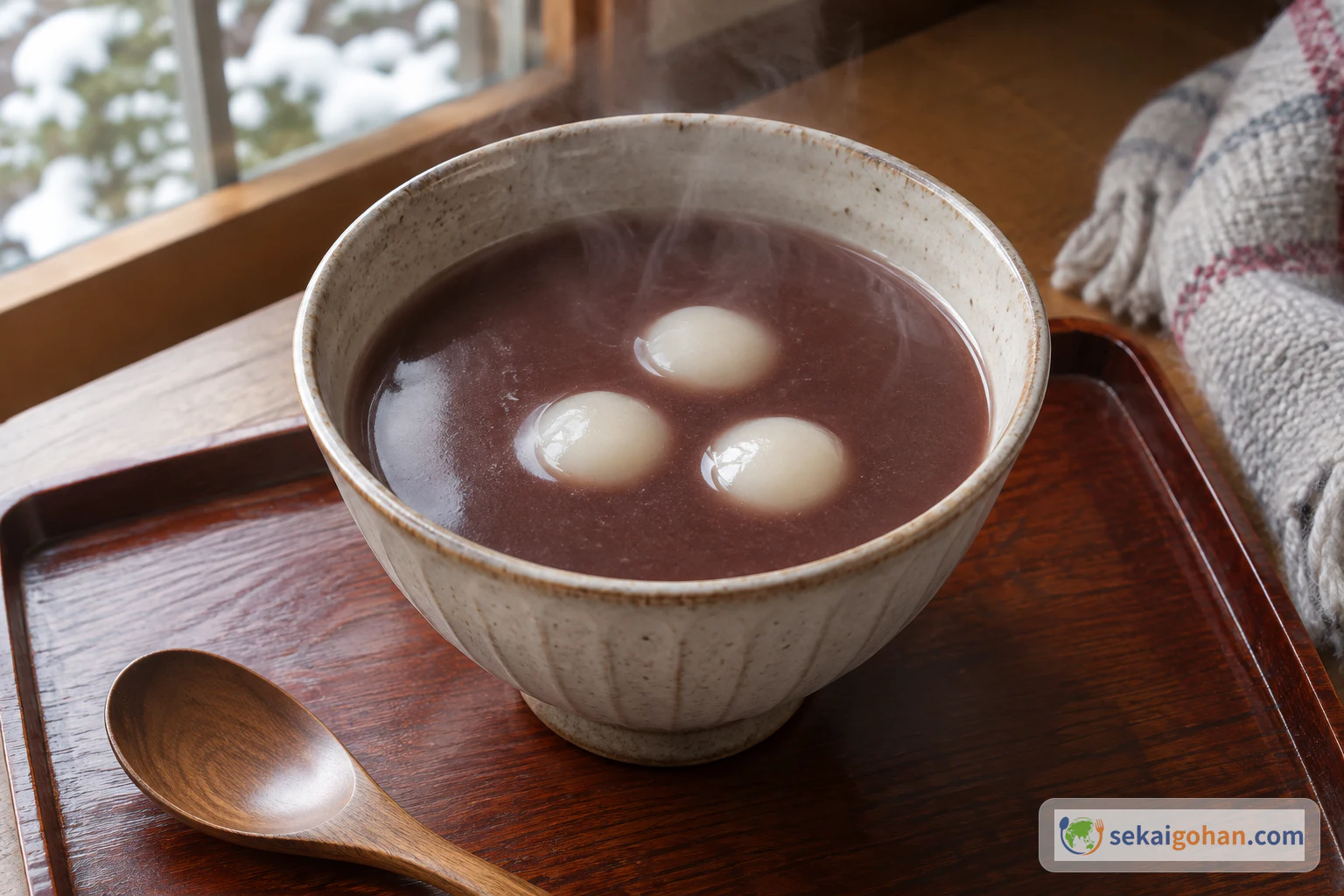
Oshiruko is the bowl of warm, sweet azuki that many Japanese homes eat in January, on the day the New Year's kagami mochi comes down from its display. It is a thin bean soup, eaten with a spoon. This version is gozen shiruko (御前しるこ). The azuki are strained until no skins remain and the liquid is silky, then sweetened gently and topped with small white shiratama dumplings. It tastes of beans and sugar, with a little salt to round it off, and it is smooth all the way through.
Gozen Shiruko and Kagami Biraki
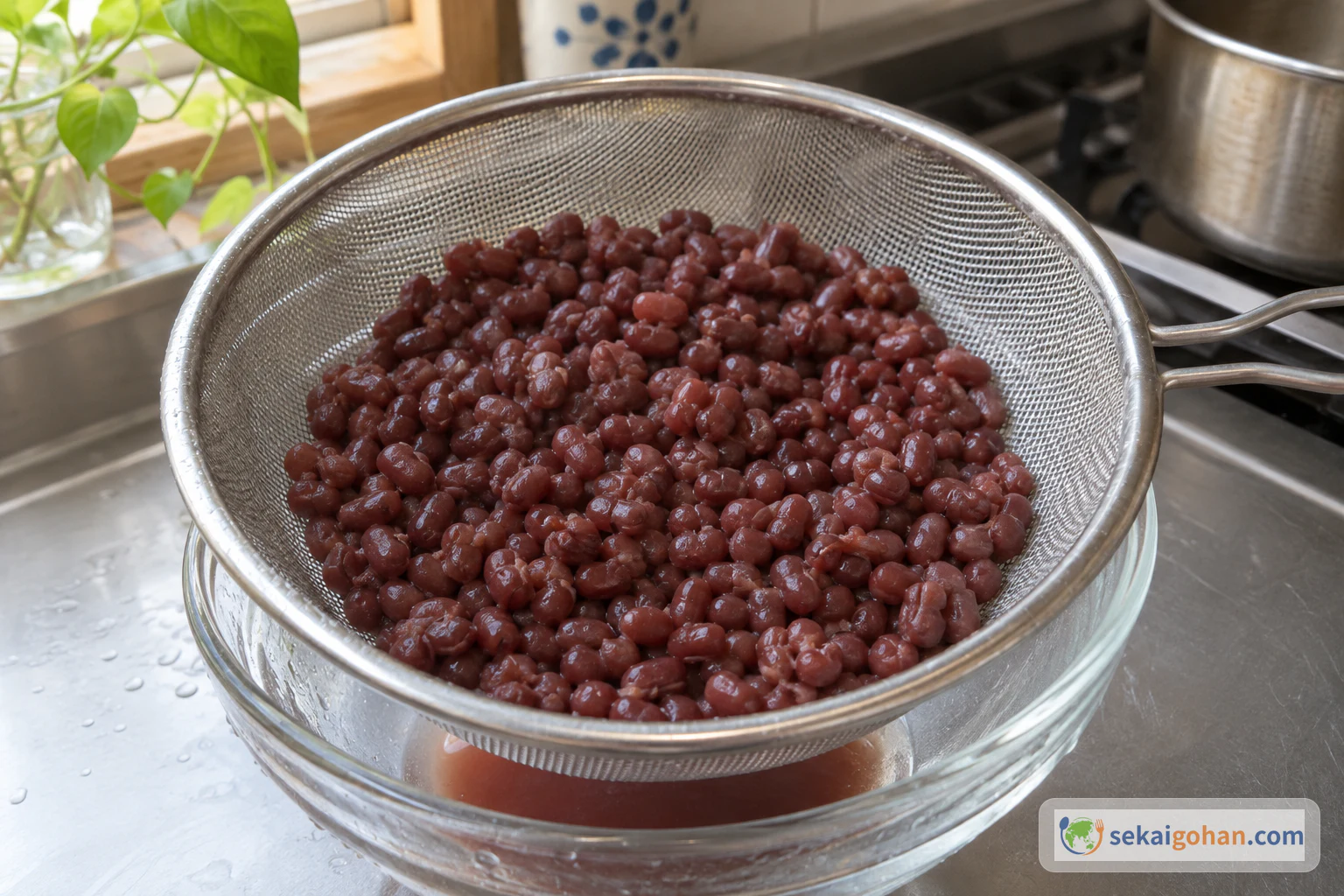
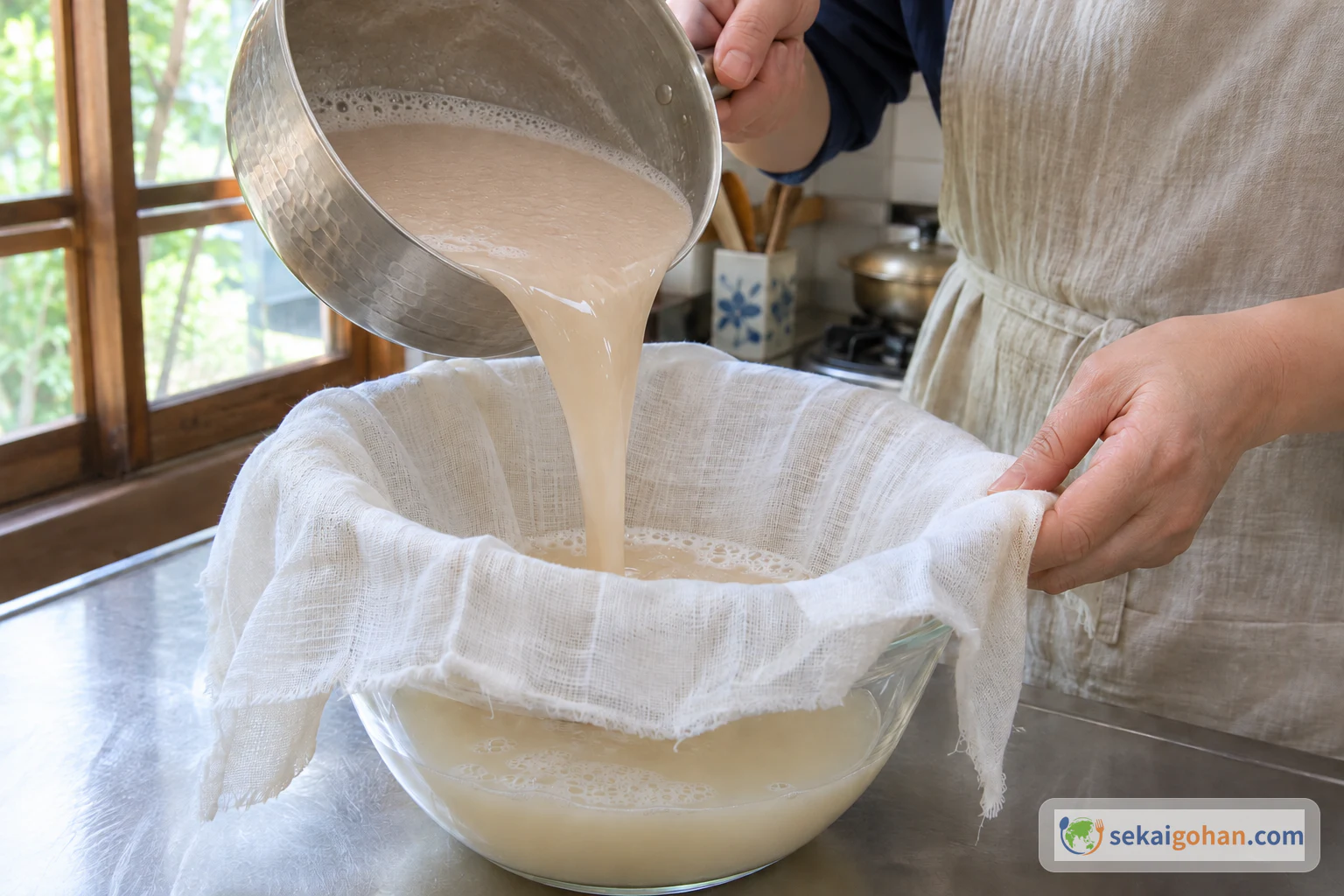
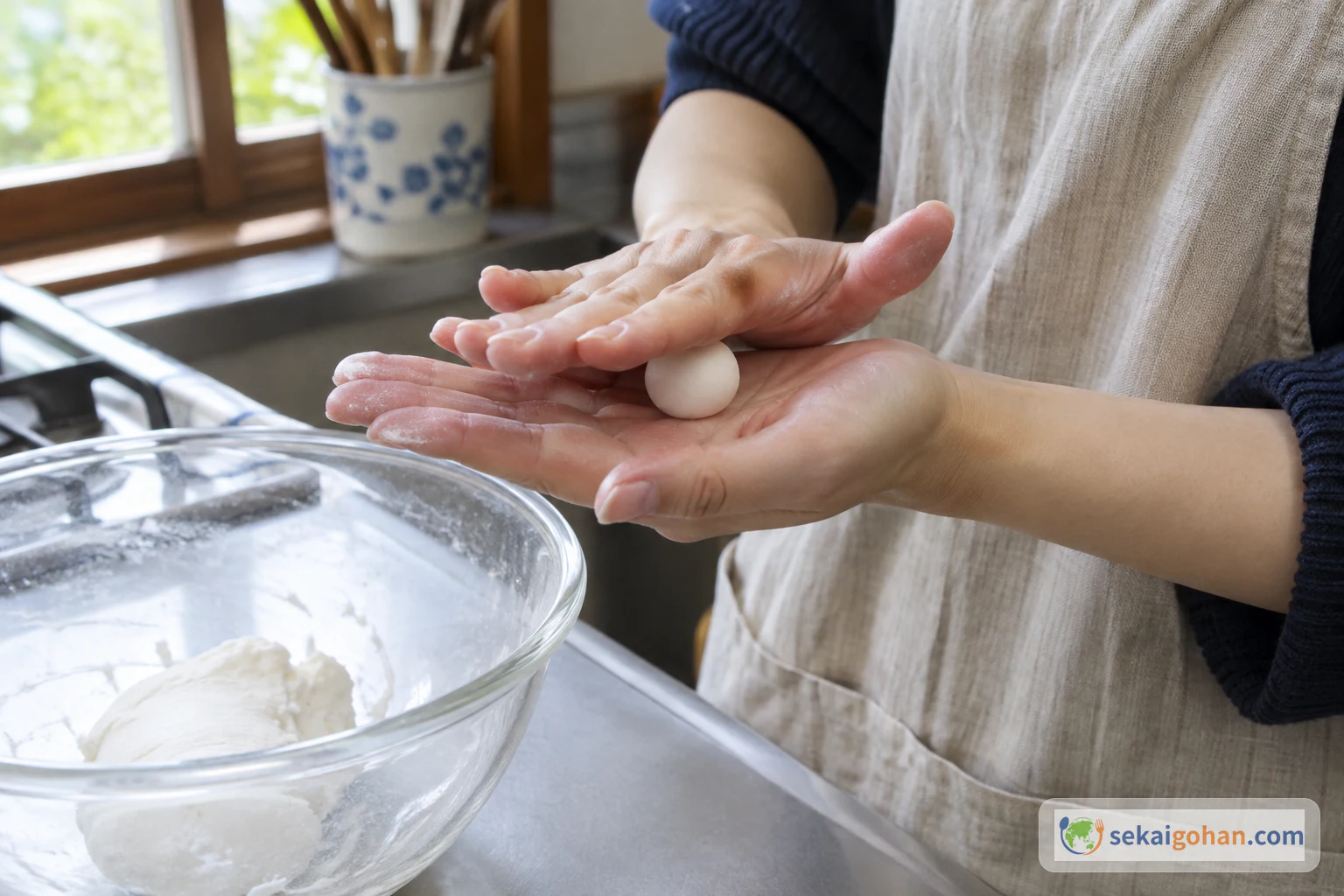
Oshiruko (お汁粉, shiruko) is azuki cooked and sweetened into a warming soup. In the gozen style, dried beans are boiled, pressed through a sieve to remove the skins, settled in water and strained again through cotton cloth. The result is a smooth soup rather than one full of whole beans. In place of mochi, the bowl gets shiratama, soft little dumplings made from shiratamako, a glutinous rice flour.
The dish belongs to January. Gyōji-shoku are foods eaten at seasonal milestones and festivals, and kagami biraki is paired with oshiruko. On kagami biraki, the kagami mochi offered at New Year is taken down and eaten with wishes for good health. The mochi is broken open by striking it rather than cut with a knife. At home it is often eaten with azuki, as zenzai. Because this bowl uses shiratama instead of kagami mochi, you can make it any time of year. For more dishes from the same table, see Japanese food on Sekai Gohan.
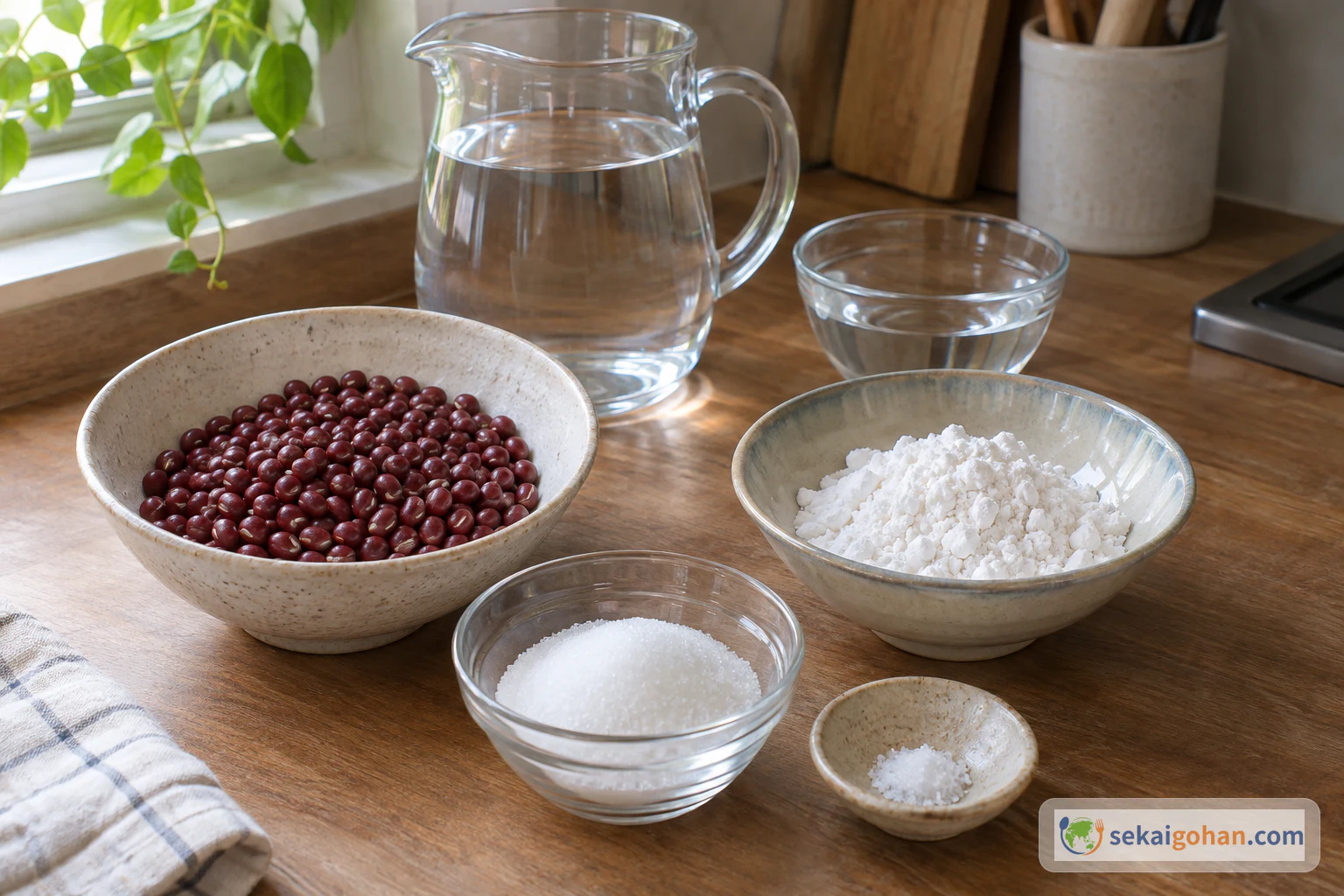
Ingredients: Serves 4, with Each Water Kept to Its Own Job
Equipment
- A pot for cooking the beans, and a pot for warming the finished soup
- A pot of water for boiling the dumplings
- A colander
- A fine kitchen sieve
- Several bowls (for catching the bean liquid, settling it and holding cold water)
- A clean sarashi cotton cloth
- A measuring cup and a tablespoon
- A spoon or spatula for stirring
- A slotted spoon
- Serving bowls
Choosing Ingredients for Oshiruko
Shiratamako is a flour made from glutinous rice, and the dough here is built around it with 3 tablespoons of water. Potato starch, joshinko (non-glutinous rice flour), mochiko and ready-made mochi each behave differently, so any of them will change both the dough and the dumplings. Production lines differ by product, so check the package label for allergen and shared-facility information.
Sugar sets the character of the soup. If you reduce it or switch to another sweetener, treat that as your own experiment, because it changes the taste and other qualities of the soup.
Dried azuki are the starting point. Canned azuki or ready-made bean paste would make a different, shorter recipe with its own steps and amounts.
Method: Cook, Strain, Settle, Sweeten, Then Make the Dumplings
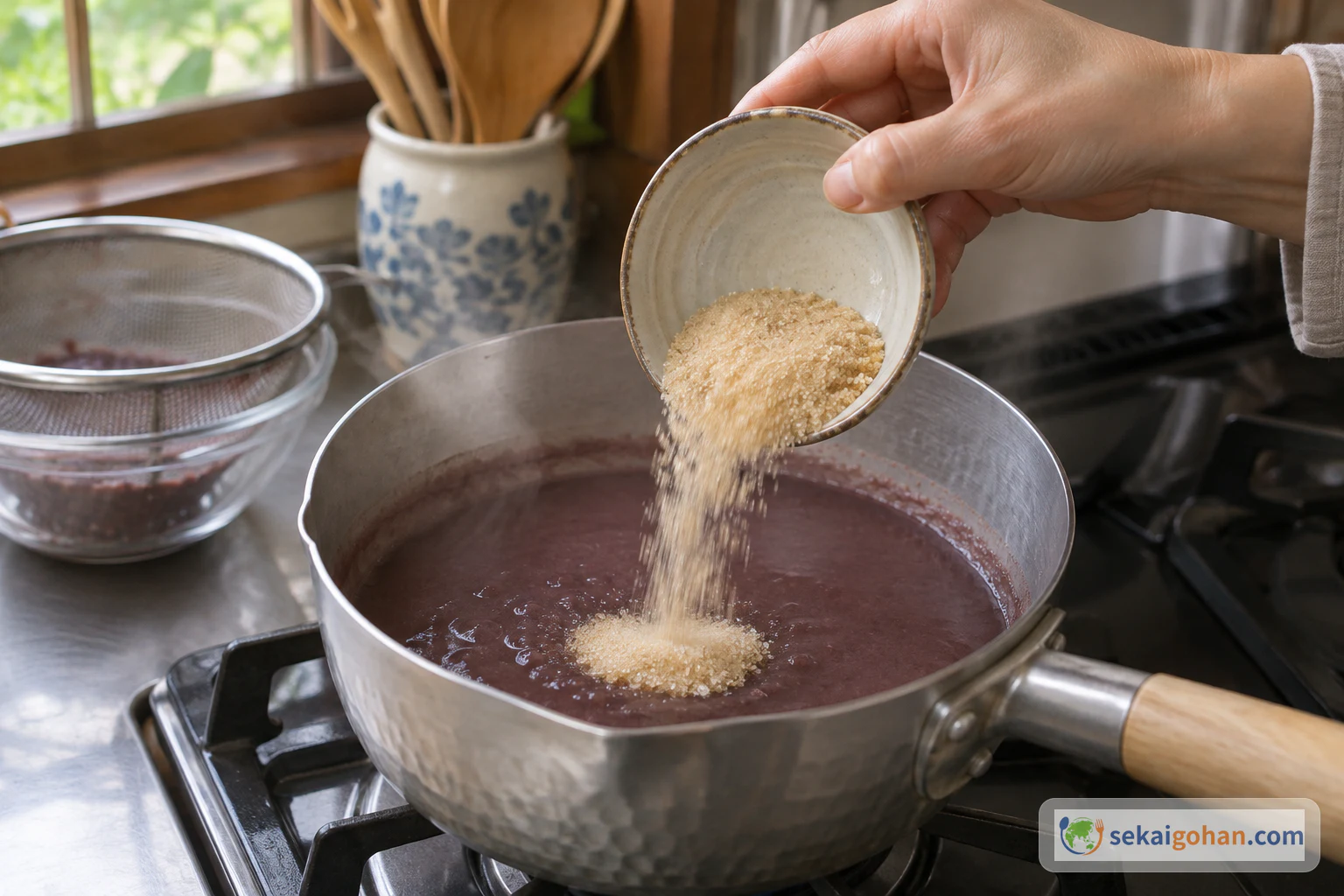
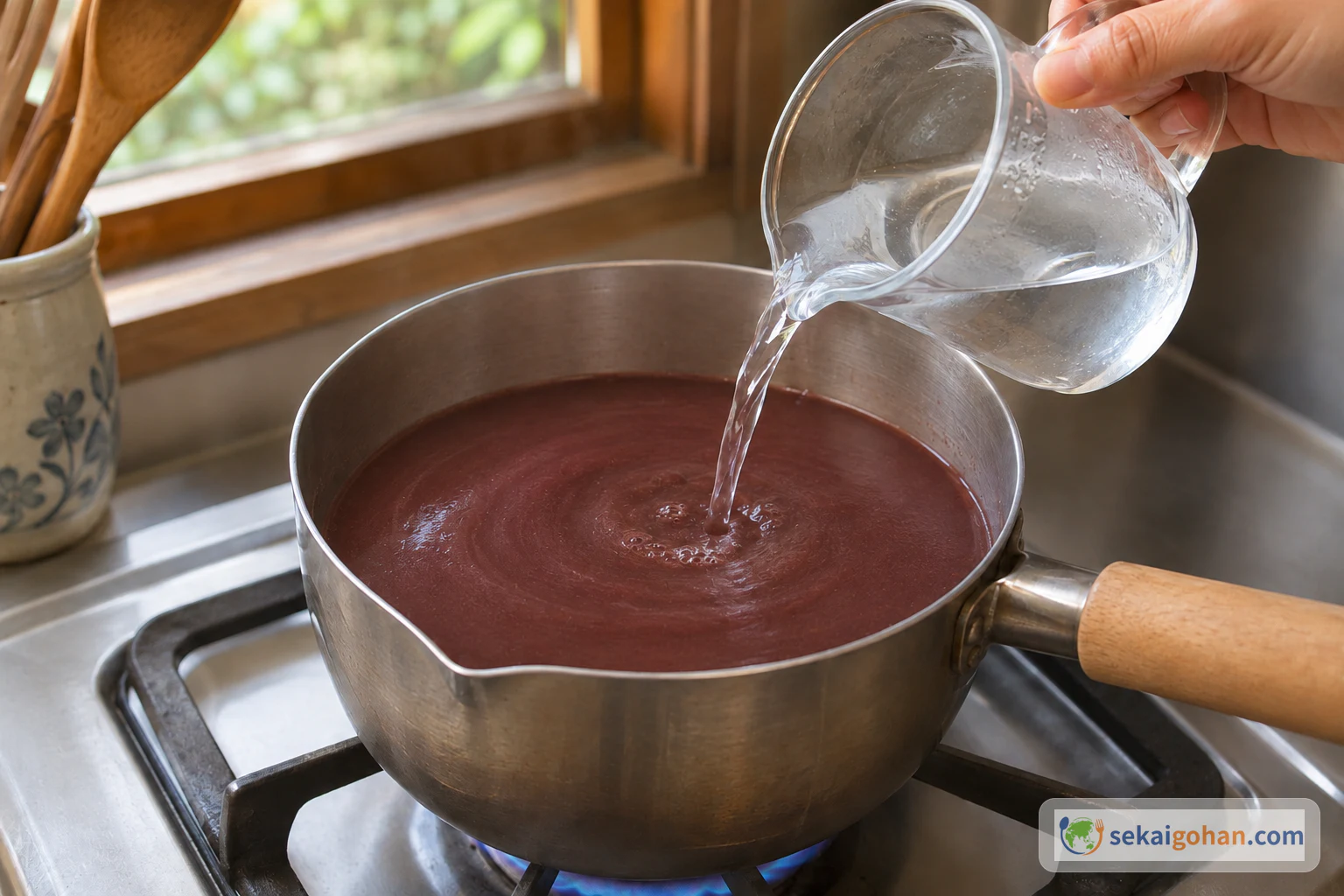
The bean work runs in one direction: cook until soft, press through a sieve, strain again, settle and pour off the top water, strain through cloth, then sweeten. Make the dumplings once the soup is finished. Hot pots and boiling water are involved throughout, so pour and drain with care, and keep the sieve, bowls and cloth clean.
Fixing Common Oshiruko Problems
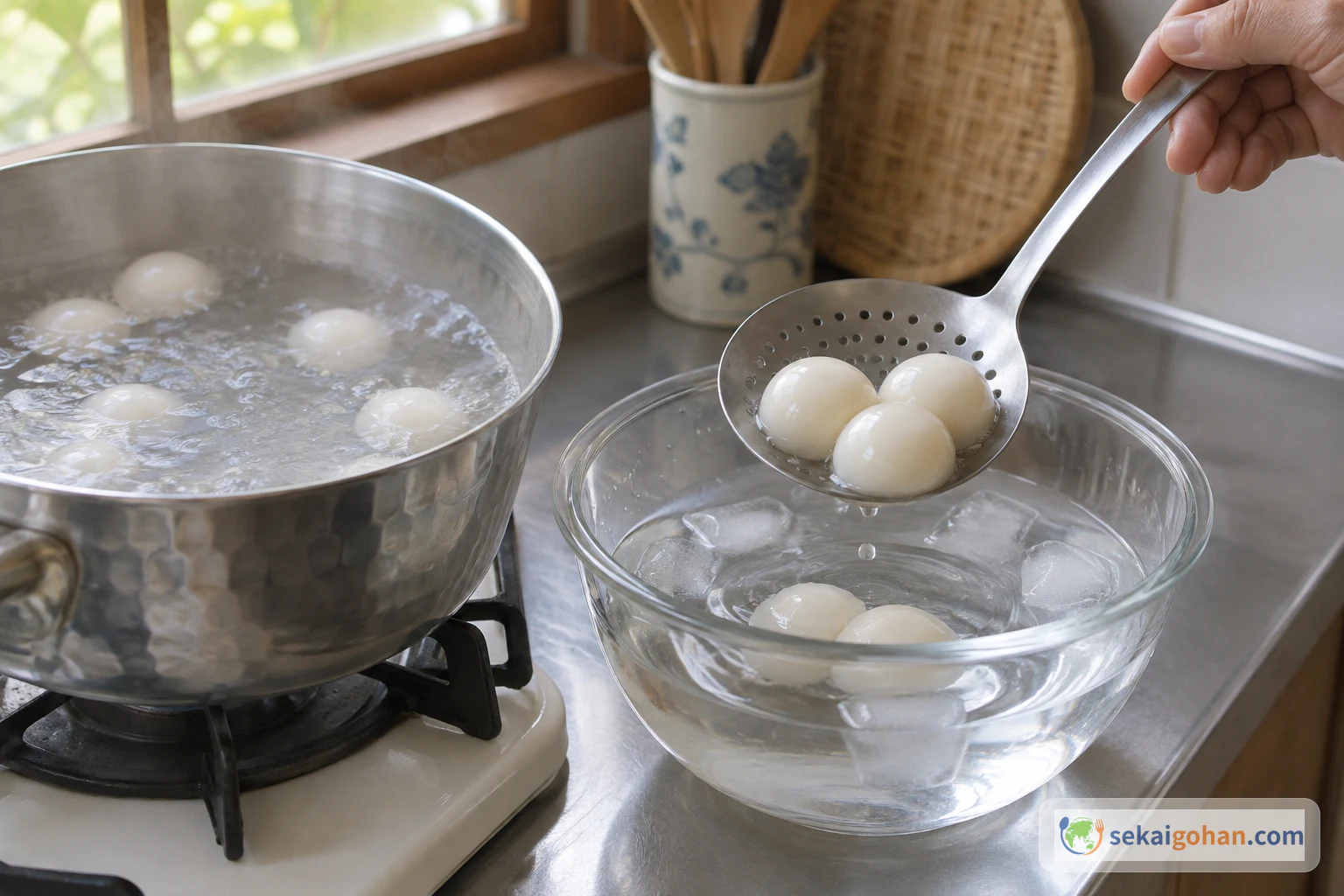
Most of the work in this recipe is in the straining, and each stage has a cue: the wrinkles on the beans smoothing out, the beans turning soft, the top water running clear, and the dumplings floating. When something seems off, go back to the cue for that stage rather than watching the clock. For the dough, aim for the softness of an earlobe.
| Condition | What to check | What to do |
|---|---|---|
| The beans are still firm after the second cooking | The beans should be soft before you strain | Keep cooking in the fresh water until they are soft, judging by the beans |
| Skins end up in the bowl | Skins should stay in the sieve in step 2 | Pass the liquid through the sieve again, as in step 2 |
| The top water stays cloudy | Keep settling and pouring off until the top water is clear | Add plenty of water again, let it settle and pour off the top. Repeat as many times as needed |
| Solids pour out with the top water | Only the top water should leave the bowl | Pour more slowly and stop before the settled layer moves |
| The soup is too thick | Finishing water is added as needed | Over low heat, add water as needed and stir |
| The dumplings sink | They are cooked to the point of floating | Leave them in the boiling water until they rise, then scoop them out |
Oshiruko Variations
With mochi for kagami biraki. The mochi from kagami biraki is good with azuki, for example turned into zenzai with canned azuki. Serving mochi in place of the shiratama makes a different bowl from this one.
Mochi can cause choking. Cut mochi into small pieces, moisten your throat first with tea or soup, and chew well so the mochi mixes with saliva before swallowing. Sipping the soup does not make mochi safe to swallow; do all three together. Shiratama is not a safety guarantee for anyone with chewing or swallowing difficulties.
Chilled shiruko. Oshiruko can also be served cold, as hiyashi shiruko.
Keeping some bean texture. If you skip part of the straining, more of the bean stays in the soup. You get a heartier texture, though it is no longer the smooth gozen shiruko.
Frequently Asked Questions
Are oshiruko and zenzai the same thing?
Both are tied to kagami biraki. Here, oshiruko means azuki strained smooth and served with shiratama.
Do I need to soak the dried azuki first?
No. Rinse the beans and put them straight into the pot with 3 cups water, then add 1 cup water at the boil.
How do I know when each step is done?
Go by what you see: the wrinkles smoothing out, the beans turning soft, the top water running clear, and the dumplings floating.
Can I use cut mochi instead of shiratama?
Yes, as a separate variation tied to kagami biraki. Cut the mochi small, moisten your throat first with tea or soup, and chew well before swallowing. See the warning under Variations.