Draniki: Belarusian Grated Potato Pancakes (Дранікі)

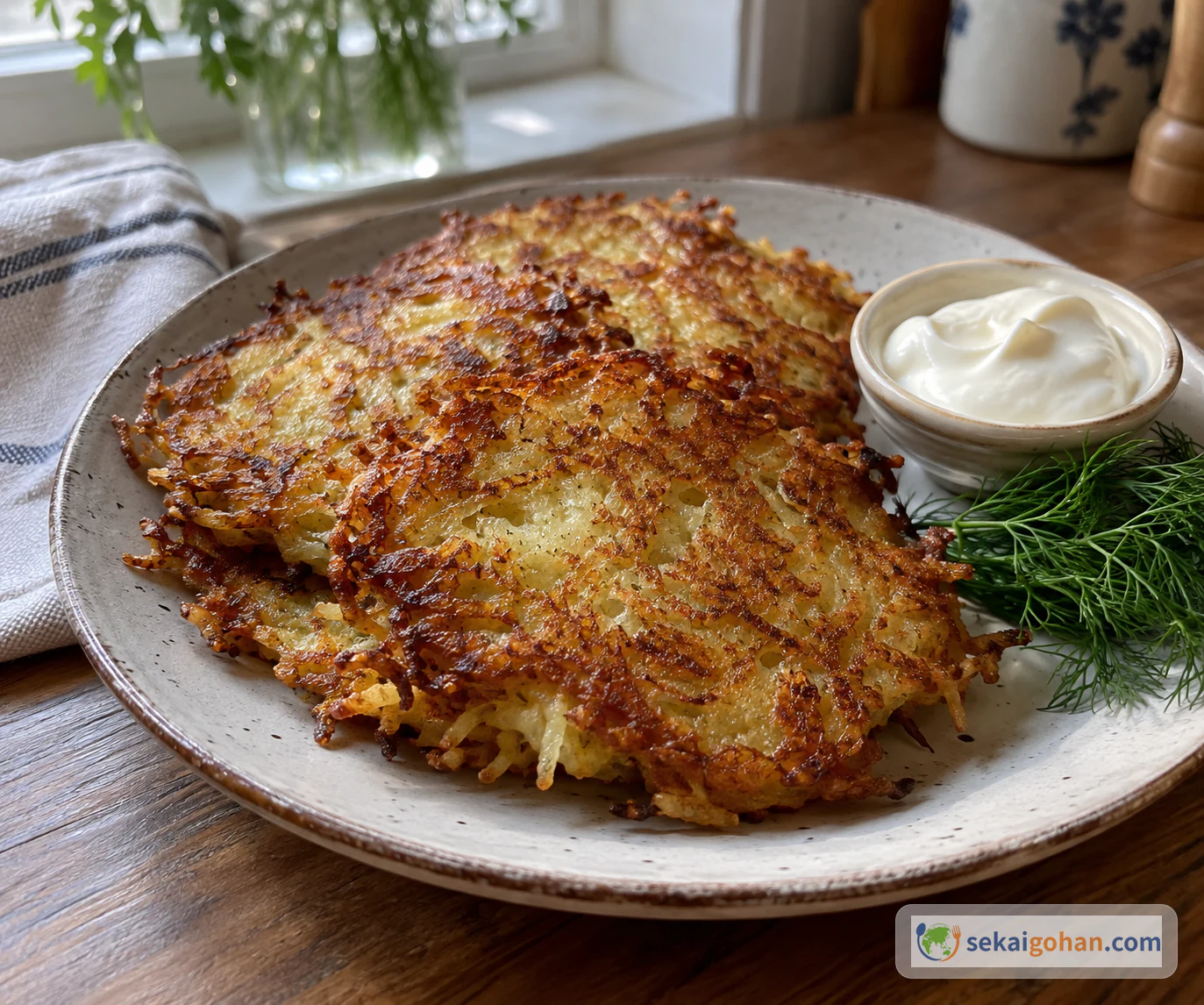
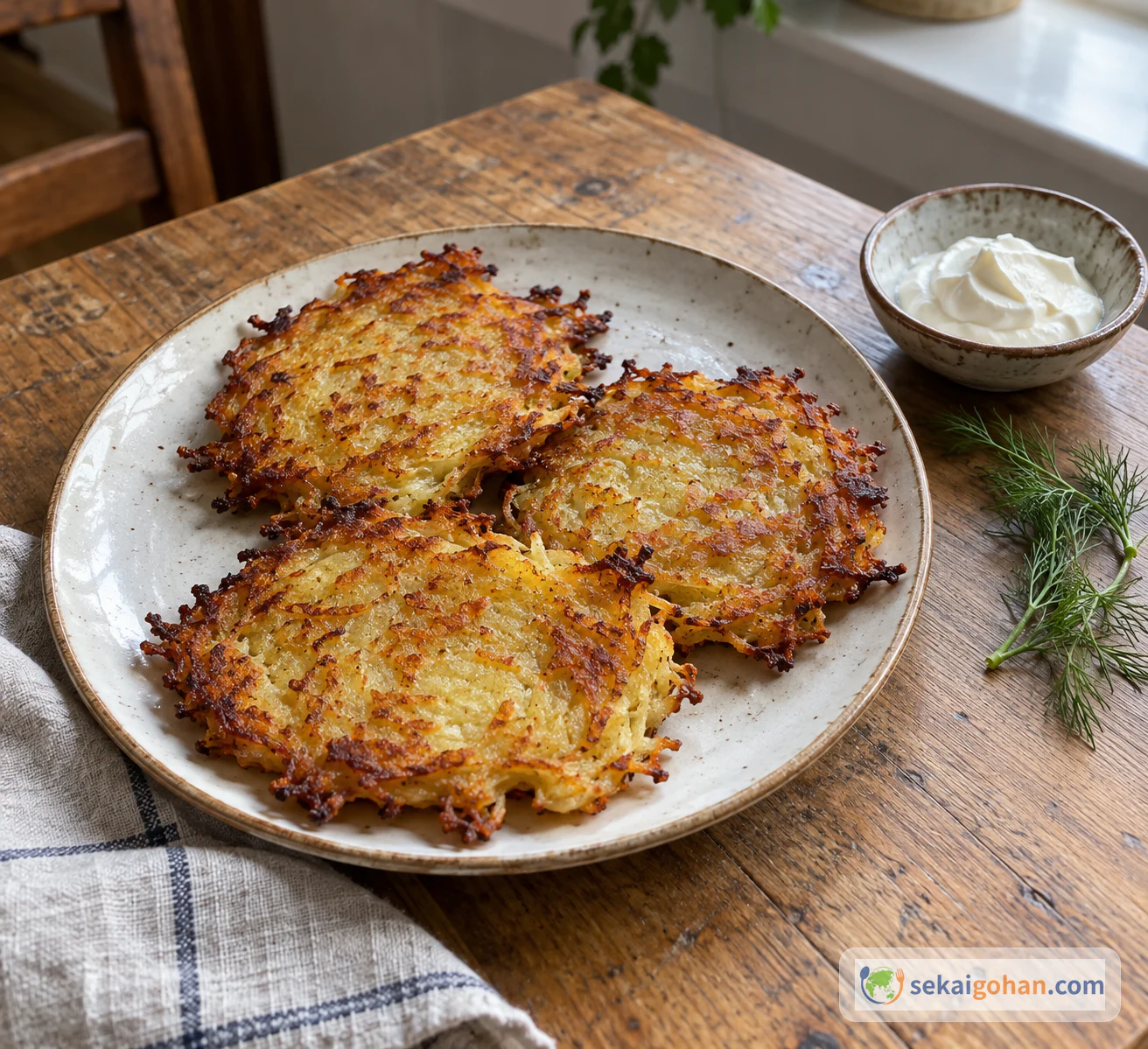
Golden-browned Belarusian draniki stacked on a plate, with sour cream and dill served on the side
Cuisine
Belarusian

How to make draniki (дранікі), Belarusian pancakes of raw grated potato, following a Belarusian home cook's recipe: coarse-grated potato squeezed of excess liquid, finely grated onion and garlic, egg and a little flour, fried in oil. Covers why the squeezing matters, how to judge doneness, common fixes, serving ideas such as sour cream and dill, and general food-safety guidance for leftovers.

Cooking flow

Cooking steps

STEP11 / 6

Peel and coarsely grate the potatoes

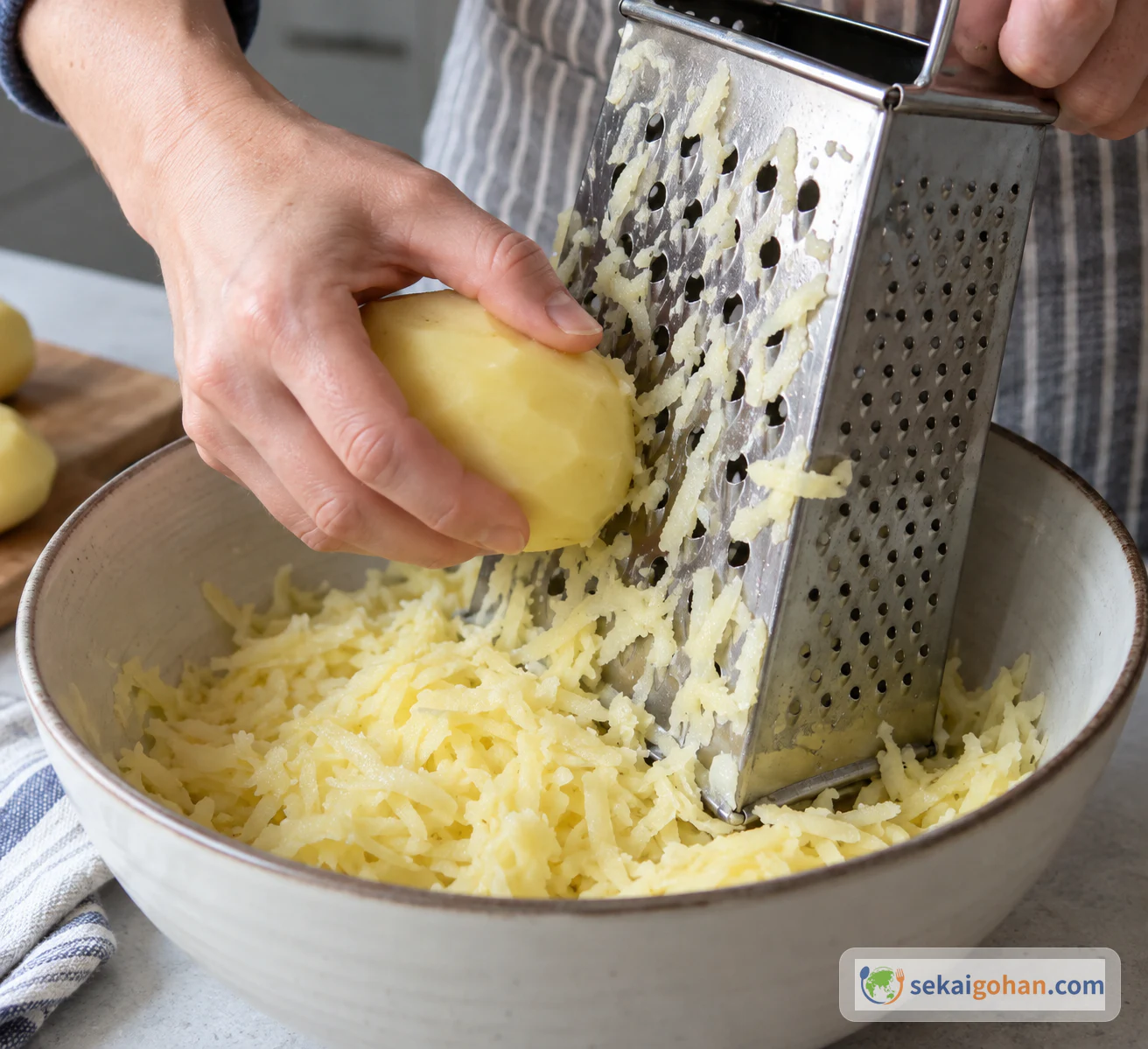
Grating a peeled raw potato on the coarse side of a box grater
Coarse shreds give draniki their uneven, crisp edges

Wash and peel the potatoes. Grate them on the coarse side of the grater into a sturdy bowl; coarse grating makes the draniki especially crispy. You can grate finely instead, though the texture will be different.

Grated potato changes color as it sits, so keep moving through the next steps.

STEP22 / 6

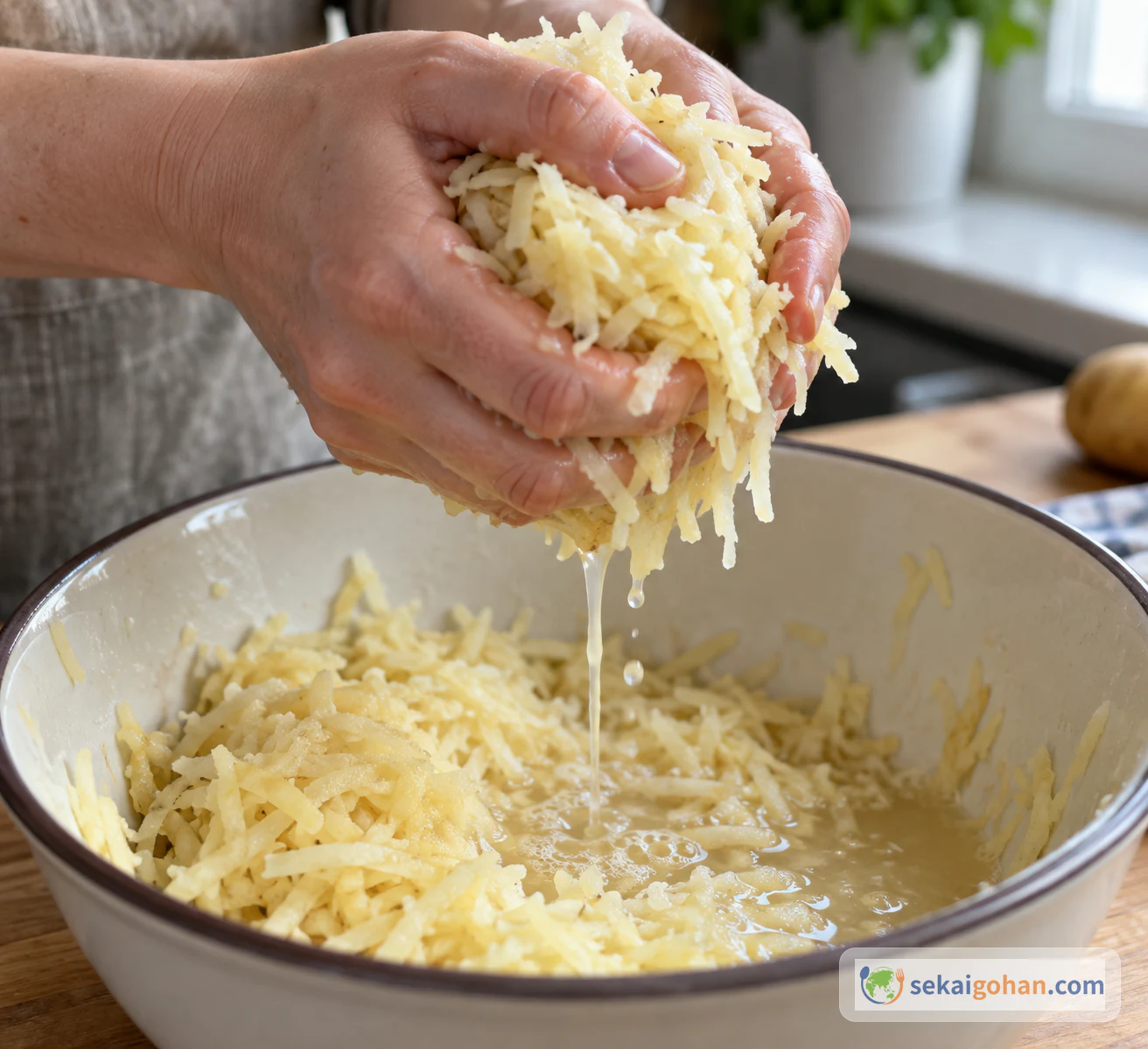
Squeeze out the excess liquid

Gently squeezing excess liquid out of grated potato by hand
Squeeze out the extra liquid but leave the shreds moist

Take the grated potato a handful at a time and squeeze it gently over the bowl to press out the extra liquid. Discard the liquid. The shreds should still feel moist, not wrung dry. Batter that is too wet tends to brown poorly and fall apart in the pan.

STEP33 / 6

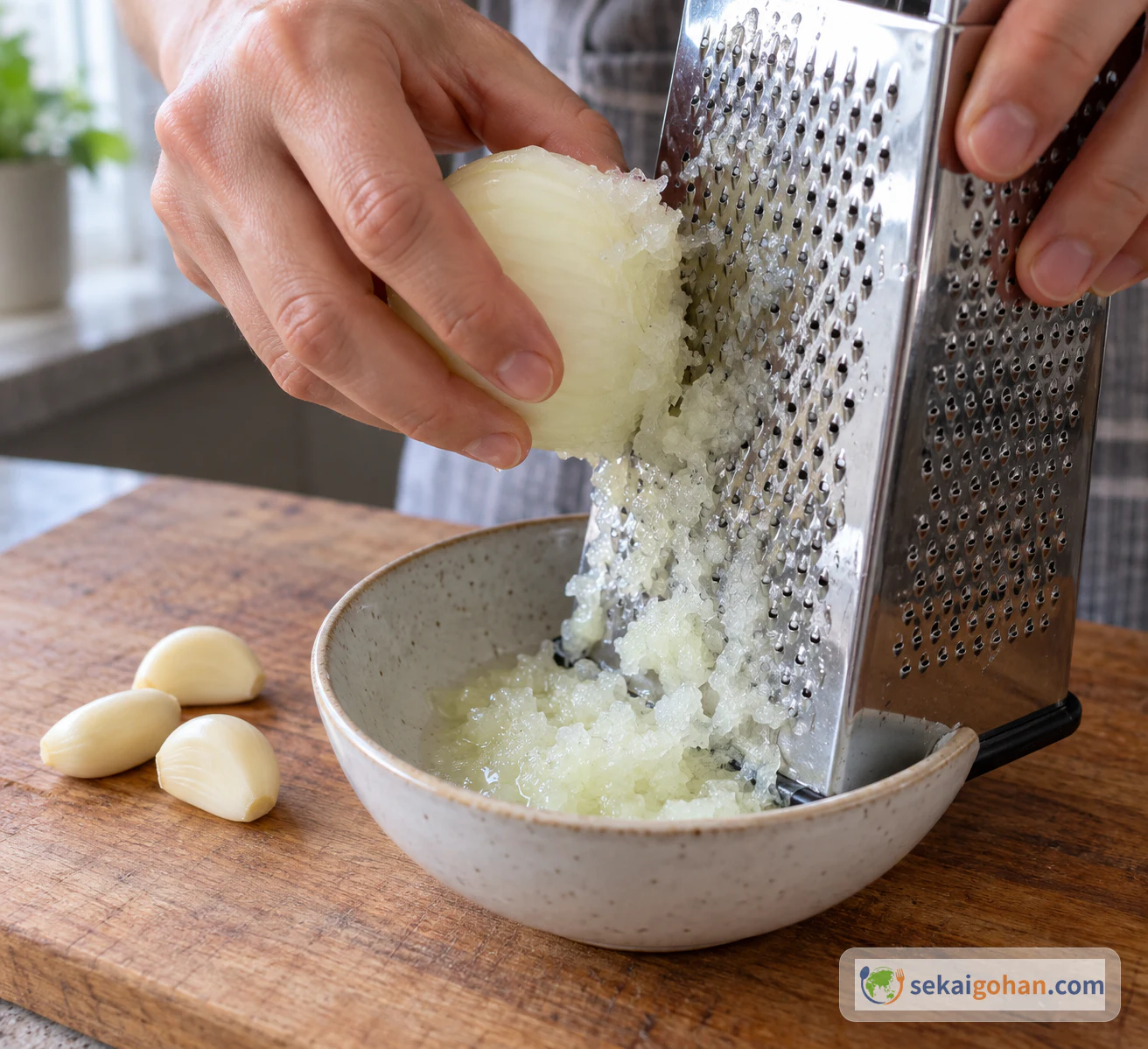
Finely grate the onion and garlic

Grating onion on the fine side of a grater, with garlic cloves beside it
The onion and garlic go on the fine side, unlike the potato

Grate the onion and the 3 garlic cloves on the fine side of the grater. Add them to the squeezed potato. Grating them finely lets their aroma spread through the batter instead of leaving chunks among the potato shreds.

STEP44 / 6

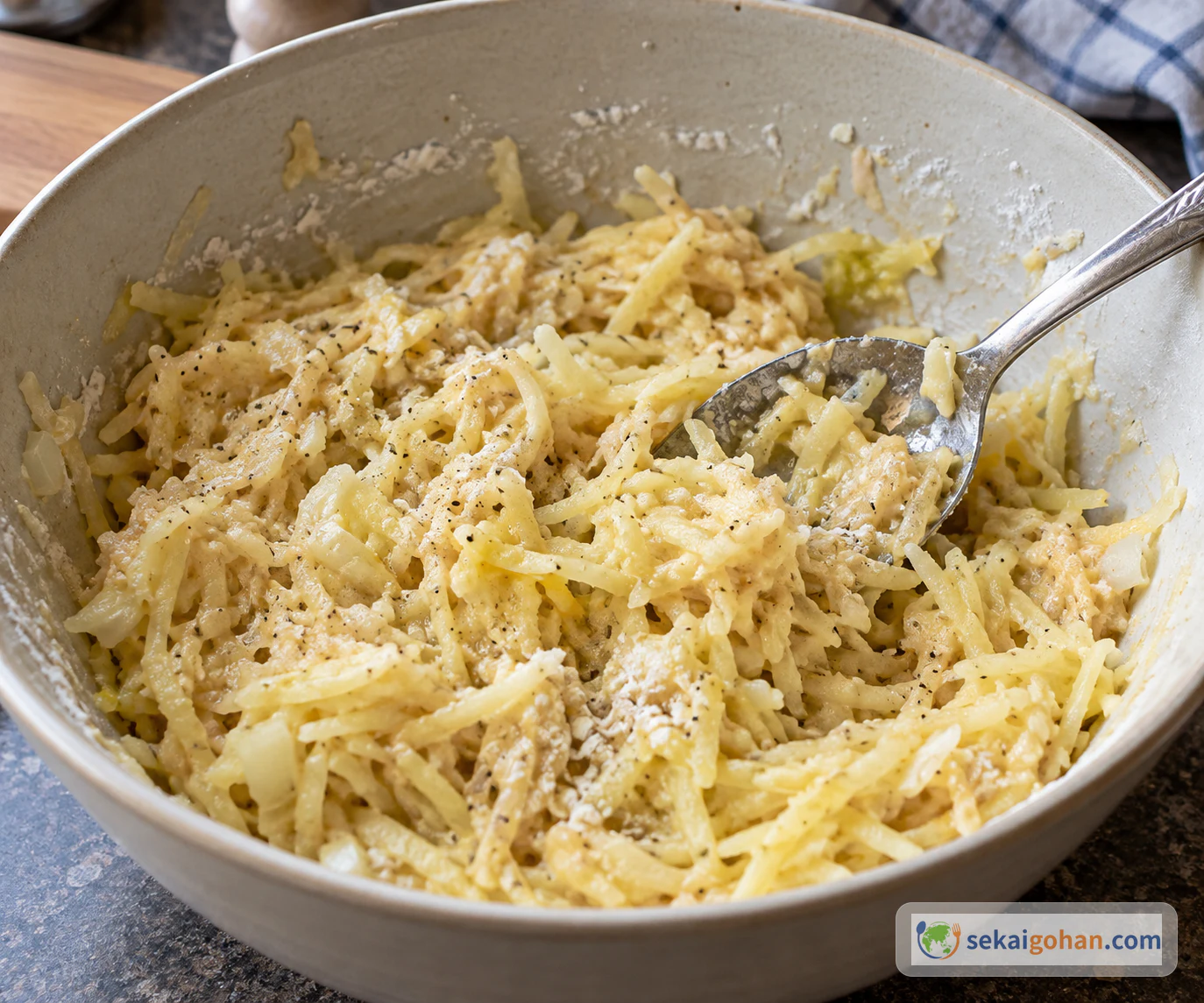
Mix in the egg, flour, salt and pepper

Draniki batter of grated potato, onion and garlic mixed with egg and flour
The batter stays shreddy and moist rather than smooth

Add the egg, the 3 tbsp flour, and salt and pepper to the bowl. Mix until everything is evenly combined. The batter should look like moist, separate shreds bound together, not like smooth mashed potato. Make sure all the ingredients went in: potato, onion, garlic, egg, flour, salt and pepper.

STEP55 / 6

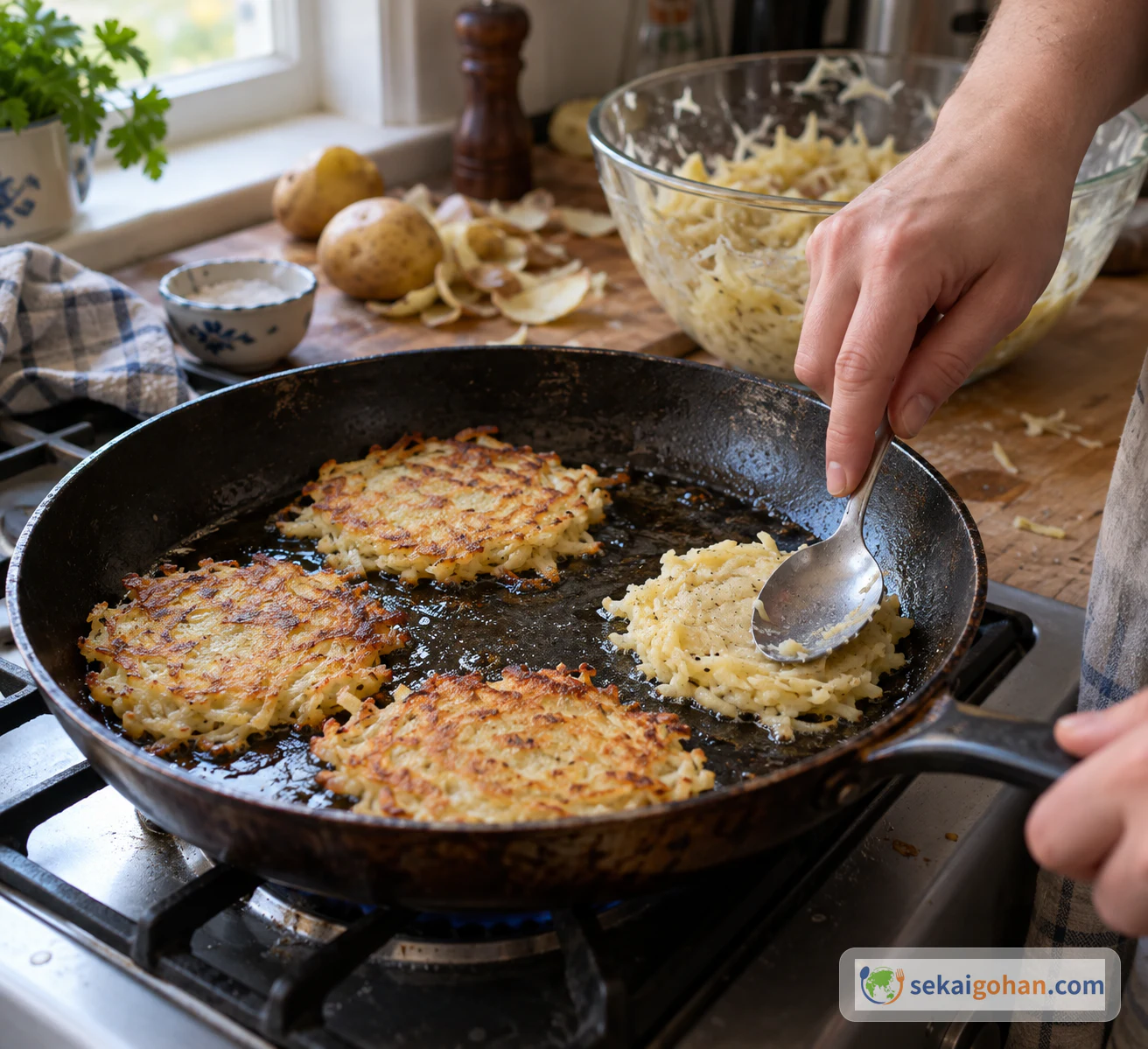
Shape and fry in oil, about 2 minutes per side

Dropping draniki batter into an oiled frying pan in small, flat portions
Flatten each portion with the spoon and leave room between pancakes

Heat oil in the frying pan. Spoon in portions of the batter and press each one into a small, flat pancake with the back of the spoon. Leave space between them. Fry only as many as your pan can hold comfortably; a crowded pan makes the pancakes hard to turn.

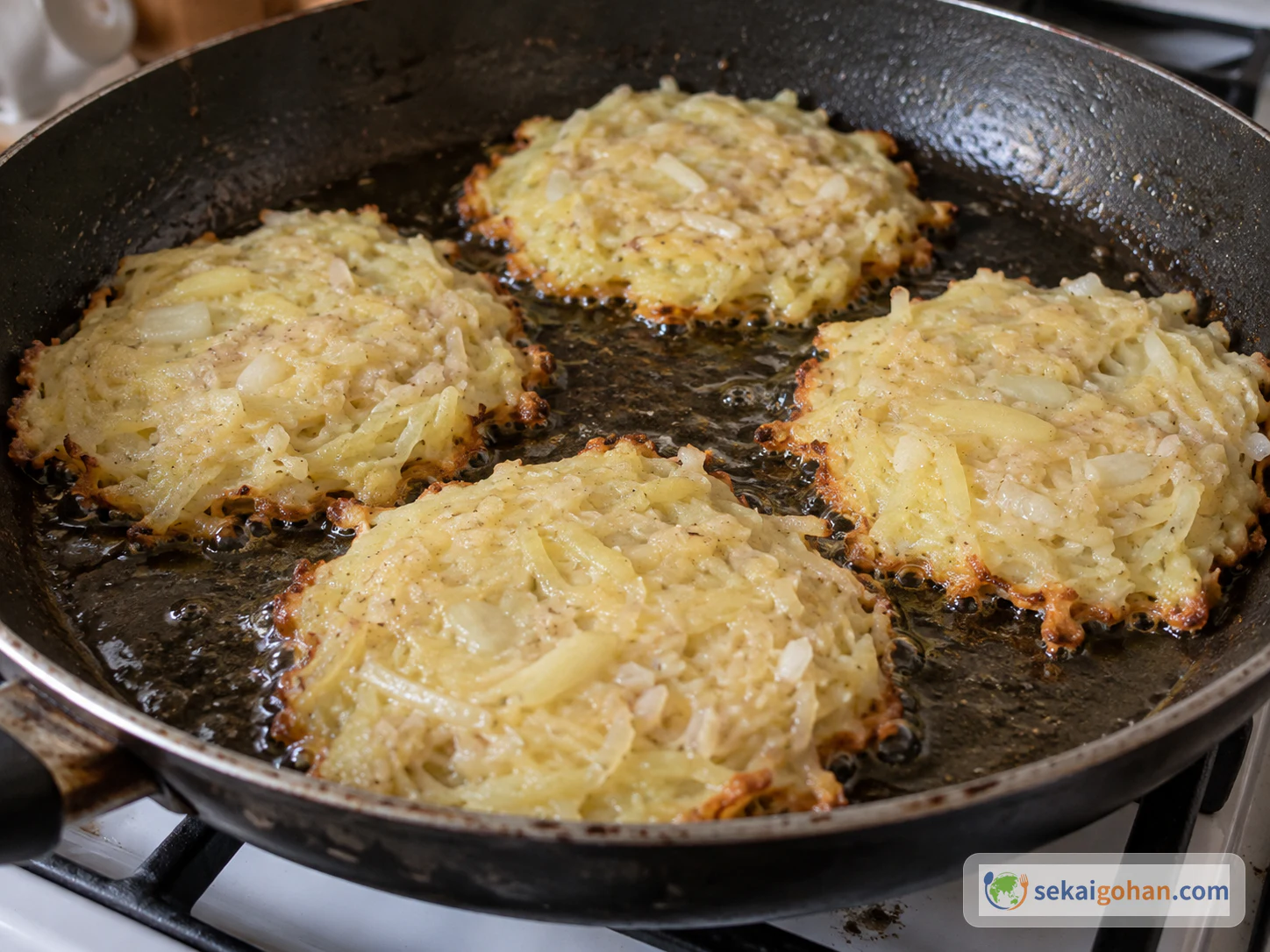
Fry the pancakes for about 2 minutes per side, starting over medium heat. Watch the edges: when they turn golden and the underside is browned, the pancake is ready to turn.

Draniki frying on the first side, edges starting to turn golden
Turn when the edges are golden and the underside has browned

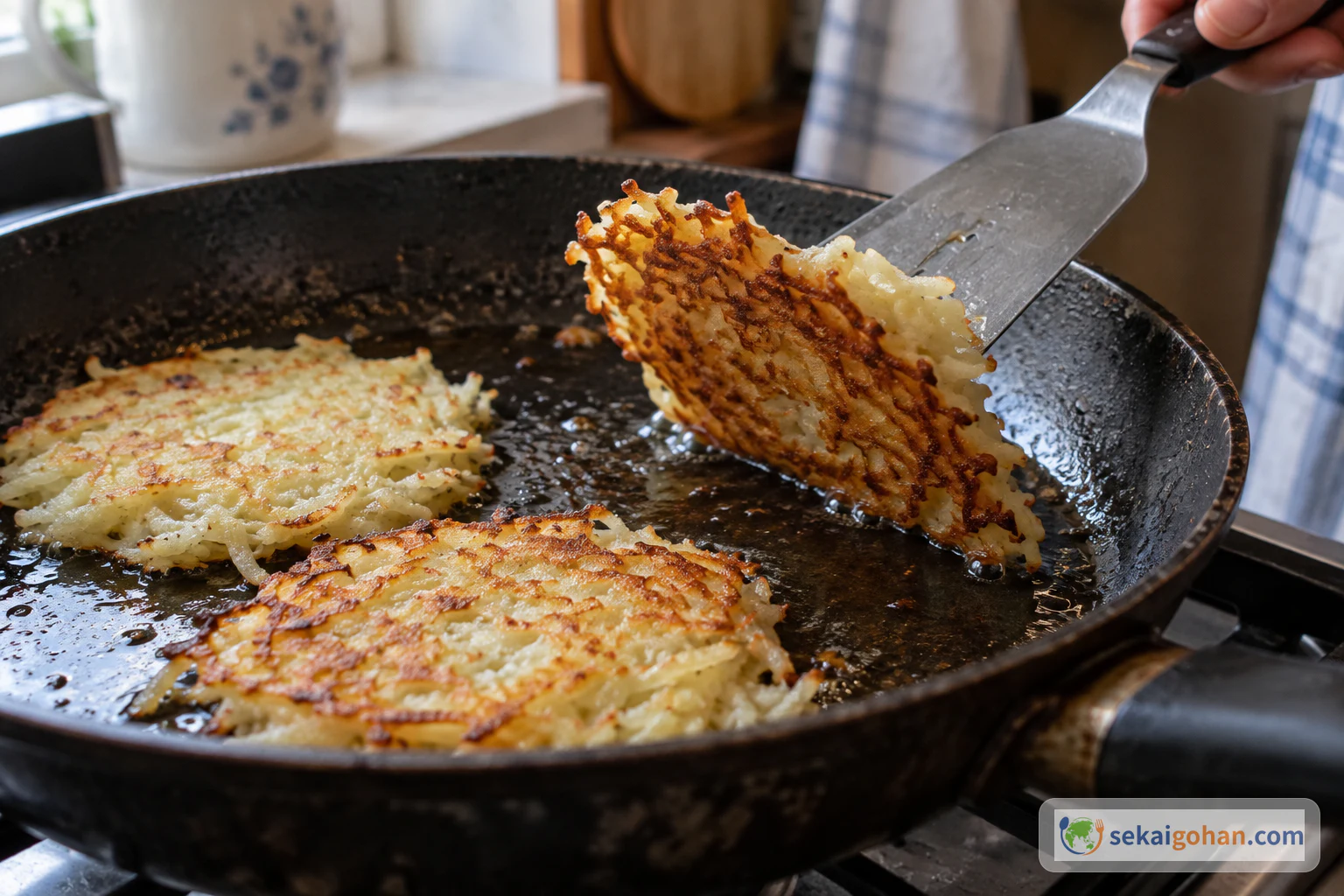
Turn each pancake with a thin spatula and fry the other side the same way. Before taking a pancake out, check that the potato is cooked through. Don't rely on color alone: use a clean food thermometer to confirm that the center reaches 167°F (75°C) and stays at or above that temperature for at least 1 minute. If the outside browns before the inside is done, lower the heat and keep frying, or shape the next pancakes thinner.

Turning golden-browned draniki with a spatula to cook the other side
Turn carefully so the shreds hold together, then cook the second side
STEP66 / 6

Serve with sour cream and dill, or your chosen accompaniment

Draniki served with sour cream and dill on the side
Keep the sour cream and dill on the side so each person adds as much as they like

Draniki are at their best freshly fried, while the edges are still crisp. Serve them with sour cream and a little fresh dill on the side. Sautéed mushrooms, sautéed onions, parsley or bacon also go well with them.

0 / 0
Ingredients

Ingredients

1 / 1

Ingredients

Ingredient Amount Role
Potatoes about 2¼ lb (1 kg) The body of the pancake. Weighed before peeling. Any variety
Egg 1 Binds the batter
Onion 1 Aroma and moisture. Finely grated
Flour 3 tbsp Holds the batter together. Use soft wheat flour, measured with a 15 mL tablespoon
Garlic 3 cloves Aroma. Finely grated
Salt to taste Seasoning
Pepper to taste Seasoning. Use black pepper
Oil as needed For frying. Use rapeseed (canola) oil
Sour cream (optional, to serve) as you like Served on the side. Contains milk
Fresh dill (optional, to serve) as you like A fresh herb to finish, on the side
0 / 0

Draniki come out of the pan with shaggy, golden edges that crackle when you bite them, around a center that stays soft. They're Belarusian potato pancakes made from raw potato, grated and squeezed, then mixed with finely grated onion and garlic, an egg and a few spoonfuls of flour. Spoonfuls of this rough, moist batter go into hot oil and fry into small, flat pancakes. Getting them right comes down to three things: grate the potato coarsely, squeeze out the excess liquid, and fry until the outside is browned and the inside is cooked through.

About Draniki

Belarusian cooking is closely tied to local ingredients, potatoes among them, and the country's cuisine includes several dishes made from grated potato. Draniki are among the best known. Every family takes pride in making them its own way, so think of this as one household's draniki rather than the only correct version.

Similar grated-potato dishes turn up across neighboring Slavic cuisines. In Ukraine, for example, a comparable dish is called deruny. To explore further, browse more dishes from Belarus.

Ingredients
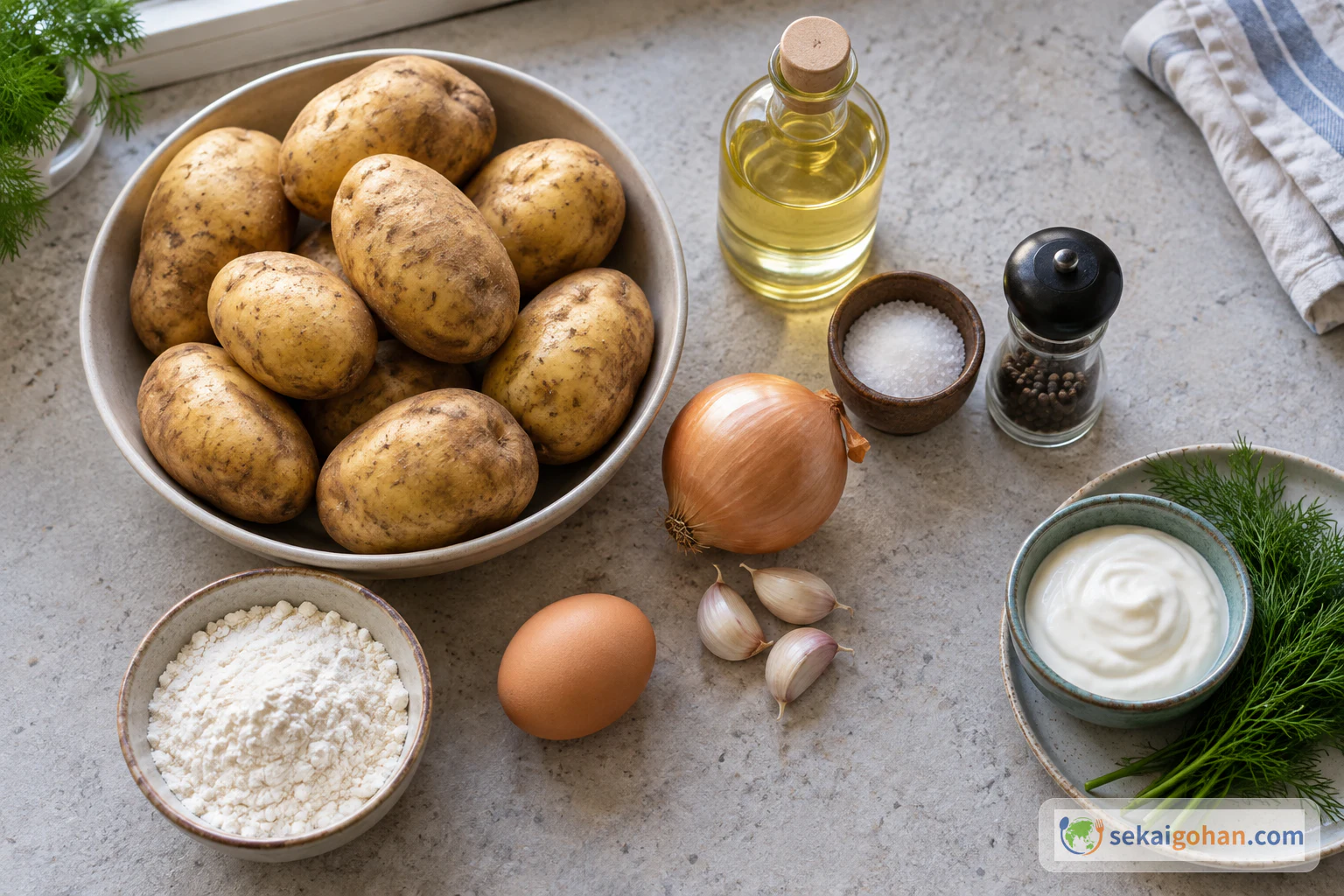
Draniki ingredients: potatoes, egg, onion, garlic, flour, salt, pepper and frying oil, with sour cream and dill set apart for serving
The batter needs only a handful of ingredients; sour cream and dill are optional, for serving

Use about 2¼ lb (1 kg) of potatoes and flour measured in tablespoons. Season with salt and pepper to taste, and add oil as needed. The number of pancakes depends on the size of your potatoes and how large you shape each pancake. Sour cream and dill are optional for serving; they are not part of the batter.

Equipment

  • A box grater (or graters) with both a coarse side and a fine side
  • A sturdy bowl for the grated potato, plus a small bowl for the onion and garlic
  • A mixing spoon
  • A frying pan
  • A spoon for shaping and a thin spatula for turning
  • A clean food thermometer for checking the center

These are ordinary kitchen tools; none of them needs to be bought specially for draniki. A grater with both coarse and fine sides simply makes it easy to grate the potato and the aromatics differently.

Choosing Potatoes, Flour and Oil for Draniki

You can find everything for the batter at an ordinary supermarket: potatoes, eggs, onion, garlic and flour. Salt, pepper and oil are left to your judgment.

  • Potatoes: Any variety works. Varieties differ in moisture and starch, which affects how the pancakes brown and hold together, so squeeze the potato in step 2 whichever kind you buy.
  • Flour: Use soft wheat flour. Potato starch is a different ingredient and gives a different result; see the FAQ.
  • Oil: Rapeseed (canola) oil, or any neutral cooking oil you normally fry with.
  • Pepper: Black pepper.
Allergens

The batter contains wheat (flour) and egg. Sour cream served on the side contains milk. If you serve bacon or other store-bought accompaniments, check their labels.

Method: Six Steps from Grater to Plate

Before you start

Get the ingredients and both graters out before you begin, so you can move from grating to frying without long pauses. The batter contains raw potato, raw egg and raw flour, so don't taste it raw. If you want to check the seasoning, fry a small piece all the way through and taste that.

Fixing Pale, Soggy or Broken Draniki

Fry the pancakes until they're well browned, and judge each one by its color and whether its center is cooked. If something goes wrong, the cause is usually wet batter, heat or a crowded pan.

Condition Likely cause What to try
Pancakes won't brown and stay soggy Batter too wet Squeeze the remaining grated potato again before frying the next batch
Pancakes break when shaping or turning Batter too wet, or turned too early Wait until the underside is browned and the edges look set before turning
Hard to turn without tearing Pan too crowded Fry fewer pancakes at a time, with space between them
Brown outside, still raw inside Heat too high, or pancakes too thick Lower the heat, keep frying until the center is cooked through, and shape the next ones thinner
Flat flavor Not enough salt or pepper Fry a small test piece all the way through, taste it, and season the batter. Don't taste the batter raw

Serving, Variations and Leftovers

How to Serve Draniki

Draniki are most commonly eaten with sour cream or bacon. Sour cream contains milk, and if you use store-bought bacon, check its label. Sautéed mushrooms or onions are good alongside too. Cook them separately rather than mixing them into the batter, and remember the onion in the ingredient list goes into the batter, so you'll need another one for sautéing. A scattering of dill or parsley finishes the plate.

Variations

Coarse grating gives draniki their uneven edges and makes them especially crispy, but you can grate the potato finely for a different texture. One household variation goes further: it grates the potato finely, adds sour cream and a pinch of baking soda to the batter, rests the mixture briefly, and fries the pancakes covered.

Leftovers and Reheating

Food safety

Divide leftovers into small portions in clean, shallow containers, cool them quickly, and refrigerate them promptly. Don't leave them at room temperature for long. When reheating, heat them until the center reaches 167°F (75°C) or above.

Frequently Asked Questions

How many servings or pancakes does this make?

The number depends on the size of your potatoes and how large you shape each pancake.

Can I use potato starch instead of flour?

Use wheat flour. Potato starch behaves differently and gives a different result, so it isn't a like-for-like substitute. If you try it, treat it as a separate variation.

Why shouldn't I taste the batter?

It contains raw potato, raw egg and raw flour. To check the seasoning, fry a small piece until it is cooked all the way through, then taste that.

Sources

  • JDC, "How to Make Daria's Draniki at Home." The adopted Belarusian home recipe by Daria Gorokh: ingredients (about 2¼ lb (1 kg) potatoes, 1 egg, 1 onion, 3 tbsp flour, 3 garlic cloves, salt, pepper, oil), coarse grating of the potatoes and squeezing out the excess liquid, fine grating of the onion and garlic, frying about 2 minutes per side, the option of fine grating, each family's own draniki, and suggested accompaniments. https://www.jdc.org/learn/recipe/darias-draniki-belarusian-latkes/
  • Visit Belarus, "Features and Dishes of Belarusian cuisine." Local ingredients such as potatoes in Belarusian cuisine, grated-potato dishes, draniki as a widely known dish, eating them with sour cream or bacon, and common ground with neighboring Slavic cuisines. https://www.visit-belarus.com/en/dishes_belarusian_cuisine/
  • Kashevar, "Draniki (Potato Fritters) Recipe." Used only as a comparison showing that published draniki recipes differ (fine grating, sour cream and baking soda in the batter, resting, frying covered); not combined with the adopted recipe. https://kashevar.com/en/recipes/draniki-potato-fritters
  • Ministry of Health, Labour and Welfare (Japan), "家庭での食中毒予防" (Preventing food poisoning at home). General home guidance: cook until the center reaches 75°C for at least 1 minute, reheat to 75°C or above, and divide leftovers into clean, shallow containers, cool them quickly and don't leave them at room temperature for long. Not specific to this recipe. https://www.mhlw.go.jp/stf/seisakunitsuite/bunya/kenkou_iryou/shokuhin/syokuchu/01_00008.html