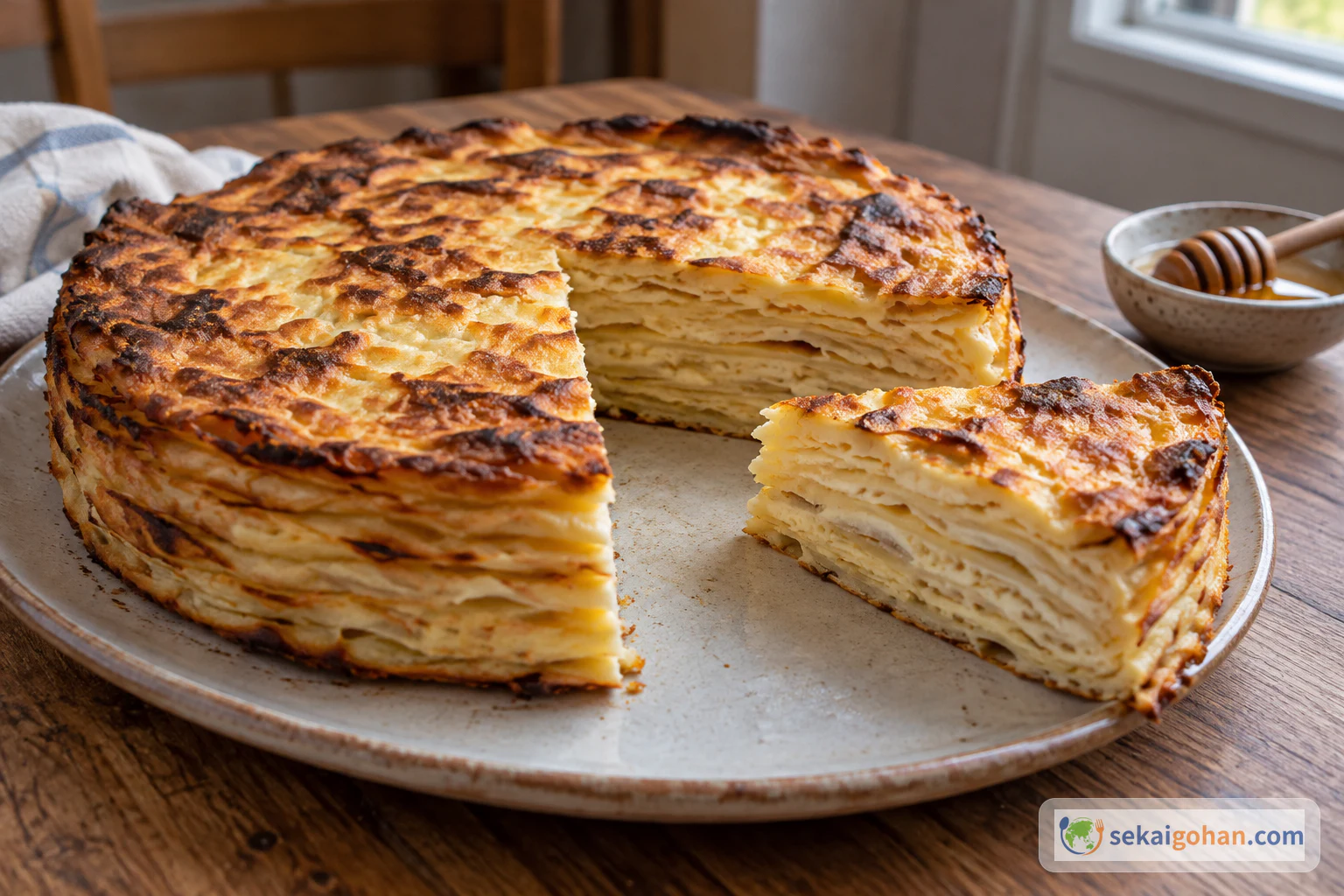
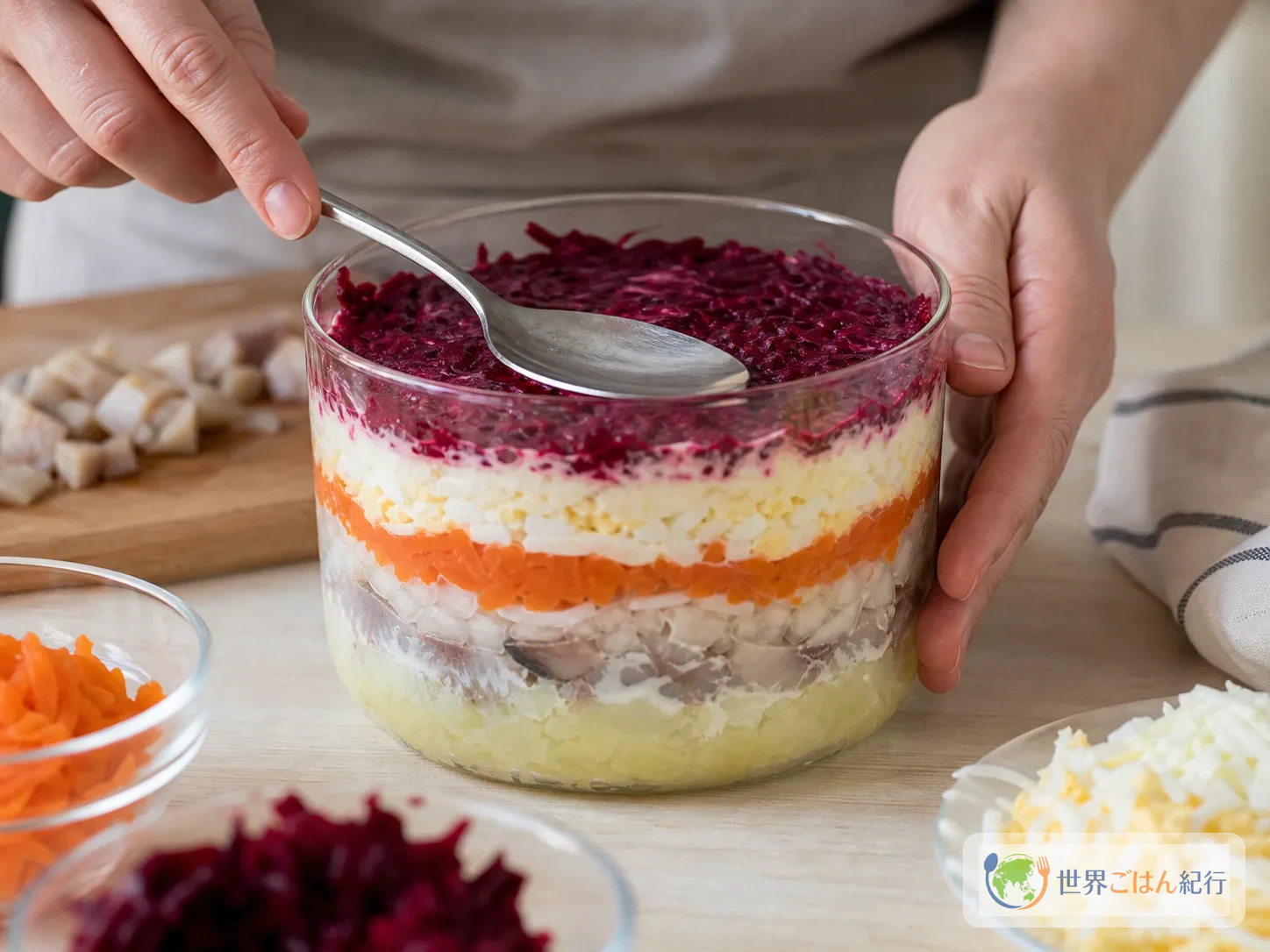

Picture a white plate straight from the refrigerator: pale yellow potato, orange carrot, white egg and deep red beet, stacked in layers. Push in a fork, and salty herring and onion come up from under the beet. It's a salad, but cutting it feels a bit like cutting a cake. In Russia it's called selyodka pod shuboy (селёдка под шубой), "herring under a fur coat," and in English it goes by dressed herring or herring under a fur coat. The taste is sweet beet and root vegetables wrapped around salty fish, tied together with mayonnaise.
What Is Dressed Herring?
Dressed herring is a cold Russian layered salad of salted or pickled herring, boiled potato, carrot, egg and beet, bound with mayonnaise. Its Russian name, selyodka pod shuboy, means "herring under a fur coat," and it is a fixture of the holiday table. Make it at least 4 hours ahead, or the day before, so the layers settle. The full recipe is in the method below.
Herring Under a Fur Coat on the Russian Holiday Table
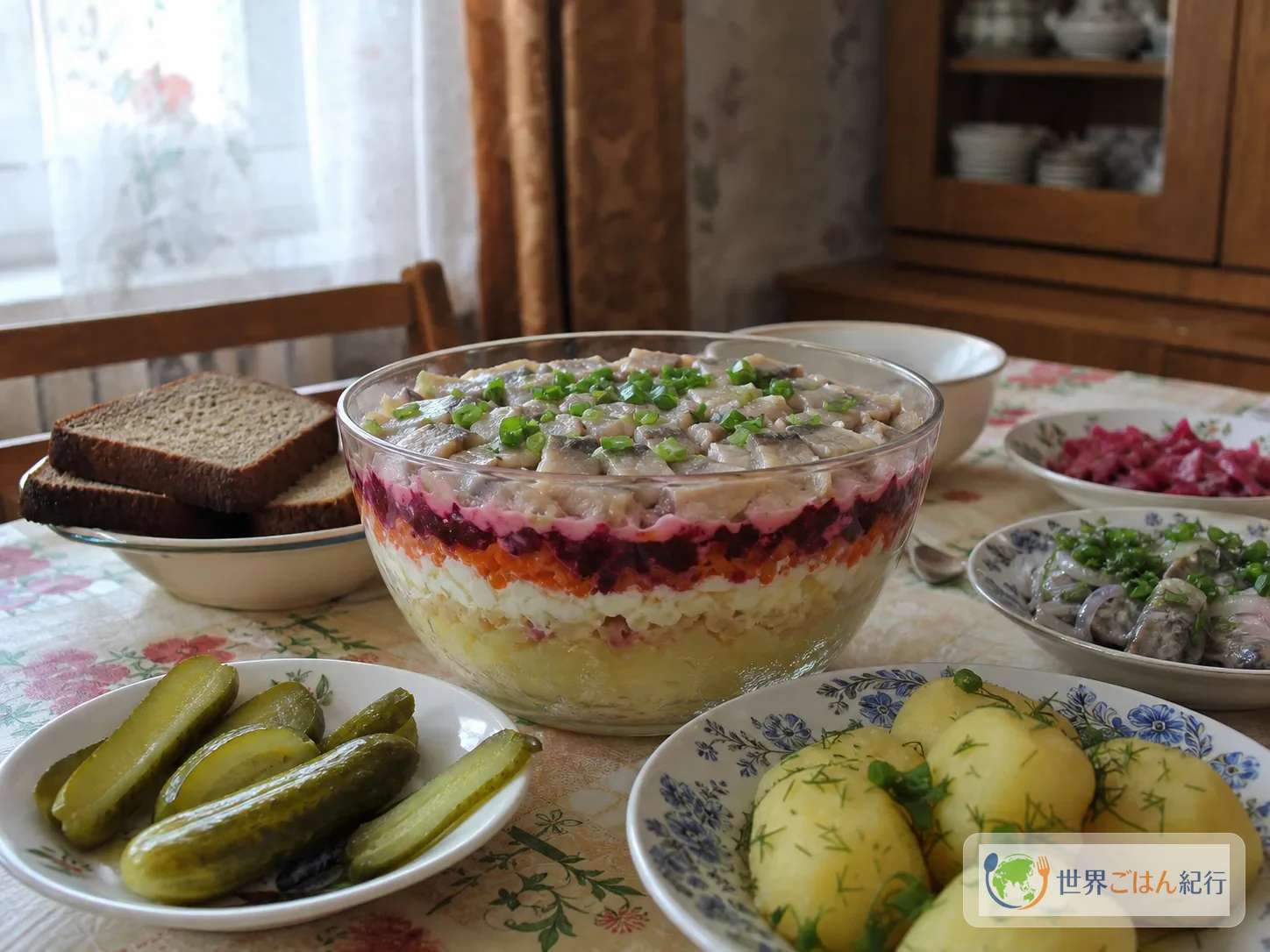
Selyodka pod shuboy is a cold layered salad of salted or pickled herring, boiled potato, carrot, beet and egg, bound with mayonnaise. Picture it in the middle of a large platter. When the first person serves themselves, another layer shows beneath the red surface, and the person next to you asks, "What's underneath?" The layers aren't decoration. They carry preserved fish and root vegetables to the mouth a little at a time.
It is a dish that wraps salty herring in sweet layers. It shares potato and egg with the cold Russian soup okroshka and with the other Russian party salad, Olivier salad, but here no liquid goes in, and the flavor stays sealed between the layers. It's also a good excuse to use plenty of dill.
Origin of selyodka pod shuboy
Herring salads with a similar construction existed in 19th-century Germany, Norway, Denmark and elsewhere, combining fish, root vegetables, egg, apple and pickles in ways that varied by region. In Russia, during the Soviet era, the dish became one of the foods that symbolize the holiday table. Today's form is onion, potato, carrot and beet over salted herring, sometimes with egg. The order of layers and the use of egg differ from cook to cook, but the idea holds: wrap fish in vegetables and let it settle chilled.
A popular story says a Moscow shopkeeper created it in 1919, playing on the word "shuba." The idea that one cook invented it right after the Revolution is doubtful, though. The dish closely resembles Norwegian herring salad, and it spread into Soviet homes later. The legend makes a good story, but the inventor isn't known for certain.
Who this dish is for
The beet's color is the easy part. The hard part is that the herring's salt, the moisture of the root vegetables and the mayonnaise add up, so the taste goes blurry or the layers slide apart when you cut. This is for people who like sweet beet with salty fish and are willing to make it the day before so the flavor settles. If you dislike the smell of fish and want a salad you can mix and eat right away, save this one for another day.
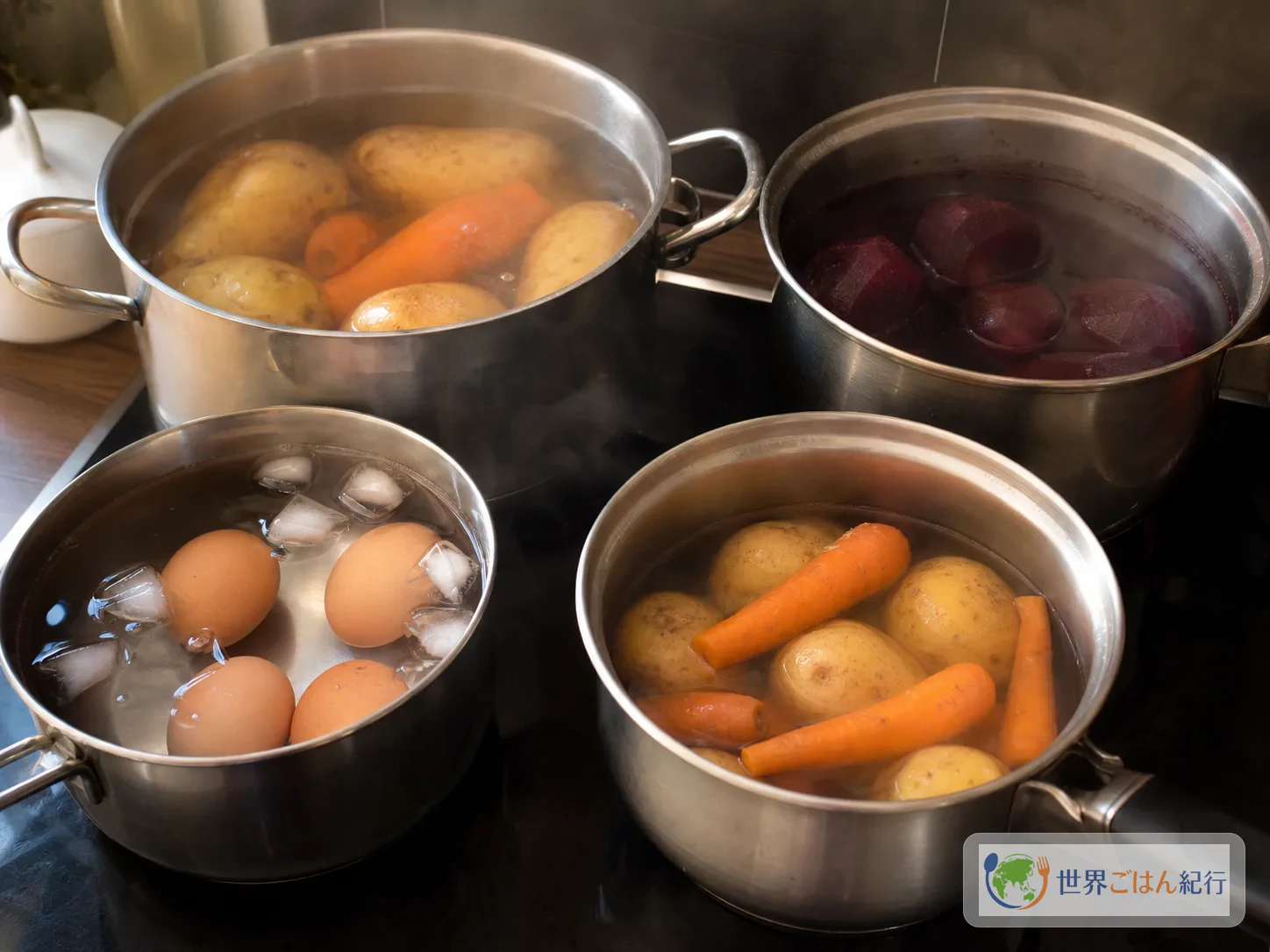
For 4 servings, the hands-on work from prep to refrigeration takes about an hour and a half, and it needs at least 4 hours in the refrigerator before eating. For a holiday lunch, layer it in the morning; for dinner, by early afternoon. The beets can be boiled from raw or you can use store-bought cooked packs. Either way, draining the moisture well is what protects the layers.
Ingredients (serves 4): first decide where the moisture goes
The list looks long, but the ingredients have four roles. Herring gives saltiness and savor, beet gives sweetness and color, potato soaks up the saltiness, and carrot and egg round off the corners. Onion lightens the aftertaste of the fish, and dill adds a green aroma to the sweetness of the roots.
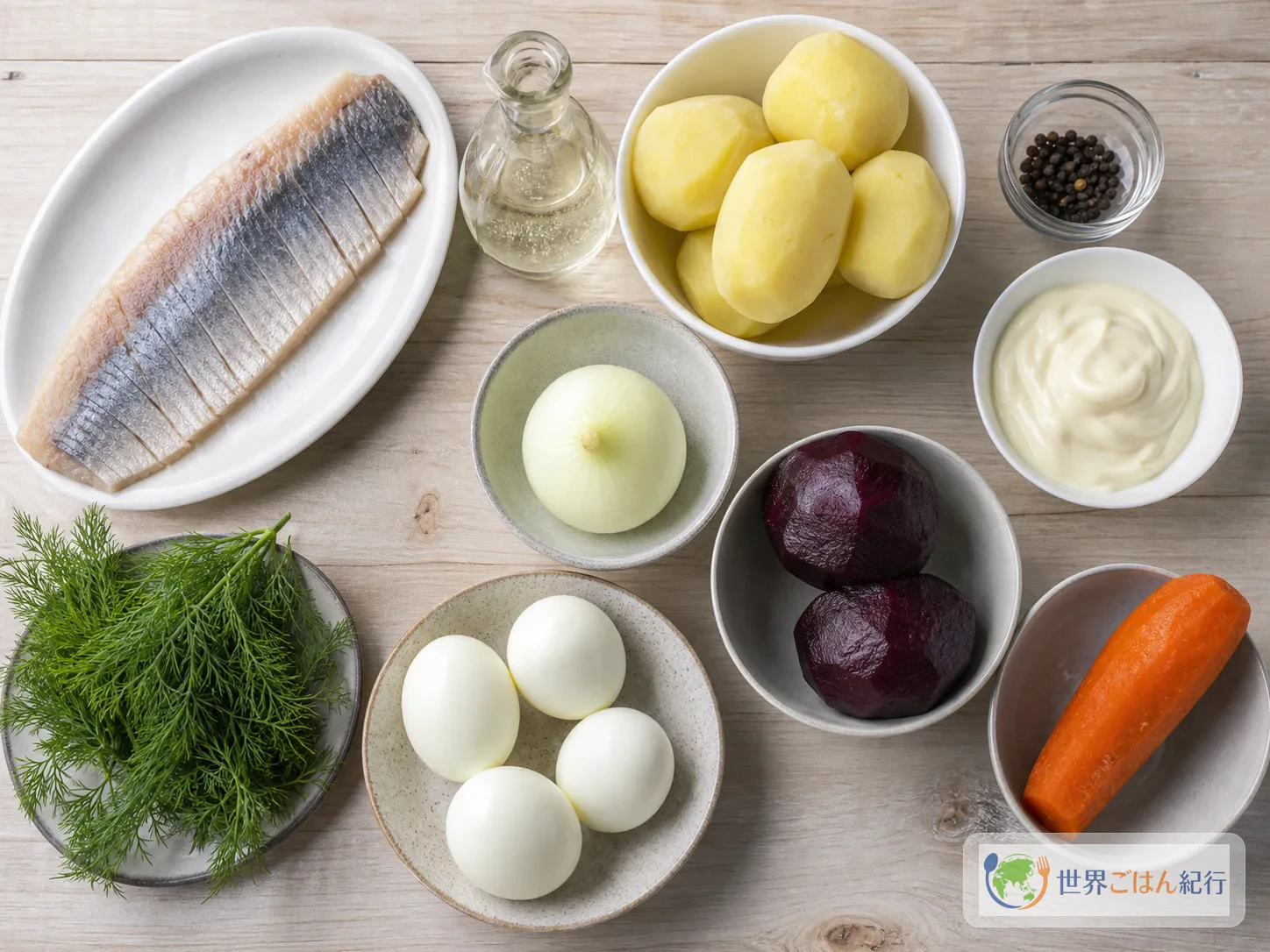
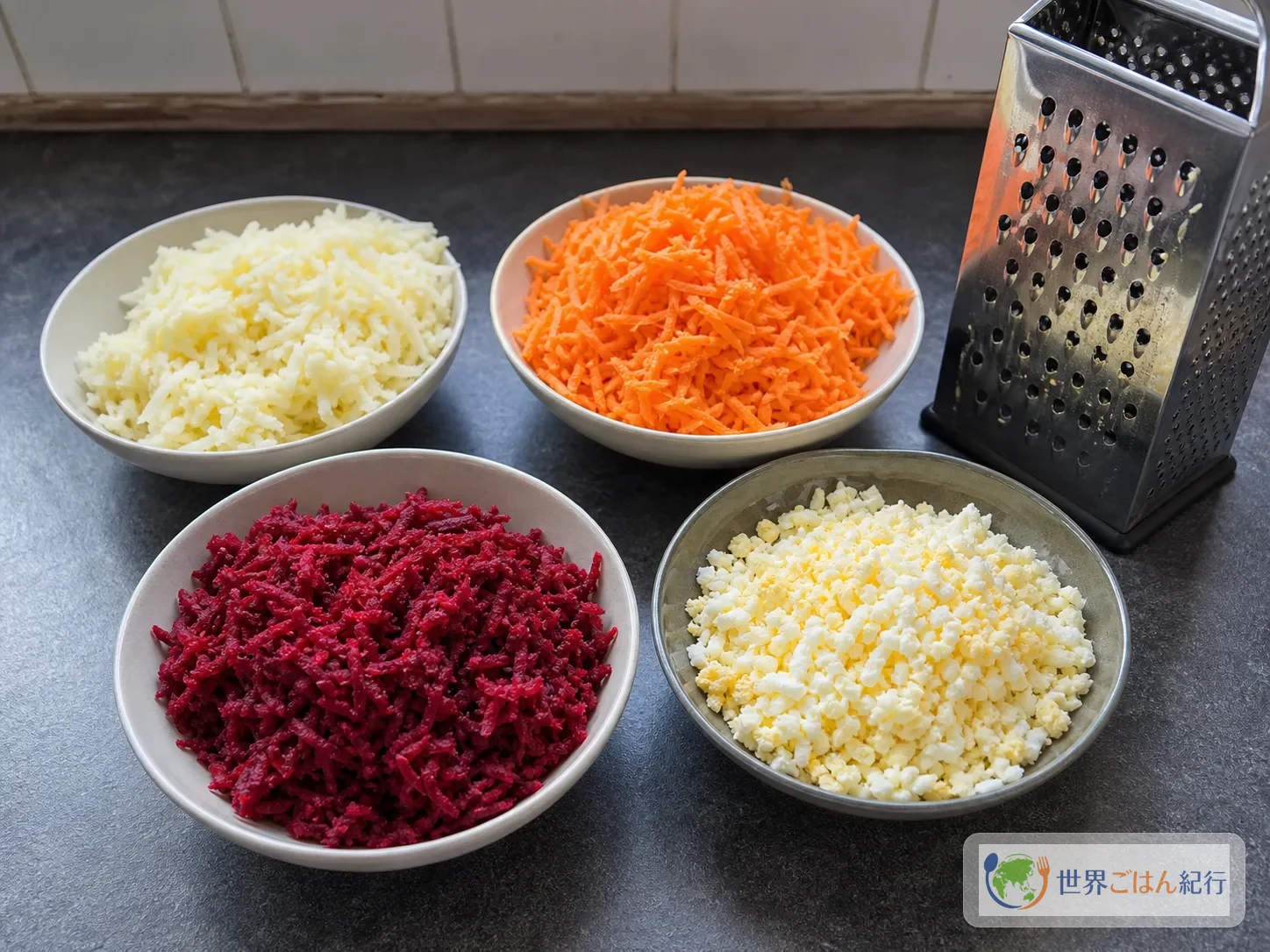
The first decision is to treat the beet not as "an ingredient that makes it red" but as the star that holds water. Store-bought cooked beets are convenient, but draining the liquid from the pack is not enough. Wrap them in paper towels and draw out the moisture without crushing them. Even with raw beets, cool them after boiling and handle them the same way.
Herring varies even among products labeled "salted." If you taste a small piece and the saltiness lingers on your tongue, pour a little cold water over it after cutting and wipe it dry at once. Soaking it long also draws out the savor, so only adjust the surface; do not desalt it. For pickled herring, use it as is, and blot the surface with paper only if the vinegar smell is strong.
The reason to look for dill is not decoration but its aroma, which loosens the weight of sweet roots and mayonnaise. If you have fresh dill, chop 5 g. If you cannot find it nearby, use a small amount of dried. To avoid wasting fresh herbs, look at freeze-dried first.
You can also skip dill. If you want only the saltiness of the fish and the sweetness of the beet to stand out, finish with black pepper only. If you also use herbs in potato dishes and okroshka, a 2.5 g packet is easier to use up.
Herring contains fish, and eggs and mayonnaise contain egg. Check the labels of the mayonnaise and processed herring you buy for soy, wheat, milk and so on. Do not leave even salted fish at room temperature; refrigerate it right after buying and after preparing. Do not use fish that gives an unusual sting to the tongue or lips, because heating does not reliably undo it.
Choosing Ingredients and Substitutes
When substituting, change one main flavor ingredient at a time. If you can't find salted herring, choose pickled herring. Smoked salmon also builds layers, but its smoky aroma comes forward and moves the dish away from the salty flavor of herring. If you use fish packed in oil, blot off the oil with paper and reduce the mayonnaise by 20 g from the start.
Beets boiled from raw give a sweet aroma and deep red; vacuum-packed cooked beets save time, as long as you keep the bag liquid out and press them dry with paper. Red turnips and red cabbage can supply color, but not the earthy sweetness and creamy texture, so choose them only on a day when you accept a different taste.
Some mayonnaises have a strong egg aroma and sweetness. Start with 3.5 oz (100 g), and if you want more acidity after chilling, add a few drops of vinegar. Mixing in 20 g of sour cream or unsweetened yogurt makes it lighter, though less rich than the classic. Drain the yogurt with paper first so it doesn't add moisture between the layers.
Method: keep the red layers from getting heavy
For the container, use a ring mold about 4.5 inches (12 cm) across and 2 inches (5 cm) high, or a clear small bowl of similar depth. The first time you make it, a small bowl removes the stress of turning it out of a mold. To show the layers, line the inside of the container with plastic wrap pressed close before layering. After chilling, you can turn it onto a plate.
A large platter feels like a holiday dish, but the first time you make it, the layers are easier to manage in a container about 4.5 inches (12 cm) across, holding the 4 servings. A clear container shows the cross-section, so the layers of the fur coat show even without unmolding.
Equipment: decide by whether the reason to buy continues
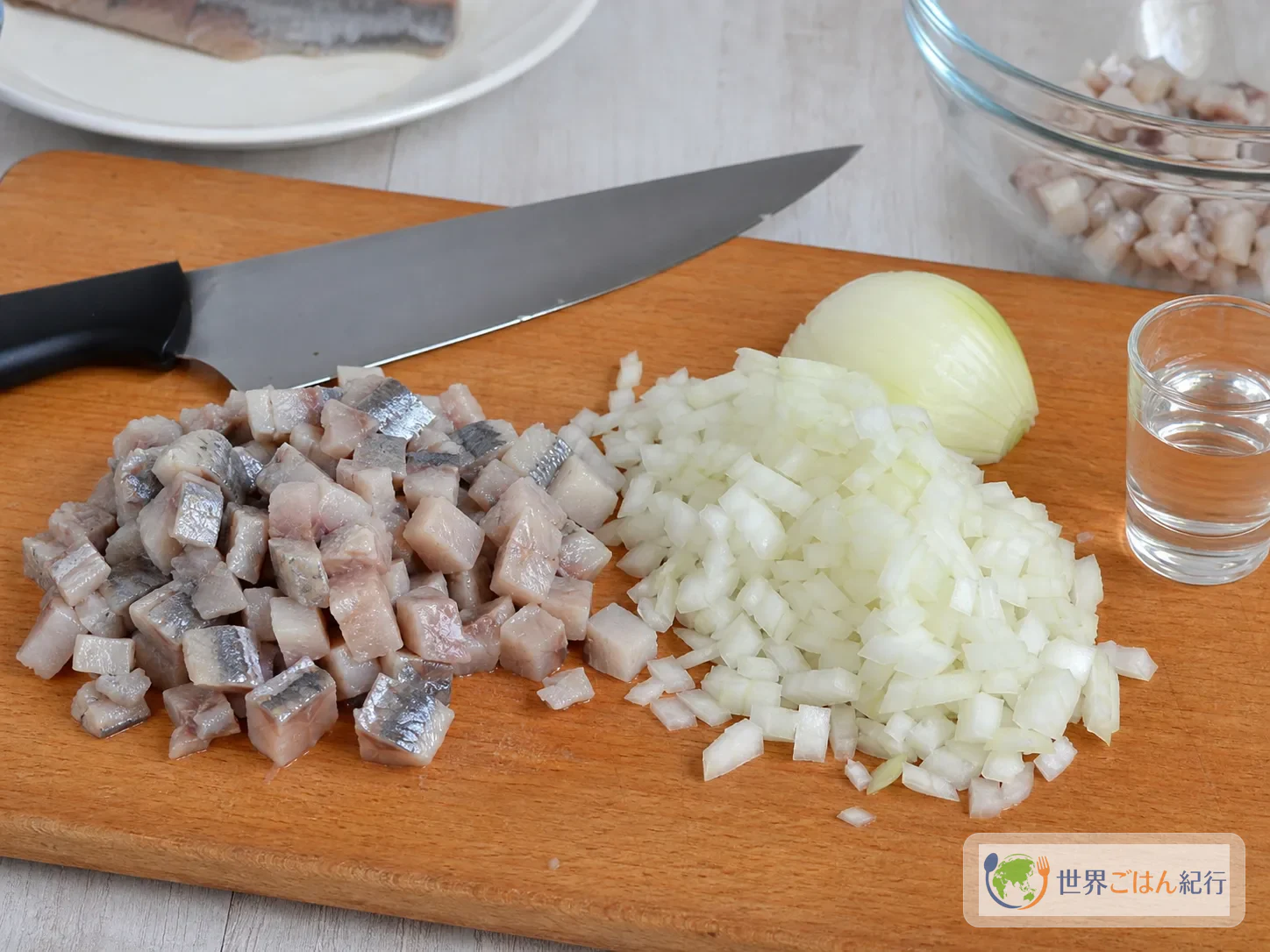
For this dish alone, a knife, a coarse grater, a bowl and a spoon are enough. If you use a food processor, limit it to pulsing the herring and onion toward 0.375 inch (8 mm) cubes, not grating the beet. Turning it too long makes the fish a paste, so stop every 2 to 3 seconds and check the pieces by eye.
For someone who prepares chopped vegetables and fish several times a week, it is worth checking capacity, storage space and ease of removing the blade on the product page. If you would buy one just to grate root vegetables coarsely for a one-time dish, skip it.
Fixing Watery, Salty or Collapsing Dressed Herring
If something goes wrong, resist mixing everything back into potato salad. Work out whether the problem is moisture or salt, and that tells you the next step.
Red liquid spreads across the plate
The usual causes are beets used straight from the pack, or root vegetables layered while still hot. Before layering, wrap the beet in paper towel again and leave it 10 minutes in the refrigerator. If the salad is already assembled, soak up the liquid on the plate with the corner of a paper towel, without pressing the surface. Next time, grate the beet last and let its juice settle before using it.
The herring is too salty
If you notice just before eating, add a little unsalted potato; it rebalances better than extra mayonnaise. If you notice before assembling, rinse the cut herring briefly in cold water and wipe it well. Keep the rinse short, since a long soak weakens the fish's flavor too.
The flavor is vague
Right after chilling, the mayonnaise and the sweetness of the roots come forward. Add black pepper, dill and vinegar 1 or 2 drops at a time, tasting each time, and add salt last. Herring tastes saltier once chilled, so hold off on finalizing the salt until after chilling, or it will be too much the next day.
It won't come out of the mold
If it hasn't chilled for 4 hours, give it another 30 to 60 minutes first. If it still sticks, hold a warm cloth against the outside of the mold for 10 seconds rather than sliding a knife down the side. And if it collapses, the taste is the same: spoon it into a small bowl and serve with plenty of dill.
Variations, Storage and Nutrition
Add apple for acidity
Under the carrot, add 2.75 oz (80 g) peeled apple cut into 3 to 4 mm cubes. Its crisp acidity lifts the sweet beet and mayonnaise. Apple releases water easily, so blot it after cutting and reduce the onion to 1.5 oz (40 g). It suits a lunch where you want the fish to feel lighter.
Pickle the red onion
Cut 2 oz (60 g) onion into thin cubes and leave it 10 minutes with 1 tsp vinegar and a pinch of sugar. When it turns pale pink, drain it, keeping the pickling liquid out of the layers. It's easier on people who dislike onion's sharpness, and the pink ties in nicely with the beet.
More eggs to round the fish's edges
With 5 eggs, the yolk adds richness and the herring aroma turns gentler. Keep the mayonnaise at 4 oz (120 g), and cool the boiled eggs fully before grating if they look watery. More yellow shows in the cross-section, so when you want the red beet to stand out, stay with the basic 4.
Divide into individual small bowls
Layer the ingredients in the same order into 4 small bowls about 3 inches (8 cm) across. Three hours in the refrigerator is enough. This suits a table where everyone wants an equal share of fish rather than cutting a large platter.
Lighten the mayonnaise
Mix 2.75 oz (80 g) mayonnaise with 1.5 oz (40 g) drained unsweetened yogurt and spread it thinly between the layers, using plain mayonnaise alone over the beet so moisture doesn't build up. For the traditional richness, go back to the basic amount.
Change the fish
Smoked salmon or salted mackerel also build layers, but with stronger fat and aroma, so think of the result as a fur-coat-style layered dish rather than a herring dish. Follow the storage instructions on processed fish labels, and use it soon after opening.
Storage and safety
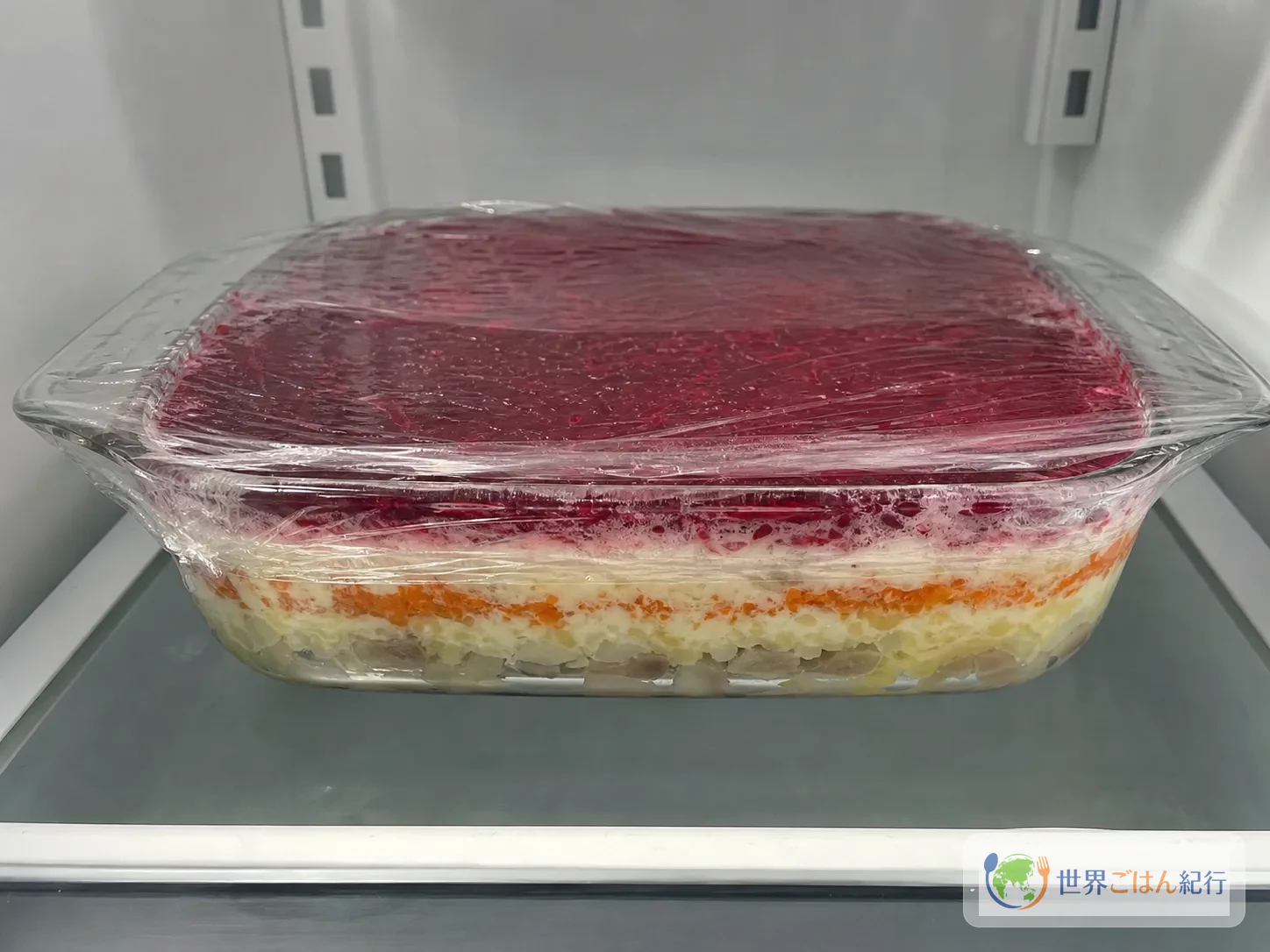
Refrigerate fish and processed fish right after buying, and keep them cold. Store the finished salad flat in the refrigerator, covered with plastic wrap pressed against the surface, at 50°F (10°C) or below. Take out only what you need right before eating, and don't move the rest in and out of room temperature or leave it out for long.
It's at its best up to the next day. Don't freeze it: potato and beet change texture, and the mayonnaise separates. If it smells sour, shows unusual moisture on the surface or the fish smells off, throw it away without tasting.
For allergens, check for fish and egg, and check the labels of the mayonnaise and processed herring for soy, wheat and milk. If the saltiness bothers you, those two labels are the first place to look.
Nutrition guide
These are estimates for the listed ingredients divided among 4 people. Herring saltiness and mayonnaise brands vary widely, so check the package labels first.
| Item | Guide per serving |
|---|---|
| Energy | about 460 kcal |
| Protein | about 18 g |
| Fat | about 1.25 oz (34 g) |
| Carbohydrates | about 23 g |
| Dietary fiber | about 4 g |
| Salt equivalent | about 1.6 g |
FAQ
Can I make it with canned or vacuum-packed beets?
Yes. Drain the liquid from the bag or can completely and press the surface dry with paper, or leftover liquid will run red to the bottom in the refrigerator. Flavored beets have sweet vinegar or salt added, so use less herring and onion and taste as you layer.
Can I use salted mackerel instead of herring?
You can, but it has more fat and aroma than herring. Remove the skin and bones and use grilled, cooled flesh. The first time, aim for the traditional taste with salted or pickled herring.
Which layer should go first?
In this method, the order is potato, herring and onion, potato, carrot, egg and beet. The bottom potato soaks up the fish's juices, and putting the herring early lets its saltiness pass up into the root vegetables. The beet goes last to keep the red color and sweetness on the surface.
Is it all right to make it the day before?
Yes, and it's better that way. Chilled overnight, the herring's saltiness moves into the potato and egg, and the salad cuts more cleanly. Keep plastic wrap pressed against it until just before eating.
Can I make it without dill?
Yes. Black pepper alone holds it together, though the weight of the root vegetables and mayonnaise comes through more. Parsley adds a green aroma but pulls the pairing with herring in another direction. Try a small amount of dried dill the first time, then move up to fresh dill.
Can I show the layers without a ring mold?
Yes. Layering in a clear small bowl shows the colors at the sides. To unmold, line a round pan you already have with plastic wrap.
What is the difference between dressed herring and herring under a fur coat?
Nothing: they are two English names for the same Russian salad, selyodka pod shuboy. This page covers both.
What do you serve with dressed herring?
It is a cold salad for the holiday table, so it sits well beside Olivier salad, the cold soup okroshka or a sweet finish such as medovik.