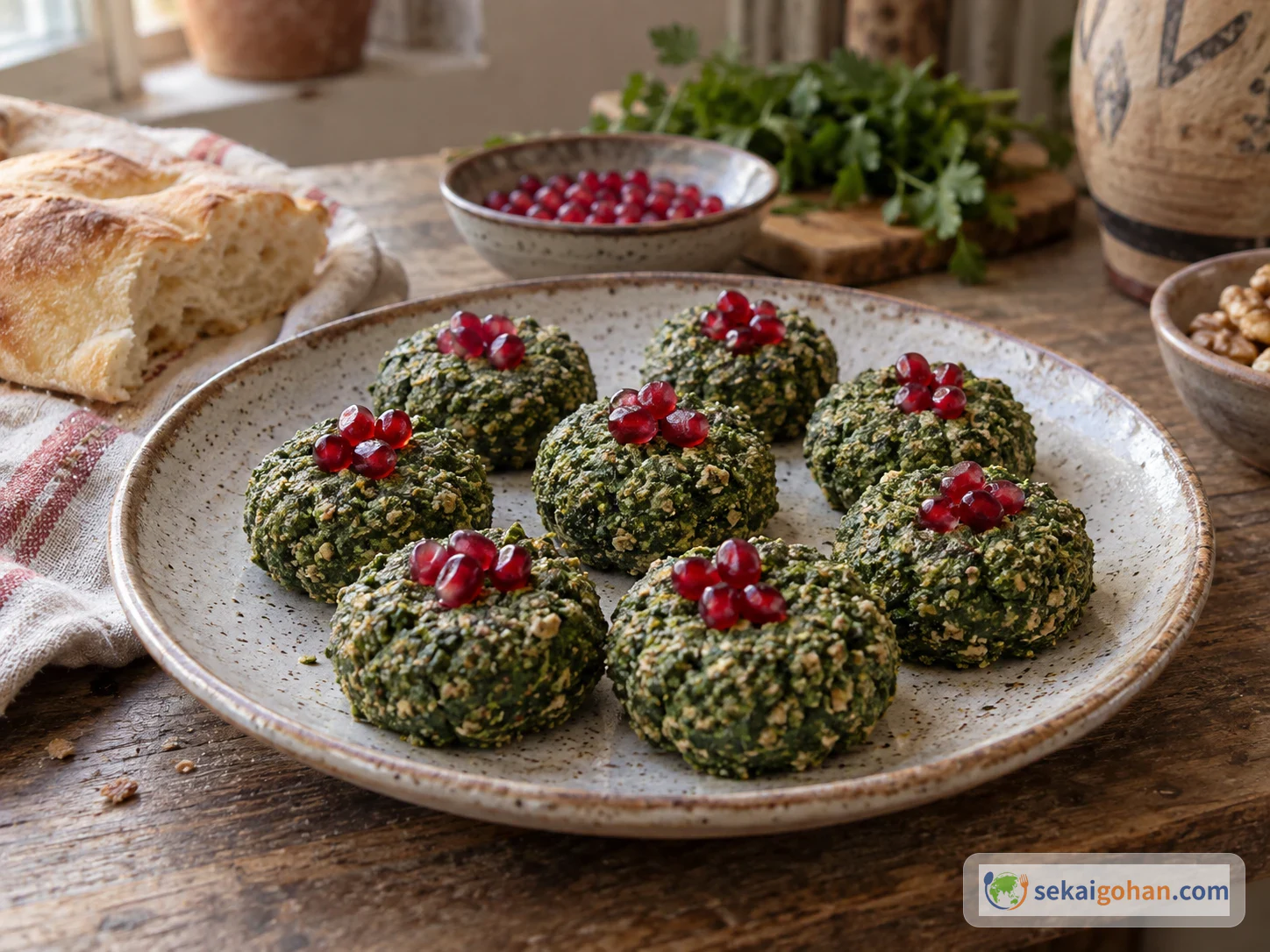
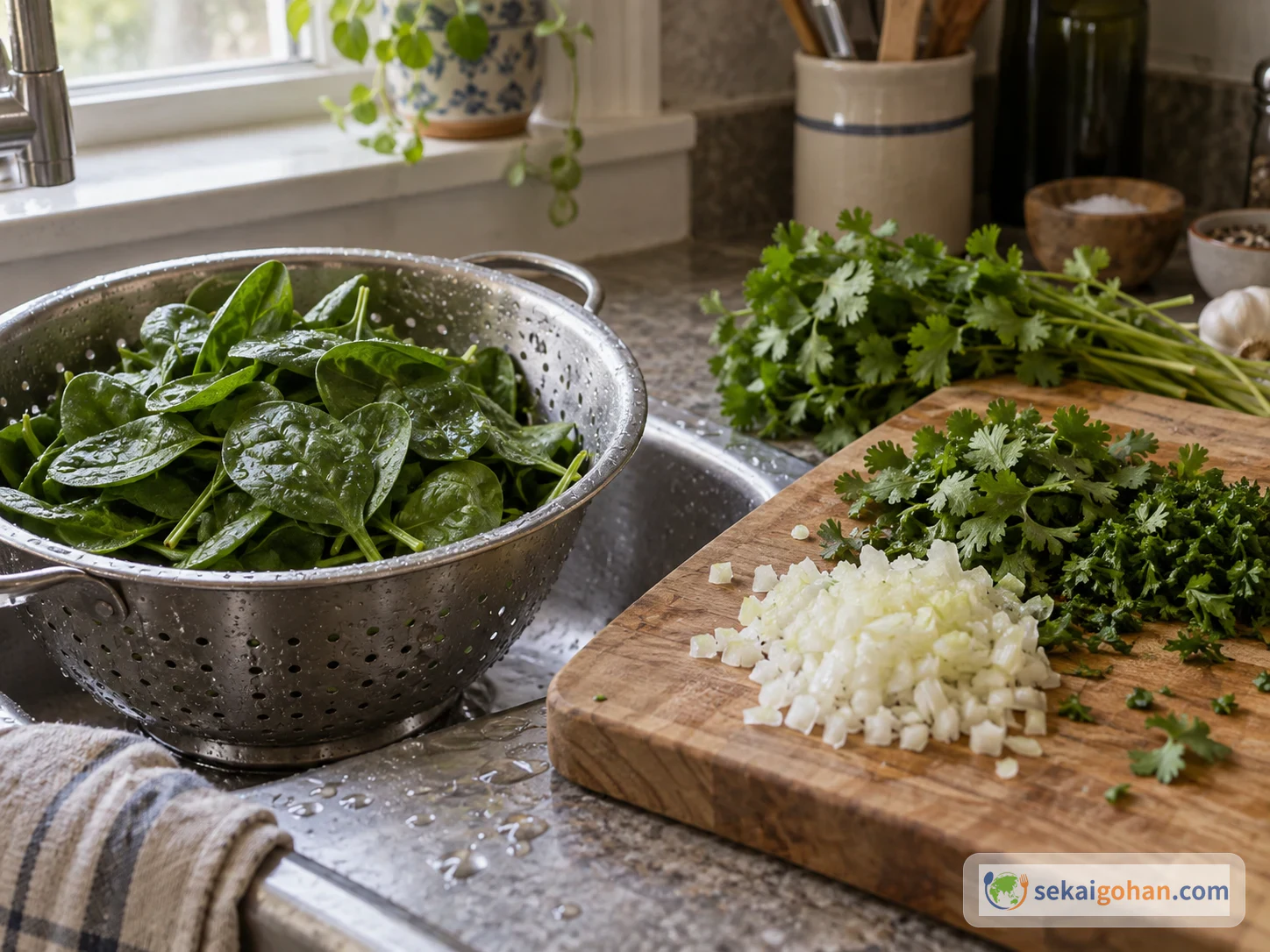
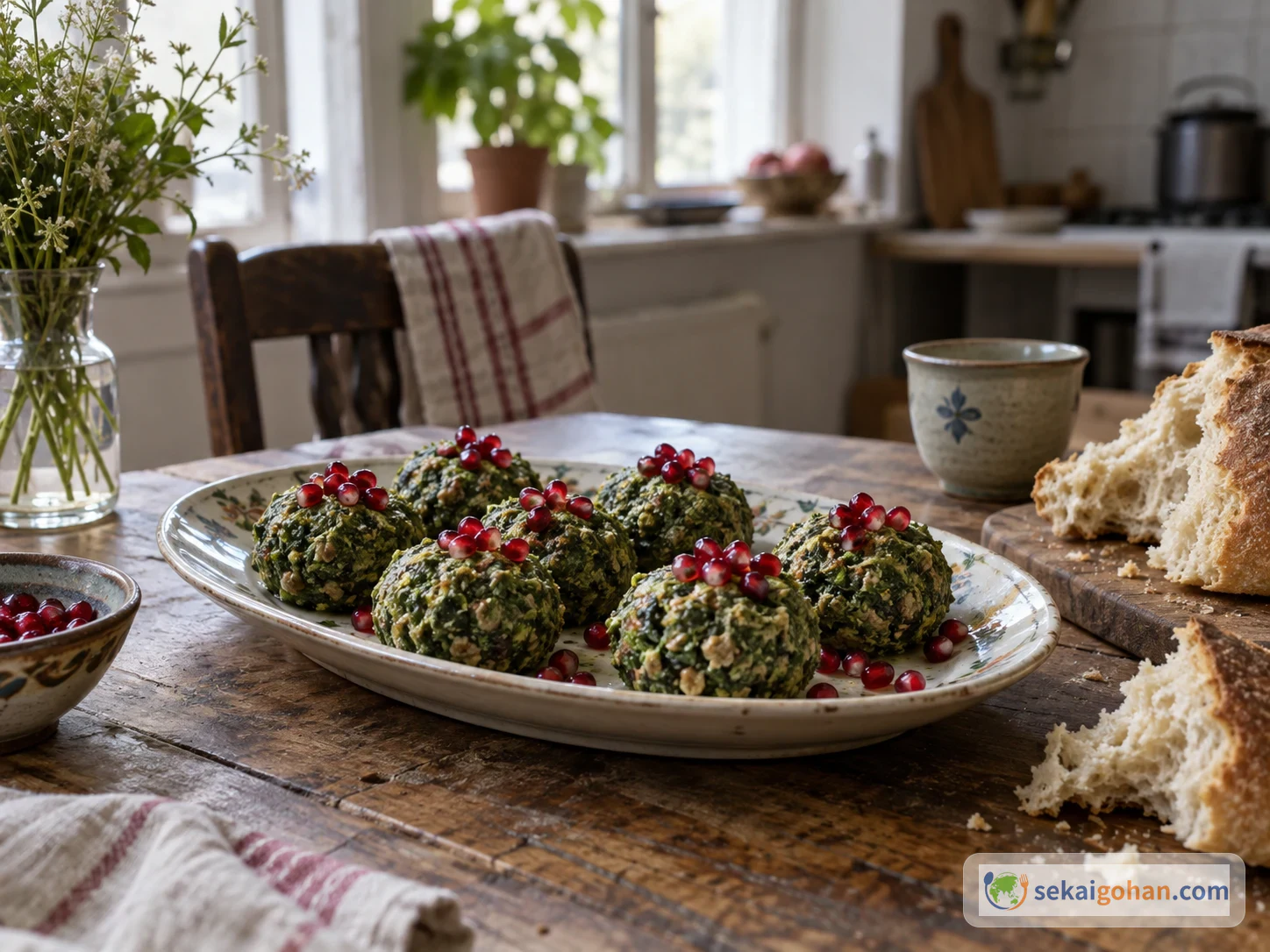
Small, dark green balls of spinach and walnut sit on a serving plate, scattered with red pomegranate seeds, and beside them lies baked bread, torn into pieces for scooping up a little at a time. This quiet dish of vegetables and walnuts is pkhali (ფხალი), a cold appetizer from the Georgian table. Chopped vegetables are combined with nuts, herbs, garlic and vinegar. It looks plain, but once it is in your mouth the richness of walnut, the sourness and the green scent of herbs arrive one after another.
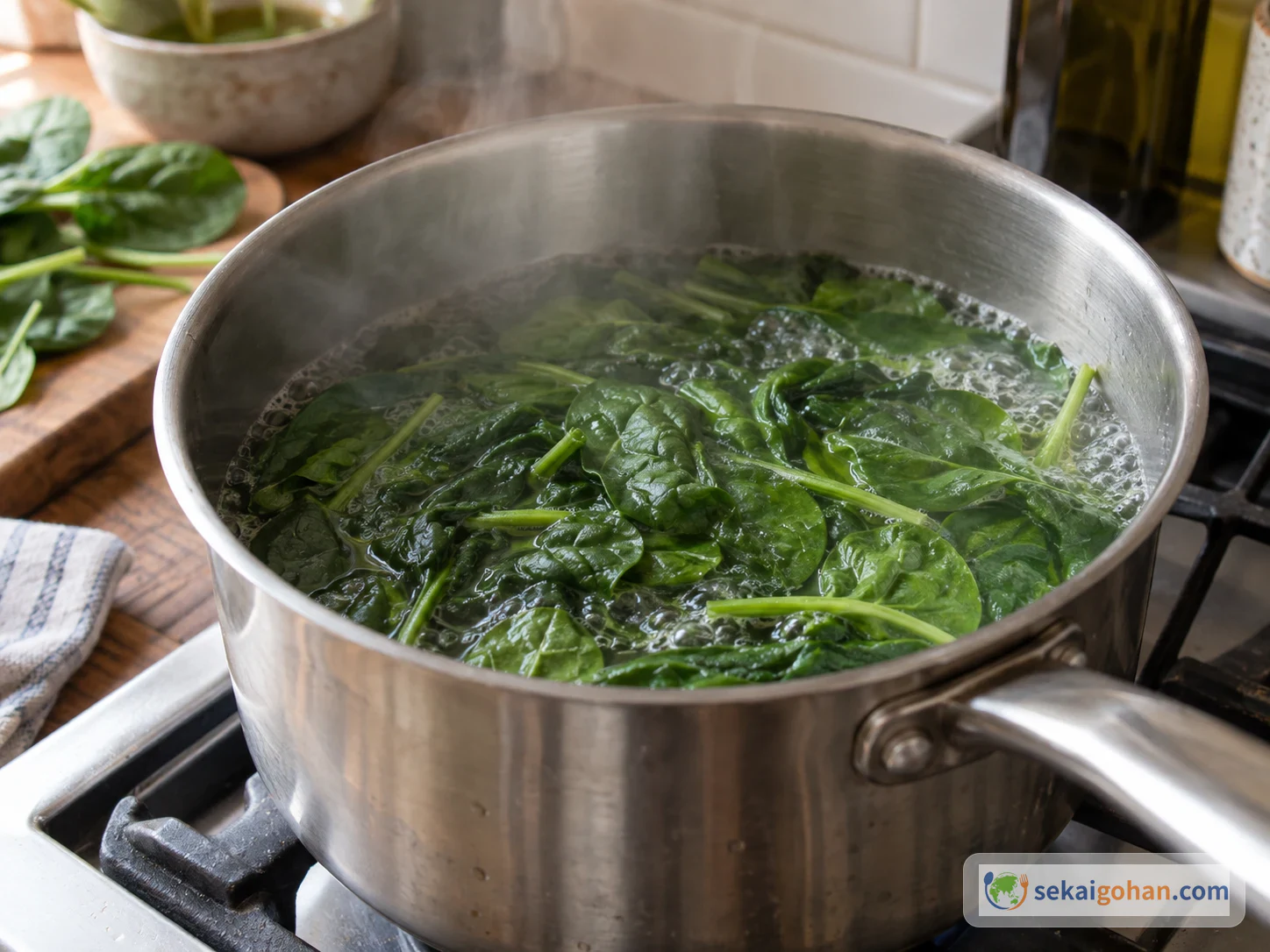
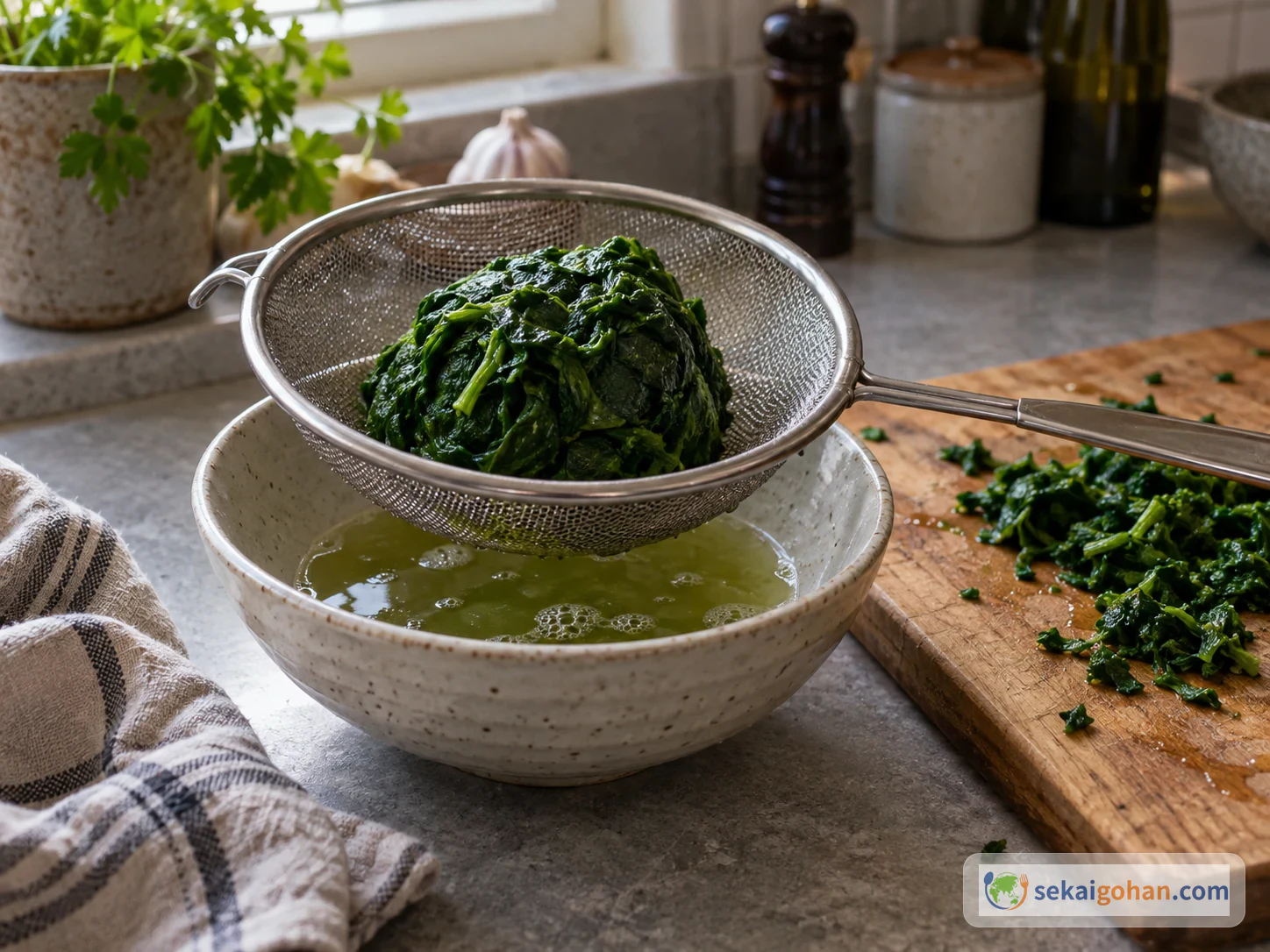
This version uses spinach, and the cooking is mostly just boiling the leaves. Then you squeeze them, chop them, mix them with the nut mixture and chill, and the fat and fine grains of walnut bind everything together. Whether it holds its shape for rolling comes down to one thing: draining decides how well it holds together.
Pkhali in Georgia: one method, many vegetables
Pkhali can be made with leeks, cabbage, eggplant and other vegetables as well as spinach. The name refers to a method of seasoning vegetables and nuts and combining them, so think of it as a dish where you swap the vegetable.
There is also a kind made from spring wild greens, called field pkhali. It is made across Georgia and is especially associated with the Imereti region, where the tradition of making field pkhali in Upper Imereti has been given the status of intangible cultural heritage. When it began and who first made it are not known.
The wild-greens version has regional styles of its own. In Guria, cooks use hazelnuts, herbs and vinegar; in Kartli, onion sautéed in oil and young garlic. In Samegrelo, some versions add sour tkemali and red chili.
The wild-greens version is not squeezed too hard, and its consistency is adjusted with the cooking liquid. A rolled spinach version like this one starts from squeezing out the water well, so the same name can call for different draining depending on the shape you want. If you plan to roll it, drain well.
Ingredients (serves 4)
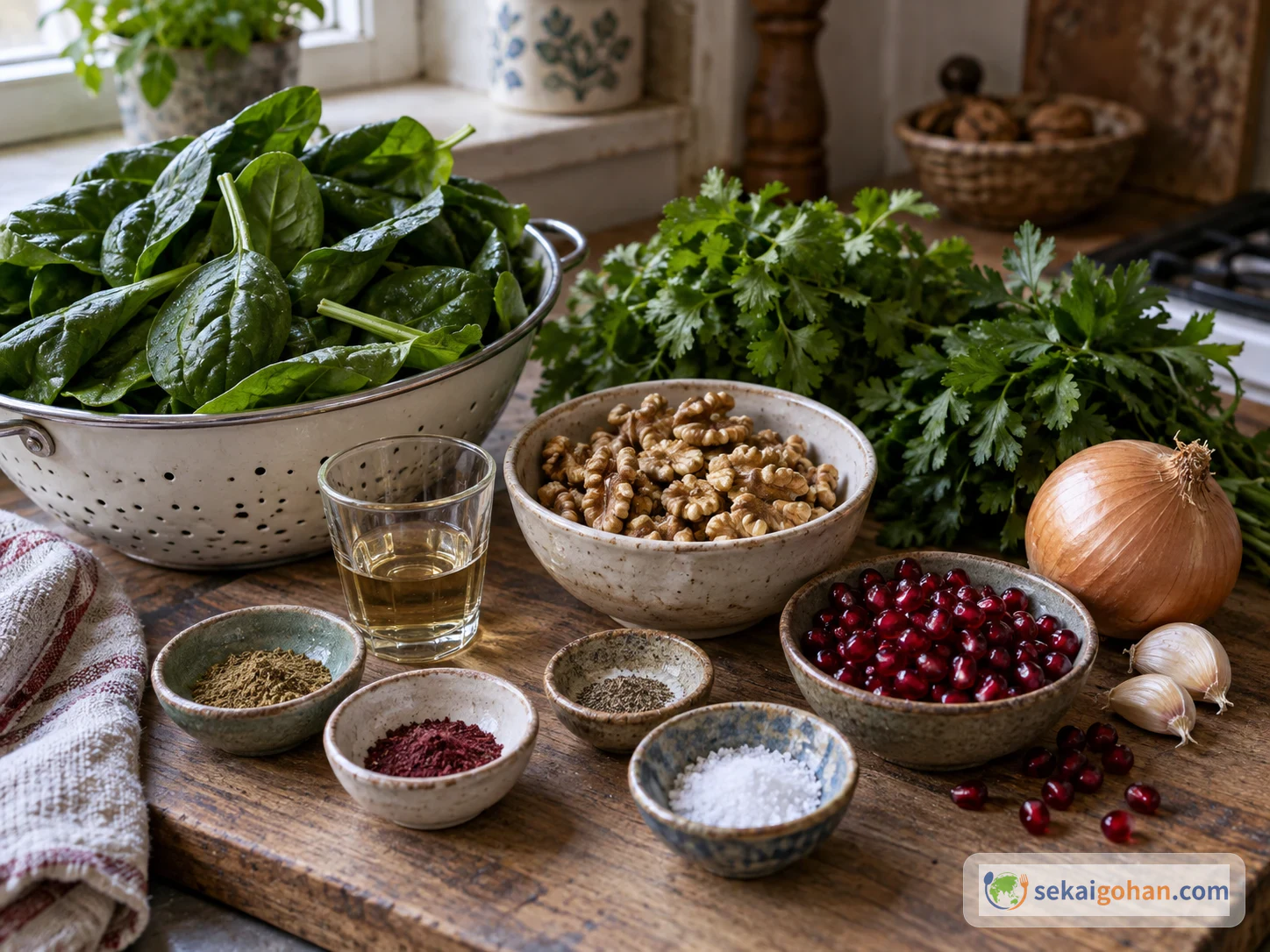
Before shopping, check the quantities. 1.25 lb (600 g) of raw spinach and 4 oz (120 g) of walnuts make an appetizer for 4. That is the raw weight, not the weight after boiling. Plan for about 1 hour 25 minutes of prep, 5 minutes of boiling and 2 hours in the refrigerator, about 3 hours 30 minutes in total.
The cilantro you pick up in the herb section is the one whose fresh leaves and tender stems you use. It is a different ingredient from ground, dried coriander seed, so keep the herb and the seed powder apart. For blue fenugreek, check that the label says utskho suneli or blue fenugreek. Do not swap in ordinary fenugreek in the same amount. Without edible marigold, leave it out; the aroma will differ from the local blend.
Method
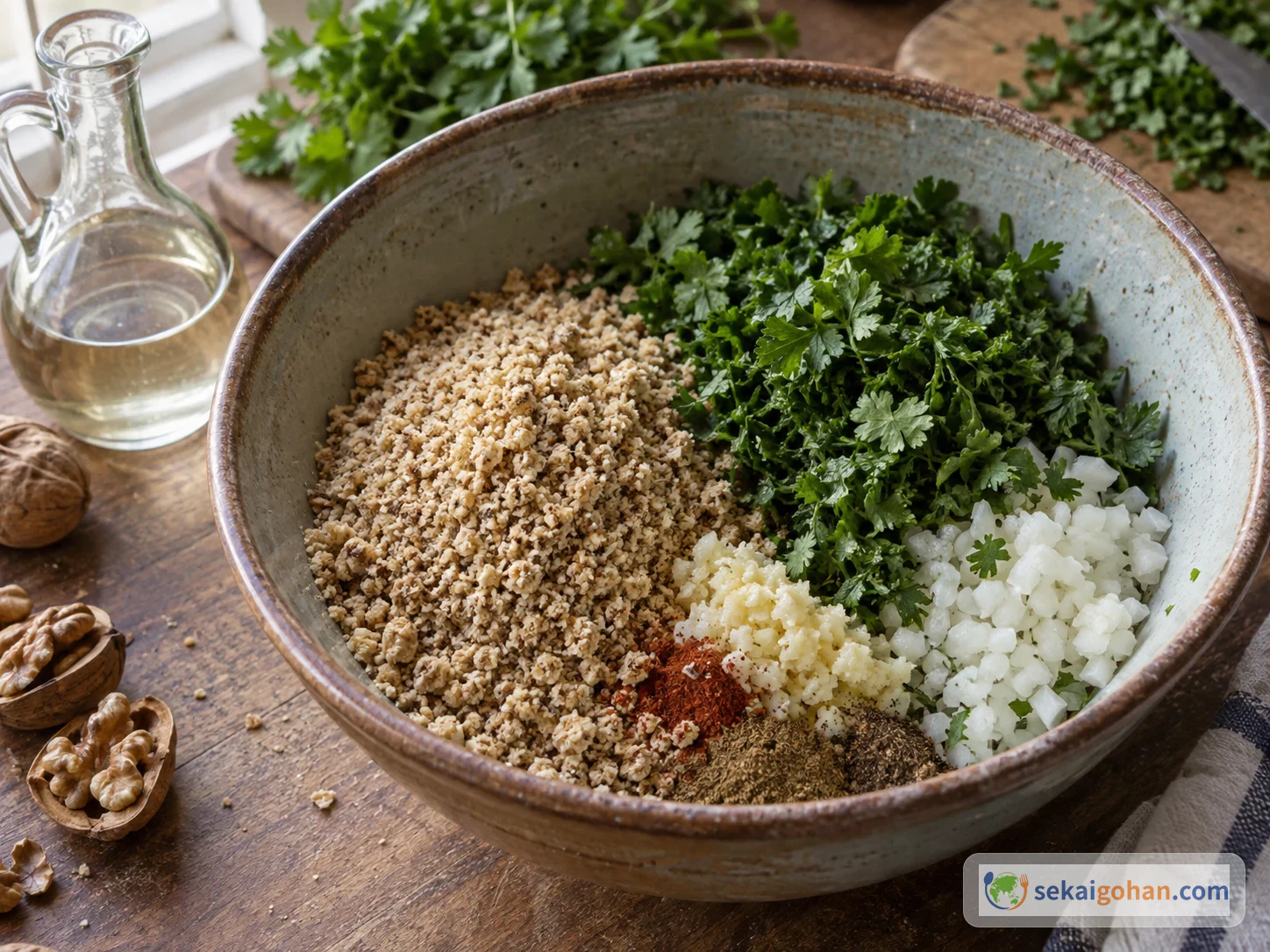
The order is simple. Boil the leaves and cool them, then squeeze before chopping. After mixing with the seasoned nut base, there is no more cooking. Allow 2 hours in the refrigerator. Just before eating, garnish with pomegranate and the cilantro you set aside.
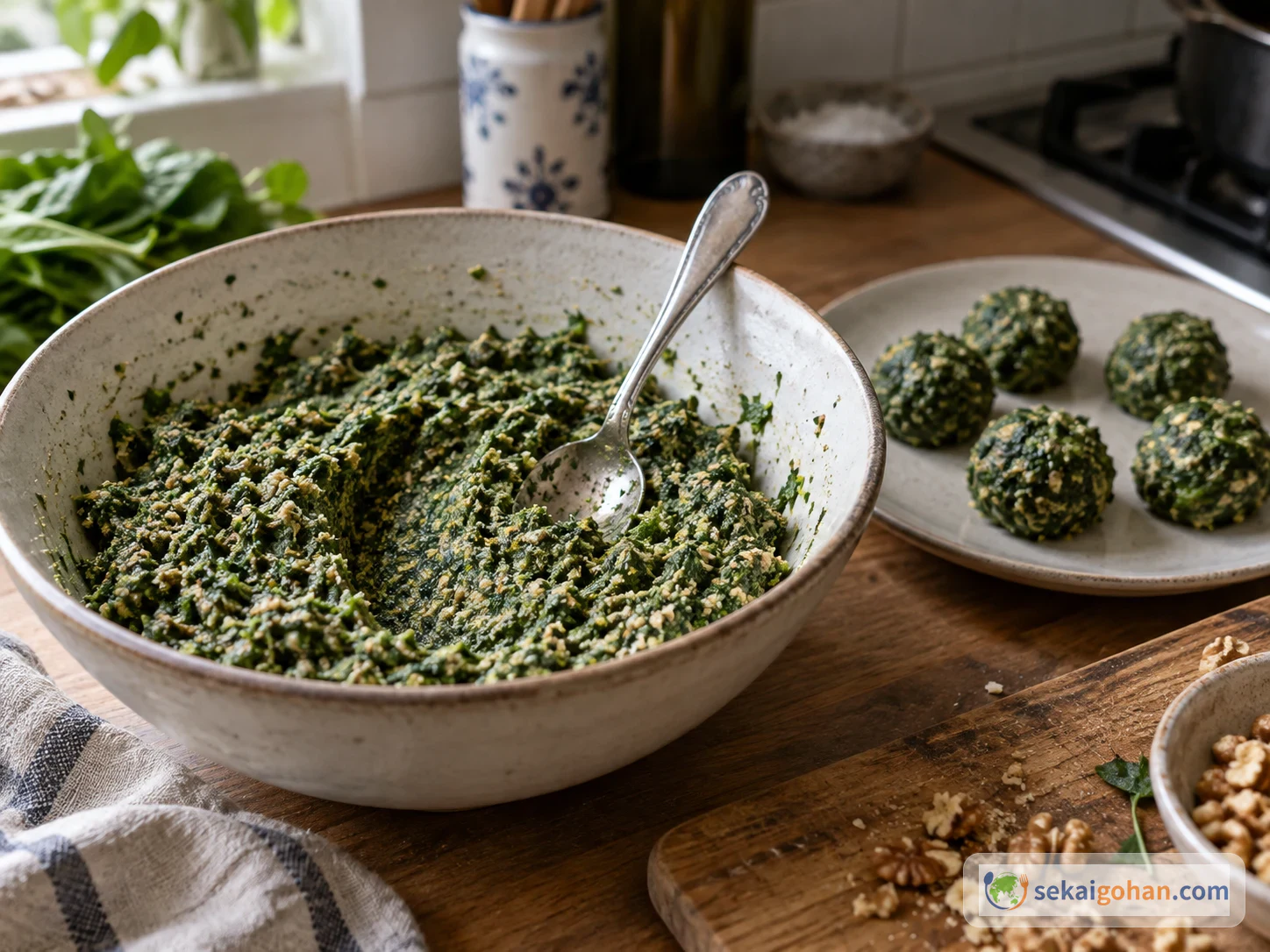
In a kitchen without a food processor, chop the walnuts again and again with a knife. Chop a small amount at a time so that no large pieces remain. Large nut pieces do not blend with the leaves, and the mixture crumbles easily. You do not need a perfectly smooth paste; just make sure no big fragments are left in the mouth. Chopping by hand takes longer than using a machine.
When spinach pkhali will not hold together
Water seeping out on the plate usually means the leaves or herbs were not drained enough. If the leaves have not been mixed yet, squeeze them again. Once everything is mixed, give it the 2 hours in the refrigerator before judging, and resist fixing separated water with extra oil or vinegar. Check whether water seeps on the plate after chilling.
Texture problems usually come from the grain size. Long leaves make the surface of the balls crack, so chop finer before mixing; large walnut pieces make it fall apart, so grind them more finely next time. If it simply dries out and cracks even after chilling, add clean drinking water 1 tsp at a time and mix.
If it still will not roll, spread it in a shallow dish and serve it that way. That only changes the texture, though. It will not rescue a dish that has spoiled.
Chili heat varies by product, so start small; it is hard to reduce once mixed. Add vinegar little by little too, rather than adding sugar or oil afterward to cancel the sourness. Raw onion sharpness is a different thing from chili heat, so adjust the onion when you chop it.
Serving and storing pkhali
Serve the chilled pkhali in small portions, topped with red pomegranate seeds and herbs, with bread alongside. Taken a little at a time, each bite brings out a different aroma: the walnut, the vinegar, the herbs. Outside Georgia, about two pieces per person beside the main dish is plenty.
If you like the walnuts here, satsivi, chicken dressed in a walnut sauce, is the natural next step when you want one more dish with walnuts. And on days you want bread with your appetizer, try khachapuri, the cheese bread.
Food safety and allergens
Because you do not reheat after mixing in the raw herbs and onion, wash your hands, cutting board and utensils well, and wash the herbs under running water. Do not serve pkhali to anyone with a walnut allergy, and check the labels of what you serve alongside, such as wheat in the bread.
Walnuts are a nut that can cause allergic reactions. Check the allergies of those eating and the labels on the products. If you use tools or a cutting board that have ground nuts on them, watch for cross-contact. Other nuts are not a safe substitute for walnuts. Use spices sold for food, and do not use ornamental flowers or wild plants whose species you cannot confirm.
Keep the refrigerator at or below 39°F (4°C). Food that needs refrigeration should not sit at room temperature for more than 2 hours. Above 90°F (32°C), refrigerate it within 1 hour. Count the cooling time, the mixing and the time after plating together as time at room temperature. Put it in a shallow container and move it to the refrigerator promptly.
Refrigerated storage
Make only as much as you can finish, and eat it the same day or the next. Keep it covered in the refrigerator and take out only what you will eat, using clean utensils. Pkhali left out at room temperature for a long time is not made safe by chilling it again. Keep it out of the freezer, too; freezing changes the texture of the leaves and nuts.
Nutrition
The whole batch is about 1028 kcal, 1.5 oz (39.2 g) protein, 3 oz (81.6 g) fat and 2.25 oz (61.2 g) carbohydrate, and one appetizer serving is about 257 kcal. The figures leave out the optional ground coriander, and onion size, spice rounding and the salt in the cooking water all change them.