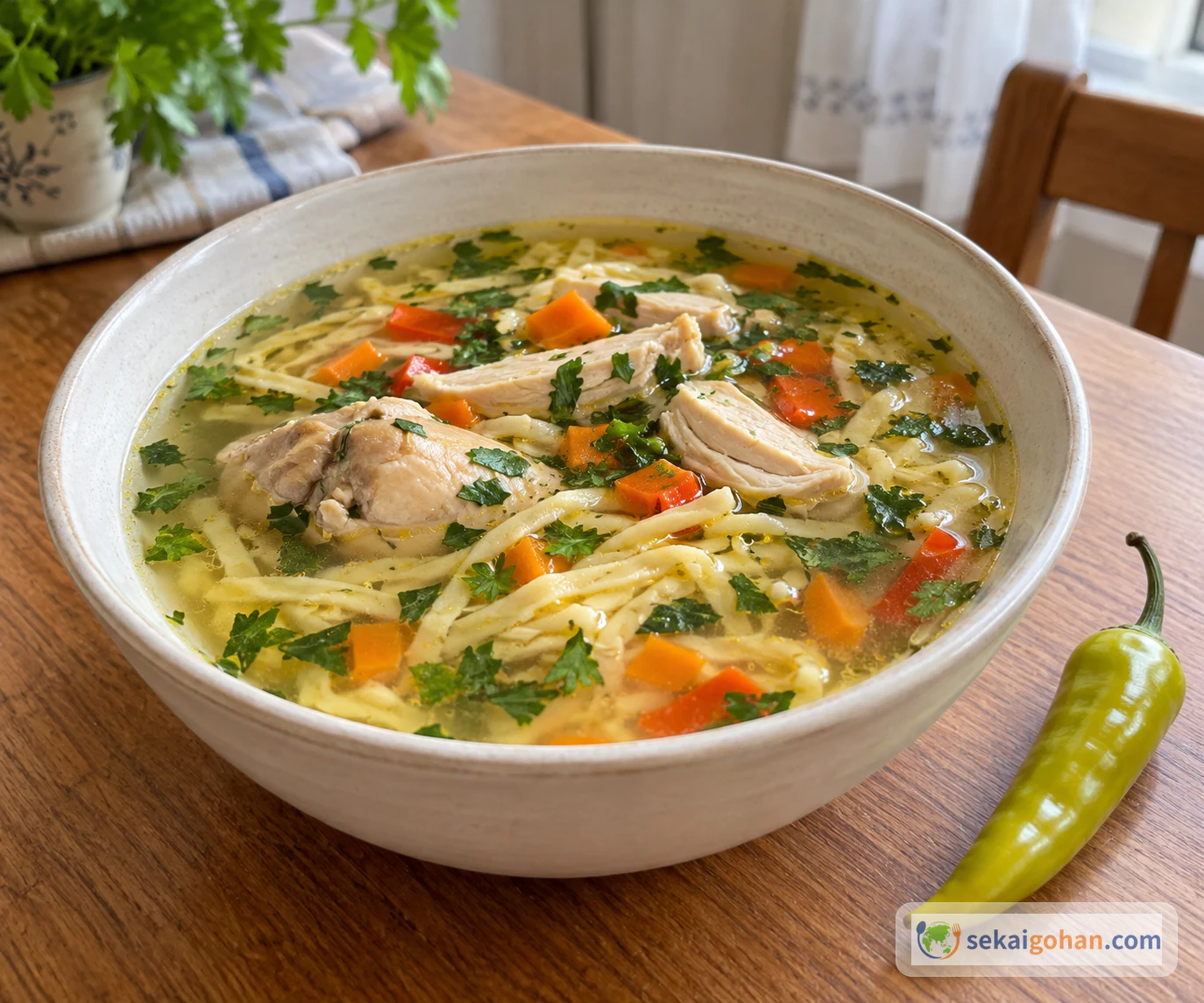
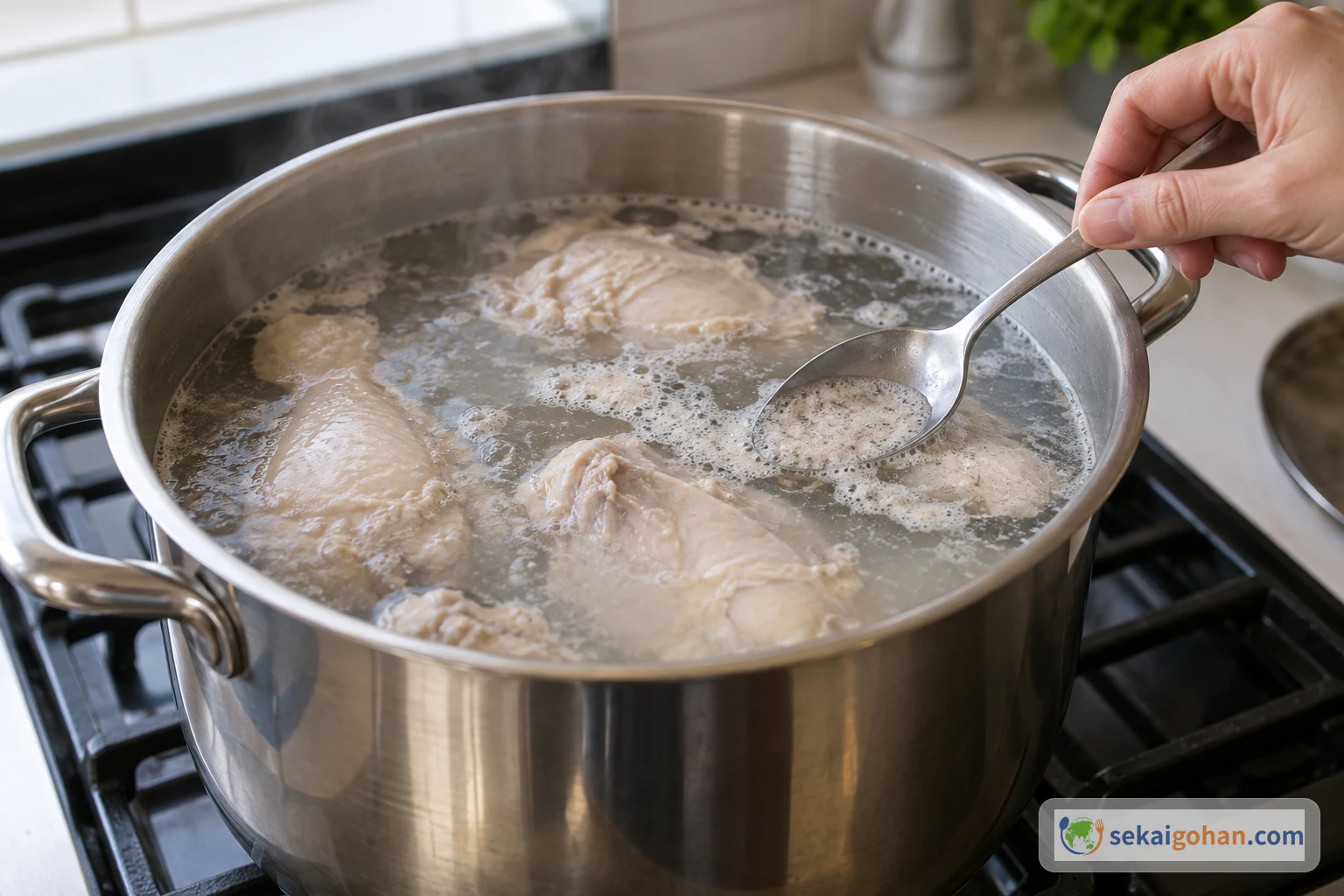
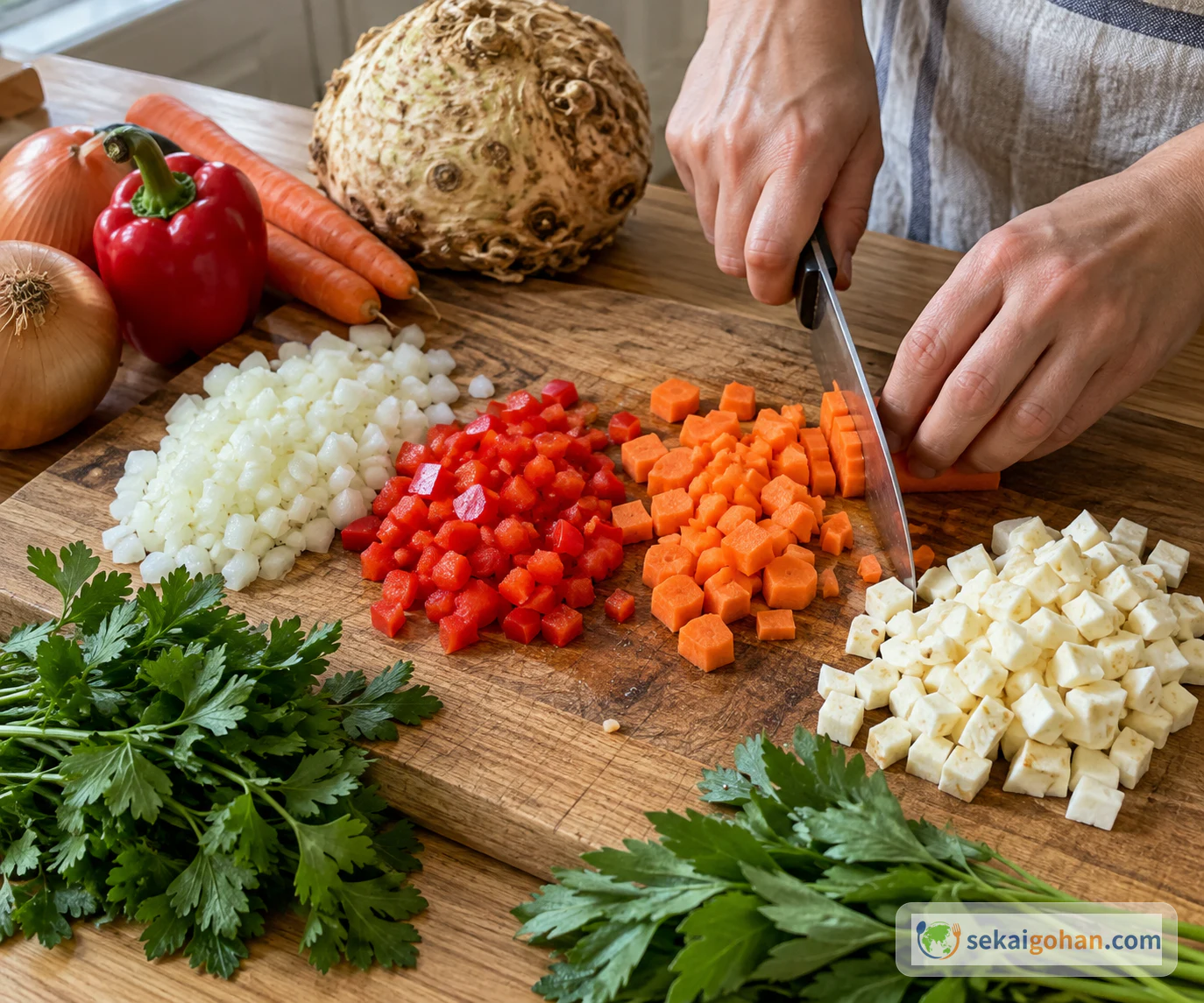
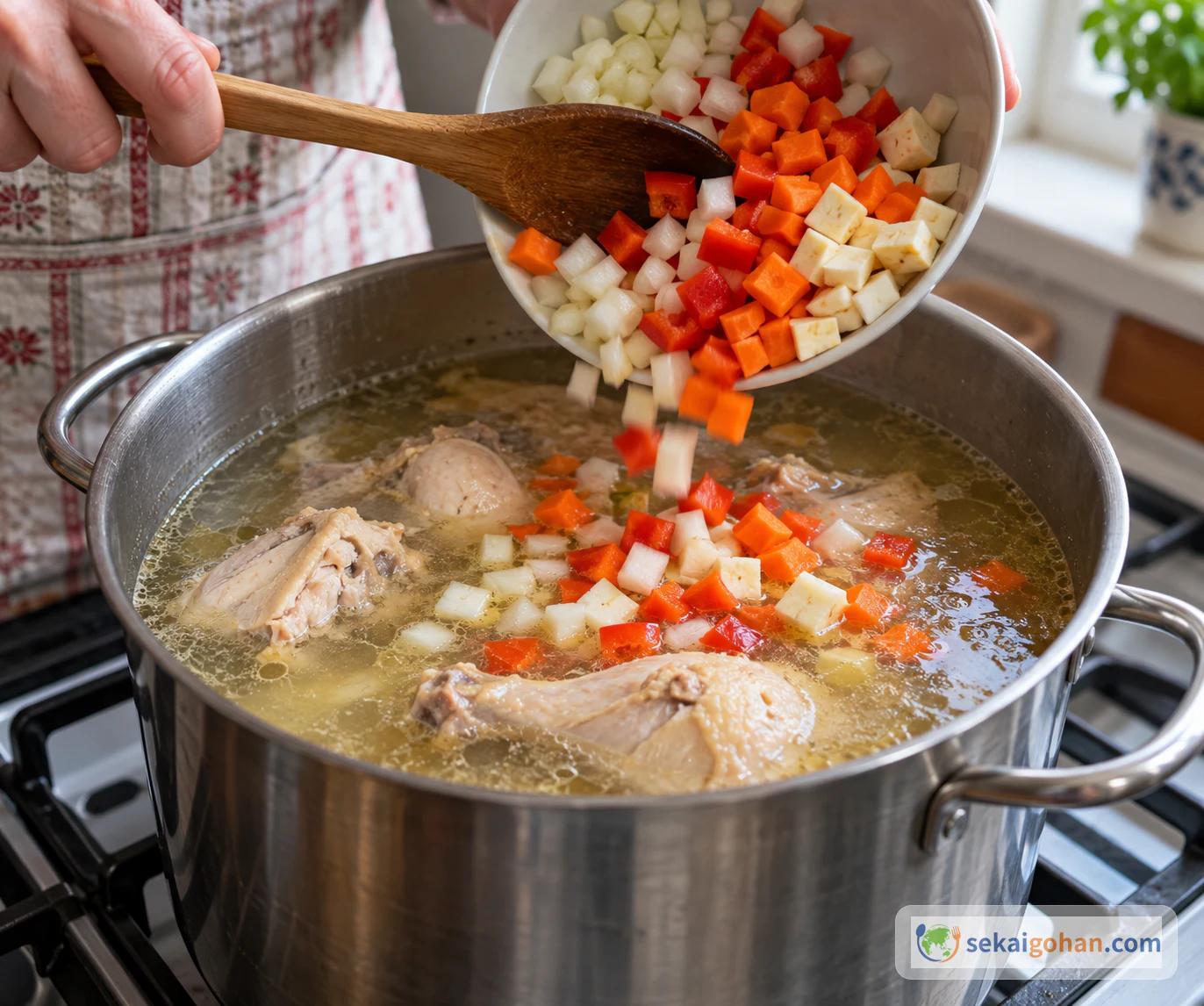
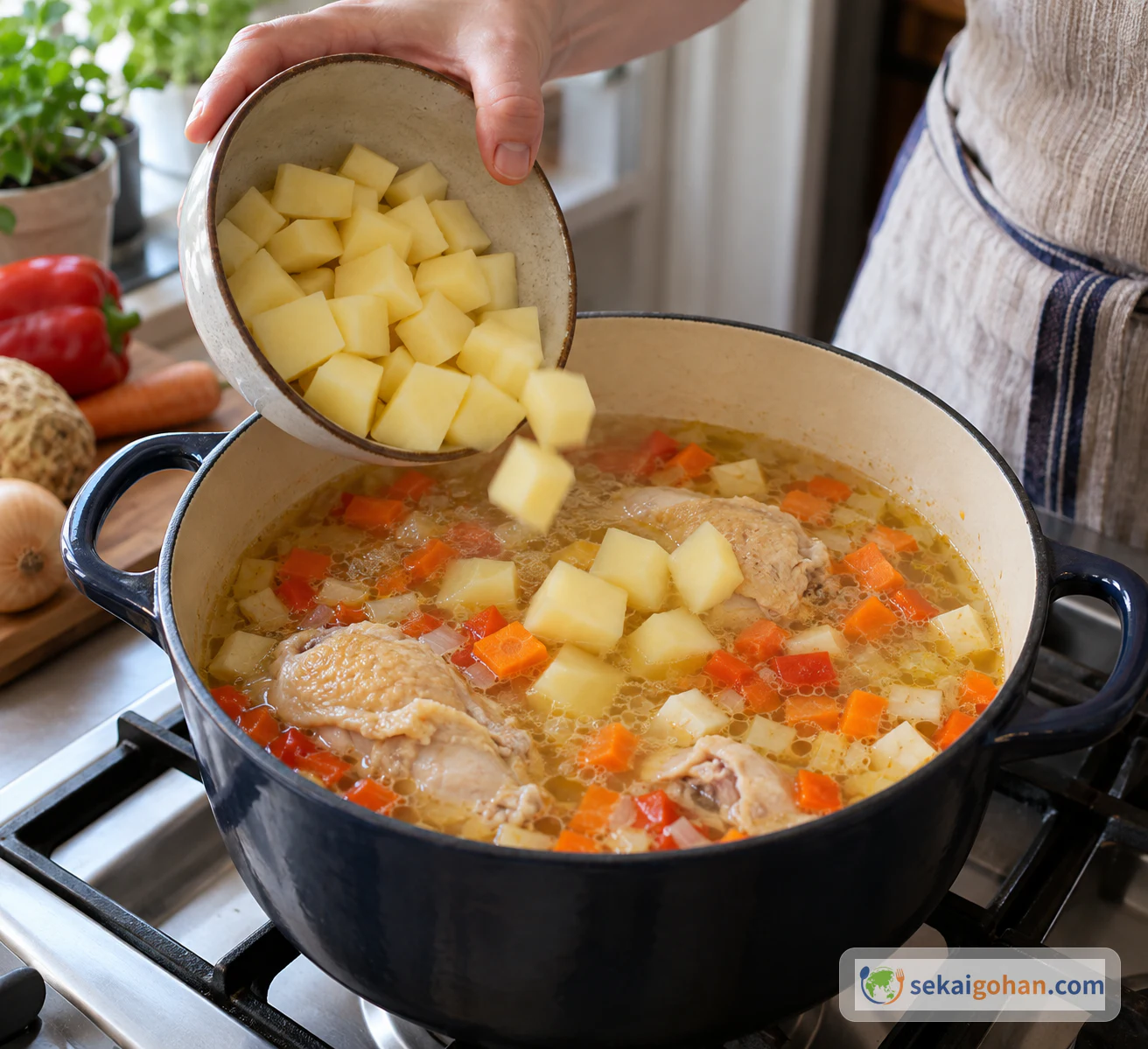
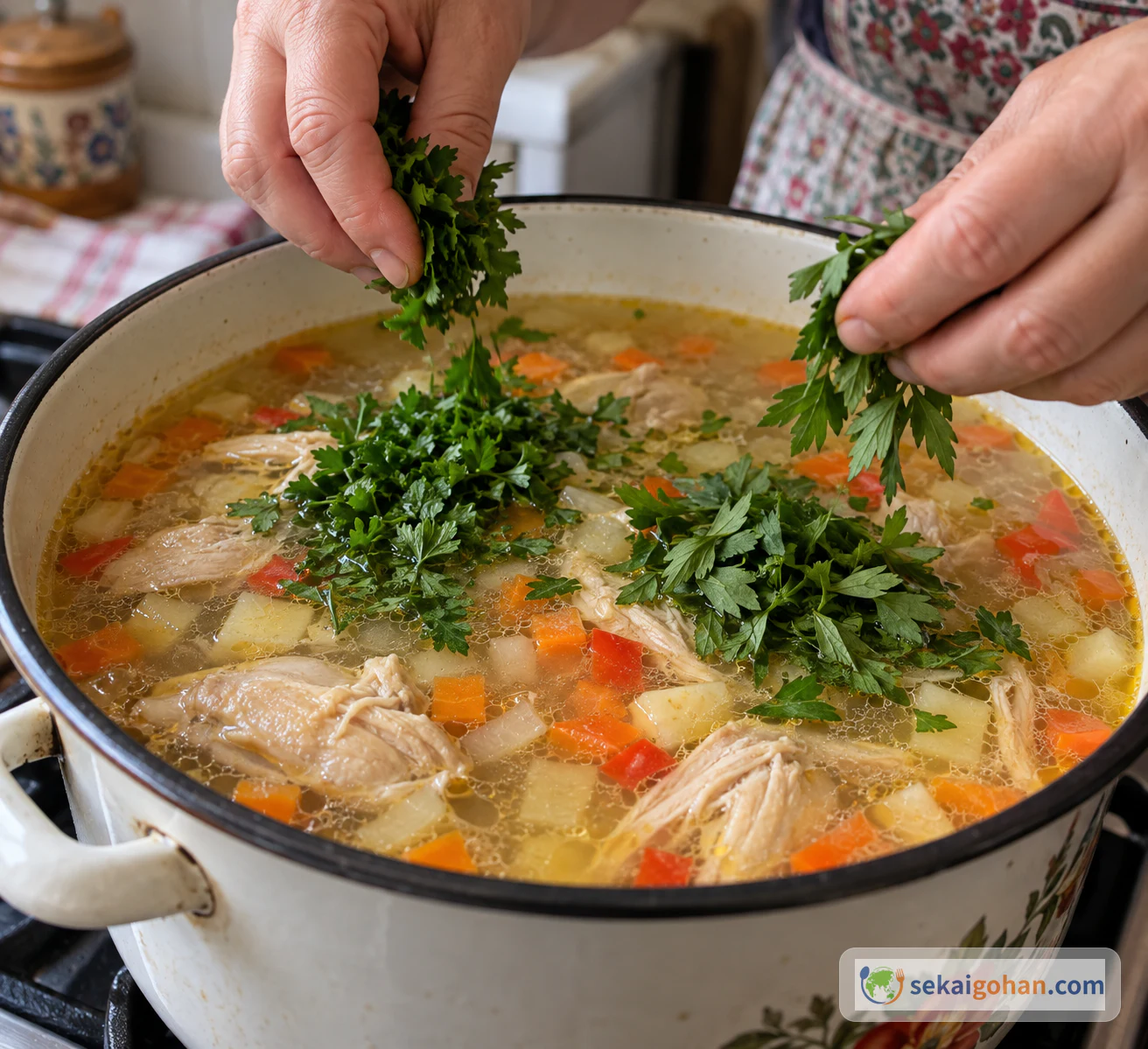
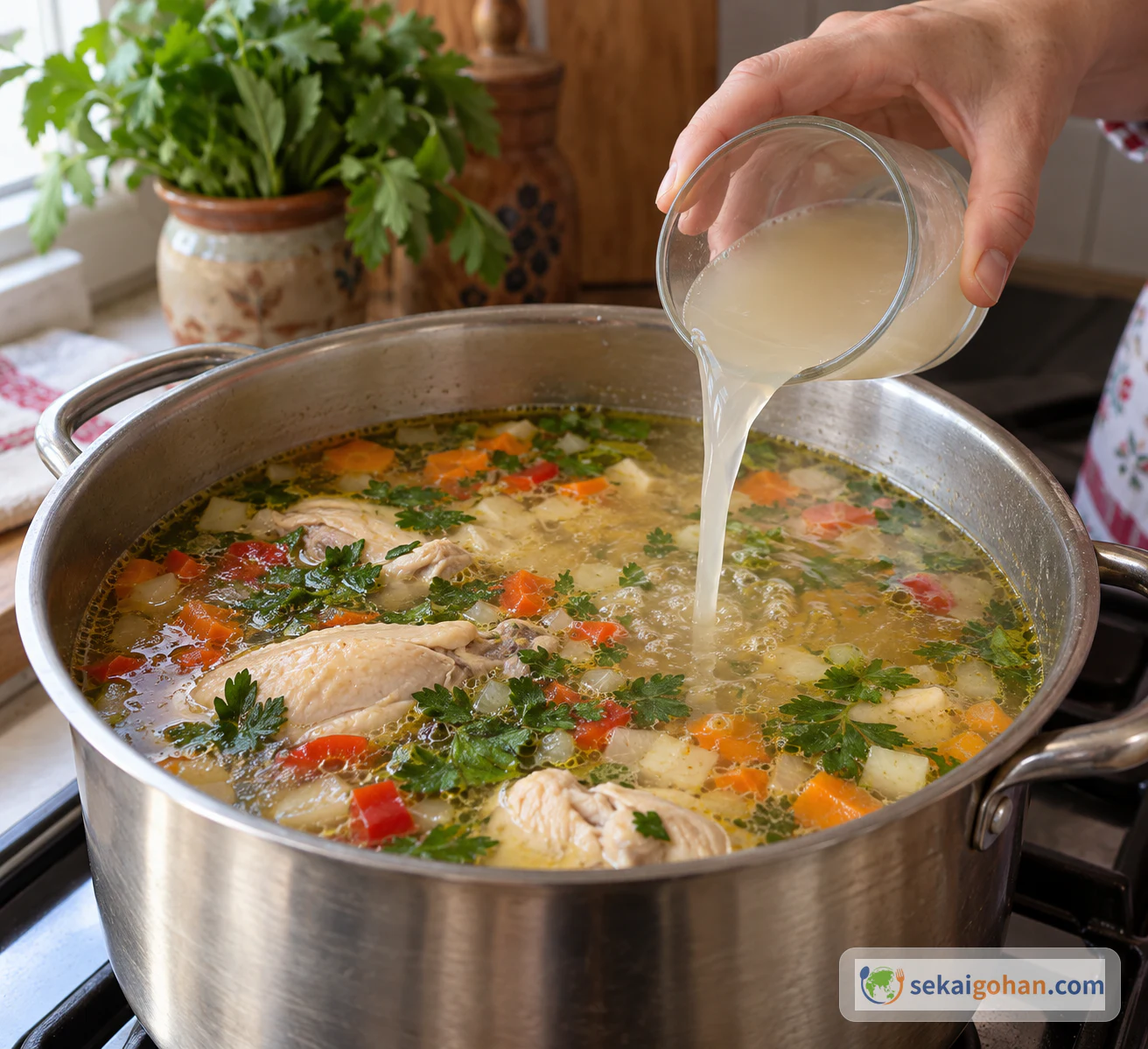
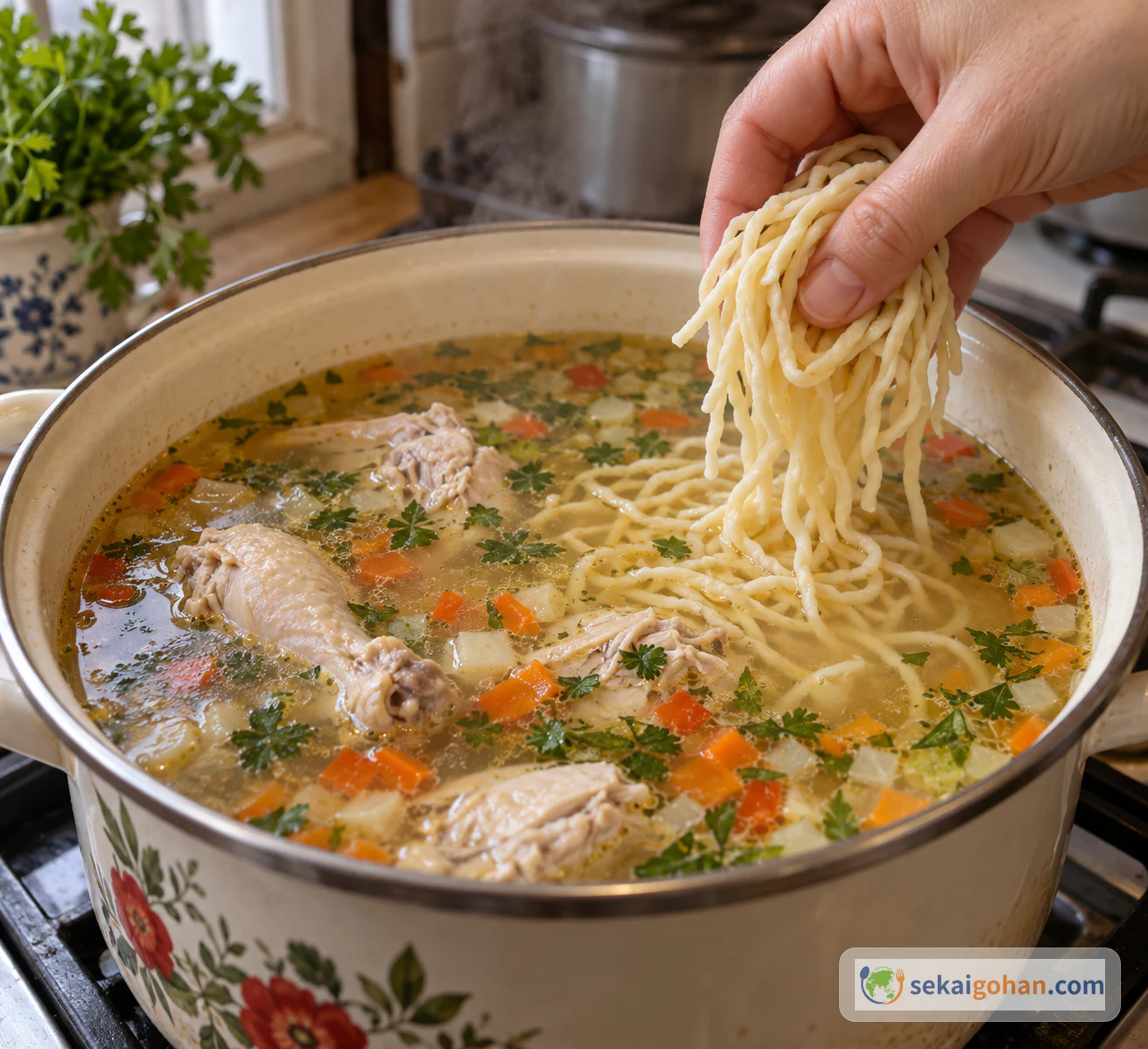
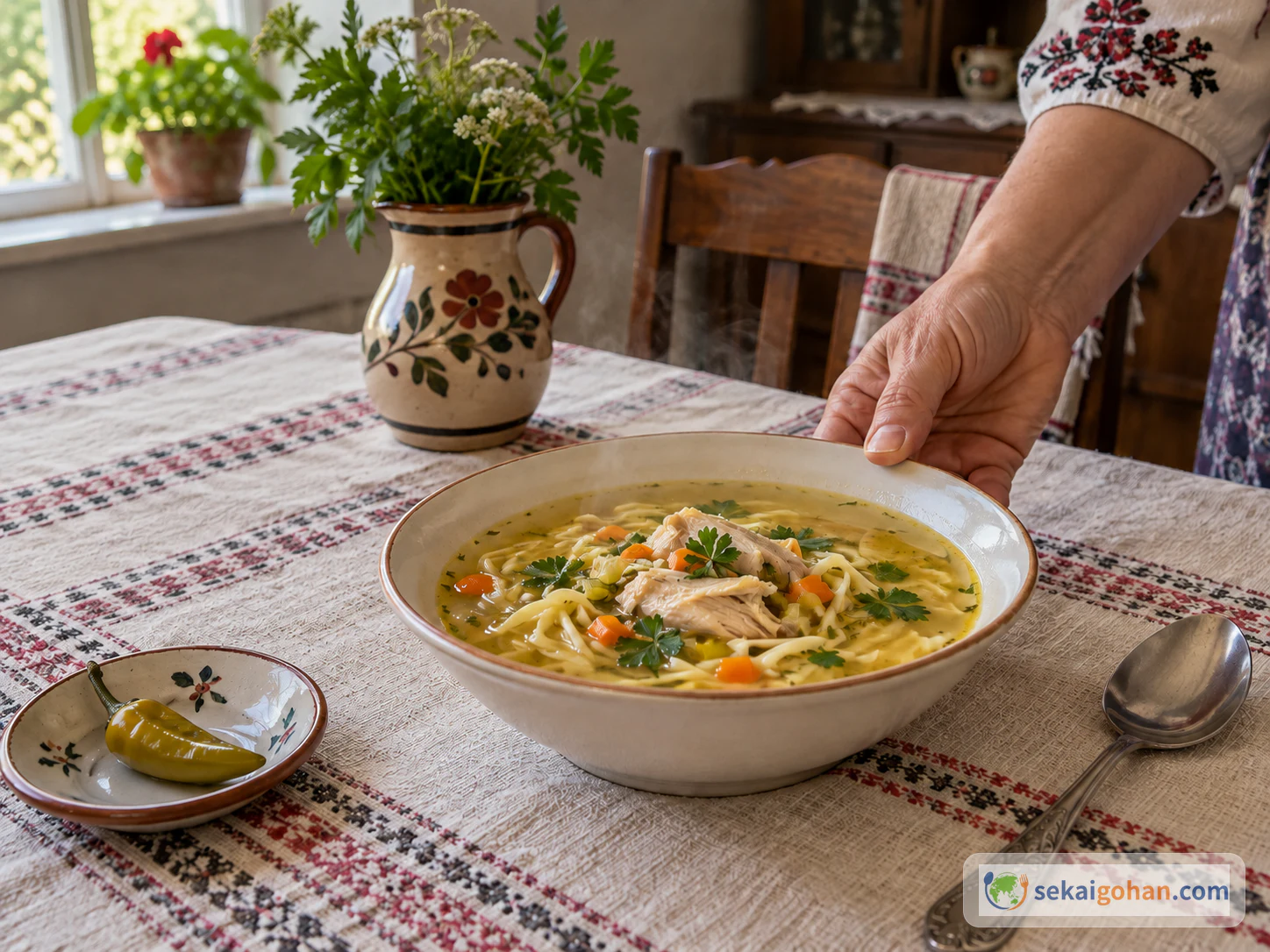
A pot of chicken simmers in plenty of water while the foam is skimmed away. Diced onion, sweet pepper, carrot and celeriac go in, then parsley and the green, sharp scent of lovage. A splash of pale borș follows, the pot comes back to a boil, and homemade noodles drop into the broth. It is still chicken soup, but the gentle sourness makes it taste quite different from a plain one. This is zeamă, one of the best-known traditional dishes of the Republic of Moldova.
About Zeamă
Zeamă is a clear broth of chicken and hand-cut noodles with small cubes of vegetables, lovage (leuștean), and homemade borș. Its sourness comes from fermented wheat bran, so it tastes nothing like beets, vinegar or lemon. For more dishes from the same table, see Moldovan recipes.
The dish is written Zeamă in Romanian, often Zeama without the diacritic. In this soup, borș is a pale, fermented wheat-bran liquid used for souring. The red beet soup known in English as borscht is a different thing.
Regional and Family Versions
The dish varies a lot from place to place. In parts of southern Moldova the soup is called noodle borș or tomaci instead of zeamă, and neighboring villages disagree on whether potatoes belong in it. The usual vegetables are onion, carrot, pepper and parsley root, sometimes potato.
Some families go further. One version uses a whole chicken, red and yellow peppers, salted (not pickled) tomatoes, bay leaf and pepper; the borș goes in once the meat is cooked, the noodles after the soup returns to a boil, and the herbs once the noodles float. There is also a rice version, Zeamă de găină cu orez, from a Chișinău restaurant.
Ingredients: Fixed Amounts and To-Taste Items
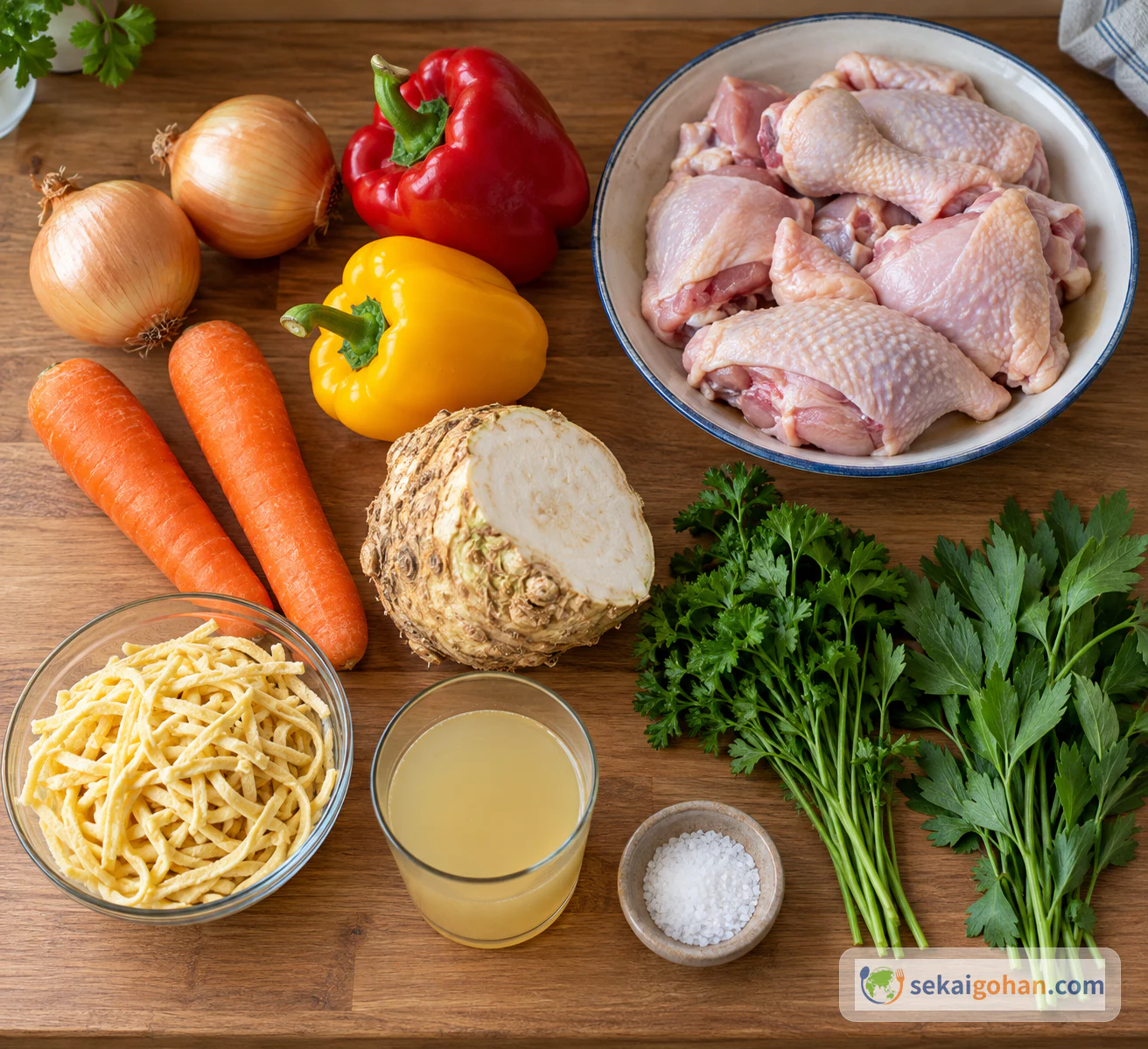
Adjust the amount of noodles to your pot and to how many you are serving. Leave out the potatoes for the basic version.
Equipment
- Deep pot with a lid
- Spoon or skimmer for foam
- Cutting board and knife
- Small glass or measuring cup for the borș
- Ladle
Choosing Ingredients for Zeamă
Borș. Look for borș acru or fermented wheat-bran borș, sometimes sold as a Romanian bran borș. Red beet borscht and plain vinegar are different products. Lemon juice will make the soup sour, but it's a different sourness, and the result is your own variation.
Lovage (leuștean). Lovage is a separate herb from parsley. Look for fresh or dried leaves rather than seeds. If you can't find any, the soup still works with parsley alone, though it loses part of its characteristic aroma.
Celeriac. Use the knobbly root. Stalk celery is a different vegetable and changes the flavor of the broth.
Sweet peppers. Ordinary sweet peppers, such as bell peppers, are right here. Sweetness and size vary, so the balance in the pot may shift a little.
Chicken. Bone-in pieces are an easy way to get a fuller broth.
Noodles. Homemade noodles are traditional, but dried egg noodles from a store are a convenient swap. Follow the package for amount and cooking time, and expect a different texture.
This soup contains chicken. Noodles usually contain wheat, and some contain egg. Check the label of the noodles you use, and check the label of any bottled borș for its ingredients and allergens. Cook the chicken until it is thoroughly done all the way through before serving.
Method: Broth First, Sourness, Then Noodles
Step 4 applies only if you are adding potatoes. For the basic version, go straight from step 3 to step 5.
Common Zeamă Problems and Fixes
| Situation | What to check | What to do |
|---|---|---|
| Not sure when to add the vegetables | How done the chicken is | Cooking times depend on the cut, the pot and the heat. Add the vegetables once the chicken is nearly cooked |
| The soup tastes flat | Whether the borș is in, and the salt | Add all the borș at once and taste before adjusting salt |
| The broth looks red or brown | Whether beet borscht or another product was used | Borș for this soup is a pale wheat-bran liquid. A red liquid points to a different product |
| The noodles are still firm | Fresh or dried noodles | Cook a little longer and taste again. Dried noodles follow the package time |
| The soup lacks its herbal aroma | Whether lovage was used | Parsley alone gives a milder, different aroma. Lovage is what makes the difference |
Serving Zeamă and Variations
Zeamă is eaten hot, with a chili pepper on the side. Some households add egg or sour cream at the table as extras.
| Variation | What changes | How to approach it |
|---|---|---|
| Potato version | Diced potatoes, 5–7 minutes after the vegetables | Follow step 4, and add the borș once the potatoes are cooked |
| Rice zeamă | Rice instead of noodles | A separate recipe with its own amounts and steps |
Frequently Asked Questions
How much water and noodles do I need?
Use enough water to cook the chicken, and adjust the amount of noodles to your pot.
Can I store and reheat leftovers?
Refrigerate leftovers, and reheat them until hot all the way through.