When the bubbles in the oil settle, the pârjoale are done, and they go straight onto the plate beside the mămăligă. They are flat ovals, crisp and savory outside from their breadcrumb coating, soft and plump inside from a mix of ground meat, bread, potato, onion, and dill. This is home cooking from Moldova and from Moldavia, in northeastern Romania. Is it a hamburger steak or a croquette? Lean toward neither: the meat flavor stays in the lead, grated potato and milk-soaked bread keep it moist, and shallow-frying firms up only the surface.
Pârjoale at the Moldovan table
Pârjoale are shaped by hand. You press the mixture with your palm into long, flat ovals rather than rolling it into balls. The shape is what sets them apart from round meatballs, and they are also larger than chiftele. They can be the star of the table without expensive meat.
In Romanian the word is written pârjoale; in a Moldovan context, you'll also see Parjoale moldovenești.
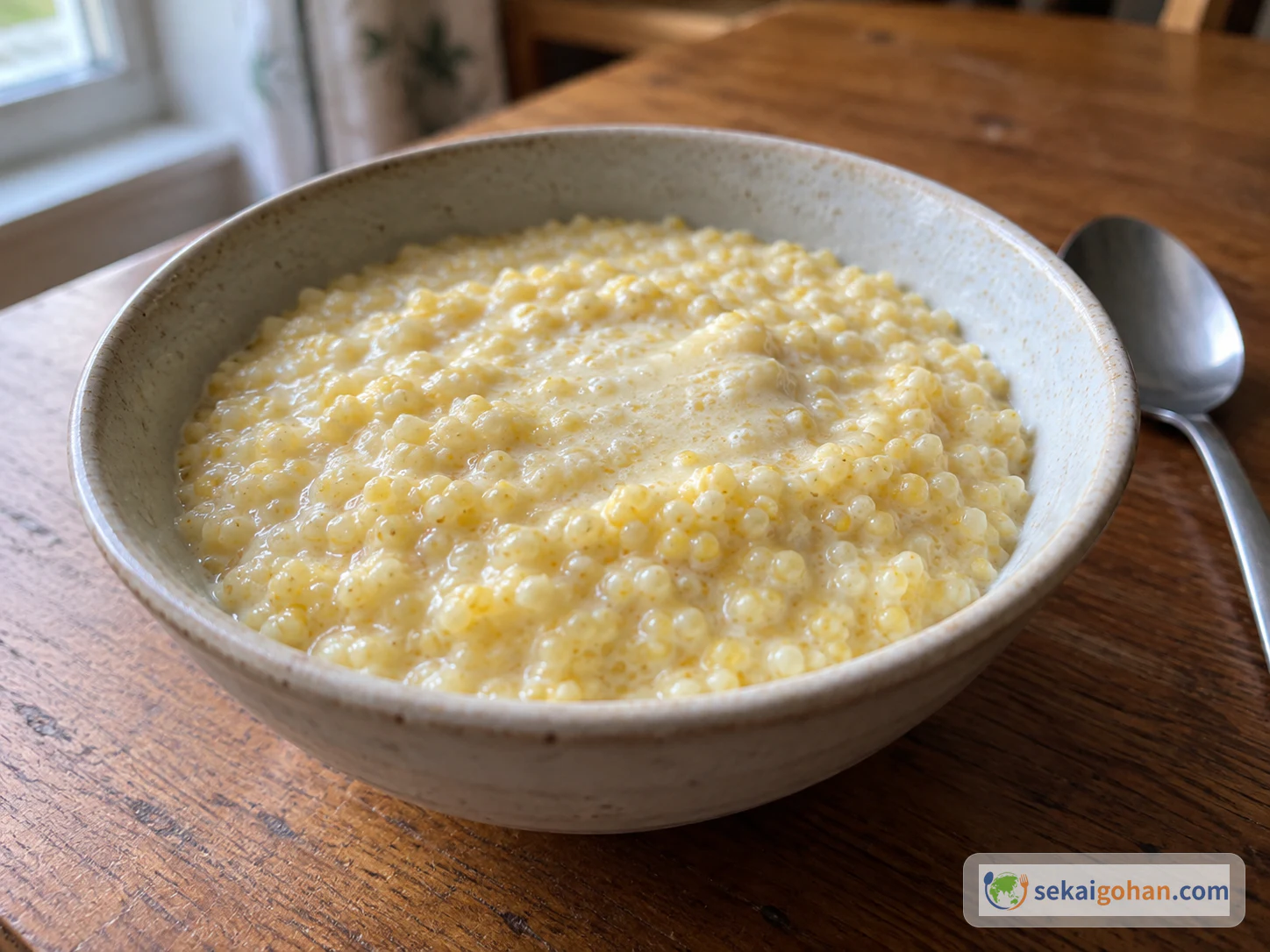
At home, mămăligă, pickles, and sour cream beside the patties make a full plate. If Romanian mititei belong to charcoal and mustard, pârjoale belong to the home skillet and the cornmeal porridge.
Four points for getting pârjoale right
All the ingredients that hold moisture make pârjoale tender, but they also make them easy to get wrong. Cook them carelessly and you get patties that are dark outside and heavy inside. Watch these four points and they are hard to spoil.
| Element | The traditional idea | A practical approach |
|---|---|---|
| Oval shape | Press flat into a long oval instead of rolling | About 3.25 oz (90 g) each, 3.5 inches (9 cm) long, 0.5 inches (1.5 cm) thick |
| Herbs | Dill and parsley cut the heaviness of the meat | Use a little extra dill, and parsley for green freshness |
| Moisture | Bread and potato make them plump | Squeeze the grated vegetables hard; soak the bread, then squeeze it lightly |
| Cooking | Set the surface in shallow oil | Oil at 160–170°C, cooked through to 160°F (71°C) or higher at the center |
Ingredients (serves 4)
This makes 8 pârjoale about 3.5 inches (9 cm) long, for 4 servings: 2 per person as a main dish, with mămăligă and a soup. The meat mixture needs only a short rest, so you can make it for a weekend lunch.

This dish contains egg, dairy, and wheat. You can replace the dairy with water, but the bread and breadcrumbs still contain wheat. To avoid wheat, use gluten-free bread and rice-flour crumbs, and make the patties thinner, about 0.5 inches (1.2 cm), because they break more easily when shaped.
What is worth sourcing
The meat, eggs, bread, potatoes, and onions are all available at an ordinary supermarket. Choose paprika with a good aroma, and get a thermometer for controlling the frying. Ground meat cannot be judged by color alone, so use a tool that reads core temperature.
Choosing herbs and spices for pârjoale
Home cooks around Moldova and Romania often add sweet paprika to meat dishes for color and fragrance. Keep it to 1/2 tsp so the dill and garlic stay in front. A faint red tint is enough, and a gentle paprika suits mămăligă better than a strongly smoky one.
If you don't like dill, halve it and increase the parsley. Leave it out entirely and the patties come close to a plain meatball. Green onion is a poor stand-in; parsley and a little thyme balance the aroma and keep the character of an Eastern European meat dish.
How to make it
This is shallow-fried, so you need only about 0.5 inches (1.2 cm) of oil in the pan. Set one side at a time. The mixture is soft, so don't touch the first side until it has browned.
Pârjoale problems and how to fix them
They break apart in the oil
Either the mixture is too wet or the patties are too thick. Next time, squeeze the grated potato and onion harder and keep the patties within 0.5 inches (1.5 cm). Fiddling with them in the pan causes breaks too, so leave the first side alone for 3 minutes and flip only once the bottom has set.
The outside is dark and the inside is heavy
The oil is too hot. Above 350°F (180°C) the surface colors early while the bread and potato inside stay heavy. Fry at 160–170°C, and once both sides are browned, drop the heat to medium-low. A core reading of 160°F (71°C) or higher tells you they are safely done without being overcooked.
They are crumbly and dry
The mixture was overmixed, or the bread was squeezed too hard. Leave the bread moist enough to spring back when you press it with a finger. Lean ground beef alone tends to turn tough, so use at least half pork to keep the patties tender, even on a home stove.
Serving and storing pârjoale
What to serve with them
Pârjoale are at their best next to something sour and a staple. On a Moldovan table that means mămăligă, pickles, and sour cream; for a more Romanian feel, try mashed potatoes, white bread, and pickled cabbage. The acidity cuts the richness of the meat, and the corn or potato catches it.
| Table | What goes with it | When it suits |
|---|---|---|
| Moldovan style | Mămăligă, pickles, sour cream, dill | The first time you make this dish |
| Romanian style | Mashed potatoes, pickled cabbage, white bread | Eating with children or older family |
| Everyday dinner style | Plain white rice, quick sweet-and-sour cucumbers, plain unsweetened yogurt | Working it into a weeknight menu |
| Next-day lunchbox style | Cooled pârjoale, pickles, potato salad | When ease of eating matters more than a crisp coating |
Choose pickles that aren't too sweet. If yours are, toss thin onion slices with 2 tsp vinegar, a pinch of salt, and 2 tsp water and leave them for 10 minutes; they make a good sharp partner for the meat. With white rice in place of mămăligă, skip the soy sauce and stick to dill, black pepper, and sour cream or plain unsweetened yogurt so the plate still tastes Eastern European.
To plan a menu, make the mămăligă the day before and fry the pârjoale on the day. For a meat dish closer to street food, try mititei, and for a stew with the aroma of Eastern Europe, try goulash; the same paprika and herbs carry over.
Storage and reheating
Once cooled, cooked pârjoale keep for about 3 days in an airtight container in the refrigerator. To freeze, wrap each one in plastic wrap, put them in a freezer bag, and eat within 2 weeks. Reheat refrigerated ones in a toaster oven at 350°F (180°C) for 6 minutes; thaw frozen ones overnight in the refrigerator, then warm them in a skillet over low heat for 3 minutes per side. The microwave alone makes the coating soggy, so finish in the toaster oven to dry the surface.
If you're working ahead, store the cooked patties rather than the raw mixture, since raw ground meat mixed with vegetables and bread is hard to keep at a safe temperature for long. To prepare the day before, get everything ready up to grating the vegetables, and mix the meat on the day.
Frequently asked questions
Can I make them with beef only?
You can, but with so little fat they tend to be tough. Mix 1 tbsp of vegetable oil into the 1.25 lb (600 g) of ground meat and leave a little more moisture in the bread. Adding pork is the easier way to get them right at home.
Can I bake them in the oven?
Yes. Preheat the oven to 400°F (200°C) and bake on a lightly oiled baking sheet for about 12 minutes on one side and 8 minutes after flipping. Shallow oil gives the crisp edges typical of pârjoale better, though. In the oven, too, confirm a core temperature of 160°F (71°C) or higher.
Can I make them without breadcrumbs?
You can, but the surface will be softer and more likely to stick. Chill the shaped patties in the refrigerator for 20 minutes and use slightly more oil to set the first side firmly. Even a thin layer of crumbs makes flipping feel much more secure.
What can I serve if I don't have mămăligă?
Mashed potatoes, white rice, or rye bread all work. Pair the staple with sour pickles rather than anything sweet. A salad alone lets the oil of the meat come too far forward, so add some carbohydrate to make it a complete plate.