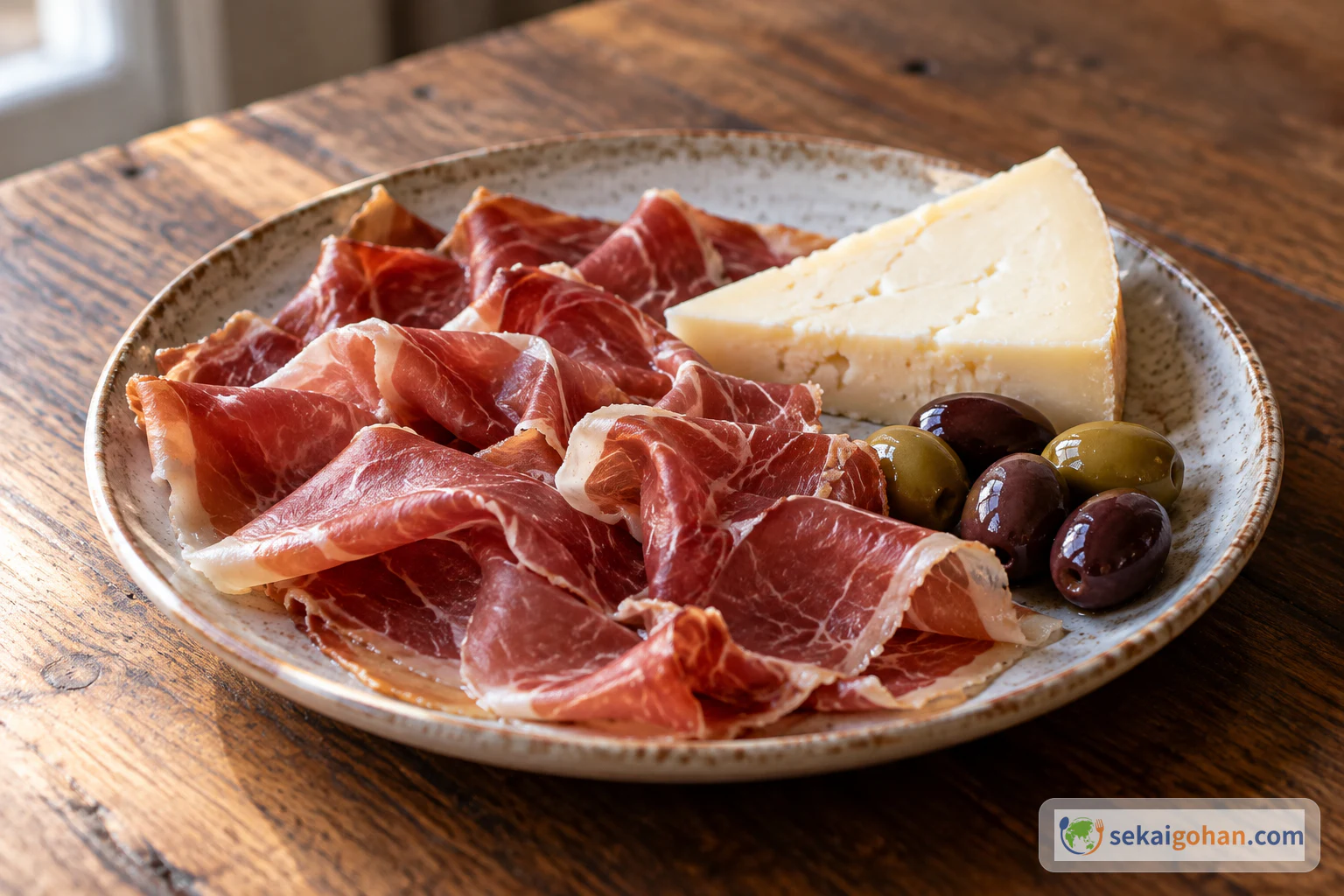
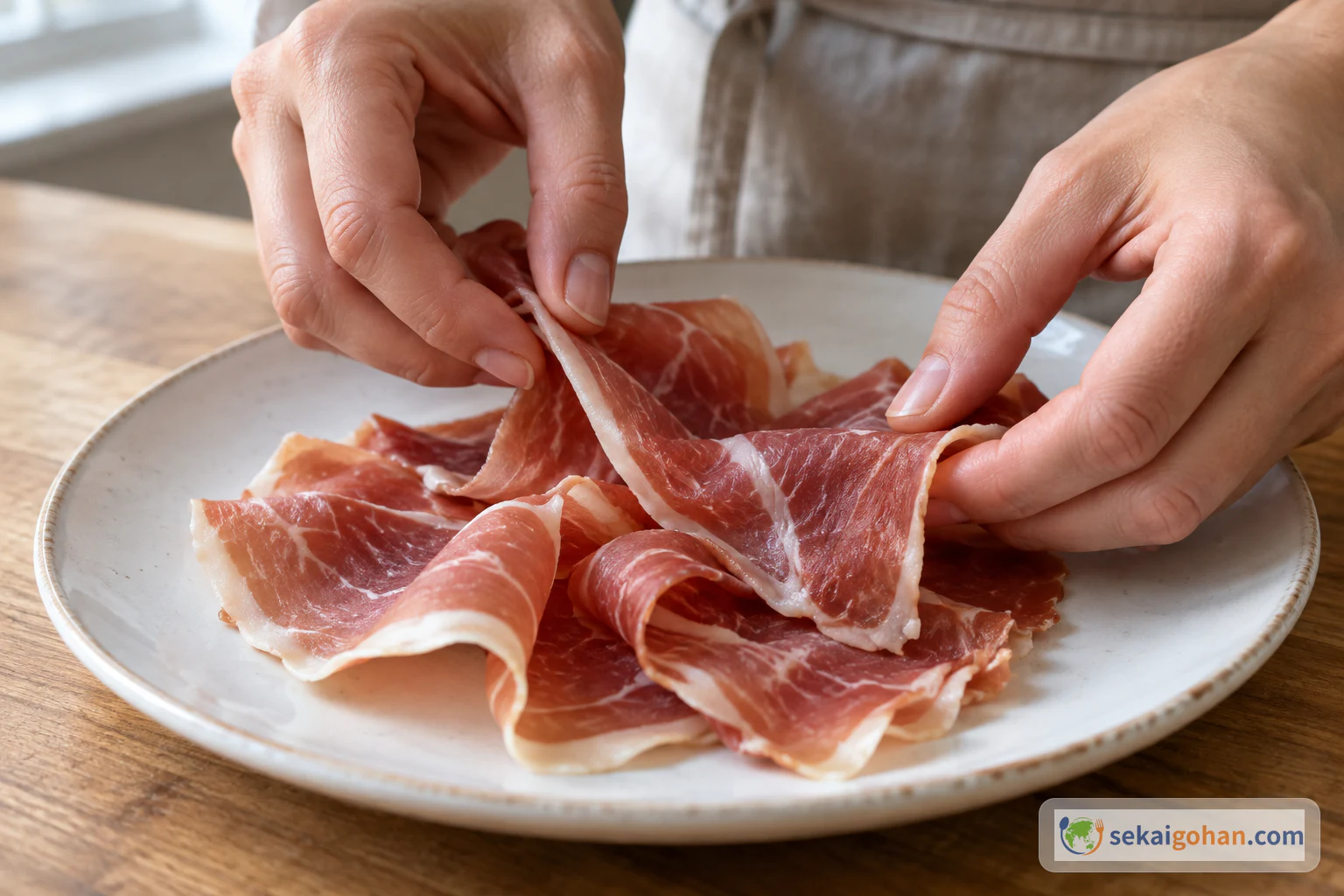
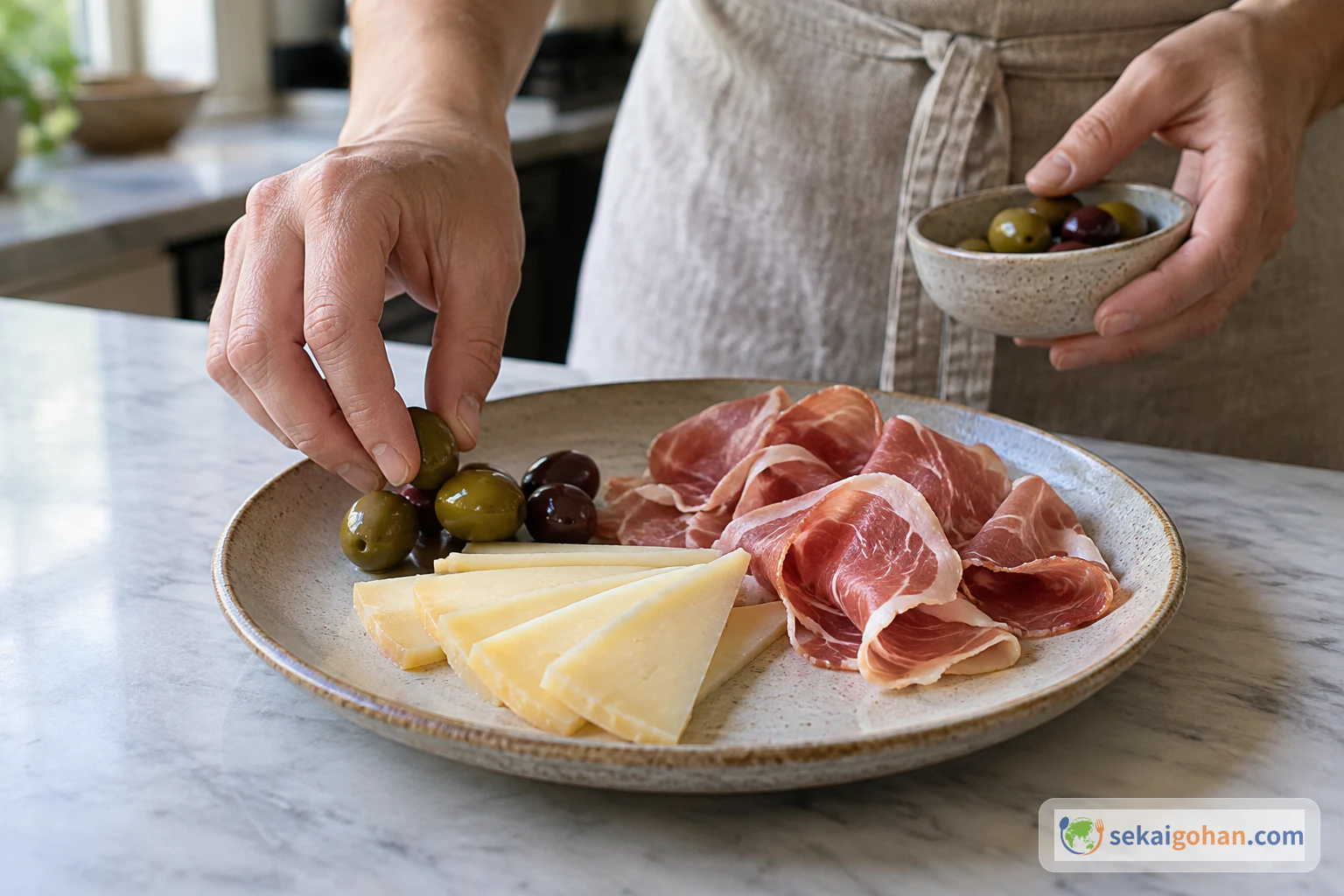
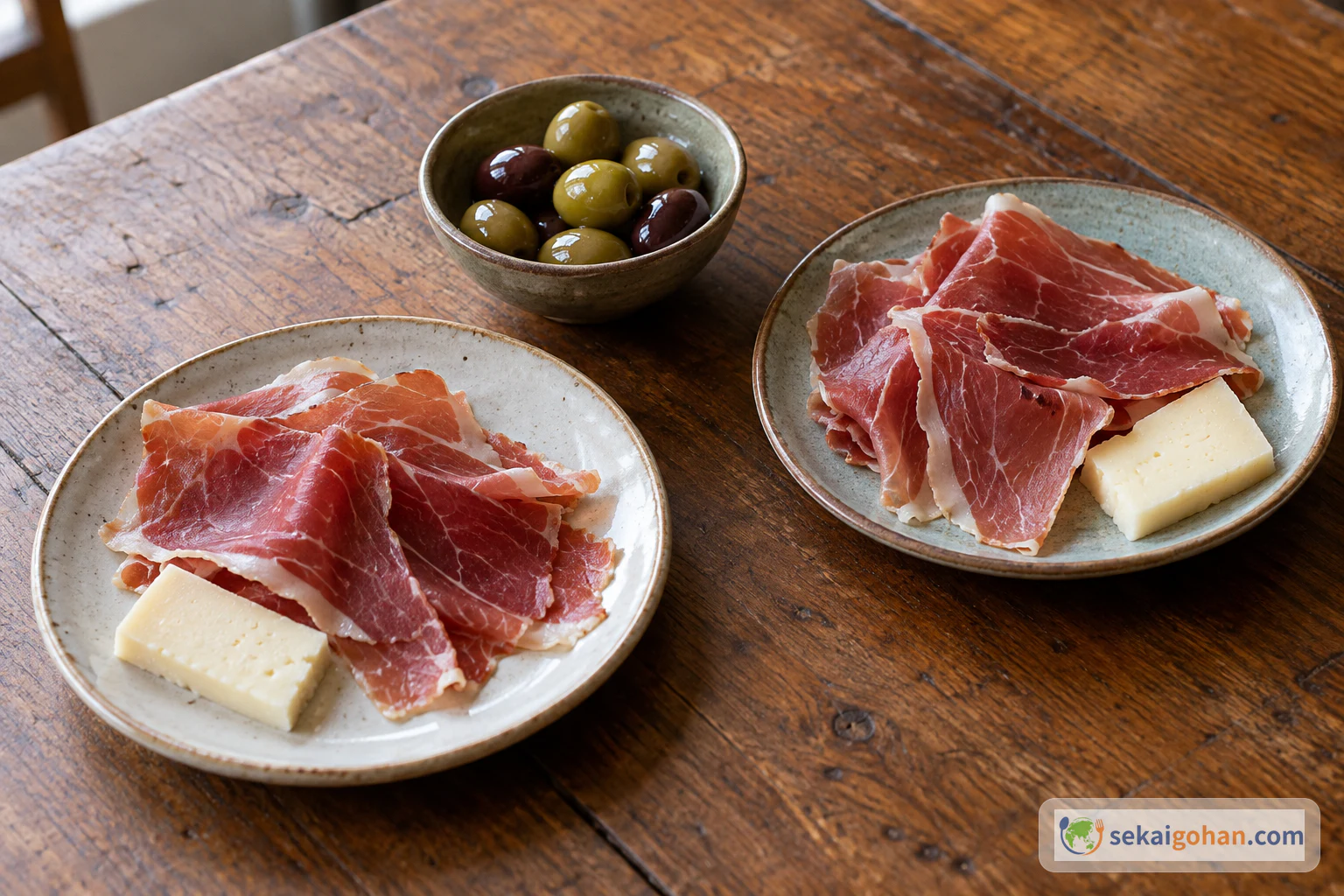
On tables in Njeguši, thin slices of pršut sit beside pieces of Njeguški sir, the local cheese, often with a few olives close by. Njeguški pršut (његушки пршут) is a dried, smoked pork leg from the Njeguši villages of Montenegro, and its flavor comes down to salt and smoke. The ham can't be made at home. Under its protected name it must come from one specific area and spend at least nine months drying and maturing. So the plan here is simple: buy a genuine finished ham, slice or fold it, set the cheese beside it, and let the ham taste of itself.
About Njeguški Pršut
The protected name
Njeguški pršut is an air-dried, smoked pork hind leg, eaten in thin slices. The protected geographical indication "Njeguški pršut" may only be used for ham made in the Njeguši villages that meets the description. Crnogorski pršut ("Montenegrin pršut") is a separate protected name with its own definition, so a cured ham that is only "from Montenegro" is not Njeguški pršut.
How the ham is made
Njeguši sits on the slopes of Mount Lovćen, where air from the sea meets air from the mountains. Producers credit that wind, along with beech smoke, for the character of the ham.
The ham starts as a pork hind leg with the foot and the pelvic bone removed, while the bone, skin and subcutaneous fat stay on. The leg is dry-salted with sea salt, pressed, smoked over slow-burning dry beech wood, and then dried and matured for at least nine months. A ham that imitates only part of that process is a different product.
Legend and history
The story of the ham reaches back to the fifteenth century, though that part is legend. The written record is firmer and starts in the 1830s and 1840s, with a sale in 1838 and travel writing from 1841.
How it is eaten in Montenegro
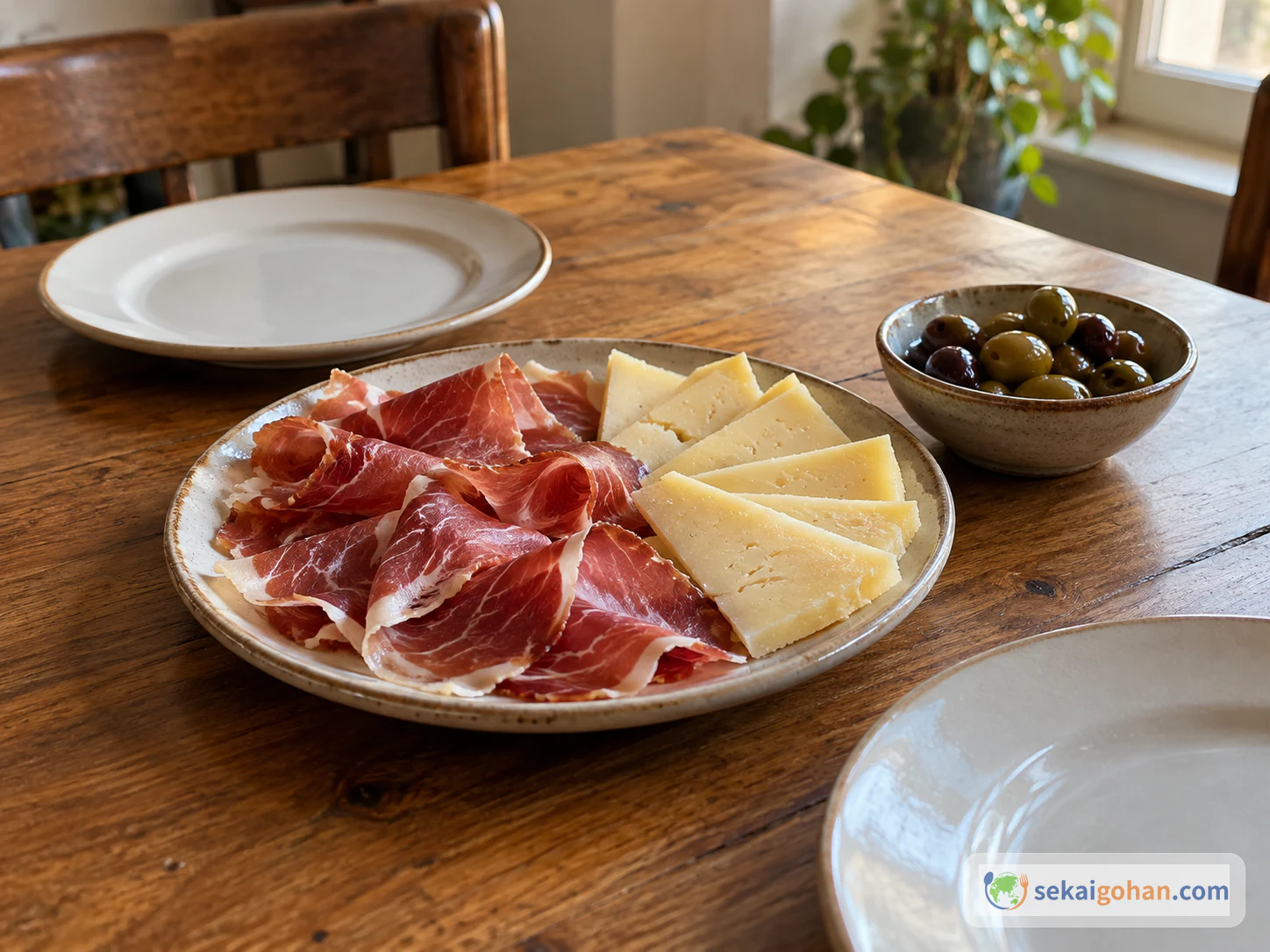
The partner that comes up again and again is Njeguški sir, the cheese from the same area. At home, ham and cheese are served at breakfast with fritters. In village konobas, pršut, cheese and olives arrive together, shared around the table.
Ingredients: Ham, Cheese and a Few Olives for 2
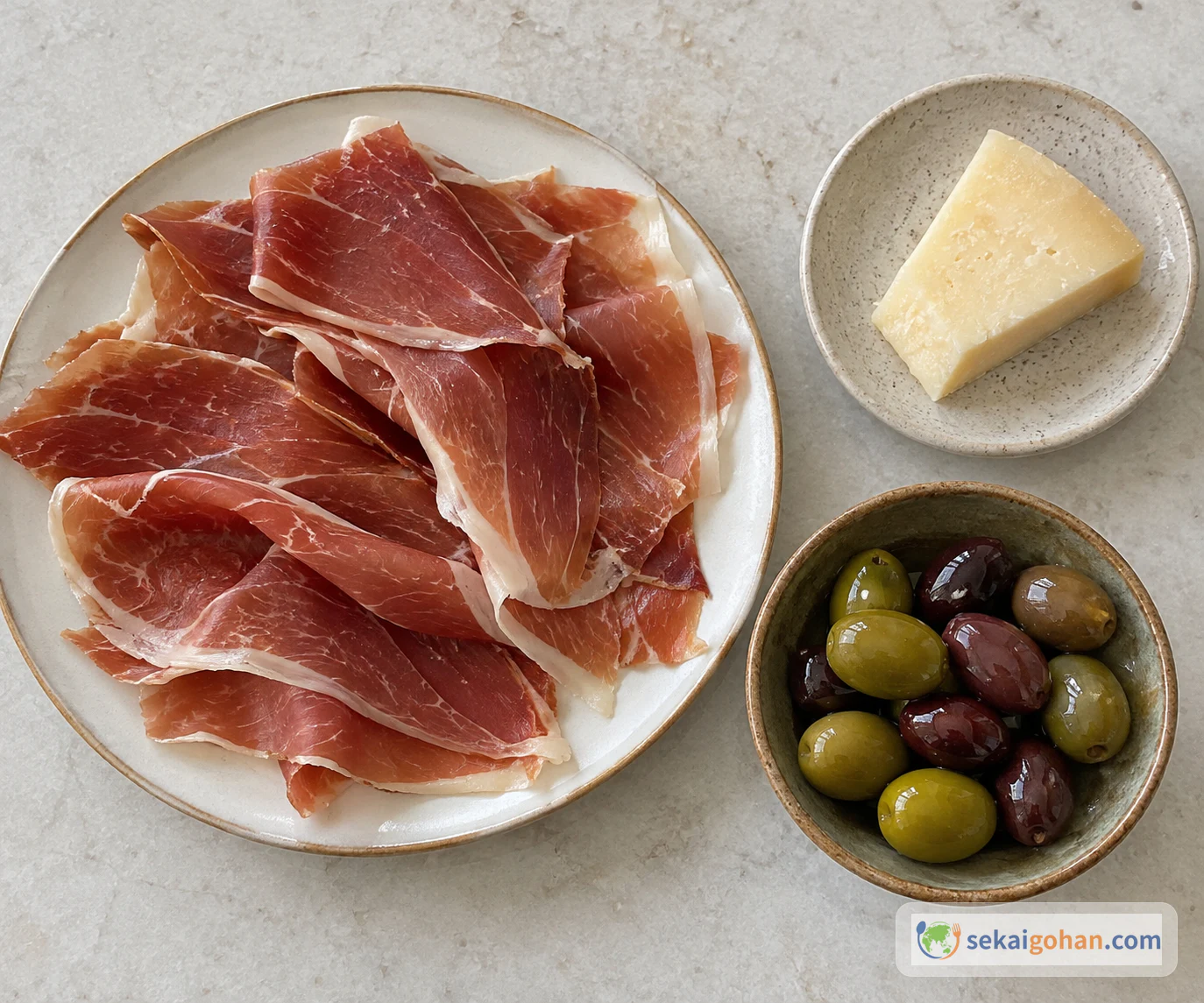
This plate contains pork and dairy (milk in the cheese). Check the ingredient list on the cheese when you buy it.
Equipment
- A serving plate
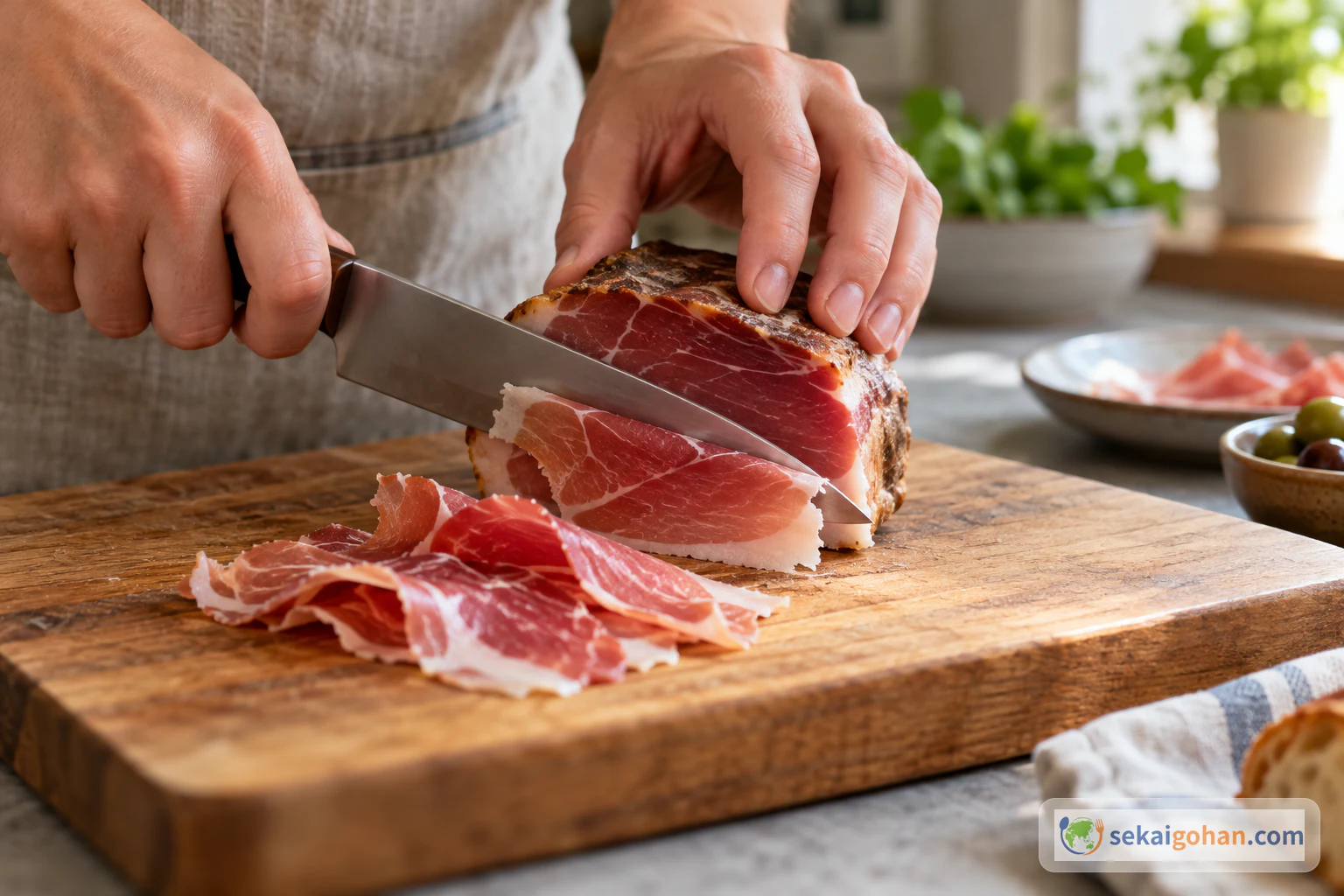
- A sharp knife you already own and a clean cutting board, only if your ham comes as a piece rather than pre-sliced
Choosing the Ham and Cheese
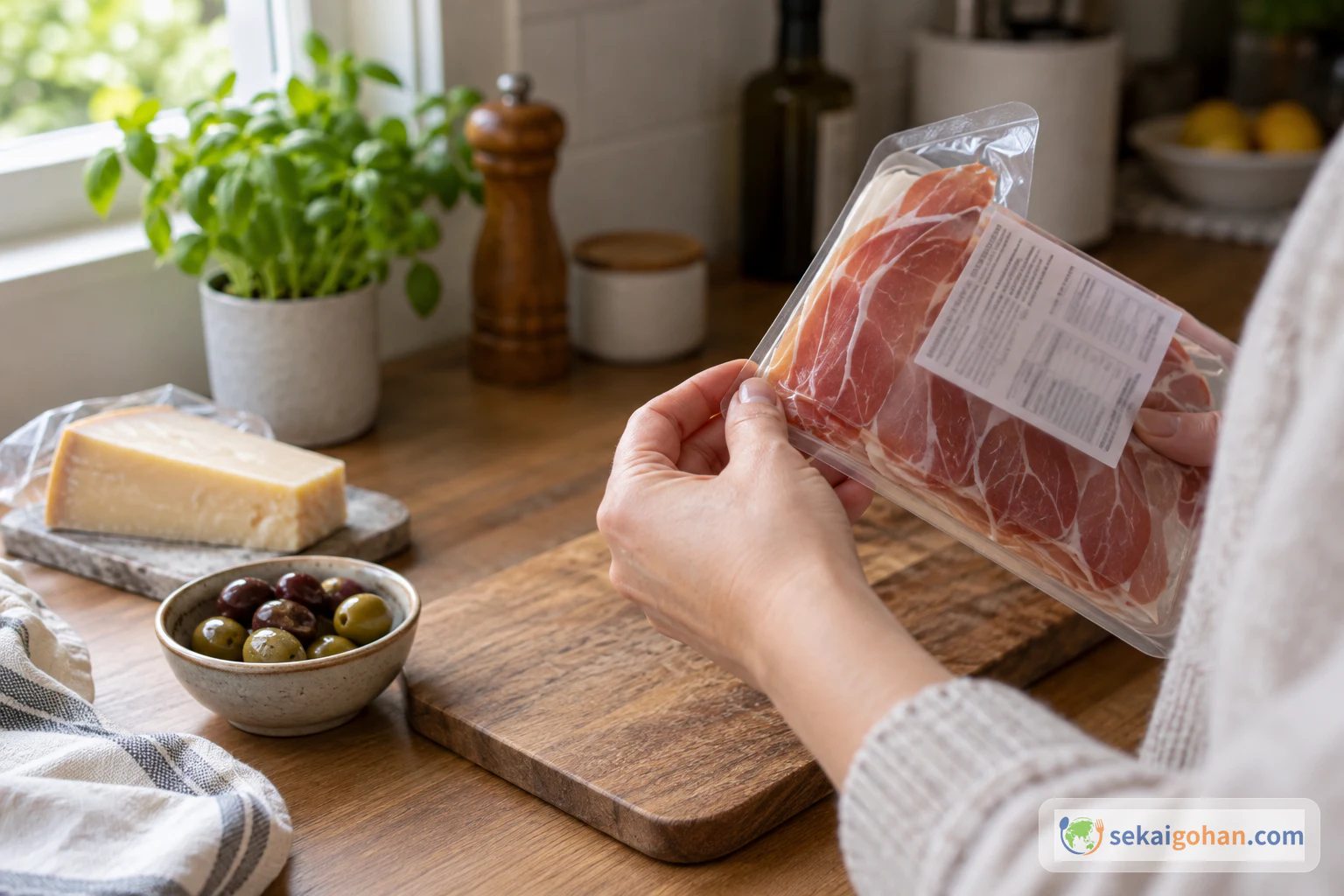
For the ham, look for the protected name and the place of origin on the package. A finished product where you can confirm both is the one to buy. If you can't find it, another cured pork ham can stand in. Call it what it is, though, a Montenegrin cured ham or simply cured ham, not Njeguški pršut.
For the cheese, choose Njeguški sir if you can get it. Any other cheese will differ in saltiness, aged aroma and texture, which makes for a different plate rather than a recreation. Start with a small amount and see how it sits next to the ham.
The amounts are a starting point for two people sharing a starter. Adjust them to how much you have and how salty your ham is.
Method: Read, Slice, Fold, Arrange, Share
Every step uses a finished product. Nothing is cooked, and the ham is never salted or smoked at home.
Fixing a Njeguški Pršut Plate
Most problems with this plate come down to the label or the salt.
| Situation | Likely reason | What to do |
|---|---|---|
| The label doesn't show the name or origin | A different cured ham | Enjoy it, but call it by what the label says rather than Njeguški pršut |
| The plate tastes too salty | Ham, cheese and olives are all salty | Leave out the olives, and add no salt or seasoning |
| The substitute cheese overwhelms the ham | Another cheese has a different saltiness, aroma and texture | Use less of it, and set it apart from the ham |
| You want something warm | This plate is meant to be served cold | Make Njeguški steak as a separate, cooked dish rather than heating the ham on this plate |
Tasting and Cooking with Njeguški Pršut
The strength of the salt and smoke differs from one ham to the next, so let your first bites guide you. Try a slice alone, then with the cheese, then with an olive, and notice how each partner changes it.
The ham also goes into cooked dishes. For Njeguški stek, veal is folded around Njeguški pršut and Njeguški sir, seasoned with thyme, and grilled or pan-seared. You'll need 7 oz (200 g) veal, 2 oz (60 g) pršut, 2 oz (60 g) cheese, 5.5 oz (150 g) potatoes and 1 oz (30 g) kajmak, plus salt, thyme and oil.
Frequently Asked Questions
Is Njeguški pršut the same as prosciutto?
It belongs to the broad family of dry-cured hams, but Njeguški pršut is its own protected name, defined by where it is made in Njeguši and by its specification: sea salt, dry beech smoke, and at least nine months of drying and maturing.
Can I make it at home?
No. The protected product has to be made in the Njeguši area to its specification, so a home version would not be Njeguški pršut.
How long does it keep after opening?
Follow the producer's label and refrigeration instructions. Generic cured-meat storage charts don't cover Njeguški pršut specifically, so the package is your guide.