Kačamak: Montenegrin Potatoes and Corn Flour Pounded with Cheese and Kajmak

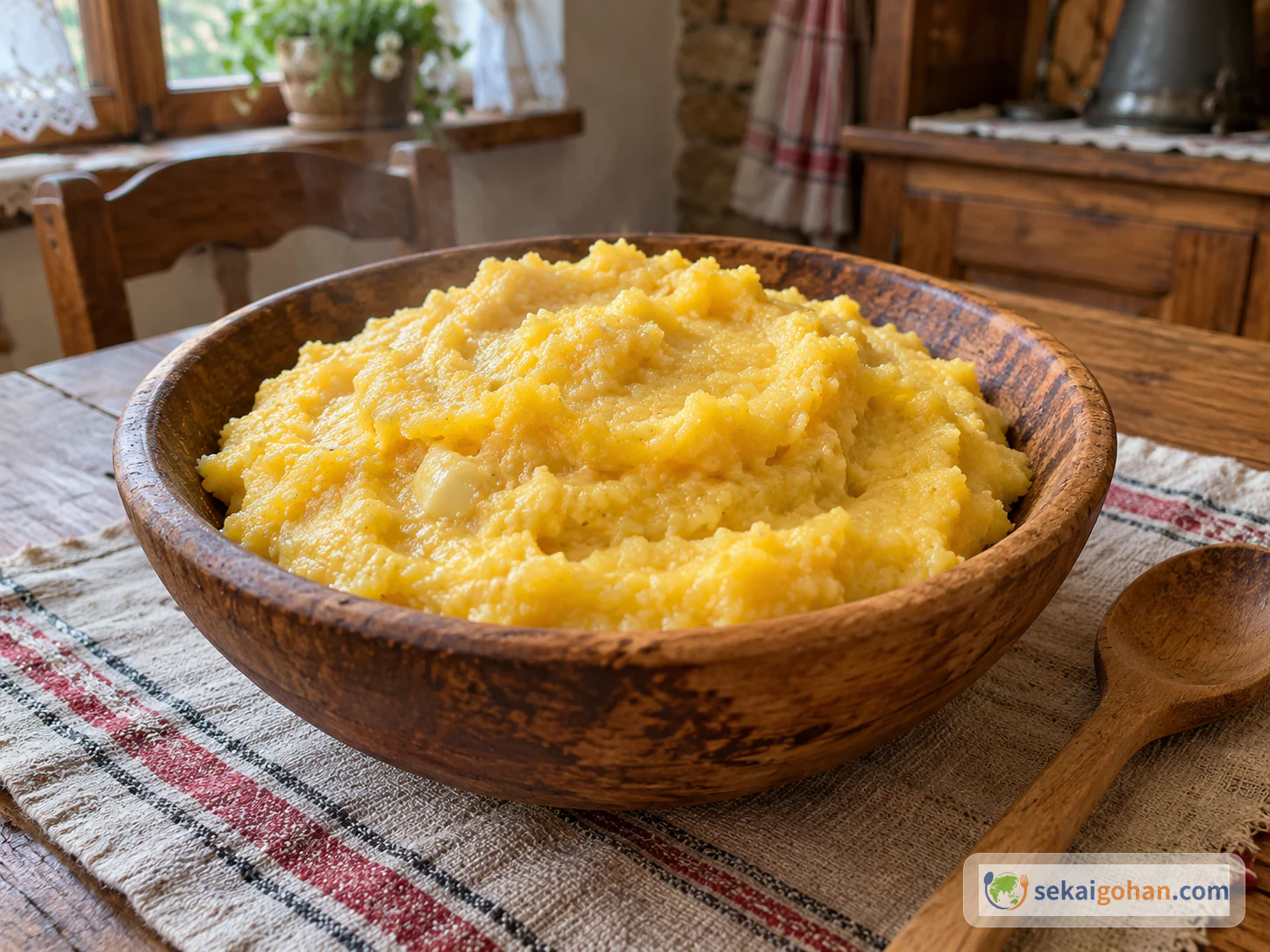
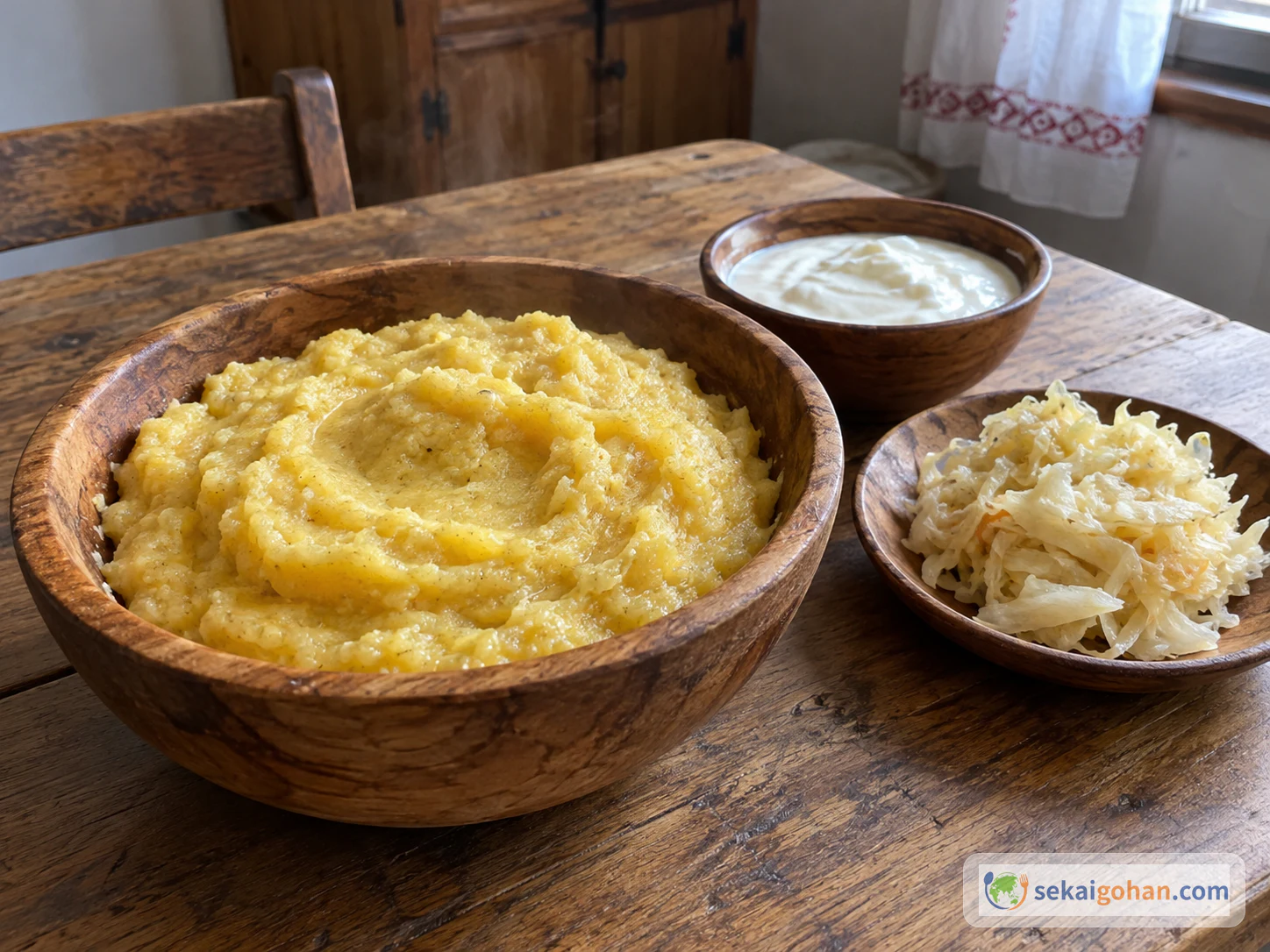
Montenegrin kačamak of pounded potatoes and corn flour mixed with cheese and kajmak, served in a wooden bowl
Serves
4 servings
Cuisine
Montenegrin

How to make Montenegrin kačamak, a dish of potatoes and corn flour cooked and pounded together, then mixed with melted fresh cheese and aged kajmak. Covers why the flour is steamed before stirring, how to pound the mass with a wooden spoon, how to choose corn flour, cheese and kajmak substitutes, and how this potato version differs from other dishes called kačamak.

Cooking flow

Cooking steps

STEP11 / 7

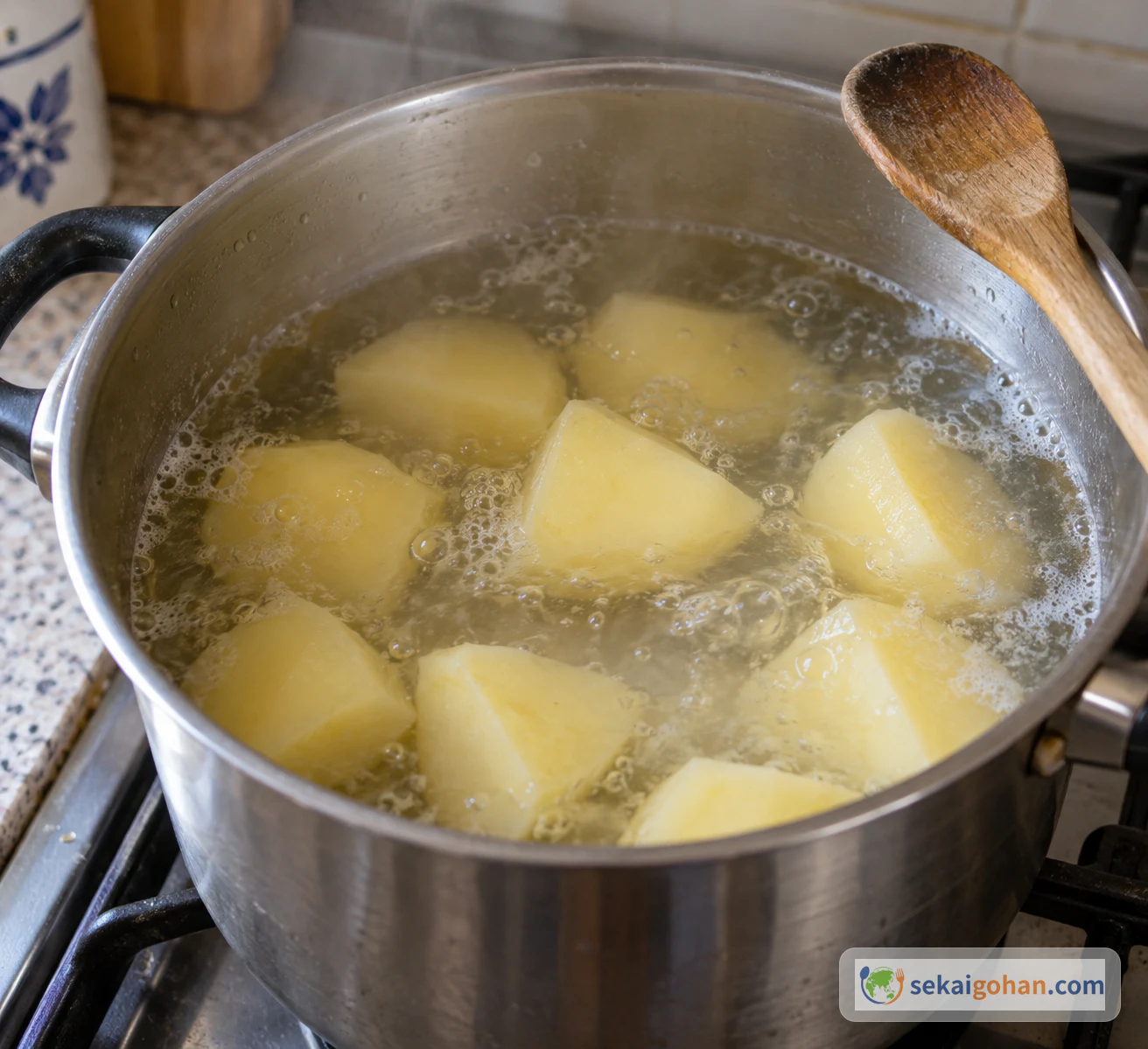
Boil the potatoes in salted water

Peeled, quartered potatoes boiling in salted water
Boil the quartered potatoes until they are soft right through to the center

Peel the potatoes and cut them into quarters. Put them in a deep pot with about 2 quarts (2 L) water and 1 tbsp salt, and boil for about 30 minutes, until a potato quarter breaks apart at the center with no resistance.

STEP22 / 7

Ladle out some of the cooking water

STEP 2

Ladle 2–3 dl (200 ml to 1¼ cups (300 ml)) of the cooking water out of the pot. Leave the potatoes and the rest of the water in the pot.

STEP33 / 7

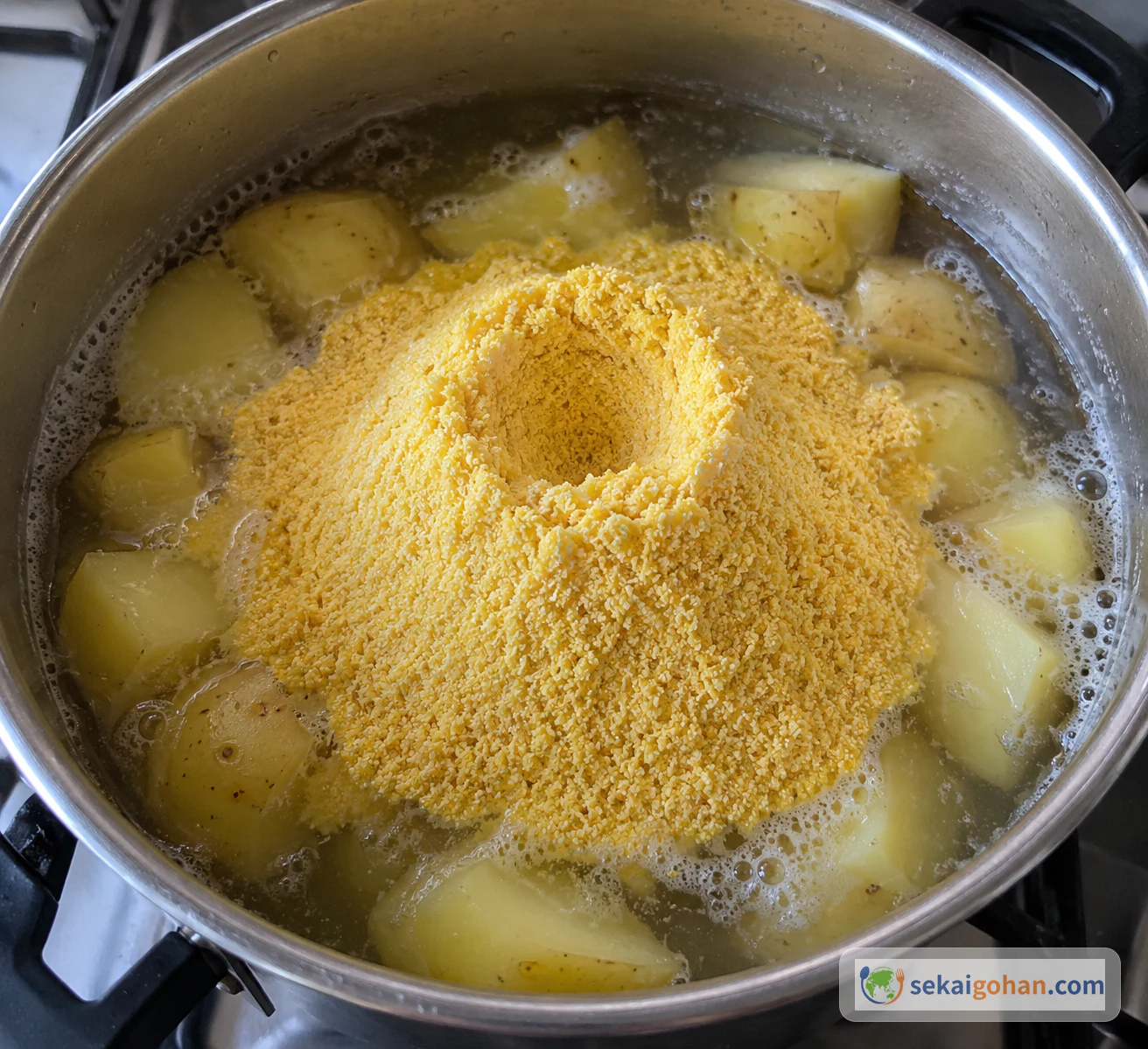
Pile the corn flour on top and let it steam

Corn flour piled in a cone on the potato water, with a hollow in the center
Pile the flour on the water without stirring, and open a hollow in the center

Pour 1.25 lb (600 g) corn flour onto the surface of the water in a cone shape. Do not stir. Make a hollow in the center of the cone with a wooden spoon so the steam can pass through.

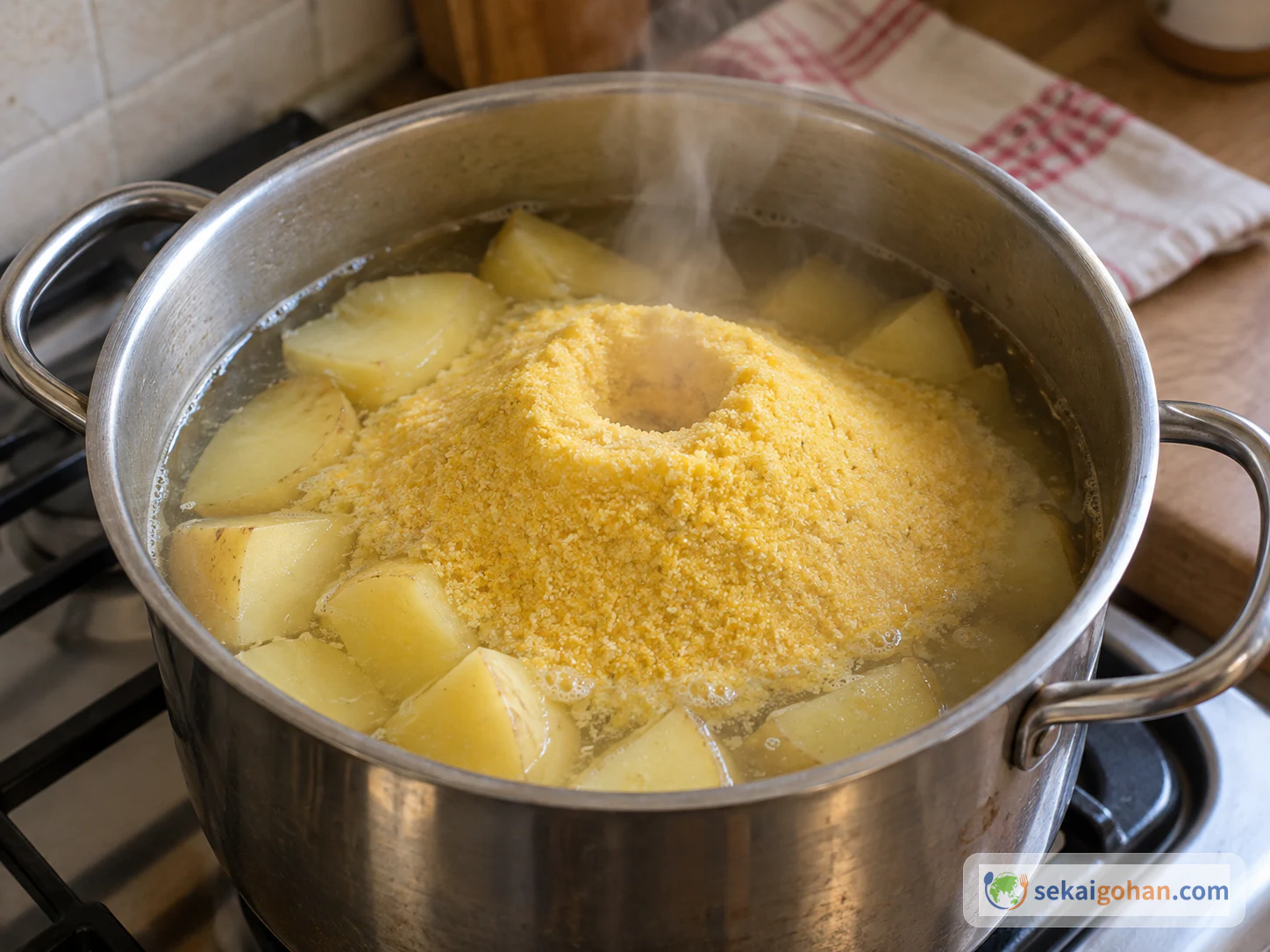
Leave the pot over low heat for about 20 minutes. The flour gradually sinks into the water as it steams.

Steam rising from the hollow in the corn flour over low heat
Let the flour steam over low heat, still without stirring
STEP44 / 7

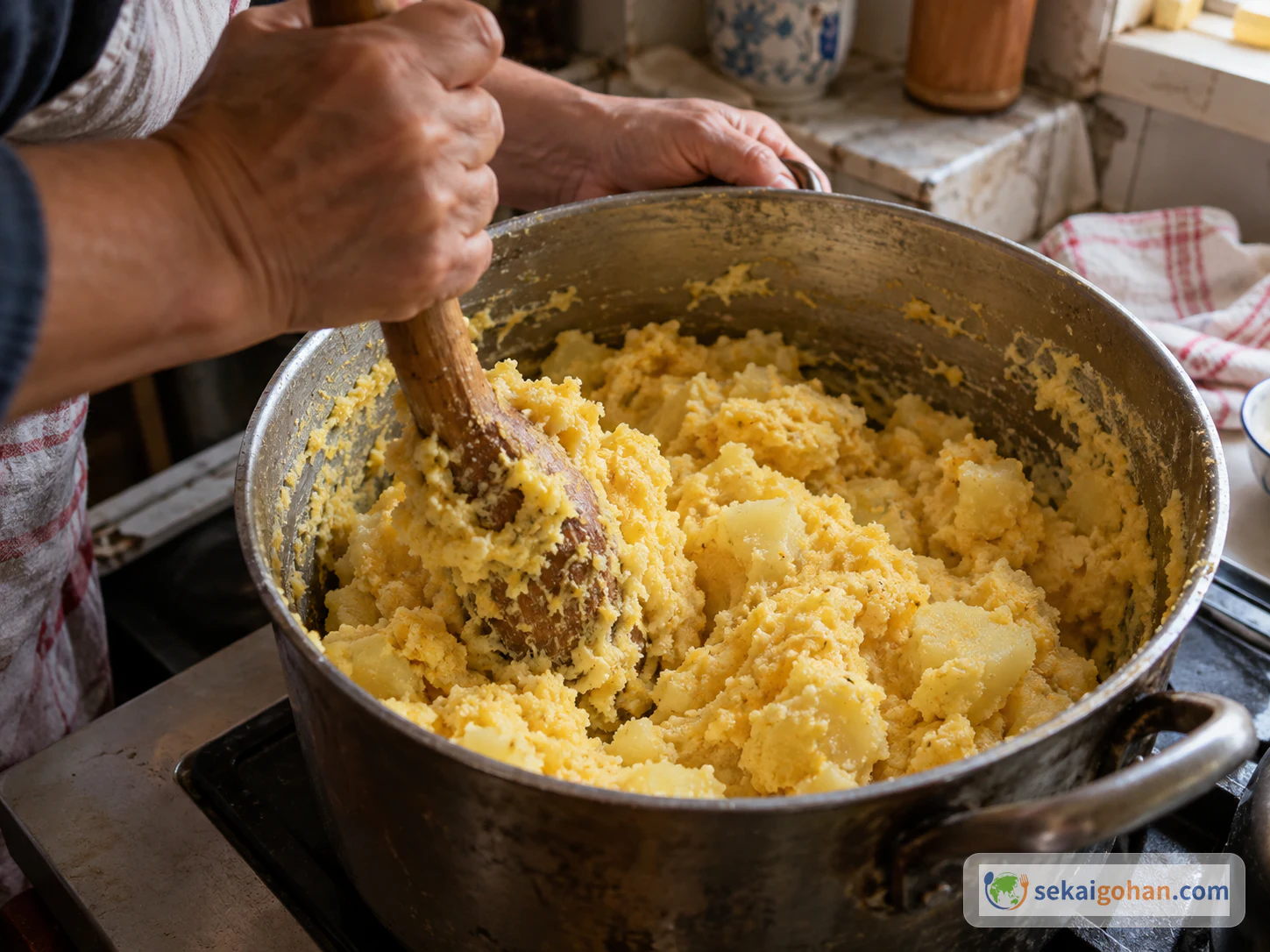
Pound the potatoes and flour together

Pounding potatoes and corn flour with a wooden spoon into a heavy, even mass
Pound until the potatoes and flour become one dense, even mass

Over low heat, mix the potatoes and corn flour, then pound them with a wooden kačamalj or a sturdy wooden spoon for about 10–15 minutes. Keep going until the potatoes are completely broken down, no raw, floury pockets remain, and everything has become one even, homogeneous mass.

STEP55 / 7

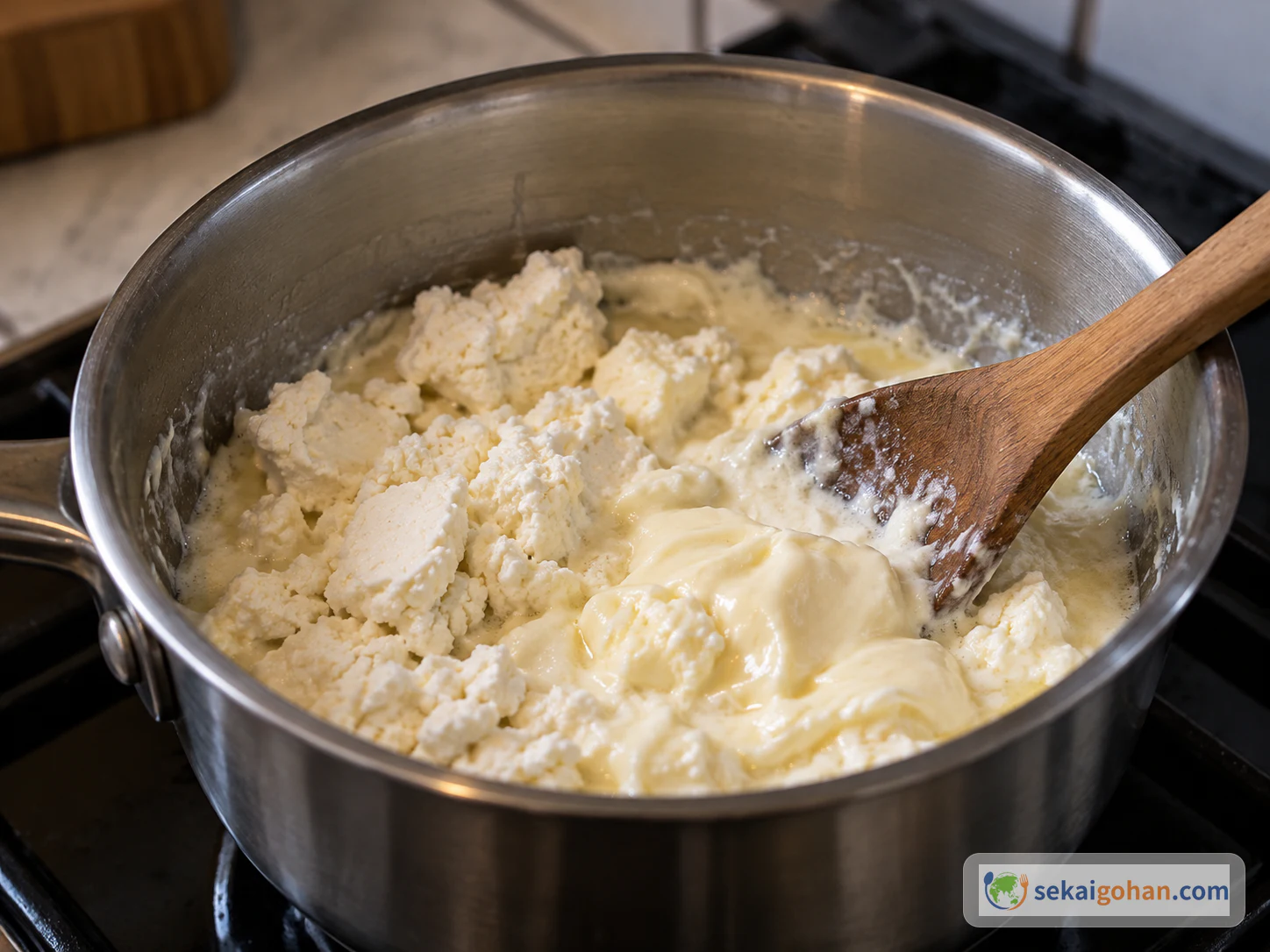
Melt the cheese and kajmak in a separate pan

Fresh cheese and kajmak melting together over low heat in a small saucepan
Melt the cheese and kajmak gently in their own pan

In a small saucepan, melt 10.5 oz (300 g) grated fresh cheese and 9 oz (250 g) aged kajmak together over low heat.

STEP66 / 7

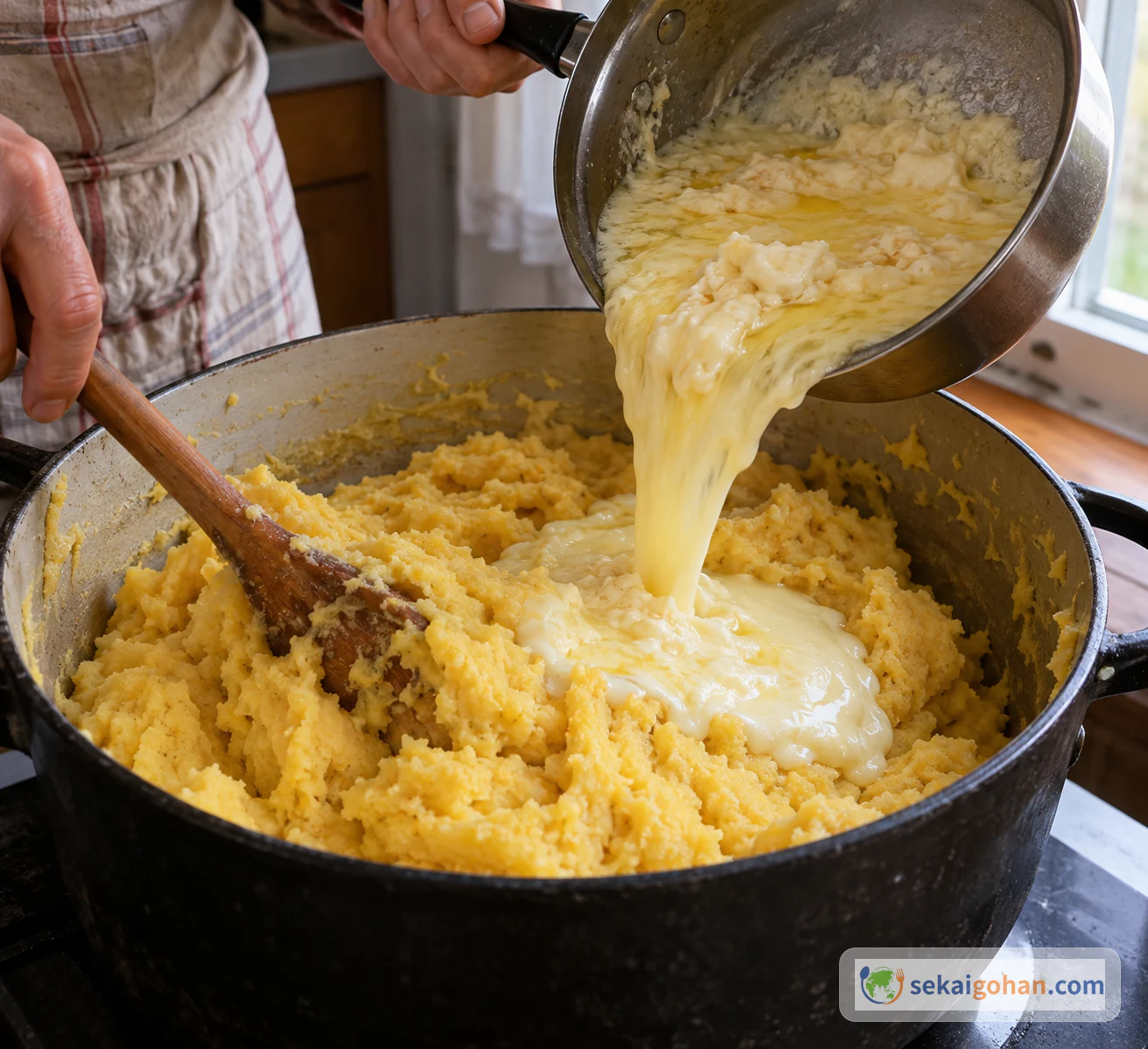
Combine and keep mixing

Melted cheese and kajmak being poured into the pounded potato and corn flour
Pour in the melted dairy and work it through until everything is well combined

Pour the melted cheese and kajmak over the pounded potatoes and corn flour, and keep mixing for about 10 minutes, until the dairy is worked evenly through the whole mass. Bring it to the table while it is hot.

STEP77 / 7

Serve with soured milk or sauerkraut

Hot kačamak on the table with soured milk and sauerkraut served separately
Serve hot, with soured milk or sauerkraut alongside

Spoon the hot kačamak into bowls and serve soured milk or sauerkraut on the side.

0 / 0
Ingredients

Ingredients

1 / 1

Ingredients

Ingredient Amount Role
Potatoes 2.25 lb (1 kg) Peeled and quartered. Boiled, then pounded together with the corn flour
Corn flour (cornmeal) 1.25 lb (600 g) Piled on the potato water, steamed, then pounded into the potatoes
Aged kajmak (old kajmak) 9 oz (250 g) Melted with the cheese and mixed in at the end. Rich dairy fat and a salty, aged flavor
Fresh cheese 10.5 oz (300 g) Grated, melted with the kajmak and mixed in at the end
Water about 2 quarts (2 L) For boiling the potatoes
Salt 1 tbsp For the potato water

To serve: soured milk or sauerkraut, as needed.

0 / 0

A pot of peeled potatoes boils in salted water, and yellow corn flour is piled on the surface in a cone and left alone to steam. Only then does the work begin: a wooden pounder or a sturdy wooden spoon drives potatoes and flour together until they turn into one heavy, even mass. Melted fresh cheese and aged kajmak are poured over and worked through. This is Montenegrin kačamak, a thick dough rich with dairy fat rather than a loose porridge, and it goes to the table hot, with soured milk or sauerkraut alongside.

Montenegrin Kačamak and Its Relatives

This kačamak is a weekend dish, made when the whole family is together. It's built on corn, and Montenegro has its own: Yellow Jarik (Žuti Jarik), a hard local maize. Corn was once central to life there, and a hard kernel suited to mountain growing conditions helps explain how a corn-and-potato dish became part of everyday eating. In the mountains, kačamak is served on wooden plates with soured milk.

Kajmak, also called skorup, is the other key ingredient. It's a dairy product of northern Montenegro, made by collecting the fat that forms on boiled milk and then aging it.

The name kačamak covers several corn-based and flour-based dishes across the Balkans. Smočani kačamak is made from cooked potatoes with wheat flour or corn flour, topped with kajmak and crumbled cheese, and served with sour milk (kiselo mlijeko). Another version skips potatoes entirely: a mound of corn flour is cooked in boiling salted water and beaten with a wooden kačamar, then mixed with cheese and kajmak melted separately. The version here combines potatoes, corn flour, fresh cheese and aged kajmak.

Ingredients (Serves 4)
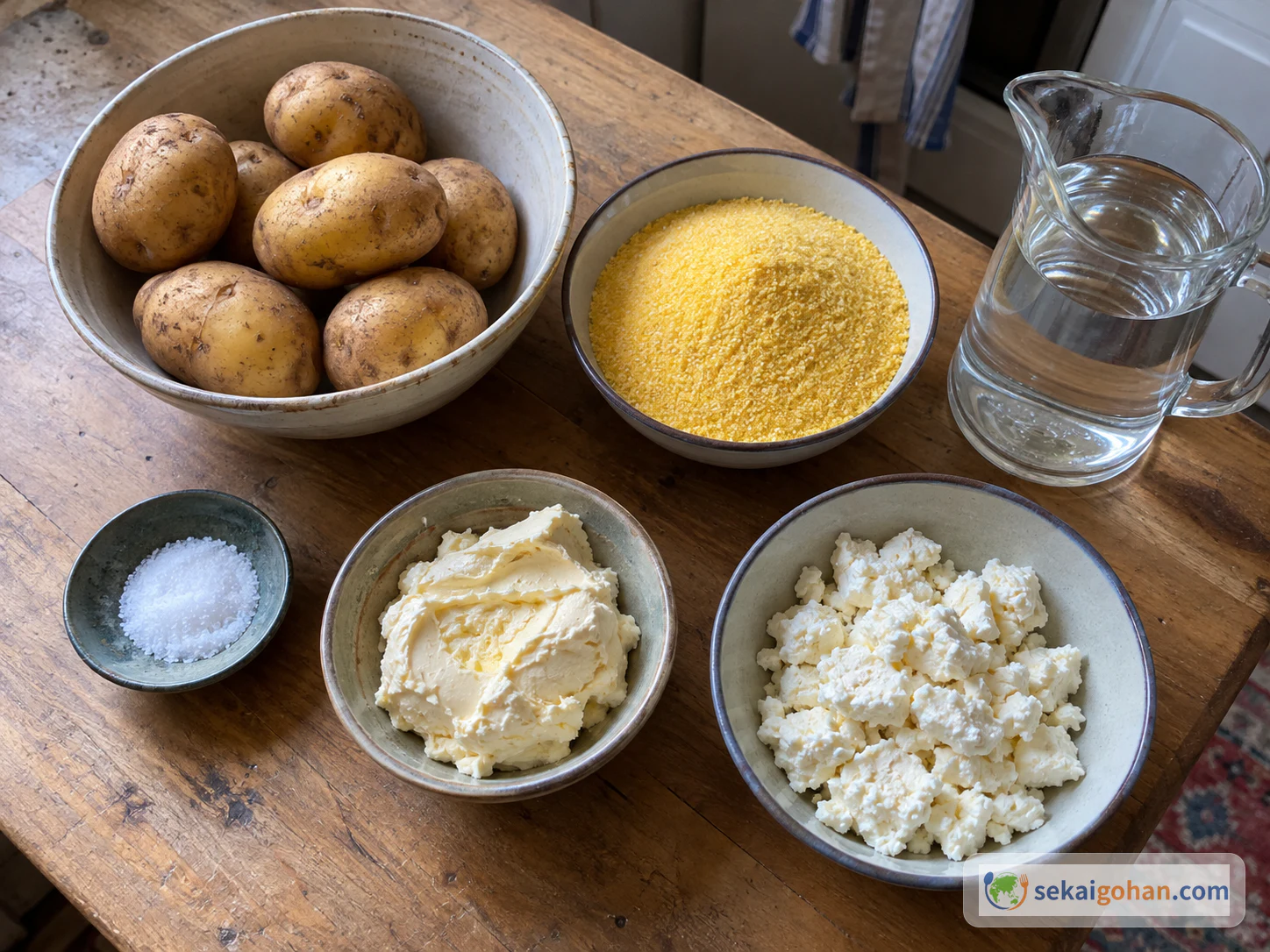
Overhead view of the ingredients for kačamak: potatoes, corn flour, kajmak, fresh cheese, salt and water
Potatoes and corn flour make up the base; cheese and kajmak are melted separately and added at the end

This is a full four-serving batch with a large amount of corn flour, so the finished mass is very heavy. Have a deep, sturdy pot and a strong wooden spoon ready before you start.

Allergy note

This dish contains dairy (cheese and kajmak). Corn flour products differ by brand, so check the package for allergen labeling and any shared-facility statements before you buy.

Equipment

  • A large, deep, sturdy pot for the potatoes, corn flour and the final mixing
  • A small separate saucepan for melting the cheese and kajmak
  • A wooden kačamalj (a wooden pounder) or a large, strong wooden spoon
  • A ladle for taking out some of the potato cooking water

Choosing Corn Flour, Potatoes, Cheese and Kajmak

Corn flour. Supermarket cornmeal varies a great deal in grind, so check the package. A coarse grind comes closer to flour milled from hard local corn like Yellow Jarik and leaves more texture; a fine grind gives a smoother result.

Potatoes. The potatoes break down completely and merge with the flour, so choose a floury variety.

Fresh cheese. Fresh cheeses differ in saltiness, moisture and how they melt. Look for one that's mildly salted and holds together when heated, and grate it.

Kajmak. Aged kajmak has a salty, matured flavor that sets it apart from fresh cream, clotted cream or sour cream. If you can't find it, a younger kajmak or clotted cream will stand in, though neither matches the salt, the fermented notes or the aged aroma.

Salt. How salty the finished dish tastes depends heavily on your cheese and kajmak. Taste once the dairy is in, and add a little salt only if it needs it.

Method: Boil, Steam, Pound, Then Fold in the Dairy

Before you start

Do not stir the corn flour when it first goes into the pot. Steaming first, then pounding, is the whole point of the method.

Allow 10 minutes of preparation and 1 hour to 1 hour 15 minutes of cooking for four servings. Go by the state of the potatoes, flour and dairy at each step as well as by the clock.

Common Kačamak Problems and Fixes

The single most important habit

Resist the urge to stir the corn flour the moment it hits the water. The cone and its central hollow are what let it steam, and stirring early changes that step entirely.

The other thing to prepare for is weight. This much corn flour and potato makes a far heavier mass than most home pots of mash, and a thin pot or flimsy spoon will struggle through the pounding. This is a job for a deep, heavy pot and a thick wooden spoon; a whisk or electric mixer won't do it.

What you notice Likely cause What to do
Floury pockets or a raw-flour taste The flour was stirred before it steamed, or the pounding stopped early Keep pounding over low heat until the mass is even throughout
The potatoes stay in lumps They were not boiled until soft at the center Next time, boil until a quarter breaks apart with no resistance before adding the flour
The spoon or pot is hard to work The batch is large and very heavy Use a deeper, heavier pot and a thick wooden spoon; work in short, firm strokes
The finished dish tastes too salty Salty cheese or kajmak on top of salted potato water Next time choose a milder cheese; the soured milk on the side also helps balance it

Serving Kačamak

Serve kačamak hot, straight from the pot, with soured milk or sauerkraut. Something cool and sour on the side cuts through all that potato, corn and dairy fat. Extra kajmak or homemade yogurt works too.

If you can't find soured milk, plain unsweetened yogurt is a good stand-in. It's thicker and its sourness is a little different, but it does the same job.

Frequently Asked Questions

Do I need a special wooden pounder?

The traditional tool is a wooden kačamalj, but a large, strong wooden spoon works. Pick one sturdy enough for a very heavy mass.

Is kačamak the same as polenta?

Kačamak is sometimes loosely compared to polenta, but this potato, cheese and kajmak version is a different dish from Italian polenta.

Is there kačamak without potatoes?

Yes. Smočani kačamak can be made with wheat flour or corn flour, and there's also a cornmeal-only version beaten in salted water and finished with melted cheese and kajmak.
Sources

  • GIZ / Seerural, Balkan Traditional Cookbook, "Polenta with Yellow Jarik Corn (Kačamak with Yellow Jarik Corn)." The Montenegrin recipe followed in this article: four servings, preparation and cooking times, ingredient amounts, the order of the method, serving warm with soured milk or sauerkraut, the weekend family context and the background on Yellow Jarik hard corn. The grind of the corn flour and the salt level of the cheese are not specified, and the published calorie figure is not reproduced here. https://seerural.org/wp-content/uploads/2020/06/GiZ-cookbook-interactive.pdf
  • National Tourism Organisation of Montenegro, Arome i ukusi Crne Gore. Smočani kačamak made with cooked potatoes and wheat or corn flour, pounded until smooth, topped with kajmak and crumbled cheese and served with sour milk; and skorup/kajmak as a northern Montenegrin dairy product made from the fat of boiled milk and aged. No quantities are given. https://www.montenegro.travel/uploads/content/2_explore/arome-i-ukusi-crne-gore.pdf
  • Radio Televizija Budva, "Kačamak sa sirom i kajmakom." Cross-check of the method: keeping the potato cooking water, not stirring the corn flour at first so it can steam briefly, mashing with a wooden spoon or pounder until homogeneous, adding cheese and kajmak, and serving warm with extra kajmak or homemade yogurt. Not used for quantities. https://www.rtvbudva.me/zabava/kacamak-sa-sirom-i-kajmakom/ChvdwF8guo
  • Accursed Mountains regional tourism resource, "Gastronomy." A distinct cornmeal-only kačamak beaten with a wooden kačamar, with cheese and kajmak melted separately; strained cooking water used to loosen that version; and a mountain serving scene with wooden plates and soured milk. Treated as a separate version and not combined with the recipe above. https://accursed-mountains.me/gastronomy/