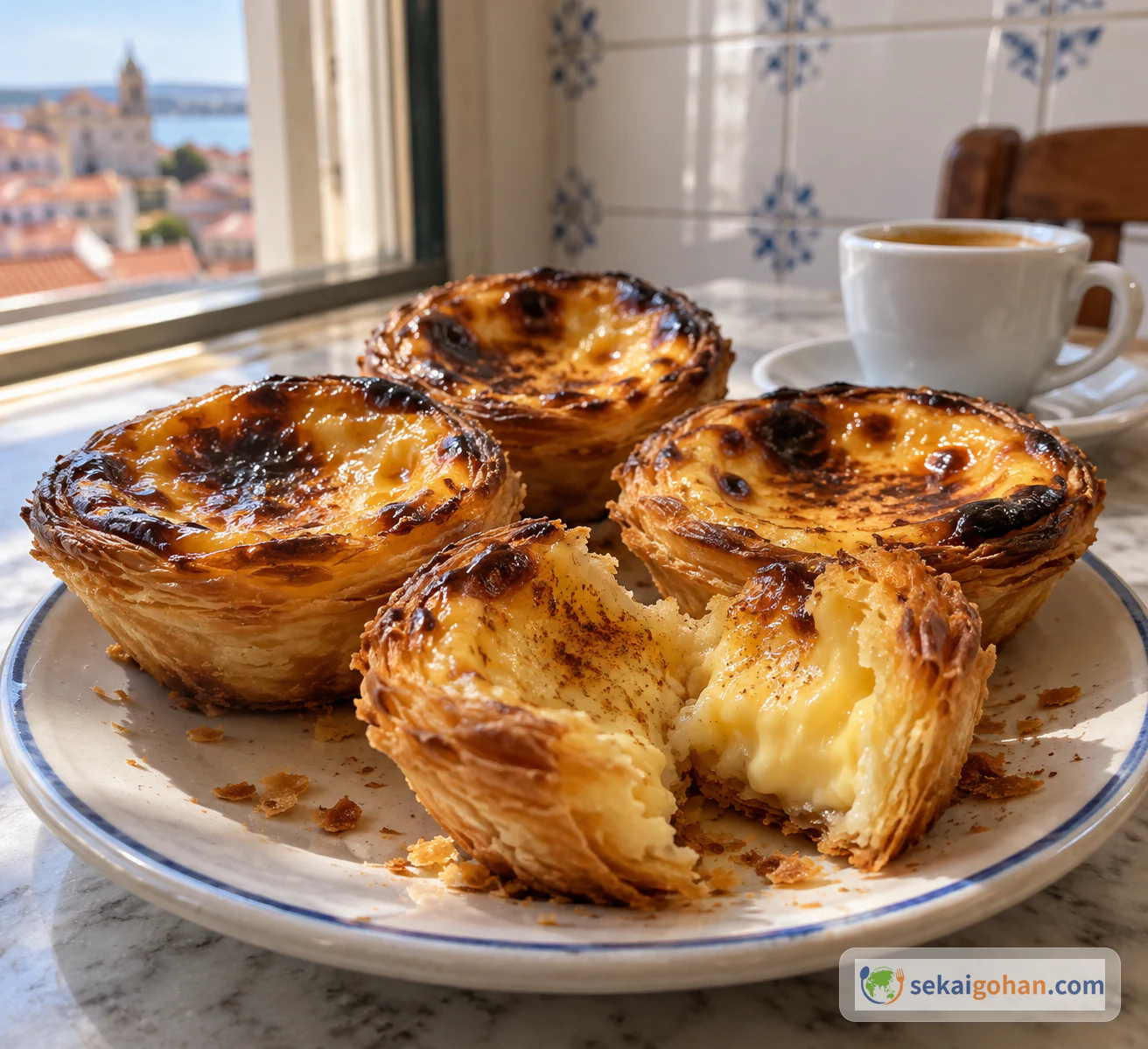

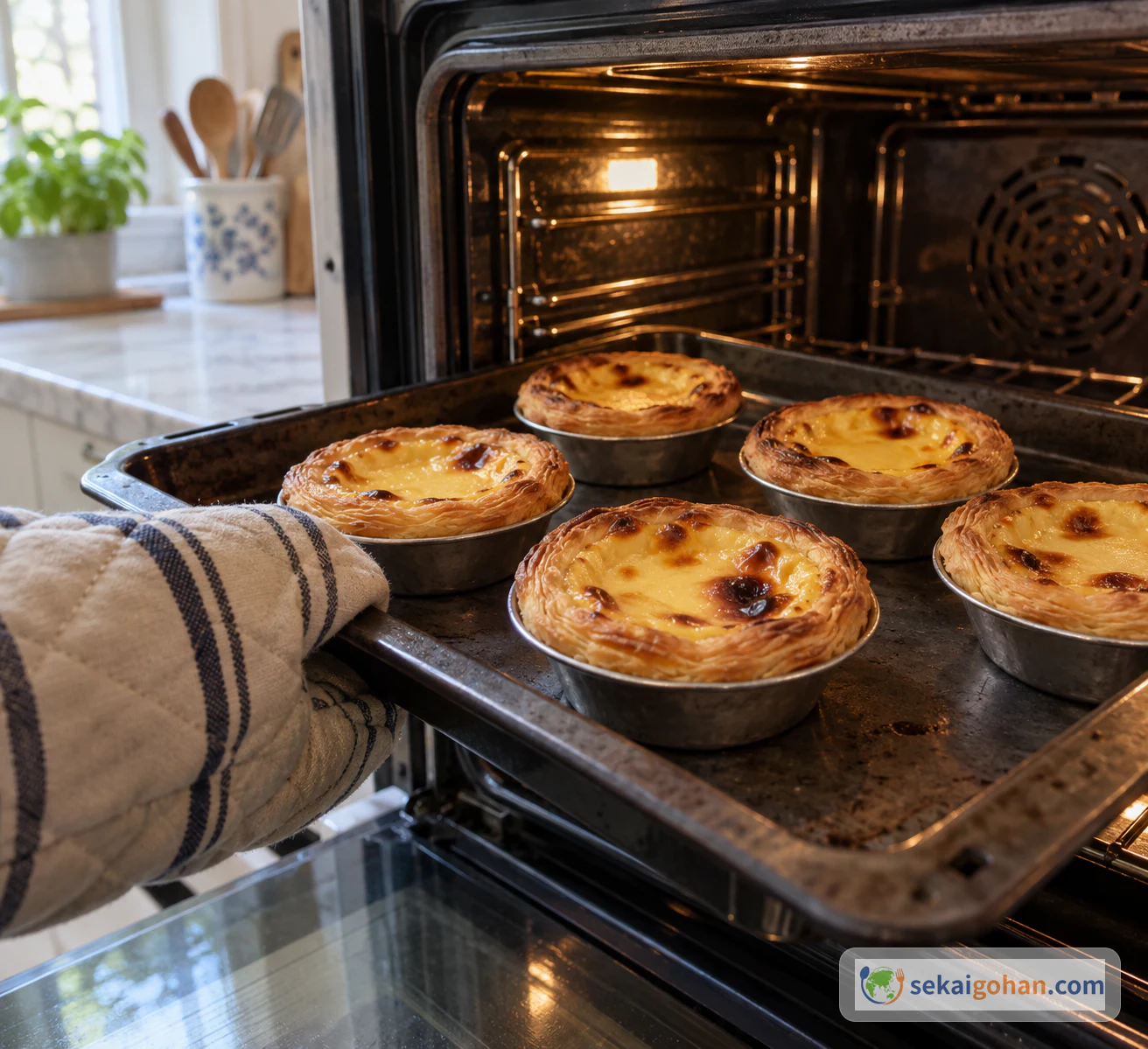
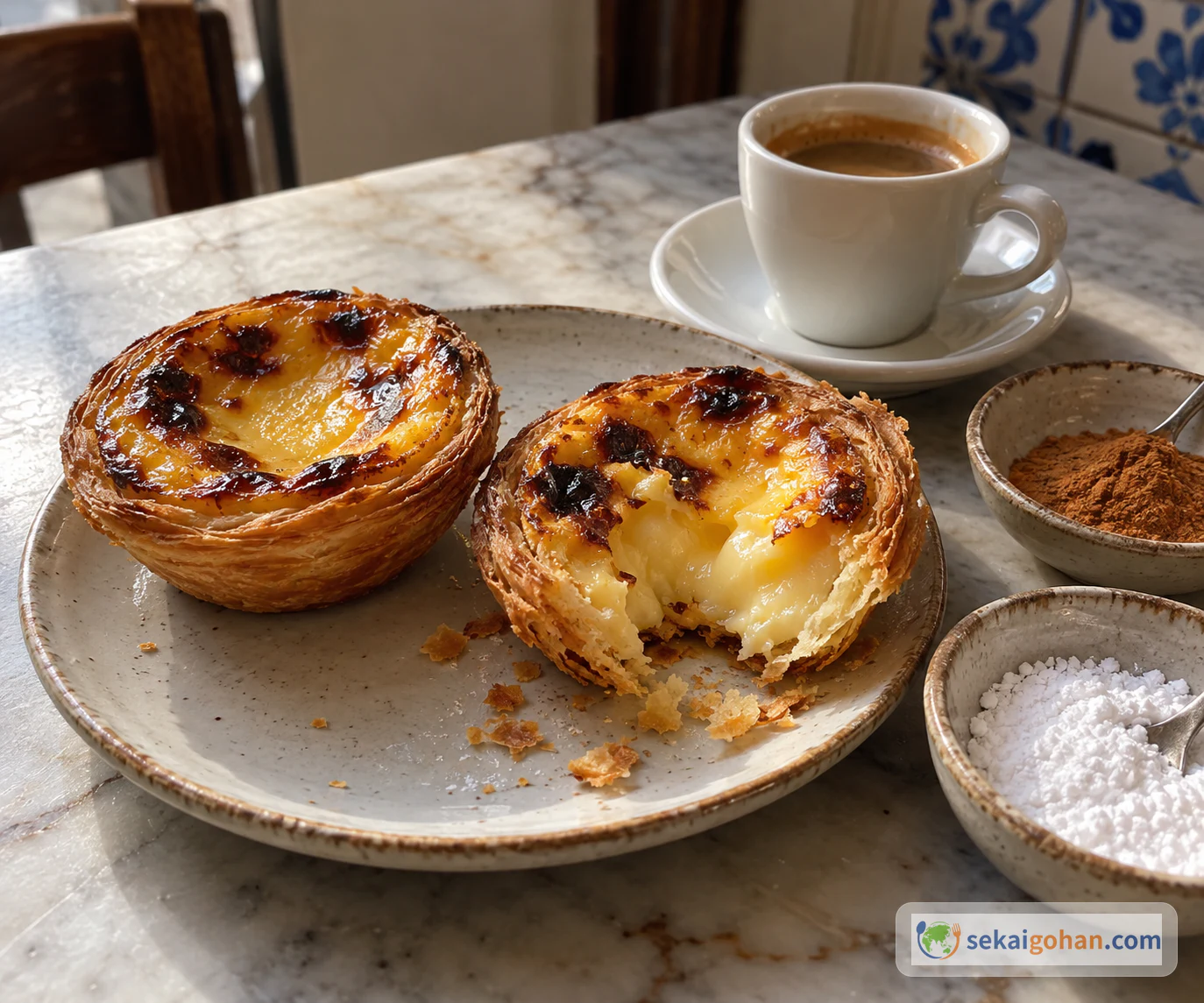
Picture a small tart still warm from the oven, next to a hot coffee. Break it open and the thin layers of pastry come apart in flakes while the custard inside stays soft, and the dark blistered spots on top add a toasty edge to the egg-yolk cream. One is a pastel de nata; several are pastéis de nata, and they are among Portugal's best-loved sweets. For more of the country's cooking, our Portugal page leads on to dishes such as caldo verde, açorda and amêijoas à Bulhão Pato.
Pastel de Nata in Belém and Portugal
The pastéis de nata of Belém are among Portugal's signature sweets: small, lightly browned custard pastries that pair well with a coffee. The roots of Portuguese pastry in general are traced to the country's convents, which have shaped the nation's many sweets.
Recipes vary by region, family and baker. Another traditional version uses a different mix of milk, flour, cornflour, egg yolks, egg and sugar syrup, and warns against letting the filling boil. Each recipe is balanced on its own terms, so stick with one at a time rather than mixing amounts. Macanese egg tarts are a related but separate tradition.
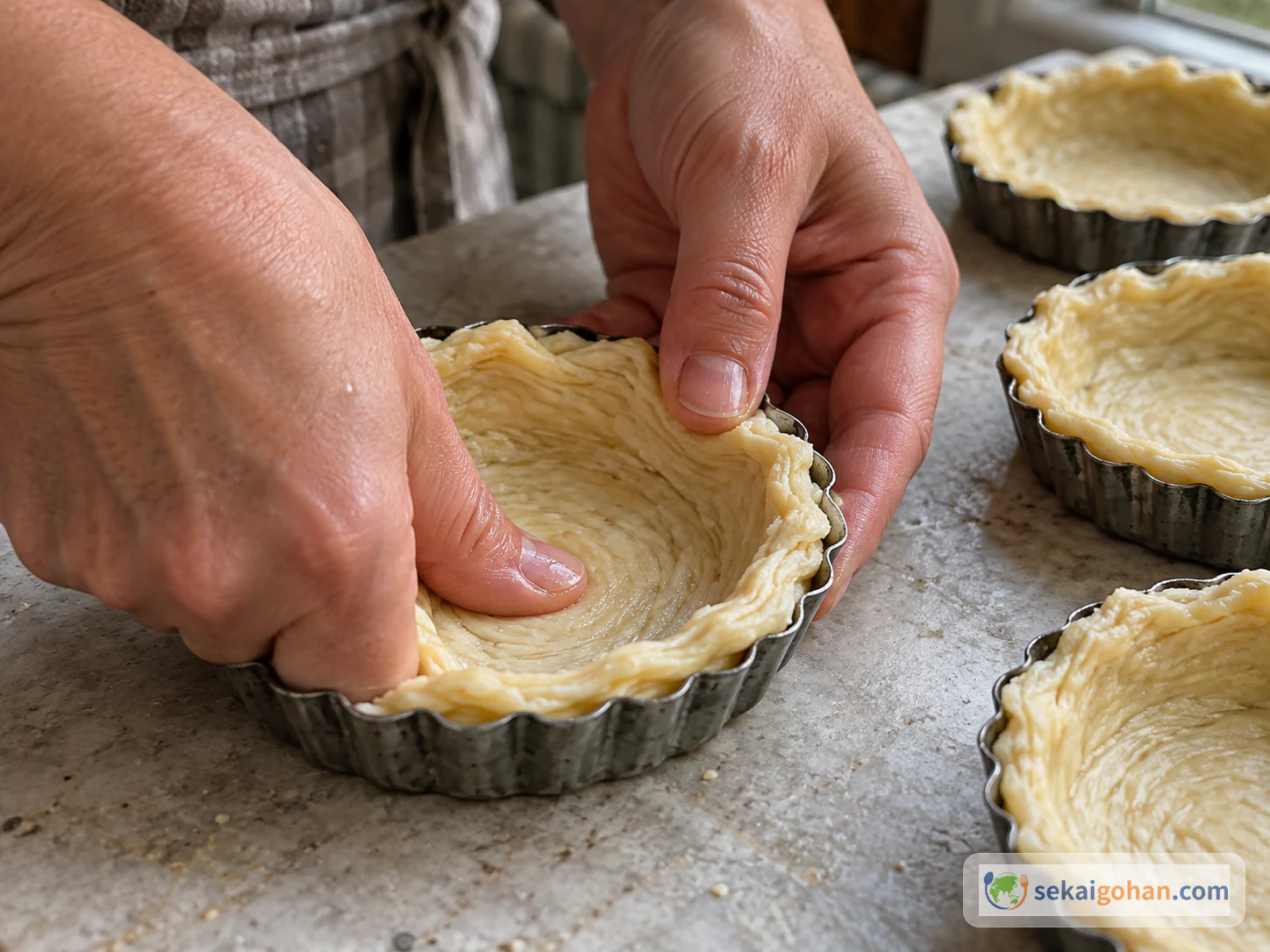
This home version makes twelve tarts with store-bought laminated puff pastry. Skipping the folding lets you focus on what matters most at home: heating the custard gently and shaping the pastry thinly.
Ingredients for 12 Tarts
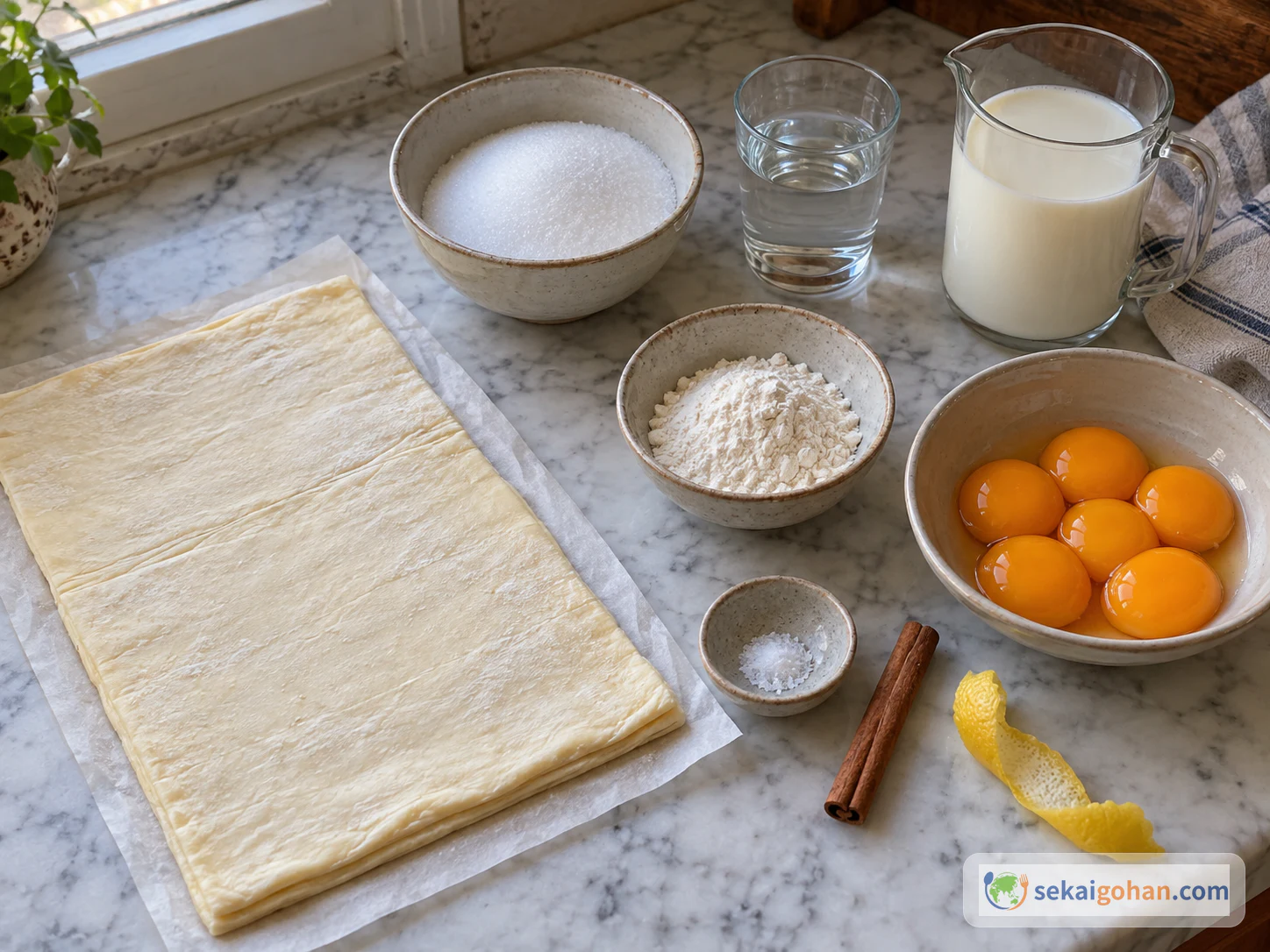
To finish, serve ground cinnamon and powdered sugar alongside, if you like.
These tarts contain wheat, egg and milk. Store-bought puff pastry varies by product, so check the ingredient list and allergen labeling on the package you buy.
Equipment
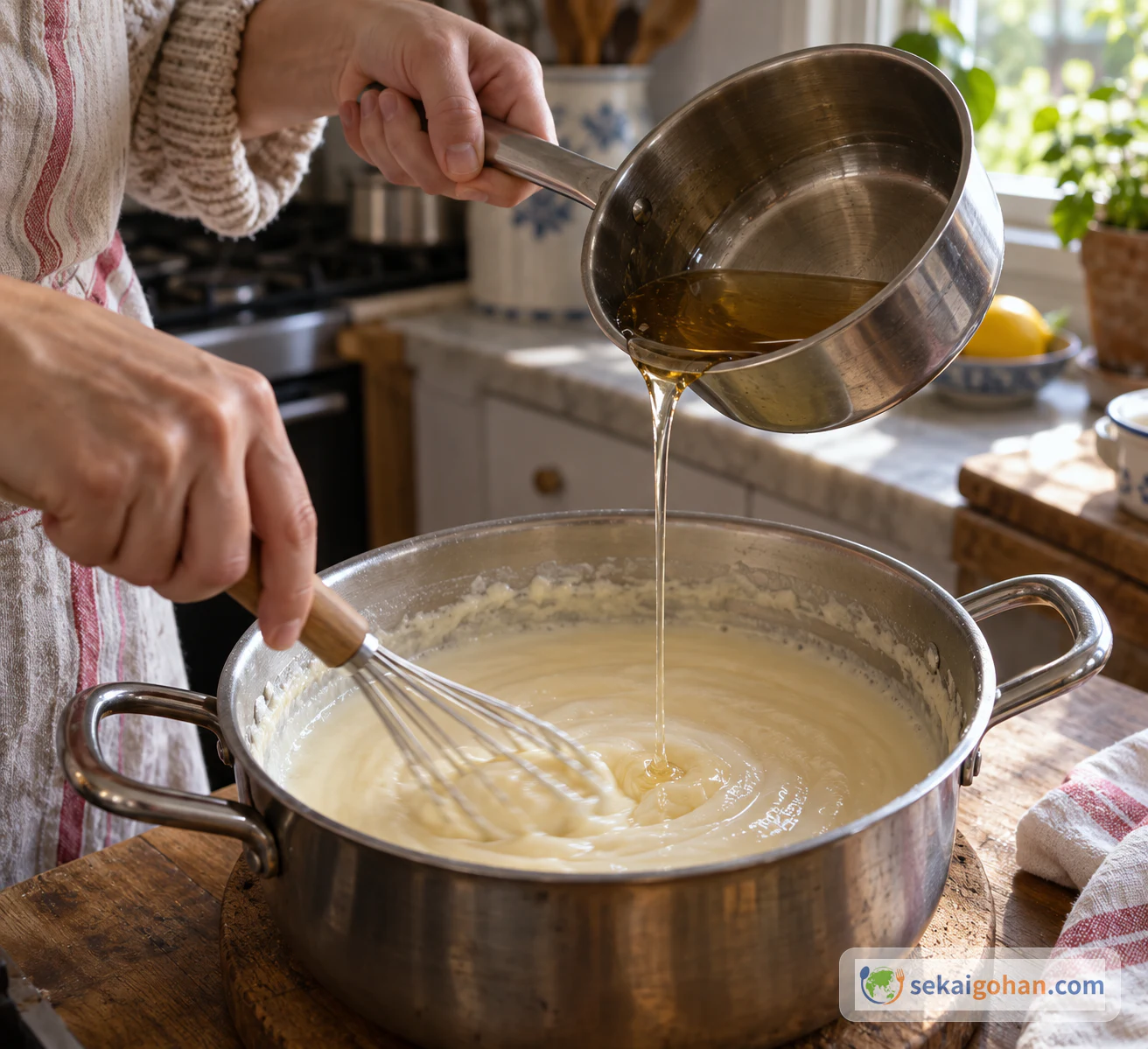
- A small saucepan for the syrup
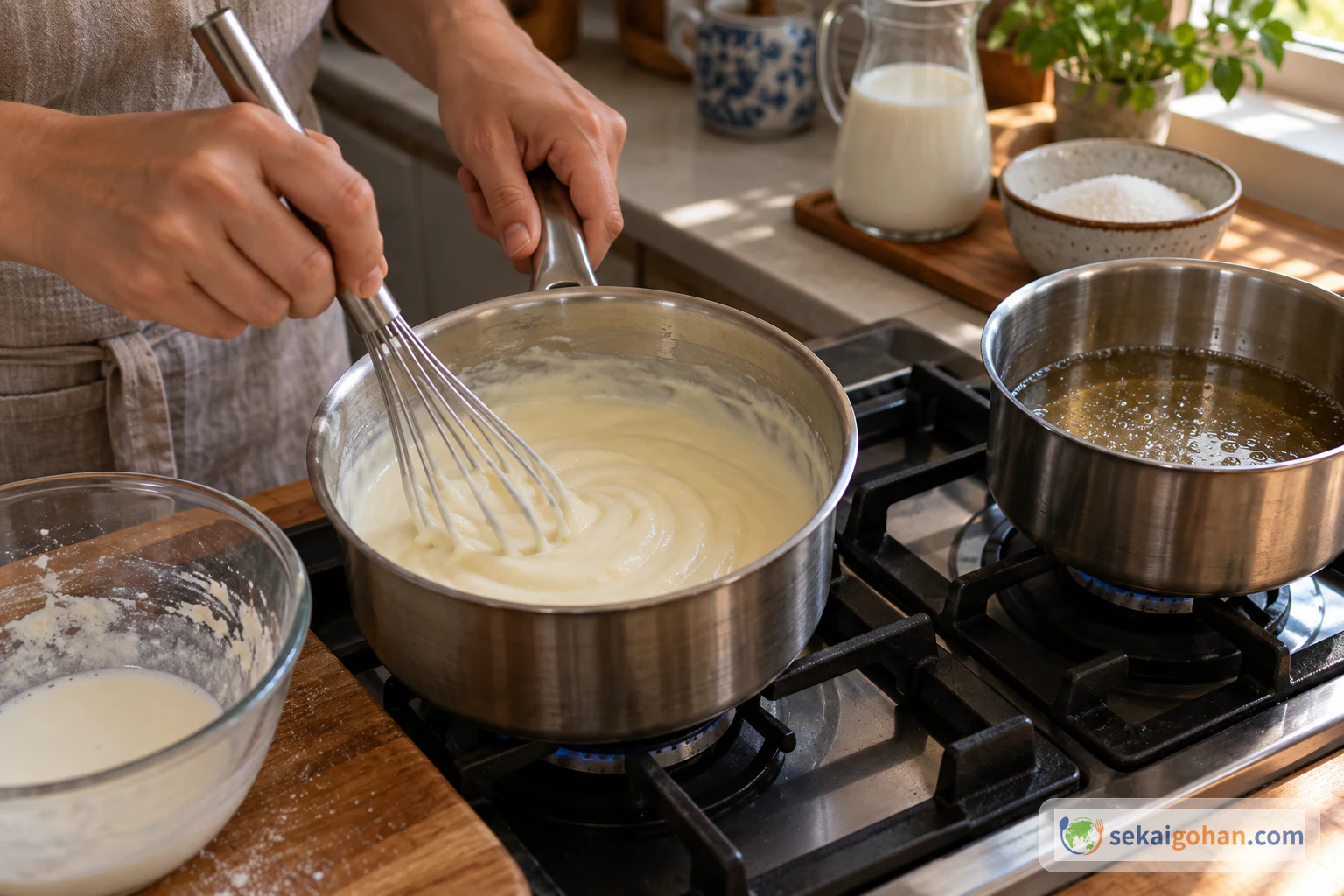
- A second saucepan for the milk and flour
- A whisk or spoon
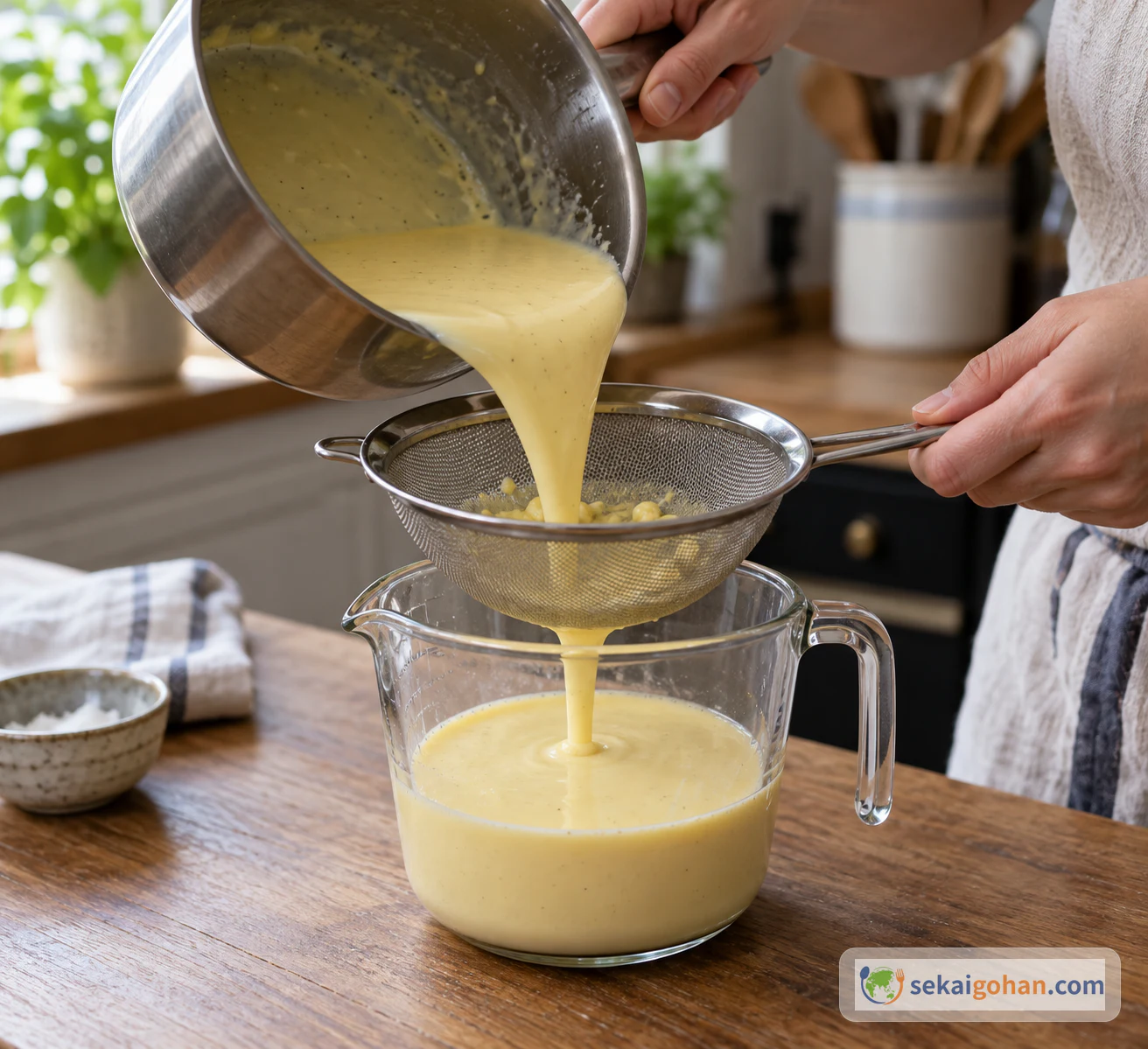
- A fine-mesh sieve and a jug or bowl to strain into
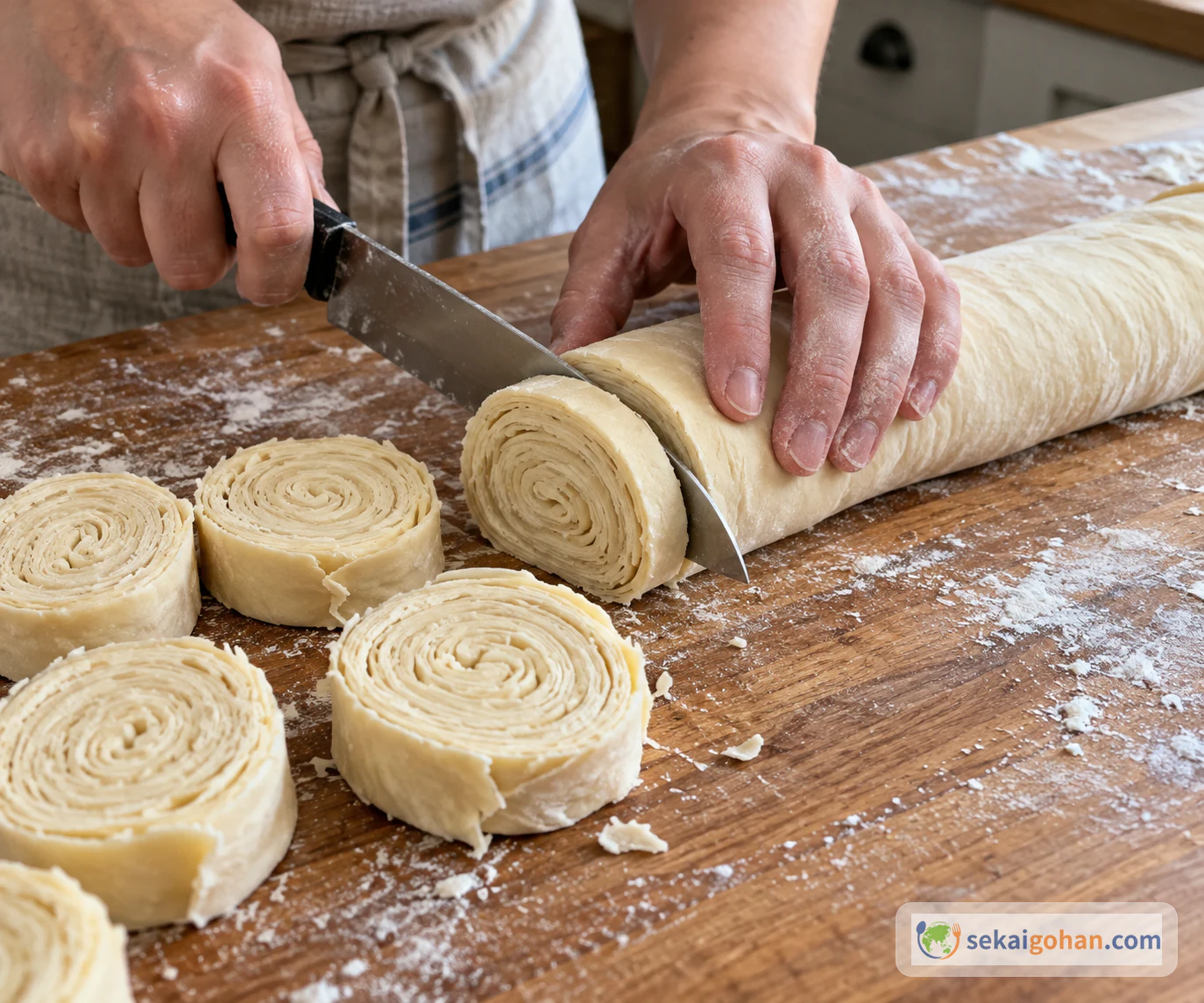
- A knife and a work surface for the pastry
- 12 small metal tart tins
- A baking sheet that fits in your refrigerator and oven
- A sugar thermometer (optional)
Choosing Pastry and Ingredients for Pastel de Nata
Use laminated puff pastry, not shortcrust. Look for frozen or chilled puff pastry sheets in the supermarket. Sweet tart dough or rubbed-in pastry won't give you the layered, flaky shell that defines this tart. Butter pastry brings a richer aroma, though other puff pastry works too.
If your pack is a different size, leave the other amounts as they are and choose pastry that gives you about 9 oz (250 g) in total for the twelve shells.
Keep the wheat flour. Cornstarch or rice flour would change the texture of the custard.
Keep the milk whole and the yolks as yolks. Low-fat milk makes the custard less rich, and whole eggs are no stand-in for the six yolks.
Method: Syrup, Custard, Shells, and a Very Hot Oven
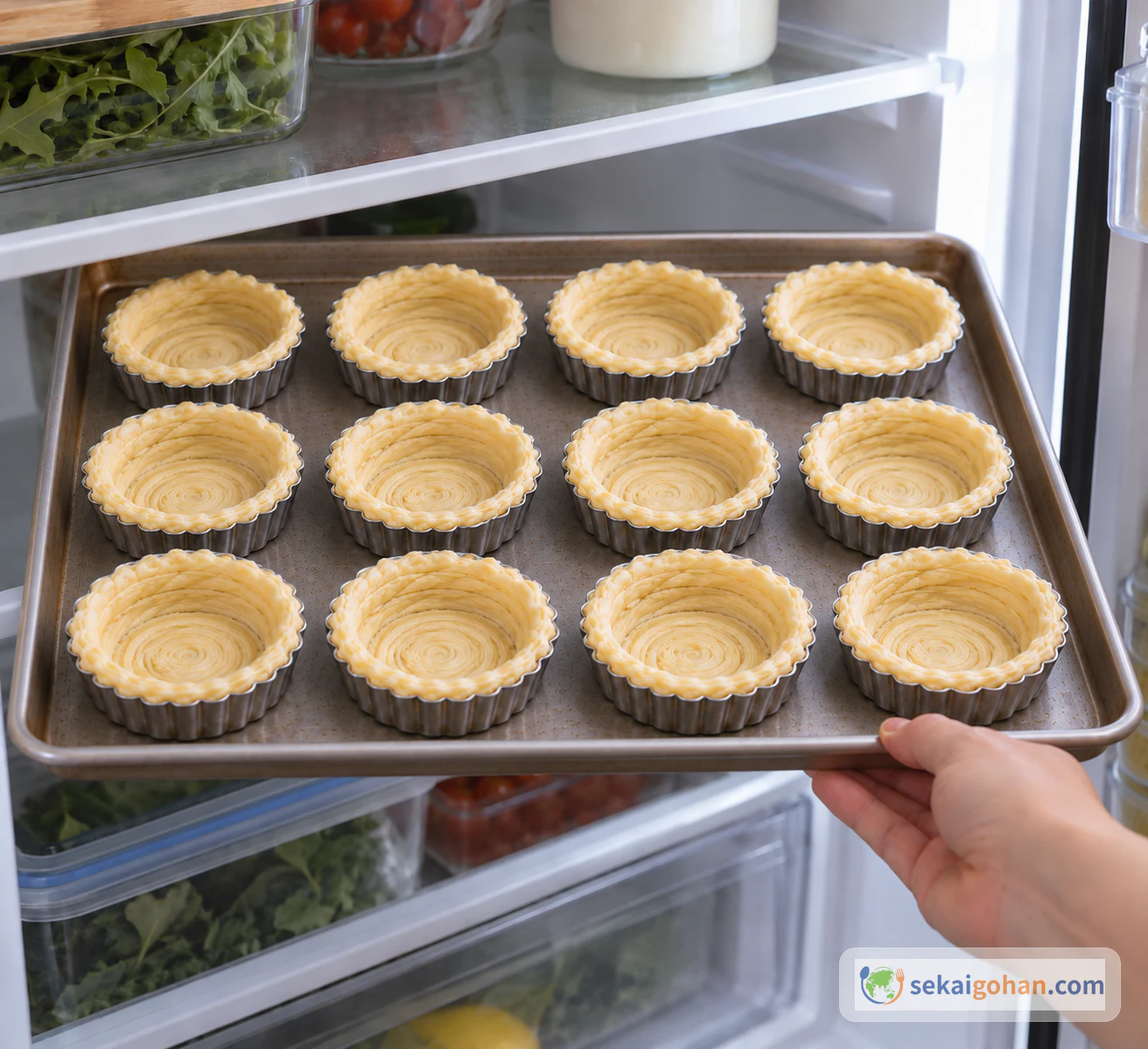
Have the pastry thawed and cold, the tins ready, and the milk cold. Make the syrup and custard first, then shape the shells and chill them while the oven heats.
Fixing Common Pastel de Nata Problems
A thin, crisp spiral of puff pastry, a smooth custard that is just set, and dark scorched spots on top. Keep the custard gentle on the stove and the oven as hot as yours safely allows.
Most problems with these tarts come down to heat: too much on the stove, too little in the oven. Check what you see against the table below.
| What you see | Likely cause | What to do |
|---|---|---|
| Lumps of flour in the paste | Flour added to warm milk, or not stirred enough | Dissolve the flour in the first ½ cup (125 ml) of cold milk before heating, and stir constantly. Straining in step 4 catches small lumps |
| Tiny cooked bits of egg in the custard | Yolks added while the mixture was still hot | Let the mixture cool down from hot before adding the yolks, then strain |
| The paste is very thick | Boiled hard or cooked too long | Keep the heat at medium and stop at a smooth paste |
| The syrup turned brown | Cooked past the thread stage | Take it off the heat at about 221°F (105°C), when it falls in a fine thread. Judge by the thread, not by color |
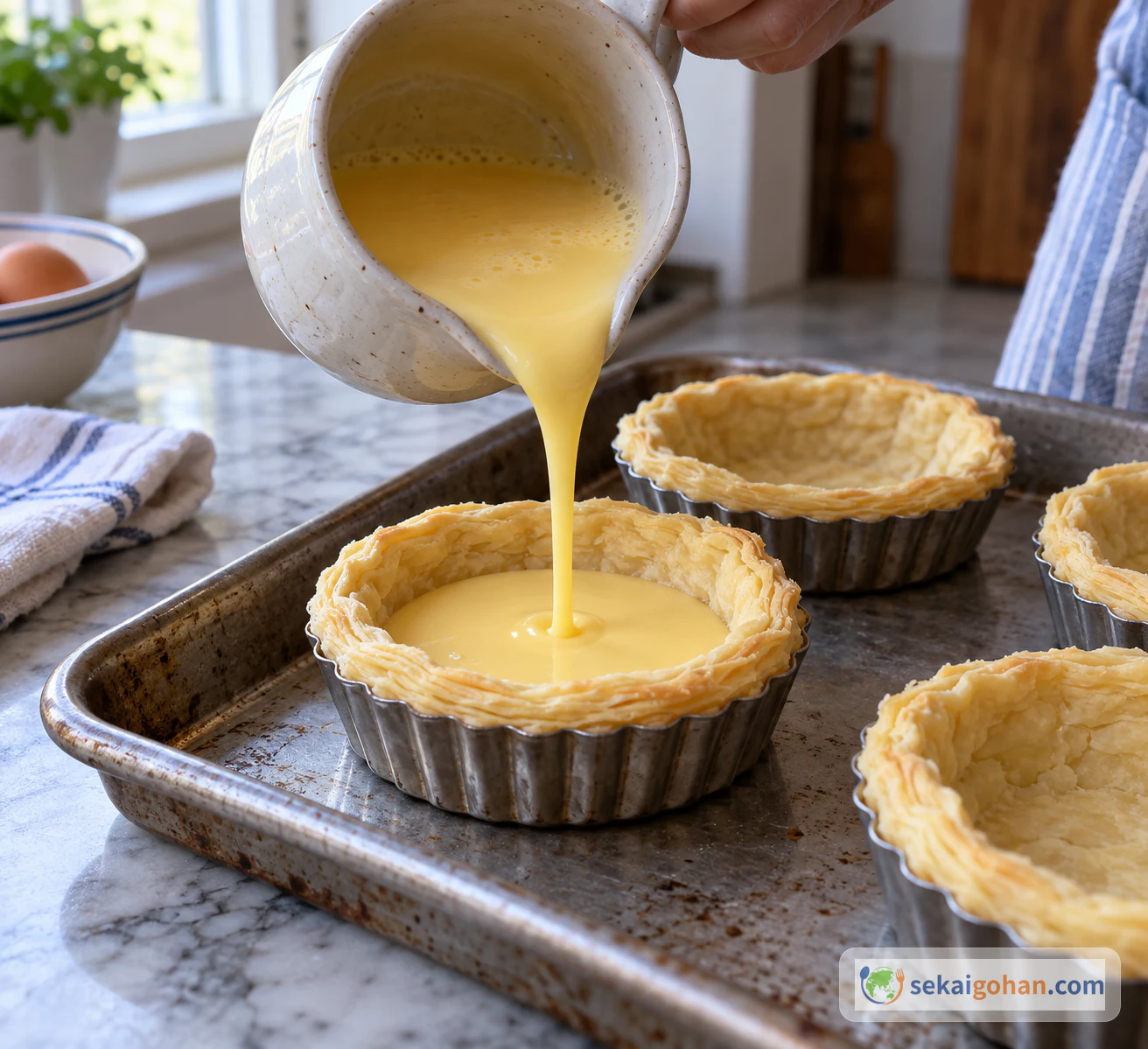
| The base is soggy or pale | Pastry left thick, oven not fully hot, or overfilled | Press the pastry thin and even, preheat fully during the chilling time, and fill only to three-quarters |
| The center of the shell is thin and the walls are thick | Pastry not spread evenly | Press from the center outward with a moistened thumb until base and sides are even |
| The top is burning before the pastry is crisp | Strong top heat or rack too high | Bake on the lower rack, learn how your oven heats from above, and watch closely in the last minutes |
Pastel de Nata Variations
Once you have the basic tart down, a few experiments are worth trying. Change one thing at a time so you can tell what made the difference.
- Butter pastry versus other puff pastry. Bake a batch with each and compare the aroma and how the layers rise and color.
- With or without cinnamon on top. The cinnamon is already in the syrup; dusting more at the table is a matter of taste.
- Less sweet. Reducing the sugar changes both the sweetness and how the syrup behaves, so make a small test batch first.
- Homemade laminated pastry. Making your own puff pastry adds a lot of work and changes how you manage the layers.
Frequently Asked Questions
My oven doesn't reach 550°F (290°C). What should I do?
Use your oven's highest setting and never exceed the limit in its manual. The 250–290°C (up to 550°F) range and 12–15 minutes are a starting point, so watch for crisp pastry and dark spots on the custard rather than the clock. If your oven tops out lower, bake a few tarts first to learn how long yours takes.
Can I use cornstarch instead of flour?
Not in this recipe. Cornstarch would change the texture here. The traditional version with cornflour is a different formula with its own amounts, so keep the two separate.
How should I store leftovers?
These tarts are at their best eaten warm, soon after baking. We don't give storage or reheating times for them, so plan to enjoy them fresh.