Goat Water: A Clove-Scented Goat Stew from Antigua and Barbuda and Other Caribbean Islands

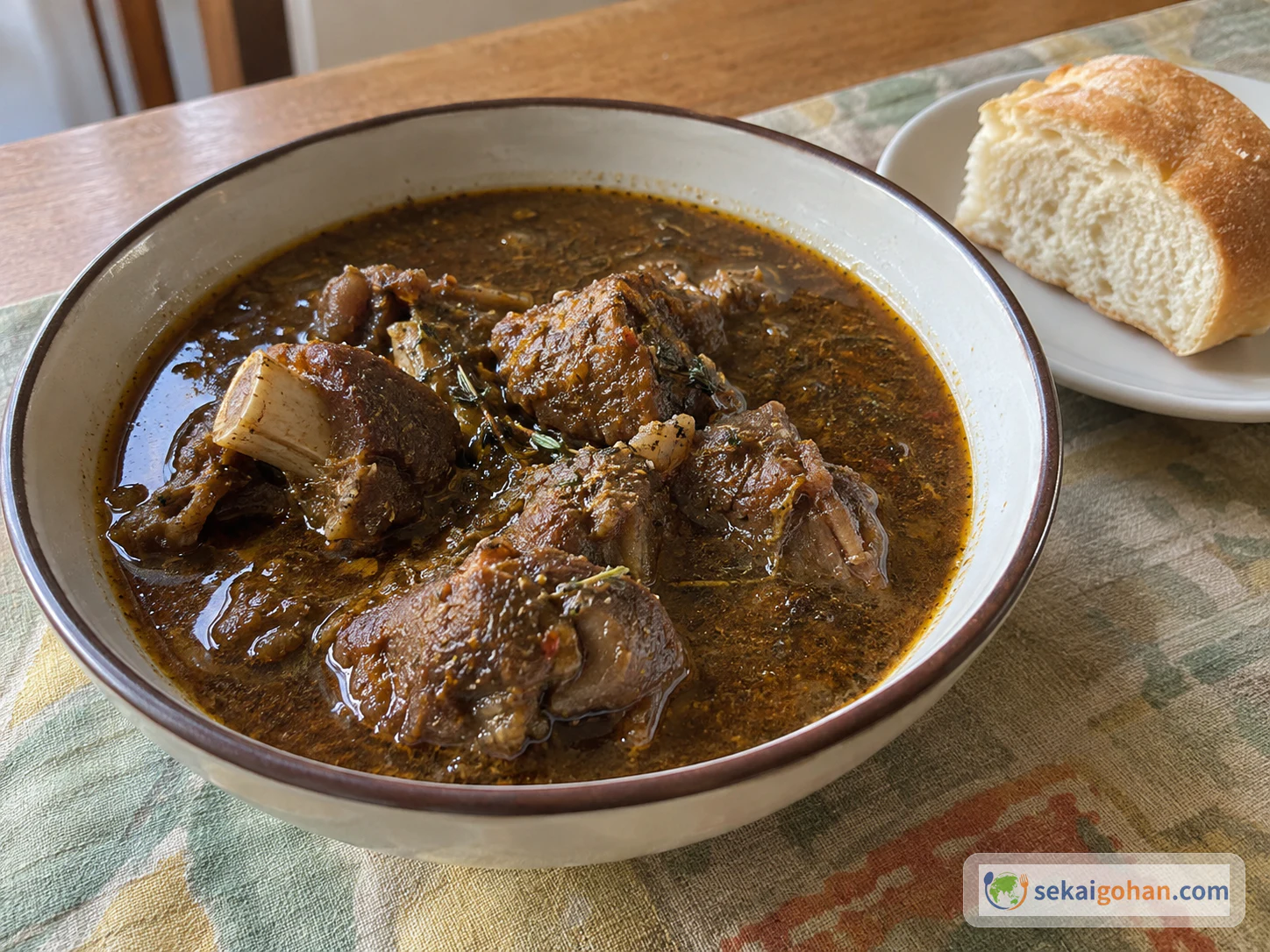
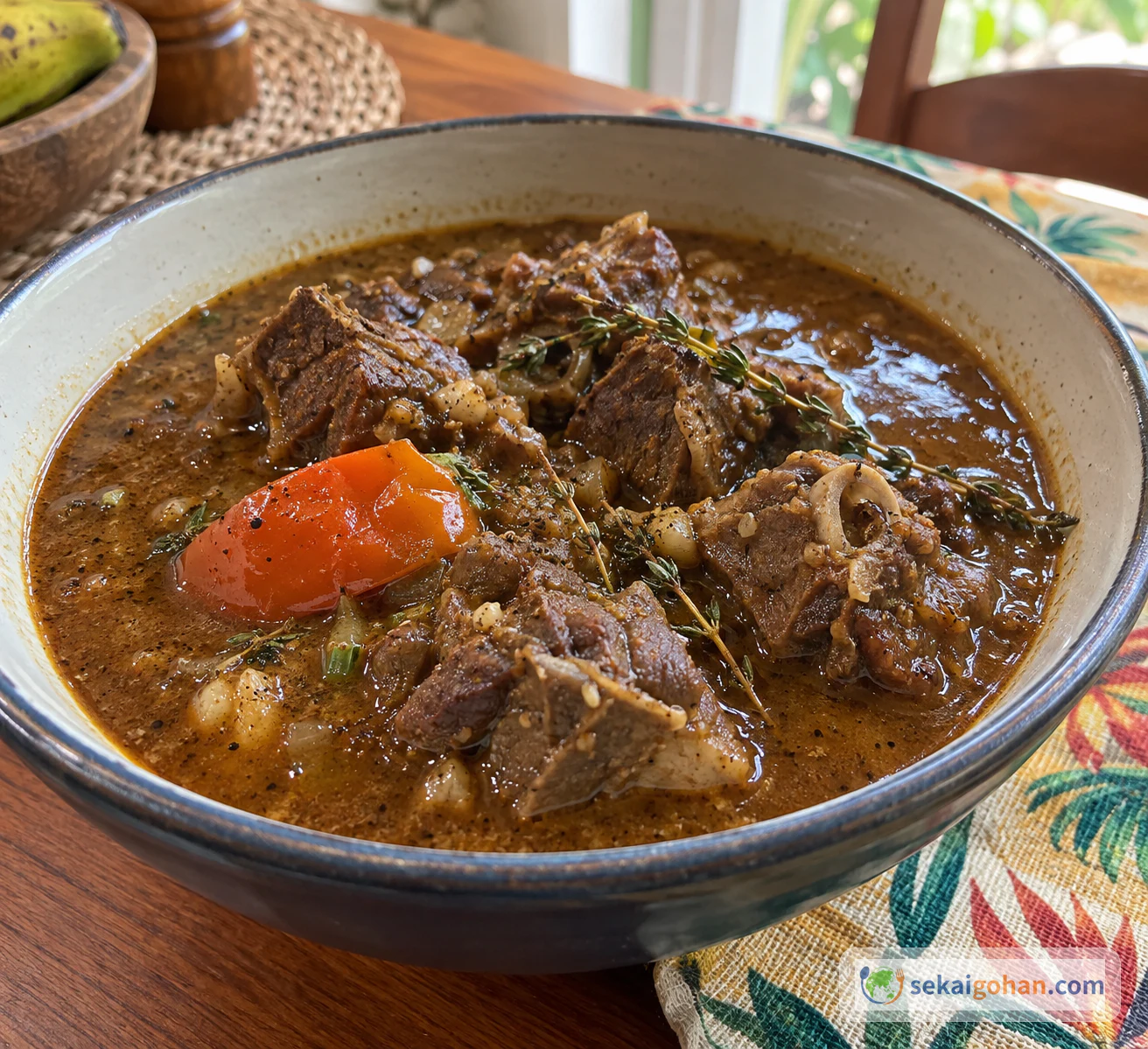
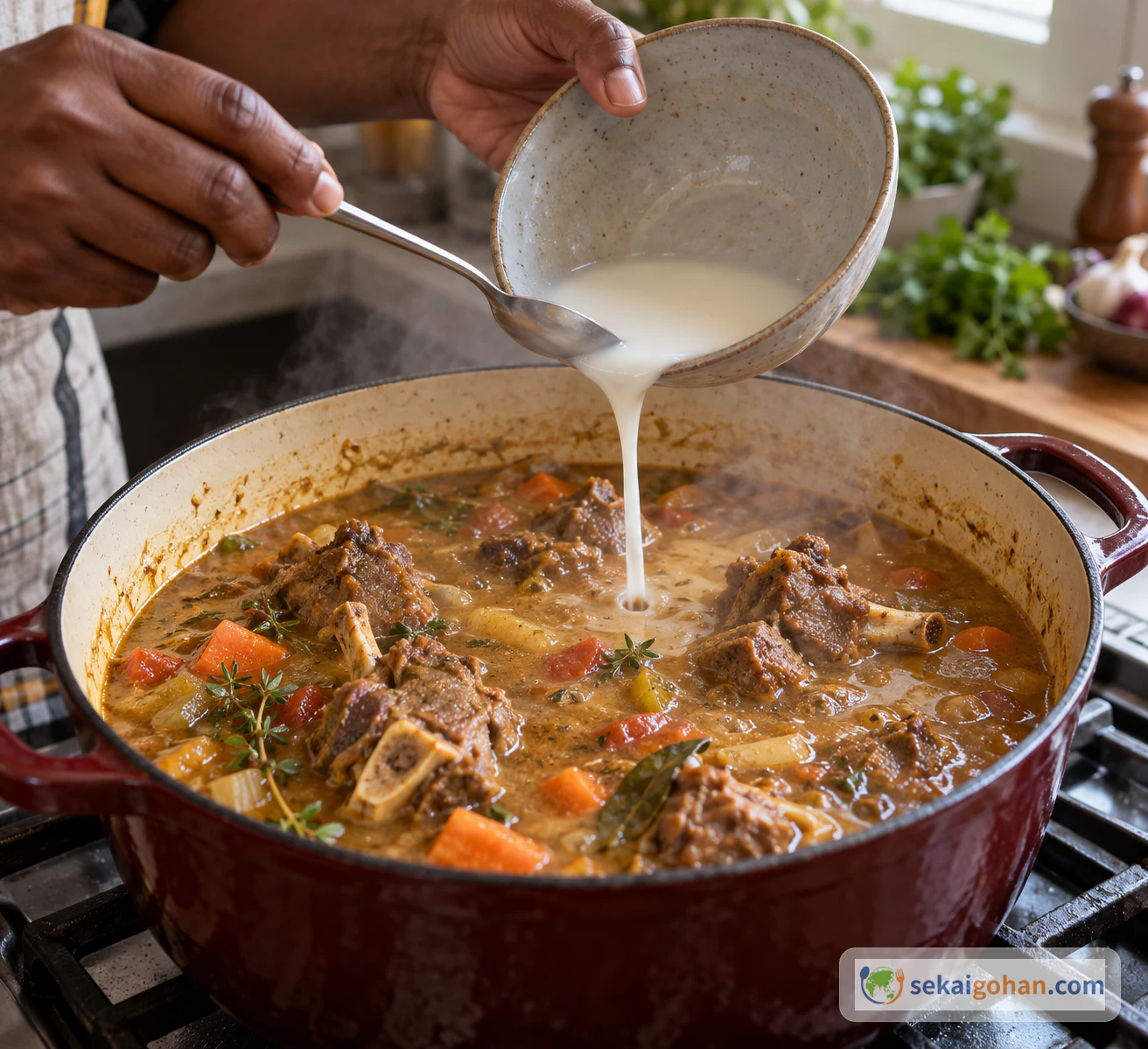
Goat water: a stew showing bone-in goat, pepper and the color of its spices
Serves
6 servings
Cuisine
Caribbean (Antigua and Barbuda and other islands)

How to make goat water, a Caribbean stew of bone-in goat with cloves, allspice, mace and Scotch bonnet, eaten in Antigua and Barbuda and on other islands. Covers substitutions, adjusting the heat, judging the simmer, differences between islands, and safe storage.

Cooking flow

Cooking steps

STEP11 / 7

Prepare the goat

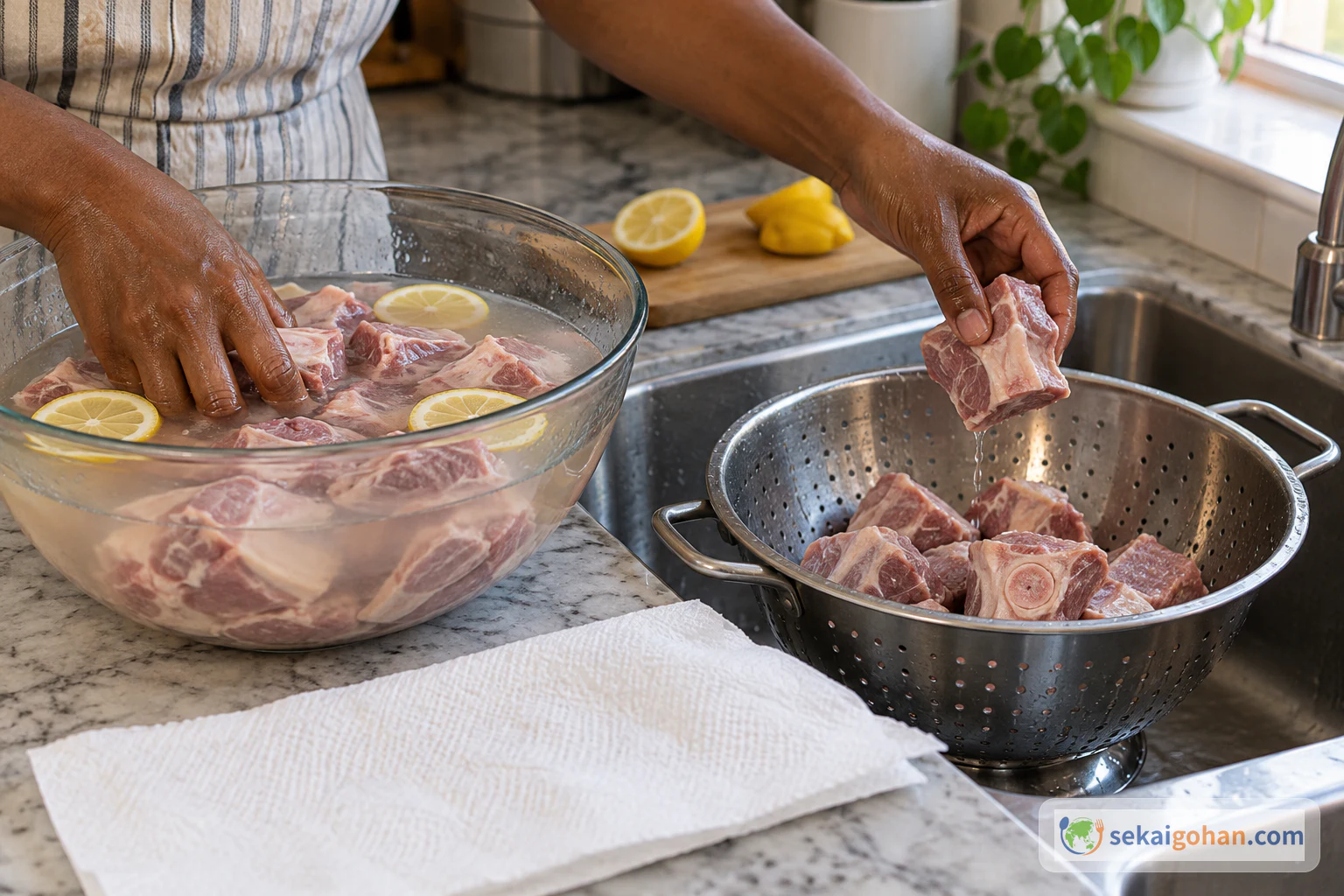
Bone-in goat in lemon water, moving to a colander with paper towels ready for drying
The lemon-water wash, followed by draining and patting dry

Skipping the wash is safer: water can splash bacteria onto the counter and tools. If you skip it, simply pat the meat dry with paper towels.

For the lemon-water wash, clear nearby food and tools away first. Fill a large bowl with water, stir in the lemon juice and wash the meat in it, without running tap water directly onto the meat. Drain in a colander and pat dry. Wash the bowl, colander and sink straight away.

Keep the knife and cutting board for raw meat separate from those for vegetables. After use, wash them and pour boiling water over them. Wash your hands after touching raw meat.

STEP22 / 7

Caramelize the sugar and brown the meat

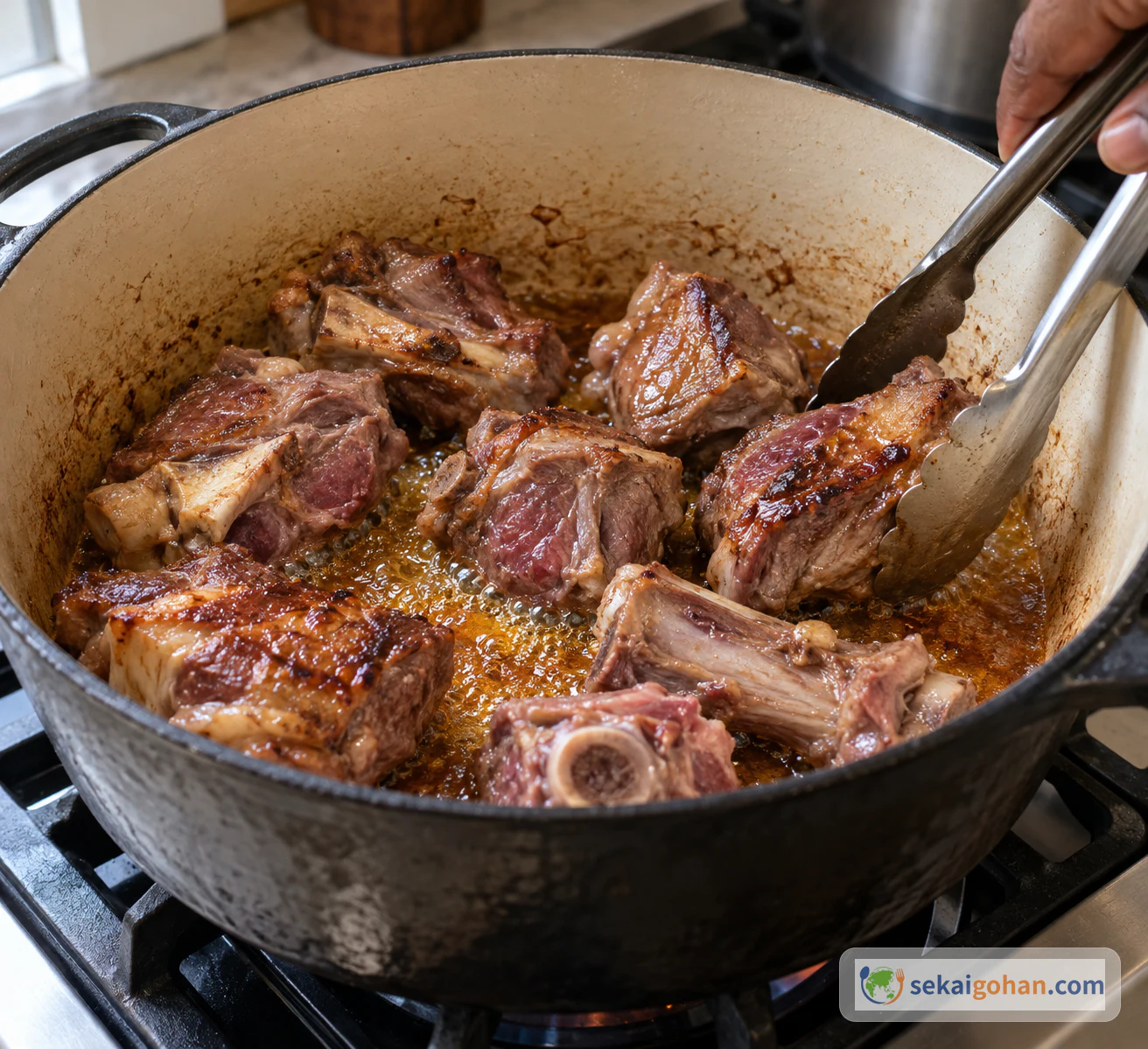
Sugar melted in a pot, with goat pieces browning in it
Golden caramel and well-browned meat, with nothing burned black

Heat the oil in the heavy pot and melt the sugar or molasses in it until golden and caramelized. Add the goat and turn it until browned all over. Move on before the caramel turns black and bitter.

STEP33 / 7

Add the water and spices

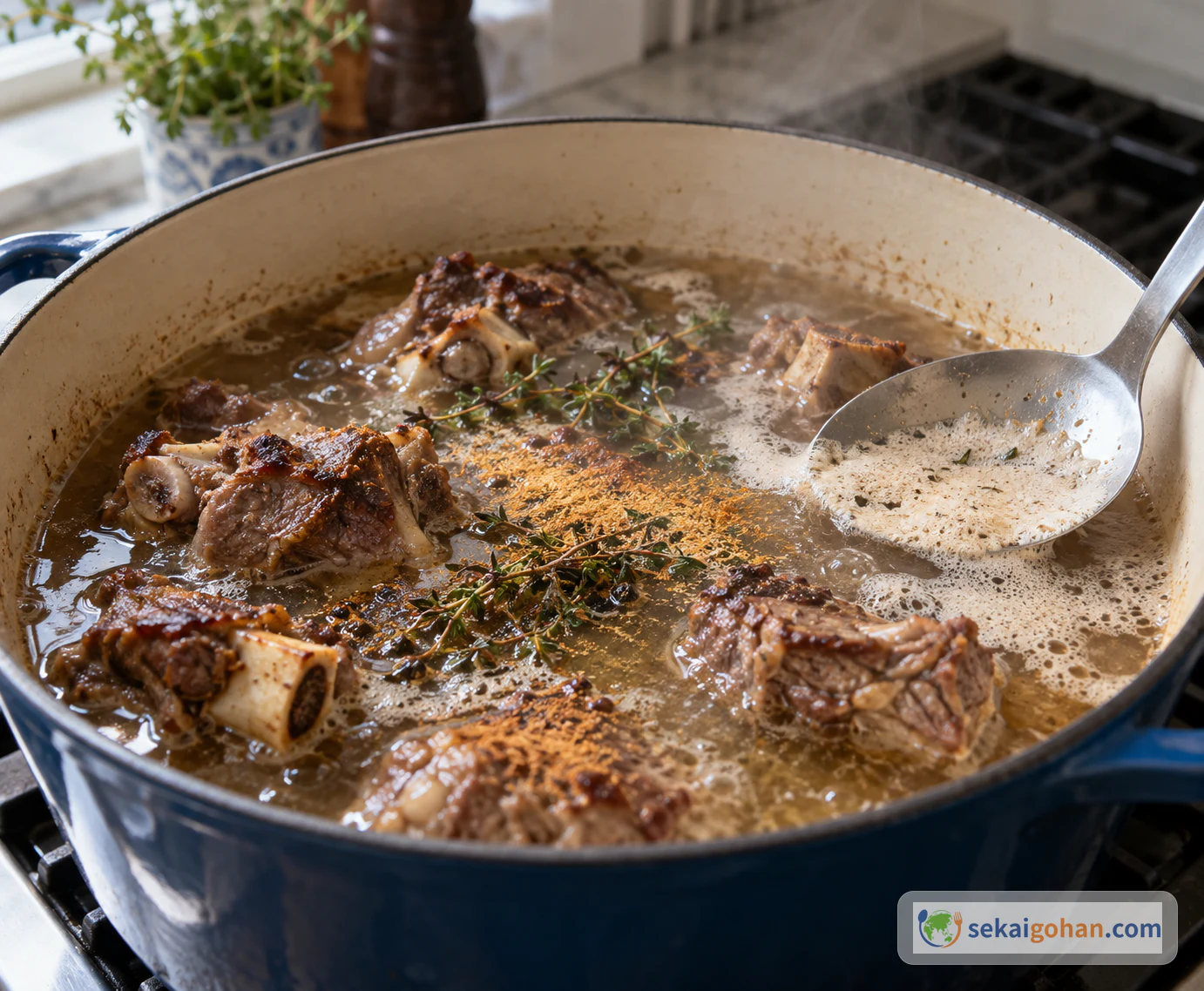
Goat coming to a boil with water, cloves, allspice, mace and thyme
Skim the foam as the pot comes to a boil

Add 1 quarts (1 L) water, the cloves, allspice, mace and thyme sprigs. Bring to a boil and skim off the foam that rises.

STEP44 / 7

Make a coarse vegetable paste

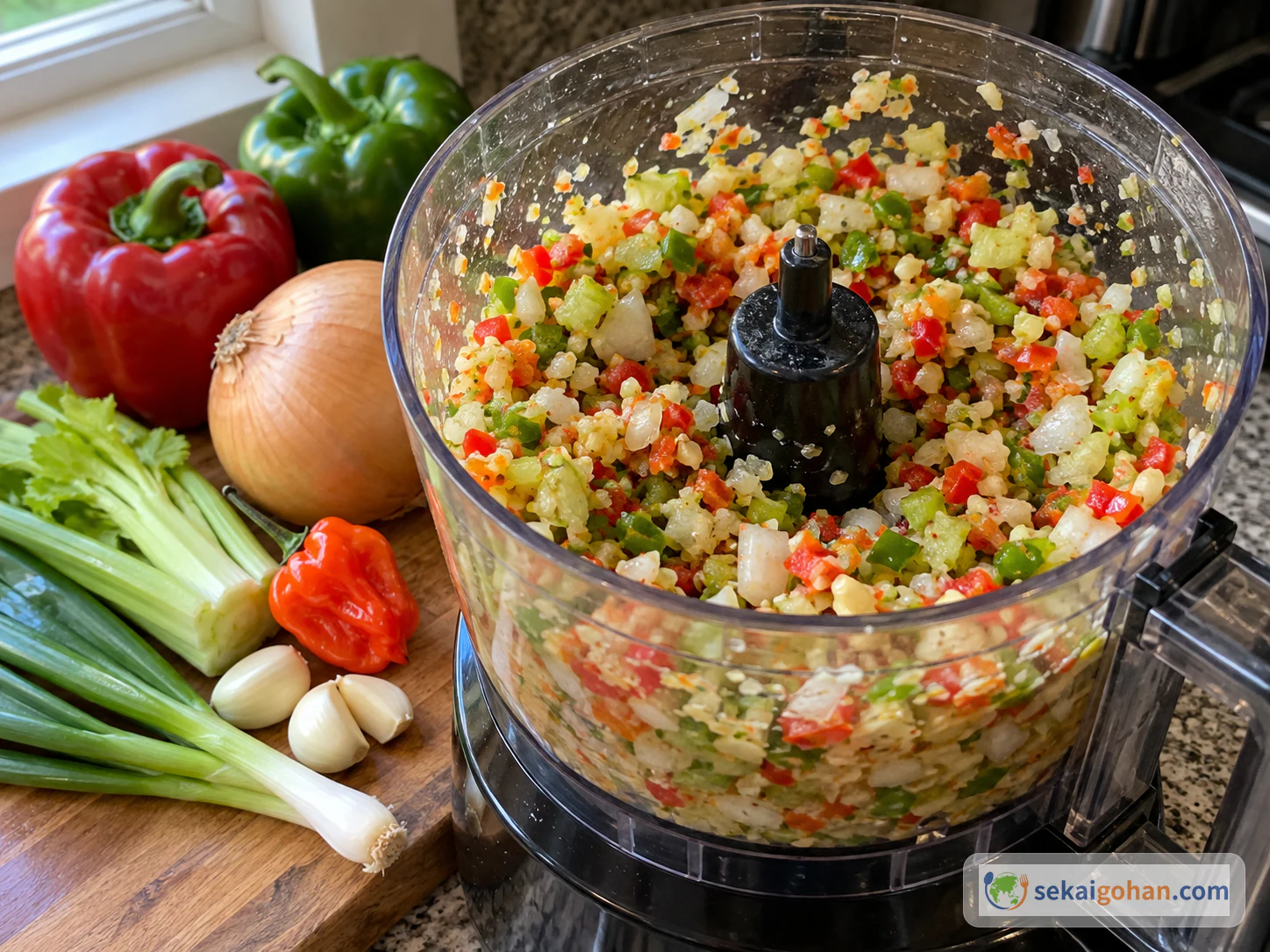
Garlic, Scotch bonnet, celery, bell peppers, onion and spring onions processed to a coarse paste
A coarse, textured paste rather than a smooth puree

Put the garlic, Scotch bonnet, celery, green and red bell peppers, spring onions and onion in a food processor. Process to a coarse paste, stopping before it turns liquid.

STEP55 / 7

Simmer until the meat is very tender

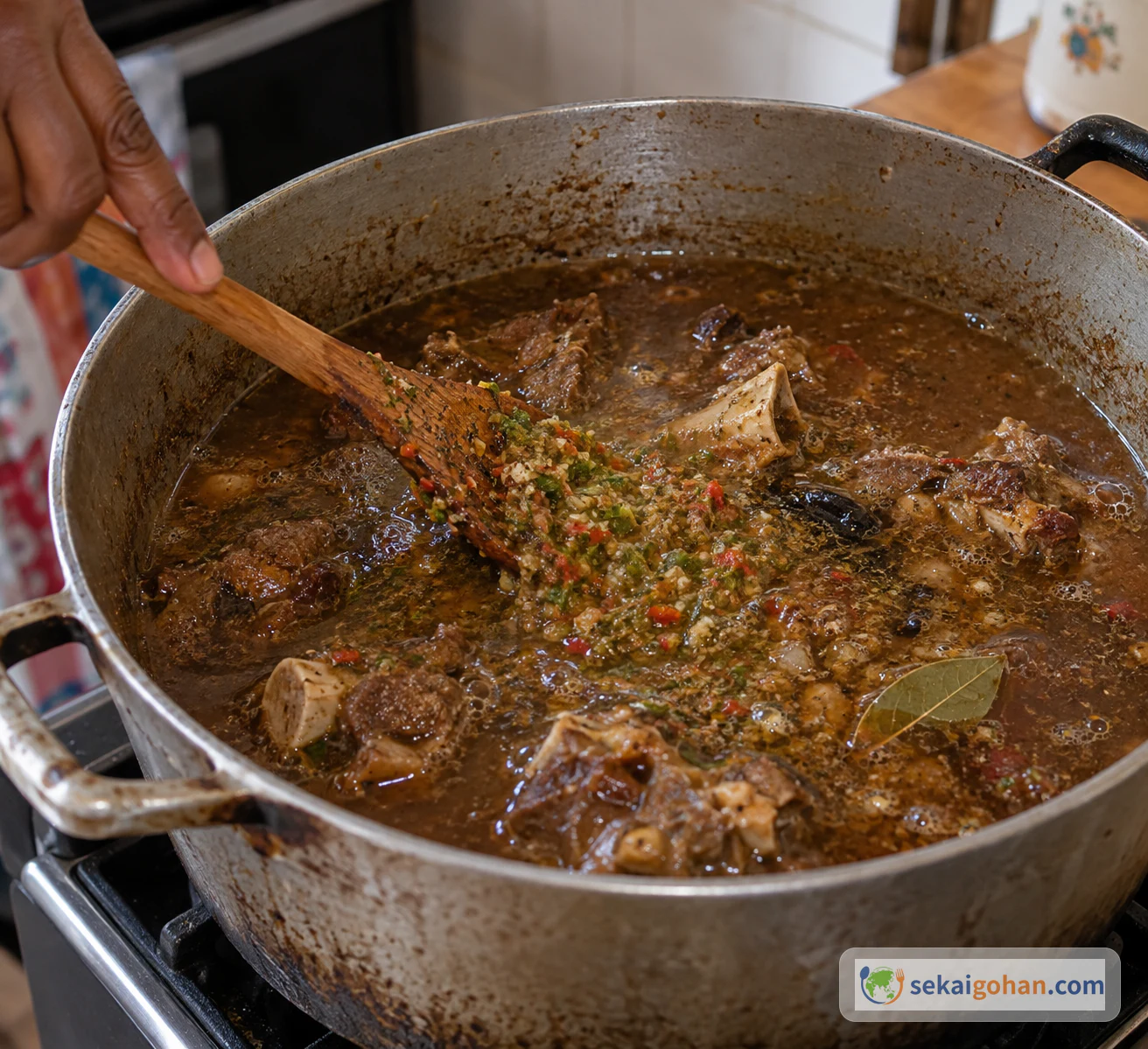
Aromatic vegetables, browning and bay leaves added to the goat for a gentle simmer
The broth darkens here but stays loose

Add the paste, gravy browning and bay leaves to the pot and return to a boil. Cover and simmer gently for 120–150 minutes, until the meat is very tender. The time changes with the age and cut of the goat, so go by the meat. Heat the center to 167°F (75°C) for at least 1 minute.

STEP66 / 7

Thicken lightly

Tender goat stew lightly thickened with a cornflour mixture
The broth should still pour easily and never turn pasty

Mix 1 tsp cornflour with 3.5 tbsp (50 ml) water and stir it into the pot. Simmer uncovered for 10 minutes, until slightly thickened, about the consistency of single cream (a light pouring cream).

STEP77 / 7

Finish and serve

STEP 7

Ladle out any portions for children or anyone avoiding alcohol. Stir the rum, if using, into the rest just before turning off the heat. It goes in so late that some alcohol may remain. Scatter over the thyme, washed well under running water, and serve hot with bread.

0 / 0
Ingredients

Ingredients

1 / 1

Ingredients

Ingredient Amount Role
Bone-in goat meat 2.25 lb (1 kg), cut into 2 inches (5 cm) chunks The center of the stew
Lemon juice Juice of 1 lemon For the lemon-water wash in step 1. Wash the peel well before squeezing
Water for the wash As needed Fills a large bowl for the lemon-water wash
Vegetable oil 1 tbsp For caramelizing the sugar and browning the meat
Brown sugar or molasses 1 tbsp Melts in the oil to build color
Cloves 2 tsp Aroma
Allspice 2 tsp Aroma
Ground mace 2 tsp Aroma
Fresh thyme A few sprigs, plus a little to finish Goes into the pot, then scattered over at the end. Wash the finishing thyme well under running water
Garlic 1/2 bulb, peeled and crushed Coarse vegetable paste
Scotch bonnet chili 1, chopped Heat and aroma
Celery 1 stick, chopped Coarse vegetable paste
Green bell pepper 1/2, cut into 0.5 inches (1.5 cm) pieces Coarse vegetable paste
Red bell pepper 1, finely chopped Coarse vegetable paste
Spring onions 2, finely chopped Coarse vegetable paste
Onion 1, chopped Coarse vegetable paste
Gravy browning 1 tsp Color
Bay leaves 1–2 Aroma
Water for simmering 1 quarts (1 L) The body of the stew
Cornflour (cornstarch) 1 tsp Light thickening
Water for the cornflour 3.5 tbsp (50 ml) Loosens the cornflour before it goes in
Rum 1 tbsp (optional) Finish
Bread To serve At the table, not in the pot
0 / 0

At a beach bar in Antigua in 2013, the bowl of goat water came scented with clove and cinnamon, with small dumplings in the stew and fungee on the side. The cook said it is traditionally a Saturday dish. Goat water is bone-in goat simmered slowly with cloves, allspice and mace, lit up with Scotch bonnet heat, in a broth that is thickened only lightly at the very end. Plan on 20 minutes to prep and 160 minutes on the stove, 180 minutes in all, most of it the pot quietly doing its work.

Goat Water Across the Islands
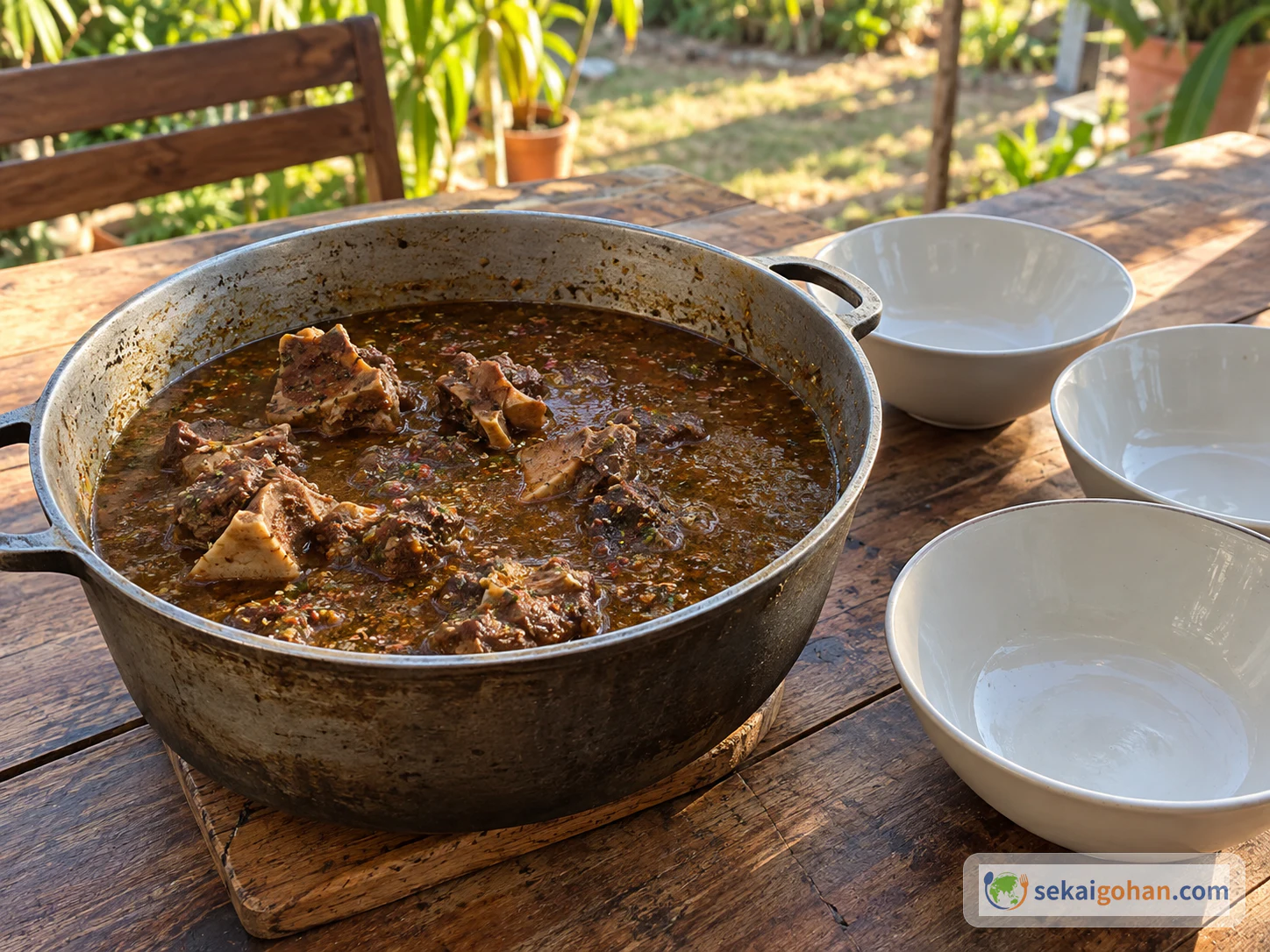
The mood of an outdoor Caribbean table gathered around a pot of stew
Goat water belongs to more than one island's table

Goat water is the national dish of Montserrat, and Antigua and its neighbors each claim it as their own. Where it began is not clear. Despite the name, it is a spicy, deeply flavored stew rather than a thin soup.

In Antigua and Barbuda, goat water is a local staple, seasoned with hot peppers, cloves and cinnamon. Recipes vary from restaurant to roadside stand, and a bowl may come with small dumplings and fungee on the side.

On Montserrat it is made with male goat and cooked to a body that is neither too thick nor too thin. It is served with bread or rice and is linked to Friday lunch and communal occasions. On St. Maarten, goat water is counted among the local dishes.

Ingredients for 6 Servings
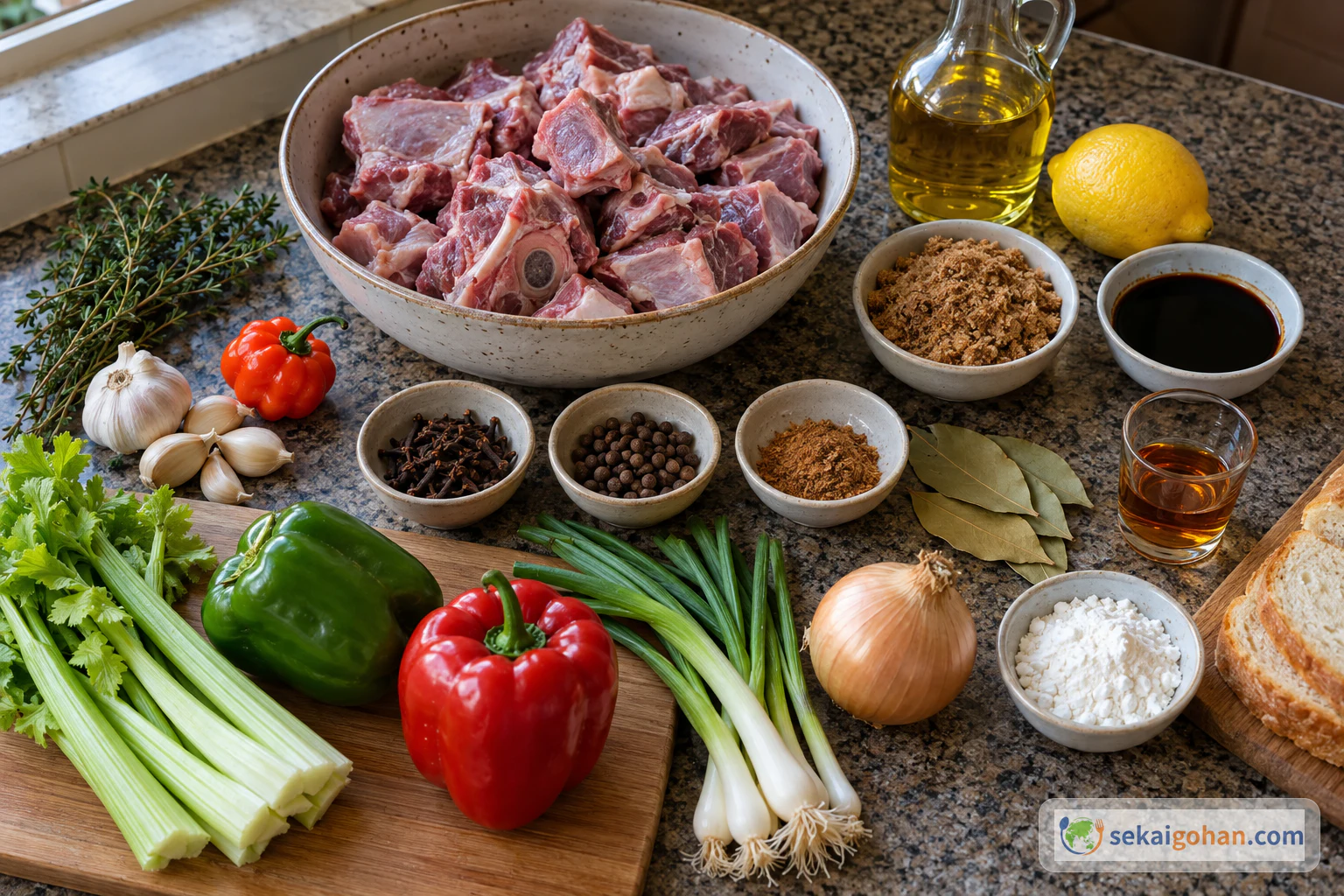
Goat meat, lemon, oil, sugar, cloves, allspice, mace, thyme, garlic, Scotch bonnet, celery, red and green bell peppers, spring onions, onion, browning, bay leaves, starch, rum and bread
The ingredients for goat water, with the bread kept aside for the table

Equipment

  • Large heavy pot with a lid
  • Food processor
  • Large bowl and colander
  • Paper towels
  • Spoon or ladle for skimming foam
  • Small bowl for the cornflour mixture
  • Separate knife and cutting board for raw meat

Choosing Ingredients for Goat Water

  • Goat: this is the ingredient most worth tracking down, and it usually means a specialty supplier. Ask for bone-in pieces. If goat is out of reach, lamb works, though the flavor and simmering time will differ, so judge by tenderness.
  • Mace: cloves, allspice and mace are the core of the flavor. Nutmeg is a different spice and will change the aroma.
  • Scotch bonnet: it brings both heat and aroma. Another hot chili, such as habanero, will shift both.
  • Gravy browning: it is there for color. Worcestershire sauce is a different product.
  • Cornflour: potato starch is a different ingredient and may thicken differently.
  • Sugar: brown sugar or molasses can go in the pot at step 2.

Fixing Common Goat Water Problems

What you notice Likely reason What to do
Bitter, burned smell from the caramel The sugar went too dark Add the meat while the caramel is golden, before it blackens
Vegetables turn to liquid Processed too long Stop while the paste still has visible texture
Meat is still firm Age or cut of the goat Keep simmering, covered, until very tender
Broth is heavy or pasty Too much starch Keep to 1 tsp and stop at a light, pourable body
Too hot Scotch bonnet seeds and flesh Remove the seeds next time

Serving and Storing Goat Water

Goat water scattered with thyme, served with plain bread at the table
Serve hot, with the bread alongside rather than in the pot

Serve the stew hot, with bread for dragging through the broth. If you want it milder next time, remove the seeds from the Scotch bonnet; both the heat and the aroma will soften.

Storing leftovers

Do not leave the stew at room temperature for long, and do not cool it in the pot at room temperature. The spores of Clostridium perfringens (a food-poisoning bacterium) survive ordinary cooking. Divide leftovers into shallow containers and cool them quickly, then refrigerate at 50°F (10°C) or below or freeze at −15°C or below. Reheat while stirring well, until the stew reaches 167°F (75°C) or above. Throw away anything that has been kept too long.

Frequently Asked Questions

Do I have to wash the meat in lemon water?

No. Washing raw meat can spread bacteria onto counters and tools. Pat the meat dry with paper towels instead.

How much thickener should I use?

Use 1 tsp cornflour, mixed with 3.5 tbsp (50 ml) water. The ingredient list also has a line for 1–2 tsp plain flour or cornflour, but no step in the method uses it.

Are the cloves and allspice whole or ground?

The recipe does not say. Only the mace is specified as ground, so use 2 tsp of each as written.

Why is there no salt?

Neither the ingredient list nor the method includes salt. Taste at the end and add salt if you want it.

How many days does it keep?

No number of days is given. Follow the cooling, temperature and reheating advice in the storage section above, and throw away food kept too long. The spore advice written for curry applies to this stew too.
Sources