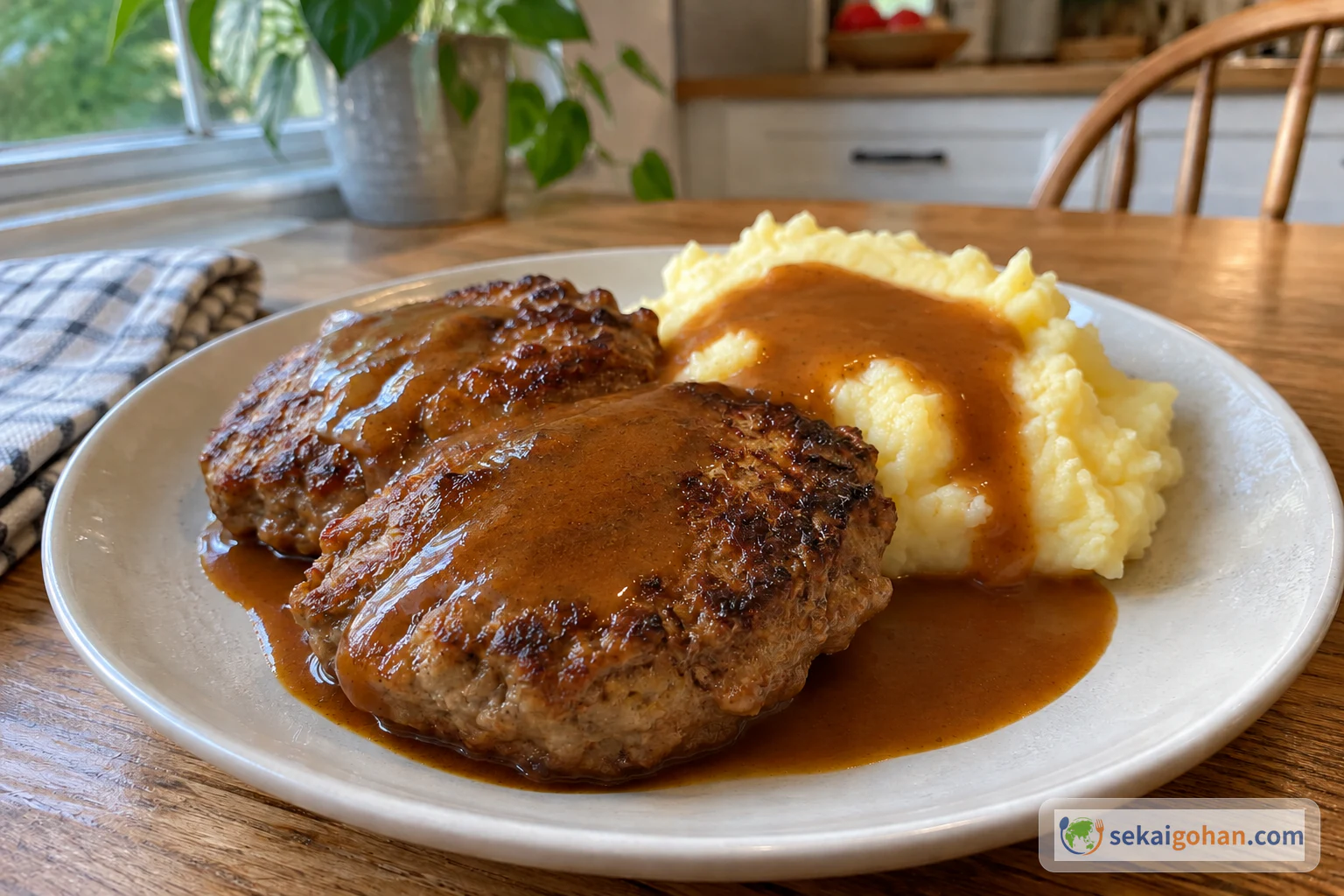
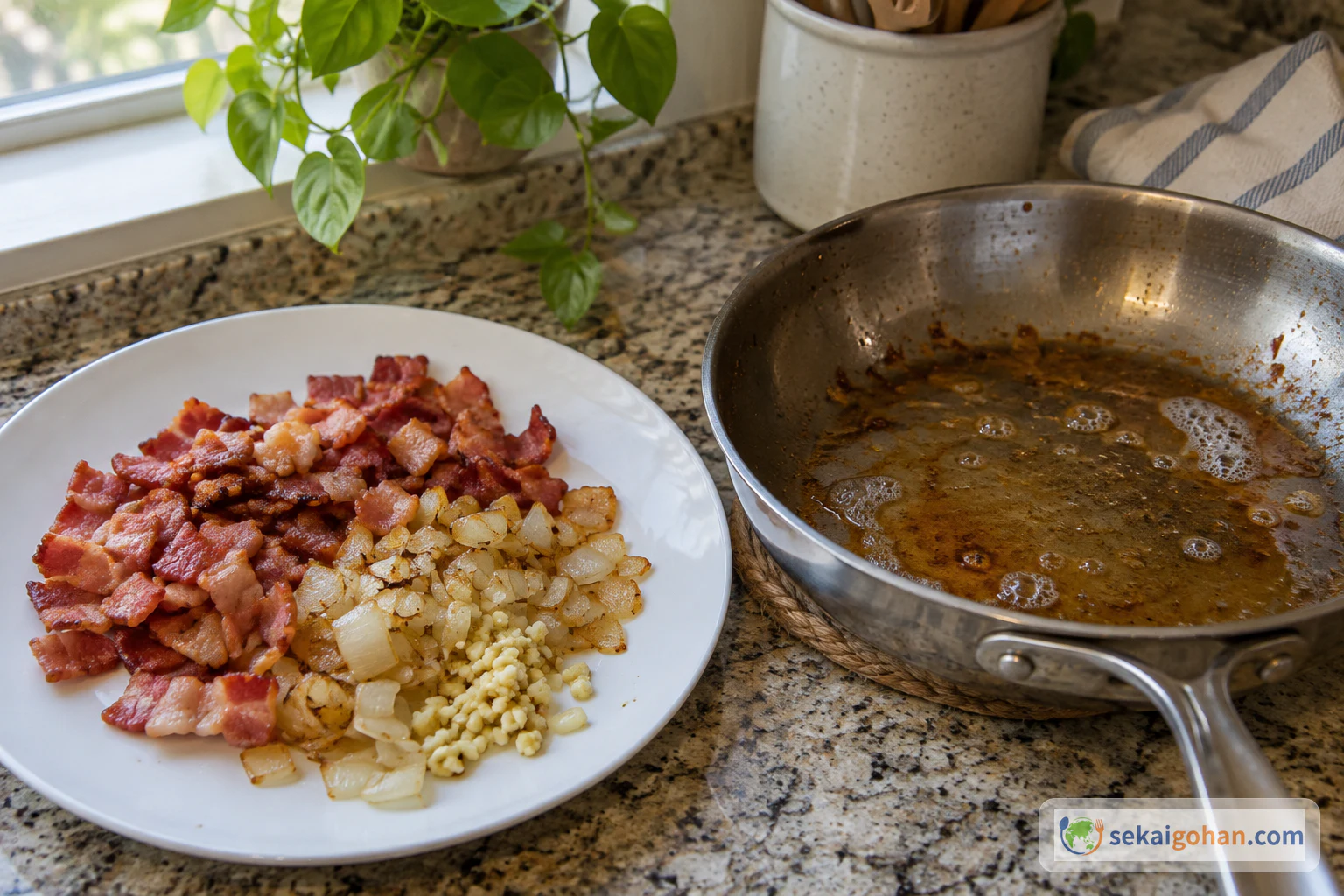
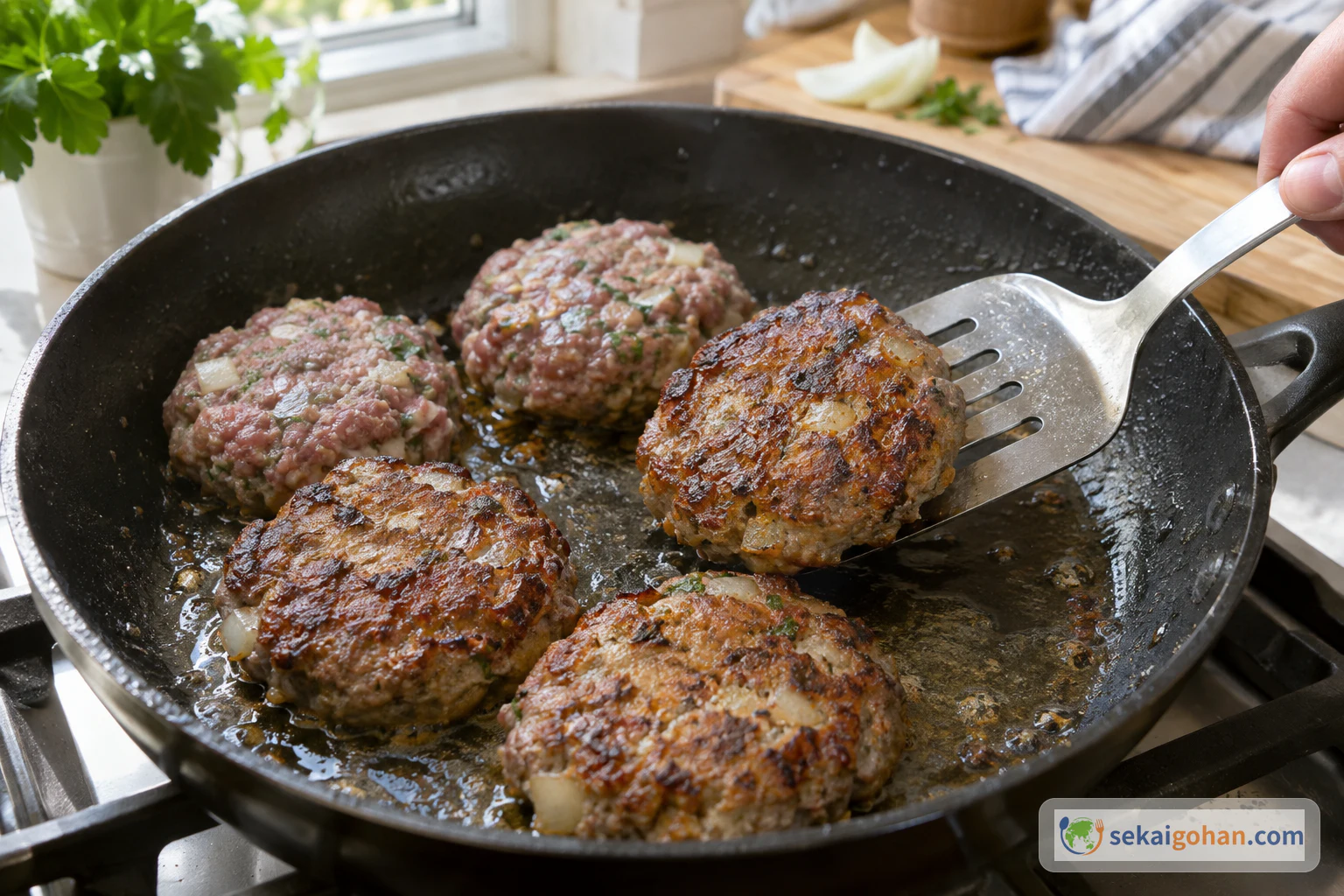
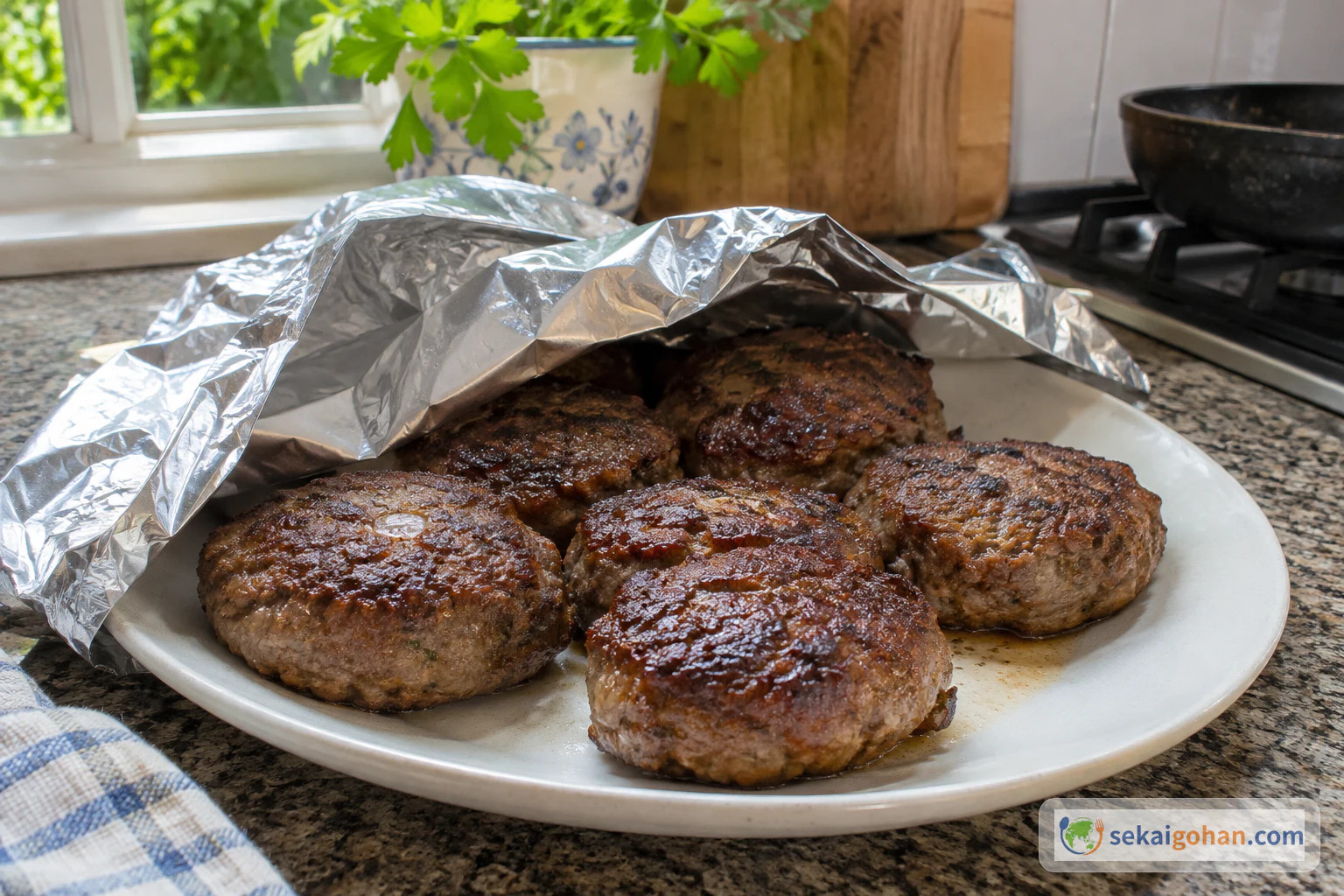
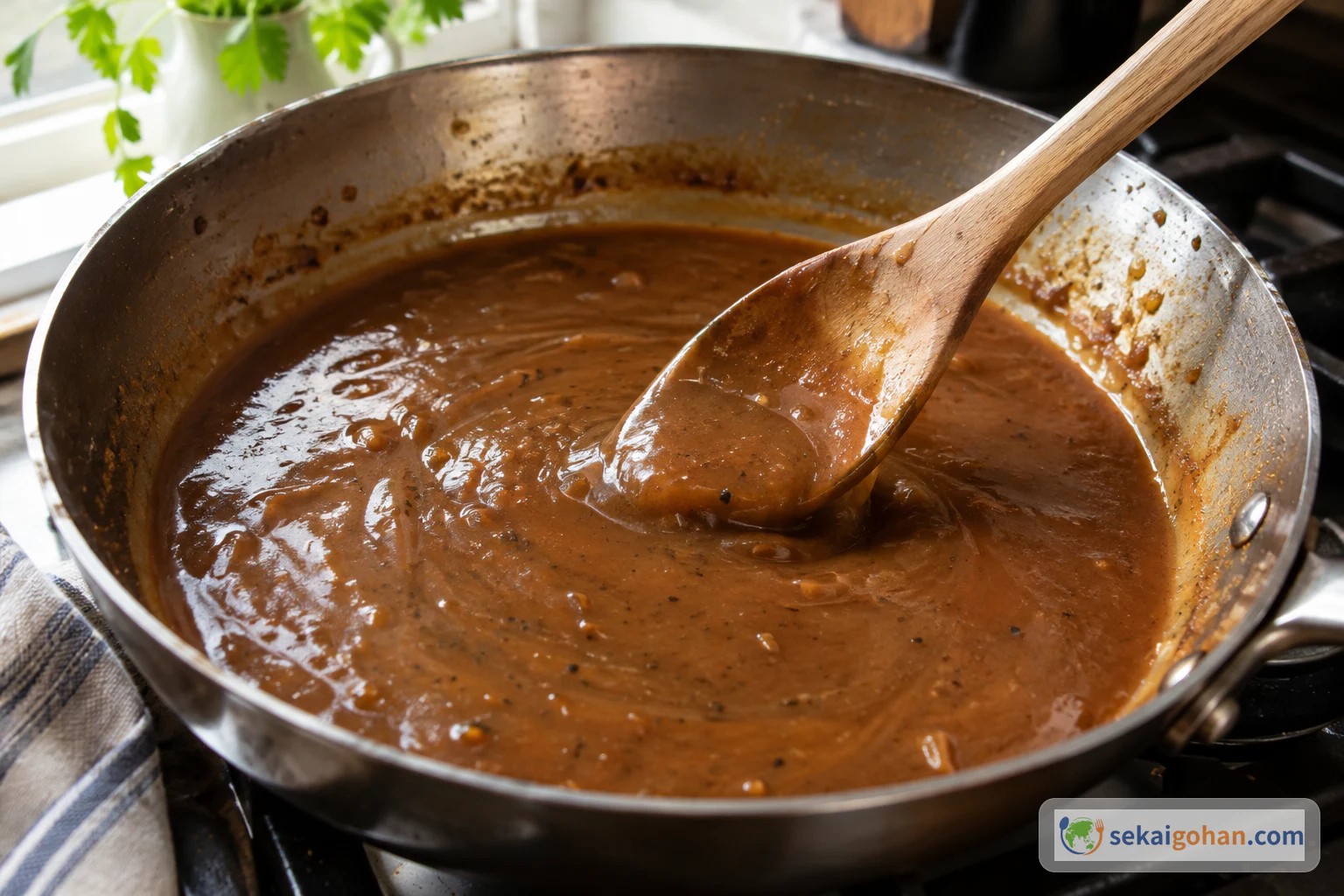
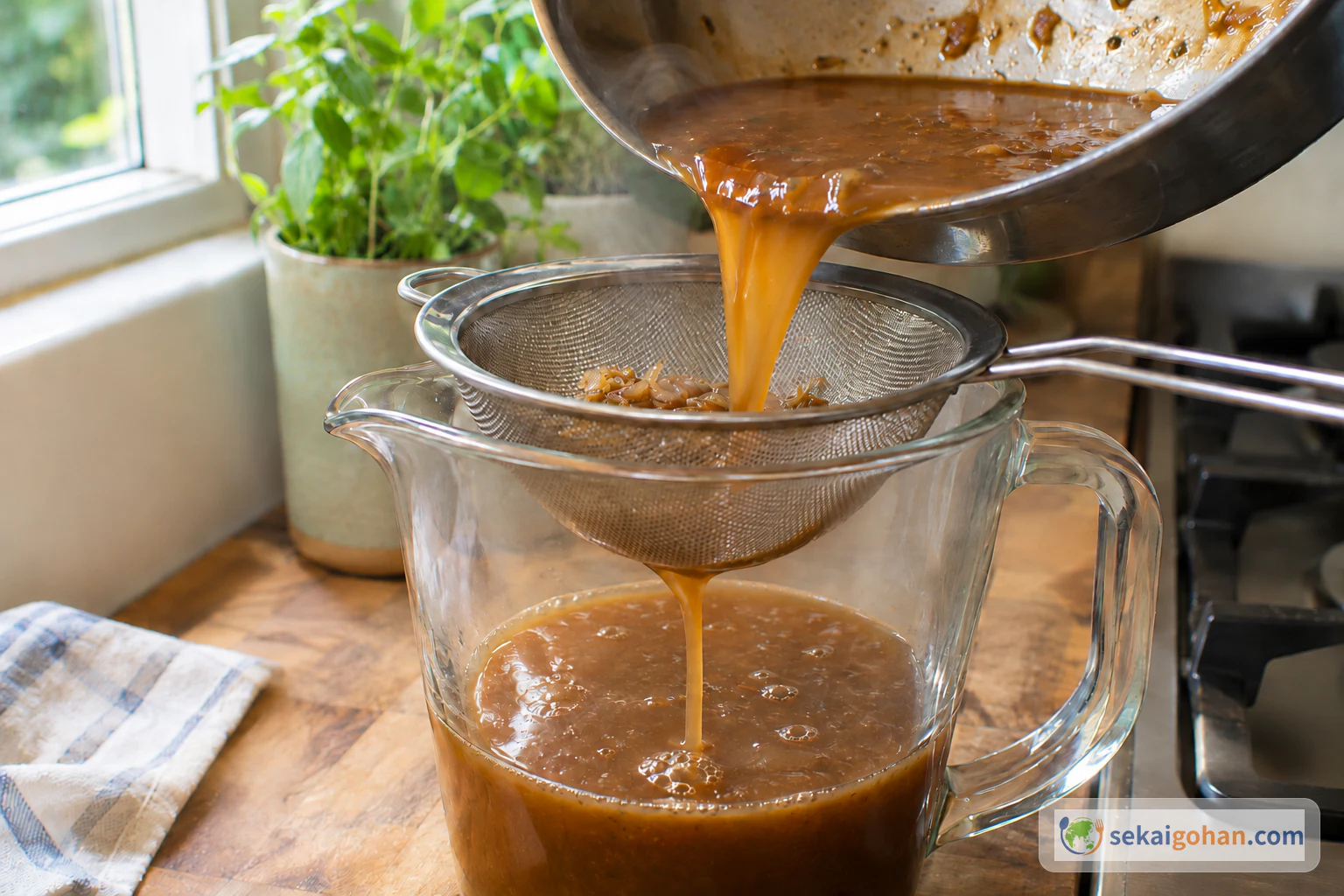
The patties come out of the pan and go under a cover. The frying pan still holds a brown film of bacon fat and meat juices. A spoonful of flour goes into it, fizzes, turns the colour of toast, and the beef stock hisses in a little at a time until a glossy gravy rolls at the boil. That gravy, poured over flat, browned beef patties with bacon, onion and carrot worked through them, is an Australian rissole dinner. It tastes of home cooking in the plainest good sense: salty bacon, sweet onion and carrot, savoury beef, and a gravy that carries all the pan flavour back onto the plate.
Flattened Meatballs on an Australian Dinner Plate
In Australia a rissole is minced meat bound with egg and breadcrumbs and shaped into a flat patty, something like a large, flattened meatball. It is family weeknight food, the kind that fills the meat part of a "meat and three veg" dinner, and it belongs firmly to the home kitchen rather than the restaurant. You can read more about the country's food on our Australia page.
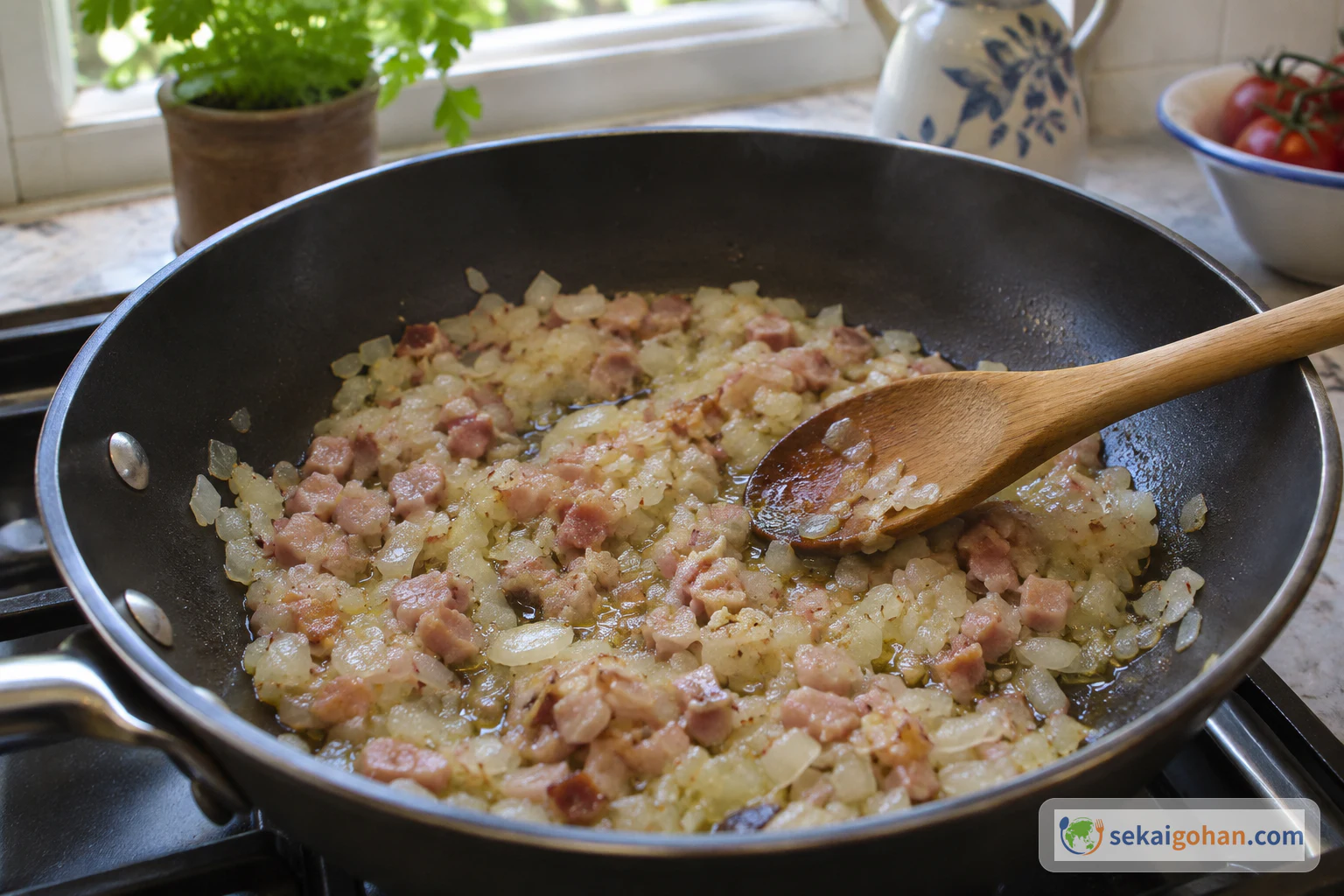
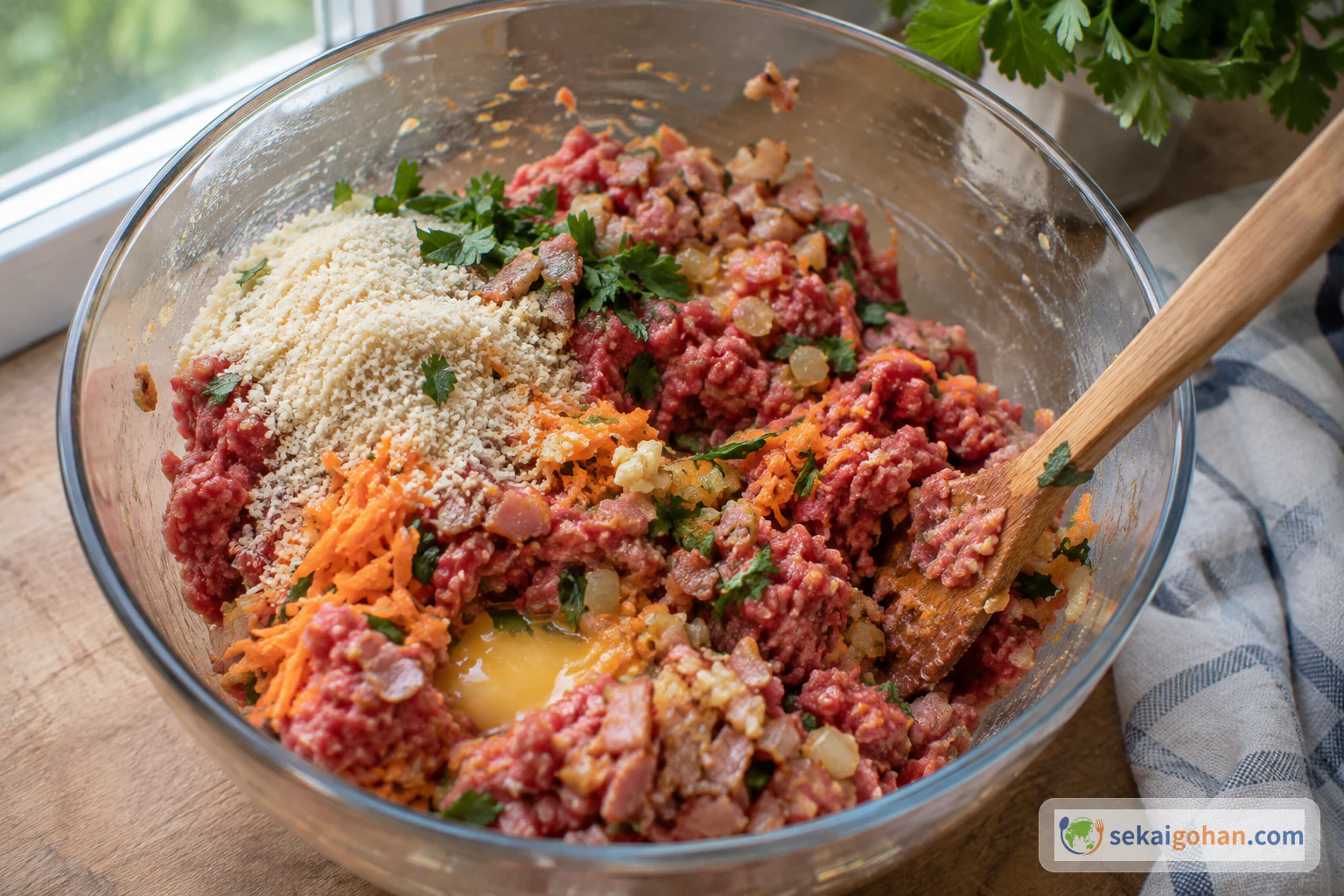
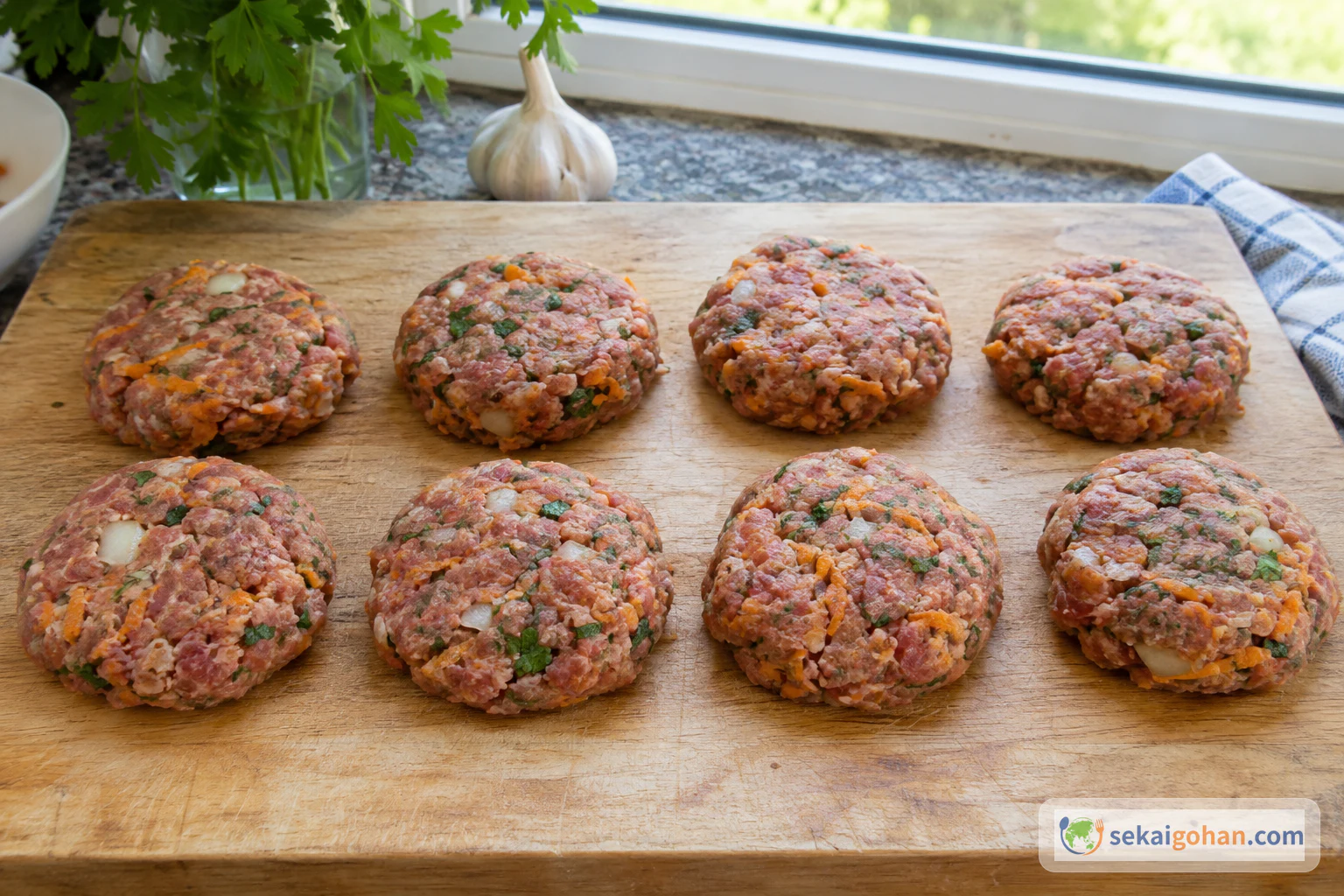
The version here is the old-fashioned one: beef mince with chopped bacon, onion softened with garlic, grated carrot and flat-leaf parsley, all fried in one pan, with the gravy made in the same pan afterwards. Mashed potato is the classic partner. Not every household agrees on the sauce, though. Some families pour on gravy, others put out a bottle of tomato sauce (ketchup), and that split runs right through Australian kitchens. Cold leftover rissoles go between slices of bread the next day.
Why rissoles became so common is less clear. A familiar story ties them to the two world wars, when rissoles helped stretch rationed meat. It fits the dish well, but how much of it holds up is not settled.
In France, Portugal, Brazil, Indonesia and Goa, a rissole (or rissol) is a filling wrapped in pastry or dough and then fried or baked. The British wartime rissole, made from leftover meat, sits closer to the Australian one but belongs to its own kitchen. An Australian rissole has no wrapper at all: it is the patty itself.
Ingredients (serves 4)
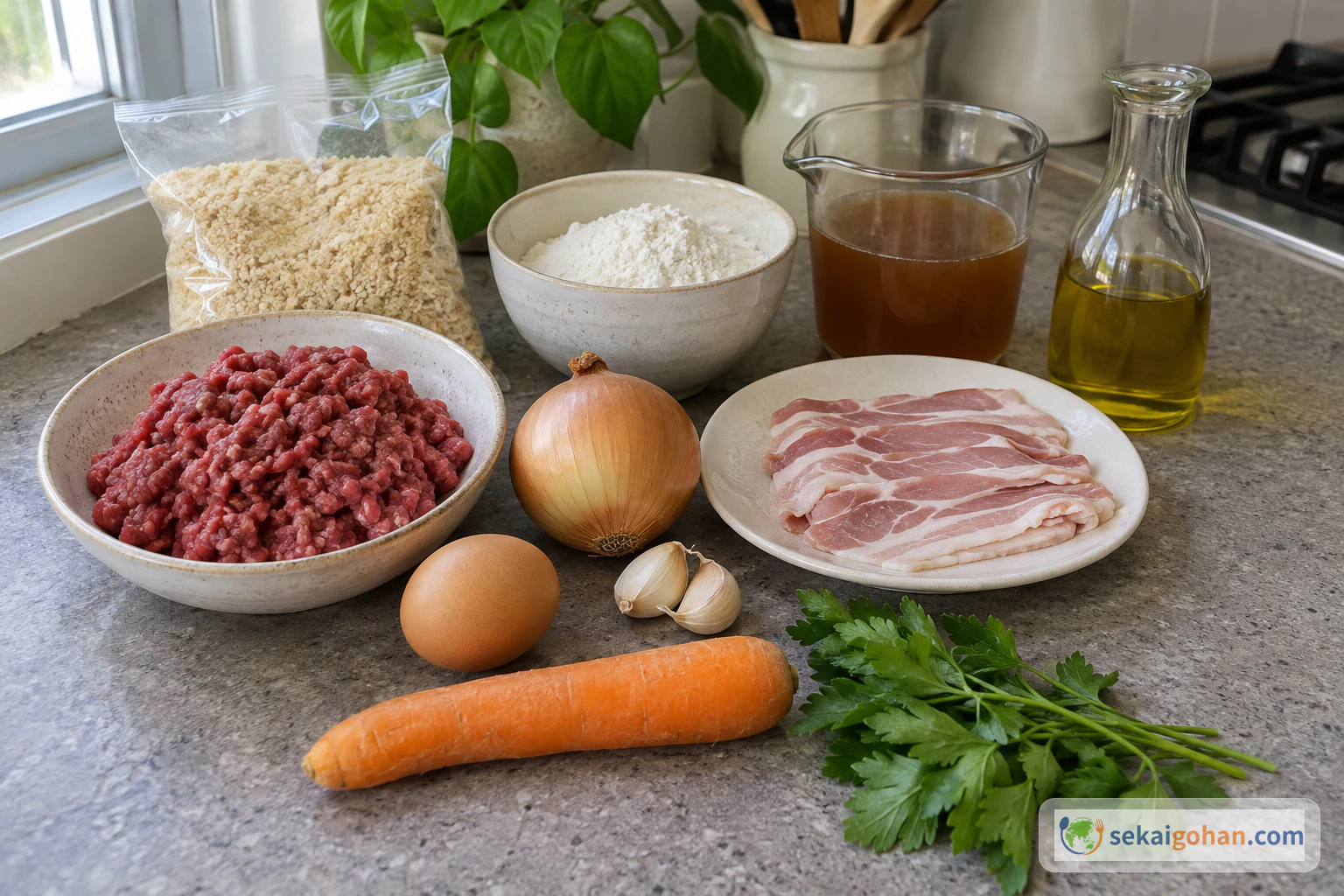
This makes 8 patties. The flour and stock at the bottom of the table are for the gravy.
Rissoles contain egg and wheat (in the breadcrumbs and the flour). Some beef stock products also contain milk, soy or other allergens, so read the label of the stock you buy.
Equipment
- Large frying pan
- Mixing bowl
- Box grater (fine side) for the carrot
- Wooden spoon and a spatula for turning
- Plate and foil or a lid to keep the cooked patties warm
- Fine sieve
- Large heatproof jug
- Meat thermometer
Choosing and Substituting
Everything here is ordinary supermarket shopping, so the choices are about texture and salt.
- Minced beef: plain beef mince works well; you do not need a special blend.
- Bacon: "rindless" means the hard rind along the fatty edge is gone. If your bacon still has it, trim it off before chopping.
- Breadcrumbs: use dry packaged crumbs. Fresh breadcrumbs hold more moisture and give a softer, wetter mixture, so the patties hold their shape less firmly.
- Parsley: curly parsley works in place of flat-leaf; the flavour is a little grassier and the leaves are coarser.
- Olive oil: any neutral cooking oil does the same job.
- Plain flour: all-purpose flour is the same thing under its American name.
- Beef stock: this is where most of the salt in the dish comes from, and saltiness varies a lot between products. A low-salt stock gives you room to season the gravy yourself.
There is no salt in the patty mixture. The bacon and the stock season the dish, and salt and pepper go in only to taste, in the gravy, once you have tried it.
Method: One Pan from Start to Finish
The pan you soften the onion in is the pan you fry the patties in and the pan you make the gravy in, and each stage leaves flavour behind for the next. Chop and grate everything first. The only waiting comes early, while the onion mixture cools, and that is a good moment to grate the carrot and chop the parsley.
When It Goes Wrong
| What you see | Why | What to do |
|---|---|---|
| The patties crack or fall apart in the pan | The mixture is too wet, or the patties were turned before a crust formed | Use dry breadcrumbs, smooth the edges when shaping, and turn each patty only once its underside is well browned |
| The rissoles are dense and dry | The patties were pressed hard, or extra breadcrumbs went in | Keep the crumbs at the amount in the table and shape with a light hand |
| The outside is very dark but the centre is under 167°F (75°C) | The heat is too high | Lower the heat and keep cooking until the thermometer reads 167°F (75°C) |
| The gravy is pale and tastes of raw flour | The stock went in before the flour browned | Next time, cook the flour until brown and bubbling first; for now, let the gravy boil a little longer while stirring |
| The gravy is lumpy | The stock went in too fast | Strain it; the sieve catches the lumps |
| The gravy is too salty | Salty stock plus bacon drippings | Choose a low-salt stock and season only after tasting |
Serving, Variations and Leftovers
At the table
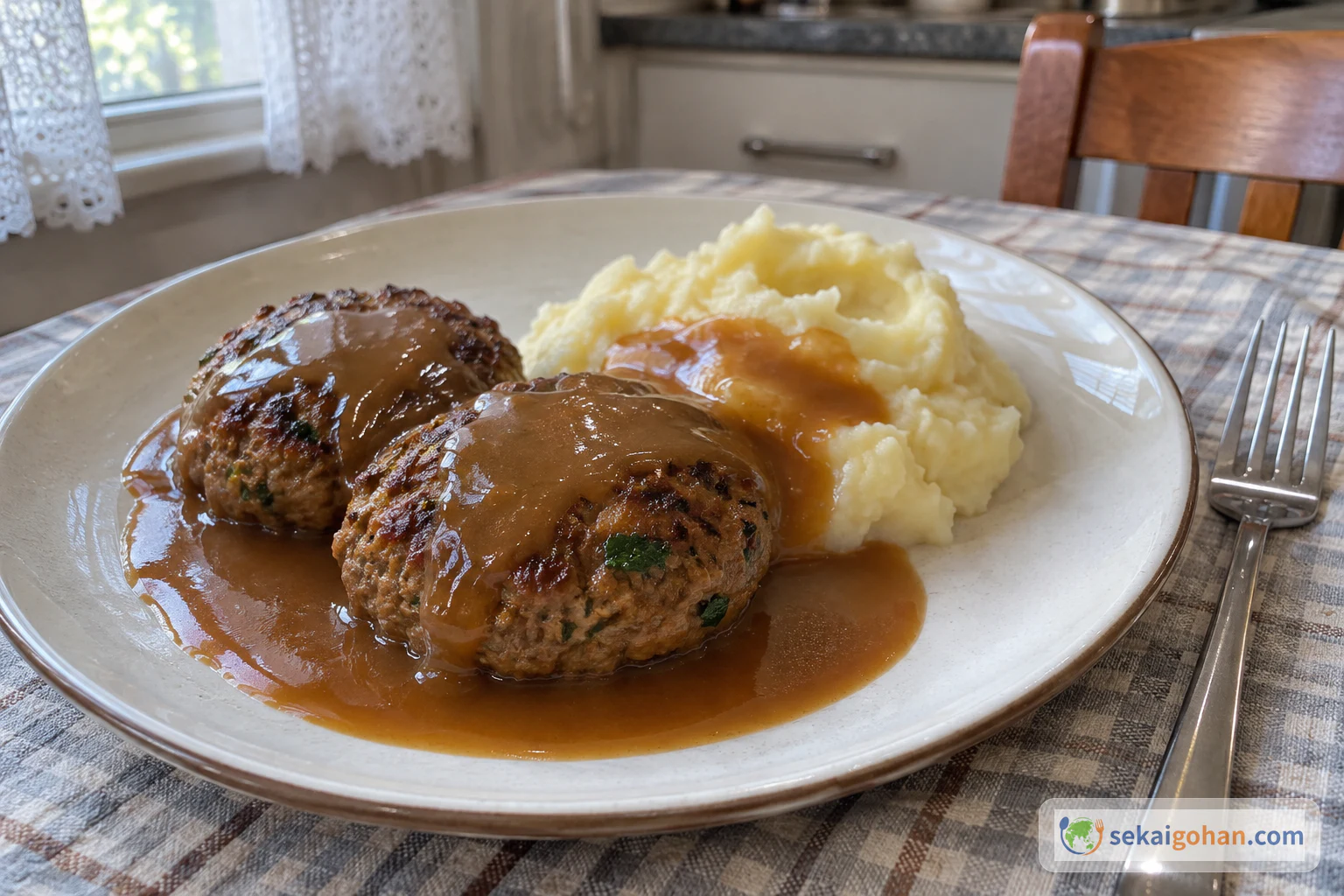
Two rissoles each, gravy poured over, and a mound of mashed potato to catch whatever runs off: that is the classic plate. It is an ordinary weeknight dinner, served straight from the stove with the jug of gravy passed around so people take as much as they like. Cooked vegetables beside it make it the full meat-and-three-veg dinner.
Variations
- Tomato sauce instead of gravy: many households skip the gravy and put out ketchup. The meal becomes sweeter and sharper, and you can stop after step 6.
- Grated-vegetable rissoles: a more modern style grates the onion instead of chopping it and adds grated zucchini along with the carrot, with dried thyme and oregano and a little Worcestershire sauce. The patties come out softer and moister, with a herbier flavour. Squeeze grated zucchini before adding it.
- Lamb or pork mince: either works in place of beef. Lamb gives a richer, gamier patty; pork is milder and sweeter. Cook them to 167°F (75°C) at the centre in the same way.
Leftovers and the next-day sandwich
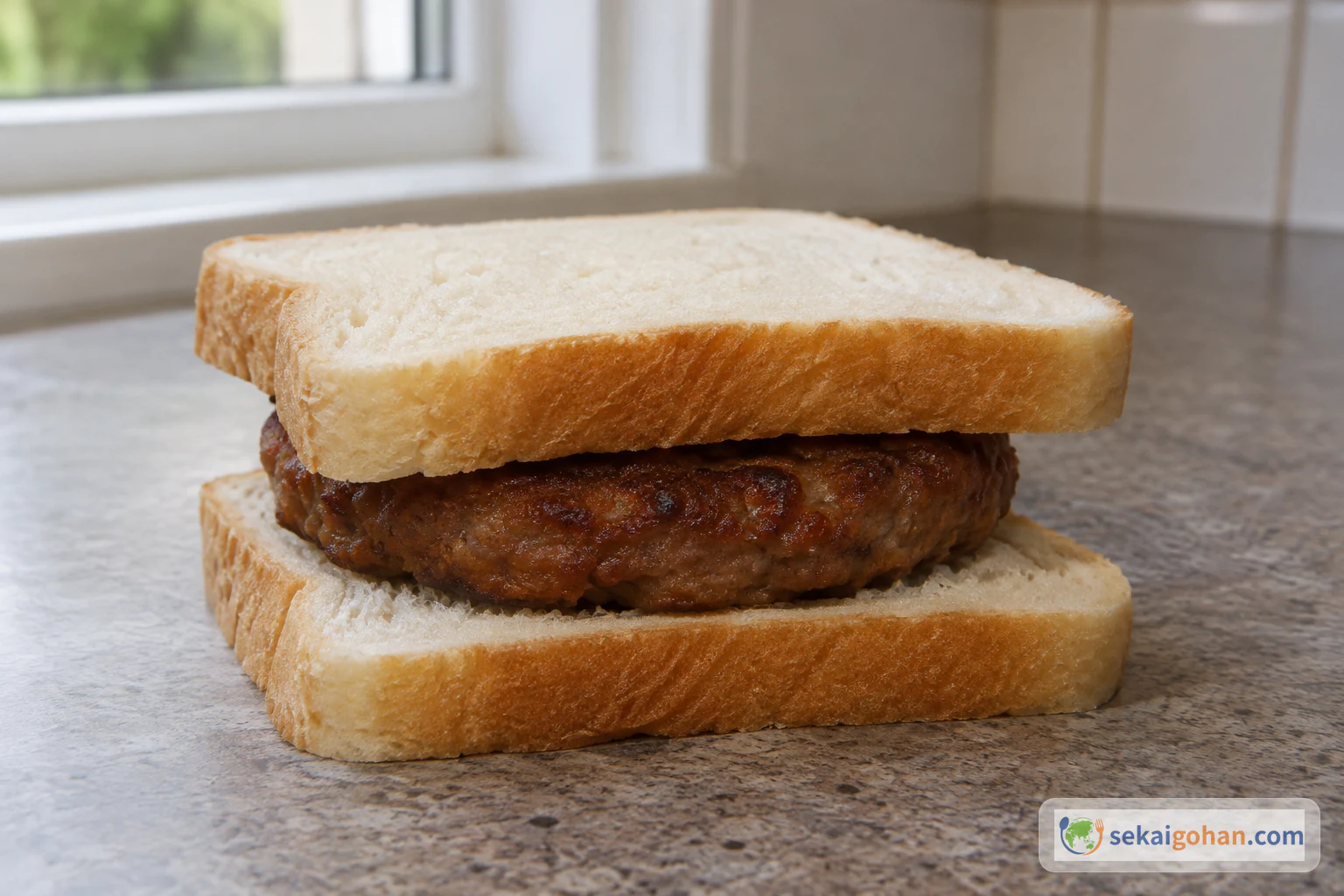
Leftover rissoles are just as good cold in a sandwich with plain sliced bread. Keep leftovers covered in the fridge, and when you want them hot again, reheat them thoroughly until they are hot all the way through.
Frequently Asked Questions
How is a rissole different from a hamburger patty?
Both are shaped minced beef, and a rissole tucked into a bun is a hamburger in all but name. The difference is how it is eaten and what goes in it. A rissole is served on a plate as a dinner with gravy and vegetables, and the mixture carries bacon, onion, carrot, parsley, egg and breadcrumbs.
Can I make rissoles with chicken mince?
Yes. Chicken mince is softer and makes a looser mixture, so add a little more breadcrumbs until the mixture holds a patty shape. Cook chicken rissoles to 167°F (75°C) at the centre too.
Can I bake them in the oven instead of frying?
Yes. Bake them on a lined tray in a 390°F (200°C) oven until they are browned and read 167°F (75°C) at the centre. You lose the pan drippings, though, so the gravy has less depth; serving baked rissoles with tomato sauce suits them well.
Do I need to add salt to the patty mixture?
No salt goes into the mixture. The bacon is salty and the beef stock seasons the gravy, so taste the gravy at the end and add salt and pepper there only if it needs them.